
Eileen Chang (1920–1995)
Author of Love in a Fallen City
About the Author
Image credit: From presby.edu
Works by Eileen Chang
Dui zhao ji (Reflections: Words and Pictures, in Traditional Chinese, NOT in English) (1994) 7 copies
张爱玲小说集 (套装共5册) / Eileen Chang's classic novel set / full package/ 5 volumes /(Chinese Edition) (2012) 2 copies
張愛玲小說集 2 copies
Lust. Caution disconsolate Hutchison (Zhang Ailing Portfolio) [recorded 6](Chinese Edition) (2000) 1 copy
都市的人生 1 copy
Flower Faded in the Sea-Corpora of Zhang Ailing-10-Chinese Version of Fiction in Dialect (Chinese Edition) (2012) 1 copy
雷峰塔(The Fall of the Pagoda) 1 copy
海上花 1 copy
傳奇 增訂本 1 copy
傾城之戀 1 copy
餘韻 1 copy
红玫瑰与白玫瑰 1 copy
Un amour dévastateur 1 copy
Chuyện tình giai nhân 1 copy
Zhang Ailing xiao shuo ji 1 copy
張愛玲短篇小說集 1 copy
傳奇 1 copy
Associated Works
Tagged
Common Knowledge
- Canonical name
- Chang, Eileen
- Legal name
- 張愛玲
- Other names
- Zhang Ying (birth)
张煐
Zhang Ailing - Birthdate
- 1920-09-30
- Date of death
- 1995-09-08
- Gender
- female
- Education
- University of Hong Kong
Saint John's University, Shanghai
Saint Maria Girls' School - Occupations
- writer
novelist
translator - Organizations
- United States Information Service
- Short biography
- Eileen Chang [born Zhang Ying, renamed Zhang Ailing] (September 30, 1920 – September 8, 1995) was one of the most influential modern Chinese writers.
Chang is noted for her fiction writings that deal with the tensions between men and women in love, and are considered by some scholars to be among the best Chinese literature of the period. Chang's portrayal of life in 1940s Shanghai and Japanese-occupied Hong Kong is remarkable in its focus on everyday life and the absence of the political subtext which characterised many other writers of the period. The Taiwanese author Yuan Chiung-chiung drew inspiration from Chang. The poet and University of Southern California professor Dominic Cheung commented "had it not been for the political division between the Nationalist and Communist Chinese, she would have almost certainly won a Nobel Prize".
Eileen Chang in Wikipedia - Nationality
- China (birth)
USA - Birthplace
- Shanghai, China
- Places of residence
- Shanghai, China
Los Angeles, California, USA
Hong Kong, China - Place of death
- Westwood, California, USA
- Map Location
- China
Members
Reviews

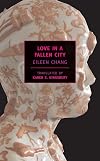
Although Chang carried on writing long after her move to the US, it's these cynical, pessimistic love stories from the thirties and early forties that she's best known for. The combination of the narrator's unromantic view of human nature with languid tropical backgrounds in the prosperous suburbs of Shanghai and Hong Kong makes you think of Somerset Maugham, but Chang complicates that mix further by bringing in her own experience of growing up in an upper-class Chinese family torn between show more extreme conservatism and the fashion for adopting Western styles of behaviour, dress and ethics. Each of the stories in this collection takes characters exposed to these forces in different combinations and ratios, and we get to see young people making a mess of their lives (and others) irrespective of whether it's in pursuit of money, love, pleasure, or career. Beautifully done, and there's always a strong sense that the European cocktail-cabinet culture is jut as doomed as the lifestyle of the wealthy families where the mother-in-law squelches the least sign of independence from any of her sons' wives. But you also get the feeling that Chang would be pretty good at squelching upstarts herself! show less
4.5/5
A bitter triumph both here and across the sea, for as an expatriate Chang was unjustly ignored, the only alternative to a home country banning. You'll find very little of such unsavory politickings here, an authorial choice that let her works alone before the government shifted and her wealthy background combined with lack of polemical interests chased her from Shanghai to Hong Kong and finally to LA to die alone in an apartment within my lifetime. It's a flavor of acrid living that she captured on paper even in her youthful twenties, as these stories are happiness of the trained sort, gilded robes and bound feet reminiscent of ruffled skirts and excised ribs in the land of Christians and their Boxer Rebellion. True, Shanghai is not Paris or London, Berlin or New York, but you don't need white people to play out the conflicts of modern life on a theme of hope and decadence, luxurious backdrops galore to the young choking on the old, women flying too far to forget the taste when time comes for men to clip their wings.
There's beauty, though, unfamiliar enough for me to spend a moment unraveling the colors and densities, landscapes heated to a different symphony of flora and fauna, living spaces enclosed within collections of wood and stone whose recognition comes only through many a visit to the houses of my friends, here in the Bay Area where the high school classes are 18% 'Caucasian' and the vernacular of ABC (American Born Chinese), banana (yellow on the out, white on the in), and egg (you get the picture) were the norm on campus grounds. This mix and meld of upbringing made me wish once to follow said friends on one of their summer retreats to kith and kin, a wish revitalized by what I knew within these pages and the far more that I didn't. I know my poor head for languages too well to ever hope to grasp the five thousand plus characters of the Chinese language, but the excursion would provide sorely needed grounding of contextual reality for my abstract intake, if nothing else. That, and reading The Story of the Stone, whose pervasive influence apparent even in this literature of the 20th century has shoved it forward a few hundred in the shelves.
In China, as elsewhere, the constraints imposed by the traditional moral code were originally constructed for the benefit of women: they made beautiful women even harder to obtain, so their value rose, and ugly women were spared the prospect of never-ending humiliation. Women nowadays don't have this kind of protective buffer, especially not mixed-blood girls, whose status is entirely undefined.I love Pearl S. Buck, I really do, but the way her written legacy interfered with that of show more Eileen Chang's is a tragedy. Readers introduced through the Nobel Prize Winner to China would expect exacting honor, high drama, sultry romance, any other conjunction of the profligating misnomer known as the 'East'; even more absurd a concept when said readers are US bound and must look to the west for their fill of fiction. They would not have been satisfied with these short and biting works, bred on an entirely different culture with strains more akin to Fitzgerald and O'Connor than anything the historical fiction trends of the States could conjure up. And so we left yet another author to their own devices, till when dead and gone we could sift through and lift up their works in as fitting a posthumous manner as we please.
A bitter triumph both here and across the sea, for as an expatriate Chang was unjustly ignored, the only alternative to a home country banning. You'll find very little of such unsavory politickings here, an authorial choice that let her works alone before the government shifted and her wealthy background combined with lack of polemical interests chased her from Shanghai to Hong Kong and finally to LA to die alone in an apartment within my lifetime. It's a flavor of acrid living that she captured on paper even in her youthful twenties, as these stories are happiness of the trained sort, gilded robes and bound feet reminiscent of ruffled skirts and excised ribs in the land of Christians and their Boxer Rebellion. True, Shanghai is not Paris or London, Berlin or New York, but you don't need white people to play out the conflicts of modern life on a theme of hope and decadence, luxurious backdrops galore to the young choking on the old, women flying too far to forget the taste when time comes for men to clip their wings.
There's beauty, though, unfamiliar enough for me to spend a moment unraveling the colors and densities, landscapes heated to a different symphony of flora and fauna, living spaces enclosed within collections of wood and stone whose recognition comes only through many a visit to the houses of my friends, here in the Bay Area where the high school classes are 18% 'Caucasian' and the vernacular of ABC (American Born Chinese), banana (yellow on the out, white on the in), and egg (you get the picture) were the norm on campus grounds. This mix and meld of upbringing made me wish once to follow said friends on one of their summer retreats to kith and kin, a wish revitalized by what I knew within these pages and the far more that I didn't. I know my poor head for languages too well to ever hope to grasp the five thousand plus characters of the Chinese language, but the excursion would provide sorely needed grounding of contextual reality for my abstract intake, if nothing else. That, and reading The Story of the Stone, whose pervasive influence apparent even in this literature of the 20th century has shoved it forward a few hundred in the shelves.
The white Liang mansion was melting viscously into the white mist, leaving only the greenish gleam of the lamplight shining through square after square of the green windowpanes, like ice cubes in peppermint schnapps. When the fog thickened, the ice cubes dissolved, and the lights went out.Keep an eye on that NYRB cover, Ah Xian's China, China: Bust 34 in profile. It conveys the book better than I ever could. show less
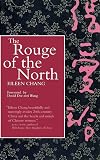
Eileen Chang's The Rouge of the North is actually the fourth iteration of a story that she wrote and re-wrote through her life. It was published first in 1943 in Chinese as The Golden Cangue; cangue being a sort of wooden pillory, used to penalise criminals in imperial China. The story had some success at the time; she subsequently translated into English and published it, and it can still be found (with difficulty) in anthologies of her stories. Much later, in 1967, not long after the death show more of her second husband and amid financial troubles, she substantially rewrote the same story in English as the The Rouge of the North, an expanded version of her well-received short story. It did not do well in English at the time, but a serialised Chinese version saw substantial success, sparking a brief revival of her career before a long, slow, lonely decline, both professionally and personally. I learned much about this process of writing and rewriting from a detailed introductory essay by David Der-Wei Wang in this Harvard University Press edition of the English version of The Rouge of the North, although looking back, I wish I had read the novel first and the essay after because it undoubtedly shaped my understanding of the book. With that said, I think for non-Chinese readers like myself, the essay is vital, because this is a story full of complex allusion and metaphor, and would have been much harder to appreciate without the context and explanations he provides.
The Rouge of the North traces the life of Yindi, a beautiful woman, born into an impoverished family. Living with her brother and sister-in-law, and their children, she sells sesame oil, and resists, enraged, the overtures of local men, who come by the shop to tease the 'Sesame Oil Beauty'. Although she harbours an interest in the quiet, reclusive pharmacist's assistant who works across the road, she recognises his utter lack of ambition does not match her own desires for a better, richer life. She accordingly accepts a proposal from a wealthy, aristocratic family to marry their second son, described to her as a blind man, but kind and gentle. On marriage, of course, she discovers that she has wedded an invalid, addicted to opium and in no way a suitable partner, and the life of wealth and comfort she had imagined is instead a cold, dispiriting prison from which she can't escape. A southerner in a northern family, a poor girl amidst rich people, her marriage is a series of humiliations, to which she reacts by becoming increasingly selfish, arrogant, and rebellious. Desperate for romantic love, which her husband cannot fulfill, she embarks on a doomed affair with one of her brothers-in-law; he in turn, ultimately rejects her. Through the story, we see her ire directed towards the matriarch of the house, her mother-in-law, who holds the keys to her fate. As the novel progresses, Yindi slowly becomes the woman she despises: the family's wealth crumbling, her unhappiness spiraling. Towards the end of the book, she is matriarch of a small household, respected but not loved, deferred to, but friendless, and defined by her strict adherence to the customs and traditions that she once strained against. Sitting on her bed, she drifts back into memories of being a young unmarried girl, fending off suitors at the sesame oil shop. "Everything she drew comfort from was gone, had never happened. Nothing much had happened to her yet."
In David Der-Wei Weng's preface to this story of Yindi's spiraling decline, he asks what we are to make of the way Chang wrote, and rewrote, and wrote again the same story, over and over, wrestling with ideas of female agency and victimization, of the way in which women sought to reach for power within constrained domestic spheres. It's too facile, he argues, to suggest that she is, through this story, reshaping and retelling her own life's story in different ways. Rather, he looks at the way she didn't just write and rewrite, but also how she moved between two languages, creating and recreating the same story (translation does not seem to be an appropriate word here) to create a more realistic account. Weng writes that the character of Yindi goes from the first version of the story to the last in progression, changing from "...a tragic monster into a desolate woman." As I have only read one of four versions, I can't confirm: but in The Rouge of the North, Chang writes almost dispassionately, recording Yindi's eventual ensnaring into the traditions she tried unsuccessfully to escape. As Weng put it, "She wants to find her own man and is rewarded by a living dead man; she is torn by adulterous desires in her younger days only to settle into her widowed life with formidable stoicism; she seeks to end her life in the middle of the novel, but outlives all the other major characters. Shuttling between the possibilities and impossibilities of her life, Yindi is never what she appears or wants to be; her transgressive desires continually throw her back into the closure of repetition."
Even though this is a short novel, really a novella, it is a challenging read because each sentence is carefully crafted, and I'm not surprised it took me most of the month to get through this carefully. For all that Yindi is increasingly unlikeable, it is difficult not to feel your heart break for her, or to be transported by Chang's very evocative account of her life. show less
The Rouge of the North traces the life of Yindi, a beautiful woman, born into an impoverished family. Living with her brother and sister-in-law, and their children, she sells sesame oil, and resists, enraged, the overtures of local men, who come by the shop to tease the 'Sesame Oil Beauty'. Although she harbours an interest in the quiet, reclusive pharmacist's assistant who works across the road, she recognises his utter lack of ambition does not match her own desires for a better, richer life. She accordingly accepts a proposal from a wealthy, aristocratic family to marry their second son, described to her as a blind man, but kind and gentle. On marriage, of course, she discovers that she has wedded an invalid, addicted to opium and in no way a suitable partner, and the life of wealth and comfort she had imagined is instead a cold, dispiriting prison from which she can't escape. A southerner in a northern family, a poor girl amidst rich people, her marriage is a series of humiliations, to which she reacts by becoming increasingly selfish, arrogant, and rebellious. Desperate for romantic love, which her husband cannot fulfill, she embarks on a doomed affair with one of her brothers-in-law; he in turn, ultimately rejects her. Through the story, we see her ire directed towards the matriarch of the house, her mother-in-law, who holds the keys to her fate. As the novel progresses, Yindi slowly becomes the woman she despises: the family's wealth crumbling, her unhappiness spiraling. Towards the end of the book, she is matriarch of a small household, respected but not loved, deferred to, but friendless, and defined by her strict adherence to the customs and traditions that she once strained against. Sitting on her bed, she drifts back into memories of being a young unmarried girl, fending off suitors at the sesame oil shop. "Everything she drew comfort from was gone, had never happened. Nothing much had happened to her yet."
In David Der-Wei Weng's preface to this story of Yindi's spiraling decline, he asks what we are to make of the way Chang wrote, and rewrote, and wrote again the same story, over and over, wrestling with ideas of female agency and victimization, of the way in which women sought to reach for power within constrained domestic spheres. It's too facile, he argues, to suggest that she is, through this story, reshaping and retelling her own life's story in different ways. Rather, he looks at the way she didn't just write and rewrite, but also how she moved between two languages, creating and recreating the same story (translation does not seem to be an appropriate word here) to create a more realistic account. Weng writes that the character of Yindi goes from the first version of the story to the last in progression, changing from "...a tragic monster into a desolate woman." As I have only read one of four versions, I can't confirm: but in The Rouge of the North, Chang writes almost dispassionately, recording Yindi's eventual ensnaring into the traditions she tried unsuccessfully to escape. As Weng put it, "She wants to find her own man and is rewarded by a living dead man; she is torn by adulterous desires in her younger days only to settle into her widowed life with formidable stoicism; she seeks to end her life in the middle of the novel, but outlives all the other major characters. Shuttling between the possibilities and impossibilities of her life, Yindi is never what she appears or wants to be; her transgressive desires continually throw her back into the closure of repetition."
Even though this is a short novel, really a novella, it is a challenging read because each sentence is carefully crafted, and I'm not surprised it took me most of the month to get through this carefully. For all that Yindi is increasingly unlikeable, it is difficult not to feel your heart break for her, or to be transported by Chang's very evocative account of her life. show less
小團圓 by Eileen Chang

Lists
Awards


You May Also Like


Associated Authors
Statistics
- Works
- 81
- Also by
- 3
- Members
- 2,231
- Popularity
- #11,497
- Rating
- 3.7
- Reviews
- 49
- ISBNs
- 208
- Languages
- 11
- Favorited
- 13