
Daniel Coyle
Author of The Talent Code: Greatness Isn't Born. It's Grown. Here's How.
About the Author
Daniel Coyle is a contributing editor for Outside magazine and the author of six books, including the New York Times bestseller, Lance Armstrong's War. His latest book is The Culture Code: The Secrets of Highly Successful Groups, published January 2018. Coyle lives with his wife, Jen, and their show more four children in Homer, Alaska. (Bowker Author Biography) show less
Image credit: via author's website
Works by Daniel Coyle
The Secret Race: Inside the Hidden World of the Tour de France: Doping, Cover-ups, and Winning at All Costs (2012) 519 copies, 24 reviews
Lance Armstrong's War: One Man's Battle Against Fate, Fame, Love, Death, Scandal, and a Few Other Rivals on the Road to the Tour de France (2005) 311 copies, 9 reviews
The Culture Playbook: 60 Highly Effective Actions to Help Your Group Succeed (2022) 42 copies, 1 review
Erfolg braucht kein Talent: Der wahre Schlüssel zu Höchstleistungen in jedem Bereich (2019) 2 copies
Summary: The Culture Code | The Secrets of Highly Successful Groups | A Comprehensive Guide to the Book of Daniel Coyle (Epic-Summary) (2019) 2 copies
CELESI I TALENTIT 1 copy
Tagged
Common Knowledge
- Gender
- male
- Organizations
- Anchorage Times
Outside - Nationality
- USA
- Places of residence
- St. Louis, Missouri, USA
Anchorage, Alaska, USA
Homer, Alaska, USA
Cleveland, Ohio, USA - Associated Place (for map)
- USA
Members
Reviews
The Secret Race: Inside the Hidden World of the Tour de France: Doping, Cover-ups, and Winning at All Costs by Tyler Hamilton
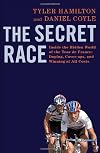
Tyler Hamilton and Lance Armstrong were both born just a few months apart in 1971, they were teammates before they became famous and saw one another rise (and fall) through their professional careers. And it turns out they were both heavily into doping. Hamilton has come clean in this detailed memoir of what happened. The type of dope, how they took it, how they hid it, how it helped them (and Lance in particular) become the world's top racers. Hamilton and Armstrong have a deep division show more today because Armstrong still maintains his innocence but Hamilton comes across the better and stronger man for admitting his guilt and putting it all out in the open. This is a really well written and compelling book, hard to put down. It's larger than two people, it's about the sport as a whole - and it's an ancient story of redemption and the power of truth. I got a lot out of this book. One day sooner than later Armstrong will write his own book but it's hard to imagine it topping the power of this book. show less
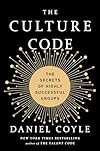
The Culture Code has a provocative premise, watered down by undue hero worship and a commitment to mediocre neoliberalism.
The basic idea is that real work, real innovative, value-added work, is done by dedicated people who are emotionally invested, who are together in this effort, who are vulnerable and unconcerned with social status games. This emotional bond is something that can be tracked in how team-members interact with one another, even in total ignorance of the content of their show more communication. It's something delicate, which is fostered by great leaders, and spoiled by a single bad apple. Potentially, it's even something that can be trained, though Coyle is fuzzy on those details.
The twin problems are that so many teams are far from Coyle's ideal. First, most business propositions are fundamentally irrelevant and almost pointless. It's one thing to be beholden to an ideal of perfect service, another thing entirely to go for a 3% improvement on NPS at Applebee's. Given a choice between being excellent and maximizing short-term returns, most companies will go for the short-term returns. Second, and this is the hard part: humans love social status games. We're good at playing them, we're invested in them, and I'm not sure 'good teamwork' is enough to tell the boss his ideas are bad.
And on a methodological note, Coyle uses a lot of examples of flashy, design-centric companies, but building anything even moderately complex involves a host of technical challenges and choices. It's one thing to say that empowered swarms can do it all, but I think most work is far less romantic than that ideal. show less
The basic idea is that real work, real innovative, value-added work, is done by dedicated people who are emotionally invested, who are together in this effort, who are vulnerable and unconcerned with social status games. This emotional bond is something that can be tracked in how team-members interact with one another, even in total ignorance of the content of their show more communication. It's something delicate, which is fostered by great leaders, and spoiled by a single bad apple. Potentially, it's even something that can be trained, though Coyle is fuzzy on those details.
The twin problems are that so many teams are far from Coyle's ideal. First, most business propositions are fundamentally irrelevant and almost pointless. It's one thing to be beholden to an ideal of perfect service, another thing entirely to go for a 3% improvement on NPS at Applebee's. Given a choice between being excellent and maximizing short-term returns, most companies will go for the short-term returns. Second, and this is the hard part: humans love social status games. We're good at playing them, we're invested in them, and I'm not sure 'good teamwork' is enough to tell the boss his ideas are bad.
And on a methodological note, Coyle uses a lot of examples of flashy, design-centric companies, but building anything even moderately complex involves a host of technical challenges and choices. It's one thing to say that empowered swarms can do it all, but I think most work is far less romantic than that ideal. show less

The Secret Race is cyclist Tyler Hamilton’s story of being a star and then a burst star on the European circuit, the Big League of international bike racing. The book tells how he became a doper, what a difference it made, what happened when he was busted, and how he came to confess his own doping and confirm that of Lance Armstrong. From their perspective, doping was part of becoming a true “professional.” Sounds a lot better than becoming a true “cheater” and was justified by a show more belief that doping was so widespread you’d be cheating yourself if you didn’t join in—who the hell in the race wasn’t cheating? Hamilton writes, “I was sure I wasn’t doing anything my rivals weren’t doing…My hematocrit was below 50. I was playing by the rules.” Some rules, and in playing by them Tyler ignored what the French called à deux vitesses— one speed made by racers limited to their body’s strength, and a second speed made by dopers whose jet fuel boosters left all those other saps behind.
Hamilton, in the end, found peace after confessing his misdeeds. He declares, “Here’s what I was learning: secrets are poison. They suck the life out of you, they steal your ability to live in the present, they build walls between you and the people you love.” A hard lesson to learn and live by. Tyler is happier for it.
Racers who never doped might or might not be happy for Hamilton. It’s easy to condemn the dopers. I do, though I had rooted for Lance enthusiastically. But we also should reflect on a comment by Michael Ashenden, a doctor who testified against Hamilton in Tyler’s own doping case and who was one of the developers of the doping test Tyler failed. About Hamilton and others who confessed or were caught, Ashenden says, “Before, I saw them as weak people, bad people. Now I see that they’re put in an impossible situation. If I had been put in their situation, I would do what they did.”
Does each of us know what we would have done? And how do we know our answer is not self-flattering self-deceit?
Interesting book! show less
Hamilton, in the end, found peace after confessing his misdeeds. He declares, “Here’s what I was learning: secrets are poison. They suck the life out of you, they steal your ability to live in the present, they build walls between you and the people you love.” A hard lesson to learn and live by. Tyler is happier for it.
Racers who never doped might or might not be happy for Hamilton. It’s easy to condemn the dopers. I do, though I had rooted for Lance enthusiastically. But we also should reflect on a comment by Michael Ashenden, a doctor who testified against Hamilton in Tyler’s own doping case and who was one of the developers of the doping test Tyler failed. About Hamilton and others who confessed or were caught, Ashenden says, “Before, I saw them as weak people, bad people. Now I see that they’re put in an impossible situation. If I had been put in their situation, I would do what they did.”
Does each of us know what we would have done? And how do we know our answer is not self-flattering self-deceit?
Interesting book! show less
The Secret Race: Inside the Hidden World of the Tour de France: Doping, Cover-ups, and Winning at All Costs by Tyler Hamilton
From the outside, the revelations about doping in cycling tend to give a picture of unscrupulous, ego-driven, win-at-all-costs cheats. And, while I think that picture may even be largely valid, there's a missing perspective that Hamilton's book goes a long way to provide.
The cheats don't usually start out that way. There's a common script for Hamilton, similar to the one David Millar recounts in his Racing Through the Dark. The young, immensely talented cyclist achieves early successes, gets show more to the big time, and realizes that he can't go on, he certainly can't progress, unless he becomes "professional", unless he does what it takes to win or even to support a winning team at the sport's highest levels. Then he has the choice. But by that time, his choices are defined by his profession and by his teammates and by the very ambitions that make him who he is as a cyclist.
Hamilton says it is in fact a common pattern -- the "thousand days" between the beginning of the cyclist's professional career and the day he has to make his choice:
"First year, neo-pro, excited to be there, young pup, hopeful. Second year, realization. Third year, clarity -- the fork in the road. Yes or no. In or out. Everybody has their thousand days; everybody has their choice."
There isn't so much angst as you might think at that point, in Hamilton's story -- he just goes on and does what it appears he has to do. For him, it was even a mark of achievement. Not every member of the team gets the "white bag" containing the drugs. Only the elite members of the team get it, partly because only they are needed to support the team leader in the biggest races. Getting the bag means you have arrived.
The script is self-serving. It allows its central character to be the innocent -- he didn't know what he was getting into, and once he reaches the point of choice, he seems hemmed in by circumstances and by the criteria of success in the world in which he lives.
As self-serving as it is, I think the script is mostly believable. Cycling is an incredibly demanding sport -- unless you are all in, you aren't going to make it. Certainly some have chosen not to dope, and most of those knew that, in doing so, they were abandoning hopes of succeeding at the highest levels, or even being able to stay on a team at the highest levels. That's one of the realizations for me in reading Hamilton's book (and Millar's as well). Not all cyclists cheat in order to win for themselves -- many cheat because their team needs them to, in order to provide the help (setting pace, taking the wind, chasing breakaways, . . .) the team leader needs in order to contend in the biggest races. The pressure to cheat may come (in fact in most cases probably does come) from the outside, from the team. If he doesn't cheat, his value to the team diminishes -- then it's his career, not just his chances of winning, that's at stake.
Any book about doping in cycling these days is inescapably a book about Lance Armstrong. Hamilton was a friend and loyal teammate to Armstrong before they fell out, partly owing to competitive tensions and then due to Hamilton's tell-all. Here we are getting Hamilton's story about that relationship, and Armstrong certainly doesn't come out of it looking very good. He's petty, vindictive, and driven by an absolute need for success seemingly without even the least scruples -- doping, friendship, or any other potential limitation. He cheats, he threatens, he exacts petty revenge, he manipulates, and he seems to do it all without conscience. In a way, though, even Armstrong is just a hugely magnified version of every other cyclist -- and by now he's thoroughly trapped inside the story he's built around himself. Almost a sympathetic character if you squint hard enough.
The revelations about Armstrong and the Postal team in this book are a bit anti-climactic by now, although still pretty striking for the matter-of-fact quality about doping on the team (and, to be fair, on other teams as well). But the book still stands as Hamilton's story.
I don't regard Hamilton as a "hero" -- after all, he made the choice to cheat, and he knew what he was doing. And he didn't decide to come clean by the pure strength of his own conscience or desire to do the right thing. He told his story only after he got busted. Still, I find his story sympathetic, and I like him -- when he asks us to consider what we would do under the same circumstances, I wish I could say, "No, I wouldn't cheat." But that's too easy to say when nobody's actually asking. The truth is, I don't know. I wish I was a good enough cyclist that I would be asked, but wishing that already makes me feel a little uncertain about myself. show less
The cheats don't usually start out that way. There's a common script for Hamilton, similar to the one David Millar recounts in his Racing Through the Dark. The young, immensely talented cyclist achieves early successes, gets show more to the big time, and realizes that he can't go on, he certainly can't progress, unless he becomes "professional", unless he does what it takes to win or even to support a winning team at the sport's highest levels. Then he has the choice. But by that time, his choices are defined by his profession and by his teammates and by the very ambitions that make him who he is as a cyclist.
Hamilton says it is in fact a common pattern -- the "thousand days" between the beginning of the cyclist's professional career and the day he has to make his choice:
"First year, neo-pro, excited to be there, young pup, hopeful. Second year, realization. Third year, clarity -- the fork in the road. Yes or no. In or out. Everybody has their thousand days; everybody has their choice."
There isn't so much angst as you might think at that point, in Hamilton's story -- he just goes on and does what it appears he has to do. For him, it was even a mark of achievement. Not every member of the team gets the "white bag" containing the drugs. Only the elite members of the team get it, partly because only they are needed to support the team leader in the biggest races. Getting the bag means you have arrived.
The script is self-serving. It allows its central character to be the innocent -- he didn't know what he was getting into, and once he reaches the point of choice, he seems hemmed in by circumstances and by the criteria of success in the world in which he lives.
As self-serving as it is, I think the script is mostly believable. Cycling is an incredibly demanding sport -- unless you are all in, you aren't going to make it. Certainly some have chosen not to dope, and most of those knew that, in doing so, they were abandoning hopes of succeeding at the highest levels, or even being able to stay on a team at the highest levels. That's one of the realizations for me in reading Hamilton's book (and Millar's as well). Not all cyclists cheat in order to win for themselves -- many cheat because their team needs them to, in order to provide the help (setting pace, taking the wind, chasing breakaways, . . .) the team leader needs in order to contend in the biggest races. The pressure to cheat may come (in fact in most cases probably does come) from the outside, from the team. If he doesn't cheat, his value to the team diminishes -- then it's his career, not just his chances of winning, that's at stake.
Any book about doping in cycling these days is inescapably a book about Lance Armstrong. Hamilton was a friend and loyal teammate to Armstrong before they fell out, partly owing to competitive tensions and then due to Hamilton's tell-all. Here we are getting Hamilton's story about that relationship, and Armstrong certainly doesn't come out of it looking very good. He's petty, vindictive, and driven by an absolute need for success seemingly without even the least scruples -- doping, friendship, or any other potential limitation. He cheats, he threatens, he exacts petty revenge, he manipulates, and he seems to do it all without conscience. In a way, though, even Armstrong is just a hugely magnified version of every other cyclist -- and by now he's thoroughly trapped inside the story he's built around himself. Almost a sympathetic character if you squint hard enough.
The revelations about Armstrong and the Postal team in this book are a bit anti-climactic by now, although still pretty striking for the matter-of-fact quality about doping on the team (and, to be fair, on other teams as well). But the book still stands as Hamilton's story.
I don't regard Hamilton as a "hero" -- after all, he made the choice to cheat, and he knew what he was doing. And he didn't decide to come clean by the pure strength of his own conscience or desire to do the right thing. He told his story only after he got busted. Still, I find his story sympathetic, and I like him -- when he asks us to consider what we would do under the same circumstances, I wish I could say, "No, I wouldn't cheat." But that's too easy to say when nobody's actually asking. The truth is, I don't know. I wish I was a good enough cyclist that I would be asked, but wishing that already makes me feel a little uncertain about myself. show less
Lists
Awards


You May Also Like


Associated Authors
Statistics
- Works
- 17
- Members
- 4,134
- Popularity
- #6,091
- Rating
- 4.0
- Reviews
- 113
- ISBNs
- 117
- Languages
- 11
