
John Dear
Author of Living Peace: A Spirituality of Contemplation and Action
About the Author
John Dear is an internationally known voice for peace and nonviolence. Featured in The New York Times, The Washington Post, National Public Radio's "All Things Considered," and more, he is the author of more than thirty books. A priest of the diocese of Monterey, California, Dear was recently show more nominated for the Nobel Peace Prize by Archbishop Desmond Tutu. show less
Works by John Dear
Daniel Berrigan: Essential Writings (Modern Spiritual Masters Series) (2009) — Editor — 47 copies, 2 reviews
Put Down Your Sword: Answering the Gospel Call to Creative Nonviolence (2008) — Author — 44 copies, 1 review
They Will Inherit the Earth: Peace and Nonviolence in a Time of Climate Change (2018) 32 copies, 1 review
The Gospel of Peace: A Commentary on Matthew, Mark, and Luke from the Perspective of Nonviolence (2023) 26 copies, 1 review
The Beatitudes of Peace: Meditations on the Beatitudes, Peacemaking & the Spiritual Life (2016) 24 copies, 1 review
Lazarus, Come Forth!: How Jesus Confronts the Culture of Death and Invites Us into the New Life of Peace (2011) 23 copies
Thomas Merton, Peacemaker: Meditations on Merton, Peacemaking, and the Spiritual Life (2015) 13 copies
Walking the Way: Following Jesus on the Lenten Journey of Gospel Nonviolence to the Cross and Resurrection (2015) 7 copies
Praise Be Peace: Psalms of Peace and Nonviolence in a Time of War and Climate Change (2020) 3 copies
A Resource Manual 2 copies
[No title] 30131000037009 1 copy
Associated Works
Waging Peace: Global Adventures of a Lifelong Activist (2014) — Foreword, some editions — 65 copies, 3 reviews
A Faith Not Worth Fighting For: Addressing Commonly Asked Questions about Christian Nonviolence (Peaceable Kingdom) (2012) — Contributor — 44 copies, 1 review
Tagged
Common Knowledge
- Canonical name
- Dear, John
- Birthdate
- 1959-08-15
- Gender
- male
- Education
- Fordham University
Graduate Theological Union - Occupations
- Catholic priest
- Organizations
- Society of Jesus
Roman Catholic Church
Bay Area Pax Christi
National Catholic Reporter - Awards and honors
- Pacem in Terris Award (2010)
- Nationality
- USA
- Birthplace
- Elizabeth City, North Carolina, USA
- Places of residence
- Washington, D.C., USA
- Associated Place (for map)
- USA
Members
Reviews
The Gospel of Peace: A Commentary on Matthew, Mark, and Luke from the Perspective of Nonviolence by John Dear
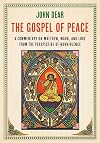
The nonviolent teaching of Jesus is certainly clear from the New Testament; he is a bringer of peace, and peacemakers are the blessed children of God. However Fr John Dear takes us deeper into the synoptic gospels and demonstrates that not only does Jesus teach nonviolence but his whole life is one of active nonviolence, giving the world not only a lesson but an example of what it means to live a nonviolent life, one might say a spirituality of nonviolence.
This commentary takes us through show more the three synoptic gospels section by section, challenging us to look deeper into the stories told about Jesus and those told by him through the lens of nonviolence. Dear guides us to see through the layers of interpretation placed on the text over the centuries by hierarchical, patriarchal and often violent institutions, what I might call “the establishment”, what he often refers to as “empire”, and what the gospels perhaps call “mammon”. He opens our eyes to the fact that many of the nice, familiar, comfortable little stories about Jesus are actually examples of radical nonviolent resistance and civil disobedience in the cultural, political, social and religious context of his time. Using this hermeneutic, the gospels can be seen as a text book on how to do nonviolent action - and it is important to note that nonviolence is always active, never passive.
Dear frequently cites Mahatma Gandhi and Rev Martin Luther King Jr as modern day examples of active nonviolence, although he also mentions many others who are not so well known (with occasional reference to his own experience too). He emphasises how the Sermon on the Mount greatly influenced Gandhi’s nonviolent journey, and he compares how both Gandhi and King, like Jesus himself, knew that they would eventually be killed for their nonviolent stance. The establishment only knows how to respond to nonviolence with violence.
In his introduction Dear opines that as a bible commentary this book is probably more likely to be used for selective reference rather than reading en bloc, but I beg to differ. I read it avidly from cover to cover over a period of three weeks and found it both inspirational and informative. While I will certainly continue to use it as a reference work, I would suggest that it can also be a valuable part of one’s personal prayer, contemplation and spiritual reading.
It might be tempting to see this as a niche book for Christians who are interested in nonviolence. While it is certainly a valuable resource for them, I would rather say that it is essential reading for any Christian who wants to deepen their understanding of the Christ whom they aspire to follow; nonviolence is a foundational value of Christianity, not an optional added extra. But this book is also for any non-Christian, indeed any human being who, like Gandhi, is inspired by the words “Blessed are the peacemakers”. As our world appears not only to be entering an increasingly violent and polarised era but also seeing an increased normalisation of violence, militarism and the military-industrial complex, an understanding of and commitment to nonviolence is a greater priority than ever. show less
This commentary takes us through show more the three synoptic gospels section by section, challenging us to look deeper into the stories told about Jesus and those told by him through the lens of nonviolence. Dear guides us to see through the layers of interpretation placed on the text over the centuries by hierarchical, patriarchal and often violent institutions, what I might call “the establishment”, what he often refers to as “empire”, and what the gospels perhaps call “mammon”. He opens our eyes to the fact that many of the nice, familiar, comfortable little stories about Jesus are actually examples of radical nonviolent resistance and civil disobedience in the cultural, political, social and religious context of his time. Using this hermeneutic, the gospels can be seen as a text book on how to do nonviolent action - and it is important to note that nonviolence is always active, never passive.
Dear frequently cites Mahatma Gandhi and Rev Martin Luther King Jr as modern day examples of active nonviolence, although he also mentions many others who are not so well known (with occasional reference to his own experience too). He emphasises how the Sermon on the Mount greatly influenced Gandhi’s nonviolent journey, and he compares how both Gandhi and King, like Jesus himself, knew that they would eventually be killed for their nonviolent stance. The establishment only knows how to respond to nonviolence with violence.
In his introduction Dear opines that as a bible commentary this book is probably more likely to be used for selective reference rather than reading en bloc, but I beg to differ. I read it avidly from cover to cover over a period of three weeks and found it both inspirational and informative. While I will certainly continue to use it as a reference work, I would suggest that it can also be a valuable part of one’s personal prayer, contemplation and spiritual reading.
It might be tempting to see this as a niche book for Christians who are interested in nonviolence. While it is certainly a valuable resource for them, I would rather say that it is essential reading for any Christian who wants to deepen their understanding of the Christ whom they aspire to follow; nonviolence is a foundational value of Christianity, not an optional added extra. But this book is also for any non-Christian, indeed any human being who, like Gandhi, is inspired by the words “Blessed are the peacemakers”. As our world appears not only to be entering an increasingly violent and polarised era but also seeing an increased normalisation of violence, militarism and the military-industrial complex, an understanding of and commitment to nonviolence is a greater priority than ever. show less
In these pages, John Dear, the activist, brings us to the still, dark places where he wrestles demons and waits to be touched by God. We wait with him and are touched, too, by the silence and he quickened desire to live simpler, more generous, and more engaged lives.

"The God of Peace" represents the first effort to outline a systematic theology beginning with the insight that God is nonviolent. The author shows what Christian faith looks like when nonviolence is treated not simply as a subtopic of ethics or a political tactic, but as a hermeneutic lens through which every aspect of traditional Christian theology may be viewed.
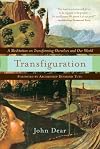
Activist Jesuit, John Dear, wrote this book reflecting on the transfiguration and the implications of the contemplative and activist life.
Dear asserts that that the transfiguration provides a model for the spiritual life in that: disciples follow Jesus, they go with him up the mountain and see him for what he is, and come down and follow him in the way of the cross (defined by Dear as pacifism, activism against nuclear armament, etc.).
Dear is insightful and prophetic. I am not sure that I show more agree with his political analysis on every point, but like the Berrigans before him, I admire how his convictions about peace and activism are Christologically centered. Perhaps its the Jesuit in him. show less
Dear asserts that that the transfiguration provides a model for the spiritual life in that: disciples follow Jesus, they go with him up the mountain and see him for what he is, and come down and follow him in the way of the cross (defined by Dear as pacifism, activism against nuclear armament, etc.).
Dear is insightful and prophetic. I am not sure that I show more agree with his political analysis on every point, but like the Berrigans before him, I admire how his convictions about peace and activism are Christologically centered. Perhaps its the Jesuit in him. show less
You May Also Like


Associated Authors
Statistics
- Works
- 39
- Also by
- 4
- Members
- 1,024
- Popularity
- #25,155
- Rating
- 4.0
- Reviews
- 23
- ISBNs
- 54
- Favorited
- 1