
Mike Deodato Jr.
Author of Batman: No Man's Land, Vol. 4
About the Author
Series
Works by Mike Deodato Jr.
Elektra by Peter Milligan, Larry Hama & Mike Deodato Jr.: The Complete Collection (2017) — Illustrator — 9 copies
Witches #2 — Illustrator — 5 copies
Witches #1 — Illustrator — 4 copies
Wonder Woman, Vol. 2 #90 — Illustrator — 2 copies
Dark Avengers (Vol. 1) #5: Public Exposure, Part 1 — Illustrator — 2 copies
Glory Volume 1 #01 2 copies
Old Man Logan #35 2 copies
Old Man Logan #34 2 copies
Old Man Logan #32 2 copies
Old Man Logan #30 2 copies
Old Man Logan #29 2 copies
Old Man Logan #28 2 copies
Old Man Logan #27 2 copies
Old Man Logan #26 2 copies
Old Man Logan #25 2 copies
Old Man Logan #33 2 copies
Glory Volume 1 #04 2 copies
Old Man Logan (2016-) #41 1 copy
Old Man Logan (2016-) #43 1 copy
Dark Avengers (Vol. 1) #6: Public Exposure, Part 2 — Illustrator — 1 copy
Old Man Logan (2016-) #45 1 copy
Glory Volume 1 #02 1 copy
Old Man Logan (2016-) #39 1 copy
Thor n. 099 1 copy
Thor n. 098 1 copy
Thor n. 097 1 copy
Old Man Logan (2016-) #40 1 copy
Old Man Logan (2016-) #38 1 copy
Wonder Woman, Vol. 2 #96 — Illustrator — 1 copy
Wonder Woman, Vol. 2 #98 — Illustrator — 1 copy
Glory Volume 1 #03 1 copy
X-Men Unlimited (2004) #13 1 copy
The New Avengers (Vol. 2) #14: Fear Itself — Illustrator — 1 copy
The New Avengers (Vol. 2) #13: Infinity, Part 5 — Illustrator — 1 copy
Invincible Iron Man (2016-) #596 — Illustrator — 1 copy
X-Men: Original Sin 1 copy
Catwoman / Wonder Woman #10 — Illustrator — 1 copy
Thor n. 096 1 copy
Associated Works
Batman: Knightfall Part One: Broken Bat (1993) — Cover artist, some editions — 411 copies, 8 reviews
Star Wars, Vol. 4: Last Flight of the Harbinger (2017) — Cover artist, some editions — 205 copies, 6 reviews
Thor Vol. 1: God of Thunder Reborn (Thor by Jason Aaron & Mike Del Mundo, 1) (2018) — Illustrator — 59 copies, 3 reviews
Heroes: The World's Greatest Super Hero Creators Honor The World's Greatest Heroes 9-11-2001 (2001) — Illustrator — 25 copies, 1 review
Captain Marvel: Carol Danvers - The Ms. Marvel Years Vol. 3 (2019) — Cover artist, some editions — 22 copies
Marvel Knights 4 #18 — Cover artist — 3 copies
Tagged
Common Knowledge
- Canonical name
- Deodato Jr., Mike
- Legal name
- Borges Filho, Deodato Taumaturgo
- Other names
- Deodato, Mike
Filho, Deodato Taumaturgo Borges - Birthdate
- 1963-05-23
- Gender
- male
- Nationality
- Brazil
- Birthplace
- Campina Grande, Paraíba, Brazil
- Associated Place (for map)
- Paraíba, Brazil
Members
Reviews
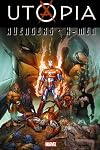
I don't read the X-Men series. All that I have read of the X-Men are through the lens of a Marvel crossover event, like House of M and Civil War. Therefore, I didn't have any issue with how this book holds up vis-á-vis the X-Men's own line. As a collection connected with Dark Reign, I thought it was excellent.
During Secret Invasion, Norman Osborn stole the information needed to kill the Skrull queen in order to set himself up as a hero. It worked perfectly. The resulting period is called show more the Dark Reign, when he becomes head of SHIELD né HAMMER and US national security. He creates his own team of "Dark Avengers," each a villain masquerading as a familiar hero. After riots break out in San Francisco between mutants and the anti-mutant "Humanity Now", Norman decides he needs a team of Dark X-Men to control the situation. Emma Frost seemingly betrays Scott Summers to join and lead Osborn's new team which includes: Daken, Cloak and Dagger, Namor, Omega Man and Mimic. Osborn is also working with a Dark Beast (from another dimension!) to nullify mutant powers. Emma's team is sent in to enforce martial law and curfew on the city. What follows, and covers the first half of the book, are some exceptionally well done battle sequences and the fulfillment of a master plan carefully orchestrated by Scott Summers. I've never been a big fan of Cyclops, but here he truly shines as a leader and strategist. Emma Frost also steps away from the one dimensional "White Queen" role and finally becomes interesting as a power player. Despite bringing his Avengers in, Norman can't get the mutants under control. There are several mutants I don't recognize among the students, but there were enough familiar faces, and just enough character development that it didn't impede my enjoyment of the story at all.
The second half of the book backtracks, which at first was confusing to me. It starts with the first part of a confession between Emma and Scott, which stops midway through and is picked up later, and then it jumps to Rogue and Gambit being summoned to San Francisco to aid Scott. Readers then get the previous event from their POV. Though this could have been better laid out, I still was able to follow what was happening, and it was strong material. The second half also includes the "origin" for each Dark X-Man, or how Osborn lured/coerced them onto the team. The book concludes with one recruit who got the better of Osborn and got away!
Overall, I thought this was an excellent collection, with some of the best action sequences I've read and a well done plot arc. Osborn and Summers play a deadly game of chess that has some nice twists and was very entertaining. And, the book adds to the overall big picture of the Dark Reign. Highly recommended. show less
During Secret Invasion, Norman Osborn stole the information needed to kill the Skrull queen in order to set himself up as a hero. It worked perfectly. The resulting period is called show more the Dark Reign, when he becomes head of SHIELD né HAMMER and US national security. He creates his own team of "Dark Avengers," each a villain masquerading as a familiar hero. After riots break out in San Francisco between mutants and the anti-mutant "Humanity Now", Norman decides he needs a team of Dark X-Men to control the situation. Emma Frost seemingly betrays Scott Summers to join and lead Osborn's new team which includes: Daken, Cloak and Dagger, Namor, Omega Man and Mimic. Osborn is also working with a Dark Beast (from another dimension!) to nullify mutant powers. Emma's team is sent in to enforce martial law and curfew on the city. What follows, and covers the first half of the book, are some exceptionally well done battle sequences and the fulfillment of a master plan carefully orchestrated by Scott Summers. I've never been a big fan of Cyclops, but here he truly shines as a leader and strategist. Emma Frost also steps away from the one dimensional "White Queen" role and finally becomes interesting as a power player. Despite bringing his Avengers in, Norman can't get the mutants under control. There are several mutants I don't recognize among the students, but there were enough familiar faces, and just enough character development that it didn't impede my enjoyment of the story at all.
The second half of the book backtracks, which at first was confusing to me. It starts with the first part of a confession between Emma and Scott, which stops midway through and is picked up later, and then it jumps to Rogue and Gambit being summoned to San Francisco to aid Scott. Readers then get the previous event from their POV. Though this could have been better laid out, I still was able to follow what was happening, and it was strong material. The second half also includes the "origin" for each Dark X-Man, or how Osborn lured/coerced them onto the team. The book concludes with one recruit who got the better of Osborn and got away!
Overall, I thought this was an excellent collection, with some of the best action sequences I've read and a well done plot arc. Osborn and Summers play a deadly game of chess that has some nice twists and was very entertaining. And, the book adds to the overall big picture of the Dark Reign. Highly recommended. show less

This collection is volume 56 in Hachette's "Ultimate Graphic Novels Collection" and collects the "Faith In Monsters" storyline by Warren Ellis and Mike Deodato that ran in "Thunderbolts" issues 110 through to 115 (March – June 2007). The story follows on from the "Civil War" arc where costumed heroes were required to become registered, reveal their identities and sign up to a government programme under the "Superhero Registration Act". Renegade heroes who refused to register became show more fugitive, with a group of super-villains known as "The Thunderbolts"" under the leadership of Norman Osborn (the Green Goblin) tasked to hunt them down. The basic plot in "Faith In Monsters" sees The Thunderbolts (comprising of Venom, Bullseye, Songbird, Moonstone, Radioactive Man, Swordsman and Penance) hunting down a number of third division heroes – Jack Flag, American Eagle and Steel Spider. What makes the comic work, however, isn't the basic story but the characterisations and the carefully considered post 9/11 "War on Terror" motifs and criticisms of America and American policy that Ellis develops. In interviews Ellis has equated Norman Osborn to former American Secretary of Defence, Donald Rumsfeld. The "Faith in Monsters" title of the storyline is therefore as much about the Bush / Rumsfeld era of US politics and politicians as it is about The Thunderbolts. The book perfectly matches the time it was written and Ellis' portrayal of villains as the good guys is a proxy and metaphor the actions of the Bush administration whose actions became (in certain areas) almost indistinguishable from that of the terrorists they purportedly warred against. Ellis' satire is vicious, at one stage characterising an "ordinary American" citizen as follows: "You don't have a passport. You've never been outside the continental United States. You think Hollywood is liberal. You distrust anyone who isn't Christian. Your kids are making bombs in the basement while you watch reality on TV. You think there were WMD's in Iraq and you think North Korea could nuke Hoboken". Heady and inflammatory stuff. In addition to the political elements the story also thrives on the complex characterisations and interactions that Ellis develops for both the heroes and villains. All the characters, be they the good guys or the bad guys are mean, nasty and dangerous, with the dialogue rich and resonant. Brazilian artist Mike Deodato illustrates the story with a realistic style imbuing each of the characters with a distinctive personality. He also provides plenty of twisted and outrageous action sequences. The packaging is the typical of the series: hardcovers and 180 glossy full-colour pages. Bonus and special features this time around includes an eight-page strip, "Switching Sides" that originally appeared in the "Civil War: Choosing Sides" one-shot, a career retrospective on Mike Deodato and an overview of the origins of The Thunderbolts. Overall this is a great book, with a powerful story of post 9/11 angst looking at the actions of America (and their allies) in wake of the terrorist atrocity. It is both angry and thoughtful and written and drawn with a sharp and deeply satirical edge. show less

Holy cow! Not counting cover artists or editorial staff, 64 different people worked on this 368-page book. Even if you discount everything but the core story "Utopia," which has just one writer (Matt Fraction), there are still some nineteen artists at work on six issues. Oh, the American corporate comic book factory: how delightful.
Suffice it to say that I'd never ordinarily buy such a book (X-Men comics alienate me in general, and their gigantic crossover events even moreso), except show more that Paul Cornell has a few stories in it: three shorts that were part of a miniseries called Dark X-Men: The Beginning. Originally these were going to be published as their own book, but that ended up not happening and so I had to by this whole fershlugginer crossover just to get 20-something pages of Paul Cornell goodness. I hope you're happy Marvel! These stories see Cornell reunited with his Captain Britain and MI13 collaborator Leonard Kirk to tell the tales of superheroes recruited for Norman "Green Goblin" Osborn's government-sponsored X-Men team.
"Namor/Norman" is probably the best of the three, as Osborn attempts to figure why Namor, Prince of Atlantis, could possibly care about what's going on in the surface world. Given its placement in the book after the reader has learned the answer, it's a delightful example of two men out-out-thinking one another. I also enjoyed "Hidden Depth," where Emma Frost probes Namor's mind herself. The weakest was clearly "The Temptation of Cloak and Dagger," which didn't say anything that wasn't revealed in the earlier chapters of Utopia.
Utopia as whole is about X-Men leader Cyclops's attempt to keep the X-Men based in San Francisco in the face of growing anti-mutant hysteria and attacks by something called "Bio-Sentinels" whose origins are never explained, not to mention the arrival of Norman Osborn and his government-sponsored Avenger and X-Men teams. The first chapter is actually quite good, building a feeling of tension and unsettledness as the streets of San Francisco are filled with angry rioters, and no one's quite sure what to do. Reading it for the first time after "Occupy Wall Street," it actually feels very prescient. After that, though, the story stretches out too long through its last five chapters. The characters do interesting things, but we're not privy to their interiority enough to really experience them; Emma Frost must be really conflicted over what's going on, but the plot precludes us from discovering how she feels about her role until its over.
Terry Dodson's art was an unexpected delight, though: nice, clean, and vaguely cartoony. I got tired of Luke Ross's well-rounded butt shots, though, and the less said about Marc Silvestri's identical faces for women and poor story-telling skills, the better.
I was delighted to see Mike Carey here, after enjoying his work on Lucifer so much, and joined by Dustin Weaver, one of the better artists on Knights of the Old Republic, but their story (about what Rogue gets up to during the riots in the first chapter) feels like a pointless fill-in. Otherwise, I found the rest of this volume fairly disposable. show less
Suffice it to say that I'd never ordinarily buy such a book (X-Men comics alienate me in general, and their gigantic crossover events even moreso), except show more that Paul Cornell has a few stories in it: three shorts that were part of a miniseries called Dark X-Men: The Beginning. Originally these were going to be published as their own book, but that ended up not happening and so I had to by this whole fershlugginer crossover just to get 20-something pages of Paul Cornell goodness. I hope you're happy Marvel! These stories see Cornell reunited with his Captain Britain and MI13 collaborator Leonard Kirk to tell the tales of superheroes recruited for Norman "Green Goblin" Osborn's government-sponsored X-Men team.
"Namor/Norman" is probably the best of the three, as Osborn attempts to figure why Namor, Prince of Atlantis, could possibly care about what's going on in the surface world. Given its placement in the book after the reader has learned the answer, it's a delightful example of two men out-out-thinking one another. I also enjoyed "Hidden Depth," where Emma Frost probes Namor's mind herself. The weakest was clearly "The Temptation of Cloak and Dagger," which didn't say anything that wasn't revealed in the earlier chapters of Utopia.
Utopia as whole is about X-Men leader Cyclops's attempt to keep the X-Men based in San Francisco in the face of growing anti-mutant hysteria and attacks by something called "Bio-Sentinels" whose origins are never explained, not to mention the arrival of Norman Osborn and his government-sponsored Avenger and X-Men teams. The first chapter is actually quite good, building a feeling of tension and unsettledness as the streets of San Francisco are filled with angry rioters, and no one's quite sure what to do. Reading it for the first time after "Occupy Wall Street," it actually feels very prescient. After that, though, the story stretches out too long through its last five chapters. The characters do interesting things, but we're not privy to their interiority enough to really experience them; Emma Frost must be really conflicted over what's going on, but the plot precludes us from discovering how she feels about her role until its over.
Terry Dodson's art was an unexpected delight, though: nice, clean, and vaguely cartoony. I got tired of Luke Ross's well-rounded butt shots, though, and the less said about Marc Silvestri's identical faces for women and poor story-telling skills, the better.
I was delighted to see Mike Carey here, after enjoying his work on Lucifer so much, and joined by Dustin Weaver, one of the better artists on Knights of the Old Republic, but their story (about what Rogue gets up to during the riots in the first chapter) feels like a pointless fill-in. Otherwise, I found the rest of this volume fairly disposable. show less
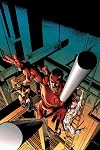
About halfway through this book, I was prepared to give it just three stars. The storytelling format was annoying as hell. The book is structured so that the Avengers are being "interviewed" for a book about the events of Fear Itself. So there are a lot of pages covered with small panels with the face of an Avenger saying a line or two of dialog. It jumps back and forth among the various heroes. The interviews are intercut with full page spreads showing the battles or events being talked show more about by the heroes. Having to read a long chain of single sentence boxes was a bit tedious. However, it quickly became clear that the incidents they are sharing is of their fellow heroes being especially brave - and worthy of being called Avengers.
No one questions Steve Rogers' or Thor's heroism and bravery. And each of the Avengers reaffirms that. Then they go on to explain why each of the rest of them is also brave and true, despite a shady past or prior transgressions. And each of those examples is what made this book a must-read that was even better than the main event. The Red Hulk, Spiderwoman, Mockingbird...they all get a chance to shine while saving the day during Fear Itself. Steve Rogers takes Victoria Hand, Agent 13 and Maria Hill on a mission that turns out to be a trap - that they fight their way out of. All of these were great stories, with superb action sequences. However, the best was definitely saved for last.
The book concludes with Squirrel Girl - I know, a ridiculous character who somehow works great in this instance - fighting her way across the mayhem of New York to get to Avengers Mansion and watch the baby Cage while her parents fight the big fight. And when the mansion comes under attack, it is Daredevil who saves the day in a story that very nearly had me cheering out loud. The ending alone was worth five stars.
Overall, though I still hate the format, this book does a lot to expand on the overall Fear Itself event by telling some exciting stories of how the heroes fought the spreading chaos. Highly recommended. show less
No one questions Steve Rogers' or Thor's heroism and bravery. And each of the Avengers reaffirms that. Then they go on to explain why each of the rest of them is also brave and true, despite a shady past or prior transgressions. And each of those examples is what made this book a must-read that was even better than the main event. The Red Hulk, Spiderwoman, Mockingbird...they all get a chance to shine while saving the day during Fear Itself. Steve Rogers takes Victoria Hand, Agent 13 and Maria Hill on a mission that turns out to be a trap - that they fight their way out of. All of these were great stories, with superb action sequences. However, the best was definitely saved for last.
The book concludes with Squirrel Girl - I know, a ridiculous character who somehow works great in this instance - fighting her way across the mayhem of New York to get to Avengers Mansion and watch the baby Cage while her parents fight the big fight. And when the mansion comes under attack, it is Daredevil who saves the day in a story that very nearly had me cheering out loud. The ending alone was worth five stars.
Overall, though I still hate the format, this book does a lot to expand on the overall Fear Itself event by telling some exciting stories of how the heroes fought the spreading chaos. Highly recommended. show less
Lists
You May Also Like


Associated Authors
Statistics
- Works
- 108
- Also by
- 38
- Members
- 2,701
- Popularity
- #9,508
- Rating
- 3.6
- Reviews
- 113
- ISBNs
- 121
- Languages
- 8
