
About the Author
Image credit: Credit: Jorge Madrigal, http://www.madrigalstudio.com/.
Works by Mark Dery
Born to Be Posthumous: The Eccentric Life and Mysterious Genius of Edward Gorey (2018) 489 copies, 12 reviews
I Must Not Think Bad Thoughts: Drive-by Essays on American Dread, American Dreams (2012) 69 copies, 4 reviews
Associated Works
Take My Advice: Letters to the Next Generation from People Who Know a Thing or Two (2002) — Contributor — 50 copies
Afro-Future Females: Black Writers Chart Science Fiction's Newest New-Wave Trajectory (2008) — Introduction — 13 copies
21•C #26 — Contributor, some editions — 1 copy
Tagged
Common Knowledge
- Birthdate
- 1959-12-24
- Gender
- male
- Short biography
- Coined the term Afrofuturism.
- Nationality
- USA
- Birthplace
- Braintree, Massachusetts, USA
- Associated Place (for map)
- Massachusetts, USA
Members
Reviews
Born to Be Posthumous: The Eccentric Life and Mysterious Genius of Edward Gorey (English Edition) by Mark Dery
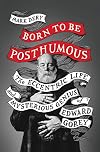
The Publisher Says: From The Gashlycrumb Tinies to The Doubtful Guest, Edward Gorey's wickedly funny and deliciously sinister little books have influenced our culture in innumerable ways, from the works of Tim Burton and Neil Gaiman to Lemony Snicket. Some even call him the Grandfather of Goth.
But who was this man, who lived with over twenty thousand books and six cats, who roomed with Frank O'Hara at Harvard, and was known—in the late 1940s, no less—to traipse around in full-length fur show more coats, clanking bracelets, and an Edwardian beard? An eccentric, a gregarious recluse, an enigmatic auteur of whimsically morbid masterpieces, yes but who was the real Edward Gorey behind the Oscar Wildean pose?
He published over a hundred books and illustrated works by Samuel Beckett, T.S. Eliot, Edward Lear, John Updike, Charles Dickens, Hilaire Belloc, Muriel Spark, Bram Stoker, Gilbert & Sullivan, and others. At the same time, he was a deeply complicated and conflicted individual, a man whose art reflected his obsessions with the disquieting and the darkly hilarious.
Based on newly uncovered correspondence and interviews with personalities as diverse as John Ashbery, Donald Hall, Lemony Snicket, Neil Gaiman, and Anna Sui, Born to be Posthumous draws back the curtain on the eccentric genius and mysterious life of Edward Gorey.
I CHECKED THIS BOOK OUT OF THE LIBRARY. SIX TIMES. ULTIMATELY A LIBRARIAN BOUGHT ME A SALE KINDLEBOOK. (True story!)
My Review: There are few things my elder sister and I agree on. One of them is that Edward Gorey's a bloody genius, and about as hilarious as it's possible to be. (We also both love Jo Walton, so it's not as though she's a waste of space. Entirely, anyway.)
That's what Edward Gorey's superpower is, though. He speaks to a certain inner weirdo in some people, a rebellious streak that demands the sheer nonsensical pointlessness of Life be acknowledged and celebrated. Poor Xerxes...a Gashlycrumb Tiny I truly felt for.
Now that Gorey's safely dead, what's the skinny on his narrow gay ass? Welllll...not that fascinating, if I'm honest. He was exactly as you'd expect someone who could think up a child called "Xerxes" would be. Strange, a misfit, completely and utterly himself because he *designed* himself with great care. His artwork was justly celebrated for its technical merit...by three or four people. Weirdness exacts costs from the weirdo. Gorey was famous...if you know who he is. I'm never sad or sorry that I know who he is, unlike many famous people. But Gorey's talent as an artist was never the subject of major retrospectives at the Museum of Snooty Stuff or the Obscene Wealth Collection.
Unlike most of the art you'll see in those cultural institutions, you've seen a Gorey image. (If you're reading this blog, you have.) The Mystery! series opening sequence? Gorey. The 1950s Anchor Books images? Gorey. Over 100 of his own books, popular culture objects. He was a niche force, but a force nonetheless.
However, Dery's exhaustively researched biography goes into some detail about the skinny on Gorey's sexual nature. I think, like Greta Garbo, he wanted to be left alone. He never, ever once said he was gay. He lived through Stonewall...long after it was entirely okay with most people to come out as gay, he didn't.
Because he wasn't.
He said, in an interview collected in Ascending Peculiarity, "I'm neither one thing nor the other particularly. I am fortunate in that I am apparently reasonably undersexed or something ... I've never said that I was gay and I've never said that I wasn't ... what I'm trying to say is that I am a person before I am anything else ... " That, mes amis, is a clear statement of being. He was what we, in 2022, call "asexual." That doesn't prevent him from presenting himself in a striking and deeply queer-coded manner. But if the twenty-first century has taught me anything, it's that people are who and what they say they are. Gorey? Asexual, and presenting himself as a strange misfit. And that is all there is to it.
I wasn't pleased by Author Dery's claiming of him for the gay men of the world solely because we have his own words on the subject and they are not, despite the fact they could easily and safely have been, "I am gay." So. He wasn't. Yes, let's claim him as an ikon of the QUILTBAG spectrum! Yes, let's celebrate his Otherness, his determined design of his Otherness, and the glorious art that came out of it..."There's so little heartless work around," said Gorey. "So I feel I am filling a small but necessary gap."
But let's not posthumously (!) reassign his stripe on the flag for our own need to possess him. Let's celebrate the way he said he was with the gratitude and laughter and little frisson of unnerved nerves that he designed it to evoke in his viewers. show less
But who was this man, who lived with over twenty thousand books and six cats, who roomed with Frank O'Hara at Harvard, and was known—in the late 1940s, no less—to traipse around in full-length fur show more coats, clanking bracelets, and an Edwardian beard? An eccentric, a gregarious recluse, an enigmatic auteur of whimsically morbid masterpieces, yes but who was the real Edward Gorey behind the Oscar Wildean pose?
He published over a hundred books and illustrated works by Samuel Beckett, T.S. Eliot, Edward Lear, John Updike, Charles Dickens, Hilaire Belloc, Muriel Spark, Bram Stoker, Gilbert & Sullivan, and others. At the same time, he was a deeply complicated and conflicted individual, a man whose art reflected his obsessions with the disquieting and the darkly hilarious.
Based on newly uncovered correspondence and interviews with personalities as diverse as John Ashbery, Donald Hall, Lemony Snicket, Neil Gaiman, and Anna Sui, Born to be Posthumous draws back the curtain on the eccentric genius and mysterious life of Edward Gorey.
I CHECKED THIS BOOK OUT OF THE LIBRARY. SIX TIMES. ULTIMATELY A LIBRARIAN BOUGHT ME A SALE KINDLEBOOK. (True story!)
My Review: There are few things my elder sister and I agree on. One of them is that Edward Gorey's a bloody genius, and about as hilarious as it's possible to be. (We also both love Jo Walton, so it's not as though she's a waste of space. Entirely, anyway.)
That's what Edward Gorey's superpower is, though. He speaks to a certain inner weirdo in some people, a rebellious streak that demands the sheer nonsensical pointlessness of Life be acknowledged and celebrated. Poor Xerxes...a Gashlycrumb Tiny I truly felt for.
Now that Gorey's safely dead, what's the skinny on his narrow gay ass? Welllll...not that fascinating, if I'm honest. He was exactly as you'd expect someone who could think up a child called "Xerxes" would be. Strange, a misfit, completely and utterly himself because he *designed* himself with great care. His artwork was justly celebrated for its technical merit...by three or four people. Weirdness exacts costs from the weirdo. Gorey was famous...if you know who he is. I'm never sad or sorry that I know who he is, unlike many famous people. But Gorey's talent as an artist was never the subject of major retrospectives at the Museum of Snooty Stuff or the Obscene Wealth Collection.
Unlike most of the art you'll see in those cultural institutions, you've seen a Gorey image. (If you're reading this blog, you have.) The Mystery! series opening sequence? Gorey. The 1950s Anchor Books images? Gorey. Over 100 of his own books, popular culture objects. He was a niche force, but a force nonetheless.
However, Dery's exhaustively researched biography goes into some detail about the skinny on Gorey's sexual nature. I think, like Greta Garbo, he wanted to be left alone. He never, ever once said he was gay. He lived through Stonewall...long after it was entirely okay with most people to come out as gay, he didn't.
Because he wasn't.
He said, in an interview collected in Ascending Peculiarity, "I'm neither one thing nor the other particularly. I am fortunate in that I am apparently reasonably undersexed or something ... I've never said that I was gay and I've never said that I wasn't ... what I'm trying to say is that I am a person before I am anything else ... " That, mes amis, is a clear statement of being. He was what we, in 2022, call "asexual." That doesn't prevent him from presenting himself in a striking and deeply queer-coded manner. But if the twenty-first century has taught me anything, it's that people are who and what they say they are. Gorey? Asexual, and presenting himself as a strange misfit. And that is all there is to it.
I wasn't pleased by Author Dery's claiming of him for the gay men of the world solely because we have his own words on the subject and they are not, despite the fact they could easily and safely have been, "I am gay." So. He wasn't. Yes, let's claim him as an ikon of the QUILTBAG spectrum! Yes, let's celebrate his Otherness, his determined design of his Otherness, and the glorious art that came out of it..."There's so little heartless work around," said Gorey. "So I feel I am filling a small but necessary gap."
But let's not posthumously (!) reassign his stripe on the flag for our own need to possess him. Let's celebrate the way he said he was with the gratitude and laughter and little frisson of unnerved nerves that he designed it to evoke in his viewers. show less
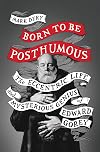
DNF. Dery spends a good chunk of the introduction (and as much of the book as I could bear to read) insisting that Gorey was gay, when his own statements on that matter were that he wasn’t much interested in sex and, when asked if he was gay, that he wasn’t one thing or the other. That seems pretty clear to me, but Dery goes the “ignoring everything he actually said in favor of tired stereotypes” route, insisting that Gorey was gay because everyone knew he was (uh, Gorey doesn’t show more seem to have?), because he wore fancy coats and loved ballet and had “bitchy wit” (seriously). It’s infuriating.
I honestly don’t know why Dery did this. He was really determined to interpret Gorey’s work through a queer theory lens, but he could as easily have done that while acknowledging that Gorery’s queerness was, apparently, asexuality. And it’s possible that he, as a queer writer himself, just wanted Gorey to be like him. Which, dude, I get it; I myself was pretty excited when I realized Gorey was queer. We’re always hoping our heroes will turn out to be like us. But — that doesn’t make it okay to overrule what Gorey himself said about his sexuality. It still just a gross, violating thing to do, to Gorey and to every asexual reader out there.
The rest of the book wasn’t worth enough to outweigh the damage done in stereotyping and erasing Gorey himself. This one gets a yikes from me. show less
I honestly don’t know why Dery did this. He was really determined to interpret Gorey’s work through a queer theory lens, but he could as easily have done that while acknowledging that Gorery’s queerness was, apparently, asexuality. And it’s possible that he, as a queer writer himself, just wanted Gorey to be like him. Which, dude, I get it; I myself was pretty excited when I realized Gorey was queer. We’re always hoping our heroes will turn out to be like us. But — that doesn’t make it okay to overrule what Gorey himself said about his sexuality. It still just a gross, violating thing to do, to Gorey and to every asexual reader out there.
The rest of the book wasn’t worth enough to outweigh the damage done in stereotyping and erasing Gorey himself. This one gets a yikes from me. show less

Let’s begin by explaining what this book is not. It’s not D.H. Lawrence’s 1915 collection of short stories, England, My England. Nor is it the Scottish A.G. Macdonnell’s 1933 classic satire of England called England, Their England. Nor is it George Orwell’s 1941 essay, “England Your England,” the Socialist-turned-conservative’s propaganda effort to bolster the war effort during the Blitz all the while decrying modernity.
Instead, it’s a short — show more less-than-50-minutes-in-the-Audible-format short — exposition on Americans’ sad propensity to idealize their British cousins by an American culture writer, Mark Dery. Ninety percent of Americans approve of the British — only Canadians and Australians rank higher. But why the love between two countries divided by a common language? Dery does a nice job explaining it in his funny and pithy essay.
As Dery points out, the Received Pronunciation of BBC readers, government officials at No. 10 Downing Street, and revered Oxbridge dons remains “undiluted opiate of Englishes”: “It’s the pornography of posh. As critical insights go, not exactly the veil of the temple rent in twain. But the why behind the why, why are some native-born residents of our Shining City upon a Hill, where all men are created equal, seduced by the fluting tones of manor-born privilege….” But the infatuation with plummy accents is indicative of a longing that would be terrible to admit to if speaking of this side of the Atlantic.
“Blithely ignorant of the Empire’s late Victorian holocausts, … American Anglophiles tend, on balance, to view British history through a Merchant-Ivory lens. Likewise, most are possessed of only the dimmest sense, if any, of contemporary England, with its multicultural tensions, income polarizations, shock-treatment-austerity measures, and a surveillance regime necessitated, naturally, by the war on terror, so pervasive even the Stasi would have thought it a little much. The Braveheart demographic notwithstanding, most American Anglophiles are soap-opera monarchists who get all verklempt at royal weddings.”
If you’re skeptical of the Stasi description, you should know that London boasts more than 1 million closed-circuit television cameras — one on nearly every block — making wandering this city unobserved literally impossible.
But note what Americans love about England: not Little Britain or Channel 4’s 10 O’clock Live or Barry Maitland’s and Deborah Crombie’s novels of a London teeming with blacks and South Asians. Rather they gravitate to period costume pieces like Downtown Abbey, Upstairs Downstairs, Call the Midwife, or Agatha Christie mysteries, where the characters are, if not universally well-spoken and polite, they are nearly so, and where every single character is white. Even in the modern incarnation of Doctor Who and Sherlock, you’ll be hard-pressed to realize that London has a higher percentage of ethnic minorities than Topeka, Kansas; Portland, Oregon, or Santa Barbara, California. Sure, London is hardly New York City or Atlanta, but one out of four Londoners aren’t white. You’ll never realize that from PBS’ Masterpiece, BBC America’s Broadchurch, or Brit chick-lit.
Waxing nostalgia for the 88 percent white America of 1970 is too overtly racist for anyone to the left of Rush Limbaugh or Iowa Congressman Steve King; however, sighing over a white-washed England of yore or the provinces provides an acceptable dog whistle. Thanks to Mark Dery for deconstructing the Anglophilia. show less
Instead, it’s a short — show more less-than-50-minutes-in-the-Audible-format short — exposition on Americans’ sad propensity to idealize their British cousins by an American culture writer, Mark Dery. Ninety percent of Americans approve of the British — only Canadians and Australians rank higher. But why the love between two countries divided by a common language? Dery does a nice job explaining it in his funny and pithy essay.
As Dery points out, the Received Pronunciation of BBC readers, government officials at No. 10 Downing Street, and revered Oxbridge dons remains “undiluted opiate of Englishes”: “It’s the pornography of posh. As critical insights go, not exactly the veil of the temple rent in twain. But the why behind the why, why are some native-born residents of our Shining City upon a Hill, where all men are created equal, seduced by the fluting tones of manor-born privilege….” But the infatuation with plummy accents is indicative of a longing that would be terrible to admit to if speaking of this side of the Atlantic.
“Blithely ignorant of the Empire’s late Victorian holocausts, … American Anglophiles tend, on balance, to view British history through a Merchant-Ivory lens. Likewise, most are possessed of only the dimmest sense, if any, of contemporary England, with its multicultural tensions, income polarizations, shock-treatment-austerity measures, and a surveillance regime necessitated, naturally, by the war on terror, so pervasive even the Stasi would have thought it a little much. The Braveheart demographic notwithstanding, most American Anglophiles are soap-opera monarchists who get all verklempt at royal weddings.”
If you’re skeptical of the Stasi description, you should know that London boasts more than 1 million closed-circuit television cameras — one on nearly every block — making wandering this city unobserved literally impossible.
But note what Americans love about England: not Little Britain or Channel 4’s 10 O’clock Live or Barry Maitland’s and Deborah Crombie’s novels of a London teeming with blacks and South Asians. Rather they gravitate to period costume pieces like Downtown Abbey, Upstairs Downstairs, Call the Midwife, or Agatha Christie mysteries, where the characters are, if not universally well-spoken and polite, they are nearly so, and where every single character is white. Even in the modern incarnation of Doctor Who and Sherlock, you’ll be hard-pressed to realize that London has a higher percentage of ethnic minorities than Topeka, Kansas; Portland, Oregon, or Santa Barbara, California. Sure, London is hardly New York City or Atlanta, but one out of four Londoners aren’t white. You’ll never realize that from PBS’ Masterpiece, BBC America’s Broadchurch, or Brit chick-lit.
Waxing nostalgia for the 88 percent white America of 1970 is too overtly racist for anyone to the left of Rush Limbaugh or Iowa Congressman Steve King; however, sighing over a white-washed England of yore or the provinces provides an acceptable dog whistle. Thanks to Mark Dery for deconstructing the Anglophilia. show less
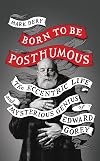
Having gathered slightly less than a handful of Gorey's books, and having been delighted and frustrated by them in equal measure, the publication of Dery's biography was a timely one for me. Perhaps now I would be provided with a key to understanding what on earth Gorey was on about!
Well, mission accomplished! Somewhat...
Dery explains for the uninitiated that the point of most of Gorey's work is that there is no specific point. Gorey's interest is in atmosphere, feeling, the unsaid, and in show more leaving room for the reader (observer?) of his books to find such meaning as they may. What a relief! Released from the agony of interpretation I find myself more able to connect with the books and enjoy them for what they are, rather than what I'm trying to make them be.
That service provided, as a biography, Dery’s book is (so far as I can tell) detailed, sympathetic and insightful. Gorey is presented as somebody it would have been difficult, and interesting, and pleasant, and stimulating, and frustrating to know.
Placing Gorey within the stream of LGBTQI+ culture, counter-culture and mainstream culture seemed a worthwhile exercise to me, however I think that a little too much time is spent by Dery discussing Gorey’s sexuality. From the quotes Dery gives by Gorey on the subject, he addressed the topic adequately and the “long stare” seems somewhat intrusive when cast upon a person who protected their privacy so carefully.
The foregoing point aside, this is a fantastic work of biography which I thoroughly enjoyed. show less
Well, mission accomplished! Somewhat...
Dery explains for the uninitiated that the point of most of Gorey's work is that there is no specific point. Gorey's interest is in atmosphere, feeling, the unsaid, and in show more leaving room for the reader (observer?) of his books to find such meaning as they may. What a relief! Released from the agony of interpretation I find myself more able to connect with the books and enjoy them for what they are, rather than what I'm trying to make them be.
That service provided, as a biography, Dery’s book is (so far as I can tell) detailed, sympathetic and insightful. Gorey is presented as somebody it would have been difficult, and interesting, and pleasant, and stimulating, and frustrating to know.
Placing Gorey within the stream of LGBTQI+ culture, counter-culture and mainstream culture seemed a worthwhile exercise to me, however I think that a little too much time is spent by Dery discussing Gorey’s sexuality. From the quotes Dery gives by Gorey on the subject, he addressed the topic adequately and the “long stare” seems somewhat intrusive when cast upon a person who protected their privacy so carefully.
The foregoing point aside, this is a fantastic work of biography which I thoroughly enjoyed. show less
Lists
Awards


You May Also Like


Associated Authors
Statistics
- Works
- 9
- Also by
- 4
- Members
- 1,048
- Popularity
- #24,587
- Rating
- 3.7
- Reviews
- 20
- ISBNs
- 35
- Languages
- 6
- Favorited
- 2
