
Michael Dorris (1945–1997)
Author of A Yellow Raft in Blue Water
About the Author
Michael Dorris, Author Michael Dorris received an undergraduate degree in English, with honors, from Georgetown University and a graduate degree in anthropology from Yale. He taught for fifteen years at Dartmouth College and founded the Native American Studies Program there. His novels include "A show more Yellow Raft in Blue Water" and "The Crown of Columbus," co-authored with Louise Erdrich. "The Broken Cord," which was named Best Non-Fiction of the Year by the National Book Critics Circle, brought attention to the disorder Fetal Alcohol Syndrome. He has also written novels for young adults, which include "Guests," "Sees Behind Trees," and "Morning Girl," which won the Scott O'Dell Award for Historical Fiction. (Bowker Author Biography) show less
Image credit: Uncredited photo found at salon.com
Series
Works by Michael Dorris
The Most Wonderful Books: Writers on Discovering the Pleasures of Reading (1997) 141 copies, 2 reviews
Associated Works
A World of Ideas : Conversations With Thoughtful Men and Women About American Life Today and the Ideas Shaping Our Future (1989) — Interviewee — 604 copies, 1 review
Talking Leaves: Contemporary Native American Short Stories (1991) — Contributor — 220 copies, 2 reviews
In Another Part of the Forest: An Anthology of Gay Short Fiction (1994) — Contributor — 193 copies, 2 reviews
I Should Have Stayed Home: The Worst Trips of the Great Writers (1994) — Contributor — 187 copies, 5 reviews
Mid-life Confidential: The Rock Bottom Remainders Tour America with Three Chords and an Attitude (1994) — Contributor — 77 copies, 4 reviews
Genesis as It Is Written: Contemporary Writers on Our First Stories (1996) — Contributor — 69 copies
Song of the Turtle: American Indian Literature 1974-1994 (1996) — Contributor — 69 copies, 2 reviews
The Lightning Within: An Anthology of Contemporary American Indian Fiction (1991) — Contributor — 34 copies
Antaeus No. 64/65, Spring/Autumn 1990 - Twentieth Anniversary Issue (1990) — Contributor — 14 copies
Tagged
Common Knowledge
- Canonical name
- Dorris, Michael
- Legal name
- Dorris, Michael Anthony
- Birthdate
- 1945-01-30
- Date of death
- 1997-04-11
- Gender
- male
- Education
- Yale University (AM | Anthropology | 1971)
Georgetown University (BA cum laude | English and Classics | 1967) - Occupations
- scholar of Native American studies
college professor - Organizations
- Dartmouth College
- Awards and honors
- National Book Critics Circle Award for General Nonfiction (1989)
- Relationships
- Erdrich, Louise (former spouse
Erdrich, Heid E. (former sister-in-law)
Erdrich, Lise (former sister-in-law) - Cause of death
- suicide
- Nationality
- USA
- Birthplace
- Louisville, Kentucky, USA
- Places of residence
- Cornish, New Hampshire, USA
- Place of death
- Concord, New Hampshire, USA
- Associated Place (for map)
- New Hampshire, USA
Members
Discussions
A Yellow Raft in Blue Water, Michael Dorris in World Reading Circle (March 2013)
Reviews
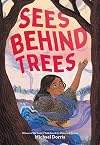
I love this book, and I'd give it my highest recommendation to parents who have kids who are visually impaired--as I was, when I was a child. Those with clear vision can have no idea what it's like to see people and objects as blobs. So much is missed when we can't see the facial expressions of those we interact with. In my case, it made me withdrawn as a child. In this poignant story, "Walnut," who later becomes "See Behind Trees," is gently made to realize that he, too, is an integral part show more of his tribe, despite not seeing the way others see. show less
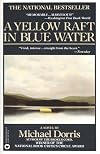
A Yellow Raft in Blue Water brings us the lives of three Indian women, a daughter, a mother and a grandmother, in their respective first person narrative voices. We meet Rayona first; she is fifteen years old, and her life is not easy. She and her mother live in Seattle, but Mom is often "sick" and in the hospital. We are not told (as Rayona is not told) what is wrong with her. Rayona's father is a black man who moves in and out of her life, contributing very little to it other than the show more effects of his DNA on her appearance. When Rayona's mother Christine decides they must return to the reservation to live with HER mother, no reason is given for that either. In Christine's section of the novel, we hear her tell her story, going back to her own teen years. We learn of her bond with her younger brother Lee and his best friend, Dayton; and of the dynamic attraction that drew her to Elgin Taylor and brought her Rayona. Finally, we hear from Christine's mother, who has always insisted that her children call her "Aunt Ida", because she was not married when they were born and therefore isn't entitled to be called "Mother". As each section unfolds, we learn things that the previous narrator did not tell us, because she did not KNOW. Secrets are at the heart of each woman's life; sometimes they are revealed to the characters, but more often only we, the readers are let in on all the truths, all the motivations, all the heartbreaks. This is an incredible novel, and I highly recommend it. show less
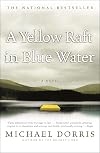
This is a story told through three generations of women from the same family, only instead of beginning with the grandmother, it begins with the granddaughter and works backwards. This may sound like an unusual and unfriendly way to tell the history of a family but it actually helps you to feel the emotions of the characters and understand their actions so much more. What starts out as unbelievable behavior ends up being explained in the end and you realize just how much love the family has show more for each other, even if it doesn't seem to be that they show it at all. It's often said that we are made up of our own experiences, but this is a book that proves that part of us is made up of the things others before us have experienced.
I found it interesting that for each section of the book the writing was slightly different. This makes sense, as the story is told from each character's point of view, but the attention to detail in wording and language really hit home throughout, especially at the end of the book, when Ida tells her story. She doesn't speak English, but her native "Indian", which is a more eloquent and descriptive language than English and the writing demonstrates this beautifully.
There wasn't much of a conclusion to the book, or even a real conclusion to each person's story, but I'm not certain that there really needed to be. Readers are taken to a point where their part of the character's story has been wrapped up and packaged in a set of chapters and bringing each section to an actual conclusion, either by the death of the character or some other event would only prolong the story, rather than bring it to a stopping point. I hadn't realized this at the time that I was reading and found the lack of a definite finish line somewhat unsettling, but as the story eased into me completely, I found myself quite satisfied.
Yellow Raft in Blue Water is a heartwarming journey, written very well, and almost certainly guaranteed to pull the reader in as it reminds them how important family can truly be, even when the traditional idea of family is far from what you have to work with. show less
I found it interesting that for each section of the book the writing was slightly different. This makes sense, as the story is told from each character's point of view, but the attention to detail in wording and language really hit home throughout, especially at the end of the book, when Ida tells her story. She doesn't speak English, but her native "Indian", which is a more eloquent and descriptive language than English and the writing demonstrates this beautifully.
There wasn't much of a conclusion to the book, or even a real conclusion to each person's story, but I'm not certain that there really needed to be. Readers are taken to a point where their part of the character's story has been wrapped up and packaged in a set of chapters and bringing each section to an actual conclusion, either by the death of the character or some other event would only prolong the story, rather than bring it to a stopping point. I hadn't realized this at the time that I was reading and found the lack of a definite finish line somewhat unsettling, but as the story eased into me completely, I found myself quite satisfied.
Yellow Raft in Blue Water is a heartwarming journey, written very well, and almost certainly guaranteed to pull the reader in as it reminds them how important family can truly be, even when the traditional idea of family is far from what you have to work with. show less
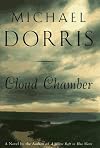
Another fine multi-generational, multi-cultural, multiple viewpoint saga from Michael Dorris. This one takes us back to Ireland to meet the formidable Rose Mannion, the matriarch of an immigrant line whose descendants eventually include a Black man who marries a Native American woman and produces Rayona, a young woman who is now one of my favorite female characters of all time. We met Rayona's mother, father and grandmother in A Yellow Raft in Blue Water. Now we learn of the complex lives show more and relationships of several amazing, if not always admirable, women on her father's side, both black and white. Totally absorbing, superbly crafted, unpredictable and unforgettable. show less
Lists
Awards


You May Also Like


Associated Authors
Statistics
- Works
- 17
- Also by
- 16
- Members
- 7,557
- Popularity
- #3,230
- Rating
- 3.7
- Reviews
- 105
- ISBNs
- 137
- Languages
- 8
- Favorited
- 4