
Bob Dylan
Author of Chronicles: Volume One
About the Author
Bob Dylan was born Robert Allen Zimmerman on May 24, 1941 in Duluth, Minnesota. He is a singer-songwriter and artist. He emerged on the New York music scene in 1961. He has recorded 38 studio albums including Bringing It All Back Home, Highway 61 Revisited, Blonde on Blonde, Blood on the Tracks, Oh show more Mercy, Time Out Of Mind, Love and Theft, and Modern Times. His songs include Blowin' in the Wind, The Times They Are a-Changin', and Like a Rolling Stone. He has published poetry and prose including a collection entitled Tarantula in 1971, a memoir entitled Chronicles: Volume One in 2004, and The Lyrics: 1961-2012 in 2016. He has received numerous awards including eleven Grammy Awards, a Golden Globe Award, and an Academy Award. In 1988, he was inducted into the Rock and Roll Hall of Fame. In 2008, the Pulitzer Prize jury awarded him a special citation for "his profound impact on popular music and American culture, marked by lyrical compositions of extraordinary poetic power." In 2012, he received the Presidential Medal of Freedom from President Barack Obama. In 2016, Dylan received the Nobel Prize in Literature "for having created new poetic expressions within the great American song tradition." (Bowker Author Biography) show less
Series
Works by Bob Dylan
Live 1975: The Rolling Thunder Revue (The Bootleg Series, Volume 5) [sound recording] (2002) 62 copies, 1 review
Christmas in the heart [sound recording] (2009) — Vocals, Guitar, Electric Piano, Harmonica, Arranged By — 39 copies, 1 review
Live 1964: Concert at Philharmonic Hall (The Bootleg Series, Volume 6) [sound recording] (2004) 32 copies
Bob Dylan Letras completas 1962-2012,surtido: colores aleatorios (Cultura Popular) (2017) 20 copies, 1 review
Canzoni d'amore e di protesta 11 copies
Dylan: Words To His Songs 5 copies
Like a Rolling Stone 4 copies
Renaldo & Clara 3 copies
Biograph 2 3 copies
Biograph 1 3 copies
Bob Dylan: The Original [songbook] 3 copies
Man On The Street Vol 2 3 copies
A Rare Batch of Little White Wonder 3 copies
Bob Dylan - TV Live & Rare '63-'75 3 copies
Positively 4th Street 3 copies
Bob Dylan : the beaten path 2 copies
Blowin In The Wind, Compilation 2 copies
Muscle Shoals 2 copies
Bob Dylan's Greatest Hits 2 copies
May Your Song Always Be Sung: The Songs Of Bob Dylan Vol. 3 By Bob Dylan (2003-06-02) (2003) 2 copies
Bob Dylan, The Album CD 2 copies
Highway 61 Revisited {songbook} 2 copies
Bob Dylan - The Folk Years [DVD] 2 copies
1961-1968 2 copies
The 1974 Live Recordings 2 copies
Natural Born Killers — Artist — 2 copies
Cambio de guardia 2 copies
Love Sick (CD2) [Sound Recording] 2 copies
European Concert Tour 1981 2 copies
Live in Newport 1965 2 copies
TALKIN' BOB DYLAN 1978 2 copies
TALKIN' BOB DYLAN 1984 2 copies
Biograph 3 2 copies
Bob Dylan 1978 Concert Tour Book 2 copies
Blood on the Rocks 2 copies
Watching the River Flow 2 copies
The Genuine Bootleg Series, Take 2 2 copies
Retrospectrum 2 copies
Street Legal songbook 2 copies
Bringing It All Back Home [songbook] 2 copies
Bob Dylan Songbook 2 copies
The Complete Budokan 1978 2 copies
Long Time a Growin 1 copy
Spectra Morphic 1 copy
Greatest Hits III 1 copy
Down the highway 1 copy
BOB DYLAN 1 copy
Mr. Bojangles 1 copy
I shall be released 1 copy
Vol. 3-Classic Interviews 1 copy
Transmissions: +Book 1 copy
You Don't Know Me 1 copy
Super Hits: Bob Dylan 1 copy
Classic Interviews 1965-1966 1 copy
Blowin' In the Wind 1 copy
Finjan Club 1 copy
Re-Transmissions (2005) (CD) 1 copy
With God On Our Side 1 copy
Sebastian Cabot, Actor: A Dramatic Reading with Music, Bob Dylan, Poet. [sound recording] (1967) 1 copy
Live in London 1965 1 copy
Friends & Neighbours 1 copy
Baby Stop Crying 1 copy
I ' m not there 1 copy
Stealin' 1 copy
Best of Beat 1 copy
I`m like a rolling stone 1 copy
Waking up to twists of fate 1 copy
SONSUZA DEK GENÇ 1 copy
Seems Like a Freeze Out 1 copy
GWW "Royal Albert Hall" 1 copy
VD Waltz 1 copy
John Birch Society Blues 1 copy
BİR ŞARKI IRMAĞI 1 copy
Vol. 1-Greatest Hits 1 copy
Dylan And The Dead 1 copy
Biograph (5 Discs) 1 copy
Bringing It All Back Home 1 copy
Planet Waves 1 copy
V2 Best Of (Rm) 1 copy
The Basement Tapes 1 copy
Shot of Love songbook 1 copy
Fallen Angels 1 copy
Wigwam 1 copy
Simple Man Keep Waitin' 1 copy
Canciones 2 1 copy
Mtv Unplugged 1 copy
Complete Live At Budokan 1 copy
Rainy Day Women #12 & 35 1 copy
Bob Dylan's American Journey 1 copy
Bob Dylan: Complete Works 1 copy
Bob Dylan Uncovered 1 copy
...(concert) 1 copy
While the Sirens Slept 1 copy
Bob Dylan A Listing 1 copy
Dylan Bob 1 copy
BOB DYLAN FILE 63-69 1 copy
Vol. 2-Collection 1 copy
"Blood in My Eyes" 1 copy
"Percy's Song" 1 copy
Dylan EP 1 copy
Bob Dylan: Ten of Swords 1 copy
The Classic Interviews Vol.1 1 copy
Dylan-ology 1 copy
Hurricane [sound recording] 1 copy
Poem to Joanie 1 copy
Bob Dylan's tekster og digte 1 copy
All Along the Watchtower 1 copy
Bob Dylan. [Album of songs sung by Bob Dylan. With portraits.] (Country Song Hall of Fame Series) 1 copy
Second Album songbook 1 copy
Planet Waves [songbook] 1 copy
Before the Flood: Songs & Pictures from the American Tour '74 (song book) (1974) — Composer — 1 copy
Bob Dylan halb und halb und eins III. Don't follow leaders - not even Bob Dylan. 1978/79 bis heute (1987) 1 copy
Monstruos del Rock 1 copy
Folk Goes Rock 1 copy
2009 - bluerailroad - questions are asked but Dylan's answers are not to those specific questions 1 copy
Dylan Interviews: 1958-2006 1 copy
Il Meglio di Bob Dylan N.1 1 copy
Bob Dylan with Tom Petty and the Heartbreakers. Alone + Together. True Confessions Tour Program (1986) 1 copy
Abandoned Desire / Desire 1 copy
Only a hobo 1 copy
Make You Feel My Love 1 copy
Outtakes 1965-66 1 copy
Thin Wild Mercury Music 1 copy
Between Shot and Saved 1 copy
Brixton Fifth Evening 2005 1 copy
Dylan...Revisited 1 copy
Bootlegs 1961-65 1 copy
Blowin in the Wind: Reggae Tribute Bob Dylan — Composer — 1 copy
Million Dollar Bash 1 copy
Classics Live 1 copy
Friend of Mine 1 copy
Historical Archives Volume 1 1 copy
The Complete Town Hall Tapes 1 copy
X FM Radio Weather 1 copy
Bob Dylan - Poemas I 1 copy
Dylan 2 1 copy
Collection Series (3 Pack) 1 copy
Oh Mercy Outtakes 1 copy
Georgia Straight 1 copy
Tangerine 1 copy
Looking Back 1 copy
Great White Wonder 1 copy
The Minneapolis Hotel Tape & The Gaslight Cafe: September & December 1961 By Bob Dylan (2012-05-07) (2012) 1 copy
Vol 1 y 2 1 copy
Rude Awakening (Soundtrack) 1 copy
DVD: Bob Dylan Bonus DVD 1 copy
Lo & Behold Photographs and More .... Bob Dylan and the Band Photo Book for Basement Tapess (1700) 1 copy
Carnegie Chapter Hall 1961 1 copy
Live & Rare 2 1 copy
Tombstone Blues 1 copy
Associated Works
War Is...: Soldiers, Survivors and Storytellers Talk about War (2008) — Contributor — 145 copies, 8 reviews
Sun City — Contributor — 8 copies
Sam Peckinpah - The Legendary Westerns Collection : Ride The High Country / The Wild Bunch Special Edition / The Ballad Of Cable Hogue / Pat Garrett And Billy The Kid Special… (2016) — Actor — 6 copies
Die Sammlung der Nationalgalerie : 1945-1968 : Der geteilte Himmel : die Dokumentation einer Ausstellung (2014) — Contributor — 6 copies
A Tribute to Woody Guthrie — Performer — 6 copies
Legends: For Your Love — Contributor — 4 copies
Enoch Light and the Brass Menagerie — Songwriter — 1 copy
Tagged
Common Knowledge
- Canonical name
- Dylan, Bob
- Legal name
- Zimmerman, Robert Allen
- Other names
- Dylan, Bob
- Birthdate
- 1941-05-24
- Gender
- male
- Education
- Hibbing High School
University of Minnesota - Occupations
- singer
songwriter
artist - Awards and honors
- Rock and Roll Hall of Fame (1988)
Tom Paine Award (1963)
Honorary Doctorate of Music ( [1970])
Songwriters Hall of Fame (1982)
Commandeur des Arts et des Lettres (1990)
Kennedy Center Honors (1997) (show all 16)
The Dorothy and Lillian Gish Prize (1997)
Polar Music Prize (2000)
Nashville Songwriters Hall of Fame (2002)
Honorary Doctorate of Music ( [2004])
Prince of Asturias Awards (2007)
Pulitzer Prize Special Citations and Awards (2008)
National Medal of Arts (2000)
Presidential Medal of Freedom (2012)
Chevalier de la Legion d'honneur (2013)
Nobel Prize (Literature ∙ 2016) - Relationships
- Dylan, Jesse (son)
- Nationality
- USA
- Birthplace
- Duluth, Minnesota, USA
- Places of residence
- New York, New York, USA
Hibbing, Minnesota, USA
Minneapolis, Minnesota, USA - Map Location
- Minnesota, USA
Members
Discussions
Yes, Bob Dylan's poetry work is worthy of the Nobel prize for literature. in Pro and Con (October 2016)
Reviews
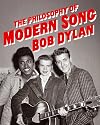
Presumably written as an amusing coda to be included in dutiful PhDs on the late works of Nobel prize winners this is a hollow, irritating and deeply unrewarding book. The prose is execrable, the insights ungiving, the arrogance and cynicism redolent on every page. Many reviewers have turned a blind eye to this and speculated as to light it throws on Dylan's 'body of work': mad pieces of Kremlinology out of which nothing astonishingly can be concluded other than Bob is perhaps even more show more whimsical in his old age than hitherto. It's all such a waste of time. At least I could listen to 'World Gone Wrong', which may have been the 'answer' to the question some thought this book posed. Playing the songs written about here? An utterly, utterly joyless experience. show less
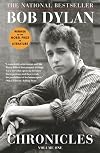
"I thought of mainstream culture as lame as hell and a big trick."
This book is fantastic. I'm ready for Volume Two now.
As nearly as possible, Bob Dylan gives us a glimpse into his creative process and evolution as an artist and a man; not that any of these things can ever be understood in a linear way or accurately and specifically communicated, narrowed down, labeled and classified, but if anyone is up to meeting this task square-on, it's Robert Zimmerman, Bob Dylan, Elston Gunn.
Dylan show more spills right into his meeting with Lou Levy, a guy who helped make him realize his dream through a record contract. With gorgeous descriptions, Dylan shares a pragmatic and sumptuous snapshot of his life as a young man in the early 60s in Greenwich Village.
"When I arrived, it was dead-on winter. The cold was brutal and every artery of the city was snowpacked, but I'd started out from the frostbitten North Country, a little corner of the earth where the dark frozen woods and icy roads didn't faze me. I could transcend the limitations. It wasn't money or love that I was looking for. I had a heightened sense of awareness, was set in my ways, impractical and a visionary to boot. My mind was strong like a trap and I didn't need any guarantee of validity. I didn't know a single soul in this dark freezing metropolis but that was all about to change - and quick."
Regardless of who wrote this, I would want to devour every word this author every committed to paper, but the fact that it’s Dylan telling his story and sharing this breadth of musical knowledge is stunning.
Chronicles weaves in and out of the decades, like a fish following the currents, naturally and effortlessly. Dylan brings us to the paradise of folk music: He hops around from the 1987 recording in New Orleans of "Oh Mercy," (he deliciously describes the process of discovery that went into producing the album) and his warped time in Woodstock to listening to "Pirate Jenny," with Suze Rotolo, who turned him onto drawing spontaneously. He introduces us to an old jazz singer in a bar in San Rafael, from whom he remembered how to sing. The visits to see Woody Guthrie at the hospital, “an asylum with no spiritual hope of any kind,” reverberated with me for weeks after reading because I have visited people in such places, and he nails it.
I read the first fifty or so pages at a snail's pace because I stopped to look up every new character, location, event, and song. I didn’t want to miss a thing. I decided to push on through with his passionate narrative - one which synthesizes an absolute joy of discovery including the whole heaping of humanity via literature from Balzac and Byron, as well as his keen-eyed version of global events, ethics, and artistic expression.
Dylan sauters together words to paint his creative process, his name changes, and the friends who influenced and informed him, (and gave him a couch to sleep on), including Dave Van Ronk, Ray Gooch, and cool kitten Chloe Kiel; each person is so vibrant through Bob's words - every life deserves their own life story to be penned.
He agonized about making a record and explains, "There was nothing easygoing about the folk songs I sang. They weren't friendly or ripe with mellowness. They didn't come gently to the shore."
He tells of driving with his obstreperous friend, David Crosby, (whom seemed like the perfect companion on this trip to Princeton University in 1971), to receive an honorary degree. The speaker who introduced him said, "Though he is known to millions, he shuns publicity and organizing preferring the solidarity of his family and isolation from the world, and though he is approaching the perilous age of thirty, he remains the authentic expression of the disturbed and concerned conscience of Young America."
Dylan wrote "...he could have emphasized a few things about my music. When he said to the crowd that I preferred isolation form the world, it was like he told them that I preferred being in an iron tomb with my food shoved in on a tray."
With painful precision, he writes about how public and press anointed and misunderstood him, called him a Prophet, propped him up, tore him down, invaded his privacy and his home, and asked those inane interview questions; he writes about the effects of this distortion had on him and his family. How can one feel free when being constantly misquoted and stuffed in a fishbowl? For a period of time his Muse was muted.
I recently watched a video of Bob Dylan on The Steve Allen Show at the beginning of his public path. Steve called him a genius; even as he gushed, he acknowledged how uncomfortable being in that position must be. Chronicles solidified my impressions; Dylan has it in him innately, and he worked for it: a self-schooled student of musicology who deserved that doctorate from Princeton and an introduction that honored his path.
Early on in the book when he lit upon the story of Joseph Hillström, the martyred Union Organizer and Troubadour, I was captivated. I've been a bit obsessed by ‘Joe Hill’ all my life. "I Dreamed I Saw Joe Hill Last Night" was the first song I learned on piano; Hill’s life story is so profound, in a sense it shaped mine. As I learn about the details of the frame up of Hill and his response to it, the more committed I am that his life be remembered. Dylan wrote that he fantasized writing a song about Joe Hill called, “Scatter My Ashes Anyplace But Utah.” The moment I read this, the idea of writing a poem gripped me. This spilled out:
SCATTER MY ASHES ANYPLACE BUT UTAH
She shrieked into the darkness of the blackness of the night,
It was a wail of playful pleasure, not a caterwaul of fright.
He gently covered her lips while heaving an efficacious sigh,
"Let us be silent with our cries, or we may both soon die."
Rangy Joseph Hillström was a Swedish gentleman:
Agitator, educator, he did not, would not, live in sin.
In 1902 Joe sailed from Sweden to the U.S. but there he was held down;
Worked hard as he could, yet was castigated into the ground.
"Boy, we upped your load and lopped your pay,
But your revolutionary ways you can save.
We rule by compliance, not labor alliance,
So behave, you slave, or mumble 'Hej' to an early grave."
At high noon many days, under the blistering union sun
Hill persuaded hoi polloi to strike before day was done.
Handsome Joe sang out and rallied the belittled human masses,
Browbeat by giant egos of mob bosses, sycophants, and asses.
Enter golden-honey haired Hilda, peach cheeks, green-hazel eyes,
She strummed his back like a harp as he heaved a soulful sigh.
The niece of Joe's compatriot from Belfast, a true and loyal friend,
Their fierce fondness for each other did Otto Appelquist offend.
Labor organizer, songwriter, dock walloper, worker for hire,
Faced with apocryphal execution bullets, Joe yelled out, "Fire."
"Shoot you cowards, youse sadistic yellow-bellied liars,"
Hildy hissed as she reminisced of Hägglund kisses in the year prior.
Troubadour, adored leader of the Industrial Workers of the World,
A target from back in San Diego where his reputation unfurled,
Joe, Joseph, Joel was set up, falsely accused and shamefully blamed.
He was willing to die for the movement, though he was unjustly framed.
For the murder of grocer Morrison, there was a suspect; Wilson was his name.
He had on him a bloody handkerchief; being a career criminal was his game.
But the filthy politicians set up Joe because insurgents had to go.
The revolutionary faction was one the Mormons could not keep in tow.
Joe's wages were low, his intellect high and his morals even higher.
A symbol for the working-class, he ignored that his plight was dire.
The Laureate of Labor kept his keen humor, did not hold a grudge.
Prosecution showed no proof or motive, jurors were appointed by the judge.
Helen Keller, The Rebel Girl, and the Swedish Ambassador called for justice in Joe’s case.
Hillström would not accept a pardon; he stood strong, a pillar in his place.
A pardon would not cut it; he insisted on a just trial fair and square,
But could not get that in Utah with the cooper bosses running things there.
Principled to recklessness, he lived as an artist and died like one too.
The little red songbook rang with his songs that strikers sang on cue.
After he was murdered, people marched and mourned in many states;
Foreigners and natives had a hard time seeing how America was great.
Before his last breath, Hill penned his last will and testament.
He made clear his remains would not rest on vile firmament.
"Scatter my ashes anyplace but Utah, brother.
This was but my one life; I don't expect another.”
Scatter my ashes anyplace but Utah,
Scatter them wildly and set me free.
There’s the pie in the sky when you die, (that’s a lie);
when loose from this earthily noose,
I’ll know nothingness, I will BE.
I die like a true blue rebel - don't waste any time in mourning.
Please arrange to have my body hauled to the state line by morning.
Educate, agitate, organize, and don’t give them any fair warning.
It’s in their eyes, dishonorable brains don’t theorize,
they will kill you Bill, without any stalling.
Scatter my ashes anyplace but Utah,
Scatter my ashes anyplace but Utah,
Scatter them wildly and set me free.
I gave it my all, worked for the betterment of humankind.
Labored, sang, stood up to devils, the worst a man could find."
She shrieked into the darkness of the blackness of the night
And cried aloud for the laborer with whom she shared such delight.
Scatter my ashes anyplace but Utah,
Scatter them wildly and set me free. show less
This book is fantastic. I'm ready for Volume Two now.
As nearly as possible, Bob Dylan gives us a glimpse into his creative process and evolution as an artist and a man; not that any of these things can ever be understood in a linear way or accurately and specifically communicated, narrowed down, labeled and classified, but if anyone is up to meeting this task square-on, it's Robert Zimmerman, Bob Dylan, Elston Gunn.
Dylan show more spills right into his meeting with Lou Levy, a guy who helped make him realize his dream through a record contract. With gorgeous descriptions, Dylan shares a pragmatic and sumptuous snapshot of his life as a young man in the early 60s in Greenwich Village.
"When I arrived, it was dead-on winter. The cold was brutal and every artery of the city was snowpacked, but I'd started out from the frostbitten North Country, a little corner of the earth where the dark frozen woods and icy roads didn't faze me. I could transcend the limitations. It wasn't money or love that I was looking for. I had a heightened sense of awareness, was set in my ways, impractical and a visionary to boot. My mind was strong like a trap and I didn't need any guarantee of validity. I didn't know a single soul in this dark freezing metropolis but that was all about to change - and quick."
Regardless of who wrote this, I would want to devour every word this author every committed to paper, but the fact that it’s Dylan telling his story and sharing this breadth of musical knowledge is stunning.
Chronicles weaves in and out of the decades, like a fish following the currents, naturally and effortlessly. Dylan brings us to the paradise of folk music: He hops around from the 1987 recording in New Orleans of "Oh Mercy," (he deliciously describes the process of discovery that went into producing the album) and his warped time in Woodstock to listening to "Pirate Jenny," with Suze Rotolo, who turned him onto drawing spontaneously. He introduces us to an old jazz singer in a bar in San Rafael, from whom he remembered how to sing. The visits to see Woody Guthrie at the hospital, “an asylum with no spiritual hope of any kind,” reverberated with me for weeks after reading because I have visited people in such places, and he nails it.
I read the first fifty or so pages at a snail's pace because I stopped to look up every new character, location, event, and song. I didn’t want to miss a thing. I decided to push on through with his passionate narrative - one which synthesizes an absolute joy of discovery including the whole heaping of humanity via literature from Balzac and Byron, as well as his keen-eyed version of global events, ethics, and artistic expression.
Dylan sauters together words to paint his creative process, his name changes, and the friends who influenced and informed him, (and gave him a couch to sleep on), including Dave Van Ronk, Ray Gooch, and cool kitten Chloe Kiel; each person is so vibrant through Bob's words - every life deserves their own life story to be penned.
He agonized about making a record and explains, "There was nothing easygoing about the folk songs I sang. They weren't friendly or ripe with mellowness. They didn't come gently to the shore."
He tells of driving with his obstreperous friend, David Crosby, (whom seemed like the perfect companion on this trip to Princeton University in 1971), to receive an honorary degree. The speaker who introduced him said, "Though he is known to millions, he shuns publicity and organizing preferring the solidarity of his family and isolation from the world, and though he is approaching the perilous age of thirty, he remains the authentic expression of the disturbed and concerned conscience of Young America."
Dylan wrote "...he could have emphasized a few things about my music. When he said to the crowd that I preferred isolation form the world, it was like he told them that I preferred being in an iron tomb with my food shoved in on a tray."
With painful precision, he writes about how public and press anointed and misunderstood him, called him a Prophet, propped him up, tore him down, invaded his privacy and his home, and asked those inane interview questions; he writes about the effects of this distortion had on him and his family. How can one feel free when being constantly misquoted and stuffed in a fishbowl? For a period of time his Muse was muted.
I recently watched a video of Bob Dylan on The Steve Allen Show at the beginning of his public path. Steve called him a genius; even as he gushed, he acknowledged how uncomfortable being in that position must be. Chronicles solidified my impressions; Dylan has it in him innately, and he worked for it: a self-schooled student of musicology who deserved that doctorate from Princeton and an introduction that honored his path.
Early on in the book when he lit upon the story of Joseph Hillström, the martyred Union Organizer and Troubadour, I was captivated. I've been a bit obsessed by ‘Joe Hill’ all my life. "I Dreamed I Saw Joe Hill Last Night" was the first song I learned on piano; Hill’s life story is so profound, in a sense it shaped mine. As I learn about the details of the frame up of Hill and his response to it, the more committed I am that his life be remembered. Dylan wrote that he fantasized writing a song about Joe Hill called, “Scatter My Ashes Anyplace But Utah.” The moment I read this, the idea of writing a poem gripped me. This spilled out:
SCATTER MY ASHES ANYPLACE BUT UTAH
She shrieked into the darkness of the blackness of the night,
It was a wail of playful pleasure, not a caterwaul of fright.
He gently covered her lips while heaving an efficacious sigh,
"Let us be silent with our cries, or we may both soon die."
Rangy Joseph Hillström was a Swedish gentleman:
Agitator, educator, he did not, would not, live in sin.
In 1902 Joe sailed from Sweden to the U.S. but there he was held down;
Worked hard as he could, yet was castigated into the ground.
"Boy, we upped your load and lopped your pay,
But your revolutionary ways you can save.
We rule by compliance, not labor alliance,
So behave, you slave, or mumble 'Hej' to an early grave."
At high noon many days, under the blistering union sun
Hill persuaded hoi polloi to strike before day was done.
Handsome Joe sang out and rallied the belittled human masses,
Browbeat by giant egos of mob bosses, sycophants, and asses.
Enter golden-honey haired Hilda, peach cheeks, green-hazel eyes,
She strummed his back like a harp as he heaved a soulful sigh.
The niece of Joe's compatriot from Belfast, a true and loyal friend,
Their fierce fondness for each other did Otto Appelquist offend.
Labor organizer, songwriter, dock walloper, worker for hire,
Faced with apocryphal execution bullets, Joe yelled out, "Fire."
"Shoot you cowards, youse sadistic yellow-bellied liars,"
Hildy hissed as she reminisced of Hägglund kisses in the year prior.
Troubadour, adored leader of the Industrial Workers of the World,
A target from back in San Diego where his reputation unfurled,
Joe, Joseph, Joel was set up, falsely accused and shamefully blamed.
He was willing to die for the movement, though he was unjustly framed.
For the murder of grocer Morrison, there was a suspect; Wilson was his name.
He had on him a bloody handkerchief; being a career criminal was his game.
But the filthy politicians set up Joe because insurgents had to go.
The revolutionary faction was one the Mormons could not keep in tow.
Joe's wages were low, his intellect high and his morals even higher.
A symbol for the working-class, he ignored that his plight was dire.
The Laureate of Labor kept his keen humor, did not hold a grudge.
Prosecution showed no proof or motive, jurors were appointed by the judge.
Helen Keller, The Rebel Girl, and the Swedish Ambassador called for justice in Joe’s case.
Hillström would not accept a pardon; he stood strong, a pillar in his place.
A pardon would not cut it; he insisted on a just trial fair and square,
But could not get that in Utah with the cooper bosses running things there.
Principled to recklessness, he lived as an artist and died like one too.
The little red songbook rang with his songs that strikers sang on cue.
After he was murdered, people marched and mourned in many states;
Foreigners and natives had a hard time seeing how America was great.
Before his last breath, Hill penned his last will and testament.
He made clear his remains would not rest on vile firmament.
"Scatter my ashes anyplace but Utah, brother.
This was but my one life; I don't expect another.”
Scatter my ashes anyplace but Utah,
Scatter them wildly and set me free.
There’s the pie in the sky when you die, (that’s a lie);
when loose from this earthily noose,
I’ll know nothingness, I will BE.
I die like a true blue rebel - don't waste any time in mourning.
Please arrange to have my body hauled to the state line by morning.
Educate, agitate, organize, and don’t give them any fair warning.
It’s in their eyes, dishonorable brains don’t theorize,
they will kill you Bill, without any stalling.
Scatter my ashes anyplace but Utah,
Scatter my ashes anyplace but Utah,
Scatter them wildly and set me free.
I gave it my all, worked for the betterment of humankind.
Labored, sang, stood up to devils, the worst a man could find."
She shrieked into the darkness of the blackness of the night
And cried aloud for the laborer with whom she shared such delight.
Scatter my ashes anyplace but Utah,
Scatter them wildly and set me free. show less
A gift from my daughter (who knows I am a longtime [60-plus years] Bob Dylan fan), THE PHILOSOPHY OF MODERN SONG is unfortunately, I think, kind of a sloppy, self-indulgent mess. Or, to put it more succinctly, the ramblings of a world famous octogenarian about some old favorite recordings he remembers. And, while it's true I remember and love most of the same records, I found his habit here of paraphrasing the lyrics of many of these songs distinctly annoying, and wondered why the hell he show more was doing it. Some of the photos and graphics were interesting, despite a lack of captions. And bits of musical trivia here and there also rang true, most of the time anyway. This coffee-table book will probably be an instant bestseller and Dylan scholars will spend years dissecting and interpreting its humdrum nonsense. Me? While I enjoyed some of the musical memories that Dylan's words elicited, I'd much rather just listen to his records. "Philosophy?" C'mon, Bob. I will reluctantly recommend this book, but mostly to the literary critics who will struggle valiantly to justify this junk and try to fit it into the overall oeuvre of this Nobel prize-winning artist. (Sorry, Suze. But thanks for thinking of me.)
- Tim Bazzett, author of the memoir, BOOKLOVER show less
- Tim Bazzett, author of the memoir, BOOKLOVER show less

The Philosophy of Modern Song could have been a great book from any of, say, half-a-dozen approaches, none of which Bob Dylan chose. The 20th century's most renowned songwriter could have delivered what the title claimed: he could have investigated seriously the various facets of modern song from a philosophical or artistic perspective. Failing this, he could have written a 'how-to' book similar to Stephen King's On Writing – even a less-than-comprehensive book of this type, from such a show more distinguished creator, would have ensured sales to aspiring songwriters for a hundred years.
He could have written a retrospective of his own songbook, talking about his influences and ideas and sharing the stories behind their composition. Or, if the thought of this seemed too appalling, he could have written widely about the various remarkable songs created by other songwriters, many of whom – the Beatles, Tom Petty, Johnny Cash – he knew personally. He could have written a personal memoir, a sort of hybrid follow-up to 2004's Chronicles with his role as a songwriter as a through-line. He could have even, in the most desperate of my half-dozen proposals, written a frivolous 'My Top Ten/Top 100 Songs' book: it would have been scraping the bottom of the barrel, but from such a personality it could have been fun, and not a complete waste of time for the reader.
Because The Philosophy of Modern Song is largely a waste of time for the reader. The more devoted Dylanologists will work overtime to portray it as a work of exquisite and enigmatic genius – something which, I admit, can be said truly of much of Dylan's other output – but for the rest of us, there will be only a sense of bemusement followed by indifference. As the book settles into its stodgy rhythm, the reader quickly realises there will be no sustained insight or creative originality. The songs chosen vary from old classics of the 1920s and 1930s through to (by my reckoning) a Warren Zevon song from 2003, with a to-be-expected focus on the music of the Forties, Fifties and early Sixties – Dylan's own formative years. There appears to be no real reason behind the choices, nor their sequencing.
It's a bumpy ride, but this would still be forgivable if Dylan's insight was worth it. But his thoughts are not especially original: there's a bit of biographical information about each song/songwriter/singer – usually repeating well-known anecdotes or trivia – and, if you are lucky, maybe a sentence or two where Dylan remembers his remit and comments – tamely – on the composition or artistic spirit of the piece. Sometimes, Dylan omits this thin commentary altogether, but for every piece he begins with an extended, laboured riff which Dylanizes the song's lyrics – presumably to avoid copyright. For example, the entry for the Little Richard song 'Long Tall Sally' omits all commentary and just gives us the following:
"Long Tall Sally was twelve feet tall. She was part of the old biblical days in Samaria from the tribe called the Nephilim. They were giants that lived back before the cataclysm of the flood. You can see shots of these giants' skulls and such. There were people as tall as one-story [sic] buildings. They've uncovered bones of these giants in Egypt and Iraq. And she was built for speed, she could run like a deer. And Uncle John was her counterpart giant. Little Richard is a giant of a different kind, but so as not to freak anybody out he refers to himself as little, so as not to scare anybody." (pg. 263)
That's the entirety of what Dylan has to say about that song. To cover this sort of thing up, the publisher augments this with all the bells and whistles: large text, full-page illustrations and the like. Even here, the book proves an odd duck: photos of Lee Harvey Oswald and Jack Ruby accompany the song 'Ruby, Are You Mad?' by the Osborne Brothers, one of Albert Einstein on the violin accompanies Johnny Paycheck's 'Old Violin', and one of Paul McCartney on a slot machine accompanies 'Viva Las Vegas' (incidentally, Lennon/McCartney don't get any of their songs chosen by Dylan – very few of his contemporaries do). The 'Long Tall Sally' page is illustrated with a Fifties comic of a tall girl who can't get a date – much closer to the spirit of the song than Dylan's nonsense about the Nephilim. (Curiously, I wrote an article about Dylan a little over a year ago which began by discussing the Nephilim…)
The publisher has the gall to call these 'essays', but in truth it smacks of a cash-grab from them, or an easy way out of a contractual obligation from Dylan; a corralling of various notes Dylan might have had lying around since the writing of Chronicles, taken and pasted into a scrapbook of Americana and given the glossy 'premium' look to boost the RRP. Even if the occasional contemporary references – to woke politics, to Make America Great Again, to the 'OK Boomer' meme – prove that Dylan's updated those post-Chronicles notes, there's no sense that he's ever really here with us. Dylan never has a purpose here, and he never really engages with his topic. Consequently, the reader can't either.
At its best, the book provides a few sparks of life and a quotable line or two. The opinion of Dylan carries enough weight that if he says a song is great you want to check it out, and by the end of the book you'll have a big list of songs to listen to. The "essay" on Pete Seeger's 'Waist Deep in the Big Muddy' shows that the book can be entertaining when it wants to be, as it moves from one of Dylan's better introductory riffs to a discussion of lemmings to a potted history of how the song was censored and then increasingly accepted as society's thoughts on Vietnam changed. It ends with an astute plea to our own divided times and our social-media saturation:
"Turns out, the best way to shut people up isn't to take away their forum – it's to give them all their own separate pulpits. Ultimately most folks will listen to what they already know and read what they already agree with. They will devour pale retreads of the familiar and perhaps never get to discover they might have a taste for Shakespeare or flamenco dancing." (pg. 326)
Messages like this, which Dylan provides echoes of throughout the book, would have had greater impact if Dylan wasn't undergoing his own pale retread within. Because at its worst – and The Philosophy of Modern Song is regularly underwhelming – the book raises a disturbing thought: that Dylan isn't that deep. It's not a thought that long outlasts our closing of the book, for we remember how he could write well in Chronicles, and 2020's Rough and Rowdy Ways album showed he still has plenty of creative juice. But it's damning that the thought comes to mind anyway when reading the book. The Philosophy of Modern Song should have been the regal capstone to a career, but instead adds an unsightly scratch or two to the jester's crown. show less
He could have written a retrospective of his own songbook, talking about his influences and ideas and sharing the stories behind their composition. Or, if the thought of this seemed too appalling, he could have written widely about the various remarkable songs created by other songwriters, many of whom – the Beatles, Tom Petty, Johnny Cash – he knew personally. He could have written a personal memoir, a sort of hybrid follow-up to 2004's Chronicles with his role as a songwriter as a through-line. He could have even, in the most desperate of my half-dozen proposals, written a frivolous 'My Top Ten/Top 100 Songs' book: it would have been scraping the bottom of the barrel, but from such a personality it could have been fun, and not a complete waste of time for the reader.
Because The Philosophy of Modern Song is largely a waste of time for the reader. The more devoted Dylanologists will work overtime to portray it as a work of exquisite and enigmatic genius – something which, I admit, can be said truly of much of Dylan's other output – but for the rest of us, there will be only a sense of bemusement followed by indifference. As the book settles into its stodgy rhythm, the reader quickly realises there will be no sustained insight or creative originality. The songs chosen vary from old classics of the 1920s and 1930s through to (by my reckoning) a Warren Zevon song from 2003, with a to-be-expected focus on the music of the Forties, Fifties and early Sixties – Dylan's own formative years. There appears to be no real reason behind the choices, nor their sequencing.
It's a bumpy ride, but this would still be forgivable if Dylan's insight was worth it. But his thoughts are not especially original: there's a bit of biographical information about each song/songwriter/singer – usually repeating well-known anecdotes or trivia – and, if you are lucky, maybe a sentence or two where Dylan remembers his remit and comments – tamely – on the composition or artistic spirit of the piece. Sometimes, Dylan omits this thin commentary altogether, but for every piece he begins with an extended, laboured riff which Dylanizes the song's lyrics – presumably to avoid copyright. For example, the entry for the Little Richard song 'Long Tall Sally' omits all commentary and just gives us the following:
"Long Tall Sally was twelve feet tall. She was part of the old biblical days in Samaria from the tribe called the Nephilim. They were giants that lived back before the cataclysm of the flood. You can see shots of these giants' skulls and such. There were people as tall as one-story [sic] buildings. They've uncovered bones of these giants in Egypt and Iraq. And she was built for speed, she could run like a deer. And Uncle John was her counterpart giant. Little Richard is a giant of a different kind, but so as not to freak anybody out he refers to himself as little, so as not to scare anybody." (pg. 263)
That's the entirety of what Dylan has to say about that song. To cover this sort of thing up, the publisher augments this with all the bells and whistles: large text, full-page illustrations and the like. Even here, the book proves an odd duck: photos of Lee Harvey Oswald and Jack Ruby accompany the song 'Ruby, Are You Mad?' by the Osborne Brothers, one of Albert Einstein on the violin accompanies Johnny Paycheck's 'Old Violin', and one of Paul McCartney on a slot machine accompanies 'Viva Las Vegas' (incidentally, Lennon/McCartney don't get any of their songs chosen by Dylan – very few of his contemporaries do). The 'Long Tall Sally' page is illustrated with a Fifties comic of a tall girl who can't get a date – much closer to the spirit of the song than Dylan's nonsense about the Nephilim. (Curiously, I wrote an article about Dylan a little over a year ago which began by discussing the Nephilim…)
The publisher has the gall to call these 'essays', but in truth it smacks of a cash-grab from them, or an easy way out of a contractual obligation from Dylan; a corralling of various notes Dylan might have had lying around since the writing of Chronicles, taken and pasted into a scrapbook of Americana and given the glossy 'premium' look to boost the RRP. Even if the occasional contemporary references – to woke politics, to Make America Great Again, to the 'OK Boomer' meme – prove that Dylan's updated those post-Chronicles notes, there's no sense that he's ever really here with us. Dylan never has a purpose here, and he never really engages with his topic. Consequently, the reader can't either.
At its best, the book provides a few sparks of life and a quotable line or two. The opinion of Dylan carries enough weight that if he says a song is great you want to check it out, and by the end of the book you'll have a big list of songs to listen to. The "essay" on Pete Seeger's 'Waist Deep in the Big Muddy' shows that the book can be entertaining when it wants to be, as it moves from one of Dylan's better introductory riffs to a discussion of lemmings to a potted history of how the song was censored and then increasingly accepted as society's thoughts on Vietnam changed. It ends with an astute plea to our own divided times and our social-media saturation:
"Turns out, the best way to shut people up isn't to take away their forum – it's to give them all their own separate pulpits. Ultimately most folks will listen to what they already know and read what they already agree with. They will devour pale retreads of the familiar and perhaps never get to discover they might have a taste for Shakespeare or flamenco dancing." (pg. 326)
Messages like this, which Dylan provides echoes of throughout the book, would have had greater impact if Dylan wasn't undergoing his own pale retread within. Because at its worst – and The Philosophy of Modern Song is regularly underwhelming – the book raises a disturbing thought: that Dylan isn't that deep. It's not a thought that long outlasts our closing of the book, for we remember how he could write well in Chronicles, and 2020's Rough and Rowdy Ways album showed he still has plenty of creative juice. But it's damning that the thought comes to mind anyway when reading the book. The Philosophy of Modern Song should have been the regal capstone to a career, but instead adds an unsightly scratch or two to the jester's crown. show less
Lists
Awards


Time Out of Mind [Music Sound Recording] (Winner – Album of the Year, Best Contemporary Folk album – 1998)


You May Also Like


Associated Authors
Statistics
- Works
- 670
- Also by
- 57
- Members
- 15,928
- Popularity
- #1,423
- Rating
- 3.9
- Reviews
- 244
- ISBNs
- 538
- Languages
- 25
- Favorited
- 35


