

Will Eaves
Author of Murmur
About the Author
Image credit: Photo: Michael Caines
Works by Will Eaves
The Inevitable Gift Shop 1 copy
Tagged
Common Knowledge
- Birthdate
- 1967
- Gender
- male
- Education
- University of Cambridge (MA)
- Occupations
- Arts Editor for Times Literary Supplement (1995-2011)
assistant professor (University of Warwick) - Short biography
- Mr Will Eaves is a novelist, poet and teacher. He was Arts Editor of the Times Literary Supplement from 1995 to 2011 before moving to Warwick, where he is Associate Professor in the Writing Programme.
- Nationality
- UK
- Birthplace
- Bath, Somerset, England, UK
- Associated Place (for map)
- England, UK
Members
Reviews
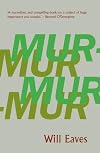
Murmur by Will Eaves
‘Things seem to be sadly lost, put to bed, left on top of golden summits in the past, trailing away until we see what the lines of event and memory have traced: a plane. A loop that encloses all loss, has no beginning and no end.’
Lauded by critics, winner of the Wellcome Prize and Republic of Consciousness Prize, and – in my reading of its shortlist – nominated for the James Tait Black Prize. This book comes with heavy expectations, and it does not disappoint. This is a stunning, show more complex and moving study of a man caught between worlds: the physical and the intellectual, a secret war hero and a social outcast, male and female, desire and repression.
Based on the events in the life of mathematician Alan Turing, Eaves’ central character is Alec Pryor, a man who with his work at Bletchley helped shorten the war, but who was later arrested for gross indecency for a relationship with another man and who underwent chemical castration. Even just to write that sentence is horrible, and even with the posthumous pardon that has now been granted for Turing it is still an injustice of the highest order. Befitting the man, this is a complex book – be warned. It is oblique, full of images and dreams and references to all sorts of weird and wonderful scientific and metaphorical ephemera. We open with extracts from Pryor’s journal as he is undergoing his ‘treatment’:
‘I used to be so capable, but I am changing; I’ve already changed, and find myself drawn to the episodic and semantic mode – the ancient tool, of speaking thought.’
Thoughts – the ‘murmurs’ of the title – weave in and out, elusive, symbolic and difficult to pin down.
Part two (entitled Letters and Dreams) takes the reader on a wild journey. At first it appears simple: a series of letters between Alec and his friend June (a former co-worker at Bletchley to whom he had been engaged), in which they discuss Alec’s dreams which get more and more complex. I say ‘appears’, because there is a twist revealed in the final part of the book. And the dreams themselves are, boy oh boy, complicated to say the least. There is an overarching structure to them involving the Snow White fairy tale; mirrors, dwarves, the Evil Queen and, of course, the poisoned apple. The central theme of identity is crucial, as Pryor finds himself between worlds, between identities – past/present, male/not-male, hero/villain, human/machine. Mirrors both reflect and change reality, and by looking into them we see not simply an image but a second self, another version of ourselves. By extension, the process of surrendering thought, of replicating the image, means that ‘if you can be repeated, you can be replaced’ – i.e., the rise of the machine. And this adds a whole other level to the complexity of the novel as Turing muses on AI and the possibilities of rational, thinking machines.
Part three returns us to Pryor’s journal, and we are introduced to the Council of the Machines. Now finished with his chemical treatment, but continuing with his psychoanalysis, Pryor’s thoughts turn even more on the past, on identity and memory. We start to question where dreams and imagination end and reality begins; a thinking machine will store data, forgetting nothing, but an educable machine would sift and discard what it does not need. Pryor, as a human, muses on his memory and the fragmentation of his thoughts: ‘What I lack, and this is the great change to have been worked in me, is the capacity to organise those fragments properly.’
Please do not be put off by the depth and complexity of the novel; Eaves has written an profoundly moving portrait of a man torn by his inner demons, the loss of his one true love Christopher as a young man, and suffering the horrors of chemical castration. Even though the reader knows it’s coming the end of Part Two is just a punch to the gut, and the sense of injustice, a life lost, is powerful. The dreams and fragments are intended to leave the reader with a sense of something not quite explained, of a deeper meaning. And that, for me, is the triumph of the book. It deserves to be savoured, not just for the ideas but also for Will Eaves’ sublimely beautiful prose. And this is exactly the kind of book that needs to be read again, for it will reveal so much more. Deservedly, it has been praised and rewarded. It is, simply, a stunning and moving testament to an extraordinary human being. 5 stars all round. show less
Lauded by critics, winner of the Wellcome Prize and Republic of Consciousness Prize, and – in my reading of its shortlist – nominated for the James Tait Black Prize. This book comes with heavy expectations, and it does not disappoint. This is a stunning, show more complex and moving study of a man caught between worlds: the physical and the intellectual, a secret war hero and a social outcast, male and female, desire and repression.
Based on the events in the life of mathematician Alan Turing, Eaves’ central character is Alec Pryor, a man who with his work at Bletchley helped shorten the war, but who was later arrested for gross indecency for a relationship with another man and who underwent chemical castration. Even just to write that sentence is horrible, and even with the posthumous pardon that has now been granted for Turing it is still an injustice of the highest order. Befitting the man, this is a complex book – be warned. It is oblique, full of images and dreams and references to all sorts of weird and wonderful scientific and metaphorical ephemera. We open with extracts from Pryor’s journal as he is undergoing his ‘treatment’:
‘I used to be so capable, but I am changing; I’ve already changed, and find myself drawn to the episodic and semantic mode – the ancient tool, of speaking thought.’
Thoughts – the ‘murmurs’ of the title – weave in and out, elusive, symbolic and difficult to pin down.
Part two (entitled Letters and Dreams) takes the reader on a wild journey. At first it appears simple: a series of letters between Alec and his friend June (a former co-worker at Bletchley to whom he had been engaged), in which they discuss Alec’s dreams which get more and more complex. I say ‘appears’, because there is a twist revealed in the final part of the book. And the dreams themselves are, boy oh boy, complicated to say the least. There is an overarching structure to them involving the Snow White fairy tale; mirrors, dwarves, the Evil Queen and, of course, the poisoned apple. The central theme of identity is crucial, as Pryor finds himself between worlds, between identities – past/present, male/not-male, hero/villain, human/machine. Mirrors both reflect and change reality, and by looking into them we see not simply an image but a second self, another version of ourselves. By extension, the process of surrendering thought, of replicating the image, means that ‘if you can be repeated, you can be replaced’ – i.e., the rise of the machine. And this adds a whole other level to the complexity of the novel as Turing muses on AI and the possibilities of rational, thinking machines.
Part three returns us to Pryor’s journal, and we are introduced to the Council of the Machines. Now finished with his chemical treatment, but continuing with his psychoanalysis, Pryor’s thoughts turn even more on the past, on identity and memory. We start to question where dreams and imagination end and reality begins; a thinking machine will store data, forgetting nothing, but an educable machine would sift and discard what it does not need. Pryor, as a human, muses on his memory and the fragmentation of his thoughts: ‘What I lack, and this is the great change to have been worked in me, is the capacity to organise those fragments properly.’
Please do not be put off by the depth and complexity of the novel; Eaves has written an profoundly moving portrait of a man torn by his inner demons, the loss of his one true love Christopher as a young man, and suffering the horrors of chemical castration. Even though the reader knows it’s coming the end of Part Two is just a punch to the gut, and the sense of injustice, a life lost, is powerful. The dreams and fragments are intended to leave the reader with a sense of something not quite explained, of a deeper meaning. And that, for me, is the triumph of the book. It deserves to be savoured, not just for the ideas but also for Will Eaves’ sublimely beautiful prose. And this is exactly the kind of book that needs to be read again, for it will reveal so much more. Deservedly, it has been praised and rewarded. It is, simply, a stunning and moving testament to an extraordinary human being. 5 stars all round. show less
Murmur by Will Eaves

What is the difference between a human and the AI a human designs? Are humans merely machines themselves? Is empathy only encoded, a mimetic reproduction of what we assume someone else feels and needs?
Will Eaves' Murmur is a palimpsest, the story of an Alan Turing-like scientist, Alec Pryor, who's forced into hormonal castration by his government for the crime of being gay. This castration is a removal of Pryor's self, a debugging of a fundamental program that wasn't corrupted in the first show more place. Pryor compares his castration to the isolation an immigrant feels in an unwelcoming country. The physical effects of the hormone are a devolution.
Pryor turns his focus inward, to questions of what makes someone human. Through it all, the thread of his government's betrayal of him—their view that he is a criminal who needs to be rehabilitated—pulls him toward questions of empathy. Specifically, how can you program it in individuals who think their unquestioning enforcement of unjust rules and orders fulfills the social contract? Should not the social contract be more concerned with true justice and fairness, not the veneers of civility and law and order?
I'm interested in Eaves' second line of inquiry: What is empathy and who decides how it is administered? It is the necessary, missing piece of the puzzle. It matters less how we arrive at empathy. What matters is finding a way to act with empathy, most especially when it seems as if the cost is too great and the reward too little.
Murmur is deeply radical—in the best, truest definition of the word. "Before there was speech, there was listening, and the dead rise with the love of it" (182). show less
Will Eaves' Murmur is a palimpsest, the story of an Alan Turing-like scientist, Alec Pryor, who's forced into hormonal castration by his government for the crime of being gay. This castration is a removal of Pryor's self, a debugging of a fundamental program that wasn't corrupted in the first show more place. Pryor compares his castration to the isolation an immigrant feels in an unwelcoming country. The physical effects of the hormone are a devolution.
Pryor turns his focus inward, to questions of what makes someone human. Through it all, the thread of his government's betrayal of him—their view that he is a criminal who needs to be rehabilitated—pulls him toward questions of empathy. Specifically, how can you program it in individuals who think their unquestioning enforcement of unjust rules and orders fulfills the social contract? Should not the social contract be more concerned with true justice and fairness, not the veneers of civility and law and order?
I'm interested in Eaves' second line of inquiry: What is empathy and who decides how it is administered? It is the necessary, missing piece of the puzzle. It matters less how we arrive at empathy. What matters is finding a way to act with empathy, most especially when it seems as if the cost is too great and the reward too little.
Murmur is deeply radical—in the best, truest definition of the word. "Before there was speech, there was listening, and the dead rise with the love of it" (182). show less
 This review was written for LibraryThing Early Reviewers.
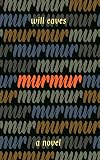
Murmur by Will Eaves
Rating: 4* of five
The Publisher Says: In Murmur, a hallucinatory masterwork, Will Eaves invites us into the brilliant mind of Alec Pryor, a character inspired by Alan Turing. Turing, father of artificial intelligence and pioneer of radical new techniques to break the Nazi Enigma cipher during World War II, was later persecuted by the British state for “gross indecency with another male” and forced to undergo chemical castration. Set during the devastating period before Turing’s show more suicide, Murmur evokes an extraordinary life, the beauty and sorrows of love, and the nature of consciousness.
THE PUBLISHER SENT ME AN ARC IN 2018. THANKS!
Winner of the 2019 WELLCOME BOOK PRIZE!
My Review: First, read this:
The problem with disguising or encrypting is that the original still exists. One has doubled the information, not made it less sensitive. Something has happened to it, but the semantic loaf persists behind a mask, a veil, a foreign accent, new papers, breasts etc., and really the only thing to do about that, if you’re still anxious, is to remove both bits of information—the original and the encryption—altogether.
That quote should tell you if this trip is one you wish to take. Eaves's narrative choices are all right there, as is the chosen PoV of third-person limited. From the chapter-opening quotes selected from Turing's voluminous writings to the damning if underplayed social commentary, the whole is of a piece and gleams like the gem it is.
So why only four stars? Because it's been fictionalized, and the elision and compression inherent in that act (I've typed "of vandalism" three times and erased it four) seldom sits well with me. Even when, as now, I recognize that the author is seeking (and mostly finding) a Deeper Truth, it...feels like a cheapening of this tragedy. BUT YOU SHOULD DEFINITELY READ IT!! show less
The Publisher Says: In Murmur, a hallucinatory masterwork, Will Eaves invites us into the brilliant mind of Alec Pryor, a character inspired by Alan Turing. Turing, father of artificial intelligence and pioneer of radical new techniques to break the Nazi Enigma cipher during World War II, was later persecuted by the British state for “gross indecency with another male” and forced to undergo chemical castration. Set during the devastating period before Turing’s show more suicide, Murmur evokes an extraordinary life, the beauty and sorrows of love, and the nature of consciousness.
THE PUBLISHER SENT ME AN ARC IN 2018. THANKS!
Winner of the 2019 WELLCOME BOOK PRIZE!
My Review: First, read this:
The problem with disguising or encrypting is that the original still exists. One has doubled the information, not made it less sensitive. Something has happened to it, but the semantic loaf persists behind a mask, a veil, a foreign accent, new papers, breasts etc., and really the only thing to do about that, if you’re still anxious, is to remove both bits of information—the original and the encryption—altogether.
That quote should tell you if this trip is one you wish to take. Eaves's narrative choices are all right there, as is the chosen PoV of third-person limited. From the chapter-opening quotes selected from Turing's voluminous writings to the damning if underplayed social commentary, the whole is of a piece and gleams like the gem it is.
So why only four stars? Because it's been fictionalized, and the elision and compression inherent in that act (I've typed "of vandalism" three times and erased it four) seldom sits well with me. Even when, as now, I recognize that the author is seeking (and mostly finding) a Deeper Truth, it...feels like a cheapening of this tragedy. BUT YOU SHOULD DEFINITELY READ IT!! show less
This review was written for LibraryThing Early Reviewers.Murmur by Will Eaves
Oh my goodness this is a true tour-de-force. I'm not going to be able to write a proper review, because I'm not sure I really understood everything that was going on, but it is an astonishing work.
Eaves has taken part of Alan Turing's story and explored both the effects of the terrible injustice he was done as well as the relationship between consciousness, intention, and cognition that Turing was working on. In particular he looks at the ways in which human consciousness and cognition can show more be reproduced in machines, and if they can be, does that mean we're closer to machine-link than we think? Or does it mean that machines invariably have the same limitations human do? At least I think that's part of the set of questions Eaves grapples with.
But this makes it sound very dry, which is the last thing the novel is. Because these intellectual and scientific explorations are carried out through the exploration of the effects of chemical castration treatments on the mind and psyche, especially on memory and feeling. The interaction of physical changes with mental changes and one's own sense of self is a consistent theme, and these questions are played out through hallucinations, dream sequences, and interactions which start out concretely and often spiral into something else. The novel is bookended by two short sections entitled "Journal," which introduce and conclude the period in which Turing was undergoing the treatments.
Although this is obviously based on Turing's story, Eaves names his narrator Alec Pryor, and he also renames the people around him who were important in his life and in this fictionalization. It's never exploitative, and it's more thoughtful and ambitious than can be captured by a term like homage. It's also deeply respectful and at times furiously angry. It's not an easy read, but I was gripped by every page.
I could go on but I'd just be fumbling for words. It's an exceptional novel and it makes me want to read everything Eaves has written. show less
Eaves has taken part of Alan Turing's story and explored both the effects of the terrible injustice he was done as well as the relationship between consciousness, intention, and cognition that Turing was working on. In particular he looks at the ways in which human consciousness and cognition can show more be reproduced in machines, and if they can be, does that mean we're closer to machine-link than we think? Or does it mean that machines invariably have the same limitations human do? At least I think that's part of the set of questions Eaves grapples with.
But this makes it sound very dry, which is the last thing the novel is. Because these intellectual and scientific explorations are carried out through the exploration of the effects of chemical castration treatments on the mind and psyche, especially on memory and feeling. The interaction of physical changes with mental changes and one's own sense of self is a consistent theme, and these questions are played out through hallucinations, dream sequences, and interactions which start out concretely and often spiral into something else. The novel is bookended by two short sections entitled "Journal," which introduce and conclude the period in which Turing was undergoing the treatments.
Although this is obviously based on Turing's story, Eaves names his narrator Alec Pryor, and he also renames the people around him who were important in his life and in this fictionalization. It's never exploitative, and it's more thoughtful and ambitious than can be captured by a term like homage. It's also deeply respectful and at times furiously angry. It's not an easy read, but I was gripped by every page.
I could go on but I'd just be fumbling for words. It's an exceptional novel and it makes me want to read everything Eaves has written. show less
Lists
Awards


You May Also Like


Statistics
- Works
- 13
- Members
- 290
- Popularity
- #80,655
- Rating
- 3.7
- Reviews
- 23
- ISBNs
- 33
- Languages
- 1
- Favorited
- 1
