

Dylan Evans
Author of Introducing Evolutionary Psychology
About the Author
Dylan Evans is the author of several critically acclaimed books including Emotion: The Science of Sentiment and Placebo: The Belief Effect He holds a PhD in philosophy from the London School of Economics and is the founder of Projection Point, the leading provider of risk intelligence solutions. He show more writes regularly for The Guardian and has appeared regularly on BBC Radio. show less
Works by Dylan Evans
Associated Works
This Will Make You Smarter: New Scientific Concepts to Improve Your Thinking (Edge Question Series) (2012) — Contributor — 906 copies, 17 reviews
Tagged
Common Knowledge
- Birthdate
- 1966-09-29
- Gender
- male
- Education
- London School of Economics (PhD)
Sevenoaks School
West Kent College of Further Education
Southhampton University - Occupations
- academic
author - Nationality
- Ireland
- Birthplace
- Bristol, Gloucestershire, England, UK
- Places of residence
- Bristol, Gloucestershire, England, UK
- Associated Place (for map)
- Bristol, Gloucestershire, England, UK
Members
Reviews
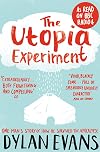
I read ‘The Utopia Experiment’ in two sessions, during the first of which I got nearly fifty pages in. I was pretty horrified by these initial few chapters. The book is an autobiographical account of a guy who decided, in effect, to immersively role play a post-apocalyptic scenario with a bunch of strangers. Within a year he found himself in a psychiatric hospital. This seems unsurprising when he explains that this idea came to him after he, a) visited Mayan ruins and got obsessed with show more the collapse of civilisation, b) became clinically depressed, and c) read the Unabomber Manifesto and thought it made a lot of sense. At first I couldn’t help wondering why none of his friends or family noticed these massive warning signs and tried to talk to him about perhaps not chucking away his entire life to play apocalypses. When I read the remaining 220 pages in one go, however, it emerged that friends and family did try to advise Evans against this course of action and he ‘brushed them aside’.
This book is not about post-apocalyptic life, it is an account of a nervous breakdown. Evans is brutally honest with the reader, making it clear that he was deluded throughout the so-called experiment. As he admits, it wasn’t any sort of real experiment, with only the vaguest of hypotheses and justifications. Instead, it was an effort to physically flee his deteriorating mental health, fed by an obsession with the collapse of civilisation. Generally, yearning for a simpler, prelapsarian way of life is pretty suspect when combined with the absence of self-awareness (or, indeed, awareness of what you think civilisation is exactly). It is absolutely fascinating, albeit concerning, to see how awareness dawns on Evans, both of his state and of what civilisation means to him.
The motto of the so-called Utopia Experiment community is evidently, “How hard can it be?” Evans assumed, with extraordinary arrogance in hindsight, that his academic career meant he could pick up any skills and knowledge to survive in a simulated post-apocalyptic environment quickly and easily. This obviously did not turn out to be the case. A major message of the book is that doing without the comforts of civilisation seems awfully easy to those who have always had them. True post-apocalyptic survival skills can be found amongst those who have survived failed states, wars, and utter economic collapse, not middle class Britons. In fact, it should surely be obvious what happens when civilisations collapse from what is happening right now in Syria: the population flees somewhere safer and more stable. I have always found the simultaneity assumed by doom-sayers very hard to justify; if civilisation (however defined) collapsed, there is no reason to believe that deterioration would occur at the same rate across the globe. The economy may be heavily globalised, but different continents, countries, and localities have vastly differing levels of resilience. Evans does admit that survivalists tend to downplay and underestimate the complexity of civilisation.
I myself am pessimistic about the damage climate change will inflict in the next hundred years. However, I find the survivalist mindset frightening because it is implicitly comfortable with genocide. As Evans notes, some of those living in his Utopian Experiment seemed to eagerly await the coming collapse, as it would rid the world of those tiresome billions that clutter it up. I think this perspective both feeds and is fed by the myriad depictions of post-apocalyptic scenarios in fiction, on TV, and in films. As Rushkoff puts it in [b:Present Shock: When Everything Happens Now|15811513|Present Shock When Everything Happens Now|Douglas Rushkoff|https://images.gr-assets.com/books/1355084098s/15811513.jpg|21536777]:
What Evans makes clear is that this catastrophising can also be symptomatic of mental illness. In the final chapters of ‘The Utopia Experiment’, he discusses his recovery and coming to terms with civilisation’s perhaps not impending collapse. He also seeks to reconceptualise his breakdown as a learning experience, a way of developing his own beliefs and creed. This seems to be a laudable means of avoiding dwelling on regret, which is pointless as time cannot be turned back. I was surprised, though, that he returned to the same area of academic research (robotics and AI) as he’d sought to escape in the first place. I suppose familiarity was reassuring after the unmooring of his disastrous experiment. The memoir is a compelling, deeply interesting read, especially if you have a particular interest in post-apocalyptic scenarios (as I have). It is also an addition to the wide, deep, and contradictory literature on the definition and nature of utopia and utopian living, which I never tire of. Perhaps the moral of the story is to remain curious about utopia, but be wary of trying to start your own. After all, how hard can it be? Very hard indeed. show less
This book is not about post-apocalyptic life, it is an account of a nervous breakdown. Evans is brutally honest with the reader, making it clear that he was deluded throughout the so-called experiment. As he admits, it wasn’t any sort of real experiment, with only the vaguest of hypotheses and justifications. Instead, it was an effort to physically flee his deteriorating mental health, fed by an obsession with the collapse of civilisation. Generally, yearning for a simpler, prelapsarian way of life is pretty suspect when combined with the absence of self-awareness (or, indeed, awareness of what you think civilisation is exactly). It is absolutely fascinating, albeit concerning, to see how awareness dawns on Evans, both of his state and of what civilisation means to him.
The motto of the so-called Utopia Experiment community is evidently, “How hard can it be?” Evans assumed, with extraordinary arrogance in hindsight, that his academic career meant he could pick up any skills and knowledge to survive in a simulated post-apocalyptic environment quickly and easily. This obviously did not turn out to be the case. A major message of the book is that doing without the comforts of civilisation seems awfully easy to those who have always had them. True post-apocalyptic survival skills can be found amongst those who have survived failed states, wars, and utter economic collapse, not middle class Britons. In fact, it should surely be obvious what happens when civilisations collapse from what is happening right now in Syria: the population flees somewhere safer and more stable. I have always found the simultaneity assumed by doom-sayers very hard to justify; if civilisation (however defined) collapsed, there is no reason to believe that deterioration would occur at the same rate across the globe. The economy may be heavily globalised, but different continents, countries, and localities have vastly differing levels of resilience. Evans does admit that survivalists tend to downplay and underestimate the complexity of civilisation.
I myself am pessimistic about the damage climate change will inflict in the next hundred years. However, I find the survivalist mindset frightening because it is implicitly comfortable with genocide. As Evans notes, some of those living in his Utopian Experiment seemed to eagerly await the coming collapse, as it would rid the world of those tiresome billions that clutter it up. I think this perspective both feeds and is fed by the myriad depictions of post-apocalyptic scenarios in fiction, on TV, and in films. As Rushkoff puts it in [b:Present Shock: When Everything Happens Now|15811513|Present Shock When Everything Happens Now|Douglas Rushkoff|https://images.gr-assets.com/books/1355084098s/15811513.jpg|21536777]:
At least the annihilation of the human race - or its transmogrification into silicon - resolves the precarious uncertainty of present shock. [...] Apocalypto gives us a way out. A line in the sand. An us and a them. And, more important, a before and after.
That’s why it’s important that we distinguish between valid concerns about the survival of our species and these more fantastic wishes for reversal and recognition - the story elements at the end of all heroic journeys. If anything, the common conflation of so many apocalypse scenarios - bird flu, asteroid, terrorist attack - camouflages ones that may already be in progress, such as climate change or the slow poisoning of the oceans. [...]
To many, it’s easier, or at least more comforting, to approach these problems as intractable. [...] The hardest part of living in present shock is that there’s no end and, for that matter, no beginning. It’s a chronic plateau of interminable stresses that seem to have always been there. There’s no original source to blame and no end in sight. This is why the return to simplicity offered by the most extreme scenarios is proving so alluring to so many of us.
What Evans makes clear is that this catastrophising can also be symptomatic of mental illness. In the final chapters of ‘The Utopia Experiment’, he discusses his recovery and coming to terms with civilisation’s perhaps not impending collapse. He also seeks to reconceptualise his breakdown as a learning experience, a way of developing his own beliefs and creed. This seems to be a laudable means of avoiding dwelling on regret, which is pointless as time cannot be turned back. I was surprised, though, that he returned to the same area of academic research (robotics and AI) as he’d sought to escape in the first place. I suppose familiarity was reassuring after the unmooring of his disastrous experiment. The memoir is a compelling, deeply interesting read, especially if you have a particular interest in post-apocalyptic scenarios (as I have). It is also an addition to the wide, deep, and contradictory literature on the definition and nature of utopia and utopian living, which I never tire of. Perhaps the moral of the story is to remain curious about utopia, but be wary of trying to start your own. After all, how hard can it be? Very hard indeed. show less

I am interested in Dylan Evans because he was once a Lacan scholar who wrote a well-researched (but questionably useful) resource titled [b:An Introductory Dictionary of Lacanian Psychoanalysis|832739|An Introductory Dictionary of Lacanian Psychoanalysis|Dylan Evans|https://images.gr-assets.com/books/1356449807s/832739.jpg|19341340]. I am even more interested in Evans because he later renounced Lacan entirely and became a champion of evolutionary psychology, a journey he details in an essay show more titled "From Lacan to Darwin" (collected in [b:The Literary Animal: Evolution and the Nature of Narrative|351322|The Literary Animal Evolution and the Nature of Narrative|Jonathan Gottschall|https://images.gr-assets.com/books/1328852997s/351322.jpg|341554]).
For me, Evans bears a psychological resemblance to Stuart Schneiderman, another former disciple of Lacan's who has also since renounced that allegiance. While both men come across in their writings as narcissistic wankers, Evans at least has the ability to recognize that his need for discipleship is part of a vicious circle. He writes:
"This had happened on several previous occasions in my life. When I was nineteen I spent a year training to be a priest, only to discover that, unlike my fellow seminarians, I didn't really believe in God. Ten years later I thought I had discovered the ultimate truth in the writings of Jacques Lacan, only to recoil in horror when I had surrounded myself with his most ardent disciples. I was like a foolish bird that kept alighting on sticky twigs, all coated in birdlime to trap him." (p.237)
The Utopia Experiment describes Evans's latest quixotic entry into this sorry pattern, only this time instead of God or Lacan his main inspirations are a bizarre mixture of Mayan prophecies, Alex Garland's novel [b:The Beach|607639|The Beach|Alex Garland|https://images.gr-assets.com/books/1348547768s/607639.jpg|1020156], and the Unabomber's manifesto. In a fit of madness, Evans decides that technology is destroying the world and that civilization is about to collapse, so he quits his academic job, sells his beautiful home in the Cotswolds, and uses the resultant cash to fund what was meant to be an eighteen-month survivalist experiment in the Highlands of Scotland.
Evans's approach to this project is so poorly thought out and planned that it is no surprise it when it begins to fall apart. He gives no realistic thought to things like security or leadership, for instance, and then is surprised when people in the camp don't do the job assigned to them. The most laughable aspect is the halfhearted commitment he shows to the project - half the time he is living down the road at a hotel with his girlfriend (later wife) or spending time outside the camp. By the end of the project, Evans is committed to a mental hospital, the project volunteers spurn him, and self-sufficiency is never actually attained.
Evans sprinkles his commentary with moments of self-critique that are about as convincing as the utterances of an Ishiguro narrator. He insists throughout the book that he has learned an important life lesson from this experience, but all signs point to the opposite. Like Schneiderman, Evans is a lifelong disciple in search of a master, and this stands out particularly in his ominous references to Steven Pinker.
While he was recovering in hospital, Evans recounts, he reread Pinker's book [b:The Blank Slate: The Modern Denial of Human Nature|5752|The Blank Slate The Modern Denial of Human Nature|Steven Pinker|https://images.gr-assets.com/books/1386925462s/5752.jpg|9151]. As he was reading, a passage stood out to him, in which Pinker writes:
"...many intellectuals have embraced the image of peaceable, egalitarian, and ecology-loving natives. But in the past two decades anthropologists have gathered data on life and death in pre-state societies rather than accepting the warm and fuzzy stereotypes. What did they find? In a nutshell: Hobbes was right, Rousseau was wrong." (Pinker on p.143)
This Manichean division of human nature along the lines of good v. evil human nature is not only simplistic, but it foreshadows the return of the master/disciple dynamic to which Evans repeatedly returns with obsessive repetitiveness. The Utopia Project, after all, places him in the position of a disavowed master - he insists that he is just another volunteer, yet he is providing all the funds and, as both the founder and patron, gives him the authority to make all the decisions. "Of course I would inevitably play some kind of leading role," he ponders disingenuously. "But I didn't want to be a charismatic figure, let alone a dictator. I wanted to blend into the background, and watch what happened. Or did I? Was there perhaps some secret desire to be a kind of guru or cult leader, some unacknowledged form of megalomania?" (pp.81-82). To me, the unstated answer is a pretty obvious "yes."
In an argument with one of the volunteers after he has left the experiment, Evans claims that the volunteers were "yearning for a strong leader to take control" (p.263) - something that he immediately disavows with unconvincing ardor. Yet his interlocutor, James, agrees "that the absence of leadership was an issue. 'The lack of any organizing figurehead played the biggest role' in explaining why things didn't work out the way I wanted them to, he observed." (p.263)
This mindset plays right back into Evans's fantasy of a master to whose desires he can submit. Thus, at the very end of the book, he returns to Pinker:
"Pinker is right to say that Hobbes was a better anthropologist than Rousseau, but that does not mean he was a better philosopher. Hobbes was right in thinking that our hunter-gatherer ancestors lived lives that were nasty, brutish and short, but he thought there was a way to remedy this. By submitting to a strong sovereign, we can at least live in relative peace. It won't be Utopia, but it will be better than the continual war of all against all." (p.269)
Evans thinks he has broken the cycle, that in returning to the comforts of civilization he has submitted to the most rational of all solutions, the sovereignty of the Hobbesian Leviathan. If you look closely at this conclusion, however, it quickly becomes clear that it is more of the same old obsessive pattern of mastery and discipleship, another "sticky twig" to which Evans has gotten himself stuck. It's not that Evans has finally seen through and broken the cycle of mastery, it is just that he has reconciled himself to the comforts and security of modern slavery, the very trap from which Lacan, if we know how to read him, teaches us how to escape.
Dylan Evans, meet the new boss, same as the old boss. You've been fooled again. show less
For me, Evans bears a psychological resemblance to Stuart Schneiderman, another former disciple of Lacan's who has also since renounced that allegiance. While both men come across in their writings as narcissistic wankers, Evans at least has the ability to recognize that his need for discipleship is part of a vicious circle. He writes:
"This had happened on several previous occasions in my life. When I was nineteen I spent a year training to be a priest, only to discover that, unlike my fellow seminarians, I didn't really believe in God. Ten years later I thought I had discovered the ultimate truth in the writings of Jacques Lacan, only to recoil in horror when I had surrounded myself with his most ardent disciples. I was like a foolish bird that kept alighting on sticky twigs, all coated in birdlime to trap him." (p.237)
The Utopia Experiment describes Evans's latest quixotic entry into this sorry pattern, only this time instead of God or Lacan his main inspirations are a bizarre mixture of Mayan prophecies, Alex Garland's novel [b:The Beach|607639|The Beach|Alex Garland|https://images.gr-assets.com/books/1348547768s/607639.jpg|1020156], and the Unabomber's manifesto. In a fit of madness, Evans decides that technology is destroying the world and that civilization is about to collapse, so he quits his academic job, sells his beautiful home in the Cotswolds, and uses the resultant cash to fund what was meant to be an eighteen-month survivalist experiment in the Highlands of Scotland.
Evans's approach to this project is so poorly thought out and planned that it is no surprise it when it begins to fall apart. He gives no realistic thought to things like security or leadership, for instance, and then is surprised when people in the camp don't do the job assigned to them. The most laughable aspect is the halfhearted commitment he shows to the project - half the time he is living down the road at a hotel with his girlfriend (later wife) or spending time outside the camp. By the end of the project, Evans is committed to a mental hospital, the project volunteers spurn him, and self-sufficiency is never actually attained.
Evans sprinkles his commentary with moments of self-critique that are about as convincing as the utterances of an Ishiguro narrator. He insists throughout the book that he has learned an important life lesson from this experience, but all signs point to the opposite. Like Schneiderman, Evans is a lifelong disciple in search of a master, and this stands out particularly in his ominous references to Steven Pinker.
While he was recovering in hospital, Evans recounts, he reread Pinker's book [b:The Blank Slate: The Modern Denial of Human Nature|5752|The Blank Slate The Modern Denial of Human Nature|Steven Pinker|https://images.gr-assets.com/books/1386925462s/5752.jpg|9151]. As he was reading, a passage stood out to him, in which Pinker writes:
"...many intellectuals have embraced the image of peaceable, egalitarian, and ecology-loving natives. But in the past two decades anthropologists have gathered data on life and death in pre-state societies rather than accepting the warm and fuzzy stereotypes. What did they find? In a nutshell: Hobbes was right, Rousseau was wrong." (Pinker on p.143)
This Manichean division of human nature along the lines of good v. evil human nature is not only simplistic, but it foreshadows the return of the master/disciple dynamic to which Evans repeatedly returns with obsessive repetitiveness. The Utopia Project, after all, places him in the position of a disavowed master - he insists that he is just another volunteer, yet he is providing all the funds and, as both the founder and patron, gives him the authority to make all the decisions. "Of course I would inevitably play some kind of leading role," he ponders disingenuously. "But I didn't want to be a charismatic figure, let alone a dictator. I wanted to blend into the background, and watch what happened. Or did I? Was there perhaps some secret desire to be a kind of guru or cult leader, some unacknowledged form of megalomania?" (pp.81-82). To me, the unstated answer is a pretty obvious "yes."
In an argument with one of the volunteers after he has left the experiment, Evans claims that the volunteers were "yearning for a strong leader to take control" (p.263) - something that he immediately disavows with unconvincing ardor. Yet his interlocutor, James, agrees "that the absence of leadership was an issue. 'The lack of any organizing figurehead played the biggest role' in explaining why things didn't work out the way I wanted them to, he observed." (p.263)
This mindset plays right back into Evans's fantasy of a master to whose desires he can submit. Thus, at the very end of the book, he returns to Pinker:
"Pinker is right to say that Hobbes was a better anthropologist than Rousseau, but that does not mean he was a better philosopher. Hobbes was right in thinking that our hunter-gatherer ancestors lived lives that were nasty, brutish and short, but he thought there was a way to remedy this. By submitting to a strong sovereign, we can at least live in relative peace. It won't be Utopia, but it will be better than the continual war of all against all." (p.269)
Evans thinks he has broken the cycle, that in returning to the comforts of civilization he has submitted to the most rational of all solutions, the sovereignty of the Hobbesian Leviathan. If you look closely at this conclusion, however, it quickly becomes clear that it is more of the same old obsessive pattern of mastery and discipleship, another "sticky twig" to which Evans has gotten himself stuck. It's not that Evans has finally seen through and broken the cycle of mastery, it is just that he has reconciled himself to the comforts and security of modern slavery, the very trap from which Lacan, if we know how to read him, teaches us how to escape.
Dylan Evans, meet the new boss, same as the old boss. You've been fooled again. show less
The book is more about the author's mental break, not the post-apocalyptic commune he tried to start during it. Given that I found the author increasingly insufferable as the narrative went on, the focus on himself made this book an unenjoyable read. If one likes spending time with self-righteous and insulated academics, this would likely be much more tolerable.
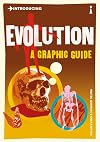
A brief, clear overview of evolution and natural selection. I am glad there was commentary on contrarian positions on the validity of evolution such as creationism and intelligent design, both spurious, and to me infuriating, attempts to cloak religious dogma as science. The section on altruism as an evolutionary phenomenon is well-explained as is the evolutionary utility of ethics, morality and even superstition.
Awards


You May Also Like


Associated Authors
Statistics
- Works
- 21
- Also by
- 2
- Members
- 1,048
- Popularity
- #24,587
- Rating
- 3.4
- Reviews
- 12
- ISBNs
- 69
- Languages
- 12