
Brian Innes (1928–2014)
Author of Serial Killers
About the Author
Brian Innes was born in London, England on May 4, 1928. He received a degree in chemistry from King's College London in 1949. He worked for several years in a laboratory before deciding to become an artist. He took classes at the Chelsea College of Art, where he co-founded the band the Temperance show more Seven. He was the band's percussionist and spokesperson. The Temperance Seven had several hits including You're Driving Me Crazy. He left the band at the end of 1965. He was a founding partner of Orbis Publishing. After selling the company, he wrote numerous books including the memoir A Long Way from Pasadena. He died on July 14, 2014 at the age of 86. (Bowker Author Biography) show less
Works by Brian Innes
Bodies of Evidence: The Fascinating World of Forensic Science and How It Helped Solve More Than 100 True Crimes (2000) 146 copies, 2 reviews
Fakes and Forgeries: The True Crime Stories of History's Greatest Deceptions: The Criminals, the Scams, and the Victims (2005) 74 copies, 2 reviews
Steck-Vaughn Unsolved Mysteries: Student Reader Mysteries of The Ancients , Story Book (1998) 13 copies
Gerichtsmedizin Und Kriminaltechnik: Mit Hightech Auf Verbrecherjagd ; Stumme Zeugen Entlarven Den Täter (2007) 3 copies
The I Ching Illustrated 2 copies
The book of pirates : buccaneers, corsairs, privateers, freebooters, & all sea rovers (1966) 2 copies
Tarot 1 copy
Mente Criminosa: Vol 3. 1 copy
Mente Criminosa: Vol 2. 1 copy
Mente Criminosa: Vol 1. 1 copy
Astrologia e oroscopo 1 copy
A Long Way from Pasadena 1 copy
Associated Works
Tagged
Common Knowledge
- Legal name
- Innes, Brian Stanley
- Other names
- Powell, Neil (pen name)
- Birthdate
- 1928-05-04
- Date of death
- 2014-07-14
- Gender
- male
- Education
- Whitgift School, Croydon
King's College, London (BSc|Chemistry|1949)
Chelsea School of Art
Central School of Arts and Crafts
London School of Printing - Occupations
- writer
editor
art director
consultant
percussionist
publisher (show all 7)
musician - Organizations
- Crime Writers Association
Society of Authors
Authors' Club
Society of Industrial Artists and Designers
National Union of Journalists
Temperance Seven (band) (show all 7)
Orbis Publishing - Relationships
- Walker, Kathryn (2)
- Birthplace
- Croydon, London, England, UK
- Places of residence
- London, England, UK
Narbonne, France - Place of death
- Narbonne, France (at home)
- Map Location
- United Kingdom
Members
Reviews
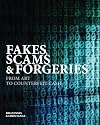
This updated edition of Fakes, Scams & Forgeries, by Brian Innes and Chris McNab, is both an attractive and informative volume that will please those wanting a nice trip through the history of such dishonesty.
This is a nice mix of information about the commission and detection of these crimes as well as some major cases of each. Among the cases in this new edition are Anna Sorokin and Elizabeth Holmes. So this is really up-to-date.
No doubt how much is new to a reader will depend on what show more their interests are. I found that even the cases and information with which I was familiar was presented in a way that held my interest and offered me new insight. The new stuff was, well, new to me so I found it very interesting. I think any reader, whether someone with a deep interest or someone who just wants to know a little about these kinds of crimes, will enjoy this volume.
Reviewed from a copy made available by the publisher via NetGalley. show less
This is a nice mix of information about the commission and detection of these crimes as well as some major cases of each. Among the cases in this new edition are Anna Sorokin and Elizabeth Holmes. So this is really up-to-date.
No doubt how much is new to a reader will depend on what show more their interests are. I found that even the cases and information with which I was familiar was presented in a way that held my interest and offered me new insight. The new stuff was, well, new to me so I found it very interesting. I think any reader, whether someone with a deep interest or someone who just wants to know a little about these kinds of crimes, will enjoy this volume.
Reviewed from a copy made available by the publisher via NetGalley. show less
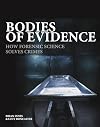
Bodies of Evidence: How Forensic Science Solves Crimes by Brian Innes and Lucy Doncaster is a well-illustrated overview of the topic. The explanations go just below surface level without becoming a really detailed science book. I rounded this one up because I think they found just the right mix of interesting explanation, good example cases, and excellent illustrations.
In addition to a couple of courses (MOOCs) and plenty of the popular books on forensics, I've also read through a couple of show more textbooks (they often went over my head) so part of my interest here was in finding out where this book fell in that spectrum. While thankfully not into the realm of a textbook it does offer enough detail to give some of the science behind each technique. By combining that with short case studies we see how the science is applied in real world situations. What I came away with is the opinion that this makes an excellent single, or at least initial, source for most nonexperts. If you just want one book in your library on the topic for when you want to better understand something, this would make an excellent volume.
The main thing I think would make this better would be a short bibliography, or very short ones at the end of each chapter. In reading the book you get plenty of names and keywords to search for yourself, but still. I don't think an extensive one would have been necessary, maybe a couple major texts for each technique or method plus a few other good overall forensic texts.
I would recommend this to anyone with an interest in forensics, whether through television and movies, novels, true crime, or even as a potential career choice. As either an overview for the casual reader or a jumping off point for more research, this is a handy volume to have in your library. If you're like me this would also make a good coffee table (or end table) book, and definitely one to leave out at your next book group meeting if you're reading anything with crime in it.
Reviewed from a copy made available by the publisher via NetGalley. show less
In addition to a couple of courses (MOOCs) and plenty of the popular books on forensics, I've also read through a couple of show more textbooks (they often went over my head) so part of my interest here was in finding out where this book fell in that spectrum. While thankfully not into the realm of a textbook it does offer enough detail to give some of the science behind each technique. By combining that with short case studies we see how the science is applied in real world situations. What I came away with is the opinion that this makes an excellent single, or at least initial, source for most nonexperts. If you just want one book in your library on the topic for when you want to better understand something, this would make an excellent volume.
The main thing I think would make this better would be a short bibliography, or very short ones at the end of each chapter. In reading the book you get plenty of names and keywords to search for yourself, but still. I don't think an extensive one would have been necessary, maybe a couple major texts for each technique or method plus a few other good overall forensic texts.
I would recommend this to anyone with an interest in forensics, whether through television and movies, novels, true crime, or even as a potential career choice. As either an overview for the casual reader or a jumping off point for more research, this is a handy volume to have in your library. If you're like me this would also make a good coffee table (or end table) book, and definitely one to leave out at your next book group meeting if you're reading anything with crime in it.
Reviewed from a copy made available by the publisher via NetGalley. show less
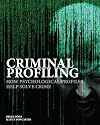
Criminal Profiling by Brian Innes and Lucy Doncaster is an excellent overview of the history and current state of criminal profiling.
This book is accessible for any reader with an interest in the topic yet does not sacrifice a decent amount of detail. Certainly nowhere near the level of textbooks I've used, which is a good quality since those are designed to inform and shape future practitioners while most readers simply want the information.
The liberal use of case studies helps to show more illustrate both where profiling has fallen short as well as the many ways it has been shown to be effective. Through the use of a lot of pictures and sidebars, the layout helps, I think, to keep a reader engaged and actively reading.
Highly recommended for those with an interest in the field, whether because of an interest in true crime stories or an interest in human psychology. While not an extensive bibliography it is sufficient to encourage further reading and research for those so inclined.
Reviewed from a copy made available by the publisher via NetGalley. show less
This book is accessible for any reader with an interest in the topic yet does not sacrifice a decent amount of detail. Certainly nowhere near the level of textbooks I've used, which is a good quality since those are designed to inform and shape future practitioners while most readers simply want the information.
The liberal use of case studies helps to show more illustrate both where profiling has fallen short as well as the many ways it has been shown to be effective. Through the use of a lot of pictures and sidebars, the layout helps, I think, to keep a reader engaged and actively reading.
Highly recommended for those with an interest in the field, whether because of an interest in true crime stories or an interest in human psychology. While not an extensive bibliography it is sufficient to encourage further reading and research for those so inclined.
Reviewed from a copy made available by the publisher via NetGalley. show less

Brian Innes' Fakes & Forgeries (Reader's Digest, 2005) is a very basic introduction to the subject, taking a wide-angle view which encompasses everything from counterfeit money to identity theft to forged antiquities, art, and books. Unfortunately that breadth means that nothing gets covered in any great depth, and Innes' text is strangely disjointed: the narrative bounces around rather rapidly, and characters/topics blip in and out, sometimes without any introduction whatever. Occasionally show more the only mention of a given topic was in a picture caption, which also seemed slightly bizarre.
The best use of this book might be as an entry point into more research on a given area of the subject, although without any source notes, even that might be a stretch. Perhaps for the very casual reader, this would be a sufficient overview, but overall, I think there are better books out there.
http://philobiblos.blogspot.com/2009/07/book-review-fakes-forgeries.html show less
The best use of this book might be as an entry point into more research on a given area of the subject, although without any source notes, even that might be a stretch. Perhaps for the very casual reader, this would be a sufficient overview, but overall, I think there are better books out there.
http://philobiblos.blogspot.com/2009/07/book-review-fakes-forgeries.html show less
Lists
You May Also Like


Associated Authors
Statistics
- Works
- 90
- Also by
- 2
- Members
- 1,351
- Popularity
- #19,035
- Rating
- 3.5
- Reviews
- 15
- ISBNs
- 170
- Languages
- 9
- Favorited
- 1