
Timothy Keller (1950–2023)
Author of The Reason for God: Belief in an Age of Skepticism
About the Author
Timothy J. Keller was born in 1950. He received a B.A. from Bucknell University in 1972, a M.Div. from Gordon-Conwell Theological Seminary in 1975, and a D.Min. from Westminster Theological Seminary in 1981. He was ordained by the Presbyterian Church in America and served as a pastor in Virginia show more for nine years. He is founding pastor of Redeemer Presbyterian Church in New York City, New York. He has written several books including Grace Changes Everything, Generous Justice: How God's Grace Makes Us Just, and The Reason for God: Belief in an Age of Skepticism, which won awards from World Magazine and Christianity Today. His title, Preaching: Communicating Faith in a Skeptical Age, made the New York Times Best Seller List in 2015. Hidden Christmas: The Surprising Truth Behind the Birth of Christ was published in October 2016. (Bowker Author Biography) show less
Series
Works by Timothy Keller
The Meaning of Marriage: Facing the Complexities of Commitment with the Wisdom of God (2011) — Author — 3,398 copies, 24 reviews
Counterfeit Gods: The Empty Promises of Money, Sex, and Power, and the Only Hope that Matters (2009) 2,446 copies, 21 reviews
God's Wisdom for Navigating Life: A Year of Daily Devotions in the Book of Proverbs (2017) 599 copies, 2 reviews
Judges For You: For Reading, For Feeding, For Leading (God's Word for You) (2013) 461 copies, 6 reviews
Shaped by the Gospel: Doing Balanced, Gospel-Centered Ministry in Your City (Center Church) (2016) 159 copies
Loving the City: Doing Balanced, Gospel-Centered Ministry in Your City (Center Church) (2016) 141 copies, 1 review
90 Days in John 14-17, Romans, James: Wisdom for the Christian life (2017) — Author — 140 copies, 1 review
How to Reach the West Again: Six Essential Elements of a Missionary Encounter (2020) 105 copies, 2 reviews
Serving a Movement: Doing Balanced, Gospel-Centered Ministry in Your City (Center Church) (2016) 87 copies
What Is Wrong with the World?: The Surprising, Hopeful Answer to the Question We Cannot Avoid (2025) 73 copies
Timothy Keller : Gospel in Life 18 copies
Generosity Devotional: How God's Radical Grace Changes Our Perspective on Money and Possessions Devotional (2016) 10 copies
A Vision for a Gospel-Centered Life 9 copies
The Meaning of Marriage in 30 Minutes - The Expert Guide to Timothy Keller's Critically Acclaimed Book (2013) 9 copies
El significado del matrimonio: 365 devocionales para parejas | The Meaning of Marriage: 365 Devotions for couples (Spanish Edition) (2020) 8 copies
The Timothy Keller Sermon Archive 6 copies
Why God Made Cities 5 copies
The Whole Christ: Legalism, Antinomianism, and Gospel Assurance—Why the Marrow Controversy Still Matters 5 copies, 1 review
A Model For Preaching 4 copies
Juízes. Os Heróis Falhos e Herói Perfeito - Série Estudando a Palavra (Em Portuguese do Brasil) (2016) 4 copies
El profeta pródigo: Jonás y el misterio de la misericordia de Dios (Spanish Edition) (2019) 3 copies
A Troubled Man, Mark 5:1-20 3 copies
Timothy Keller: Generous Justice, The Meaning of Marriage, Every Good Endeavour, Preaching (2018) 3 copies
La Navidad oculta: La sorprendente verdad detrás del nacimiento de Cristo (Spanish Edition) (2017) 3 copies
Nascimento, Casamento E Morte. - Como Encontrar Deus Nos Eventos Mais Significativos Da Vida 3 copies
O significado do casamento 2 copies
Devocional do Catecismo Nova Cidade: a verdade de Deus para nossos corações e mentes (Portuguese Edition) (2018) 2 copies
Evangelism and the Servant Leader 2 copies
Reconciliation 2 copies
In alle redelijkheid gespreksgids gespreksgids : gesprekken over geloof en leven in zes sessies (2013) 2 copies
Galatians 2 copies
Jesus at a friend's feast 2 copies
Doubt Joy Power 2 copies
Rest for your Soul Gospel of Matthew 2 copies
Amos Healer of the World 2 copies
The message of Romans: leaders guide 2 copies
Esperanza en tiempos de temor: El significado y la importancia de la resurrección para nuestra vida hoy (Spanish Edition) (2022) 2 copies
The Doctrine of God 2 copies
Work and Giving 2 copies
Timothy Keller - The Prodigal God FULL SET (Book DVD Study Guide) Recovering the Heart of the Christian Faith (2010) 2 copies
Hope, Race and Power Romans 14 2 copies
Sabiduría de Dios para navegar por la vida: Un año de devocionales diarios en Proverbios (Spanish Edition) (2018) 2 copies
Battlefield of the mind 2 copies
Hope for Your Work 1 copy
The Once and Future King (Sermon on Micah 5:1-6. Part 3 of 5 in the Jesus of the Prophets series.) 1 copy
The Lord We Can Know 1 copy
Creation 1 copy
Proverbs Wisdom for Living 1 copy
Justice 1 copy
[(Gospel in Life: Participant's Guide : Grace Changes Everything)] [By (author) Timothy J. Keller] published on (March, 2010) (2010) 1 copy
Work 1 copy
How To Change 1 copy
Spiritual Gifts 1 copy
Jesus Our God 1 copy
Peace and Joy 1 copy
Women 1 copy
The Meaning of Jesus Seeing Him The Upper Room Communion Servant Leader Foot Washing Maundy Thursday 1 copy
The Silent Sovereignty of God (Part 1 of 4 in the Esther and the Hiddenness of God sermon series) 1 copy
Baptism and Resurrection 1 copy
Spanish Champs 1 copy
The Meaning of Marriage 1 copy
Romeinen 8-16 gespreksgids 1 copy
The Grammar of Hope 1 copy
Integrity (Sermon on Ephesians 4:15-16 and 25-30, Part 6 of 8 in The Real Signs of the Spirit) 1 copy
Self-Control (Sermon on 1 Corinthians 9:23-10:13, Part 8 of 8 in The Real Signs of the Spirit) 1 copy
Razmetni Bog (07 Kel) 1 copy
为何是他 1 copy
The Meaning of Marraige 1 copy
Money and the Servant Leader 1 copy
Slujba de ajutorare 1 copy
Argument pentru Dumnezeu 1 copy
Perdonar 1 copy
God: the Cup of the Father 1 copy
Work and Wealth 1 copy
To Be Called Your Son (Sermon on Luke 15:21-24, Part 4 of 7 in The Fellowship of Grace series.) 1 copy
Work Wholeheartedly 1 copy
We Had to Celebrate (Sermon on Luke 15:17-32, Part 6 of 7 of The Fellowship of Grace Series.) 1 copy
Seeing Jesus 1 copy
The Kiss of Death 1 copy
Prayer of Rest 1 copy
GOSPEL IN LIFE 1 copy
Hoffnung in Zeiten der Angst: Wie die Auferstehung die Welt verändert (German Edition) (2022) 1 copy
Prodigal Prophet 1 copy
Timothy Keller - The Reason for God FULL SET (Book DVD Study Guide) The Reason for God: Belief in an Age of Skepticism (2009) 1 copy
Idoli e inganni. Le vuote promesse del denaro, del sesso e del potere e la sola speranza che conti (2016) 1 copy
Self Forgetfullness 1 copy
The Prodigal God Study Guide 1 copy
Timothy Keller - King's Cross and Hidden Christmas : King's Cross, the reason for god, making sense of god (2017) 1 copy
Shalom 1 copy
A Study of Galatians 1 copy
Fellowship Group Handbook 1 copy
Redeemer Diaconate Manual 1 copy
Prayer: The Essential Guide 1 copy
Que Es El Evangelio 1 copy
La sabiduría de Dios para caminar por la vida; un devocional anual baso en el libro de Proverbios (2018) 1 copy
Det ¤meningsfulde ægteskab 1 copy
Reason for God Pack, Includes One DVD and One Discussion Guide by Timothy Keller (2010-10-30) (1763) 1 copy
The First Christian 1 copy
The Word Made Flesh 1 copy
Fire and Soap 1 copy
The Bread of Heaven 1 copy
The Problem of Pain 1 copy
La respuesta del espejo: Solución definitiva a los problemas de autoestima (Spanish Edition) (2013) 1 copy
Every good endeavor 1 copy
Gospel in the World Conference, the mission of God, and your work, belonging to a missional church 1 copy, 1 review
My Confession 1 copy
Tim Keller Romans 7 1 copy
Tim Keller Romans 8 1 copy
Como integrar fé e trabalho 1 copy
Making Sense of God 1 copy
Explore: For Your Daily Walk With God: July-September 2024; Romans; Jeremiah; 2 Thessalonians (2024) 1 copy
Tilgivelse (Forgiveness) 1 copy
La Navidad Oculta 1 copy
Counterfeit Gods (Allah-Allah Palsu): Janji-janji Kosong dari Uang, Seks, dan Kekuasaan serta Harapan yang Terpenting (2009) 1 copy
The Faces of Sin 1 copy
The Obedient Master 1 copy
Igreja Centrada: Desenvolvendo em sua cidade um ministério equilibrado e centrado no evangelho 1 copy
Prayer / My Rock; My Refuge 1 copy
Associated Works
Dynamics of Spiritual Life: An Evangelical Theology of Renewal (1979) — Foreword, some editions — 785 copies, 1 review
Come, Thou Long-Expected Jesus: Experiencing the Peace and Promise of Christmas (2008) — Contributor, some editions; Contributor, some editions; Contributor, some editions; Contributor, some editions — 516 copies, 2 reviews
Jesus, Keep Me Near the Cross: Experiencing the Passion and Power of Easter (2009) — Contributor, some editions — 390 copies, 4 reviews
O Love That Will Not Let Me Go: Facing Death with Courageous Confidence in God (2011) — Contributor — 244 copies, 2 reviews
A Christian’s Pocket Guide to Loving The Old Testament: One Book, One God, One Story (Pocket Guides) (2015) — Foreword — 214 copies, 2 reviews
The Stories We Tell: How TV and Movies Long for and Echo the Truth (2014) — Foreword — 142 copies, 2 reviews
Not What You Think: Why the Bible Might Be Nothing We Expected Yet Everything We Need (2019) — Foreword, some editions — 65 copies
Tagged
Common Knowledge
- Legal name
- Keller, Timothy J.
- Other names
- 提摩太.凱勒
提娒.凱樂 - Birthdate
- 1950-09-23
- Date of death
- 2023-05-19
- Gender
- male
- Education
- Bucknell University (1972)
Gordon–Conwell Theological Seminary (1975)
Westminster Theological Seminary (1981) - Occupations
- cleric
- Organizations
- Redeemer Presbyterian Church
Presbyterian Church in America
Westminster Theological Seminary - Nationality
- USA
- Birthplace
- Allentown, Pennsylvania, USA
- Places of residence
- Allentown, Pennsylvania, USA
Hopewell, Virginia, USA
Philadelphia, Pennsylvania, USA
Roosevelt Island, New York, USA - Associated Place (for map)
- USA
Members
Reviews
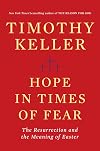
From Byron Borger at Hearts and Minds: I think this book snuck out without much ado, and the reference to Easter in the subtitle caused some to think it was too seasonal to be of lasting interest. Forgive me if I pull in the Apostle Paul to remind us all that if the Easter resurrection did not happen, then we are to be pitied. Which is to say, this book is perennial and you should overlook the publisher’s strategic error of pitching it as a holiday title.
Look: Keller is coping with a show more life-threatening form of serious cancer. He has struggled to be a person of integrity and care, perhaps too conservatives for our progressive activist friends and, curiously, has been criticized for decades by some in his PCA denomination and beyond. My respect for him has always been high and as he has navigated his illness, his politics, and his shift from pastoring to a broader role in resourcing churches (through Redeemer’s City-to-City movement) our appreciation endures. And this book is one we need, that is helpful and inspiring. It is intelligently written and well informed by excellent scholarship, but Keller is a preacher and writes with a pastor’s care for real people and their real, daily concerns.
There are several things going on here in Hope in Times of Fear and to say it explores the vast implications of the “great reversal” of things inaugurated by Christ’s death and resurrection is really to say too little. But in this short space allow me to just assure you it is a vital, solid, reasonable and faithful book, good for skeptics, for those unsure of the gospel-centered goodness of the Christian faith, and for anyone who needs to plumb the multi-faceted implications of the hope we have in the resurrection. Even for those going through painful times.
I grinned when I read the first line of the preface:
When I had thyroid cancer in 2002 I read an eight-hundred page masterwork, The Resurrection of the Son of God by N.T. Wright.
I suppose we know his love language: books! He gets a cancer diagnosis and dives into a huge, dense, theological tome. Ha!
Keller continues:
It was not only an enormous help to my theological understanding but, under the circumstances, also a bracing encouragement in my face of my own heightened sense of mortality. I was reminded and assured that death had been defeated in Jesus, and that death would also be defeated for me.
Now, nearly twenty years later, I am writing my own book on the resurrection of Jesus, and I find myself again facing a diagnosis of cancer. This time I have pancreatic cancer, and by all accounts, this condition is much more serious and the treatment a much bigger challenge.
He also notes, of course, that he is writing in the midst of the worst world pandemic in a century, in New York, no less. This, friends, is how it is done, preaching good, good news with realism and clarity. You may not even have heard of it, but Hope in Times of Fear is surely one of the best books of 2021. show less
Look: Keller is coping with a show more life-threatening form of serious cancer. He has struggled to be a person of integrity and care, perhaps too conservatives for our progressive activist friends and, curiously, has been criticized for decades by some in his PCA denomination and beyond. My respect for him has always been high and as he has navigated his illness, his politics, and his shift from pastoring to a broader role in resourcing churches (through Redeemer’s City-to-City movement) our appreciation endures. And this book is one we need, that is helpful and inspiring. It is intelligently written and well informed by excellent scholarship, but Keller is a preacher and writes with a pastor’s care for real people and their real, daily concerns.
There are several things going on here in Hope in Times of Fear and to say it explores the vast implications of the “great reversal” of things inaugurated by Christ’s death and resurrection is really to say too little. But in this short space allow me to just assure you it is a vital, solid, reasonable and faithful book, good for skeptics, for those unsure of the gospel-centered goodness of the Christian faith, and for anyone who needs to plumb the multi-faceted implications of the hope we have in the resurrection. Even for those going through painful times.
I grinned when I read the first line of the preface:
When I had thyroid cancer in 2002 I read an eight-hundred page masterwork, The Resurrection of the Son of God by N.T. Wright.
I suppose we know his love language: books! He gets a cancer diagnosis and dives into a huge, dense, theological tome. Ha!
Keller continues:
It was not only an enormous help to my theological understanding but, under the circumstances, also a bracing encouragement in my face of my own heightened sense of mortality. I was reminded and assured that death had been defeated in Jesus, and that death would also be defeated for me.
Now, nearly twenty years later, I am writing my own book on the resurrection of Jesus, and I find myself again facing a diagnosis of cancer. This time I have pancreatic cancer, and by all accounts, this condition is much more serious and the treatment a much bigger challenge.
He also notes, of course, that he is writing in the midst of the worst world pandemic in a century, in New York, no less. This, friends, is how it is done, preaching good, good news with realism and clarity. You may not even have heard of it, but Hope in Times of Fear is surely one of the best books of 2021. show less

Can Christianity survive in the 21st century? Is Christianity still credible? Is it even reasonable? In "The Reason for God," Keller offers a concise yet compelling defense of the Christian faith. In the first part of the book, Keller tackles seven contemporary objections to faith (e.g. "There Can't Be Just One True Religion," "Science Has Disproved Christianity," and "How Can a Loving God Send People to Hell"). While not a thorough treatment of any given doubt, Keller consistently show more demonstrates that these objections rest on unexamined presuppositions and their own sort of faith beliefs. In the second part of the book, Keller unpacks some of the reasons for faith. Although these reasons don't settle the argument, they are helpful clues as to work and nature of God in the universe. Keller makes some very interesting and forceful arguments here, and then turns his attention to the gospel, offering a clear and compelling telling of the gospel story. An engaging and thoughtful read. A+ show less
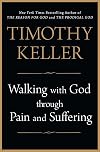
My favorite author Tim Keller discusses the problem of human suffering from three perspectives (So the book is divided into three sections): 1) How have human beings coped with the problem of suffering, from past to present? 2) What does the Bible teach about suffering? 3) What are some practical things to know/do when you are suffering? The book is surprisingly interesting. The author argues (and successfully persuaded me) it's important to ponder on how to cope with suffering, and Biblical show more truths about suffering, "before" you actually experience suffering, so that the truths are internalized in you and become an effective source of hope and strength in the event of suffering. The first and second sections laid out how the current secularized worldview cannot address the problem of suffering effectively (without giving an answer of total despair), how in human history four paradigms had developed that help people cope with suffering, and how the Biblical view on suffering differed from the four paradigms, with a complex, layered treatment of the problem. The author also discussed how many people rejected the existence of God because there are suffering in this world, and how this rejection came from an assumption that God exists to serve/intensify human pleasure, which was not a common view held by ancient or medieval people but have become increasingly popular over the past 150 years. show less
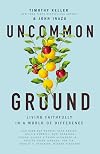
Summary: Twelve individuals from different walks of life discuss what Christian faithfulness and the pursuit of the common good looks like in a deeply divided culture.
How are Christians to live in this time where we seem deeply divided about everything from wearing masks to the status of an embryo in the womb to the seriousness of the changes we are witnessing in the world's climate? Not only are divisions around these and a host of issues deep, but engagement between those who differ seems show more nearly impossible. So what is a Christian to do? Many have decided that the only options are to "go to ground" and talk about vacations and share cute cat memes. Others have concluded that you must side up on one side of the divide and "unfriend" all those one disagrees with. How is a Christian to live if one cares about the common good and about faithfulness to a kingdom-of-God-shaped life that anticipates the peaceable kingdom and beloved community of the world to come.
These are the questions addressed by the twelve people who contributed to this book edited by Tim Keller, whose Redeemer Church has had a redemptive influence in New York City, and John Inazu, a law professor from St. Louis engaged in a program called the Carver Project whose stated mission is framed in these terms:
We empower Christian faculty and students to serve and connect university, church, and society. We work toward uncommon community, focused engagement, and creative dialogue.
Joining them are theologian Kristen Deede Johnson, InterVarsity/USA president Tom Lin, social entrepreneur Rudy Carrasco, writer and Anglican priest Tish Harrison Warren, songwriter Sara Groves, rap artist Lecrae, Christian college network leader Shirley V. Hoogstra, psychiatrist Warren Kinghorn, African American community engagement leader in the Southern Baptist Convention Trillia Newbell, and Pastor Claude Richard Alexander, Jr. a peacemaker in Charlotte, North Carolina, leading a multi-site, socially engaged church, The Park Church.
Some essays are more inward looking as is Tish Harrison Warren's describing her discovery of a calling as a writer, that of naming reality through words. Tim Keller traces his calling from a rural pastorate to New York City and his sense that the gospel critiqued both rural conservatism and urban secular culture, and the sense that in planting a church, Redeemer was called to be salt and light in the city, citizens both of an earthly and heavenly city with the latter taking priority.
Others think more about the terms of engagement of Christians with a divided and pluralistic society. John Inazu advances the virtues of humility, tolerance and patience as he seeks to translate between the church and the university. Warren Kinghoen talks about walking with the psychologically wounded. Both Trillia Newbell and Claude Richard Alexander, Jr. explore what it means to be reconcilers, peacemakers in a racist society.
Keller and Inazu tie up the strands of the different essays by calling attention to one of the most significant works on Christian engagement written in the last thirty years, James Davison Hunter's To Change the World. They single out Hunter's idea of faithful presence and articulate four themes from the essay of what it takes to find "uncommon ground" in our culture while living faithfully to Christ:
1. Christians should not overidentify with any particular political party or platform.
2. Christians should approach the community around them through a posture of love and service.
3. Christians should recognize that the gospel subverts rival stories and accounts of reality.
4. Christians should reach out to others with humility, patience, and tolerance.
My one hesitance with the language of faithful presence is that it needs more definition to avoid being reduced to a life of service, integrity and niceness. Particularly considering the issues of justice roiling our culture with women, people of color, immigrants and more, is there something more to be said about Christians stance with those on the margins? Perhaps that is implicit in the idea of a subversive gospel. Several do touch on this. Lecrae talks about the narratives that color our perceptions around race and the necessity of telling different stories. Claude Richard Alexander, Jr. gets closest to "edgy" in stating that "[m]aking peace and striving for justice are intimately intertwined."
I've always wanted to be in the place of reconciling differences, of finding the common ground, even if it is a third way shaped by the gospel. What I wrestle with is knowing when it is not possible to find common or uncommon ground. Are there things with which we cannot reconcile--for example white supremacy? Are there "brightline offenses" that must be called out and resisted without equivocation? What does it mean to love across these kinds of differences? How does one do this without becoming a partisan?
At the same time, the writers cast a vision for being very different Christians from what the world expects, and what is often portrayed in the media. The use of personal narratives helps us identify different examples of what it looks like. Yet this is not engagement "lite." Most of the writers couple theological frameworks with personal stories, offering us rich fare for thought and community and life. Keller and Inazu not only contribute substantive essays but set up the collection and tie it together well. Even more, they created a conversation among the contributors, who often play off each other, giving the work a coherence not often found in a collection of essays. This was an "uncommon" conversation on "uncommon ground."
________________________________
Disclosure of Material Connection: I received a complimentary review copy of this book from the publisher. The opinions I have expressed are my own. show less
How are Christians to live in this time where we seem deeply divided about everything from wearing masks to the status of an embryo in the womb to the seriousness of the changes we are witnessing in the world's climate? Not only are divisions around these and a host of issues deep, but engagement between those who differ seems show more nearly impossible. So what is a Christian to do? Many have decided that the only options are to "go to ground" and talk about vacations and share cute cat memes. Others have concluded that you must side up on one side of the divide and "unfriend" all those one disagrees with. How is a Christian to live if one cares about the common good and about faithfulness to a kingdom-of-God-shaped life that anticipates the peaceable kingdom and beloved community of the world to come.
These are the questions addressed by the twelve people who contributed to this book edited by Tim Keller, whose Redeemer Church has had a redemptive influence in New York City, and John Inazu, a law professor from St. Louis engaged in a program called the Carver Project whose stated mission is framed in these terms:
We empower Christian faculty and students to serve and connect university, church, and society. We work toward uncommon community, focused engagement, and creative dialogue.
Joining them are theologian Kristen Deede Johnson, InterVarsity/USA president Tom Lin, social entrepreneur Rudy Carrasco, writer and Anglican priest Tish Harrison Warren, songwriter Sara Groves, rap artist Lecrae, Christian college network leader Shirley V. Hoogstra, psychiatrist Warren Kinghorn, African American community engagement leader in the Southern Baptist Convention Trillia Newbell, and Pastor Claude Richard Alexander, Jr. a peacemaker in Charlotte, North Carolina, leading a multi-site, socially engaged church, The Park Church.
Some essays are more inward looking as is Tish Harrison Warren's describing her discovery of a calling as a writer, that of naming reality through words. Tim Keller traces his calling from a rural pastorate to New York City and his sense that the gospel critiqued both rural conservatism and urban secular culture, and the sense that in planting a church, Redeemer was called to be salt and light in the city, citizens both of an earthly and heavenly city with the latter taking priority.
Others think more about the terms of engagement of Christians with a divided and pluralistic society. John Inazu advances the virtues of humility, tolerance and patience as he seeks to translate between the church and the university. Warren Kinghoen talks about walking with the psychologically wounded. Both Trillia Newbell and Claude Richard Alexander, Jr. explore what it means to be reconcilers, peacemakers in a racist society.
Keller and Inazu tie up the strands of the different essays by calling attention to one of the most significant works on Christian engagement written in the last thirty years, James Davison Hunter's To Change the World. They single out Hunter's idea of faithful presence and articulate four themes from the essay of what it takes to find "uncommon ground" in our culture while living faithfully to Christ:
1. Christians should not overidentify with any particular political party or platform.
2. Christians should approach the community around them through a posture of love and service.
3. Christians should recognize that the gospel subverts rival stories and accounts of reality.
4. Christians should reach out to others with humility, patience, and tolerance.
My one hesitance with the language of faithful presence is that it needs more definition to avoid being reduced to a life of service, integrity and niceness. Particularly considering the issues of justice roiling our culture with women, people of color, immigrants and more, is there something more to be said about Christians stance with those on the margins? Perhaps that is implicit in the idea of a subversive gospel. Several do touch on this. Lecrae talks about the narratives that color our perceptions around race and the necessity of telling different stories. Claude Richard Alexander, Jr. gets closest to "edgy" in stating that "[m]aking peace and striving for justice are intimately intertwined."
I've always wanted to be in the place of reconciling differences, of finding the common ground, even if it is a third way shaped by the gospel. What I wrestle with is knowing when it is not possible to find common or uncommon ground. Are there things with which we cannot reconcile--for example white supremacy? Are there "brightline offenses" that must be called out and resisted without equivocation? What does it mean to love across these kinds of differences? How does one do this without becoming a partisan?
At the same time, the writers cast a vision for being very different Christians from what the world expects, and what is often portrayed in the media. The use of personal narratives helps us identify different examples of what it looks like. Yet this is not engagement "lite." Most of the writers couple theological frameworks with personal stories, offering us rich fare for thought and community and life. Keller and Inazu not only contribute substantive essays but set up the collection and tie it together well. Even more, they created a conversation among the contributors, who often play off each other, giving the work a coherence not often found in a collection of essays. This was an "uncommon" conversation on "uncommon ground."
________________________________
Disclosure of Material Connection: I received a complimentary review copy of this book from the publisher. The opinions I have expressed are my own. show less
Lists
Awards


You May Also Like


Associated Authors
Statistics
- Works
- 379
- Also by
- 13
- Members
- 43,658
- Popularity
- #387
- Rating
- 4.3
- Reviews
- 341
- ISBNs
- 687
- Languages
- 19
- Favorited
- 45
