
Munro Leaf (1905–1976)
Author of The Story of Ferdinand
About the Author
Works by Munro Leaf
Brushing Your Teeth Can Be Fun: And Lots of Other Good Ideas for How to Grow Up Healthy, Strong, and Smart (Munro Leaf Classics) (2008) 31 copies
Jens og katten Alexander 1 copy
Byczek Fernando 1 copy
Lucky You 1 copy
Lo, the poor Indian, 1 copy
Fly Away, Watchbird! 1 copy
Zack's Alligator 1 copy
Associated Works
The 20th-Century Children's Book Treasury: Picture Books and Stories to Read Aloud (1998) — Contributor — 1,844 copies, 14 reviews
The Illustrated Treasury of Children's Literature, Volumes 1-2 (1955) — Contributor — 526 copies, 4 reviews
Tagged
Common Knowledge
- Legal name
- Leaf, Wilbur Monroe
- Birthdate
- 1905-12-04
- Date of death
- 1976-12-21
- Gender
- male
- Education
- University of Maryland (B.A.|1927)
Harvard University (M.A.|1931) - Occupations
- children's book author
illustrator
editor - Awards and honors
- University of Maryland Alumni Hall of Fame (1995)
Caldecott Honor Citation (1939)
Academy Award (1938) - Relationships
- Leaf, Elizabeth W. (wife)
- Nationality
- USA
- Birthplace
- Hamilton, Maryland, USA
- Places of residence
- Maryland, USA
- Place of death
- Garrett Park, Maryland, USA
- Burial location
- Mount Olivet Cemetery, Baltimore, Maryland, USA
- Associated Place (for map)
- Maryland, USA
Members
Reviews

Crying is appropriate.
I just a read a GR reviewer who noted how this story made her cry each time she read it as a child, decades after it was first published. (It's never been out of print.)
This is the classic tale for all who love life and embrace their individuality. Ferdinand is content with himself, his own company, and life's simple pleasures. But he was born a bull and bulls are supposed to knock each other's heads, horn one another, and, if lucky, be chosen to fight banderilleros show more with their barbed darts, picadors on horseback with their lances , and the ultimate slayers of bulls, the matador with his (and now also her) sword.
In spite of being every inch a robust, virile, muscular bull and of being chosen for the bullfight in Madrid, Ferdinand has no desire for such a "fight" and is sent back home by his enraged "opponents," still happy and still alive.
I have always associated reading Ferdinand as a kid with a velvet painting from Spain given to my paternal grandmother by one of her globe-trotting adult children. It was displayed on top a locked glass cabinet filled with all manner of exotic, often humorous curios, a sure mesmerizing attraction for the many visiting grandchildren. My recall of the matador is vague but I still clearly see the bull with ribboned darts dangling from its crest and neck complete with painted streams of blood draining down its shoulder. Among the happy kitsch, the tortured bull was an incongruent shock.
Published just at the outbreak of the Spanish Civil War and a few years before the beginning of Franco's 1939-1975 dictatorship, The Story of Ferdinand immediately attracted widely differing political interpretations.
It was banned by incensed regimes, of course.
For such an uplifting story with a happy ending, it should, indeed, make us sad. show less
I just a read a GR reviewer who noted how this story made her cry each time she read it as a child, decades after it was first published. (It's never been out of print.)
This is the classic tale for all who love life and embrace their individuality. Ferdinand is content with himself, his own company, and life's simple pleasures. But he was born a bull and bulls are supposed to knock each other's heads, horn one another, and, if lucky, be chosen to fight banderilleros show more with their barbed darts, picadors on horseback with their lances , and the ultimate slayers of bulls, the matador with his (and now also her) sword.
In spite of being every inch a robust, virile, muscular bull and of being chosen for the bullfight in Madrid, Ferdinand has no desire for such a "fight" and is sent back home by his enraged "opponents," still happy and still alive.
I have always associated reading Ferdinand as a kid with a velvet painting from Spain given to my paternal grandmother by one of her globe-trotting adult children. It was displayed on top a locked glass cabinet filled with all manner of exotic, often humorous curios, a sure mesmerizing attraction for the many visiting grandchildren. My recall of the matador is vague but I still clearly see the bull with ribboned darts dangling from its crest and neck complete with painted streams of blood draining down its shoulder. Among the happy kitsch, the tortured bull was an incongruent shock.
Published just at the outbreak of the Spanish Civil War and a few years before the beginning of Franco's 1939-1975 dictatorship, The Story of Ferdinand immediately attracted widely differing political interpretations.
It was banned by incensed regimes, of course.
For such an uplifting story with a happy ending, it should, indeed, make us sad. show less

One of my all-time favorites from childhood, The Story of Ferdinand was a book that I read again and again. Munro Leaf's narrative about a bull who would rather sit still and smell the flowers than fight in the bull-ring (and given the inevitable outcome, who could blame him?), has the perfect blend of gentle humor and wisdom.
Take, for instance, the author's description of Ferdinand's mother, who is described as "an understanding mother, even though she was a cow." I chuckle every time I show more read this line, just as I experience a thrill of fellow-feeling every time I read about Ferdinand sitting in the middle of the bullring, appreciating the smell of all the ladies' flowers.
Robert Lawson's wonderfully expressive black and white drawings are the perfect complement to this fable about being yourself. show less
Take, for instance, the author's description of Ferdinand's mother, who is described as "an understanding mother, even though she was a cow." I chuckle every time I show more read this line, just as I experience a thrill of fellow-feeling every time I read about Ferdinand sitting in the middle of the bullring, appreciating the smell of all the ladies' flowers.
Robert Lawson's wonderfully expressive black and white drawings are the perfect complement to this fable about being yourself. show less

Alastair Roderic Craigellachie Dalhousie Gowan Donny-bristle MacMac, better known as Wee Gillis, was of mixed Lowland and Highland Scots heritage, and spent his childhood caught between the two, shuttling between his Lowland mother's kin, who brought him up tending long-haired cattle, and his Highland father's relations, who had him stalking stags through the hills. Whether calling for the cattle, or holding his breath in order to avoid frightening his cervine quarry, Wee Gillis was always show more strengthening his lungs - something that would come in handy when he was finally forced to choose which path he would follow in life: Lowland or Highland.
Chosen as a Caldecott Honor Book in 1939 - other titles to be so distinguished that year include Andy and the Lion, Barkis, The Forest Pool and Snow White and the Seven Dwarfs - this charming tale was the second collaboration between author Munro Leaf and illustrator Robert Lawson, following upon their 1936 classic, The Story of Ferdinand. I greatly enjoyed both the story and the artwork here, appreciating Leaf's solution to the issue of mixed heritage - how fortunate that Wee Gillis' lung power will allow him to become a piper, someone who will be welcome in both Lowlands and Highlands! - and found the illustrations just lovely. All in all, this is just a wonderful picture-book, one that well deserves its recent (2006) reprint as part of The New York Review Children's Collection! show less
Chosen as a Caldecott Honor Book in 1939 - other titles to be so distinguished that year include Andy and the Lion, Barkis, The Forest Pool and Snow White and the Seven Dwarfs - this charming tale was the second collaboration between author Munro Leaf and illustrator Robert Lawson, following upon their 1936 classic, The Story of Ferdinand. I greatly enjoyed both the story and the artwork here, appreciating Leaf's solution to the issue of mixed heritage - how fortunate that Wee Gillis' lung power will allow him to become a piper, someone who will be welcome in both Lowlands and Highlands! - and found the illustrations just lovely. All in all, this is just a wonderful picture-book, one that well deserves its recent (2006) reprint as part of The New York Review Children's Collection! show less
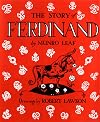
I love this book. I loved this book when I was a tiny child and I loved it each time I reread it from nostalgia and I STILL love it decades later because it's a lovely allegory about being true to who you are, no matter what other people assume you should be from how you look on the outside. Giant fierce-looking bulls can be gentle flower lovers who refuse to fight.
Incidentally, Ferdinand's special tree that grows wine corks as fruit? TOTALLY RESPONSIBLE for generations of people being show more clueless about how corks are actually made. Also, adorable. Also, now I want a story about the cork harvesters having to nicely ask the bull to please let them come into his pasture to take the cork off the tree. And the bull being terribly worried about his tree and dubious about the whole thing. *g*
I love Ferdinand and his flowers so much. *happy sigh* show less
Incidentally, Ferdinand's special tree that grows wine corks as fruit? TOTALLY RESPONSIBLE for generations of people being show more clueless about how corks are actually made. Also, adorable. Also, now I want a story about the cork harvesters having to nicely ask the bull to please let them come into his pasture to take the cork off the tree. And the bull being terribly worried about his tree and dubious about the whole thing. *g*
I love Ferdinand and his flowers so much. *happy sigh* show less
Lists
Five in a Row (2)
1930s (1)
Awards


You May Also Like


Associated Authors
Statistics
- Works
- 52
- Also by
- 7
- Members
- 14,619
- Popularity
- #1,574
- Rating
- 4.3
- Reviews
- 220
- ISBNs
- 165
- Languages
- 16
- Favorited
- 4