
Perry Link
Author of Evening Chats In Beijing
About the Author
Works by Perry Link
Chinese Primer: Lessons / Notes and Exercises / Character Workbook (3 Volume Set) (1994) 24 copies, 1 review
Roses and Thorns: The Second Blooming of the Hundred Flowers in Chinese Fiction, 1979-80 (1984) 10 copies
Oh, China!: An Elementary Reader of Modern Chinese for Advanced Beginners (The Princeton Language Program: Modern Chinese) (2011) 5 copies
Associated Works
The Most Wanted Man in China: My Journey from Scientist to Enemy of the State (2016) — Translator, some editions — 81 copies, 19 reviews
My First Trip to China: Scholars, Diplomats, and Journalists Reflect on their First Encounters with China (2012) — Contributor — 18 copies
Nanking 1937: Memory and Healing (Studies of the East Asian Institute) (2002) — Foreword, some editions — 3 copies
Tagged
Common Knowledge
- Gender
- male
- Education
- Harvard University (B.A.|1966)
Harvard University (Ph.D.|1976) - Nationality
- USA
- Associated Place (for map)
- USA
Members
Reviews
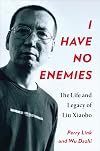
Having recently completed the biography of Detrich Bonhoeffer by Ferdinand Schlingensiepen, it speaks volumes to be able to say how impressed I was at reading Liu Xiaobo’s life journey. A life journey which was fueled by his prodigious reading assisted by a photo-graphic memory.
Professor Link was able to skillfully quote from Liu Xiaobo’s readings and subsequent prodigious output -- readings, articles and books frequently complex in their reflection of a mind which was constantly show more questioning and criticizing itself. After one of his books were ready for print, Liu Xiaobo, having reflected further, wrote an epilogue to the book refuting the very premise of his work.
Perhaps the most impressive was Liu Xiaobo’s evolution. From flamboyant, philandering anti-establishment activist to humble, non-violent dissident, working from the bottom up, willing to listen to people’s case-by-case issues. And, of course, his change from failed husband and father in his first marriage to deeply loving, committed husband to his second wife, Liu Xia.
Something else impressed me about Liu Xiaobo which might not play to popular fashion: Liu Xiaobo’s insistence that right cause does not make one faultless. His criticism of the fatal error of “self-righteousness” among activists struck me as heroic – a label shunned by Liu Xiaoba -- in its independence. Most activists I have known through the decades – both as a social worker and obscure protester -- never got past the self-righteous stage.
Throughout the book, the author renders Xiaobo’s complex evolution in clear, simple terms whether referring to his prison readings of Aquinas’s, City of God, Bonhoeffer’s resistance, imprisonment, execution, or Gandhi and King’s philosophy of non-violence (see MLK’s Letters from a Birmingham Jail). Professor Link is frank about Liu Xiaobo’s faults. He writes frankly on Xiaobo’s infidelity during events leading to Tiananmen Square. Most painful to Liu Xiaobo was his cooptation by authorities after his first arrest when he confessed that he never actually witnessed killings during Tiananmen. It allowed the authorities to publish his “confession” to support the official government version that no shootings and deaths had ever occurred. Liu Xiaobo felt guilty until his death at the deaths of June fourth. Even more guilty at what he considered his own hypocrisy and cowardice. He compensated by becoming engaged in the most dangerous activism of all the dissidents. A role recognized by the Nobel committee when they bestowed the Nobel Prize for Peace upon Liu Xiaobo in 2010.
Liu Xiaobo not only believed in non-violence. He advocated No Blame of those who enforced the Chinese regime’s persecution of him. Thus, the title: “I Have No Enemies.” In this way, Xiaobo was tragically like Bonhoeffer who engaged and befriended his guards. In one tragi-humorous incident, the author relates how one of Liu Xiaobo’s security personnel assigned to monitor him approached Xiaobo to ask if the latter would promise not to leave his house so the policeman could go home to watch a soccer game. Liu Xiaobo – a soccer fan himself – agreed and kept his promise.
After reading Professor Link’s book of 400 pages, with 100 pages of notes, I came away feeling not only an intense respect and admiration for Liu Xiaobo – blemishes along with evolution to martyr of non-violence – but a kind of love you might feel for an individual you sought to emulate and follow.
Let us hope that the lessons from Liu Xiaoba’s life – especially the dangers of falling into the hubris of faultless self-righteousness – as detailed so well in this book are read and put into practice by contemporary and future activists. show less
Professor Link was able to skillfully quote from Liu Xiaobo’s readings and subsequent prodigious output -- readings, articles and books frequently complex in their reflection of a mind which was constantly show more questioning and criticizing itself. After one of his books were ready for print, Liu Xiaobo, having reflected further, wrote an epilogue to the book refuting the very premise of his work.
Perhaps the most impressive was Liu Xiaobo’s evolution. From flamboyant, philandering anti-establishment activist to humble, non-violent dissident, working from the bottom up, willing to listen to people’s case-by-case issues. And, of course, his change from failed husband and father in his first marriage to deeply loving, committed husband to his second wife, Liu Xia.
Something else impressed me about Liu Xiaobo which might not play to popular fashion: Liu Xiaobo’s insistence that right cause does not make one faultless. His criticism of the fatal error of “self-righteousness” among activists struck me as heroic – a label shunned by Liu Xiaoba -- in its independence. Most activists I have known through the decades – both as a social worker and obscure protester -- never got past the self-righteous stage.
Throughout the book, the author renders Xiaobo’s complex evolution in clear, simple terms whether referring to his prison readings of Aquinas’s, City of God, Bonhoeffer’s resistance, imprisonment, execution, or Gandhi and King’s philosophy of non-violence (see MLK’s Letters from a Birmingham Jail). Professor Link is frank about Liu Xiaobo’s faults. He writes frankly on Xiaobo’s infidelity during events leading to Tiananmen Square. Most painful to Liu Xiaobo was his cooptation by authorities after his first arrest when he confessed that he never actually witnessed killings during Tiananmen. It allowed the authorities to publish his “confession” to support the official government version that no shootings and deaths had ever occurred. Liu Xiaobo felt guilty until his death at the deaths of June fourth. Even more guilty at what he considered his own hypocrisy and cowardice. He compensated by becoming engaged in the most dangerous activism of all the dissidents. A role recognized by the Nobel committee when they bestowed the Nobel Prize for Peace upon Liu Xiaobo in 2010.
Liu Xiaobo not only believed in non-violence. He advocated No Blame of those who enforced the Chinese regime’s persecution of him. Thus, the title: “I Have No Enemies.” In this way, Xiaobo was tragically like Bonhoeffer who engaged and befriended his guards. In one tragi-humorous incident, the author relates how one of Liu Xiaobo’s security personnel assigned to monitor him approached Xiaobo to ask if the latter would promise not to leave his house so the policeman could go home to watch a soccer game. Liu Xiaobo – a soccer fan himself – agreed and kept his promise.
After reading Professor Link’s book of 400 pages, with 100 pages of notes, I came away feeling not only an intense respect and admiration for Liu Xiaobo – blemishes along with evolution to martyr of non-violence – but a kind of love you might feel for an individual you sought to emulate and follow.
Let us hope that the lessons from Liu Xiaoba’s life – especially the dangers of falling into the hubris of faultless self-righteousness – as detailed so well in this book are read and put into practice by contemporary and future activists. show less

This three volume set was used in my introductory Chinese (Mandarin) class in college, along with the accompanying Chinese Character Text. It utilizes Pinyin romanization, in which diacritical marks are used to indicate the four tones, as opposed to the GR system (also available from PUP). The three volumes are as follows:
Chinese Primer: Lessons, (Blue Book), which contains thirty-seven lessons, divided into thematic sections, from the introductory "Foundation Work," which includes five show more lessons on such topics as tones, initials & finals, and pinyin romanization; and eight Units, devoted to subjects ranging from "Students" to "Dogged Localizers and Directional Complements."
Chinese Primer: Notes and Exercises, (Red Book), which contains vocabulary, grammatical and cultural notes, and exercises corresponding to each lesson in the Blue Book, starting with Unit 1, Lesson 1.
Chinese Primer: Character Workbook, (Yellow Book), which introduces the student to the characters themselves. Each page contains five characters, along with their Pinyin romanization, English meaning, the radical of the character, and the number of strokes used in the character (in addition to the radical). This last is important, as the Chinese writing system is not an alphabet, and dictionaries are organized by stroke number.
It has been some time since I took this class, but I recall finding this system a comprehensible and organized method of learning a complex language that is quite dissimilar to English. If the student follows the recommendation of learning five characters a day, studies regularly, and pairs this set with a good recording, I think they have an excellent chance of succeeding in their first year of Chinese study.
I should note that the characters used are traditional, as opposed to the simplified characters currently in use in the People's Republic. I've always found it somewhat ironic that almost all Chinese-language publications in the United States are printed using the traditional characters, whereas almost all collegiate instruction, geared toward study abroad and interaction with Beijing, utilizes the simplified characters after the first year. show less
Chinese Primer: Lessons, (Blue Book), which contains thirty-seven lessons, divided into thematic sections, from the introductory "Foundation Work," which includes five show more lessons on such topics as tones, initials & finals, and pinyin romanization; and eight Units, devoted to subjects ranging from "Students" to "Dogged Localizers and Directional Complements."
Chinese Primer: Notes and Exercises, (Red Book), which contains vocabulary, grammatical and cultural notes, and exercises corresponding to each lesson in the Blue Book, starting with Unit 1, Lesson 1.
Chinese Primer: Character Workbook, (Yellow Book), which introduces the student to the characters themselves. Each page contains five characters, along with their Pinyin romanization, English meaning, the radical of the character, and the number of strokes used in the character (in addition to the radical). This last is important, as the Chinese writing system is not an alphabet, and dictionaries are organized by stroke number.
It has been some time since I took this class, but I recall finding this system a comprehensible and organized method of learning a complex language that is quite dissimilar to English. If the student follows the recommendation of learning five characters a day, studies regularly, and pairs this set with a good recording, I think they have an excellent chance of succeeding in their first year of Chinese study.
I should note that the characters used are traditional, as opposed to the simplified characters currently in use in the People's Republic. I've always found it somewhat ironic that almost all Chinese-language publications in the United States are printed using the traditional characters, whereas almost all collegiate instruction, geared toward study abroad and interaction with Beijing, utilizes the simplified characters after the first year. show less

This textbook was used in my introductory Chinese (Mandarin) class in college, in conjunction with the three-volume Pinyin set of texts (Lessons, Notes and Exercises, Character Workbook), also put out by Pricenton University Press. It contains the texts of the lessons found in the above-mentioned Blue Book (Lessons), in simplified and traditional Chinese characters. This four-book system provides an excellent introduction to a complex language, and will reward the diligent student.
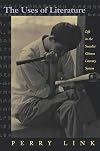
The Uses of Literature: Life in the Socialist Chinese Literary System by Parry Link analyzes the social functions of literature in China during the 1950s to the 1990s. There is a linear comparison of literary works in Mao’s era and that in the post-Mao era, and as some parallel comparison on literature between China and former Soviet Union whose social system is similar to China. This book is excellent for those whose research interests include the literary system and literature in Maoist show more China and the post-Mao era and also for university students who study the same area. show less
You May Also Like


Associated Authors
Statistics
- Works
- 17
- Also by
- 3
- Members
- 217
- Popularity
- #102,845
- Rating
- 4.4
- Reviews
- 5
- ISBNs
- 36
- Languages
- 1