
Noel Malcolm
Author of Kosovo: A Short History
About the Author
Noel Malcolm is a British columnist, writer and editor who was born in 1956. He was educated at Cambridge University and was a Fellow of Gonville and Caius College, Cambridge from 1981 to 1988. Malcolm left teaching to become the Foreign Editor of the Spectator and a political columnist for show more London's Daily Telegraph. Malcolm has written Bosnia: A Short Story, which puts the Bosnia-Hercegovina conflict into historical context and Kosovo: A Short Story, which outlines its history from medieval Serb state into modern times. (Bowker Author Biography) show less
Works by Noel Malcolm
Agents of Empire: Knights, Corsairs, Jesuits and Spies in the Sixteenth-Century Mediterranean World (2015) 270 copies, 1 review
Useful Enemies: Islam and The Ottoman Empire in Western Political Thought, 1450-1750 (2019) 81 copies
Forbidden Desire in Early Modern Europe: Male-Male Sexual Relations, 1400-1750 (2024) 53 copies, 2 reviews
The Correspondence of Thomas Hobbes: Volume I, 1622-1659 (The Clarendon Edition of the Works of Thomas Hobbes, Volume 7) (1994) — Editor — 22 copies
The Correspondence of Thomas Hobbes: Volume II, 1660-1679 (The Clarendon Edition of the Works of Thomas Hobbes, Volume 8) (1994) — Editor — 17 copies
Reason of State, Propaganda, and the Thirty Years' War: An Unknown Translation by Thomas Hobbes (2007) 13 copies
John Pell (1611-1685) and his correspondence with Sir Charles Cavendish the mental world of an early mathematician (2005) 7 copies
Associated Works
The Roman Foundations of the Law of Nations: Alberico Gentili and the Justice of Empire (2010) — Contributor — 8 copies
Tagged
Common Knowledge
- Birthdate
- 1956-12-26
- Gender
- male
- Education
- Eton College
University of Cambridge (Peterhouse, Trinity College) - Organizations
- University of Cambridge (Gonville and Caius College)
The Spectator
The Daily Telegraph - Awards and honors
- Royal Society of Literature (Fellow)
British Academy (Fellow) - Nationality
- UK
- Associated Place (for map)
- UK
Members
Reviews
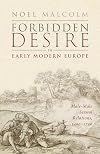
Real Rating: 4.25* of five
The Publisher Says: A landmark study of the history of male-male sex in early modern Europe, including the European colonies and the Ottoman world.
Until quite recently, the history of male-male sexual relations was a taboo topic. But when historians eventually explored the archives of Florence, Venice and elsewhere, they brought to light an extraordinary world of early modern sexual activity, extending from city streets and gardens to taverns, monasteries and show more Mediterranean galleys. Typically, the sodomites (as they were called) were adult men seeking sex with teenage boys. This was something intriguingly different from modern the boys ceased to be desired when they became fully masculine. And the desire for them was seen as natural; no special sexual orientation was assumed.
The rich evidence from Southern Europe in the Renaissance period was not matched in the Northern lands; historians struggled to apply this new knowledge to countries such as England or its North American colonies. And when good Northern evidence did appear, from after 1700, it presented a very different picture. So the theory was formed—and it has dominated most standard accounts until now—that the 'emergence of modern homosexuality' happened suddenly, but inexplicably, at the beginning of the eighteenth century.
Noel Malcolm's masterly study solves this and many other problems, by doing something which no previous scholar has giving a truly pan-European account of the whole phenomenon of male-male sexual relations in the early modern period. It includes the Ottoman Empire, as well as the European colonies in the Americas and Asia; it describes the religious and legal norms, both Christian and Muslim; it discusses the literary representations in both Western Europe and the Ottoman world; and it presents a mass of individual human stories, from New England to North Africa, from Scandinavia to Peru. Original, critical, lucidly written and deeply researched, this work will change the way we think about the history of homosexuality in early modern Europe.
I RECEIVED A DRC FROM THE PUBLISHER VIA EDELWEISS+. THANK YOU.
My Review: Deeply researched, plentifully sourced and attributed...and as that would lead you to understand, it's an academic work. It isn't a browsing book, it's a studying book. I took over a year to read it. I wanted to do it justice, to focus on its theses, so I took my time.
I ended up surprised at some of Malcolm's conclusions, as one would hope to be the case in a scholarly work. His firm opinion that English buggery was simply not as common as the Mediterranean practice was specifically stated to include James I of England. He contends that the social conventions of male friendship then prevailing adequately explain His Majesty's somewhat fervent correspondence with his favorites. This is carefully hedged by explaining that, absent proof, it's reasonable to accept that we simply do not know with certainty what occurred at this distance in time.
How useful is it to go looking for ancestors of modern queer identities in the past? Where there are records, they are almost always legal ones, of prosecutions for offenses. Can that in any useful way be extrapolated to indicate broader trends of sexual activity? Is sexual activity actually a useful measure of a person's emotional inner life? What do we mean by "queer" or "gay" or "bisexual?" I know of my own personal knowledge men who have sex with other men exclusively, who reject any "queer" identity.
It's the identity, you'll note, that's being rejected. Malcolm contends that it's "the Mediterranean model" of pederastic sodomy that was absent in northern climes, not men having sex with other men. It's a contention that I think bears very serious consideration. If many men in the Mediterranean committed sodomy as their legitimate access to sexual release, given how late (compared to more northerly climes) they married, are they in any meaningful way "queer?" Or just horny, and unwilling to risk syphilis (fatal then) by using a female sex worker?
A book that treats its topic with bracing and refreshing unwillingness to bow to fashion while still refusing to stray far from its evidentiary base is a rare thing indeed. One that is carefully analytical of the terms used in the past and their intersection, or lack of intersection, with modern understandings of identity, is rare and precious.
Not a casual read but a profoundly informative and essential one for gay men, or those who wish to comprehend history's limits in identity politics. show less
The Publisher Says: A landmark study of the history of male-male sex in early modern Europe, including the European colonies and the Ottoman world.
Until quite recently, the history of male-male sexual relations was a taboo topic. But when historians eventually explored the archives of Florence, Venice and elsewhere, they brought to light an extraordinary world of early modern sexual activity, extending from city streets and gardens to taverns, monasteries and show more Mediterranean galleys. Typically, the sodomites (as they were called) were adult men seeking sex with teenage boys. This was something intriguingly different from modern the boys ceased to be desired when they became fully masculine. And the desire for them was seen as natural; no special sexual orientation was assumed.
The rich evidence from Southern Europe in the Renaissance period was not matched in the Northern lands; historians struggled to apply this new knowledge to countries such as England or its North American colonies. And when good Northern evidence did appear, from after 1700, it presented a very different picture. So the theory was formed—and it has dominated most standard accounts until now—that the 'emergence of modern homosexuality' happened suddenly, but inexplicably, at the beginning of the eighteenth century.
Noel Malcolm's masterly study solves this and many other problems, by doing something which no previous scholar has giving a truly pan-European account of the whole phenomenon of male-male sexual relations in the early modern period. It includes the Ottoman Empire, as well as the European colonies in the Americas and Asia; it describes the religious and legal norms, both Christian and Muslim; it discusses the literary representations in both Western Europe and the Ottoman world; and it presents a mass of individual human stories, from New England to North Africa, from Scandinavia to Peru. Original, critical, lucidly written and deeply researched, this work will change the way we think about the history of homosexuality in early modern Europe.
I RECEIVED A DRC FROM THE PUBLISHER VIA EDELWEISS+. THANK YOU.
My Review: Deeply researched, plentifully sourced and attributed...and as that would lead you to understand, it's an academic work. It isn't a browsing book, it's a studying book. I took over a year to read it. I wanted to do it justice, to focus on its theses, so I took my time.
I ended up surprised at some of Malcolm's conclusions, as one would hope to be the case in a scholarly work. His firm opinion that English buggery was simply not as common as the Mediterranean practice was specifically stated to include James I of England. He contends that the social conventions of male friendship then prevailing adequately explain His Majesty's somewhat fervent correspondence with his favorites. This is carefully hedged by explaining that, absent proof, it's reasonable to accept that we simply do not know with certainty what occurred at this distance in time.
How useful is it to go looking for ancestors of modern queer identities in the past? Where there are records, they are almost always legal ones, of prosecutions for offenses. Can that in any useful way be extrapolated to indicate broader trends of sexual activity? Is sexual activity actually a useful measure of a person's emotional inner life? What do we mean by "queer" or "gay" or "bisexual?" I know of my own personal knowledge men who have sex with other men exclusively, who reject any "queer" identity.
It's the identity, you'll note, that's being rejected. Malcolm contends that it's "the Mediterranean model" of pederastic sodomy that was absent in northern climes, not men having sex with other men. It's a contention that I think bears very serious consideration. If many men in the Mediterranean committed sodomy as their legitimate access to sexual release, given how late (compared to more northerly climes) they married, are they in any meaningful way "queer?" Or just horny, and unwilling to risk syphilis (fatal then) by using a female sex worker?
A book that treats its topic with bracing and refreshing unwillingness to bow to fashion while still refusing to stray far from its evidentiary base is a rare thing indeed. One that is carefully analytical of the terms used in the past and their intersection, or lack of intersection, with modern understandings of identity, is rare and precious.
Not a casual read but a profoundly informative and essential one for gay men, or those who wish to comprehend history's limits in identity politics. show less
Regular users of social media may be aware that the peach emoji is used to indicate not only the fruit in question but also the buttocks. This metaphor is not new. It was used in the middle of the 16th century by Francesco Berni, a Florentine poet, who assured his readers that the fruit was ‘good at the front and perfect from behind’. While drawing such modern parallels is tempting, it also presents dangers for the historian. This is particularly true for the history of sex between men, show more where so many sources derive either from the prosecution of illegal acts, or from literary texts that were by necessity often coded.
One of the most thought-provoking books I have read in some time, Forbidden Desires is an ambitious comparative study of sex between men in the Mediterranean and northern Europe. Its argument unfolds in a very readable narrative: this is a rare academic book for which I must tell you that my review contains spoilers. From the starting point of a scandalous case of sodomy in the household of the senior Venetian official in 16th-century Constantinople, Noel Malcolm first compares patterns of sex between men in the eastern and western Mediterranean, before asking whether these also prevailed in northern Europe.
The Mediterranean half of the story is relatively straightforward. Synthesising a large body of research based on legal codes, court cases (both secular and ecclesiastical) and literary sources, Malcolm paints a convincing picture of a broad Mediterranean pattern of sex between men. In both the Ottoman Empire and the western Mediterranean (strictly speaking Iberia and Italy, because the study does not take in the south of France, nor the Maghreb), this consisted of illegal but nonetheless relatively common sexual relations between men under 30 and ‘beardless youths’. Those whose sex lives sat outside this pederastic model faced much harsher condemnation, both legally and socially (the ‘inveterate sodomite’, for example, who kept having sex with men after his marriage, or the older man who took the passive role in sex). This pattern has its variations: there was a more open literary culture around love for boys in the Ottoman texts than in the Italian, while Italy (especially Florence) seems to have had a wider sodomitical culture than Iberia. Malcolm has little time for scholars who dismiss European travellers’ accounts of Ottoman sexual practices as only Orientalist fantasies, pointing out that the Ottoman sources provide ample confirmation of a real-life phenomenon.
Read the rest of the review at HistoryToday.com.
Catherine Fletcher is Professor of History at Manchester Metropolitan University. show less
One of the most thought-provoking books I have read in some time, Forbidden Desires is an ambitious comparative study of sex between men in the Mediterranean and northern Europe. Its argument unfolds in a very readable narrative: this is a rare academic book for which I must tell you that my review contains spoilers. From the starting point of a scandalous case of sodomy in the household of the senior Venetian official in 16th-century Constantinople, Noel Malcolm first compares patterns of sex between men in the eastern and western Mediterranean, before asking whether these also prevailed in northern Europe.
The Mediterranean half of the story is relatively straightforward. Synthesising a large body of research based on legal codes, court cases (both secular and ecclesiastical) and literary sources, Malcolm paints a convincing picture of a broad Mediterranean pattern of sex between men. In both the Ottoman Empire and the western Mediterranean (strictly speaking Iberia and Italy, because the study does not take in the south of France, nor the Maghreb), this consisted of illegal but nonetheless relatively common sexual relations between men under 30 and ‘beardless youths’. Those whose sex lives sat outside this pederastic model faced much harsher condemnation, both legally and socially (the ‘inveterate sodomite’, for example, who kept having sex with men after his marriage, or the older man who took the passive role in sex). This pattern has its variations: there was a more open literary culture around love for boys in the Ottoman texts than in the Italian, while Italy (especially Florence) seems to have had a wider sodomitical culture than Iberia. Malcolm has little time for scholars who dismiss European travellers’ accounts of Ottoman sexual practices as only Orientalist fantasies, pointing out that the Ottoman sources provide ample confirmation of a real-life phenomenon.
Read the rest of the review at HistoryToday.com.
Catherine Fletcher is Professor of History at Manchester Metropolitan University. show less
Agents of Empire: Knights, Corsairs, Jesuits and Spies in the Sixteenth-Century Mediterranean World by Noel Malcolm
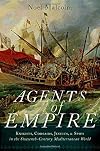
Inspired by the hunt for an obscure manuscript that essentially marks the beginning of Albanian historiography, Malcolm provides one with a wide-ranging examination of social and military interaction on the political line between Venice and the Ottoman Empire from the perspective of an extended family of Albanian noblemen. While the subtitle invokes "knights, corsairs, Jesuits and spies" the meat of this book is really the practice of day-to-day diplomacy by the men who found their affairs show more straddling the lines of conflict. I rather liked this work but for the uninitiated you'll at least want to have read a popular account of the battle of Lepanto first. show less
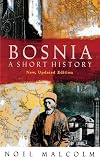
In this post-Yugoslavia world, I'm finding it difficult to tell what those former constituent parts of Yugoslavia, sporting strange names like “Kosovo”, “Montenegro” and “Herzegovina” all fit within Europe, and how (by Australian standards) such small areas got to have such varied histories and traditions.
So, Noel Malcolm’s “Bosnia” is a good introduction for chumps like me; scholarly but readable and my atlas was almost in constant use as I tried to understand where show more everything was and wasn’t. “Bosnia” also shines some light on a hitherto shady part of history; the role of Bosnian Muslims within the Nazi war machine. Some credit goes to the group of Bosnian Muslims who clashed with their German supervisors but prior to them we witnessed several years worth of Bosnian Muslims happily heading off to kill Jews. show less
So, Noel Malcolm’s “Bosnia” is a good introduction for chumps like me; scholarly but readable and my atlas was almost in constant use as I tried to understand where show more everything was and wasn’t. “Bosnia” also shines some light on a hitherto shady part of history; the role of Bosnian Muslims within the Nazi war machine. Some credit goes to the group of Bosnian Muslims who clashed with their German supervisors but prior to them we witnessed several years worth of Bosnian Muslims happily heading off to kill Jews. show less
Lists
Awards


You May Also Like


Associated Authors
Statistics
- Works
- 22
- Also by
- 2
- Members
- 1,381
- Popularity
- #18,623
- Rating
- 4.0
- Reviews
- 10
- ISBNs
- 66
- Languages
- 7
- Favorited
- 1