
Zoë Marriott
Author of The Swan Kingdom
About the Author
Series
Works by Zoë Marriott
Associated Works
Tagged
Common Knowledge
- Canonical name
- Marriott, Zoë
- Birthdate
- 1982
- Gender
- female
- Agent
- The Standen Literary Agency
- Nationality
- UK
- Associated Place (for map)
- UK
Members
Reviews
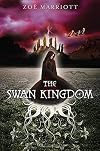
Whilst I’m aware of a number of fairytale retellings within the YA market I hadn’t got round to reading one until I read The Swan Kingdom. It is a retelling of Hans Christian Anderson’s The Wild Swans, a story I only vaguely remembered from my childhood.
The story is narrated by Alexandra, a princess who has always felt unloved by her father, but who has thrived on the love and attention of her mother and her brothers. Straight away we start to realise that there is something special show more about Alexandra’s mother, and that Alexandra too shares this. When her mother is killed Alexandra has to cope first with her loss, and then with her father’s speedy new marriage. Everything rapidly comes to a head (because yes, things can get worse than your mother dying and your father remarrying quickly) and Alexandra finds herself banished and alone, and trying to find a way to right all of the wrongs that have happened.
I loved Alexandra, I thought she was a wonderful character and I felt completely invested in her story. One of the things that initially grabbed me about the book was the relationship she had with her brothers, the dynamic between them reminded me quite a bit of how me and my brother got on when we were younger. I could completely understand the lengths she was prepared to go to for them, I’d like to think I’d be strong enough to do the same in her situation.
The other characters were great too, I liked Gabriel instantly and then the more I got to know him the more I liked him. Whilst Zella is the villain of the piece I thought she was a great character, she was so believably evil and dislikeable.
I couldn’t turn the pages fast enough when I was reading this, I got completely and utterly wrapped up in the wonderful world contained within the book. It’s written in such a beautifully descriptive manner, at times I almost felt like I had fallen inside the pages.
I really loved this book and will be recommending it to people for a long time to come. show less
The story is narrated by Alexandra, a princess who has always felt unloved by her father, but who has thrived on the love and attention of her mother and her brothers. Straight away we start to realise that there is something special show more about Alexandra’s mother, and that Alexandra too shares this. When her mother is killed Alexandra has to cope first with her loss, and then with her father’s speedy new marriage. Everything rapidly comes to a head (because yes, things can get worse than your mother dying and your father remarrying quickly) and Alexandra finds herself banished and alone, and trying to find a way to right all of the wrongs that have happened.
I loved Alexandra, I thought she was a wonderful character and I felt completely invested in her story. One of the things that initially grabbed me about the book was the relationship she had with her brothers, the dynamic between them reminded me quite a bit of how me and my brother got on when we were younger. I could completely understand the lengths she was prepared to go to for them, I’d like to think I’d be strong enough to do the same in her situation.
The other characters were great too, I liked Gabriel instantly and then the more I got to know him the more I liked him. Whilst Zella is the villain of the piece I thought she was a great character, she was so believably evil and dislikeable.
I couldn’t turn the pages fast enough when I was reading this, I got completely and utterly wrapped up in the wonderful world contained within the book. It’s written in such a beautifully descriptive manner, at times I almost felt like I had fallen inside the pages.
I really loved this book and will be recommending it to people for a long time to come. show less
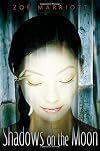
Set in a fantasy version of Japan, Shadows on the Moon is about a young girl, Suzume, who suffers a horrible injustice and becomes obsessed with getting revenge, even if cost her everything: her identity, love and even her freedom.
Suzume is the Cinderella-like character in this fairytale retelling but she is like no other Cinderella you have ever met. She is flawed and vulnerable yet so incredibly strong. I am a very character driven reader and I absolutely loved Suzume, even when she was show more making awful decisions based on her need for vengence. Zoe Marriott writes Suzume’s tumultuous emotions so well, I felt like I was experiencing them with her. I so wanted her to get revenge on her oppressors! I know it was wrong but Suzume’s pain was so real and the injustice so great, I wanted them to pay for what they did.
I am an escapist reader and tend to avoid issues books and Shadows on the Moon has some serious issues. Suzume has a lot of anger and is depressed. Her mother, a cold and uncaring woman, won’t let her talk about her pain so Suzume starts cutting herself to release her pent up emotions. We are not talking a onetime thing here guys, she cuts repeatedly throughout the book. Normally, heavy issues like this would be a turn-off for me but Marriott’s writing is so good and the entire plot is so well done, I could not stop reading this book!
The secondary characters are also very well written and I was most surprised by Suzume’s love interest, Otieno. He was strong, handsome and totally unexpected! I love that Marriott does not focus on the romance in this book. It’s something that sustains Suzume but it’s her need for revenge that drives her and the story.
I have not even touched on the magical, shadow weaving aspects of this story or the breathtaking setting (while it’s fantasy, looks a lot like feudal Japan) – they are awesome and not to be missed!
Overall, Shadows on the Moon is a fantastic fantasy novel with very realistic contemporary issues. It’s dark, it’s sad, I could not put it down and the ending is completely satisfying. This is my first book by Zoe Marriott but it will not be my last. I already got one of her earlier books, Daughter of the Flames, from my library and I can’t wait to dig in!
Content: Implied sex, kissing and violence. There are some mature themes that you may want to discuss with your teens before they read this book including the cutting/self-harm (that I mentioned before) and contemplated suicide. There is also a transgender character who has a long term relationship with a married man and characters discuss prostitution. This book is recommended for older/more mature teens and adults. show less
Suzume is the Cinderella-like character in this fairytale retelling but she is like no other Cinderella you have ever met. She is flawed and vulnerable yet so incredibly strong. I am a very character driven reader and I absolutely loved Suzume, even when she was show more making awful decisions based on her need for vengence. Zoe Marriott writes Suzume’s tumultuous emotions so well, I felt like I was experiencing them with her. I so wanted her to get revenge on her oppressors! I know it was wrong but Suzume’s pain was so real and the injustice so great, I wanted them to pay for what they did.
I am an escapist reader and tend to avoid issues books and Shadows on the Moon has some serious issues. Suzume has a lot of anger and is depressed. Her mother, a cold and uncaring woman, won’t let her talk about her pain so Suzume starts cutting herself to release her pent up emotions. We are not talking a onetime thing here guys, she cuts repeatedly throughout the book. Normally, heavy issues like this would be a turn-off for me but Marriott’s writing is so good and the entire plot is so well done, I could not stop reading this book!
The secondary characters are also very well written and I was most surprised by Suzume’s love interest, Otieno. He was strong, handsome and totally unexpected! I love that Marriott does not focus on the romance in this book. It’s something that sustains Suzume but it’s her need for revenge that drives her and the story.
I have not even touched on the magical, shadow weaving aspects of this story or the breathtaking setting (while it’s fantasy, looks a lot like feudal Japan) – they are awesome and not to be missed!
Overall, Shadows on the Moon is a fantastic fantasy novel with very realistic contemporary issues. It’s dark, it’s sad, I could not put it down and the ending is completely satisfying. This is my first book by Zoe Marriott but it will not be my last. I already got one of her earlier books, Daughter of the Flames, from my library and I can’t wait to dig in!
Content: Implied sex, kissing and violence. There are some mature themes that you may want to discuss with your teens before they read this book including the cutting/self-harm (that I mentioned before) and contemplated suicide. There is also a transgender character who has a long term relationship with a married man and characters discuss prostitution. This book is recommended for older/more mature teens and adults. show less
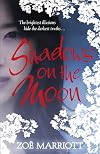
Marriott has, to date, not let me down as far as the enjoyment level, attention to detail and kick-ass heroines are concerned. The fact her books tend to feature non-Caucasian centric story lines just adds to the wonderfulness.
In this re-imagining of the Cinderella Fairy Tale (its not really a retelling, Suzume's journey is much darker than Cinderella's I think, and emotionally more painful) Suzume finds herself at the center of a decades long cat-and-mouse game. Unable to let go of the show more past, but also unable to forgive those who directly (or indirectly) had a hand in her misfortune, Suzume's path of vengeance treads a dark and dangerous road.
Marriott doesn't mince words in her books; her heroines suffer and suffer terribly. They're almost reborn like the Phoenix by the time the novel is over in fact. Suzume is no different. She begins the book as a cheerful, curious child and ends the novel experienced, sophisticated and with a clear idea of who (and what) she is...but only after so much hardship that I was truly fretful that she would recoup.
I liked the parallels to the Cinderella fairy tale--Suzume has not one fairy godmother, but several throughout the story as what she needs and wants changes. People who see the girl beneath everything and the potential therein.
Otieno...Otieno, I wasn't sure what to make of him at first. I liked his persistence, the way he insisted he knew his mind and that Suzume's society's preconceptions mean little to his people. Each time he appeared I was as surprised as Suzume and probably just as delighted.
I want to touch upon the darker aspects for a moment. Not just the betrayal and vengeance she seeks, but the more personal dark moments. After her father and cousin's deaths, Suzume is...empty. Suffering from post traumatic stress disorder, as well as a healthy dose of survivor's guilt, in a society that demands you forget pain and live as if it doesn't exist, she can't find an outlet.
Her mother grows ever more distant leaving Suzume literally with no one to speak with. Until one day she accidentally finds a release. A simple prick of her finger, the smallest of pains, and the emptiness seems to go away. But then the small pain isn't enough and more is needed to make the screaming inside her stop.
I almost didn't see what was going on. Marriott doesn't make a big deal of Suzume's growing need to harm herself, its a piece of the puzzle just like when Suzume learns to dance or how to work in the kitchen. Its handled well and with care. show less
In this re-imagining of the Cinderella Fairy Tale (its not really a retelling, Suzume's journey is much darker than Cinderella's I think, and emotionally more painful) Suzume finds herself at the center of a decades long cat-and-mouse game. Unable to let go of the show more past, but also unable to forgive those who directly (or indirectly) had a hand in her misfortune, Suzume's path of vengeance treads a dark and dangerous road.
Marriott doesn't mince words in her books; her heroines suffer and suffer terribly. They're almost reborn like the Phoenix by the time the novel is over in fact. Suzume is no different. She begins the book as a cheerful, curious child and ends the novel experienced, sophisticated and with a clear idea of who (and what) she is...but only after so much hardship that I was truly fretful that she would recoup.
I liked the parallels to the Cinderella fairy tale--Suzume has not one fairy godmother, but several throughout the story as what she needs and wants changes. People who see the girl beneath everything and the potential therein.
Otieno...Otieno, I wasn't sure what to make of him at first. I liked his persistence, the way he insisted he knew his mind and that Suzume's society's preconceptions mean little to his people. Each time he appeared I was as surprised as Suzume and probably just as delighted.
I want to touch upon the darker aspects for a moment. Not just the betrayal and vengeance she seeks, but the more personal dark moments. After her father and cousin's deaths, Suzume is...empty. Suffering from post traumatic stress disorder, as well as a healthy dose of survivor's guilt, in a society that demands you forget pain and live as if it doesn't exist, she can't find an outlet.
Her mother grows ever more distant leaving Suzume literally with no one to speak with. Until one day she accidentally finds a release. A simple prick of her finger, the smallest of pains, and the emptiness seems to go away. But then the small pain isn't enough and more is needed to make the screaming inside her stop.
I almost didn't see what was going on. Marriott doesn't make a big deal of Suzume's growing need to harm herself, its a piece of the puzzle just like when Suzume learns to dance or how to work in the kitchen. Its handled well and with care. show less
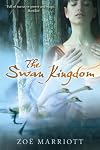
The Swan Kingdomis based upon the Hans Christian Anderson fairy tale “The Wild Swans,” but depending on your views and opinion could be based upon several other related fairy tales by the Brothers Grimm. In all versions of the story, the daughter is the youngest and the only one able to defeat the Evil Queen and save her brothers. Another author to previously use this fairy tale as the framework for an original tale was Juliet Marillier in her first Sevenwaters book, Daughter of the show more Forest, though that book is a darker, more adult, and ultimately bittersweet retelling.
Make no mistake, this isn’t quite the happy, sun is shining fantasy with neatly wrapped up obstacles, as the fairy tale might lead you to believe. Our narrator and protagonist, Alexandra, begins the story by first explaining that she was the most useless member of her family. Her father, the King, barely acknowledged her existence because she was such a disappointment, her Mother was a wise and powerful Wise Woman, and her three elder brothers each had a quality about them that made them stand out. Alexandra, by comparison, was plain, difficult, and could only manage the smallest of “workings” (magic). She didn’t mire herself down with bitterness or depression, however; she looked forward to the day when she could be “just Alexandra” and not have to worry about the courtly protocol thrust upon her by her status as a princess.
Slowly we see the changes in Alexandra’s life as she comes of age and adulthood looms. The tenseness between her parents, the sadness she sees in her Mother’s eyes, and her own knowledge that she couldn’t stay a child forever all begin to take root just as her world is turned upside down. They say bad luck comes in threes and so it did–her mother’s death, her father’s impending remarriage, and her brothers’ banishment could all be squarely blamed on one woman: Zella.
Beautiful, powerful, wicked, and rotten Zella. She murdered the Queen, bewitched the King and his people, and attempted to murder Alexandra and her brothers. Zella radiates decay and rankness, the loathing and disgust that Alexandra feels for her translated perfectly in her narrative. Through Alexandra’s eyes there are no redeeming values to Zella at all.
The book is broken into two parts; the first deals with setting the stage and introducing the players, as well as the first confrontation with Zella and the aftermath. The second part begins with Alexandra accepting the path her life has taken, but a sudden upset spirals her once again out of her element. Determined to save her family and Kingdom, she undertakes a quest that will hopefully break the hold Zella has over her father and Kingdom.
The first part moves at a much slower pace while Alexandra is still upset, hesitant and reeling from all the changes wrought in a short amount of time. A lot of the narrative is filled with mundane things that filled her day or thoughts that are repeated often. The arrival of Gabriel is the only bright spot, but his time in her life is short-lived and leaves her feeling even worse. By the end of the chapter the hope she clings to is threadbare and worn.
The second part is where things begin to pick up speed. Revelations and events happen one after the other in quick succession as Alexandra realizes the gravity of the problem at hand and takes steps to take care of it. Not surprisingly, she comes into her own and starts to build herself separate from the image she has always held of the useless, powerless girl. She has new determination, new strength of resolve, and a new goal.
As much as I enjoyed the second part, much seemed to draw directly from Marillier’s book and is then abandoned as the tides of the plot changed. Alexandra is reunited with someone, and it’s during this reunion that I was most at odds with the book. Time, such as it was in the book, seemed to pass quickly, but the task she set herself to at the beginning of the second part is all but abandoned except when it is a plot convenience. And the actual climatic battle between herself and Zella is completely out of the blue.
The ending is a happy one, so that differs from several of the variants of the fairy tale itself, but is a little too pat. Despite breaking one of the cardinal rules of the spell, Alexandra achieves the results she wanted. The allusion to who Zella really was is clumsy and added without much explanation, and the epilogue takes the bulk of what happens after.
Regardless of its inconsistencies of pacing and plot, I enjoyed this retelling of a lesser-known fairy tale and look forward to reading Marriott’s other book, Daughter of the Flames. show less
Make no mistake, this isn’t quite the happy, sun is shining fantasy with neatly wrapped up obstacles, as the fairy tale might lead you to believe. Our narrator and protagonist, Alexandra, begins the story by first explaining that she was the most useless member of her family. Her father, the King, barely acknowledged her existence because she was such a disappointment, her Mother was a wise and powerful Wise Woman, and her three elder brothers each had a quality about them that made them stand out. Alexandra, by comparison, was plain, difficult, and could only manage the smallest of “workings” (magic). She didn’t mire herself down with bitterness or depression, however; she looked forward to the day when she could be “just Alexandra” and not have to worry about the courtly protocol thrust upon her by her status as a princess.
Slowly we see the changes in Alexandra’s life as she comes of age and adulthood looms. The tenseness between her parents, the sadness she sees in her Mother’s eyes, and her own knowledge that she couldn’t stay a child forever all begin to take root just as her world is turned upside down. They say bad luck comes in threes and so it did–her mother’s death, her father’s impending remarriage, and her brothers’ banishment could all be squarely blamed on one woman: Zella.
Beautiful, powerful, wicked, and rotten Zella. She murdered the Queen, bewitched the King and his people, and attempted to murder Alexandra and her brothers. Zella radiates decay and rankness, the loathing and disgust that Alexandra feels for her translated perfectly in her narrative. Through Alexandra’s eyes there are no redeeming values to Zella at all.
The book is broken into two parts; the first deals with setting the stage and introducing the players, as well as the first confrontation with Zella and the aftermath. The second part begins with Alexandra accepting the path her life has taken, but a sudden upset spirals her once again out of her element. Determined to save her family and Kingdom, she undertakes a quest that will hopefully break the hold Zella has over her father and Kingdom.
The first part moves at a much slower pace while Alexandra is still upset, hesitant and reeling from all the changes wrought in a short amount of time. A lot of the narrative is filled with mundane things that filled her day or thoughts that are repeated often. The arrival of Gabriel is the only bright spot, but his time in her life is short-lived and leaves her feeling even worse. By the end of the chapter the hope she clings to is threadbare and worn.
The second part is where things begin to pick up speed. Revelations and events happen one after the other in quick succession as Alexandra realizes the gravity of the problem at hand and takes steps to take care of it. Not surprisingly, she comes into her own and starts to build herself separate from the image she has always held of the useless, powerless girl. She has new determination, new strength of resolve, and a new goal.
As much as I enjoyed the second part, much seemed to draw directly from Marillier’s book and is then abandoned as the tides of the plot changed. Alexandra is reunited with someone, and it’s during this reunion that I was most at odds with the book. Time, such as it was in the book, seemed to pass quickly, but the task she set herself to at the beginning of the second part is all but abandoned except when it is a plot convenience. And the actual climatic battle between herself and Zella is completely out of the blue.
The ending is a happy one, so that differs from several of the variants of the fairy tale itself, but is a little too pat. Despite breaking one of the cardinal rules of the spell, Alexandra achieves the results she wanted. The allusion to who Zella really was is clumsy and added without much explanation, and the epilogue takes the bulk of what happens after.
Regardless of its inconsistencies of pacing and plot, I enjoyed this retelling of a lesser-known fairy tale and look forward to reading Marriott’s other book, Daughter of the Flames. show less
Lists
Awards


You May Also Like


Associated Authors
Statistics
- Works
- 13
- Also by
- 1
- Members
- 1,384
- Popularity
- #18,576
- Rating
- 3.7
- Reviews
- 82
- ISBNs
- 61
- Languages
- 1
- Favorited
- 5


