

David Mathis
Author of Habits of Grace: Enjoying Jesus through the Spiritual Disciplines
About the Author
David Mathis is a pastor, husband, and father of four. He serves as senior teacher and executive editor at desiringGod.org and is the author of Habits of Grace.
Image credit: via Amazon.com
Works by David Mathis
Rich Wounds: The Countless Treasures of the Life, Death, and Triumph of Jesus (30-Day cross-centered Devotional to prepare your heart for Easter) (2022) 146 copies
The Christmas We Didn't Expect: A Daily Advent Devotional (Devotions for Christmas reflecting on the wonder of Jesus' incarnation) (2020) 62 copies
Associated Works
The Pastor as Scholar and the Scholar as Pastor: Reflections on Life and Ministry (2011) — Contributor — 528 copies, 3 reviews
Cross: Unrivaled Christ, Unstoppable Gospel, Unreached Peoples, Unending Joy (2015) — Introduction; Editor — 103 copies
Your Sorrow Will Turn to Joy: Morning & Evening Meditations for Holy Week (2016) — Contributor — 30 copies
Tagged
Common Knowledge
Members
Reviews
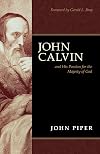
This book was written to celebrate the 500th anniversary of John Calvin's birth. In just 59 pages, you get a very succinct view of the essentials of Calvin's life and work: to show the glory of God. We learn that Calvin was not an original thinker, but that he was possessed by the Holy Spirit to spread God's Word to a hungry and dying world.
The book starts with practical application to our own life, and ends with the essential details of Calvin's life. The book is exceptionally well show more written, and is tight and crisp. This is a great way to be introduced to a man that today affects your life in ways that you do not even realize, and to whet your appetite to read more about him, and to grow in the truth of his own writings about God.
If you don’t hold a high view of Calvin, you probably don’t know him. If you don’t know Calvin, you need to meet him yourself. This work is a great introduction to a man who walked closely with the Holy Spirit, and who’s teaching holds extremely closely to the very word of God, and a man that was one of the key laborers that reformed an accurate view of both God and man in this world. show less
The book starts with practical application to our own life, and ends with the essential details of Calvin's life. The book is exceptionally well show more written, and is tight and crisp. This is a great way to be introduced to a man that today affects your life in ways that you do not even realize, and to whet your appetite to read more about him, and to grow in the truth of his own writings about God.
If you don’t hold a high view of Calvin, you probably don’t know him. If you don’t know Calvin, you need to meet him yourself. This work is a great introduction to a man who walked closely with the Holy Spirit, and who’s teaching holds extremely closely to the very word of God, and a man that was one of the key laborers that reformed an accurate view of both God and man in this world. show less
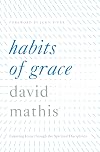
David Mathis has a unique take on the spiritual disciplines of the Christian life.
First, he prefers to refer to the spiritual disciplines as "means of grace." I'm not sure I buy into this argument. He states, "I prefer 'means of grace' to 'spiritual disciplines.' In one sense, this is a book essentially concerned with what many would call the Christian 'spiritual disciplines.' However, I find that the language of 'means of grace' coheres more consistently with the theology of the Bible about show more such practices and helps to keep the key emphases in the proper places. 'Means of grace,' according to D. A. Carson, is 'a lovely expression less susceptible to misinterpretation that spiritual disciplines.'" I understand his argument; I just don't agree. In a technical, academic sense, Mathis is correct: means of grace is a right and good way to refer to the spiritual disciplines. On a street level, however, most believers tend to associate grace with their justification. When we refer to prayer or bible study as a means of grace, they hear "means of justification." The inadvertent message is that we are saved by spiritual disciplines. This idea is contrary to the tenets of the Reformation. We are saved by grace alone, through faith alone, to the glory of God alone.
Second, Mathis classifies the spiritual disciplines in three categories: Hearing God's Voice (the Word), Having God's Ear (Prayer), and Belong to God's Body (Fellowship). To my understanding, this is a unique way of classifying the spiritual disciplines. I see strength in this method. I love how he includes corporate disciplines like fellowship, corporate worship, baptism, communion, and rebuke. Many works on spiritual disciplines don't include the corporate elements. I also love the emphasis he places on the primacy of the Word and prayer. His categorization, however, is not perfect. He adds a "Coda" where he discusses the discipline of time management, economic stewardship, and following the Great Commission. I wish he had managed to include these in the other sections - a task that I think could have been easily accomplished. The feeling is that the three categories are the "real" disciplines and the ones in the coda are "honorable mentions." I don't think that was his intention.
Habits of Grace is a fantastic, short book that would be good with young believers, college students, or anyone who is beginning to walk the path of discipleship. David Mathis has made a substantial and solid contribution to this field. I don't feel like he has eclipsed Don Whitney's Spiritual Disciplines of the Christian Life, but he has certainly cracked the top three in my rankings! show less
First, he prefers to refer to the spiritual disciplines as "means of grace." I'm not sure I buy into this argument. He states, "I prefer 'means of grace' to 'spiritual disciplines.' In one sense, this is a book essentially concerned with what many would call the Christian 'spiritual disciplines.' However, I find that the language of 'means of grace' coheres more consistently with the theology of the Bible about show more such practices and helps to keep the key emphases in the proper places. 'Means of grace,' according to D. A. Carson, is 'a lovely expression less susceptible to misinterpretation that spiritual disciplines.'" I understand his argument; I just don't agree. In a technical, academic sense, Mathis is correct: means of grace is a right and good way to refer to the spiritual disciplines. On a street level, however, most believers tend to associate grace with their justification. When we refer to prayer or bible study as a means of grace, they hear "means of justification." The inadvertent message is that we are saved by spiritual disciplines. This idea is contrary to the tenets of the Reformation. We are saved by grace alone, through faith alone, to the glory of God alone.
Second, Mathis classifies the spiritual disciplines in three categories: Hearing God's Voice (the Word), Having God's Ear (Prayer), and Belong to God's Body (Fellowship). To my understanding, this is a unique way of classifying the spiritual disciplines. I see strength in this method. I love how he includes corporate disciplines like fellowship, corporate worship, baptism, communion, and rebuke. Many works on spiritual disciplines don't include the corporate elements. I also love the emphasis he places on the primacy of the Word and prayer. His categorization, however, is not perfect. He adds a "Coda" where he discusses the discipline of time management, economic stewardship, and following the Great Commission. I wish he had managed to include these in the other sections - a task that I think could have been easily accomplished. The feeling is that the three categories are the "real" disciplines and the ones in the coda are "honorable mentions." I don't think that was his intention.
Habits of Grace is a fantastic, short book that would be good with young believers, college students, or anyone who is beginning to walk the path of discipleship. David Mathis has made a substantial and solid contribution to this field. I don't feel like he has eclipsed Don Whitney's Spiritual Disciplines of the Christian Life, but he has certainly cracked the top three in my rankings! show less

We live in an age dominated by screens. For many, life is sedentary, and it's become increasingly difficult to prioritize physical activity. Quietly conformed to this new normal, they feel sluggish and unmotivated. Others, however, have become entangled in a fitness culture that prioritizes the self, fuels pride, and coddles idolatry. Is it possible to make exercise holy?
A Little Theology of Exercise explores how stewarding our bodies can serve the soul, honor God, and bless others. show more Combining biblical texts with practical guidance, pastor and author David Mathis encourages listeners to embrace modest exercise as a way to deepen their knowledge and enjoyment of Christ and then reflect his love in the world. By placing Christ at the center of physical training, listeners will discover a greater joy in exercise and an even deeper joy in their relationship with God. show less
A Little Theology of Exercise explores how stewarding our bodies can serve the soul, honor God, and bless others. show more Combining biblical texts with practical guidance, pastor and author David Mathis encourages listeners to embrace modest exercise as a way to deepen their knowledge and enjoyment of Christ and then reflect his love in the world. By placing Christ at the center of physical training, listeners will discover a greater joy in exercise and an even deeper joy in their relationship with God. show less
As Piper concisely unfolds this predominant theme in Calvin's life, he seeks to fire every Christian's passion for the centrality and supremacy of God, so that God's self-identification in Exodus 3 as "I am who I am" becomes the sun in our solar system too.
You May Also Like


Associated Authors
Statistics
- Works
- 23
- Also by
- 4
- Members
- 2,527
- Popularity
- #10,154
- Rating
- 4.2
- Reviews
- 13
- ISBNs
- 53
- Languages
- 4