
Sam J. Miller
Author of Blackfish City
About the Author
Sam J. Miller is an American author, based in New York. He writes novels and short stories in science fiction, fantasy, and horror genres. Before becoming a writer, he worked as a butcher, guitarist in a punk rock band, and a painter's model. He was co-editor of the anthology, Horror After 9/11. show more His other work includes Blackfish City, and The Art of Starving, which won the 2017 Nebula Awards, Andre Norton Award for young adult science-fiction and fantasy. (Bowker Author Biography) show less
Series
Works by Sam J. Miller
Calved 6 copies
Last Gods 3 copies
Bodies Stacked Like Firewood 3 copies
Associated Works
A People's Future of the United States: Speculative Fiction from 25 Extraordinary Writers (2019) — Contributor — 541 copies, 20 reviews
The Year's Best Science Fiction: Thirty-Third Annual Collection (2016) — Contributor — 190 copies, 2 reviews
The Very Best of the Best: 35 Years of The Year's Best Science Fiction (2019) — Contributor — 183 copies, 1 review
The Year's Best Science Fiction: Thirty-Fourth Annual Collection (2017) — Contributor — 147 copies, 4 reviews
The Long List Anthology: More Stories From the Hugo Award Nomination List (2015) — Contributor — 126 copies, 6 reviews
Lightspeed Magazine, Issue 61 • June 2015 (Queers Destroy Science Fiction! special issue) (2015) — Contributor — 112 copies, 3 reviews
We Mostly Come Out at Night: 15 Queer Tales of Monsters, Angels & Other Creatures (2024) — Contributor — 70 copies
We Will Rise Again: Speculative Stories and Essays on Protest, Resistance, and Hope (2025) — Contributor — 63 copies, 1 review
The Best Science Fiction and Fantasy of the Year, Volume 10 (2016) — Contributor — 60 copies, 3 reviews
The Long List Anthology Volume 3: More Stories from the Hugo Award Nomination List (2017) — Contributor — 59 copies
Recognize Fascism: A Science Fiction and Fantasy Anthology (2020) — Contributor — 39 copies, 7 reviews
The Long List Anthology Volume 6: More Stories from the Hugo Award Nomination List (2020) — Contributor — 31 copies, 2 reviews
The Long List Anthology Volume 8: More Stories from the Hugo Award Nomination List (2022) — Contributor — 15 copies, 1 review
The Magazine of Fantasy and Science Fiction November/December 2019, Vol. 137, Nos. 5 & 6 (2019) — Contributor — 10 copies
The Red Volume 1 copy
Tagged
Common Knowledge
- Birthdate
- 1979-02-07
- Gender
- male
- Occupations
- butcher
community organizer
author
editor - Awards and honors
- John W. Campbell Memorial Award (2019)
- Agent
- Seth Fishman [literary]
Debbie Deuble Hill [film & TV] - Nationality
- USA
- Places of residence
- Hudson, New York, USA
New York, New York, USA - Associated Place (for map)
- New York, USA
Members
Reviews
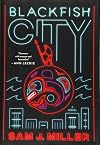
This is a delightful read. The investment you make in the first 100 pages pays off in a rich, enfolding experience of very able, capable worldbuilding by Author Miller.
Four PoV characters seems like a lot, I know, but each presents the reader with a different lens on a world that is all about where you are in its hierarchy as to what it looks like, feels like, and how Qaanaaq functions to meet your needs. Wealthy and privileged and bored Fill and Kaev, males at opposite ends of the city's show more caste system, and Kaev the professional fight-thrower is about to slip a few more rungs down the ladder. Ankit and non-binary Soq are the mobile middle-dwellers, each functioning in their differing-status jobs to support the power structure. Soq the messenger, the Mercury of Qaanaaq, was probably my favorite PoV in the book. The stealth they possess; the invisibility that rejecting binaries confers on them; all the moments of revelation this leads to make them a character I'd've loved to hear more from.
Author Miller is a top-notch talent, a maker of archetypes and a weaver of worlds whose skills are already as sharp as many with much longer résumés. What points of complaint I have are negligible compared to the central, overarching concerns he presents in this three-year-old and already timeless title.
Some of my favorite lines:
Four PoV characters seems like a lot, I know, but each presents the reader with a different lens on a world that is all about where you are in its hierarchy as to what it looks like, feels like, and how Qaanaaq functions to meet your needs. Wealthy and privileged and bored Fill and Kaev, males at opposite ends of the city's show more caste system, and Kaev the professional fight-thrower is about to slip a few more rungs down the ladder. Ankit and non-binary Soq are the mobile middle-dwellers, each functioning in their differing-status jobs to support the power structure. Soq the messenger, the Mercury of Qaanaaq, was probably my favorite PoV in the book. The stealth they possess; the invisibility that rejecting binaries confers on them; all the moments of revelation this leads to make them a character I'd've loved to hear more from.
Author Miller is a top-notch talent, a maker of archetypes and a weaver of worlds whose skills are already as sharp as many with much longer résumés. What points of complaint I have are negligible compared to the central, overarching concerns he presents in this three-year-old and already timeless title.
Some of my favorite lines:
Money is a mind, the oldest artificial intelligence. Its prime directives are simple, it's programming endlessly creative. Humans obey it unthinkingly, with cheerful alacrity. Like a virus, it doesn't care if it kills its host. It will simply flow on to someone new.show less
–and–
The American fleet had lacked a lot of things—food, shelter, fuel, civil liberties—but it hadn’t lacked weapons. The global military presence that had made the pre-fall United States so powerful, and then helped cause their collapse, had left them with all sorts of terrifying toys.
–and–
“Fine line between good business and a fucking war crime,” he said. “Ain’t that the goddamn epitaph of capitalism.”
I received an early copy of this book from Net Galley, this has not influenced my review.
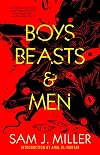
This book was the best possible version of a short story collection and really shows off the strengths of the genre. If a six star option existed, I would give this book all of them without a moment’s hesitation.
Like a really great box of chocolates, each story in this collection was fantastic, distinct, and memorable, no coconut clusters or teeth-shattering slabs of caramel in here! (Sorry if those show more are your favorites). I could have easily read whole books based on each individual tale.
The stories were enormously diverse and each affected me a different way, but each left their mark and each was a joy to read. This author blends horror, fantasy, mystery, and magic seemingly effortlessly, the way professional athletes or dancers are able to do incredible things that just seem like showing off until you remember the years of work that went into reaching that level.
The author’s range is astounding. From a story where King Kong really walked the earth and died at the foot of the Empire State Building to a retelling of the night of the Stonewall Riot, where oppressed, queer, New Yorkers discover a potent and deadly form of group pyrokenesis, I found myself completely immersed in each new tale from the beginning.
This author is one I’ve heard about for a while but have never read until now. After this truly stunning book I plan on reading his other works and keeping a careful eye on his upcoming projects. show less
This book was the best possible version of a short story collection and really shows off the strengths of the genre. If a six star option existed, I would give this book all of them without a moment’s hesitation.
Like a really great box of chocolates, each story in this collection was fantastic, distinct, and memorable, no coconut clusters or teeth-shattering slabs of caramel in here! (Sorry if those show more are your favorites). I could have easily read whole books based on each individual tale.
The stories were enormously diverse and each affected me a different way, but each left their mark and each was a joy to read. This author blends horror, fantasy, mystery, and magic seemingly effortlessly, the way professional athletes or dancers are able to do incredible things that just seem like showing off until you remember the years of work that went into reaching that level.
The author’s range is astounding. From a story where King Kong really walked the earth and died at the foot of the Empire State Building to a retelling of the night of the Stonewall Riot, where oppressed, queer, New Yorkers discover a potent and deadly form of group pyrokenesis, I found myself completely immersed in each new tale from the beginning.
This author is one I’ve heard about for a while but have never read until now. After this truly stunning book I plan on reading his other works and keeping a careful eye on his upcoming projects. show less
Originally posted on Just Geeking by.
Content warnings:
Multiple stories in this anthology include themes of homophobia and heterosexism. As a result some stories include violence towards the LGBTQIA community. Two separate stories talk directly about the 1969 Stonewall riots and the 1980s HIV/AIDS crisis. There are elements of violence and horror in a few other stories as well. Other themes present in this book include alcoholism, drugs, prostitution, climate change, animal abuse, animal show more death, poverty and homelessness.
I was unfamiliar with Sam J. Miller’s work when I first delved into Boys, Beasts & Men, and that was ok with me. I like reading anthologies to get to know new authors, and Boys, Beasts & Men is a beautiful showcase of Miller’s work over the years. In the acknowledgments at the end he gives insights into what inspired each story, and he also explains how many of them link to his other works. A character from one short story links to a novel, or pops up in another one. As a reader who loves interconnectivity between stories this made them even more special. He also did something I’ve never seen in an anthology; he tells a story between the stories. A random hook-up between two men turns into something more, told between one-page interludes between the short-stories. It’s magical and mesmerising.
To be honest, the entire anthology is mesmerising. Miller’s writing is witty and hard-hitting, drawing out stories from angles that most people don’t tend to see. Many of these are often about queer identity, but many are recognisable to people of any identity, community or circumstance. These are the people who fall through the cracks, who aren’t seen by society. Even in the stories with horror and supernatural elements as someone with mental health conditions I felt seen by Miller. His writing is full of lush descriptions and vivid emotions, yet also has a way of stripping things down to the bare bones.
In his acknowledgments he discusses how two of his stories came about from trying to understand people on the other side, the people who hate and do not understand the queer community. The result of this are two stunningly emotive stories (“Calved” and “When your Child Strays from God”) about parents realising that their child had not only grown up, but had, as Miller puts it become “something they can’t understand or find terrifying”. The concepts and themes of boys becoming men, and men being/becoming beasts or monsters run throughout all of Miller’s stories, and it was interesting to see how he interpreted these themes from his own perspective, as well as an outside perspective. There’s even a story from the perspective of a monster becoming aware that it might be a monster.
A story that really stuck out to me was “Shattered Sidewalks of the Human Heart” which considers the idea that the events of King Kong were real. What would happen in a world where a giant ape existed and lost its life because humans acted monstrously? Miller’s story is hauntingly beautiful and will stick with you after you’ve read it. It won’t be the only one, and I could go on and on. Instead, I’m just going to mention one last story; “The Heat of Us”. A retelling of the 1969 Stonewall riots, this short story is told from multiple perspectives as a former reporter puts together an article to tell the “real story” of what happened. In this retelling three people at the riot band together and something extraordinary happens. It is a powerful story, giving voice to a historical moment in LGBT history.
Boys, Beasts & Men is an evocative collection of stories that showcases the scope of Miller’s talent as a writer. In one story he expertly explores that moment as a child when you realise a parent isn’t perfect, perfectly manifesting real life with the existence of dinosaurs. Elsewhere, he tackles the hubris of 21st century America in a dystopian story about a parent trying to reconnect with their teenage son. A supernatural story about house spirits takes on capitalism and homelessness. Every story has multiple layers, and at the heart of them is the story of a real person. Pick Boys, Beasts and Men up for the incredible writing, and stay with it how it makes you feel.
For more of my reviews please visit my blog! show less
Content warnings:
I was unfamiliar with Sam J. Miller’s work when I first delved into Boys, Beasts & Men, and that was ok with me. I like reading anthologies to get to know new authors, and Boys, Beasts & Men is a beautiful showcase of Miller’s work over the years. In the acknowledgments at the end he gives insights into what inspired each story, and he also explains how many of them link to his other works. A character from one short story links to a novel, or pops up in another one. As a reader who loves interconnectivity between stories this made them even more special. He also did something I’ve never seen in an anthology; he tells a story between the stories. A random hook-up between two men turns into something more, told between one-page interludes between the short-stories. It’s magical and mesmerising.
To be honest, the entire anthology is mesmerising. Miller’s writing is witty and hard-hitting, drawing out stories from angles that most people don’t tend to see. Many of these are often about queer identity, but many are recognisable to people of any identity, community or circumstance. These are the people who fall through the cracks, who aren’t seen by society. Even in the stories with horror and supernatural elements as someone with mental health conditions I felt seen by Miller. His writing is full of lush descriptions and vivid emotions, yet also has a way of stripping things down to the bare bones.
In his acknowledgments he discusses how two of his stories came about from trying to understand people on the other side, the people who hate and do not understand the queer community. The result of this are two stunningly emotive stories (“Calved” and “When your Child Strays from God”) about parents realising that their child had not only grown up, but had, as Miller puts it become “something they can’t understand or find terrifying”. The concepts and themes of boys becoming men, and men being/becoming beasts or monsters run throughout all of Miller’s stories, and it was interesting to see how he interpreted these themes from his own perspective, as well as an outside perspective. There’s even a story from the perspective of a monster becoming aware that it might be a monster.
A story that really stuck out to me was “Shattered Sidewalks of the Human Heart” which considers the idea that the events of King Kong were real. What would happen in a world where a giant ape existed and lost its life because humans acted monstrously? Miller’s story is hauntingly beautiful and will stick with you after you’ve read it. It won’t be the only one, and I could go on and on. Instead, I’m just going to mention one last story; “The Heat of Us”. A retelling of the 1969 Stonewall riots, this short story is told from multiple perspectives as a former reporter puts together an article to tell the “real story” of what happened. In this retelling three people at the riot band together and something extraordinary happens. It is a powerful story, giving voice to a historical moment in LGBT history.
Boys, Beasts & Men is an evocative collection of stories that showcases the scope of Miller’s talent as a writer. In one story he expertly explores that moment as a child when you realise a parent isn’t perfect, perfectly manifesting real life with the existence of dinosaurs. Elsewhere, he tackles the hubris of 21st century America in a dystopian story about a parent trying to reconnect with their teenage son. A supernatural story about house spirits takes on capitalism and homelessness. Every story has multiple layers, and at the heart of them is the story of a real person. Pick Boys, Beasts and Men up for the incredible writing, and stay with it how it makes you feel.
For more of my reviews please visit my blog! show less
I received an e-arc of Blackfish City from the lovely folks at Little, Brown UK via Netgalley in exchange for my review – thank you to the publisher and the author!
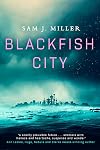
Blackfish City is a post-apocalyptic tale with an unusual premise: it’s set on Qaanaaq, a floating star-shaped city in the Arctic, built by a coalition of nations with private sector investment to be a haven for those fleeing climate change related disasters in the rest of the world. In Qaanaaq, everyone is a refugee, and much show more of is culture is based on the many remnants of human societies bumping up against each other to create new food, music and art. The city itself was built to be administered almost exclusively by AI, with elections for largely powerless posts on each of its eight “arms”, but decisions otherwise made by infallible machine logic. Unfortunately, what seemed like a good idea thirty years ago has turned out to be inadequate to the challenges Qaanaaq is now facing, and the city is decaying as its government fails to keep up with the impact of inequality, overpopulation and criminal extortion on its people. On top of this, a new epidemic called “The Breaks” is sweeping through the population, causing fear and stigma towards those it affects (it’s transmitted through body fluids, so sexual transmission is assumed to be the most common method of contracting it) and infecting its sufferers with strange delusions which appear to give them knowledge and memories from other places and times before inevitably killing them.
Into this city floats a woman, an orca, and a polar bear, representing the last of another strange technological experiment on humans. Her presence is the catalyst for events in the lives of other residents of the city: hapless rich boy Fill, coping with his new Breaks infection; Ankit, an election aide trying to understand the mystery behind her mother’s disappearance in the city’s prison-cum-psychiatric hospital; Kaev, a martial arts fighter who struggles with his own unexplained mental health issues; and Soq, a genderqueer teenager scraping together a living at the bottom of Qaanaaq’s socioeconomic heap. For the first half, Blackfish City reads rather like a fast-paced mosaic novel, with events and characters overlapping between the different stories, but no obvious whole. Things do coalesce in the second half, however, with a lot of new connections revealed between the characters which brings them together in a single story, though not necessarily on the same side. The narrative structure is mostly done very well, although there are elements from the characters’ individual plots which fall by the wayside as the group narrative overtakes the rest – most notably Ankit, whose political career and decisions get pushed quickly to one side as the plot to find her mother intersects with everyone else.
Blackfish City’s greatest strength is its atmospheric worldbuilding, using its different points of view to bring an odd and yet, in many ways, familiar city to life. My favourite parts of this were the little touches: like calling the main public services are “Health” and “Safety”, reminding us that Qaanaaq is a corporate idea of how a perfect city would be run, or having Fill react to a public art installation which involves projecting living images onto street fog. There’s also the chapters involving a piece of media (something we in the early 21st century would most likely call a podcast) called City Without a Map, which is an entirely anonymous production where different people read out monologues about different aspects of the city, and its culture and history. The whole thing adds up to a fictional city with a strong sense of place, where its easy to sympathise with the characters as they go through various stages of nostalgia and frustration with their deeply imperfect home. We also build up a picture of what the rest of the world looks like from asides and the occasional character moment, providing a grim but necessary backdrop.
It’s interesting to contrast this realistic portrayal of a future city with the journey the characters themselves go on, which I felt took a lot of beats from less realistic, more mythological styles of storytelling. The mystery behind Masaaraq, the orca woman, is also technological in nature but the way its handled, and the cultural understanding that she brings to who she is, gives it a strong note of fantasy, as do the revelations behind the nature of the Breaks. I felt this blending of realism and science-indistinguishable-from-magic was very well done, adding another layer to the sense of culture and place which Qaanaaq evokes. (I should add the disclaimer that I’m not sure if Masaaraq’s culture is supposed to be based on any particular indigenous traditions, and if so how well the parallels were handled – it felt like it was supposed to be its own thing but it’s not my area of expertise.)
My main source of frustration with Blackfish City was its depth. This isn’t a particularly long book, and it uses its space to cover a great deal of worldbuilding ground, as well as bringing in four main characters, an occasional fifth perspective, and a number of interludes for the different City Without a Map monologues. Inevitably, this means that it touches on a lot of things briefly which then never come up again – Ankit’s aspirations to change the political narrative being one, Kaev’s participation in the intriguing martial arts spectator sport of the city another. I could easily have read another hundred pages in this novel bringing “side quests” to a more satisfying close (or integrating them into the whole), as well as fleshing out character relationships and diving deeper into their particular corners of the city. The ending also felt a little rushed, although it did leave the story on a note which is true to both the characters and the city itself: tentative hope in the face of a broken world.
All in all, Blackfish City is a very strong piece of speculative fiction, creating a fully realised fictional city whose problems provoke us to ask difficult questions about the present and future of our own world. While it didn’t do everything I’d wish for, what it does deliver is well worth anyone’s time, and I’ll definitely be looking out for more of Sam J. Miller’s work in future. show less
Blackfish City is a post-apocalyptic tale with an unusual premise: it’s set on Qaanaaq, a floating star-shaped city in the Arctic, built by a coalition of nations with private sector investment to be a haven for those fleeing climate change related disasters in the rest of the world. In Qaanaaq, everyone is a refugee, and much show more of is culture is based on the many remnants of human societies bumping up against each other to create new food, music and art. The city itself was built to be administered almost exclusively by AI, with elections for largely powerless posts on each of its eight “arms”, but decisions otherwise made by infallible machine logic. Unfortunately, what seemed like a good idea thirty years ago has turned out to be inadequate to the challenges Qaanaaq is now facing, and the city is decaying as its government fails to keep up with the impact of inequality, overpopulation and criminal extortion on its people. On top of this, a new epidemic called “The Breaks” is sweeping through the population, causing fear and stigma towards those it affects (it’s transmitted through body fluids, so sexual transmission is assumed to be the most common method of contracting it) and infecting its sufferers with strange delusions which appear to give them knowledge and memories from other places and times before inevitably killing them.
Into this city floats a woman, an orca, and a polar bear, representing the last of another strange technological experiment on humans. Her presence is the catalyst for events in the lives of other residents of the city: hapless rich boy Fill, coping with his new Breaks infection; Ankit, an election aide trying to understand the mystery behind her mother’s disappearance in the city’s prison-cum-psychiatric hospital; Kaev, a martial arts fighter who struggles with his own unexplained mental health issues; and Soq, a genderqueer teenager scraping together a living at the bottom of Qaanaaq’s socioeconomic heap. For the first half, Blackfish City reads rather like a fast-paced mosaic novel, with events and characters overlapping between the different stories, but no obvious whole. Things do coalesce in the second half, however, with a lot of new connections revealed between the characters which brings them together in a single story, though not necessarily on the same side. The narrative structure is mostly done very well, although there are elements from the characters’ individual plots which fall by the wayside as the group narrative overtakes the rest – most notably Ankit, whose political career and decisions get pushed quickly to one side as the plot to find her mother intersects with everyone else.
Blackfish City’s greatest strength is its atmospheric worldbuilding, using its different points of view to bring an odd and yet, in many ways, familiar city to life. My favourite parts of this were the little touches: like calling the main public services are “Health” and “Safety”, reminding us that Qaanaaq is a corporate idea of how a perfect city would be run, or having Fill react to a public art installation which involves projecting living images onto street fog. There’s also the chapters involving a piece of media (something we in the early 21st century would most likely call a podcast) called City Without a Map, which is an entirely anonymous production where different people read out monologues about different aspects of the city, and its culture and history. The whole thing adds up to a fictional city with a strong sense of place, where its easy to sympathise with the characters as they go through various stages of nostalgia and frustration with their deeply imperfect home. We also build up a picture of what the rest of the world looks like from asides and the occasional character moment, providing a grim but necessary backdrop.
It’s interesting to contrast this realistic portrayal of a future city with the journey the characters themselves go on, which I felt took a lot of beats from less realistic, more mythological styles of storytelling. The mystery behind Masaaraq, the orca woman, is also technological in nature but the way its handled, and the cultural understanding that she brings to who she is, gives it a strong note of fantasy, as do the revelations behind the nature of the Breaks. I felt this blending of realism and science-indistinguishable-from-magic was very well done, adding another layer to the sense of culture and place which Qaanaaq evokes. (I should add the disclaimer that I’m not sure if Masaaraq’s culture is supposed to be based on any particular indigenous traditions, and if so how well the parallels were handled – it felt like it was supposed to be its own thing but it’s not my area of expertise.)
My main source of frustration with Blackfish City was its depth. This isn’t a particularly long book, and it uses its space to cover a great deal of worldbuilding ground, as well as bringing in four main characters, an occasional fifth perspective, and a number of interludes for the different City Without a Map monologues. Inevitably, this means that it touches on a lot of things briefly which then never come up again – Ankit’s aspirations to change the political narrative being one, Kaev’s participation in the intriguing martial arts spectator sport of the city another. I could easily have read another hundred pages in this novel bringing “side quests” to a more satisfying close (or integrating them into the whole), as well as fleshing out character relationships and diving deeper into their particular corners of the city. The ending also felt a little rushed, although it did leave the story on a note which is true to both the characters and the city itself: tentative hope in the face of a broken world.
All in all, Blackfish City is a very strong piece of speculative fiction, creating a fully realised fictional city whose problems provoke us to ask difficult questions about the present and future of our own world. While it didn’t do everything I’d wish for, what it does deliver is well worth anyone’s time, and I’ll definitely be looking out for more of Sam J. Miller’s work in future. show less
Lists
Awards


You May Also Like


Associated Authors
Statistics
- Works
- 22
- Also by
- 78
- Members
- 1,636
- Popularity
- #15,700
- Rating
- 3.6
- Reviews
- 64
- ISBNs
- 62
- Languages
- 3