

Cooper Moo
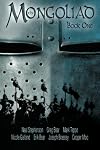
Author of The Mongoliad: Book One
Works by Cooper Moo
Associated Works
Tagged
Common Knowledge
- Birthdate
- 19??
- Gender
- male
- Organizations
- Seattle Weekly
Slate
BoingBoing - Short biography
- Cooper Moo is a Seattle-based writer of non-fiction humor and alternative history. In addition to being one of the seven authors of The Mongoliad, Cooper's work has appeared in The Seattle Weekly and on Slate and BoingBoing. His auto-biographical piece "Growing Up Black and White" was awarded Social Issues Reporting article of the year by the Society of Professional Journalists.
- Nationality
- USA
- Places of residence
- Seattle, Washington, USA
- Associated Place (for map)
- Washington, USA
Members
Reviews
I'm a huge Neal Stephenson fan and put off starting this series for some time (years) because I knew it would be different. Not different in the way that all Stephenson works are a bit different, I worried it would differ enough from his other works that I just wouldn't like it. Once I let go and embraced this as a not-quite-Stephenson piece of historical fiction, I was pulled into the story. The battle scenes are long and technical, not my forte but the descriptions are such that I can show more actually envision the action. My interest is more the characters and the historical context. I love that we have viewpoints within the Mongol camp and female characters that are more than victims/cheerleaders/sperm receptacles. The reach of this empire, touched on but mostly glossed over in my Western history classes, is vast and I'm taking time as I read to research the areas and time covered in the book. I know what we're heading toward and look forward to learning how these characters get there. I will read at least the next two volumes in this series, I'm not sure if I will make it through all nine. show less
The Mongoliad is maybe two solid swashbuckling novellas, burdened by a bunch of cruft. The whole series was an experiment in serialized collaborative fiction based around historical weapons-martial arts by Neal Stephenson and a bunch of other authors. The good stuff are the descriptions of melee skirmishes, which are action-packed and tactical. Of the two main stories, I more enjoyed the intrigue of Cansukh, a Mongol warrior dispatched to the capitol of Karakorum to do something about the show more alcoholic depression of Khagan Ogedai Khan, and his struggle to survive an atmosphere of decadence and intrigue with the help of the Chinese tutor and slave Lian. The other story is a lengthy quest by Cnan, a female messenger, and 11 knights to cross the Mongol empire and assassinate Ogedai Khan. From a structural perspective, the problem is that it takes about a third of the book for these stories to actually start moving, a long slog of subpar materials, and both plots are barely advanced by the end, leaving plenty more the sequels.
But from a bigger perspective, I hate how much stuff Stephenson and his collaborators just made up for the story. The Baroque Cycle was tightly grounded in the actual history of the the period. The fictionalized viewpoint characters were a lot like real people, and spent a lot of time interacting with real people. 1241 is a fascinating year in European history, with various medieval knightly orders at the height of their power and the Mongols conquering the world. Rather than engage with real history, Stephenson and his collaborators choose to invent a fictional society of Binder messengers (what, are actual Silk Road merchants boring?), and the Ordo Militum Vindicis Intactae, a knight-errant brotherhood nominally Catholic, but with secret pagan origins, and none of the actual social ties that make real feudalism so interesting. I get that this lets them stretch their story out over centuries and avoid nerds saying "gnah, actually according to this source...", but it leaves everything disconnected.
The best summary of this story might be in the story itself. One of the Mongol Khans has decided conquering is boring and runs an open call gladiatorial game before invading Europe. A knight fights a samurai. The only objective is to buy Europe a little more time by distracting the khan. It's a really cool fight, but for little purpose. show less
But from a bigger perspective, I hate how much stuff Stephenson and his collaborators just made up for the story. The Baroque Cycle was tightly grounded in the actual history of the the period. The fictionalized viewpoint characters were a lot like real people, and spent a lot of time interacting with real people. 1241 is a fascinating year in European history, with various medieval knightly orders at the height of their power and the Mongols conquering the world. Rather than engage with real history, Stephenson and his collaborators choose to invent a fictional society of Binder messengers (what, are actual Silk Road merchants boring?), and the Ordo Militum Vindicis Intactae, a knight-errant brotherhood nominally Catholic, but with secret pagan origins, and none of the actual social ties that make real feudalism so interesting. I get that this lets them stretch their story out over centuries and avoid nerds saying "gnah, actually according to this source...", but it leaves everything disconnected.
The best summary of this story might be in the story itself. One of the Mongol Khans has decided conquering is boring and runs an open call gladiatorial game before invading Europe. A knight fights a samurai. The only objective is to buy Europe a little more time by distracting the khan. It's a really cool fight, but for little purpose. show less
At the leading edge of the Mongol Empire as it flows remorselessly into Europe, a group of knights from an obscure martial order hatch a mad scheme to thwart the invasion. The group splits, the young warriors to fight in the Khan's circus, the other, more seasoned men head deep into Mongol Territory to assassinate the Khan of Khans.
There's a lot going on here, a lot to take in, and it doesn't help that we seem to begin the novel in the middle of the story. It feels as of a few chapters have show more been left out - a feeling reinforced by the fact that there appear to be prequel stories available for the kindle but not in the print edition. Sucks to be old-fashioned, I suppose. Anyway, once past the abrupt opening, and the tale spreads out to a young Mongol warrior learning courtly manners and a pair of defeated Asian warriors, it all warms up a bit and and draws the reader in. Until it ends, again rather abruptly. Oh well.
The list of authors seems vast, and it stands to their credit that they manage to achieve a uniform style throughout. This does not read, for example, like a Neal Stephenson book, though his influence is everywhere. It's not an especially dazzling style, but it's not bad for an amalgam. Anyway, I found myself enjoying it, and felt it ended too soon after it got going properly. I think there are two more volumes, one of which is out, and I hope to get them, but I hope they're not reserving too much exclusive stuff for the Kindle. Grr. show less
There's a lot going on here, a lot to take in, and it doesn't help that we seem to begin the novel in the middle of the story. It feels as of a few chapters have show more been left out - a feeling reinforced by the fact that there appear to be prequel stories available for the kindle but not in the print edition. Sucks to be old-fashioned, I suppose. Anyway, once past the abrupt opening, and the tale spreads out to a young Mongol warrior learning courtly manners and a pair of defeated Asian warriors, it all warms up a bit and and draws the reader in. Until it ends, again rather abruptly. Oh well.
The list of authors seems vast, and it stands to their credit that they manage to achieve a uniform style throughout. This does not read, for example, like a Neal Stephenson book, though his influence is everywhere. It's not an especially dazzling style, but it's not bad for an amalgam. Anyway, I found myself enjoying it, and felt it ended too soon after it got going properly. I think there are two more volumes, one of which is out, and I hope to get them, but I hope they're not reserving too much exclusive stuff for the Kindle. Grr. show less
I picked this book up solely on the basis of Stephenson's name on the cover; without it, I'm sure I would've walked on by a sword epic with too many writers on the cover. That would have been a mistake, and I would've missed out on an engaging history lesson on something glossed over in my schooling; the Mongol takeover of Asia and Europe.
The Mongol Empire, by land area, was the largest empire in human history. Since we tend now to think of the time between Rome and the Renaissance as an show more unchanging Dark Age, we forget that once all of Europe was either under the thumb of, or in fear of, the Great Khan. This story drops the reader right in the middle of that period, as Eastern Europe begins to suffer terribly under the attacks of the Horde.
A group of Christian (but secretly pagan) knights is looking for a way to save the people of Europe from more suffering. A rumor of a fine point of Mongol law gives the knight's leader an idea...
At the same time, a young fighter in Mongolia is torn from the steppes and installed in the court of the Great Khan, and must learn diplomacy quickly if he's to live.
I've been reading experimental novels and comics all year. It's nice to sit down with a novel with a familiar structure, with a good story and solid history behind it. This was a quick, fun read. show less
The Mongol Empire, by land area, was the largest empire in human history. Since we tend now to think of the time between Rome and the Renaissance as an show more unchanging Dark Age, we forget that once all of Europe was either under the thumb of, or in fear of, the Great Khan. This story drops the reader right in the middle of that period, as Eastern Europe begins to suffer terribly under the attacks of the Horde.
A group of Christian (but secretly pagan) knights is looking for a way to save the people of Europe from more suffering. A rumor of a fine point of Mongol law gives the knight's leader an idea...
At the same time, a young fighter in Mongolia is torn from the steppes and installed in the court of the Great Khan, and must learn diplomacy quickly if he's to live.
I've been reading experimental novels and comics all year. It's nice to sit down with a novel with a familiar structure, with a good story and solid history behind it. This was a quick, fun read. show less
Awards

You May Also Like
Associated Authors
Statistics
- Works
- 4
- Also by
- 1
- Members
- 1,916
- Popularity
- #13,432
- Rating
- 3.5
- Reviews
- 65
- ISBNs
- 34
- Languages
- 4