
David Morrell (1) (1943–)
Author of Creepers
For other authors named David Morrell, see the disambiguation page.
About the Author
David Morrell, an award-winning Canadian writer of horror fiction, was born in 1943 in Kitchener, Ontario, Canada. He was educated at the University of Waterloo and earned his Ph.D. from Pennsylvania State University. Morrell is best known as the creator of John Rambo, the hero of his first novel, show more First Blood. The novel was adapted for screen and starred Sylvester Stallone. Although Morrell was not happy with the depiction of the Rambo character in the movie, he did write several sequels to First Blood and two further scripts for the sequels to the original movie. He also wrote a number of other books including The Brotherhood of the Rose which became a best seller in 1984. David Morrell has written one scholarly work, John Barth: An Introduction, published by Pennsylvania State University in 1977 and has taught at the University of Iowa. He now lives in the United States with his wife and daughter (another child, a son, is deceased). (Bowker Author Biography) David Morrell, 1943 - Storyteller David Morrell was born in 1943 in Kitchener, Ontario. He received a B.A. from the University of Waterloo and an M.A. and Ph.D. from Pennsylvania State University. He was then a professor of American literature at the University of Iowa. Morrell's debut novel was "First Blood" and introduced the well-known John Rambo character. It was made into a successful movie that starred Sylvester Stalone. He followed with a series of thrillers filled with espionage, assassination and worldwide terrorism, which include "The Brotherhood of the Rose," "The Fraternity of the Stone," "The League of Night and Fog," and "The Covenant of the Flame." "Black Evening" is an examination of his own life and includes both his first published short stories and his latest award winning books. (Bowker Author Biography) show less
Series
Works by David Morrell
The Successful Novelist: A Lifetime of Lessons about Writing and Publishing (2008) 81 copies, 2 reviews
Brotherhood Omnibus: Brotherhood of the Rose; Fraternity of the Stone; League of Night and Fog (1993) 15 copies
David Morrell's Tales from Nightscape: Front Man, Nothing Will Hurt You, and Resurrection (2005) 10 copies
Resurrection 3 copies
The Storm 3 copies
Front Man 3 copies
Pierwsza krew Rambo 3 copies
Thriller Almanac 2 copies
Amazing Spider-Man: Peter Parker - The One And Only (Amazing Spider-Man (1999-2013)) (2026) 2 copies
But At My Back I Always Hear 2 copies
The Abelard Sanction and Other Stories: The Abelard Sanction, Assassins, The Double Dealer, Falling, and Surviving Toronto (2012) 2 copies
Night Visions/dead (Night Visions 2) 2 copies
Nothing Will Hurt You 2 copies
If I Should Die Before I Wake 2 copies
The Typewriter 2 copies
The Hidden Laughter 1 copy
RETRATO DE UMA OBSESSAO 1 copy
Long List 1 copy
The Corpse Collector 1 copy
The Dripping 1 copy
Rambo1 1 copy
Negacao Extrema 1 copy
The Partnership 1 copy
Testamento 1 copy
Time Was 1 copy
Identidade Assumida 1 copy
Elvis .45 1 copy
Rio Grande Gothic 1 copy
Habitat 1 copy
Remains To Be Seen 1 copy
The Shrine 1 copy
The Road To Damascus 1 copy
Mumbo Jumbo 1 copy
For These and All My Sins 1 copy
A Trap for the Unwary 1 copy
Nelson Riddle: The Man behind the Music, an essay (The David Morrell Cultural-Icon Series) (2013) 1 copy
Juramento de vingança 1 copy
Associated Works
Prime Evil: New Stories by the Masters of Modern Horror (1988) — Contributor — 681 copies, 8 reviews
The Lineup: The World's Greatest Crime Writers Tell the Inside Story of Their Greatest Detectives (2009) — Contributor — 239 copies, 5 reviews
The World's Finest Mystery and Crime Stories: First Annual Collection (2000) — Contributor — 68 copies, 1 review
Alive in Shape and Color: 16 Paintings by Great Artists and the Stories They Inspired (2019) — Contributor — 53 copies, 3 reviews
The Deadly Bride and 21 of the Year's Finest Crime and Mystery Stories: Volume II (2006) — Contributor — 29 copies
Hollywood Ghosts: Haunting, Spine-Chilling Stories from America's Film Capital (American Ghost Series) (1991) — Contributor — 12 copies
Tagged
Common Knowledge
- Birthdate
- 1943-04-24
- Gender
- male
- Education
- University of Waterloo (St. Jeromes)
Pennsylvania State University - Organizations
- International Thriller Writers
- Awards and honors
- Bram Stoker Award
ITW Thrillermaster (2009) - Nationality
- Canada
- Birthplace
- Kitchener, Ontario, Canada
- Places of residence
- Kitchener, Ontario, Canada
Santa Fe, New Mexico, USA
Iowa City, Iowa, USA
Members
Reviews
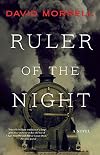
After having read Thomas De Quincey's famous “Confessions of an English Opium Eater” (1821) a couple of months back, I am amazed that David Morrell was able to use it as a springboard for an excellent historical mystery, let alone a whole series of them. Yet “Ruler of the Night” (2016) makes fine reading, while solving, even if in fiction, some mysteries left hanging by De Quincey's memoir.
De Quincey himself is the hero of Morrell's series (which began with “Murder as a Fine show more Art”), and like the real De Quincey, he tends to spend most of his money on two things, opium to feed his habit and books to feed his mind. There is little money left to pay his rent, and so eventually he must move on, usually leaving a flat full of books behind. Now a former landlord has threatened to sell his books to cover back rent, and De Quincey, along with his lovely daughter, Emily, takes a train to try to rescue those books. On the train, however, a bloody murder occurs, and De Quincey, with his talent for solving mysteries, becomes involved.
At the heart of the mystery he finds a wealthy woman, Carolyn, whom De Quincey knew as an impoverished street girl years before. He has always wondered what happened to her, and in this novel he finds out.
Other real people play roles in this story, including Queen Victoria and Lord Palmerston, the prime minister. Morrell, in fact, works hard to make his historical novel historically consistent, such as by making the hydropathy craze of that period central to the plot. Yet this is still fiction, and most of the key characters are entirely fictional. These include two Scotland Yard detectives, Ryan and Becker, whom De Quincey assists in getting to the bottom of the murder mystery, although exactly who is assisting whom is another question. Both detectives are in love with De Quincey's daughter, adding to the tension, or at least to the addictive pleasure of this story and the series as a whole. show less
De Quincey himself is the hero of Morrell's series (which began with “Murder as a Fine show more Art”), and like the real De Quincey, he tends to spend most of his money on two things, opium to feed his habit and books to feed his mind. There is little money left to pay his rent, and so eventually he must move on, usually leaving a flat full of books behind. Now a former landlord has threatened to sell his books to cover back rent, and De Quincey, along with his lovely daughter, Emily, takes a train to try to rescue those books. On the train, however, a bloody murder occurs, and De Quincey, with his talent for solving mysteries, becomes involved.
At the heart of the mystery he finds a wealthy woman, Carolyn, whom De Quincey knew as an impoverished street girl years before. He has always wondered what happened to her, and in this novel he finds out.
Other real people play roles in this story, including Queen Victoria and Lord Palmerston, the prime minister. Morrell, in fact, works hard to make his historical novel historically consistent, such as by making the hydropathy craze of that period central to the plot. Yet this is still fiction, and most of the key characters are entirely fictional. These include two Scotland Yard detectives, Ryan and Becker, whom De Quincey assists in getting to the bottom of the murder mystery, although exactly who is assisting whom is another question. Both detectives are in love with De Quincey's daughter, adding to the tension, or at least to the addictive pleasure of this story and the series as a whole. show less
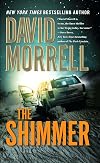
⭐ 4.5 – David Morrell bends reality instead of breaking it
The Shimmer starts as a straightforward small-town mystery—lights over the desert, a shooter, an investigation—and then quietly mutates into something stranger and more intimate. It’s science fiction built from mood rather than machinery.
Morrell balances multiple timelines with precision, letting each orbit the others like frequencies in the same field. What looks like a thriller about weaponized light becomes an examination show more of perception, grief, and the cost of knowing too much. The prose is clean, methodical, and surprisingly tender. You can feel the research, but for once it never outweighs the emotion; it anchors the impossible instead of explaining it away.
The book’s greatest strength is restraint. The violence lands hard but briefly, the dread grows from silence and absence, and even the so-called “cover-up” feels like a human reflex—officialdom trying to wallpaper over something that can’t be contained.
If The Totem was Morrell’s biological horror, The Shimmer is his metaphysical one: reality itself as contagion. It’s not a story about aliens or soldiers—it’s about what happens when truth and illusion blur, and everyone sees a different world.
Morrell keeps the spiral turning until the last page, leaving you uncertain whether the light revealed something divine or just burned our eyes. show less
The Shimmer starts as a straightforward small-town mystery—lights over the desert, a shooter, an investigation—and then quietly mutates into something stranger and more intimate. It’s science fiction built from mood rather than machinery.
Morrell balances multiple timelines with precision, letting each orbit the others like frequencies in the same field. What looks like a thriller about weaponized light becomes an examination show more of perception, grief, and the cost of knowing too much. The prose is clean, methodical, and surprisingly tender. You can feel the research, but for once it never outweighs the emotion; it anchors the impossible instead of explaining it away.
The book’s greatest strength is restraint. The violence lands hard but briefly, the dread grows from silence and absence, and even the so-called “cover-up” feels like a human reflex—officialdom trying to wallpaper over something that can’t be contained.
If The Totem was Morrell’s biological horror, The Shimmer is his metaphysical one: reality itself as contagion. It’s not a story about aliens or soldiers—it’s about what happens when truth and illusion blur, and everyone sees a different world.
Morrell keeps the spiral turning until the last page, leaving you uncertain whether the light revealed something divine or just burned our eyes. show less
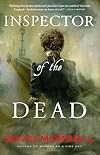
I've been on pins-and-needles for this book, the second historical mystery featuring notorious Victorian author/drug user Thomas DeQuincy, his daughter Emily, and their friends in Scotland Yard. The first book, Murder as a Fine Art, made my Top Ten of 2013.
My impatience was well rewarded; this book has everything I love in a great historical novel: a plot that drives one into Wiki rabbit holes, an intriguing heroine who is unconventional - but grounded in the era - and historical details show more that are evocative without being overwhelming.
Set in 1855, just weeks after the end of the first novel, notorious author and opium addict Thomas DeQuincy and his charming bluestocking daughter Emily are being shuffled home to Scotland when a gruesome murder at St. James' Church requires their assistance. It soon emerges that there's a plot to assassinate the queen as a series of grotesque and dramatic murders strike fear in London. (I will say, as someone who is a puss about gross things, the murders were icky but not put-the-book-down disgusting. Just the right side of scary for my tastes!)
The calamitous results of the Crimean war complicate the political stage in London, too, and running parallel to the murder mystery is a storyline of privilege, heroism in war, and class background (which I found more fascinating than the murders, frankly!).
As with the previous novel, Morrell emulates Victorian literature in the narrative style: the novel switches between the point of view of our murderer and our heroes as well as various secondary characters, interspersed with excerpts from Emily's diary, resulting in a rich, dramatic narrative reminiscent of my favorite 19th century thrillers. There's a big cast but Morrell makes everyone vibrant and distinct, and I loved the secondary characters as much as the primary ones.
And while this is a second in a series, it stands well for those unfamiliar with the first book: Morrell provides enough background to make new readers (or those of us, like myself, who forgot a few details) comfortable with the main players and their relationships without spoiling the first book.
Of the characters, Emily once more won my heart; she numbers among my favorite heroines for her mix of sensitivity, moxie, and grace. But I love that Morrell tackles drug use and addiction through DeQuincy -- a topic I rarely see in historical fiction -- and DeQuincy is a sympathetic character, struggling with his demons.
There's a nine-page Afterward as fascinating as the novel and spells out what is based on history and what is Morrell's invention. To my surprise, more was historical than I expected!
It should go without saying that I can't wait for the next book in the series, should there be one. A detail-laden delight for those who dig the Victorian era, murder mysteries, or heroines who rock bloomers. show less
My impatience was well rewarded; this book has everything I love in a great historical novel: a plot that drives one into Wiki rabbit holes, an intriguing heroine who is unconventional - but grounded in the era - and historical details show more that are evocative without being overwhelming.
Set in 1855, just weeks after the end of the first novel, notorious author and opium addict Thomas DeQuincy and his charming bluestocking daughter Emily are being shuffled home to Scotland when a gruesome murder at St. James' Church requires their assistance. It soon emerges that there's a plot to assassinate the queen as a series of grotesque and dramatic murders strike fear in London. (I will say, as someone who is a puss about gross things, the murders were icky but not put-the-book-down disgusting. Just the right side of scary for my tastes!)
The calamitous results of the Crimean war complicate the political stage in London, too, and running parallel to the murder mystery is a storyline of privilege, heroism in war, and class background (which I found more fascinating than the murders, frankly!).
As with the previous novel, Morrell emulates Victorian literature in the narrative style: the novel switches between the point of view of our murderer and our heroes as well as various secondary characters, interspersed with excerpts from Emily's diary, resulting in a rich, dramatic narrative reminiscent of my favorite 19th century thrillers. There's a big cast but Morrell makes everyone vibrant and distinct, and I loved the secondary characters as much as the primary ones.
And while this is a second in a series, it stands well for those unfamiliar with the first book: Morrell provides enough background to make new readers (or those of us, like myself, who forgot a few details) comfortable with the main players and their relationships without spoiling the first book.
Of the characters, Emily once more won my heart; she numbers among my favorite heroines for her mix of sensitivity, moxie, and grace. But I love that Morrell tackles drug use and addiction through DeQuincy -- a topic I rarely see in historical fiction -- and DeQuincy is a sympathetic character, struggling with his demons.
There's a nine-page Afterward as fascinating as the novel and spells out what is based on history and what is Morrell's invention. To my surprise, more was historical than I expected!
It should go without saying that I can't wait for the next book in the series, should there be one. A detail-laden delight for those who dig the Victorian era, murder mysteries, or heroines who rock bloomers. show less
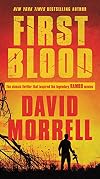
Three things about 'First Blood' surprised me. It's a little over fifty years old but it doesn't feel dated or old-fashioned. It feels more modern than a few 1980s horror classics I've read. It doesn't read like a debut novel. It's written with confidence, it takes a few risks with form and the people in it feel real. It is very different from the movie. I know this shouldn't be much of a surprise - movie adaptations are like that - but the differences are extreme and profound. Almost show more nothing that pulled me into the book found its way into the movie. On the other hand, I think the ending of the book wasn't its strongest point and wouldn't have satisfied a cinema audience.
I came to the book with memories of a bored, redneck Police Chief, so wrapped up in his own authority that he pushes a drifter too far and a shirtless Sylvester Stallone, with a strip of fabric tied around his head and an automatic rifle in his hands, blowing up the town, killing dozens of people and then complaining that his country doesn't love him as much as he loves it. At the time, I thought it was a clever action movie with a lead actor who was great at the action sequences but who was out of his depth whenever he had to speak in full sentences.
I had to push those memories aside almost from the first page. The sheriff, it turned out, was a reasonable, mostly polite, mostly patient man who made every effort to de-escalate the blossoming conflict with John Rambo, right up to the point where Rambo bugs out and kills a police officer by slicing a straight razor through his guts. John Rambo wasn't just a Vietnam Vet, tramping through America, minding his own business and coping with his PTSD. John Rambo was what the US military had trained him to be: an efficient killer who enjoys his work and never backs down once he's engaged with the enemy.
David Morrell lets the reader spend a lot of time inside the heads of Wilfred Teasle, the Chief Of Police in the small town of Madison, Kentucky and John Rambo, a bearded long-haired drifter with nothing to his name but a buckskin jacket, some ratty jeans, a stained sweatshirt and an old sleeping bag. Morrell shows the reader how both men think, how each of them tries to pull back from a conflict that's likely to go bad and how each of them fails. He lets the reader see how similar the two men are, although they're a generation apart. Teasle's war was Korea, Rambo's war was Vietnam. Both men won medals. Both did things that they'd rather not remember. Both of them are capable of extreme violence.
One of the things that surprised me was that I felt more sympathy with Teasle than Rambo. Teasle had built a life for himself. Maybe not a completely successful one, his marriage is crumbling and he has no friends, but one committed to trying to prevent and hold back violence. Rambo is still working through what his war taught him about himself: that he's a ruthless man who will do whatever it takes to survive; that he's a killer who kills neither from anger nor fear but because it's necessary; that deep down he knows that he enjoys killing and is looking for an excuse to lose himself in the joy of doing it well.
'First Blood' is structured as a conflict between these two worldviews. The conflict itself is dramatic and filled with violence but those things punctuate the story, they are not the point of it.
The book has a very strong start and most of the time I found it very engaging. The shifts in point of view and the flashbacks to reveal the backstories of Teasle and Rambo worked well. The action scenes were compelling. It lost me a little towards the end. The ending is very different from the film. I think it's both more appropriate and more believable but it's a difficult story to tell and at points, I felt it went on too long. I also felt the almost telepathic connection that Teasle and Rambo seem to have towards the end was a slightly heavy-handed way of making their shared backgrounds visible.
I listened to the audiobook version, narrated by Eric G. Dove. His delivery felt pitch-perfect to me and carried me effortlessly through the book. show less
I came to the book with memories of a bored, redneck Police Chief, so wrapped up in his own authority that he pushes a drifter too far and a shirtless Sylvester Stallone, with a strip of fabric tied around his head and an automatic rifle in his hands, blowing up the town, killing dozens of people and then complaining that his country doesn't love him as much as he loves it. At the time, I thought it was a clever action movie with a lead actor who was great at the action sequences but who was out of his depth whenever he had to speak in full sentences.
I had to push those memories aside almost from the first page. The sheriff, it turned out, was a reasonable, mostly polite, mostly patient man who made every effort to de-escalate the blossoming conflict with John Rambo, right up to the point where Rambo bugs out and kills a police officer by slicing a straight razor through his guts. John Rambo wasn't just a Vietnam Vet, tramping through America, minding his own business and coping with his PTSD. John Rambo was what the US military had trained him to be: an efficient killer who enjoys his work and never backs down once he's engaged with the enemy.
David Morrell lets the reader spend a lot of time inside the heads of Wilfred Teasle, the Chief Of Police in the small town of Madison, Kentucky and John Rambo, a bearded long-haired drifter with nothing to his name but a buckskin jacket, some ratty jeans, a stained sweatshirt and an old sleeping bag. Morrell shows the reader how both men think, how each of them tries to pull back from a conflict that's likely to go bad and how each of them fails. He lets the reader see how similar the two men are, although they're a generation apart. Teasle's war was Korea, Rambo's war was Vietnam. Both men won medals. Both did things that they'd rather not remember. Both of them are capable of extreme violence.
One of the things that surprised me was that I felt more sympathy with Teasle than Rambo. Teasle had built a life for himself. Maybe not a completely successful one, his marriage is crumbling and he has no friends, but one committed to trying to prevent and hold back violence. Rambo is still working through what his war taught him about himself: that he's a ruthless man who will do whatever it takes to survive; that he's a killer who kills neither from anger nor fear but because it's necessary; that deep down he knows that he enjoys killing and is looking for an excuse to lose himself in the joy of doing it well.
'First Blood' is structured as a conflict between these two worldviews. The conflict itself is dramatic and filled with violence but those things punctuate the story, they are not the point of it.
The book has a very strong start and most of the time I found it very engaging. The shifts in point of view and the flashbacks to reveal the backstories of Teasle and Rambo worked well. The action scenes were compelling. It lost me a little towards the end. The ending is very different from the film. I think it's both more appropriate and more believable but it's a difficult story to tell and at points, I felt it went on too long. I also felt the almost telepathic connection that Teasle and Rambo seem to have towards the end was a slightly heavy-handed way of making their shared backgrounds visible.
I listened to the audiobook version, narrated by Eric G. Dove. His delivery felt pitch-perfect to me and carried me effortlessly through the book. show less
Lists
1970s (1)
Page Turners (1)
Awards


You May Also Like


Associated Authors
Statistics
- Works
- 137
- Also by
- 65
- Members
- 12,954
- Popularity
- #1,801
- Rating
- 3.6
- Reviews
- 369
- ISBNs
- 841
- Languages
- 21
- Favorited
- 23

