
Stuart Neville
Author of The Twelve
About the Author
Stuart Neville is a Northern Irish author. His books include The Twelve (published in the USA as The Ghosts of Belfast), Collusion, Stolen Souls, Ratlines, and The Final Silence. The French edition of The Ghosts of Belfast, Les Fantômes de Belfast, won Le Prix Mystère de la Critique du Meilleur show more Roman Étranger and Grand Prix du Roman Noir Étranger. (Bowker Author Biography) show less
Image credit: Photograph by Greg Haire/HardLight Studios
Series
Works by Stuart Neville
Associated Works
The Usual Santas: A Collection of Soho Crime Christmas Capers (2017) — Contributor — 158 copies, 10 reviews
Down These Green Streets: Irish Crime Writing in the 21st Century (2011) — Contributor — 24 copies, 1 review
Tagged
Common Knowledge
- Birthdate
- 1972-01-25
- Gender
- male
- Agent
- Nat Sobel (Sobel Weber Assoc.)
- Nationality
- Ireland
- Birthplace
- County Armagh, Northern Ireland, UK
Members
Reviews
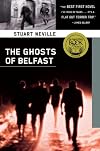
Real Rating: 4.5* of five, rounded up because I'll seek out the next book in the series
Winner of the 2009 Los Angeles Times Book Prize for Best Thriller.
My Review: First, read this:
That's the logical, and irrefutable, argument against hate. But there's no chance humans will give up hating. It's an addictive drug, a high that can only be bested by the Absolute Assurance that YOU ARE RIGHT, They are Wrong, and therefore they deserve _____. Ireland's been in the toils of both, Hate and Rightness, for centuries. They've made it the basis for their identity as a nation. It ain't goin' nowhere.
That grim prognostication delivered, the story we're told in this (debut!) novel is based around a single person's efforts to mitigate the toll Hate takes on society as a whole. That he's chosen, um, a counter-productive solution to the problem is...kind of the core of the read. The way there's no out for a person whose persona is warped by war, by violent and utterly anti-social normative training, whose core is eaten out to nothingness by hatred. That is who such a one will be always. And Gerry Fegan is a stone-cold killer, a person whose life is without the sense of remorse that a normal person would have for depriving others of their entire futures.
Which is why they haunt him. Their ghosts won't let him sleep, or think, or be normal.
Discussions of Gerry's ghosts' reality are circular. Real? Imaginary? Guilt phantasms? Doesn't matter. Gerry is the person he's been made into. The ghosts demand something be done to balance the scales of their lost futures. And Gerry being their instrument means that something will be murderous.
This is a huge problem for the world. Men and women like Gerry exist all over the globe, and they represent a ticking time-bomb of violence and chaos in every place they exist. Conflicts based on such idiotic things as religion and ethnicity and national identity are going to sink any "peace process" that ever gets past the hot-air stage. People like these need their Hate-hit to feel good. Feeling good, about yourself, about your superior place in the world, is fundamental to humans' ability to thrive. In far too many cases, that represents itself as Hate for Others. Nothing effective has ever been done about that...can anything effective ever be done about it? Don't look at Ireland. It's a pink-skinned Rwanda.
And this novel, this brilliant noir tale of revenge if not exactly redemption, brings that to its...conclusion is the wrong word. "Stopping place" in the sense of "the buck stops here" is permaybehaps closer. The man Gerry, expiating his sins, commits others...but do they count as sins? They're balancing scales, not to say that the choice of method is one I approve of. But he's made some attempt to redress the vile acts he's committed. By committing others.
The Mahatma was correct. The world continues to ignore him, and the cycle of violence continues to spiral ever downward into chaos.
Finally, let me say that this book's the first in a series called "Jack Lennon Investigations." This will bumfuzzle most readers. "Who the hell's Jack Lennon?" I hear you ask. Well...don't worry your pretty little head about it is my response. Read Collusion and don't fuss. It's well worth your eyeblinks, just as this delight of a violent, nihilistic noir read is. show less
Winner of the 2009 Los Angeles Times Book Prize for Best Thriller.
My Review: First, read this:
“Hate's a terrible thing. It's a wasteful, stupid emotion. You can hate someone with all your heart, but it'll never do them a bit of harm. The only person it hurts is you. You can spend your days hating, letting it eat away at you, and the person you hate will go on living just the same. So what's the show more point?”
That's the logical, and irrefutable, argument against hate. But there's no chance humans will give up hating. It's an addictive drug, a high that can only be bested by the Absolute Assurance that YOU ARE RIGHT, They are Wrong, and therefore they deserve _____. Ireland's been in the toils of both, Hate and Rightness, for centuries. They've made it the basis for their identity as a nation. It ain't goin' nowhere.
That grim prognostication delivered, the story we're told in this (debut!) novel is based around a single person's efforts to mitigate the toll Hate takes on society as a whole. That he's chosen, um, a counter-productive solution to the problem is...kind of the core of the read. The way there's no out for a person whose persona is warped by war, by violent and utterly anti-social normative training, whose core is eaten out to nothingness by hatred. That is who such a one will be always. And Gerry Fegan is a stone-cold killer, a person whose life is without the sense of remorse that a normal person would have for depriving others of their entire futures.
Which is why they haunt him. Their ghosts won't let him sleep, or think, or be normal.
Discussions of Gerry's ghosts' reality are circular. Real? Imaginary? Guilt phantasms? Doesn't matter. Gerry is the person he's been made into. The ghosts demand something be done to balance the scales of their lost futures. And Gerry being their instrument means that something will be murderous.
This is a huge problem for the world. Men and women like Gerry exist all over the globe, and they represent a ticking time-bomb of violence and chaos in every place they exist. Conflicts based on such idiotic things as religion and ethnicity and national identity are going to sink any "peace process" that ever gets past the hot-air stage. People like these need their Hate-hit to feel good. Feeling good, about yourself, about your superior place in the world, is fundamental to humans' ability to thrive. In far too many cases, that represents itself as Hate for Others. Nothing effective has ever been done about that...can anything effective ever be done about it? Don't look at Ireland. It's a pink-skinned Rwanda.
And this novel, this brilliant noir tale of revenge if not exactly redemption, brings that to its...conclusion is the wrong word. "Stopping place" in the sense of "the buck stops here" is permaybehaps closer. The man Gerry, expiating his sins, commits others...but do they count as sins? They're balancing scales, not to say that the choice of method is one I approve of. But he's made some attempt to redress the vile acts he's committed. By committing others.
The Mahatma was correct. The world continues to ignore him, and the cycle of violence continues to spiral ever downward into chaos.
Finally, let me say that this book's the first in a series called "Jack Lennon Investigations." This will bumfuzzle most readers. "Who the hell's Jack Lennon?" I hear you ask. Well...don't worry your pretty little head about it is my response. Read Collusion and don't fuss. It's well worth your eyeblinks, just as this delight of a violent, nihilistic noir read is. show less
IN A NUTSHELL
'Blood Like Mine' was a gripping story, cleverly told, that combined a serial killer narrative with a horror narrative and gave both a few twists while delivering an emotional story about the love between a mother and her daughter. It was a story that kept surprising me without making me feel that the narrative was doing gymnastics.
Blood Like Mine’ (2024) came as a complete surprise to me. I liked the cover and picked it up as something for my wife and I to listen to on a long show more car drive. It was so compelling that we kept listening to it after the drive was over. We were wrapped up in the people and we needed to know how the story ended.
I think this is a story that it’s best to go into blind, knowing only that it’s a powerful blend of crime thriller and horror novel, with a strong focus on the personalities of the people involved. The relationship between the fugitive mother and daughter is close, complex and convincing. The FBI man pursuing them is self-destructive and hard to like.
The plot uses familiar tropes from the serial killer and horror genres but makes them feel fresh by changing who I cheered for (HINT - it wasn’t the FBI guy). The plot didn’t go where I thought it would, even after I’d fully understood the situation that the mother and daughter were in. It kept me on the edge of my seat to the last page.
Perhaps what surprised me most about it was how engaged I became with the mother and daughter as I learned more about them and what they'd been through.
If you're looking for a genre read with a difference then I recommend listening to the audiobook of 'Blood Like Mine' narrated by Elizabeth Rodgers and Michael Braun. It will be ten hours well spent. show less
'Blood Like Mine' was a gripping story, cleverly told, that combined a serial killer narrative with a horror narrative and gave both a few twists while delivering an emotional story about the love between a mother and her daughter. It was a story that kept surprising me without making me feel that the narrative was doing gymnastics.
Blood Like Mine’ (2024) came as a complete surprise to me. I liked the cover and picked it up as something for my wife and I to listen to on a long show more car drive. It was so compelling that we kept listening to it after the drive was over. We were wrapped up in the people and we needed to know how the story ended.
I think this is a story that it’s best to go into blind, knowing only that it’s a powerful blend of crime thriller and horror novel, with a strong focus on the personalities of the people involved. The relationship between the fugitive mother and daughter is close, complex and convincing. The FBI man pursuing them is self-destructive and hard to like.
The plot uses familiar tropes from the serial killer and horror genres but makes them feel fresh by changing who I cheered for (HINT - it wasn’t the FBI guy). The plot didn’t go where I thought it would, even after I’d fully understood the situation that the mother and daughter were in. It kept me on the edge of my seat to the last page.
Perhaps what surprised me most about it was how engaged I became with the mother and daughter as I learned more about them and what they'd been through.
If you're looking for a genre read with a difference then I recommend listening to the audiobook of 'Blood Like Mine' narrated by Elizabeth Rodgers and Michael Braun. It will be ten hours well spent. show less

Gerry Fegan is a man haunted by ghosts. As a foot soldier in the strife between Northern Ireland and the Republic of Ireland, Gerry was a hit man for Northern Ireland's interests, or more accurately, for the men who sought to exploit The Troubles for their own personal gains. Now, decades after the tensions have nominally ceased and the Good Friday Accords have set Ireland on the path toward a more peaceable future, the ghosts of twelve of Gerry's victims have come back. Gerry himself has show more spent time in prison for his crimes and only wants to be left alone in peace; but the ghosts won't let him be. "Everybody pays," so says the mother of one of Gerry's victims. This becomes the theme of the vendetta tale as Gerry seeks to expunge the curse: The ghosts will leave, but only after Gerry kills the men ultimately responsible for the each of the ghost's respective deaths.
Stuart Doyle creates an immediately sympathetic character in Gerry Fagen. At once both the cold and crazy killer and, a man who seeks the peace of a good night's sleep, Gerry must put past matters to rest before he can face an uncertain future. Remaking himself, becoming the better man, is a process that requires some dirty work before absolution and progress can be made. In this, Gerry Fagen becomes a metaphor for Stormont (the Northern Ireland Parliament) in that Stormont, even as they eagerly race forward toward the economic promises of the future, seeks to shed it violent past; but must deal with political "necessities." The Ghosts of Belfast is about Gerry and Stormont: their pasts, their presents and their hopeful futures.
The Ghosts of Belfast is Irish Noir with all the implied tragedy, grittiness and heart. This is the story of hard men doing hard things in hard times and none of it is pretty; and all of it is believably portrayed. The writing is suspenseful and even breathtaking in parts, perhaps not so much in the language used but in the emotions evoked.
The Ghosts of Belfast is graphic in its violence; but never gratuitous given the nature of the story. There is a dogfighting scene that may seem superfluous and a bit too intense for some; but it works, especially if one views it as another metaphor for Gerry and Northern Ireland.
Gerard Doyle is the voice of Irish Noir and exceptionally good in The Ghosts of Belfast. Some lines are delivered in chilling softness and others in aggressive clarity that all deliver the moment at hand with the tension, tenderness and/or suffering as the story's scenes dictate. The narrator conveys the mood and the characters with astuteness and skill, and there is no sense anywhere throughout the novel that Gerard Doyle misinterpreted the intent of the story or a line of dialogue. All characters are given enough of a distinction so that there no doubt as to who might be speaking in any given dialogue; and the females are all respectfully represented - without any penchant to delivering their voices in a falsetto. If there's any quibble at all, it has nothing to do with the narrator's performance per se - only that there was what sounded like a bit of booth noise a couple of times; but it was very subtle and most listeners will not notice it.
Redacted from the original blog review at dog eared copy, The Ghosts of Belfast; 03/13/2012 show less
Stuart Doyle creates an immediately sympathetic character in Gerry Fagen. At once both the cold and crazy killer and, a man who seeks the peace of a good night's sleep, Gerry must put past matters to rest before he can face an uncertain future. Remaking himself, becoming the better man, is a process that requires some dirty work before absolution and progress can be made. In this, Gerry Fagen becomes a metaphor for Stormont (the Northern Ireland Parliament) in that Stormont, even as they eagerly race forward toward the economic promises of the future, seeks to shed it violent past; but must deal with political "necessities." The Ghosts of Belfast is about Gerry and Stormont: their pasts, their presents and their hopeful futures.
The Ghosts of Belfast is Irish Noir with all the implied tragedy, grittiness and heart. This is the story of hard men doing hard things in hard times and none of it is pretty; and all of it is believably portrayed. The writing is suspenseful and even breathtaking in parts, perhaps not so much in the language used but in the emotions evoked.
The Ghosts of Belfast is graphic in its violence; but never gratuitous given the nature of the story. There is a dogfighting scene that may seem superfluous and a bit too intense for some; but it works, especially if one views it as another metaphor for Gerry and Northern Ireland.
Gerard Doyle is the voice of Irish Noir and exceptionally good in The Ghosts of Belfast. Some lines are delivered in chilling softness and others in aggressive clarity that all deliver the moment at hand with the tension, tenderness and/or suffering as the story's scenes dictate. The narrator conveys the mood and the characters with astuteness and skill, and there is no sense anywhere throughout the novel that Gerard Doyle misinterpreted the intent of the story or a line of dialogue. All characters are given enough of a distinction so that there no doubt as to who might be speaking in any given dialogue; and the females are all respectfully represented - without any penchant to delivering their voices in a falsetto. If there's any quibble at all, it has nothing to do with the narrator's performance per se - only that there was what sounded like a bit of booth noise a couple of times; but it was very subtle and most listeners will not notice it.
Redacted from the original blog review at dog eared copy, The Ghosts of Belfast; 03/13/2012 show less
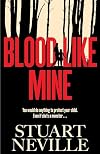
I find reading a Stuart Neville book both exciting, exhilarating, exasperating and frightening. His characters don’t appear to have an easy life, and this agony is laid bare on the printed page and I felt every word. I must also mention, at this stage, the dazzling DCI Serena Flanagan books, and Neville’s portrayal of life on the edge with Serena balancing home and work and not always successfully. However I hear you say, and quite rightly so, we are here to discuss and review the show more author’s latest work of angst: Blood like Mine. My goodness this is a 400 page work of some brilliance, as Stuart aptly and expertly balances a police thriller with horror undertones that becomes evident after a number of chapters.
Rebecca Carter and her daughter Monica, known as Moonflower, are on the run throughout the United States from what or whom gradually becomes clear. We learn that Rebecca will do anything to keep Moonflower safe including killing or sacrificing herself. Meanwhile special agent Marc Donner has spent the last 2 years trying to identify and apprehend a serial killer who strikes with regularity and leaves no trace or clues at the scene of the crime. Donner is a troubled soul, he has become obsessed with the apprehension of this individual to the detriment of the love of his wife and children.
This novel was never going to have a happy ending, as the two sets of players attempt to achieve their individual goals, the tension and the pain is written across every page. I truly found it hard to put this book down, Stuart Neville had me hooked from page one. I hoped that mother and daughter would be safe but as the chapters flew by I began to doubt. Donner, a cop with a mission, was on a self-destruct course and only he had the power to turn this around for surely the love of his wife and young children would prove more important…or would it?
If you are going to read one thriller spiced with horror this year I heartily recommend Blood Like Mine, It is a brilliant, addictive read from one of Northern Ireland’s finest authors. show less
Rebecca Carter and her daughter Monica, known as Moonflower, are on the run throughout the United States from what or whom gradually becomes clear. We learn that Rebecca will do anything to keep Moonflower safe including killing or sacrificing herself. Meanwhile special agent Marc Donner has spent the last 2 years trying to identify and apprehend a serial killer who strikes with regularity and leaves no trace or clues at the scene of the crime. Donner is a troubled soul, he has become obsessed with the apprehension of this individual to the detriment of the love of his wife and children.
This novel was never going to have a happy ending, as the two sets of players attempt to achieve their individual goals, the tension and the pain is written across every page. I truly found it hard to put this book down, Stuart Neville had me hooked from page one. I hoped that mother and daughter would be safe but as the chapters flew by I began to doubt. Donner, a cop with a mission, was on a self-destruct course and only he had the power to turn this around for surely the love of his wife and young children would prove more important…or would it?
If you are going to read one thriller spiced with horror this year I heartily recommend Blood Like Mine, It is a brilliant, addictive read from one of Northern Ireland’s finest authors. show less
Lists
Awards


You May Also Like


Associated Authors
Statistics
- Works
- 16
- Also by
- 7
- Members
- 2,793
- Popularity
- #9,206
- Rating
- 3.8
- Reviews
- 166
- ISBNs
- 179
- Languages
- 7
- Favorited
- 3
