
Liam O'Flaherty (1896–1984)
Author of The Informer
About the Author
Liam O'Flaherty (aka Liam Ó Flaithearta) was a significant Irish novelist and short story writer and a major figure in the Irish literary renaissance, born August 28, 1896, died September 7, 1984. At the age of 12, he went to Rockwell College. This was followed by enrollments at Holy Cross and show more University College, Dublin. In 1923, O'Flaherty published his first novel, Thy Neighbour's Wife, thought to be one of his best. In 1935, his novel The Informer (for which he had been awarded the 1925 James Tait Black Memorial Prize for fiction) was made into a film by John Ford. (Bowker Author Biography) show less
Image credit: Courtesy of the NYPL Digital Gallery (image use requires permission from the New York Public Library)
Works by Liam O'Flaherty
Two Years 7 copies
O Delator 6 copies
This Quarter : Volume II, No. 3 4 copies
Short Stories: Volume 2 3 copies
The Life of Tim Healy 3 copies
Hambre 2 copies
The Reaping Race 2 copies
Nótaí ar Dúil 1 copy
Famine by O'Flaherty, Liam 1 copy
EN UN VALLE DE IRLANDA 1 copy
The Tent and Other Stories 1 copy
O denunciante: romance 1 copy
The tent 1 copy
The Last Wilderness 1 copy
The Landing 1 copy
The Old Hunter 1 copy
Lakota 1 copy
The Sniper, Spring Sowing, Going into Exile (English Language Learning: Reading Scheme) (1978) 1 copy
The Wild Goat's Kid 1 copy
Associated Works
75 Short Masterpieces: Stories from the World's Literature (1961) — Contributor — 319 copies, 2 reviews
The stars, the world, and the women / by Rhys Davies ; with a foreword by Liam O'Flaherty ; and an illustration by Frank C. Pape. (1930) — Foreword — 4 copies
American Aphrodite: A Quarterly for the Fancy Free (Volume 5, Number 19) (1955) — Contributor — 2 copies
American Aphrodite: A Quarterly for the Fancy Free (Volume 3, Number 11) (1953) — Contributor — 2 copies
American Aphrodite: A Quarterly for the Fancy Free (Volume 1, Number 2) (1951) — Contributor — 2 copies
An Anthology of English humor : short stories by various authors — Contributor — 1 copy
Tagged
Common Knowledge
- Canonical name
- O'Flaherty, Liam
- Other names
- Ó Flaithearta, Liam
- Birthdate
- 1896-08-28
- Date of death
- 1984-09-07
- Gender
- male
- Education
- University College Dublin
- Occupations
- novelist
short story writer - Organizations
- novelist
short-story writer
soldier
migrant laborer
autobiographer - Relationships
- Barrington, Margaret (spouse)
Ford, John (cousin)
O'Flaherty, Tom (brother)
Ó hEithir, Breandán (nephew) - Nationality
- Ireland
- Birthplace
- Inishmore, Arran Islands, County Galway, Ireland
- Place of death
- Dublin, Ireland
- Associated Place (for map)
- Ireland
Members
Discussions
Folio Archives 342: The Informer by Liam O’Flaherty 1961 in Folio Society Devotees (October 2023)
Reviews

This short story collection was published in 1926. The stories are almost all "naturalist" (I don't know if that's a real term) in style. Some of the stories depict small town/rural Irish life of the era, and some actually see the world through the eyes of animals: a cow in a fever over the loss of her calf, a young seagull learning to fly, a rabbit being chased by a young boy and his hunting dog. The human-centric stories show us events like a humorous hoax perpetrated by one villager over show more his neighbors over a so-called treasure, group of villagers waiting anxiously on shore, hoping against hope that their friends, sons, husbands will return from the days' fishing expedition despite a fierce, unexpected storm that has suddenly blown their way, snipers on opposite roofs--and opposite sides--during the 1916 Easter Uprising. The two best stories are the collection's first and last. The opening title story shows us the first day of married life of a young farming couple. Clearly in love and exulting on their strength and energy for the day's tasks, the day passes wonderfully. And yet we are clued into the lifetime's worth of repetition and labor awaiting the two. The final story, "Going Into Exile," brings us the moving tale of a loving farming family whose two oldest children are about to depart, probably forever, for America. For the most part beautifully and simply written, in this collection O'Flaherty has provided us a vivid, humorous and affection (if occasionally melancholy) picture of life in rural Ireland during the early 20th century. show less

In 1920s Dublin, among the revolutionaries fighting for the Communist cause, the ultimate sin is to be an informer. Gypo Nolan knows this, but when there’s a £20 reward for information relating to his former friend Frankie and he can’t even afford a bed in the doss house, survival takes precedence over this principle. From this act, others follow: Nolan’s pursuit by the forces in the revolutionary party, his own guilt over informing on his friend, and the living conditions of the show more down-and-out in Dublin.
This was certainly a fast-paced book and full of slap-bang action pieces. The atmosphere of paranoia is well done too, and the squalor of the living conditions is captured somewhat vividly. And the scene in the fish and chip shop made me hungry! However, the descriptions for some of the characters, particularly the women and Nolan himself, felt patronizing (referring to Nolan as an animal or a brute rather than a human being), and Gallagher is a self-absorbed, sociopathic creep who receives way too much air time. So it’s not a book that I plan to reread. show less
This was certainly a fast-paced book and full of slap-bang action pieces. The atmosphere of paranoia is well done too, and the squalor of the living conditions is captured somewhat vividly. And the scene in the fish and chip shop made me hungry! However, the descriptions for some of the characters, particularly the women and Nolan himself, felt patronizing (referring to Nolan as an animal or a brute rather than a human being), and Gallagher is a self-absorbed, sociopathic creep who receives way too much air time. So it’s not a book that I plan to reread. show less
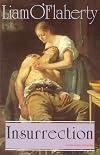
This is a very odd novel about the Easter Rising of 1916. It's main character is not one of the Volunteers or Citizen Army men who turned out on Easter Monday, but some bloke from Galway who has lost all his money after a drinking session and gets talked into taking part by a mother he bumps into on O'Connell Street, desperate that he look after her Volunteer son. This son, far from being the heroic warrior of Republican legend, legs it halfway through the Rising and isn't seen or heard from show more again. By this time, however, the Galway chap has developed a weird fixation with his commanding officer.
In 1950, when this book first appeared, the Rising was being mythologised. Brave men, it was said, had sacrificed their lives selflessly for the cause of Irish freedom. They were Ireland's Founding Fathers, secular saints, no less. In this context, the fact that Insurrection's main characters have such a collection of varying, highly personal motivations (not to mention the very un-nationalist behaviour of the average Dubliner here depicted), makes you wonder if there isn't a strong element of 'proto-revisionism' here. If so, this is to be applauded, but it is not entirely successful. The main character makes hardly any sense at all.
The book does have some excellent descriptive passages; its account of the fighting at Boland's Mill is excellent. It is a shame, then, that it concocts a climax for its frankly deranged protagonist by abandoning its historical accuracy and creating an event that didn't actually happen. show less
In 1950, when this book first appeared, the Rising was being mythologised. Brave men, it was said, had sacrificed their lives selflessly for the cause of Irish freedom. They were Ireland's Founding Fathers, secular saints, no less. In this context, the fact that Insurrection's main characters have such a collection of varying, highly personal motivations (not to mention the very un-nationalist behaviour of the average Dubliner here depicted), makes you wonder if there isn't a strong element of 'proto-revisionism' here. If so, this is to be applauded, but it is not entirely successful. The main character makes hardly any sense at all.
The book does have some excellent descriptive passages; its account of the fighting at Boland's Mill is excellent. It is a shame, then, that it concocts a climax for its frankly deranged protagonist by abandoning its historical accuracy and creating an event that didn't actually happen. show less

A page turner. The structure flows seamlessly from the victim to the informer and then back and forth from informer to Republican punisher. The desperate seedy town, the interior thought process of both characters is wonderfully woven. Quite a good read.
“He felt moved by an uncontrollable impulse. All his actions had completed themselves before his mind was aware of them. His mind was struggling along aimlessly in pursuit of his actions, impotently deprecating them and whispering show more warnings. But it was powerless.” 46 show less
“He felt moved by an uncontrollable impulse. All his actions had completed themselves before his mind was aware of them. His mind was struggling along aimlessly in pursuit of his actions, impotently deprecating them and whispering show more warnings. But it was powerless.” 46 show less
Lists
Awards


You May Also Like


Associated Authors
Statistics
- Works
- 81
- Also by
- 36
- Members
- 1,470
- Popularity
- #17,474
- Rating
- 3.6
- Reviews
- 22
- ISBNs
- 153
- Languages
- 10
- Favorited
- 3