
Donald Ray Pollock
Author of The Devil All the Time
About the Author
Works by Donald Ray Pollock
Associated Works
Tagged
Common Knowledge
- Birthdate
- 1954
- Gender
- male
- Education
- Ohio State University (MFA)
- Occupations
- meatpacker
paper mill worker - Nationality
- USA
- Birthplace
- knockemstiff, Ohio, États-Unis
- Places of residence
- Knockemstiff, Ohio, USA
Chillicothe, Ohio, USA - Associated Place (for map)
- Ohio, USA
Members
Reviews
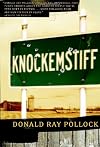
Life is gritty and brutal in Knockemstiff, Ohio. In the eighteen stories in Knockemstiff, Donald Ray Pollock packs each page with appallingly funny detail. A man whose PCP addled adult son that “eats the dead stuff that collects on windowsills” keeps him safe in plastic webbing in the back seat of the car where he thrashes around “like an ape caught in a net” when they leave the house. A suicide case in jail “pushed a pencil up his dick. It was his greatest accomplishment.”
The show more characters, almost of who are depraved, addicted, or terminal, do little but watch “any chance of a future…spinning farther and farther away.” Pollock succinctly captures despair: “Anything I do to extend my life is just going to be outweighed by the agony of living it.” “Forgetting our lives might be the best we’ll ever do.”
The poorly lived lives in Knockemstiff are so powerfully rendered with tenderness and black humor that there always seems to be hope, even for the hopeless. show less
The show more characters, almost of who are depraved, addicted, or terminal, do little but watch “any chance of a future…spinning farther and farther away.” Pollock succinctly captures despair: “Anything I do to extend my life is just going to be outweighed by the agony of living it.” “Forgetting our lives might be the best we’ll ever do.”
The poorly lived lives in Knockemstiff are so powerfully rendered with tenderness and black humor that there always seems to be hope, even for the hopeless. show less
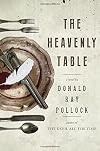
Like [b:The Devil All the Time|10108463|The Devil All the Time|Donald Ray Pollock|https://images.gr-assets.com/books/1320561517s/10108463.jpg|15005760], The Heavenly Table is populated by the dregs of society -- the poor, the downtrodden, the deformed, the perverse, the criminal. Pollock writes Southern Gothic of the grittiest subjects in lyrical prose.
At the heart of the novel are the Jewett brothers -- Cane, Cob, and Chimney -- raised by a widowed father who believed that the more he show more suffered in this life, the more awaited him at "the heavenly table" when he passed onto the next. But when he dies, his sons decide instead to follow the example Bloody Bill Bucket, the depraved protagonist of the dime store novel Cane has read to his illiterate brothers a hundred times. They start by robbing one bank and set off a chain of violence as they try to make their way to freedom in Canada. Two of the three are pretty decent human beings and the other is a still a teenager, so I couldn't help hoping things would turn out okay. But this is a Donald Ray Pollock novel.
In the first 80 pages, the Jewetts share equal screen time with Ellsworth and Eula Fiddler, a decent enough farming couple who were swindled out of their life savings. Their shiftless teenage son, Eddie, has disappeared, possibly to enlist at the army training camp that has suddenly sprung up nearby (this being 1917). But then the cast becomes increasingly diverse, populated with a pimp and his whores who set up near the army camp, an officer whose final wish is to die heroically in battle...if he can just get to Europe, citizens of Meade with their various perversions, a black gigolo trying to get back to his family, and many others. Some pass through quickly and never make a reappearance, others are woven into the narrative. It all becomes a bit much to track, and that was my one complaint. But it's a heck of a ride and so well written.
Again, I will stress this book is not for everyone. Some really fucked up things happen. Really. fucked. up. There were a few times that I asked myself why I was reading this. But then I kept on reading, because this is a Donald Ray Pollock novel. show less
At the heart of the novel are the Jewett brothers -- Cane, Cob, and Chimney -- raised by a widowed father who believed that the more he show more suffered in this life, the more awaited him at "the heavenly table" when he passed onto the next. But when he dies, his sons decide instead to follow the example Bloody Bill Bucket, the depraved protagonist of the dime store novel Cane has read to his illiterate brothers a hundred times. They start by robbing one bank and set off a chain of violence as they try to make their way to freedom in Canada. Two of the three are pretty decent human beings and the other is a still a teenager, so I couldn't help hoping things would turn out okay. But this is a Donald Ray Pollock novel.
In the first 80 pages, the Jewetts share equal screen time with Ellsworth and Eula Fiddler, a decent enough farming couple who were swindled out of their life savings. Their shiftless teenage son, Eddie, has disappeared, possibly to enlist at the army training camp that has suddenly sprung up nearby (this being 1917). But then the cast becomes increasingly diverse, populated with a pimp and his whores who set up near the army camp, an officer whose final wish is to die heroically in battle...if he can just get to Europe, citizens of Meade with their various perversions, a black gigolo trying to get back to his family, and many others. Some pass through quickly and never make a reappearance, others are woven into the narrative. It all becomes a bit much to track, and that was my one complaint. But it's a heck of a ride and so well written.
Again, I will stress this book is not for everyone. Some really fucked up things happen. Really. fucked. up. There were a few times that I asked myself why I was reading this. But then I kept on reading, because this is a Donald Ray Pollock novel. show less
Rating: 4.9* of five
The Publisher Says: In this unforgettable work of fiction, Donald Ray Pollock peers into the soul of a tough Midwestern American town to reveal the sad, stunted but resilient lives of its residents. Knockemstiff is a genuine entry into the literature of place.Spanning a period from the mid-sixties to the late nineties, the linked stories that comprise Knockemstiff feature a cast of recurring characters who are irresistibly, undeniably real. A father pumps his son full of show more steroids so he can vicariously relive his days as a perpetual runner-up body builder. A psychotic rural recluse comes upon two siblings committing incest and feels compelled to take action. Donald Ray Pollock presents his characters and the sordid goings-on with a stern intelligence, a bracing absence of value judgments, and a refreshingly dark sense of bottom-dog humor.
My Review: Published in 2008, this collection of eighteen interwoven stories about the lives of the men and women and children caught in rural poverty is the first work by Donald Ray Pollock. He lived in Knockemstiff, a real, honest-to-goodness place. He escaped, sort of, by working for thirty years in a nearby town's papermill.
I believe it was Goodreads reviewing legend lowercase-karen who introduced me to the term “hillbilly noir.” Authors like Bonnie Jo Campbell of American Salvage fame as well as Pollock fall into this category of writers who mine the vein of American underclass misery worked so brilliantly by John Steinbeck and Erskine Caldwell. Noir it certainly is, thematically and in its laconic, almost kabuki play-like, emphasis on grotesque surfaces, implying that every action and every gesture is born out of unfathomable darkness and unbearable pain. The Publishers Weekly review of this collection compares Pollock's work to Winesburg, Ohio. I agree, from a structural point of view, but Sherwood Anderson's grim stories are the comedy stylings of P.G. Wodehouse compared to this collection.
Pollock is brilliantly successful at portraying the...no. Scratch that.
Donald Ray Pollock is brilliant.
I've been bitch-slapped by this writer's ten-inch dick of the imagination. The stories treated me the way those hillbillies treated Ned Beatty in Deliverance. No part of my brain will ever again be clean and unviolated.
There is one story in this collection that, in my humble (!) opinion, doesn't measure up and doesn't belong: “I Start Over,” about a trip through the Dairy Queen drive-through, would be the star turn of any other writer's collection of stories, but here it merely fills up page count and takes the book over 200pp. Left out, no one would notice or feel a lack.
There are two stand-out stories for me, two that should be in high-school literature anthologies and passed from reader to reader with whispered injunctions just to read it, read it: “Schott's Bridge” is the bleak and horrifying story of a young gay man and his fate in this grim, grim world; and “Bactine,” the shortest story in the collection, a quick hit of despair and decline, as two young men escape the present into a futureless fog. They are, in simplest terms, heart-stopping.
But the story that made me hurt the most, though it's not the finest structurally or stylistically, was “Knockemstiff.” Two strangers in a Cadillac convertible, husband and wife, pull into Maude's store for gas, and for the wife to take photos of the “Welcome to Knockemstiff” sign. The husband makes small talk with the clerk, commenting that “[i]t's hard to believe there's people that poor living in this country.”
I am that California goon, insensitive lout that he is. I've driven through countless places like Knockemstiff in my expensive car, looked out my window, and thought, “No way. This is a movie set. No one lives here, lives like this.” I've stopped for gas, bought a bag of chips, made inconsequential chat with the clerk, wondering the while how he drags himself out of bed to face another day in that kind of place.
I don't want to believe it's true, you see, and I don't like to think that it's not the subject of outrage and outreach and action.
It isn't. Donald Ray Pollock is their voice, these people in the hollers, shouting at us to look, to look, to see the cost of indifference. He's singing an old song. He's doing it well. He's making art, and seducing the susceptible into seeing the invisible, the ignored, the ignoble and unrefined. His artistry is superior. His eye is unerring. His ear is emotional sonar.
Donald Ray Pollock is brilliant. show less
The Publisher Says: In this unforgettable work of fiction, Donald Ray Pollock peers into the soul of a tough Midwestern American town to reveal the sad, stunted but resilient lives of its residents. Knockemstiff is a genuine entry into the literature of place.Spanning a period from the mid-sixties to the late nineties, the linked stories that comprise Knockemstiff feature a cast of recurring characters who are irresistibly, undeniably real. A father pumps his son full of show more steroids so he can vicariously relive his days as a perpetual runner-up body builder. A psychotic rural recluse comes upon two siblings committing incest and feels compelled to take action. Donald Ray Pollock presents his characters and the sordid goings-on with a stern intelligence, a bracing absence of value judgments, and a refreshingly dark sense of bottom-dog humor.
My Review: Published in 2008, this collection of eighteen interwoven stories about the lives of the men and women and children caught in rural poverty is the first work by Donald Ray Pollock. He lived in Knockemstiff, a real, honest-to-goodness place. He escaped, sort of, by working for thirty years in a nearby town's papermill.
I believe it was Goodreads reviewing legend lowercase-karen who introduced me to the term “hillbilly noir.” Authors like Bonnie Jo Campbell of American Salvage fame as well as Pollock fall into this category of writers who mine the vein of American underclass misery worked so brilliantly by John Steinbeck and Erskine Caldwell. Noir it certainly is, thematically and in its laconic, almost kabuki play-like, emphasis on grotesque surfaces, implying that every action and every gesture is born out of unfathomable darkness and unbearable pain. The Publishers Weekly review of this collection compares Pollock's work to Winesburg, Ohio. I agree, from a structural point of view, but Sherwood Anderson's grim stories are the comedy stylings of P.G. Wodehouse compared to this collection.
Pollock is brilliantly successful at portraying the...no. Scratch that.
Donald Ray Pollock is brilliant.
I've been bitch-slapped by this writer's ten-inch dick of the imagination. The stories treated me the way those hillbillies treated Ned Beatty in Deliverance. No part of my brain will ever again be clean and unviolated.
There is one story in this collection that, in my humble (!) opinion, doesn't measure up and doesn't belong: “I Start Over,” about a trip through the Dairy Queen drive-through, would be the star turn of any other writer's collection of stories, but here it merely fills up page count and takes the book over 200pp. Left out, no one would notice or feel a lack.
There are two stand-out stories for me, two that should be in high-school literature anthologies and passed from reader to reader with whispered injunctions just to read it, read it: “Schott's Bridge” is the bleak and horrifying story of a young gay man and his fate in this grim, grim world; and “Bactine,” the shortest story in the collection, a quick hit of despair and decline, as two young men escape the present into a futureless fog. They are, in simplest terms, heart-stopping.
But the story that made me hurt the most, though it's not the finest structurally or stylistically, was “Knockemstiff.” Two strangers in a Cadillac convertible, husband and wife, pull into Maude's store for gas, and for the wife to take photos of the “Welcome to Knockemstiff” sign. The husband makes small talk with the clerk, commenting that “[i]t's hard to believe there's people that poor living in this country.”
I am that California goon, insensitive lout that he is. I've driven through countless places like Knockemstiff in my expensive car, looked out my window, and thought, “No way. This is a movie set. No one lives here, lives like this.” I've stopped for gas, bought a bag of chips, made inconsequential chat with the clerk, wondering the while how he drags himself out of bed to face another day in that kind of place.
I don't want to believe it's true, you see, and I don't like to think that it's not the subject of outrage and outreach and action.
It isn't. Donald Ray Pollock is their voice, these people in the hollers, shouting at us to look, to look, to see the cost of indifference. He's singing an old song. He's doing it well. He's making art, and seducing the susceptible into seeing the invisible, the ignored, the ignoble and unrefined. His artistry is superior. His eye is unerring. His ear is emotional sonar.
Donald Ray Pollock is brilliant. show less
"As my parents' bed thumped loudly against the floor in the next room, I lapped the blood off my knuckles. The dried flakes dissolved in my mouth, turning my spit to syrup. Even after I'd swallowed all the blood, I kept licking my hands. I tore at the skin with my teeth. I wanted more. I would always want more."
So ends "Real Life," the first story in Donald Ray Pollock's knockout of a debut. It seems that every review I've read uses two phrases to describe this collection: "pulls no punches" show more and "not for the faint of heart," and rarely have those phrases been more aptly used. Pollock's characters have sex with their sisters, kill their neighbors, torture insects, betray their friends, drug themselves into stupors, and beat the shit out of each other. These people are the sorts you'd probably inch away from on the bus if they sat next to you, and you'd be well-advised to stay away from Knockemstiff if you dislike books because you "don't care about the characters." The denizens of Knockemstiff, Ohio are difficult to live with for the length of a book -- they're mean, violent, and without hope -- but Pollack presents them without flinching, and without pitying them or asking to reader to do so.
Pollock's writing is like a quick-acting drug -- after you finish the first story, you'll either throw the book across the room as hard as you can, or you'll barely want to put it down. Reading this book isn't an easy trip, but if you can hang on until the end, I dare you to try and forget it anytime soon. show less
So ends "Real Life," the first story in Donald Ray Pollock's knockout of a debut. It seems that every review I've read uses two phrases to describe this collection: "pulls no punches" show more and "not for the faint of heart," and rarely have those phrases been more aptly used. Pollock's characters have sex with their sisters, kill their neighbors, torture insects, betray their friends, drug themselves into stupors, and beat the shit out of each other. These people are the sorts you'd probably inch away from on the bus if they sat next to you, and you'd be well-advised to stay away from Knockemstiff if you dislike books because you "don't care about the characters." The denizens of Knockemstiff, Ohio are difficult to live with for the length of a book -- they're mean, violent, and without hope -- but Pollack presents them without flinching, and without pitying them or asking to reader to do so.
Pollock's writing is like a quick-acting drug -- after you finish the first story, you'll either throw the book across the room as hard as you can, or you'll barely want to put it down. Reading this book isn't an easy trip, but if you can hang on until the end, I dare you to try and forget it anytime soon. show less
Lists
Awards


You May Also Like


Associated Authors
Statistics
- Works
- 10
- Also by
- 2
- Members
- 3,073
- Popularity
- #8,308
- Rating
- 3.9
- Reviews
- 132
- ISBNs
- 79
- Languages
- 10
- Favorited
- 12

