

Tom Regan (1938–2017)
Author of The Case for Animal Rights
About the Author
Tom Regan is professor of philosophy at North Carolina State University in Raleigh, North Carolina. (Bowker Author Biography)
Image credit: Photo by Rainer Ebert / Flickr
Works by Tom Regan
Matters of Life and Death: New Introductory Essays in Moral Philosophy (1980) — Editor — 91 copies, 4 reviews
Animal Sacrifices: Religious Perspectives on the Use of Animals in Science (1986) — Editor — 29 copies
Associated Works
Tagged
Common Knowledge
- Canonical name
- Regan, Tom
- Legal name
- Regan, Thomas H.
- Birthdate
- 1938-11-28
- Date of death
- 2017-02-17
- Gender
- male
- Occupations
- professor of philosophy (North Carolina State University)
- Nationality
- USA
- Associated Place (for map)
- USA
Members
Reviews
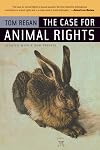
Regan, Tom. The Case for Animal Rights. 1983. U. of California P, 2004.
Published almost a decade after Peter Singer’s influential Animal Liberation, Tom Regan’s The Case for Animal Rights argues that the preference utilitarianism on which Singer based his argument for the moral value of animals was inadequate in that it could justify the sacrifice of the individual in the name of the greater good. Singer’s book was polemical in its approach, detailing the abuse of animals in medicine, show more science, and industry. Both Singer and Regan concluded that ethics demands we adopt a vegetarian diet. Regan is more restrained in tone, arguing against the moral status of animals in several major ethical theories, including Kantian deontology, W. D. Ross’s prima facie deontology, and the contractarian views of John Rawls. Ultimately, Regan defends a more radical biocentrism than Singer and the others. Animals, Regan says, deserve moral consideration not because of their utility or ability to suffer but because they are “individuals who have inherent value. . . and are always to be treated in ways that show respect for their independent value, not out of kindness or compassion but as a matter of strict justice.” In other words, the categorical imperative seems to apply to animals as much as it would to human children or people otherwise incapable of acting as moral agents. They are all, he says, “moral patients” whose individual welfare should matter to us. 5 stars. show less
Published almost a decade after Peter Singer’s influential Animal Liberation, Tom Regan’s The Case for Animal Rights argues that the preference utilitarianism on which Singer based his argument for the moral value of animals was inadequate in that it could justify the sacrifice of the individual in the name of the greater good. Singer’s book was polemical in its approach, detailing the abuse of animals in medicine, show more science, and industry. Both Singer and Regan concluded that ethics demands we adopt a vegetarian diet. Regan is more restrained in tone, arguing against the moral status of animals in several major ethical theories, including Kantian deontology, W. D. Ross’s prima facie deontology, and the contractarian views of John Rawls. Ultimately, Regan defends a more radical biocentrism than Singer and the others. Animals, Regan says, deserve moral consideration not because of their utility or ability to suffer but because they are “individuals who have inherent value. . . and are always to be treated in ways that show respect for their independent value, not out of kindness or compassion but as a matter of strict justice.” In other words, the categorical imperative seems to apply to animals as much as it would to human children or people otherwise incapable of acting as moral agents. They are all, he says, “moral patients” whose individual welfare should matter to us. 5 stars. show less
Animal Others: On Ethics, Ontology, and Animal Life (S U N Y Series in Contemporary Continental Philosophy) by H. Peter Steeves
No time for a thorough review. I can only quote a few favorite passages and also praise this collection for doing everything a philosophical animal studies book should do. It's phenemenological, ethical, engaged with 'real world' situations--the circus, fear of bees--and all this before Derrida's body of work on animals had been translated. It also renders the failues of many later animal studies anthologies much less forgiveable: since this one got so much so right so early, there's no show more excuse, for example, for Representing Animals.
It's not perfect. Monika Langer's close reading of Nietzsche's animals in Thus Spake Zaruthustra takes us nowhere: Nietzsche's antifoundationalism fails when it comes to the human itself: okay, I get it; William McNeill gives us a thorough exegesis of the abyssal, purportedly non-hierarchical distinction between the mode of being of animal and dasein, but can't rescue Heidegger from traditionalist preservation of human/animal difference; and precisely because he gets much right on the symbiosis of the human subject with internal and external life, Alfonso Lingis disappoints me (again), this time with his nostalgia for "animal irresponsibility" (47) (and his concominant sadness and nostalgic for authentic bodily being when he decries the Internet for reducing things "to digitally coded messages" (49))
But so many highlights! David Wood, "Comment ne pas manger -- Deconstruction and Humanism," which takes Derrida to task for effacing distinction between real and symbolic killing: "Vegetarianism, like any progressive position, can become a finite symbolic substitute for an unlimited and undelimitable responsibility--the renegotiation of our Being-toward-other-animals" (32), but, as he argues, it doesn't necessarily have to fail in this way. Elizabeth A. Behnke, "From Meleau-Ponty's Concept of Nature to an Interspecies Practice of Peace," "a type of situation in which a particular shift in bodily comportment simultaneously transforms the situation from a spectacle that I confront (and attempt to dominate from the outside) to a co-situatedness, a situation of which I myself am a part and in whose dynamics I am always already participating, whether I realize it or not" (96), a way of thinking being that should be very familiar to us by now, but that, again, strikes me for being so early. See also H. Peter Steeves "They Say that Animals Can Smell Fear": "Only the misguided Liberal Self sees hell as other creatures, sees relations as chains. Being is being-with" (145); Carleton Dallery, "Into the Truth with Animals," truth is not exclusively something of seriousness, order, gravity, burden, or abstraction....Could laughter, senses, colors, movement, sociality, magic, danger, and discipline all be brought back into our concern for truth and ultimacy and Being?" (259), and the introduction, too, "There has never been a neutral space of meeting! No space is neutral. No space is empty either" (8). This increasingly looks less groundbreaking... show less

This book is actually a collection of essays by leading religious figures that demonstrates the fluid nature of religious attitudes toward the other animals, featuring diverse voices both ancient and modern. It's interesting reading, though many of the pieces are quite dense and difficult to read.
Very thought provoking book makes the arguments for the rights of animals based on their being "subject(s) of a life".
You May Also Like


Associated Authors
Statistics
- Works
- 32
- Also by
- 6
- Members
- 758
- Popularity
- #33,555
- Rating
- 4.0
- Reviews
- 9
- ISBNs
- 71
- Languages
- 7
- Favorited
- 2