
Royal Shakespeare Company
Author of Playing Shakespeare {book to accompany video}
About the Author
Series
Works by Royal Shakespeare Company
Shakespeare : Hamlet {2009 television film} {BBC/Royal Shakespeare Company} (2009) — Company — 142 copies, 1 review
RSC Music & Speeches : Much Ado About Nothing or Love's Labour's Won {sound recording} (2014) — Company — 5 copies, 2 reviews
Shakespeare : Henry V : Stratford : {2015 film} — Company — 4 copies
The Plantagenets : Adapted from William Shakespeare's Henry VI parts I, II.III, and Richard III, as Henry VI + The rise of Edward IV + Richard III His death : Barbican : 1989… (1989) — Company — 3 copies
Shakespeare : King and Country : Richard II + Henry IV parts I & 2 + Henry V : Stratford {2013-2015 films} (2013) — Company — 3 copies
Shakespeare : Love's Labour's Won or Much Ado About Nothing : Stratford {2015 film} (2015) — Company — 3 copies
RSC Music & Speeches : A Midsummer Night's Dream {sound recording} (2016) — Company — 3 copies, 1 review
RSC Music & Speeches : Love's Labour's Lost + Much Ado About Nothing {sound recording} (2014) — Company — 3 copies, 1 review
The RSC Shakespeare Toolkit for Primary Teachers {new primary edition} {book + CD-ROM} (2014) 2 copies
RSC Music & Speeches : King & Country : Shakespeare's Great Cycle of Kings {sound recording} (2015) 2 copies
Shakespeare : Macbeth : Barbican {theatre programmes} {wrongly combined 1989 and 1993} — Company — 2 copies
Kiss Me, Kate [sound recording] {1987 Royal Shakespeare Company London revival} (1987) — Company — 1 copy
Shakespeare : The Taming of the Shrew + Fletcher : The Tamer Tamed : Queen's Theatre : 2004 {theatre programme} (2003) 1 copy
The Merry Wives of Windsor : Special Issue : Shakespeare's Comedy Classic {theatre programme} (1985) — Company — 1 copy
Town of Imagination 1 copy
Shakespeare : Henry IV part 1 & 2 : Edinburgh Festival : 1980 {theatre programme} (1980) — Company — 1 copy
Shakespeare : A Midsummer Night's Dream : Stratford : 1994 {theatre programme} (1994) — Company — 1 copy
Shakespeare : The Two Gentlemen of Verona : Barbican : 1992 {theatre programme} (1992) — Company — 1 copy
Shakespeare : The Two Gentlemen of Verona : Stratford : 2005 {theatre programme} (2005) — Compamy — 1 copy
Shakespeare : The Taming of the Shrew : Novello Theatre : 2009 {theatre programme} (2009) — Company — 1 copy
Shakespeare : The Taming of the Shrew : Barbican : 1993 {theatre programme} (1993) — Company — 1 copy
Shakespeare : Much Ado About Nothing : Barbican : 1991 {theatre programme} (1991) — Company — 1 copy
Shakespeare : The Merry Wives of Windsor : Stratford : 1979 {theatre programme} (1979) — Company — 1 copy
Shakespeare : The Merchant of Venice : Stratford : 1993 {theatre programme} (1993) — Company — 1 copy
Shakespeare : The Merchant of Venice : Stratford : 1987 {theatre programme} (1987) — Company — 1 copy
Shakespeare : Much Ado About Nothing : Barbican : 1983 (theatre programme} (1983) — Company — 1 copy
Shakespeare : As You Like It + Measure for Measure + The Taming of the Shrew : The Lowry : 2019 {programme} (2019) 1 copy
As You Like It 1 copy
Associated Works
Shakespeare : The Merchant of Venice : 1970 [+ wrongly combined production] [theatre programmes] (1970) — Author, some editions — 2 copies
Shakespeare : The Tempest : 1974 [+ wrongly combined production] [theatre programmes] (1974) — some editions — 2 copies
Tagged
Common Knowledge
- Canonical name
- Royal Shakespeare Company
- Other names
- RSC
- Birthdate
- 1879-04-23
- Gender
- n/a
- Relationships
- Evans, Daniel (Co-Artistic Director)
Harvey, Tamara (Co-Artistic Director)
Boyd, Michael (Artistic Director) - Nationality
- UK
- Places of residence
- Stratford-upon-Avon, Warwickshire, England, UK
- Map Location
- UK
Members
Reviews
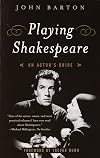
A marvelous book, although in truth primarily a transcription of a far more vital television series.
John Barton was, along with his theatrical partner Peter Hall, one of the foremost forces in defining how the mid-to-late 20th century understood and interpreted Shakespeare on the stage. Barton and Hall's development of the Royal Shakespeare Company set a new pace, a new vision, a new bar for actors to climb in their pursuit of understanding of the Bard. Alongside radical directors like show more Peter Brook and the dense political reworkings of Michael Bogdanov, Barton and Hall gave us the modern view of Shakespeare on the stage, through their landmark productions and their work with almost all of the great actors of my grandparents' generation. (Indeed, their work was so profound that many people these days take it to be "the" way of doing Shakespeare, forgetting both that previous generations' performance styles would be quite odd to our eyes, and that the current generation's desire to revitalise and decolonise Shakespeare on the page and on the stage is an equally valid approach.)
In 1979, Barton and some of his RSC actors staged two hourlong television specials examining the way actors approach Shakespeare. In 1982, ITV took this to another level by commissioning a full series. If you have any interest in this subject whatsoever, Playing Shakespeare is well worth seeking out. In a seemingly casual format, surrounded by eager students in the round, Barton sits in his tan-coloured cardigan and engages with a host of RSC actors, every one of them impressive. Household names abound (Dench, Stewart, Suchet, Kingsley, McKellen, Ashcroft) as well as luminaries of the stage, from Richard Pasco and the endlessly wondrous Jane Lapotaire to Michael Williams and the retired-too-soon Mike Gwilym.
Each episode tackles a concept, such as speaking the verse, bringing out the contradictions in the text, or character interpretation, as when David Suchet and Patrick Stewart (both of whom had played Shylock in a Barton production) spend an entire episode examining the key scenes in The Merchant of Venice. Most memorable is an episode devoted entirely to a single short scene from Twelfth Night, with the actors and Barton walking us through a rehearsal. Barton and co actually filmed a huge amount of material that didn't make it to air. The book consists of transcriptions of each episode (edited for clarity and form) as well as three chapters of "new" material from the unaired segments. (A weighty discussion between Barton and McKellen on performing contemporary Shakespeare seems an especial loss to the series.)
Although it aired before I was born, Playing Shakespeare conjures up a rich nostalgia in me. For an era when a mainstream television network felt it worthy to screen a series of Shakespearean acting insights for a non-specialist audience. When arts programming had a place in the schedule, and (some) members of the public felt it worthwhile to reach outside of their sphere for a moment of cultural enlightenment. It's also just a thoroughly charming and engaging series, and I highly recommend viewing it.
But as insights into the performance of Shakespeare, the book is also still valid forty years on. show less
John Barton was, along with his theatrical partner Peter Hall, one of the foremost forces in defining how the mid-to-late 20th century understood and interpreted Shakespeare on the stage. Barton and Hall's development of the Royal Shakespeare Company set a new pace, a new vision, a new bar for actors to climb in their pursuit of understanding of the Bard. Alongside radical directors like show more Peter Brook and the dense political reworkings of Michael Bogdanov, Barton and Hall gave us the modern view of Shakespeare on the stage, through their landmark productions and their work with almost all of the great actors of my grandparents' generation. (Indeed, their work was so profound that many people these days take it to be "the" way of doing Shakespeare, forgetting both that previous generations' performance styles would be quite odd to our eyes, and that the current generation's desire to revitalise and decolonise Shakespeare on the page and on the stage is an equally valid approach.)
In 1979, Barton and some of his RSC actors staged two hourlong television specials examining the way actors approach Shakespeare. In 1982, ITV took this to another level by commissioning a full series. If you have any interest in this subject whatsoever, Playing Shakespeare is well worth seeking out. In a seemingly casual format, surrounded by eager students in the round, Barton sits in his tan-coloured cardigan and engages with a host of RSC actors, every one of them impressive. Household names abound (Dench, Stewart, Suchet, Kingsley, McKellen, Ashcroft) as well as luminaries of the stage, from Richard Pasco and the endlessly wondrous Jane Lapotaire to Michael Williams and the retired-too-soon Mike Gwilym.
Each episode tackles a concept, such as speaking the verse, bringing out the contradictions in the text, or character interpretation, as when David Suchet and Patrick Stewart (both of whom had played Shylock in a Barton production) spend an entire episode examining the key scenes in The Merchant of Venice. Most memorable is an episode devoted entirely to a single short scene from Twelfth Night, with the actors and Barton walking us through a rehearsal. Barton and co actually filmed a huge amount of material that didn't make it to air. The book consists of transcriptions of each episode (edited for clarity and form) as well as three chapters of "new" material from the unaired segments. (A weighty discussion between Barton and McKellen on performing contemporary Shakespeare seems an especial loss to the series.)
Although it aired before I was born, Playing Shakespeare conjures up a rich nostalgia in me. For an era when a mainstream television network felt it worthy to screen a series of Shakespearean acting insights for a non-specialist audience. When arts programming had a place in the schedule, and (some) members of the public felt it worthwhile to reach outside of their sphere for a moment of cultural enlightenment. It's also just a thoroughly charming and engaging series, and I highly recommend viewing it.
But as insights into the performance of Shakespeare, the book is also still valid forty years on. show less
The Wars of the Roses: Adapted for the Royal Shakespeare Company from William Shakespeare's Henry VI, Parts 1, 2, 3 and Richard III, by Royal Shakespeare Company

An astounding achievement, even sixty years later. A great shame that this book is so very rare, as this is without doubt one of the landmark Shakespearean productions of the 20th century complete with valuable and insightful essays.
At the same time, it was a product of the moment. Companies since then have found their own ways to produce these plays, and perhaps there is as little willingness now as there was prior to this production for writers and directors to create their own show more Frankenspeare, even for sometimes difficult texts such as these early plays.
For those of us who love our theatre history, however? Sheer glory. show less
At the same time, it was a product of the moment. Companies since then have found their own ways to produce these plays, and perhaps there is as little willingness now as there was prior to this production for writers and directors to create their own show more Frankenspeare, even for sometimes difficult texts such as these early plays.
For those of us who love our theatre history, however? Sheer glory. show less
The Plantagenets: Adapted from Henry VI Parts I, II, III and Richard III by Royal Shakespeare Company

The Plantagenets takes Shakespeare's history cycle and turns it into a vivid, enthralling story of the brutal struggle for the English crown. The plays depict Henry's attempt to survive against the evil, bustling genius of Richard III in the midst of the violent upheaval of the Wars of the Roses. This volume also contains an Introduction by the director of the cycle, Adrian Nobel.
as good as any book on WS that you will ever read. barton and his company of excellent actors, incl. joan lapotaire, and richard pasco, are scintillating.
,
,
Lists
Awards
You May Also Like
Associated Authors
Statistics
- Works
- 168
- Also by
- 5
- Members
- 1,004
- Popularity
- #25,689
- Rating
- 4.5
- Reviews
- 15
- ISBNs
- 48
- Languages
- 1