
Bryan Thomas Schmidt
Author of Infinite Stars
About the Author
Series
Works by Bryan Thomas Schmidt
Surviving Tomorrow: A Charity Anthology to Fight COVID-19 (2020) — Editor; Contributor — 8 copies, 1 review
Beyond The Sun SF — Editor — 4 copies
Associated Works
Shapers of Worlds Volume II: Science fiction and fantasy by authors featured on The Worldshapers podcast (2021) — Contributor — 9 copies
Tagged
Common Knowledge
- Canonical name
- Schmidt, Bryan Thomas
- Birthdate
- 1969-02-13
- Gender
- male
- Education
- California State University, Fullerton (BA|Communications-Radio-TV-Film)
Covenant Theological Seminary (MA|Theological Studies) - Organizations
- Science Fiction & Fantasy Writers of America
- Short biography
- Bryan Thomas Schmidt is the author of the space opera novel The Worker Prince, an Honorable Mention on Paul Goat Allen's Best SF Releases of 2011 list, the collection The North Star Serial, Part 1, and has several short stories forthcoming in anthologies and magazines. His second novel, The Returning, is forthcoming from Diminished Media Group in 2012. He’s also the host of Science Fiction and Fantasy Writer’s Chatevery Wednesday at 9 pm EST on Twitter, where he interviews people like Mike Resnick, AC Crispin, Kevin J. Anderson and Kristine Kathryn Rusch. A frequent contributor to Adventures In SF Publishing, Grasping For The Wind and SF Signal, he can be found online as @BryanThomasS on Twitter or via his website. Excerpts from The Worker Prince can be found on his blog. Bryan is an affiliate member of the SFWA.
- Nationality
- USA
- Birthplace
- Topeka, Kansas, USA
- Places of residence
- Salina, Kansas, USA
Topeka, Kansas, USA - Associated Place (for map)
- Kansas, USA
Members
Reviews
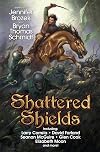
If you're on my Christmas gift list and you read fantasy, I'm sending you a copy of Shattered Shields. It's just that good of a collection.
One of the most surprising and enjoyable selections on my reading list this year, Shattered Shields has something for everyone. In addition to providing hours of enjoyable reading, the collection of stories from authors like Larry Correia, David Farland, Glen Cook, and Seanan McGuire is full of bite-sized portions of fantastical adventure. If commitment show more is a problem for you, each story gives you a full dose of adventure and daring. If you're looking for new authors, then you'll be pleasantly surprised at high number of quality stories in the collection, including at least a few authors you've not read before.
Jennifer Brozek and Bryan Thomas Schmidt deserve serious credit for finding and curating the collection of thrilling, exciting, and thought provoking tales. Not a single one is a loser and some are among the best short stories I've read.
The premise behind Shattered Shields is simple, but leads to incredible results: a look at the soldiers—"ordinary and otherwise–struggling against extraordinary odds to survive the day."
In "Ashes and Starlight," David Farland turns to his Runelords series to tell a story about an outcast who must betray his own to survive.
Seanan McGuire's "The Fixed Stars" turns to Irish folktales for a story as heartbreaking as it is moving, weaving myth and mystery.
"The Keeper of the Names" by Larry Correia is his first foray into high fantasy and, as far as I can tell, it bodes well for the novel that the story presages.
"The Smaller We Are" is tragedy done right, and John Helfers puts the spotlight on the very lowest of the soldiers in a fight much bigger than themselves without losing perspective.
"Invictus," by Annie Bellet, was perhaps the most intriguing world in the collection, for me, mixing something of Patrick O'Brian with otherworldly creatures to show a battle on the waves.
If dragons are your thing, then "Rising Above" by Sarah A. Hoyt, which places the legendary beasts in a World War I setting, will prick your interest. I'm sure there are more tales where Hoyt got this one.
"A Cup of Wisdom" by Joseph Zieja takes a step back from the glorification of violence and measures the weight of war on the soldier.
"Words of Power" by Wendy N. Wagner is a gritty and well-spun story from the perspective of a golem mechanic who finds herself closer to the front than she wants to be.
In "Lightweaver in Shadow," Gray Rinehart creates a magic system and a hero whose resourcefulness and wits keep him alive when the battle seems to turn against him.
"Hoofsore and Weary" by Cat Rambo is about centaurs caught behind enemy lines, but more, it addresses the conflict and friction between commanders and their new recruits.
"Vengeance" by Robin Wayne Bailey is one of my favorite stories from this collection. In a world that reminded me of Conan the Barbarian's Hyborian Age, Samidar seeks justice and revenge for the destruction of a village.
"Deadfall" by Nancy Fulda follows a soldier on the frontier of the empire as he tries to get to the heart of a threat that seems to be growing in strength. Between floating cities and addictive magic dust, Fulda spins a solid tale and creates fight scenes that were vivid and colorful.
"Yael of the Strings" by John R. Fultz was very fun to read, but left me frustrated at how tidily everything wrapped up. Maybe I wanted the result to be just a little more gray, but Fultz made it just a bit too easy. The story is beautiful, weaving in the importance of music over arms.
Dark and grim, "The Gleaners" by Dave Ross does not end well...for the protagonists. As a story. it's full of awesome and I'll be adding Gross to my list of authors to read more frequently.
"Bonded Men" by James L. Sutter has one of the most innovative ideas I've ever seen in military or fantasy fiction: a military unit entirely composed of gays and their partners. Sutter proceeds on the assumption that they would fight differently than soldiers who have a family to go home to, and while I'm not sure that I agree, it's an interesting idea.
I've never read Glen Cook before, but his "Bone Candy" selection in Shattered Shields was curious enough to get me interested. Long time fans will enjoy this story set in his Black Company universe.
"First Blood" by Elizabeth Moon is a truly wonderful story, a hero's origin tale that I loved from the start. It asks the question common to each soldier: will you rise to the challenge when you are tested? If there's one story you read from the collection, this should be it.
But read them all. Shattered Shields is full of great writing, interesting stories, and gripping action. It's well worth adding to your collection or your Kindle. show less
One of the most surprising and enjoyable selections on my reading list this year, Shattered Shields has something for everyone. In addition to providing hours of enjoyable reading, the collection of stories from authors like Larry Correia, David Farland, Glen Cook, and Seanan McGuire is full of bite-sized portions of fantastical adventure. If commitment show more is a problem for you, each story gives you a full dose of adventure and daring. If you're looking for new authors, then you'll be pleasantly surprised at high number of quality stories in the collection, including at least a few authors you've not read before.
Jennifer Brozek and Bryan Thomas Schmidt deserve serious credit for finding and curating the collection of thrilling, exciting, and thought provoking tales. Not a single one is a loser and some are among the best short stories I've read.
The premise behind Shattered Shields is simple, but leads to incredible results: a look at the soldiers—"ordinary and otherwise–struggling against extraordinary odds to survive the day."
In "Ashes and Starlight," David Farland turns to his Runelords series to tell a story about an outcast who must betray his own to survive.
Seanan McGuire's "The Fixed Stars" turns to Irish folktales for a story as heartbreaking as it is moving, weaving myth and mystery.
"The Keeper of the Names" by Larry Correia is his first foray into high fantasy and, as far as I can tell, it bodes well for the novel that the story presages.
"The Smaller We Are" is tragedy done right, and John Helfers puts the spotlight on the very lowest of the soldiers in a fight much bigger than themselves without losing perspective.
"Invictus," by Annie Bellet, was perhaps the most intriguing world in the collection, for me, mixing something of Patrick O'Brian with otherworldly creatures to show a battle on the waves.
If dragons are your thing, then "Rising Above" by Sarah A. Hoyt, which places the legendary beasts in a World War I setting, will prick your interest. I'm sure there are more tales where Hoyt got this one.
"A Cup of Wisdom" by Joseph Zieja takes a step back from the glorification of violence and measures the weight of war on the soldier.
"Words of Power" by Wendy N. Wagner is a gritty and well-spun story from the perspective of a golem mechanic who finds herself closer to the front than she wants to be.
In "Lightweaver in Shadow," Gray Rinehart creates a magic system and a hero whose resourcefulness and wits keep him alive when the battle seems to turn against him.
"Hoofsore and Weary" by Cat Rambo is about centaurs caught behind enemy lines, but more, it addresses the conflict and friction between commanders and their new recruits.
"Vengeance" by Robin Wayne Bailey is one of my favorite stories from this collection. In a world that reminded me of Conan the Barbarian's Hyborian Age, Samidar seeks justice and revenge for the destruction of a village.
"Deadfall" by Nancy Fulda follows a soldier on the frontier of the empire as he tries to get to the heart of a threat that seems to be growing in strength. Between floating cities and addictive magic dust, Fulda spins a solid tale and creates fight scenes that were vivid and colorful.
"Yael of the Strings" by John R. Fultz was very fun to read, but left me frustrated at how tidily everything wrapped up. Maybe I wanted the result to be just a little more gray, but Fultz made it just a bit too easy. The story is beautiful, weaving in the importance of music over arms.
Dark and grim, "The Gleaners" by Dave Ross does not end well...for the protagonists. As a story. it's full of awesome and I'll be adding Gross to my list of authors to read more frequently.
"Bonded Men" by James L. Sutter has one of the most innovative ideas I've ever seen in military or fantasy fiction: a military unit entirely composed of gays and their partners. Sutter proceeds on the assumption that they would fight differently than soldiers who have a family to go home to, and while I'm not sure that I agree, it's an interesting idea.
I've never read Glen Cook before, but his "Bone Candy" selection in Shattered Shields was curious enough to get me interested. Long time fans will enjoy this story set in his Black Company universe.
"First Blood" by Elizabeth Moon is a truly wonderful story, a hero's origin tale that I loved from the start. It asks the question common to each soldier: will you rise to the challenge when you are tested? If there's one story you read from the collection, this should be it.
But read them all. Shattered Shields is full of great writing, interesting stories, and gripping action. It's well worth adding to your collection or your Kindle. show less
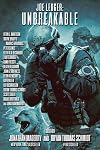
Probably the weakest collection of stories from the Joe Ledger universe, but the stories do, for the most part, improve the deeper the reader gets into the book.
The first few stories are...well, they go from ridiculous (Ledger's cat and "dumb dog") to the utterly preachy (Wayne Brady is a brilliant comedian, but the story in here was like being yelled at for twenty minutes).
Here's the thing...I come to a Maberry book because Maberry writes with a certain quality. If he's getting a point show more across, he's never preachy, and he recognizes the grey between the black and white. He also never gets ridiculous. He says in the interview at the end that he'll use "nine truths to sell one lie" and he's not exaggerating. So, there's a quality to a Maberry story, evident in the two he pens for this collection, that virtually no other author can replicate.
Which is fine. Every author has their own style, as they should. So, this collection has authors who often seem to use their own style, but hybrid it into some sort of "writing in the style of Jonathan Maberry" and it mostly doesn't work, or they stick to their own style which has no place in the carefully crafted universe Maberry's created.
If there's one more story that grabbed me, it was, surprisingly, the one by narrator Ray Porter. It comes the closest to capturing the emotional tone of the Ledger novels.
I know there's likely two big reasons to put together a collection like this. The first is, Maberry gets to let other authors play in his sandbox, which is fine, why not? The second, unspoken reason, I'm sure, is to entice readers over to those other authors' works.
Of all the authors presented here, there's truly only one that grabbed me enough to consider looking at his books, and that's Peter Cline.
The rest? Nah.
A mostly unnecessary addition to the Maberry universe. show less
The first few stories are...well, they go from ridiculous (Ledger's cat and "dumb dog") to the utterly preachy (Wayne Brady is a brilliant comedian, but the story in here was like being yelled at for twenty minutes).
Here's the thing...I come to a Maberry book because Maberry writes with a certain quality. If he's getting a point show more across, he's never preachy, and he recognizes the grey between the black and white. He also never gets ridiculous. He says in the interview at the end that he'll use "nine truths to sell one lie" and he's not exaggerating. So, there's a quality to a Maberry story, evident in the two he pens for this collection, that virtually no other author can replicate.
Which is fine. Every author has their own style, as they should. So, this collection has authors who often seem to use their own style, but hybrid it into some sort of "writing in the style of Jonathan Maberry" and it mostly doesn't work, or they stick to their own style which has no place in the carefully crafted universe Maberry's created.
If there's one more story that grabbed me, it was, surprisingly, the one by narrator Ray Porter. It comes the closest to capturing the emotional tone of the Ledger novels.
I know there's likely two big reasons to put together a collection like this. The first is, Maberry gets to let other authors play in his sandbox, which is fine, why not? The second, unspoken reason, I'm sure, is to entice readers over to those other authors' works.
Of all the authors presented here, there's truly only one that grabbed me enough to consider looking at his books, and that's Peter Cline.
The rest? Nah.
A mostly unnecessary addition to the Maberry universe. show less
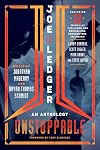
This isn't a bad collection, and it's often fun.
Having said that, it also feels like kind of an advertisement for a whole bunch of authors. Consider this scenario: Maberry's got a pretty damn good series of books going, and he's both made a lot of friends in the industry that write in, if not the same neighbourhood, at least the same metropolis as him, and he's also a well-known name-dropper. So he comes up with an idea for a collection of Joe Ledger stories by other authors, and hey, while show more you're playing in my sandbox, feel free to bring your toys along.
After all, if the readers who love Ledger like your story, they may just give your series a shot too, right? Everybody wins.
Yeah, that's a cynical view. Hell, maybe it was just a fun idea. What do I know?
Just seems like quite a few stories fell into the Ledger and other author's hero are thrown together, recognize each other for the badasses they both are, and then they work together to defeat the big bad.
I think the ones that worked the best were the ones where that didn't happen, where, instead, the author came in with an interesting story idea and just ran Ledger through their paces.
For all of that, it's still a fun collection, though likely better suited for Ledger completists. show less
Having said that, it also feels like kind of an advertisement for a whole bunch of authors. Consider this scenario: Maberry's got a pretty damn good series of books going, and he's both made a lot of friends in the industry that write in, if not the same neighbourhood, at least the same metropolis as him, and he's also a well-known name-dropper. So he comes up with an idea for a collection of Joe Ledger stories by other authors, and hey, while show more you're playing in my sandbox, feel free to bring your toys along.
After all, if the readers who love Ledger like your story, they may just give your series a shot too, right? Everybody wins.
Yeah, that's a cynical view. Hell, maybe it was just a fun idea. What do I know?
Just seems like quite a few stories fell into the Ledger and other author's hero are thrown together, recognize each other for the badasses they both are, and then they work together to defeat the big bad.
I think the ones that worked the best were the ones where that didn't happen, where, instead, the author came in with an interesting story idea and just ran Ledger through their paces.
For all of that, it's still a fun collection, though likely better suited for Ledger completists. show less
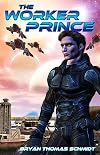
Davi Rhii is a prince of the Boralian people and a newly-minted military officer, but he's about to find he's much more than that. After discovering his roots as the son of Workers (people on another world enslaved by the Boralians), he is forced to decide to which side to support--and is drawn into a solar-system-spanning battle for freedom. Along the way, he has to face down his own entrenched cultural assumptions, and finds a new faith by embracing the one God of the Workers.
Bryan Thomas show more Schmidt's debut novel is a fast-paced and deftly-told space opera adventure set in a well-envisoned political and social environment. It is classic space adventure in all the right ways, with plenty of action, twists, and characters with emotional depth. (It also has one reversal of a 'classic' trope that I liked--instead of the main character starting as a worker and discovering he's really a prince, it's the other way around.) Schmidt also pulls off the tricky task of incorporating religion into his story without alienating non-religious readers; it is plainly expressed but never 'preachy.' I very much enjoyed the tale, and look forward to further volumes in the series. show less
Bryan Thomas show more Schmidt's debut novel is a fast-paced and deftly-told space opera adventure set in a well-envisoned political and social environment. It is classic space adventure in all the right ways, with plenty of action, twists, and characters with emotional depth. (It also has one reversal of a 'classic' trope that I liked--instead of the main character starting as a worker and discovering he's really a prince, it's the other way around.) Schmidt also pulls off the tricky task of incorporating religion into his story without alienating non-religious readers; it is plainly expressed but never 'preachy.' I very much enjoyed the tale, and look forward to further volumes in the series. show less
Lists
Awards

You May Also Like


Associated Authors
Statistics
- Works
- 32
- Also by
- 2
- Members
- 946
- Popularity
- #27,176
- Rating
- 3.7
- Reviews
- 36
- ISBNs
- 78
- Languages
- 1
