
Inge Scholl (1917–1998)
Author of The White Rose: Munich, 1942-1943
About the Author
Works by Inge Scholl
Associated Works
Tagged
Common Knowledge
- Canonical name
- Scholl, Inge
- Legal name
- Scholl, Inge
Aicher-Scholl, Inge - Other names
- SCHOLL, Inge
AICHER-SCHOLL, Inge
AICHER SCHOLL, Inge - Birthdate
- 1917-08-11
- Date of death
- 1998-09-04
- Gender
- female
- Education
- University of Munich
- Occupations
- school director
anti-Nazi resistance fighter
writer - Organizations
- The White Rose (Weiße Rose)
- Awards and honors
- Médaille du mérite de Bade-Wurtemberg, Allemagne (1995)
Citoyenneté honorifique de la ville d'Ulm (1997)
Prix Pfaff pour les initiatives en éducation (1969) - Relationships
- Aicher, Otl (spouse)
Scholl, Hans (brother)
Scholl, Sophie (sister) - Short biography
- Inge Scholl was the first child of Robert Scholl, the mayor of her hometown of Forchtenberg, Germany, and his wife Magdalena Müller Scholl, a liberal politician. She was the older sister of Sophie and Hans Scholl. While studying at the University of Munich in 1942, her siblings became core members of an anti-Nazi student group called The White Rose. White Rose members wrote and distributed leaflets criticizing Nazi war crimes, particularly against the Jews. In February 1943, Hans and Sophie were caught and executed along with another White Rose member, Christoph Probst. Inge and her parents also were arrested and imprisoned, but were eventually released. Inge married Otl Aicher and with him founded the Ulm School of Design. She wrote at least one book about the White Rose organization. In the 1980s, Inge Aicher-Scholl was prominent in the German peace movement and was heavily involved in the campaign against the stationing of U.S. nuclear missiles in the country.
- Nationality
- Germany
- Birthplace
- Ingersheim an der Jagst, Baden-Würtemberg, Duitsland
- Places of residence
- Munich, Bavaria, Germany
Ulm, Germany - Place of death
- Leutkirch im Allgäu, Baden-Würtemberg, Duitsland
- Map Location
- Germany
Members
Reviews
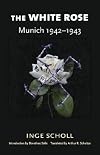
The White Rose: Munich 1942-1943 by Inge Scholl (Wesleyan University Press 1983)
The White Rose was a group of intellectuals in Munich who began an ill-fated campaign of resistance against the Nazi authorities. Led by Hans and Sophie Scholl (brother and sister of the author) the group included fellow medical students Alexander Schmorell, Christoph Probst and their professor of philosophy professor Kurt Huber. Over a period of nine months between June 1942 and February 1943 they wrote, printed show more and scattered six leaflets advocating active resistance and sabotage and calling for an end to the mass slaughter of the Jews.
"Nothing is so unworthy of a civilized nation as allowing itself to be 'governed' without oppositions by an irresponsible clique that has yielded to base instinct. It is certain that today every honest German is ashamed of his government. Who among us has any conception of the dimensions of shame that will befall us and our children when one day the veil has fallen from our eyes and the most horrible of crimes - crimes that infinitely outdistance every human measure - reaches the light of day".
Sophie and Hans Scholl, and Crisoph Probst were captured when distributing their sixth and final leaflet. Spotted by the custodian of the university they had targeted. the Gestapo were informed and the trio were quickly apprehended. At first they insisted upon their innocence but they soon, and independently of each other, tried to take the entire ownership of the whole enterprise to try and save as many of their collaborators as possible. Brought before the People's Court before the notorious judge Roland Freisler. Charged with high treason they stood little chance. After being lectured by Judge Freisler all three were sentenced to death. Sophie was offered a deal that neither Hans nor Cristoph were, were she to recant her beliefs she would be spared the guillotine but she declined the offer, instead she was to be executed first as an act of kindness, the Gestapo officers knowing that at that stage the waiting was the worst part.
The book was written in 1947 aimed at children from thirteen to eighteen. Aimed at children who had grown up in the Hitler Youth, "children who at that time were asking their parents, 'How was it possible for you to be taken in by the Nazis? It was written also for those of their elders who were ready to face up to their past". As well as a description of the events, the book contains transcripts of all six leaflets, the indictment for the People's Court, court transcripts and the death sentences. The message of the book is that what these kids did was important. Their resistance was short lived and other than a small group in Hamburg who redistributed the materials of the White Rose, their deeds did not inspire the mass popular resistance they desired. What it did do was give people hope. The deeds of the White Rose were heard about in the concentration camps and on the Eastern Front. Thomas Mann on his German language radio station in the States talked about their deeds in 1943 and German prisoners of war held in Russia used their example and wrote leaflet of their own campaigning for a Germany free of Nazi oppression.
Clive James dedicated his book Cultural Amnesia to Sophie Scholl and whilst much of his essay of Sophie goes in to something of a boyish crush on Natalie Portman (whom Clive James believes would be the perfect actress for Sophie were Hollywood ever to be trusted with telling the story). Talking about the bravery of Sophie he remarks "She was probably a saint. Certainly she was noble in her behaviour beyond any standard that we, in normal life, would feel bound to attain or even comfortable to encounter. Yet the world would undoubtedly be a better place if Sophie Scholl were a household name like Anne Frank, another miraculous woman from the same period."
The uncomfortable question the book asks is of us, it ask us whether we would be brave enough to do as Sophie Scholl did in the full knowledge that their efforts would lead their death. Sadly I think for most of us, the best we can do is admire their deeds with the knowledge that we wouldn't be able to equal them.
Very inspiring!
http://paolosinterweblog.blogspot.com/2010/06/white-rose-by-inge-scholl.html show less
The White Rose was a group of intellectuals in Munich who began an ill-fated campaign of resistance against the Nazi authorities. Led by Hans and Sophie Scholl (brother and sister of the author) the group included fellow medical students Alexander Schmorell, Christoph Probst and their professor of philosophy professor Kurt Huber. Over a period of nine months between June 1942 and February 1943 they wrote, printed show more and scattered six leaflets advocating active resistance and sabotage and calling for an end to the mass slaughter of the Jews.
"Nothing is so unworthy of a civilized nation as allowing itself to be 'governed' without oppositions by an irresponsible clique that has yielded to base instinct. It is certain that today every honest German is ashamed of his government. Who among us has any conception of the dimensions of shame that will befall us and our children when one day the veil has fallen from our eyes and the most horrible of crimes - crimes that infinitely outdistance every human measure - reaches the light of day".
Sophie and Hans Scholl, and Crisoph Probst were captured when distributing their sixth and final leaflet. Spotted by the custodian of the university they had targeted. the Gestapo were informed and the trio were quickly apprehended. At first they insisted upon their innocence but they soon, and independently of each other, tried to take the entire ownership of the whole enterprise to try and save as many of their collaborators as possible. Brought before the People's Court before the notorious judge Roland Freisler. Charged with high treason they stood little chance. After being lectured by Judge Freisler all three were sentenced to death. Sophie was offered a deal that neither Hans nor Cristoph were, were she to recant her beliefs she would be spared the guillotine but she declined the offer, instead she was to be executed first as an act of kindness, the Gestapo officers knowing that at that stage the waiting was the worst part.
The book was written in 1947 aimed at children from thirteen to eighteen. Aimed at children who had grown up in the Hitler Youth, "children who at that time were asking their parents, 'How was it possible for you to be taken in by the Nazis? It was written also for those of their elders who were ready to face up to their past". As well as a description of the events, the book contains transcripts of all six leaflets, the indictment for the People's Court, court transcripts and the death sentences. The message of the book is that what these kids did was important. Their resistance was short lived and other than a small group in Hamburg who redistributed the materials of the White Rose, their deeds did not inspire the mass popular resistance they desired. What it did do was give people hope. The deeds of the White Rose were heard about in the concentration camps and on the Eastern Front. Thomas Mann on his German language radio station in the States talked about their deeds in 1943 and German prisoners of war held in Russia used their example and wrote leaflet of their own campaigning for a Germany free of Nazi oppression.
Clive James dedicated his book Cultural Amnesia to Sophie Scholl and whilst much of his essay of Sophie goes in to something of a boyish crush on Natalie Portman (whom Clive James believes would be the perfect actress for Sophie were Hollywood ever to be trusted with telling the story). Talking about the bravery of Sophie he remarks "She was probably a saint. Certainly she was noble in her behaviour beyond any standard that we, in normal life, would feel bound to attain or even comfortable to encounter. Yet the world would undoubtedly be a better place if Sophie Scholl were a household name like Anne Frank, another miraculous woman from the same period."
The uncomfortable question the book asks is of us, it ask us whether we would be brave enough to do as Sophie Scholl did in the full knowledge that their efforts would lead their death. Sadly I think for most of us, the best we can do is admire their deeds with the knowledge that we wouldn't be able to equal them.
Very inspiring!
http://paolosinterweblog.blogspot.com/2010/06/white-rose-by-inge-scholl.html show less
This was kind of a weird book to read. From a historical perspective, the student resistance led by the Scholls is one of the most interesting events of German World War II history, due to the fact that these young people grew up indoctrinated by the ideals of Nazism, yet they still fully understood the negative ramifications of fascism and made the choice to break away from it. They were obviously not the only group of resisters during the Third Reich, but their movement seems to stand show more alone at a completely civilian level. What made this book a challenging read is that the that takes up most of the book is not particularly well written. The narrative seems to jump from perspective to perspective quite clumsily, and it often feels like the writer has not decided whether they are writing a pseudo/recreated-memoir, a semi-omniscient narrated biography, or a historical narrative.
What does make this book more successful is that instead of relying on the recreated narrative they also chose to include a wealth of primary source documents in the second half of the book. Reading the original (translated) texts of the Scholl’s leaflets that got the White Rose group arrested and the trial accounts provides some much needed contrast to the fictionalized account recalled by Inge Scholl. In particular I was struck by the strong rhetoric used by both sides to defend their cause, which served to strengthen my sympathies for the White Rose group and gives way to a feeling of disgust when confronted with the extremist viewpoints of the Reich lawyers and proponents. The platform of National Socialism was built on a stage of clever and powerful rhetoric, so their extreme reaction to a group of educated students writing against their Fuhrer becomes even less surprising in context - even if the pamphlets did not seem to be very successful in the goal of creating chaos against the Government (yet). show less
What does make this book more successful is that instead of relying on the recreated narrative they also chose to include a wealth of primary source documents in the second half of the book. Reading the original (translated) texts of the Scholl’s leaflets that got the White Rose group arrested and the trial accounts provides some much needed contrast to the fictionalized account recalled by Inge Scholl. In particular I was struck by the strong rhetoric used by both sides to defend their cause, which served to strengthen my sympathies for the White Rose group and gives way to a feeling of disgust when confronted with the extremist viewpoints of the Reich lawyers and proponents. The platform of National Socialism was built on a stage of clever and powerful rhetoric, so their extreme reaction to a group of educated students writing against their Fuhrer becomes even less surprising in context - even if the pamphlets did not seem to be very successful in the goal of creating chaos against the Government (yet). show less
The White Rose is a moving book. The author's older brother and sister, Hans and Sophie, in their early 20s, were both executed by the Nazis in 1943 for the crime of distributing leaflets that called for resistance and an awakening of the German people to the crimes of the Nazis and of Hitler in particular. A number of other people suffered the same fate, and more were sentenced to various prison terms. The writing is a bit stilted, but the basic goodness and moral outrage of the show more protagonists comes through. They learned it early as their father in particular was anti-Nazi and saw the National Socialists for the thugs that they were. Both Hans and Sophie did join Hitler Youth groups and for a short while they enjoyed the camaraderie and outdoors activity, but they quickly became disillusioned with the propaganda and regimentation of lives and thinking.
What could these young students have hoped to do by distributing a few leaflets in the face of the totalitarian apparatus of the Nazi state? As the author says, " What the circle of the White Rose strove for was increasing public consciousness of the real nature and actual situation of National Socialism. They wanted to encourage passive resistance among wide circles of the populace." They certainly knew that the power of the National Socialists could only be broken militarily, but they were striving, as they said in one of their leaflets, "to achieve a renewal from within of the severely wounded German spirit."
Once arrested, it was clear to Hans and Sophie that they would be put to death and they tried to take on as much of the guilt as possible to safeguard others. By all accounts, they, and a close friend also arrested with them, Christoph Probst, went to their deaths calmly and in full control. Just learning about them, reading their history, hearing and writing their names is a way of honouring their moral and physical courage in a time of very great darkness when many were infected by the Nazi bacillus or simply turned a blind eye to protect themselves. show less
What could these young students have hoped to do by distributing a few leaflets in the face of the totalitarian apparatus of the Nazi state? As the author says, " What the circle of the White Rose strove for was increasing public consciousness of the real nature and actual situation of National Socialism. They wanted to encourage passive resistance among wide circles of the populace." They certainly knew that the power of the National Socialists could only be broken militarily, but they were striving, as they said in one of their leaflets, "to achieve a renewal from within of the severely wounded German spirit."
Once arrested, it was clear to Hans and Sophie that they would be put to death and they tried to take on as much of the guilt as possible to safeguard others. By all accounts, they, and a close friend also arrested with them, Christoph Probst, went to their deaths calmly and in full control. Just learning about them, reading their history, hearing and writing their names is a way of honouring their moral and physical courage in a time of very great darkness when many were infected by the Nazi bacillus or simply turned a blind eye to protect themselves. show less
This was a hard book to read. It was not long or poorly written but the subject was so sad that I picked it up and set it down a number of times since I bought my copy nearly 20 years ago. The White Rose was a very small group of German university students in Munich in 1943. They had the incredible self-sacrificing courage to oppose Hitler and his Nazi machine. There was no violence in their opposition, they didn't hurt anyone, for for their willingness to state that Hitler and Nazism was show more evil and wrong three of the leaders were executed by beheading. All they did was print and distribute some leaflets and paint FREEDOM and DOWN WITH HITLER on some walls. Three of the leaders, Hans and Sophie Scholl and Christoph Probst bravely accepted their death sentence in order to not reveal the identity of other members of the White Rose. Others were caught and executed later in spite of this. Hans, Sophie and Christoph were brilliant and idealistic and very young. We should give thanks for their sacrifice. The best way to do that is by standing up for the truth. show less
You May Also Like


Associated Authors
Statistics
- Works
- 5
- Also by
- 1
- Members
- 625
- Popularity
- #40,301
- Rating
- 3.9
- Reviews
- 15
- ISBNs
- 43
- Languages
- 7
- Favorited
- 3


