
Elif Shafak
Author of The Bastard of Istanbul
About the Author
Elif Shafak is an assistant professor of Near Eastern Studies at the University of Arizona.
Works by Elif Shafak
Associated Works
Tagged
Common Knowledge
- Legal name
- Şafak, Elif
- Birthdate
- 1971-10-25
- Gender
- female
- Education
- Middle East Technical University (International Relations)
Middle East Technical University (MS ∙ Gender and Women's Studies)
Middle East Technical University (Ph.D ∙ Political Science) - Occupations
- novelist
columnist
public speaker
academic
Wiedenfeld Visiting Professor in Comparative European Literature - Organizations
- Weforum Global Agenda Council on Creative Economy in Davos
European Council on Foreign Relations (founder member)
University of Michigan
University of Arizona
University of Oxford - Awards and honors
- Mevlana Prize (1998 ∙ Pinhan / The Sufi)
Chevalier de l'Ordre des Arts et des Lettres - Agent
- Marly Rusoff Literary Agency
- Short biography
- Elif Şafak contributioned the unpublished manuscript for 2017 to the Future Library project, of "The last taboo". See the Guardian article.
- Nationality
- Turkey
UK - Birthplace
- Strasbourg, France
- Places of residence
- Strasbourg, France (birth)
Madrid, Spain
Amman, Jordan
Ankara, Turkey
South Hadley, Massachusetts, USA
Ann Arbor, Michigan, USA (show all 9)
Tucson, Arizona, USA
Istanbul, Turkey
London, Middlesex, England, UK - Map Location
- Turkey
England, UK
Members
Reviews
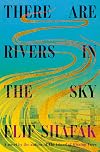
There Are Rivers in the Sky - Shafak
5 stars
Very definitely a 5 star book. There were aspects of the plot that I felt were forced. And, at least one character was awkwardly introduced and too conveniently placed in the contemporary storyline. In another book, that might have lowered my personal rating. But, I just can’t do it with this book. So much of the writing was beautiful. So much of the emotional impact was devastating.
This is a very ambitious book. Following a prologue set in show more ancient Nineveh, it connects three characters in three different timelines. Arthur is in 19th century London struggling to escape a dysfunctional family and abject poverty. Nine year old Narin, a Yazidi girl in 21st century Turkey and Iraq is struggling to survive the destruction of her homeland and the terror of ISIS. In 2018, Zaleekah, a British/Turkish doctor of hydrology, is living on the Thames in a houseboat while contemplating suicide.
I enjoyed the book’s 19th century storyline, including Arthur’s brief encounters with Charles Dickens. For all of his odd abilities and eccentric personality, Arthur is a completely believable character. Arthur’s story is sad, but sufficiently distant to still feel like a story. Narin’s 21st century tragedy is starkly realistic. Shafak does a good job of turning yesterday’s evening news into a personal gut punch.
I said the book is ambitious. Shafak touches on the political violence, social injustice, and environmental destruction of both centuries. Each of her major characters face overwhelming life challenges. The vast elements of their different lives are tied together by a mutual fascination with the myth of Gilgamesh. Shafak uses a touch of magical realism to inject a sense of renewal with the cyclical reappearance of a single drop of water; a drop of water that retains the essence of past events as it moves through the water cycle.
Given the hardship and loss in each of the storylines, this should have been a depressing book. It didn’t leave me that way. I feel a bit like that drop of water. I could return to this book many times and still find something else to think about.
I’d recommend this book to anyone who enjoyed A Constellation of Vital Phenomenon and Birds Without Wings. It’s a great book for serious discussion. show less
5 stars
Very definitely a 5 star book. There were aspects of the plot that I felt were forced. And, at least one character was awkwardly introduced and too conveniently placed in the contemporary storyline. In another book, that might have lowered my personal rating. But, I just can’t do it with this book. So much of the writing was beautiful. So much of the emotional impact was devastating.
This is a very ambitious book. Following a prologue set in show more ancient Nineveh, it connects three characters in three different timelines. Arthur is in 19th century London struggling to escape a dysfunctional family and abject poverty. Nine year old Narin, a Yazidi girl in 21st century Turkey and Iraq is struggling to survive the destruction of her homeland and the terror of ISIS. In 2018, Zaleekah, a British/Turkish doctor of hydrology, is living on the Thames in a houseboat while contemplating suicide.
I enjoyed the book’s 19th century storyline, including Arthur’s brief encounters with Charles Dickens. For all of his odd abilities and eccentric personality, Arthur is a completely believable character. Arthur’s story is sad, but sufficiently distant to still feel like a story. Narin’s 21st century tragedy is starkly realistic. Shafak does a good job of turning yesterday’s evening news into a personal gut punch.
I said the book is ambitious. Shafak touches on the political violence, social injustice, and environmental destruction of both centuries. Each of her major characters face overwhelming life challenges. The vast elements of their different lives are tied together by a mutual fascination with the myth of Gilgamesh. Shafak uses a touch of magical realism to inject a sense of renewal with the cyclical reappearance of a single drop of water; a drop of water that retains the essence of past events as it moves through the water cycle.
Given the hardship and loss in each of the storylines, this should have been a depressing book. It didn’t leave me that way. I feel a bit like that drop of water. I could return to this book many times and still find something else to think about.
I’d recommend this book to anyone who enjoyed A Constellation of Vital Phenomenon and Birds Without Wings. It’s a great book for serious discussion. show less

This book, part of which is narrated by a fig tree, is a delightful, enriching read.
Ada Kazantzakis, a teenager living in London around 2016, is grieving the death of her mother. She has no connection to her parents’ homeland of Cyprus except for a transplanted fig tree which grows in the garden. The unexpected arrival of a visitor from that island helps Ada untangle the secrets of her family’s troubled history about which she knows little. She learns about the forbidden love between her show more parents, Kostas - a Greek Christian Cypriot and Defne - a Turkish Muslim Cypriot, and the ethnic, religious and political unrest that engulfed Cyprus in the mid-1970s.
Almost half the novel is narrated in first person by a fig tree. Initially, I was skeptical about the use of an arboreal narrator, but I came to enjoy many of those chapters - though I was irked by some sections where an ant or a mosquito serve as too convenient sources of information for the tree. Certainly, the tree has personality traits; she is chatty (a bit of a gossip), opinionated (commenting on a wide variety of topics), and proud (arguing that fig trees are much better than carob trees). She possesses a sense of humour (insisting that Adam and Eve yielded to the allure of a luscious fig not a plain old crunchy apple), but can also be didactic (“the climbing wood vine Boquila trifoliolata can alter its leaves to mimic the shape or colour of those of its supporting plant”) and moralistic (“Even trees of different species show solidarity with one another regardless of their differences, which is more than you can say for so many humans”). She certainly teaches a lot about trees and other flora. After reading that “the smell of a freshly mown lawn, that scent humans associate with cleanliness and restoration and all things new and zestful, is in fact another distress signal issued by grass to warn other flora and ask for help,” I will feel guilty whenever I mow grass. She also instructs about fauna like birds, bats, ants, butterflies, honeybees, and mice. Certainly, the surprise twist at the end inspired me to set aside any prejudice against talking trees.
I loved the fig tree’s more philosophical, meditative moments: “Humans care more about the fate of animals they consider cute” and “that is what migrations and relocations do to us: when you leave your home for unknown shores, you don’t simply carry on as before; a part of you dies inside so that another part can start all over again” and “I think of fanaticism – of any type – as a viral disease. Creeping in menacingly, ticking like a pendulum clock that never winds down, it takes hold of you faster when you are part of an enclosed, homogenous unit” and “Truth is a rhizome – an underground plant stem with lateral shoots. You need to dig deep to reach it and, once unearthed, you have to treat it with respect.”
The novel is a commentary on the effects of war: loss, displacement, and migration. Defne never fully recovered from the violence of her native country. Sometimes the effects are multi-generational. Defne and Kostas agreed not to burden Ada with knowledge of their past, but the lack of extended family concerns her as does her parents’ silence about their pasts. She believes that “she carried within a sadness that was not quite her own.” The fig tree emphasizes that war also has effects on the natural world: “But on an island plagued by years of ethnic violence and brutal atrocities, humans were not the only ones that suffered. So did we trees – and animals, too, experienced hardship and pain as their habitats came to disappear.” The message is that “wherever there is war and a painful partition, there will be no winners, humans or otherwise.”
The vivid descriptions of Cyprus’s landscape left me wanting to visit. Though the island may not be what it once was. When Kostas visits after 25 years, he finds it is not “the verdant paradise he remembered. Cyprus was known in antiquity as ‘the green island’, famous for its dense, mysterious forests. The absence of trees was a powerful rebuke to the dreadful mistakes of the past.”
I highly recommend this novel. Written in elegant prose, it is both emotionally arousing and thought-provoking. It reminds us that we cannot ever fully escape the past (“’you break free and travel as far as you can, then one day you look back and realize it was coming with you all along, like a shadow’”) and that we can learn a great deal from the natural world in which “everything is interconnected.”
Note: Please check out my reader's blog (https://schatjesshelves.blogspot.com/) and follow me on Twitter (@DCYakabuski). show less
Ada Kazantzakis, a teenager living in London around 2016, is grieving the death of her mother. She has no connection to her parents’ homeland of Cyprus except for a transplanted fig tree which grows in the garden. The unexpected arrival of a visitor from that island helps Ada untangle the secrets of her family’s troubled history about which she knows little. She learns about the forbidden love between her show more parents, Kostas - a Greek Christian Cypriot and Defne - a Turkish Muslim Cypriot, and the ethnic, religious and political unrest that engulfed Cyprus in the mid-1970s.
Almost half the novel is narrated in first person by a fig tree. Initially, I was skeptical about the use of an arboreal narrator, but I came to enjoy many of those chapters - though I was irked by some sections where an ant or a mosquito serve as too convenient sources of information for the tree. Certainly, the tree has personality traits; she is chatty (a bit of a gossip), opinionated (commenting on a wide variety of topics), and proud (arguing that fig trees are much better than carob trees). She possesses a sense of humour (insisting that Adam and Eve yielded to the allure of a luscious fig not a plain old crunchy apple), but can also be didactic (“the climbing wood vine Boquila trifoliolata can alter its leaves to mimic the shape or colour of those of its supporting plant”) and moralistic (“Even trees of different species show solidarity with one another regardless of their differences, which is more than you can say for so many humans”). She certainly teaches a lot about trees and other flora. After reading that “the smell of a freshly mown lawn, that scent humans associate with cleanliness and restoration and all things new and zestful, is in fact another distress signal issued by grass to warn other flora and ask for help,” I will feel guilty whenever I mow grass. She also instructs about fauna like birds, bats, ants, butterflies, honeybees, and mice. Certainly, the surprise twist at the end inspired me to set aside any prejudice against talking trees.
I loved the fig tree’s more philosophical, meditative moments: “Humans care more about the fate of animals they consider cute” and “that is what migrations and relocations do to us: when you leave your home for unknown shores, you don’t simply carry on as before; a part of you dies inside so that another part can start all over again” and “I think of fanaticism – of any type – as a viral disease. Creeping in menacingly, ticking like a pendulum clock that never winds down, it takes hold of you faster when you are part of an enclosed, homogenous unit” and “Truth is a rhizome – an underground plant stem with lateral shoots. You need to dig deep to reach it and, once unearthed, you have to treat it with respect.”
The novel is a commentary on the effects of war: loss, displacement, and migration. Defne never fully recovered from the violence of her native country. Sometimes the effects are multi-generational. Defne and Kostas agreed not to burden Ada with knowledge of their past, but the lack of extended family concerns her as does her parents’ silence about their pasts. She believes that “she carried within a sadness that was not quite her own.” The fig tree emphasizes that war also has effects on the natural world: “But on an island plagued by years of ethnic violence and brutal atrocities, humans were not the only ones that suffered. So did we trees – and animals, too, experienced hardship and pain as their habitats came to disappear.” The message is that “wherever there is war and a painful partition, there will be no winners, humans or otherwise.”
The vivid descriptions of Cyprus’s landscape left me wanting to visit. Though the island may not be what it once was. When Kostas visits after 25 years, he finds it is not “the verdant paradise he remembered. Cyprus was known in antiquity as ‘the green island’, famous for its dense, mysterious forests. The absence of trees was a powerful rebuke to the dreadful mistakes of the past.”
I highly recommend this novel. Written in elegant prose, it is both emotionally arousing and thought-provoking. It reminds us that we cannot ever fully escape the past (“’you break free and travel as far as you can, then one day you look back and realize it was coming with you all along, like a shadow’”) and that we can learn a great deal from the natural world in which “everything is interconnected.”
Note: Please check out my reader's blog (https://schatjesshelves.blogspot.com/) and follow me on Twitter (@DCYakabuski). show less
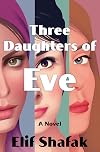
A random incident of street-crime prompts bourgeois Istanbul housewife Peri to look back 15 years to her time in Oxford and her encounter there with a controversial philosophy don, Professor Azur. This in turn allows Şafak to have a bit of fun mocking the Turkish upper classes whilst exploring the tensions inevitably set up in people who grow up exposed to a constant debate between Islam, Kemalist secularism, western liberalism and modern capitalist ultra-nationalism. At home in Istanbul show more the young Peri feels under pressure to accept each rival ideology out of loyalty to the person close to her who represents it; in Oxford she is faced with the bigger challenge of making her own mind up, provoked by Azur and Peri's student friends Mona (Muslim feminist) and Shirin (secular fashion-victim). What's more, all this turns out to be happening in 2001, and people of Muslim background are under more pressure than ever to justify themselves in the eyes of westerners. Sometimes it all feels much more like a constructed example in a philosophy textbook than a novel.
There's a lot of interesting discussion in this book, but ultimately - inevitably, I suppose - it doesn't come to any clear conclusion. Şafak doesn't have an easy answer to the problems of the world in her pocket, unfortunately, so we are left with little more than an invitation to be open to debate, to stand up for our own principles, and to listen to the views of people we disagree with. Which is all very well, of course, but from Şafak's reputation as a fearless challenger of censorship and bigotry, I would have expected something a bit less tentative.
All the same, Peri is an engaging character, and there's a lot of nicely observed detail in the book. I enjoyed both the Istanbul and Oxford sections (although I did find it a bit disconcerting to hear someone being nostalgic about student days that took place a full generation after mine...!).
The audiobook narration by Alix Dunmore worked pretty well, for the most part, but I was thrown off a little by the convention she adopts that Turkish characters in the book should always speak with a conspicuous "Turkish accent", whether they are speaking Turkish or English. Obviously, it doesn't make any sense that people should have a foreign accent in their own language, and it is also rather questionable in English - people from the sort of social circles represented in this book, most of them educated abroad, would be mortified at the notion that they speak English with an accent like a carpet-seller... show less
There's a lot of interesting discussion in this book, but ultimately - inevitably, I suppose - it doesn't come to any clear conclusion. Şafak doesn't have an easy answer to the problems of the world in her pocket, unfortunately, so we are left with little more than an invitation to be open to debate, to stand up for our own principles, and to listen to the views of people we disagree with. Which is all very well, of course, but from Şafak's reputation as a fearless challenger of censorship and bigotry, I would have expected something a bit less tentative.
All the same, Peri is an engaging character, and there's a lot of nicely observed detail in the book. I enjoyed both the Istanbul and Oxford sections (although I did find it a bit disconcerting to hear someone being nostalgic about student days that took place a full generation after mine...!).
The audiobook narration by Alix Dunmore worked pretty well, for the most part, but I was thrown off a little by the convention she adopts that Turkish characters in the book should always speak with a conspicuous "Turkish accent", whether they are speaking Turkish or English. Obviously, it doesn't make any sense that people should have a foreign accent in their own language, and it is also rather questionable in English - people from the sort of social circles represented in this book, most of them educated abroad, would be mortified at the notion that they speak English with an accent like a carpet-seller... show less
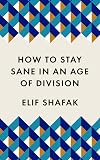
A novella length essay on the state of the world following the pandemic and the particular condition of politics we have been left with in this country and the world. Shafak's description of things is poignant and reveals her keen and complex mind, not to mention her kindness and generosity. She calls for more listening in the face of the voices that tie to drown everything out with their volume alone. She calls for understanding, and education. This is a modest treatise on living in a show more difficult world that bears constant re-reading. And it should send you to her wonderful fiction where all the same characteristics are always on full display. Shafak is a gem we should all be happy exists in this time.
Highly Recommended!!!!!
5 bones!!!!! show less
Highly Recommended!!!!!
5 bones!!!!! show less
Lists
Asia (1)
READ in 2024 (1)
To Read (1)
FAB 2024 (1)
H (1)
Awards


You May Also Like


Associated Authors
Statistics
- Works
- 36
- Also by
- 3
- Members
- 12,366
- Popularity
- #1,893
- Rating
- 3.8
- Reviews
- 483
- ISBNs
- 463
- Languages
- 31
- Favorited
- 12

