
April Sinclair
Author of Coffee Will Make You Black: A Novel
About the Author
Works by April Sinclair
Associated Works
Black Like Us: A Century of Lesbian, Gay, and Bisexual African American Fiction (2002) — Contributor — 127 copies, 1 review
Single Woman of a Certain Age: 29 Women Writers on the Unmarried Midlife--Romantic Escapades, Empty Nests, Shifting Shapes, and Serene Independence (2005) — Contributor — 32 copies, 1 review
Tagged
Common Knowledge
- Legal name
- Sinclair, April
- Gender
- female
- Education
- Western Illinois University
- Nationality
- USA
- Places of residence
- Berkeley, California, USA
Chicago, Illinois, USA - Associated Place (for map)
- USA
Members
Reviews
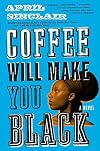
Coffee Will Make You Black is an engrossing, fun read about a Black girl growing up in the the 1960's and 1970's in Chicago. Smart and curious, Stevie, like most adolescents, is searching for her niche in school, family and in her community. I liked Stevie and could easily relate to her struggle to find her own authentic voice while desperately wanting to fit in. Due to this desperation, she often makes choices that do not always fit who she truly "is" around friendship, sexuality, school show more and Coffee Will Make You Black portrays this journey in a fresh and often funny manner. Some of my favorite parts were the relationship between Stevie, and her mother and grandmother; three generations of women who grew up female in very different times giving each other grief, support and love. I also thought that Ms Sinclair did an excellent job of portraying the politics of that time, how race and racism and civil rights impacted in a day to day way a community, school and Stevie's growing self. The only part that felt jarring is when Stevie began to explore her bisexuality. It felt suddenly dropped in from nowhere and didn't seem to fit the narrative. I was curious that Ms Sinclair chose to have Stevie crush out on an older, white woman but I did like how by deciding to explore her sexuality Stevie came closer to seeing what she really wanted in friendships and love.
Thank you to NetGalley for allowing me to review this book for an honest opinion. show less
Thank you to NetGalley for allowing me to review this book for an honest opinion. show less
I struggled with what to write about this book because so many things were going on that I feel like I would need a flowchart to explain how everything was connected. So many things popped up while reading this book for me and I a lot of different memories running through my brain about my own family.
I thought that this book by April Sinclair was brilliant. Overall, I loved this book. There were some minor issues that I had, but not enough to rate the book below five stars.
I emphasized with show more the main character Jean (known as Stevie) throughout this entire book. Stevie wants to be part of the cool girls at her school. She is at times frustrated with her mother who she sees as having no friends and life and only seems to be around to make Stevie do chores and for her to talk "white". Stevie is doing a delicate balancing act of having friends and trying not to do or say anything to alienate them, while also trying to still be involved with things that she wants to.
The other characters in the story, such as Stevie's father, and her brother's don't seem to be written as richly as Stevie, her mother, and her grandmother.
Additionally, the book being broken up into parts showing Stevie at middle school and then high school and we get to see her becoming aware that she may not be like the other girls she has grown up with. Included with that we get to see her reactions to the Civil Rights and Black Power movements in Chicago at the time was very informative. Seeing Stevie struggle to fit in with the cool group to having an epiphany that if her friends don't like that she may be a certain way, that they were not good friends after all was great to see.
I thought that the writing was very crisp though at times it was odd to read Stevie's thoughts (written perfectly) but then trying to decipher what someone was saying since Ms. Sinclair wrote the words as they would sound if pronounced sometimes.
The setting of Chicago in winter, summer, spring felt very real to me. You can tell that the author actually lived or at least visited this city since everything she wrote in the story rang true.
I did not grow up in the 1960s in Chicago like the main character Stevie did. However, I did grow up with a close knit family that had some of the same discussions that Stevie's family did about race. I remember hearing about the paper bag test when I was growing up. And I totally eavesdropped all of the time and heard people discussing "good hair".
I can also speak to the double-edged sword of being too light or too dark in the black community. Being too light was not great since you were accused of trying to look white, and being too dark was not great since you were told you were too black. The same issue would emerge if you talked correctly since you were told you were trying to sound "white" or putting on airs.
I now want to read Ain't Gonna be the Same Fool Twice, the sequel to Coffee Will Make you Black in order to see what happened with Stevie. show less
I thought that this book by April Sinclair was brilliant. Overall, I loved this book. There were some minor issues that I had, but not enough to rate the book below five stars.
I emphasized with show more the main character Jean (known as Stevie) throughout this entire book. Stevie wants to be part of the cool girls at her school. She is at times frustrated with her mother who she sees as having no friends and life and only seems to be around to make Stevie do chores and for her to talk "white". Stevie is doing a delicate balancing act of having friends and trying not to do or say anything to alienate them, while also trying to still be involved with things that she wants to.
The other characters in the story, such as Stevie's father, and her brother's don't seem to be written as richly as Stevie, her mother, and her grandmother.
Additionally, the book being broken up into parts showing Stevie at middle school and then high school and we get to see her becoming aware that she may not be like the other girls she has grown up with. Included with that we get to see her reactions to the Civil Rights and Black Power movements in Chicago at the time was very informative. Seeing Stevie struggle to fit in with the cool group to having an epiphany that if her friends don't like that she may be a certain way, that they were not good friends after all was great to see.
I thought that the writing was very crisp though at times it was odd to read Stevie's thoughts (written perfectly) but then trying to decipher what someone was saying since Ms. Sinclair wrote the words as they would sound if pronounced sometimes.
The setting of Chicago in winter, summer, spring felt very real to me. You can tell that the author actually lived or at least visited this city since everything she wrote in the story rang true.
I did not grow up in the 1960s in Chicago like the main character Stevie did. However, I did grow up with a close knit family that had some of the same discussions that Stevie's family did about race. I remember hearing about the paper bag test when I was growing up. And I totally eavesdropped all of the time and heard people discussing "good hair".
I can also speak to the double-edged sword of being too light or too dark in the black community. Being too light was not great since you were accused of trying to look white, and being too dark was not great since you were told you were too black. The same issue would emerge if you talked correctly since you were told you were trying to sound "white" or putting on airs.
I now want to read Ain't Gonna be the Same Fool Twice, the sequel to Coffee Will Make you Black in order to see what happened with Stevie. show less
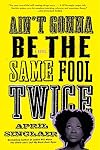
About six months ago I read "Coffee Will Make You Black", which was a coming of age story set in the late 60s and early 70s in a poor black Chicago neighborhood. Stevie Stevenson told the story, and a little of the book was devoted to her questioning her own sexuality. "Ain't Gonna Be the Same Fool Twice" is a sequal. Stevie is a few years older, and the book begins in college, and ends about a year after graduation... mostly set in San Francisco. The book touches on friendships and drug show more culture some, but it is primarily a memoir like tale of a young black bisexual woman, leaning to the lesbian side. Having grown up under traditional "family values", Stevie has trouble accepting herself, and is usually the polite, old fashioned person in any group of friends. April Sinclair writes well, but for me this one is no more than a three star book just because the subject of lesbian discovery in a new age town wasn't something I wanted to read a whole book about. I was expecting a book more like "Coffee Will Make You Black." If the subject matter sounds interesting to you, then I think you would like the book more than I, and rate it higher. show less
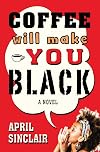
It was a pretty fun read, about a young African American girl growing up on Chicago's Southside during the 60's. It wasn't great, and at times heavy handed, in discussing the narrator's family and their relationship to the civil rights and Black Power movements. However, lots of funny bits about growing up in the 60's, so I enjoyed it overall.
Lists
Awards


You May Also Like


Associated Authors
Statistics
- Works
- 5
- Also by
- 3
- Members
- 841
- Popularity
- #30,399
- Rating
- 3.5
- Reviews
- 13
- ISBNs
- 26
- Languages
- 3