
John Straley
Author of The Woman Who Married A Bear
About the Author
A former investigator for the Public Defender of the State of Alaska, John Straley has been a horseshoer, wilderness ranger, and oral historian. He has been hit by lightning and attacked by a bear. He owns his own private investigation business and lives with his family in Sitka, Alaska. He is the show more author of six novels, including The Music of What Happens and Death and the language of Happiness. (Publisher Provided) show less
Image credit: Photo by Will Swagel
Series
Works by John Straley
Associated Works
These United States: Original Essays by Leading American Writers on Their State within the Union by John Leonard (1995) — Contributor — 102 copies, 1 review
Tagged
Common Knowledge
- Birthdate
- 1953
- Gender
- male
- Education
- Grinnell College
University of Washington (BA | English) - Occupations
- farrier
writer
private investigator
investigator for Alaska Public Defender - Nationality
- USA
- Birthplace
- Redwood City, California, USA
- Places of residence
- Redwood City, California, USA
Seattle, Washington, USA
New York, New York, USA
Sitka, Alaska, USA - Associated Place (for map)
- USA
Members
Reviews
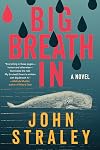
Delphine is dying of cancer, but she is tired of simply waiting for the disease to end her time on this earth, surviving in a small hotel opposite the hospital where she undergoes chemotherapy. So when an old acquaintance asks for her help in ending a baby-trafficking scheme, Delphine puts on her dead husband's old private investigator hat, slings a leg over a motorcycle, and heads to eastern Washington State to find the man who has stolen babies.
Dephine is a marine biologist who was show more particularly interested in sperm whales, a species about which humans know relatively little. The mystery is therefore interleaved with lessons about sperm whales, much as Herman Melville's Moby-Dick provided us with reams of information about whales and whaling in Moby-Dick. These lessons somehow give the narrative a sort of dreamy feeling, much like we suspect Delphine is experiencing as she pursues her quest with ever-greater difficulty as her body betrays her. The mystery is still sharp and violent, but also satisfying.
This is the first Straley I've read, and I can see I've been missing something special. I'll be seeking out his other books. show less
Dephine is a marine biologist who was show more particularly interested in sperm whales, a species about which humans know relatively little. The mystery is therefore interleaved with lessons about sperm whales, much as Herman Melville's Moby-Dick provided us with reams of information about whales and whaling in Moby-Dick. These lessons somehow give the narrative a sort of dreamy feeling, much like we suspect Delphine is experiencing as she pursues her quest with ever-greater difficulty as her body betrays her. The mystery is still sharp and violent, but also satisfying.
This is the first Straley I've read, and I can see I've been missing something special. I'll be seeking out his other books. show less
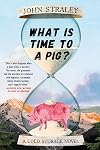
Most thrillers involving the imminent detonation of a nuclear warhead are driven by a ticking-clock urgency. Since John Straley likes to break the rules, he dismantles the ticking clock in the prologue, as we’re introduced to the mouse that saved the world. She’s found something strange and tasty In a dump outside Cold Storage, Alaska, but as she burrows around she comes across a strange creature with a single blinking eye. What exactly this means, we don’t yet know, but in the opening show more chapter we learn the mouse has died – a circumstance that’s sad for her, but “not for the human beings in this story, most of whom experienced life as a kind of hallucination, unstuck from traditional time as a result of being kept in cages, where nothing happened according to their own will.”
Welcome to the Ted Stevens High Security Federal Penitentiary, a high-tech mechanical maze where prisoners are controlled remotely and often drugged, and one of its inhabitants, a man called Gloomy Knob, who is incarcerated for kidnapping his mother and killing his sister. He feels bad about it, so doesn’t resent being locked up in a high-tech prison for life, even though he can’t clearly remember his crimes. In fact, he can’t remember much of anything. He just wants a prison job that takes him outdoors to do manual labor at a neighboring construction site where a new women’s prison is going up. Prison labor – including the human work that undergirds computer systems - has become profitable in post-war America since the war with North Korea.
America won, of course, but not until after North Korea fired a burst of nuclear warheads that didn’t detonate but set off a global rush to find the missing nukes scattered across Alaska. One day as Gloomy tends a trash fire, he’s rescued – or kidnapped, depending on your perspective – by a couple who are convinced he knows where one of the missiles is, the one that’s about to detonate under Cold Storage. He doesn’t know what they’re talking about, but being yanked out of his numbed routine has caused some memories (or are they hallucinations?) to surface.
It can be confusing to be set down in this world where enhanced interrogation techniques involve mind games and memory-altering drugs, pieces of the nation’s history have been recycled (there’s a new Ghost Dance Movement being suppressed by the authorities, for instance) and characters walk in and out of the pages without explaining themselves. (If you think your confusion comes from not having read Straley’s previous novel, COLD STORAGE, don’t worry; it probably wouldn’t help. The hallucinatory narrative style matches our confused era.) Paralleling Gloomy’s adventures, we learn about his mother Nix and his dying father Clive who own a bar in Cold Storage, and eventually we learn what actually happened when Gloomy’s sister was killed. But along the way it’s a jumbled collage of memories, and for Gloomy it’s never clear which are real and which are drug-induced hallucinations – and neither are we. But the reader willing to go along with the unconventional narration will be rewarded by sharp commentary on our times and equal parts poetry and offbeat humor.
As for nuclear annihilation, don’t worry: the mouse has saved us from our human stupidity. show less
Welcome to the Ted Stevens High Security Federal Penitentiary, a high-tech mechanical maze where prisoners are controlled remotely and often drugged, and one of its inhabitants, a man called Gloomy Knob, who is incarcerated for kidnapping his mother and killing his sister. He feels bad about it, so doesn’t resent being locked up in a high-tech prison for life, even though he can’t clearly remember his crimes. In fact, he can’t remember much of anything. He just wants a prison job that takes him outdoors to do manual labor at a neighboring construction site where a new women’s prison is going up. Prison labor – including the human work that undergirds computer systems - has become profitable in post-war America since the war with North Korea.
America won, of course, but not until after North Korea fired a burst of nuclear warheads that didn’t detonate but set off a global rush to find the missing nukes scattered across Alaska. One day as Gloomy tends a trash fire, he’s rescued – or kidnapped, depending on your perspective – by a couple who are convinced he knows where one of the missiles is, the one that’s about to detonate under Cold Storage. He doesn’t know what they’re talking about, but being yanked out of his numbed routine has caused some memories (or are they hallucinations?) to surface.
It can be confusing to be set down in this world where enhanced interrogation techniques involve mind games and memory-altering drugs, pieces of the nation’s history have been recycled (there’s a new Ghost Dance Movement being suppressed by the authorities, for instance) and characters walk in and out of the pages without explaining themselves. (If you think your confusion comes from not having read Straley’s previous novel, COLD STORAGE, don’t worry; it probably wouldn’t help. The hallucinatory narrative style matches our confused era.) Paralleling Gloomy’s adventures, we learn about his mother Nix and his dying father Clive who own a bar in Cold Storage, and eventually we learn what actually happened when Gloomy’s sister was killed. But along the way it’s a jumbled collage of memories, and for Gloomy it’s never clear which are real and which are drug-induced hallucinations – and neither are we. But the reader willing to go along with the unconventional narration will be rewarded by sharp commentary on our times and equal parts poetry and offbeat humor.
As for nuclear annihilation, don’t worry: the mouse has saved us from our human stupidity. show less

This 1992 detective novel won the Private Eye Writers of America's Shamus Award for Best First PI Novel (1993). It's the first of eight books in the Cecil Younger series, and it features an alcoholic, anhedonic private investigator who seems to be struggling to function at any level (or maintain the focus to survive at all) as he tries to fulfill his latest client's request to look into her son's death. The Alaskan setting is the real star of this book, along with the half-nightmare, show more half-dreamlike journey Cecil undertakes to glean the truth is the catalyst for the violence and death that appear in his wake. The social commentary is bleak and unsparing yet truthful. I don't think any character in this book is really likable or reliable, but all ring true as human beings. I'll definitely read more of John Straley's writing even if it is not a comforting experience. show less
This tale of a hard drinking P.I. in Alaska is very much in the noir tradition. Oftentimes the plot of the book becomes entirely secondary to the atmosphere, which is made up both of flawed characters and a very distinctive sense of place. In this book the place in question is Alaska ,and the contrast between natural beauty and stark poverty is used to good effect . Some Tlingit characters and folklore give this a flavor of its own, even though the “mystery” or at least it’s resolution show more was only so-so, will definitely try more of the series. show less
Lists
Awards


You May Also Like


Associated Authors
Statistics
- Works
- 21
- Also by
- 5
- Members
- 1,479
- Popularity
- #17,373
- Rating
- 3.5
- Reviews
- 46
- ISBNs
- 110
- Languages
- 4
- Favorited
- 6