

Ruby Tandoh
Author of Eat Up! Food, Appetite, and Eating What You Want
Series
Works by Ruby Tandoh
Cook As You Are: Recipes for Real Life, Hungry Cooks, and Messy Kitchens (2022) 122 copies, 2 reviews
Associated Works
Tagged
Common Knowledge
- Birthdate
- 1992-07-04
- Gender
- female
- Nationality
- UK
- Birthplace
- Southend, Essex, England, UK
- Associated Place (for map)
- England, UK
Members
Reviews

Lots of interesting recipes, from basics (using a microwave to make a single serving of mashed potato) to special or complex (harissa, spinach, and ricotta cannelloni with toasted hazelnuts).
Tandoh's introduction describes "cook as you are" as being about finding what kind of cooking works for you, without pressure to get it perfect. There are no photographs because she didn't want to suggest what cooking, or her recipes, should look like. Instead, lively, colorful illustrations show all show more sorts of people in the act of cooking or eating. When step-by-step images are helpful to show something complicated to describe, the illustrations do the job very well.
Every recipe opens with why Tandoh likes it, perhaps where it comes from, or how it fits a certain need. They almost all have a variations and substitutions section, too. I really appreciated these for offering alternatives for cost, vegetarian/vegan, seasonal produce, or even what frozen/canned items work well if you can't prepare from fresh (for whatever reason!).
I like how the intro has a section specifically for cooking with limited energy or mobility, with a few ideas for adaptations. Likewise if you have sensory differences, Tandoh offers multiple cues for recipes such as color or smell, as well as standard timing and temperature.
The recipes are grouped by cooking mood with colored boxes on the right edge to help open the book to each section. "Feed Me Now" is recipes that are fairly quick and not too complex to throw together for dinner after a long day at work. But if you need even simpler, "More Food, Less Work" is for low on time or energy. But there's also "Wild Appetites" with a subsection "Food for the thirty-second of neverember": encouraging you to think about and enjoy recipes for maybe someday, a (maybe?) fun part of cookbooks.
There is a reference section at the end that indicates which recipes are low-prep, super speedy, hands-off, or cheaper, with the page number indicated in a colored circle to match the chapter block.
I found that a lot of the recipes use ingredients that aren't quite easy for me to acquire, relying as i do on Wal-Mart grocery delivery (due to disability). Nothing is exactly foreign or strange, maybe I just need to visit the Afro-Caribbean or Indian groceries. I figure this is partly from Tandoh's London bias. But she does offer advice for acquiring or substituting the more uncommon items.
I am a hesitant cook, and have strong food aversions and allergies, so most of the recipes are beyond my ability. Most cookbooks are like that! However, I loved reading about them, and lots of them look adaptable to something I can do. One recipe for an onion and sauerkraut pasta is very similar to an onion cream pasta I already make, which was neat to see. (It's very delicious and rich - I imagine the sauerkraut helps lighten the richness.)
Each chapter also has a list for further reading, mostly about food or cookery, but also about enjoying food - The Hobbit shows up, as do the Mrs. Pepperpot stories. (Some books, like Hibiscus or Salt, Fat, Acid, Heat, are on multiple lists if they relate to the chapter theme.)
I really enjoyed just reading through this book, even if I never cooked anything from it. But i used the instructions to sauté asparagus from a pasta recipe, and it came out perfectly. I only ever steam asparagus, which I love, and have been nervous about ruining it by trying a new cooking method. If nothing else, that's a win! show less
Tandoh's introduction describes "cook as you are" as being about finding what kind of cooking works for you, without pressure to get it perfect. There are no photographs because she didn't want to suggest what cooking, or her recipes, should look like. Instead, lively, colorful illustrations show all show more sorts of people in the act of cooking or eating. When step-by-step images are helpful to show something complicated to describe, the illustrations do the job very well.
Every recipe opens with why Tandoh likes it, perhaps where it comes from, or how it fits a certain need. They almost all have a variations and substitutions section, too. I really appreciated these for offering alternatives for cost, vegetarian/vegan, seasonal produce, or even what frozen/canned items work well if you can't prepare from fresh (for whatever reason!).
I like how the intro has a section specifically for cooking with limited energy or mobility, with a few ideas for adaptations. Likewise if you have sensory differences, Tandoh offers multiple cues for recipes such as color or smell, as well as standard timing and temperature.
The recipes are grouped by cooking mood with colored boxes on the right edge to help open the book to each section. "Feed Me Now" is recipes that are fairly quick and not too complex to throw together for dinner after a long day at work. But if you need even simpler, "More Food, Less Work" is for low on time or energy. But there's also "Wild Appetites" with a subsection "Food for the thirty-second of neverember": encouraging you to think about and enjoy recipes for maybe someday, a (maybe?) fun part of cookbooks.
There is a reference section at the end that indicates which recipes are low-prep, super speedy, hands-off, or cheaper, with the page number indicated in a colored circle to match the chapter block.
I found that a lot of the recipes use ingredients that aren't quite easy for me to acquire, relying as i do on Wal-Mart grocery delivery (due to disability). Nothing is exactly foreign or strange, maybe I just need to visit the Afro-Caribbean or Indian groceries. I figure this is partly from Tandoh's London bias. But she does offer advice for acquiring or substituting the more uncommon items.
I am a hesitant cook, and have strong food aversions and allergies, so most of the recipes are beyond my ability. Most cookbooks are like that! However, I loved reading about them, and lots of them look adaptable to something I can do. One recipe for an onion and sauerkraut pasta is very similar to an onion cream pasta I already make, which was neat to see. (It's very delicious and rich - I imagine the sauerkraut helps lighten the richness.)
Each chapter also has a list for further reading, mostly about food or cookery, but also about enjoying food - The Hobbit shows up, as do the Mrs. Pepperpot stories. (Some books, like Hibiscus or Salt, Fat, Acid, Heat, are on multiple lists if they relate to the chapter theme.)
I really enjoyed just reading through this book, even if I never cooked anything from it. But i used the instructions to sauté asparagus from a pasta recipe, and it came out perfectly. I only ever steam asparagus, which I love, and have been nervous about ruining it by trying a new cooking method. If nothing else, that's a win! show less
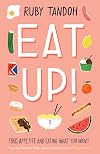
I’ve never had an easy relationship with food: I hate cooking and dislike eating. It’s a way to alleviate hunger rather than a pleasure. Ruby Tandoh is perhaps the only food writer who doesn’t make me feel guilty and inadequate for this, which I really appreciate. In this book she takes the deliberate and revolutionary approach of not telling the reader what to eat. Instead, she explores the many significances of food, her own experiences, and how we can try to feel better about show more eating. I can’t say it transformed my perspective and made me yearn to cook - that’s probably impossible. However, I read it over dinner and felt better about my basic and unimaginative meal as a result. Tandoh’s tone is generous, thoughtful, and hopeful in the face of exhausting and fraught food discourse. She is particularly good at dissolving the moral judgements that surround choices about eating and conveying the joy that food has brought her. 'Eat Up!' invites you to reflect on the foods that you find reassuring and pleasant: porridge is the first that comes to my mind, although I only learned to like it a year ago. This lovely little book is a breath of fresh air. Tandoh's writing style is very engaging and will encourage you to feel happier about food. show less
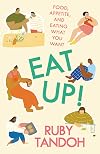
I really loved this. Ruby was one of my favorite contestants on The Great British Bake Off (Baking Show); a crazy combo of creative and hot mess that was very normal seeming and most of her bakes looked like what I would want to eat. This book has much the same, it can be rambling and contradictory but the overall wisdom to enjoy food in all it's forms is great and it was just a weirdly joyous read.
Loved this book. It delves into so many different issues to do with food, from ethics to queer identities. I came away having learned quite a lot and feeling reassured that my eating isn't the worst. Ruby has managed to actually write a book about food which doesn't shame people and recognises that a lot of us eat canned food and like to indulge.
Lists
Review 4 (1)
Awards


You May Also Like


Associated Authors
Statistics
- Works
- 8
- Also by
- 11
- Members
- 540
- Popularity
- #46,138
- Rating
- 4.0
- Reviews
- 8
- ISBNs
- 22