
James Tiptree, Jr. (1915–1987)
Author of Her Smoke Rose Up Forever
About the Author
James Tiptree, Jr., was the pseudonym that Alice Bradley Sheldon began to use for her writing in 1967. Born in Chicago, she grew up in Africa and India, worked for the CIA, and earned a Ph.D. in psychology. In 1987, when Tiptree and her husband became gravely ill, she killed him and herself
Image credit: Wikipedia
Series
Works by James Tiptree, Jr.
The Color of Neanderthal Eyes/And Strange at Ecbatan the Trees (1990) — Contributor — 121 copies, 3 reviews
The Only Neat Thing To Do [novella] 18 copies
A Momentary Taste of Being 15 copies
The Man Who Walked Home [short fiction] 14 copies
The Magazine of Fantasy and Science Fiction 69. Nacht in den Ruinen. Eine Auswahl der besten Erzählungen. (1984) — Contributor — 9 copies
Two Great Novels: Up the Walls of the World & Brightness Falls From the Air (2015) 8 copies, 1 review
Happiness is a Warm Spaceship 4 copies
Your Haploid Heart 4 copies
Timesharing Angel (short story) 3 copies
The Night-blooming Saurian 3 copies
Birth of a Salesman [short fiction] 3 copies
Fault 3 copies
Through A Lass Darkly 3 copies
Amberjack 3 copies
All The Kinds Of Yes 3 copies
We Who Stole The Dream Pt. 2 2 copies
We Who Stole The Dream Pt. 1 2 copies
Exposure 2 copies
Help [Pupa Knows Best] 2 copies
Mamma Come Home [short fiction] 2 copies
Trey of Hearts 1 copy
Collision [novella] 1 copy
Angel Fix 1 copy
Beaver Tears 1 copy
Excursion Fare 1 copy
Εμεις που κλέψαμε το όνειρο 1 copy
o brilho escorre do ar 1 copy
Selección de relatos 1 copy
Associated Works
The Minority Report and Other Classic Stories (1954) — Introduction, some editions — 2,755 copies, 24 reviews
Alien Sex: 19 Tales by the Masters of Science Fiction and Dark Fantasy (1990) — Contributor — 529 copies, 6 reviews
The Big Book of Science Fiction: The Ultimate Collection (2016) — Contributor — 522 copies, 8 reviews
Sisters of the Revolution: A Feminist Speculative Fiction Anthology (2015) — Contributor — 345 copies, 8 reviews
The Norton Book of Science Fiction: North American Science Fiction, 1960-1990 (1993) — Contributor — 344 copies, 6 reviews
The Locus Awards: Thirty Years of the Best in Science Fiction and Fantasy (2004) — Contributor — 290 copies, 11 reviews
The Future Is Female! 25 Classic Science Fiction Stories by Women, from Pulp Pioneers to Ursula K. Le Guin: A Library of America Special Publication (2018) — Contributor — 279 copies, 5 reviews
The Year's Best Science Fiction: Third Annual Collection (1986) — Contributor — 250 copies, 1 review
The New Women of Wonder: Recent Science Fiction Stories by Women about Women (1977) — Contributor — 198 copies, 5 reviews
Women of Wonder, the Classic Years: Science Fiction by Women from the 1940s to the 1970s (1995) — Contributor — 189 copies, 1 review
The Arbor House Treasury of Great Science Fiction Short Novels (1980) — Contributor — 189 copies, 1 review
Daughters of Earth: Feminist Science Fiction in the Twentieth Century (2006) — Contributor — 188 copies, 6 reviews
Worlds Apart: An Anthology of Lesbian and Gay Science Fiction and Fantasy (1986) — Contributor — 181 copies, 1 review
The James Tiptree Award Anthology 1: Sex, the Future, and Chocolate Chip Cookies (2005) — Contributor — 180 copies, 5 reviews
Lightspeed Magazine, Issue 49 • June 2014 (Women Destroy Science Fiction! special issue) (2014) — Contributor — 174 copies, 11 reviews
The Year's Best Science Fiction: First Annual Collection (1984) — Contributor — 151 copies, 1 review
The Very Best of Fantasy & Science Fiction: Sixtieth Anniversary Anthology (2009) — Contributor — 148 copies, 6 reviews
Despatches from the Frontiers of the Female Mind: An Anthology of Original Stories (1985) — Contributor — 132 copies, 2 reviews
The Science Fiction Hall of Fame, Volume Four: Nebula Winners 1970-1974 (1986) — Contributor — 132 copies, 1 review
The Future Is Female! Volume Two, The 1970s: More Classic Science Fiction Storie s By Women: A Library of America Special Publication (2022) — Contributor — 108 copies, 3 reviews
The James Tiptree Award Anthology 2: Stories for Men, Women, and the Rest of Us (2006) — Contributor — 101 copies, 3 reviews
The Prentice Hall Anthology of Science Fiction and Fantasy (2000) — Contributor — 100 copies, 2 reviews
The James Tiptree Award Anthology 3: Subversive Stories about Sex and Gender (2007) — Contributor — 98 copies, 2 reviews
The Magazine of Fantasy & Science Fiction: A 30-Year Retrospective (1980) — Contributor — 94 copies, 1 review
Best Science Fiction Stories of the Year First Annual Collection (1972) — Contributor — 89 copies, 2 reviews
New Eves: Science Fiction About the Extraordinary Women of Today and Tomorrow (1994) — Contributor — 71 copies, 3 reviews
Best Science Fiction Stories of the Year Second Annual Collection (1973) — Contributor — 68 copies, 1 review
Great Science Fiction Stories By the World's Greatest Scientists (1985) — Author — 56 copies, 2 reviews
This Way to the End Times: Classic Tales of the Apocalypse (2016) — Contributor — 52 copies, 2 reviews
Light Years and Dark: Science Fiction and Fantasy of and for Our Time (1984) — Contributor — 38 copies
Analog Science Fiction/Science Fact: Vol. XCVII, No. 6 (June 1977) (1977) — Contributor — 36 copies, 1 review
Women of Vision : Essays by Women Writing Science Fiction (1988) — Contributor, some editions — 34 copies, 1 review
Analog Science Fiction/Science Fact: Vol. LXXXI, No. 1 (March 1968) (1968) — Contributor — 21 copies
The Magazine of Fantasy and Science Fiction October 1982, Vol. 63, No. 4 (1982) — Author — 16 copies
Isaac Asimov's Science Fiction Magazine: Vol. 11, No. 7 [July 1987] (1987) — Contributor — 16 copies
The Magazine of Fantasy and Science Fiction March 1986, Vol. 70, No. 3 (1986) — Contributor — 13 copies
Isaac Asimov's Science Fiction Magazine: Vol. 7, No. 4 [April 1983] (1983) — Contributor — 13 copies
Womens Fantastic Adventures. Stories. ( Fremdsprachentexte). (Lernmaterialien) (1992) — Author — 11 copies
Die Fußangeln der Zeit. Die schönsten Zeitreise- Geschichten I. (1984) — Contributor, some editions — 11 copies
Heyne Science Fiction Jahresband 1991. 8 Romane und Erzählungen prominenter SF- Autoren. (1993) — Contributor — 8 copies
The Magazine of Fantasy and Science Fiction 68. Mythen der nahen Zukunft. (1984) — Contributor — 7 copies
I Premi Hugo 1976-1983 — Contributor — 4 copies
S-Fマガジン 1986年 10月号 — Contributor — 1 copy
S-Fマガジン 1986年 12月号 — Contributor — 1 copy
S-Fマガジン 1986年 06月号 — Contributor — 1 copy
S-Fマガジン 1987年 09月号 — Contributor — 1 copy
Friendly Aliens: Thirteen Stories of the Fantastic Set in Canada by Foreign Authors (1981) — Contributor — 1 copy
Tagged
Common Knowledge
- Canonical name
- Tiptree, James, Jr.
- Legal name
- Sheldon, Alice Bradley
- Other names
- Sheldon, Raccoona
Sheldon, Alice Hastings Bradley
Sheldon, Alice - Birthdate
- 1915-08-24
- Date of death
- 1987-05-19
- Gender
- female
- Education
- George Washington University (PhD|Experimental Psychology|1967)
American University (BA) - Occupations
- science fiction writer
novelist
short story writer
psychologist
army officer
psychologist (show all 8)
art critic
graphic artist - Organizations
- Science Fiction and Fantasy Writers of America
U.S. Army Air Forces
Central Intelligence Agency - Awards and honors
- Solstice Award (2011)
SF Hall of Fame (2012) - Agent
- Virigina Kidd Agency
- Relationships
- Bradley, Mary Hastings (mother)
Davey, William (first husband) - Short biography
- Alice Bradley Sheldon, better known as James Tiptree, Jr., was born in Chicago, Illinois. At age six, she was taken by her parents on safari in Africa. In 1934, Alice eloped with William Davey. The couple divorced in 1941 and Alice returned to Chicago, where she got a job as art critic of the Chicago Sun. During World War II, she joined the Women's Army Auxiliary Corps and worked at the Pentagon in photo intelligence. She married Colonel Huntington Sheldon, and in 1952, they both joined the CIA. She received a B.A. from American University in Washington, D.C., in 1959 and a Ph.D. in experimental psychology at George Washington University. She published science fiction under the pseudonym James Tiptree, Jr., in order to separate them from her academic career. Her true identity came to light in 1977. She killed herself and her second husband in 1987.
- Cause of death
- suicide
- Nationality
- USA
- Birthplace
- Chicago, Illinois, USA
- Places of residence
- Chicago, Illinois, USA
McLean, Virginia, USA - Place of death
- McLean, Virginia, USA
- Associated Place (for map)
- Virginia, USA
Members
Discussions
Is this story canon or cannon? in Good Show Sir! — bad science fiction and fantasy covers (February 24)
Reviews
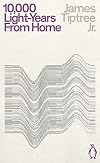
I read this collection of short stories fifty years ago, when I was eighteen. I knew then that it was exceptional. Re-reading it for the first time, fifty years later, I can see that it still is.
Not all of the stories are perfect.
Two of them THE PEACEFULNESS OF VIVYAN and MOTHER IN THE SKY WITH DIAMONDS, didn't work for me at all.
Many of them are funny, with humour that ranges from slapstick to satirical. I'LL BE WAITING FOR YOU WHEN THE SWIMMING POOL IS EMPTY stuck with me. It still show more makes me smile and its sharp-toothed satire has become more relevant rather than less.
But the stories that kept this book alive in my memory are the ones that made me think about what it means to be alien or to be human or to be male or female or neither. Science Fiction is the only mind-expanding drug I've ever needed. I believe that absorbing these stories when I was in my teens and early twenties shaped how I thought about the world.
Four of the fifteen stories in this collection are ones that opened my mind and stayed with me.
The most powerful (and the grimmest) are the stories that start and end this collection: AND I AWOKE AND FOUND ME HERE ON THE COLD HILL'S SIDE about aliens and sex and the ability of human culture to survive contact with the truly different; BEAM US HOME about the hopes of a young man trapped in a bad place. The other two stories are lighter in tone: MAMA COME HOME and HELP. They both feature a CIA Psyops team (although I didn't know what Psyops was when I first read this. Now, with Cambridge Analytica running a psyops campaign to get Brexit through, I'm more familiar with it than I'd like to be.) their both humourous, clever and uplifting. One is a First Contact story with a twist around gender politics and one is about the damage done by colonisation and religion.
I recommend this collection to anyone looking for Science Fiction stories that will make them think, laugh and cry.
Below, I've reviewed each story in the order they appear in the collection.
AND I AWOKE AND FOUND ME HERE ON THE COLD HILL'S SIDE
It must be fifty years since I read this story for the first time. I found it exciting and shocking and irresistibly different - rather like the reaction of the humans in the story to the aliens. The core idea, that our exogamous nature might doom us if aliens arrived, pushing us into the same decline that the Polynesians experienced, etched itself into my memory.
This time around I knew what was coming so I was able to appreciate the well-crafted brutal honesty of the storytelling.
THE SNOWS ARE MELTED, THE SNOWS ARE GONE
This is a bleak story from start to finish. It's a sparsely told post-apocalyptic story.. All action and observation. No interior monologues. Emotions and motivations are left to be guessed at. An empty world. An armless girl who is, nevertheless, hunting. No infodumps. No explanations even. It's a story that's as unforgiving as the world the girl is trying to survive in. It says to the reader: "This is what's happening. Work out for yourself what it means."
And yet... it gets under your skin. The grim practicality. The sweat and toil powered by a small pellet of hope. The determination to overcome limitations. All surrounded by an echoing, lifeless emptiness.
THE PEACEFULNESS OF VIVYAN
I gave up on this halfway through. I couldn't connect with the mystery or the main character.
MAMA COME HOME
This was clever and fun. It was a First Contact story with an ingenious twist that I relished: the casual disembowelling of male dominance by the arrival of beautiful human-looking female aliens who are over eight feet tall and think human males a cute playthings.
It was startling to see a CIA expert in Fake News in a story published in 1973, especially when the story was written by a former CIA agent.
I loved the ingenuity of the ending, It was smart, unexpected, just about plausible and showed that the pen (or at least the video) can be mightier than the sword.
HELP
We're back with the CIA unit from MAMA COME HOME, this time with a different set of aliens and a different analogue showing the catastrophic effect of colonisation on the people being colonised. This is quite subversive stuff. It's entertaining and easy to read but, beneath the surface, it's a muscular attack on the cost of colonialism and a reminder that we not only fail to learn from history but we whitewash it out of existence.
PAINWISE
This was very strange. A sort of thought experiment but about the nature and effect of sensation. Our hero has been altered to feel no pain. He's used to sample worlds on a long-range, long-term mission. He is often damaged and rebuilt but never feels the pain associated with it. He loses the will to live. Wants to return home. Then encounters pleasure-seeking empathic aliens who love his lack of pain and take him away in a spaceship version of a hippy bus. It could have been heaven but this is a Tiptree story so of course that didn't last. Our hero was brought down to earth in a painful way.
FAITHFUL TO THEE, TERRA, IN OUR FASHION
A boisterous, riotously imaginative story about a world where all the planets of the galaxy come together to compete in races. Most of the story feels like a backstage tour of an exotic circus given by a pressured-but-loving-it ringmaster who leads the troubleshooters who wrangle the acts and keep them honest. It's fast, colourful and fun. Under all of that is a more serious idea about the nature of identity and the preservation of a culture under threat. I liked that this idea was revealed as the solution to a tense problem rather than waved as a banner.
THE MAN DOORS SAID HELLO TO
This was whimsical. So whimsical that I have no idea what the point of it was.
THE MAN WHO WALKED HOME
This was a Science Fiction story that I admired but didn't enjoy. It is driven by a clever, science-based 'What if?' question about an experiment that goes wrong and causes global devastation. It's well-written. It turns complicated physics into a first-hand experience. It has a human tragedy at its heart. BUT it spans centuries - too long for it to feel real to me. It left my emotions untouched.
FOREVER TO A HUDSON BAY BLANKET
This was a playful time travel paradox story with a little lighthearted romance thrown in. Much is made of the niceness of the young Canadian man who is the star of this story and, despite the lightheartedness and the romance, it is ultimately his undoing. This is one of the most original meet-cute setups I've ever seen. It has a mix of innocence and lust and zest for life that I'd normally associate with 1940s RomComs.
I'LL BE WAITING FOR YOU WHEN THE SWIMMING POOL IS EMPTY
When I read this fifty years ago, it made me laugh. This time, it only made me smile. Nevertheless, it had stuck in my memory all that time. It's a satirical piece that imagines a privileged young man on his Wanderjahr landing on a blades-and-bows world in the middle of a battle and politely but firmly trying to 'improve' things... while respecting the local culture, of course. It's an object lesson in why the Federation in Star Trek imposed the Prime Directive. The phrase hadn't been coined when this was written but it shouts "Check Your Privilege".
I still have no idea what the title means.
I'M TOO BIG BUT I LOVE TO PLAY
This story thinks BIG about aliens. It imagines an alien so different from us that it initially sees life on planets as tiny pockets of dense anti-entropic energy and becomes fascinated by how they work. This almost non-corporeal being floats a solitary path between stars, amusing itself by playing games of Maxwell's Demon with energy fields. That description was fun in a Hard Science Fiction Thought Experiment way. But Tiptree took it further than that. Much further. Firstly by letting the alien become obsessed with (but not initially good at) copying humans and taking their place. This quickly gets messy both for the alien and for the humans it is playing with. Secondly, by adding an italicised top and tale to the story that I didn't understand the significance of until right at the end when a memorable city was named. THEN, I saw that while I'd been focusing on our impact on the alien, the real story was about the alien's impact on us. It was a stunning idea.
BIRTH OF A SALESMAN
This frenetic story was like watching the Marx Brothers organising a testing and shipping department: chaotic, exotic, filled with action but only funny if slapstick makes you laugh. I'd admired the creativity and the relentless application of Murphy's law but I thought it went on for too long.
MOTHER IN THE SKY WITH DIAMONDS
Nope. This didn't work for me. I felt like it was written in code and I wasn't sure that cracking the code was going to be worth the effort so I skipped it.
BEAM US HOME
This is another one that I remember from fifty years ago. It made me cry then. It still does. I won't spoil the story by talking about the plot except to say that it's about a young man in a bad place who is hugging to himself the unvocalised hope of his generation - that someone would come and take him away from the insane brutality of his world and let him live in somewhere clean and rational where everyone tries to do the right thing - like in Star Trek.
Reading this fifty years ago it felt like a hopeful prayer. I added a mental amen and wondered why everyone didn't see the world this way. Reading it now, it feels soaked in sadness. I also read the final scene differently. Back then I thought 'salvation'. Now, I think 'delusion'. The story hasn't changed but my belief in hopeful prayer as anything other than a necessary emotional relief is long gone. show less
Not all of the stories are perfect.
Two of them THE PEACEFULNESS OF VIVYAN and MOTHER IN THE SKY WITH DIAMONDS, didn't work for me at all.
Many of them are funny, with humour that ranges from slapstick to satirical. I'LL BE WAITING FOR YOU WHEN THE SWIMMING POOL IS EMPTY stuck with me. It still show more makes me smile and its sharp-toothed satire has become more relevant rather than less.
But the stories that kept this book alive in my memory are the ones that made me think about what it means to be alien or to be human or to be male or female or neither. Science Fiction is the only mind-expanding drug I've ever needed. I believe that absorbing these stories when I was in my teens and early twenties shaped how I thought about the world.
Four of the fifteen stories in this collection are ones that opened my mind and stayed with me.
The most powerful (and the grimmest) are the stories that start and end this collection: AND I AWOKE AND FOUND ME HERE ON THE COLD HILL'S SIDE about aliens and sex and the ability of human culture to survive contact with the truly different; BEAM US HOME about the hopes of a young man trapped in a bad place. The other two stories are lighter in tone: MAMA COME HOME and HELP. They both feature a CIA Psyops team (although I didn't know what Psyops was when I first read this. Now, with Cambridge Analytica running a psyops campaign to get Brexit through, I'm more familiar with it than I'd like to be.) their both humourous, clever and uplifting. One is a First Contact story with a twist around gender politics and one is about the damage done by colonisation and religion.
I recommend this collection to anyone looking for Science Fiction stories that will make them think, laugh and cry.
Below, I've reviewed each story in the order they appear in the collection.
AND I AWOKE AND FOUND ME HERE ON THE COLD HILL'S SIDE
It must be fifty years since I read this story for the first time. I found it exciting and shocking and irresistibly different - rather like the reaction of the humans in the story to the aliens. The core idea, that our exogamous nature might doom us if aliens arrived, pushing us into the same decline that the Polynesians experienced, etched itself into my memory.
This time around I knew what was coming so I was able to appreciate the well-crafted brutal honesty of the storytelling.
THE SNOWS ARE MELTED, THE SNOWS ARE GONE
This is a bleak story from start to finish. It's a sparsely told post-apocalyptic story.. All action and observation. No interior monologues. Emotions and motivations are left to be guessed at. An empty world. An armless girl who is, nevertheless, hunting. No infodumps. No explanations even. It's a story that's as unforgiving as the world the girl is trying to survive in. It says to the reader: "This is what's happening. Work out for yourself what it means."
And yet... it gets under your skin. The grim practicality. The sweat and toil powered by a small pellet of hope. The determination to overcome limitations. All surrounded by an echoing, lifeless emptiness.
THE PEACEFULNESS OF VIVYAN
I gave up on this halfway through. I couldn't connect with the mystery or the main character.
MAMA COME HOME
This was clever and fun. It was a First Contact story with an ingenious twist that I relished: the casual disembowelling of male dominance by the arrival of beautiful human-looking female aliens who are over eight feet tall and think human males a cute playthings.
It was startling to see a CIA expert in Fake News in a story published in 1973, especially when the story was written by a former CIA agent.
I loved the ingenuity of the ending, It was smart, unexpected, just about plausible and showed that the pen (or at least the video) can be mightier than the sword.
HELP
We're back with the CIA unit from MAMA COME HOME, this time with a different set of aliens and a different analogue showing the catastrophic effect of colonisation on the people being colonised. This is quite subversive stuff. It's entertaining and easy to read but, beneath the surface, it's a muscular attack on the cost of colonialism and a reminder that we not only fail to learn from history but we whitewash it out of existence.
PAINWISE
This was very strange. A sort of thought experiment but about the nature and effect of sensation. Our hero has been altered to feel no pain. He's used to sample worlds on a long-range, long-term mission. He is often damaged and rebuilt but never feels the pain associated with it. He loses the will to live. Wants to return home. Then encounters pleasure-seeking empathic aliens who love his lack of pain and take him away in a spaceship version of a hippy bus. It could have been heaven but this is a Tiptree story so of course that didn't last. Our hero was brought down to earth in a painful way.
FAITHFUL TO THEE, TERRA, IN OUR FASHION
A boisterous, riotously imaginative story about a world where all the planets of the galaxy come together to compete in races. Most of the story feels like a backstage tour of an exotic circus given by a pressured-but-loving-it ringmaster who leads the troubleshooters who wrangle the acts and keep them honest. It's fast, colourful and fun. Under all of that is a more serious idea about the nature of identity and the preservation of a culture under threat. I liked that this idea was revealed as the solution to a tense problem rather than waved as a banner.
THE MAN DOORS SAID HELLO TO
This was whimsical. So whimsical that I have no idea what the point of it was.
THE MAN WHO WALKED HOME
This was a Science Fiction story that I admired but didn't enjoy. It is driven by a clever, science-based 'What if?' question about an experiment that goes wrong and causes global devastation. It's well-written. It turns complicated physics into a first-hand experience. It has a human tragedy at its heart. BUT it spans centuries - too long for it to feel real to me. It left my emotions untouched.
FOREVER TO A HUDSON BAY BLANKET
This was a playful time travel paradox story with a little lighthearted romance thrown in. Much is made of the niceness of the young Canadian man who is the star of this story and, despite the lightheartedness and the romance, it is ultimately his undoing. This is one of the most original meet-cute setups I've ever seen. It has a mix of innocence and lust and zest for life that I'd normally associate with 1940s RomComs.
I'LL BE WAITING FOR YOU WHEN THE SWIMMING POOL IS EMPTY
When I read this fifty years ago, it made me laugh. This time, it only made me smile. Nevertheless, it had stuck in my memory all that time. It's a satirical piece that imagines a privileged young man on his Wanderjahr landing on a blades-and-bows world in the middle of a battle and politely but firmly trying to 'improve' things... while respecting the local culture, of course. It's an object lesson in why the Federation in Star Trek imposed the Prime Directive. The phrase hadn't been coined when this was written but it shouts "Check Your Privilege".
I still have no idea what the title means.
I'M TOO BIG BUT I LOVE TO PLAY
This story thinks BIG about aliens. It imagines an alien so different from us that it initially sees life on planets as tiny pockets of dense anti-entropic energy and becomes fascinated by how they work. This almost non-corporeal being floats a solitary path between stars, amusing itself by playing games of Maxwell's Demon with energy fields. That description was fun in a Hard Science Fiction Thought Experiment way. But Tiptree took it further than that. Much further. Firstly by letting the alien become obsessed with (but not initially good at) copying humans and taking their place. This quickly gets messy both for the alien and for the humans it is playing with. Secondly, by adding an italicised top and tale to the story that I didn't understand the significance of until right at the end when a memorable city was named. THEN, I saw that while I'd been focusing on our impact on the alien, the real story was about the alien's impact on us. It was a stunning idea.
BIRTH OF A SALESMAN
This frenetic story was like watching the Marx Brothers organising a testing and shipping department: chaotic, exotic, filled with action but only funny if slapstick makes you laugh. I'd admired the creativity and the relentless application of Murphy's law but I thought it went on for too long.
MOTHER IN THE SKY WITH DIAMONDS
Nope. This didn't work for me. I felt like it was written in code and I wasn't sure that cracking the code was going to be worth the effort so I skipped it.
BEAM US HOME
This is another one that I remember from fifty years ago. It made me cry then. It still does. I won't spoil the story by talking about the plot except to say that it's about a young man in a bad place who is hugging to himself the unvocalised hope of his generation - that someone would come and take him away from the insane brutality of his world and let him live in somewhere clean and rational where everyone tries to do the right thing - like in Star Trek.
Reading this fifty years ago it felt like a hopeful prayer. I added a mental amen and wondered why everyone didn't see the world this way. Reading it now, it feels soaked in sadness. I also read the final scene differently. Back then I thought 'salvation'. Now, I think 'delusion'. The story hasn't changed but my belief in hopeful prayer as anything other than a necessary emotional relief is long gone. show less
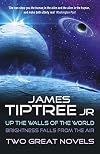
Up the Walls of the World
Tiptree, whose real name was Alice Sheldon, not only convinced the science fiction world she was a male writer for much of her career, she also wrote a number of stone cold classic science fiction short stories. I am definitely a fan of her short fiction. She only wrote two novels, however: Up the Walls of the World, published in 1978, and Brightness Falls from the Air in 1985. This was my first read of Tiptree at novel-length.
The title refers to the “walls” of a show more vast maelstrom in the atmosphere of a gas giant, Tyree. It is inhabited by huge manta ray-like aliens, who communicate using light but also seem to experience some radiation as “sound”. It takes a while before the synaesthesia Triptree uses makes sense, and I’m not entirely convinced it, and the fact the males nurture the young, makes the aliens as, well, alien as Tiptree intended.
Meanwhile, on Earth, Dr Dan Dann (yes, really) is the medical support for a US Navy-sponsored experiment in ESP involving a handful of varied subjects - a pair of identical twins, two teenage girls, a a matronly housewife, an embittered dwarf, and a somewhat dim-witted young man. The experiment is moved to a remote Navy camp, when the twins are used to test telepathic communication between land and a submarine.
A third narrative, written entirely in CAPS, which proves really irritating to read, is the stream of consciousness of some sort of distributed interstellar intelligence, which has been destroying stars.
The Destroyer’s attack on Tyree’s star prompts the aliens to attempt to take over the minds of Earth’s humans, and a “test mission” results in some of those involved in the Navy experiment to find themselves in alien bodies on Tyree. One of the experiment’s staff, however, a POC computer programmer instead finds herself in the Destroyer. Which she tries to control, using her knowledge of programming.
There are things to like in Up the Walls of the World, but I’m puzzled at the praise given to the novel around the time it was published. I get that a novel from Tiptree, a controversial figure and a well-known writer of top-notch science fiction short stories, is worthy of serious consideration… But I suspect time hasn’t been especially kind to the book. The descriptions of Tyree are good, and its inhabitants are original and well-presented - but not all that, well, alien. Dr Dan Dann (yes, really) is very much a typical narrator for US science fiction of the time (and Tiptree does well at channelling her inner Jubal Harshaw), and her POC character is unusual for the late 1970s and handled sensitively.
As I read Up the Walls of the World, I couldn’t help thinking CJ Cherryh’s Voyager in Night, published six years later in 1984, wasn’t partly written in response. It’s another novel that hasn’t quite survived the millennium. Nonetheless, I still recommended reading everything Tiptree wrote.
Brightness Falls from the Air
The second of only two novels published by Tiptree, and opinions on it are somewhat divided, chiefly I suspect because of one element of the book that has aged very badly - and was questionable to begin with.
The world of Dameim is home to an alien race who were illegally tortured and maimed in order to harvest a chemical they exude, which was then distilled into an extremely expensive drink called Star Tears. (The drink is mentioned in an earlier story by Tiptree, and the later collection The Starry Rift takes place in the same universe.) Dameim is now overseen by three guardians, Cory, Kip and Bram, who live in a sort of safari lodge (which Tiptree admitted was inspired by her childhood safaris with her parents). They’re visited by a group of ten tourists, there to witness the wave-front of the Murdered Star pass over the planet. But two other men also disembark, apparently through some error, as does the supercargo who looked after the passengers while they were in cold sleep.
There are two plots - the last survivor of an alien race has tracked down the person who fired the shot which destroyed their sun, ie the Murdered Star; and three of the visitors are planning to make themselves some Star Tears - by torturing and maiming Dameii, of course. The latter plays out pretty much as you’d expect - the villains reveal themselves, and seize control. The first plot presents more of a surprise. It wasn’t the genocide everyone believed, and the alien’s “vengeance” is… complicated.
So far, so not especially a science-fictional story. There are real-world analogues to the two stories. However, the novel’s resolution depends in part on “time flurries” caused by the Murdered Star’s wave-front, and that’s pretty much sf. Tiptree also hints the cause of the genocide has, through the wave-front, altered everyone’s perceptions of Damiem and the Dameii.
Unfortunately, there’s one misstep the novel can’t recover from - among the tourists are four actors ranging in age from thirteen to sixteen, and they’re porn actors. Even in 1985, readers struggled to accept this, and it’s even less acceptable now than ever before, post-Yew Tree, post Trump and Epstein and the Andrew formerly known as prince… The actors are engaging characters, but the teen pornography leaves a bad taste.
I’ve seen Brightness Falls from the Air described as Tiptree best-known but least-liked novel. She only wrote two and is much better known for her short fiction, so it seems a dumb way to refer to the book. And yet, except for the under-age sex, there’s a lot to like about Brightness Fall from the Air. The main plot is perhaps not intrinsically sf, although Tiptree makes the setting entirely genre, and the many other plots and subplots she handles with admirable deftness. It’s perhaps the most colourful and yet bleak novel I’ve read.
The Starmont Reader’s Guide to James Tiptree, Jr by Mark Siegel, one of only two critical works on Tiptree’s fiction I’ve managed to find, suggests a common theme to much of her fiction: she believed mortality, or the acceptance of mortality, was necessary to create art; it is the shadow of death, oblivion, hanging over us that drives creativity. Brightness Falls from the Air certainly illustrates this theory.
I’ve read a lot of Tiptree this year, and the more I read the more I like it. I’ve always regarded a handful of her stories as stone cold classics of the genre. It’s also true many of her stories have not aged particularly well. I’ll happily recommend her works to people, but with the caveat they should probably stick to her short fiction. show less
Tiptree, whose real name was Alice Sheldon, not only convinced the science fiction world she was a male writer for much of her career, she also wrote a number of stone cold classic science fiction short stories. I am definitely a fan of her short fiction. She only wrote two novels, however: Up the Walls of the World, published in 1978, and Brightness Falls from the Air in 1985. This was my first read of Tiptree at novel-length.
The title refers to the “walls” of a show more vast maelstrom in the atmosphere of a gas giant, Tyree. It is inhabited by huge manta ray-like aliens, who communicate using light but also seem to experience some radiation as “sound”. It takes a while before the synaesthesia Triptree uses makes sense, and I’m not entirely convinced it, and the fact the males nurture the young, makes the aliens as, well, alien as Tiptree intended.
Meanwhile, on Earth, Dr Dan Dann (yes, really) is the medical support for a US Navy-sponsored experiment in ESP involving a handful of varied subjects - a pair of identical twins, two teenage girls, a a matronly housewife, an embittered dwarf, and a somewhat dim-witted young man. The experiment is moved to a remote Navy camp, when the twins are used to test telepathic communication between land and a submarine.
A third narrative, written entirely in CAPS, which proves really irritating to read, is the stream of consciousness of some sort of distributed interstellar intelligence, which has been destroying stars.
The Destroyer’s attack on Tyree’s star prompts the aliens to attempt to take over the minds of Earth’s humans, and a “test mission” results in some of those involved in the Navy experiment to find themselves in alien bodies on Tyree. One of the experiment’s staff, however, a POC computer programmer instead finds herself in the Destroyer. Which she tries to control, using her knowledge of programming.
There are things to like in Up the Walls of the World, but I’m puzzled at the praise given to the novel around the time it was published. I get that a novel from Tiptree, a controversial figure and a well-known writer of top-notch science fiction short stories, is worthy of serious consideration… But I suspect time hasn’t been especially kind to the book. The descriptions of Tyree are good, and its inhabitants are original and well-presented - but not all that, well, alien. Dr Dan Dann (yes, really) is very much a typical narrator for US science fiction of the time (and Tiptree does well at channelling her inner Jubal Harshaw), and her POC character is unusual for the late 1970s and handled sensitively.
As I read Up the Walls of the World, I couldn’t help thinking CJ Cherryh’s Voyager in Night, published six years later in 1984, wasn’t partly written in response. It’s another novel that hasn’t quite survived the millennium. Nonetheless, I still recommended reading everything Tiptree wrote.
Brightness Falls from the Air
The second of only two novels published by Tiptree, and opinions on it are somewhat divided, chiefly I suspect because of one element of the book that has aged very badly - and was questionable to begin with.
The world of Dameim is home to an alien race who were illegally tortured and maimed in order to harvest a chemical they exude, which was then distilled into an extremely expensive drink called Star Tears. (The drink is mentioned in an earlier story by Tiptree, and the later collection The Starry Rift takes place in the same universe.) Dameim is now overseen by three guardians, Cory, Kip and Bram, who live in a sort of safari lodge (which Tiptree admitted was inspired by her childhood safaris with her parents). They’re visited by a group of ten tourists, there to witness the wave-front of the Murdered Star pass over the planet. But two other men also disembark, apparently through some error, as does the supercargo who looked after the passengers while they were in cold sleep.
There are two plots - the last survivor of an alien race has tracked down the person who fired the shot which destroyed their sun, ie the Murdered Star; and three of the visitors are planning to make themselves some Star Tears - by torturing and maiming Dameii, of course. The latter plays out pretty much as you’d expect - the villains reveal themselves, and seize control. The first plot presents more of a surprise. It wasn’t the genocide everyone believed, and the alien’s “vengeance” is… complicated.
So far, so not especially a science-fictional story. There are real-world analogues to the two stories. However, the novel’s resolution depends in part on “time flurries” caused by the Murdered Star’s wave-front, and that’s pretty much sf. Tiptree also hints the cause of the genocide has, through the wave-front, altered everyone’s perceptions of Damiem and the Dameii.
Unfortunately, there’s one misstep the novel can’t recover from - among the tourists are four actors ranging in age from thirteen to sixteen, and they’re porn actors. Even in 1985, readers struggled to accept this, and it’s even less acceptable now than ever before, post-Yew Tree, post Trump and Epstein and the Andrew formerly known as prince… The actors are engaging characters, but the teen pornography leaves a bad taste.
I’ve seen Brightness Falls from the Air described as Tiptree best-known but least-liked novel. She only wrote two and is much better known for her short fiction, so it seems a dumb way to refer to the book. And yet, except for the under-age sex, there’s a lot to like about Brightness Fall from the Air. The main plot is perhaps not intrinsically sf, although Tiptree makes the setting entirely genre, and the many other plots and subplots she handles with admirable deftness. It’s perhaps the most colourful and yet bleak novel I’ve read.
The Starmont Reader’s Guide to James Tiptree, Jr by Mark Siegel, one of only two critical works on Tiptree’s fiction I’ve managed to find, suggests a common theme to much of her fiction: she believed mortality, or the acceptance of mortality, was necessary to create art; it is the shadow of death, oblivion, hanging over us that drives creativity. Brightness Falls from the Air certainly illustrates this theory.
I’ve read a lot of Tiptree this year, and the more I read the more I like it. I’ve always regarded a handful of her stories as stone cold classics of the genre. It’s also true many of her stories have not aged particularly well. I’ll happily recommend her works to people, but with the caveat they should probably stick to her short fiction. show less
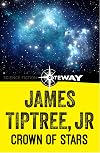
It’s probably long past time I acknowledge Tiptree as one of my favourite genre writers, given I’ve read almost everything she wrote and will happily reread many of her stories. I’d also classify some of her fiction as stone-cold genre classics.
Crown of Stars, a posthumous collection, is an odd book. Especially given how Tiptree died. The contents are a mixture of science fiction and fantasy and, to be honest, the fantasy ones feel more like extended jokes than actual fiction. Not that show more the sf stories are all entirely serious. They are all, however, pretty dark.
Telepathic aliens visit Earth but go away disappointed there are no gods. Poor single mothers give up their babies for adoption in a future where only the super-rich can afford “meat”. Heaven has gone bankrupt so Satan offers it space in Hell. A soldier on battle-drugs is sent to detox but finds a stash of the drugs and breaks out. A young woman is convinced the Earth is male and does her best to attract his interest. The most poignant story, however, has a teenage girl swap lives with herself at seventy, only to discover her family’s wealth had been lost, the USA consists of gated communities but is otherwise lawless, and in her attempt to make her life when she swaps back better, she inadvertently makes it worse.
These are quality stories, although none are perhaps as memorable as Tiptree’s best. ‘The Earth Like a Snake Doth Renew’, which is clearly in conversation with Tiptree’s own ‘The Last Flight of Doctor Ain’, is perhaps the top story here, or at least showcases those elements in her fiction for which she was most admired. To anyone new to Tiptree, I’d suggest starting somewhere else, perhaps her first anthology, Ten Thousand Light-Years from Home, or one of the later best of collection, such as Her Smoke Rose Up Forever, but exploring her oeuvre is certainly worth doing. show less
Crown of Stars, a posthumous collection, is an odd book. Especially given how Tiptree died. The contents are a mixture of science fiction and fantasy and, to be honest, the fantasy ones feel more like extended jokes than actual fiction. Not that show more the sf stories are all entirely serious. They are all, however, pretty dark.
Telepathic aliens visit Earth but go away disappointed there are no gods. Poor single mothers give up their babies for adoption in a future where only the super-rich can afford “meat”. Heaven has gone bankrupt so Satan offers it space in Hell. A soldier on battle-drugs is sent to detox but finds a stash of the drugs and breaks out. A young woman is convinced the Earth is male and does her best to attract his interest. The most poignant story, however, has a teenage girl swap lives with herself at seventy, only to discover her family’s wealth had been lost, the USA consists of gated communities but is otherwise lawless, and in her attempt to make her life when she swaps back better, she inadvertently makes it worse.
These are quality stories, although none are perhaps as memorable as Tiptree’s best. ‘The Earth Like a Snake Doth Renew’, which is clearly in conversation with Tiptree’s own ‘The Last Flight of Doctor Ain’, is perhaps the top story here, or at least showcases those elements in her fiction for which she was most admired. To anyone new to Tiptree, I’d suggest starting somewhere else, perhaps her first anthology, Ten Thousand Light-Years from Home, or one of the later best of collection, such as Her Smoke Rose Up Forever, but exploring her oeuvre is certainly worth doing. show less
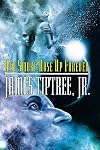
One of my goals this year was to start reading books that have won the James Tiptree, Jr. Award, which is presented for stories that explore aspects of gender, primarily in SciFi and Fantasy. Since I was reading these award winners, I figured I should also read some of the work by the author after whom the award is named. James Tiptree, Jr. is a pseudonym for Alice Bradley Sheldon, who wrote hard science fiction for years without readers knowing she was a woman.
Tiptree is a perfect namesake show more for this award because so many of her own stories explore gender and sexuality in challenging and innovative ways. These stories are intelligent, sometimes challenging, and often bleak.
"The Screwfly Solution," which is one of the best short stories I've read in years, involves increasing numbers of attacks by men against women. Bits of news clips, letters, and diary entries are placed alongside the main narrative of a man trying to make it home to his wife and daughter amid the mounting chaos. The ending is fatalistic and powerful, haunting.
In "The Women Men Don't See” a journalist on a trip into Mexico takes a flight on a small plane with a mother and daughter, whom he finds unsettlingly independent and not fitting into his expectations of how women should be. I can’t say much more about the story without giving too much away, but the exploration of gender roles becomes increasingly explicit.
“With Delicate Mad Hands” is the story of a woman with a facial deformity who has lived her entire life unloved by her fellow human beings who mock and abuse her. She perseveres through an inner secret drive to leave Earth’s solar system behind her, and she achieves this one day by stealing a ship and steering it solo to the stars. There is so much more to the story than that short description, but I don’t want to say anymore. Although as dark as any other of Tiptree’s stories, this was also sweet and romantic.
Another subset of stories explore sexual behavior through alien bodies and include stories such as “Love is the Plan the Plan is Death,” "On the Last Afternoon," and "A Momentary Taste of Being." The alien-ness of these creatures or beings is startling and often destructive to human existence.
Other stories reflect on moral complexities of human society. “The Last Flight of Doctor Ain,” for example presents bits and pieces of Doctor Ain’s last flight told through the points of view of the people who meet him along his journey (again, this tells too little, but it really is a thrilling story). In "We Who Stole the Dream" an alien race enacts a revolt against humanity which holds them captive, breaking free from slavery and suffering, only to find that the home they are returning to is not the dream-come-true they expected.
Although I didn’t necessarily love every story, reading this brick-thick collection was a fantastic experience. Tiptree was an amazing writer, a master of the genre. Her work is a must read for any science fiction fan. show less
Tiptree is a perfect namesake show more for this award because so many of her own stories explore gender and sexuality in challenging and innovative ways. These stories are intelligent, sometimes challenging, and often bleak.
"The Screwfly Solution," which is one of the best short stories I've read in years, involves increasing numbers of attacks by men against women. Bits of news clips, letters, and diary entries are placed alongside the main narrative of a man trying to make it home to his wife and daughter amid the mounting chaos. The ending is fatalistic and powerful, haunting.
In "The Women Men Don't See” a journalist on a trip into Mexico takes a flight on a small plane with a mother and daughter, whom he finds unsettlingly independent and not fitting into his expectations of how women should be. I can’t say much more about the story without giving too much away, but the exploration of gender roles becomes increasingly explicit.
“With Delicate Mad Hands” is the story of a woman with a facial deformity who has lived her entire life unloved by her fellow human beings who mock and abuse her. She perseveres through an inner secret drive to leave Earth’s solar system behind her, and she achieves this one day by stealing a ship and steering it solo to the stars. There is so much more to the story than that short description, but I don’t want to say anymore. Although as dark as any other of Tiptree’s stories, this was also sweet and romantic.
Another subset of stories explore sexual behavior through alien bodies and include stories such as “Love is the Plan the Plan is Death,” "On the Last Afternoon," and "A Momentary Taste of Being." The alien-ness of these creatures or beings is startling and often destructive to human existence.
Other stories reflect on moral complexities of human society. “The Last Flight of Doctor Ain,” for example presents bits and pieces of Doctor Ain’s last flight told through the points of view of the people who meet him along his journey (again, this tells too little, but it really is a thrilling story). In "We Who Stole the Dream" an alien race enacts a revolt against humanity which holds them captive, breaking free from slavery and suffering, only to find that the home they are returning to is not the dream-come-true they expected.
Although I didn’t necessarily love every story, reading this brick-thick collection was a fantastic experience. Tiptree was an amazing writer, a master of the genre. Her work is a must read for any science fiction fan. show less
Lists
Awards


You May Also Like


Associated Authors
Statistics
- Works
- 122
- Also by
- 172
- Members
- 6,912
- Popularity
- #3,536
- Rating
- 3.9
- Reviews
- 157
- ISBNs
- 115
- Languages
- 13
- Favorited
- 55

