
Ralph Vaughan Williams (1872–1958)
Author of The Oxford Book of Carols
About the Author
English composer Ralph Vaughan Williams was born in Down Ampney, Gloucestershire. An early aptitude for music was encouraged by his parents, and he studied at the Royal College of Music in London as well as in Paris and Berlin. Vaughan William's music is essentially English in character, making him show more the first truly national composer since the sixteenth century. He is especially in touch with the English choral tradition. His first major success was Sea Symphony (1910), a choral piece set to words by Walt Whitman. His interest in choral music contributed to his becoming a leader in the English folk-song movement, and he was an enthusiastic collector of traditional folk songs. In his own work, Vaughan Williams often combined folk melodies with modern harmonies, creating a very distinctive style. Among his orchestral music, the most notable are the beautiful Fantasia on a Theme by Thomas Tallis (1909), London Symphony (1914), Pastoral Symphony (1922), and Sinfonia Antarctica (1952), a tribute to the explorer Robert Falcon Scott. Other well-known works include the ballad opera Hugh the Drover (1911--14) and the opera The Pilgrim's Progress (1948--49). He has also composed works for the ballet, for the stage, and for films. (Bowker Author Biography) show less
Disambiguation Notice:
Note that the composer's surname is Vaughan Williams, not Williams.
(fin) Säveltäjän sukunimi ei ole Williams vaan Vaughan Williams.
Image credit: Image © ÖNB/Wien
Series
Works by Ralph Vaughan Williams
Vaughan Williams : Fantasia on Greensleeves + Fantasia on a theme by Thomas Tallis + Five variants of Dives and Lazarus + Lark ascending {sound recording} {1972 Marriner/Academy… (1972) — Composer — 20 copies
Vaughan Williams : English folk song suite + Fantasia on Greensleeves + In the fen country + Lark ascending + Norfolk rhapsody no.1 + Serenade to music {sound recording}… (1991) — Composer — 18 copies
Elgar : Elegy + Introduction and allegro + Serenade + Sospiri + Vaughan Williams : Fantasia on a theme by Thomas Tallis + Fantasia on 'Greensleeves' {sound recording} (1962) — Composer — 16 copies
Bryn Terfel - The Vagabond & other songs by Vaughan Williams, Butterworth, Finzi & Ireland (1995) 14 copies
Vaughan Williams : Fantasia on christmas carols + Five mystical songs + Flos campi + Serenade to music {sound recording} (1990) — Composer — 14 copies
Elgar : Violin concerto + Vaughan Williams : The lark ascending {sound recording} {2003 Davis/LSO/Hahn} (2003) — Composer — 12 copies
Elgar : Violin concerto + Vaughan Williams : The lark ascending {sound recording} {1997 Rattle/CBSO/Kennedy} (1997) — Composer — 10 copies, 1 review
Vaughan Williams : Dona nobis pacem + Sancta Civitas {sound recording} {Hickox/LSO} (1993) 10 copies
Vaughan Williams: Hodie A Christmas Cantata / Fantasia on Christmas Carols • Baker (2000) — Composer — 10 copies
Barber : Prayers of Kierkegaard + Bartok : Cantata Profana + Vaughan Williams : Dona nobis pacem {sound recording} (1998) — Composer — 9 copies
A Vaughan Williams Hymnal 9 copies
Sir John In Love 9 copies
Vaughan Williams : Fantasia on a theme by Thomas Tallis + Lark ascending + Symphony no.6 {sound recording {1990 Davis/BBC Symphony/Little} (1990) — Composer — 8 copies
Vaughan Williams : Fantasia on a theme by Thomas Tallis + In the fen country + Lark ascending + Norfolk Rhapsody no.1 + On Wenlock Edge {sound recording} (1986) — Composer — 8 copies
Lord, thou hast been our refuge 7 copies
Vaughan Williams : A London Symphony (Original 1913 Version) + Butterworth : The Banks of Green Willow [sound recording] (2001) — Composer — 7 copies
Butterworth + Delius + Elgar + Vaughan Williams : Fantasia on Greensleeves + Warlock : Capriol suite + Serenade for strings {sound recording} (1997) — Composer — 7 copies
Vaughan Williams : Lark ascending + Norfolk rhapsody no.1 + Symphony no.5 {sound recording} {1994 Haitink/LPO} (1994) 6 copies
Vaughan Williams - Along the Field on Wenlock Edge · Merciless Beauty · Ten Blake Songs, and others / Ainsley · The Nash Ensemble (2000) — Composer — 6 copies
Vaughan Williams : Lark Ascending + Symphony no.2 {sound recording} {1986 Previn/RPO/Griffiths} (1986) — Composer — 6 copies
Vaughan Williams : Flos Campi + An Oxford Elegy + Sancta Civitas + Whitsunday Hymn {sound recording} (1968) — Composer — 6 copies
Britten : Serenade for tenor, horn and strings, op.31 + Elgar : Serenade for strings in E minor, op.20 + Vaughan Williams : Serenade to music [sound recording] (1938) — Composer — 5 copies
Toward the unknown region [score] — Composer — 5 copies
Vaughan Williams : Five variants of Dives and Lazarus + Sons of light + Toward the unknown region + The voice out of the whirlwind + Willow-Wood [sound recording] (2005) — Composer — 4 copies
Vaughan Williams : Dona nobis pacem + Mass in G minor + O Clap your Hands {sound recording} — Composer — 4 copies
Hugh the Drover [sound recording] 4 copies
Magnificat and Nunc Dimittis 4 copies
Vaughan Williams : Dona nobis pacem + Four Hymns + Lord, Thou hast been our refuge + O Clap your Hands + Toward the Unknown Region {sound recording} (1992) — Composer — 4 copies
Vaughan Williams Concert (Fantasia on Greensleeves, Concerto Grosso, Romance, Oboe Concerto, English Folk Song Suite) (1989) 4 copies
Silent noon [sheet music] 4 copies
Vaughan Williams : Variations on a theme by Thomas Tallis + Walton : Belshazzar's feast [sound recording] (1999) — Composer — 4 copies
Vaughan Williams: Fantasia On A Theme by Thomas Tallis / Barber: Adagio For Strings / Grainger: Irish Tune From County Derry (1981) 3 copies
Loch Lomond 3 copies
Copland : Quiet city + Hindemith : Konzertmusik für Blasorchester, Op.41 + Husa : Music for Prague 1968 + Vaughan Williams : Toccata marziale + Variations for wind band [sound… (1989) — Composer — 3 copies
Linden Lea 3 copies
For All the Saints 3 copies
Vaughan Williams : Concerto grosso + English folk song suite + Fantasia on Greensleeves + Fantasia on a theme by Thomas Tallis + Five variants of Dives and Lazarus + In the Fen… — Composer — 3 copies
Vaughan Williams : Concerto Grosso + Dona nobis pacem + Fantasia on the Old 104th Psalm Tune + Fantasia on a theme by Thomas Tallis + The Lark Ascending + Magnificat + Partita +… (2001) — Composer — 3 copies
O Praise the Lord of Heaven 3 copies
Vaughan Williams : The Wasps + Walton : Symphony no.1 {sound recording} (1966) — Composer — 3 copies
Fantasia on 'Greensleeves' + Fantasia on a theme by Thomas Tallis + Serenade to music + Symphony no.4 in F minor [sound recording] (1993) — Composer — 3 copies
Vaughan Williams : Five variants of "Dives and Lazarus" + Flos Campi + An Oxford Elegy {sound recording} — Contributor — 3 copies
Holst : The planets + Vaughan Williams : Fantasia on Greensleeves + Fantasia on a theme by Thomas Tallis {sound recording} (1989) — Composer — 2 copies
McEwen : Viola concerto + Vaughan Williams : Flos Campi {sound recording} {2011 Brabbins/BBC Welsh} (2011) — Composer — 2 copies
Folk Songs, Volume 1 2 copies
Coates : Knightsbridge march + Elgar : Cockaigne + Holst : Egdon Heath + Vaughan Williams : The Lark Ascending + Walton : Façade Suite {sound recording} — Composer — 2 copies
Vaughan Williams : Five mystical songs + Five tudor portraits [sound recording] (1999) — Composer — 2 copies
Dream-land (High Voice) 2 copies
Ralph Vaughan Williams: Toward The Unknown Region (Vocal Score). Sheet Music for SATB, Piano Accompaniment (1866) 2 copies
Morning Service in D minor 2 copies
Vaughan Williams : Dona nobis pacem + Sancta Civitas {sound recording} {Hill/Bournemouth Symphony} (2010) — Composer — 2 copies
Holst : Marching song + The planets + Vaughan Williams : Symphony no.4 {sound recording} (1926) — Conductor, some editions; Composer, Conductor — 2 copies
Come Down, O Love Divine 2 copies
Vaughan Williams : Flos Campi + Household Music + Riders to the Sea {sound recording} (1995) — Composer — 2 copies
The Vagabond 2 copies
Vaughan Williams : Fantasia on Greensleeves + Fantasia on a theme by Thomas tallis + Lark ascending {sound recording} — Composer — 2 copies
Silent Noon 2 copies
Vaughan Williams: Fantasia on a Theme by Thomas Tallis / Five Variants of Dives and Lazarus 2 copies
Serenade to music + Sinfonia Antarctica [sound recording] — Composer — 2 copies
Songs of Travel 2 copies
Vaughan Williams: A Sea Symphony 2 copies
A Babe is Born 2 copies
Merciless Beauty ... Three Rondels for high voice, with accompaniment for string trio, or pianoforte, poems by Chaucer. [Score and parts.] (1922) 2 copies
Vaughan Williams : Flos Campi + Oboe concerto + Symphony no.5 in D {sound recording} (2002) 2 copies
Vaughan Williams: A London Symphony (Original 1913 Version) / Butterworth: The Banks of Green Willow 2 copies
Elgar : Violin sonata in E minor + Vaughan Williams : Lark ascending {piano/violin version} + Violin sonata in A minor {sound recording} {2019 Pike/Roscoe} (2019) — Composer — 2 copies
The Pilgrim's Progress : complete radio play with incidental music. Sir John Gielgud as Christian. BBC Symphony Orchestra and BBC Chorus. 2CD (2015) 2 copies
Vaughan Williams: A London Symphony, Symphony no 8, Halle Orchestra, Sir John Barbirolli (2002) 2 copies
Songs of Travel Softcover 2 copies
Vaughan Williams : Lark Ascending + Oboe concerto + Tuba concerto {sound recording} {Barenboim} — Composer — 2 copies
Vaughan Williams: Oboe Concerto / English Folksongs / Suite Partita / Fantasia on Greensleeves 2 copies
Vaughan Williams : Fantasia on Greensleeves + Fantasia on a theme by Thomas Tallis + Lark ascending + Oboe concerto {sound recording} / (1990) — Composer — 2 copies
Symphony No. 9 in E minor 2 copies
Mass in G minor 2 copies
Vaughan Williams: The Collector's Edition - 30 CDs by Warner Classics (2008-07-08) (2008) — Composer — 2 copies
Film Music 2 copies
Vaughan Williams : Fantasia on Greensleeves + Fantasia on a theme by Thomas Tallis + Five variants of Dives and Lazarus + Lark ascending + Oboe concerto + Wasps : Overture {sound… (1994) — Composer — 2 copies
Wassail Song 2 copies
Three Preludes founded on Welsh Hymn Tunes, for organ. Bryn calfaria. Rhosymedre. Hyfrydol. 2 copies
The turtle dove : folk song 2 copies
Vaughan Williams : Concerto grosso : Sarabande + English folk song suite + Fantasia on Greensleeves + Fantasia on a theme by Thomas Tallis + Lark ascending + Oboe concerto +… — Composer — 2 copies
Vaughan Williams: The Pilgrim's Progress, John Noble, London Philharmonic Choir and Orchestra, Sir Adrian Boult (1996) 2 copies
For all the Saints 2 copies
Vaughan Williams : Dona nobis pacem + Five mystical songs {sound recording} (1988) — Composer — 2 copies, 1 review
Prelude on Three Welsh Hymn Tunes 2 copies
Vaughan Williams : Two Anthems : English folk song suite + Fantasia on Christmas carols + Fantasia on Greensleeves + Lark ascending + Poems for voice and piano + Three Shakespeare… — Composer — 2 copies
Folk Songs of the Four Seasons. A Cantata for Women"s Voices with Orchestral or Pianoforte Accompaniment Vocal Score (2006) 2 copies
Hodie (This Day) 2 copies
Symphony No. 6, in E Minor / Five Variants of Dives and Lazarus, for String Orchestra and Harp. 2 copies
Elgar : Cello Concerto in E minor, Op.85 + Vaughan Williams : Fantasia on Thomas Tallis + Greensleeves [sound recording] — Composer — 2 copies
Vaughan Williams : Fantasia on a theme by Thomas Tallis + In the fen country + Lark ascending + Norfolk rhapsody no.1 + On Wenlock Edge + Symphony nos. 1-9 {sound recording}… (1984) — Composer — 2 copies
Vaughan Williams : Flos Campi + O, Clap Your Hands + The Old 100th + An Oxford Elegy + Te Deum {sound recording} (1989) — Composer — 2 copies
The Springtime of the Year 2 copies
Eight traditional English carols 2 copies
Vaughan Williams : English folk song suite + Fantasia on Greensleeves + In the fen country + Lark ascending + Norfolk rhapsody no.1 + Serenade to music {sound recording} {Boult} — Composer — 2 copies
Mass in G minor Te Deum in G 1 copy
Vaughan Williams : Fantasia on the old 104th Psalm Tune + Flos Campi + Magnificat + An Oxford Elegy {sound recording} (1989) — Composer — 1 copy
Toccata Marziale 1 copy
Songs of Travel 1 copy
Four Last Songs 1 copy
English Songs & Sea Ballads 1 copy
Vaughan Williams : Five variants of Dives and Lazarus + Lark ascending + Wasps {sound recording} (1985) — Composer — 1 copy
Vaughan Williams : English Folk Song Suite + Fantasia on Greensleeves + Fantasia on a theme by Thomas Tallis + Five variants of 'Dives And Lazarus' + Flos Campi + Job : A Masque… (1983) — Composer — 1 copy
Brainwave Symphony: Theta 1 copy
Visions of England 1 copy
A Sea Symphony For Soprano And Baritone Soli, Chorus And Orchestra. Words By Walt Whitman. Vocal Score. (1926) 1 copy
Symphony No.5 - Pocket Score 1 copy
Orchestral Favourites 1 copy
Willow-Wood, The Sons of Light, Toward the Unknown Region, Five Variants of Dives and Lazarus 1 copy
Delius : In a summer garden + On hearing the first cuckoo in spring + Vaughan Williams : Lark ascending + Warlock : The Curlew {sound recording} (1983) — Composer — 1 copy
Seven Songs from the Pilgrim's Progress: No. 3, The Pilgrim's Psalm [score], R. Vaughan Williams 1 copy
BBC Proms 2021 : Prom 36 : 20th-Century British Film Music [sound recording] (2021) — Composer — 1 copy
BBC Proms 2021 : Prom 07 : Vaughan Williams, Respighi and Mendelssohn [sound recording] (2021) — Composer — 1 copy
Song of the Leaves of Life and the Water of Life, No. 4, from Seven Songs from The Pilgrim's Progress (1952) 1 copy
Britten : The young person's guide to the orchestra, Op.34 + Elgar : Cello concerto in E minor, Op.85 + Vaughan Williams : In the fen country [sound recording] — Composer — 1 copy
BBC Proms 2005 : Prom 05 : Michael Berkeley, Benjamin Britten and Vaughan Williams [video recording] (2005) — Composer — 1 copy
Holst : The planets + Vaughan Williams : Fantasia on a theme by Thomas Tallis + Fantasia on 'Greensleeves' {sound recording} {1970/1972/1975 Ormandy/Philadelphia} (1970) — Composer — 1 copy
Seven Songs from the Pilgrim's Progress: No. 4 The Song of the Leaves of Life and the Water of Life 1 copy
Elgar : Chanson de matin + Chanson de nuit + In moonlight + Introduction and allegro + Salut d'amour + Serenade for string orchestra + Vaughan Williams : Fantasia on a theme by… — Composer — 1 copy
Silent Noon 1 copy
Elgar : Enigma Variations + Serenade for strings + Vaughan Williams : Fantasia on Greensleeves + Fantasia on a theme of Thomas Tallis + The lark ascending {sound recording}… (1983) — Composer — 1 copy
Beethoven : Violin Concerto + Vaughan Williams : Dona nobis pacem {sound recording} (1936) — Composer, Conductor [Dona nobis pacem] — 1 copy
Butterworth: A Shropshire Lad / Delius: Walk to the Paradise Garden & In a Summer Garden / Vaughan Williams: Symphony No. 5 [sound recording] — Composer — 1 copy
Elgar : Variations on an original theme 'Enigma', Op.36 + Tippett : The Midsummer Marriage : Ritual dances + Vaughan Williams : Five variants of Dives and Lazarus [sound… (2005) — Composer — 1 copy
BBC Proms 2025 : First Night of the Proms 2025 : Friday 18 July 2025 {sound recording} (2025) — Composer — 1 copy
Britten : Prelude and Fugue, op.29 + Elgar : Introduction and Allegro, op.47 + Holst : The planets + Vaughan Williams : English Folk Song Suite + Fantasia on Greensleeves +… (1959) — Composer — 1 copy
Elgar : Variations on an original theme 'Enigma', Op.36 + Vaughan Williams : English Folk Song Suite. Greensleeves Fantasia [sound recording] — Composer — 1 copy
Land of Hope and Glory [sound recording] — Composer — 1 copy
English Landscapes 1 copy
Silent Noon ; G. Ricordi & Co's Collection of Part Songs and Choruses ; For Women's Voices, S.S.A. 1 copy
O How Amiable 1 copy
Just as the Tide was Flowing 1 copy
My Soul, Praise the Lord 1 copy
Pilgram's Journey 1 copy
In Windsor Forest 1 copy
Dona Nobis Pacem c.1 1 copy
A Song of Thanksgiving c.5 1 copy
Symphony 1 Sea 1 copy
A Song of Thanksgiving c.3 1 copy
Symphonies Nos 4 & 6 1 copy
Williams - English Fantasia 1 copy
A Song of Thanksgiving c.4 1 copy
A Song of Thanksgiving c.2 1 copy
Sjung folk och länder 1 copy
On Wenlock Edge 1 copy
Te Deum in G 1 copy
På jorden Jesus gick 1 copy
THE OXFORD BOOK OF CAROLS FOR SCHOOLS: a Selection Arranged for Unison Singing (Melody edition) (1956) 1 copy
A Song of Thanksgiving c.1 1 copy
The Pilgrim's Progress 1 copy
Choral Folksong Arrangements 1 copy
Ralph Vaughan Williams: Norfolk Rhapsody; In the Fen Country; Fantasia on a Theme by Thomas Tallis 1 copy
On Christmas Night 1 copy
Williams: Sinfonia Antartica 1 copy
The Pilgrim's Progress 1 copy
Suite de Ballet 1 copy
The New Ghost 1 copy
The Water Mill 1 copy
Symphony No. 8 in D Minor 1 copy
The New Collector Edition 1 copy
Vaughan Williams - Gebundeld 1 copy
The First Nowell 1 copy
I Will Give My Love An Apple 1 copy
The Making of Music 1 copy
Visions of England 1 copy
Vaughan Williams : Flos Campi + Hymn-tune prelude no.1 + Hymn-tune prelude no.2 + Overture 'The Poisoned Kiss' + The Running Set {sound recording} (1977) — Composer, Arranger — 1 copy, 1 review
Unto him that loved us 1 copy
Symphony No 6 in E Minor 1 copy
O Little Town of Bethlehem 1 copy
Christmas Hymn 1 copy
A Vaughan Williams Christmas 1 copy
The Wasps Overture 1 copy
The Vagabond. For male voices, etc. (Arranged by the composer.) (Boosey's modern Festival Series) 1 copy
Folk Songs 1 copy
Williams: Symphonies Nos. 4 & 5 / Tallis Fantasia / Eight Folk Dances / Ten Folk Songs & Carols / On Wenlock Edge (1999) 1 copy
Silent noon 1 copy
symphony no.4 1 copy
the Wasps overture 1 copy
On Wenlock Edge: A Cycle Of Six Songs For Tenor Voice With Accompaniment Of Pianoforte And String Quartett (ad Lib) (1946) 1 copy
L' Amour De Moy 1 copy
Bright is the Ring of Words 1 copy
Te Deum in D minor 1 copy
Three song cycles 1 copy
The Twenty Third Psalm 1 copy
Morning Service in D 1 copy
Williams: Symphony No. 5 / Three Portraits from The England of Elizabeth / Tuba Concerto (1990) 1 copy
Vaughan Williams: Fantasia for Piano & Orchestra / Mathias: Concertos for Piano & Orchestra, Nos. 1 & 2 (2012) 1 copy
Vaughan Williams : Fantasia on 'Greensleeves' + Serenade to music + Symphony no.5 + Toward the unknown region + The Wasps : Overture [sound recording] (2008) — Composer — 1 copy
English Songs 1 copy
Vaughan Williams : Fantasia on Greensleeves + Fantasia on a theme by Thomas tallis + Five variants on Dives and Lazarus + Lark ascending + Partita + Symphony no.5 : Romanza {sound… — Composer — 1 copy
20th Century Flute Music 1 copy
Vaughan Williams: Job - A Masque for Dancing, Fantasia On a Theme by Thomas Tallis, Five Variants of Dives & Lazarus (2002) 1 copy
Vaughan Williams : A Pastoral Symphony / Symphony No. 4 / English Folk Song Suite [sound recording] (2002) — Composer — 1 copy
Vaughan Williams : Dona nobis pacem + Toward the unknown region {sound recording} — Composer — 1 copy
Wassail Song ... Freely arranged by R. V. Williams. Transcribed for male voices by H. W. Pierce (Male Voice Library) (1923) 1 copy
Symphony no. 4, in F minor 1 copy
The Collector's Edition 1 copy
Rest 1 copy
Two Carols (from 'This Day') 1 copy
The early chamber music 1 copy
Christmas Fantasy 1 copy
The willow song 1 copy
Job [full score] 1 copy
It was a lover 1 copy
Love bade me welcome 1 copy
Easter Hymn 1 copy
As Joseph was A-Walking (Cherry Tree Carol) — Composer — 1 copy
Song Cycles and Songs by Vaughan Williams, Warlock, Butterworth and Gurney/Anthony Rolfe Johnson 1 copy
Vaughan Williams : English folk song suite + Fantasia on Greensleeves + The lark ascending + Serenade to music {sound recording} — Composer — 1 copy
The pilgrim's progress : a morality in a prologue, four acts and an epilogue founded on Bunyan's allegory of the same name (1974) 1 copy
The Collector's Edition [CD] 1 copy
Songs of Travel / On Wenlock Edge [sound recording] — Composer — 1 copy
Three Elizabethan part songs. - III: O mistress mine: SATB — Composer — 1 copy
Vaughan Williams : Fantasia on Greensleeves + Five variants of Dives and Lazarus + In the Fen Country + Lark ascending + Norfolk rhapsody {sound recording} {Bryden} (1999) — Composer — 1 copy
Williams: Toward the Unknown 1 copy
Vaughan Williams : Dona nobis pacem + Symphony no.5 in D {sound recording} (2008) — Composer, Conductor — 1 copy
The Truth Sent From Above 1 copy
Works for String Orchestra 1 copy
Job [piano vocal score] 1 copy
The Lover's Ghost 1 copy
Greensleeves 1 copy
Vaughan Williams : Benedicite + Sancta Civitas {sound recording} — Composer — 1 copy
Vaughan Williams : Sea symphony [sound recording] — Composer — 1 copy
Vaughan Williams : Fantasia on a theme by Thomas Tallis + Norfolk rhapsody no.1 + London symphony [sound recording] — Composer — 1 copy
Vaughan Williams : Sea songs : Quick march for military and brass bands + Sinfonia Antartica + Five variants of Dives and Lazarus [sound recording] — Composer — 1 copy
Prelude and Fugue in C Minor 1 copy
La fantaisie anglaise 1 copy
Vaughan Williams: A Sea Symphony for soprano, baritone, chorus and orchestra. Words by Walt Whitman (1991) 1 copy
Albion's Journey 1 copy
Symphony in E minor (No. 6) 1 copy
Symphonies 1 copy
Vaughan Williams : Flos Campi + Lark Ascending + Old King Cole + Poisoned Kiss : Overture + Prelude 49th Parallel + Sea Songs {sound recording} — Composer — 1 copy
Orchestral Works — Composer — 1 copy
Albion's Vision 1 copy
String quartet in G minor 1 copy
Vaughan Williams: A London Symphony (Original 1913 Version) / Butterworth: The Banks of Green Willow 1 copy
Vaughan Williams : Flos Campi + Serenade to Music + Symphony no.1-Symphony no.9 {sound recording} (1986) 1 copy
22 Hymns of Vaughan Williams 1 copy
Hugh the Drover 1 copy
The Pilgim's Progress 1 copy
Music in the Heart 1 copy
Song Album | Volume 1 1 copy
Vaughan Williams : Fantasia on Greensleeves + Fantasia on a theme by Thomas Tallis + Job + Lark ascending + Symphony nos.1-9 + Wasps : Overture {sound recording} {Davis/BBC… (1990) — Composer — 1 copy
Vaughan Williams, Delius, Walton — Composer — 1 copy
Vaughan Williams - Fantasia on Greensleeves, adapted from the Opera Sir John in Love - for Treble recorder and keyboard (1964) 1 copy
Belshazzar's feast 1 copy
Symphony 2 / Wasps Overture 1 copy
Symphony in D major No. 5 1 copy
Songs of Travel 1 copy
Vaughan Williams: Hymnal 1 copy
Symphony in D major (No. 5) 1 copy
Vaughan Williams : Dona nobis pacem + Symphony no.6 {sound recording} — Composer — 1 copy
Mass in G minor. CD 1 copy
Vaughan Williams : Fantasia on Greensleeves + Fantasia on a theme by Thomas Tallis + Five Variants Of "Dives And Lazarus" + Flos Campi {sound recording} — Composer — 1 copy
Vaughan Williams : English folk song suite + Fantasia on Greensleeves + Fantasia on a theme by Thomas Tallis + Five variants of Dives and Lazarus + Lark ascending + Norfolk… — Composer — 1 copy
Symphonies No. 7 "Sinfonia Antartica" & No. 8 in D Minor [sound recording] (1998) — Composer — 1 copy
Mass in G minor 1 copy
Vaughan Williams: Symphony No. 8 / Elgar: Land of Hope & Glory / Bax: Quintet / Rawsthorne: Street Corner / Delius / Walton (2002) 1 copy
On Wenlock Edge / Ten Blake Songs / Four Hymns / Merciless Beauty / The New Ghost / The Water Mill (1996) 1 copy
Here on my throne 1 copy
Serenade to Music, etc. [sound recording] — Composer — 1 copy
Vaughan Williams: Fantasia on a Theme of Thomas Tallis / Symphony no. 5 in D / Previn: Reflections (1995) 1 copy
Symphony in F minor (No. 4) 1 copy
Five Mystical Songs for Solo Baritone, Chorus (ad lib) and Orchestra (Organ Vocal Score) Ralph Vaughan Williams ECS 1.2936 (1983) 1 copy
Vaughan Williams : Symphony no. 5 in D major + Symphony no.6 in E minor [sound recording] — Composer — 1 copy
Vaughan Williams: Sinfonia antartica; Oboe Concerto; Elgar: Introduction & Allegro; Cockaigne 1 copy
Vaughan Williams: A London Symphony / Fantasia on a Theme by Thomas Tallis / Norfolk Rhapsody, No. 1 1 copy
String Quartet in A Minor 1 copy
Vaughan Williams : Flourish for Glorious John + Symphony no. 8 in D minor + Symphony no. 9 in E minor [sound recording] — Composer — 1 copy
Vaughan Williams : Fantasia on Greensleeves + Pastoral symphony + Symphony no.4 in F minor [sound recording] — Composer — 1 copy
English Song Series, Vol. 1 1 copy
The Song Of Love 1 copy
Vaughan Williams : Lark ascending + Walton : Viola concerto + Violin concerto {sound recording} (1987) — Composer — 1 copy
Orchestral Works 1 copy
Symphonies Nos. 1-9 / Violin Concerto / Bass Tuba Concerto / 3 Portraits [sound recording] (2016) 1 copy
Symphonies 5 & 6 1 copy
Associated Works
Hymns of the Church of Jesus Christ of Latter-day Saints (1985) — Contributor — 318 copies, 3 reviews
The Book of Common Prayer: With Hymns Ancient and Modern (1950) — Editor, some editions — 135 copies
Great British Orchestras: The Royal Philharmonic Orchestra: Volume 1 [sound recording] — Composer — 4 copies
Perspectives [sound recording] — Composer — 2 copies
Clarke: Viola Sonata / Bridge: Cello Sonata Vaughan Williams: Six Studies in English Folk Song [sound recording] (2019) 1 copy
BBC Proms 2021 : Prom 01 : First Night of the Proms 2021 [sound recording] (2021) — Composer — 1 copy
BBC Proms 2021 : Prom 01 : First Night of the Proms 2021 : Part 1 [video recording] (2021) — Composer — 1 copy
British Tone Poems, Vol. 2 [sound recording] — Composer — 1 copy
Historia de la música: 1918-1920. Música para la caída de los imperios (1997) — Contributor — 1 copy
Tagged
Common Knowledge
- Legal name
- Vaughan Williams, Ralph
- Birthdate
- 1872-10-12
- Date of death
- 1958-08-26
- Gender
- male
- Education
- Charterhouse, Godalming, Surrey, England, UK
Royal College of Music
University of Cambridge (BM|1894|BA|1895|DM|1901|Trinity College)
Field House preparatory school - Occupations
- composer
ambulance driver (WWI) - Organizations
- American Academy of Arts and Letters (Foreign Honorary, Music, 1949)
Leith Hill Music Festival
Royal Army Medical Corps
Royal Artillery
Royal College of Music - Awards and honors
- Order of Merit (1935)
Cobbett Medal (1930)
Shakespeare Prize (1937)
Albert Medal (1955)
Howland Memorial Prize (1954) - Relationships
- Vaughan Williams, Ursula (2nd wife)
Darwin, Charles (great-uncle)
Raverat, Gwen (second cousin)
Gurney, Ivor (student)
Whitlock, Percy (student)
Vaughan Williams, Adeline (1st wife, until her death in 1951) - Short biography
- Ralph (pronounced /ˈreɪf/) Vaughan Williams OM (12 October 1872 – 26 August 1958) was an English composer of symphonies, chamber music, opera, choral music, and film scores. He was also a collector of English folk music and song; this also influenced his editorial approach to the English Hymnal, which began in 1904, many folk song arrangements being set as hymn tunes, in addition to several original compositions. (Text from Wikipedia)
- Nationality
- UK
- Birthplace
- Down Ampney, Gloucestershire, England, UK
- Places of residence
- Wotton, Surrey, England, UK
London, England, UK
Cambridge, Cambridgeshire, England, UK
Dorking, Surrey, England, UK - Place of death
- London, England, UK
- Burial location
- Westminster Abbey, London, England, UK
- Disambiguation notice
- Note that the composer's surname is Vaughan Williams, not Williams.
- Associated Place (for map)
- England, UK
Members
Reviews

What is National Music? I know I wasn't sure when I picked up this book. As Ralph Vaughan Williams uses the term, it is not the music played at, say, the Olympics or other national competitions. It's the music that the people of a nation hold to themselves. So Finns might indeed consider "Finlandia" national music, but people in a Communist country probably wouldn't have much personal use for their national anthems. National music may be orchestral, or "classical," or pop, but it is also a show more nation's folk music, and the music that defines its history.
This is a book that Vaughan Williams was uniquely qualified to write. It's true that classical composers, from Bartók to Copland, have incorporated folk themes into their compositions -- but, in the process, they often change them utterly. (Aa a folk musician, I'd say Copland, at least, killed them, but others obviously disagree.) I don't enjoy listening to "Appalachian Spring," I find myself thinking, "How could you do that?" For pop fans, perhaps try imagining playing Taylor Swift on a kazoo. It sounds both wrong and disrespectful.
Vaughan Williams was different. He actually collected folk music himself, and steeped himself in it. The "English Folk Song Suite" doesn't sound disordered, like a harpsichord player struggling to play an organ; it sounds like folk music. So what he says deserves respect.
And what Vaughan Williams says is that each nation -- or perhaps we should say "ethnicity" or some such -- has its characteristic style and idiom and formulae -- almost like the "Homeric epithets" that let ancient poets more easily remember the Greek epics.
This book was originally a lecture series, and Vaughan Williams was able to have his musical examples performed for the audience. This must have been an immense help. Even with a folk music background, I couldn't always hear in my head what Vaughan Williams was describing, because it was generally dependent on knowing the exact version of the original piece. But I'll give you an analogy: There's a pretty good chance, if you hear a Yiddish folk song, that it will sound "Jewish" to you. That's because Yiddish music is strongly minor, often natural minor, and uses characteristically minor harmonizations. Even "Hatikvah," the Israeli national anthem, is in natural minor, a very rare thing for an anthem.
Such modal characteristics won't distinguish English from French from Germany music; all are basically "major." But Vaughan Williams suggests the music of those nations are different anyway. And I think he's probably right. The details are trickier than my Yiddish music example. This is a fairly technical book (a reissue with companion musical recordings would really help). But I think the points it makes are very useful. show less
This is a book that Vaughan Williams was uniquely qualified to write. It's true that classical composers, from Bartók to Copland, have incorporated folk themes into their compositions -- but, in the process, they often change them utterly. (Aa a folk musician, I'd say Copland, at least, killed them, but others obviously disagree.) I don't enjoy listening to "Appalachian Spring," I find myself thinking, "How could you do that?" For pop fans, perhaps try imagining playing Taylor Swift on a kazoo. It sounds both wrong and disrespectful.
Vaughan Williams was different. He actually collected folk music himself, and steeped himself in it. The "English Folk Song Suite" doesn't sound disordered, like a harpsichord player struggling to play an organ; it sounds like folk music. So what he says deserves respect.
And what Vaughan Williams says is that each nation -- or perhaps we should say "ethnicity" or some such -- has its characteristic style and idiom and formulae -- almost like the "Homeric epithets" that let ancient poets more easily remember the Greek epics.
This book was originally a lecture series, and Vaughan Williams was able to have his musical examples performed for the audience. This must have been an immense help. Even with a folk music background, I couldn't always hear in my head what Vaughan Williams was describing, because it was generally dependent on knowing the exact version of the original piece. But I'll give you an analogy: There's a pretty good chance, if you hear a Yiddish folk song, that it will sound "Jewish" to you. That's because Yiddish music is strongly minor, often natural minor, and uses characteristically minor harmonizations. Even "Hatikvah," the Israeli national anthem, is in natural minor, a very rare thing for an anthem.
Such modal characteristics won't distinguish English from French from Germany music; all are basically "major." But Vaughan Williams suggests the music of those nations are different anyway. And I think he's probably right. The details are trickier than my Yiddish music example. This is a fairly technical book (a reissue with companion musical recordings would really help). But I think the points it makes are very useful. show less
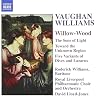
Author: Andrew Achenbach
David Lloyd-Jones and Naxos once more put us in their debt with this enterprising Vaughan Williams anthology, which not only restores to the catalogue the cantata The Sons of Light but also features the first recording of Willow-Wood. This 13-minute setting of words from Dante Gabriel Rossetti’s sequence The House of Life was written in 1903 as a scena for baritone and piano. VW overhauled it for baritone, optional female chorus and orchestra but this revision show more wasn’t heard until September 1909, when it was performed at the Music League Festival in Liverpool by Frederic Austin with Harry Evans on the podium.
It would seem the composer retained a soft spot for this unfairly neglected gem – and quite rightly, too, for its attractive ideas and sultry passion cast a strong spell. Nor could anyone fail to be struck by the sophisticated harmonic and orchestral resources, traits it shares with VW’s resuscitated Nocturne for baritone and orchestra from 1908 (Chandos, 11/03). Roderick Williams rises heroically to the challenge of a demanding, wide-ranging vocal part, and Lloyd-Jones draws an alert, enthusiastic response from his RLPO forces.
No grumbles, either, with the performance of The Sons of Light, a 19-minute setting of three poems on the creation story by VW’s wife-to-be Ursula Wood. Composed for a thousand-strong children’s choir assembled by the Schools’ Music Association (who gave the first performance at the Royal Albert Hall with Boult and the LPO in May 1951), the work possesses a celebratory zeal and exuberance of invention that effortlessly transcend its occasional origins. Listen out for the unmistakable echoes of VW’s contemporaneous Sinfonia antartica some five and a half minutes into the opening movement (‘Darkness and Light’).
Written for the Musicians Benevolent Fund’s annual St Cecilia’s Day service in 1947 and orchestrated four years later, the motet The Voice out of the Whirlwind brings a surprise in that it borrows wholesale from VW’s towering ‘Masque for Dancing’ Job, most conspicuously the ‘Galliard for the Sons of the Morning’. The collection opens with a splendidly fervent Toward the Unknown Region and we get a lucid and luminous account of the Five Variants of ‘Dives and Lazarus’. Expertly engineered and annotated, this is a self-recommending issue. -- Gramophone music review show less
David Lloyd-Jones and Naxos once more put us in their debt with this enterprising Vaughan Williams anthology, which not only restores to the catalogue the cantata The Sons of Light but also features the first recording of Willow-Wood. This 13-minute setting of words from Dante Gabriel Rossetti’s sequence The House of Life was written in 1903 as a scena for baritone and piano. VW overhauled it for baritone, optional female chorus and orchestra but this revision show more wasn’t heard until September 1909, when it was performed at the Music League Festival in Liverpool by Frederic Austin with Harry Evans on the podium.
It would seem the composer retained a soft spot for this unfairly neglected gem – and quite rightly, too, for its attractive ideas and sultry passion cast a strong spell. Nor could anyone fail to be struck by the sophisticated harmonic and orchestral resources, traits it shares with VW’s resuscitated Nocturne for baritone and orchestra from 1908 (Chandos, 11/03). Roderick Williams rises heroically to the challenge of a demanding, wide-ranging vocal part, and Lloyd-Jones draws an alert, enthusiastic response from his RLPO forces.
No grumbles, either, with the performance of The Sons of Light, a 19-minute setting of three poems on the creation story by VW’s wife-to-be Ursula Wood. Composed for a thousand-strong children’s choir assembled by the Schools’ Music Association (who gave the first performance at the Royal Albert Hall with Boult and the LPO in May 1951), the work possesses a celebratory zeal and exuberance of invention that effortlessly transcend its occasional origins. Listen out for the unmistakable echoes of VW’s contemporaneous Sinfonia antartica some five and a half minutes into the opening movement (‘Darkness and Light’).
Written for the Musicians Benevolent Fund’s annual St Cecilia’s Day service in 1947 and orchestrated four years later, the motet The Voice out of the Whirlwind brings a surprise in that it borrows wholesale from VW’s towering ‘Masque for Dancing’ Job, most conspicuously the ‘Galliard for the Sons of the Morning’. The collection opens with a splendidly fervent Toward the Unknown Region and we get a lucid and luminous account of the Five Variants of ‘Dives and Lazarus’. Expertly engineered and annotated, this is a self-recommending issue. -- Gramophone music review show less

What we really have here, although it is presented in disguise as two series of lectures and some occasional writings on a variety of subjects, is Vaughan Williams's musical autobiography. It is his Apologia pro vita mea, to vary Cardinal Newman's title, for although he may appear to be writing about folk-song, Beethoven, and hymn-tunes, he is also telling the reader what it was like to be the man who set out deliberately, with his friend Gustav Holst, to turn himself into an English show more composer. He achieved his aim, to a degree that enriched the music of his nation with some of its noblest and finest works, but there was also a penalty to be paid in that those who are not in sympathy with his aesthetic, not 'on his wavelength', as we would say today, regard him as parochial and even chauvinistic. They forget that he was, in the mildest and least aggressive way, a revolutionary and that, like all revolutionaries when they get into print, he often over-stated or over-coloured a point in order to put it across.
These writings are among the most fascinating left us by a twentieth-century composer, for they tell us so much about the composer through his enthusiasms and his prejudices. Some of them may now provoke a wry smile. Dufay and Dunstable merely historical curiosities? That this would change would have astonished musicians in 1932 as much as the thought that Mahler and Bruckner would be in the regular repertoire of British orchestras. His views on playing Bach on the piano seemed only 10 years after his death to be unbelievably antiquated and laughable; already they are finding sympathetic echoes again. The pendulum swings relentlessly. The tributes to his friends, Holst, Butterworth, Gurney, Henry Wood, and others recall to us Vaughan Williams's own generous and intensely human personality. How moving it is, too, to read his lament for the poetry that went out of music when the valveless horn was replaced. One hears the voice of Vaughan Williams himself in his writing as clearly and unmistakably as in his music. show less
These writings are among the most fascinating left us by a twentieth-century composer, for they tell us so much about the composer through his enthusiasms and his prejudices. Some of them may now provoke a wry smile. Dufay and Dunstable merely historical curiosities? That this would change would have astonished musicians in 1932 as much as the thought that Mahler and Bruckner would be in the regular repertoire of British orchestras. His views on playing Bach on the piano seemed only 10 years after his death to be unbelievably antiquated and laughable; already they are finding sympathetic echoes again. The pendulum swings relentlessly. The tributes to his friends, Holst, Butterworth, Gurney, Henry Wood, and others recall to us Vaughan Williams's own generous and intensely human personality. How moving it is, too, to read his lament for the poetry that went out of music when the valveless horn was replaced. One hears the voice of Vaughan Williams himself in his writing as clearly and unmistakably as in his music. show less
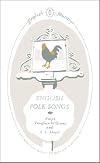
This collection is filled with songs that tell of the pleasures and pains of love, the patterns of the countryside and the lives of ordinary people. Here are unfaithful soldiers, ghostly lovers, whalers on stormy seas, cuckolds and tricksters. By turns funny, plain-speaking and melancholic, these songs evoke a lost world and, with their melodies provided, record a vital musical tradition. Generations of inhabitants have helped shape the English countryside - but it has profoundly shaped us show more too.It has provoked a huge variety of responses from artists, writers, musicians and people who live and work on the land - as well as those who are travelling through it.English Journeys celebrates this long tradition with a series of twenty books on all aspects of the countryside, from stargazey pie and country churches, to man's relationship with nature and songs celebrating the patterns of the countryside (as well as ghosts and love-struck soldiers).
Ralph Vaughan Williams (1872-1958) was one of England's greatest composers, and among the first people to travel the countryside to collect folk songs and preserve them for future generations. A. L. Lloyd (1908-1982), usually known as Bert, was a folk singer and folklorist who grew up listening to his mother singing gypsy songs, and eventually wrote them down. Together with Vaughan Williams, he helped rescue traditional English music from extinction. show less
Ralph Vaughan Williams (1872-1958) was one of England's greatest composers, and among the first people to travel the countryside to collect folk songs and preserve them for future generations. A. L. Lloyd (1908-1982), usually known as Bert, was a folk singer and folklorist who grew up listening to his mother singing gypsy songs, and eventually wrote them down. Together with Vaughan Williams, he helped rescue traditional English music from extinction. show less
Awards

You May Also Like


Associated Authors
Statistics
- Works
- 813
- Also by
- 18
- Members
- 3,085
- Popularity
- #8,275
- Rating
- 4.2
- Reviews
- 44
- ISBNs
- 230
- Languages
- 6
- Favorited
- 4