
Michael Wex
Author of Born to Kvetch: Yiddish Language and Culture in All of Its Moods
About the Author
Michael Wex is a novelist, university teacher, translator (his is the only authorized Yiddish translation of The Threepenny Opera), and performer (of stand-up and one-person shows)
Series
Works by Michael Wex
Born to Kvetch: Yiddish Language and Culture in All of Its Moods (2005) — Author — 948 copies, 16 reviews
Associated Works
Classic Yiddish Stories of S. Y. Abramovitsh, Sholem Aleichem, and I. L. Peretz (2004) — Editor — 40 copies
The Wishing-Ring: A Novel (Judaic Traditions in Literature, Music, and Art) (2003) — Translator, some editions — 16 copies
Fresh Air with Terry Gross: Faith, Reason, and Doubt: Interviews on Religion (2008) — Contributor — 9 copies, 1 review
Tagged
Common Knowledge
- Other names
- WEX, Michael
- Birthdate
- 1954
- Gender
- male
- Short biography
- Author of Born to Kvetch, columnist, bon vivant and raconteur, Michael Wex has been called “a Yiddish national treasure;” Born to Kvetch, the bestselling book ever written about Yiddish, was hailed by The New York Times as “wise, witty and altogether wonderful.”
A native of Lethbridge, Alberta, Wex has worked in virtually every area of contemporary Yiddish. Some of his songs have been recorded by such klezmer bands as Sukke, The Flying Bulgars, and 2007 Grammy winners, The Klezmatics.
Wex's teaching and lecture activities--a unique combination of learning, stand-up comedy and probing investigation into the nature of Yiddish and Yiddishkayt--have taken him from Toronto to Budapest, and to many points in between. His approach is so unique and appealing that his annual series of classes at Klezkamp (a yearly Yiddish cultural event in upstate New York) has been renamed Wexology--and not at Wex's instigation. The only complaint ever heard is that people are enjoying themselves so much that they forget to take notes.
Michael Wex's Yiddish translation has been called “the finest around”, and he’s got the résumé to prove it. From Mendele Moykher Sforim’s The Wishing Ring to Sholem Aleykhem (Classic Yiddish Stories), Itsik Manger, testimony for projected war crimes trials and countless family documents, letters, and unpublished autobiographies, there’s virtually no area of the language in which he isn’t experienced.
This is only half the story, though. Wex is also an accomplished translator into Yiddish. He has done the only such translation of The Threepenny Opera authorized by the authors’ estates, and has also translated songs by such artists as Holly Near, Gloria Gaynor, Irving Berlin, Harold Arlen, Bob Dylan and scores of others. His uncredited work lies at the heart of Mandy Patinkin’s Mamaloshen CD.
Click here to read the New York Times blog entry for the panel discussion Wex took part in about the future of Yiddish at the Museum of the City of New York
http://michaelwex.com/about/ - Nationality
- Canada
- Birthplace
- Lethbridge, Alberta, Kanada
- Associated Place (for map)
- Canada
Members
Reviews
Born to Kvetch: Yiddish Language and Culture in All of Its Moods – The Essential Guide to Jewish Heritage, Survival, and European Folklore (P.S.) by Michael Wex
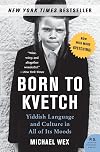
Born to Kvetch is a study of Yiddish idioms, and a delightful exploration of Ashkenazi culture. The word kvetch literally means "to press or squeeze", like you'd do to get juice out of oranges, and its use in culture where there is so much to complain about has risen to an art form. The kvetch is a way of making sense of a world where the blessing of the Torah is met with the pain of exile where the demands of a righteous life involve deliberate low level antagonism of the goyish world in show more which Jews are embedded, lest the two become intermingled.
Yiddish is spoken these days mostly by Hasidic communities and a handful of Jewish language nerds. Even if my community, American Reform Judaism, is several generations away from Yiddish, this idioms get at my modes of thought, what it really means to be Jewish, in a way that few other books have. Bravo! show less
Yiddish is spoken these days mostly by Hasidic communities and a handful of Jewish language nerds. Even if my community, American Reform Judaism, is several generations away from Yiddish, this idioms get at my modes of thought, what it really means to be Jewish, in a way that few other books have. Bravo! show less
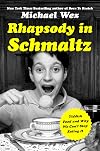
Like tzimmes, the quintessential Jewish dish of endless variety, surprise, and subtle unexpected flavors, this book is a mishmosh of history, jokes, folklore, religious instruction, and recipes related to the food of Ashkenazi Jews, i.e., Jews of Central and East European descent. This book is quite entertaining, never mind that I wouldn’t get within ten feet of most of the food described in this book (e.g., calf’s foot jelly, sheep brains, kishka - a.k.a. stuffed intestines ….)
The show more author, who also wrote Born to Kvetch, is impressively well-versed in religious documents, including not only the Torah but the Talmud and Mishna, in the Yiddish language, and in other subject areas now considered esoterica. This allowed him to derive fascinating insights into his subject matter, since, as he explains, “Most of what we know about Central and East European Jewish eating before the mid-nineteenth century comes from rabbinic writing about the dietary laws rather than cookbooks or guides to home economy.”
Furthermore, most of the food discussed in the book has to do with food eaten on the religiously important occasions of the Sabbath and holidays (the food for which, he writes, “is merely Sabbath food that’s been moved to the middle of the week.”)
He answers a bunch of questions you wouldn’t have even thought to formulate: Why did brisket become a Jewish food? What does “kosher” actually entail? What is the role of “schmaltz” in Jewish life, and why is goose fat “the Jayne Mansfield of kosher cooking, as compared with the Audrey Hepburn that is chicken schmaltz”? Why is Passover wine grape-colored? Is a flavored bagel still a bagel? Why are frozen bagels considered “bagel-manqués” or “Potemkin bagels”? What is the provenance of the pastrami sandwich? Where does Crisco enter into the picture?
The section on pork is quite interesting. The author avers that although there are a number of theories about why pork was forbidden to Jews, no one really knows the definitive answer. However, the repercussions of the taboo are quite clear:
“The Jewish refusal to eat it was seen by many in the pork-eating world as a senseless and ultimately hostile gesture of contempt for established norms….”
Then there is the role of garlic in Jewish cuisine. Wex maintains that the Talmud identified eating garlic as a guard against impotence and erectile dysfunction. (And in fact, any number of health food sites claim that “Garlic is Nature’s Viagra!” Even the BBC reports that there could be something to this theory.)
Other interesting sections of the book cover the history of matzoh production; how food analogies are used in literature, language, and humor; Jewish cookbooks; and the tradition of “plucking bees” (i.e., "bees" for plucking geese).
You will learn all about cholent, kugel, gefilte fish, tsimmes, brisket, chicken soup, kreplach, cheesecake, and how cream cheese and lox became associated with bagels. Indeed, it will be a struggle not to seek out a deli as you read.
Evaluation: I loved learning all that I did in this book, and in spite of its unexpectedly erudite content, it is presented in a very readable way. show less
The show more author, who also wrote Born to Kvetch, is impressively well-versed in religious documents, including not only the Torah but the Talmud and Mishna, in the Yiddish language, and in other subject areas now considered esoterica. This allowed him to derive fascinating insights into his subject matter, since, as he explains, “Most of what we know about Central and East European Jewish eating before the mid-nineteenth century comes from rabbinic writing about the dietary laws rather than cookbooks or guides to home economy.”
Furthermore, most of the food discussed in the book has to do with food eaten on the religiously important occasions of the Sabbath and holidays (the food for which, he writes, “is merely Sabbath food that’s been moved to the middle of the week.”)
He answers a bunch of questions you wouldn’t have even thought to formulate: Why did brisket become a Jewish food? What does “kosher” actually entail? What is the role of “schmaltz” in Jewish life, and why is goose fat “the Jayne Mansfield of kosher cooking, as compared with the Audrey Hepburn that is chicken schmaltz”? Why is Passover wine grape-colored? Is a flavored bagel still a bagel? Why are frozen bagels considered “bagel-manqués” or “Potemkin bagels”? What is the provenance of the pastrami sandwich? Where does Crisco enter into the picture?
The section on pork is quite interesting. The author avers that although there are a number of theories about why pork was forbidden to Jews, no one really knows the definitive answer. However, the repercussions of the taboo are quite clear:
“The Jewish refusal to eat it was seen by many in the pork-eating world as a senseless and ultimately hostile gesture of contempt for established norms….”
Then there is the role of garlic in Jewish cuisine. Wex maintains that the Talmud identified eating garlic as a guard against impotence and erectile dysfunction. (And in fact, any number of health food sites claim that “Garlic is Nature’s Viagra!” Even the BBC reports that there could be something to this theory.)
Other interesting sections of the book cover the history of matzoh production; how food analogies are used in literature, language, and humor; Jewish cookbooks; and the tradition of “plucking bees” (i.e., "bees" for plucking geese).
You will learn all about cholent, kugel, gefilte fish, tsimmes, brisket, chicken soup, kreplach, cheesecake, and how cream cheese and lox became associated with bagels. Indeed, it will be a struggle not to seek out a deli as you read.
Evaluation: I loved learning all that I did in this book, and in spite of its unexpectedly erudite content, it is presented in a very readable way. show less
I had thought that this was a book with a lot of recipes; I was wrong. I thought it would be boring; I found it funnier than a Mel Brooks movie! Oh, sure, there is a ton of Eastern European history, centering on the Jewish population, and lots of explaining why things are done in a specific way, but it is so much more!
My people came from Poland and Germany, I was raised in a non-Roman church and married a man from a dedicated German Lutheran family, I am reasonably familiar with the early show more books of the Old Testament of the Christian Bible (which is the Torah to the Jew), and I live in a suburb of Milwaukee. So I found an awful lot to identify with in this book.
Consider this a history of the development of many Yiddish foods, the adaptations which came about in Eastern Europe, and the further developments once the Yiddish peoples came to America as told by a protege of Jack Benny, Mel Brooks, and other fun folks. It also explains the food restrictions and rituals as set down in the Torah, and how some have been modified, more as relating to technological advances than Americanization (especially since the author lives in Toronto, Canada).
I found this book a nice education and more fun than I can tell you!
This ARC was provided by the author, narrator, or publisher at no cost in exchange for an unbiased review courtesy of Goodreads Giveaways. show less
My people came from Poland and Germany, I was raised in a non-Roman church and married a man from a dedicated German Lutheran family, I am reasonably familiar with the early show more books of the Old Testament of the Christian Bible (which is the Torah to the Jew), and I live in a suburb of Milwaukee. So I found an awful lot to identify with in this book.
Consider this a history of the development of many Yiddish foods, the adaptations which came about in Eastern Europe, and the further developments once the Yiddish peoples came to America as told by a protege of Jack Benny, Mel Brooks, and other fun folks. It also explains the food restrictions and rituals as set down in the Torah, and how some have been modified, more as relating to technological advances than Americanization (especially since the author lives in Toronto, Canada).
I found this book a nice education and more fun than I can tell you!
This ARC was provided by the author, narrator, or publisher at no cost in exchange for an unbiased review courtesy of Goodreads Giveaways. show less
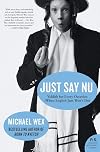
I am not Jewish and, prior to reading the press release, I didn’t even know that words like putz and schmuck were Yiddish. Despite the funny cover, I was skeptical about whether I was going to read this book. I decided to see what I thought of the Introduction. Michael Wex completely sold the book to me with the first five paragraphs of his Introduction to Just Say Nu: Yiddish for Every Occasion. In it he describes being hired by the producer of a porn flick in which a wanton woman show more switches beds with a rabbi’s wife (I guess there’s something for every one, right?). Wex’s job is to provide the dialog while watching the scene when the rabbi jumps into bed. When all he comes up with is Oy vay, the producer questions him:
“Oy vay?” The producer was yelling into my headphones. “Oy vay? Don’t think you can screw with me just because I’m not Jewish. Now let’s do it again and let’s do it right. Tell me what you say when you come.”
I just told him, but he didn’t want to know. The rest was all his fault. “Nu,” I said. “What you really say is nu.”
“Then say it. And don’t say anything else. Just say nu.”
From there, I knew that this was my kind of language book - one where I would learn important things like “I don’t speak Yiddish” and “Where’s the closest rest room,” but would also fill me in on the things I typically want to know - insults and cuss words. Mother, if you’re reading this, once again I’m sorry. You did not raise me to be this way. ;)
Although the sections most appealing to me, such as “Madness, Fury, and Driving,” “Love and Sex,” and “Happiness and Pleasure,” tend to be humorous by nature, I found Wex to make the entire book enjoyable. In fact, my favorite Yiddish phrase of the entire book is found in his “Protective Phrases” section. Where else are you going to find someone who will translate one of your favorite Cartman lines for you? I could not stop laughing as I attempted to say the following out loud (the pronunciation guide is good, but I’m going to need the audio book to figure this out completely):
A KLUG TSE EIKN ALEmen, IKH GAY aHAYM
In other words: Screw you guys, I'm going home.
I really enjoyed reading through Just Say Nu. It opened my eyes to how much Yiddish colors American popular culture. I only wish I was half as creative when coming up with insulting or sarcastic things to say. After reading this book, you understand that in Yiddish, they’ve got it down to a science. show less
“Oy vay?” The producer was yelling into my headphones. “Oy vay? Don’t think you can screw with me just because I’m not Jewish. Now let’s do it again and let’s do it right. Tell me what you say when you come.”
I just told him, but he didn’t want to know. The rest was all his fault. “Nu,” I said. “What you really say is nu.”
“Then say it. And don’t say anything else. Just say nu.”
From there, I knew that this was my kind of language book - one where I would learn important things like “I don’t speak Yiddish” and “Where’s the closest rest room,” but would also fill me in on the things I typically want to know - insults and cuss words. Mother, if you’re reading this, once again I’m sorry. You did not raise me to be this way. ;)
Although the sections most appealing to me, such as “Madness, Fury, and Driving,” “Love and Sex,” and “Happiness and Pleasure,” tend to be humorous by nature, I found Wex to make the entire book enjoyable. In fact, my favorite Yiddish phrase of the entire book is found in his “Protective Phrases” section. Where else are you going to find someone who will translate one of your favorite Cartman lines for you? I could not stop laughing as I attempted to say the following out loud (the pronunciation guide is good, but I’m going to need the audio book to figure this out completely):
A KLUG TSE EIKN ALEmen, IKH GAY aHAYM
In other words: Screw you guys, I'm going home.
I really enjoyed reading through Just Say Nu. It opened my eyes to how much Yiddish colors American popular culture. I only wish I was half as creative when coming up with insulting or sarcastic things to say. After reading this book, you understand that in Yiddish, they’ve got it down to a science. show less
Lists
Check Library (1)
Awards

You May Also Like


Associated Authors
Statistics
- Works
- 8
- Also by
- 3
- Members
- 1,291
- Popularity
- #19,873
- Rating
- 3.7
- Reviews
- 27
- ISBNs
- 39
- Languages
- 3
- Favorited
- 2


