

Dare Wright (1914–2001)
Author of The Lonely Doll
About the Author
Image credit: Dare Wright
Series
Works by Dare Wright
Lonely Doll 1957 Ed 1 copy
Tagged
Common Knowledge
- Canonical name
- Wright, Dare
- Birthdate
- 1914-12-03
- Date of death
- 2001-01-25
- Gender
- female
- Occupations
- children's book author
photographer
actor
model - Nationality
- Canada
- Birthplace
- Thornhill, Ontario, Canada
- Place of death
- New York, New York, USA
- Burial location
- Central Park, New York, New York, USA (ashes scattered)
- Associated Place (for map)
- New York, New York, USA
Members
Reviews

A resonate capture of the need for companionship and the need for self expression and the inevitability of childhood adventure. It's mostly the photos.

A reissue, in paperback, of the original title. Storyline is simple, but the photos are intricate and fascinating. To the adult eye there is something vaguely disturbing about the photos. There is a sense of isolation and maybe fear in them. Dare Wright led a complicated and troubled life, and somehow there are echoes of this in her work.
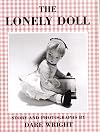
This book was not a part of my landscape as a child. It wasn’t just that dolls didn’t frighten me – I never set eyes on this book until very recently. I first became aware of the book when actress Famke Janssen filed a police report believing that someone had broken into her apartment and did nothing but leave behind a copy of The Lonely Doll. Police were highly skeptical about her claims, though they never charged her with making a false police report because they believe Janssen show more believed this happened and was sincere when she made the claims. There were no signs of entry, the security cameras at her apartment never showed a break-in attempt, and inside the book the police found a to-do list that was written by Janssen herself. It was the book that grabbed my attention more than the notion that an actress would make up such a story because regardless of whether or not the break-in really happened, I’m still left wondering about the significance of the book and why anyone, Janssen or an intruder, would feel the book conveyed malice or ill-intent.
The story was not enough to provoke me into purchasing The Lonely Doll, but over the last couple of years, the book has come up on various list sites (Top Ten Sewer Disasters, Five Reasons Why You Personally Are Worse Than Hitler, etc.) when the topic of terrifying things from childhood make their rounds. I’m unsure how all my years in the book arena, from childhood to a year ago, passed without me seeing this book but I suspect it’s the case that I tune out that which is not relevant to my interests. I very quickly passed from picture books with minimal text to books marketed to teens and adults, and when I was still reading books for little kids, I liked drawings more than photos. I also tended toward smaller books, like the Little Golden Books. So the uneasiness this book caused some readers and still causes adults who investigate the book wasn’t something I experienced either as a child or in retrospect as an adult who read this book as a child.
The awkwardness in the final sentence in the above paragraph is intentional because it’s important to narrow down who is upset by this book and why. From what I have seen, children don’t really respond poorly to this book, or at least the children who were the target market for this book during its heyday, and that audience is mostly women who now are between 40 and 70 years old, though younger readers of the book pop up from time to time. I walked an uneasy line when looking into this book because I genuinely don’t want to know much about books, even fluffy picture books, before I look into them for myself but one statement came up so often that it was unavoidable, words to the effect of:
“I didn’t realize how creepy this book was until I found my old copy in a box in the attic and thumbed through it for the first time in decades.”
Though I was terribly interested in what sparked such a retrospective reaction, I managed to stop reading before these (mostly) women explained themselves. I’m glad I did because I was able to see the book through mostly uninfluenced eyes and, in the end, my reaction as an adult who did not read this book as a child is similar to the women who did. When I went back to review their reactions, there one one large commonality that I will discuss in a moment, but mostly we all felt a strange uneasiness that is hard to pin down. And though I feel I must emphasize that this is a book that is despised by the woke among us, the fact is that this is not a wicked or deliberately unpleasant book. It’s a relic of its time and possibly a very useful tool in armchair psychoanalyzing the author, a favorite pastime of mine. Unless one was a child who was very frightened of dolls in general, this book is unlikely to be that upsetting. More modern children may have a negative reaction because of changing mores regarding appropriate discipline for children but much can be said for any book about children written before the 1970s.
Though this is a very well-conceived, well-executed book, it’s an emotionally taxing book for an adult to read.
This is a part of a heinously long look at this book. If you are interested in reading the whole thing, have a look on Odd Things Considered: https://www.oddthingsconsidered.com/oddtober-2020-the-lonely-doll-by-dare-wright... show less
The story was not enough to provoke me into purchasing The Lonely Doll, but over the last couple of years, the book has come up on various list sites (Top Ten Sewer Disasters, Five Reasons Why You Personally Are Worse Than Hitler, etc.) when the topic of terrifying things from childhood make their rounds. I’m unsure how all my years in the book arena, from childhood to a year ago, passed without me seeing this book but I suspect it’s the case that I tune out that which is not relevant to my interests. I very quickly passed from picture books with minimal text to books marketed to teens and adults, and when I was still reading books for little kids, I liked drawings more than photos. I also tended toward smaller books, like the Little Golden Books. So the uneasiness this book caused some readers and still causes adults who investigate the book wasn’t something I experienced either as a child or in retrospect as an adult who read this book as a child.
The awkwardness in the final sentence in the above paragraph is intentional because it’s important to narrow down who is upset by this book and why. From what I have seen, children don’t really respond poorly to this book, or at least the children who were the target market for this book during its heyday, and that audience is mostly women who now are between 40 and 70 years old, though younger readers of the book pop up from time to time. I walked an uneasy line when looking into this book because I genuinely don’t want to know much about books, even fluffy picture books, before I look into them for myself but one statement came up so often that it was unavoidable, words to the effect of:
“I didn’t realize how creepy this book was until I found my old copy in a box in the attic and thumbed through it for the first time in decades.”
Though I was terribly interested in what sparked such a retrospective reaction, I managed to stop reading before these (mostly) women explained themselves. I’m glad I did because I was able to see the book through mostly uninfluenced eyes and, in the end, my reaction as an adult who did not read this book as a child is similar to the women who did. When I went back to review their reactions, there one one large commonality that I will discuss in a moment, but mostly we all felt a strange uneasiness that is hard to pin down. And though I feel I must emphasize that this is a book that is despised by the woke among us, the fact is that this is not a wicked or deliberately unpleasant book. It’s a relic of its time and possibly a very useful tool in armchair psychoanalyzing the author, a favorite pastime of mine. Unless one was a child who was very frightened of dolls in general, this book is unlikely to be that upsetting. More modern children may have a negative reaction because of changing mores regarding appropriate discipline for children but much can be said for any book about children written before the 1970s.
Though this is a very well-conceived, well-executed book, it’s an emotionally taxing book for an adult to read.
This is a part of a heinously long look at this book. If you are interested in reading the whole thing, have a look on Odd Things Considered: https://www.oddthingsconsidered.com/oddtober-2020-the-lonely-doll-by-dare-wright... show less
Edith, a girl doll, lives all alone and prays for some friends to ease her loneliness. One day, out of the blue, two teddy bears appear on her door and say they are there as an answer to her call for friends. Little Bear soon joins in various adventures with Edith while Mr. Bear takes on the parental role. One day, while Mr. Bear is out, Edith and Little Bear get into a lot of trouble. On his return, Mr. Bear gives them both a spanking, a part that is troublesome for many readers, including show more myself. Edith worries that Mr. Bear and Little Bear will now leave, but Mr. Bear comforts her by saying they will not leave her ever. Instead of using more traditional illustrations, this book features large gray-scale photographs on every page. This is an interesting technique, but photographing a doll and her teddy bear friends does lend to the creepy factor that several others have noted about this book, especially when it comes to the scenes where Mr. Bear spanks Little Bear and Edith (and it doesn’t help that Edith wears the shortest dress known to mankind that barely covers her little behind). As I already mentioned, the spanking scenes are troublesome for many adults who do not view this as an effective discipline technique, but I appreciated the end of that story where Mr. Bear tells Edith he will not leave her because she was being bad, as some young children do worry about this. Overall, the book is interesting for historic purposes and for its unique method of telling a story, but I’m not sure I’d recommend it for modern young readers. show less
Lists
You May Also Like


Statistics
- Works
- 23
- Members
- 961
- Popularity
- #26,791
- Rating
- 4.1
- Reviews
- 27
- ISBNs
- 69
- Languages
- 1
- Favorited
- 3


