A Stone's Throw: A heartwarming story of a city girl and her rancher grandfather turning adversity into love and community by Wayne Edwards
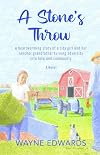
I found A Stone’s Throw by Wayne Edwards an endearing story. In April of 1969, twelve-year-old Maggie Stone finds her mother having another “spell”. These spells happen when her mom, Lillian, falls asleep, and Maggie can’t wake her up. Lillian usually wakes up after a couple of hours on her own, but this time she doesn’t. With her mom admitted to the hospital, Maggie moves around from her best friend’s house, to an orphanage, then to a grandfather she never met. Ira Stone struggled with Lillian as a teenager and didn’t meet Maggie until he picked her up from the orphanage. Maggie learns there is a big difference between city life in San Francisco and a ranch in Montana.
A Stone’s Throw by Wayne Edwards touches on a young girl who had to grow up much faster than she needed to because she had to care for her mom. Not knowing anything about her father or grandfather, Maggie is alone in the world when her mother is hospitalized. Each chapter highlights major events of Maggie’s life for a year from the time her mom went into a coma. You will laugh and cry with Maggie as she undertakes friendships, schools, bullies, doubts, fears, and family. This is one of the best coming-of-age books I have read in a long time. I highly recommend it.
A Stone’s Throw by Wayne Edwards touches on a young girl who had to grow up much faster than she needed to because she had to care for her mom. Not knowing anything about her father or grandfather, Maggie is alone in the world when her mother is hospitalized. Each chapter highlights major events of Maggie’s life for a year from the time her mom went into a coma. You will laugh and cry with Maggie as she undertakes friendships, schools, bullies, doubts, fears, and family. This is one of the best coming-of-age books I have read in a long time. I highly recommend it.
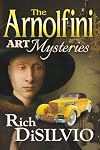
This is six mystery stories with one lead, Armand Arnolfini, and the book knows exactly what it is. Art theft, forgery, murder, shady money, smart people doing dumb greedy things. The cases move. Not in some frantic fake thriller way either. More like a hard rain that just keeps coming and never lets the road dry out.
What sold me was Armand himself. He is sharp without being smug, capable without feeling like a cartoon, and he actually earns the answers. The dialogue mostly sounds like people, not mannequins explaining the plot to each other. I also liked that the stories connect and build, especially once Andrea comes into the picture. That gave the book more backbone than a simple stack of unrelated cases. The art history could have turned into homework in the wrong hands. Here it mostly works because the writing gets out of its own way and the crimes stay front and center. The illustrations help too. Nice touch. Gave the whole thing more weight.
Not perfect. A few passages could have been trimmed. But the ending did not cheat, the mysteries delivered, and the whole thing had some real muscle to it.
If you like crime with brains and a little class, read it.
What sold me was Armand himself. He is sharp without being smug, capable without feeling like a cartoon, and he actually earns the answers. The dialogue mostly sounds like people, not mannequins explaining the plot to each other. I also liked that the stories connect and build, especially once Andrea comes into the picture. That gave the book more backbone than a simple stack of unrelated cases. The art history could have turned into homework in the wrong hands. Here it mostly works because the writing gets out of its own way and the crimes stay front and center. The illustrations help too. Nice touch. Gave the whole thing more weight.
Not perfect. A few passages could have been trimmed. But the ending did not cheat, the mysteries delivered, and the whole thing had some real muscle to it.
If you like crime with brains and a little class, read it.
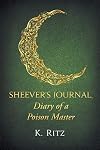
This book has the quiet, unnerving confidence of someone who knows exactly what they are doing and refuses to perform for you. Sheever’s Journal is, quite literally, a journal. Not a novel pretending to be a journal while still giving you neat exposition, clean arcs, and polite little breadcrumbs. It is stubbornly itself, and that is the magic.
Me’acca Mysuth Sheever has been living among his sworn enemies for years, keeping his head down, pretending to be harmless. He works as a cook in Tiarn, answering to Cyril’s whims in the kitchens, moving among people like Tobb, Old Wix, Padder, Liana, Damut, all of them vibrating with their own small hungers and petty grievances and very human needs. He buys a blank journal from a woman who makes him promise he will fill it so she can study it. Which is, frankly, a terrifying thing to promise when your past is a loaded weapon you cannot afford to set on the table.
What I loved most is how the book lets Sheever be difficult. He is sharp and watchful and frequently unkind. He is also funny in that dry, exhausted way that feels like a defense mechanism you have lived inside for too long. He is haunted by memory, by Katre Haesyl, by the fear of the Church, by what it means to survive and what it costs to keep surviving. The journal becomes a slow undoing. Not melodramatic. Not tidy. Just inevitable.
There is a lot you will not understand right away. Names, factions, the shape of power, the rules of the world. Sometimes you will feel show more a little untethered and you might want a glossary like you want water when you wake up at 3 a.m. with your mouth dry. Still, the emotional logic is so strong it carries you. When Sheever quits, when Damut searches for him and begs him to come out, when he decides the cook is dead and something harder is writing now, it lands. That ending made my stomach drop, in the best way.
This is an intimate, strange, bruised book. It lingers. It also dares you to stay. I did. I am glad I did. show less
Me’acca Mysuth Sheever has been living among his sworn enemies for years, keeping his head down, pretending to be harmless. He works as a cook in Tiarn, answering to Cyril’s whims in the kitchens, moving among people like Tobb, Old Wix, Padder, Liana, Damut, all of them vibrating with their own small hungers and petty grievances and very human needs. He buys a blank journal from a woman who makes him promise he will fill it so she can study it. Which is, frankly, a terrifying thing to promise when your past is a loaded weapon you cannot afford to set on the table.
What I loved most is how the book lets Sheever be difficult. He is sharp and watchful and frequently unkind. He is also funny in that dry, exhausted way that feels like a defense mechanism you have lived inside for too long. He is haunted by memory, by Katre Haesyl, by the fear of the Church, by what it means to survive and what it costs to keep surviving. The journal becomes a slow undoing. Not melodramatic. Not tidy. Just inevitable.
There is a lot you will not understand right away. Names, factions, the shape of power, the rules of the world. Sometimes you will feel show more a little untethered and you might want a glossary like you want water when you wake up at 3 a.m. with your mouth dry. Still, the emotional logic is so strong it carries you. When Sheever quits, when Damut searches for him and begs him to come out, when he decides the cook is dead and something harder is writing now, it lands. That ending made my stomach drop, in the best way.
This is an intimate, strange, bruised book. It lingers. It also dares you to stay. I did. I am glad I did. show less
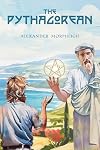
From the early chapters, where we follow the mysterious scholar Pythagoras, Morpheigh makes no attempt to spoon-feed the reader. Instead, he pulls us into a labyrinth of geometry, cosmology, and philosophical inquiry. I found myself pausing every few pages, not because I was lost, but because the book made me want to get lost. There’s something thrilling about a narrative that expects you to wrestle with it.
One moment, Morpheigh has you contemplating the Noosphere, the next, he’s spiralling into questions of consciousness, mathematics, and what it means to be a thinking being in a universe stitched together by numbers. The writing balances intellect and wonder beautifully. It’s not just clever, it’s curious. And contagious.
I finished The Pythagorean wondering: Is reality built from numbers, or do we create meaning by measuring it?
One moment, Morpheigh has you contemplating the Noosphere, the next, he’s spiralling into questions of consciousness, mathematics, and what it means to be a thinking being in a universe stitched together by numbers. The writing balances intellect and wonder beautifully. It’s not just clever, it’s curious. And contagious.
I finished The Pythagorean wondering: Is reality built from numbers, or do we create meaning by measuring it?