Virago Author Remembrance Celebrations - PART IV
Talk Virago Modern Classics
Join LibraryThing to post.
This topic is currently marked as "dormant"—the last message is more than 90 days old. You can revive it by posting a reply.
1bleuroses
Dame Agnes Graham Jekyll, DBE(12 October 1861 – 28 January 1937) was a British artist, writer and philanthropist. She was educated at home by governesses, and later attended King's College London.
Agnes Graham was the daughter of William Graham, Liberal MP for Glasgow (1865-1874) and patron of the Pre-Raphaelite Brotherhood, she had a literary and artistic childhood.
She married Herbert Jekyll (later Sir Herbert Jekyll, KCMG), a soldier, public servant and wood-carver. They lived at Munstead House in Surrey. They had a daughter, Pamela. Agnes's sister-in-law was the garden designer, writer and artist, Gertrude Jekyll.
Created a Dame Commander of the Order of the British Empire (DBE) for her involvement in numerous good causes, Lady Jekyll (as she had also become) first published Kitchen Essays (1922) in The Times, "in which she was persuaded to pass on some of the wit and wisdom of her rare gift for clever and imaginative housekeeping".

Agnes Graham was the daughter of William Graham, Liberal MP for Glasgow (1865-1874) and patron of the Pre-Raphaelite Brotherhood, she had a literary and artistic childhood.
She married Herbert Jekyll (later Sir Herbert Jekyll, KCMG), a soldier, public servant and wood-carver. They lived at Munstead House in Surrey. They had a daughter, Pamela. Agnes's sister-in-law was the garden designer, writer and artist, Gertrude Jekyll.
Created a Dame Commander of the Order of the British Empire (DBE) for her involvement in numerous good causes, Lady Jekyll (as she had also become) first published Kitchen Essays (1922) in The Times, "in which she was persuaded to pass on some of the wit and wisdom of her rare gift for clever and imaginative housekeeping".

2bleuroses
Agnès Humbert (12 October 1894 – 19 September 1963) was an art historian, ethnographer and a member of the French Resistance during World War II.

Résistance: A Woman's Journal of Struggle and Defiance in Occupied France
Extract from Humbert's Diary.

Résistance: A Woman's Journal of Struggle and Defiance in Occupied France
Extract from Humbert's Diary.
3bleuroses
Writer Ann Petry was born Ann Lane on October 12, 1908 to pharmacist Peter Clark Lane, Jr. and podiatrist Bertha James Lane in Old Saybrook, Connecticut.

Like her father, Ann was trained as a pharmacist and practiced in the family's drugstores in Old Saybrook. However, she always wanted to write. In 1938, she married George D. Petry of Louisiana and moved with him to Harlem, where she began her career as a writer. In 1943, she took a job working as an editor, columnist, and reporter for the People's Voice. She also took courses in writing at Columbia University and joined the American Negro Theatre in Harlem in the 1940s.
Petry emerged as a novelist in 1946. Her first book, The Street, was her rendition of neighborhood life in Harlem. The Street presented a powerful and painful portrait of the effects of racism and sexism on an African-American mother as she attempts but fails to provide a better life for herself and her son in an urban environment. The book subverted gender roles to challenge patriarchal domination in the 1940s, suggesting a feminist discourse long before it was popular in literature. The novel made Petry the first African-American woman writer to attain bestseller status and she won several literary awards thereafter. Petry was unprepared for the public attention garnered by her bestselling novel and sought sanctuary by moving back to her hometown, Old Saybrook.
The Street was followed a year later by Country Place. Petry did not publish another novel until 1971 when The Narrows appeared. She also published Miss Muriel and Other Stories in 1971. Petry did publish several short stories and children's books in the 1950s and 1960s. In her novels, Petry shows how biases of race, gender, class, and age influence the lives of all people, regardless of whether they are women or men, black or white, rich or poor.
Petry's first two novels, though set in Harlem are often considered part of the Chicago Black Renaissance (1935-1953) in literature, and are often compared with the works of the prominent Chicago writer and social critic Richard Wright. Both authors held a deterministic outlook for urban America, seeing black urban life as a site of hopelessness that generated only slums and limitations, especially after the Great Migration.
In 1958, she left Old Saybrook for the first time in a decade to work on a Hollywood movie script for That Hill Girl. She later served as visiting professor at Miami University of Ohio in 1972 and the University of Hawaii in 1974. In 1983, 1988, and 1989, she received honorary degrees from Suffolk University, the University of Connecticut, and Mount Holyoke College. Through all of this, Ann Petry consistently returned to her hometown, where she died in 1997.

Like her father, Ann was trained as a pharmacist and practiced in the family's drugstores in Old Saybrook. However, she always wanted to write. In 1938, she married George D. Petry of Louisiana and moved with him to Harlem, where she began her career as a writer. In 1943, she took a job working as an editor, columnist, and reporter for the People's Voice. She also took courses in writing at Columbia University and joined the American Negro Theatre in Harlem in the 1940s.
Petry emerged as a novelist in 1946. Her first book, The Street, was her rendition of neighborhood life in Harlem. The Street presented a powerful and painful portrait of the effects of racism and sexism on an African-American mother as she attempts but fails to provide a better life for herself and her son in an urban environment. The book subverted gender roles to challenge patriarchal domination in the 1940s, suggesting a feminist discourse long before it was popular in literature. The novel made Petry the first African-American woman writer to attain bestseller status and she won several literary awards thereafter. Petry was unprepared for the public attention garnered by her bestselling novel and sought sanctuary by moving back to her hometown, Old Saybrook.
The Street was followed a year later by Country Place. Petry did not publish another novel until 1971 when The Narrows appeared. She also published Miss Muriel and Other Stories in 1971. Petry did publish several short stories and children's books in the 1950s and 1960s. In her novels, Petry shows how biases of race, gender, class, and age influence the lives of all people, regardless of whether they are women or men, black or white, rich or poor.
Petry's first two novels, though set in Harlem are often considered part of the Chicago Black Renaissance (1935-1953) in literature, and are often compared with the works of the prominent Chicago writer and social critic Richard Wright. Both authors held a deterministic outlook for urban America, seeing black urban life as a site of hopelessness that generated only slums and limitations, especially after the Great Migration.
In 1958, she left Old Saybrook for the first time in a decade to work on a Hollywood movie script for That Hill Girl. She later served as visiting professor at Miami University of Ohio in 1972 and the University of Hawaii in 1974. In 1983, 1988, and 1989, she received honorary degrees from Suffolk University, the University of Connecticut, and Mount Holyoke College. Through all of this, Ann Petry consistently returned to her hometown, where she died in 1997.
4juliette07
Thank you Bleu for featuring Agnes Humbert and her book Résistance: A Woman's Journal of Struggle and Defiance in Occupied France. What a lady she was and how inspirational was her book.
6bleuroses
Bernice Rubens (26 July 1928 – 13 October 2004), Booker Prize-winning Welsh novelist.

Bernice Rubens Obit
Bibliography
Set on Edge (1960)
Madame Sousatzka (1962)
Mate in Three (1966)
The Elected Member (1969) (Booker Prize for Fiction 1970)
Sunday Best (1971)
Go Tell the Lemming (1973)
I Sent a Letter To My Love (1975)
The Ponsonby Post (1977)
A Five-Year Sentence (1978)
Spring Sonata (1979)
Birds of Passage (1981)
Brothers (1983)
Mr Wakefield's Crusade (1985)
Our Father (1987)
Kingdom Come (1990)
A Solitary Grief (1991)
Mother Russia (1992)
Autobiopsy (1993)
Hijack (1993)
Yesterday in the Back Lane (1995)
The Waiting Game (1997)
I, Dreyfus (1999)
Milwaukee (2001)
Nine Lives (2002)
The Sergeants' Tale (2003)
When I Grow Up (2005)

Bernice Rubens Obit
Bibliography
Set on Edge (1960)
Madame Sousatzka (1962)
Mate in Three (1966)
The Elected Member (1969) (Booker Prize for Fiction 1970)
Sunday Best (1971)
Go Tell the Lemming (1973)
I Sent a Letter To My Love (1975)
The Ponsonby Post (1977)
A Five-Year Sentence (1978)
Spring Sonata (1979)
Birds of Passage (1981)
Brothers (1983)
Mr Wakefield's Crusade (1985)
Our Father (1987)
Kingdom Come (1990)
A Solitary Grief (1991)
Mother Russia (1992)
Autobiopsy (1993)
Hijack (1993)
Yesterday in the Back Lane (1995)
The Waiting Game (1997)
I, Dreyfus (1999)
Milwaukee (2001)
Nine Lives (2002)
The Sergeants' Tale (2003)
When I Grow Up (2005)
7christiguc
Thank you, dear Cate. You are such an asset to this group. xx

9bleuroses
Jennifer Dawson, (24 January 1929 – 14 October 2000) was an English novelist.
Her works explored the theme of mental illness and society's attitudes to those suffering from such conditions. Born in London, she attended school in Camberwell and went on to read Modern History at St Anne's College, Oxford. During her time at Oxford she suffered a breakdown and spent several months in Warneford Hospital, Oxford.
Following the completion of her studies, she worked as a teacher at a convent in Laval in France and later at Oxford University Press where she made editorial contributions to a number of reference works. In addition to these roles, she also worked as social worker in a psychiatric hospital in Worcester and it was her experiences here and, as a patient of such an institution, that formed the basis for her debut novel The Ha-Ha. The novel, which explores schizophrenia, received considerable critical acclaim, being awarded the James Tait Black Memorial Prize, being adapted for the stage by Richard Eyre and was later broadcast by the BBC on both radio and television.
She continued to explore similar themes throughout the 1960's and 1970's via novels such as The Cold Country, Strawberry Boy and A Field of Scarlet Poppies. In the 1980's two further novels The Upstairs People and Judasland were released by the Virago Press.

Jennifer Dawson Obit
Works
The Ha-Ha (1961)
The Cold Country (1965)
The Queen of Trent (1972
Strawberry Boy (1976)
Hospital Wedding (1978)
A Field of Scarlet Poppies (1979)
The Upstairs People (1988)
Judasland (1989)
Her works explored the theme of mental illness and society's attitudes to those suffering from such conditions. Born in London, she attended school in Camberwell and went on to read Modern History at St Anne's College, Oxford. During her time at Oxford she suffered a breakdown and spent several months in Warneford Hospital, Oxford.
Following the completion of her studies, she worked as a teacher at a convent in Laval in France and later at Oxford University Press where she made editorial contributions to a number of reference works. In addition to these roles, she also worked as social worker in a psychiatric hospital in Worcester and it was her experiences here and, as a patient of such an institution, that formed the basis for her debut novel The Ha-Ha. The novel, which explores schizophrenia, received considerable critical acclaim, being awarded the James Tait Black Memorial Prize, being adapted for the stage by Richard Eyre and was later broadcast by the BBC on both radio and television.
She continued to explore similar themes throughout the 1960's and 1970's via novels such as The Cold Country, Strawberry Boy and A Field of Scarlet Poppies. In the 1980's two further novels The Upstairs People and Judasland were released by the Virago Press.

Jennifer Dawson Obit
Works
The Ha-Ha (1961)
The Cold Country (1965)
The Queen of Trent (1972
Strawberry Boy (1976)
Hospital Wedding (1978)
A Field of Scarlet Poppies (1979)
The Upstairs People (1988)
Judasland (1989)
10bleuroses
Muriel Spark, Miss Brodie, Miss Kay
by Steve King
On this day in 1961 Muriel Spark's The Prime of Miss Jean Brodie was published in The New Yorker, an expanded version appearing in book form the following year This is one of Spark's earliest novels -- there are over twenty now -- but it remains her best known, due to the film, stage and television series versions.
In her 1993 autobiography, Curriculum Vitae, Dame Spark confirms that Miss Christina Kay, one of her teachers at James Gillespie's High School for Girls in Edinburgh, was the model for her flamboyant and domineering Miss Brodie, up to a point. She reprints and agrees with this letter from her best friend, one of many classmates who wrote to her when the novel appeared:
"Surely 75% is Miss Kay? Dear Miss Kay! of the cropped iron grey hair with fringe (and heavy black moustache!) and undisputable admiration for Il Duce. Hers was the expression creme de la creme -- hers the revealing extra lessons on art and music that stay with me yet. She it was who took us both (who were especial favourites of hers? -- part of the as yet unborn Brodie Set) to see Pavlova's last performance at the Empire Theatre. Who took us to afternoon teas at McVities.
But, as far as the creme knew, Miss Kay did not have an affair with the singing master, and so they did not imagine sending him, on her behalf, notes which read, "Allow me to congratulate you warmly upon your sexual intercourse, as well as your singing." And it sounds as if the prime of Miss Brodie would have met its match in Miss Kay: "If she could have met 'Miss Brodie,'" writes Spark, "Miss Kay would have put the fictional character firmly in her place." Spark began to write about Miss Kay while still one of her students, and Miss Kay pronounced her a writer in such "emphatic terms" that "I felt I had hardly much choice in the matter."
As had not Miss Brodie's Sandy:
"I am summoned to see the headmistress at morning break on Monday," said Miss Brodie. "I have no doubt Miss McKay wishes to question my methods of instruction. It has happened before. It will happen again. Meanwhile, I follow my principles of education and give of my best in my prime. The word 'education' comes from the root e from ex, out, and duco, I lead. It means a leading out. To me education is a leading out of what is already there in the pupil's soul.... Never let it be said that I put ideas into your heads. What is the meaning of education, Sandy?"
Sandy correctly defines education, but then excuses herself from tea in order to go home and add "a chapter to 'The Mountain Eyrie,' the true love story of Miss Jean Brodie."
In a 1999 interview, Spark said that she is still writing, and still in a prime that came late: "I'm now 81 and I think the happiest years started between sixty and seventy. Apart from illness and pain with my back and a few things like that, I am much happier now. For one thing, I know how to handle life. Up till the time I was sixty I was never very capable of saying no, of really saying this is the way I do it and being absolutely firm.... Now I do."
by Steve King
On this day in 1961 Muriel Spark's The Prime of Miss Jean Brodie was published in The New Yorker, an expanded version appearing in book form the following year This is one of Spark's earliest novels -- there are over twenty now -- but it remains her best known, due to the film, stage and television series versions.
In her 1993 autobiography, Curriculum Vitae, Dame Spark confirms that Miss Christina Kay, one of her teachers at James Gillespie's High School for Girls in Edinburgh, was the model for her flamboyant and domineering Miss Brodie, up to a point. She reprints and agrees with this letter from her best friend, one of many classmates who wrote to her when the novel appeared:
"Surely 75% is Miss Kay? Dear Miss Kay! of the cropped iron grey hair with fringe (and heavy black moustache!) and undisputable admiration for Il Duce. Hers was the expression creme de la creme -- hers the revealing extra lessons on art and music that stay with me yet. She it was who took us both (who were especial favourites of hers? -- part of the as yet unborn Brodie Set) to see Pavlova's last performance at the Empire Theatre. Who took us to afternoon teas at McVities.
But, as far as the creme knew, Miss Kay did not have an affair with the singing master, and so they did not imagine sending him, on her behalf, notes which read, "Allow me to congratulate you warmly upon your sexual intercourse, as well as your singing." And it sounds as if the prime of Miss Brodie would have met its match in Miss Kay: "If she could have met 'Miss Brodie,'" writes Spark, "Miss Kay would have put the fictional character firmly in her place." Spark began to write about Miss Kay while still one of her students, and Miss Kay pronounced her a writer in such "emphatic terms" that "I felt I had hardly much choice in the matter."
As had not Miss Brodie's Sandy:
"I am summoned to see the headmistress at morning break on Monday," said Miss Brodie. "I have no doubt Miss McKay wishes to question my methods of instruction. It has happened before. It will happen again. Meanwhile, I follow my principles of education and give of my best in my prime. The word 'education' comes from the root e from ex, out, and duco, I lead. It means a leading out. To me education is a leading out of what is already there in the pupil's soul.... Never let it be said that I put ideas into your heads. What is the meaning of education, Sandy?"
Sandy correctly defines education, but then excuses herself from tea in order to go home and add "a chapter to 'The Mountain Eyrie,' the true love story of Miss Jean Brodie."
In a 1999 interview, Spark said that she is still writing, and still in a prime that came late: "I'm now 81 and I think the happiest years started between sixty and seventy. Apart from illness and pain with my back and a few things like that, I am much happier now. For one thing, I know how to handle life. Up till the time I was sixty I was never very capable of saying no, of really saying this is the way I do it and being absolutely firm.... Now I do."
11bleuroses
From The Persephone Books' Facebook page......
Katherine Mansfield was born 122 years ago today in Wellington, New Zealand.
The Montana Stories, Persephone Book No. 25, is a collection of everything she wrote while living at the Chalet des Sapins in Montana, Switzerland, from July 1921 until her death in January 1923 in Fontainebleau, where she had gone for a new form of treatment.
Her Journal, Persephone Book No. 69, was first published in 1927 after her husband compiled her diary entries, unposted letters and other fragments of writing into one volume. ‘The mind I love must have wild places, a tangled orchard where dark demons drop in the heavy grass…a pool that no-one’s fathomed the depth of.’ (Journal).
Katherine Mansfield was born 122 years ago today in Wellington, New Zealand.
The Montana Stories, Persephone Book No. 25, is a collection of everything she wrote while living at the Chalet des Sapins in Montana, Switzerland, from July 1921 until her death in January 1923 in Fontainebleau, where she had gone for a new form of treatment.
Her Journal, Persephone Book No. 69, was first published in 1927 after her husband compiled her diary entries, unposted letters and other fragments of writing into one volume. ‘The mind I love must have wild places, a tangled orchard where dark demons drop in the heavy grass…a pool that no-one’s fathomed the depth of.’ (Journal).
12bleuroses
Edith Wharton's The House of Mirth was published on this day in 1905.
It is ranked among her best novels, and it was her first commercial success – popular when serialized in Scribner's magazine, sold out in two weeks when published, top of the bestseller list in two months. Lily Bart is older than Lucy Honeychurch and living in New York, but she also chafes at the constraints of polite society and the turn-of-the-century gender expectations.
In Chapter 1, Lily impulsively takes tea in a male friend's apartment; when she leaves the building, even the charwoman gives her a knowing look, prompting her to ask the questions which drive the novel:
Why must a girl pay so dearly for her least escape from routine? Why could one never do a natural thing without having to screen it behind a structure of artifice?
It is ranked among her best novels, and it was her first commercial success – popular when serialized in Scribner's magazine, sold out in two weeks when published, top of the bestseller list in two months. Lily Bart is older than Lucy Honeychurch and living in New York, but she also chafes at the constraints of polite society and the turn-of-the-century gender expectations.
In Chapter 1, Lily impulsively takes tea in a male friend's apartment; when she leaves the building, even the charwoman gives her a knowing look, prompting her to ask the questions which drive the novel:
Why must a girl pay so dearly for her least escape from routine? Why could one never do a natural thing without having to screen it behind a structure of artifice?
13elkiedee
Virago has published The Aloe by Katherine Mansfield which was reworked into one of her longer short stories about a family in New Zealand, I think, Prelude.
14bleuroses
Today is the birthday of Kate Grenville. (15 October 1950) She is one of Australia's best-known authors.
Kate has published eight books of fiction and four books about the writing process. Her best-known works are the international best-seller The Secret River, The Idea of Perfection, The Lieutenant and Lilian's Story. Her novels have won many awards both in Australia and the UK, several have been made into major feature films, and all have been translated into European and Asian languages.

Interview with Kate on her 2001 Orange Prize for The Idea of Perfection.
Listen/Watch Kate on The Lieutenant.
Kate has published eight books of fiction and four books about the writing process. Her best-known works are the international best-seller The Secret River, The Idea of Perfection, The Lieutenant and Lilian's Story. Her novels have won many awards both in Australia and the UK, several have been made into major feature films, and all have been translated into European and Asian languages.

Interview with Kate on her 2001 Orange Prize for The Idea of Perfection.
Listen/Watch Kate on The Lieutenant.
15bleuroses
Dymphna Cusack AM (21 September 1902 — 19 October 1981) was an Australian author, best known for her novel, Come in Spinner.

Bibliography

Bibliography
16bleuroses
Russian born French novelist and literary critic, Nathalie Sarraute, (July 18, 1900 in Ivanovo, Russia – October 19, 1999 in Paris, France) became one of the pioneers and leading theorists of the nouveau roman with Alain Robbe-Grillet, Claude Simon, Marguerite Duras, and Michel Butor. She discarded conventional ideas about plot, chronology, characterization and the narrative point of view. From her early works Sarraute concentrated on the subconscious and conscious mind.
In Tropismes (1939) she used a series of brief passages, 'tropisms', which, according to Sarraute, govern behaviour and become the unifying thread throughout her novels.

In Tropismes (1939) she used a series of brief passages, 'tropisms', which, according to Sarraute, govern behaviour and become the unifying thread throughout her novels.

18bleuroses
Isabelle Eberhardt (17 February 1877 – 21 October 1904) was a Swiss-Algerian explorer and writer who lived and travelled extensively in North Africa.
For the time she was an extremely liberated individual who rejected conventional European morality in favour of her own path and that of Islam.
She died in a flash flood in the desert at the age of 27.

For the time she was an extremely liberated individual who rejected conventional European morality in favour of her own path and that of Islam.
She died in a flash flood in the desert at the age of 27.

19bleuroses

Brenda Ueland (October 24, 1891 - March 5, 1985) was a journalist, editor, freelance writer, and teacher of writing. She is best known for her book If You Want to Write: A Book about Art, Independence and Spirit.

"Even if I knew for certain that I would never have anything published again, and would never make another cent from it, I would still keep on writing."
"Families are great murderers of the creative impulse, particularly husbands."
"I learned that you should feel when writing, not like Lord Byron on a mountain top, but like child stringing beads in kindergarten, - happy, absorbed and quietly putting one bead on after another."
"It is so conceited and timid to be ashamed of one's mistakes. Of course they are mistakes. Go on to the next."
"The tragedy of bold, forthright, industrious people is that they act so continuously without much thinking, that it becomes dry and empty."
"This is what I learned: that everybody is talented, original and has something important to say."
20LizzieD
Now that is a woman that I'd be delighted to know! She's very lovely to look at too.
Thank you again, Cate!
Thank you again, Cate!
21bleuroses
Mary Therese McCarthy (June 21, 1912 – October 25, 1989). American author, critic, and political activist.

NYTimes Book Reviews, Interviews, Sound clips of Mary McCarthy
Selected Works
The Company She Keeps (1942),
The Oasis (1949)
The Groves of Academe (1952)
A Charmed Life (1955)
Venice Observed (1956)
The Stones of Florence (1956)
Memories of a Catholic Girlhood (1957)
On the Contrary (1961)
The Group (1962)
Vietnam (1967)
Hanoi (1968)
The Writing on the Wall (1970)
Birds of America (1971)
Medina (1972)
The Mask of State: Watergate Portraits (1974)
Cannibals and Missionaries (1979)
Ideas and the Novel (1980)
How I Grew (1987)
Intellectual Memoirs (1992), published posthumously
A Bolt from the Blue and Other Essays (2002)

NYTimes Book Reviews, Interviews, Sound clips of Mary McCarthy
Selected Works
The Company She Keeps (1942),
The Oasis (1949)
The Groves of Academe (1952)
A Charmed Life (1955)
Venice Observed (1956)
The Stones of Florence (1956)
Memories of a Catholic Girlhood (1957)
On the Contrary (1961)
The Group (1962)
Vietnam (1967)
Hanoi (1968)
The Writing on the Wall (1970)
Birds of America (1971)
Medina (1972)
The Mask of State: Watergate Portraits (1974)
Cannibals and Missionaries (1979)
Ideas and the Novel (1980)
How I Grew (1987)
Intellectual Memoirs (1992), published posthumously
A Bolt from the Blue and Other Essays (2002)
22lapassionata
Ditto, LizzieD, message 20! Cate, How serendipitous! And a great help to me. I was able to send your wonderful Brenda Ueland entry onto my three daughters to help light their way in a moment of transition that each is living through at this very time. Another thread linking past to future. What a beautiful tapestry we, Virago Modern Classics acolytes, spin. Thank you, Cate.
23elkiedee
The Company She Keeps is coming out as a VMC next summer, introduction writer to be confirmed, and the only really new one in the latest catalogue - the others are longstanding VMCs though with different introductions in many cases.
25bleuroses
Beryl Markham (26 October 1902 - 3 August 1986) was a British-born Kenyan aviatrix, adventurer, and racehorse trainer. During the pioneer days of aviation, she became the first person to fly solo across the Atlantic from east to west. She is now primarily remembered as the author of the memoir West with the Night.
Karen Blixen was a friend and confidant to Beryl Markham, seventeen years younger. Beryl first stayed at Karen Blixen's home in 1923. When she married Mansfield Markham (the second of her three marriages) in 1927, Karen Blixen lent her house for the honeymoon. In 1928 Beryl, five months pregnant, was invited to dine at Karen Blixen's house with Denys Finch Hatton and the Prince of Wales (later Duke of Windsor). Karen Blixen said that Beryl looked "ravishing."

'World Without Walls,' About Beryl Markham
Karen Blixen was a friend and confidant to Beryl Markham, seventeen years younger. Beryl first stayed at Karen Blixen's home in 1923. When she married Mansfield Markham (the second of her three marriages) in 1927, Karen Blixen lent her house for the honeymoon. In 1928 Beryl, five months pregnant, was invited to dine at Karen Blixen's house with Denys Finch Hatton and the Prince of Wales (later Duke of Windsor). Karen Blixen said that Beryl looked "ravishing."

'World Without Walls,' About Beryl Markham
26bleuroses
Emily Post (October 27, 1872 – September 25, 1960) An American author best known for her books on etiquette.

Emily Post Institute
Daughter of the Gilded Age, Mistress of American Manners

Emily Post Institute
Daughter of the Gilded Age, Mistress of American Manners
27bleuroses
Jessie Kesson (October 28, 1916 - September 26, 1994), (born Jessie Grant MacDonald) was illegitimate, born in the workhouse in Inverness in 1916 and brought up in the backwynds of Elgin. "The lane was home and wonderful". When her mother contracted syphilis Jessie was moved in 1924 to Proctor's Orphanage, near Skene, Aberdeenshire, "a cold place for the heart".

"I don't want to dust and polish...And I don't want to work on a farm.
I want to write poetry. Great poetry. As great as Shakespeare."
from The White Bird Passes.
These childhood experiences form the basis of her novel The White bird Passes (1958), later televised by the BBC. The novel is eloquent about Jessie's anguish at being separated from her mother, who for all her problems was still a figure redolent with magic and whose love of music and literature was the source of her daughter's unique literary talents and determination to be a poet and writer.
Deprived of the university education she craved, she left the orphanage in 1932 to go into service, but suffered a nervous breakdown. Sent to a croft near Loch Ness she met Johnnie Kesson, a cattleman, whom she married in 1934. The couple had a son and daughter. Abreachan was the backcloth for "The Road of No Return" a story in Where the Apple Ripens (1985).
Johnnie's career took them to Rothienorman which formed the setting for Glitter of Mica (1963) and during the war to the Black Isle where the presence of Italian prisoners gave the idea for the novel and film Another Time, Another Place (1983).
In 1940 her poem Fir Wud caught the attention of Neil Gunn and she became a contributor to The Scots Magazine. Encouraged by Nan Shepherd she entered a short story competition which she won, and this was followed by an invitation to write for BBC Aberdeen, over 30 features and plays subsequently being broadcast.
Jessie Kesson lived in London from 1947, the move being essential to permit her to write unfettered by temptation of the Kailyard. She carried her country with her "Morayshire ... the heart, Aberdeenshire ... the mind" and it was with enormous pride that she accepted honorary degrees from the Universities of Aberdeen and Dundee in the 1980's. She eked out a living as a cleaner, an artist's model and social worker, but her main work was writing. She produced Women's hour and also wrote over ninety plays for radio and TV, notably "You Never Slept in Mine".
Jessie Kesson's writing was of the highest quality, pared to poetic essence. The White Bird Passes in its story of Janie is a triumphant poetic tale of a spirit that poverty cannot diminish. Glitter of Mica relays the changing fortunes of the isolated parish of Caldwell as seen through the tragic story of the Riddel family, while the stories in Where the apple ripens depict those who haunt the fringes of society, the old, the homeless, the lonely.
Jessie Kesson combined regional interests with larger themes and although adopting Scottish idiom and character her writing is universally accessible. She gave a genuine voice to the experiences of women and painted an honest depiction of the rigours of life. It is her authenticity, her earthy humour, her extraordinary memory and intellect, her deep feelings for her childhood and the human condition that make this author outstanding and important to the development of Scottish writing.
Jessie Kesson died in London on 26th September 1994.
By Alistair Campbell
Jessie Kesson: Writing Her Self by Isobel Murray
Jessie Kesson Website
What Jessie Kesson Thought about Proctor's Orphanage at Skene

"I don't want to dust and polish...And I don't want to work on a farm.
I want to write poetry. Great poetry. As great as Shakespeare."
from The White Bird Passes.
These childhood experiences form the basis of her novel The White bird Passes (1958), later televised by the BBC. The novel is eloquent about Jessie's anguish at being separated from her mother, who for all her problems was still a figure redolent with magic and whose love of music and literature was the source of her daughter's unique literary talents and determination to be a poet and writer.
Deprived of the university education she craved, she left the orphanage in 1932 to go into service, but suffered a nervous breakdown. Sent to a croft near Loch Ness she met Johnnie Kesson, a cattleman, whom she married in 1934. The couple had a son and daughter. Abreachan was the backcloth for "The Road of No Return" a story in Where the Apple Ripens (1985).
Johnnie's career took them to Rothienorman which formed the setting for Glitter of Mica (1963) and during the war to the Black Isle where the presence of Italian prisoners gave the idea for the novel and film Another Time, Another Place (1983).
In 1940 her poem Fir Wud caught the attention of Neil Gunn and she became a contributor to The Scots Magazine. Encouraged by Nan Shepherd she entered a short story competition which she won, and this was followed by an invitation to write for BBC Aberdeen, over 30 features and plays subsequently being broadcast.
Jessie Kesson lived in London from 1947, the move being essential to permit her to write unfettered by temptation of the Kailyard. She carried her country with her "Morayshire ... the heart, Aberdeenshire ... the mind" and it was with enormous pride that she accepted honorary degrees from the Universities of Aberdeen and Dundee in the 1980's. She eked out a living as a cleaner, an artist's model and social worker, but her main work was writing. She produced Women's hour and also wrote over ninety plays for radio and TV, notably "You Never Slept in Mine".
Jessie Kesson's writing was of the highest quality, pared to poetic essence. The White Bird Passes in its story of Janie is a triumphant poetic tale of a spirit that poverty cannot diminish. Glitter of Mica relays the changing fortunes of the isolated parish of Caldwell as seen through the tragic story of the Riddel family, while the stories in Where the apple ripens depict those who haunt the fringes of society, the old, the homeless, the lonely.
Jessie Kesson combined regional interests with larger themes and although adopting Scottish idiom and character her writing is universally accessible. She gave a genuine voice to the experiences of women and painted an honest depiction of the rigours of life. It is her authenticity, her earthy humour, her extraordinary memory and intellect, her deep feelings for her childhood and the human condition that make this author outstanding and important to the development of Scottish writing.
Jessie Kesson died in London on 26th September 1994.
By Alistair Campbell
Jessie Kesson: Writing Her Self by Isobel Murray
Jessie Kesson Website
What Jessie Kesson Thought about Proctor's Orphanage at Skene
28bleuroses
Charlotte Turner Smith (4 May 1749 – 28 October 1806) was an English Romantic poet and novelist. She initiated a revival of the English sonnet, helped establish the conventions of Gothic fiction, and wrote political novels of sensibility whose works have been credited with influencing Jane Austen and particularly Charles Dickens.

Novels
Emmeline; or The Orphan of the Castle (1788)
Ethelinde; or the Recluse of the Lake (1789)
Celestina (1791)
Desmond (1792)
The Old Manor House (1793)
The Wanderings of Warwick (1794)
The Banished Man (1794)
Montalbert (1795)
Marchmont (1796)
The Young Philosopher (1798)

Novels
Emmeline; or The Orphan of the Castle (1788)
Ethelinde; or the Recluse of the Lake (1789)
Celestina (1791)
Desmond (1792)
The Old Manor House (1793)
The Wanderings of Warwick (1794)
The Banished Man (1794)
Montalbert (1795)
Marchmont (1796)
The Young Philosopher (1798)
29bleuroses
Frances Eliza Hodgson Burnett (November 24, 1849 – October 29, 1924). An English playwright and author, she is best known for her children's stories, in particular The Secret Garden, A Little Princess, and Little Lord Fauntleroy.

Two of her adult novels, The Making of a Marchioness (1901), and The Shuttle (1907) were both reprinted by Persephone Books

Two of her adult novels, The Making of a Marchioness (1901), and The Shuttle (1907) were both reprinted by Persephone Books
30aluvalibri
Yes, Cate, and I love them both!!!
31janeajones
I must have read The Secret Garden at least a dozen times, but I didn't know she had written plays and adult novels -- must hunt them down sometime.
32rainpebble
I didn't realize she had written any adult works. Ahhhhhh, love this thread! I am late today as I have been busy transplanting before the freezes come but usually I have my first coffee of the day with bleuroses right here. Can you feel the love Cate?
I, too, am going to have to seek out Hodgson Burnett's adult works. I first read A Little Princess when in first grade and I think I probably average a read of it at least every couple of years. To me, it is like mac & cheese, potatoes & gravy, chocolate; a real comfort.
Once again I thank you Cate.
hugs,
belva
I, too, am going to have to seek out Hodgson Burnett's adult works. I first read A Little Princess when in first grade and I think I probably average a read of it at least every couple of years. To me, it is like mac & cheese, potatoes & gravy, chocolate; a real comfort.
Once again I thank you Cate.
hugs,
belva
33elkiedee
I've just reread A Little Princess and I enjoyed it. Am currently reading a modern sequel - Wishing for Tomorrow by Hilary McKay, but am not really convinced.
34bleuroses

Paris, 1920's
Esther Gwendolyn 'Stella' Bowen (16 May 1893 - 30 October 1947) was a portrait painter and official war artist. As a young girl, Bowen enjoyed drawing and convinced her mother to allow her to study with Margaret Preston. However, her desire to pursue art training in Melbourne was thwarted by her mother's ill health and reluctance to let her daughter follow such a career.

Self Portrait, 1929
Virago published her memoirs, Drawn From Life.

Stravinsky’s Lunch tells the stories of two extraordinary women, both born close to the turn of the century in Australia, both destined to make important contributions to Australian painting — Stella Bowen and Grace Cossington Smith. Their distinctive stories speak volumes about the intersection of love, art and life.
35aluvalibri
I have a copy of Stravinsky's Lunch, Cate. I might go look for it.
36bleuroses
Marie Bashkirtseff - born Maria Konstantinovna Bashkirtseva - (24 November 1858 — 31 October 1884). A Ukrainian-born Russian diarist, painter and sculptor.

Virago published her diaries, The Journal of Marie Bashkirtseff

Virago published her diaries, The Journal of Marie Bashkirtseff
37romain
Frances Hodgson Burnett has another of those hats I'm not digging, but Marie Bashkirtseff looks like some hippie chick from the 60's.
38rainpebble
@ #37;
Hey Barbara, how about:
"And Rhiannon, don't go. Rhiannon............."
............sort of, kind of, hmmmmmm?...............
hugs,
belva
(prayin' you get my name again..............LOL!~!) hee hee
Sometimes I just crack myself up. 'Doncha jus luv surpirzez?'
Hey Barbara, how about:
"And Rhiannon, don't go. Rhiannon............."
............sort of, kind of, hmmmmmm?...............
hugs,
belva
(prayin' you get my name again..............LOL!~!) hee hee
Sometimes I just crack myself up. 'Doncha jus luv surpirzez?'
39bleuroses
Sarah Scott (née Robinson) (September 21, 1720 – November 3, 1795), English novelist, translator, and social reformer
The eighteenth-century novelist Sarah Scott challenges the sex-gender system of her society and claims narrative authority for women loving women.
The details of Sarah Scott's private life are becoming increasingly familiar. Born in 1723 to an established Yorkshire family, Sarah Robinson began writing at an early age; her sister, with whom she was close, was the famous "bluestocking" Elizabeth Montague; in 1748, she met Lady Barbara Montague (no relation to her sister), the daughter of the first earl of Halifax and his wife Lady Mary Lumley, with whom she maintained an intimate relation until Lady Barbara's death in 1765.
In 1751, Sarah Robinson married George Lewis Scott, and she separated from him in 1752. Her first novel, The History of Cornelia, appeared in 1750. Between 1750 and her death in 1795, Sarah Scott published four more novels and three histories.
Millenium Hall (1762) was her most popular work. Millenium Hall attempts to challenge the "sex-gender system" by working within the structure of exemplary narratives, such as were popular in midcentury, to offer an alternative to male-oriented interpretations of female sexual power.
In doing so, Scott challenges as well our conceptions of female sexuality in the eighteenth century and our preconceptions concerning female-female relations within that extraordinarily imprecise category of "romantic friendship," which flourished throughout the later eighteenth century.
In Millenium Hall, Scott offers a narrative form that challenges patriarchy with the tales of a group of women who remain at the end of their romantic adventures "happily unmarried." Although nominally written as a letter from "a gentleman on his travels," the novel establishes an elaborate strategy to resist the authority of the patriarchal narrative voice.
Scott's seemingly crude arrangement of internal narration--the novel consists of a series of tales told by or about the inhabitants of Millenium Hall--represents the most obvious of her techniques: The tales create a female subject position within the text in order to undermine the "romance plot" that was already strong enough to determine popular expectation. By challenging the conventions of romantic narrative, Scott is able to reconceive their ideological range.
In her personal life, Sarah Scott found an alternative to the ruthlessly limited possibilities available to women in the eighteenth century. In this novel, she dramatizes this discovery in a way that claims narrative authority for women loving women and offers women in general an escape from the prison-house of patriarchal narrative.
George E. Haggerty
The eighteenth-century novelist Sarah Scott challenges the sex-gender system of her society and claims narrative authority for women loving women.
The details of Sarah Scott's private life are becoming increasingly familiar. Born in 1723 to an established Yorkshire family, Sarah Robinson began writing at an early age; her sister, with whom she was close, was the famous "bluestocking" Elizabeth Montague; in 1748, she met Lady Barbara Montague (no relation to her sister), the daughter of the first earl of Halifax and his wife Lady Mary Lumley, with whom she maintained an intimate relation until Lady Barbara's death in 1765.
In 1751, Sarah Robinson married George Lewis Scott, and she separated from him in 1752. Her first novel, The History of Cornelia, appeared in 1750. Between 1750 and her death in 1795, Sarah Scott published four more novels and three histories.
Millenium Hall (1762) was her most popular work. Millenium Hall attempts to challenge the "sex-gender system" by working within the structure of exemplary narratives, such as were popular in midcentury, to offer an alternative to male-oriented interpretations of female sexual power.
In doing so, Scott challenges as well our conceptions of female sexuality in the eighteenth century and our preconceptions concerning female-female relations within that extraordinarily imprecise category of "romantic friendship," which flourished throughout the later eighteenth century.
In Millenium Hall, Scott offers a narrative form that challenges patriarchy with the tales of a group of women who remain at the end of their romantic adventures "happily unmarried." Although nominally written as a letter from "a gentleman on his travels," the novel establishes an elaborate strategy to resist the authority of the patriarchal narrative voice.
Scott's seemingly crude arrangement of internal narration--the novel consists of a series of tales told by or about the inhabitants of Millenium Hall--represents the most obvious of her techniques: The tales create a female subject position within the text in order to undermine the "romance plot" that was already strong enough to determine popular expectation. By challenging the conventions of romantic narrative, Scott is able to reconceive their ideological range.
In her personal life, Sarah Scott found an alternative to the ruthlessly limited possibilities available to women in the eighteenth century. In this novel, she dramatizes this discovery in a way that claims narrative authority for women loving women and offers women in general an escape from the prison-house of patriarchal narrative.
George E. Haggerty
42bleuroses
A day late.....
Valentine Ackland (20 May 1906 – 9 November 1969) was an English poet, an important figure in the emergence of modernism in twentieth-century British poetry.

Valentine Ackland was born in 1906. Her childhood embraced extremes of privilege and abuse within a wealthy but unhappy family; at nineteen she made a disastrous marriage which lasted less than six months. As a young woman she became notorious for cross-dressing and wild living, but she was also a dedicated poet. She first began writing poems at Chaldon in Dorset, the artists' colony begun by TF Powys, where in 1930 she fell in love with Sylvia Townsend Warner.
The two writers lived together in Dorset, and in 1934 they jointly published the erotic and celebratory poetry collection Whether a Dove or a Seagull. They volunteered for the Red Cross during the Spanish Civil War, and were both committed Communists, for a time under surveillance by M15. At the outbreak of the Second World War Ackland moved with Warner to FromeVauchurch, inland from Chaldon, where they lived for the rest of their lives.
In the late 1930s their lives were disrupted by Valentine’s infidelities and increasing alcoholism; by the end of the Second World War she no longer drank but she embarked on a serious affair. Although the relationship with Warner survived, it became a stormy one during this period, marked by intellectual disagreements. Ackland’s conversion to Catholicism was particularly disturbing to Warner. During her last years Ackland moved towards a Quaker spirituality. The relationship became happier, and the two continued to live together until Ackland’s death in 1969.
BBC Womanshour with Sylvia Townsend Warner and Valentine Ackland
Labours of Love
Whether a Dove or a Seagull (1934) volume of poetry with Sylvia Townsend Warner
Twenty-Eight Poems (1957)
Later Poems by Valentine Ackland (1970)
The Nature of the Moment (1973)
Further Poems of Valentine Ackland (1978)
For Sylvia: An Honest Account (1985) a memoir of Ackland's relationship with Sylvia Townsend Warner
This Narrow Place: Sylvia Townsend Warner and Valentine Ackland 1931-1951, by Wendy Mulford (1988)
Jealousy in Connecticut, by Susanna Pinney (1998)
Valentine Ackland (20 May 1906 – 9 November 1969) was an English poet, an important figure in the emergence of modernism in twentieth-century British poetry.

Valentine Ackland was born in 1906. Her childhood embraced extremes of privilege and abuse within a wealthy but unhappy family; at nineteen she made a disastrous marriage which lasted less than six months. As a young woman she became notorious for cross-dressing and wild living, but she was also a dedicated poet. She first began writing poems at Chaldon in Dorset, the artists' colony begun by TF Powys, where in 1930 she fell in love with Sylvia Townsend Warner.
The two writers lived together in Dorset, and in 1934 they jointly published the erotic and celebratory poetry collection Whether a Dove or a Seagull. They volunteered for the Red Cross during the Spanish Civil War, and were both committed Communists, for a time under surveillance by M15. At the outbreak of the Second World War Ackland moved with Warner to FromeVauchurch, inland from Chaldon, where they lived for the rest of their lives.
In the late 1930s their lives were disrupted by Valentine’s infidelities and increasing alcoholism; by the end of the Second World War she no longer drank but she embarked on a serious affair. Although the relationship with Warner survived, it became a stormy one during this period, marked by intellectual disagreements. Ackland’s conversion to Catholicism was particularly disturbing to Warner. During her last years Ackland moved towards a Quaker spirituality. The relationship became happier, and the two continued to live together until Ackland’s death in 1969.
BBC Womanshour with Sylvia Townsend Warner and Valentine Ackland
Labours of Love
Whether a Dove or a Seagull (1934) volume of poetry with Sylvia Townsend Warner
Twenty-Eight Poems (1957)
Later Poems by Valentine Ackland (1970)
The Nature of the Moment (1973)
Further Poems of Valentine Ackland (1978)
For Sylvia: An Honest Account (1985) a memoir of Ackland's relationship with Sylvia Townsend Warner
This Narrow Place: Sylvia Townsend Warner and Valentine Ackland 1931-1951, by Wendy Mulford (1988)
Jealousy in Connecticut, by Susanna Pinney (1998)
43bleuroses
Patricia Wentworth (born Dora Amy Elles; November 10, 1878 - January 28, 1961) was a British crime fiction writer.
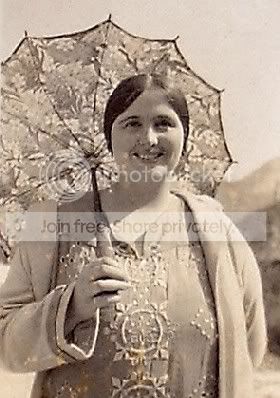
Born in Mussoorie, Uttarakhand, India (then the British Raj), Patricia was educated privately and at Blackheath High School in London. After the death of her first husband, George F. Dillon, in 1906, she settled in Camberley, Surrey. She married George Oliver Turnbull in 1920 and they had one daughter.
Wentworth wrote a series of 32 crime novels (classic-style whodunits) featuring Miss Silver, the first of which was published in 1928, and the last of which was published in the year of her death. Miss Silver is sometimes compared to Jane Marple, the elderly detective created by Agatha Christie. Miss Silver is a retired governess who becomes a private detective. She works closely with Scotland Yard, especially Inspector Frank Abbott. She is fond of quoting the poet Tennyson. "Miss Silver is well known in the better circles of society, and she finds entree to the troubled households of the upper classes with little difficulty. In most of Miss Silver's cases there is a young couple whose romance seems ill fated because of the murder to be solved, but in Miss Silver's competent hands the case is solved, the young couple are exonerated, and all is right in this very traditional world."
She won the Melrose prize in 1910 for her first novel A Marriage Under The Terror, set in the French Revolution.
Born in Mussoorie, Uttarakhand, India (then the British Raj), Patricia was educated privately and at Blackheath High School in London. After the death of her first husband, George F. Dillon, in 1906, she settled in Camberley, Surrey. She married George Oliver Turnbull in 1920 and they had one daughter.
Wentworth wrote a series of 32 crime novels (classic-style whodunits) featuring Miss Silver, the first of which was published in 1928, and the last of which was published in the year of her death. Miss Silver is sometimes compared to Jane Marple, the elderly detective created by Agatha Christie. Miss Silver is a retired governess who becomes a private detective. She works closely with Scotland Yard, especially Inspector Frank Abbott. She is fond of quoting the poet Tennyson. "Miss Silver is well known in the better circles of society, and she finds entree to the troubled households of the upper classes with little difficulty. In most of Miss Silver's cases there is a young couple whose romance seems ill fated because of the murder to be solved, but in Miss Silver's competent hands the case is solved, the young couple are exonerated, and all is right in this very traditional world."
She won the Melrose prize in 1910 for her first novel A Marriage Under The Terror, set in the French Revolution.
44bleuroses
Nov. 18, 1909 - The death of Renée Vivien from pnemonia, probably exacerbated by at least one suicide attempt, voluntary fasting and years of alcohol, chloral hydrate, and laudanum abuse.

Born Pauline Mary Tarn, 11 June 1887, she was a British poet who wrote in the French language. She took to heart all the mannerisms of Symbolism, as one of the last poets to claim allegiance to the school. Her compositions include sonnets, hendecasyllabic verse, and prose poetry.
She was also the lover of Natalie Clifford Barney

THE RENÉE VIVIEN TRANSLATION PROJECT

Born Pauline Mary Tarn, 11 June 1887, she was a British poet who wrote in the French language. She took to heart all the mannerisms of Symbolism, as one of the last poets to claim allegiance to the school. Her compositions include sonnets, hendecasyllabic verse, and prose poetry.
She was also the lover of Natalie Clifford Barney

THE RENÉE VIVIEN TRANSLATION PROJECT
45bleuroses

A Few Words about D. E. Stevenson
by Kristi Jalics
Dorothy Emily Stevenson was born the 18th of November 1892 in Edinburgh, Scotland, into a family well-known both as the engineers who had established lighthouses around the dangerous northern coasts of the United Kingdom, and as writers of note. Her father's cousin Robert Louis Stevenson was already famous for his novels and travel writing, but there were many unpublished diarists as well.
DES was strongly attracted to writing, even as a child, despite her parents disapproval. She loved to read and write and was not above hiding out in an attic room where she could pursue these passions undisturbed. But she loved other pursuits as well, and was such a successful golfer that she was considered for inclusion on the Scottish Ladies Team.
In 1913 Dorothy enjoyed a season as a debutant in Edinburgh, and in 1915 her first book of poetry was published, but the outbreak of war in 1914 changed the focus of her life. In 1916 she married a young officer, James Reid Peploe, a family friend who was home recovering from the wounds of war. Within a year their first child was born and a good deal of her attention must have turned to her life as an officer's wife and mother of a lively young family. Stevenson was the mother of four children, two daughters and two sons, the youngest being born in 1930. In 1928 her oldest daughter died tragically from a mastoid infection while at school
But while busy with life, DES found time to write. Another book of poetry came out, and in 1923 her first novel, Peter West, was published. It was not a great success and no more novels were published for a number of years, though she continued to keep a diary, and was always most interested in the characters and personalities of the people she met.
In the early thirties a friend, Mrs. Rupert Ford, whose daughter was about to marry an army officer, borrowed Stevenson's diary to get a sense of what her daughter's life was going to be like. She enjoyed it greatly and urged DES to publish it. With some changes this was done and, to Stevenson's surprise, Mrs. Tim proved to be quite popular.
From that time on until the end of her life in the early 1970s, Stevenson steadily wrote the books which still delight her readers. She wrote humorous books and serious ones, and even ventured into science fiction. During WWII she wrote books with spies in them as well as those about the home front. In the fifties and sixties her works were often seen as romances, but they were always much more than that. Her fascination with people and the way their personalities affect their lives never left her.
After the bombing of Glasgow in the early 1940s, she and her husband James moved to Moffat, Scotland and became part of the community there. Stevenson was involved with her church, sang in the choir and worked with the Girl Guides. James was on the local council. They seem to have lived a life not that unlike the ones she wrote about in her many novels. More than once, she expressed the hope that her books would be like lighthouses for her readers, and more than thirty years after her death a host of readers still believe this is the case.
Bibliography
Peter West 1923
Mrs Tim of the Regiment 1932
Golden Days 1934
Miss Buncle's Book 1934 (Republished in 2008 by Persephone Books)
Divorced From Reality 1935 (Miss Dean's Dilemma; republished in 1966 as The Young Clementina)
Smouldering Fire 1935
Miss Buncle Married 1936
The Empty World 1936 (A World in Spell)
The Story of Rosabelle Shaw 1937
Miss Bun the Bakers Daughter 1938 (The Baker's Daughter)
Green Money 1939
Rochester's Wife 1940
The English Air 1940
Mrs Tim Carries On 1941
Spring Magic 1942
Crooked Adam 1942 (in USA; 1969 in UK)
Celia's House 1943
The Two Mrs. Abbotts 1943
Listening Valley 1944
The Four Graces 1946
Mrs. Tim Gets a Job 1947
Kate Hardy 1947
Young Mrs. Savage 1948
Vittoria Cottage 1949
Music in The Hills 1950
Winter and Rough Weather 1951 (Shoulder the Sky)
Mrs. Tim Flies Home 1952
Five Windows 1953
Charlotte Fairlie 1954 (Blow the Wind Southerly; The Enchanted Isle)
Amberwell 1955
Summerhills 1956
The Tall Stranger 1957
Anna and her Daughters 1958
Still Glides the Stream 1959
The Musgraves 1960
Bel Lamington 1961
Fletcher's End 1962
The Blue Sapphire 1963
Katherine Wentworth 1964
Katherine's Marriage 1965 (The Marriage of Katherine)
The House on the Cliff 1966
Sarah Morris Remembers 1967
Sarah's Cottage 1968
Gerald and Elizabeth 1969
House of the Deer 1970
46tiffin
Great stuff! Thanks, Cate. I find these women almost more fascinating than the characters they created.
47bleuroses
Ellen Anderson Gholson Glasgow (April 22, 1873 - November 21, 1945) was an American novelist.

Born in Richmond, Virginia, she published her first novel, The Descendant, in 1897, when she was 24 years old. With this novel, Glasgow began a literary career encompassing four and a half decades that comprised 20 novels, a collection of poems, short stories, and a book of literary criticism. Her final novel, In This Our Life, received the Pulitzer Prize for the Novel in 1942. Her autobiography, A Woman Within, appeared posthumously in 1954.
The Ellen Glasgow Society
Novels
The Descendant (1897)
Phases of an Inferior Planet (1898)
The Voice of the People (1900)
The Battle-Ground (1902)
The Deliverance (1904)
The Wheel of Life (1906)
The Romance of a Plain Man (1909)
Virginia (1913)
The Builders (1919)
The Past (1920)
One Man In His Time (1922)
Barren Ground (1925)
The Romantic Comedians (1926)
They Stooped to Folly (1929)
The Sheltered Life (1932)
Vein of Iron (1935)
In This Our Life (1941) (Pulitzer Prize for the Novel 1942) (filmed 1942 as In This Our Life)

Born in Richmond, Virginia, she published her first novel, The Descendant, in 1897, when she was 24 years old. With this novel, Glasgow began a literary career encompassing four and a half decades that comprised 20 novels, a collection of poems, short stories, and a book of literary criticism. Her final novel, In This Our Life, received the Pulitzer Prize for the Novel in 1942. Her autobiography, A Woman Within, appeared posthumously in 1954.
The Ellen Glasgow Society
Novels
The Descendant (1897)
Phases of an Inferior Planet (1898)
The Voice of the People (1900)
The Battle-Ground (1902)
The Deliverance (1904)
The Wheel of Life (1906)
The Romance of a Plain Man (1909)
Virginia (1913)
The Builders (1919)
The Past (1920)
One Man In His Time (1922)
Barren Ground (1925)
The Romantic Comedians (1926)
They Stooped to Folly (1929)
The Sheltered Life (1932)
Vein of Iron (1935)
In This Our Life (1941) (Pulitzer Prize for the Novel 1942) (filmed 1942 as In This Our Life)
48bleuroses

It's the birthday of novelist George Eliot, born Mary Anne Evans near Nuneaton, England (1819). She was a serious little girl. At a birthday party, an adult asked nine-year-old Mary Anne if she was having a good time and she said, "No, I am not. I don't like to play with children, I like to talk to grown-up people." She spent hours in her bedroom, reading novels — by the time she was eight years old she had read The Pilgrim's Progress by John Bunyan, The Vicar of Wakefield by Oliver Goldsmith, and The History of the Devil by Daniel Defoe. A neighbor lent a copy of Sir Walter Scott's Waverley to her older sister, and Mary Anne was in the middle of reading it when the book was returned. She was so disappointed that she decided to resurrect it by writing the story out for herself, as she remembered it, beginning with the opening scene.
She had a religious upbringing, and she was sent off to boarding school, where one of her beloved teachers was an evangelical Christian. She was deeply involved in the prayer groups that were all the rage among young women of the time, and no one could find anything to criticize in her — she was serious and pious — but they were a little bit unnerved by how cold she was, unwilling to be swept up in a religious fervor like some of her peers.
After her mother died, she moved back home to keep house for her father. When her brother got married and he and his wife took over the family home, Mary Anne and her father moved to nearby Coventry, and there she became friends with a couple named Charles and Cara Bray, who lived in a house called Ivy Cottage that was a short walk from her new home. The Brays were radical thinkers about both religion and politics, and she began to question her own beliefs during her conversations with them and with some of their dinner guests, people like Ralph Waldo Emerson, Robert Owen, Herbert Spencer, and Harriet Martineau. After meeting Evans, who was 22 at the time, Emerson said, "That young lady has a calm and serious soul." Her family was suspicious of her involvement with these new people, and she began to get depressed, turning to her writing for comfort. After her father died, she moved to London, where she became a successful editor and journalist.
And she was introduced to a man named George Henry Lewes, and they fell in love. Lewes was already married, but had an unusual married life — he and his wife had agreed to be in an open relationship, and she had been living with another man for years. She had given birth to several children with different fathers, but Lewes had let her put his name on one of the birth certificates. Because of this, the court decided that he had openly supported her adultery and wouldn't let him get divorced. So he and Mary Ann Evans lived together for 24 years until his death, and considered themselves married — she called herself Mary Ann Evans Lewes. Her family disowned her, and many acquaintances were shocked by their unconventional arrangement.
And so it was partly to distance herself from her controversial private life that she chose the pseudonym "George Eliot" when she set out to become a novelist. But even more than that, she wanted her novels to be taken seriously, and she wasn't sure that they would if she published as a woman. In 1856, she published an essay called "Silly Novels by Lady Novelists." In it, she wrote:
"Silly Novels by Lady Novelists are a genus with many species, determined by the particular quality of silliness that predominates in them — the frothy, the prosy, the pious, or the pedantic. But it is a mixture of all these — a composite order of feminine fatuity, that produces the largest class of such novels, which we shall distinguish as the mind-and-millinery species.
The heroine is usually an heiress, probably a peeress in her own right, with perhaps a vicious baronet, an amiable duke, and an irresistible younger son of a marquis as lovers in the foreground, a clergyman and a poet sighing for her in the middle distance, and a crowd of undefined adorers dimly indicated beyond. Her eyes and her wit are both dazzling; her nose and her morals are alike free from any tendency to irregularity; she has a superb contralto and a superb intellect; she is perfectly well-dressed and perfectly religious; she dances like a sylph, and reads the Bible in the original tongues. Or it may be that the heroine is not an heiress — that rank and wealth are the only things in which she is deficient; but she infallibly gets into high society, she has the triumph of refusing many matches and securing the best, and she wears some family jewels or other as a sort of crown of righteousness at the end.
She is the ideal woman in feelings, faculties, and flounces. For all this, she as often as not marries the wrong person to begin with, and she suffers terribly from the plots and intrigues of the vicious baronet; but even death has a soft place in his heart for such a paragon, and remedies all mistakes for her just at the right moment. The vicious baronet is sure to be killed in a duel, and the tedious husband dies in his bed requesting his wife, as a particular favor to him, to marry the man she loves best, and having already dispatched a note to the lover informing him of the comfortable arrangement.
Before matters arrive at this desirable issue our feelings are tried by seeing the noble, lovely, and gifted heroine pass through many mauvais moments, but we have the satisfaction of knowing that her sorrows are wept into embroidered pocket-handkerchiefs, that her fainting form reclines on the very best upholstery, and that whatever vicissitudes she may undergo, from being dashed out of her carriage to having her head shaved in a fever, she comes out of them all with a complexion more blooming and locks more redundant than ever."
She herself was determined to avoid writing anything of the sort, and a couple of years later she published her first fiction, Scenes of Clerical Life (1858), under the name George Eliot, which she said was a good "mouth filling name." Even her publisher didn't know her identity at first. The next year, she published her first full novel, Adam Bede (1859), a work of realism in which a young woman is driven to murder her own child. It was incredibly popular with critics and the public. She was surprised — she wrote to her editor, "Neither you nor I ever calculated on half such a success, thinking that the book was too quiet, and too unflattering to dominant fashion, ever to be very popular." In fact, it was so popular that there was constant speculation about the identity of the novelist, and after an imposter named Joseph Liggins came forward and claimed to have written it, Mary Anne Evans admitted to being the author.
She went on to write some of the most respected novels of the Victorian era, books like The Mill on the Floss (1860), Silas Marner (1861), and Middlemarch (1872).
She said: "No sooner does a woman show that she has genius or effective talent, than she receives the tribute of being moderately praised and severely criticized. By a peculiar thermometric adjustment, when a woman's talent is at zero, journalistic approbation is at the boiling pitch; when she attains mediocrity, it is already at no more than summer heat; and if ever she reaches excellence, critical enthusiasm drops to the freezing point."
She said, "My only desire is to know the truth, my only fear to cling to error."
From today's Writer's Almanac
49bleuroses
Mary Williamina Findlater (March 28, 1865, Lochearnhead - November 22, 1963, St Fillans) was a Scottish novelist.

Born in Perthshire as the daughter of a minister of the Free Church of Scotland, Findlater wrote novels and poetry both alone (Songs and Sonnets, 1895; Betty Musgrave, 1899; A Narrow Way, 1901; The Rose of Joy, 1903; and others) and together with her sister Jane (Tales That Are Told, 1901; Beneath the Visiting Moon, 1923; etc.), with whom she lived until the latter's death in 1946.
Their best-known and most widely admired collaboration is the novel Crossriggs (1908), re-issued in 1986 by Virago Press.

Born in Perthshire as the daughter of a minister of the Free Church of Scotland, Findlater wrote novels and poetry both alone (Songs and Sonnets, 1895; Betty Musgrave, 1899; A Narrow Way, 1901; The Rose of Joy, 1903; and others) and together with her sister Jane (Tales That Are Told, 1901; Beneath the Visiting Moon, 1923; etc.), with whom she lived until the latter's death in 1946.
Their best-known and most widely admired collaboration is the novel Crossriggs (1908), re-issued in 1986 by Virago Press.
50bleuroses
Today is the birthday of novelist Marilynne Robinson, born in Sandpoint, Idaho in 1943.

The town of Sandpoint was small, in the mountains, and it was a powerful place for young Marilynne. She said, "I was aware to the point of alarm of a vast energy of intention, all around me, barely restrained, and I thought everyone else must be aware of it." And she said: "Growing up in the West, in the mountains where, at least when I was a child, being an independent person was very highly valued, and what that meant was, of course, cultivating an interior life that could sustain you, that dignified you. I wrote an essay a long time ago that sort of disappeared, but the word 'lonely,' when I was a little kid, had a very strong positive connotation. It was an experience to be sought, and it took me a while to learn that this was not common wisdom."
She went off to college in Rhode Island, where she studied American literature, and then to the University of Washington to get her Ph.D. And while she was working on her dissertation, she practiced writing in the style of the great 19th-century American writers as a way to further connect with her work. So she wrote down metaphors, just as a writing exercise. But when she finished her dissertation, she read through all her metaphors and realized that they worked together. So with her set of metaphors as a guide, she set out to write a novel, Housekeeping, the story of two sisters raised by relatives in a small town in Idaho. She showed the manuscript to a friend of hers, who was also a writer, and he showed it to his agent, who told Robinson that she wanted to represent her. But, said the agent, it might be hard to find a publisher for it. Right away, Farrar, Strauss & Giroux picked it up — but, they said, it would probably never get reviewed. When Housekeeping was published in 1980, it was written up in The New York Times by Anatole Broyard, who wrote: "You can feel in the book a gathering voluptuous release of confidence, a delighted surprise at the unexpected capacities of language, a close, careful fondness for people that we thought only saints felt." It got great reviews, was nominated for the Pulitzer, and won a PEN/Hemingway Award.
After that, Marilynne Robinson took a 25-year break from novels. She wrote nonfiction, and she taught — for many years she has been a teacher at the Iowa Writers' Workshop. She said: "I accepted a grant from the American Academy that was supposed to support me for five years without teaching. I lasted about a year and a half before I nearly went crazy. Teaching is a distraction and a burden, but it's also an incredible stimulus. And a reprieve, in a way. When you're trying to work on something and it's not going anywhere, you can go to school and there's a two-and-a-half-hour block of time in which you can accomplish something."
And then, finally, she published her second novel, Gilead(2004). Gileadis set in 1956, and the whole novel is an extended letter from John Ames, a dying pastor in his 70s, to his young son. John recounts his own life and thoughts, and those of his father and grandfather, both Congregationalist pastors in Gilead, Iowa, where John still lives. John's grandfather was an abolitionist, a radical who joined forces with John Brown to combat slavery in Kansas, and his father was a pacifist who could not accept his own father's violence. Gileadwon the Pulitzer Prize and the National Book Critics Circle Award. And relatively soon after, at least for Robinson, she published a third novel, Home (2008), a companion to Gilead,this time focused on the old age of Ames' best friend, the Reverend Robert Boughton, and his troubled relationship with his grown son, Jack, the only one of his eight children who has never fit into the family's charitable but sometimes small-minded Christian life.
Her most recent book is nonfiction, Absence of Mind (2010), in which she criticizes the narrow-mindedness of scientists who are unwilling to consider religion, or any sort of metaphysical thinking, in their understanding of the world. She wrote, "Reality consistently exceeds the expectations of science."
She said, "I have this sense of urgency about what I want to get done and I discipline myself by keeping to myself."
And, "A mystical experience would be wasted on me. Ordinary things have always seemed numinous to me. One Calvinist notion deeply implanted in me is that there are two sides to your encounter with the world. You don't simply perceive something that is statically present, but in fact there is a visionary quality to all experience. It means something because it is addressed to you. This is the individualism that you find in Walt Whitman and Emily Dickinson. You can draw from perception the same way a mystic would draw from a vision."
And, "To think that only faultless people are worthwhile seems like an incredible exclusion of almost everything of deep value in the human saga. Sometimes I can't believe the narrowness that has been attributed to God in terms of what he would approve and disapprove."
From today's Writer's Almanac
Happy Birthday, Miss Robinson.

The town of Sandpoint was small, in the mountains, and it was a powerful place for young Marilynne. She said, "I was aware to the point of alarm of a vast energy of intention, all around me, barely restrained, and I thought everyone else must be aware of it." And she said: "Growing up in the West, in the mountains where, at least when I was a child, being an independent person was very highly valued, and what that meant was, of course, cultivating an interior life that could sustain you, that dignified you. I wrote an essay a long time ago that sort of disappeared, but the word 'lonely,' when I was a little kid, had a very strong positive connotation. It was an experience to be sought, and it took me a while to learn that this was not common wisdom."
She went off to college in Rhode Island, where she studied American literature, and then to the University of Washington to get her Ph.D. And while she was working on her dissertation, she practiced writing in the style of the great 19th-century American writers as a way to further connect with her work. So she wrote down metaphors, just as a writing exercise. But when she finished her dissertation, she read through all her metaphors and realized that they worked together. So with her set of metaphors as a guide, she set out to write a novel, Housekeeping, the story of two sisters raised by relatives in a small town in Idaho. She showed the manuscript to a friend of hers, who was also a writer, and he showed it to his agent, who told Robinson that she wanted to represent her. But, said the agent, it might be hard to find a publisher for it. Right away, Farrar, Strauss & Giroux picked it up — but, they said, it would probably never get reviewed. When Housekeeping was published in 1980, it was written up in The New York Times by Anatole Broyard, who wrote: "You can feel in the book a gathering voluptuous release of confidence, a delighted surprise at the unexpected capacities of language, a close, careful fondness for people that we thought only saints felt." It got great reviews, was nominated for the Pulitzer, and won a PEN/Hemingway Award.
After that, Marilynne Robinson took a 25-year break from novels. She wrote nonfiction, and she taught — for many years she has been a teacher at the Iowa Writers' Workshop. She said: "I accepted a grant from the American Academy that was supposed to support me for five years without teaching. I lasted about a year and a half before I nearly went crazy. Teaching is a distraction and a burden, but it's also an incredible stimulus. And a reprieve, in a way. When you're trying to work on something and it's not going anywhere, you can go to school and there's a two-and-a-half-hour block of time in which you can accomplish something."
And then, finally, she published her second novel, Gilead(2004). Gileadis set in 1956, and the whole novel is an extended letter from John Ames, a dying pastor in his 70s, to his young son. John recounts his own life and thoughts, and those of his father and grandfather, both Congregationalist pastors in Gilead, Iowa, where John still lives. John's grandfather was an abolitionist, a radical who joined forces with John Brown to combat slavery in Kansas, and his father was a pacifist who could not accept his own father's violence. Gileadwon the Pulitzer Prize and the National Book Critics Circle Award. And relatively soon after, at least for Robinson, she published a third novel, Home (2008), a companion to Gilead,this time focused on the old age of Ames' best friend, the Reverend Robert Boughton, and his troubled relationship with his grown son, Jack, the only one of his eight children who has never fit into the family's charitable but sometimes small-minded Christian life.
Her most recent book is nonfiction, Absence of Mind (2010), in which she criticizes the narrow-mindedness of scientists who are unwilling to consider religion, or any sort of metaphysical thinking, in their understanding of the world. She wrote, "Reality consistently exceeds the expectations of science."
She said, "I have this sense of urgency about what I want to get done and I discipline myself by keeping to myself."
And, "A mystical experience would be wasted on me. Ordinary things have always seemed numinous to me. One Calvinist notion deeply implanted in me is that there are two sides to your encounter with the world. You don't simply perceive something that is statically present, but in fact there is a visionary quality to all experience. It means something because it is addressed to you. This is the individualism that you find in Walt Whitman and Emily Dickinson. You can draw from perception the same way a mystic would draw from a vision."
And, "To think that only faultless people are worthwhile seems like an incredible exclusion of almost everything of deep value in the human saga. Sometimes I can't believe the narrowness that has been attributed to God in terms of what he would approve and disapprove."
From today's Writer's Almanac
Happy Birthday, Miss Robinson.
51bleuroses
Gertrude Jekyll (29 November 1843 – 8 December 1932) was an influential British garden designer, writer, and artist. She created over 400 gardens in the UK, Europe and the United States.

Gertrude Jekyll Website
Gardens of Gertrude Jekyll
The Manor House, Upton Grey, Hampshire

Gertrude Jekyll Website
Gardens of Gertrude Jekyll
The Manor House, Upton Grey, Hampshire
52bleuroses
Louisa May Alcott (November 29, 1832 – March 6, 1888) An American novelist, she is best known for the novel Little Women, set in the Alcott family home, Orchard House in Concord, Massachusetts, and published in 1868. This novel is loosely based on her childhood experiences with her three sisters.

"My book came out; and people began to think that topsy-turvy Louisa would amount to something after all ..."
Louise May Alcott's Orchard House
Virago published two of her novels, Eight Cousins and A Rose in Bloom.

"My book came out; and people began to think that topsy-turvy Louisa would amount to something after all ..."
Louise May Alcott's Orchard House
Virago published two of her novels, Eight Cousins and A Rose in Bloom.
53bleuroses
Esther "Etty" Hillesum (15 January 1914 in Middelburg, Netherlands – 30 November 1943 in Auschwitz, Poland) was a young Jewish woman whose letters and diaries, kept between 1941 and 1943 describe life in Amsterdam during the German occupation. They were published posthumously in 1981, before being translated into English in 1983.

An Interrupted Life was republished in 1999 by Persephone Books.

An Interrupted Life was republished in 1999 by Persephone Books.
54bleuroses
Women Pioneers of Peterborough County, Canada
"In moments like these, I ceased to regret my separation from my native land; and filled with the love of Nature, my heart forgot for the time, the love of home..."

Susanna Moodie (nee Strickland), born December 6, 1803 at Bungay, England, was the youngest daughter of Thomas Strickland and Elizabeth Homer.
The Stricklands were a literary family. Susanna Moodie, her brother Samuel Strickland, and her sister, Catharine Parr Traill, were all well-known in Canada. Susanna began to seriously pursue her literary career in 1818 after the death of her father.
In 1831, Susanna moved to London, England were she became associated with the Anti-Slavery Society. While working in London, she met her future husband, John Wedderburn Dunbar Moodie. They were wed April 4, 1831. In July 1832, Susanna, John, and their eldest child emigrated to the Cobourg region of Upper Canada.
Moodie wrote about her experiences as a settler in Canada. Roughing It in the Bush (first published in 1892) was re-issued by Virago/Beacon Travelers Series.
"In moments like these, I ceased to regret my separation from my native land; and filled with the love of Nature, my heart forgot for the time, the love of home..."

Susanna Moodie (nee Strickland), born December 6, 1803 at Bungay, England, was the youngest daughter of Thomas Strickland and Elizabeth Homer.
The Stricklands were a literary family. Susanna Moodie, her brother Samuel Strickland, and her sister, Catharine Parr Traill, were all well-known in Canada. Susanna began to seriously pursue her literary career in 1818 after the death of her father.
In 1831, Susanna moved to London, England were she became associated with the Anti-Slavery Society. While working in London, she met her future husband, John Wedderburn Dunbar Moodie. They were wed April 4, 1831. In July 1832, Susanna, John, and their eldest child emigrated to the Cobourg region of Upper Canada.
Moodie wrote about her experiences as a settler in Canada. Roughing It in the Bush (first published in 1892) was re-issued by Virago/Beacon Travelers Series.
55tiffin
Hooray! They moved up to the Peterborough area from Cobourg and settled on the north shore of Katchiwanooka Lake, and the Stricklands settled in the village of Lakefield. Professor Michael Peterman from Trent University has done extensive research into their lives and work, lending Charlotte Gray his research for her book Sisters in the Wilderness. His own book is a delight, full of wonderful photographs and maps:


56bleuroses
Cicely Mary Hamilton (15 June 1872 – 6 December 1952), born Hammill, was an English actress, writer, journalist, suffragist and feminist. She is now best known for the play Diana of Dobson's, with a setting in an Edwardian department store.

She was born in Paddington, London and educated in Malvern. After a short spell in teaching she acted in a touring company. Then she wrote drama, including feminist themes, and enjoyed a period of success in the commercial theatre.
In 1908 she founded with Bessie Hatton the Women Writers' Suffrage League. This grew to around 400 members, including Ivy Compton-Burnett, Sarah Grand, Violet Hunt, Marie Belloc Lowndes, Alice Meynell, Olive Schreiner, Evelyn Sharp, May Sinclair, Margaret L. Woods. It produced campaigning literature, written by Sinclair amongst others, and recruited many prominent male supporters.
During World War I she initially worked in the organisation of nursing care, and then joined the army as an auxiliary. Later she formed a repertory company to entertain the troops.
After the war, she wrote as a freelance journalist, particularly on birth control, and as a playwright for the Birmingham Repertory Company. In 1938 she was given a Civil List pension.
She was a friend of EM Delafield and was portrayed in A Provincial Lady Goes Further as "Emma Hay"
Works
The Traveller Returns (1906) play
Diana of Dobson's (novel, play 1908)
Women’s Votes (1908)
Marriage as a Trade (1909)
How the Vote was Won (1909) play
A Pageant of Great Women (1910) play
Just to Get Married (1911) play
William, an Englishman (1920) novel (Reprinted by Persephone Books, 1999)
The Child in Flanders: A Nativity Play (1922)
Theodore Savage: A Story of the Past or the Future (1922)
The Old Adam (1924) play
The Human Factor (1925)
The Old Vic (1926) with Lilian Baylis
Lest Ye Die (1928)
Modern Germanies as seen by an Englishwoman (1931)
Modern Italy as seen by an Englishwoman (1932)
Modern France as seen by an Englishwoman (1933)
Modern Russia, as seen by an Englishwoman (1934)
Modern Austria as seen by an Englishwoman (1935)
Life Errant (1935) autobiography
Modern Ireland as seen by an Englishwoman (1936)
Modern Scotland as seen by an Englishwoman (1937)
Modern England as seen by an Englishwoman (1938)
Modern Sweden. as seen by an Englishwoman (1939)
The Englishwoman (1940)
Lament for Democracy (1940)
The Beggar Prince (1944) play
Holland To-day (1950)

She was born in Paddington, London and educated in Malvern. After a short spell in teaching she acted in a touring company. Then she wrote drama, including feminist themes, and enjoyed a period of success in the commercial theatre.
In 1908 she founded with Bessie Hatton the Women Writers' Suffrage League. This grew to around 400 members, including Ivy Compton-Burnett, Sarah Grand, Violet Hunt, Marie Belloc Lowndes, Alice Meynell, Olive Schreiner, Evelyn Sharp, May Sinclair, Margaret L. Woods. It produced campaigning literature, written by Sinclair amongst others, and recruited many prominent male supporters.
During World War I she initially worked in the organisation of nursing care, and then joined the army as an auxiliary. Later she formed a repertory company to entertain the troops.
After the war, she wrote as a freelance journalist, particularly on birth control, and as a playwright for the Birmingham Repertory Company. In 1938 she was given a Civil List pension.
She was a friend of EM Delafield and was portrayed in A Provincial Lady Goes Further as "Emma Hay"
Works
The Traveller Returns (1906) play
Diana of Dobson's (novel, play 1908)
Women’s Votes (1908)
Marriage as a Trade (1909)
How the Vote was Won (1909) play
A Pageant of Great Women (1910) play
Just to Get Married (1911) play
William, an Englishman (1920) novel (Reprinted by Persephone Books, 1999)
The Child in Flanders: A Nativity Play (1922)
Theodore Savage: A Story of the Past or the Future (1922)
The Old Adam (1924) play
The Human Factor (1925)
The Old Vic (1926) with Lilian Baylis
Lest Ye Die (1928)
Modern Germanies as seen by an Englishwoman (1931)
Modern Italy as seen by an Englishwoman (1932)
Modern France as seen by an Englishwoman (1933)
Modern Russia, as seen by an Englishwoman (1934)
Modern Austria as seen by an Englishwoman (1935)
Life Errant (1935) autobiography
Modern Ireland as seen by an Englishwoman (1936)
Modern Scotland as seen by an Englishwoman (1937)
Modern England as seen by an Englishwoman (1938)
Modern Sweden. as seen by an Englishwoman (1939)
The Englishwoman (1940)
Lament for Democracy (1940)
The Beggar Prince (1944) play
Holland To-day (1950)
57bleuroses
It's the birthday of poet Léonie Adams born in Brooklyn (1899).

She grew up in a family of six children. Her father had a good memory and would recite passages from Milton or Shakespeare, which made her love poetry, and she started writing her own poems when she was seven years old.
Leonie went on to Barnard College, and there she fell in with a group of smart, high-spirited girls who called themselves the "Ash Can Cats" after a beloved teacher told Léonie that when she and her friends came into class in the mornings after staying up all night reading poetry, they looked like ash can cats. They were also dubbed, at different times, "the mental and moral mess" and "the Communist Morons." They called themselves a family, with "children" and "parents." The parents were Léonie and Margaret Mead, the ringleaders of the group. But Mead was definitely the one in charge, outspoken and ambitious. Adams, on the other hand, was very shy, and often blushed when she was spoken to in public. Mead and Adams shared an apartment, and organized group dinners, poetry readings, and campus antics.
The group of girls encouraged each other to bob their hair, a radical look for the time. They loved Edna St. Vincent Millay, and often when they went out to eat they would bring a candle, put it on its side, and light it at both ends while they recited "First Fig," which begins: "My candle burns at both ends; / It will not last the night; / But ah, my foes, and oh, my friends — / It gives a lovely light!"
One of the Ash Can Cats' favorite holidays was May Day. They made elaborate May baskets and delivered them to their favorite people. For their final year of May Day baskets — the year that the last of their group was graduating from Barnard — they went into Greenwich Village and took one to Edna St. Vincent Millay. Years later Margaret Mead wrote a letter to friends, and she said: "This May day which has been a day that my college group have always celebrated; one year we gave a maybasket to Edna St. Vincent Millay — and got caught in a narrow garden underneath a midnight moon and Léonie took her glove off to shake hands and flung it over the wall into the next garden. This year Cathy made a maybasket for Léonie, and put three of her own poems in it, and got herself caught and the poems read and came back with Léonie's new book — the first in 25 years — for me."
Mead was referring to Poems: A Selection, published in 1954. Adams published just four books of poems during her career — Those Not Elect (1925), followed soon after by High Falcon and Other Poems (1929) and This Measure (1933). And then she did take a long break, 21 years, before publishing Poems: A Selection.
On October 1st, 1948, Robert Lowell wrote a letter to his good friend Elizabeth Bishop. He wrote: "Léonie Adams is a queer one, so shy she mumbles inaudibly half the time, and very funny telling New York stories or about her induction tour of the Library — all for the intense lyrical Blakean kind of poetry, and though she hasn't published for almost 20 years carries around a little child's green copybook with scribblings for poems, and occasionally loses it. She said you'd told her Auden was much better than Yeats. And she'd said you'd outgrow it; and you'd said 'How old are you?' She's a great admirer of your poetry."
In her poem "Thought's End," Adams wrote:
"O heart more frightened than a wild bird's wings
Beating at green, now is no fiery mark
Left on the quiet nothingness of things.
Be self no more against the flooding dark;
There thousandwise, sown in that cloudy blot,
Stars that are worlds look out and see you not."

Ash Can Cats Reunion, 1935
Lft to Right (sitting): Léonie, Marie Eichelberger, Margaret Mead, unknown
Lft to Right (standing) Louise Rosenblatt, Eleanor Pelham Kortheuer, unknown
Leonie Adams Blog

She grew up in a family of six children. Her father had a good memory and would recite passages from Milton or Shakespeare, which made her love poetry, and she started writing her own poems when she was seven years old.
Leonie went on to Barnard College, and there she fell in with a group of smart, high-spirited girls who called themselves the "Ash Can Cats" after a beloved teacher told Léonie that when she and her friends came into class in the mornings after staying up all night reading poetry, they looked like ash can cats. They were also dubbed, at different times, "the mental and moral mess" and "the Communist Morons." They called themselves a family, with "children" and "parents." The parents were Léonie and Margaret Mead, the ringleaders of the group. But Mead was definitely the one in charge, outspoken and ambitious. Adams, on the other hand, was very shy, and often blushed when she was spoken to in public. Mead and Adams shared an apartment, and organized group dinners, poetry readings, and campus antics.
The group of girls encouraged each other to bob their hair, a radical look for the time. They loved Edna St. Vincent Millay, and often when they went out to eat they would bring a candle, put it on its side, and light it at both ends while they recited "First Fig," which begins: "My candle burns at both ends; / It will not last the night; / But ah, my foes, and oh, my friends — / It gives a lovely light!"
One of the Ash Can Cats' favorite holidays was May Day. They made elaborate May baskets and delivered them to their favorite people. For their final year of May Day baskets — the year that the last of their group was graduating from Barnard — they went into Greenwich Village and took one to Edna St. Vincent Millay. Years later Margaret Mead wrote a letter to friends, and she said: "This May day which has been a day that my college group have always celebrated; one year we gave a maybasket to Edna St. Vincent Millay — and got caught in a narrow garden underneath a midnight moon and Léonie took her glove off to shake hands and flung it over the wall into the next garden. This year Cathy made a maybasket for Léonie, and put three of her own poems in it, and got herself caught and the poems read and came back with Léonie's new book — the first in 25 years — for me."
Mead was referring to Poems: A Selection, published in 1954. Adams published just four books of poems during her career — Those Not Elect (1925), followed soon after by High Falcon and Other Poems (1929) and This Measure (1933). And then she did take a long break, 21 years, before publishing Poems: A Selection.
On October 1st, 1948, Robert Lowell wrote a letter to his good friend Elizabeth Bishop. He wrote: "Léonie Adams is a queer one, so shy she mumbles inaudibly half the time, and very funny telling New York stories or about her induction tour of the Library — all for the intense lyrical Blakean kind of poetry, and though she hasn't published for almost 20 years carries around a little child's green copybook with scribblings for poems, and occasionally loses it. She said you'd told her Auden was much better than Yeats. And she'd said you'd outgrow it; and you'd said 'How old are you?' She's a great admirer of your poetry."
In her poem "Thought's End," Adams wrote:
"O heart more frightened than a wild bird's wings
Beating at green, now is no fiery mark
Left on the quiet nothingness of things.
Be self no more against the flooding dark;
There thousandwise, sown in that cloudy blot,
Stars that are worlds look out and see you not."

Ash Can Cats Reunion, 1935
Lft to Right (sitting): Léonie, Marie Eichelberger, Margaret Mead, unknown
Lft to Right (standing) Louise Rosenblatt, Eleanor Pelham Kortheuer, unknown
Leonie Adams Blog
58bleuroses
Emily Dickinson's To-Do List
by Andrea Carlisle
Monday
Figure out what to wear—white dress?
Put hair in bun
Bake gingerbread for Sue
Peer out window at passersby
Write poem
Hide poem
Tuesday
White dress? Off-white dress?
Feed cats
Chat with Lavinia
Work in garden
Letter to T.W.H.
Wednesday
White dress or what?
Eavesdrop on visitors from behind door
Write poem
Hide poem
Thursday
Try on new white dress
Gardening—watch out for narrow fellows in grass!
Gingerbread, cakes, treats
Poems: Write and hide them
Friday
Embroider sash for white dress
Write poetry
Water flowers on windowsill
Hide everything
"Emily Dickinson's To-Do List" by Andrea Carlisle. Used with permission of the author.

It's the birthday of the woman who wrote: "My Life had stood — a Loaded Gun — / In Corners — till a Day / The Owner passed — identified — / And carried Me away." That's the poet Emily Dickinson born in Amherst (1830).
Emily Dickinson is one of the most-speculated-about writers in history — in popular myth, she was a virginal recluse who dressed all in white and then wrote passionate poems that were so unlike anything being written at the time. Relatively little is known about her life, and biographers often try to use clues in her poems to guess about her habits, personality, and sexuality. The Oxford professor Lyndall Gordon recently published a biography called Lives Like Loaded Guns: Emily Dickinson and Her Family's Feuds (2010).
In her biography, Gordon has one major theory that is impossible to prove: She thinks that Emily Dickinson was epileptic, and that this explains the strange jolts and bursts of her language, her frequent use of metaphors like volcanoes and earthquakes, and poems like "I felt a Funeral, in my Brain," which begins:
"I felt a Funeral, in my Brain,
And Mourners to and fro
Kept treading — treading — till it seemed
That Sense was breaking through —
And when they all were seated,
A Service, like a Drum —
Kept beating — beating — till I thought
My Mind was going numb —"
Gordon says that the drugs Dickinson was prescribed could have been used to treat epilepsy, and thinks that if Dickinson was epileptic, it would also explain her reclusiveness — she was scared that she would have a spell of a disease that was still very stigmatized in the 19th century.
Most of Gordon's biography, though, is about the Dickinson family, one of the most prominent families in Amherst. Emily's father was severe, with a strict moral code. She later wrote in a letter to a friend: "His Heart was pure and terrible and I think no other like it exists." Emily didn't learn to tell time until she was 15 because she was afraid to tell her father that she hadn't understood his explanation. Her mother took good care of everyone but was not particularly warm, and she was more interested in cooking, keeping a clean house, and gardening than in the intellectual debates that the rest of the Dickinsons loved.
Emily had two siblings, Austin and Lavinia. Austin was the darling of the family, a handsome and accomplished man. Like his father, and unlike Emily, he was a very public person — he served on countless committees, oversaw civic projects and business ventures, and was deeply involved in his church. His mistress, Mabel Loomis Todd, once wrote: "I suppose nobody in the town could be born or married or buried, or make an investment, or buy a house-lot, or a cemetery-lot, or sell a newspaper, or build a house, or choose a profession, without you close at hand." Austin had a wife, Susan, and three children, and took care of them all plus his two sisters and his invalid mother. The two families lived next door — Austin's family in a home called Evergreens, Emily and Lavinia and their mother in the Homestead.
Austin had a 13-year love affair with Mabel Loomis Todd, the wife of an Amherst astronomy professor, a talented and charismatic young woman. Mabel was fascinated by Emily, whom she called "The Myth," as did many people in Amherst. Mabel was a musician, and Austin and Lavinia invited her to the Homestead to play and sing for Emily and their mother, which she did many times. But Emily would always leave the room before Mabel arrived to perform, and only communicated with her via letters or occasionally through the walls of separate rooms. Austin and Mabel met in the Homestead several afternoons a week for sexual trysts in the living room, during which Emily was confined upstairs. Mabel's husband knew about their relationship and was fine with it, sometimes going so far as to participate in a ménage-a-trois. Austin's wife, Susan, knew about their relationship and was miserable because of it, but she had children and a reputation to uphold.
To make things even more complicated, Emily and Susan were very close — some biographers have speculated that they were lovers, but others think they were just passionate, devoted friends. For many years, Emily would walk next door to Evergreens and read her poems aloud to Susan, whom she called Sue. Susan was also a writer, and a good listener, and Emily gave her more than 250 poems over the years. Sue shared her library with Emily, and passed along her favorite books, books by Elizabeth Barrett Browning and George Eliot — as well as her monthly subscription to The Atlantic Monthly, which Emily read devotedly. Even though Sue lived next door and Emily actually talked to her regularly (unlike many of her correspondents), Emily wrote more letters to Sue than to anyone else in her life. She wrote: "Will you let me come dear Susie — looking just as I do, my dress soiled and worn, my grand old apron, and my hair — Oh Susie, time would fail me to enumerate my appearance, yet I love you just as dearly as if I was e'er so fine, so you wont care, will you? I am so glad dear Susie — that our hearts are always clean, and always neat and lovely, so not to be ashamed I have been hard at work this morning, and I ought to be working now — but I cannot deny myself the luxury of a minute or two with you. Oh my darling one, how long you wander from me, how weary I grow of waiting and looking, and calling for you; sometimes I shut my eyes, and shut my heart towards you, and try hard to forget you because you grieve me so, but you'll never go away, Oh you never will — say, Susie, promise me again, and I will smile faintly — and take up my little cross again of sad — sad separation How vain it seems to write, when one knows how to feel — how much more near and dear to sit beside you, talk with you, hear the tones of your voice; so hard to 'deny thyself, and take up thy cross, and follow me' — give me strength, Susie, write me of hope and love, and of hearts that endured, and great was their reward of 'Our Father who art in Heaven.' I don't know how I shall bear it, when the gentle spring comes; if she should come and see me and talk to me of you, Oh it would surely kill me!"
Emily wrote more than 300 letters to Susan. But it was Mabel, Austin's mistress, whom Emily never once met face-to-face, who ended up publishing her poems and making her famous. The poet had only published a handful of poems during her life. After Emily's death in 1886 at the age of 55, her sister Lavinia found nearly 1,800 poems in Emily's desk. She realized how good they were and was determined to have them published. She passed them on to Susan and asked her to help publish them; but Susan stalled for months, for reasons that are still unclear — hesitancy to expose her friend; grief over her son's recent death; mixed feelings about Lavinia, who knew about Mabel — in any case, she didn't manage to publish anything. Frustrated, Lavinia turned to Mabel, who threw herself into the task. Emily's poems were handwritten, almost illegible in many cases. Mabel transcribed them all. She also edited them heavily — she streamlined Emily's odd punctuation, including her famous use of dashes in the middle of lines. And when she wrote and lectured about Emily, a woman she had never seen, she presented her as The Myth of Amherst, an elusive woman in white. It is from Mabel that we get a lot of our ideas about Dickinson.
When Mabel and Lavinia published the first book of Emily Dickinson's poems in 1890, it went through 11 editions in a year and sold 11,000 copies. With this success came a huge rift between the women who had control of Emily's legacy. Susan was furious with Lavinia for going behind her back and enlisting Mabel's help, and tried to publish her own version of her friend's poems and their correspondence. Mabel suppressed much of the correspondence between Emily and Sue, and generally downplayed their relationship. Mabel and Lavinia got in a bitter fight about who had a greater right to the poems — Lavinia didn't think Mabel should even get credited for editing. In the end, all three women were clinging to their own sets of poems and correspondence from Emily, and each went on a campaign to promote their own version of the poet's life and work. This feud was passed on to Susan's daughter Martha and Mabel's daughter Millicent. Martha, who wrote romantic novels, published a book about her aunt, claiming that her life and work could all be understood in the context of her tragic love for a minister friend, Charles Wadsworth. Millicent was unimpressed with Martha's scholarship — she wrote things like "Bosh," "Ugh," and "Oh yeah?" in the margins of her copy of Martha's book. And she wrote her own book, claiming that her mother's old nemesis, Susan, was a manipulative woman who made Austin's life miserable and who tried to control Emily. Through all of these bitter family rivalries, everyone had a vested image in promoting a certain image of Dickinson, a woman who was not famous at all in her own lifetime.
Emily Dickinson wrote:
Fame is a fickle food
Upon a shifting plate
Whose table once a
Guest but not
The second time is set.
Whose crumbs the crows inspect
And with ironic caw
Flap past it to the Farmer's Corn —
Men eat of it and die.
From today's Writer's Almanac
by Andrea Carlisle
Monday
Figure out what to wear—white dress?
Put hair in bun
Bake gingerbread for Sue
Peer out window at passersby
Write poem
Hide poem
Tuesday
White dress? Off-white dress?
Feed cats
Chat with Lavinia
Work in garden
Letter to T.W.H.
Wednesday
White dress or what?
Eavesdrop on visitors from behind door
Write poem
Hide poem
Thursday
Try on new white dress
Gardening—watch out for narrow fellows in grass!
Gingerbread, cakes, treats
Poems: Write and hide them
Friday
Embroider sash for white dress
Write poetry
Water flowers on windowsill
Hide everything
"Emily Dickinson's To-Do List" by Andrea Carlisle. Used with permission of the author.

It's the birthday of the woman who wrote: "My Life had stood — a Loaded Gun — / In Corners — till a Day / The Owner passed — identified — / And carried Me away." That's the poet Emily Dickinson born in Amherst (1830).
Emily Dickinson is one of the most-speculated-about writers in history — in popular myth, she was a virginal recluse who dressed all in white and then wrote passionate poems that were so unlike anything being written at the time. Relatively little is known about her life, and biographers often try to use clues in her poems to guess about her habits, personality, and sexuality. The Oxford professor Lyndall Gordon recently published a biography called Lives Like Loaded Guns: Emily Dickinson and Her Family's Feuds (2010).
In her biography, Gordon has one major theory that is impossible to prove: She thinks that Emily Dickinson was epileptic, and that this explains the strange jolts and bursts of her language, her frequent use of metaphors like volcanoes and earthquakes, and poems like "I felt a Funeral, in my Brain," which begins:
"I felt a Funeral, in my Brain,
And Mourners to and fro
Kept treading — treading — till it seemed
That Sense was breaking through —
And when they all were seated,
A Service, like a Drum —
Kept beating — beating — till I thought
My Mind was going numb —"
Gordon says that the drugs Dickinson was prescribed could have been used to treat epilepsy, and thinks that if Dickinson was epileptic, it would also explain her reclusiveness — she was scared that she would have a spell of a disease that was still very stigmatized in the 19th century.
Most of Gordon's biography, though, is about the Dickinson family, one of the most prominent families in Amherst. Emily's father was severe, with a strict moral code. She later wrote in a letter to a friend: "His Heart was pure and terrible and I think no other like it exists." Emily didn't learn to tell time until she was 15 because she was afraid to tell her father that she hadn't understood his explanation. Her mother took good care of everyone but was not particularly warm, and she was more interested in cooking, keeping a clean house, and gardening than in the intellectual debates that the rest of the Dickinsons loved.
Emily had two siblings, Austin and Lavinia. Austin was the darling of the family, a handsome and accomplished man. Like his father, and unlike Emily, he was a very public person — he served on countless committees, oversaw civic projects and business ventures, and was deeply involved in his church. His mistress, Mabel Loomis Todd, once wrote: "I suppose nobody in the town could be born or married or buried, or make an investment, or buy a house-lot, or a cemetery-lot, or sell a newspaper, or build a house, or choose a profession, without you close at hand." Austin had a wife, Susan, and three children, and took care of them all plus his two sisters and his invalid mother. The two families lived next door — Austin's family in a home called Evergreens, Emily and Lavinia and their mother in the Homestead.
Austin had a 13-year love affair with Mabel Loomis Todd, the wife of an Amherst astronomy professor, a talented and charismatic young woman. Mabel was fascinated by Emily, whom she called "The Myth," as did many people in Amherst. Mabel was a musician, and Austin and Lavinia invited her to the Homestead to play and sing for Emily and their mother, which she did many times. But Emily would always leave the room before Mabel arrived to perform, and only communicated with her via letters or occasionally through the walls of separate rooms. Austin and Mabel met in the Homestead several afternoons a week for sexual trysts in the living room, during which Emily was confined upstairs. Mabel's husband knew about their relationship and was fine with it, sometimes going so far as to participate in a ménage-a-trois. Austin's wife, Susan, knew about their relationship and was miserable because of it, but she had children and a reputation to uphold.
To make things even more complicated, Emily and Susan were very close — some biographers have speculated that they were lovers, but others think they were just passionate, devoted friends. For many years, Emily would walk next door to Evergreens and read her poems aloud to Susan, whom she called Sue. Susan was also a writer, and a good listener, and Emily gave her more than 250 poems over the years. Sue shared her library with Emily, and passed along her favorite books, books by Elizabeth Barrett Browning and George Eliot — as well as her monthly subscription to The Atlantic Monthly, which Emily read devotedly. Even though Sue lived next door and Emily actually talked to her regularly (unlike many of her correspondents), Emily wrote more letters to Sue than to anyone else in her life. She wrote: "Will you let me come dear Susie — looking just as I do, my dress soiled and worn, my grand old apron, and my hair — Oh Susie, time would fail me to enumerate my appearance, yet I love you just as dearly as if I was e'er so fine, so you wont care, will you? I am so glad dear Susie — that our hearts are always clean, and always neat and lovely, so not to be ashamed I have been hard at work this morning, and I ought to be working now — but I cannot deny myself the luxury of a minute or two with you. Oh my darling one, how long you wander from me, how weary I grow of waiting and looking, and calling for you; sometimes I shut my eyes, and shut my heart towards you, and try hard to forget you because you grieve me so, but you'll never go away, Oh you never will — say, Susie, promise me again, and I will smile faintly — and take up my little cross again of sad — sad separation How vain it seems to write, when one knows how to feel — how much more near and dear to sit beside you, talk with you, hear the tones of your voice; so hard to 'deny thyself, and take up thy cross, and follow me' — give me strength, Susie, write me of hope and love, and of hearts that endured, and great was their reward of 'Our Father who art in Heaven.' I don't know how I shall bear it, when the gentle spring comes; if she should come and see me and talk to me of you, Oh it would surely kill me!"
Emily wrote more than 300 letters to Susan. But it was Mabel, Austin's mistress, whom Emily never once met face-to-face, who ended up publishing her poems and making her famous. The poet had only published a handful of poems during her life. After Emily's death in 1886 at the age of 55, her sister Lavinia found nearly 1,800 poems in Emily's desk. She realized how good they were and was determined to have them published. She passed them on to Susan and asked her to help publish them; but Susan stalled for months, for reasons that are still unclear — hesitancy to expose her friend; grief over her son's recent death; mixed feelings about Lavinia, who knew about Mabel — in any case, she didn't manage to publish anything. Frustrated, Lavinia turned to Mabel, who threw herself into the task. Emily's poems were handwritten, almost illegible in many cases. Mabel transcribed them all. She also edited them heavily — she streamlined Emily's odd punctuation, including her famous use of dashes in the middle of lines. And when she wrote and lectured about Emily, a woman she had never seen, she presented her as The Myth of Amherst, an elusive woman in white. It is from Mabel that we get a lot of our ideas about Dickinson.
When Mabel and Lavinia published the first book of Emily Dickinson's poems in 1890, it went through 11 editions in a year and sold 11,000 copies. With this success came a huge rift between the women who had control of Emily's legacy. Susan was furious with Lavinia for going behind her back and enlisting Mabel's help, and tried to publish her own version of her friend's poems and their correspondence. Mabel suppressed much of the correspondence between Emily and Sue, and generally downplayed their relationship. Mabel and Lavinia got in a bitter fight about who had a greater right to the poems — Lavinia didn't think Mabel should even get credited for editing. In the end, all three women were clinging to their own sets of poems and correspondence from Emily, and each went on a campaign to promote their own version of the poet's life and work. This feud was passed on to Susan's daughter Martha and Mabel's daughter Millicent. Martha, who wrote romantic novels, published a book about her aunt, claiming that her life and work could all be understood in the context of her tragic love for a minister friend, Charles Wadsworth. Millicent was unimpressed with Martha's scholarship — she wrote things like "Bosh," "Ugh," and "Oh yeah?" in the margins of her copy of Martha's book. And she wrote her own book, claiming that her mother's old nemesis, Susan, was a manipulative woman who made Austin's life miserable and who tried to control Emily. Through all of these bitter family rivalries, everyone had a vested image in promoting a certain image of Dickinson, a woman who was not famous at all in her own lifetime.
Emily Dickinson wrote:
Fame is a fickle food
Upon a shifting plate
Whose table once a
Guest but not
The second time is set.
Whose crumbs the crows inspect
And with ironic caw
Flap past it to the Farmer's Corn —
Men eat of it and die.
From today's Writer's Almanac
59bleuroses
Clarice Lispector (December 10, 1920 – December 9, 1977) was a Brazilian writer. Acclaimed internationally for her innovative novels and short stories, she was also a journalist.

Novels
Perto do Coração Selvagem (1943) - Near to the Wild Heart published by New Directions
O Lustre (1946) - The Chandelier
A Cidade Sitiada (1949) - The Besieged City
A Maçã no Escuro (1961) The Apple in the Dark
A Paixão segundo G.H. (1964) - The Passion According to G.H.
Uma Aprendizagem ou O Livro dos Prazeres (1969) - An Apprenticeship or the Book of Pleasures
Água Viva (1973) - The Stream of Life
A hora da Estrela (1977) - The Hour of the Star published by New Directions
Um Sopro de Vida (1978) - A Breath of Life

Novels
Perto do Coração Selvagem (1943) - Near to the Wild Heart published by New Directions
O Lustre (1946) - The Chandelier
A Cidade Sitiada (1949) - The Besieged City
A Maçã no Escuro (1961) The Apple in the Dark
A Paixão segundo G.H. (1964) - The Passion According to G.H.
Uma Aprendizagem ou O Livro dos Prazeres (1969) - An Apprenticeship or the Book of Pleasures
Água Viva (1973) - The Stream of Life
A hora da Estrela (1977) - The Hour of the Star published by New Directions
Um Sopro de Vida (1978) - A Breath of Life
60janeajones
57> Loved the posting on Leonie Adams -- I don't know her, I'll have to find her.
59> If you haven't read The Hour of the Star, read it!
59> If you haven't read The Hour of the Star, read it!
61bleuroses
Olive Schreiner (24 March 1855 - 11 December 1920) was a South African author, anti-war campaigner and intellectual.
She is best remembered today for her novel The Story of an African Farm which has been highly acclaimed ever since its first publication in 1883 for the bold manner in which it dealt with some of the burning issues of the day, including agnosticism, existential independence, individualism and the professional aspirations of women; as well as its portrayal of the elemental nature of life on the colonial frontier.

"Men are like the earth and we are the moon; we turn always one side to them, and they think there is no other, because they don't see it, but there is.”
She is best remembered today for her novel The Story of an African Farm which has been highly acclaimed ever since its first publication in 1883 for the bold manner in which it dealt with some of the burning issues of the day, including agnosticism, existential independence, individualism and the professional aspirations of women; as well as its portrayal of the elemental nature of life on the colonial frontier.

"Men are like the earth and we are the moon; we turn always one side to them, and they think there is no other, because they don't see it, but there is.”
62bleuroses
It's the birthday of writer Shirley Jackson, born in San Francisco (1916).

She lived in rural Vermont with her husband and four children, and she said, "Fifty percent of my life was spent washing and dressing the children, cooking, washing dishes and clothes, and mending." She wrote some novels, books of short stories, and two funny memoirs about life with children in a small town, Life Among the Savages (1953) and Raising Demons (1957).
She wrote: "There was a door to an attic that preferred to stay latched, and would latch itself no matter who was inside; another door hung by custom slightly ajar, although it would close good-humoredly for a time when some special reason required it. We had five attics, we discovered, built into one another; one of them kept bats, and we shut that one up; another one, light and cheerful in spite of a small window, liked to be a place of traffic and became a place to store things temporarily. An old clothesline hung across the basement, and after the line I put in the back yard had fallen down for the third time, I resigned myself and hung a new line in the basement, and clothes dried there quickly and freshly. ... One bedroom chose the children. It was large and light and showed height marks on one wall, and seemed to mind not at all when crayon marks appeared on the wallpaper and paint got spilled on the floor."
But she is most famous for a dark and violent story she wrote about a small town whose citizens held a drawing every year at a festival, and then they stoned and killed the person whose name they drew. The story was called The Lottery, and it was published in The New Yorker, and the magazine got more letters than they had ever received for any piece of writing. They forwarded them all to Shirley Jackson and overwhelmed her small-town post office.

She said, "I have always loved to use fear, to take it and comprehend it and make it work and consolidate a situation where I was afraid and take it whole and work from there."
From today's Writer's Almanac

She lived in rural Vermont with her husband and four children, and she said, "Fifty percent of my life was spent washing and dressing the children, cooking, washing dishes and clothes, and mending." She wrote some novels, books of short stories, and two funny memoirs about life with children in a small town, Life Among the Savages (1953) and Raising Demons (1957).
She wrote: "There was a door to an attic that preferred to stay latched, and would latch itself no matter who was inside; another door hung by custom slightly ajar, although it would close good-humoredly for a time when some special reason required it. We had five attics, we discovered, built into one another; one of them kept bats, and we shut that one up; another one, light and cheerful in spite of a small window, liked to be a place of traffic and became a place to store things temporarily. An old clothesline hung across the basement, and after the line I put in the back yard had fallen down for the third time, I resigned myself and hung a new line in the basement, and clothes dried there quickly and freshly. ... One bedroom chose the children. It was large and light and showed height marks on one wall, and seemed to mind not at all when crayon marks appeared on the wallpaper and paint got spilled on the floor."
But she is most famous for a dark and violent story she wrote about a small town whose citizens held a drawing every year at a festival, and then they stoned and killed the person whose name they drew. The story was called The Lottery, and it was published in The New Yorker, and the magazine got more letters than they had ever received for any piece of writing. They forwarded them all to Shirley Jackson and overwhelmed her small-town post office.

She said, "I have always loved to use fear, to take it and comprehend it and make it work and consolidate a situation where I was afraid and take it whole and work from there."
From today's Writer's Almanac
64bleuroses
Edna O'Brien (born 15 December 1930) is an Irish novelist and short story writer whose works often revolve around the inner feelings of women, and their problems in relating to men and to society as a whole.

Selected bibliography
The Country Girls Trilogy (1987), collected with new epilogue
The Country Girls (1960)
Girl with Green Eyes (1962), first published as The Lonely Girl
Girls in Their Married Bliss (1964)
August Is a Wicked Month (1965)
Casualties of Peace (1966)
The Love Object (1968)
A Pagan Place (1970)
Zee & Co. (1971)
Night (1972)
A Scandalous Woman and Other Stories (1974)
Mother Ireland (1976)
Johnny I Hardly Knew You (1977)
Mrs Reinhardt and Other Stories (1978)
Some Irish Loving (1979), translations
Returning (1982), short stories
A Fanatic Heart (1985), short stories
The High Road (1988)
On the Bone (1989), poetry
Lantern Slides (1990), short stories
Time and Tide (1992)
House of Splendid Isolation (1994)
Down by the River (1996)
James Joyce (1999), biography
Wild Decembers (1999)
In the Forest (2002)
The Light of Evening (2006)
Haunted (2009), play
Byron in Love (2009), biography

Selected bibliography
The Country Girls Trilogy (1987), collected with new epilogue
The Country Girls (1960)
Girl with Green Eyes (1962), first published as The Lonely Girl
Girls in Their Married Bliss (1964)
August Is a Wicked Month (1965)
Casualties of Peace (1966)
The Love Object (1968)
A Pagan Place (1970)
Zee & Co. (1971)
Night (1972)
A Scandalous Woman and Other Stories (1974)
Mother Ireland (1976)
Johnny I Hardly Knew You (1977)
Mrs Reinhardt and Other Stories (1978)
Some Irish Loving (1979), translations
Returning (1982), short stories
A Fanatic Heart (1985), short stories
The High Road (1988)
On the Bone (1989), poetry
Lantern Slides (1990), short stories
Time and Tide (1992)
House of Splendid Isolation (1994)
Down by the River (1996)
James Joyce (1999), biography
Wild Decembers (1999)
In the Forest (2002)
The Light of Evening (2006)
Haunted (2009), play
Byron in Love (2009), biography
65tiffin
>63 bleuroses:: I have to say that Shirley's face doesn't look like it could have written a book with a cover like that.
67alexdaw
Oh my goodness....that Lottery story sounds awfully compelling....with an emphasis on the awfully !!! Love the cover!
68juliette07
~61 Cate - is that a direct quote from Olive Schreiner?
"Men are like the earth and we are the moon; we turn always one side to them, and they think there is no other, because they don't see it, but there is.”
"Men are like the earth and we are the moon; we turn always one side to them, and they think there is no other, because they don't see it, but there is.”
70bleuroses
Christianna Brand (17 December 1907 – 11 March 1988) was a British crime writer and children's author.

She was born Mary Christianna Milne in Malaya and grew up in India. She had a number of different occupations, including model, dancer, shop assistant and governess.
Her first novel, Death in High Heels, was written while Brand was working as a salesgirl, the idea stemming from her fantasies about doing away with an annoying co-worker.
In 1941, one of her best-loved characters, Inspector Cockrill of the Kent County Police, made his debut in the book Heads You Lose. The character would go on to appear in seven of her novels. Green for Danger is Brand’s most famous novel. The whodunit, set in a World War II hospital, was adapted for film by Eagle-Lion Films in 1946, starring Alastair Sim as the Inspector. She dropped the series in the late 1950s and concentrated on various genres as well as short stories.
She was nominated three times for Edgar Awards: for the short stories "Poison in the Cup" and "Twist for Twist" and for a nonfiction work about a Scottish murder case, Heaven Knows Who (1960). She is the author of the children's series Nurse Matilda, which Emma Thompson adapted to film as Nanny McPhee (2005).
Her Inspector Cockrill short stories and a previously unpublished Cockrill stage play were collected as The Spotted Cat and Other Mysteries from inspector Cockrill's Casebook, edited by Tony Medawar (2002).
Christianna Brand served as Chair of the Crime Writers' Association from 1972-1973.
Inspector Cockrill series
Heads You Lose (1941)
Green for Danger (1944)
Suddenly at His Residence (1946)
Death of Jezebel (1948)
London Particular (1952)
Tour De Force (1955)
The Three Cornered Halo (1957)
The Spotted Cat and Other Mysteries from Inspector Cockrill's Casebook (2002)
Inspector Charlesworth
Death in High Heels (1941)
The Rose in Darkness (1979)
Inspector Chucky
Cat and Mouse (1950)
A Ring of Roses (1977) (writing as Mary Ann Ashe)
Novels
The Single Pilgrim (1946) (writing as Mary Roland)
Welcome to Danger (1949)
Starrbelow (1958) (writing as China Thompson)
Dear Mr. MacDonald (1959)
Heaven Knows Who (1960)
Blood Brothers (1965)
My Ladies' Tears (1965)
Twist for Twist (1967)
Court of Foxes (1969)
Alas, for Her That Met Me! (1976) (writing as Mary Ann Ashe)
The Honey Harlot (1978)
The Brides of Aberdar (1982)
Collections
What Dread Hand? (1968)
Brand X (1974)
Buffet for Unwelcome Guests (1983)
For children
Nurse Matilda (1964)
Nurse Matilda Goes to Town (1967)
Nurse Matilda Goes to Hospital (1975)
Anthologies
Naughty Children: An Anthology (1962)
Brand also wrote under the pseudonyms Mary Ann Ashe, Annabel Jones, Mary Roland, and China Thomson.

She was born Mary Christianna Milne in Malaya and grew up in India. She had a number of different occupations, including model, dancer, shop assistant and governess.
Her first novel, Death in High Heels, was written while Brand was working as a salesgirl, the idea stemming from her fantasies about doing away with an annoying co-worker.
In 1941, one of her best-loved characters, Inspector Cockrill of the Kent County Police, made his debut in the book Heads You Lose. The character would go on to appear in seven of her novels. Green for Danger is Brand’s most famous novel. The whodunit, set in a World War II hospital, was adapted for film by Eagle-Lion Films in 1946, starring Alastair Sim as the Inspector. She dropped the series in the late 1950s and concentrated on various genres as well as short stories.
She was nominated three times for Edgar Awards: for the short stories "Poison in the Cup" and "Twist for Twist" and for a nonfiction work about a Scottish murder case, Heaven Knows Who (1960). She is the author of the children's series Nurse Matilda, which Emma Thompson adapted to film as Nanny McPhee (2005).
Her Inspector Cockrill short stories and a previously unpublished Cockrill stage play were collected as The Spotted Cat and Other Mysteries from inspector Cockrill's Casebook, edited by Tony Medawar (2002).
Christianna Brand served as Chair of the Crime Writers' Association from 1972-1973.
Inspector Cockrill series
Heads You Lose (1941)
Green for Danger (1944)
Suddenly at His Residence (1946)
Death of Jezebel (1948)
London Particular (1952)
Tour De Force (1955)
The Three Cornered Halo (1957)
The Spotted Cat and Other Mysteries from Inspector Cockrill's Casebook (2002)
Inspector Charlesworth
Death in High Heels (1941)
The Rose in Darkness (1979)
Inspector Chucky
Cat and Mouse (1950)
A Ring of Roses (1977) (writing as Mary Ann Ashe)
Novels
The Single Pilgrim (1946) (writing as Mary Roland)
Welcome to Danger (1949)
Starrbelow (1958) (writing as China Thompson)
Dear Mr. MacDonald (1959)
Heaven Knows Who (1960)
Blood Brothers (1965)
My Ladies' Tears (1965)
Twist for Twist (1967)
Court of Foxes (1969)
Alas, for Her That Met Me! (1976) (writing as Mary Ann Ashe)
The Honey Harlot (1978)
The Brides of Aberdar (1982)
Collections
What Dread Hand? (1968)
Brand X (1974)
Buffet for Unwelcome Guests (1983)
For children
Nurse Matilda (1964)
Nurse Matilda Goes to Town (1967)
Nurse Matilda Goes to Hospital (1975)
Anthologies
Naughty Children: An Anthology (1962)
Brand also wrote under the pseudonyms Mary Ann Ashe, Annabel Jones, Mary Roland, and China Thomson.
71bleuroses
Sylvia Constance Ashton-Warner, (December 17, 1908 - April 28, 1984), New Zealand writer, poet and educator, was born on December 17, 1908, in Stratford, New Zealand.

She spent many years teaching Māori children, using stimulating and often pioneering techniques which she wrote about in her 1963 treatise "Teacher" and in the various volumes of her autobiography. Her success derived from a commitment to "releasing the native imagery and using it for working material" and her belief that communication must produce a mutual response in order to affect a lasting change.
As a novelist, she produced several works mostly centred around strong female characters. Her novel Spinster (1958) was made into the 1961 film Two Loves (also known as The Spinster) starring Shirley MacLaine. She was awarded an MBE for services to education and literature.
Ashton-Warner died on April 28, 1984, in Tauranga. Her life story was adapted for the 1985 biographical film "Sylvia", based on her work and writings, and she was honoured at the University of Auckland—the institution at which she trained between 1928 and 1929—where the Faculty of Education library was named the Sylvia Ashton-Warner Library in 1987.
Selected Works
Anthology
A Womans Life: Writing by Women About Female Experience in New Zealand. Auckland: Penguin, 1989
Articles
"Sylvia Ashton-Warner Yo Ho." Education 25.2; (1976)
"The least thing." Here and Now 9; April (1956)
Autobiography
I Passed This Way. New York: Knopf, 1979.
"Kaleidoscope Sylvia Ashton-Warner." New Zealand Television Archive, Auckland, 2008.
Letters
Whenua: the letters of Sylvia Aston-Warner to Ruth Gilbert. Wellington, Cultural and Political Booklets 2007.
Novels
Bell Call New York: Simon & Schuster, 1964
Greenstone Christchurch: Whitcombe & Tombs, 1967
"Natural patterns and rhythms in Greenstone." Commonwealth Toulouse 3; (1979)
Incense to Idols, London: Secker & Warburg, 1960
Myself New York: Simon & Schuster, 1967
Spearpoint: Teacher in America. New York: Knopf, 1972
:Spinster London: Secker & Warburg, 1958
Teacher, London: Secker & Warburg, 1963
Three, Christchurch: Whitcombe & Tombs, 1971
Poetry
"My universe." Comment 11; April (1962)
"Songs of exhaustion." Comment 13; Oct (1962)
"Songs of exhaustion." Comment 16; July (1963)
Short Stories
"Agonies." Here and Now 47; Dec (1955)
"Floor." Here and Now 51; June (1956)
Short Story Collection
Stories from the River. Auckland, Hodder and Stoughton 1986.

She spent many years teaching Māori children, using stimulating and often pioneering techniques which she wrote about in her 1963 treatise "Teacher" and in the various volumes of her autobiography. Her success derived from a commitment to "releasing the native imagery and using it for working material" and her belief that communication must produce a mutual response in order to affect a lasting change.
As a novelist, she produced several works mostly centred around strong female characters. Her novel Spinster (1958) was made into the 1961 film Two Loves (also known as The Spinster) starring Shirley MacLaine. She was awarded an MBE for services to education and literature.
Ashton-Warner died on April 28, 1984, in Tauranga. Her life story was adapted for the 1985 biographical film "Sylvia", based on her work and writings, and she was honoured at the University of Auckland—the institution at which she trained between 1928 and 1929—where the Faculty of Education library was named the Sylvia Ashton-Warner Library in 1987.
Selected Works
Anthology
A Womans Life: Writing by Women About Female Experience in New Zealand. Auckland: Penguin, 1989
Articles
"Sylvia Ashton-Warner Yo Ho." Education 25.2; (1976)
"The least thing." Here and Now 9; April (1956)
Autobiography
I Passed This Way. New York: Knopf, 1979.
"Kaleidoscope Sylvia Ashton-Warner." New Zealand Television Archive, Auckland, 2008.
Letters
Whenua: the letters of Sylvia Aston-Warner to Ruth Gilbert. Wellington, Cultural and Political Booklets 2007.
Novels
Bell Call New York: Simon & Schuster, 1964
Greenstone Christchurch: Whitcombe & Tombs, 1967
"Natural patterns and rhythms in Greenstone." Commonwealth Toulouse 3; (1979)
Incense to Idols, London: Secker & Warburg, 1960
Myself New York: Simon & Schuster, 1967
Spearpoint: Teacher in America. New York: Knopf, 1972
:Spinster London: Secker & Warburg, 1958
Teacher, London: Secker & Warburg, 1963
Three, Christchurch: Whitcombe & Tombs, 1971
Poetry
"My universe." Comment 11; April (1962)
"Songs of exhaustion." Comment 13; Oct (1962)
"Songs of exhaustion." Comment 16; July (1963)
Short Stories
"Agonies." Here and Now 47; Dec (1955)
"Floor." Here and Now 51; June (1956)
Short Story Collection
Stories from the River. Auckland, Hodder and Stoughton 1986.
72romain
I've read a number of Christianna Brand's. I loved Green for Danger and London Particular and enjoyed Tour de Force.
73bleuroses
Elizabeth Mavor (born 17 Dec 1927 in Glasgow, Scotland) is a British writer.
She is married to illustrator Haro Hodson, and has two sons and lives in Oxfordshire. She is best known as a novelist, and has written "The Green Equinox", a biography of the Duchess of Kingston, The Ladies of Llangollen, and "Fanny Kemble: American Journals".
Lady Eleanor Butler and The Honorable Miss Ponsonby:


Bibliography
The Virgin Mistress
Ladies of Llangollen: A Study in Romantic Friendship
The Grand Tour of William Beckford
The Grand Tours of Katherine Wilmot: France 1801-3 and Russia 1805-7 (Compiler and Editor)
A Year with the Ladies of Llangollen
Summer in the Greenhouse
The Temple of Flora'
The Redoubt
The Green Equinox
The White Solitaire
More on the Ladies of Llangollen
She is married to illustrator Haro Hodson, and has two sons and lives in Oxfordshire. She is best known as a novelist, and has written "The Green Equinox", a biography of the Duchess of Kingston, The Ladies of Llangollen, and "Fanny Kemble: American Journals".
Lady Eleanor Butler and The Honorable Miss Ponsonby:


Bibliography
The Virgin Mistress
Ladies of Llangollen: A Study in Romantic Friendship
The Grand Tour of William Beckford
The Grand Tours of Katherine Wilmot: France 1801-3 and Russia 1805-7 (Compiler and Editor)
A Year with the Ladies of Llangollen
Summer in the Greenhouse
The Temple of Flora'
The Redoubt
The Green Equinox
The White Solitaire
More on the Ladies of Llangollen
74christiguc
Ms. Cate, you are invaluable. Thank you.
75bleuroses
Marguerite Yourcenar (8 June 1903 – 17 December 1987) was a Belgian-born French novelist, essayist, and short story writer, who gained international fame with her metaphysical historical novels. In these works Yourcenar drew psychologically penetrating portraits of people from the distant past, but she also dealt with modern issues such as homosexuality and deviance.
She was the first woman elected to the Académie française, in 1980, and the seventeenth to occupy Seat 3.

Musee Yourcenar
She was the first woman elected to the Académie française, in 1980, and the seventeenth to occupy Seat 3.

Musee Yourcenar
76bleuroses
Ruth Park AM (24 August 1917 – 16 December 2010) was a New Zealand-born author, who spent most of her life in Australia. Her best known works are the novels The Harp in the South (1948) and Playing Beatie Bow (1980), and the children's radio serial The Muddle-Headed Wombat (1951–1970), which also spawned a book series (1962–1982).

The Canberra Times - Harp-in-the-South-silenced
National Library of Australia - Ruth Park: A Celebration
Novels
The Harp in the South, (1948)
Poor Man's Orange, (1949); also published as 12 1/2 Plymouth Street, (1951)
The Witch's Thorn, (1951)
A Power of Roses, (1953)
Serpent's Delight, (1953); also published as The Good Looking Women, (1961)
Pink Flannel, (1955)
One-a-Pecker, Two-a-Pecker, (1957); also published as The Frost and the Fire, (1958)
Swords and Crowns and Rings, (1977)
Missus, (1985)
Children's books
The Hole in the Hill, (1961); also published as Secret of the Maori Cave, (1961)
The Ship's Cat, (1961)
The Muddle-Headed Wombat series, (1962–1982)
Airlift for Grandee, (1962)
The Road to Christmas, (1962)
The Road Under the Sea, (1962)
The Shaky Island, (1962)
Uncle Matt's Mountain, (1962)
The Ring for the Sorcerer, (1967)
The Sixpenny Island, (1968)
Nuki and the Sea Serpent: a Maori Legend, (1969)
The Runaway Bus, (1969)
Callie's Castle, (1974)
The Gigantic Balloon, (1975)
Merchant Campbell, (1976)
Roger Bandy, (1977)
Come Danger, Come Darkness, (1978)
Playing Beatie Bow, (1980)
When the Wind Changed, (1980)
The Big Brass Key, (1983)
My Sister Sif, (1986)
Callie's Family, (1988)
Things in Corners, (1989) – short stories
James, (1991)

The Canberra Times - Harp-in-the-South-silenced
National Library of Australia - Ruth Park: A Celebration
Novels
The Harp in the South, (1948)
Poor Man's Orange, (1949); also published as 12 1/2 Plymouth Street, (1951)
The Witch's Thorn, (1951)
A Power of Roses, (1953)
Serpent's Delight, (1953); also published as The Good Looking Women, (1961)
Pink Flannel, (1955)
One-a-Pecker, Two-a-Pecker, (1957); also published as The Frost and the Fire, (1958)
Swords and Crowns and Rings, (1977)
Missus, (1985)
Children's books
The Hole in the Hill, (1961); also published as Secret of the Maori Cave, (1961)
The Ship's Cat, (1961)
The Muddle-Headed Wombat series, (1962–1982)
Airlift for Grandee, (1962)
The Road to Christmas, (1962)
The Road Under the Sea, (1962)
The Shaky Island, (1962)
Uncle Matt's Mountain, (1962)
The Ring for the Sorcerer, (1967)
The Sixpenny Island, (1968)
Nuki and the Sea Serpent: a Maori Legend, (1969)
The Runaway Bus, (1969)
Callie's Castle, (1974)
The Gigantic Balloon, (1975)
Merchant Campbell, (1976)
Roger Bandy, (1977)
Come Danger, Come Darkness, (1978)
Playing Beatie Bow, (1980)
When the Wind Changed, (1980)
The Big Brass Key, (1983)
My Sister Sif, (1986)
Callie's Family, (1988)
Things in Corners, (1989) – short stories
James, (1991)

78alexdaw
Dear Cate
Thanks so much for posting all the information about Ruth Park. I loved the Muddle-Headed Wombat growing up on ABC Radio and read The Harp in the South at Uni a long long time ago....time to read some more me thinks.....
Thanks so much for posting all the information about Ruth Park. I loved the Muddle-Headed Wombat growing up on ABC Radio and read The Harp in the South at Uni a long long time ago....time to read some more me thinks.....
80LizzieD
And I am grateful to learn for the first time that there was a Ruth Park . A very Judy Garlandish-looking person, don't you think?
81romain
Yes, but better looking than Judy I think. I was sent her two volume bio by a NZ friend and thought - damn this will be boring and he will want to discuss it with me! But it turned out to be quite the reverse and a pleasure to discuss.
82tiffin
Cate, I just rushed off and ordered The Ladies of LLangollen by Mavor. Thank you for discovering this for me.
84Soupdragon
Thank you so much, as ever, Cate.
Your information on Sylvia Ashton-Warner was timely for me as I found a VMC edition of Spinster in a charity shop on Friday (her birthday!) but knew nothing about her.
I wasn't going to buy any Viragos until I'd opened my Secret Santa- just in case! But I couldn't resist when I found this in Oxfam!
Your information on Sylvia Ashton-Warner was timely for me as I found a VMC edition of Spinster in a charity shop on Friday (her birthday!) but knew nothing about her.
I wasn't going to buy any Viragos until I'd opened my Secret Santa- just in case! But I couldn't resist when I found this in Oxfam!
85europhile
Thank you very much for these from me too, Cate. There have been some new discoveries here. I also enjoyed Ruth Park's autobiography A Fence around the Cuckoo & Fishing in the Styx and recommend it, especially to those who are interested in Australian/NZ literature.
86aluvalibri
I read The Harp in the South trilogy, One-a-Pecker, Two-a-Pecker, and Pink Flannel by Ruth Park. Quite enjoyable.
87bleuroses
Zoe Fairbairns was born in England on 20 December 1948.

She was educated at the University of St. Andrews, Scotland, and the College of William and Mary, USA. She has worked as a freelance journalist and a creative writing tutor, and is the former poetry editor of Spare Rib. She has also held appointments as Writer in Residence at Bromley Schools (1981-3 and 1985-9), Deakin University, Geelong, Australia (1983), Sunderland Polytechnic (1983-5) and Surrey County Council (1989).
Her first novel, Live as Family, written when she was seventeen, was published in 1968, and her second, Down: An Explanation (1969), was published a year later while she was still at university. Both novels employ a first-person narrative to explore issues of personal and community responsibility.
Her short stories have been included in many anthologies, including Tales I Tell My Mother: A Collection of Feminist Short Stories (1978) and Brilliant Careers (2000). She has also contributed to poetry anthologies, including The Faber Book of Blue Verse (1990).
In the 1970s her writing centred on environmental and social concerns, and she produced reports for CND and Shelter. In 1984, with James Cameron, she published Peace Moves: Nuclear Protest in the 1980s, an account of the anti-nuclear protest movement.
Benefits (1979), a tense, dystopian novel, marked her return to fiction and to women's issues, and five further novels, which consolidated her reputation as a feminist writer, followed:
Stand we at Last (1983), spans 120 years and three continents and chronicles the lives of five generations of women against a background of Victorian repression, prostitution, the suffragette movement, the devastation of war and the rise of the women's movement;
Here Today (1984), which was awarded the 1985 Fawcett Society Book Prize, is an exploration of feminist themes in a crime setting;
Closing (1987), is a sharp portrait of working women caught between feminisim and Thatcherism; and
Daddy's Girls (1992), is a saga of three sisters in a family full of guilty secrets.
Zoe Fairbairns' most recent novel, Other Names, was published in 1998. Her latest book is a collection of short stories, How Do You Pronounce Nulliparous? (2004).

She was educated at the University of St. Andrews, Scotland, and the College of William and Mary, USA. She has worked as a freelance journalist and a creative writing tutor, and is the former poetry editor of Spare Rib. She has also held appointments as Writer in Residence at Bromley Schools (1981-3 and 1985-9), Deakin University, Geelong, Australia (1983), Sunderland Polytechnic (1983-5) and Surrey County Council (1989).
Her first novel, Live as Family, written when she was seventeen, was published in 1968, and her second, Down: An Explanation (1969), was published a year later while she was still at university. Both novels employ a first-person narrative to explore issues of personal and community responsibility.
Her short stories have been included in many anthologies, including Tales I Tell My Mother: A Collection of Feminist Short Stories (1978) and Brilliant Careers (2000). She has also contributed to poetry anthologies, including The Faber Book of Blue Verse (1990).
In the 1970s her writing centred on environmental and social concerns, and she produced reports for CND and Shelter. In 1984, with James Cameron, she published Peace Moves: Nuclear Protest in the 1980s, an account of the anti-nuclear protest movement.
Benefits (1979), a tense, dystopian novel, marked her return to fiction and to women's issues, and five further novels, which consolidated her reputation as a feminist writer, followed:
Stand we at Last (1983), spans 120 years and three continents and chronicles the lives of five generations of women against a background of Victorian repression, prostitution, the suffragette movement, the devastation of war and the rise of the women's movement;
Here Today (1984), which was awarded the 1985 Fawcett Society Book Prize, is an exploration of feminist themes in a crime setting;
Closing (1987), is a sharp portrait of working women caught between feminisim and Thatcherism; and
Daddy's Girls (1992), is a saga of three sisters in a family full of guilty secrets.
Zoe Fairbairns' most recent novel, Other Names, was published in 1998. Her latest book is a collection of short stories, How Do You Pronounce Nulliparous? (2004).
88bleuroses
It's the birthday of the woman who inspired this verse by W.B. Yeats: "Had I the heavens' embroidered cloths, / Enwrought with golden and silver light, / The blue and the dim and the dark cloths / Of night and light and the half light, / I would spread the cloths under your feet: / But I, being poor, have only my dreams; I have spread my dreams under your feet; Tread softly because you tread on my dreams."

That's Maud Gonne whom W.B. Yeats was addressing; she was born in Surrey, England, on this day in 1865, just six months after Yeats was born in Dublin. They first met when they were each 25 years old. Yeats later referred to the day he met her as "when the troubling of my life began."
She was an Irish revolutionary, independent-minded, graceful, and reared in affluence. She was tall, red-headed, and exquisitely beautiful. In his Memoirs, Yeats wrote: "I had never thought to see in a living woman such great beauty. It belonged to famous pictures, to poetry, to some legendary past. A complexion like the blossom of apples, and yet face and body had the beauty of lineaments which Blake calls the highest beauty because it changes least from youth to age, and a stature so great that she seemed of a divine race." She wore long black dresses and she kept singing birds as pets.
He asked her to marry him over and over again. She refused, over and over again. She once told him: "You would not be happy with me. ... You make beautifully poetry out of what you call your unhappiness and you are happy in that. Marriage would be such a dull affair. Poets should never marry."
In a letter to him in 1911, she wrote, "Our children were your poems of which I was the father sowing the unrest & storm which made them possible & you the mother who brought them forth in suffering & in the highest beauty."
Yeats wrote about her:
When you are old and grey and full of sleep,
And nodding by the fire, take down this book,
And slowly read, and dream of the soft look
Your eyes had once, and of their shadows deep;
How many loved your moments of glad grace,
And loved your beauty with love false or true,
But one man loved the pilgrim soul in you,
And loved the sorrows of your changing face;
And bending down beside the glowing bars,
Murmur, a little sadly, how Love fled
And paced upon the mountains overhead
And hid his face amid a crowd of stars.
From The Writer's Almanac

That's Maud Gonne whom W.B. Yeats was addressing; she was born in Surrey, England, on this day in 1865, just six months after Yeats was born in Dublin. They first met when they were each 25 years old. Yeats later referred to the day he met her as "when the troubling of my life began."
She was an Irish revolutionary, independent-minded, graceful, and reared in affluence. She was tall, red-headed, and exquisitely beautiful. In his Memoirs, Yeats wrote: "I had never thought to see in a living woman such great beauty. It belonged to famous pictures, to poetry, to some legendary past. A complexion like the blossom of apples, and yet face and body had the beauty of lineaments which Blake calls the highest beauty because it changes least from youth to age, and a stature so great that she seemed of a divine race." She wore long black dresses and she kept singing birds as pets.
He asked her to marry him over and over again. She refused, over and over again. She once told him: "You would not be happy with me. ... You make beautifully poetry out of what you call your unhappiness and you are happy in that. Marriage would be such a dull affair. Poets should never marry."
In a letter to him in 1911, she wrote, "Our children were your poems of which I was the father sowing the unrest & storm which made them possible & you the mother who brought them forth in suffering & in the highest beauty."
Yeats wrote about her:
When you are old and grey and full of sleep,
And nodding by the fire, take down this book,
And slowly read, and dream of the soft look
Your eyes had once, and of their shadows deep;
How many loved your moments of glad grace,
And loved your beauty with love false or true,
But one man loved the pilgrim soul in you,
And loved the sorrows of your changing face;
And bending down beside the glowing bars,
Murmur, a little sadly, how Love fled
And paced upon the mountains overhead
And hid his face amid a crowd of stars.
From The Writer's Almanac
89bleuroses
Christine Brückner (December 10 1921 in Schmillinghausen at Bad Arolsen , Hessen , - December 21 1996 in Kassel ) was a German writer. (This is a translated wiki page)

Stories and Novels
Blow Away the Traces of Marriage, 1954
Catherine and the Onlooker, 1957
A Spring in the Ticino, 1960
The time After, 1961
Bella Vista and Other Stories, 1963
Last year, Ischia, 1964
The Cocoon, 1966
The Happy Book of AP, 1970
Survival Stories, 1973
Urine and Wallflowers, 1975
The Girls in my Class, 1975
Nowhere is Poenichen, 1977
What's a year. Early Stories, 1984
Be One's That Love Others, 1981
The Quints, 1985
The Last Verse, 1989
Sooner or Later, in 1994
Virago published her collection, If you had spoken, Desdemona. An original and witty collection of monologues, which puts Christine Brückner from literature or history famous women in the mouth: Christiane von Goethe, Desdemona, Katharina von Bora, Sappho, Megara, Effi Briest, Camille, Christine Brückner, Eva Hitler, Gudrun Ensslin, Donna Laura, Maria, Clytemnestra.

Stories and Novels
Blow Away the Traces of Marriage, 1954
Catherine and the Onlooker, 1957
A Spring in the Ticino, 1960
The time After, 1961
Bella Vista and Other Stories, 1963
Last year, Ischia, 1964
The Cocoon, 1966
The Happy Book of AP, 1970
Survival Stories, 1973
Urine and Wallflowers, 1975
The Girls in my Class, 1975
Nowhere is Poenichen, 1977
What's a year. Early Stories, 1984
Be One's That Love Others, 1981
The Quints, 1985
The Last Verse, 1989
Sooner or Later, in 1994
Virago published her collection, If you had spoken, Desdemona. An original and witty collection of monologues, which puts Christine Brückner from literature or history famous women in the mouth: Christiane von Goethe, Desdemona, Katharina von Bora, Sappho, Megara, Effi Briest, Camille, Christine Brückner, Eva Hitler, Gudrun Ensslin, Donna Laura, Maria, Clytemnestra.
90elkiedee
This is the first I've learned of Ruth Park's death. I have a couple of her children's books including Playing Beatie Bow which I need to reread, and I bought an omnibus edition of her memoirs, The Harp in the South Novels earlier this year.
91bleuroses
Helen Beatrix Potter (28 July 1866 – 22 December 1943) was an English author, illustrator, mycologist and conservationist best known for children's books featuring anthropomorphic characters such as in The Tale of Peter Rabbit.

Beatrix Potter Society

Beatrix Potter Society
92bleuroses
Monica Enid Dickens (born May 10, 1915, London – died December 25, 1992, Reading, Berkshire) was an English writer and the great-granddaughter of Charles Dickens.

Known as 'Monty' to her family and friends, she was born into an upper middle class London family to Henry Charles Dickens (1878–1966), a barrister, and Fanny Runge. She was the grand-daughter of Sir Henry Fielding Dickens KC, the eminent judge.
Having become disillusioned with the world she was brought up in — she was expelled from St Paul's Girls' School in London before she was presented at court as a debutante — she decided to go into service despite coming from the privileged class; her experiences as a cook and general servant would form the nucleus of her first book, One Pair Of Hands in 1939. One Pair Of Feet (1942) recounted her work as a nurse, and subsequently she worked in an aircraft factory and on a local newspaper in Hitchin — her experiences in the latter field of work inspired her 1951 book My Turn To Make The Tea.
Soon after this, she moved from her home in Hinxworth in Hertfordshire to the United States after marrying a United States Navy officer, Roy Stratton, and adopting two girls, Pamela and Prudence. She lived in Washington, D.C. and Falmouth, Massachusetts and continued to write, most of her books being set in Britain. She was also a regular columnist for the British women's magazine Woman's Own for twenty years.
Monica Dickens had strong humanitarian interests which were manifested in her work with the National Society for the Prevention of Cruelty to Children (reflected in her 1953 book No More Meadows and her 1964 work Kate and Emma), the Royal Society for the Prevention of Cruelty to Animals (coming to the fore in her 1963 book Cobbler's Dream), and the Samaritans, the subject of her 1970 novel The Listeners — she helped to found the first American branch of the Samaritans in Massachusetts in 1974.
From 1970 onwards she wrote a number of children's books; the Follyfoot series of books followed on from her earlier adult novel Cobbler's Dream, and were the basis of a children's TV series, also called Follyfoot, produced by Yorkshire Television for the UK's ITV network between 1971 and 1973 (and popular around the world for many years thereafter).
In 1978 Monica Dickens published her autobiography, An Open Book. In 1985 she returned to the UK after the death of her husband, and continued to write until her death on Christmas Day 1992, her final book being published posthumously. She was also an occasional broadcaster for most of her writing career.
Obituary - Monica Dickens
Adult books
One Pair of Hands (1961)
Mariana (1940) (Republished in 1999 by Persephone Books)
One Pair Of Feet (1942)
The Fancy (1943)
Thursday Afternoons (1945)
The Happy Prisoner (1946)
Your's Sincerly (1947). In collaboration with Beverley Nichols.
Joy and Josephine (1948)
Flowers on the Grass (1949)
My Turn To Make The Tea (1951)
No More Meadows (1953)
The Winds of Heaven (1955)
The Angel in the Corner (1956)
Man Overboard (1958)
The Heart of London (1961)
Cobbler's Dream (1963) (republished in 1995 as New Arrival at Follyfoot)
The Room Upstairs (1964)
Kate and Emma (1965)
The Landlord's Daughter (1968)
The Listeners (1970)
Talking of Horses (1973) — non-fiction
Last Year When I Was Young (1974)
An Open Book (1980)
A Celebration (1984)
A View From The Seesaw (1986)
Dear Doctor Lily (1988)
Enchantment (1989)
Closed at Dusk (1990)
Scarred (1991)
One of the Family (1993)
Children's books
The World's End series:
The House at World's End (1970)
Summer at World's End (1971)
World's End in Winter (1972)
Spring Comes to World's End (1973)
The Follyfoot series:
Follyfoot (1971)
Dora at Follyfoot (1972)
The Horses of Follyfoot (1975)
Stranger at Follyfoot (1976)
The book Cobblers Dream also contains the same characters as in the Follyfoot series.
The Messenger series:
The Messenger (1985)
Ballad of Favour (1985)
Cry of a Seagull (1986)
The Haunting of Bellamy 4 (1986)
Non-series:
The Great Escape (1975)

Known as 'Monty' to her family and friends, she was born into an upper middle class London family to Henry Charles Dickens (1878–1966), a barrister, and Fanny Runge. She was the grand-daughter of Sir Henry Fielding Dickens KC, the eminent judge.
Having become disillusioned with the world she was brought up in — she was expelled from St Paul's Girls' School in London before she was presented at court as a debutante — she decided to go into service despite coming from the privileged class; her experiences as a cook and general servant would form the nucleus of her first book, One Pair Of Hands in 1939. One Pair Of Feet (1942) recounted her work as a nurse, and subsequently she worked in an aircraft factory and on a local newspaper in Hitchin — her experiences in the latter field of work inspired her 1951 book My Turn To Make The Tea.
Soon after this, she moved from her home in Hinxworth in Hertfordshire to the United States after marrying a United States Navy officer, Roy Stratton, and adopting two girls, Pamela and Prudence. She lived in Washington, D.C. and Falmouth, Massachusetts and continued to write, most of her books being set in Britain. She was also a regular columnist for the British women's magazine Woman's Own for twenty years.
Monica Dickens had strong humanitarian interests which were manifested in her work with the National Society for the Prevention of Cruelty to Children (reflected in her 1953 book No More Meadows and her 1964 work Kate and Emma), the Royal Society for the Prevention of Cruelty to Animals (coming to the fore in her 1963 book Cobbler's Dream), and the Samaritans, the subject of her 1970 novel The Listeners — she helped to found the first American branch of the Samaritans in Massachusetts in 1974.
From 1970 onwards she wrote a number of children's books; the Follyfoot series of books followed on from her earlier adult novel Cobbler's Dream, and were the basis of a children's TV series, also called Follyfoot, produced by Yorkshire Television for the UK's ITV network between 1971 and 1973 (and popular around the world for many years thereafter).
In 1978 Monica Dickens published her autobiography, An Open Book. In 1985 she returned to the UK after the death of her husband, and continued to write until her death on Christmas Day 1992, her final book being published posthumously. She was also an occasional broadcaster for most of her writing career.
Obituary - Monica Dickens
Adult books
One Pair of Hands (1961)
Mariana (1940) (Republished in 1999 by Persephone Books)
One Pair Of Feet (1942)
The Fancy (1943)
Thursday Afternoons (1945)
The Happy Prisoner (1946)
Your's Sincerly (1947). In collaboration with Beverley Nichols.
Joy and Josephine (1948)
Flowers on the Grass (1949)
My Turn To Make The Tea (1951)
No More Meadows (1953)
The Winds of Heaven (1955)
The Angel in the Corner (1956)
Man Overboard (1958)
The Heart of London (1961)
Cobbler's Dream (1963) (republished in 1995 as New Arrival at Follyfoot)
The Room Upstairs (1964)
Kate and Emma (1965)
The Landlord's Daughter (1968)
The Listeners (1970)
Talking of Horses (1973) — non-fiction
Last Year When I Was Young (1974)
An Open Book (1980)
A Celebration (1984)
A View From The Seesaw (1986)
Dear Doctor Lily (1988)
Enchantment (1989)
Closed at Dusk (1990)
Scarred (1991)
One of the Family (1993)
Children's books
The World's End series:
The House at World's End (1970)
Summer at World's End (1971)
World's End in Winter (1972)
Spring Comes to World's End (1973)
The Follyfoot series:
Follyfoot (1971)
Dora at Follyfoot (1972)
The Horses of Follyfoot (1975)
Stranger at Follyfoot (1976)
The book Cobblers Dream also contains the same characters as in the Follyfoot series.
The Messenger series:
The Messenger (1985)
Ballad of Favour (1985)
Cry of a Seagull (1986)
The Haunting of Bellamy 4 (1986)
Non-series:
The Great Escape (1975)
93bleuroses
Angelica Vanessa Garnett (née Bell, born 25 December 1918) is a British writer and painter.

She was the illegitimate daughter of the painters Duncan Grant and Vanessa Bell, niece of Virginia Woolf, and was a member of the Bloomsbury Group. She had two half-brothers, the poet Julian Bell, who was killed during the Spanish Civil War in 1937; and art historian Quentin Bell.
Her mother's husband, Clive Bell, was not her biological father, but was fully supportive of her mother's love affair with Grant, and willingly allowed Angelica to bear his name and to regard him as her father in order that his conservative family not disinherit her. She was not told of her true parentage until she was 17, although she had grown up living with Grant and her mother at Charleston Farmhouse in Sussex/England, which her mother had rented and shared with other members of the Bloomsbury Group. The farmhouse is now a museum.
Angelica Garnett is the author of a memoir, Deceived with Kindness, which focuses on her relationship with both of her biological parents. Its somewhat bitter view of both Bell and Grant has proven controversial. The memoir was awarded the J. R. Ackerley Prize for Autobiography in 1985.
She married David Garnett, the former lover of her biological father, Duncan Grant, in 1942, but they later separated. They had four daughters: Amaryllis Virginia (1943-1973), an actress; Henrietta Garnett, a writer and custodian of the family legacy (b. 1945); and twins Nerissa Stephen (1946-2004), called Nel, a painter, photographer and ceramics artist; and Frances, called Fanny (also b. 1946).
The Unspoken Truth by Angelica Garnett
Sisters, Lovers, Tarts and Friends

She was the illegitimate daughter of the painters Duncan Grant and Vanessa Bell, niece of Virginia Woolf, and was a member of the Bloomsbury Group. She had two half-brothers, the poet Julian Bell, who was killed during the Spanish Civil War in 1937; and art historian Quentin Bell.
Her mother's husband, Clive Bell, was not her biological father, but was fully supportive of her mother's love affair with Grant, and willingly allowed Angelica to bear his name and to regard him as her father in order that his conservative family not disinherit her. She was not told of her true parentage until she was 17, although she had grown up living with Grant and her mother at Charleston Farmhouse in Sussex/England, which her mother had rented and shared with other members of the Bloomsbury Group. The farmhouse is now a museum.
Angelica Garnett is the author of a memoir, Deceived with Kindness, which focuses on her relationship with both of her biological parents. Its somewhat bitter view of both Bell and Grant has proven controversial. The memoir was awarded the J. R. Ackerley Prize for Autobiography in 1985.
She married David Garnett, the former lover of her biological father, Duncan Grant, in 1942, but they later separated. They had four daughters: Amaryllis Virginia (1943-1973), an actress; Henrietta Garnett, a writer and custodian of the family legacy (b. 1945); and twins Nerissa Stephen (1946-2004), called Nel, a painter, photographer and ceramics artist; and Frances, called Fanny (also b. 1946).
The Unspoken Truth by Angelica Garnett
Sisters, Lovers, Tarts and Friends
94alexdaw
What a fantastic photo of Angelica Garnett in situ...one longs to know what is written on the notes stuck on the mantelpiece - letters to Father Christmas? shopping lists? notes to self?
95bleuroses
Kay Boyle (February 19, 1902 – December 27, 1992) was an American writer, educator, and political activist.

Born in St. Paul, Minnesota, Boyle grew up in Cincinnati, Ohio. She studied architecture at Parson's School of Fine and Applied Arts in New York and elsewhere, took courses at Columbia, and studied violin briefly at the Cincinnati Conservatory of Music. She married French-born engineer Richard Brault in 1922 while helping to edit the experimental literary magazine Broom. She moved to France with her husband the following year, and she lived mostly in France from 1923 to 1941, where she was well known among the American expatriate community.
In 1926 she was erroneously diagnosed as suffering from tuberculosis. By that time the marriage to Brault had largely disintegrated, and she moved to Grasse, France, to live with Ernest Walsh, editor of This Ouarter. When Walsh died the following year, Boyle, who was then pregnant, moved to Paris. There she became active in the avant-garde artist and writers community and signed the famous "Revolution of the Word" manifesto in Eugene Jolas' magazine transition. Several of her books were published in the late 1920s and early 1930s, including Short Stories (1929), Wedding Day and Other Stories (1930), and the novel Plagued by the Nightingale (1931) . In the latter book a couple decides not to have children and are attacked as a result by their conservative family.
Boyle married Laurence Vail in 1932. During that decade they lived not only in France but also in Austria and England. Two lyrical novels, Year Before Last (1932) and My Next Bride (1934) draw on her own experience to assert a woman's right to sexual freedom and artistic independence. In 1936 she published Death of a Man, a novel that attacked Nazism before most Americans were aware it was a problem. The following year she wrote "A Communication to Nancy Cunard."
Boyle returned to the U.S. in 1941, divorced Vail in 1943, and married Baron Joseph von Franckenstein the same year. A series of novels about the German occupation of France and the French resistance to the Nazis followed: Primer for Combat (1942), Avalanche (1944), and A Frenchman Must Die (1946) . In 1947 the couple moved to Germany, Boyle to serve as a European correspondent for The New Yorker and von Franckenstein to work in the U.S. Foreign Service. After the onset of McCarthyism, von Franckenstein was fired. Back in the U.S. she was active in progressive movements for decades and was herself blacklisted. Meanwhile, The Smoking Mountain: Stories of Germany During the Occupation (1951) is an unsually sensitive collection. A 1960 novel Generation Without Farewell takes the point of view of a German journalist who rejects his own country and admires Americans but finally realizes he belongs to neither county.
In 1963, after her husband's death, she moved to San Francisco and began teaching at San Francisco State University. Being Geniuses Together (1966) alternates her memoirs with those of Robert McAlmon. The Underground Woman (1975) is a novel about the student protest movement, a movement in which she participated. Altogether, she published ten novels, half a dozen short novels and numerous short story collections, three children's books, along with essays and several volumes of poetry.

Born in St. Paul, Minnesota, Boyle grew up in Cincinnati, Ohio. She studied architecture at Parson's School of Fine and Applied Arts in New York and elsewhere, took courses at Columbia, and studied violin briefly at the Cincinnati Conservatory of Music. She married French-born engineer Richard Brault in 1922 while helping to edit the experimental literary magazine Broom. She moved to France with her husband the following year, and she lived mostly in France from 1923 to 1941, where she was well known among the American expatriate community.
In 1926 she was erroneously diagnosed as suffering from tuberculosis. By that time the marriage to Brault had largely disintegrated, and she moved to Grasse, France, to live with Ernest Walsh, editor of This Ouarter. When Walsh died the following year, Boyle, who was then pregnant, moved to Paris. There she became active in the avant-garde artist and writers community and signed the famous "Revolution of the Word" manifesto in Eugene Jolas' magazine transition. Several of her books were published in the late 1920s and early 1930s, including Short Stories (1929), Wedding Day and Other Stories (1930), and the novel Plagued by the Nightingale (1931) . In the latter book a couple decides not to have children and are attacked as a result by their conservative family.
Boyle married Laurence Vail in 1932. During that decade they lived not only in France but also in Austria and England. Two lyrical novels, Year Before Last (1932) and My Next Bride (1934) draw on her own experience to assert a woman's right to sexual freedom and artistic independence. In 1936 she published Death of a Man, a novel that attacked Nazism before most Americans were aware it was a problem. The following year she wrote "A Communication to Nancy Cunard."
Boyle returned to the U.S. in 1941, divorced Vail in 1943, and married Baron Joseph von Franckenstein the same year. A series of novels about the German occupation of France and the French resistance to the Nazis followed: Primer for Combat (1942), Avalanche (1944), and A Frenchman Must Die (1946) . In 1947 the couple moved to Germany, Boyle to serve as a European correspondent for The New Yorker and von Franckenstein to work in the U.S. Foreign Service. After the onset of McCarthyism, von Franckenstein was fired. Back in the U.S. she was active in progressive movements for decades and was herself blacklisted. Meanwhile, The Smoking Mountain: Stories of Germany During the Occupation (1951) is an unsually sensitive collection. A 1960 novel Generation Without Farewell takes the point of view of a German journalist who rejects his own country and admires Americans but finally realizes he belongs to neither county.
In 1963, after her husband's death, she moved to San Francisco and began teaching at San Francisco State University. Being Geniuses Together (1966) alternates her memoirs with those of Robert McAlmon. The Underground Woman (1975) is a novel about the student protest movement, a movement in which she participated. Altogether, she published ten novels, half a dozen short novels and numerous short story collections, three children's books, along with essays and several volumes of poetry.
96janeajones
Absolutely fascinating -- what a life!
97rainpebble
My thoughts precisely Jane.
I so appreciate you Cate and what you bring to our morning on an almost daily basis. Were you to stop, I would feel like part of my day was missing.
hugs,
belva
I so appreciate you Cate and what you bring to our morning on an almost daily basis. Were you to stop, I would feel like part of my day was missing.
hugs,
belva
98juliette07
~ 88 Maud Gonne and Yeats. Cate, I loved reading the Yeats - thank you. During the days of study at University I really loved Yeats.
~93 Angelica Vanessa Garnett - what a lady and what a life - Iespecially like the sound of her! Thank you Cate. Just wondering, have you (or anyone else) read Deceived with Kindness?
ETA - just popped over to look at the book - and see Tui has reviewed it - thank you!
~93 Angelica Vanessa Garnett - what a lady and what a life - Iespecially like the sound of her! Thank you Cate. Just wondering, have you (or anyone else) read Deceived with Kindness?
ETA - just popped over to look at the book - and see Tui has reviewed it - thank you!
99Liz1564
I actually picked up Deceived With Kindness at Charleston farm house and read it immediately. It's a small book (172 pages.) It's a very sad book because Angelica felt so deceived and manipulated. If anything, I think it shows that no matter how "idyllic" a situation is, with open marriages and free love and let your creative genius dictate your choices, some people are going to suffer. I turned to a random page and found this:
"When Bunny (David Garnett) said at the cradle-side that he meant to marry me, no one took him seriously, it was so evidently an extravaganza disguised as a compliment and neither Duncan nor Vanessa was in the habit of analysing other people's behavior. But Bunny meant it literally and did not forget it, and knowing his nature, I find it impossible to believe that it was unconnected with jealousy, and perhaps with a desire to assimilate one who had been a part of both Duncan and Vanessa."
That is just creepy...
"When Bunny (David Garnett) said at the cradle-side that he meant to marry me, no one took him seriously, it was so evidently an extravaganza disguised as a compliment and neither Duncan nor Vanessa was in the habit of analysing other people's behavior. But Bunny meant it literally and did not forget it, and knowing his nature, I find it impossible to believe that it was unconnected with jealousy, and perhaps with a desire to assimilate one who had been a part of both Duncan and Vanessa."
That is just creepy...
101aluvalibri
#98> Yes, Julie, I read it a while ago, and it made me very very sad. She practically grew up on her own, without the real attention a child should get. The fact that she eventually married her father's former lover is appalling, to say the least.
102rainpebble
Is this a bio?
103Liz1564
Yes, an autobiography. Algelica Garnett wrote it herself and caused quite a sensation when it was published because she poked some sacred cows.
105juliette07
~101 - Thank you Paola - my interest was piqued and I have an Amazon 1p and £2.75 postage copy winging its way to me. Sacred cows need poking from time to time imho....
106elkiedee
I read Deceived with Kindness earlier this year - I reviewed The Unspoken Truth for the Bookbag, which contains 4 works of autobiographical fiction (two are novellas, one is very short) and wanted to read her actual memoir as a result.

