This topic is currently marked as "dormant"—the last message is more than 90 days old. You can revive it by posting a reply.
1Cariola
Just getting set up before 2011 begins. I'm working on five books at the moment and hope to read several more over semester break.
2SqueakyChu
I almost never like to read the same kinds of books you do, Deborah, but I'm taking a seat on your thread -- just in case! :)
4SqueakyChu
LOL!!
That's a tough one because I think he's hard to read. I think that has to do with the way Roddy Doyle does dialogue. It's more as if his books were a performance rather than a read. They're well worth the effort, though.
That's a tough one because I think he's hard to read. I think that has to do with the way Roddy Doyle does dialogue. It's more as if his books were a performance rather than a read. They're well worth the effort, though.
5amandameale
My favourite Roddy Doyle novel is The Woman Who Walked Into Doors. Sad, but marvellous.
6SqueakyChu
Yep. That was a good one...even though it was a rough story.
7Thrin
>4 SqueakyChu: Squeak... Interesting what you say about Roddy Doyle's handling of dialogue and that you think "It's more as if his books were a performance rather than a read". I've often thought similarly about Irish writers and usually 'hear' the characters in a special 'Irish' way. I think I've said it before somewhere on LT, but it seems to me that Irish dialogue begs to be read aloud and wonder whether it's a product of their wonderful oral tradition. I also find the dialogue in Irish theatrical performance to be particularly powerful.
What do others think?
What do others think?
8janemarieprice
7 - Interesting thoughts. I haven't read a lot of Irish authors but have studied Irish theatre a bit and agree that the dialog is almost always well done. I'd be interested to hear what others think about the dialog in Irish prose.
9kiwidoc
Hi Deborah - nice to see you here.
I'm not a huge Doyle fan, but I do really love William Trevor and Sebastian Barry, who do not make half as much use of the Irish dialogue. I wonder if I am too lazy to read him, kinda like reading any book that needs translation.
10bonniebooks
Ooh...did someone say "Roddy Doyle?" I love Paddy Clarke Ha! Ha! Ha! I'm still mad at the person who borrowed my copy and didn't return it--or I would be if I knew who did it. Looking forward to seeing what you're reading.
11Cariola
My favorite Roddy Doyle is The Deportees and Other Stories. Great collection--some of the stories are laugh-out-loud funny, wothers are very sly, still others are sad and/or moving.
So . . . . my first completed book fro 2011 is (drumroll please!):
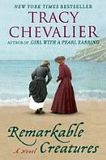
Remarkable Creatures by Tracy Chevalier.
I have mixed feelings about this one. As in several of her past novels (Girl with a Pearl Earring, Falling Angels), Chevalier focuses on intelligent, women capable of making great contributions to society but whose lives are stunted by traditional gender roles, classicism, and plain old misogyny. Mary Anning is the barely educated daughter of a carpenter. She has a knack for finding "curies"--the fossil remains of earlier life forms. Mary is befriended by Elizabeth Philpot, a thirty-ish middle class spinster who shares her love for fossils. The male establishment continually belittles Mary's contributions to science (while claiming her finds for their own). The volatile relationship between the two women is what make the novel worthwhile (unless you have a hankering for fossils!).
So . . . . my first completed book fro 2011 is (drumroll please!):

Remarkable Creatures by Tracy Chevalier.
I have mixed feelings about this one. As in several of her past novels (Girl with a Pearl Earring, Falling Angels), Chevalier focuses on intelligent, women capable of making great contributions to society but whose lives are stunted by traditional gender roles, classicism, and plain old misogyny. Mary Anning is the barely educated daughter of a carpenter. She has a knack for finding "curies"--the fossil remains of earlier life forms. Mary is befriended by Elizabeth Philpot, a thirty-ish middle class spinster who shares her love for fossils. The male establishment continually belittles Mary's contributions to science (while claiming her finds for their own). The volatile relationship between the two women is what make the novel worthwhile (unless you have a hankering for fossils!).
12citygirl
Yeah, you know, I was wondering: Just how much fossil and classification stuff is in it. That's why I haven't gotten the book. So...are there pages and pages of fossils? With her other books I was much more interested in the art or skill being explored.
13katiekrug
>12 citygirl: I've wondered the same thing about this one. I love Tracy Chevalier so bought a copy but it's just gathering dust on my shelves right now. I think I'll move it toward the top of my TBR list.
14Cariola
There's not a lot of endless classification--just enough to imply that these women know a lot about fossils. Elizabeth favors fish fossils. Mary has an eye for finding them, and she cleans and sells them. One concept in the novel is that people in general don't believe that the fossils are of extinct creatures; remember, the time period is before Darwin's theory of evolution, and "God would not make mistakes." When a dinosaur fossil is uncovered, many believe it is just a creature that lives under the ocean and hasn't been seen before. Another theory is that they died in Noah's flood. So there's probably as much about the clash of science and religion as the fossils themselves. But the women's relationship is the most interesting element.
15amandameale
#7 Thrin: Thanks to having some Irish friends, I've always read Roddy Doyle with an Irish accent (in my head). I think it makes a difference.
16wandering_star
I have a feeling that Mary Anning's history also inspired one of Andrea Barrett's short stories, but I can't remember whether it appears in Ship Fever or Servants Of The Map.
17Cariola

Tinkers by Paul Harding.
I have a feeling that I might have enjoyed this book more at a different time and in a different place. I was on a post-Christmas visit to family, had finished the book I brought with me, couldn't find anything worth reading in their house, and was at the mercy of the small airport book dealer to find something to read on the flight home and during a long stopover. I couldn't find a single thing on the shelves of interest that I hadn't already read or that wasn't sitting at home. Tinkers had been loved by several of my LT friends, so I decided to give it a try. Take it from me, it's not a book to breeze through during air travel time. It's a densely written, contemplative novel, and, if you're anything like me, the last thing you want to read on a plane is something philosophical that relies more on style than on content. It didn't exactly make the time go faster! Keep all this in mind if you're considering reading this much-acclaimed novel: I wouldn't want anyone to turn away from it when my review might have been much more positive under different circumstances.
So let me say first that the writing in Tinkers is indeed mighty fine. The story is told from two perspectives, that of the dying George Crosby and that of his father, Howard. Howard, an epileptic tinker, disappeared one day when he figured out that his wife was about to send him to a home for the insane, and George has been haunted all his life by the loss of his father. Interspersed with their reveries are excerpts from an 18th century book on clock repair (George repairs clocks) and George's journal on local trees.
Harding does a remarkable job of getting into the minds of both men; his language is understated, evocative, and memorable. The novel reminded me of a cross between Margaret Atwood's Surfacing, which I read and loved long, long ago, and Marilynne Robinson's Gilead, an overblown, overrated novel (IMO) that I absolutely detested.
So please take my three-star rating at face value and don't hesitate to pick up Tinkers if it sounds appealing from what you've read elsewhere.
18Cariola

Pope Joan by Donna Woolfolk Cross.
Pope Joan had been waiting on my TBR shelf for quite some time. Initially, it was recommended by friends from another site, and my tastes have changed a bit over the past few years. The story, based on legend that may or may not have roots in reality, has a lot of potential: in the ninth century, a brilliant young woman resents the fact that she cannot receive the same education as her brothers. Her elder brother teaches her to read in secret (their father is a stereotypically brutal, misogynistic clerical ogre), and when a respected visiting scholar learns that Joan can read Latin, he arranges for her further education. She lodges with the family of Gerold, a high-ranking soldier in the service of the emperor, but his jealous wife has other plans for Joan. By luck, circumstances, and her own ingenuity and perseverance, Joan eventually disguises herself as a man and makes her way up the apostolic ladder.
On the plus side, Cross creates a detailed picture of life and its hardships in the medieval period, and the character of Joan, although somewhat naive, is nevertheless engaging. She also does a fairly good job of demonstrating the infighting and struggles for power within the Catholic church. But the novel is not without flaws. For one thing, the baddies are unrealistically and relentlessly bad, and circumstance plays far too great a role. (Joan's father, for example, not only whips her nearly to death for wanting to learn, he later tries again to kill her--but has a opportune stroke in the process.) Also, I really hate it when supposedly 'serious' historical novelists feel that they have to wallow in romance. Joan's mooning over Gerold for almost 30 years got to be a bit much, and when he finally shows up, confessing love and offering marriage, her refusal to give up her disguise (and "responsibilities"--i.e., power) is therefore hard to believe. Of course, the two of them eventually have an earth-shaking moment of love that leads to both their downfalls.
Cross's message seems to be that women--even medieval women--are capable of having it all. Over and over, Joan refers to the educated St. Catherine and to various noblewomen who are renowned for their education and wisdom but who have also produced numerous offspring. In other words, she's applying twentieth-century feminism to medieval society. Since Pope Joan is a work of fiction, that's forgiveable, even if it stretches the imagination a bit too far.
For the most part, I enjoyed the novel, despite several groaner moments. But it's not a book that will stick with me for long.
____
I'm moving on to a new audiobook, Wait for Me: The Memoirs of Deborah Devonshire; she is the youngest of the Mitford sisters. In print, I'm catching up on LTER books with The King's Daughter, a novel centered on ELizabeth, daughter of James I, and I'm also rereading Mrs. Dalloway.
19fannyprice
>18 Cariola:, I can't wait to hear what you think of Debo's memoirs!
20janeajones
Have you read Lawrence Durrell's Pope Joan? It's really brief, and I read it years ago, so I can't be very descriptive about it, but I remember it being quite intriguing. There was also a play by Christopher Moore that was done by a local theatre here in Sarasota, and Caryl Churchill included her in Top Girls -- I think she was pretty hot back in the 1980s.
21kiwidoc
Interested in your take on Wait for Me. I also had the Pope Joan's book on my shelves for a long time, but finally gave it away without reading - perhaps the Durrell version will be more worthwhile?
22amandameale
#17 Deborah, as I think you know, Lois (avaland) and I disagreed about Tinkers. I called it overwritten, Lois called it densely lyrical. I really disliked it. Different strokes.
23Nickelini
Interesting comments on all your books, so far. I've had Pope Joan on my radar for a few years but I hesitate to track down a copy because, like you, my tastes have changed.
24Cariola

The King's Daughter by Christie Dickason.
Dickason's novel shares its title with a large number of lesser historical novels. That's unfortunate, because hers is neither a fairy tale nor a bodice-ripper, and it's quite well written to boot. Her princess, Elizabeth Stuart, daughter of King James I, is a bright and lively young woman whose father sees her alternately as a threat to his throne and a valuable bargaining chip in the royal marriage market. Dickason paints a fairly realistic portrait of what life must have been like for Elizabeth, shut away and kept under surveillance one day, trotted out like prize merchandise the next. She also gives us insight into Elizabeth's familial relationships: the mother who more or less abandoned her surviving children after the deaths of two others; her brother Henry, with whom she had a particularly close bond; "Baby Charles," weak in body, mind, and spirit; and, of course, James himself, a crude man given to irrational, violent moods whose fear for his life and throne was so extreme that he viewed his own children as threats.
"Today I learned what I am." The King's Daughter opens with a brief prologue, Elizabeth's anxious reflections after being displayed at Whitehall to the envoy of a royal suitor (1610). Dickason then takes us to simpler days, when the princess was in the care of her guardians, Lord and Lady Harington, in Warwickshire, and moves us through the years to her 1613 marriage to Frederick, the Elector Palatine. Along the way, she explores many of the events that will be familiar to Stuart era buffs. (I won't list them here and spoil the surprise for anyone else!) Familiar personlities weave in and out of the plot: Robert Cecil, Francis Bacon, Robert Carr, Frances Howard, and many others.
On the more fantastical side, she creates Tallie, a mysterious black musician sent to the princess as a gift from her mother. Wary, shrewd, and wise in the ways of the world, when asked where she is from, Tallie will say only, "Southwark"--not exactly the answer Elizabeth expects. In the course of things, Tallie becomes first a dedicated servant and, finally, a true friend. While such a character would seem unlikely in the princess's household (not to mention the implausibility of several episodes involving her), The King's Daughter is, after all, a work of fiction, and Tallie definitely adds interest and excitement to the story.
Overall, this was an fast-paced, engaging, and pleasurable read, and I'd recommend it to anyone who enjoys historical fiction.
25Cariola
I also reread Dr. Jekyll and Mr. Hyde for a course I am teaching and have started rereading Mary Reilly, which I'm pairing with the Stevenson. (We're reading pairs of novels, one classic and one modern that is somehow inspired by the classic). It has been a long time since I first read Martin's novel, so I'm looking forward to it.
27Cait86
#25 - What a cool idea! What other classic-modern pairs of novels are you reading? I might steal that idea one day - it would make for a great final project for my grade 12s, to compare a classic to a reimagining.
28dchaikin
#22 Amanda - I was closer to Lois in my reaction to Tinkers...although I had some trouble with it. Definitely not ideal for a flight. There is a fantastic review on LT that discusses it and the Pulitzer - it's a long review, can't recall the username.
30Cariola
27> The other pairs in the course are:
Hamlet and Rosencrantz and Guildenstern Are Dead
Mrs. Dalloway and The Hours
Kim and The Impressionist
That last pair may be the toughest, but the Honors students really liked The Impressionist in my class on identity.
Hamlet and Rosencrantz and Guildenstern Are Dead
Mrs. Dalloway and The Hours
Kim and The Impressionist
That last pair may be the toughest, but the Honors students really liked The Impressionist in my class on identity.
31amandameale
#28 Thanks Dan.
Deborah, I enjoyed your review (above). And I'm enjoying reading about your "pairs" of books. Lots of fun, I hope.
Deborah, I enjoyed your review (above). And I'm enjoying reading about your "pairs" of books. Lots of fun, I hope.
34Cariola

Wait for Me! Memoirs by Deborah Mitford, Duchess of Devonshire.
I don't read many memoirs, but this one was a real charmer--as is Deborah, Dowager Duchess of Devonshire. (Don't miss her interview on Charlie Rose's Show!) "Debo," the youngest of the famous (or infamous, depending on your point of view) Mitford sisters, is now 90 years old--and what a life she has lived! Her reflections are surprisingly personal, sometimes a bit sad but often endearing.
Debo opens a window onto aristocratic life, which sometimes wasn't as easy as we might expect. Despite the Mitfords' status, for example, they struggled to make ends meet through the 1930s and the war years, as did other Britons. Of course, their reduced circumstances were outshone by the whirl of their social set. Tea with Hitler, dancing with the young JFK, trying to pacify grumpy houseguest Evelyn Waugh, chats with Churchill and "Uncle Harold" Macmillan, attending Queen Elizabeth's coronation and Charles and Diana's wedding--the shining names that drop in and out of Wait for Me! are as numerous as drops of rain, and Debo has fascinating stories about each one of them. And, of course, we get the inside scoop on growing up and growing older with Nancy, Jessica, Unity, Diana, and Pamela, each of whom was extraordinary in her own way.
The Duchess is astonishingly candid about her 64 years of marriage to Andrew Cavendish, who became duke after his brother, the husband of Kathleen Kennedy, died in the war. While they fell in love at first sight, the marriage was not without its trials: several miscarriages, a child who died shortly after birth, and Andrew's struggle with alcoholism.
Unlike her sisters, Debo came to writing late in life, most of her books focused on life at Chatsworth and written to help fund the preservation of the great house. The sections detailing the initial restoration of the house show Debo's ingenuity at its best. She scours the lessser homes of the Cavendish family for furniture, china, and accessories, conducts meticulous research into colors and fabrics, and has a great time in the midst of it all. Many attribute Chatsworth's survival not only to her personal restoration work but to her savviness not only in agreeing to open the house to the public but to launch ventures such as a gift shop, plant shop, tea room, and even, for a time, a meat market featuring beef and lamb raised on the grounds.
As a literary scholar of sixteenth and seventeenth century England, one of the things I most enjoyed was hearing the names of families, places, houses that were so familiar to me. It's hard for me not to hear the name Cavendish without thinking about Ben Jonson's patron, William Cavendish, Duke of Newcastle and his eccentric authoress wife Margaret; or to hear mention of Hardwick Hall without thinking of the famously connected and oft-married Bess; or to hear about the house at Rutland gate without thinking of Sidney's daughter, the Countess of Rutland . . . and on and on and on it goes. I even recognized the familiar pair of legs behind Debo in the cover photo as those of Henry VIII. All of these people and places are obviously just parts of ordinary life for Her Grace--yet so intriguing and significant to me. I was absolutely delighted with Wait for Me!
I don't want to give more specific details and spoil the adventure for other readers. Suffice it to say that the duchess has had a remarkable life and, thankfully, she has either a remarkable memory or a remarkable set of diaries (or perhaps both) from which to draw. Don't miss this one!
35fannyprice
>34 Cariola:, Sounds lovely!
36Cariola

Mary Reilly by Valerie Martin.
I read this book years ago when it first came out and reread it now for a course I am teaching. It' sthe story of Dr. Jekyll and Mr. Hyde, told from the viewpoint of a young Irish housemaid. In Stevenson's novel, there are hardly any women, and those who do appear are pretty much part of the furniture. By creating a female narrator who works in Jekyll's household, Martin opens up the novel to other themes, including the Victorian patriarchy, the social hierarchy, hidden sexuality, the craving for safety. She also allows her characters greater psychological depth. Mary is depicted as a strong girl, made stronger by enduring years of abuse from her father. She knows her place yet can't help but be stirred by the apparent interest of her kind, elderly employer. Despite her revulsion, she is also attracted to Dr. Jekyll's assistant, the crude and violent Mr. Hyde--mainly because of what he seems to mean to Jekyll.
I enjoyed the novel--but not as much as I did the first time. Thankfully, it was new to all of my students. I found it interesting that most of the men preferred Stevenson's fairly straightforward approach to the story, while the women preferred Martin's more complex approach. They are writing papers on the two books, and I'm looking forward to seeing what they have to say.
37Nickelini
I had no interest in Mary Reilly after seeing the movie (maybe it was Julia Roberts that ruined it for me). Furthermore, I found Dr Jekyll and Mr Hyde a tedious read (but thankfully short). I'm not a fan of Stevenson's writing style. But now that I've read your comments, and knowing that you think it's worthwhile, I am adding it to my wishlist.
I found it interesting that most of the men preferred Stevenson's fairly straightforward approach to the story
What do you mean "straightforward"? Are you saying that you haven't introduced them to the narrative of the closet? Or the narrative of addiction? That was pretty much the whole focus on this book when I read it in my Victorian Lit class (with the prof that turned out to be my favourite in my whole time at university). I think everyone got the narrative of addiction, but a lot of the students in the class just didn't see the gay understory, and were very resistant to the idea.
I found it interesting that most of the men preferred Stevenson's fairly straightforward approach to the story
What do you mean "straightforward"? Are you saying that you haven't introduced them to the narrative of the closet? Or the narrative of addiction? That was pretty much the whole focus on this book when I read it in my Victorian Lit class (with the prof that turned out to be my favourite in my whole time at university). I think everyone got the narrative of addiction, but a lot of the students in the class just didn't see the gay understory, and were very resistant to the idea.
38Cariola
I think everyone got the narrative of addiction, but a lot of the students in the class just didn't see the gay understory, and were very resistant to the idea.
Sure, we talked about that--but most of the students pooh-poohed the latter. (Some even refused to see any sexual tension in Mary Reilly: "She was just happy that someone was paying her attention" or "She wanted a father figure.")
I probably should have said "Stevenson's fairly objective narration" as opposed to the subjectivity of Mary Reilly.
Sure, we talked about that--but most of the students pooh-poohed the latter. (Some even refused to see any sexual tension in Mary Reilly: "She was just happy that someone was paying her attention" or "She wanted a father figure.")
I probably should have said "Stevenson's fairly objective narration" as opposed to the subjectivity of Mary Reilly.
39Cariola
Oh, and definitely DON'T bother to rewatch the movie!
I found it really frustrating that there aren't any film versions of Dr. Jekyll and Mr. Hyde that stick to Stevenson's structure. All of them are told from Jekyll's POV (which spoils the surprises), and they all add a love interest, cut out or combine key characters, etc.
I found it really frustrating that there aren't any film versions of Dr. Jekyll and Mr. Hyde that stick to Stevenson's structure. All of them are told from Jekyll's POV (which spoils the surprises), and they all add a love interest, cut out or combine key characters, etc.
40Nickelini
found it really frustrating that there aren't any film versions of Dr. Jekyll and Mr. Hyde that stick to Stevenson's structure.
Now that you mention that, a group of students in my class did a presentation on that. They showed a lot of different clips, including the Bugs Bunny version, and how every version changed the story to fit in more with cultural norms.
Now that you mention that, a group of students in my class did a presentation on that. They showed a lot of different clips, including the Bugs Bunny version, and how every version changed the story to fit in more with cultural norms.
41Cariola

The Lieutenant by Kate Grenville.
Daniel Rooke was a bit of a loner, an odd boy unappreciated until his gift for mathmatics was discovered--a gift that turned into a love for astronomy. Before long, Daniel found himself wearing the red uniform of His Majesty's army, boarding a ship bound for New South Wales. His commission: to survey the stars from the southern hemisphere. Unfortunately, the rest of the passengers--officers, soldiers, and prisoners--had a different purpose: to make contact with the native tribes and settle a colony in Botany Bay. Over time, Rooke, predominantly isolated from the others in his observation hut, befriends a small group of natives. With the help of a young girl, Tagaran, he learns their language and makes what is his first deep connection with another human being. As everyone knows, when the British colonials couldn't achieve their ends by peaceful means, they achieved them through force, and Rooke must choose between his duty and his conscience.
Grenville does a fine job of creating the aura of 18th century Botany Bay, its flora and fauna, and its native inhabitants. Her portrayal of Rooke, a young man isolated by his lack of social skills and his genius for astronomy, is engaging and sympathetic, and it's not hard to believe in his enchantment with the more uncomplicated, less judgmental natives. The sections describing the process of learning language are especially moving. As in her previous novel, The Secret River, Grenville dissects with a keen knife the history of relations between the indigenous people of New South Wales and the zealots bent on proving that the sun indeed never sets on the British Empire. A captivating novel, worthy of a second Commonwealth Prize.
42bragan
Wow, astronomy, odd genius loner, language learning, an interesting conflict... That one sounds right up my alley! Onto the wishlist it goes, I think.
43rebeccanyc
I really enjoyed The Secret River, so am glad to know The Lieutenant is up to it. I'll look for it.
45fannyprice
re all the Jekyll and Hyde conversations, I just started watching this short British series from 2007 called "Jekyll" that is fairly good. I really like how they introduce the whole idea of one man who is two men. It's available on Netflix streaming, if anyone is intrigued.
http://movies.netflix.com/WiMovie/Jekyll/70075070?trkid=2361637
http://movies.netflix.com/WiMovie/Jekyll/70075070?trkid=2361637
46Cariola

The Wolves of Andover by Kathleen Kent.
The Wolves of Andover serves as a prequel to Kent's The Heretic's Daughter, but it falls a bit short. The story of Charles II's relentless pursuit of the men directly responsible for his father's beheading, even to the extent of sending assassins to find them in the American colonies, is certainly an intriguing one, and Kent does a fine job of describing the hardscrabble life of the New England settlers. What put me off was, I think, the rather stereotypical characters. Martha, the protagonist, is what one would call a "spirited" girl--in other words, the stereotypical ancestral feminist. Her cousin Patience, on the other hand, is a the stereotypical jealous harpy intent on keeping Martha--her cousin--in her inferior place. The lead baddie, Bloodlow, is crueller than cruel and meaner than mean. The Welshman, Thomas, is the strong, silent type, taller than tall, stronger than strong, silenter than silent (at least until he falls in love--then it seems he can't stop blabbing his secrets). Well, you get the picture. These are all folks I've seen before in numerous historical novels, and that familiarity makes the plot, overall, too predictable. Who wants to read a novel with so few surprises? Near the end, Kent sticks in the gratuitous but expected scene of first lovemaking (ho hum!). I could have done without the graphic description of a ruptured hymen, about which which she attempted to wax poetically.
Maybe it's just me . . . maybe I needed an even longer break from historical fiction. The Wolves of Andover is certainly not a bad book, but what disappointed me most was that it had the potential to be so much better.
47amandameale
Deborah, I'm loving your reviews. Thankfully I was able to enjoy Mary Reilly before I saw the rather ordinary film version.
49katiekrug
>46 Cariola:: Your review made me chuckle, which was great since I am having a badder than bad day at work!
50Cariola

Mrs. Dalloway by Virginia Woolf
It must be about 35-40 years since I first read Mrs. Dalloway. I reread it last week for a class that I'm teaching (classic novels paired with more contemporary ones inspired by the originals; we will start Michael Cunningham's The Hours next week). While I loved it the first time, it had an even more powerful effect on me now. It is, after all, a book about the passage of time--a single day, yes, but one that lapses into memories of years gone by and raises questions about the choices we make and the regrets that follow us down the years. Additionally, it demonstrates the dehumanizing effects of war on both the individual and a nation--a message we might do well to heed today.
My students, like some of the LT reviewers, were initially put off by the stream-of-consciousness narration that moves among characters major and minor. Obviously, this isn't a novel with a standard plot line or a lot of action. But Woolf's brilliance is in developing her characters through their internal monologues. Instead of being told how they think and feel, we experience it along with them following the same erratic process in which our own minds work. Added to this, she structures the plot not so much around events (after all, not much happens besides Clarissa preparing for and giving a party, and poor Septimus being driven to suicide) as around a series of carefully selected images, sounds, symbols, and motifs. The genius of Mrs. Dalloway is that it was a literary experiemnt in its day, one that exercises a student of literature's analytic skills; yet that takes nothing away from the experience of reading the novel, if one just gives in and gives up the usual expectations and flows along with Woolf. To me, it is a beautiful, timeless work. Its themes and its deep understanding of the human condition still resonate today.
51Nickelini
To me, it is a beautiful, timeless work.
Indeed!
The cover you show is from one of the VW series that I'm collecting. I have everything except Night and Day.
Mrs Dalloway isn't my favourite Woolf, but it's one I came across in university when I first fell in love with her.
Indeed!
The cover you show is from one of the VW series that I'm collecting. I have everything except Night and Day.
Mrs Dalloway isn't my favourite Woolf, but it's one I came across in university when I first fell in love with her.
52Chatterbox
Need to re-read Mrs. Dalloway... Made me think, after reading my first Faulkner this year, that maybe there's a great class out there for someone to design that would introduce students easily and painlessly to stream of consciousness narration. I wonder what would make a great starting point?
I loved The Hours, btw. It made my brain start churning overtime.
I think I liked The Wolves of Andover a little more than you, but more for the setting and backdrop -- the pursuit of the regicides. I haven't yet read Kent's other book, but am not in a tearing hurry to do so.
I loved The Hours, btw. It made my brain start churning overtime.
I think I liked The Wolves of Andover a little more than you, but more for the setting and backdrop -- the pursuit of the regicides. I haven't yet read Kent's other book, but am not in a tearing hurry to do so.
53Cariola
52> Actually, after I'd started, I found a great exercise to introduce students to stream-of-consciousness. Have them freewrite for about 8 minutes, jotting down whatever enteres their minds. As they are writing,the instructor creates several interruptions--dropping a book, opening the window, starting up the DVD player, whatever. When they finish, have a student begin reading. When he/she reaches the point of interruption, have another student pick up and read what he/she wrote, up to the next interruption, and so on. It sounds like a wonderful way to get them to understand exactly what Woolf is doing: the internal monologues interrupted by the skywriting plane, the backfiring car, Big Ben, the ambulance siren, etc.
54baswood
Loved your review of Mrs Dalloway I think I might have to re read this again. I remember in the dim and distant past struggling with To the lighthouse at school. Since then I have read and enjoyed most of Woolf's novels but have never gone back to To the lighthouse}, perhaps now is the time.
55amandameale
Yes, wonderful review. Mrs Dalloway is a favourite of mine. To me it is somehow comparable to a piece of music. Especially the final sentence: "For there she was."
Can't explain why I feel that way.
Can't explain why I feel that way.
56Cariola
Amanda, I agree--it's sort of like each "movement" is different yet somehow linked by a common theme.
57cabegley
You're bad for my wishlist, Deborah--Wait for Me!, Mary Reilly, and The Lieutenant all just flew onto it. I loved The Secret River and am looking forward to another by Grenville.
I also loved your review of Mrs Dalloway, and wish I could take your class with the classic/modern pairings!
I also loved your review of Mrs Dalloway, and wish I could take your class with the classic/modern pairings!
58janeajones
53> Great exercise, Deb -- I'll have to try that out later this semester when I get to the Moderns in English Lit. I love Mrs. Dalloway and have challenged myself to reread and read all of Woolf's novels this summer. I can't say I was nearly so enamored of The Hours.
59janemarieprice
50 - Great review. I haven't read Mrs. Dalloway yet, but your review made me want to get a copy soon. Your class sounds fun too. Would you mind posting a list of all the parings you are doing?
61Cariola
59> Jane, they started with Dr. Jekyll and Mr. Hyde, paired with Mary Reilly by Valerie Martin.
The next pair may be the most difficult: Kim by Rudyard Kipling and The Impressionist by Hari Kunzru. The Impressionist is a personal favorite of mine, and I've taught it once before; the students were somewhat shocoked by it but enjoyed it. It has been years since I read Kim, but various critical pieces I've read on The Impressionist have made interesting connections between the two (colonialism, ethnicity, identity, etc.).
Finally, they will be reading Hamlet with Rosencrantz and Guildenstern Are Dead.
This is an Honors class, and the students--none of them English majors--have been very perceptive and eager to discuss the books.
The next pair may be the most difficult: Kim by Rudyard Kipling and The Impressionist by Hari Kunzru. The Impressionist is a personal favorite of mine, and I've taught it once before; the students were somewhat shocoked by it but enjoyed it. It has been years since I read Kim, but various critical pieces I've read on The Impressionist have made interesting connections between the two (colonialism, ethnicity, identity, etc.).
Finally, they will be reading Hamlet with Rosencrantz and Guildenstern Are Dead.
This is an Honors class, and the students--none of them English majors--have been very perceptive and eager to discuss the books.
62Cariola

If I Loved You, I Would Tell You This by Robin Black
Robin Black claims that it took her ten years to complete the eight stories in this collection. Her careful crafstmanship shows, and I suspect that life during those ten years also gave her further insights into the depths of the human heart. Some of her characters are one-of-a-kinders, others are more familiar, but all of them share a common sense of loss. A father taking his blind daughter to meet the guide dog who will help her in her journey forth to a new life at college. A woman--a mother whose mentally handicapped son has had to be institutionalized--stricken with terminal cancer, addressing on paper the new neighbor who plans to build a fence that will make it impossible to open the car door at a distance from the house that she is able to walk. A portrait artist, long divorced, learning about love from the wife of a client fading into Alzheimer's. A young girl trying desperately to believe that her eccentric friend has the formula for making dreams come true. A mother faced with two simultaneous challenges, ungrounded electricity surging through the water pipes and her father's suicide. A woman trying to hide a recent stroke from her family, which includes her aging 80-year old husband and a married daughter who has embarked on an affair. In two different stories, two women unable to let go of post-divorce anger and grief, one clinging to a male friend who longs to be more, the other to her twin brother. An estranged father visiting his daughter, now married, in another country after a 14-year separation, trying to reconcile his past and his future. A woman reliving the death of her brother through her son's loss of a close friend.
These are the kind of stories that surprise you with moments of recognition and understanding. Yes, it's true, as other have written here, that they aren't likely to leave you laughing. This isn't a book for those looking for romance, fantasy, or even action. But while they may not initially seem optimistic, few of these stories are down and out depressing. If anything, they speak to our will to endure, to survive, to change, to hope. Black has the ability to provoke an exquisite emotion with a carefully wrought image, a refrain, a moment of silence. Reading If I Loved You, I Would Tell You This is a deeply moving human experience. I look forward to Black's next collection.
63dchaikin
Hi Deborah, nothing important to post, just wanted to I'm really enjoying everything on your thread (I'm just now catching up).
65rebeccanyc
If I Loved You, I Would Tell You This sounds very intriguing; thanks for the review.
66Cariola

Bad Behavior by Mary Gaitskill.
Last year, I was absolutely blown away by Gaitskill's more recent short story collection, Don't Cry, so I was eager to read more of her work. Sadly, this early collection just didn't cut it with me. In fact, I stopped reading halfway through. Most of the stories I did read were about sad, unpleasant people in kinky relationships. I'm no prude, and it wasn't the sex that turned me off. I just felt that Gaitskill was trying way too hard to be smart, sophisticated, avant garde, fearless--whatever--and frankly, it bored me. I don't want to read about characters who don't interest me, and none of these did.
Since this was her first collection, and since I loved Don't Cry (which was a much more introspective and human set of stories), I will still be reading more Gaitskill. But I can't recommend this one.
67amandameale
Interesting reviews.
68Cariola

The Hours by Michael Cunningham
In his brief essay "First Love," Michael Cunningham recalls how, at the age of 15, he was not much of a reader, but he tried to impress a literary-minded girl by saying womthing smart about the poetry of Bob Dyland and Leonard Cohen. She replied that if he was really interested in poetry, he needed to read T. S. Eliot and Virginia Woolf. Young Michael promptly headed over to the local Bookmobile, picked up a battered copy of Mrs. Dalloway, and, upon reading it, fell deeply and unexpectedly in love--not with the girl, but with the book. His 1999 Pulitzer Prize-winner, The Hours, is a tribute Woolf's remarkable novel.
In what Cunningham likens to a jazz improvisation, The Hours weaves characters, themes, and motifs drawn from Mrs. Dalloway into an entirely new yet still recognizable form, told through the stories of one day in the lives of three different women. The novel opens with Virginia Woolf herself as a character, choosing a large stone to cram into her coat pocket as she walks towards the river Ouse. As the book proceeds, Virginia's story flashes back to 1923, the year in which she wrote her most famous novel. Clarissa Vaughan--affectionately called "Mrs. Dalloway" by her friend Richard, a poet losing both his sanity and his life to AIDS--is n editor in her fifties, living in 1990s New York not with an MP but with her longtime lesbian lover, Sally. She, like Clarissa Dalloway, is buying flowers for a party she is hosting that evening. In the third story, set in California in 1949, pregnant homemaker and mother Laura Brown is torn between staying in bed to read Mrs. Dalloway and getting up to prepare for her husband's birthday celebration. As each woman's day moves along, she is haunted by memories and old dreams, hungers for moments of brilliance and creativity, faces the conflicts between domestic demands and the call of the self, and ponders the stretch of time ahead of her.
Part of the pleasure of reading The Hours--at least for lovers of Mrs. Dalloway--is to follow Cunningham's movements and variations, his reassignment of character names and traits and his revisioning of scenes from Woolf's novel. But in and of itself, The Hours is a stunning achievement.
70Cariola
Tacking on some recent rereads of books I've been teaching:
Titus Andronicus by William Shakespeare
Richard III by William Shakespeare
The Merchant of Venice by William Shakespeare
Zeitoun by Dave Eggers
Titus Andronicus by William Shakespeare
Richard III by William Shakespeare
The Merchant of Venice by William Shakespeare
Zeitoun by Dave Eggers
71Cariola

At Home in Thrush Green by Miss Read
This was my first "Miss Read" book, and I have to say that I was underwhelmed. It records the day-to-day lives of the residents, who are all a-clamour over the new retirement homes being built. Character development and plot development were both rather thin. I have about 10 more Miss Reads in my TBR pile. I will give one of the Fairacre novels a try before sending them off in swaps.
72Cariola

The Confession of Katherine Howard by Suzannah Dunn.
I'm a big fan of historical fiction set in the Tudor era, but, sadly, this LTER book was a bit of a stinker. I wondered at first if it was a YA novel, mainly because the dialogue was so modern. (Characters said things like "they were messing around" and "Did he make a move on you?" and greeted each other with "Hello, you." Katherine's crowd also has precious little nicknames for themselves and mean ones for everyone else: Oddbod, Izzy, Skid, etc.) I thought that perhaps the author intended to appeal to younger readers by depicting Katherine and her companions as a teenage clique. But with the focus on sex, sex, and more sex--well, maybe it wasn't quite aimed at teens. We all know that Katherine has the reputation of being both a minx and slut, but I got really, really tired of all the sex talk. I have no problem with a few sex scenes that are essential to the story--but there is a limit, after which it just gets boring. We have to hear in detail how Izzy teaches her little sister Katherine how to use half a lemon as a diaphragm and the various things that you can do with men (since they always want it) that will make them happy without getting you pregnant. Not exactly the info I'd want to pass on to a teenage daughter.
Besides sex, there's not much to the story. The narrator is Cat Tilney, one of Katherine's companions in the Duchess of Norfolk's house and later a lady-in-waiting. She's dull in both personality and wits. Coming from a family farm and even admitting that she has seen animals doing it, her naiveté about sexuality is both unbelievable and tiresome. She seems both fascinated with and jealous of Katherine--yet she takes one of Katherin'e cast-off lovers for her own and is stupid enough to assist the queen in her affair with Thomas Culpepper. She didn't get her head chopped off like Katherine--possibly because, according to Dunn's version, she didn't have one.
I wish I could say something nice about this book, but it fails in terms of characterization, plot, dialogue, and writing in general.
I'm giving this novel 1/2 star (because if I don't give it any, my negative opinion just won't count).
73Cariola

Dubliners by James Joyce
Are you afraid of James Joyce? Have you heard horror stories from folks who have tried to read Ulysses or Finnegan's Wake? Take a deep breath and pick up a copy of Dubliners--or better yet, listen as I did to a stunning audio version, in which fifteen stories are read by Irish actors and writers, including Frank and Malachy McCourt, Stephen Rea, Colm Meany, Fionnula Flannigan, Brendan Coyle, and Ciarin Hinds. Trust me, you won't have any of the difficulties here, in this early Joyce collection, that throw some readers off his work: no stream-of-conciousness narrative, no sentences that go on for twenty pages, no quirky dialect that you can't decipher. Just lovely, often very moving stories about ordinary people living in Dublin in the early 20th century. Two of the best known, "Araby" and "The Dead," you may even have read in a high school or college lit course, and both are tenderly rendered by the readers. Highly recommended!
74Nickelini
Fabulous review of The Dubliners, Deborah. Despite having read "Araby" in my very first uni course, I too have been afraid of James Joyce. But you've encouraged me. Next time I see an attractive edition of this, I shall buy it!
76Poquette
Someone gave me a copy of Joseph Campbell's Skeleton Key to Finnegan's Wake as a joke for my eighteenth birthday. Since I had never even heard of Finnegan's Wake it was a while before I realized just how much the joke was on me! But somewhere along the line I did read Portrait of the Artist as a Young Man and Dubliners. And I love both. Thanks for the reminder . . . I may put it on my reread stack.
77kidzdoc
Thanks for that nice review of Dubliners; I've just downloaded the free version onto my Kindle.
78Cariola

The Lake Shore Limited by Sue Miller.
In addition to being a very fine novel, The Lake Shore Limited is a study of grief, loss, love, and the persistence of hope. Four lengthy sections sketch out each of the four main characters. Leslie, a fifty-ish real estate agent, is still reeling from the loss of her much younger brother, Gus, who was on one the highjacked planes at the heart of the 9/11 tragedy. She worries about Billy, Gus's fiancée, a playwright who seems to have withdrawn into her own grief. The truth is that Billy is weighed down by her conflicted feelings: she had decided to break off with Gus right before the tragedy, and her latest play, 'The Lake Shore Limited,' focuses on Gabriel, a character in a similar conflict. Neither one can reconcile their thoughts with their feelings or with feelings 'appropriate' to their circumstances. Similarly, Rafe, the actor who plays Gabriel, is dealing with the fact that his wife is slowly dying from ALS. And then there is Sam, whose first wife died of cancer and whose second divorced him. These four come together when Leslie and her husband invite Sam to attend a preview of the play and have a drink with the playwright, Billy, afterwards.
As the characters' stories develop and intersect, Miller reminds us that life is never easy and that feelings are rarely black or white. Nor are they usually isolated. There are times when it is possible to hate what you love and and to love what you hate; to be both hopeful and fearful at the same time; to feel simultaneously empty and satisfied. That's the nature of being human, and Miller explores it in depth. As the novel draws near it's close, Miller returns to her section-per-character structure, only this time the sections are very brief, showing us the characters beginning to move past their moments of personal crisis. In the end, I was left thinking of Samuel Beckett's line, "I can't go on, I'll go on."
Like the characters, The Lake Shore Limited was often funny, more often a little sad, but always human. It kept me wanting to read further (and took me away from other things I needed to be doing), which is always the sign of a well-structured plot and interesting, believable characters. Miller is obviously adept at delving into the human psyche. A satisfying (it's hard to say "enjoyable" about a book where the characters are often in pain) read, highly recommended. I will be looking for more of Miller's fiction.
79katiekrug
>78 Cariola:: What a great review! I have several of Miller's books on my TBR shelves but have yet to pick one up. I'll be looking for a copy of this one and won't let it languish as long as the others in my house!
81fannyprice
>72 Cariola:, Haha, The Confession of Katherine Howard sounds positively awful!
82janemarieprice
70 - How are your students liking Zeitoun? And Titus Andronicus for that matter which is way more violent than I expected when I first read it?
72 - Great review even though it sounds wretched.
72 - Great review even though it sounds wretched.
83Cariola
Finished two books this week that I'm using in classes:
The Taming of the Shrew by William Shakespeare. Coincidentally, we watched clips from the Elizabeth Taylor/Richard Burton film a few days before she passed away. Let's hope those two are getting along well on the other side.
Kim by Rudyard Kipling. Quite a bore. We read it mainly as background to our next book, Hari Kunzru's wonderful The Impressionist.
The Taming of the Shrew by William Shakespeare. Coincidentally, we watched clips from the Elizabeth Taylor/Richard Burton film a few days before she passed away. Let's hope those two are getting along well on the other side.
Kim by Rudyard Kipling. Quite a bore. We read it mainly as background to our next book, Hari Kunzru's wonderful The Impressionist.
84Cariola
82> Jane, last semester my students in three classes LOVED Zeitoun. This semester . . . well, let's just say that I have a crop of students who don't seem to like or care about anything.
85Cariola

24. The Tudor Secret by C. W. Gortner.
I love historical fiction but am not a big fan of mysteries, so I wasn't sure how well I would like The Tudor Secret. Overall, it was a fast and reasonably fun read, but the novel has many flaws that make it less enjoyable than it might otherwise have been. The pacing was uneven, the narrative often repetitious, and Brendan's quick admittance into high circles was totally unbelievable. For example, the same day he arrives at court, having just been raised from his position as stable boy to valet, he strolls the garden alone with Princess Elizabeth. It just wouldn't happen. I also found the love affair weak: one minute Kate treats Brendan like a foolish boy and the next they are romping in bed and talking about marriage.
Worst of all for me was the two-layered "secret" as to why Brendan's parentage had been hidden. I know that it's fiction, but even fiction has to seem like it could be true. Neither what Cecil tells Brendan nor what he intuits for himself could ever have happened. (I can't say why without giving away the plot, but trust me, a scholar of the period: it just wouldn't have happened.) This wasn't a terrible book, just nothing I'd recommend to anyone who knows a bit about the period.
86Cariola
Coriolanus by William Shakespeare.
While not the best of Shakespeare's tragedies, Coriolanus just may be the timeliest. Yes, it's a play about a soldier whose pride and love for his overbearing mother ultimately bring him down. But the driving force behind the plot is a pair of manipulating politicians who know how to spin things to their advantage and lead the fickle multitude by their noses.
While the people are more villains that victims, one can't help but notice that some things never change; here's one of them on their current government:
Care for us! True, indeed! They ne'er cared for us
yet: suffer us to famish, and their store-houses
crammed with grain; make edicts for usury, to
support usurers; repeal daily any wholesome act
established against the rich, and provide more
piercing statutes daily, to chain up and restrain
the poor. If the wars eat us not up, they will; and
there's all the love they bear us.
All one has to do to see the truth in that is take a look at the PA governor's proposed budget . . . or the federal budget, for that matter. It's Robin Hood in reverse: give to the rich and take from the poor.
While not the best of Shakespeare's tragedies, Coriolanus just may be the timeliest. Yes, it's a play about a soldier whose pride and love for his overbearing mother ultimately bring him down. But the driving force behind the plot is a pair of manipulating politicians who know how to spin things to their advantage and lead the fickle multitude by their noses.
While the people are more villains that victims, one can't help but notice that some things never change; here's one of them on their current government:
Care for us! True, indeed! They ne'er cared for us
yet: suffer us to famish, and their store-houses
crammed with grain; make edicts for usury, to
support usurers; repeal daily any wholesome act
established against the rich, and provide more
piercing statutes daily, to chain up and restrain
the poor. If the wars eat us not up, they will; and
there's all the love they bear us.
All one has to do to see the truth in that is take a look at the PA governor's proposed budget . . . or the federal budget, for that matter. It's Robin Hood in reverse: give to the rich and take from the poor.
87Cariola

The Sixth Wife by Suzannah Dunn.
Another disappointing novel from Suzannah Dunn (although nowhere near as quite bad as The Confession of Katherine Howard. The focus is Katherine Parr, Henry VII's last queen, in the brief period following her too-quick fourth marriage to Thomas Seymour, and the narrator is Catherine Brandon, third wife and now widow of Charles Brandon, Duke of Suffolk. While it sounds promising, Dunn manages to make all of her characters either insipid or despicable. "Kate" Parr, a four-times wed woman in her mid-thirties, is so naive that she has no clue that her new husband is an ambitious bounder, and she indulges his spendthrift ways. Worse still, the friend she has called on to help her through a difficult pregnancy ends up bonking her husband on a regular basis--and this is the narrator, so with whom are we supposed to identify or empathize? On top of that, she obviously detests the young Elizabeth, who is rendered extremely unlikeable, constantly rolling her eyes at what anyone else says, and the young Jane Grey is depicted as a Protestant fanatic and a stick-in-the-mud at only 10 years old. One of Dunn's most annoying and anachronistic tricks from The Confession of Katherine Howard shows up again: Characters repeatedly greet one another with "Hello, you," or in some cases, they just stare at one another and say, "You." (I hated this in another book not by Dunn, Lori Larsen's The Girls; it's just so irritating and phony.)
So all-in-all, there's not much to be commended here, and I'll be giving away the third Dunn on my shelf without bothering to read it. I'm sure I'd only find Anne Boleyn gazing at King Henry and murmuring "You," and that truly would make me retch.
88Cariola

27. The Art and Craft of of Writing Historical Fiction by James Thom.
I was extremely surprised to see a five-star rating on this book, until I noticed that only one member had reviewed it. She may have gotten some valuable infromation from it, but I found it pretty worthless. The 200+ pages all boil down to one statement ("Put your reader into the period") and, in fact, to one word that summarizes that statement: verisimilitude. If you planned to write a historical novel without knowing that, well, you've got a long way to go. Know what people wore. Know how they talked. Know what daily life was like. Duh. The book is extremely repetitious and seems to assume that everyone will be writing about the American west, as Thom does, or American Indian tribes, as his wife, Dark Rain, does. And he thinks that every book should touch on slavery because it has always been part of society.
I had hoped to get some ideas for researching and organizing material, the writing process, etc., but Thom only tells us that he has many sources, but they are too numerous to name. He briefly suggests going to research libraries, searching online, and visiting important places in your novel to get the feel of them, but that's about it. Oh, and write your notes longhand because if you save them on a computer and the systems change, you won't be able to access your them. Duh.
I just started another book on this subject. It's less than half this one in length, but I'm already getting more valuable information.
89Nickelini
Great review of a book I've never heard of and one I never plan to read. Some particular gems:
"The 200+ pages all boil down to one statement ("Put your reader into the period") and, in fact, to one word that summarizes that statement: verisimilitude. If you planned to write a historical novel without knowing that, well, you've got a long way to go."
"He briefly suggests going to research libraries, searching online," No way! Really? Did you know you can get internet on the computer now?
This has encouraged me to write a book on writing a book. I'll start with: "First you need to find some words and arrange them in sentences."
"The 200+ pages all boil down to one statement ("Put your reader into the period") and, in fact, to one word that summarizes that statement: verisimilitude. If you planned to write a historical novel without knowing that, well, you've got a long way to go."
"He briefly suggests going to research libraries, searching online," No way! Really? Did you know you can get internet on the computer now?
This has encouraged me to write a book on writing a book. I'll start with: "First you need to find some words and arrange them in sentences."
90Mr.Durick
Oh, Nickelini, it would be so nice if more authors did that: "First you need to find some words and arrange them in sentences." And imagine what the world would be if they did it carefully!
Robert
Robert
92Cariola
Just finished rereading The Impressionist by Hari Kunzru, one of my favorite contemporary novels, with my Honors class. They didn't love it as much as I do . . . maybe they are too young to be asking all those questions about identity . . .
93Cariola

The Sisters Who Would Be Queen by Leandra de Lisle.
We may all know the fate of Lady Jane Grey, the nine-days queen, but I, for one, knew nothing about her younger sisters, Katherine and Mary. Despite de Lisle's title, none of the three "would be queen" of her own accord. Their claims were promoted by others because their mother, Frances, was the only surviving child of Mary Tudor's second marriage to Charles Brandon, Duke of Suffolk. That made Frances, as Henry VIII's niece, a viable heir to the throne, since Henry had specifically excluded the heirs of his elder sister Margaret. When Edward VI died, many still considered his half-sisters, Mary and Elizabeth, to be bastards. Frances gave up her place in line in favor of her daughter Jane (most likely as part of the deal to marry her into the prominent and ambitious Dudley family). And so began the fate of "the sisters who would be queen." Katherine Grey, a court beauty, was denied Queen Elizabeth's permission to marry the man she loved. They married in secret but were discovered when Katherine's first pregnancy began to show. She spent the rest of her life in the Tower--where her two sons were born. Mary Grey, the youngest sister, a tiny, unattractive, and possibly hunchbacked woman, suffered a similar fate by falling in love with and secretly marrying a man of inferior status.
De Lisle provides fascinating insights into power, intrigue, jealousy, and the conflicts between public and private lives in the Tudor era. What I appreciated most about the book was the way that it brought together many pieces of Tudor history that had been floating in my brain, fitting them together like a jigsaw puzzle. I hadn't realized, for instance, that the Grey family were descended from the first marriage of Elizabeth Wodeville, wife of Edward IV. And somehow it had escaped me that Guildford Dudley was the brother of Elizabeth's favorite, Lord Robert Dudley--strange indeed that she developed such an affection for one whose father and brother were executed for trying to shift the throne away from her sister Mary and herself.
The Sisters Who Would Be Queen is a must-read for any afficiando of Tudor England. It's filled with facts, but De Lisle's expert hand makes it an entertaining story as well.
94Nickelini
since Henry had specifically excluded the heirs of his elder sister Margaret.
Why did he do that?
This one sounds good, although I'm finding Elizabeth I:a novel a little slow. I suspect I might be getting a little weary of the Tudors.
Why did he do that?
This one sounds good, although I'm finding Elizabeth I:a novel a little slow. I suspect I might be getting a little weary of the Tudors.
95Cariola
The usual reason: she married a Catholic (James V of Scotland).
Hopefully I won't get "Tudored out" this time; I'm trying to gear up for my summer research and writing.
Hopefully I won't get "Tudored out" this time; I'm trying to gear up for my summer research and writing.
97Nickelini
Deborah, I thought about you when I read this review. It's on The Use and Abuse of Literature by Garber, and the review was originally published in the New Republic. Maybe you'll find it interesting: http://www.powells.com/review/2011_04_15
98Cariola
97> Thanks, Joyce. I actually read this review this morning, as well as one in the NYT. Garber writes on an important topic, but enither reviewer found the book very satisfying. But the bean counters wantting to quantify the 'value' of literature certainly rang a nasty bell.
99Cariola

The Painted Kiss by Elizabeth Hickey.
Like Hickey's The Wayward Muse, this is the story of a famous artist's model/lover, in this case Emily Floge. It begins in 1944, in the Austrian countryside, where Emily, along with her sister and her niece, has fled from the Nazis, taking with her the drawings of Gustave Klimt. Their tale is told in retrospect, moving back in time and regularly sprining forward to to the now-elderly model's hideaway. The pair met when Emily was only twelve and Klimt more than twice her age, but there was an immediate attraction between them. The Floges hired Klimt first to paint portraits of their three daughters, then to give Emily drawing lessons. By the time she was sixteen, the two were lovers. Theirs was an on-again, off-again affair, Klimt taking many lovers and fathering at least three children in between, but he died with Emily's name on his lips. She was the model for many of his best-known paintings, including "The Kiss."
Emily was a success in her own right, not as an artist but as a fashion designer. Her salon was initially backed by Klimt, who also drew designs for some of her dresses. In the flash-forward (1944) sections of the novel, Hicket imagines Emily pondering the drawings she has hidden away, and these ponderings spur memories of her time with Klimt, who had died in 1918. In one scene, she burns all of Klimt's drawings of Adele Bloch-Bauer, a wealthy, higly strung society women who also modelled for Klimt (and who was one of his many lovers).
I'm not sure exactly why, but I found this book a bit of a struggle to get through; I put it away several times, so I was probably picking away at it for 3-4 months. I think that perhaps I wanted more of Klimt and less of Emily. The Wayward Muse, Hickey's novel about the pre-Raphaelite model Jane Burden was much more enjoyable. But I did gain a greater appreciation of Klimt's work from the novel.
I found this very interesting interactive site on Klimt's life and works. Don't let the banner announcing erotic art throw you off (although you might want to skip the section on drawings if that sort of thing bothers you). If you believe what's written there, it seems that Hickey took some liberties in making Emilie and Klimt lovers and in claiming that the two of them were the models for "The Kiss"--but I see nothing wrong with that in a work of fiction, especially when the possibilities lie open.
100Cariola
Somehow I missed posting this one, which I actually read in March:
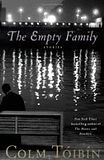
The Empty Family by Colm Toibin
Toibin presents nine moving stories about love, loss, and longing that span decades, eras, countries, and lifestyles. The effect of such diversity is the recognition of the emotions we all share. In the opening story, Lady Gregory, young wife of an older and no longer terribly interested husband, falls into a dangerous and short-lived affair with a married poet. Two of the stories deal with young men handling the deaths of the mother figures in their lives. In "One Minus One," a young Irish man, now living in Texas, recalls his earlier return to Dublin for his mother's funeral and the loss of his gay lover. In "The Colour of Shadows," Paul, a young gay Irishman, must take responsibility for the last days of the aunt who raised him as she falls deeper into Alzheimer's and ill health. Aunt Josie tends to forget who he is, and when she remembers, she expresses rigid disapproval of his lifestyle. "Two Women" features an elderly, cantankerous but renowned set designer who returns to Dublin to work on what may be her last film. Along the way, she finds herself reminiscing about an early love. The longest and perhaps most touching story in the collection, "The Street" focuses on two Pakistani men who fall in love while working under exploitive conditions in post-Franco Barcelona.
Toibin's gentle, poetic prose hits just the right notes for each of these stories. He reminds us that, even though we inevitably realize that love is not necessarily forever, it's part of the human condition to yearn for it, seek for it, bring it back to life within our hearts and minds, if only as the shadow of a memory.

The Empty Family by Colm Toibin
Toibin presents nine moving stories about love, loss, and longing that span decades, eras, countries, and lifestyles. The effect of such diversity is the recognition of the emotions we all share. In the opening story, Lady Gregory, young wife of an older and no longer terribly interested husband, falls into a dangerous and short-lived affair with a married poet. Two of the stories deal with young men handling the deaths of the mother figures in their lives. In "One Minus One," a young Irish man, now living in Texas, recalls his earlier return to Dublin for his mother's funeral and the loss of his gay lover. In "The Colour of Shadows," Paul, a young gay Irishman, must take responsibility for the last days of the aunt who raised him as she falls deeper into Alzheimer's and ill health. Aunt Josie tends to forget who he is, and when she remembers, she expresses rigid disapproval of his lifestyle. "Two Women" features an elderly, cantankerous but renowned set designer who returns to Dublin to work on what may be her last film. Along the way, she finds herself reminiscing about an early love. The longest and perhaps most touching story in the collection, "The Street" focuses on two Pakistani men who fall in love while working under exploitive conditions in post-Franco Barcelona.
Toibin's gentle, poetic prose hits just the right notes for each of these stories. He reminds us that, even though we inevitably realize that love is not necessarily forever, it's part of the human condition to yearn for it, seek for it, bring it back to life within our hearts and minds, if only as the shadow of a memory.
104kidzdoc
I agree with Barry; the last paragraph of your review of The Empty Family is gorgeous. I bought this last week, and I'll read it soon.
I have to read The Impressionist!
I have to read The Impressionist!
105Cariola
104> Thank you, Darryl. I will be very interested in seeing what you have to say about The Impressionist if you ever get around to it. I think it's one of the best contemporary novels I've read in the last 25 years.
106Cariola

The Good Daughter: A Memoir of My Mother's Hidden Life by Jasmin Darznik.
Jasmin Darznik's The Good Daughter: A Memoir of My Mother's Secret Life reminded me of one of my own family stories. Although my great-grandmother came from a country that treated women much better than Iran (Ireland), she, too, had secrets that the social standards at the time (the 1880s) forced her to conceal. My grandmother did not find out until her mother passed away in the early 1940s that she had been divorced before leaving Ireland. Finding the divorce decree in a trunk, she learned that the man she had always thought was her father was in fact her stepfather, and that the beloved sister who died young was her half-sister. I have a telling tintype photo of the two of them as small girls: one short, round-faced and fair-haired, the other a thin-faced, dark-eyed, brunette. Although this story sounds unique, I think it is more common than we expect.
So, back to Darznik's book, which is based on tapes sent by her mother that relate the events of her life. Her mother, Lili, had a truly dreadful life in Iran--but even sadder is the fact that it seems to have been the norm for women at the time. Married at 13 to an unattractive, alcoholic man twice her age who beat her, Lili became a mother at only 14. When she tried to leave Kazem after a particularly brutal attack, her father's jealous mistress, pretending to want to ease her pain, gave her a near-fatal dose of opium, but Lili was too young to understand anything except that she must keep this secret. When her father finally took her back in, things seemed to be turning around--except that Lili had to leave her daughter Sara with Kazem, as children in Iran belonged solely to their fathers. Lili's father finally sends her to Germany to be educated; but tragedy strikes again, and Lili is forced to return to Iran and move in with her impoverished mother, Kobra. (Kobra had been cast off by her husband years earlier.) Things do finally start to get better for Lili, but not without more suffering and loss.
While I was engaged with Darznik's book, it is not without flaws. For one, the writing tends to be a bit repetitive; for another, the conclusion, while it may be based on truth, is somewhat disappointing. Still, I would recommend The Good Daughter to anyone interested in the lives of women in non-western cultures.
107Cariola

Coventry by Helen Humphreys.
This is the third Humphreys novel that I've read, and she has yet to disappoint me. Coventry is a beautifully told story of love, loss, friendship, coincidence, and faith. The time period shifts from World War I to the bombing of Coventry during World War II, then briefly to the dedication of the rebuilt cathedral in 1962. Tying the three episodes together are two women, Harriet and Maeve. They meet on the day that Harriet has sent her husband of two months off to war. Harriet stops to admire Maeve's drawings of the cathedral, and the two decide on impulse to take a ride on one of the new double-decker buses. Despite Maeve's promise to call the next day, the two do not meet again until the day after Coventry's destruction by the German bombers. Though their lives have taken vastly different paths, a series of coincidences draws them together again, and this time, their friendship endures over the years and miles.
It's a simple story, but what makes it so remarkable is Humphreys's spare, understated, but beautiful and moving prose. She is able to convey perfectly an emotion or an insight without broad strokes, and her characters are all the more memorable for it.
108Cariola

Rosencrantz and Guildenstern Are Dead by Tom Stoppard
A reread for me; I'm teaching it alongside Hamlet in my Honors course. It's a bit of a philosophical puzzle, as well as a hilariously dark existentialist comedy. What exactly is Stoppard trying to do here? Is he merely deconstructing a classic play? Or making a comment on fate and our lack of control over our lives? As Hamlet himself comes at last to learn:
There is special providence in the fall of a sparrow. If it be now, 'tis not to come. If it be not to come, it will be now. If it be not now, yet it will come. The readiness is all. Since no man of aught he leaves knows, what is't to leave betimes? Let be.
Unfortunately, our boys are trapped as mere characters in a play, doomed to enact the same story to the same fateful end, over and over again. Yet somehow, they never quite manage to achieve Hamlet's state of acceptance.
I will be curious to learn what my students think of this one!
110Cariola

The Sister: A Novel of Emily Dickinson by Paola Kaufmann.
The "sister" of the title is Lavinia Dickinson, younger sister of the poet Emily Dickinson. Kaufmann uses 'Vinnie' as a first person narraot--an interesting choice since she is a strong figure in the background of the Dickinson household but one about whom little was known until her later legal battles with Mabel Loomis Todd. Neither a creative artist like Emily nor a charismatic personality like her brother Austin, Vinnie was the glue that often kept the family together. Her main purposes in life, once her one and only lover left her abandoned, was to adore Austin, whatever his faults; to protect Emily, both during her life and after her death; and to maintain the household by caring for a string of ailing family members, housekeeping, and running errands. Yet she never seems to feel cheated out of a life of her own.
Kaufmann's Vinnie recalls all the major events familiar to those who have read about the Dickinsons: her father's austerity; Austin's marraige to Sue Gilbert and his adulterous affair with Mabel Loomis Todd; her mother's lingering illness and what was likely depression; Emily's relationships with the three most significant men in her life and her decline into a neurotic isolation. The last quarter of the book focuses on Vinnie's legal quarrels with Mabel Loomis Todd over both the editing and publication of Emily's poems and a plot of land that Austin had deeded to the Todds. Torn between her revulsion of public scandal and her devotion to Emily and the family, Vinnie made the difficult choice to take the Todds to court--and won.
The Sister: A Novel of Emily Dickinson was a fairly good read, but I think it might be better for those who don't know a lot about the Dickinsons. Having read Lives Like Loaded Guns less than a year ago and several biographies earlier, much of this was too familiar ground to me, and I didn't feel that the character of Vinnie was compelling enough to keep me interested.
111Cariola

Writing Historical Fiction by Rhona Martin.
This little book (less than 100 pages) includes a plethora of helpful tips and sound advice for would-be writers of historical fiction. I recently read another such "how-to" books that was three times the length but basically useless: the information was either too obvious or tailored to the author's own particular brand of fiction. (A long chapter on why it's important to discuss slavery or the treatment of Native American tribes in your book isn't particularly helpful if your book isn't set in nineteenth-century America.) Martin's book has long been a standard, and it's easy to see why. I've tagged many pages with Post-It notes and know that I'lll be keeping it at hand for quick reference.
112Cariola

Jamrach's Menagerie by Carol Birch
Wow, this one ended up being quite a page-turner (and I'm not one generally fond of ship adventure stories). Young Jaf Brown, the narrator, comes across a tiger in the streets of Victorian London, but his first instinct is not to flee but to reach out and rub its nose. In an instant, he finds himself swooning in the tiger's jaws. So begins Jaf's first claim to local fame, as the boy who was in the tiger's mouth. Jaf is rescued by Mr. Jamrach, who makes a living by importing exotic birds and animals. Noting Jaf's affinity for animals, he hires the boy as a cage cleaner, a job which eventually leads to his participation in a three-year voyage to the South Seas in search of a dragon.
At this point, the novel takes flight, and it won't set the reader back down until the final page. The voyage begins as an adventure, turns into a harrowing ordeal, and ends on a note that is oddly both melancholy and hopeful. Birch's descriptive language brings the feelings--both physical and emotional--of her protagonist to life for the reader. Let me warn that this is not a book for the squeamish: events both disgusting and horrendous are drawn in minute detail. But if you can handle it, reading Jamrach's Menagerie is a fascinating, unforgettable experience.
113Cariola

Through Connemara in a Governess Cart by E.O. Somerville and V. Martin
Two Anglo-Irish cousins take a tour through Connemara in the late 19th century, riding in a governess cart drawn by a mare named Sibbie. While there are some amusing moments, I found a lot of the "wit" in the book to be rather condescending, as were most of the descriptions of the locals. Then rather pompous tourists and visiting upper crust anglers, on the other hand, generally deserved the barbs flung at them. It may just be me: I didn't find the Miss Read series very interesting either. Perhaps this kind of 'observation' novel just doesn't appeal to me.
114Cariola

Romanticism and Postromanticism by Claudia Moscovici
Romanticism and Postromanticism reads like what I suspect it is: a PhD dissertation (or perhaps even a Master's thesis). This explains some of the things noted by other readers, such as the dry style, a bibliography that suggests 'a survey of current scholarship,' and a division into two "parts," one presenting groundwork and the other the writer's own ideas. There's certainly nothing wrong with dissertations becoming published books; indeed, that's where a lot of great academic books originated. But this one really needed a good editor. I have to agree with the reviewer who found its voice confusing. At times, I felt like I was being talked down to, yet at other times, I felt I was expected to have knowledge that was very specialized (and I have a decent familiarity with the English branch of Romanticism). Perhaps I'm just the wrong reader for the book; or perhaps the word "philosophy" ought to have been included in the title to give a more accurate idea of its focus.
115Cariola

Elizabeth I: A Novel by Margaret George
Hundreds of novels have been written about Elizabeth I, so one wonders, what could be written about her life that hasn't been covered before? Margaret George takes as her subject a less familiar period of Elizabeth's life, the last 15 years or so, from the approach of the Spanish Armada to her death in 1603. It's a daring decision, since what we generally think of as the most exciting events in her reign--her imprisonment by her half-sister Mary, her dalliance Thomas Seymour, her ascendance to the throne, the string of foreign suitors and her 'affair' with Robert Dudley, the arrest of her cousin Mary of Scotland, etc.--have already occurred. So what could there be in the life of an aging queen that is worthy of another massive tome?
Plenty--especially if you are a reader who is more interested in characters than action. And George starts us off with plenty of action as the English troops prepare to meet the Armada. We're introduced to some of the major players of the period: Robert Dudley, Earl of Leicester, the leader of Elizabeth's troops; her spymaster Frances Walsingham (incongruously clad in armor); Sir Walter Raleigh; Secretary Burleigh; Leicester's stepson, the Earl of Essex;--the list goes on.
But characters drive this novel. By focusing on an aging queen with aging advisors who are often in conflict with the younger members of the council, George finds a reason to explore relationships, the changes wrought by maturity and experience, and a growing generation gap that affects both court and country. The effect is enhanced by dividing the novel between two narrators, Elizabeth and her cousin Lettice Knollys. The ten years younger, more beautiful, and thrice-married Lettice is the granddaughter of Mary Boleyn, sister of the queen's doomed mother. A third Boleyn cousin, Catherine Knollys, enters the picture as one of Elizabeth's foremost ladies in waiting. It is Catherine who observes near the end of the book that together they represent the three paths of womanhood: one a life-long virgin, one thrice widowed, and one happily married to the same man since her youth.
While Elizbeth and Lettice would seem to be polar opposites (and Lettice had incurred the queen's lifelong enmity for seducing away and marrying Leicester), George's narrative subtly reveals the similarities between them as well. For one thing, both have learned the value of patience; for another, both reflect on the mistakes and lessons of the past and on the process of aging. Whatever else she may be, Lettice is also a devoted mother; and George depicts Elizabeth as a mother much devoted to her "children," the people of England, as well as to her many godchildren. In the case of Elizabeth, George attempts to dig below the myths and give us a closer look at the woman behind the face paint and the crown. The double narratives remind us of how difficult it was to be a woman in those days, especially for a woman who had to remind the world that she was a prince as well.
Now, don't get the impression that this book is all thought and no action. After all, we are talking about a period that encompassed the invasion of the Armada and the continued threat from Spain, the Lopez 'plot,' the Irish wars, the Essex rebellion, the problem of the succession, and more. And for good measure, George imagines a dalliance between Lettice and that upstart playwright William Shakespeare. (Both women comment on his work and ponder its relevance--and John Donne makes two appearances as well.) In short, George gives us a brimming picture of life, both public and private, in late Elizabethan England.
There is so much more that I could say about this book, but I never like to give away too much. I recommend that you read and enjoy it for yourself!
117Cariola

The Soldier's Wife by Margaret Leroy.
The Soldier's Wife begins on the day that Guernsey islanders have their last chance to evacuate to England before the Germans invade. As Vivienne De la Mare waits in line with her elderly mother-in-law and her two young daughters, she begins to rethink her decision to leave. The boat is small and seems to be so overcrowded that they might capsize . . . or what if the Germans torpedo them in the middle of the Channel? On impulse, Vivienne decides it will be safer to stay and take her chances with the German occupiers. When the bombing starts, she wonders if she has made the right choice. And then a group of German officers move into the house next door.
Overall, Leroy does a fine job of depicting life on the occupied island. Her description of the initial bombing is truly horrendous. Afterwards, everyone struggles as supplies from the mainland are cut off. Vivienne tries to make do with turnip jam and bread made from beans, and she worries that her teenage daughter, Blanche, disgruntled because her dreams of London life were shattered, has no young men to associate with--except the Germans. But it is Vivienne herself, not Blanche, who falls into the arms of the enemy.
The romance is probably my least favorite part of the novel, even though it is central to it. As Vivienne becomes increasingly attracted to the colonel, we learn that her husband has long been unfaithful and that perhaps they were never really in love, giving her an easy excuse for an affair. And it is just too convenient that Gunther's wife had such a difficult time birthing their only son that they can no longer have sexual relations. What I found truly unbelievable is that they carried on their affair for years, meeting almost nightly in Vivienne's bedroom, and no one else living in the house suspected a thing. Only once is she threatened with exposure for fraternizing with the enemy: when the son of a friend tells her that she was seen riding in a truck with a German on a rainy day. Vivienne easily explains that away because she had a small child at home, it was raining heavily, her bicycle had a flat, . . . and she agrees that it was a mistake that she will never make again.
When she isn't in bed with Gunther or making coffee from some unlikely plant, Vivienne worries about the safety of her family. Evelyn, her mother-in-law, seems to be losing touch with reality, Blanche is missing out on what should be the best years of her life, and Millie is too young to realize the dangers all around her.
Eventually, Vivienne does wake up to the fact that there are worse things happening on the island than are happening in her kitchen, something the younger residents of the island have long known and have even tried to surmount. There comes a point for everyone, apparently, when ignoring reality no longer works.
Leroy tacks on a post-war epilogue that was all too predictable and might better have been left out. But aside from that and the overly-hasty and convenient romance, I enjoyed the book and the realistic depiction of daily life on an occupied island.
118neverlistless
Deborah, I am spending today reading the Leroy. So far, I agree with you - I am enjoying the day to day life on the island, but am slightly disturbed by the growing romance between the main character and the German soldier. But these book always have me cranking up the tea kettle! Luckily, it is a rainy and cool day or I would be sweltering!
119Cariola
118> It was a quick read and certainly kept me engaged. A good book, but not one I can rave about or will ever reread. I recently read Coventry by Helen Humphreys, which also took place in World War II; it was a much more memorable novel.
120neverlistless
Excellent; I am adding Coventry to the queue. Thanks!
121Cariola

44. Yes, My Darling Daughter by Margaret Leroy.
When I started this book, I didn't expect it to be a Stephen King-type story, but that's where it went. I have nothing against King, who is a fine writer; it's just that I read so many of his novels in the 1980s that I burned out on them. In the case of Yes, My Darling Daughter, Leroy gives us a single mom with a creepy kid. Little Sylvie goes into screaming fits if touched by water, she insists on calling her mother Grace, and she has a weird attachment to a dollhouse and a photo of an Irish coastal town ("That's where I lived, Grace"). So you can see where this is going--enough said about the plot and the mystery about to be unravelled.
Although I felt compelled to keep reading, at the same time I was irritated with myself for doing so (when I could have been reading something more substantial and enjoyable). I really disliked the character of Grace, who had a habit of melting and running for her "tightest jeans" and "highest heels" every time she saw a wealthy older man. (Sylvie's father was an older married man and father, and Grace can't seem to let go of her fantasies of being with him.) She's one of those women who never seems to learn from her experiences, and she is quite immature. She also drags the story out by repeatedly cutting off any questioning of Sylvie just when it seems to be heading towards some answers. For the last 100 pages, I often found myself wanting to scream, "For God's sake, just push a little and get it over with!"
I also found the writing a bit tedious, with some quirks. For example, Leroy seems to have discovered the word "judder"--she uses it ad nauseum. There's also a lot of repetition where an editor might have helped (e.g., "wet raincoat" used unnecessarily in two consecutive sentences).
In short, I think I've outgrown this genre. The book might appeal to someone who still enjoys the creepy kid/hints of past lives kind of thing. I'm giving it a little higher rating than it probably deserves, mainly because it did keep me reading--if frustrated--to the end.
122RidgewayGirl
So I take it that you're not planning on watching The Bad Seed this weekend?
123Cariola

Caleb's Crossing by Geraldine Brooks
I enjoyed Brooks' Year of Wonders and looked forward to reading her latest novel, a trek into Early American history. Overall, I was not too disappointed, although I don't think it is nearly as good as her previous book. (I haven't read People of the Book; the subject matter just didn't sound appealing to me.) The blurbs indicated that this was the story of the first native American to attend Harvard, back in the mid-seventeenth century. As others have reported, the real focus of Caleb's Crossing is its narrator, Bethia Mayfield, the daughter of a minister in the small settlement of Great Harbor (modern-day Martha's Vineyard). While Bethia's father is more tolerant than others in the community (he chastises his children if they use the term "savages," and he attempts to convert them in a gentler fashion), he still insists on a separation between "us" and "them." Therefore, when Bethia befriends a boy about her own age, they both know that their relationship must remain a secret. Nevertheless, they learn about each other's culture and respect one another as individuals.
Brooks has taken the approach common to many historical novels in depicting her protagonist as a woman of potential with modern ideas who is kept down by misogyny. Bethia has a much greater facility for Latin that her brothers, learning simply by listening in to their lessons; but when she speaks a Latin passage before a visitor, her father becomes irate, reminding her that it's not the place of a woman. (Her mother is only a little better: she also reminds Bethia that her end in life will be marriage and service to her family, but she hints that there's no harm in learning, as long as Bethia keeps it to herself.) As Bethia grows to adulthood, she faces more trials due to her sex: indentured servitude, enforced silence, and managing several suitors, both wanted and unwanted. The novel is, in fact, more a series of Bethia's pre-femininist struggles than the story of Caleb's short but remarkable life.
Which isn't to say that it wasn't fairly enjoyable. Just be forewarned if you find this approach a bit tedious or unbelievable.
The story jumps around a bit in time as, near the end, we learn that a terminally ill Bethia has been jotting down her memories of Caleb.
One other caveat: if you are thinking of listening to this one on audio, DON'T! I almost gave up on it because of the irritating narration by Jennifer Ehle, THE Elizabeth Bennett of the Colin Firth version of Pride and Prejudice. How bad can she possibly be? REALLY bad. She reads very, very slowly, focusing so hard on enunciating every word, syllable, and letter clearly that you feel like you're being read to by a bad kindergarten teacher. She goes so far as to pronounce every "a" like the long "a" in "hay," e.g., "I put A shawl and A loaf of bread into A basket and went out the door without saying A word to anyone." It really grates on the nerves!
124wandering_star
It's funny how vocal tics like that can be incredibly annoying! I had to stop listening to an audiobook about Abba, partly because the reader for some reason used long 'a's, so it came out like 'Aabbaa' (I don't think it was that good but I would have lasted longer if that hadn't been annoying me).
I quite often find Jennifer Ehle's accent a bit annoying - even in P&P. It sounds like she has marbles in her mouth, a la 'My Fair Lady'.
I quite often find Jennifer Ehle's accent a bit annoying - even in P&P. It sounds like she has marbles in her mouth, a la 'My Fair Lady'.
125Cariola
124> I always thought she was British (she's British-American), but she was born and mostly raised in the US and has lived in upstate NY for the past 10 years. No British accent on this one, which made those 'a's even more noticeable.
126Cariola

Gillespie and I by Jane Harris
I don't want to say too much about this book as I'm writing a review for Belletrista; I'll post the link when it becomes available.
Like The Observations, Harris's second novel is a detailed Victorian psychological thriller/mystery set in Scotland. The narrator, Harriet Baxter, is a 30-something spinster who befriends a young artist and his family, and the story alternates between her recollection of the harrowing events of 1888 and her 'present-day' account set in 1933. Overall, an enjoyable read, although the conclusion left me scratching my head a bit and flipping back to earlier pages.
(Edited to post link to the full review.)
127Cariola

Untold Story by Monica Ali
Monica Ali begins with a fascinating premise: that the Princess of Wales, with the help of a devoted aide, planned her own demise/disappearance, underwent plastic surgery in Brazil, assumed the identity of a British-American crib death victim, and went on to live a life of obscurity in the USA, working in an animal rescue facility. By coincidence, a photographer who spent years pursuing her comes to town . . .
While Untold Story isn't a total failure, it's less than I expected from Ali. For those still entranced by Diana and her sad story, Lydia's letters to Lawrence expressing her fears, joys, and regrets bring it all back. But too often I felt as if I was in the midst of a chick lit story populated by clichéed characters carrying on clichéd conversations. In other words, both the story and the characters lacked complexity. If you're a Diana fan, give this book a try; but if you're hoping for something as fine as Brick Lane, skip it.
128Nickelini
Deborah -- I've been very interested in this book, and you are the first person I know who has read it. I have mixed feelings about Diana (loved her and am highly skeptical of her all at the same time), and I'm always very skeptical of authors using famous people . . . on one hand I can see the great artistic inspiration; but on the other, I see great exploitation and potential for undeserved profit. Sounds like one to read when I find it really cheap, or maybe a library copy.
And does your review mean I should hunt down a copy of Brick Lane? (it's a novel I'm aware of but know nothing about).
And does your review mean I should hunt down a copy of Brick Lane? (it's a novel I'm aware of but know nothing about).
129Cariola
Absolutely you should read Brick Lane! I thought the conclusion was a little odd, but it was a beautifully written book, and very moving.
My feelings about Diana are similar to yours, but I was entranced enough to want to read this book. I don't think I'd categorize it as exploitation; it just could have been so much better.
My feelings about Diana are similar to yours, but I was entranced enough to want to read this book. I don't think I'd categorize it as exploitation; it just could have been so much better.
130RidgewayGirl
I second the Brick Lane recommendation.
Thanks for the Untold Story review. I was leaning toward not reading it, but I wondered if Monica Ali would do something extraordinary with it.
Thanks for the Untold Story review. I was leaning toward not reading it, but I wondered if Monica Ali would do something extraordinary with it.
131Cariola

The Clothes on Their Backs by Linda Grant.
Vivien's parents don't like to talk about the past; she knows almost nothing about their life in the Hungarian village they fled during World War II or the family they left behind. And they won't even talk about Uncle Sandor, even though he, too, now lives in London. The black sheep of the family, Sandor spent time in prison for his crimes as a "slum king," but Vivien recalls him coming to the house when she was young, holding out chocolate as the door was slammed in his face. Now a university graduate and recently widowed, Vivien is determined to track down her uncle and learn the secrets of her family's past. She assumes the name Miranda and befriends Sandor as he sits writing on a park bench, and he hires her to help write his memoirs. In the meantime, Vivien undergoes an identity crisis of her own.
I had heard a lot of good things about this novel, but, for me, it fell short of the praise. The main problem was that I never got very interested in any of the characters. Vivien plays out the metaphor implied by the title, her clothing changes leading her through a series of personality changes, from the studious, obedient immigrant daughter to a teenage beauty having an affair with an older neighbor, from the wife of an upper class minister's son to the girlfriend of a lower class punk/goth Irish gypsy's son, etc. I guess we were supposed to read this as her coming of age, but it just came off to me as insincere. I wasn't particularly charmed by or intrigued with Sandor either. The minor characters--Vivien's parents, her boyfriend Claude, Sandor's fiancée Eunice--were actually much more interesting, but because the novel is told from Vivien's perspective, we never really learn much about them.
The writing is good enough that I'm willing to read other books by Grant, but I won't be going out of my way to find them.
132kidzdoc
Nice review of The Clothes on Their Backs, Deborah. I've had this for a couple of years, but I haven't been that interested in reading it.
133rebeccanyc
I liked The Clothes on Their Backs more than you did. I thought it was beautifully written and provided subtle insight into families, history, and secrets, and I definitely enjoyed the characters more than you did.
134Cariola

Duchess: A Novel of Sarah Churchill by Susan Holloway Scott
This book has been sitting on my shelf for a few years now, and I decided to take it with me on a short vacation. While I can't say that I was totally enthralled by it, Duchess ended up being pretty good fare for plane trips and layovers.
The novel is based on the life of Sarah Jennings, who first came to the court of Charles II as a twelve-year old when she became a maid of honor to his brother James's wife. There, she befriends the younger Princess Anne and, at 15, meets the love of her life, the soldier John Churchill. Despite their passion, both Sarah and John initially reject the idea of marriage; both are ambitious commoners who expect to make a socially and economically advantageous match. When they decide that they cannot live without one another, the couple works together to get ahead, mainly by pinning their hopes on Anne, who is third in line to the throne. They rely on Anne's obsessive love for Sarah and her promises that nothing will ever change her feelings--as well as their belief that, due to their unpopularity with the English people, her Catholic father James won't last long on the throne, nor will her sister Mary and her Dutch husband, William of Orange.
Scott presents a fairly interesting overview of the politics, fashions, customs, and rivalries in the late 17th-century court, and Sarah and John are fascinating figures of the day. I do have one caveat, which may not apply to most readers: I might have enjoyed the book more if I had not seen (several times) the excellent 1970s PBS series 'The First Churchills.' In many ways, I felt that I was reading a summary of the series, because nothing really new was added or further developed. I anticipated every event and plot turn (while picturing in my mind Susan Hampshire, John Neville, and Margaret Tyzak--which wasn't a bad way to read it!). So if you haven't seen the series, I'd recommend this book more highly. If you have seen 'The First Churchills,' just be prepared for a decent summary review.
135Cariola

The Girl Who Fell from the Sky by Heidi Durrow.
I love novels that are told from different characters' points of view. In The Girl Who Fell from the Sky, the author gives us three alternating narrators. Twelve-year old Rachel has survived a terrible tragedy (well, she has survived physically, at least), and her life and her sense of self change drastically when she is sent to be raised by her grandmother in Portland, Oregon. Jamie, the son of a junkie prostitute, has witnessed the tragedy and becomes obsessed with it. Unbeknownst to her, he visits Rachel in the hospital, where he befriends her father. The man tells him a story and makes him promise to tell it to Rachel one day--a promise that pushes Jamie to leave home and change his identity. The third voice, which we don't begin to hear until later in the novel, is that of Rachel's mother, Nella; we hear her only through her brief but painful diary entries.
In Portland, young Rachel finds herself trying to understand not only the events leading up to her mother's tragic decision but her own racial identity--or the lack of it. "Light skinned-ed" with blue eyes, she is the daughter of an African-American soldier and a Danish woman (like Durrow herself). Never before has she had to answer the question, "What are you?" But living with her black grandmother and aunt leads others to answer the question for her, and she struggles with the fact that people expect her to choose to be labelled either black or white rather than to be herself, "a story."
Durrow's moving novel is finely written, spare and and at times poetic: images of birds, flying, and falling pervade the narrative, almost acting like a framework. The author merges her personal experiences with those of Rachel, making her character's thoughts and feelings all the more believable. While not a story that I want to say that I "enjoyed," I appreciated its artful telling, its fine characterizations, and its illumination of issues that I hadn't really thought about deeply before.
137baswood
Good review of The girl who fell from the sky. thumbed
138Cariola

Does This Clutter Make My Butt Look Fat? by Peter Walsh
OK, I'll admit it: my house is cluttered and my butt is fat. And the subtitle ("An Easy Plan for Losing Weight and Living More") promised a "kill-two-birds-with-one-stone" solution. But if you've seen Walsh on TV or have read any of the many "how to declutter" articles in popular magazines, and if you've ever been on a sensible diet, you won't find much new here. Clear your kitchen countertops. Throw out tempting unhealthy foods. Plan your meals in advance. Sit down to eat at the table. Live in the moment. Sort your mail daily. If you don't love it or use it regularly, throw it out. The book is full of quizzes that I didn't find very helpful overall. Walsh claims there is a connection between clutter and obesity--but hey, not all of those folks on 'Hoarders' are fat, and not all fat people that I know are clutterers. I do agree with him that there's less stress living in an uncluttered house: that's a no-brainer.
I'd recommend instead that anyone, fat or thin, who wants to declutter look into a book that offers more concrete suggestions for storage. Or better yet, just adopt the three-box or bag approach so often recommended (one for keepers, one for trash, one for donations) and start plugging away, one room at a time. I could have gotten rid of a lot of clutter and gotten in a few workouts in the time it took me to read this book!
139rebeccanyc
I could have gotten rid of a lot of clutter and gotten in a few workouts in the time it took me to read this book!
That says it all!
That says it all!
140Nickelini
Yep, read that one too, and although I like him, I didn't take much away from it. (but then I mostly agree with all your comments on books, so that's not a surprise.)
141Cariola

Wild Romance by Chloe Schama
Despite what you might expect from the title, Wild Romance is non-fiction. It might be the tale of a young woman who was seduced and abandoned--or it might be the story of near-stalker desperate to trap the man of her choice into marriage. The author leans towards the first verdict but gives fair time to the opposing viewpoint.
Theresa Longworth was not so different from other young women in the Victorian era. The daughter of a wealthy mill owner, raised in a French convent after her mother died, she had virtually no career option other than wife. She met Capt. Yelverton on a steamer crossing the channel when she was only 19 and either fell passionately in love or simply set her mind on marriage to a man with higher social status. She not only pursued him with letters that might be interpreted as either suggestive or naively romantic, Theresa even followed him to the Crimea, where he was stationed, and met up for rendezvous in other locations. Although Yelverton's letters imply a distancing, when the two were together, it was another story. In fact, he agreed to two marriages. The first was in Scotland, where a private declaration that they were man and wife was considerd legally binding. The second marriage was performed in Ireland by a priest--a marriage that was not recognized in England at the time, in part because of Yelverton's claim that he was "a Protestant Catholic." (The church only recognized a marriage between two Catholics.)
During one of their many separations, Theresa read in the papers that Yelverton had married another woman. Initially, her desire was to get him back, but soon her goal was to retain her respectability by proving that the two were indeed married and that Yelverton had knowingly committed bigamy. He fought back.
The first half of the book details their courtship and the trials that followed, which became a sensation as they moved sequentially through the courts of Ireland, Scotland, and Englad. When things settled down, Theresa decided to make a living as a writer, first of a novel that paralleled her situation, then of her impressions as a traveler. She began with an extended tour of the US (going all the way to San Francisco) but went on to travel on the Indian subcontinent, in the Far East, to the Hawaaian Islands, and many other places before coming to her last stop in South Africa. In the second half of the book, Schama details Theresa's travels and the people she encountered.
These two divisions give the book a rather odd, schizophrenic structure. It begins not as a biography but as a study of women's legal rights, the marriage laws, and the social restrictions placed on women in the 1850s-60s, using Theresa's case as an exemplar. The shift to the biography of a travel writer therefore seems incongruous, although Schama does try to tie them together here and there.
Overall, an OK read, worth your time if the subject is of interest.
142Cariola

Before Versailles by Karleen Koen.
I loved Karleen Koen's novels of the Restoration court of Charles II, Through a Glass Darkly and Dark Angels. It has been five years since she published a novel, so I was really looking forward to her latest, Before Versailles, Sadly, it was quite a disappointment.
Koen moves from England to the court of Louis XIV, the newly-crowned and very young French king. Various courtiers, including his mother and brother, are battling for positions of power and influence, and every woman at court is a little in love with the handsome king. He, however, only has eyes for his bisexual-with-a-strong-preference-for-men brother's new bride, and, later, for one of her ladies.
That lady, Louise de La Baume Le Blanc, initially seems to be the novel's focal character. She's a simple but spirited girl from the country with a talent for style-setting and a love of horseback riding. During one of her excursions into the woods near Fontainebleu, Louise encounters a small teenage boy in an iron mask who can only babble and rave as he is pulled away by his keepers. Louise is warned by the head of the king's guard, d'Artagnan, never to mention the incident or to ride this way again. But her curiosity gets the better of her.
So while Louis is comforting his pregnant wife, he's also chasing after his brother's wife. Fortunately, things never go too far, partly because of his mother's intervention and partly because he falls for Louise after he pretends to be in love with her to hide his growing affair with his sister-in-law . . .
Well, I think you can see already what one of the problems is. There's just too dang much going on! The book is all over the place. We've got Louise's bisexual cousin, who is also in love with her. Then there's the rumor that Louis's real father is Cardinal Mazarin, and the fact that, if true, there are men plotting to take his throne. Court affairs (with lots of sex) seem to pop up in every dark corner. Will Louis's pregnant wife find out about his lovers? Will he arrest the viscount? Will Louise be able to cure his sick dog? Who is the boy in the iron mask? It's all just TOO MUCH!
On top of that, Koen's research sticks out as research, and she repeats herself again and again as if she is quite impressed with herself for finding and comprehending historical tidbits, or she knows how long-winded she is and feels that the reader is not bright enough to remember everything.
Characters are another problem. You've heard that "clothes make the man?" Well, descriptions of their clothing accounts for 75% of their characters here. While Louis seems a decent sort and a promising king, many of the lesser characters were dull clichés, and Louise came off as, well, frankly, quite a bore, making it hard to believe that Louis would have fallen for her.
I can't recommend this novel, and I can only hope that for her next novel Koen returns to Restoration England, where she is obviously much more comfortable.
One further caveat: Do not--I repeat, DO NOT--try to listen to the audiobook. I got about an hour into it and went to the hard copy. The reader has the kind of voice you'd expect to find reading a Mickey Spillane crime novel, not one set in the elegant court of Louis XIV. How did they made such a poor choice?
143edwinbcn
Funny how, before clicking your thread, there was this pleasant anticipation to read about some historical fiction, even though you read many authors of whom I have never heard.
144Cariola
Sorry to disappoint, and sorry to have been disappointed. Check my reviews, or scroll up to 24, 36, 41, 107, 110, 112, 115, 126; I've actually read quite a few great historical novels.
145edwinbcn
.. isn't that what I've written? Each time I check on your thread there are new reviews of historical novels. Many by authors I've never heard of. What reaches bookstores in Europe, let alone China is just a fraction of what's published in the US.
No disappointment at all, I was describing my joy in reading your thread.
No disappointment at all, I was describing my joy in reading your thread.
147Cariola

54. A Far Cry from Kensington by Muriel Spark.
If she was alive today, I'd be writing to thank Muriel Spark for adding a useful phrase to my repertoire: pisseur de copie. It's a phrase that gets Mrs. Hawkins (later known as Nancy) into a good deal of trouble, but she never takes it back. Mrs. Hawkins, a large-boned and hefty 28-year-old war widow, works in the world of publishing, and she lives in a boarding house full of eccentric characters, including a Polish seamstress, a pampered daddy's girl, a clever lower class medical student, and others. It's her connection to Hector Bartlett, the pisseur de copie, that shapes the novel. Mrs. Hawkins takes an immediate dislike to the pretentious would-be author, who tries repeatedly to use his 'friendship' with popular novelist Emma Loy as an entry ticket. (Nancy suspects a sexual liaison, but Emma's revelation that Hector can quote from all of her novels--wrongly--suggests something a bit more egotistical.) When tragedy strikes the boarding house community, Mrs. Hawkins launches an investigation of her own.
A Far Cry from Kensington is a delightful trek into the world of publishing, ca. 1950s, and a wonderfully droll study of character. I've read only one other novel by Spark, but I'll definitely be seeking out more.
148Nickelini
That sounds a bit like Loitering with Intent, which was nominated for the Booker but lost to that pesky Midnight's Children. I suggest you keep an eye out for Loitering. I found it quite fun.
149Cariola
I just downloaded Loitering with Intent and Memento Mori.
150Cariola

This Is How by M. J. Hyland.
Most of the time, Patrick Oxtoby, the narrator and protagonist of This Is How, seems disengaged from the world around him; when he does have to interact with others, he is obviously uncomfortable, sometimes anxious, sometimes angry. A scholarship student who left university after one year to become a mechanic, Patrick's short-term fiancée has left him, and he has retreated to a small coastal town to get away from his parents--a loving but controlling mother and a father who rarely speaks unless it is to demean his son. Patrick finds it difficult to relate to the two young men living in his boarding house who try to befriend him. He seems to have better luck with older women, striking up a somewhat easier relationship with his landlady and a local waitress. But just as Patrick's life seems to be getting back on track, everything goes wrong. The job he has moved for suddenly becomes only part-time; his mother shows up; Georgia, the waitress he is pursuing, just wants to be friends; and his attractive landlady seems to have eyes for one of the other lodgers.
M. J. Hyland's sparse, unemotional narrative presents the portrait of a tightly-wound young man reaching a boiling point, and for a moment--just one moment--Patrick's carefully controlled emotions erupt in unintended violence. The consequences of that single act shape the novel's second half.
Hyland's pitch-perfect prose creates Patrick as a narrator who, while not exactly likeable, evokes the reader's empathy. I found myself quite caught up in the first half of the book, trying to figure out the psychology behind his anger and repression. I was less interested, however, in the second half, which explains why my rating isn't a notch higher. Still, I'd recommend This Is How to anyone interested in the psychological study of an outsider coming to terms with his own antisocial behavior, and I do plan to look for more of Hyland's novels.
151kidzdoc
Fabulous review of This Is How, Deborah. I had almost purchased this last year, but didn't for some reason; I'll definitely get it now.
152Cariola
151> I think you'd like this one--it's so well written, and the character study is very strong. A few of the other reviewers complained that there weren't enough details about secondary characters and that they seemed underdeveloped. But with Patrick as narrator, that's just what I would expect.
153Cariola

Reading in the Dark by Seamus Deane.
While Seamus Deane's Reading in the Dark is a novel, it reads more like a typically bleak Irish memoir. What sets it apart is its structure, its narrator, and Deane's beautiful, melancholy prose. The story is unchronological, shifting erratically between episodes set in the 1940s to others set in the '50s, all of them linked by events and secrets from even earlier days before the narrator's birth. Deane's narrator, a sensitive, intelligent boy, is one of the middle children in a large Catholic family in Londonderry, Northern Ireland. Unlike Frank McCourt's family (Angela's Ashes), they are not in dire financial straits, but the family is haunted by secrets--secrets that come between husband and wife, between sisters, and eventually, as the narrator unravels them, between mother and son.
Deane's story is full of the expected: a repressive Catholic education; ghosts on the staircase and in the graveyard; children dying of diseases now controllable; an aunt whose husband disappeared, leaving his pregnant new bride to raise their child alone; scrapes with the police; and always, always, the lingering Troubles. But here, the telling is even more striking than the story:
So broken was my father's family that it felt to me like a catastrophe you could live with only if you kept it quiet, let it die down of its own accord like a dangerous fire. Eddie gone. Parents both dead within a week. Two sisters, Ena and Bernadette, treated like skivvies and living in a hen-house. A long, silent feud. A lost farmhouse, with rafters and books in it, near the field of the disappeared. Silence everywhere. My father knowing something about Eddie, not talking but sometimes nearly talking, signalling. I felt like we lived in an empty space with a long cry from him ramifying through it. At other times, it appeared to be as cunning and articulate as a labyrinth, closely designed, with someone sobbing at the heart of it.
A beautifully written novel about love, conscience, secrets, and legacy, highly recommended.
154RidgewayGirl
I just picked up a copy of Reading in the Dark. Thanks for the review--I'm eager to read it.
155baswood
I like the quote from Reading in the Dark. I will look out for this book.
156StevenTX
Catching up on your reviews... I've added Reading in the Dark to my want list, and will try to read more Muriel Spark sooner than later. I read Memento Mori a year ago and really enjoyed it.
157kidzdoc
Very nice review of Reading in the Dark, Deborah. Onto the wish list it goes.
159Cariola

The Doll: The Lost Short Stories by Daphne du Maurier.
Harper has put together a unique collection of stories written and published by Daphne du Maurier before the age of twenty-three. While there is certainly some fine writing here, and some of the stories give glimpses of what's to come (eerie settings, mysterious characters, threatening natural world), I doubt that they would have much appeal to readers not already the author's fans.
That said, the strong point of the collection is du Maurier's insights into human psychology, a major factor in the success of her later novels. Many of the stories depict our tendency to misinterpret words and events, jumping to conclusions dangerous to relationships between lovers, parent and child, friends and new acquaintances.
160Cariola

Fair Play by Tove Jansson
While this series of vignettes is listed as fiction, quite clearly it is based on the relationship of the author and her lifelong partner. Both Jonna and Mari are artists, living together with with their studios separated by a long attic passageway. As in any relationship, they are sensitive to each other's moods. Mari know the signs that Jonna is about to have a spurt of creative activity, and Jonna knows when Mari needs her to take over the grocery shopping. They often share their creative processes, but sometimes each insists on isolation, and they are fairly critical of one another's art. Fair Play is a simple book, recording the women's daily lives: watching fireworks from a cruise ship, staying in a tacky hotel in Phoenix, watching American B-Westerns and Fassbinder films, putting up new shelves for their videotapes. In its own way, its lovely. But having been blown away by Jansson's The True Deceiver, I was hoping for something more. Here's a typical conclusion, to give you an idea of the book's style:
"Mari," said Jonna, "sometimes you're really a little too obvious."
"Do you think? But once in a while, a person just needs to say what doesn't need to be said. Don't you think?"
And they went back to their reading.
161janeajones
I think True Deceiver is Jansson's best book, but I love her style, and will read anything by her I can get my hands on. The Summer Book and Sun City are the most novelistic after True Deceiver
162Cariola
161> I definitely agree that she has a lovely, understated style. I put a quote into the review above. I will have to look for the two books you mention.
163Cariola

The First Person and Other Stories by Ali Smith
Ali Smith showcases her unique style in this collection of quirky stories. The word "experimental" inevitably comes up when discussing her work, and here, she creates a series of first person narrators in situations both common and fantastical: a woman having a conversation with her 14-year old self, another finding a beautiful, foul-mouthed infant in her shopping cart, a third creating with her lover a story of their first meeting, and more. It's a matter of taste, but I could live without the wacky elements; they may render her work "experimental," but I like stories that are more believable and focus on character depth rather than author cleverness. (I'm not a fan of the much-loved Karen Russell for the same reason.) The writing itself is solid, but I much preferred her novels.
165Cariola

Cal by Bernard McLaverty
McLaverty's novel of "the troubles" in Northern Ireland, first published in 1983, has become a classic. Young Cal McCluskey is haunted by the role he played in the murder of a policeman yet struggles to detach from the IRA. Matters get worse when Cal falls for the local librarian who, he later learns, is the policeman's widow. As their romance heats up, he is saddened by the knowledge that their relationship is doomed: both of them have stated their belief in 100% honesty between partners, but Cal knows that 100% honesty will destroy them.
Cal depicts the horrors of the continuing conflict betwen Catholics and Protestants: beatings, fire-bombings, land minds, shattered families and shattered psyches. Overall, a finely written and very moving novel.
166kidzdoc
Nice reviews, Deborah. Both of those books sound enticing, so I'll add them to my wish list.
I haven't read anything by Ali Smith yet, but I do have The Accidental, and I'll probably get There but for the next month.
I haven't read anything by Ali Smith yet, but I do have The Accidental, and I'll probably get There but for the next month.
167Cariola

Loitering with Intent by Muriel Spark
Loitering with Intent is a smart, funny novel set in the publishing world of late 1940s London. Fleur Talbot has written a novel whose characters just happen to resemble the people she works with at the Autobiographical Society--so much so that events in the novel start to happen in real life. But while Fleur insists that it's all just fiction, her employer, Sir Quentin Oliver, goes to extreme lengths to keep the novel from being published--and to get his hands on a copy.
Spark's novel brims with eccentric characters, including Sir Oliver, Fleur's employees, and her various lovers--one of whom is the husband of a co-worker who has not only Fleur on the side but also a gay poet named Gray Mauser. The best of the bunch is Sir Oliver's elderly mother, Edwina, who uses her supposed senility and incontinence as weapons and who helps Fleur to get the best of everyone.
I read and loved Spark's A Far Cry from Kensington earlier this month and was eager to read more by her. Through Fleur, she's a keen observer of human nature and the foibles of polite society. Loitering with Intent is delightful, witty, urbane, and even at times downright hilarious. Spark is now right up there with Barbara Pym in my estimation--and may even surpass her.
168Cariola
166> Darryl, I really liked The Accidental; it was much better than her short stories, in my opinion.
169Nickelini
I really enjoyed the audio book of Loitering With Intent when I listened to it last year. I'll have to look for more of her.
170Cariola
169> Joyce, I also listened to it on audio. Memento Mori is next up.
172edwinbcn
Following a course reading of The prime of Miss Jean Brodie, which over the years I have re-read at least five times, I read four other novels and her autobiography, all during my student days. My favourites were The takeover and Territorial rights.
Your reviews here and comments by others revived my interest in Muriel Spark, and I recently bought The driver's seat. Loitering with intent sounds very interesting, too.
Your reviews here and comments by others revived my interest in Muriel Spark, and I recently bought The driver's seat. Loitering with intent sounds very interesting, too.
173Cariola
Thank you, Edwin. I'll have to look for those. She was quite the prolific writer, wasn't she?
174Cariola

Memento Mori by Muriel Spark
I recently discovered Muriel Spark and have been hustling through her wonderful books. Memento Mori is another winner, all the moreso because the main characters (who are really characters) ar over 70. Spark is a master at depicting a particularly brittle segment of English society, that of the upper class at the edge of the way down and the middle class at the edge of the way up. And she does it with such wit and dark humor. One moment I was laughing out loud, the next asking, shocked, "Did that really just happen?"
Dame Lettie Coulson is the victim of ab anonymous phone caller who leaves a message especially for her: "Remember you must die." She and her brother Godfrey can never agree if the caller is young or old, definitely English or has an accent, but they do agree that he is quite polite. Soon a number of other elderly persons begin receiving similar calls, but the local police are ready to attribute the whole affair to senility.
As we learn more about the aged characters, their secrets begin to come out into the open. Spark reminds us that the elderly were not always elderly and in fact had lives as vital, as fallible, and often as wicked as our own. And she does it with such humor that we find ourselves laughing not only at them but at our own foibles.
Another winner from Spark, and I'm off to read another one.
175Nickelini
Oh, Deborah --that sounds like a really good one! It's already on my wishlist, but moving up to the top!
176Cariola

The Witch of Edmonton by Thomas Dekker, William Rowley, and John Ford.
One of my favorite English Renaissance plays, The Witch of Edmonton is a collaboration by three master playwrights of the period. Each took charge of a different plotline: Dekker, the true-life story of Elizabeth Sawyer, a poor, elderly woman executed for witchcraft; Rowley, the comic plot of the dull-brained but innocent Cuddy Banks, whose greatest ambition is to play the hobby horse in the upcoming Morris dancing; and Ford, the tragic plot of Frank Thorney, who becomes first a bigamist and then a murderer, all in pursuit of money. Interweaving all three plots is Dog, a devil in disguise who provides Mother Sawyer with power and companionship, who the affable Cuddy attempts to reform from his devil-dog ways, and who pushes Frank Thorney into murdering Susan, his clingy second wife. Witchcraft, sex, murder, bloody tokens, ghosts, a devil dog, Morris dancing, women in male disguise, confessions and executions--what more could you ask for in a good piece of Renaissance drama? Social commentary, maybe? Well, there's plenty of that as well: the shift from land-based to money-based economy, the pressure to marry for money while companionate marriage is on the rise, the politics of witchcraft accusations, the diminshment of traditional rural life, the strictures of a patriarchy, and more.
Not to be missed if you enjoy early seventeenth-century drama.
177Nickelini
Okay, the only Edmonton I know is a city in northern Alberta, which didn't exist in the 17th century. Like most Canadian place names, it's obviously named after some other place. So Deborah, please tell--where would I find the original Edmonton? I suspect it's in the British Isles, but I've never come across it before. I know Googling it would be quicker, but hearing from you is more interesting. (and as for the book, not a big fan of reading drama, but it does sound good . . . )
178Cariola

The Buddha in the Attic by Julie Otsuka.
I loved Julie Otsuka's When the Emperor Was Divine and have been waiting for years for her to publish a second novel. I had high expectaions, but, sadly, they weren't quite met. The Buddha in the Attic exhibits the same lovely, spare, almost-poetic style, reminiscent of a fine brush lightly stroked across rice paper--nothing to fault there. And in telling bits of the stories of Japanese picture-brides, Otsuka intrigues us with the beautiful, the sad, the mundane, and the horrific. The problem, for me, is her choice of what is mainly a first person plural narration--"we"--to represent them (although periodically she shifts to "they," speaking both of the women's offspring but also of the white Americans, who later become "we"; are you confused yet?). Otsuka claims that she chose this form because "the Japanese are a collective people," but it seemed more like a gimmick to me.
There are two main problems with this narration. First, stylistically, it starts to get monotonous, even though some of the details, events and images are striking. Second, aside from the basic fact that all the women are picture brides who emigrate from Japan, they are NOT all from similar backgrounds, nor are all their experiences in America all similar. Here's an example of what I mean--which is NOT Otsuka's exact language but my attempt to recreate a section of the audiobook:
Some of our husbands looked like their photographs.
Some of our husbands were 20 years older than in their photographs.
Some of our husbands had sent us photographs of a handsome friend.
Some of our husbands were very tall.
Some of our husbands were short.
All of our husbands had that strange smell.
Some of our husbands beat us every night.
One of our husbands treasured his wife like a pearl.
Many of our husbands got drunk every night.
Some of our husbands bought us special gifts to show their love.
Some of our husbands took up our work in the fields when we were too exhausted.
Some of our husbands made us sleep on straw in the barn like dogs.
Well, you get the idea. I understand why many readers were captivated, but, personally, I wanted to know more about the woman who, when asked if she would sleep with a man for $5, told him she would for 10. I would much have preferred to read the developed stories of a few women's lives than to read these artful lists of "collective" lives. In When the Emperor Was Divine, Otsuka's multiple narrators--simply called the woman, the man, the boy, and the girl--were much more successful, I think, in creating the sense of a community's shared experience.
179kidzdoc
Memento Mori sounds interesting, so I've added it to my wish list.
180baswood
Excellent reviews. I must read some Muriel Spark and Momento Mori sounds really good. The witch of Edmonton has also been added to my to buy list; it seems a heady cocktail indeed, although I hope there is not too much Morris Dancing.
181bonniebooks
My favorite book in which the author uses first person, plural, is During the Reign of the Queen of Persia. I can't imagine the book written any other way, and so added to the poignancy of the story.
182Cariola
177> This Edmonton is in Middlesex, north of London. At the time the play was written, it was still rural but obviously close enough to London for a character to ride there in a day to conduct business. It's a great setting for this play because of the morris dancing business--a lot of the festivities were outlawed in London as "Roman" after Henry VIII but persisted in the country--as did many superstitions. From what I read online, it has now been absorbed into a London borough.
184Cariola
Nightwoods by Charles Frazier
Frazier is a master at decription, and he doesn't disappoint in this novel set in the Carolina backwoods in the 1960s. Luce, a single woman who has lived as caretaker of a deserted lodge for years, has taken in her murdered sister's two children. Frank and Delores don't speak, don't trust anyone, and have a penchant for starting fires. While Luce suspects that someone--perhaps her sister's killer, who she believes was responsible, despite his exoneration--has badly hurt them, their silence keeps their secrets. Inevitably, Bud, the children's stepfather, arrives on the scene, bent on discovering if the children know where stolen money may have been hidden and on making sure that their silence is permanent.
Frazier throws in a number of secondary characters for good measure: Maddie, the neighbor who doles out homespun wisdom and folk medicine; Stubblefield, who loved Luce as a boy and finds that he loves her still; Lit, Luce's drug-addicted lawman father who befriends the killer, Bud. But to me, the book, while enjoyable, was full of clichés, both in characters and in plot. Frazier can and has done better. I'm still hoping for a novel that comes close to his Cold Mountain.
Frazier is a master at decription, and he doesn't disappoint in this novel set in the Carolina backwoods in the 1960s. Luce, a single woman who has lived as caretaker of a deserted lodge for years, has taken in her murdered sister's two children. Frank and Delores don't speak, don't trust anyone, and have a penchant for starting fires. While Luce suspects that someone--perhaps her sister's killer, who she believes was responsible, despite his exoneration--has badly hurt them, their silence keeps their secrets. Inevitably, Bud, the children's stepfather, arrives on the scene, bent on discovering if the children know where stolen money may have been hidden and on making sure that their silence is permanent.
Frazier throws in a number of secondary characters for good measure: Maddie, the neighbor who doles out homespun wisdom and folk medicine; Stubblefield, who loved Luce as a boy and finds that he loves her still; Lit, Luce's drug-addicted lawman father who befriends the killer, Bud. But to me, the book, while enjoyable, was full of clichés, both in characters and in plot. Frazier can and has done better. I'm still hoping for a novel that comes close to his Cold Mountain.
185Cariola

An Unsuitable Attachment by Barbara Pym.
Another delightful amusement from Barbara Pym, mildly exposing the foibles of English society ca. the 1960s. Like so many of Pym's novels, An Unsuitable Attachment focuses on a vicar, his cat-devoted wife, her unmarried-but-still-hoping sister, and their quirky parishoners. These include a bachelor anthropologist (whose colleague, Everard Bone, familiar to readers of Excellent Women, makes a brief appearance); a curate's daughter and librarian who everyone has resigned to spinsterhood; a blustery, egotistical head librarian who still lives with his mother; a vetrainarian and his slightly batty sister; a middle-aged woman who delights in bringing food to the unwell; and a handsome but impoverished young man. Full of matchmaking and mistaken intentions, An Unsuitable Attachment is another tour de farce not to missed by Pym fans.
190Cariola

Detroit Tales by Jim Ray Daniels
I was born in Detroit, grew up in the suburbs, and spent the first 40+ years of my life within roughly 30 miles of the city. Part of the enjoyment of reading Jim Ray Daniels's story collection was in revisiting the places I've known: 8 Mile Road, Bray's, Warren, the Ford plant, Brighton, Mound Road, Woodward Avenue, Bloomfield Hills, Somerset Mall, etc. But you don't have to be from the Motor City to identify with Detroit Tales's characters and their situations. Most of them are broken people: a minister being forced out of his congregation; a young man who can't commit to love; a homeowner who comes to realize that he has to leave the house and the city he loves for the sake of his family; young men who have lost a father to alcoholism; a realtor whose son commits suicide; and more. Sometimes witty, sometimes outrageous, sometimes poignant, these stories are always undeniably human. Daniels has a knack for creating narrators who never quite tune in to the reality of their situations, even as they reveal it subtly to the reader. A fine, well written collection. I intend to look for more of Daniels's work.
191janeajones
Isn't it delicious to read books/stories from places you know? I'm a big fan of books set in Florida and western NY state -- and I try always to pick up a book set in the local area of places I visit.
192RidgewayGirl
Ok, I've added Detroit Tales to my wishlist, having just gotten a copy of Cal. It may be time to stop reading this thread!
193Cariola

Partitions by Amit Majmudar
It doesn't seem quite right to say that I "enjoyed" Partitions, given the subject matter and the suffering of the main characters and those around them. Better, perhaps, to say that it moved me and kept my attention riveted. Set in 1948, the time of the partition of India and Pakistan, the novel displays both the worst and best of human nature. Gangs of Hindus, Muslims, and Sikhs take advantage of the political turmoil to slaughter, rape, and pillage from one another, yet individual acts of kindness cross religious boundaries and keep hope alive.
The novel is narrated by the spirit of Dr. Roshan Jaitly, a Brahmin who watches over his twin sons. During an effort to flee to India, the boys--one of whom has a serious heart defect--are separated from their mother on a crowded railway platform. Their father's spirit attempts to protect them as they search for her and a place of safety. Dr. Jaitly also follows the progress of a Muslim doctor who ignores religious partitions in the course of healing, and of Simran, a teenaged girl who escaped from her father's plan to murder the women in his Sikh family to spare them the shame of rape that he feels is inevitable. Eventually, these characters--Hindu, Muslim, and Sikh--cross paths and become an emblem of what the newly divided countries might become.
At first, Majmuder's language seemed overly poetic, even to the point of being rather confusing, but it grew on me, finally seeming just right for softening the horrors that were, of necessity, described. I do think that an anonymous third person omniscient narrator could have been just as effective as the dead father's spirit, but his account of his own estrangement from his Brahmin family for the unforgiveable sin of marrying a low caste woman showed that strong prejudices existed within religious groups as well as between them.
Overall, this was a sensitive book about a sensitive subject that, although it still persists today, is countered by hope and the human spirit.
194katiekrug
Great review! I read Partitions a few months ago and had a very similar reaction to it. Very moving.
195kidzdoc
Excellent review of Partitions, Deborah. I also read it, and have the same opinion about it that you and Katie have.
196Cariola

Half Life by Roopa Farooki
As the cover blurb says, this is the story of a woman "finding herself"--but I have to disagree with the claim that it resembles The Namesake and Slumdog Millionaire. I loved both of those books, and there's no way this one has any connection to them, aside from the fact that the main character is Bengali and learns some family secrets. The main secret is, in fact, pretty far-fetched. (I'd tell you what it is, but I don't want to spoil the reading for anyone interested.) And Aruna, the main character, never really engaged my sympathy: she's moody, impulsive, and downright mean to those who love her. The author tries to explain this away by giving her bipolar disorder, but then Aruna refuses to take her medication, primarily because she LIKES being moody, impulsive, and mean.
The narration shifts among three characters: Aruna; Jazz, the young man who has been her protector since they were 10 and the lover who she abandoned with no explanation; and Hassan, Jazz's estranged father, a poet who is wasting away in a hospital. I tend to like stories that have multiple narrators/POVs, as it gives greater insight into their hearts and minds, and Farooki does it well here. The setting jumps back and forth, from London to the Bengali community of Singapore to Kuala Lampur, and the novel jumps from preset to past just as erratically (which makes some sense as the characters reflect on their lives and try to unravel the big secret).
As a reader with an interest in Indian culture, I was rather disappointed in Half Life, and I can only recommend it to others who enjoy angst-ridden novels of self-discovery.
197Cariola

The Judas Kiss by David Hare
Hare starts with a great idea: a play focusing on conversations of Oscar Wilde and his lover, Lord Alfred "Bosie" Douglas on two significant days. The first is the day it becomes apparent that Wilde is about to be arrested on sodomy charges. He chooses not to flee the country but to stay and face imprisonment. The second act, set in Italy, is the day following Wilde's release from Reading Jail. The first act is talky and rather stiff, but the second, in which Wilde comes to realize what the man he has given up so much for is really like, comes to life. Wilde emerges as a hero of sorts, one who accepts the fate society has written for him and who never loses his wry humor.
198Cariola

The Story of Lucy Gault by William Trevor
Many of the reviews below summarize this novel's plot (often telling a bit too much, I think), so I won't go into much detail. The troubles are brewing in 1921 Ireland, and local flare-ups cause the Anglo-Irish Gault family to decide it's best to leave their beloved home. The night before departure, eight-year old Lucy disappears, and her parents believe that she drowned herself in despair. Too sad to remain or even to keep contact with the caretakers they leave behind, the Gaults wander the continent, searching for peace. Their actions affect not only themselves but many of those left behind.
Trevor spins a melancholy story of love, guilt, loyalty, and the hope for redemption that spans roughly 80 years. The writing is beautiful, particularly when he describes the Irish countryside and the characters' love of the land, from the blue hydrangeas to the forest bracken to the rising tide. I've read but didn't care for Trevor's Love and Summer, but The Story of Lucy Gault is definitely a winner, and I plan to read more of his work. Trevor is such a prolific writer that I'm sure I'll find other novels that I admire as much as this one.
199Nickelini
Deb - I really enjoyed Lucy Gault too. I listened to it on audiobook while painting my front stairs and then my bedroom. Something about that book --well, the story line--reminds me of the movie "Home Alone," except of course it isn't funny. It's like "Home Alone" meets Angela's Ashes.
200Cariola
Hmm, 'Home Alone' may be a bit of a stretch--I'm guessing you must have seen it around the time you read the book. It reminded me a bit more of Bowen's The Last September and, in what eventually happens to Lucy, one of Michele Roberts's novels (the title of which I can't recall at the moment).
201Nickelini
You're right. It is a stretch, but Lucy Gault will forever be the Irish Home Alone to me!
202Cariola

The Queen of Subtleties by Suzannah Dunn
Oh, dear, another dud by Suzannah Dunn. I have to say that this one suffers more from dullness than, like The Confession of Katherine Howard, absudity. But apparently anachronisms, particularly in terms of language, are her forté, as she uses them irritatingly in all of her novels. I'm not exactly sure why she interspersed Anne Boleyn's story with that of Lucy the confectioner. I guess we were supposed to draw some kind of feminist analogy from the fact that both were 36, liked sweets (which included "subtleties"), and had the hots for the much younger Mark Smeaton. Blech.
There are so many much better novels about Anne out there; don't waste your time on this one. I have one more of Dunn's books on the shelf, The Queen's Sorrows, but I think three strikes and she's out for me. I'll probably give that one away unread.
(I have no idea why the touchstone for that last one is so far off; the title isn't even similar, and no other options are offered.)
203Nickelini
Deborah - why are you still reading Suzannah Dunn? Is it just that you like to write trash reviews here?
We had lots of her books at the last big book sale at Charlotte's school. Based on your comments, I didn't feature them when I set up displays.
We had lots of her books at the last big book sale at Charlotte's school. Based on your comments, I didn't feature them when I set up displays.
204Cariola
They've been sitting around for a long time. I posted the last two I have for swap, and they got snapped up right away, so I decided to skim-read this one before sending them out. Not gonna read the other one, however. I can't believe her books are so popular--she is a truly dreadful writer.
205Cariola

Vanessa and Virginia by Susan Sellers.
If I had a sister, perhaps this novel would have rung more true to me; as it is, I found it irritating, and I gave up on it several times before finally forcing myself to finish it. The story of Vanessa Bell, a respected artist, and her sister, novelist Virginia Woolf, seemed dominated by one emotion: jealousy. Vanessa, the narrator, who writes this memoir of sorts to "you," her dead sister, is jealous of any attention their mother pays to Virginia, of any time their brother Toby spends with Virginia, of Virginia's seemingly uncomplicated marriage, and, of course, of Virginia's literary genius and success. Poor Vanessa: the only thing she has that Virginia can envy is her children. Yet she seems inevitably tied to her sister--although it's hard to determine whether that is due to love, a sense of responsibility, or simply wanting to be a part of Virginia's literary legend. It's hard to like a narrator who comes off as a spoiled drama queen.
In addition to the direct address to "you," the novel's style is very mannered--and not in a good way. Another reader mentioned the first name dropping. While I know who Maynard, Wilfred, Clive, Duncan, Lytton and others are, it's a snobbish stylistic mannerism that excludes readers who might actually have picked up the book to learn more about Vanessa, Virginia, and the Bloomsbury group. As to vocabulary, sentence structures, and images, if Sellers was trying to depict Vanessa-the-memoir-writer as a bad writer trying too hard to compete with Virginia, it worked; otherwise, it was just bad, pretentious writing.
I gave this novel two stars for the concept, even if badly executed; but I can't really recommend it.
206Nickelini
O joy. I have Vanessa and Virginia in Mnt TBR. Funny, when I first saw it in the book store, my expectations were almost exactly what you describe. I eventually bought it anyway, but only because I found a very inexpensive copy. I'll get to it one day, but not soon.
207janeajones
I think I'll skip this one -- I think I'd rather read biography and auto-biography about those in such recent memory. I really disliked The Hours for the same reason.
208Cariola
207> I really liked The Hours. I don't know how accurate the account of VW was, but I very much enjoyed the comparison of the two stories.
209Cariola

Embers by Sandor Marai.
Initially I was quite caught up in this novel focused on the meeting of two former friends after a 41-year estrangment. Marai creates a striking atmosphere, and I wondered first what had come between the General and Konrad, and then what the General now hoped to learn from Konrad.
But somewhere, about 2/3 through the novel, I started to get bored with it. It began to remind me of Strindberg's one-act play, The Stronger, in which two women, former friends, meet in a coffee shop. In both works, one character (the General in Embers, Mrs. X in The Stronger) keeps up a running monologue of thoughts, observations, and questions, while the other either remains silent by choice or is cut off by the talker whenever he/she wishes to respond. It worked well in a one-act play, with the dominant character ultimately adding up the evidence of what had happened and insisting that she had 'won' their competition in the end. In Embers, however, it just went on too long and became a rather tedious, pretentious rant vaguely attempting to philosophize about human nature. I can understand why other readers liked the book so much, but it just wasn't to my taste.
210Cariola

Becoming George Sand by Rosalind Brackenbury.
Eh. Couldn't finish this one. Y'know, I'm just not that interested in other women's seedy sex lives. Especially when said sex lives involve adultery which the adulterer tries to justify by comparing her philandering to George Sand's. I don't know what conclusions Marie eventually came to . . . and I really don't care.
212Cariola

There but for the by Ali Smith.
Brilliant. Absolutely brilliant.
There but for the isn't an easy book for me to write about, because it is one of those rare books that one doesn't just read but actually experiences, participates in. It's not a book to be breezed through for the plot. You have to work at it, often backing up and rereading to make connections between events, characters, and words. But often that work surprises you by becoming infinite play, even as it leaves you with some startling observations about human nature, language, memory, and the world we live in.
Taken separately, each of the words in the title seem nondescript; together, they seem empty without the expected conclusion--without, in other words, God or grace. And maybe that's exactly what Smith intended: to make us ponder the place ("there") of God and the location of grace in a society that is technologically advanced "but" individually isolating. (Think about the person with 5000 'friends' on Facebook.) It may be hard to find, but, ultimately, Smith concludes, grace is still there, within and between us.
The novel consists of four chapters, one for each word in the title, each focused on a different narrator. As many of the reviews below note, the basic premise is that a man attends a dinner party, walks upstairs between the main course and dessert, and locks himself into the spare bedroom, refusing to come out. But the real stories are inside the heads of the narrators. Anna ("There"), a fortyish single woman bored with her job, is surprised to learn that her email address has been found in the interloper's (Miles's) cell phone, pushing forth long-forgotten memories of the continental tour she won as a teenager. Mark ("but"), a gay man in his 60s still grieving the loss of his partner more than 20 years earlier, is haunted by the lyric-singing, rhyme-spouting, often-obscene ghost of his mother, a brilliant artist who committed suicide. May ("for") is a terminally ill 80-year old falling into dementia and memories of the daughter she lost, yet still sharp enough to observe and regret the changing world around her. Finally, the delightful Brooke Bayoude ("the"), who is either the CLEVEREST or the CLEVERIST, a girl who delights in the sounds and multiple meanings of words and wants to pin down the 'facts' of history, even as she comes to realize that facts, too, are mutable. Along the way, Smith deftly and subtly weaves in unexpected connections among these characters and even the novel's secondary characters.
I'm not one who generally likes fiction that philosophizes (see my recent review of Embers, for example.) Here, it takes you unawares, most often playfully, but sometimes melancholically. It's a rare book that can make you think, think about your own life, while you're being so well entertained. And as a wordsmith/word lover, I found Smith's puns, rhymes, jokes, allusions, double entendres, etc. thoroughly delightful. (Having vivid memories of riding in the backseat of the family car at about age nine, pondering the sounds of the word "jello," drawing it out in the voice inside my head, I could really relate to Brooke.)
I haven't always been a fan of Smith's type of literary experimentation; in fact, the last of her works that I read, a short story collection, was off-putting simpy because it seemed to exist only for the purpose of experimentation, and while I liked The Accidental--another novel using multiple narrators--, I was somewhat disappointed in the ending. But for me, There but for the is about as close to perfection as it gets. Put aside your usual expections, open your mind, and jump in. You won't regret it.
5 out of 5 stars.
213janeajones
212> Sounds fascinating, Deb. All I've read by Ali Smith are her introductions to Tove Jansson's novels. I think I must pick this one up.
214RidgewayGirl
Oh oh oh, I can't wait to read There But For The!
215Cariola
Yay! It's a really wonderful book that 'somehow' (ahem!) got passed by for a Booker nomination. I really hope more people will read and love it.
216kidzdoc
Great review, Deborah! I'll definitely read There but for the early next year.
217Cariola

Dime-Store Alchemy: The Art of Joseph Cornell by Charles Simic
I've always loved the art of Joseph Cornell; these poems, not so much.
If you don't know Cornell's work, he was an artist, sculptor, and experimental filmmaker, influenced by the surrealists and best know for "assemblage"--creating wooden boxes filled with what seem to be randomly found objects that generate a meaning of their own. You can see some of his boxes here.
For me, Simic's poems--most of which are short prose pieces describing what he imagines as Cornell's typical daily activities--did not really evoke the same response as the art itself. There are few images, and the details of Cornell's unusual life remain buried, except for the short introduction to the book. Many of the poems incorporate brief quotes jotted down in Cornell's journals.
The book does include a small but nice selection of full-color photos of several boxes. But as one who was introduced to Cornell by Elizabeth Bishop's poems, I was disappointed.
218Cariola

Accidents of Providence by Stacia M. Brown
Set in Oliver Cromwell's England in the year following the beheading of Charles II, this novel draws on a number of intriguing historical facts and legal cases. It opens as legal investigator Bartwain prepares an indictment against spinster Rachel Lockyer, charged under a new law that demands the execution of any woman found guilty of secretly disposing of her bastard infant, whether the child had been born alive or dead. Rachel, an apprentice glovemaker, had become entangled in a passionate affair with William Walwyn, a married Leveller and father of fourteen who pens pamphlets against the Puritan leaders and their rigid, merciless laws. There are several surprising twists in the plot (not to be revealed here), some of them based on intriguing facts that are outlined in the epilogue.
While much of the novel details the affair, the investigation, and the trial, Brown also questions the religious intolerance, misogyny, harsh prison conditions, and class divisions in Cromwell's Commonwealth, and she paints a disturbing picture of the paranoia such a society engenders. As a reader, however, I sensed that the author had perhaps taken on a theme or two too many. Still, it is worth reading for a view of a historical period not often covered in fiction and for the relationships among the female characters.
219Cariola

The Lost Garden by Helen Humphreys
Since I first discovered her wonderful little collection of stories The Frozen Thames, Helen Humphreys has become one of my favorite writers, and this novel does not disappoint. Like the beautiful Coventry, The Lost Garden is set in World War II England and explores the relationships among those trying to survive and to do their part for the war effort. Horticulturist Gwen Davis, a bit of a loner, leaves London after the death of her estranged mother, arriving in Devon to lead a group of Land Girls in planting potatoes. Gwen finds herself challenged by her leadership role, the neglected grounds of the estate, and the presence of a unit of Canadian soldiers preparing to ship out. She takes refuge in a mysterious hidden garden that someone has sectioned into a Garden of Longing, a Garden of Loss, and a Garden of Faith--aspects that represent Gwen's emotional journey during her months at Mosel.
Humphreys's quiet, spare, almost poetic style is perfectly suited to her gentle exploration of her characters' hearts and minds. Although The Lost Garden doesn't quite match up to the two novels mentioned above, it is nevertheless a lovely work, well worth a reader's time.
220janeajones
A grown-up Mary Lenox (The Secret Garden)?
221Cariola

The Perfect Summer: England 1911, just before the storm by Juliet Nicolson.
I'm with the majority on this one: the book was interesting but not extraordinary, and depending on the focus of individual chapters, I was either intrigued or bored. Nicholson's subjects change from the Coronation to labor strikes, from the arrival of the Ballet Russe to hop-picking vacations, from the debut of Lady Diana Manners to a butler's memoirs. She covers all aspects of society and events in the last summer before the outbreak of World War II. The pages are scattered with the stars of the age: Nijinsky, Nellie Melba, Winston Churchill, Rupert Brooke, Rosa Lewis ('The Duchess of Duke Street'), Virginia Stephen later (Woolf), Augustus John, Emmeline Pankhurst, and a bevy of royals and aristocratic socoialites. While Nicolson does give a strong sense of what daily life must have been like for the various classes in that relatively carefree summer, the book at times becomes repetitious, partly because of its overlapping structure. Recommended for those with high interest and some prior knowledge in this period, but it may not be enjoyable to others.
222Nickelini
I think I might like that one. The Edwardian period is one of my very favourites. I'm currently reading The Voyage Out, which Woolf started writing sometime between 1904 and 1908, but rewrote several times before she sent it to the publisher in 1913. I have to keep reminding my self that it's pre-WWI, because I always think of her as an inter-war author, and view everything in the context of WWI. I don't usually think of Woolf as an Edwardian. But I'm rambling . . . anyway, I think your book is a good one for me. Thanks for bringing it to my attention.
223juliette07
I loved Coventry and from the sound of it The Lost Garden sounds right up my street as well. There but for the sounds equally intriguing for completely different reasons - sounds just the type of adventure I would enjoy.
224Cariola
Julie, I do think you'd like The Lost Garden, and I hope you would enjoy the wonderful There but for the, which may end up at the top of this year's best list for me. But some less adventurous readers hated it.
225Cariola

Christmas at Cold Comfort Farm by Stella Gibbons
I'm sorry to report that this book, which I had so looked forward to as a holiday read, was quite a disappointment. Only two of the stories have anything whatsoever to do with Christmas, only one of those takes place on Cold Comfort Farm, and that story doesn't do justice to the Starkadders so many of us know and love. The collection as a whole is quite mediocre. Focusing on small town characters, most of them loners or quiet eccentrics, the author attempts to put them into situations that give them moments to shine . . . but it doesn't really work for me. The collection wasn't exactly awful, just dull. I was so disappointed that I think I'll have to watch the wonderful DVD version of Cold Comfort Farm to regain my enthusiasm for Gibbons.
226juliette07
Thanks Deborah - I dare to class myself as adventurous!
227dchaikin
I noticed that an alternate (and the LT canonical) title is "Christmas at Cold Comfort Farm and other stories". I think publisher was a little loose with the title.
228Jargoneer
>225 Cariola: - are you tempted by Conference at Cold Comfort Farm? It is a genuine sequel but the reviews are decidedly lukewarm.
229Cariola
227> Maybe so . . . but nevertheless, it was quite dull.
228> Hmm, at the moment, no, I'm not tempted. But I may look into it down the road. Perhaps Stella Gubbons was a 'one-hit wonder'? I know that some of her other novels have recently been reissued.
228> Hmm, at the moment, no, I'm not tempted. But I may look into it down the road. Perhaps Stella Gubbons was a 'one-hit wonder'? I know that some of her other novels have recently been reissued.
230rebeccanyc
Disappointed to hear about Christmas at Cold Comfort Farm, but may take a look at Conference at Cold Comfort Farm.
231Jargoneer
>229 Cariola: - Yes, Vintage is in the middle of a major reissue schedule. I don't know about the others but the first one, Nightingale Wood, was well received.
232Cariola

The Wife by Meg Wolitzer
Well, this one was just not my cup of tea. Let me start by saying that I really liked the writing: Wolitzer has a way with words that is fresh and funny. But I thought the plot was predictable and the main characters clichés--as well as highly unlikeable. I don't have to love a character to enjoy a book, but there has to be some redeeming quality, something I can identify with, at least something intriguing. Joan and Joseph didn't have it. Womanizing novelist-professor who is insecure at heart: been there, done that. Woman who, having lured said novelist (her professor) away from his wife and daughter, finds that he is a philanderer: well, how stale can you get? So Joan puts up with this for forty years, partly because of the kids, partly because of what people would think if she left, partly because of her own insecurities. Ho hum. Yes, as others have said, this is sadly a typical portrait of many marriages that began in the 1950s/1960s, when women were expected to subsume their own identities into their husbands' and to be content as caretakers and housekeepers. But that's not enough to rank it as a good book, in my opinion, especially considering the paucity of plot.
233Cariola

Claude and Camille by Stephanie Cowell
This novel focuses on the life of Claude Monet from his first desires to become a painter in 1857 until the death of his muse, model, lover, and wife, Camille Doncieux. It takes the form of a retrospective: in between each of the novel's seven chronological sections are imagined musings of the elderly Monet in Givenchy, trying to make peace through letters to Camille's sister, Annette, who blames him for her early death. The lovers' complicated relationship shapes the less interesting strain of Claude and Camille. Both characters come across as rather selfish, demanding, self-pitying, and whiny. More intriguing are Monet's relationships with his fellow impressionists, Bazille, Cezanne, Pissaro, Renoir, and others, as well as his struggle to break away from his family's expectation that he take over his father's nautical supply shop. And Cowell presents a fine portrayal of the horrors of war, not only on the young men caught up in it but on the innocent bystanders. While this is not the best historical novel I've read about Monet and the impressionists, it's worth the time for those with an interest in the movement and the period.
234dchaikin
Your review makes me want to read a biography of Monet, but not that particular book. : )
236Cariola

The Twelfth Enchantment by David Liss
Let me start by saying that while I love historical fiction, I'm not a fan of fantasies or mysteries. So if you are into ghosts, faeiries, revenants, sorcerers, devil dogs, and the like, you will probably enjoy this book more than I did. My interest was held more by the arrival of literary figures Lord Byron and William Blake and the depiction of the burgeoning industrialization of England.
The novel's young heroine, Lucy Derrick, has been cheated out of her inheritance and almost cheated out of her reputation. Her quest is to set the first wrong aright and to overcome the second. When evil forces replace her baby niece with an evil changeling, Lucy's search for the pages of an ancient mystical book and her desire to defeat her--and England's--enemies accelerate. Along the way, Liss throws in a bit of romance. (After all, who could NOT be attracted to the handsome Lord Byron?)
As others have mentioned, there were a few holes in the story, places where more background information would have helped. And Lucy seemed at times a bit too naive, even for a young woman of the eighteenth century. But the writing was lively and the book generally held my attention. Recommended for those who like their history blended with fantasy.
237Cariola

Bound by Antonya Nelson
Nelson's title sums up the scope and themes of her novel, which explores the various ties that bind: mothers and daughters, friends, husbands and wives, pets and owners, lovers, fathers and daughters, even complete strangers. For good measure--well, maybe more for bad measure, in my opinion--she throws the BTK (Bind, Torture, Kill) serial killer into the mix. I'm not quite sure what he's doing there. Linking the past and the present, through two girls' obsession with the 1970s murders and through various characters' obsessions with his re-emergence and capture? Demonstrating that people are not always what they seem to be on the surface? Telling us that secrets will always come out? Oliver, the novel's aging, thrice-married philanderer, compares his own desire for gratification to BTK's, so perhaps Nelson intends us to see his history with women as a parallel: he binds women to him, their relationships become torturous, and he eventually 'kills' (leaves) them. I just don't know . . .
On the plus side, I thought the novel's characters were, for the most part, realistic and well drawn. Several other reviewers have complained that there wasn't enough plot for their taste, but I am a reader who likes to explore characters' psychological depths. Nelson provides plenty of this in the cases of Catherine, Oliver, and Cattie, her main characters, making us privy not only to their inner thoughts but exposing the histories that made them who they are. While they are not always likeable, each has moments of redemption--even the self-absorbed Oliver. Nelson has also given us some intriguing secondary characters: Dr. Harding, Catherine's professor-mother, left speechless by a stroke; Randall, a creepy young veteran; Dr. Harding's friend, Dr. Yasmine Keene, and her ominous black stick; Miriam, Oliver's wounded, promiscuous daughter. I would have liked to have learned more about them.
Dogs also play a significant role in the story, the characters' relationships to them giving us additional insight. They also remind us that perhaps we are not as "bound" as we think. Max, Misty and Cattie's mongrel, survives the car crash that takes Misty's life; her fate concludes the novel. Bitch and her eight puppies initially draw together Cattie and the hermit-like Randall. The childless Catherine goes through a series of progressively smaller dog pairs, all disliked by Oliver, but the last eventually winning him over.
I have to agree with those who feel that the novel would have benefited from one last revision. There are a lot of loose ends, a number of things that need further development, and a number of others that need to be reconsidered, maybe even scratched. But overall, the writing is fine and the characters interesting, and the novel kept my attention throughout.
238Cariola

The Last Rendezvous by Anne Plantagenet
This is one of the dullest books I've read in a long, long time--which is doubly surprising as the main character led what promissed, from the jacket blurbs, to be a fascinating life. Set in early nineteenth-century France, it tells the rags-to-riches-to-rags story of Marceline Desbordes-Valmore, a famed actress and poet, focusing mainly on her passion for Henri Latouche. She had a tough childhood, her mother leaving the rest of the family to run off with her paramour but dragging young Marceline with her. When her mother's lover fails to provide for them, Marceline is forced to become an actress to provide for them all, and although she tries to maintain her virtue, she keeps falling for the wrong sort of man and has several illegitimate children. Finally she marries a handsome actor who adores her and fathers her beloved son . . . but then she falls for the ugly Latouche. Her lovesick adolescent-like mooing, as depicted in this overwrought novel, is particularly nauseating coming from a woman in her 30s and 40s, the mother of several children. I had no connection with her and certainly no empathy for her on-again, off-again passion. Let me be clear that my opinion is not based on any moral judgment of the character, it's just that this novel is so poorly written that she came off as selfish and silly (which in my book makes her unlikeable!)
The book is a translation from the French, so maybe it's not as bad in the original. A large selection of Marceline's poems, inspired by her passion for Henri, are included at the end of the novel, and I found them to be equally bad. Furthermore, the chapters jump around erratically from past to present to way past to present . . . well, you get the picture. And several of the events in Marceline's life, like her voyage to the Caribbean, are left full of holes.
I could not in good faith recommend this book to anyone.
239Cariola

The London Train by Tessa Hadley
The London Train takes the form of two novelettes, loosely interwoven. In the first, Paul, a thrice-married man with two little girls, gets a call from an ex-wife telling him that their 18-year old daughter has dropped out of college, moved to parts unknown, won't tell anyone where she is, and refuses to answer her cell phone. Eventually, she contacts Paul, who finds Pia pregnant and living in a dumpy flat with an older Polish man and his sister. For reasons that are never quite clear to me (except maybe that he fantasizes about the sister), Paul moves into their flat, leaving his family behind. At various points during his stay, Paul, a known philanderer, mentions "the last time," and the second story focuses on Cora, with whom he had that affair. Cora is separated from her husband Robert--again for reasons unknown, except perhaps her guilt over the affair, a subsequent miscarriage, and not being able to bear Robert's children. She reminisces about her affair with Paul and her past with Robert while sorting things out.
Although the novel had its interesting moments, I never quite connected with either Paul or Cora and found my attention drifting.
240Cariola

The Housekeeper and the Professor by Yoko Ogawa
Having heard raves about this book, I was really looking forward to it. But while I enjoyed reading about the relationships of the characters--an elderly mathmatician who had been left with an eighty-five minute attention span following an accident, his humble yet loyal and resourceful housekeeper, and her ten-year old son--, overall, the novel left me cold. Perhaps this is because I skipped over most of the long passages focused on math problems (I found them rather irritating, just as I had math in high school), and because I have no interest in baseball, be it Japanese or American. The supposedly philosophical messages about perseverance, memory, responsibility, the importance of work, and love were nice enough but fairly cliché. I found myself struggling to finish this one.
241Nickelini
Oh, my. I bought The Housekeeper and the Professor after all the rave reviews. But math and baseball?--please, let me poke hot metal spikes into my eyes. Added to that: how often I agree with your opinion. Hmmm. At least it's short.
243kidzdoc
Although the novel had its interesting moments, I never quite connected with either Paul or Cora and found my attention drifting.
That's a perfect one sentence description of The London Train, Deborah. Of the nine books that were longlisted for this year's Orange Prize, this was my least favorite one.
But math and baseball?--please, let me poke hot metal spikes into my eyes.
What's wrong with math and baseball? Hmph. ;-)
That's a perfect one sentence description of The London Train, Deborah. Of the nine books that were longlisted for this year's Orange Prize, this was my least favorite one.
But math and baseball?--please, let me poke hot metal spikes into my eyes.
What's wrong with math and baseball? Hmph. ;-)
244Nickelini
What's wrong with math and baseball? Hmph. ;-)
Well, math is very useful, and can be fun or frustrating. I don't want to read a novel about it though. But please don't make me go anywhere near anything baseball.
Well, math is very useful, and can be fun or frustrating. I don't want to read a novel about it though. But please don't make me go anywhere near anything baseball.
245Cariola
My last book of 2011. Finished last night, but I was too tired to write the review until this morning.
The Lost Tiki Palaces of Detroit by Michael Zadoorian
What a wonderful collection of short stories! You don't have to be from the Detroit area to appreciate them (although since I was born in Detroit and grew up in the suburbs, I loved revisiting people and places from my past). Zadoorian is one of those writers who can take readers deep into the hearts and minds of his characters while remaining subtle. Many of the stories center around loss: lost chances, lost things, lost love, lost parents. But there's a lot of humor here, too. In short, these are very human stories about very real people just trying to get by. For me, this one's a keeper.

The Lost Tiki Palaces of Detroit by Michael Zadoorian
What a wonderful collection of short stories! You don't have to be from the Detroit area to appreciate them (although since I was born in Detroit and grew up in the suburbs, I loved revisiting people and places from my past). Zadoorian is one of those writers who can take readers deep into the hearts and minds of his characters while remaining subtle. Many of the stories center around loss: lost chances, lost things, lost love, lost parents. But there's a lot of humor here, too. In short, these are very human stories about very real people just trying to get by. For me, this one's a keeper.
