swynn plays with daws
This topic was continued by swynn plays with daws (2).
Talk 75 Books Challenge for 2012
Join LibraryThing to post.
This topic is currently marked as "dormant"—the last message is more than 90 days old. You can revive it by posting a reply.
1swynn
2012 will be my third year with the 75ers, and by this time I can't quite remember how I got by without it.
This year's plan is to back off on mysteries and thrillers in order to read more science fiction (my first love) and nonfiction. We'll see how that works out. I also have a personal off-the-shelf challenge, which I'll describe in post #2.
I'm also doing the 50 state challenge again this year, but keeping track over in the 50 state challenge thread.
1) Genius unlimited / John T. Phillifent
2) Nero Corleone / Elke Heidenrich
3) Blue face / G.C. Edmondson
4) The long run / Matt Long
5) Century of the manikin / E.C. Tubb
6) The regiments of night / Brian N. Ball
7) Cruddy / Lynda Barry
8) Stepping on the cracks / Mary Downing Hahn
9) Marathon woman / Kathrine Switzer
10) Ole Doc Methuselah / L. Ron Hubbard
11) Hitch-22 / Christopher Hitchens
12) Dinosaur Beach / Keith Laumer
13) The cider house rules / John Irving
14) The time machine / H. G. Wells
15) Following my own footsteps / Mary Downing Hahn
16) The dibbuk box / Jason Haxton
17) The return of the time machine / Egon Friedell
18) Wilde Reise durch die Nacht / Walter Moers
19) Anna all year round / Mary Downing Hahn
20) The stardroppers / John Brunner
21) In a sunburned country / Bill Bryson
22) Destiny of the republic / Candice Millard
23) The mother tongue / Bill Bryson
24) Holding the line / Barbara Kingsolver
25) The city machine / Louis Trimble
26) Isaac's storm / Erik Larson
27) A great deliverance / Elizabeth George
28) Mention my name in Atlantis / John Jakes
29) Books on trial / Shirley & Wayne Wiegand
30) Swords and deviltry / Fritz Leiber
31) The girl in the flammable skirt / Aimee Bender
32) A tree grows in Brooklyn / Betty Smith
33) Tallahassee Higgins / Mary Downing Hahn
34) Entry to Elsewhen / John Brunner
35) Hellhound on his trail / Hampton Sides
36) Soldiers' pay / William Faulkner
37) Green phoenix / Thomas Burnett Swann
38) The ranger / Ace Atkins
39) The Indian lawyer / James Welch
40) Sleepwalker's world / Gordon R. Dickinson
41) Wild thing / Josh Bazell
42) Stolen children / Peg Kehret
43) Math girls / Hiroshi Yuki
44) BONG HITS 4 JESUS / James C.foster
45) The book of Brian Aldiss / Brian Aldiss
46) The sweet by and by / Todd Johnson
47) Under the green star / Lin Carter
48) The information revolution and world politics / Elizabeth Hanson
49) The devil you know / Mike Carey
50) Mirror image / Michael Coney
51) Killer's wedge / Ed McBain
52) The halcyon drift / Brian Stableford
53) Payment in blood / Elizabeth George
54) Dork in disguise / Carol Gorman
55) Transit to Scorpio / Alan Burt Akers
56) Solaris / Stanislaw Lem
57) Lady killer / Ed McBain
58) The wandering variables / Louis Trimble
59) Barrel fever / David Sedaris
60) Baphomet's meteor / Pierre Barbet
61) The ultimate guide to trail running / Adam Chase
62) Once a runner / John L. Parker
63) Darkover landfall / Marion Zimmer Bradley
64) God's middle finger / Richard Grant
65) A talent for the invisible / Ron Goulart
66) True confections / Katharine Weber
67) The hunter / Richard Stark
68) The lion game / James H. Schmitz
69) Escape from Two Shadows / Elmore Leonard
70) One man's paradise / Douglas Corleone
71) The book of Frank Herbert / Frank Herbert
72) The Pine Barrens / John McPhee
73) Maisie Dobbs / Jacqueline Winspear
74) The man with the getaway face / Richard Stark
75) Planet Probability / Brian N. Ball
76) Dead end in Norvelt / Jack Gantos
77) The rape case / Irving Morris
78) 'Til death / Ed McBain
79) Changeling Earth / Fred Saberhagen
80) Mosquitoes / William Faulkner
81) A spaceship for the king / Jerry Pournelle
82) Mountain rescue doctor / Christopher Van Tilburg
83) Collision course / Barrington J. Bayley
84) Brotherly love / Charles and Tess Hoffmann
85) The big thaw / Donald Harstad
86) No more dead dogs / Gordon Korman
87) How I learned to snap / Kirk Read
88) The book of Philip K. Dick / Philip K. Dick
89) The circus in winter / Cathy Day
90) Garan the eternal / Andre Norton
91) The Blight way / Patrick F. McManus
92) Runaway twin / Peg Kehret
93) Dark tide / Stephen Puleo
94) The mystic arts of erasing all signs of death / Charlie Huston
95) Go big or go home / Will Hobbs
96) Civil wars / David Moats
97) Deathbringer / Bryan Smith
98) Envy the night / Michael Koryta
99) Turn of mind / Alice LaPlante
100) Out of time / Lynn Abbey
101) Deaths on Pleasant Street / Giles Fowler
This year's plan is to back off on mysteries and thrillers in order to read more science fiction (my first love) and nonfiction. We'll see how that works out. I also have a personal off-the-shelf challenge, which I'll describe in post #2.
I'm also doing the 50 state challenge again this year, but keeping track over in the 50 state challenge thread.
1) Genius unlimited / John T. Phillifent
2) Nero Corleone / Elke Heidenrich
3) Blue face / G.C. Edmondson
4) The long run / Matt Long
5) Century of the manikin / E.C. Tubb
6) The regiments of night / Brian N. Ball
7) Cruddy / Lynda Barry
8) Stepping on the cracks / Mary Downing Hahn
9) Marathon woman / Kathrine Switzer
10) Ole Doc Methuselah / L. Ron Hubbard
11) Hitch-22 / Christopher Hitchens
12) Dinosaur Beach / Keith Laumer
13) The cider house rules / John Irving
14) The time machine / H. G. Wells
15) Following my own footsteps / Mary Downing Hahn
16) The dibbuk box / Jason Haxton
17) The return of the time machine / Egon Friedell
18) Wilde Reise durch die Nacht / Walter Moers
19) Anna all year round / Mary Downing Hahn
20) The stardroppers / John Brunner
21) In a sunburned country / Bill Bryson
22) Destiny of the republic / Candice Millard
23) The mother tongue / Bill Bryson
24) Holding the line / Barbara Kingsolver
25) The city machine / Louis Trimble
26) Isaac's storm / Erik Larson
27) A great deliverance / Elizabeth George
28) Mention my name in Atlantis / John Jakes
29) Books on trial / Shirley & Wayne Wiegand
30) Swords and deviltry / Fritz Leiber
31) The girl in the flammable skirt / Aimee Bender
32) A tree grows in Brooklyn / Betty Smith
33) Tallahassee Higgins / Mary Downing Hahn
34) Entry to Elsewhen / John Brunner
35) Hellhound on his trail / Hampton Sides
36) Soldiers' pay / William Faulkner
37) Green phoenix / Thomas Burnett Swann
38) The ranger / Ace Atkins
39) The Indian lawyer / James Welch
40) Sleepwalker's world / Gordon R. Dickinson
41) Wild thing / Josh Bazell
42) Stolen children / Peg Kehret
43) Math girls / Hiroshi Yuki
44) BONG HITS 4 JESUS / James C.foster
45) The book of Brian Aldiss / Brian Aldiss
46) The sweet by and by / Todd Johnson
47) Under the green star / Lin Carter
48) The information revolution and world politics / Elizabeth Hanson
49) The devil you know / Mike Carey
50) Mirror image / Michael Coney
51) Killer's wedge / Ed McBain
52) The halcyon drift / Brian Stableford
53) Payment in blood / Elizabeth George
54) Dork in disguise / Carol Gorman
55) Transit to Scorpio / Alan Burt Akers
56) Solaris / Stanislaw Lem
57) Lady killer / Ed McBain
58) The wandering variables / Louis Trimble
59) Barrel fever / David Sedaris
60) Baphomet's meteor / Pierre Barbet
61) The ultimate guide to trail running / Adam Chase
62) Once a runner / John L. Parker
63) Darkover landfall / Marion Zimmer Bradley
64) God's middle finger / Richard Grant
65) A talent for the invisible / Ron Goulart
66) True confections / Katharine Weber
67) The hunter / Richard Stark
68) The lion game / James H. Schmitz
69) Escape from Two Shadows / Elmore Leonard
70) One man's paradise / Douglas Corleone
71) The book of Frank Herbert / Frank Herbert
72) The Pine Barrens / John McPhee
73) Maisie Dobbs / Jacqueline Winspear
74) The man with the getaway face / Richard Stark
75) Planet Probability / Brian N. Ball
76) Dead end in Norvelt / Jack Gantos
77) The rape case / Irving Morris
78) 'Til death / Ed McBain
79) Changeling Earth / Fred Saberhagen
80) Mosquitoes / William Faulkner
81) A spaceship for the king / Jerry Pournelle
82) Mountain rescue doctor / Christopher Van Tilburg
83) Collision course / Barrington J. Bayley
84) Brotherly love / Charles and Tess Hoffmann
85) The big thaw / Donald Harstad
86) No more dead dogs / Gordon Korman
87) How I learned to snap / Kirk Read
88) The book of Philip K. Dick / Philip K. Dick
89) The circus in winter / Cathy Day
90) Garan the eternal / Andre Norton
91) The Blight way / Patrick F. McManus
92) Runaway twin / Peg Kehret
93) Dark tide / Stephen Puleo
94) The mystic arts of erasing all signs of death / Charlie Huston
95) Go big or go home / Will Hobbs
96) Civil wars / David Moats
97) Deathbringer / Bryan Smith
98) Envy the night / Michael Koryta
99) Turn of mind / Alice LaPlante
100) Out of time / Lynn Abbey
101) Deaths on Pleasant Street / Giles Fowler
2swynn
For 2012 I have a personal, kind of flakey, very nerdish off-the-shelf challenge: read more DAW.
DAW is a publisher of science fiction and fantasy, launched in 1972 by Donald A. Wollheim (hence "DAW"). Wollheim had been working as an editor at Ace Books but was fed up with the leadership of A. A. Wyn (no relation). He left Ace, taking quite a few of his writers with him, and launched his own imprint.
Two things you need to know about DAW: the yellow spines and the numbers. From 1972 and into the 1980's, all of DAW's books were published with garish yellow spines. (Hey, for publisher recognition it beats blondes falling out of their corsets on the covers.) (Hey, why not both?) And early DAW books were published with a number on their covers.
"No. 1" was a collection of Andre Norton stories, Spell of the Witch World.
"No. 2" was The Mind Behind the Eye, a bizarre novel that takes place after Earth is invaded by a race of giant humanoids. Here's the bizarre part: a group of rebels finds an alien corpse, scoops out its brain, installs a control room in its hollowed-out skull, and recruits a hero to "drive" the body back to the alien homeworld and conduct reconnaissance. Really.
I collected quite a few of these things from garage sales, thrift stores, and used book shops. A few years ago I realized how many I had, and started filling in the gaps, at first casually and then more deliberately.
I now have all of the first hundred titles, and most of the second. Most of them I haven't read. My goal this year is to read one DAW book per week, in numerical order. This is roughly the rate at which they were originally published. I'm allowed to rest my brain with books about running or mathematics or anything else in between.
It's possible I'll overdose on wacky seventies science fiction, in which case I'll probably stop. But until then it should be an interesting ride.
I'll try to post a more-or-less complete summary of each DAW book as I finish them. These summaries will contain spoilers. I don't expect this will ruin the reading experience for many: if you are not embarking on a similar challenge, you probably won't be reading this stuff anyway.
Think of it this way: I read wacky seventies science fiction so you don't have to.
DAW is a publisher of science fiction and fantasy, launched in 1972 by Donald A. Wollheim (hence "DAW"). Wollheim had been working as an editor at Ace Books but was fed up with the leadership of A. A. Wyn (no relation). He left Ace, taking quite a few of his writers with him, and launched his own imprint.
Two things you need to know about DAW: the yellow spines and the numbers. From 1972 and into the 1980's, all of DAW's books were published with garish yellow spines. (Hey, for publisher recognition it beats blondes falling out of their corsets on the covers.) (Hey, why not both?) And early DAW books were published with a number on their covers.
"No. 1" was a collection of Andre Norton stories, Spell of the Witch World.
"No. 2" was The Mind Behind the Eye, a bizarre novel that takes place after Earth is invaded by a race of giant humanoids. Here's the bizarre part: a group of rebels finds an alien corpse, scoops out its brain, installs a control room in its hollowed-out skull, and recruits a hero to "drive" the body back to the alien homeworld and conduct reconnaissance. Really.
I collected quite a few of these things from garage sales, thrift stores, and used book shops. A few years ago I realized how many I had, and started filling in the gaps, at first casually and then more deliberately.
I now have all of the first hundred titles, and most of the second. Most of them I haven't read. My goal this year is to read one DAW book per week, in numerical order. This is roughly the rate at which they were originally published. I'm allowed to rest my brain with books about running or mathematics or anything else in between.
It's possible I'll overdose on wacky seventies science fiction, in which case I'll probably stop. But until then it should be an interesting ride.
I'll try to post a more-or-less complete summary of each DAW book as I finish them. These summaries will contain spoilers. I don't expect this will ruin the reading experience for many: if you are not embarking on a similar challenge, you probably won't be reading this stuff anyway.
Think of it this way: I read wacky seventies science fiction so you don't have to.
3swynn

Tagline: Their planetary island was off limits to all but science wizards -- and the killer cunning ...
1) Genius Unlimited / John T. Phillifent
Rex Sixx and Roger Lowry are agents of Interstellar Security, recalled from furlough on special assignment. It seems there is a crime wave on the colony Iskola. The Iskolans have asked the interstellar community for help with investigating.
Iskola is a sanctuary for the galaxy's disaffected good geniuses. (Evil geniuses are screened out through a rigorous application process.) So the crime wave has the Iskolans baffled and they call the Interstellar Police for help.
The Interstellar Police aren't eager to help: they figure that if the Iskolans are so darn smart they can solve the crime themselves. Still, they agree to send one agent, in the interest of diplomacy. Besides, they have an agent who seems perfect for the job: she's kind of flaky anyway and suspected of being too smart for her own good.
Rex and Roger are to be her bodyguards.
The assignment isn't quite what they expected: "The agent is a woman," snarls Rex.
Not quite, says his boss: "She's a lady."
Woman or lady, Louise Latham is ... well, something. She drinks like a sailor. But she never gets drunk. She doesn't even really like the stuff, honest. But she *must* drink in order to deal with her terrible headaches. See, Louise was born with a hyperactive "women's intuition": she senses feelings even little hints of future events, but all the information hurts her brain.
En route to Iskola, Rex and Roger and Louise learn that a Solar Senator has been murdered on Iskola! He wasn't one of the good senators, but still ... Our heroes rush to the genius colony. Rex & Roger's bodyguarding skills are put to the test as assassins make three attempts on Louise's life.
Just in case you didn't catch her virgin/whore vibe, after the last assassination attempt Louise takes her clothes off. She doesn't really mean anything by it, but she fell in the water and besides she feels soooo comfortable with Rrrrex and Rrrroger. Turns out her costume fits perfectly well with Iskolan fashion, which toga party chic.
Back to the murder mystery: the Iskolan geniuses couldn't figure out the cause of death, but Roger solves it after ten minutes of investigation. Turns out that somebody had booby-trapped the senator's personal recording device, replacing the microphone with a gun barrel. Obviously this trap couldn't have been set by an Iskolan (yeah, what?) ... but who else could have done it? No one can hazard a guess.
With the cause of death solved, the Iskolans explain the crime wave, which it turns out involves data theft. That's right: the galaxy's geniuses have called in the posse because they forgot to backup their data. (In a way, I sympathize.) But again, who could have done it? Not good geniuses, surely ...
The mystery soon solves itself. Our heroes set off through the woods with a handful of Iskolan colonists to visit the colony's founder, Jan Bardak. But they go off the standard trail and accidentally discover an unauthorized residence. The Iskolans are flummoxed: "How could that be here? We have such high cliffs along the coast! And thorn bushes! Nobody can get through!"
But apparently somebody has breached the Iskolans' ingenious defenses, and now a gang of vicious criminals is chasing our heroes. Rex and Roger and Louise can't hope to escape with the Iskolans slowing them down. To protect natives, Rex sets off alone for reinforcements. This makes sense because he somehow intuits that that the murderous criminals now prefer to take prisoners.
Safely away from the confrontation, Rex contacts his spaceship's onboard computer and summons it. While awaiting its arrival, he marches on to Bardak's residence. Rex explains the situation to Bardak.
From Rex's description, Bardak identifies the villains: evil geniuses who had been denied admission to Iskola. Despite rejection these evil geniuses have somehow snuck into Iskola, cliffs and thorns be damned, and have been siphoning the colony's resources. They have killed Senator Vancec because they feared exposure. They tried three times to kill Louise Latham because they feared exposure. And now they have taken Rex's friends prisoner. Because they fear exposure, I guess.
Rex and Bardak hatch a plot: all Iskolan residences are underground, and are powered from a central generator. Shut off the main power and the evil geniuses will be helplessly trapped underground. From Rex's ship, our heroes can safely descend on the unauthorized residences and free their friends.
"Turn off the power? Unthinkable!" says Bardak.
"We can turn it back on when we're done," says Rex.
"Then let's kick butt!" says the genius.
Rex's ship arrives and they go kick butt. They rescue their friends and give the evil geniuses their comeuppance. Fortunately they turn the power back on before the good geniuses all die of panic.
4swynn

2) Nero Corleone / Elke Heidenrich
A cat goes from being boss of an Italian barnyard to boss of a Köln neighborhood, then back to the barnyard.
Not much story here, but the author's affection for her hero is infectious, and the illustrations from Quint Buchholz gorgeous.
6alcottacre
I am waiting along with Katherine.
8dk_phoenix
Snarky comments! Old, cheesey sci-fi! DAW! I'm hooked...
9ronincats
Okay, I'm in to watch you. Although I haven't heard of the first two you've read, I've definitely got all of DAW's Andre Nortons.
10FireandIce
Oooh...I love good snarkiness!
11swynn
Well, bother. After a grand announcement of my plans, life struck.
Nothing major, but a traffic jam of minor things that slowed things down and made me reassess what I'm able to do with my year.
With respect to the reading, my plans are pretty much the same: lots of DAWs, less thrillers, more nonfiction.
But I'm giving up on summaries for the DAW books. My original plan was to summarize each book for my own reference -- I have so many books on the shelf that I've already read and can't quite remember what they were about. The summaries were to save me the trouble of rereading, but they take so long to write that it'd be faster (and more fun) just to read the book a second time!
So it's back to brief comments about the books.
Nothing major, but a traffic jam of minor things that slowed things down and made me reassess what I'm able to do with my year.
With respect to the reading, my plans are pretty much the same: lots of DAWs, less thrillers, more nonfiction.
But I'm giving up on summaries for the DAW books. My original plan was to summarize each book for my own reference -- I have so many books on the shelf that I've already read and can't quite remember what they were about. The summaries were to save me the trouble of rereading, but they take so long to write that it'd be faster (and more fun) just to read the book a second time!
So it's back to brief comments about the books.
12swynn

3) DAW #17: Blue face / G.C. Edmondson
(As I said above, I've given up on detailed summaries. Still: SPOILERS FOLLOW!)
We have Nash Taber, an aging, washed-up and not very sympathetic anthropologist, diabetic and in chronic pain, specializing in Yaqui culture. His friend Lico is in trouble with the law and plans to escape to a remote and half-legendary Yaqui village in the Sierra Madres. Taber convinces Lico to let him tag along.
Taber plans to use the visit to professional advantage. He hopes a monograph on this isolated population will rescue his fading reputation. But his plans change dramatically when he discovers that an extraterrestrial has been living in the village for almost a year, ever since its spaceship crashed nearby.
Taber befriends the alien but makes enemies of the Mexican Army and the FBI. He uses the alien's technology to thumb his nose at the authorities for a few entertaining chapters until his new friend's mother shows up: turns out the alien is just an adolescent who took the family car for a joy ride and got stuck in the galactic boonies.
The story has a certain charm but also a certain misogyny-- women are notable mostly in their absence, but there is a femme fatale in Taber's past who has ruined his life and has managed to manipulate the FBI into harassing him; and of course it's the alien's mother who puts an end to the boys' play.
Also, the denouement fizzles.
Still, it's not half bad: it has an unusual setting, an intriguingly flawed hero, and for a little while it is an enjoyable romp.
13swynn

4) The Long Run / Matt Long
New York City fireman and triathlete Matt Long is biking to a workout when a bus runs him over. Long sustains injuries that would have killed most of us. He recovers to run another marathon and triathlon.
I thought I'd like it better than I did. The story is inspiring but the writing is garish, the narrative meanders, and Long frequently sounds like a jerk.
14DorsVenabili
Hi - I'm looking forward to following your DAW reading.
Also, I thought about reading The Long Run for one of my category challenges, but was a little turned off by the arrogant cover (I know that's a terrible reason to avoid a book, but there it is.) Your review confirms my choice.
Also, I thought about reading The Long Run for one of my category challenges, but was a little turned off by the arrogant cover (I know that's a terrible reason to avoid a book, but there it is.) Your review confirms my choice.
15swynn
Hi, Kerri (and qebo and Stasia and Jim and Faith and Roni and Mary ... whew!) Welcome all!
I hope my comments are at least mildly entertaining on occasion. The DAWs should certainly provide me with material.
Yes, The Long Run was a bit of a disappointment. I have another runner's autobiography on the pile, and I hope it's a better one.
I hope my comments are at least mildly entertaining on occasion. The DAWs should certainly provide me with material.
Yes, The Long Run was a bit of a disappointment. I have another runner's autobiography on the pile, and I hope it's a better one.
16swynn

Tagline: Beware the cryogenic lady from women's lib!
5) DAW #18: Century of the Manikin / E.C. Tubb
About a hundred years in the future, the United States has become a peaceful Utopia: personalities and emotions are controlled through medication, and population growth is carefully restricted. Compliance is enforced by PAEC, the agency in charge of Propaganda and Emotional Control.
SPOILERS FOLLOW!
We follow several different storylines within this dystopic environment: Dale Tulliver is an agent of PAEC, sent by his boss to infiltrate the parties of a group suspected of acting suspiciously. At their first party, Tulliver is treated to an art show of violent images. Later he attends a party where participants beat each other with whips. To his horror he finds he enjoys it.
Simon Legree is a business owner trying to launch a perfume line. But all of his business contacts quit dealing with him when they hear that his wife is pregnant. Pregnancy is technically legally but socially gauche. As his business falls apart, Simon begins to suspect that his partner is using the firm's resources to cook up something more profitable than anything legal. Turns out the partner is manufacturing an emotional disinhibitor to be used at parties where participants beat each other with whips.
Labrea Ituassu is a Brazilian politician whose great-grandmother was cryogenically frozen a hundred years ago. For reasons that aren't entirely clear, Ituassu wants his grandmother revived.
Joseph Lincoln is the head of PAEC, and arranges for Ituasu to meet his mother. Lincoln is fond of mechanical toys, particularly a "tumble toy," a small manikin that races frantically and randomly around his desk bumping into things then picking itself up to go bump into something else. Rather like humankind, thinks Lincoln.
And then there's Naomi Fisher, a 20th century feminist who chose to be cryogenically frozen when she became terminally ill. The plan was to be awakened when a cure became available. No cure is available, but now her great-great grandson wants her to wake up anyway.
Fisher spends a couple of chapters looking around, criticizing the more laughable bits of paradise, and slapping some sense into some very silly people. She then gives her verdict on Utopia. She opines that violence is human nature, and that you can't suppress violence any more than you can suppress sex. The Victorians tried to eliminate sex from public life, but sex refused: first through pornography and then through a sexual revolution, sex won.
Similarly, PAEC has not eliminated violence. Already there are signs of an underground economy in violence. And unless Lincoln finds a way to release the pressure in a controlled way it will soon blow up in a revolution of violence paralleling the sexual revolution.
Explaining all this, Fisher asks to be refrozen.
I mostly know Tubb from his space opera series, "Dumarest of Terra," which is heavy on action and light on sociopolitical pontification. Compared to "Dumarest," Century of the manikin is more ambitious and less successful. Its narrative is unfocused, the characters and dialogue are wooden, ends are left loose, and the message is heavy handed.
Still, it has its moments: there is an excellent scene where Simon pays a street merchant for the opportunity to hold an unloaded gun and pretend to fire it. Simon's well-conveyed mix of fascination, disgust and shame state Tubb's thesis about violence and pornography much better than the purple speeches he puts in Fisher's mouth.
19swynn

The Virginian / Owen Wister
This was an audiobook, completed mostly while running. It was okay; it certainly moves along smoothly and the title character is mostly appealing.
It hasn't aged well, or at least large parts didn't work for me. I wasn't fond of the antidemocratic ranting about "the quality and the equality." Nor did I understand what qualities made the Virginian so superior to all the rest of us-- some of his stunts seem pretty juvenile to me. And as for his love interest? Meh, what's he see in her?
It wasn't always clear to me who was supposed to be telling the story -- ostensibly it's narrated by an eastern visitor who occasionally interrupts the story with details of his own travels, but the "narrator" seems to know things he really shouldn't, like details of the Virginian's honeymoon. Neither the Virginian nor his bride seem the type to share these sorts of details. Which reduces me to the conclusion that the narrator must also be a stalker, which throws another light on the whole narrative ...
But when the author stayed out of his own way it wasn't half bad: the anecdotes are genial enough, and one story in particular about the economics of frog legs made me laugh. Not a classic in my book, but not moldy either.
This was a LibriVox recording, available here:
http://librivox.org/the-virginian-by-owen-wister/
20swynn

Tagline: A dead empire's vengeance can wait a thousand years!
6) DAW #19: The Regiments of Night / Brian N. Ball
SPOILERS FOLLOW!
A thousand years ago, Earth was the political center of an interstellar empire. Then came the Mad Wars. Now Earth is a mostly uninhabitable irradiated rock. A few spots are safe, such as an island in the North Sea that used to be called England, where the archaeologist Dr. Dross studies ancient civilizations. It's also home to a small group who have recolonized the mother planet; it's also a side trip for tourists.
We still need an alpha-male hero, and one arrives in the form of Danecki, a spacer pursued by licensed assassins. Danecki's ship crashes on Earth, and his pursuers follow closely behind.
Dross is aware of an old Earth legend that tells about a hidden fortress and an army of robots -- "The Regiments of Night" -- that were supposed to be unleashed at the end of the Mad Wars to wipe out life on earth. He doesn't know the story's origin or how much of it is true and doubts the part about the robot army. But he's looking for the fortress.
But then an accident lands Dross in the very fortress he seeks, along with Danecki, one of Danecki's pursuers, and a handful of tourists. Their arrival activates the fortress's automated defense systems which decide that it is under attack. The fortress shoots down the tourists' mother ship, throws our heroes into a prison, and initiates an automatic self-destruct program. The trapped humans must figure out how to gain control over the fortress's systems.
And those Regiments of Night? They're real and they're powering up.
The book starts out suprisingly well. The setup is smooth and suspenseful, and there are a couple of intriguing characters.
But then things get silly: the heroes defeat the fortress's computer systems with Overused Sci Fi Silly Science Trope #2, "Super-intelligent computers get confused when the hero says to them 'everything I say is a lie' or some other paradoxical statement." In this case, one of the heroes claims (on the flimsiest of evidence) to be the fortress's duty officer. The "control" system accepts this claim because it really wants to find the duty officer, but the "security" system rejects the claim since it implies our hero is a thousand years old, and by "security's" reckoning humans do not live that long. The end result is a multiple personality disorder: control vies for priority with security, and the humans plot their escape in the confusion.
(What exactly were our heroes thinking with that strategy anyway? That a paranoid genocidal military computer system is less safe than a confused paranoid genocidal military computer system?)
Oh, and another symptom of the systems' confusion is that one service robot starts speaking with a "lisp" in an "effeminate voice" and giggling "tee-hee" like a schoolgirl. Apparently because confused guys turn swishy. Even when the "guys" aren't really guys but robots. Who knows? Maybe especially then.
Anyway, "Swishy" certainly does not describe our manly-man hero. With hours to live he's sampling the available goods:
Danecki sensed, both in himself and in the girl, the sexual awareness which comes in moments of mortal peril. She had the scent of a woman who desperately needs to make love.
They do not make love at this time, but that line pretty much killed for me whatever dramatic suspense remained. But just so we're clear about which way Danecki swings and what the girl's around for, she shows up unconscious and naked later on in the captain's quarters. See her up there on the cover just behind his right shoulder? Yeah, something like that.
This is the third of Brian Ball's books I've read, and easily the slightest. I liked the psychedelic shape-shifting of The Probability Man and the psychedelic pop theology of Sundog. But here there's not much to like: the narrative logic jumps the rails about halfway through, and parts are acutely wince-inducing. As cheesy sci-fi I guess I've read worse, and probably will again: L. Ron Hubbard's coming up next, for example ...
21swynn

7) Cruddy / Lynda Barry
I'm not quite sure what to make of this one: 11-year-old Roberta takes off with her sociopath father for a cross-country lesson in serial murder; 16-year-old Roberta hangs out with her slacker dopehead friends. It's disturbing and violent: it's no spoiler to announce that it doesn't end well, since there's never a hint that it might.
Then there are Barry's illustrations: superficially crude and disturbingly atmospheric.
What works is Roberta's voice, detached and ironic, observing the thousand sordid details of her life. I couldn't stop reading, but wasn't sure how to read. Is it grand guignol? Redneck pastiche? Drug-addled hero's journey? Satire of YA coming-of-age novels? Or is she saying something about the desperate urge for love?
I'm not quite sure. Whatever it is, certain scenes will stick with you.
22dk_phoenix
Your DAW summaries are highly entertaining... keep 'em coming!
24swynn
Hi Faith & qebo!
Glad you're enjoying DAW reports. I'm still enjoying the challenge, so they'll keep coming for awhile. Knowing that I'll write about them actually makes it more fun -- awful plot twists and cheesy dialogue don't kill the experience for me because I just think, "Ooooh, wait till I tell 'em this."
Even that could wear thin, though, so it's fortunate some titles on the horizon promise to be pretty good: Keith Laumer, John Brunner, Brian Aldiss ...
Glad you're enjoying DAW reports. I'm still enjoying the challenge, so they'll keep coming for awhile. Knowing that I'll write about them actually makes it more fun -- awful plot twists and cheesy dialogue don't kill the experience for me because I just think, "Ooooh, wait till I tell 'em this."
Even that could wear thin, though, so it's fortunate some titles on the horizon promise to be pretty good: Keith Laumer, John Brunner, Brian Aldiss ...
25swynn

8) Stepping on the Cracks / Mary Downing Hahn
This has been bedtime reading for me & my son for the last few weeks. It's about Margaret and Elizabeth, two sixth-grade girls in College Hill, Maryland in 1944 and 1945. Just about every family in town has young men away from home, fighting overseas in the war. Margaret and Elizabeth each have a brother in the service.
So also does Gordy Smith, local bully and personal tormentor to Margaret and Elizabeth. But Gordy also has a couple of secrets: one, Gordy's brother has gone AWOL from the Army base and is hiding out in the woods. Two, Gordy's father beats him. Despite their dislike for Gordy, Margaret and Elizabeth find themselves entangled in his life.
I wasn't crazy about the book -- it seemed slow and overlong and overearnest to me. But it won the 1992 Scott O'Dell Award for Historical Fiction, so somebody else must have liked it. More to the point, my son liked it. When we finished he asked, "Can you get another book by Mary Downing Hahn?"
Yes son, I suppose I can.
Of course, after Moby Dick ("That must be the longest most boring book in the whole world"), the bar may have been pretty low.
28wolfenmom
My daughter has a collection of sci-fi paperbacks going back to at least the 60's. Now I have to go see how many of them are DAW. All the covers look strangely familiar.
29swynn
Welcome, Liz & wolfenmom! I started Hubbard's "Ole Doc Methuselah" last night, so you'll see a report on that this weekend. So far it's not as bad as I expected.
30swynn

9) Marathon Woman / Kathrine Switzer
Kathrine Switzer was the first woman to run with a number in the Boston Marathon. She registered as "K. Switzer" for the 1967 race. She had a friend pick up her number. Four miles into the race, the journalists noticed a woman was running and notified race director Jock Semple.
Semple didn't want any women in his race. He charged onto the course to tear the number off her shirt. But Switzer's boyfriend Tom Miller was running too: Miller wasn't much of a runner but he was an Olympic hopeful for the hammer throw, agile and solid. Miller bodychecked Semple, knocking him off the course. Switzer finished Boston with a time of 4:20, nowadays a perfectly respectable beginner's time, but in 1967 it was slow enough that early news reports stated incorrectly that she Did Not Finish.
This is her story.
And there's a lot more to it than just the 1967 Boston run. Switzer trained for more marathons, eventually winning the women's division in the 1974 New York marathon. But she also worked as a sports journalist, a consultant, and director of the Avon Global Women's Circuit, a program designed to see the women's marathon added to the Olympic Games.
Cumulatively, Switzer's book is a unique perspective on the evolution of women's sports: in high school, Switzer's coach claimed that girls would never play the same version of basketball as boys because "The excessive number of jump balls could displace the uterus." By 1984, Switzer was watching Joan Benoit cross the finish line (uterus fortunately intact) at the Los Angeles Olympics in a smooth 2:24:52. It was a long hard run in more ways than one, and Switzer had a front row seat.
It helps that Switzer is also a pretty good writer. True, her prose isn't exactly stylish or poetic and she may never win a writing award, but she knows how to draft clean copy and stay out of her own way. Recommended.
For more on the Boston 1967 story -- with pictures! -- check out Switzer's website.
31ronincats
I have a lot of DAWs, but there is not a search by publisher, as far as I can tell. When I search for DAW on all fields, I'm coming up with a lot of titles, etc., where those 3 letters occur in succession.
I'm rereading my Chanur series now, which is all DAWs right now.
I'm rereading my Chanur series now, which is all DAWs right now.
33swynn
>31 ronincats:: I don't see a way to search by publisher either. If you're looking for a list of DAWs, there's one here, but no links back to LibraryThing.
Cherryh has been a DAW writer for most of her career -- in fact she won the imprint its first Hugo in 1981 with "Downbelow Station." I do relish the irony that the imprint that launched with so many chauvinistic titles later provided a home to Marion Zimmer Bradley, C.J. Cherryh, and Mercedes Lackey. Most recently DAW's bread and butter seem to be urban fantasies with strong female leads. Vive la change, I suppose, though I do think the Buffy knockoffs are wearing a little thin.
>32 lyzard:: I'm not, but then I'm reading the thing, so entertainment is welcome. I'm surprised because I remember trying to read "Battlefield Earth" and "Mission Earth" years ago, and giving up early in both cases. Then there's the whole Scientology thing, so my expectations were pretty low.
Cherryh has been a DAW writer for most of her career -- in fact she won the imprint its first Hugo in 1981 with "Downbelow Station." I do relish the irony that the imprint that launched with so many chauvinistic titles later provided a home to Marion Zimmer Bradley, C.J. Cherryh, and Mercedes Lackey. Most recently DAW's bread and butter seem to be urban fantasies with strong female leads. Vive la change, I suppose, though I do think the Buffy knockoffs are wearing a little thin.
>32 lyzard:: I'm not, but then I'm reading the thing, so entertainment is welcome. I'm surprised because I remember trying to read "Battlefield Earth" and "Mission Earth" years ago, and giving up early in both cases. Then there's the whole Scientology thing, so my expectations were pretty low.
34swynn

Tagline: He brought a hundred worlds the secrets of life and death.
10) DAW #20: Ole Doc Methuselah / L. Ron Hubbard
As I mentioned above, I had pretty strong prejudice against the author of this collection. I was pleasantly surprised by a playful style and apt vocabulary that kept me engaged and amused. I've always doubted the claim that Hubbard was a giant of Golden Age science fiction, assuming instead that this was so much Scientology propaganda. But judging by this collection I have to concede: the old fraud did have a talent for pulpy plot-driven narrative.
Our hero is a "Soldier of Light," a member of the Universal Medical Society. Ole Doc crosses the galaxy with his slave, the four-armed gypsum-eating creature Hippocrates, investigating and curing perplexing diseases. There are 700 Soldiers of Light, immortal physicians who guard medical secrets too dangerous for mere doctors. They are forbidden from involvement in politics, though Old Doc gets involved on a pretty regular basis.
The most annoying thing about Ole Doc is that he can do no wrong. The simple fact of his doing something implies that it's the right thing to do. He's what Owen Wister would call "quality" rather than "equality," but a more common term would be "jackass." He routinely hypnotizes people to do his bidding; but then he kills guards for little more than being in the way; he thinks nothing of ... well, see for yourself:
SPOILERS FOLLOW!
Ole Doc Methuselah. Methuselah uncovers a real estate scam on Spico. The villain Blanchard has convinced investors that Spico is about to become an important station on the Procyon-Sirius Spaceways. Unfortunately for Blanchard, his partner Judge Elson has learned that the space line has no interest in Spico and intended to tell the investors. Blanchard tries to kill Elson, who lands with his comely daughter under Ole Doc's protection. Ole Doc exposes and kills Blanchard, but first scatters a drug in Spico's water supply so that the nobody will remember how he interfered in the colony's politics. It's okay because it's for their own good.
Her Majesty's Aberration. Doc lands on a planet ruled by a tyrannical queen. Upon hearing that Doc is a physician, the queen him to treat her son, whom she has thrown into a dungeon. The imprisoned and rightful king is easy enough to treat -- a mere case of tuberculosis -- but as Doc listens to the prisoner's history he realizes that the queen's condition is more serious: she is ugly. You see, the queen mother lost her youthful good looks in a pirate attack and she's been crazy ever since. Doc makes everything better with plastic surgery.
The Expensive Slaves. Doc goes to the planet Dorab, where George Jasper Arlington is having trouble with a new batch of slaves from the planet Sirius Sixty-eight. Ever since the slaves arrived, Arlington's human overseers have been dying. Methuselah discovers that the overseers are dying of cancer: turns out the slaves subsist on a diet of plutonium. For the humans’ safety, the slaves must be returned to their home planet, but not before Ole Doc Methuselah mentions his prejudice against slavery. Forgetting that he has one himself, apparently.
The Great Air Monopoly. On the planet Arphon, Big Lem Tolliver has made a fortune selling air. Tolliver has convinced the population that “space gases” are intruding into Arphon’s atmosphere and causing respiratory problems. Doc discovers that Tolliver is actually circulating ragweed pollen in the atmosphere; rather than selling air Tolliver is actually making a fortune on antihistamine. Doc blows up the operation.
Plague. The Star of Space has contracted some sort of plague and can find no safe haven. Battleships are scrambled to find and destroy the plague ship, but Ole Doc manages to head them off. Turns out the plague is measles, a disease which only the Soldiers of Light have ever even heard of.
A Sound Investment. Doc goes to the planet Gasperand, where a wealthy old coot has died leaving his considerable holdings to the Universal Medical Society. But Doc arrives to find the population of Gasperand dying of the plague ... which is most perplexing because he can identify no cause or even any consistent symptomology. The cause, he finally discovers, is a local generalissimo who is broadcasting subsonics around the planet to induce deathly fear in the populace. Somehow this would let him grab the estate of the wealthy old coot. Doc beats the generalissimo bare-fisted to a pulp, just cause he had it coming.
Ole Mother Methuselah. Doc answers a call to the planet Gorgon, which is the home of an experimental station run by the U.S. Department of Agriculture. The USDA has been sending livestock embryos to Gorgon, where they are brought to term and introduced into the environment. The director of the station has not noticed until too late that the latest shipment of livestock embryos was mistakenly switched with a shipment of 38,000 human embryos. Besides the question of what to do with 38,000 babies, the director is astonished that the babies are maturing so quickly and are so antisocial. Doc investigates and discovers that the babies are not in fact humans but are humanoid invaders. He has to fight off a contingent of aliens who wish to take over the planet and from there the galaxy. Doc saves the day by injecting them with a serum that turns them into humans. Apparently his hundreds of years' experience has convinced Ole Doc that humans never cause problems.
In all of these stories, I'm not sure how much to take seriously. There are numerous contradictions: the emancipator who owns a slave, the apolitical politician, the dictatorial deposer of dictators. And there are not-so-sly attempts to satirize political and professional institutions. The tone is frequently tongue-in-cheek.
Ole Doc Methuselah is, let's be blunt, a fascist. Maybe Hubbard really offers Ole Doc as a hero. Maybe he really expects us to admire this brilliant but disagreeable jerk with a messiah complex. Given Hubbard's personal history I can't discount that. But maybe it's all part of the joke. I think if I had known nothing about Hubbard I'd have interpreted these stories as parody -- and as such I think they mostly work.
Next up: Keith Laumer's "Dinosaur Beach."
35swynn

11) Hitch-22 / Christopher Hitchens
Memoirs of Christopher Hitchens. I liked them very much: his stories about Martin Amis and Salman Rushdie and Edward Said and James Fenton made me want to run out and read what they've written, wondering how I've allowed myself to live so long without having done so yet.
Particularly appealing to me were his meditations on changing one's mind or, conversely, finding that one's mind has changed one. Over the last few years I've been doing one or the quite a bit on matters small and large. Hitchens's thoughts on remaining faithful to the facts, to one's friends, and to one's self are both comforting and challenging, and also impeccably phrased.
I've read very little of Hitchens. Some twenty years ago I used to read his column in The Nation, sometimes nodding and sometimes sputtering. More recently I enjoyed his God is Not Great, sputtering very little. So far this is my favorite of his works, but leaves me with the feeling that I've only just really met the man and yet I'll miss him terribly.
36swynn
Well, crap. I thought I'd register for the Chicago Marathon this October, but registration is already closed. The cap is 45,000 runners, over five times the population of my rural Midwestern hometown, and that cap has already been reached eight months out. The mind boggles.
In Marathon Woman, Kathrine Switzer remembered her running coach saying that the Boston Marathon was "getting out of hand" when it reached 700 entrants in 1967. If he only knew.
In Marathon Woman, Kathrine Switzer remembered her running coach saying that the Boston Marathon was "getting out of hand" when it reached 700 entrants in 1967. If he only knew.
37qebo
35: I suspect I'd sputter to no useful purpose or enhancement of my existence, so I haven't read God is Not Great. Read Dawkins' The God Delusion last year, agree with much of what he says, and yet...
36: Wow. Strange times, with marathons collecting the populations of small cities, and an obesity "epidemic".
36: Wow. Strange times, with marathons collecting the populations of small cities, and an obesity "epidemic".
38sbarrow57
I have my eye on Arguably by Hitchens after recently finishing God is not Great. I am sure his style of writing will stand up very well in essay form.
39swynn
>37 qebo:: I remember your thoughtful and reserved review of The God Delusion. I think you're right: God is Not Great would probably not appeal to you. Hitchens makes Dawkins seem cautious and measured and polite. He's repetitive and belligerent and (IMO) right. And he really struck a chord with me.
It's rather small of me, but I fantasize repeating Hitchens' points forcefully to the next well-meaning relative who implores me to "pay more attention to my walk with the Lord." Most likely I never will, but I'm grateful to Hitchens for having said it.
The Chicago thing amazes me. I mean, I knew Boston and New York have impossibly large registration pools, and it only makes sense that Chicago would be next, but ... forty-five thousand slots sold out in six days. I could see it if they were selling tickets to a rock concert, but these are people wanting to sweat themselves into exhaustion and delerium and pain. Oh, how I'd like to join them.
Well, there's always next year. Kansas City is still open.
>38 sbarrow57:: I agree about Hitchens's ability to write essays. He certainly could put a column together. I think I'll go back to the beginning, though: his first book is about Cyprian politics, and if he can make it interesting he has a fan for life.
It's rather small of me, but I fantasize repeating Hitchens' points forcefully to the next well-meaning relative who implores me to "pay more attention to my walk with the Lord." Most likely I never will, but I'm grateful to Hitchens for having said it.
The Chicago thing amazes me. I mean, I knew Boston and New York have impossibly large registration pools, and it only makes sense that Chicago would be next, but ... forty-five thousand slots sold out in six days. I could see it if they were selling tickets to a rock concert, but these are people wanting to sweat themselves into exhaustion and delerium and pain. Oh, how I'd like to join them.
Well, there's always next year. Kansas City is still open.
>38 sbarrow57:: I agree about Hitchens's ability to write essays. He certainly could put a column together. I think I'll go back to the beginning, though: his first book is about Cyprian politics, and if he can make it interesting he has a fan for life.
40qebo
39: If I had relatives like that, I'd probably get belligerent too. Instead, we're a bunch of atheist / apatheistic / agnostic / lapsed-somethingorothers / with a smattering of UU and Quaker.
41swynn
>40 qebo:: I was raised in the Wesleyan church, which is essentially evangelical Methodism. Over the years the Wesleyans seem to me to have drifted steadily toward the conservative fringe, both in theology and politics. But to be fair, I haven't remained stationary myself so it may be a matter of perspective. Either way, at family get-togethers I spend a lot of time biting my tongue.
They mean well, and I love them to tears. But I do find myself planning vacations to avoid church services.
They mean well, and I love them to tears. But I do find myself planning vacations to avoid church services.
42swynn

12) DAW #21: Dinosaur Beach / Keith Laumer
Buffalo, New York, 1936. Ravel leaves his wife Lisa at home and goes to a favorite bar for a beer. At the bar he is approached by a burly stranger who tells him that he is in great danger. Within minutes, says the stranger, a man in black will enter the bar, point his cane at Ravel, and shoot him dead. Ravel's only hope for escape is to leave with the stranger, now.
Ravel smells a scam, so when the man in black enters, Ravel approaches him, disarms him, and destroys the weapon enclosed in the cane. Out of the corner of his eye Ravel sees the stranger sneaking out, and he gives chase. He corners the stranger outside the bar, but somebody starts shooting at them. Considering the danger, Ravel agrees to go to the stranger's apartment.
But Ravel's real motive in going with the stranger is to get him someplace private so he can deal with him directly. At the apartment, Ravel tells the stranger he is on to the scam. The stranger draws a gun; Ravel draws another and shoots the robot in the eye. Yeah, the stranger is actually a time-traveling robot called a "karg."
Ravel, it turns out, is a "timesweeper": a sort of time-cop charged with cleaning up disturbances in the time stream caused by earlier time-travelers. Ravel has been sent to 1936 to assassinate this karg, a timesweeper of an earlier era whose attempts to clean up the time stream have only made things worse. His mission accomplished, Ravel returns to home base, a station located in the Jurassic and called "Dinosaur Beach."
Ravel barely arrives at Dinosaur Beach when it is attacked by a group led by the same karg that Ravel has just killed. The station's chief manages to pull the station out of phase in order to keep the karg from taking it ... but that leaves Ravel stranded in the Jurassic. Ravel's has only one hope for escape: he has installed in his body emergency jump gear and just enough power for one jump. Problem is, he has no target and jumping blind is a bad idea. So you know he's going to jump blind.
That gets you through the first 30 pages, and from there the story picks up speed. Complications and recomplications ensue. Ravel meets and occasionally kills himself. The robot he kills on page 15 keeps coming back like Agent Smith. Even Ravel's 1936 wife Lisa turns out to be a timesweeper agent-- but with no memory of Ravel. (Don't worry: he still gets some.) Every so often something happens to remove a block in Ravel's memory, changing his motivations and objectives and forcing you to reevaluate what you thought you knew about the story so far.
Plot points tick off like seconds, with Ravel bouncing from one alternate time line to the next so fast that it's difficult to keep the rapid-fire explanations straight, even when they're offered. Complicating matters is thick technobabble not intended for close examination.
The prose and pacing has the effect of a big-budget B-movie: you don't know how you got to point A, and the path to point B isn't entirely clear. You come to the end a bit puzzled over what happened, but you remember that there were explosions and time-traveling robots and one gratuitous and smarmy sex scene.
It's all quite fun in that B-movie way, and is recommended for readers who enjoy that sort of ride.
Next is Egon Fridell's "The Return of the Time Machine."
43swynn

13) The Cider House Rules / John Irving
Orphans, abortions, and eccentric characters in rural early-20th century Maine.
It's not bad, but it's not as good as it is long, and too self-consciously cute.
I probably wouldn't have finished it if I hadn't agreed last fall to lead a book discussion about it. That discussion happens next Tuesday, so I'm not quite finished with it -- I have notes to organize, references to find, additional material to gather ... but the long slog from page 1 to page 598 (was that all?) is over. Fortunately, its length and density should give us plenty to talk about.
44swynn

14) The Time Machine / H.G. Wells
The next DAW is a sequel to this, so I thought I'd give the original a reread. I last read this in high school, when I thought it was terrific. My more mature evaluation is that it's terrific. Egon Fridell has his work cut out for him following this piece.
The Time Machine is also a welcome contrast to my last read, which was leisurely, baroque and sentimental. Whatever his faults -- okay, it's a little stuffy and the characters have to stretch to reach two dimensions -- Wells sure knew how to tell a story, make his point, and bid good-day, didn't he?
45roundballnz
Wells can tell a great story - as his book are still being bought & read definitely deserves to be considerd one of the classics
46swynn
>45 roundballnz:: Hi Alex! It's definitely a classic in my book. The Friedell? Not so much. More on that tomorrow.
47swynn

15) Following My Own Footsteps / Mary Downing Hahn
This is a sequel to Stepping on the Cracks, for which my comments are above in post #25. This one follows Gordy Smith, the bully from the earlier book, as he goes to live with his grandmother in North Carolina. At first things seem worse: his grandmother is stern and humorless, he has to fight his way up the pecking order at school, and the boy next door who ought to be a playmate is confined by polio to a wheelchair. But at least he doesn't have to worry about his father hitting him any more. At least not until his father writes from California, claiming to be a changed man and wanting to get the family back together again.
Like the first book, I read this one with my son and we both liked this one better. My only complaint was that some of Gordy's vocabulary and comments didn't seem authentic for a 6th-grader proud of being a troublemaker and poor student.
For example, criticizing his neighbor William's reading habit Gordon says that William had read all of Moby Dick, not skipping any chapters, "not even the long boring chapter about whales." Why would a sixth-grader who hates reading be familiar enough with Moby Dick to comment on (the chapter I assume he means) "Cetology"? Not even my son bought that: "What makes him think there's only one?" he asked.
48swynn
Well, rats. With about 30 pages to go I've misplaced "The Return of the Time Machine," so those promised comments will have to wait until tomorrow or whenever it turns up again.
In the meantime, this will have to do:

16) The Dibbuk Box / Jason Haxton
I have a local connection to this one: it's written by the curator of a museum in the city where I live, and is published by my employer's press. I think I've met the author, but I'm not certain so I'm listing it under TIOLI challenge #7 (published by a University/College) rather than under #2 (by an author you know). I do know the editor, who urged me to give it a try.
Jason Haxton is a museum curator with an interest in spiritual and "occult" objects. One morning one of his museum staff, a student at the local university, announces that his roommate has purchased a haunted wine box on eBay. As soon as the wine box arrives, bad things start happening: health problems, weird phenomena in their home, etc. Jason is intrigued and wants to see the box, but for one reason after another can't get access to it.
Eventually, the roommate puts the box back on eBay. Jason bids & wins the box. As soon as the wine box arrives, bad things start happening -- health problems, weird phenomena in his home or the museum, wherever the box happens to reside. Jason investigates the box's history and comes to a perplexing conclusion: on the one hand, the box is a fraud; on the other, it's the genuine article: a haunted box.
I was completely unaware of this object's history, maybe because I hang out on the wrong websites. (LT, for instance.) But the author claims that the "Dibbuk Box" had quite a following on eBay with thousands of views, and that as soon as he won the auction, paranormal researchers and assorted nutjobs flooded his inbox with inquiries. Apparently Sam Raimi is producing a movie about the box.
I have to admit, the story told in the original auction is intriguing. You can see it in the Internet Wayback Machine right here. Be warned, though: Haxton has received emails from people who claim to have attracted evil spirits just from looking at the images on eBay. (So far, I'm good. YMMV.) If you find the original auction intriguing, you'll probably like the book as well.
Haxton's style is a bit overdramatic, with too much foreshadowing and extravagantly banal statements like, "I have always been fearlessly curious about this world and what might exist beyond it," or, "It seemed like my whole body was pulsing from the pounding of my heart."
But the drama works, the story is creepy, and you're left with a delicious uncertainty about what to believe. This is especially true in the earlier part of the book, where he recounts phenomena associated with the box. Later he goes into ridiculous explanations and Hollywoodish cleansing rituals, derived from cartoon versions of Jewish mysticism and Wicca. He's prone to making laughable claims like: "The statue possesses a kinetic energy at the molecular level, because of the quartz found within granite. Quartz has the unusual capacity to retain energy, like a battery ...."
Still, the experiences that launch him on his search for answers are compelling, and worth the time for the shivers they impart. Recommended for anyone with an interest in the paranormal -- and maybe a few others, since I don't usually place myself in that group.
In the meantime, this will have to do:

16) The Dibbuk Box / Jason Haxton
I have a local connection to this one: it's written by the curator of a museum in the city where I live, and is published by my employer's press. I think I've met the author, but I'm not certain so I'm listing it under TIOLI challenge #7 (published by a University/College) rather than under #2 (by an author you know). I do know the editor, who urged me to give it a try.
Jason Haxton is a museum curator with an interest in spiritual and "occult" objects. One morning one of his museum staff, a student at the local university, announces that his roommate has purchased a haunted wine box on eBay. As soon as the wine box arrives, bad things start happening: health problems, weird phenomena in their home, etc. Jason is intrigued and wants to see the box, but for one reason after another can't get access to it.
Eventually, the roommate puts the box back on eBay. Jason bids & wins the box. As soon as the wine box arrives, bad things start happening -- health problems, weird phenomena in his home or the museum, wherever the box happens to reside. Jason investigates the box's history and comes to a perplexing conclusion: on the one hand, the box is a fraud; on the other, it's the genuine article: a haunted box.
I was completely unaware of this object's history, maybe because I hang out on the wrong websites. (LT, for instance.) But the author claims that the "Dibbuk Box" had quite a following on eBay with thousands of views, and that as soon as he won the auction, paranormal researchers and assorted nutjobs flooded his inbox with inquiries. Apparently Sam Raimi is producing a movie about the box.
I have to admit, the story told in the original auction is intriguing. You can see it in the Internet Wayback Machine right here. Be warned, though: Haxton has received emails from people who claim to have attracted evil spirits just from looking at the images on eBay. (So far, I'm good. YMMV.) If you find the original auction intriguing, you'll probably like the book as well.
Haxton's style is a bit overdramatic, with too much foreshadowing and extravagantly banal statements like, "I have always been fearlessly curious about this world and what might exist beyond it," or, "It seemed like my whole body was pulsing from the pounding of my heart."
But the drama works, the story is creepy, and you're left with a delicious uncertainty about what to believe. This is especially true in the earlier part of the book, where he recounts phenomena associated with the box. Later he goes into ridiculous explanations and Hollywoodish cleansing rituals, derived from cartoon versions of Jewish mysticism and Wicca. He's prone to making laughable claims like: "The statue possesses a kinetic energy at the molecular level, because of the quartz found within granite. Quartz has the unusual capacity to retain energy, like a battery ...."
Still, the experiences that launch him on his search for answers are compelling, and worth the time for the shivers they impart. Recommended for anyone with an interest in the paranormal -- and maybe a few others, since I don't usually place myself in that group.
49swynn

17) DAW #22: The Return of the Time Machine / Egon Friedell
Tagline: A great science fiction find--the sequel to H.G. Wells' immortal classic!
Short review: Do yourself a favor and re-read the original novel.
Longer version: (SPOILERS FOLLOW!)
Egon Friedell was a German cabaret performer, amateur historian, and (standup?) philosopher of the early 20th century. Apparently Friedell had read Wells's The Time Machine and thought it needed a sequel. Donald A. Wollheim tells in an introduction how he found "Die Reise mit der Zeitmaschine" in an antiquarian shop in Munich and decided to bring it to the attention of science fiction fans everywhere.
He should have left it alone. Honestly, moldering in an antiquarian shop in Munich sounds like a pleasant doom to me.
The first third of the book is taken up by a tedious and transparently fictitious exchange of letters between Friedell and Wells's secretary. The secretary explains that The Time Machine was not a novel but a scientific report; in fact, Wells abhored novels and novelists and would not have dreamed of writing fiction. She puts Friedell in touch with the reporter from Wells's account.
Most of the rest of the book is the reporter's secondhand account of the Time Traveler's continuing adventures. Ready?
Having gone into the future, the Time Traveler is now ready to go into the past. But not the distant past -- what could be more boring than dinosaurs?(!) Besides, there are ice ages and volcanoes in the past, both of which are very risky. No, the Time Traveler's dream is to travel to 1840 so that he can hear Carlyle speak.
Unfortunately, he can't get the time machine to go into reverse. He concludes that in order to go into the past he must first go into the future, to get a running start. He explains this with very silly physics.
He goes two days into the future when he stops for breakfast. A lovely girl named Gloria is sitting in his house, waiting for him. She goes on for a little while about travelers who search far and wide when really they should be exploring the "I" inside. He continues on his journey without breakfast.
Next stop is 1995, where London has been moved to the sky. The Time Traveler talks to a representative of the Savory Corporation, which manufactures everything needed in 1995, including the weather and oxygen. But they've never heard of beer. The Time Traveler moves on.
He figures that 1995 is enough of a running start, so he heads for the past. But he encounters some "negative energy" in 1957 (perhaps the publication of Atlas Shrugged) and can't continue. So he turns back to the future, stopping finally in 2123.
There he meets two Egyptian fellows who have been searching all over Britain for him. They explain that they are historians -- but not the sort of historians who deal with documents or records or artifacts. They conduct their research by spiritual reflection and intuition. And, apparently, by traipsing around England looking for time travelers. They tell him that the negative energy in 1957 was caused by a Moon Person, a malevolent being which exists only in the time dimension. The only way to move through the negative energy is to go very very fast.
The Time Traveler tells them about his other trip into the future, where he met the Eloi and the Morlocks. They tell him that that could not possibly have been the future. Time curves just as light does -- so when he sped so quickly into the future he landed in some other reality. The only proper way to travel through time is to go very very slow.
The Time Traveler doesn't like their advice, and he's ready to hear Carlyle, so back he goes. But as soon as he hits 1905 he blacks out. He wakes up alone in a dark room, with no time machine. He discovers that he has crashed in his own home, only five months in the past.
Upon reflection, he concludes that the time machine can't take him to a time earlier than 1905. Indeed, how could it? The time machine didn't even exist before 1905. Unfortunately, when the time machine hit 1905 it was moving with such velocity that it catapulted him five months further into the past. Now he's trapped in time!
You'd think he could just wait around five months to catch up, but that shows how wrong you are. If the Time Traveler is in December and the present is in May, what good will it do wait? By the time he is in May, the present will be in October!
Fortunately, though, the time machine was invented on February 5. And when February 5 rolls around, it shows up in his laboratory. He hops back on and zooms to the present.
By now the Time Traveler has learned his lesson: Time Traveling is a waste. He will take only one more trip, into the future to hook up with Gloria. From then on, he will only travel in search of the "I" inside.
50Dejah_Thoris
I just want to say how very much I've been enjoying following your reading and reviews -- particularly the classic science fiction. Thanks!
51swynn
Thanks, Dejah! I have more coming-- the next DAW is John Brunner's The Stardroppers. I'm hoping for a pretty good story from the author of Stand on Zanzibar.
52swynn

18) Wilde Reise Durch die Nacht / Walter Moers
"After 21 pictures by Gustave Doré," reads the title page of this excellent fantasy, and that describes the idea: Moers takes 21 of the master's illustrations, originally drawn for other great works of fantasy, and uses them to create his own story.
If you've read other Moers books, like The City of Dreaming Books or The Thirteen and a Half Lives of Captain Blue Bear, then you probably suspect that Walter Moers is uniquely suited for the task of translating Doré's fanciful and nightmarish and meticulously detailed visions into an equally mesmerizing story.
You're suspicions are correct; it's a keeper. The story follows a young Gustave Doré through a series of dreamlike worlds on a quest to complete six impossible tasks for Death. Of course, Doré completes all the quests, but not necessarily in the way you'd expect
For example, his first task is to rescue a maiden from the clutches of a dragon. Here's one of the images Moers has to work with (from Doré's illustrations to Orlando Furioso):

To complete his quest, Doré goes to the promisingly-named "Island of Tormented Virgins" ... but it turns out that the island's name is a classic case of bait-and-switch advertising. See, that is the name given to the island by the virgins themselves, with the intent of luring dragons to their unsuspecting doom. Turns out virgins can take care of themselves just fine, thank you. When Doré finally finds a maiden in some peril ...

... she's less grateful for rescue than you might expect.
Yeah, those wacky Germans let their YA illustrators get away with a bit more than we Americans ever would. And why not? It's enchanting and funny, occasionally poignant and not a little trippy. The only thing you might miss are Moers's own graphics ... but when you get Doré instead you can't really complain.
Moers has become one of my favorite contemporary fantasists. Like all of his others I've read, this one is recommended.
There is an English translation for this one, with the (accurate) title, "A Wild Ride Through the Night."
53swynn

19) Anna All Year Round / Mary Downing Hahn
Stories about a nine-year-old girl in early-20th century Baltimore.
My son and I read this together. Neither of us thought it was anything special, but then I don't think either of us is the intended audience.
54swynn
I'm on vacation with family, and forgot to bring the laptop! Since I've been thinking about getting a tablet anyway, I broke down and go a Samsung Galaxy tab, from which I'm writing this.
I don't expect to give up my laptop with its full keyboard anytime soon, but I do like the tablet's size and portability, and am looking forward to using it as an ereader.

Tagline: When the stars are calling, answer at your own peril!
20) DAW #23: The Stardroppers / John Brunner
David Cross is a special agent for the U.N., an American arriving in London to investigate the latest fad: stardropping.
Stardopping depends on a simple technology that involves a magnet, a vacuum, and a power source. Simple though the technology is, its effect is remarkable--and thus far inexplicable.
The sounds produced by astardropper are tantalizingly like human speech, and enthusiasts have the impression of almost being able to make sense of them. What's more, the sense an enthusiast can almost make seems very, very important
Even more mysteriously, a scientist named Berghaus has theorized that the stardropper noises may in fact be messages from the future
As if that weren't enough to interest the United Nations, every once in awhile an enthusiast disappears. This is not generally known except among the most fanatical users. The authorities are concerned about what might happen if this fact becomes known.
Enter David Cross, an American (and therefore behind the curve on latest world pasttimes), a bit puzzled over what all the fuss is about. As soon as he lands, he is greeted by Redvers, an accommodating agent of Scotland Yard. Redvers shows Cross around, gets him an interview with the inventor of stardropping, and introduces him to the proprietor of London's largest retail store for stardroppers.
Soon Cross is invited to stardropper communes and public events, but the stuff doesn't really hit the fan until he attends a public demonstration, and te felow in teseat next to him disapears with a loud and disconcerting and very public pop.
When the story hits the papers, mobs gather. There is a run on stardroppers, some nongovernmental groups try to take matters into their own hands, and some governments behave like children who believe England has a toy it refuses to bring to the sandbox.
It's a little talky and long on exposition, but the prose makes a lot more sense than #22. The resolution is a bit too quick and tidy, but overall it's not bad-- a satisfying if not spectacular entry in the DAW catalog.
Next DAW: Louis Trimble's The City Machine
I don't expect to give up my laptop with its full keyboard anytime soon, but I do like the tablet's size and portability, and am looking forward to using it as an ereader.

Tagline: When the stars are calling, answer at your own peril!
20) DAW #23: The Stardroppers / John Brunner
David Cross is a special agent for the U.N., an American arriving in London to investigate the latest fad: stardropping.
Stardopping depends on a simple technology that involves a magnet, a vacuum, and a power source. Simple though the technology is, its effect is remarkable--and thus far inexplicable.
The sounds produced by astardropper are tantalizingly like human speech, and enthusiasts have the impression of almost being able to make sense of them. What's more, the sense an enthusiast can almost make seems very, very important
Even more mysteriously, a scientist named Berghaus has theorized that the stardropper noises may in fact be messages from the future
As if that weren't enough to interest the United Nations, every once in awhile an enthusiast disappears. This is not generally known except among the most fanatical users. The authorities are concerned about what might happen if this fact becomes known.
Enter David Cross, an American (and therefore behind the curve on latest world pasttimes), a bit puzzled over what all the fuss is about. As soon as he lands, he is greeted by Redvers, an accommodating agent of Scotland Yard. Redvers shows Cross around, gets him an interview with the inventor of stardropping, and introduces him to the proprietor of London's largest retail store for stardroppers.
Soon Cross is invited to stardropper communes and public events, but the stuff doesn't really hit the fan until he attends a public demonstration, and te felow in teseat next to him disapears with a loud and disconcerting and very public pop.
When the story hits the papers, mobs gather. There is a run on stardroppers, some nongovernmental groups try to take matters into their own hands, and some governments behave like children who believe England has a toy it refuses to bring to the sandbox.
It's a little talky and long on exposition, but the prose makes a lot more sense than #22. The resolution is a bit too quick and tidy, but overall it's not bad-- a satisfying if not spectacular entry in the DAW catalog.
Next DAW: Louis Trimble's The City Machine
56swynn
>55 qebo:: Actually "not iPad" was an argument for the Samsung Galaxy. But not because of any anti-Apple animus.
One of my justifications for buying a tablet is work-related. We have lots of students accessing our website & databases with a variety of devices. I try to stay aware of what devices other library faculty & staff have so that we can view features on different devices, and troubleshoot on appropriate ones. We already have an iPad available, so I was leaning toward an Android device for that reason.
Also, I have a feeling that I'd like to play around with developing my own apps, or borrowing another library's apps to play around with, and I understand that the Android platform is more developer-friendly (especially towards developers like myself, for whom the term "developer" should always be enclosed in >0 pairs of quotation marks).
I've been thinking about getting one for some time, but really the immediate impetus was the thought of going a week without convenient email. Withdrawal!
I don't think I've played with it sufficiently to adequately review it. I do like its size and weight. Internet browsing is pretty straightforward, although the onscreen keypad ... will take some getting used to. But having seen the iPad, I think keypads are roughly the same on either device.
I haven't tried syncing yet, but for work use I'll certainly be trying that. The sales clerk told me that it has a viewer for Microsoft documents, which will definitely get some use; and that for $20 I can upgrade to a version that will allow me to edit them too. I'll probably get that as well.
One of my justifications for buying a tablet is work-related. We have lots of students accessing our website & databases with a variety of devices. I try to stay aware of what devices other library faculty & staff have so that we can view features on different devices, and troubleshoot on appropriate ones. We already have an iPad available, so I was leaning toward an Android device for that reason.
Also, I have a feeling that I'd like to play around with developing my own apps, or borrowing another library's apps to play around with, and I understand that the Android platform is more developer-friendly (especially towards developers like myself, for whom the term "developer" should always be enclosed in >0 pairs of quotation marks).
I've been thinking about getting one for some time, but really the immediate impetus was the thought of going a week without convenient email. Withdrawal!
I don't think I've played with it sufficiently to adequately review it. I do like its size and weight. Internet browsing is pretty straightforward, although the onscreen keypad ... will take some getting used to. But having seen the iPad, I think keypads are roughly the same on either device.
I haven't tried syncing yet, but for work use I'll certainly be trying that. The sales clerk told me that it has a viewer for Microsoft documents, which will definitely get some use; and that for $20 I can upgrade to a version that will allow me to edit them too. I'll probably get that as well.
57swynn
I made a pleasant DAW discovery this afternoon at A Book Affair, a used bookstore in Tulsa. It's an out-of-the-way and odd little shop. The books are arranged according to rules discernable only to the owner, who chain-smokes behind a desk just inside the front door.
It's not the most pleasant used bookstore in town (my vote goes to Bookland on E. 61st), or the one with the most variety (no contest: Gardner's on Mingo), but it has atmosphere (in some seasons even its own microclimate) and occasionally a surprising find.
Like today: DAW #126, Arkadi & Boris Strugatski's Hard to Be a God. Copies on ABEbooks are going for $16 to $100, rather steep for a mass market paperback forty years old but there you are. A Book Affair had it for $1. Not in "collectible" condition maybe: the cover's faded and it smells like somebody has been chain smoking a few yards away. But the binding is tight and you can't argue for a buck.
It's not the most pleasant used bookstore in town (my vote goes to Bookland on E. 61st), or the one with the most variety (no contest: Gardner's on Mingo), but it has atmosphere (in some seasons even its own microclimate) and occasionally a surprising find.
Like today: DAW #126, Arkadi & Boris Strugatski's Hard to Be a God. Copies on ABEbooks are going for $16 to $100, rather steep for a mass market paperback forty years old but there you are. A Book Affair had it for $1. Not in "collectible" condition maybe: the cover's faded and it smells like somebody has been chain smoking a few yards away. But the binding is tight and you can't argue for a buck.
58swynn

21) In a Sunburned Country / Bill Bryson
Affectionate and humorous dispatches from a country with wonderful people, spectacular sunsets, plentiful beer, and countless surprising and painful ways to kill you. Recomended.
59swynn

22) Destiny of the Republic / Candice Millard
This is Candice Millard's follow-up to 2005's River of Doubt. It is the story of President James Garfield's assassination by Charles Guiteau,a man so mentally unbalanced that he expected the president's party to reward him for the deed.
This isn't quite as gripping as Millard's earlier book, but then the Amazon River Basin is a tough act to follow. As popular history, this is thorougly satisfying, and recommended.
60swynn

23) The Mother Tongue / Bill Bryson
My favorite undergrad class -- and this is saying something, because I enjoyed most of them -- was History and Structure of the English Language. The class was a lovely conjunction of a fascinating subject, an engaging professor lecturing on a topic he loved, and a brilliant text, Otto Jesperson's Growth and Structure of the English Language.
I guess I was hoping for something equally brilliant from Bryson. In hindsight, that probably wasn't fair. Bryson hits the main points, adds some jokes and anecdotes, but most points are borrowed from a half-dozen previous histories of English, including Jesperson's.
If you've read some of those other histories there's not much new here. If you can adjust your expectations accordingly and hang on for the jokes you should still enjoy it. I'll confess to unjustified disappointment.
61swynn

24) Holding the Line / Barbara Kingsolver
This is the story of the Arizona Copper Mine Strike of 1983 told from the perspective of the women who "held the line" at the mine in Morenci, AZ.
I've heard of this Barbara Kingsolver, but this is the first of her books I've read. You know what comes next: it won't be the last. It is enthralling and infuriating and enlightening and recommended.
63swynn
It was new to me too -- I was aware of Kingsolver's fiction, but had never gotten around to reading any. I stumbled across Holding the Line while looking for something interesting to read for Dejah_Thoris's "20th century women" TIOLI challenge.
64DorsVenabili
#61 - I'm glad to hear Holding the Line was a good read. I've had that on my shelf for ages, but haven't yet read it. I have loved all of the other Barbara Kingsolver I've read.
65Dejah_Thoris
I may try to get to Holding the Line this month. It sounds excellent. And thanks for joining the Challenge!
66swynn
>64 DorsVenabili:: I hope you like it as well as I did, Kerri!
>65 Dejah_Thoris:: Thanks for posting the challenge, Dejah! I try to use a TIOLI challenge to pick at least one book I've never heard of each month. Sometimes they're hits and sometimes misses, but this one was out of the park.
>65 Dejah_Thoris:: Thanks for posting the challenge, Dejah! I try to use a TIOLI challenge to pick at least one book I've never heard of each month. Sometimes they're hits and sometimes misses, but this one was out of the park.
67swynn

25) DAW #24: The City Machine / Louis Trimble
The city has three levels. Residents of Lower City spend their lives working menial jobs and are lucky to get one meal a day. Managers and technicians in Upper City are better fed, have leisure time, and can even get a license to have a child. The technocrats in High live lives of luxury, the brain to Upper City's heart and Lower City's brawn.
Ryne was raised in Lower City, where his father led a secret organization that preserved ancient books in the ancient script, and had passed knowledge of the ancient language from father to son. When Ryne was only ten years old, Ryne's father was killed in a raid. His lessons were not yet complete, but Ryne nevertheless knows more about the old language than anyone else in the city.
Through hard work and luck, Ryne raised himself from Lower to Upper City. But now a group of rebels in Lower City has contacted Ryne. The rebels have a plan for abandoning Lower City.
Long ago, the original city was built by "the city machine." Drawing on geothermal energy and fuzzy physics, the machine synthesized local materials into a city-sized shelter habitat for humans. If the rebels can find the machine and figure out how to use it, they can build a new city elsewhere on the planet. Then they can lead an exodus from Lower City to a new one-level city where work and all luxuries are shared equitably.
The rebels have found the machine, and they have a manual describing its use. Now they just have to convince Ryne to join them.
Ryne's Upper Level boss, the City Coordinator, also has an interest in the rebels' plan. The Coordinator wants Ryne to infiltrate the rebels with the goals of finding and destroying the city machine and rooting out the rebellion. The Coordinator plans to secure Ryne's cooperation by holding Ryne's girlfriend hostage.
So Ryne sets out to help the rebels, trying to lead the Coordinator along well enough to keep his true love safe. There are complications: the rebel leader is paranoid, the rebel leader's girlfriend is pretty hot and is interested in Ryne; the Coordinator already has informants among the rebels; and Ryne really doesn't remember the language well enough to read a technical manual.
Ryne spends a couple of chapters looking for a dictionary. Personally, I find the idea of a "glossary quest" weirdly appealing.
If you've been counting cliches, you probably still have a couple of fingers left, but if you bother to read the whole thing, you'll find enough more for all the remaining fingers and a few toes. Still, the story moves along at a satisfactory pace and comes to a mostly satisfying conclusion before you know it. Readable, but nothing special.
68swynn

26) Isaac's Storm / Erik Larson
The story of the hurricane that all but wiped out Galveston, TX in 1900. It highlights the age's scientific hubris and the devastating power of nature.
For my taste it's a little overdone: Larson wants to dramatize every moment of his story, and he's a bit prone to exaggeration, to purple prose, and to dubious speculation. For instance, we get a paragraph in which we enter the thoughts of a weather forecaster agonizing over how to address a letter to his boss: Colonel? Sir? Dear Colonel? Oh, the possibilities ... really?
Still, it obviously draws on a lot of solid research. If it draws a little more than is actually there, well, it's all in the service of entertainment, and on balance it's pretty entertaining.
69Dejah_Thoris
I have to say that I think The City Machine sounds like a hoot - I'll keep my eyes peeled for it at the huge book sale I'll be at later this week. Thanks!
I like Isaac's Storm - disaster books are supposed to be entertaining. If they were too dreary, no one would read them....
I like Isaac's Storm - disaster books are supposed to be entertaining. If they were too dreary, no one would read them....
70swynn
>69 Dejah_Thoris:: I hope you find it and enjoy it, Dejah!
On Isaac's Storm: I also liked it, but there were many spots where I thought Larson was trying too hard.
Take the subtitle, even: "A Man, a Time, and the Deadliest Hurricane in History." Deadliest Hurricane in History? I suppose "deadliest in history" makes the title more exciting, but it also makes me stop and wonder. The Galveston Hurricane killed 8,000 people, without question a deadly event. But it doesn't come close to the one that hit Pakistan in 1970, killing over 500,000 people. Larson himself refers to a 1923 Japanese storm that killed nearly 100,000. By what metric is the Galveston Hurricane "deadlier" than that? I suppose you could argue that those other storms aren't hurricanes but rather "tropical cyclones" or "typhoons" -- but that's a distinction without a difference.
On Isaac's Storm: I also liked it, but there were many spots where I thought Larson was trying too hard.
Take the subtitle, even: "A Man, a Time, and the Deadliest Hurricane in History." Deadliest Hurricane in History? I suppose "deadliest in history" makes the title more exciting, but it also makes me stop and wonder. The Galveston Hurricane killed 8,000 people, without question a deadly event. But it doesn't come close to the one that hit Pakistan in 1970, killing over 500,000 people. Larson himself refers to a 1923 Japanese storm that killed nearly 100,000. By what metric is the Galveston Hurricane "deadlier" than that? I suppose you could argue that those other storms aren't hurricanes but rather "tropical cyclones" or "typhoons" -- but that's a distinction without a difference.
71swynn
I hope everyone had a great Pi Day yesterday!
I attended a guest lecture hosted by our Math Dept. It was a high-level overview of the guest's work on statistical models with space and time dimensions -- specifically useful for population studies, but lots of other applications as well.
Anyway, a couple of the attendees were wearing Pi Day t-shirts or sweatshirts. The guest commented that he also had a pi t-shirt, and had planned to wear it in observation of the day.
"I couldn't find it," he said. "The last time I saw it was when I wore it in public with my girlfriend."
It's a mystery.
I attended a guest lecture hosted by our Math Dept. It was a high-level overview of the guest's work on statistical models with space and time dimensions -- specifically useful for population studies, but lots of other applications as well.
Anyway, a couple of the attendees were wearing Pi Day t-shirts or sweatshirts. The guest commented that he also had a pi t-shirt, and had planned to wear it in observation of the day.
"I couldn't find it," he said. "The last time I saw it was when I wore it in public with my girlfriend."
It's a mystery.
73Dejah_Thoris
>71 swynn: LOL!
74swynn
>72 lyzard:: Actually, I think that's precisely it. Which obviously doesn't make it any better. To be fair, Larson's publisher probably had more say than he did about the wording of the subtitle.
Again though: these are just annoyances in a mostly-solid historical narrative.
And speaking of annoyances in a solid narrative:

27) A Great Deliverance / Elizabeth George
I picked this one up for Linda's "Agatha Award for best first novel" challenge. This is the book that one the inaugural award in 1988.
A girl is found in rural Yorkshire over her father's decapitated body. All she will say is, "I did it. And I'm not sorry." Scotland Yard assigns Inspector Thomas Lynley to the case, and pairs him with Detective Sergeant Roberta Havers, a promising detective with personal issues who has thus far managed to alienate every partner she's had.
There are few things that spoil a mystery as effectively as having your first guess turn out to be the correct one, watching all the clues fall into place while the detectives stumble around admiring the red herrings.
Fortunately, there's a lot more to this mystery than just the mystery. We have a cast of intriguingly flawed characters, we have atmospheric settings, we have a seasoning of humor.
There are some false notes, for instance an abrasive American tourist who is a bit too heavily drawn. I get that he's comic relief, so I'm willing to cut some slack. But do abrasive Americans -- or any Americans -- really say "Bob's your uncle"? I thought that was a Britishism. And of course there are the detectives who waste too many pages oblivious to (what seemed to me) the most obvious solution. But overall it's good enough to leave me ready for another.
Again though: these are just annoyances in a mostly-solid historical narrative.
And speaking of annoyances in a solid narrative:

27) A Great Deliverance / Elizabeth George
I picked this one up for Linda's "Agatha Award for best first novel" challenge. This is the book that one the inaugural award in 1988.
A girl is found in rural Yorkshire over her father's decapitated body. All she will say is, "I did it. And I'm not sorry." Scotland Yard assigns Inspector Thomas Lynley to the case, and pairs him with Detective Sergeant Roberta Havers, a promising detective with personal issues who has thus far managed to alienate every partner she's had.
There are few things that spoil a mystery as effectively as having your first guess turn out to be the correct one, watching all the clues fall into place while the detectives stumble around admiring the red herrings.
Fortunately, there's a lot more to this mystery than just the mystery. We have a cast of intriguingly flawed characters, we have atmospheric settings, we have a seasoning of humor.
There are some false notes, for instance an abrasive American tourist who is a bit too heavily drawn. I get that he's comic relief, so I'm willing to cut some slack. But do abrasive Americans -- or any Americans -- really say "Bob's your uncle"? I thought that was a Britishism. And of course there are the detectives who waste too many pages oblivious to (what seemed to me) the most obvious solution. But overall it's good enough to leave me ready for another.
75swynn

28) DAW #25: Mention My Name in Atlantis / John Jakes
Tagline: How Conax the Chimerical helped sink the lost continent!
Hoptor the Vintner is a wine-merchant, an influence-peddler and a pimp in the enlightened kingdom of Atlantis under the reign of Geriasticus X. As our story opens he is plying all three of his trades as he drives his cart across town, his favorite girl Aphrodisia hidden in a wine-cask, stopping here and there to acquire and call in favors.
But an accident topples his cart an breaks the wine-cask, leaving Aphrodisia sprawled in the street. In such a display, it is impossible for Hoptor to deny his pandering. This is precisely the evidence that peacekeeper General Pytho has been seeking against Hoptor. Pytho and his man take Hoptor and Aphrodisia to prison.
Hoptor manages to escape, but when he hears that General Pytho plans to sell Aphrodisia on the auction block, he's struck by a fit of conscience. After all, he has only kept her in his employ with repeated promises to marry her -- he almost feels responsible. Seeing no other way to rescue her, he attends the auction with plans to redeem her.
At the auction, Hoptor meets Conax, the dim-witted, huge-thewed king of Chimeria. Conax was tossed up on Atlantis's shore a few days ago following a shipwreck. He has spent the last few days in one alehouse or another, and is ready for some female companionship. Unfortunately for Hoptor, Conax has set his heart (and not incidentally his rather heavy coin purse) on Aphrodisia. As the bidding gets steep, Hoptor orchestrates a diversion, which turns into a commotion and then a riot, landing all three -- Hoptor, Conax, and Aphrodisia -- back in prison.
Hoptor and Conax are in and out of prison through the rest of the book, fleeing soldiers, meeting blue-furred aliens, and generally trying to keep their necks off the executionor's block.
I liked it. It's nothing as funny or subversive as Discworld, but I laughed more frequently than I winced, so I'll recommend it to fantasy fans who don't always insist on taking the genre seriously. But I have a feeling this is one of those books that either works for you or doesn't, so if you don't like it after the first couple of chapters then go ahead and give up. It's more of the same.
In case you're wondering: yes, it's by that John Jakes.
Jakes published The Bastard in 1974, after which he found his calling as a massively popular bard of historical soap opera. But before then he churned out mysteries, westerns, science fiction, and fantasy for anyone who would pay. I'm not knocking him. I'm observing that he paid his dues. Long may he prosper.
Interestingly, after the success of Jakes's "Kent Family Chronicles," DAW reissued Mention My Name in Atlantis with cover art resembling the design of the more popular historical series:

I wonder how many readers of historical fiction they pissed off with that bit of bait-and-switch advertising.
76swynn

29) Books on Trial / Shirley Wiegand and Wayne Wiegand
In August 1940, Oklahoma City Police raided the Progressive Book Store, which also served as local headquarters of the Oklahoma Communist Party. They made several arrests, and confiscated several boxes of books.
Detainees were held for days without being told of charges against them. They were denied access to lawyers. In some cases they were put in cells with violent offenders, presumably to give them a good roughing-up.
Eventually, four were tried under Oklahoma's "syndicalism" law. If you're not sure what "syndicalism" is, then you're not alone: in one trial the presiding judge asked the lawyers if they knew what "syndicalism" meant. Eventually one of the defending attorneys gave the background of the term. With respect to Oklahoma laws, "syndicalism" meant advocating the violent overthrow of government.
So it might seem to be a problem that not one of the four accused had ever advocated violence. In fact, the prosecution admitted as much in court. However: some of the books on sale at the Progressive Book Store did advocate violent revolution, or could be construed as doing so. Books like The Communist Manifesto, Lenin's State and Revolution, Stalin's Leninism and Party newsletters.
The prosecution argued that by distributing such books, the defendants were committing a crime. If allowed to continue unchecked, argued the state, the defendants would only spread their hateful speech advocating for workers' rights, anti-lynching laws and interracial marriage. And in those politically sensitive times with war raging in Europe, who knew what weak minds might fall for such perniciousness?
There are any number of "WTF?" moments, as when ...
The confiscated books are literally jailed. They are kept in a cell through the night, then released and carted into the courtroom through the day.
Or when an Oklahoma City detective dons a disguise to purchase a copy of The Communist Manifesto from the bookstore. (He lets his beard grow a few days in order to look more like a Communist.) The bookstore in question is open to the public.
Or when a prosecuting attorney in closing arguments tells about a recent case of a cuckolded husband strangling his wife's lover to death. The attorney tells the jury that's just the kind of pioneer spirit this country and this courtroom needs. Wink. The attorney in question later becomes a district judge, partly on the strength of his performance in these trials.
It's not only Oklahoma that puts its worst side on display. The authors supplement the Oklahoma narrative with quotes from articles and editorials around the country, showing a variety of shifting public opinion from support to ridicule to embarassment. Even the defendants don't always come off well: one defendant, still awaiting appeal of his own conviction, publicly supports the City's decision to deny Charles Lindbergh an opportunity to speak.
Another who comes off poorly is William Bizzell, president of the University of Oklahoma, who supported the prosecution and commented that there are some people who don't deserve freedoms of speech. Guess who the University of Oklahoma's main library is named after?
The story reads like infuriating and baffling reportage from a parallel universe. Or maybe from Paradise, if you happen to be Jim Inhofe. In either case it's a valuable case study of how far we've come, and how far we might yet fall if we're not careful. Recommended.
Wayne Wiegand is a library historian. Of his other works I've only read Irrepressible Reformer, his fascinating and authoritative and very readable biography of Melvil Dewey. To tell this story he enlisted the aid of his wife Shirley, an attorney whose legal expertise is an obvious advantage.
77ronincats
Now there's a DAW I own! It's pretty silly but definitely worth a few laughs! I have the second cover you show, but that's because I let my first copy go, and then picked up another version later.
I've been meaning to check which DAWs the Chanur series I reread recently were, and they were #s 464, 609, 658, and 695.
I've been meaning to check which DAWs the Chanur series I reread recently were, and they were #s 464, 609, 658, and 695.
78swynn
>77 ronincats:: Yes, on the current reading schedule I'll get to "Pride of Chanur" sometime in 2020. But I've been reading others' reviews of the series with a little envy. Y'know, if I sneak a couple Chanur novels in this year, then 2020 will be a nice time to start a reread, right? Hm ...
79swynn

30) Swords And Deviltry / Fritz Leiber
This collects three stories about the warrior Fafhrd and his thief partner, The Gray Mouser.
"The Snow Women": A young Fafhrd flees the overbearing women in his icy northern home.
"The Unholy Grail": A young Gray Mouser deals with and avenges the death of his mentor.
"Ill Met in Lankhmar": Fafhrd and the Gray Mouser meet, get drunk, and get in trouble.
The third story is a re-read for me. I thought it was pretty good back in high school, and it's still good. In fact I think it works better for me now than it did then, since Leiber's stylized language doesn't seem such a barrier anymore. It's easily the best of the three.
The other two are new to me but are also fine. There's a bit of a misogynist streak, especially in the first story, but I'll still recommend it to fantasy fans. In fact, the third story (at least) should be assigned reading.
I picked this up for wandering_star's "Double Acts" TIOLI.
80swynn
Speaking of stories that are better now than they were in high school, I just finished helping my son work through Faulkner's "A Rose for Emily."
Back in high school I thought it was okay. Better than most of the required reading, but pretty tame by the standards of the genre fiction I was reading recreationally.
I was wrong. It's not okay. It's brilliant. Themes of race, gender, class, region, generations, reason and longing, packed into a hypnotizing structure that works its way in a sort of reverse chronology, delivered in the language of a folk poet.
This Faulkner guy is really good. I must read more.
Back in high school I thought it was okay. Better than most of the required reading, but pretty tame by the standards of the genre fiction I was reading recreationally.
I was wrong. It's not okay. It's brilliant. Themes of race, gender, class, region, generations, reason and longing, packed into a hypnotizing structure that works its way in a sort of reverse chronology, delivered in the language of a folk poet.
This Faulkner guy is really good. I must read more.
81swynn

31) The Girl in the Flammable Skirt / Aimee Bender
Last year I read Bender's latest novel, The Particular Sadness of Lemon Cake. My wife also read it, and we had different takes. She thought it was too weird. I thought it wasn't quite weird enough.
If you read "Lemon Cake" and your reaction was like my wife's, move along. If your reaction was like mine, then pick up this collection to see what Bender can do when she cuts loose.
We start off with "The Rememberer," a story that begins: "My lover is experiencing reverse evolution." This is not a metaphor. Her lover went through an ape phase and is currently a sea turtle. (Which isn't exactly "reverse evolution," but let's assume Bender was an English major and cut her some slack.)
We move on to a story about a woman who secretly auditions men as they board the bus. She asks, "Do you prefer cats or dogs?" Their answer determines whether she will follow them home.
We continue with stories about a soldier with plastic lips, a man who wakes up with a hole through his torso, and a librarian who determines one afternoon to have sex with every man who approaches the desk.
There's more. Much more. These are very short stories, mostly vignettes: we have 16 pieces in a volume 181 pages long. Subtract blank pages, and you're left with about 10 pages, average, per story. So there's not much room for exploring character or anything else. It's a series of images, disorienting and sometimes powerful, delineated in matter-of-fact prose.
Many stories just leave you with that puzzled, exhausted, what-the-heck-was-that feeling you have after waking from that weird dream about the bespectacled Lord Mayor, the chainsaw, and the cardboard box.
But others hit you hard with evocative imagery about longing and anger and desperation and loving the things that hurt you.
I'm not entirely sure how I feel about the collection as a whole. The stories are opaque, they're abrupt, they often feel too personal ... but they're plenty weird enough.
82Dejah_Thoris
You make The Girl in the Flammable Skirt sound... intriguing... yes, that's the word I'm looking for. I'm not certain I'll give it a try, but I really liked the review!
84swynn

32) A Tree Grows in Brooklyn / Betty Smith
A girl grows up in turn-of-the-century Brooklyn.
Read for a RL book club, meeting Tuesday night. I know this is a favorite for a lot of readers, and I think I understand its appeal. It's sentimental without being saccharine, and has a strong sense of place and time.
85swynn

33) Tallahassee Higgins / Mary Downing Hahn
Twelve-year-old Tallahassee Higgins is stuck in Nowheresville, Maryland when he mother leaves her with an uncle while the mother takes off for Hollywood with her latest boyfriend. Talley's life in Maryland is not good: her aunt barely tolerates her; the dog hates her; classmates pick on her; and when she finally finds a friend, the friend's mother inexplicably resents her.
Talley's own mother, who promised to write daily, never does.
The book is pretty good, but (spoiler warning!) it's not one of those books where everything works out the way you'd hope. I read this one with my son. When we came to the end and it wasn't what he was expecting he said, "That's the *end*? That's dumb."
The problem is that he expects that parents behave responsibly. They might behave in a selfish way *temporarily*, but eventually parents do the right thing and *that* should be the ending. I am flattered that he believes this.
The book gave us the chance to talk about whether all parents do behave responsibly, and about how Tallahassee made the best of a bad situation. He still wasn't happy about the ending, and now he's ready to try something other than Mary Downing Hahn.
After working through most of the Hahn oeuvre, I'm ready for that too.
86swynn

Tagline: A triple treasure of space, time and dimension by the author of STAND ON ZANZIBAR."
34) DAW #26: Entry to Elsewhen / John Brunner
This is a collection of three novelettes by John Brunner, author of "The Stardroppers" (DAW #23, above).
Host Age. Medical researchers scramble to find a cure for a new and disturbingly protean plague. Worse: somebody is sabotaging their work, even entering securely locked facilities to destroy their labs.
Lungfish. A generation ship nears its destination, an Earth-like planet ripe for colonization. But a generation gap has developed on board between the "Earthborn" and the "Tripborn." The "Earthborn" are too old to found a colony; and the "Tripborn" have never known life outside the ship-- and refuse to leave.
No Other Gods But Me. I think this is about a superhuman tyrant from an alternate earth who wants to invade our earth. So he starts a religious cult (on our earth) that will perform a ceremony to help him travel from his earth to ours. Our heroes are a man and a woman (from our earth) who carry genes for the tyrant's superhuman abilities. The baddie either needs them to perform the ritual, or they're the only ones who can stop him, or a little of both.
The first two stories aren't bad; the third is talky and overlong and doesn't make much sense.
87swynn
A couple of comments about the last couple of books:
(1) Tuesday night's book discussion about A Tree Grows in Brooklyn was interesting. There were a couple who *loved* the book, a couple others who didn't finish it out of frustration or boredom, and a majority who thought it was okay. (I'm in the last group.)
Reasons to love the book include its vivid imagery and its hopeful messages about overcoming adversity and about the cooperation of family and community.
Reasons to hate the book? There's no plot; it seems a little Pollyannish sometimes; and the main character Francie was for some a little too perfect.
Personally, I think the criticism of plotlessness is spot on. As for being too optimistic, I have to disagree: yes, it's sentimental but I think the narrator is *very* aware of the cycle of poverty and does not not try to whitewash it.
There was some objection to the portrayal of Francie's father as a lovable drunk. Some felt that the author was not sufficiently critical of alcoholism in general, and of that character's irresponsibility in particular. I disagree. I've known a couple of lovable drunks, and the father seemed like a realistic example of one. Despite his charm, the father's addiction drained the family's resources, and the author never pretended otherwise.
One thing the group agreed on: everybody loved Aunt Sissy, even those who didn't manage to finish. How could you not?
The leader wondered whether this would now be considered young adult fiction, and called the local middle school to ask whether it's in the collection. Apparently yes, it is on the shelf, but the middle school librarian confessed she had never heard of the book -- so that tells you how often it is checked out. The group's consensus was that the book's bulk and its lack of violence might make it a tough sell to "kids these days."
(2) For you math nerds, "Host Age," the first story in Entry to Elsewhen, contains a reference to the Banach-Tarski paradox:
"It's like the marble paradox. Ever hear of that? Fifty or sixty years ago, must have been, Banach and Tarski proved you could take a marble to pieces -- five pieces, I think -- and reassemble them to form a globe the size of the Earth. Conversely, you could pack the Earth, properly divided, into a space the size of a marble. It's sound reasoning. The only thing is, you just plain can't do it."
Well, kind of.
(1) Tuesday night's book discussion about A Tree Grows in Brooklyn was interesting. There were a couple who *loved* the book, a couple others who didn't finish it out of frustration or boredom, and a majority who thought it was okay. (I'm in the last group.)
Reasons to love the book include its vivid imagery and its hopeful messages about overcoming adversity and about the cooperation of family and community.
Reasons to hate the book? There's no plot; it seems a little Pollyannish sometimes; and the main character Francie was for some a little too perfect.
Personally, I think the criticism of plotlessness is spot on. As for being too optimistic, I have to disagree: yes, it's sentimental but I think the narrator is *very* aware of the cycle of poverty and does not not try to whitewash it.
There was some objection to the portrayal of Francie's father as a lovable drunk. Some felt that the author was not sufficiently critical of alcoholism in general, and of that character's irresponsibility in particular. I disagree. I've known a couple of lovable drunks, and the father seemed like a realistic example of one. Despite his charm, the father's addiction drained the family's resources, and the author never pretended otherwise.
One thing the group agreed on: everybody loved Aunt Sissy, even those who didn't manage to finish. How could you not?
The leader wondered whether this would now be considered young adult fiction, and called the local middle school to ask whether it's in the collection. Apparently yes, it is on the shelf, but the middle school librarian confessed she had never heard of the book -- so that tells you how often it is checked out. The group's consensus was that the book's bulk and its lack of violence might make it a tough sell to "kids these days."
(2) For you math nerds, "Host Age," the first story in Entry to Elsewhen, contains a reference to the Banach-Tarski paradox:
"It's like the marble paradox. Ever hear of that? Fifty or sixty years ago, must have been, Banach and Tarski proved you could take a marble to pieces -- five pieces, I think -- and reassemble them to form a globe the size of the Earth. Conversely, you could pack the Earth, properly divided, into a space the size of a marble. It's sound reasoning. The only thing is, you just plain can't do it."
Well, kind of.
88swynn

35) Hellhound on His Trail / Hampton Sides
James Earl Ray assassinates Martin Luther King, then flees the country. The FBI tracks him down.
Dense with detail and tense with suspense, this reads like a thriller with a powerful sense of place. Sometimes the details seem a little too thick -- I mean, do I need to know the the advertiser on every billboard passed or the brand of every cigarette smoked? At times I thought a single telling detail would have been more effective than a catalog of every minutia Sides could establish.
Still ... darn it, the technique works. You're drawn in, you inhabit every scene, and you finish with a sense that you really were there, just as Walter Cronkite would have told you. Recommended.
89swynn

36) Soldiers' Pay / William Faulkner
Ugh, what a mess. This was Faulkner's first novel, and if he'd stopped with this then today we'd be saying "William who?"
Donald Mahon returns from the Great War to his Charleston, GA home sick, mentally diminished, and severely disfigured. His fiancee Cecily -- who has spent the war flirting with other men -- must now decide whether to marry him, or continue sparking with her latest beau, or with the Latin teacher, or some other soldier, or someone else, or what the hell all of the above.
Mahon does not return alone. With him comes Margaret Powers, a war widow he met on the train and who has taken responsibility for him. Mrs. Powers has some guilt of her own -- the last letter she wrote her husband was to say she was leaving him, which made his death worse somehow. For her, Mahon is a project in atonement: if Cecily will not marry the invalid Mahon, she will marry him herself.
There is a whole cast of hangers-on and lonely hearts: Private Joe Gilligan fell in love with Mrs. Powers on the train, and has followed her to Charleston, GA like a lovesick puppy. Julian Lowe is another solder who fell in love with Mrs. Powers on the train, and spends the book writing her ungrammatical love letters about the life he's preparing for her. Emmy is an old lover of Mahon's who becomes his devoted nurse, even though he no longer recognizes her. Januarius Jones is a Falstaffian tutor of Latin who spends the book trying to get Cecily or Emmy or ... well, almost anybody really ... into his bed.
I'm not sure what Jones is doing in the story: he'd probably serve well as comic relief, except that he's not even a little bit funny.
The whole thing sounds like it could be an entertaining sex comedy or insightful social satire, but it's not. Nobody behaves in a believable way, the story never comes together, and the narrative is slathered with dreamy-eyed pastoral prose about the sky and the wind and the sparrows. All in all the book is a tedious slog. Not recommended.
90qebo
87: For you math nerds, "Host Age," the first story in Entry to Elsewhen, contains a reference to the Banach-Tarski paradox:
Thanks for the link. :-) I'm content with the pictures. Otherwise, more work than I care to do at the moment.
Thanks for the link. :-) I'm content with the pictures. Otherwise, more work than I care to do at the moment.
91swynn
>90 qebo:: I confess I'm not entirely clear on the details myself.
When it's come up in classes or in conversation it's always in the context of set theory as an example of the wacky side-effects of the Axiom of Choice.
When it's come up in classes or in conversation it's always in the context of set theory as an example of the wacky side-effects of the Axiom of Choice.
92swynn

37) DAW #27: Green Phoenix / Thomas Burnett Swann
Tagline: The last stand of the the prehumans
Well, this is awkward. Just a couple of posts ago I was grumbling about the"dreamy-eyed pastoral prose" of Soldiers' Pay. But really, that was nothing compared to this. And this ... well, I liked it. Quite a bit. So here's what I'll say: if you're going to do dreamy-eyed pastoral prose, do it like Swann and not like Faulkner Mark I.
"Aeneas must die."
The words were both a command and a covenant. Aeneas, the Trojan butcher, betrayer of women, invader of the Wanderwood, must die, and she, Mellonia, the Dryad, seventeen years of age, who wept when she crushed a bee or broke a spider's web, was bound by the oath as surely as her queen, Volumna. Unless the stories told of Aeneas were lies -- and their truth was attested by warriors, mariners, and Amazons -- she must obey the oath, and, if it fell to her lot, murder the murderer for the safety of her people and the sanctity of her forest."
What do you want to bet they fall in love?
< SPOILERS! >
Mellonia is a dryad, living with her sister dryads in the Wanderwood along the Tiber. One day a bunch of Trojans -- mostly muscular manly-men, with a few aging women -- land at the mouth of the Tiber. It's Aeneas and crew, landing in Italia with plans for founding a city there to rival Troy.
Mellonia and Aeneas fall in love, but when the dryad queen Volumna finds out she forbids the relationship. If Mellonia disobeys, then Volumna will burn Mellonia's tree, killing both the tree and Mellonia. So Aeneas leave Mellonia behind (he's pretty good at leaving his lovers behind, isn't he?) and goes on into Latium. We all know how that works out.
In Aeneas' absence Mellonia bears and raises his son Halcyon. This wins her no credit from Volumna because dryads are expected to abandon their sons to die of exposure. At the age of twelve, Halcyon discovers the body of a human warrior by the river bank and gives it a proper burial.
It turns out the body belongs to Aeneas. When Aeneas' son Ascanius discovers the body and the respect that Halcyon has given it, he welcomes Halcyon into the family. Halcyon tells Mellonia about Aeneas' death and Ascanius' company, and she rushes to Ascanius for news.
Volumna is enraged that Mellonia has spoken to humans again. She confines Mellonia to her tree until further notice, and launches a hunting party for Ascanius and Halcyon, who escape the Wanderwood to Latium. From there they hatch a plot to free Mellonia and overthrow Volumna.
< /SPOILERS! >
There is so much to like about this, and at the top is the lovely language. The characters aren't very complex, but they serve their purposes, and the story unfolds with the inevitability of myth. Most surprising in its depth is the picture of Lavinia, who most of the other characters dismiss as a nonentity, a "wineskin without wine," but who reveals a surprising strength and understanding.
It's not perfect. The romance in the first half of the book gets a little breathy for my taste. And there are gender issues, such as the theme of masculine invaders conquering feminine indigenes. More uncomfortably there's a cavalier attitude toward rape:
There was no pleasure equal to possessing a woman who made a show of resistance but knew when to yield. Ascanius had lost track of the women he had possessed since his first conquest at the rather advanced age of fifteen, some of them willing at the start, some protesting, all of them satisfied at the conclusion.
It's not clear whether Swann is imagining the attitude of a prehistoric Trojan prince, or is inadvertently exposing his twentieth-century assumptions about male privelege. Despite the bluster Ascanius doesn't actually take any woman against her will in the story, and he seems to come to a different understanding by the end of the book.
Uncomfortable bits aside, I liked it and am looking forward to reading more of Swann's work.
93swynn
Ooooh, I have gadget envy. I can't wait for the book of the future.
94swynn

38) The Ranger / Ace Atkins
Quinn Colson is an Army Ranger on his way from active duty to a desk job. He returns to his Mississippi hometown for his uncle's funeral. The official cause of death is suicide, but he hears rumors that it might be something else. His uncle had been sheriff, and the town is full of meth production, white-power survivalists, real estate maneuvers, and probable connections to the Memphis mob. Quinn sticks around long enough to clean things up. (But not too clean ... we're working on a series here.)
If that sounds like just another Walking Tall remake ... well, you pretty much have the idea. The song is familiar and the only question is whether Atkins knows how to play it.
He does. Recommended if you like this sort of thing.
95Dejah_Thoris
Hmmm...I'm probably not the target audience for The Ranger - I think I'll pass. On the other hand, I'm perfect for those books of the future!
96swynn
>95 Dejah_Thoris:: They certainly beat the VB1 Virtual Book, that's for sure.
(I'm pretty sure that's an April Fool's joke, but when some startup actually invents the darn thing we'll be forced to ask: a joke on whom?)
Here's an interesting article about books you used to like that now make you cringe. Ayn Rand makes a satisfyingly strong showing, but the best responses are those who realize that they didn't really "grow out" of any books; they just became a different person and the books no longer appeal to them ... which is something different.
For the record, though: my cringeworthy books would have to be cheesy religious "nonfiction" potboilers like The Cross and the Switchblade, The Satan Seller and The Late, Great Planet Earth. Man, I used to eat those up.
Also the entire C.S. Lewis oeuvre, which probably just illustrates the point about changing tastes rather than "growing up."
(I'm pretty sure that's an April Fool's joke, but when some startup actually invents the darn thing we'll be forced to ask: a joke on whom?)
Here's an interesting article about books you used to like that now make you cringe. Ayn Rand makes a satisfyingly strong showing, but the best responses are those who realize that they didn't really "grow out" of any books; they just became a different person and the books no longer appeal to them ... which is something different.
For the record, though: my cringeworthy books would have to be cheesy religious "nonfiction" potboilers like The Cross and the Switchblade, The Satan Seller and The Late, Great Planet Earth. Man, I used to eat those up.
Also the entire C.S. Lewis oeuvre, which probably just illustrates the point about changing tastes rather than "growing up."
97swynn

39) The Indian Lawyer / James Welch
Sylvester Yellow Calf is a Blackfeet Indian boy who left the reservation for law school and made good. He's about to make partner at his law firm; he has a rich and beautiful and influential girlfriend; and he's been approached by the leadership of the Democratic party in Montana to run for Congress.
Sylvester also has a seat on the state parole board. And a budding relationship with a woman he doesn't know is married to a con whose parole he recently denied.
Sounds like an intriguing psychological/political thriller, right? And it's not exactly bad: Welch's sentences are well-crafted, and the prose flows pretty well for the most part. But he seems to have forgotten the first rule of Creative Writing 101: ninety per cent of the story is told via long and fussy interior monologues that "tell don't show." Action doesn't get more exciting than crossing a room, and dialogue consists of the kind of banal pleasantries that the creative writing prof correctly tells you to cut. It's long and tedious and not recommended.
98swynn

40) DAW #28: Sleepwalker's World / Gordon R. Dickson
Tagline: The only SF novel selected by THE NEW YORK TIMES as one of the "Hundred Best Books of the Year."
Sometime in the future, the world is overpopulated. Food is scarce: what food there is, is provided by factories with massive energy needs.
The energy is provided by geothermal plants scattered around the world which "broadcast" energy on a rotating basis. The energy broadcasts must be intermittent, because they have an unfortunate side effect: they interfere with alpha waves of animal brains. Anyone within a certain radius of an energy plant falls asleep during a broadcast. Almost anyone, that is: a handful of people seem to have immunity to the broadcasts. Such "zombies" remain active during a broadcast, but with impaired judgment.
Simultaneously, a handful of the best minds have been relocated to the moon, where a mission is being prepared to find another world suitable for human habitation. Rafe Harald is one of the chosen cosmonauts for that mission, but he has grown frustrated at the lack of progress. The mission faces some obstacles, but Rafe has a friend back on Earth with ideas for solving them. But when Rafe recommended his friend Ab Leesing to the mission director, Leesing first wasn't hired and then disappeared.
Rafe heads down to Earth to find out what's the holdup. By a series of deceptions and hijackings and fighting off zombies, he makes his way to Leesing's home. There he picks up a couple of sidekicks: Lucas, a talking timber wolf; and Gabrielle, Leesing's sister and a genius mechanic. Soon the trio is on the run from police, zombies, disembodied shadows, and somebody claiming to be Shaitan himself.
For awhile it's as fun as it sounds. (If "zombie-fighting super spaceman" sounds like fun, that is, and if it doesn't then DAW just might not be the imprint for you.) Unfortunately, it gets bogged down in the middle with talky bits:
Rafe starts bragging about how perfect he is and you wish that Shaitan would just show up and smack him down a notch or two.
There are some inane rants about Good and Evil and whether or not there's any such thing. (Geez, Mr. Dickson, who needs Good and Evil when you have a zombie-fighting super spaceman? Play to your audience, dude.)
Then Rafe babbles even more inanely about whether or not there's such a thing as "supernatural." (That's right: the zombie-fighting super spaceman wonders whether there's such a thing as magic. Let him think about it some more.)
The ending is okay, but the story never regains its momentum after the talky bits. For the first seven or eight chapters, though, it's definitely worth a look.
99DorsVenabili
#98 - I'd probably read that. And even by DAW standards, that cover is awesomely terrible...and I mean that as a compliment.
100Dejah_Thoris
>98 swynn:-99
I was thinking how great the cover was, too - a really impressive effort.
I'm sorry it didn't end up as entertaining as it began. Early on in your review I thought it sounded promising....
I was thinking how great the cover was, too - a really impressive effort.
I'm sorry it didn't end up as entertaining as it began. Early on in your review I thought it sounded promising....
101swynn
>99 DorsVenabili:-100: The cover artist is Frank Kelly Freas.
Sleeping Goldilocks + glowing shaft of arbitrary length + shiny wolf eyes = win.
My main complaint with the story is the waste: it sets up a pretty cool team in an intriguing environment, then does so little with them. I'd read a sequel, if only there were one.
Sleeping Goldilocks + glowing shaft of arbitrary length + shiny wolf eyes = win.
My main complaint with the story is the waste: it sets up a pretty cool team in an intriguing environment, then does so little with them. I'd read a sequel, if only there were one.
104swynn
>102 ronincats:: I wish I'd read it years ago, too. Somehow, my younger self only read a handful of Dickson's books and I'm afraid I may have missed a window of opportunity.
I think if I'd read Sleepwalker's World back in high school, the talky bits would have been invisible to me and I'd just remember a good adventure. I'm almost afraid to revisit The Dragon and the George or Time Storm for fear of how my nitpicky older self will react.
>103 lyzard:: True that. Fortunately, though, Dickson didn't quit and went on to write some pretty good stories (sez younger me).
I think if I'd read Sleepwalker's World back in high school, the talky bits would have been invisible to me and I'd just remember a good adventure. I'm almost afraid to revisit The Dragon and the George or Time Storm for fear of how my nitpicky older self will react.
>103 lyzard:: True that. Fortunately, though, Dickson didn't quit and went on to write some pretty good stories (sez younger me).
105swynn

41) Wild Thing / Josh Bazell
This is the sequel to Bazell's Beat the Reaper, an over-the-top ultraviolent smartaleck thriller about an ex-hitman turned physician in the Witness Protection Program.
Peter Brown is hiding out as a staff physician on a cruise ship, a gig unbelievably worse than the one he had in Beat the Reaper and one that will have you reconsidering that cruise you were planning. Then his services are requested by reclusive billionaire Rec Bill. Rec Bill has been invited to an expedition on a remote lake of northern Minnesota in search of a cryptid lake monster. Bill is sending a paleontologist to determine whether the lake monster is for real, and he hires Brown to accompany and protect the paleontologist. It helps that the paleontologist is beautiful, smart, and sarcastic.
Things get wacky, but it's a different kind of wacky than Beat the Reaper. It's considerably less violent and there's not much of a mob story. Instead we have a sendup of rural meth economy, platforms for a selection of political rants, and of course the is-it-real-or-ain't-it mystery about the lake monster, all of it decorated with f-bombs, like a Scooby-Doo episode scripted by George Carlin.
Not everything is different: we get the same informed irreverent voice and the same snide footnotes. Heck, this time we even get a bibliographic essay which cites (among other unimpeachable sources) The Manga Guide to Calculus. "Manga calculus" fits the frenetic, meticulous mood perfectly.
It differs from the first book sufficiently that it will disappoint some of Reaper's fans. But I liked it. In fact I read it mostly in one sitting, chuckling all the way.
For the disappointed there's a bright side: the ending promises a return to a "war on the mob" storyline for the next installment.
106drneutron
Well, Beat the Reaper's been on my TBR for a bit. Time to bump it up. They both sound like my cuppa!
107swynn
>106 drneutron:: I hope you enjoy them, Jim! You definitely should read it before Leonardo DiCaprio's adaptation hits HBO.
108Dejah_Thoris
I've never heard of Josh Bazell or Beat the Reaper, but your review of Wild Thing has convinced me to give them a try. Who can resist Scooby Doo a la George Carlin?
Interestingly, 3 of 4 copies of Beat the Reaper are checked out of my local library system - odd for a book published in 2009.
ETA: I just saw your comment re: DiCaprio and HBO. That explains it. And here I thought all the LTers in Macon had seen your comments and rushed to the library before me.....
Interestingly, 3 of 4 copies of Beat the Reaper are checked out of my local library system - odd for a book published in 2009.
ETA: I just saw your comment re: DiCaprio and HBO. That explains it. And here I thought all the LTers in Macon had seen your comments and rushed to the library before me.....
109swynn
>108 Dejah_Thoris:: I can't decide how I feel about the adaptation. On the one hand, I hope they do it right. On the other hand, if they do I might be tempted to subscribe to HBO ...
110swynn

42) Stolen Children / Peg Kehret
Amy is a 14-year old girl babysitting three-year-old Kendra when both girls are kidnapped. The kidnappers take them to a cabin in the woods. Amy looks out for Kendra, tries to escape, and sneaks clues for the police into the kidnappers' messages. I read this one with my son. We both thought it was pretty good.
111swynn

43) Math Girls / Hiroshi Yuki
The narrator is a high school student who performs acts of mathematics with two female classmates: Miruka, whose ability is more advanced than his; and Tetra, whose ability is somewhat less.
Over the course of the book, they discuss infinite sequences and series; prime numbers and prime factorization; roots of unity and DeMoivre's formula; generating functions; the Fibonacci sequence; arithmetic and geometric means; discrete analogs to integration and differentiation; Catalan numbers; Harmonic numbers; Taylor series; the Basel problem; Euler's zeta function; and integer partitions.
The typical chapter goes like this: the narrator meets Tetra (or Miruka); they do some math; he looks into her eyes then goes home to do some more math. He looks forward to meeting Tetra (or Miruka) the next day and wonders what math they will do.
It's not so much fiction as it is math porn. Reader, I loved it.
112roundballnz
"...math porn. Reader" - love it !
113qebo
111: Every so often you hit a compatible degree of quirky for me... Math Girls goes onto the wishlist. I'm not remotely inclined toward the "different kind of wacky" of Wild Thing, but did note The Manga Guide to Calculus.
114swynn
>112 roundballnz:: Welcome, Alex! Me too on the love for math porn. Believe it or not, the jacket copy says that Math Girls is a bestseller in its native Japan. I don't pretend to know what "bestseller" means in that context, but I do know there are several sequels in Japanese, in which the narrator and his romantic interests hook up with Fermat's last theorem and Goedel's incompleteness theorems and others. Somehow I don't see a major publishing house picking up the series, so if I ever get to read the sequels, it will be a long wait. Pity.
>113 qebo:: Hope you like it, Katherine! Heck, I hope you can find it!
>113 qebo:: Hope you like it, Katherine! Heck, I hope you can find it!
115swynn

44) BONG HiTS 4 JESUS / James C. Foster
There's quite a bit to this story and some of the facts are disputed, but here are the basics:
In 2002, the Olympic Torch Relay visited Juneau, Alaska. Deborah Morse, principal at Juneau-Douglas High School, felt that this was an interesting and educational event so she approved a release so that students could watch the torch passing.
Joseph Frederick, a student at Juneau-Douglas and a bit of a mischief-maker, stood across the street from the high school with some friends, who, as television cameras passed, unrolled a banner that read, "BONG HiTS 4 JESUS," When Morse saw the banner she crossed the street and demanded it be taken down. Frederick's friends quickly abandoned him. Morse confiscated the banner, then suspended Frederick.
Frederick sued and lost; he appealed to the Ninth District Court of Appeals and won; then Morse appealed to the Supreme Court, which reversed the Ninth District verdict.
That's the story. James Foster is a political science professor at Oregon State University, and it's clear he knows his stuff. Foster examines the story in detail, and not only the particulars of the Frederick-Morse confrontation. To place the case in context, he summarizes the local political situation in Juneau, analyzes the Supreme Court's several decisions on student civil rights beginning with Tinker v. Des Moines Independent School District, and discusses the history of the Ninth District and Supreme Courts. The book is copiously annotated and documented, with many of the citations referring to interviews conducted by the author himself. If there is a consideration left unconsidered, I don't know what it could be.
As a stylist, Foster is no Jeffrey Toobin but he gets his point across. I was a little puzzled about his intended readership: sometimes he seems to be writing for a popular audience, sometimes for a more scholarly one. This ambiguity leads to some strange compositional choices: for instance, Foster spends several pages discussing the Supreme Court's writ of certiorari before he gets around to explaining what it is. This sort of thing makes me say that it's probably not for a popular audience.
Still, I comprehended most of it (I think), and I'm no legal scholar. It was rough going in patches, and I had to supplement the reading with occasional Wikipedia searches for clarification. But Foster made the extra effort worthwhile with new insights about the U.S. judicial system and its approach to student rights.
Recommended for readers interested in First Amendment issues.
116swynn

45) The Book of Brian Aldiss / Brian Aldiss
Tagline: A new and wonderful collection of his latest science fiction and fantasy masterpieces
Nine short stories by Brian Aldiss:
Comic Inferno. On a depopulated future earth, most labor is performed by "romen," human-appearing robots. There is a bit of a problem with humans mistreating romen, but the nature of the problem is unclear. Some see anti-roman sadism as a sign of sickness, which is properly addressed by psychological treatment; others see it as a symptom of the social order, which is properly addressed by revolution. This one was both too high-concept and too simplistic: there weren't any strong characters and the robots = slaves motif was heavy-handed.
The Underpriveleged. In a far future galactic empire, humans have spread to colonize many worlds, with some populations evolving to adapt to local environments. Corbish and Safton are natives of Istibogurzibeshilaha, where humans evolved to become cold-blooded. They are emigrating to the planet Dansson, rumored to be a paradise planet where everyone is happy. As they arrive in the Dansson spaceport they panic, believing that the untrustworthy "warms" have set a trap. They escape the platform into the streets of Dansson where they meet an unexpectedly helpful local. Despite the setting, this is a simple and effective out-of-towners story.
Cardiac Arrest. Tindale is a former employee of an American research lab, from whom he has stolen a virus which confers immortality on it host. He plans to use the virus to buy a life of luxury in China. This is an interesting one, alternating traditional third-person narrative with Tindale's stream-of-consciousness self-narrative. The story contrasts sordid reality with Tindale's paranoid and heroic spy-novel self-talk. It doesn't end well, but then how could it? It's more intriguing than entertaining but still not bad.
In the Arena. This is my least favorite of the bunch, an uninspired story about gladiators on a future earth that has been taken over by giant insect-like aliens.
All the World's Tears. This was a bit of a revelation-- recently I re-read Nathaniel Hawthorne's story, "Rappaccini's daughter," and it wasn't quite the story I remembered. Turns out I had conflated that story with this one about a cold-hearted businessman who keeps his daughter sequestered. Naturally, she finds a suitor but the consequences of loving her are dire. This is a haunting story, and I'm delighted to have found it again.
Amen and Out. Set in an overpopulated future earth where everyone has at least one electronic altar to speak directly to the gods. Scientists have found a way to achieve immortality, but side effects of the treatment have scared away all but a very few. The immortals do not think as mortal humans do; consequently they are held in a residential facility for their own good. The official line is that the immortals can leave whenever they want to, and in the meantime their caretakers give them comfort and security in exchange for the innovative and profitable ideas the loopy elders spontaneously offer. Now one of the immortals actually wants to leave.
The Soft Predicament. Set in an overpopulated future where the globe has been segregated by race, with whites in the northern hemisphere and non-whites in the south. Jerry lives in the north and works for CUFL, a company that desires to be "to the psyche what the computer is to knowledge." To this end they collect, organize and research dreams with a view toward describing and influencing the collective unconscious. Jerry comes to terms with his own anger and prejudice ... I think. It's not entirely clear what is dream and what is reality. This is another high-concept story that turned out to be more interesting than entertaining.
As For Our Fatal Continuity. Short retrospective of a fictitious artist's work. The artist created sculptures based on famous last words. I think I missed the point.
Send Her Victorious. It's the year 2000. Earth is overpopulated, and nearly everyone on the planet at gone at least a little insane from the psychic inteference. Our heroes are members of PINCS, the Philadelphia Institute for Nineteenth-Century Studies and have come to the conclusion that they are living an illusion. According to PINCS, the world was created in 1901 as an elaborate experiment for uncertain ends. All of world history prior to 1901 is a fraud created by the experimenter. The experimenter is actually an interdimensional being named Queen Victoria, and her experiment has just about reached its end. Are they crazy or are they just right? I liked this one, a freaky little paranoid tale worthy of Philip K. Dick.
117feca67
hey hey, like your reviews, some unusual stuff, love the classic off-beat sci-fi titles (being a bit of a John Brunner fan myself), I'll be back for more
118swynn
Hi, feca! You're always welcome here.
*Running post*
This weekend I did my first marathon of the year: Olathe, Kansas's "Garmin Marathon in the Land of Oz."
They get a lot of mileage out of the Oz connection. Besides the marathon they also have a "Wickedly Fast Half," a "Dorothy Dash" 5K, and a "Munchkin Marathon" program for elementary-graders, who run 25 miles over the course of several weeks, then a final 1.2 miles on the day of the marathon. Several runners were in costume, including at least four Dorothies, a couple of flying monkeys, and a Wicked Witch of the East.
The course was pretty flat and the weather was beautiful, low 40's at the start and warming to the upper 50's by the time I finished some four hours later. More specifically I finished in 3:58:35, which beat my personal record by 25 seconds. It didn't exactly drop a farmhouse on 3:59:00, but it still made me pretty happy:

*Running post*
This weekend I did my first marathon of the year: Olathe, Kansas's "Garmin Marathon in the Land of Oz."
They get a lot of mileage out of the Oz connection. Besides the marathon they also have a "Wickedly Fast Half," a "Dorothy Dash" 5K, and a "Munchkin Marathon" program for elementary-graders, who run 25 miles over the course of several weeks, then a final 1.2 miles on the day of the marathon. Several runners were in costume, including at least four Dorothies, a couple of flying monkeys, and a Wicked Witch of the East.
The course was pretty flat and the weather was beautiful, low 40's at the start and warming to the upper 50's by the time I finished some four hours later. More specifically I finished in 3:58:35, which beat my personal record by 25 seconds. It didn't exactly drop a farmhouse on 3:59:00, but it still made me pretty happy:

119qebo
118: How excellent to be in the 3s! I don't generally appreciate a blast of music when I visit a web site, but http://www.olathe.org/sports/marathon/ is cute.
121DorsVenabili
#118 - Congrats on the marathon! Great weather too!
122swynn
>121 DorsVenabili:: Thanks, Kerri! I couldn't have asked for better.
123swynn

46) The Sweet By and By / Todd Johnson
This one was for a RL reading group that met tonight. It's told in the voices of four women who meet at a nursing home in North Carolina: Margaret, a resident at the home; Lorraine, an LPN; Rhonda, a beautician who styles the residents' hair; and April, Lorraine's daughter.
The narrative follows these four women as they come to terms with the changes life brings. There are some pretty funny moments, a couple of sad moments, and words of wisdom in between. There was too little story for my taste, but everyone else in the reading group had positive reactions, so what do I know?
I'm not sure what to call this genre -- Southern women's lit? -- but if you enjoyed Fried Green Tomatoes or Steel Magnolias then it's worth a look.
124ronincats
The problem with running in Kansas is usually the wind! Hope you had a fairly calm day this time of year.
125swynn
>124 ronincats:: Yeah... when I told the guys in my running group that I planned to run in Olathe, one of them shook his head and said, "That can be kinda breezy," in a tone that sounded like experience.
Fortunately the wind wasn't moving any faster than me, so it was a great day to run all around.
Fortunately the wind wasn't moving any faster than me, so it was a great day to run all around.
126swynn

47) DAW #30: Under the Green Star / Lin Carter
Tagline: An interplanetary marvel adventure in the grand tradition of E. R. Burroughs and A. Merritt
Fun, fluffy, John-Carter-ish stuff.
SPOILERS FOLLOW!
The narrator is a rich eccentric crippled by polio. He is interested in the occult and learns the art of astral projection. In spirit form, he explores the world, and then Mars, where he finds himself curiously drawn to a distant green star.
His spirit journeys to the green star. He finds a planet orbiting it and on the planet, lush gigantic trees. He also sees an elfin creature riding a giant dragonfly, and follows the rider to an arboreal city resembling a fairy court. Presiding over the court is the beautiful Niamh with whom he falls instantly in love. His arrival at court coincides with a political confrontation. A menacing yellow-robed potentate arrives and confronts Niamh with some kind of ultimatum that our narrator cannot yet understand.
As the villain confronts Niamh, the narrator finds himself drawn to a crystal casket nearby, within which lies the body of a man. His spirit enters the body and animates it, emerging from the casket.
It turns out the body is that of the legendary warrior Chong, who was put into a deep sleep long ago by a powerful wizard, but who is supposed to reawaken at a time of great need. At sight of the revivified Chong, the yellow-robed villain turns heel and leaves.
Chong now must spend long weeks learning the local language and customs. He learns that the city is called Jewel City, and that the evil yellow guy is Akhmim, king of the city Ardha. Akhmim had arrived in Jewel City to demand Niamh's hand in marriage, arguing that it was against nature for women to rule. Akhmim announced that the gods themselves demanded the marriage, and if they thought otherwise they should send a sign. At this point and to Akhmim's surprise, Chong arose from the casket.
One day Chong accompanies Niamh and her entourage as they go on a sort of picnic. But things go wrong: Niamh is attacked by a giant lizard, Chong battles the lizard but Niamh and Chong fall off the branch. They land in a giant spiderweb far below. Chong defeats the spider barehanded but as they make their way back up the tree, Niamh is attacked by a vampire flower.
From the bloodsucking foliage our heroes are rescued by a band of outlaws. Chong and Niamh lie about their identities, for the outlaws have no love for Queen Niamh. The bandit leader is Siona the Huntress who falls instantly in love with Chong. They live with Siona's outlaws for a little while, but Siona makes live miserable for Niamh in order to win Chong's affection. This plan does not work.
Later an envoy arrives from Ardha. The Ardhanese want Siona's assistance in an attack on Jewel City. They argue that J.C. is ripe for the picking, since Queen Niamh fell to her death along with the resurrected warrior Chong. Unfortunately, one of the bandits has managed the trick of adding twos, and announces that Niamh and Chong did not die but are alive and well and in this very room.
The bandits turn on Chong and Niamh. Siona, for the sake of her unrequited love, helps them make an escape. She and Chong get Niamh onto one of the giant dragonflies and Niamh flies away, but all is not well. Chong has been mortally wounded in the fracas. Chong's body dies, but the spirit it held floats back to Earth, where our narrator awakes.
The narrator is again trapped on Earth. He can't decide whether to go back to the planet of the green star: on the one hand he longs to see Niamh again; on the other, he does not know whether she made good her escape from the bandits and he can't bear to face the probability that she failed. Besides, he can no longer inhabit Chong's body so how would Niamh recognize him even if he did return?
And that's where we end. This is the first book of a series, continued in DAW #62: When the Green Star Calls. So I assume he decides to go back after all.
127DorsVenabili
#126 - I might try this one as an audiobook. I see that they have it on Audible and I just added it to my wishlist.
128swynn
I hope you like it, Kerri! If you enjoyed John Carter then I think you will.
It's certainly something not-too-taxing for a break from schoolwork.
It's certainly something not-too-taxing for a break from schoolwork.
129swynn

48) The Information Revolution and World Politics / Elizabeth Hanson
Elizabeth Hanson, a professor of political science at the University of Connecticut, surveys the ways in which world politics is being transformed by the emerging information environment.
She identifies four factors in the transformation: (1) properties of the new information & communication technologies; (2) political structures, institutions and policies; (3) economic structures, institutions, and market forces, and (4) social forces such as values and culture.
With that rubrik Hanson first gives a brief history of information technology, beginning with the printing press and slowing down to focus on the last couple of decades of satellite communications, fiberoptic networks, and the Internet. Then she spends a chapter on each of three domains: how the new environment is shaping (1) diplomacy, war, and peace; (2) global economy and the distribution of wealth; and (3) national sovereignty, identity, and culture.
Within each of the domains, she finds that the new information environment has a range of possible effects, some of them contradictory. On one hand, for example, rapid communication can and has improved diplomatic channels between nations; on the other hand, the same technologies are widely available to nonstate actors (Al Qaeda for example), complicating international relations and even provoking new conflicts.
This isn't one of those books where some wonk decides the Internet will bring us utopia or doom and argues relentlessly toward a single conclusion. It's just not that simple. Things are getting better in important ways but things are also getting worrisome in equally important ways. Hanson gives us a balanced overview of the good and the bad and they ways they are entangled.
I'm not a political scientist so I can't really evaluate her arguments except to say that they seemed cogent to me. It's a bit academic but not unreadably so, and a bit repetitive but in ways that were probably unavoidable.
130alcottacre
*waving* at Stephen
Congratulations on the marathon and beating your personal best!
Congratulations on the marathon and beating your personal best!
132alcottacre
Hopefully I can stop by more often!
133Dejah_Thoris
Under the Green Star sounds like fun - of course, I like most things John Carterish....
134swynn
>132 alcottacre:: I expect that will school starting again soon you'll be scarce for awhile. Which is as it should be-- we're all wishing you well in your studies!
>133 Dejah_Thoris:: I think you would like it, Dejah. In fact, the DAW edition has a afterword in which Lin Carter talks about how Under the Green Star was inspired by, and also how it differs from, the Barsoom series. For a John Carter fan, that essay alone is worth the time.
>133 Dejah_Thoris:: I think you would like it, Dejah. In fact, the DAW edition has a afterword in which Lin Carter talks about how Under the Green Star was inspired by, and also how it differs from, the Barsoom series. For a John Carter fan, that essay alone is worth the time.
135ronincats
I must confess that I refused to read any more Lin Carter after his publication of A Look Behind The Lord of the Rings in 1969 because it was so bad. I think there were a few out-and-out errors that p-----d me off so much--it's possible they were corrected in later editions.
Wikipedia says,
"As a fiction writer most of Carter's work was derivative in the sense that it was consciously imitative of the themes, subjects and styles of other authors he admired. He was quite explicit in regard to his models, usually identifying them in the introductions or afterwords of his novels, and introductory notes to self-anthologized or collected short stories. His best-known works are his sword and planet and sword and sorcery novels in the tradition of Edgar Rice Burroughs, Robert E. Howard, and James Branch Cabell."
Wikipedia says,
"As a fiction writer most of Carter's work was derivative in the sense that it was consciously imitative of the themes, subjects and styles of other authors he admired. He was quite explicit in regard to his models, usually identifying them in the introductions or afterwords of his novels, and introductory notes to self-anthologized or collected short stories. His best-known works are his sword and planet and sword and sorcery novels in the tradition of Edgar Rice Burroughs, Robert E. Howard, and James Branch Cabell."
136swynn
>135 ronincats:: I just read nwhyte's review of A Look Behind The Lord of the Rings and if the description is accurate then ... ugh. I think I'll stick to Carter's "sword and planet and sword and sorcery novels," at least as long as they're cheesy fun like Under the Green Star.
137swynn

49) The Devil You Know / Mike Carey
Felix Castor is a former exorcist in London, out of cash and living on the generosity of a friend. The last exorcism he attempted went horribly wrong and he won't do it again. Ever.
So when the head of a local archives calls him offering him a quick thousand quid to exorcise a ghost, Felix takes the job reluctantly and only for the cash. But Felix finds it harder than usual to get a fix on the ghost; the archives staff have some very perplexing interpersonal dynamics; and he has has barely begun when the sleazy owner of a local stripclub sends his goons to fetch Felix for a sitdown. (Turns out the stripclub is his respectable business.)
You could cynically say that it's just Harry Dresden in London ... but then you could say that Harry Dresden is just John Constantine in Chicago: they're both a couple of world-weary, down-on-their luck magical gumshoes drawing on the Chandler tradition, right? But neither claim would be fair to their authors' distinctive worlds. What counts is intriguing characters and compelling stories, and "The Devil You Know" delivered for me. It's the first in a series, and sets up a promising ensemble for future installments. I look forward to them.
138Dejah_Thoris
I'm not a big Harry Dresden fan, but I'm going to give The Devil You Know a try because I want to like Harry. Maybe I'll have better luck with Felix. Thanks!
139swynn
>138 Dejah_Thoris:: I hope you like it, Dejah!

50) DAW #31: Mirror Image / Michael G. Coney
Tagline: Native defense mechanism-- become the love object of your enemy!
SPOILERS FOLLOW!
Human colonists on the planet Marilyn are indentured servants: in exchange for an opportunity to escape whatever challenges they faced on earth, they have agreed to work at slaves' wages for the Hetherington Corporation, extracting iron from the planet's considerable deposits of iron oxide.
Marilyn is a planet rather like Australia: beautiful and creative in the ways it attempts to kill you. There are giant carnivorous lizards in the woods; there are swarms of piranhalike fish in the rivers. The colonists' crops do not seem to like the Marilyn soil, and the colonists themselves are not happy about their agreement with the company. There are rumbles of a labor uprising.
Things change when the colonists encounter a curious native species they call "amorphs." Amorphs are amoebalike when first encountered. But when a potential predator approaches, the amorph assumes the form of whomever the other most desires.
An amorph's transformation is quite extensive: it even assumes behaviors and thought patterns of the object of desire. That is, it assumes behaviors and thought patterns idealized by the predator. If the amorph remains in the predator's vicinity long enough, the imprint becomes permanent.
The colonists take advantage of this development pretty much as you'd expect. Who, after all, wouldn't *you* love to be waited on hand & foot by an army of eager and obedient copies of the great love of *your* life? Especially if he/she is willing to perform all of your hard labor for you? (Um, you may be missing the proper frame of mind. Imagine yourself 17 and answer that question again.)
The colony's botanist Briggs, however, is such an egotist that amorphs in his vicinity take on the form of Briggs himself. Briggs of course is delighted: he finally finds somebody worth talking to. But when reports of the situation reach the desk of the colony's financial backer, Hetherington shows up in person.
Hetherington has an ax or two to grind with the colony. He rather approves of using the amorphs for slave labor. But it seems that the colonists are forgetting that *they* are *his* indentured servants and need to quit turning themselves into a leisure class and get promptly back to work.
Accompanying Hetherington are a small cadre of egotistical geniuses. After Hetherington Sturms and Drangs it a little, he & his cadre take an amorph and disappear behind closed doors. Their idea it turns out is to make the amorph imprint partially on each of the geniuses so that it will possess the sum of their collective knowledge.
The result of their experiment, however, is a monster. When it gets in contact with the other amorphs, Marilyn faces a labor uprising among the amorphs. The human colonists, who had been so eager to rise up themselves, are now indignant that their new pets expect to be treated like the humans they believe they have become.
The book ends in a mixture of hope and dread: the amorph uprising is put down, but the colony is put firmly back in Hetherington's control. The humans and amorphs come closer to a mutually agreeable working relationship, but the humans' colonizing efforts have drastically affected the planet's environment, spelling almost certain doom for the amorphs. But the book ends with the birth of a human/amorph hybrid which is implied to be the first of a new race of perfectly good beings: "It would think no evil," concludes our naive narrator.
I'll give Coney props for trying to explore class issues, environmental issues and questions of human identity. It's pretty ambitious for a first novel, especially a 'seventies science-fiction paperback original. He has also spent some time crafting an admirable and complex alien biosphere. Unfortunately, the book is a mess.
For example, the explanation given for the amorphs' ability is so silly that it's worse than no explanation at all. It seems that human brainwaves have something called a "te factor," by which one projects one's thoughts about the object of one's deepest desire. That's pretty silly, but now we're expected to believe that amorphs are able to read this "te factor" despite having evolved in isolation (to put it mildly) from humans.
Also, the supposedly careful scientists in the colony leap to correct conclusions on the fllimsiest of evidence. ("That amorph hasn't changed form in the last five minutes. It must have taken that form permanently!" -- "My gosh, you're right!") And there are silly assumptions about poorly-defined terms like "ideal" and "good" and "evil."
Worse, it's repeatedly made clear that the colony has women for three reasons only: housework, cooking, and sex. And pretty much in that order, as if that weren't creepy enough.
This is the first I've read of Coney's works, and it's not an auspicious beginning to a career. But I have heard very good things about some of his later books, like The Hero of Downways and The Celestial Steam Locomotive, so I assume he gets better. The next I'll read of his will be Friends Come in Boxes, because it's DAW#56. I hope his improvement is rapid.

50) DAW #31: Mirror Image / Michael G. Coney
Tagline: Native defense mechanism-- become the love object of your enemy!
SPOILERS FOLLOW!
Human colonists on the planet Marilyn are indentured servants: in exchange for an opportunity to escape whatever challenges they faced on earth, they have agreed to work at slaves' wages for the Hetherington Corporation, extracting iron from the planet's considerable deposits of iron oxide.
Marilyn is a planet rather like Australia: beautiful and creative in the ways it attempts to kill you. There are giant carnivorous lizards in the woods; there are swarms of piranhalike fish in the rivers. The colonists' crops do not seem to like the Marilyn soil, and the colonists themselves are not happy about their agreement with the company. There are rumbles of a labor uprising.
Things change when the colonists encounter a curious native species they call "amorphs." Amorphs are amoebalike when first encountered. But when a potential predator approaches, the amorph assumes the form of whomever the other most desires.
An amorph's transformation is quite extensive: it even assumes behaviors and thought patterns of the object of desire. That is, it assumes behaviors and thought patterns idealized by the predator. If the amorph remains in the predator's vicinity long enough, the imprint becomes permanent.
The colonists take advantage of this development pretty much as you'd expect. Who, after all, wouldn't *you* love to be waited on hand & foot by an army of eager and obedient copies of the great love of *your* life? Especially if he/she is willing to perform all of your hard labor for you? (Um, you may be missing the proper frame of mind. Imagine yourself 17 and answer that question again.)
The colony's botanist Briggs, however, is such an egotist that amorphs in his vicinity take on the form of Briggs himself. Briggs of course is delighted: he finally finds somebody worth talking to. But when reports of the situation reach the desk of the colony's financial backer, Hetherington shows up in person.
Hetherington has an ax or two to grind with the colony. He rather approves of using the amorphs for slave labor. But it seems that the colonists are forgetting that *they* are *his* indentured servants and need to quit turning themselves into a leisure class and get promptly back to work.
Accompanying Hetherington are a small cadre of egotistical geniuses. After Hetherington Sturms and Drangs it a little, he & his cadre take an amorph and disappear behind closed doors. Their idea it turns out is to make the amorph imprint partially on each of the geniuses so that it will possess the sum of their collective knowledge.
The result of their experiment, however, is a monster. When it gets in contact with the other amorphs, Marilyn faces a labor uprising among the amorphs. The human colonists, who had been so eager to rise up themselves, are now indignant that their new pets expect to be treated like the humans they believe they have become.
The book ends in a mixture of hope and dread: the amorph uprising is put down, but the colony is put firmly back in Hetherington's control. The humans and amorphs come closer to a mutually agreeable working relationship, but the humans' colonizing efforts have drastically affected the planet's environment, spelling almost certain doom for the amorphs. But the book ends with the birth of a human/amorph hybrid which is implied to be the first of a new race of perfectly good beings: "It would think no evil," concludes our naive narrator.
I'll give Coney props for trying to explore class issues, environmental issues and questions of human identity. It's pretty ambitious for a first novel, especially a 'seventies science-fiction paperback original. He has also spent some time crafting an admirable and complex alien biosphere. Unfortunately, the book is a mess.
For example, the explanation given for the amorphs' ability is so silly that it's worse than no explanation at all. It seems that human brainwaves have something called a "te factor," by which one projects one's thoughts about the object of one's deepest desire. That's pretty silly, but now we're expected to believe that amorphs are able to read this "te factor" despite having evolved in isolation (to put it mildly) from humans.
Also, the supposedly careful scientists in the colony leap to correct conclusions on the fllimsiest of evidence. ("That amorph hasn't changed form in the last five minutes. It must have taken that form permanently!" -- "My gosh, you're right!") And there are silly assumptions about poorly-defined terms like "ideal" and "good" and "evil."
Worse, it's repeatedly made clear that the colony has women for three reasons only: housework, cooking, and sex. And pretty much in that order, as if that weren't creepy enough.
This is the first I've read of Coney's works, and it's not an auspicious beginning to a career. But I have heard very good things about some of his later books, like The Hero of Downways and The Celestial Steam Locomotive, so I assume he gets better. The next I'll read of his will be Friends Come in Boxes, because it's DAW#56. I hope his improvement is rapid.
140lyzard
Unfortunately, the book is a mess.
What a pity. For most of your post, this was sounding like of one of the more interesting DAWS. (I say this as a DAW near-newbie.)
What a pity. For most of your post, this was sounding like of one of the more interesting DAWS. (I say this as a DAW near-newbie.)
141swynn
>140 lyzard:: Agreed. So much potential ....

51) Killer's Wedge / Ed McBain
A safecracker's widow holds hostage the entire detectives' squadroom of the 87th Precinct. She has a gun and a bottle of nitroglycerin and she says she'll take the whole city block with her if anyone tries to stop her from killing Detective Steve Carella. Carella, meanwhile, is out responding to a suicide that feels more homi- than sui-.
Not my favorite in the series, but it's not bad either.

51) Killer's Wedge / Ed McBain
A safecracker's widow holds hostage the entire detectives' squadroom of the 87th Precinct. She has a gun and a bottle of nitroglycerin and she says she'll take the whole city block with her if anyone tries to stop her from killing Detective Steve Carella. Carella, meanwhile, is out responding to a suicide that feels more homi- than sui-.
Not my favorite in the series, but it's not bad either.
142feca67
just popped by and you're two thirds of the way to 75 with less than half the year gone - you read as fast as you run, good going! My reading is also matched by my running ability - bringing up the rear lol
143swynn
Thanks, feca! Among the 75ers, I feel like a middle-of-the-packer. Pretty much how I feel in races too ...
144swynn

52) DAW #32: The Halcyon Drift / Brian Stableford
Tagline: A dozen worlds sought the secret of the Dark Nebula
The "Halcyon Drift" is a region of "distorted" space where the conventional laws of physics don't apply. Only the foolhardy venture into it, and only the lucky make it back out.
Star Pilot Grainger is forced to make an emergency landing onto a nearly-lifeless world on the fringes of the Halcyon Drift. His engineer Lapthorn is killed in the crash, and Grainger spends two years waiting for rescue with nobody to talk to but the wind. When the wind starts talking back he thinks he's going crazy -- but actually he has become the host of a mind parasite who had been stranded even longer than Grainger.
Eventually Grainger is rescued by a ship of the Caradoc Company line. But Caradoc isn't exactly a good Samaritan: mostly they're annoyed with Grainger. They were looking for the distress beacon from another ship, the inauspiciously christened Lost Star. The Lost Star disappeared into the Halcyon Drift with a cargo rumored to be worth a fortune. So Caradoc was not happy to find a stranded and mostly-starved pilot who'd begun talking to himself. They slap him with service and legal fees so steep he'll spend the rest of his career paying them off.
Enter Lapthorn's sister with friends who make Grainger an offer he can't refuse: a two-year contract to drive an experimental starcraft. As payment they'll give him just enough cash to pay off Caradoc. Grainger doesn't like a contract that amounts to indentured servitude, and he sure doesn't like being cornered, so he almost refuses the offer precisely because it's unrefusable. But his better sense and his brain's new passenger convince him to sign on.
The ship he signs onto is the Hooded Swan, a new blend of human and alien technology that achieves a new peak in the interface between pilot and craft. Grainger is an old-fashioned pilot with long experience, and he feels a familiar craft as an extension of himself. But the Hooded Swan wires directly into Grainger's nervous system: he feels it *as* himself. Throw in the advances in engineering that make it more agile and versatile than any craft he's ever seen, and Grainger is willing to admit that his indentured servitude has certain advantages.
But for every advantage there are serious problems. Grainger's new boss is a dotty megalomaniac. His new captain is a nice-guy tenderfoot. And his first mission is to fly into the Halcyon Drift and beat Caradoc to the Lost Star.
My goodness how I enjoyed this book. I liked it almost as much as I hate its cover, which is rather a lot.
The very best part of the book is the prologue, which covers Grainger's stranded years. It establishes setting, tone, and character with a lonely and vivid rhapsody of exposition. If the book is space opera, then the prologue is overture and aria. From there on it becomes more conventional: down-on-his luck antihero forced into a heroic role, saving the universe in spite of himself. So maybe you know where it's going, but why complain when the destination is satisfying and the ride has plenty momentum along frictionless prose?
I'm looking forward to the follow-up Rhapsody in Black, which is DAW #59.
145Dejah_Thoris
Hey swynn -
I just wanted to drop by and thank you for your comments about Wild Thing - because of them, I picked up Beat the Reaper which I really enjoyed. Wild Thing is on its way to me from anther library!
Have a great weekend.
I just wanted to drop by and thank you for your comments about Wild Thing - because of them, I picked up Beat the Reaper which I really enjoyed. Wild Thing is on its way to me from anther library!
Have a great weekend.
146DorsVenabili
#144 - Sounds like another good one. I found it on Audible, so I may give it a listen at some point. What do you mean you hate the cover?! Ha! Is that a surf board and a giant squid?!
147swynn
Dejah, I'm glad you liked it! Hope you like Wild Thing too.
Kerri, I hope you like The Halcyon Drift as much as I did.
The cover is by Jack Gaughan, who did some great work. Also some unfortunate work that probably seemed stylish forty years ago. I think those tentacles are supposed to be the wires that link Grainger's nervous system to the surfboard. Or something.
Kerri, I hope you like The Halcyon Drift as much as I did.
The cover is by Jack Gaughan, who did some great work. Also some unfortunate work that probably seemed stylish forty years ago. I think those tentacles are supposed to be the wires that link Grainger's nervous system to the surfboard. Or something.
148swynn

53) Payment in Blood / Elizabeth George
A playwright, a theatre director, and a group of actors retreat to an inn in rural Scotland to prepare a new play. When the playwright turns up dead in her locked bedroom, Scotland Yard sends Lynley and Havers to investigate. Things are complicated when Lynley finds his longtime friend Lady Helen Clyde not only at the scene, but romantically involved with a suspect.
I suspect that this is a very good mystery: the plot is certainly intricate enough, the characters layered enough, and observations on social class certainly interesting enough.
Unfortunately, if it was the right book then for me it was the wrong time. Life has been a bit wacky lately, and I probably should have been reading something that allows itself to be picked up quickly and put down again just as quickly, something that would wait patiently and not expect me to remember much in between.
That book this ain't; I repeated reread earlier chapters, spending so much time recalling which character was which and what motives were whose that I never really relaxed into enjoying it.
Obviously, my preoccupations are not the book's fault, and in spite of everything it kept my interest well enough that I *wanted* to finish it -- which I finally did. And in spite of my rereading and note-taking, I confess to incorrectly guessing the killer's identity. Nevertheless, the resolution was satisfying.
But I hereby resolve that my next read will not be so demanding.
Speaking of which: the next DAW is another John Carter pastiche.
149swynn

54) Dork in Disguise / Carol Gorman
Jerry's family has just moved to a new town, and he is determined that at his new school he will not be the dork he was at his old school. He pretends to be a cool kid: an apathetic, torn-jeans-and-no-spectacles-wearing, strutting, rollerblading cool kid. Of course he's not and by the time the book's done he figures out who's really cool.
I read this one with my son. He liked it pretty well; I thought it was okay.
150swynn

55) DAW #33: Transit to Scorpio / Alan Burt Akers
Tagline: Destiny awaits Dray Prescot on far Antares
Yes, this is a perfect cure for a short reading slump.
I discovered the Dray Prescot series while frequenting used bookstores back in college. My first was book 13, Renegade of Kregen, and I thought it was trashy and silly. I don't know why I picked up book 4, Swordships of Scorpio a few months later. Probably it was because my brain had fried in some exam or exams and left me craving something trashy and silly.
I don't remember what was next, but slowly these sword-and-planet stories set under the double star of Antares became a small obsession with me. I collected quite a few of them, and made a ritual of reading one right after a major exam. Finding a new-to-me installment at the used bookstore was cause for celebration. Trashy and silly, and they grew on me.
Despite my affection for them, I barely remember any plots. The stories in fact are pretty straightforward: somebody Dray Prescot cares for is in trouble, and he battles monsters to rescue them. Despite the simple stories, the setting is richly imagined with detailed cultures and politics.
I'm not pretending great significance for this series. It's popcorn. Worse: not only does it fail to deliver any nutrition, it rots your teeth as you chew. It is caramel popcorn. And dear me do I like it. In fact, it's a pleasure to discover after all these years just how trashy, how silly, and how thoroughly entertaining it still is.
SPOILERS FOLLOW!
Dray Prescot is an 18th-century sailor, washed up on the shores of West Africa and on the run from native tribes, when he is whisked away to the planet Kregen, under the double star Antares in the constellation Scorpio.
He wakes up, naked as John Carter, on a giant leaf floating down the River Aph. He battles monsters as he travels downstream, and finally arrives at Aphrasöe, city of the Savanti. The Savanti are a a species of advanced humans whose goal it is to promote civilization on backwards planets. They need help in this task, and have selected Prescot to help them civilize Kregen. Prescot stays in Aphrasöe for a while learning the Savanti ways. At the end of an apprenticeship, the Savanti take him to a secret pool where they baptize him, a ritual which rejuvenates his body and confers upon him 1000 years of health.
Prescot believes he has found paradise, but then an airship crashes near Aphrasöe, and the sole survivor is a lovely but crippled young woman with whom he falls instantly in love: Delia -- Delia of Delphond, Delia of the Blue Mountains. When he realizes that the Savanti do not plan to heal her, Prescot sneaks away with Delia to the secret pool, where he restores her to health. The Savanti are outraged and send him back to Earth.
But there is another group of galactic meddlers besides the Savanti: they are the Star Lords, and they too have chosen Dray Prescot though their identity and motives are more mysterious. The Star Lords allow Prescot to spend a few years back on Earth, advancing through the naval ranks and participating in the Peninsular War, before they call him back to Kregen.
This time Prescot wakes up on the Great Plains of Segesthes. He has a brief glimpse of Delia -- Delia of Delphond, Delia of the Blue Mountains -- before she is abducted by band of cat people called Fristles. Naked and unarmed, Prescot tries to stop them but that goes the way you'd expect, and the Fristles leave him for dead.
Soon Prescot encounters a clan of mounted warriors of the plains. These horsemen have an elaborate system of giving and taking honors in combat and Prescot rises through the ranks to become leader of two of the clans. Everywhere he goes he asks about Delia and the Fristles who took her, but the news is that the Fristles were set upon by monsters shortly after taking Delia and that she is almost certainly dead.
Prescot eventually resigns himself to life without Delia -- Delia of Delphond, Delia of the Blue Mountains, and spends five years with the clans. One day while scouting new territory Prescot and his men are captured by slavers from the city of Zenicce and taken to labor in the marble mines.
Prescot and his men manage to escape soon enough, but as they flee through the city, Prescot sees another group of slaves take a woman hostage. He runs to the woman's defense, a gallant action which saves her life but ensures his capture. The woman is Princess Natema of the House Esztercari, and Prescot is now her brand-new plaything.
Natema dresses Prescot in finery and demands his company. Natema knows she is fairest of them all and that sooner or later Prescot will take her like the manly man he is. But Natema has competition, for it turns out that Delia -- Delia of Delphond, Delia of the Blue Mountains -- is also a slave in the Esztercari Palace. Unfortunately for Prescot, Delia sees him all gussied up and hanging out with the Princess so she assumes that he is besotted with hot little Miss Thing.
Unfortunately for both of them, Natema's father has promised her to one Prince Pacek of Ponthieu in a political pairing. When Dad learns of Natema's crush on Prescot he orders Prescot be put to death -- and since she happens to be nearby at the time, Delia too. Prescot grabs Delia and fights his way out of the Esztercari palace. He and Delia and a sympathetic friend Gloag escape to the enclave of the rival family Eward.
The Ewards welcome the fugitives in exchange for intelligence about the Esztercari. But the security is short-lived: the next morning Prescot awakes to news that a duplicitous servant has smuggled Delia -- Delia of Delphond, Delia of the Blue Mountains -- back to the Esztercari.
Prescot sneaks with Gloag back to the House of Esztercari and rescues her once again, this time from a cage suspended over a pit of ravenous "leems." Prescot and Delia escape in an airship but it is damaged and takes them out over the Great Plains of Segesthes.
They manage to descend, and shortly afterward hear a caravan set upon by bandits. Prescot intervenes, thereby saving the lives of Prince Vanek of Eward and his great-aunt Shusha. Not only does this endear him further to the Ewards, but brings an additional opportunity. It turns out that Great Aunt Shusha is an Eward only by marriage; she was born into the family Strombor, but that family was wiped out by the Esztercari when it came to power.
The Ewards and the Esztercari have been at sixes and sevens for some time, and things have now come to a head. Prescot has learned that the Esztercari and the Ponthieu families are joining forces to destroy the Ewards just as they destroyed the Strombor long ago. The Ewards decide their only hope is to strike first, and Prescot agrees to lead his Clans in the attack.
As the men have been studying war, Delia has been studying geography. All this time she has been just as lost as Prescot, but just as plans are being made for attack Delia learns how to get back home. She asks Prescot to take her home, but he tells her to wait until after the battle. Delia is not one to sit and wait: she takes an airboat and leaves alone.
Prescot leads his horsemen into battle. He and the Ewards defeat the Esztercari, rather handily since the Ponthieus never show up. Prince Vanek and Princess Natema pair up. Great Aunt Shusha declares the reestablishment of the Strombor family and names Dray Prescot its heir. Prescot agrees only on condition that the Strombor House will never contain slaves.
But now they learn the reason for the absence of Ponthieus: Prince Pacek has found another bride. He will be marrying the Princess of Vallia. Guess who she is? Yeah: Delia. Delia, it turns out, has known where she was the whole time but was trying to read Prescot's feelings for her. Both she and Dray have been misreading social cues, and Delia has concluded that Prescot is madly in love with Natema. Delia is herself a princess, daughter of the powerful Emperor of Vallia, and has decided that by marrying Natema's betrothed prince she can help Prescot win Natema.
Imagine the ending of The Graduate with Dustin Hoffman's Ben Braddock replaced by Arnold Schwarzenegger's Conan the Barbarian and you pretty much have the resolution of this adventure.
Of course, Prescot and Delia are no sooner reconciled in each other's arms than the Star Lords whoosh Prescot back to Earth.
Don't worry though: they get back together in the sequel The Suns of Scorpio, which is DAW #49.
151qebo
150: Don't worry though: they get back together in the sequel The Suns of Scorpio, which is DAW #49.
I wait with bated breath.
I wait with bated breath.
152swynn
151: Don't hold your breath too long. The series goes on for over 50 volumes, with Delia and Dray separated and reunited on a regular basis.
154tungsten_peerts
Cool idea, I must say. I have some very fond memories of DAWs -- among them, Tanith Lee's The Birthgrave (for which I probably read a book review in Analog, though whether the review was by P. Schuyler Miller or Lester del Rey, I can't recall).
156swynn
>153 qebo:: Believe it or not, in addition to fifty-some volumes of the Dray Prescot series, Kenneth Bulmer also published over 100 other novels and lots of short stories under his own name and a dozen other pseudonyms. The mind boggles.
>154 tungsten_peerts:: I've never read Tanith Lee, but her Silver Metal Lover and The Secret Books of Paradys have been on my TBR list forever. It looks like The Birthgrave was her first book for DAW, and if I keep at the pace I'm going I should hit it in 2014. Do I really want to wait?
>155 ronincats:: Thanks, Roni! It was certainly fun to read again!
>154 tungsten_peerts:: I've never read Tanith Lee, but her Silver Metal Lover and The Secret Books of Paradys have been on my TBR list forever. It looks like The Birthgrave was her first book for DAW, and if I keep at the pace I'm going I should hit it in 2014. Do I really want to wait?
>155 ronincats:: Thanks, Roni! It was certainly fun to read again!
157swynn

56) Solaris / Stanislaw Lem
Kris Kelvin arrives on a research station on Solaris, a planet covered mostly by an ocean which may be intelligent.
The station is in disarray: the scientist Kelvin came to meet is dead, and the other two researchers Snow and Sartorius seem to be going mad. Sartorius is hiding in his room, and Snow cryptically warns Kelvin that if he should see someone, "Do nothing."
Soon Kelvin is visited by his wife Rheya who died years ago. Rheya is not an hallucination: it seems that the ocean has created her based on clues it has picked up from Kelvin's brain. The reason for Snow's and Sartorius's apparent madness is clearer: they too have ... visitors.
What is this all about? If the ocean is intelligent then what does "intelligent" mean? If the researchers wish to establish contact, what does "contact" mean? Is the ocean researching the researchers? What moral obligations do the researchers owe their visitors?
For that matter, never mind the ocean -- what exactly does it mean to understand anything outside of ourselves? Answers are ambiguous: conjectures abound and lead to counter-conjectures and debate. Experiments lead to further experiment.
Despite its ambitious themes, Solaris is never a wordy slog like too much philosophical science fiction. The book is consistently absorbing and even suspenseful. I wish I'd picked this up years ago, but I'm glad to have encountered it now -- it's one of the rereadable gems of my 2012 list. Highly recommended.
Of course, this book has inspired two noted film adaptations, one by the great Russian filmmaker Tarkovsky and the other starring George Clooney's frill-free fundament. I've been putting them off til I've read the book, so now I can get to watching.
158tungsten_peerts
swynn, I recall The Birthgrave as being really good, but I was all of 14 when it came out ... so one must account for the gilding of adolescent memory. :^)
159DorsVenabili
#157 - Nice review. I saw the George Clooney movie version and would like to get to the book one of these days.
160swynn
>159 DorsVenabili:: It's definitely worth getting to, more so than the next couple:
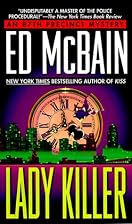
57) Lady Killer / Ed McBain
A kid walks into the 87th Precinct office to hand-deliver a letter that reads, "I will kill the Lady tonight at 8. What can you do about it?" With not many clues and only a few hours to find suspects, the detectives of the 87th Precinct scramble to stop a murder. It's pretty much in the same vein as previous novels in the series: quick & fun.

58) DAW #34: The Wandering Variables / Louis Trimble
Tagline: They played hob with a whole world's equations
Short review: Not recommended. It has a rambling narrative, an implausible plot, a cop-out ending, and it's ethically bonkers. Details and !!!SPOILERS!!! follow.
Tandy Venner is a genius computer scientist for the Charter Worlds. She has recently completed work on her crowning achievement, a "mini model that can be used in individual offices but can still tap the main information center. And without wires. It's very fast too."
Having invented wireless networks, (oh yeah, and a neural interface, but what's that compared to a wireless network?) Venner is ready for a long vacation. She goes on the Euphor Trek, a sort of adventure vacation on the planet Euphor. Vacationers are stranded at some point on Euphor and have 12 days to reach the station Embark, where a ship will transport them back home. In preparation for the Trek, vacationers are treated to chemical conditioning to help them survive on Euphor, to keep them within certain geographical boundaries, and to lower their inhibitions -- it is a vacation, after all.
Charter agents have learned that their arch-enemy Argo has replaced the regular Trek guide with an Argo agent, who plans to abduct Venner for nefarious ends. So the Charter Worlds sends an agent of their own, Jano Kegan, to protect her. Kegan does not receive the same kind of conditioning as the other vacationers, so he can step in when Venner gets in trouble.
And Venner, being the naive and giggly young genius she is, gets in trouble by killing a couple of the other vacationers, sort of accidentally. Murder is not exactly a crime on Euphor -- it is a vacation, after all -- but is grounds for being sent back home. Before she can be sanctioned, Jano takes Venner and escapes with her across the river, outside of the Trek's prescribed boundaries.
During the night, Jano sneaks back into camp and learns Argo's plot: the murder victims are not really dead but were willing participants in an elaborate scheme to get Venner booted off the planet. Shortly after leaving Euphor, Venner's shuttle would have been hijacked by Argo agents.
Why does Argo want Venner? It has something to do with classified data she injected into a subconscious level of her brain as part of an experiment testing the capabilities of her wireless network or neural interface. Or both, maybe. The main thing is Argo wants to capture her and extract the data, a process that will turn her brain to jelly. To escape such a fate, Venner and Jano must now reach Embark on their own.
Venner immediately sets about sewing clothing and making cooking utensils from local materials, thus calling into question which of the pair is the survivalist and which the helpless ingenue in need of rescue. Just kidding: that's never called into question, despite the fact by my count Venner saves Jano's life more frequently than he saves hers by about 2 to 1.
Anyway, they build a boat ("they" of course means the helpless ingenue in need of rescue) and travel downriver for a little while when they are set upon by a tribe of hostile little gray men. The aliens tie Venner and Jano up and take them to a building in their village. There Venner and Jano hear the voice of God accusing them interfering with his work.
Well, not God exactly, and some explanation is in order. It's the voice of Pheeno, a human social scientist who has been conducting an experiment on a captive population of "Gubelins." It turns out that Pheeno is not alone: Euphor is a planet-sized laboratory for social experiments. Inside every valley is a population of intelligent beings whose behavior and cultures are being studied by a human scientist. It's all very illegal of course, without informed consent and all that snobby ethical stuff, but Pheeno is so flattered to be visited by Tandy Venner -- inventor of the wireless network! -- that he sends them on unmolested.
The next valley they travel through is controlled by the scientist Kwee, and seems to be a culture based on feudal China. Plunging right into the Kwee's captive society, Jano and Venner find themselves caught between a smug emperor who believes himself undefeatable and an upstart warlord who has invented the catapault.
The journey to Embark is put on hold while Jano and Venner meddle with Kwee's experiment. Shuttling back & forth between the city and its besiegers, Jano inspects the warlord's weapons then provides the emperor with cannon to fight them off. During the climactic battle, Jano and Venner make their escape toward Embark via hot-air balloon.
But the hot-air balloon overshoots Embark. An "unseen force" takes their balloon and carries it to a mountain fortress, where they are brought before the "board of professors" who run the planet. The professors explain that the captive societies on Euphor have all been taken from dying worlds: the experiments are actually a humanitarian effort to preserve culture, not an unethical exploitation of it.
This explanation makes everything okay. In fact, Jano gets an idea: he realizes that even if she were to escape Euphor, Venner will always be in danger of further attempts on her life. So he convinces the professors to insert him and Venner into one of their captive cultures, wiping their memories so they don't remember their previous lives. There's your happy ending.
57) Lady Killer / Ed McBain
A kid walks into the 87th Precinct office to hand-deliver a letter that reads, "I will kill the Lady tonight at 8. What can you do about it?" With not many clues and only a few hours to find suspects, the detectives of the 87th Precinct scramble to stop a murder. It's pretty much in the same vein as previous novels in the series: quick & fun.

58) DAW #34: The Wandering Variables / Louis Trimble
Tagline: They played hob with a whole world's equations
Short review: Not recommended. It has a rambling narrative, an implausible plot, a cop-out ending, and it's ethically bonkers. Details and !!!SPOILERS!!! follow.
Tandy Venner is a genius computer scientist for the Charter Worlds. She has recently completed work on her crowning achievement, a "mini model that can be used in individual offices but can still tap the main information center. And without wires. It's very fast too."
Having invented wireless networks, (oh yeah, and a neural interface, but what's that compared to a wireless network?) Venner is ready for a long vacation. She goes on the Euphor Trek, a sort of adventure vacation on the planet Euphor. Vacationers are stranded at some point on Euphor and have 12 days to reach the station Embark, where a ship will transport them back home. In preparation for the Trek, vacationers are treated to chemical conditioning to help them survive on Euphor, to keep them within certain geographical boundaries, and to lower their inhibitions -- it is a vacation, after all.
Charter agents have learned that their arch-enemy Argo has replaced the regular Trek guide with an Argo agent, who plans to abduct Venner for nefarious ends. So the Charter Worlds sends an agent of their own, Jano Kegan, to protect her. Kegan does not receive the same kind of conditioning as the other vacationers, so he can step in when Venner gets in trouble.
And Venner, being the naive and giggly young genius she is, gets in trouble by killing a couple of the other vacationers, sort of accidentally. Murder is not exactly a crime on Euphor -- it is a vacation, after all -- but is grounds for being sent back home. Before she can be sanctioned, Jano takes Venner and escapes with her across the river, outside of the Trek's prescribed boundaries.
During the night, Jano sneaks back into camp and learns Argo's plot: the murder victims are not really dead but were willing participants in an elaborate scheme to get Venner booted off the planet. Shortly after leaving Euphor, Venner's shuttle would have been hijacked by Argo agents.
Why does Argo want Venner? It has something to do with classified data she injected into a subconscious level of her brain as part of an experiment testing the capabilities of her wireless network or neural interface. Or both, maybe. The main thing is Argo wants to capture her and extract the data, a process that will turn her brain to jelly. To escape such a fate, Venner and Jano must now reach Embark on their own.
Venner immediately sets about sewing clothing and making cooking utensils from local materials, thus calling into question which of the pair is the survivalist and which the helpless ingenue in need of rescue. Just kidding: that's never called into question, despite the fact by my count Venner saves Jano's life more frequently than he saves hers by about 2 to 1.
Anyway, they build a boat ("they" of course means the helpless ingenue in need of rescue) and travel downriver for a little while when they are set upon by a tribe of hostile little gray men. The aliens tie Venner and Jano up and take them to a building in their village. There Venner and Jano hear the voice of God accusing them interfering with his work.
Well, not God exactly, and some explanation is in order. It's the voice of Pheeno, a human social scientist who has been conducting an experiment on a captive population of "Gubelins." It turns out that Pheeno is not alone: Euphor is a planet-sized laboratory for social experiments. Inside every valley is a population of intelligent beings whose behavior and cultures are being studied by a human scientist. It's all very illegal of course, without informed consent and all that snobby ethical stuff, but Pheeno is so flattered to be visited by Tandy Venner -- inventor of the wireless network! -- that he sends them on unmolested.
The next valley they travel through is controlled by the scientist Kwee, and seems to be a culture based on feudal China. Plunging right into the Kwee's captive society, Jano and Venner find themselves caught between a smug emperor who believes himself undefeatable and an upstart warlord who has invented the catapault.
The journey to Embark is put on hold while Jano and Venner meddle with Kwee's experiment. Shuttling back & forth between the city and its besiegers, Jano inspects the warlord's weapons then provides the emperor with cannon to fight them off. During the climactic battle, Jano and Venner make their escape toward Embark via hot-air balloon.
But the hot-air balloon overshoots Embark. An "unseen force" takes their balloon and carries it to a mountain fortress, where they are brought before the "board of professors" who run the planet. The professors explain that the captive societies on Euphor have all been taken from dying worlds: the experiments are actually a humanitarian effort to preserve culture, not an unethical exploitation of it.
This explanation makes everything okay. In fact, Jano gets an idea: he realizes that even if she were to escape Euphor, Venner will always be in danger of further attempts on her life. So he convinces the professors to insert him and Venner into one of their captive cultures, wiping their memories so they don't remember their previous lives. There's your happy ending.
161DorsVenabili
#160 - They played hob with a whole world's equations .
Enough said. Don't you think?
Enough said. Don't you think?
162feca67
#150 - ace review, more of a re-write / major improvement of the novel as a whole really - reminded me, in a deja-vu sense, of many of the thoroughly forgettable novels I read as a teenager, which I've long since binned, and consequently can't remember.
Some of the DAWs covers are excellent - I'm a complete sucker for judging a book by it's cover, so it's probably just as well these books were never sold in the UK.
Some of the DAWs covers are excellent - I'm a complete sucker for judging a book by it's cover, so it's probably just as well these books were never sold in the UK.
163swynn
>161 DorsVenabili:: Yeah, that covers it. I did look up "played hob," an expression I'd never heard before. Apparently "hob" is derived from "hobgoblin" and the phrase means "made mischief." I wonder why that expression ever died out.
>162 feca67:: Thanks! I agree some of the covers are charming and some are awful ... and some are charmingly awful.
>162 feca67:: Thanks! I agree some of the covers are charming and some are awful ... and some are charmingly awful.
164swynn
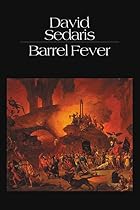
59) Barrel Fever / David Sedaris
I'd heard of David Sedaris, and seen his books recommended frequently here on LT, but a few weeks ago I caught an episode of NPR's "This American Life" with Sedaris's funny and heartsick dog story, "The Youth in Asia," and I decided to try one of his books.
This wasn't the place to start, I think. Most of these pieces seem to be satirizing the interior life of narcissists and I'm afraid the point is mostly lost on me. The notable exception is the last piece, "The Santaland Diaries," a cynical and delicious account of his experiences as a Macy's elf, which is excellent.
165swynn

60) DAW #35: Baphomet's Meteor / Pierre Barbet
Tagline: In the sign of the atom, conquer!
SPOILERS!
The order of the Knights Templar is founded when Hugues de Payens encounters a goat-headed alien whose spaceship has crashed in the French countryside. In exchange for food, the alien Baphomet promises the monk that the new monastic order will prosper.
And so it does. A couple of hundred years later, William of Beaujeu is Grand Master of the Knights Templar and is leading a last-ditch attempt to take the holy land back from the Saracens. Baphomet helps him out by giving him 100 special missiles for their catapaults, which to the 20th-century reader are clearly nuclear munitions. With the special weapons, some clever strategy, and considerable luck, Beujeu not only conquers the Holy Land, he conquers the world.
The pacing is uneven, the climax features a deus ex machina (or maybe a machina ex deo), and significant loose ends are tied up too tidily in a tacked-on epilogue. Still, it's short and mostly fun and if it sounds intriguing it's worth a look.
166swynn

61) The Ultimate Guide to Trail Running
I have started running trails in preparation for a September trail run. I figured, I've run on dirt ... how much different can trails be? I found out pretty quick that it's a lot different. (Dirt one's cheeks and blood on one's knees are pretty good teachers.)
This manual is a decent introduction to trail running. Eighty percent of it you can figure out by yourself, and some of it is just silly ("If an area is posted with NO TRESPASSING signs, refrain from using the trail... "; really, if people have to be told this, what's the point in telling them?), but I did find some useful tips, and some reassurance that it's okay to do things I'm going to do anyway. (When running uphill, shorten your stride and slow your pace.)
The audience for this is pretty specific, and I have nothing else to compare it to. But if you're where I am with trail running -- brand-spanking new -- it's at least not bad.
167DorsVenabili
#166 - Do they discuss the horse poo issue? I ran a trail race last summer that was non-stop horse poo. Unbelievable. (Sorry for saying "horse poo" twice on your thread.)
168swynn
No, horse poo doesn't come up, but I have encountered the problem while hiking multi-use trails, so...yeah, I can see how that would be a problem all right.
The closest they come in the book is this:
The best way to deal with mud on the trail is to enjoy it and get as dirty as possible early in the run so you won't worry about it thereafter.
There is probably a horse poo corollary to that rule, but I'd rather not think about it.
The closest they come in the book is this:
The best way to deal with mud on the trail is to enjoy it and get as dirty as possible early in the run so you won't worry about it thereafter.
There is probably a horse poo corollary to that rule, but I'd rather not think about it.
169swynn
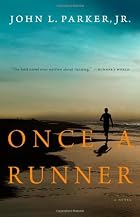
62) Once a Runner / John L. Parker
Quenton Cassidy is a miler at a public university in Florida. He's quite good, but will he ever be great? When university politics ban him from competition, he goes into seclusion and devotes his life to training under the tutelage of a former Olympic miler. You know the rest of the plot.
I have mixed feelings about the book... the prose is occasionally clunky, the story is too familiar, and some social attitudes are uncomfortably dated. But Parker shines in his detailed understanding of running and race strategy. Though I never ran track in high school or college -- and after reading this I'm glad the running bug bit me later in life -- I recognize a lot of the feelings he describes, physiological and psychological.
And on the subject of realism, the petty politics of academic sports programs also rings painfully true.
There's a blurb on the cover from Runner's World claiming that this is "the best novel ever written about running." I'm not sufficiently familiar with the genre to agree or disagree, but I'll readily accept that that it's probably the most realistic. Recommended for anyone who runs, or those who wonder why anyone would bother.
170swynn

63) DAW #36: Darkover Landfall / Marion Zimmer Bradley
Tagline: No tradition can withstand the ghost wind's gale
I've never been a MZB fan. I know several people who are, and I respect their taste, but I just don't get it. This book did not convert me.
I think I'll skip the detailed summary and the spoilers. Essentially, a ship en route to a space colony gets lost in a "gravity storm" and crashes on a planet way off its intended course. The planet seems at first like paradise, but has a few nasty secrets like killer insects, screaming predatory birds, wildly vacillating weather, and a wind that drives the crew and colonists crazy. Literally. I don't think it's a spoiler to say that they're stuck there long-term.
I know that MZB has a reputation for feminist narrative, but it's nowhere in evidence here. We're privy to the thoughts of our hero as he judges the heroine too soft for a cross-country trek, too slutty for sitting around in her shirtsleeves, and too frigid for his amorous attentions. Fortunately, we're told, he is "not a male chauvinist." Later we're treated to a lecture on how "women's liberation" is just nature's way of thinning the herd. Seriously. This is feminist sf?
I do, however like the cover. I've said unkind things about Jack Gaughan's covers above, but in this case he nailed it. The eerie cool blues and violets, the creepy wind-eroded face of (what is it? snow? sand? fog?), the faceless scientists balancing their instrument on a precarius perch ... is it the ghost-face's shoulder? -- it's all cold and windy and ominous and so much better than George Barr's, which DAW used for subsequent printings:

Okay but unremarkable. Give me Gaughan's.
171DorsVenabili
#169 - This has been on my radar for a while, but my fear has been that it might be a bit corny.
172swynn
>171 DorsVenabili:: The plot contains no surprises, but I think it avoids being corny. I'd recommend keeping it on the radar at least.
173swynn
Spreading the running bug ... this weekend I paced my 9-year-old nephew on his very first 5K, which he completed in the mid-31's. (I don't know his official time, or even whether the race directors were keeping official time.) He brought along his entire family: his dad -- my brother -- finished about a minute behind us, while his mother, brother and grandmother -- my mom -- walked it in just under an hour. A good time was had by all.

Well, except for *my* son, who didn't care to run but while waiting at the finish line updated his Facebook status to "BORED."
Sheesh. Teenagers.

Well, except for *my* son, who didn't care to run but while waiting at the finish line updated his Facebook status to "BORED."
Sheesh. Teenagers.
174feca67
#170 "the book was rubbish, let's discuss the cover" - love it, I'd like to see more people use this review format, I might give it a go myself.
175swynn
>174 feca67:: It's important not to judge a cover by its book. I'm told that Darkover Landfall is a weaker entry in the series, so hopefully The Spell Sword (DAW #119) will be more appealing.
176ronincats
Darkover Landfall is definitely a weak entry in the series. Try Thendara House for some classic Bradley.
177swynn
>176 ronincats:: Thanks, Roni. I'm ready to admit that my indifferent experiences with MZB have been more my fault than hers.
Back in middle school I read The Mists of Avalon on a tear through everything Arthur. I know that book receives a lot of love, but it did nothing for me. Perhaps that can be explained by the words "13-year-old boy." Wouldn't surprise me a bit.
Later in college I read The Forbidden Tower, which I recall as being a long buildup to orgy magic, followed by a magic orgy. I don't remember why I picked that volume in particular, but it reinforced my feeling of "meh."
I'll probably not get to Thendara House soon, but I'll keep it in mind as a representative work, and withhold judgment until I've read it.
Back in middle school I read The Mists of Avalon on a tear through everything Arthur. I know that book receives a lot of love, but it did nothing for me. Perhaps that can be explained by the words "13-year-old boy." Wouldn't surprise me a bit.
Later in college I read The Forbidden Tower, which I recall as being a long buildup to orgy magic, followed by a magic orgy. I don't remember why I picked that volume in particular, but it reinforced my feeling of "meh."
I'll probably not get to Thendara House soon, but I'll keep it in mind as a representative work, and withhold judgment until I've read it.
178ronincats
Bradley is definitely off and on again in her writing, and a lot of her Darkover books do nothing with me (Hawkmistress! shudder, shudder). However, the sort-of series including The Shattered Chain, Thendara House, and City of Sorcery still hold up for me. These three feature the Renunciates, women who have renounced (oddly enough) men, as well as women still living in the traditional society, and the frictions and costs of both ways of living.
179swynn
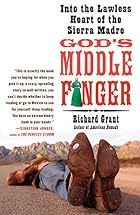
64) God's Middle Finger / Richard Grant
British travel writer Richard Grant develops an unhealthy fascination with the Sierra Madre, which has changed since the gold-mining-and-claim-jumping days of Treasure of the Sierra Madre only in becoming more dangerous and less lawful.
Grant begins by visiting novelist J.P.S. Brown, who lived in and wrote about the Sierra Madre. Brown describes the Sierra Madre as "the kind of anarchy that gives anarchy a bad name," and gives Grant three pieces of advice: (1) learn Spanish, (2) learn to ride a horse, and (3) don't go anywhere in the Sierra Madre alone.
Grant follows the first two instructions, but frequently ignores the third, especially as it's dangerous experiences that he's specifically seeking out, and has great confidence in his own "instincts." And he survived long enough to write the book so maybe he's right.
But survival isn't always guaranteed. By the time he's finished he has partied with drug traffickers, searched for lost gold, driven a broken-down truck in first gear through bandit country, and spent the night on a freezing mountainside hiding from local hillbillies with murder on their minds. (Grant himself uses the term "hillbillies," and it seems apt.) Along the way he picks up stories about local heroes and villains, folk medicine, Mormon dope farmers, and the bisexual habits of macho narcoterrorists.
It's certainly titillating, though there is occasionally something creepy about it. Grant himself puts his finger on it:
Here I was getting my kicks and curing my ennui in a place full of poverty and suffering, environmental and cultural destruction, widows and orphans from a slow-motion massacre. I tried to persuade myself that I was going to write something that would make a difference and help these people, but my capacity for self-delusion refused to stretch in that direction.
Yeah, that's the creepiness. And yet Grant is not being fair to himself here: his book is not just thrills at the expense of helpless innocents. He also has observations about the conduct and effects of the so-called "war on drugs" and about efforts to improve matters through do-gooder environmental and social programs. The verdict: it's complicated. The area's drug economy and official corruption have been terrible things, ushering in a skyrocketing homicide rate and environmental collapse. At the same time, they've also introduced a consumer culture and opportunity for affluence that the population largely welcomes. Mind-altering substances aside, the Sierra Madre seems in many ways a Tea-Party paradise.
So creepiness and all, it's an enlightening and thought-provoking book. It does end rather abruptly, a sort of close without closure, but that may be partly the point. Recommended.
180swynn
>178 ronincats:: Now, that subseries *does* sound appealing.
On another note, my trail running plans are officially scrapped. All summer long I have been dealing with mild outbreaks of poison ivy -- which I had expected, being sensitive and all. A couple of weeks ago, I got a more moderate rash, which would dry up in one spot after a few days only to reappear somewhere else. Once again: I knew I was sensitive to the stuff when I started out, and knew I could muscle through.
But Monday morning I woke scratching hands and forearms, and found I had broken out on both arms, fingertips to elbows. and on both legs, ankles to hips. I've now gone to the doctor and gotten on some stuff that's helping, but at this point I've reluctantly admitted that trail running is a foolish idea for me, at least until autumn kills the toxicodendron radicans.
This bums me out, but my wife has reminded me of the First Rule of Holes, a logic against which I cannot argue: When you find yourself in a hole, stop digging.
Maybe I can start again in October. (Don't tell my wife.)
On another note, my trail running plans are officially scrapped. All summer long I have been dealing with mild outbreaks of poison ivy -- which I had expected, being sensitive and all. A couple of weeks ago, I got a more moderate rash, which would dry up in one spot after a few days only to reappear somewhere else. Once again: I knew I was sensitive to the stuff when I started out, and knew I could muscle through.
But Monday morning I woke scratching hands and forearms, and found I had broken out on both arms, fingertips to elbows. and on both legs, ankles to hips. I've now gone to the doctor and gotten on some stuff that's helping, but at this point I've reluctantly admitted that trail running is a foolish idea for me, at least until autumn kills the toxicodendron radicans.
This bums me out, but my wife has reminded me of the First Rule of Holes, a logic against which I cannot argue: When you find yourself in a hole, stop digging.
Maybe I can start again in October. (Don't tell my wife.)
182swynn
RUNNING POST
>181 qebo:: Thanks for the comment on the photo -- it was family-togetherness fun. Thanks also for the commiseration. I'd been training for a September trail race, and acknowledging that it won't happen did bring me down.
There is good news: the September race is one of a series, and I can probably transfer my registration to another in the same series, so I'm optimistic about not losing the registration fee. I've requested a transfer to a November road race in Kansas City, which will be very different from my original plans but also fun.
Now to fill that marathon-sized hole in September ... this one is appealing. It says "trail" in the title, but it's on converted railbed, which means that evil flora will keep a safe distance. And it has a surface of crushed limestone and concrete, which means that training on paved and gravel roads is appropriate. Plus it's nearby, practically a day trip. I'm slowly coming back to my happy place.
Or maybe that's just the corticosteroids.
>181 qebo:: Thanks for the comment on the photo -- it was family-togetherness fun. Thanks also for the commiseration. I'd been training for a September trail race, and acknowledging that it won't happen did bring me down.
There is good news: the September race is one of a series, and I can probably transfer my registration to another in the same series, so I'm optimistic about not losing the registration fee. I've requested a transfer to a November road race in Kansas City, which will be very different from my original plans but also fun.
Now to fill that marathon-sized hole in September ... this one is appealing. It says "trail" in the title, but it's on converted railbed, which means that evil flora will keep a safe distance. And it has a surface of crushed limestone and concrete, which means that training on paved and gravel roads is appropriate. Plus it's nearby, practically a day trip. I'm slowly coming back to my happy place.
Or maybe that's just the corticosteroids.
183swynn

65) A Talent for the Invisible / Ron Goulart
Tagline: Wake up, wake up! The Sandman is coming!
Jake Conger is an agent for the Wild Talents Division of the United States Remedial Function Agency. Jake's "wild talent" is an ability to make himself invisible, which is partly a Shadow-like trick of clouding nearby minds, and partly a function of a secret-formula body cream. Or something: we don't really care how it works, only that it does and that it gets him through this plot-driven adventure which is less ambitious and much more successful than the last few DAWs.
A character named Sandman is running around the world, resurrecting victims of political assassinations. In some of these cases, the RFA and its friends have invested time and resources putting these liberal agitators in their graves, and it's rather annoying that they won't stay there. So the agency dispatches Conger to investigate.
And investigate he does, traipsing around the world like a sometimes-invisible James Bond, visiting Portugal, Brazil, Urbania (sandwiched between Nicaragua and Costa Rica and named after Pope Urban III), and finally Los Angeles's fourth underground level.
Along the way he meets Angelica, an attractive agent from the National Security Office who is able to see him even when he is invisible: the NSO has treated her with an immunity to Conger's mind-clouding powers, or to his body cream, or something. Jake (again like a sometimes-invisible James Bond) and Angelica fall in instant and mutual lust. Angelica helps his investigation but also complicates it when Jake's employer learns of their relationship and disapproves of the interdepartmental cooperation.
If you get the impression that Goulart isn't taking his tale too seriously then you're right. It's a farce of bureaucracy and technology set in a pastiche of espionage adventure, and the jokes come even faster than the mortal peril. Maybe Goulart isn't always quite as clever as he thinks it is ... but then they can't all be zingers, can they?
There are a few uncomfortable racial stereotypes, but at the same time there's some effort to poke fun at the cliches, making me think that Goulart was trying simultaneously to deploy and undermine them. He succeeds better at the former than the latter, but even this awkwardness doesn't spoil a fast, fun, and funny read.
184DorsVenabili
So sorry to hear that poison ivy is derailing your trail running plans! That's definitely worse than horse poo. I hope the railbed race works out then. That sounds pretty neat.
185swynn
Thanks, Kerri. The new alternative will also be mostly flat and even slightly downhill. I'm hoping for a PR.

66) True Confections / Katharine Weber
When Alice Tatnall's plans for college and career are ruined by a high school prank turned ugly, she goes to work at "Zip's Candies" candy factory. There she falls in love with and soon marries Howard Ziplinsky, an eternal boy ten years her senior and the company's heir presumptive. This is her entry into the complex and nuanced world of candy manufacturing and the Ziplinsky family who helped created it.
Alice narrates the book in the form of a legal deposition. She defends herself indignantly against charges that she has sabotaged the name of Zip's Candies, and lays out the true history of Zip's candies, the Ziplinsky family, and the part she played in it. Along the way we're given a cultural history of American candy manufacturing with sidebars on:
race (Zip's Candies all have a "Little Black Sambo" theme),
economics (be prepared to discuss price points and product expansions),
politics (Alice's husband is an old college buddy of a Texan president with a similar level of maturity),
and religion (Alice transitions from a family of staid Unitarians to one of a labyrinthine Judaism).
Despite the serious themes, it's funny and quotable. For example: "There seemed to be no such thing as information, only interpretation." Nowhere is this more true than in Alice's own case. Her tale is glib and self-serving even for a legal deposition and you'll soon be wondering what is story and what is spin.
It's entertaining, it's interesting, and you'll laugh. Recommended.
66) True Confections / Katharine Weber
When Alice Tatnall's plans for college and career are ruined by a high school prank turned ugly, she goes to work at "Zip's Candies" candy factory. There she falls in love with and soon marries Howard Ziplinsky, an eternal boy ten years her senior and the company's heir presumptive. This is her entry into the complex and nuanced world of candy manufacturing and the Ziplinsky family who helped created it.
Alice narrates the book in the form of a legal deposition. She defends herself indignantly against charges that she has sabotaged the name of Zip's Candies, and lays out the true history of Zip's candies, the Ziplinsky family, and the part she played in it. Along the way we're given a cultural history of American candy manufacturing with sidebars on:
race (Zip's Candies all have a "Little Black Sambo" theme),
economics (be prepared to discuss price points and product expansions),
politics (Alice's husband is an old college buddy of a Texan president with a similar level of maturity),
and religion (Alice transitions from a family of staid Unitarians to one of a labyrinthine Judaism).
Despite the serious themes, it's funny and quotable. For example: "There seemed to be no such thing as information, only interpretation." Nowhere is this more true than in Alice's own case. Her tale is glib and self-serving even for a legal deposition and you'll soon be wondering what is story and what is spin.
It's entertaining, it's interesting, and you'll laugh. Recommended.
186swynn
Donald J. Sobol, winner of the Edgar Award and author of the "Encyclopedia Brown" juvenile mysteries, has taken his peek at the back of the book.
187swynn
67) The Hunter / Richard Stark
I've seen Stark's Parker novels mentioned several times as great examples of crime fiction, and thought I'd finally give one a try. Wow, talk about a gut-punch. Parker is a hood who breaks out of prison to take his vengeance on the wife and former partner who put him there. This is no fantasy about the nobility of an outlaw code: Parker is an unscrupulous bastard. Ethically he's no better than the unscrupulous bastards he kills. He's just tougher, and smarter, which is enough -- for Parker, and for little voyeur me. I will read more of these.
188swynn

68) DAW #38: The Lion Game / James H. Schmitz
Tagline: A Telzey Amberdon novel
Telzey Amberdon is a genius 15-year old college student and a telepath. She and some friends are on a camping trip when she accidentally makes telepathic contact with Robane, a researcher working on psi machines nearby.
Robane lures her to his cabin, but his invitation is a trap. Robane's hobby is hunting. He keeps a vicious predator called a "spook" as a pet, and enjoys sending it out to chase prey. He then uses his psi machines to telepathically enjoy the hunt from his pet's perspective ... or from its victim's.
Fortunately Telzey has a pet of her own, a large dog bred for hunting and for protecting its pack. Telzey's dog arrives in the nick of time to defeat the spook and save Telzey. But the adventure has only begun.
By defeating Robane and his pet, Telzey has brought herself to the attention of some of Robane's contacts, who are playing a much more serious game than Robane. Soon Telzey has been recruited by the Psychology Service to assist with an operation on the planet Tinokti, where Telzey uncovers a secret invasion by a race of telepathic aliens.
This was fun, though I wasn't crazy about the prose, which had a couple of grammatical habits that irked me. The story is fine, though, and it's nice finally to see a heroine who is busy saving the universe instead of trying to decide whether to make her man happy or just have babies. I'm ready for more Telzey.
And get a load of that Frank Frazetta cover, willya? I'm tempted to list this under Morphy's TIOLI challenge, "Read a book with something that can be carried by the wind on its cover," because I think Telzey's costume qualifies. For the record, there is nothing in the story suggesting that Telzey or anybody else other than Frank Frazetta sees her as a sexpot.
189swynn
69) Escape from Five Shadows / Elmore Leonard
Corey Bowen was unfairly convicted of cattle rustling and sent to Five Shadows, a prison labor camp. Bowen plans an escape, which is complicated by the camp's corrupt warden and the Apaches trackers hired to chase escapees.
Like Leonard's other westerns, there's nothing here you haven't seen in Hollywood westerns, but the writing is so smooth and the dialogue so sharp that I really didn't mind.
190ronincats
Oh, I enjoy the Telzey Amberdon series a lot, along with the Trigger Argee books. Schmitz is one of my favorite older authors. But my very favorite of his is one of his novels, The Demon Breed, also with an amazing female protagonist. Ace H-105.
191swynn
>190 ronincats:: To me it's a brand-new series. I'd never heard of Schmitz before trying to fill the gaps in my run of DAWs. So this encounter with Telzey was a pleasant surprise. I may try to track down some of the earlier entries in the series before I reach her next DAW (#82, The Telzey Toy)
192swynn
70) One Man's Paradise / Douglas Corleone
Kevin Corvelli is a Manhattan criminal defense attorney with his sights on being a celebrity criminal defense attorney. But his first high-profile case goes high-profile bad and Corvelli flees to Hawaii to escape the humiliation.
Unfortunately for Kevin, he still has law-school debts to pay off. So he hangs out his shingle in Honolulu, vowing only to defend clients accused of misdemeanors. Nothing that will make the papers. No felonies. Absolutely no homicides.
When a law school student from New Jersey is found dead on the beach and her ex-boyfriend is implicated with circumstantial evidence, the boyfriend's family comes to Kevin for help. Absolutely no homicides, said Kevin. But there's nothing like a retainer check for 50 grand to shake one's resolutions.
Soon he's defending the kid, and soon he's doing something he's never done before: caring.
I have a few petty gripes about style and timing, but Corleone kept me turning pages, had me chuckling, and wrapped it up nicely. I'll read more in the series, though probably not soon.
193swynn

71) DAW #39: The Book of frank Herbert / Frank Herbert
Tagline: Ten great sf adventures by the awards-winning author of Dune
"Great sf adventures," says the cover, but "adventures" is hyperbole and "great" an outright lie. These are pedestrian stories short on character, familiar on ideas, and mostly skimpy even on plot. Not terrible but not special either.
SPOILERS (such as they are) FOLLOW!
Seed Stock. Space colonists have trouble establishing a settlement when their crops and livestock fail to thrive. Turns out the colony's focus is misplaced: while the tallest and strongest specimens fail, the scrawniest ones are adapting and reproducing.
The Nothing. In a world where mental talents are common, a girl with the power of pyrokinesis meets Claude in a tavern. Claude is a "Nothing," a man with no mental talents who has escaped from a Nothing preserve. Eventually she meets Claude's prescient father, who tells her that he has looked into the future and seen her married to Claude-- which is a good thing because she and Claude have an excellent chance of producing offspring with mental talents. This is all the persuasion the young couple needs.
Rat Race. A small-town police detective gets a hunch about fishy goings-on at a local mortuary. Turns out he's right: the mortuary is actually a front for space aliens who are harvesting plasma from corpses and conducting some sort of psychological experiment on the human race. The point of the experiment was not clear to me, but is somehow analogous to rats in mazes.
Gambling Device. A honeymooning couple check into a hotel from which there is no escape. The hotel was apparently designed as a magical rehab facility for problem gamblers: any resident who gambles finds that the tool of his/her bet disappears. The method of escape resembles a logic puzzle.
Looking for Something? A hypnotist gets an idea that reality is nothing more than a hypnotic illusion. Turns out he's right, and the alien masters of reality have to reprogram him before the secret gets out.
The Gone Dogs. The earth's dogs are wiped out by a genetically engineered virus designed to wipe out coyotes.
Passage for Piano. Sentimental story about a family preparing to voyage to a space colony. Their son is a child prodigy on the piano. He is emotionally attached to a grand piano which he cannot bear to leave behind. Believing that the grand piano is essential for her son's health, the mother tries to find a way to include the piano in the ship's cargo despite strict weight restrictions.
Encounter in a Lonely Place. A man finds he can read a girl's mind. He falls in love with her. The girl is creeped out.
Operation Syndrome. Overlong story about a fringe psychiatrist investigating local outbreaks of psychosis. He figures out that the outbreaks are related to a certain musician's public performances: the musician's instrument is a new sort that uses the performer's brainwaves to modify prerecorded music. The investigator falls in love with the musician's lovely assistant.
Occupation Force. A spaceship appears above earth, but its motives are unclear. When the aliens finally make contact they explain that they are simply checking on the status of the colony they established 7,000 years ago.
194swynn

72) The Pine Barrens / John McPhee
This is a collection of pieces McPhee originally wrote for the New Yorker about the New Jersey Pine Barrens. He profiles local residents and localities and discusses the region's history, industry, and agriculture in the style of an expert and leisurely storyteller. My only complaint is that it's 45 years old; the Wikipedia entry on the Pine Barrens is informative, but lacks McPhee's engaging style.
195feca67
#188 Sounds good, looks even better! I might start looking for some of these daws myself, how many did they publish?
#193 I think Frank only wrote one half decent book? I remember starting more than one and giving up half way through.
#193 I think Frank only wrote one half decent book? I remember starting more than one and giving up half way through.
196swynn
Hi feca!
DAW Books is still going strong. If you've read C.J. Cherryh or Mercedes Lackey (or Tad White or Patrick Rothfuss or Tanya Huff), then you've probably read some of DAW's books. I think the "Collectors Series" number is now up around 1600.
He wrote at least one slam-bang fantastic book. It's been several years since I last read Dune, but the last time was the third time and I still thought it was solid. He followed it with a parade of decreasingly interesting sequels (or so I assume: I finished God Emperor of Dune and gave up; reviews of subsequent sequels convince me I made the right decision).
The only other Herbert novel I've read is The White Plague, which was as forgettably "okay" as this book of short stories. I'm in no hurry to complete his oeuvre.
DAW Books is still going strong. If you've read C.J. Cherryh or Mercedes Lackey (or Tad White or Patrick Rothfuss or Tanya Huff), then you've probably read some of DAW's books. I think the "Collectors Series" number is now up around 1600.
He wrote at least one slam-bang fantastic book. It's been several years since I last read Dune, but the last time was the third time and I still thought it was solid. He followed it with a parade of decreasingly interesting sequels (or so I assume: I finished God Emperor of Dune and gave up; reviews of subsequent sequels convince me I made the right decision).
The only other Herbert novel I've read is The White Plague, which was as forgettably "okay" as this book of short stories. I'm in no hurry to complete his oeuvre.
197feca67
Nope, sorry, I don't think I've tried any of those authors - I don't think DAW books are/were available in the UK, but I've seen them on ebay and abebooks, I guess the original '70s editions are quite collectible now? You seem to be reading them in order, so 39 down, 1561 to go?
Dune was the 'half decent' book I referred to, perhaps a bit harshly, but with the benefit of hindsight I don't think it's quite as good as some of the other sci-fi classics. I tried The Jesus Incident and one of the Dune sequels but didn't finish them.
Dune was the 'half decent' book I referred to, perhaps a bit harshly, but with the benefit of hindsight I don't think it's quite as good as some of the other sci-fi classics. I tried The Jesus Incident and one of the Dune sequels but didn't finish them.
198swynn
A few of the old ones are a bit pricey: Dean Koontz's A Darkness in My Soul and R.A. Lafferty's Strange Doings are scarce, as is any volume by Philip K. Dick. Plenty of others can be found in bargain bins at used book stores, so accumulating a collection is feast & famine.
I'm not too particular about first editions. It's more about enjoying a particular moment in sf history. And OCD, probably.
I'm not too particular about first editions. It's more about enjoying a particular moment in sf history. And OCD, probably.
199DorsVenabili
#193 - I somehow got through the Dune trilogy, even though I thought they were a bit ho-hum. I do have a cool paperback called The Green Brain and I also think I have The White Plague, but my desire to read either is pretty low.
200swynn
>199 DorsVenabili:: Yeah, Herbert isn't going on my "what to read next" list anytime soon. Most fans I know never get through more than a handful of the Dune series. So I've been a bit puzzled about the popularity of the Kevin Anderson / Brian Herbert prequels or sequels or whatever they are. Who is reading those things? Or are people just buying them to decorate the shelves?
Not that there's anything wrong with buying books to decorate one's shelves. I've been known to do it myself.
Not that there's anything wrong with buying books to decorate one's shelves. I've been known to do it myself.
201swynn

73) Maisie Dobbs / Jacqueline Winspear
Maisie Dobbs is the daughter of a costermonger, a former housemaid, a former Army nurse, and a private detective in post-WWI London. Her method of detecting involves psychology and addressing matters of the heart, and this inaugural adventure starts off very well as she follows a woman whose husband suspects her of unfaithfulness.
I don't think the early promise was fulfilled, so I have mixed feelings about this book.
The pros: a sharp sense of time and place, a strong cast of characters, and a promise of stories that offer as much human drama as crime.
The cons: an overlong flashback filling the middle of the book with background unrelated to the plot, more romance than my eyes can handle without rolling, and a mystery that wraps up too quickly.
It's promising enough that I'll probably read more in the series, but I'll not be in any hurry to do it.
202swynn
Logging a couple of abandoned books.
The Jigsaw Woman by Kim Antieau is a modern-day Frankenstein story, about a mad scientist who creates his perfect woman out of the perfect parts of recently-deceased women. It starts out well, with an air of intrigue but also a good dose of clever humor. Eventually the woman escapes and goes through a journey of self-discovery. Long rhapsodies about women's empowerment finally put me off. Generally speaking I loathe polemical fiction even when I agree with the author's point. This was no exception, and the book's initial charm didn't carry it past halfway.
Some Other Place. The Right Place by Donald Harington was certainly interesting enough: it's the story of Diana Stoving, an aimless college grad who stumbles across a local-interest newspaper story when her ride breaks down somewhere in Connecticut. The story is of a local high school boy and Eagle Scout who, under hypnosis, recalls a previous life as an Arkansas recluse. The story catches Diana's eye because the name of the Arkansas recluse is also the name of her grandfather.
Diana tracks down the boy from the newspaper story and takes off with him. Together they retrace the journey of her grandfather's life. They fall in love with her ... or rather: he falls in love with her, while she falls in love with her grandfather. She likes to put the boy under hypnosis when they make love because her grandfather is a better lover.
Along the way, we learn the story of the grandfather's life, which consists mostly of a string of sexual escapades, including a dalliance with his mentally handicapped sister.
All of this makes some squirm-inducing sexual situations, but that wasn't what made me abandon it. Nor was the writing a problem: it was well constructed, and contained some interesting experiments: for example, one section is related by two different narrators in alternating lines.
No ... it's just that it's long and it never quite connected with me. It was interesting enough to keep on the countertop, but when I had the time I kept picking up other things instead. Finally, I ran out of renewals and had to return it to the library.
The Jigsaw Woman by Kim Antieau is a modern-day Frankenstein story, about a mad scientist who creates his perfect woman out of the perfect parts of recently-deceased women. It starts out well, with an air of intrigue but also a good dose of clever humor. Eventually the woman escapes and goes through a journey of self-discovery. Long rhapsodies about women's empowerment finally put me off. Generally speaking I loathe polemical fiction even when I agree with the author's point. This was no exception, and the book's initial charm didn't carry it past halfway.
Some Other Place. The Right Place by Donald Harington was certainly interesting enough: it's the story of Diana Stoving, an aimless college grad who stumbles across a local-interest newspaper story when her ride breaks down somewhere in Connecticut. The story is of a local high school boy and Eagle Scout who, under hypnosis, recalls a previous life as an Arkansas recluse. The story catches Diana's eye because the name of the Arkansas recluse is also the name of her grandfather.
Diana tracks down the boy from the newspaper story and takes off with him. Together they retrace the journey of her grandfather's life. They fall in love with her ... or rather: he falls in love with her, while she falls in love with her grandfather. She likes to put the boy under hypnosis when they make love because her grandfather is a better lover.
Along the way, we learn the story of the grandfather's life, which consists mostly of a string of sexual escapades, including a dalliance with his mentally handicapped sister.
All of this makes some squirm-inducing sexual situations, but that wasn't what made me abandon it. Nor was the writing a problem: it was well constructed, and contained some interesting experiments: for example, one section is related by two different narrators in alternating lines.
No ... it's just that it's long and it never quite connected with me. It was interesting enough to keep on the countertop, but when I had the time I kept picking up other things instead. Finally, I ran out of renewals and had to return it to the library.
203swynn

74) The Man With the Getaway Face / Richard Stark
After the events of The Hunter (see post #187), Parker is on the run from the mob. He pays a plastic surgeon in Omaha to give him a less-recognizable face. Surgery accomplished, Parker goes back to his crooked ways, planning an armored car heist. Complications ensue: the take won't be what he expected, one of his accomplices is planning a double-cross, and just when it gets too late to scrap his plans who should show up but the surgeon's chauffeur with revenge on his mind. Somebody has killed the surgeon and the driver suspects Parker. The pace here is slower than in the first volume, but still fast and plenty fun.
204swynn

75) DAW #40: Planet Probability / Brian N. Ball
Tagline: Behind the scenes of an alien evolution
This was an okay diversion but nothing special. I'll have forgotten the plot by next week. Despite the "probability" in the title, you'll find no mathematics here beyond a few buzzwords designed for implied scienciness. Likewise, the plot depends on a primary-school understanding of evolution. As long as you don't stop to think it's kind of fun.
The Freas cover is also okay but nothing special. The composition is more appropriate for an illustration than a cover: the story has dinosaurs and tigers and crocodiles and aliens oh my! but the artist chose to depict a scene with characters standing, sitting and lying around. Of course, mammaries are front-and-(just right of)-center, so maybe it worked.
SPOILERS FOLLOW!
Nine hundred years in the future, most of humanity's problems have been solved except for boredom. Thus: the "Frames," reconstructions of historical milieus or variants thereupon. When a player enters a Frame, his or her memory is altered to correspond to the Frame's plot. Sometimes the player's physique is altered as well.
In The Probability Man, the series' inaugural book, we followed the adventures of Spingarn. Spingarn was a Frames director who had been up to no good on the planet Talisker, whose frames had run amok causing bizarre genetic transformations. In that book, Spingarn located the "genekey," which corrected the transformations.
But now Spingarn has disappeared on Talisker. In fact, everybody has disappeared on Talisker, even though it should be full of people playing in the Frames. Our heroes, Liz and Marvell, are recruited to locate Spingarn and to solve a deeper mystery: it is believed that an Alien presence exists on Talisker and our heroes must locate it.
Shortly after arriving on Talisker Liz and Marvell meet Hawk, an associate of Spingarn's whose personality is permanently stuck in the 15th century. Hawk is guarding what he calls "The Gates of Hell," through which he claims that Captain Spingarn was lost forever. Hawk doesn't take kindly to Liz and Marvell. He seems to think they're French spies.
In fact the "Gates of Hell" are an entrance to another Frame. An instability in the Frames catapaults Liz, Marvell, Horace and Hawk through the Gates ... and sure enough, the world they encounter there is pretty hellish. Running from dinosaurs and primitive crocodiles they encounter a family of tigers.
But something about tiger causes Liz to realize it is no normal tiger: it is actually Spingarn, transformed into a tiger. Spingarn retains enough of his human memories (and his belly retains enough of his last meal) to refrain from attacking our heroes. Liz works through what she knows and what she can guess, and concludes that *all* the life in this frame -- dinosaurs, crocodiles, tigers -- are the transformed bodies of humans. She also concludes that this "Frame" is not a Frame at all -- it is the Alien's "probability space," in which it experiments with human evolution for reasons incomprehensible.
Just as Liz begins to form a greater understanding of Talisker, she and Marvell find themselves transforming. They turn into some sort of prehuman -- what form exactly isn't clear, since the story both refers to them as "apes" and also refers to their tails -- and they spend the next few chapters copulating and hunting for food.
With Liz and Talisker gone, Hawk leads Spingarn and the rest of his tiger family out of the probability space and back into the Frames. Spingarn's human form is restored, as is that of his mate and their children.
Human again, Spingarn is able to form a plan. He returns to the Alien's probability space to rescue Liz and Marvell-- which he does, though they very nearly kill him first. With his human reasoning restored, Spingarn establishes contact with the Alien. It turns out that the Alien has been stranded on Talisker for eons. It hoped that by experimenting with human evolution it could learn how evolution worked, thereby gaining the knowledge to evolve itself into a form that could return to its own world. Or something like that.
Marvell suggests to the Alien that it stop experimenting with humans and set up a probability space for itself. The Alien finds this a Good Idea and disappears into its own probability space. Everyone's original form is restored.
205alcottacre
#201: Sorry you did not enjoy Maisie more, Stephen. I really enjoy the series and am making a serious effort to catch up on it while I have a break from school.
206swynn
Welcome, Stasia!
I think my problem with Maisie may be a mild case of inflated expectations. I expected to fall in love, and instead just fell in like. Even so, Maisie reminds me of Maigret the way she relies on understanding the humans involved as much as on clews and detecting. I think she could grow on me.
I've been having trouble keeping up with threads, but I've lurked on yours frequently enough to have gathered that your classes are going well, so congratulations for that. Thanks for dropping by during your break!
I think my problem with Maisie may be a mild case of inflated expectations. I expected to fall in love, and instead just fell in like. Even so, Maisie reminds me of Maigret the way she relies on understanding the humans involved as much as on clews and detecting. I think she could grow on me.
I've been having trouble keeping up with threads, but I've lurked on yours frequently enough to have gathered that your classes are going well, so congratulations for that. Thanks for dropping by during your break!
207swynn

76) Dead End in Norvelt / Jack Gantos
Last year's Newbery Award winner about Jack, grounded for the summer, who helps a neighbor write obituaries for the local paper.
There's a lot packed in here, from Jack's frequent nosebleeds and the neighbor's home surgery to fix them; to Jack's father, with plans to build a bomb shelter and an airstrip simultaneously; to the obituary-writing neighbor who boils her hands in paraffin and resists the advances of a tricycle-riding Lothario; to a tangent about a Hell's Angel who comes to town long enough to buy a house and then die when he dances in front of a steamroller.
My son & I read this together, and he found enough of it funny to give it a thumbs-up. I thought it was quirky and frequently entertaining, but also a bit too aimless. A Newbery seems extravagant.
208swynn
77) The Rape Case / Irving Morris
On an October evening in 1947, three young men were leaving a party in Wilmington, Delaware when they saw a girl standing in a doorway on a street corner. One of the men thought he recognized her, another thought she looked willing, and before the night was over the girl and the three men were committed to a he said/she said battle that ended in three convictions of rape and three life sentences.
The problem is that the prosecution's case depended on perjured police testimony.
The night the young men were arrested, police took signed statements from all three. The next day, all three young men signed a second statement after having been told that the second statement was the same as the first. When confronted with the statements at trial, the men referred to multiple statements and said that the statements in evidence differed from the ones they had originally signed. The police, however, insisted that only one statement had ever been signed.
Irving Morris is the lawyer who handled the men's appeal, uncovered proof that both statements had been signed, and that the police had destroyed the original statements. Morris here gives a step-by-step story of how he took the case to multiple courts until he finally got a judge to agree that the men had been denied their right to a fair trial.
It's certainly interesting. It's enlightening with respect to legal processes. And it's simply amazing to watch the rhetorical gymnastics. One judge for instance says that police are not agents of the state, hence the state did not knowingly provide perjured testimony. Another says that the policeman's lies under oath are not "perjury" but rather "false testimony," hence regrettable but not criminal. In addition to the legal procedural, Morris adds personal notes to humanize the story.
The only complaint I have is that it gets a bit repetitious. Morris takes his case to one court of appeal after another, and it's understandable that he has to restate his arguments to each court. But I can't help thinking that it's overkill to restate his arguments to us his faithful readers. By the dozenth time he explains how the perjured testimony destroyed his clients' credibility, we get it already. But here he comes explaining it again.
All in all, it's a worthy book that could have used a little more of the blue pencil.
209swynn
Norabelle has noted on the "In Memoriam" thread that Harry Harrison has died.
Damn.
Forget the Soylent Green connection. Make Room! Make Room! left me cold, and bore about as much resemblance to its film adaptation as the average Bond novel does to its own.
As a hand-wringing doomsayer Harrison was ... well, okay I guess. But at snarky social satire he excelled. How I love the Stainless Steel Rat, a series he continued until very recently. I love Bill, the Galactic Hero and if I'd been born about ten years earlier I think I'd love it even more. And The Technicolor Time Machine was a manic gem of Hollywood-spoofing time travel that still made me laugh when I read it forty years after publication.
He will be missed.
Damn.
Forget the Soylent Green connection. Make Room! Make Room! left me cold, and bore about as much resemblance to its film adaptation as the average Bond novel does to its own.
As a hand-wringing doomsayer Harrison was ... well, okay I guess. But at snarky social satire he excelled. How I love the Stainless Steel Rat, a series he continued until very recently. I love Bill, the Galactic Hero and if I'd been born about ten years earlier I think I'd love it even more. And The Technicolor Time Machine was a manic gem of Hollywood-spoofing time travel that still made me laugh when I read it forty years after publication.
He will be missed.
210swynn
78) Til Death / Ed McBain
Steve Carella's sister is getting married. Someone is trying to kill the groom. Carella calls Cotton Hawes and Bert Kling on their day off to come to the wedding and track down the would-be killer.
It's reliably fast and fun suspense with the detectives of the 87th Precinct.
211swynn

79) DAW #41: Changeling Earth / Fred Saberhagen
Tagline: The turning point for Terra had come
Apparently this is the third book in the series "The Empire of the East." I haven't read the first two books, and I think I missed some context because of that, but I enjoyed it even without the background. This series also establishes the setting for Saberhagen's "Book of Swords" and "Book of Lost Swords" series, none of which I've read but several of which I have sitting on my shelves.
There's plenty of cliche here: impossibly awful villains, impossibly good heroes, a Christ figure, a chase across the desert, and an extended infodump providing a foundation myth. And lots of men: there are two women but they're a maiden made for rescuing and a femme made for fatale.
Still, if you like this sort of thing it's fun and fast so you might not mind.
I love the gaudy dynamic cover by Tim Kirk.
SPOILERS FOLLOW!
The tyrannical Empire of the East has almost defeated the Armies of the West, but the West has recently scored a couple of small victories that call its eventual defeat into question. Aiding the West is a godlike intelligence called Ardneh that counsels the West and taunts the East.
At Ardneh's behest three heroes, one of them Rolf the technologist, sneak into an Eastern camp to steal a gemstone. The heroes get some help from a servant girl Catherine, who accompanies them on their escape.
The heroes flee through the desert with the Army of the East on their trail. Rolf and Catherine take the gemstone and carry it to the northwest, follow Ardneh's directions. Loford and Chup meet up with the Army of the West and take off in another direction, trying to draw the East's forces away from Rolf.
When the Emperor of the East learns about the stolen gemstone he sends additional forces to help retrieve it, including his best sorcerer Wood. The buildup of Eastern and Western forces portends the coming of the final battle.
Rolf and Catherine are led by Ardneh to an underground fortress, where Ardneh tells them its story. Thousands of years ago two great powers were at war and had developed powerful nuclear weapons. In fear of nuclear holocaust, one of the powers developed the Automatic Restoration Director -- National Emergency Headquarters, a supercomputer that could alter the quantum structure of the world so that nuclear warheads simply would not work. The nuclear attack eventually came, ARDNEH was activated, and the world changed. It did not change as expected, however.
The nuclear bombs were disabled sure enough, except for one that detonated just as ARDNEH made the Change. But there were unexpected side effects: technology in general was made unreliable, magic became real, and demons were born out of acts of violence. In particular, the one nuclear explosion turned into a powerful demon named Orcus. In the thousands of years since, Ardneh has tried to help humanity survive. The gemstone that Rolf has retrieved is a massive power source for Ardneh, and will help the West defeat the East.
The East's sorcerer Wood has not been idle during all this exposition. Wood believes himself to be Ardneh's equal, and launches a magical attack on Ardneh. But his attack is futile: Ardneh's new power reserves have changed the game. Wood decides that the only way left to defeat Ardneh now is to raise the demon Orcus. Wood mistakenly believes he can do this safely.
When Wood tries to raise Orcus, the demon easily gains control. Orcus kills Wood, looks around the world, and sees Ardneh and its power. Orcus leads the armies of the West to Ardneh's underground hideout.
As Ardneh senses Orcus's approach, it tells Rolf and Catherine to leave. It knows that Orcus is too powerful and will win the confrontation. Rolf will carry a message to the leader of the Western Army: retreat, and do not come to Ardneh's aid.
Ardneh's sacrifice however will not be in vain, because Orcus is being drawn into a trap. After a prolonged magical battle, Ardneh plays the final card: changing the world back to the way it was before the Change. Orcus changes back to what it was before the Change, viz., a nuclear explosion. This kills both Ardneh and Orcus, but also wipes out the bulk of the Army of the East.
But just as the world didn't quite Change as expected, so also it doesn't Change Back. The new world is one in which magic and technology coexist. So bring on the Book of Swords series.
212swynn
OFF-TOPIC POLITICAL MOAN:
It's still three months out and I'm already finished. I don't just mean fed up with the reciprocal namecalling that passes for political argumentation; I mean sick to to point that it's affecting my sleep.
One of my choices for senator last weekend announced in an interview that he thinks there's such a thing as "legitimate rape" and that a woman's body won't let her get pregnant if the rape is legit. So ... no harm no foul, right?
To this guy's surprise, the rest of the political planet -- well, anybody who has flipped their page-a-day calendar since the 13th century anyway -- jumped all over him for it. So yesterday he issued a notpology explaining that by "legitimate rape" he means "forcible rape."
This, he thinks, clarifies things. In a way he doesn't intend, it certainly does.
I'll be delighted to vote against this creep -- except that the alternative actually helped him win the nomination. His opponent is the incumbent, and her senate seat is so precarious that she figured her best chance was to compete against a guy who is clearly insane. The hell of it is, she's probably right, but it still feels like Realpolitik blackmail.
Added to the 24/7 cycle of exaggerations, lies, and evasions, it's just too much. I'm turning off the television. I've blocked all my Facebook "friends" who constantly repost vicious political screeds and slogans. I'm this close to canceling my landline phone service.
I wish I could just sit back and enjoy the show. But I actually *believe* in this stuff. I was raised to think democracy works and that making decisions together is better than any alternative. And it stuck. I'm kind of Jefferson-Smith-and-Boy-Rangers about democracy. You know, like a Boy Scout without the hangups about gays and Unitarians. It's slowly dawning on me that our way of doing it is broken. I'll still vote, but it's already clear to me how I'll do it and there's absolutely no point in taking a front-row seat at a slimefest.
Sorry to dump this here, but I had to get it off my chest and any other venue would probably have only fanned the flames.
There is one bright spot: less attention paid to political crap means more attention paid to books. I'm happy to report that Faulkner's Mosquitoes is a vast improvement over Soldier's Pay, and that Vandermeer's City of Saints and Madmen rocks. It just rocks.
It's still three months out and I'm already finished. I don't just mean fed up with the reciprocal namecalling that passes for political argumentation; I mean sick to to point that it's affecting my sleep.
One of my choices for senator last weekend announced in an interview that he thinks there's such a thing as "legitimate rape" and that a woman's body won't let her get pregnant if the rape is legit. So ... no harm no foul, right?
To this guy's surprise, the rest of the political planet -- well, anybody who has flipped their page-a-day calendar since the 13th century anyway -- jumped all over him for it. So yesterday he issued a notpology explaining that by "legitimate rape" he means "forcible rape."
This, he thinks, clarifies things. In a way he doesn't intend, it certainly does.
I'll be delighted to vote against this creep -- except that the alternative actually helped him win the nomination. His opponent is the incumbent, and her senate seat is so precarious that she figured her best chance was to compete against a guy who is clearly insane. The hell of it is, she's probably right, but it still feels like Realpolitik blackmail.
Added to the 24/7 cycle of exaggerations, lies, and evasions, it's just too much. I'm turning off the television. I've blocked all my Facebook "friends" who constantly repost vicious political screeds and slogans. I'm this close to canceling my landline phone service.
I wish I could just sit back and enjoy the show. But I actually *believe* in this stuff. I was raised to think democracy works and that making decisions together is better than any alternative. And it stuck. I'm kind of Jefferson-Smith-and-Boy-Rangers about democracy. You know, like a Boy Scout without the hangups about gays and Unitarians. It's slowly dawning on me that our way of doing it is broken. I'll still vote, but it's already clear to me how I'll do it and there's absolutely no point in taking a front-row seat at a slimefest.
Sorry to dump this here, but I had to get it off my chest and any other venue would probably have only fanned the flames.
There is one bright spot: less attention paid to political crap means more attention paid to books. I'm happy to report that Faulkner's Mosquitoes is a vast improvement over Soldier's Pay, and that Vandermeer's City of Saints and Madmen rocks. It just rocks.
213qebo
212: I mean sick to to point that it's affecting my sleep.
I reached this point awhile ago, and cut back on evening political TV. Even the people I basically agree with were making me ill with all the emotive hype and snark.
I'll still vote, but it's already clear to me how I'll do it and there's absolutely no point in taking a front-row seat at a slimefest.
Yeah. Aside from being uninformative, it's unentertaining and unencouraging for the state of humanity.
I reached this point awhile ago, and cut back on evening political TV. Even the people I basically agree with were making me ill with all the emotive hype and snark.
I'll still vote, but it's already clear to me how I'll do it and there's absolutely no point in taking a front-row seat at a slimefest.
Yeah. Aside from being uninformative, it's unentertaining and unencouraging for the state of humanity.
214Donna828
212: I feel your political pain, Stephen. Only a stumble like that could make the alternative seem almost acceptable. I wish he would man up and resign.
I'm with you. Turn off the TV and read more books!
I'm with you. Turn off the TV and read more books!
215swynn
Katherine & Donna,
Thanks for the sympathy! Instead of watching the news tonight, I took my son to see the latest "Diary of a Wimpy Kid" movie, about which he's been hinting for a couple of weeks now.
Compared to CNN's political coverage "Wimpy Kid 3" was less predictable and much more entertaining. Which is not to say that it was unpredictable. Nor that it was especially entertaining.
But we had a good evening, and I'm looking forward to a better night's sleep.
Thanks for the sympathy! Instead of watching the news tonight, I took my son to see the latest "Diary of a Wimpy Kid" movie, about which he's been hinting for a couple of weeks now.
Compared to CNN's political coverage "Wimpy Kid 3" was less predictable and much more entertaining. Which is not to say that it was unpredictable. Nor that it was especially entertaining.
But we had a good evening, and I'm looking forward to a better night's sleep.
217swynn
Hi, Roni! Thanks for the support!
I'm considering taking out an ad:
WANTED. Third party candidates for general election. Must be able to state policy positions in complete, grammatically correct sentences of more than 140 characters and be able to defend same without resort to the phrase, "neener neener." Racists, Randists, and religious fanatics need not apply. Rational candidates are preferred but in view of the alternatives, articulate and polite loonies will be given fair consideration. Review of applications begins immediately and will continue until position is filled.
I'm considering taking out an ad:
WANTED. Third party candidates for general election. Must be able to state policy positions in complete, grammatically correct sentences of more than 140 characters and be able to defend same without resort to the phrase, "neener neener." Racists, Randists, and religious fanatics need not apply. Rational candidates are preferred but in view of the alternatives, articulate and polite loonies will be given fair consideration. Review of applications begins immediately and will continue until position is filled.
218DorsVenabili
I can relate to your frustration! I used to be rather politically active, but my own people drive me absolutely bonkers too. I'm not sure what the answer is.
Have you seen Idiocracy? I'm reminded of it on a daily basis, it seems.
Have you seen Idiocracy? I'm reminded of it on a daily basis, it seems.
219swynn
Kerri,
I have not seen Idocracy. It sounds like something I'd have to be in the right mood to enjoy, and opportunity and mood just haven't coincided yet. This fall may be a perfect moment, though.
On the not-politics front:
80) Mosquitoes / William Faulkner
An aging impresario gathers a group of artists, hangers-on, and relatives for a cruise on Lake Pontchartrain. Shenanigans ensue, including talk about sex and art. It's a comedy of manners and apparently a roman à clef based on Faulkner's own experiences in the New Orleans art scene.
Apparently critics consider this the worst of Faulkner's novels, and I think I understand why. There's too little story, too much talking, and it's not nearly as clever as its talented but unpolished author thinks it is.
But having read Soldiers' Pay I disagree about its being Faulkner's worst. Sure, it's flawed. But the prose is smoother, the imagery is more natural, and there are enough clever turns of phrase that it kept me chuckling and thinking, "Man, when this guy hits his stride is he ever gonna be good.
I have not seen Idocracy. It sounds like something I'd have to be in the right mood to enjoy, and opportunity and mood just haven't coincided yet. This fall may be a perfect moment, though.
On the not-politics front:
80) Mosquitoes / William Faulkner
An aging impresario gathers a group of artists, hangers-on, and relatives for a cruise on Lake Pontchartrain. Shenanigans ensue, including talk about sex and art. It's a comedy of manners and apparently a roman à clef based on Faulkner's own experiences in the New Orleans art scene.
Apparently critics consider this the worst of Faulkner's novels, and I think I understand why. There's too little story, too much talking, and it's not nearly as clever as its talented but unpolished author thinks it is.
But having read Soldiers' Pay I disagree about its being Faulkner's worst. Sure, it's flawed. But the prose is smoother, the imagery is more natural, and there are enough clever turns of phrase that it kept me chuckling and thinking, "Man, when this guy hits his stride is he ever gonna be good.
220swynn

81) DAW #42: A Spaceship for the King / Jerry Pournelle
Tagline: A set of blueprints was the price of a world's freedom
SPOILERS FOLLOW!
Colonel Nathan MacKinnie is a military man, and a good one. Fighting his way up from wandering mercenary to Colonel of Orleans, his skills have helped make Orleans one of the most secure republics on Prince Samual's World.
But Prince Samual's World has technology comparable to Earth's in the early twentieth century. When the rival power Haven makes an alliance with the Galactic Empire, Orleans doesn't have a prayer. The Imperial Navy's ships destroy Orleans's capital in an afternoon and suddenly Orleans is a province of Haven and MacKinnie is cashiered.
So it's a bittersweet meeting when Haven's secret police approach MacKinnie with a proposition. It seems that Haven does not trust their powerful new allies. And with good reason: Haven knows that the Empire wishes to annex Prince Samual's World, and that annexation will not necessarily be a good thing.
The Empire classifies newly-annexed worlds based on the world's technological level. Prince Samual's World lacks interstellar travel, so it will join the empire at the lowest classification: Colony World. This is bad, because "colony" status means that Prince Samual's World will be overrun with imperial colonists under imperial government. The natives will lose all autonomy, which is a shame because they're only "fifty, maybe one hundred" years away from building their own spaceship. If Haven had the technology for space travel, Prince Samual's World could demand Class Two status at least.
Hence Haven's interest in MacKinnie. The secret police has learned about an ancient library on the primitive world Makassar. The people of Makassar treat the library as a temple and are clueless to its value, but in fact the "temple" may contain enough scientific knowledge to guide Samual's best scientists in the design of a spaceship.
Using the guise of a trade delegation, Haven convinces a group of imperial merchants to take MacKinnie and a small entourage to Makassar. Once there, MacKinnie applies his superior strategical and tactical skills to fight pirates and barbarians to secure the library and then to establish access to it.
Most of the book is taken up with the fighting and politics, and it's all quite fun. But it ends abruptly, with MacKinnie's securing access to the library on Makassar. Does he get back to Prince Samual's World in time? Can the scientists use the information to build a spaceship? Does the Empire ever find out about the ways that MacKinnie bends their laws to subvert their plans? I guess so, but Pournelle didn't bother writing that story.
Maybe he had a sequel in mind. Maybe he tied up those loose ends when he rewrote the book as King David's Spaceship. In any case it's not here. Here we're stuck assuming a happy ending.
There is exactly one female character, Mary Graham. Graham is introduced as a sharp young officer whom MacKinnie distrusts because she's a Girl. Early on there are hints that Graham will prove her worth and correct MacKinnie's chauvanism. This does not happen. She becomes the company's cook and commissary officer-- essentially its housewife.
Despite its faults, I have to appreciate a story with this kind of energy, and an epic fight over access to a library just warms my heart. And I love this bit:
It never occurred to them that anybody would use the library for its knowledge.
Alas, there's a lot of that going around.
The okay-but-nothing-special cover is by Frank Kelly Freas.
221swynn

82) Mountain Rescue Doctor / Christopher Van Tilburg
Christopher Van Tilburg is a physician and "Crag Rat" near Mount Hood in Oregon. The "Crag Rats" are a group of outdoor enthusiasts who volunteer their skills for search-and-rescue operations in the wilderness. When a hiker goes missing or a cliff jumper lands wrong or a mountaineer gets stranded in a snowstorm, the Crag Rats mobilize to help. This book is a collection of true stories about rescue, wilderness medicine, and recovery efforts in the wild northwest.
The Good: If the above summary sounds appealing, then the important thing is that Van Tilburg delivers. You get wilderness survival stories (and failure-to-survive stories) from a firsthand witness.
You also get Van Tilburg's ruminations the cost of rescue operations and who should pay them, and on laws requiring safety precautions and their unintended consequences. His opinions are informed and thought-provoking.
The prose is clear and moves right along. Despite my complaints below, I read it quickly and enjoyed it.
The Not-So-Good: The book reads like a collection of essays rather than a sustained narrative. The stories jump back & forth in time, but also back & forth in expectations of the reader's knowledge. For instance, Van Tilburg mentions "tree wells" and discusses why they are so dangerous several chapters before he tells us what "tree wells" are. Also, the same information is occasionally repeated in different chapters as if we hadn't caught it the first time.
Van Tilburg's personal relationships aren't always clear -- he frequently tells us how much he loves his daughters & loves spending time with them outdoors, but only mentions his wife when he's making a point about how his avocation causes marital stress. In a couple of the stories, there are hints that he & his wife may have separated at some point, but he's not clear about this. If he wants to keep his personal life private, I respect that ... but then why tease us with enough of his personal life that we care?
Finally there are quite a few typos in the text, enough to be annoying. All the errors I saw were varieties that spellcheck can't catch: misplaced commas and apostrophes, and correctly-spelled but wrong words, like "safety" when he means "safely" and "causal" when he means "casual."
Overall, interesting for readers who enjoy outdoors and survival narratives, maybe a bit too messy for others.
This was my Oregon read for the 50-State Challenge.
222swynn

83) DAW #43: Collision Course / Barrington J. Bayley
Tagline: A unique concept in time paradoxes
Rond Heshke is an archeologist in a far future Earth ruled by the Titans, a white racist empire. From his archeological work Heshke knows that the official version of history is not strictly factual, but he toes the party line for the sake of social stability.
Rond's loyalty may be half-hearted, but it is sufficiently strong that the Titans enlist his help to investigate an anomaly. Some archeological sites, presumed to be ruins from the last war, appear to be spontaneously rebuilding themselves. More puzzling, at one site the Titans have found a time machine.
There follows much exposition on the nature of time and how one travels in it. Rond learns that time is not uniform across the galaxy. Our "now" is a local phenomenon, not universal and not unique. It turns out that there is another "now," home to a completely different culture, centuries in Earth's future but proceeding in a direction opposite to our "now," from our "future" towards our "past."
So Rond's mysterious ruins are not from the last war; instead they are structures from the approaching time-wave. And the ruins are not spontaneously rebuilding themselves; they are in fact crumbling in the "wrong" direction.
As the Titans use the time machine, they soon encounter scouts from the approaching time-wave. Hostilities ensue.
Help arrives from Retort City, a distant space colony. Retort City lost contact with Earth long ago, but its citizens have developed extensive temporal technology. They have observed Earth's approaching time-collision. They believe that the catastrophe is unavoidable and that the only way to survive the collision is to evacuate Earth. They offer to assist with this evacuation.
Unfortunately, Retort City was founded by colonists of Asian descent. And the Titans' first response to a crisis is to wipe out everybody who is not racially pure.
This one is definitely a "novel of ideas." Characters are pretty flat and plot points serve mostly to illustrate the author's nifty ideas about time. And that's fine: there are enough ideas to keep things interesting and the book's just not long enough to turn boring. Recommended for those who enjoy philosophical science fiction.
223swynn
84) Brotherly Love : Murder and the Politics of Prejudice in Nineteenth-Century Rhode Island / Charles and Tess Hoffmann
New Year's Eve, 1843: a body is found in the Rhode Island mill town of Spraguesville, just outside Providence. The victim has been shot and beaten almost beyond recognition but is eventually identified as Amasa Sprague, owner of the textile mill and practically of the entire town.
Three Irish immigrants are quickly arrested: Nicholas Gordon and his brothers John and William. Nicholas owns a store near the mill, and made a profitable living selling liquor to mill workers. Or did so until recently, when Amasa Sprague helped block the renewal of Nicholas's liquor license.
Circumstantial evidence is assembled: a bloodstained coat and shirt are identified as Nicholas's, as is a gun found near the scene. Witnesses tell of hearing Nicholas swear that he'd make Sprague pay for sabotaging his livelihood. It turns out that Nicholas was out of town at the time of the murder, but that's where his brothers come in.
On the strength of this evidence, John Gordon is eventually executed, is in fact the last execution in Rhode Island history. Over the course of three trials the circumstantial evidence unravels strand by strand until it is clear that the Gordon brothers are probably innocent and that John's execution was an unconscionable miscarriage of justice. Shortly afterward Rhode Island became the first state in the union to abolish capital punishment.
Simultaneously with Gordons' trials came the trial and imprisonment of Thomas Dorr, leader of the "Dorr Rebellion," which attempted to replace the Rhode Island constitution and briefly established an alternative state government. Thomas Dorr was found guilty of treason and sentence to a life of hard labor and solitary confinement.
With the Dorr Rebellion and its aftermath as background, Charles and Tess Hoffmann trace the social and political forces that led to the Gordons' ordeal. I found it interesting, enlightening, and even suspenseful. Recommended.
This was my Rhode Island read for the 50-State Challenge.
224swynn
OFF-TOPIC POLITICAL POST!
PLUS: RUNNING! YOU HAVE BEEN WARNED!
Turns out I'm faster than Paul Ryan.
I'm pretty happy with my 3:58:25 PR. But in twenty years, if I remember that time as a something less than 3 hours ... well ... you just might not want me and my aging brain a heartbeat away from the presidency.
Not that you'd want me there anyway. Just sayin'.
PLUS: RUNNING! YOU HAVE BEEN WARNED!
Turns out I'm faster than Paul Ryan.
I'm pretty happy with my 3:58:25 PR. But in twenty years, if I remember that time as a something less than 3 hours ... well ... you just might not want me and my aging brain a heartbeat away from the presidency.
Not that you'd want me there anyway. Just sayin'.
225feca67
I'm adopting you as my go-to man for coverage of the election. You seem to have everything covered pretty good.
I see it like this
US: business men in politics = corruption
UK: clean politicians = idiots in power
Which is worse? I think yours has more laughs.
I see it like this
US: business men in politics = corruption
UK: clean politicians = idiots in power
Which is worse? I think yours has more laughs.
226swynn
>225 feca67:: No! No! I am not a go-to man for election coverage. I've been avoiding it as much as I can.
Obviously, I can't avoid it all, and anything related to running is going to top the list of "unavoidable." From an outsider's perspective our current state of political affairs must surely be comedy. From an insider's perspective, it's mostly tragedy with a sprinkling of théâtre de l'absurde.
Obviously, I can't avoid it all, and anything related to running is going to top the list of "unavoidable." From an outsider's perspective our current state of political affairs must surely be comedy. From an insider's perspective, it's mostly tragedy with a sprinkling of théâtre de l'absurde.
227swynn
I've completed an audio book.
The Spy / James Fenimore Cooper
This is freely available through LibriVox. This one didn't have a dedicated reader, so different chapters vary in quality. There was only one reader I really didn't like, someone who read as if she thought she got paid by words per second, which really doesn't work with 19th century prose. The other readers were fine, and a few were quite good.
If anyone has read this, though, I have a question (SPOILERS!). I completed this mostly while running, so I may have missed something. Was Henry Wharton an American spy? I kept expecting him to be revealed as one, but if that happened I didn't catch it. But if he wasn't one of Harper's recruits, then he was at the very best a British officer caught in disguise behind rebel lines. If that is the case, then Harper and Harvey Birch took an imprudent number of risks just to return a British officer -- and likely a British spy -- to the loyalist forces. Did they really go to all that trouble out of their affection for the Wharton family?
The Spy / James Fenimore Cooper
This is freely available through LibriVox. This one didn't have a dedicated reader, so different chapters vary in quality. There was only one reader I really didn't like, someone who read as if she thought she got paid by words per second, which really doesn't work with 19th century prose. The other readers were fine, and a few were quite good.
If anyone has read this, though, I have a question (SPOILERS!). I completed this mostly while running, so I may have missed something. Was Henry Wharton an American spy? I kept expecting him to be revealed as one, but if that happened I didn't catch it. But if he wasn't one of Harper's recruits, then he was at the very best a British officer caught in disguise behind rebel lines. If that is the case, then Harper and Harvey Birch took an imprudent number of risks just to return a British officer -- and likely a British spy -- to the loyalist forces. Did they really go to all that trouble out of their affection for the Wharton family?
228swynn

85) The Big Thaw / Donald Harstad
Two bodies show up at an Iowa farm, apparently burglars who planned to loot the home while the owner wintered in Florida. So who killed them? Deputy Carl Houseman investigates.
This is the third in Harstad's Carl Houseman series, and either he's getting better or I'm just getting habituated to them, because I liked this one best so far. I've always liked Harstad's local color of rural Iowa near my old stomping grounds, and that's why I keep coming back. But Harstad's plotting and pacing seems to be improving, so that's a bonus.
My main complaint is nitpicky proofreader-y problems. For example, the big showdown happens in a town called "Freiberg." Or maybe it's "Frieberg." I honestly don't know which is the misspelling since Harstad uses either as frequently as the other. Grrr.
This is my Iowa read for the 50 State Challenge.
229swynn

86) No More Dead Dogs / Gordon Korman
When Wallace Wallace writes a disparaging smart-aleck book report about his teacher's favorite book, his teacher puts him in detention until he can write a better one. But Wallace has a strong policy against telling lies: he can't write about his favorite part of an insipid, boring book when he really doesn't have one. And he can't pretend to recommend it when it is really not commendable.
So he's stuck in detention. With the drama team. Who is preparing a dramatization of the book in question: Old Shep, My Pal, a children's dog book in which -- guess what? -- the dog dies. (Don't even pretend that's a spoiler.)
Accidentally and reluctantly, Wallace gets involved in the play. He starts by fixing the book's numerous faults, and ends up making some new friends.
I read this with my son. I enjoyed it more than he did. He thought there should have been a real dog, even if it had to die.
230swynn

87) How I Learned to Snap / Kirk Read
A memoir of growing up gay in Reagan-era Lexington, Virginia. It's funny and wise and recommended.
This was my Virginia read for the 50 State Challenge.
231swynn

88) DAW #44: The Book of Philip K. Dick / PHilip K. Dick
Nine stories with some pretty cool ideas and a little short on characters, and with a preoccupation for Cold-War apocalypses. Some are better than others: "The Defenders," "The Commuter," and "A Present for Pat" were my favorites. Only one hit me as a dud: "The Turning Wheel" mostly felt like a topical joke whose time had passed. Or maybe I just didn't get it.
Nanny. What would you get if you crossed Ray Bradbury's "The Electric Grandmother" with MechWar? This.
The Turning Wheel. In some far postapocalyptic future, Asian scientologists control the world. But a group of primitive Caucasians are practicing technology, which threatens the rulers' control.
The Defenders. In a Cold-War apocalypse, Earth's superpowers are locked in a nuclear war. Humans have fled underground, leaving robots on the surface to hurl missiles at each other. But one general becomes suspicious of the robots' reports and plans a visit to the surface for recon.
Adjustment Team. Ed Fletcher arrives at his office at the wrong time. He finds his workplace lifeless and gray and crumbling to dust ... except for a crew of white-suited technicians busily making adjustments to reality. I assume this is the story that the movie Adjustment Bureau was based on, but it must have been loosely because there's not enough here for a movie and although it starts out pretty cool it peters out in a rambling denouement. It turns out the Adjustment Team is trying to prevent a Cold-War apocalypse.
Psi-Man. In some far postapocalyptic future, a small group of survivors have developed various psychic abilities. One can heal. Another can see six months into the future. And one can slide back and forth across his own timeline, repeatedly attempting and failing to prevent a Cold-War apocalypse. This is one of the weaker stories, and got preachy toward the end, but it also has the only female character in the entire collection who isn't a housewife, secretary, or maid.
The Commuter. A commuter shows up at a train station asking for tickets to Macon Heights. When the ticket agent tells him there's no such place and never has been, the strange man disappears. When it happens a second time, Bob Paine decides to go looking for Macon Heights.
A Present for Pat. Eric Blake, returning from a business trip to Ganymede, brings his wife a present: a god. Here's a spoiler: gods make lousy pets.
Breakfast at Twilight. The McLean family wakes up one morning to find their home smack in the middle of a battlefied in a Cold-War apocalypse.
Shell Game. We join a group of soldiers who are planning a counterattack on treacherous murdering Terrans. Or maybe they're not soldiers at all but rather a group of mental patients suffering from paranoia, survivors of the crash of a hospital ship. But then that's just what the Terrans would want them to think, isn't it?
232swynn
RUNNING POST! NO POLITICS!
Awhile back, I mentioned the Wabash Trace Nature Trail Marathon from Malvern to Shenandoah, Iowa. I ran it this morning in a disappointing 4:11:41. I had hoped for a personal record, and set out too confident and way too fast, then paid later. I hit the wall about 19.6 miles, then at about 23 miles started getting awful muscle cramps that kept me from running more than about 100 paces at a time.
Two lessons:
1. Respect the distance.
2. The marathon is about the most fun you can have with self induced excruciating pain.
Yeah, I had a blast, and am planning for the next: the North Face Challenge 50K in Kansas City, Nov. 17. It should be every bit as fun, plus five bonus miles. And hills.
Awhile back, I mentioned the Wabash Trace Nature Trail Marathon from Malvern to Shenandoah, Iowa. I ran it this morning in a disappointing 4:11:41. I had hoped for a personal record, and set out too confident and way too fast, then paid later. I hit the wall about 19.6 miles, then at about 23 miles started getting awful muscle cramps that kept me from running more than about 100 paces at a time.
Two lessons:
1. Respect the distance.
2. The marathon is about the most fun you can have with self induced excruciating pain.
Yeah, I had a blast, and am planning for the next: the North Face Challenge 50K in Kansas City, Nov. 17. It should be every bit as fun, plus five bonus miles. And hills.
234swynn
>233 ronincats:: Me too, Roni.

89) The Circus in Winter / Cathy Day
This is a collection of interconnected stories about the crew and families of the Great Porter Circus, whose winter home is in Lima, Indiana. This isn't a nostalgic look at bygone days; it's a collection of stories on universal themes: love and loss and disappointment. A recurring motif is the tension between "circus people," who long for travel and exotic experience, and "town people" who long for comfortable nests and domestic contentment. Circus people and town people repeatedly attract one another in relationships that end in frustration and disappointment.
Take, for example, the story of Wallace Porter, founder of the circus. Manager of a successful livery stable in Lima, Porter is town people, but allows himself a single extravagance. Once a year he travels to New York, stays in expensive hotels and dines in fancy restaurants. On one of these New York visits, he meets and falls in love with his banker's daughter Irene. Irene also falls in love Porter, under the impression that he will take her from dreary old New York and show her the world.
Porter does take Irene from New York, but shows her little more than Lima, Indiana. There he builds her a mansion, not understanding that is the last thing she wants:
He could not see that she was tired of temples. Neither knew that already she was dying. There was a lot Wallace and Irene Porter could not and would not see.
Irene dies from some unidentified wasting illness and Porter, distraught over her loss and tortured by the belated realization that he had failed to give her what she wanted when she was alive, buys a circus. Thus is born the Great Porter Circus: a "town person's" belated gift to the "circus person" he loved and lost.
As that suggests, the stories are mostly melancholy, but they're also humorous and charming and recommended.
This is my Indiana read for the 50 State Challenge.

89) The Circus in Winter / Cathy Day
This is a collection of interconnected stories about the crew and families of the Great Porter Circus, whose winter home is in Lima, Indiana. This isn't a nostalgic look at bygone days; it's a collection of stories on universal themes: love and loss and disappointment. A recurring motif is the tension between "circus people," who long for travel and exotic experience, and "town people" who long for comfortable nests and domestic contentment. Circus people and town people repeatedly attract one another in relationships that end in frustration and disappointment.
Take, for example, the story of Wallace Porter, founder of the circus. Manager of a successful livery stable in Lima, Porter is town people, but allows himself a single extravagance. Once a year he travels to New York, stays in expensive hotels and dines in fancy restaurants. On one of these New York visits, he meets and falls in love with his banker's daughter Irene. Irene also falls in love Porter, under the impression that he will take her from dreary old New York and show her the world.
Porter does take Irene from New York, but shows her little more than Lima, Indiana. There he builds her a mansion, not understanding that is the last thing she wants:
He could not see that she was tired of temples. Neither knew that already she was dying. There was a lot Wallace and Irene Porter could not and would not see.
Irene dies from some unidentified wasting illness and Porter, distraught over her loss and tortured by the belated realization that he had failed to give her what she wanted when she was alive, buys a circus. Thus is born the Great Porter Circus: a "town person's" belated gift to the "circus person" he loved and lost.
As that suggests, the stories are mostly melancholy, but they're also humorous and charming and recommended.
This is my Indiana read for the 50 State Challenge.
235swynn

90) DAW #45: Garan the Eternal / Andre Norton
Tagline: An epic adventure of time and the stars
Two novelas and two short stories:
Garin of Tav. Garin Featherstone served in the Great War of 1985-88, but now that the war is over and Garin's out of a job-- and there's not much call for fighter pilots. So when a stranger asks him to fly to the Antarctic Garin is in no position to decline.
In the Antarctic is a lost world, and Garin's skills and manliness are desperately needed. The fair princess Thrala has been kidnapped by the evil Kepta and whisked away to the Caves of Darkness. The rest writes itself.
Garan of Yu-Lac. It turns out that Garin and Thrala get along so well because they were star-crossed lovers in a previous life. This is the story of that previous life, in which Garan thwarts the evil plans of Kepta to rule all of Yu-Lac and marry the fair Thrala.
One Spell Wizard. The middling wizard Saystrap takes on an apprentice, who discovers a natural talent for shapechanging. The story culminates in a wizards' battle reminiscent of the duel from the Disney movie The Sword in the Sone.
Legacy from Sorn Fen. Wandering through the mysterious Fen of Sorn, Caleb comes to the aid of some mystical creature attacked by wicked hunters. In gratitude the creature gives Caleb a wish-granting ring. News of the ring reaches the evil wizard Higbold. Higbold steals the ring, and sets upon a plan to make himself king of the Witch World.
These are okay, and typical Norton fare: plot-heavy fantasies with stilted writing.
236swynn
91) The Blight Way / Patrick McManus
My brother is a big Patrick McManus fan, and I've been meaning to try him out. I think this was not the right place to start.
It's the first in a series of murder mysteries featuring Blight County, ID sheriff Bo Tully. In this opener, three guys dressed like city slickers turn up dead in Tully's jurisdiction. Tully's investigatory style is laid-back but relentless, and he's aided by a colorful cast of characters including his septuaginarian father, who'd make a pretty good match for Grandma Mazur.
It's fun, but it didn't make me a convert. The father-son banter is entertaining and provides the book's best moments, but the mystery is slight, and the comedy never reaches the gutbusting hilarity I'd been promised. When I return to McManus, I think I'll pick up one of his volumes of outdoor writing rather than the next in this series.
This was my Idaho read for the 50 States Challenge.
237swynn
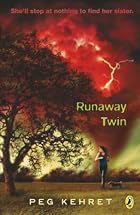
92) Runaway Twin / Peg Kehret
Sunny runs away from her foster home to search for her twin sister Starr. She crosses Nebraska, Wyoming, and Washington by bus and by cab and by foot. Along the way she makes friends with a stray dog and survives a tornado. I read this with my son, and we agreed it was pretty good. He liked best the parts with the dog and the tornado.
238swynn

93) Dark Tide / Stephen Puleo
In 1919 a storage tank burst in Boston Harbor, spilling two and a half million gallons of molasses into the densely-populated North End. Twenty-one people (and nobody knows how many animals) were killed. Another 150 people were injured. Boston tour companies claim that on hot days in the Harbor you can still smell the molasses.
The tank was owned by United States Industrial Alcohol and was designed to hold molasses shiped from the Caribbean for distribution to USIA's distilleries around the country. That is, to the extent that it was designed at all: the tank was built in haste, was inadequately tested, and was never inspected by engineers. It leaked from its first day of use, and leaked so steadily that neighborhood children gathered molasses from its perimeter in buckets. USIA responded to the problem with frequent recaulking, with molasses-colored paint, and with orders to its workers to keep quiet about it. When the tank finally collapsed, USIA blamed anarchist terrorism.
Wikipedia has a nice summary of the historical details, but if that's all you read, you will miss this riveting account of the people involved and affected. You may also miss out on the story's broader historical setting, which touches on America's participation in WWI, on the early-20th century anarchist movement, on Prohibition, and even on the tail end of the slave trade.
Puleo's book is not strictly historical: he spends a lot of time inside his characters' heads, detailing thoughts he has no way of knowing. But you know what? It works. The story is compelling and suspenseful and has every bit of the "and you were there" quality that historical fiction reaches for.
I'd have preferred footnotes or endnotes, but omitting them probably did enhance the narrative's flow. Puleo provides a "bibliographic essay" explaining his sources and methods. There is a surprising bulk of documentation for the event, and Puleo has selected and orchestrated the available data beautifully. Recommended.
This was my Massachusetts read for the 50 State Challenge.
239thornton37814
Dark Tide has been on my TBR list for a long time. I'm fascinated by the sticky situation caused by molasses flooding things.
240swynn
>239 thornton37814:: I hope you like it when you get around to it, Lori!
242swynn
>241 drneutron:: I hope you like it as much as I did, Jim!
243swynn

94) The Mystic Arts of Erasing All Signs of Death / Charlie Huston
Web is an out-of-work and out-of-ambition schoolteacher, crashed indefinitely at his best (and last) friend Chev's apartment, racking up IOU's and wearing out his welcome bit by bit. So when Po Sin offers him a job, Web wants to turn it down but doesn't have much choice. Po Sin is the guy who picks up hazardous waste from Chev's tattoo parlor.
The job, it turns out, involves trauma cleaning: some anonymous soul dies in his apartment and his body isn't found until a week later; some thug gets hit in a gangland killing; some terminal cancer case decides to swallow a bullet and leave the tumor spattered all over the wall ... somebody calls Po Sin, and Po Sin cleans it up.
Strangely, Web finds the job satisfying. Not the work itself which is digusting, but the satisfaction of erasing all signs of death and restoring an appearance of order. But complications ensue: Po Sin is in fierce competition with other trauma cleaners, and Web gets too involved with a client who is too involved with some Very Bad People, some of them family and some of them Family. Things get very noir very fast.
And if you're looking for noir, this has it: sharp dialogue, a cast of social outsiders and sociopaths, violent set pieces, a femme fatale, a deeply flawed protagonist torn between redemption and digging his own grave even deeper. It's a bit formulaic, but if you enjoy the formula it's recommended. Those turned off by violence or pervasive profanity are warned away.
This was my California read for the 50 State Challenge.
244swynn
Despite a couple of good books and a few more good ones on the stack, I've been in a bit of a book funk.
I'm plodding through the next DAW, Phillifent's King of Argent, and though it's pretty good I don't have much enthusiasm for it. I'm also mostly through VanderMeer's City of Saints and Madmen, and though it is *very* good it also demands more attention than I've had recently.
I think for the rest of the year I'll back off on the DAW schedule and read more books for the 50 State Challenge, which seem to be calling my name a little louder than the DAWs. I have 21 states to go, which is 7 states per month and doable if I can kick the book funk. We'll see.
I'm plodding through the next DAW, Phillifent's King of Argent, and though it's pretty good I don't have much enthusiasm for it. I'm also mostly through VanderMeer's City of Saints and Madmen, and though it is *very* good it also demands more attention than I've had recently.
I think for the rest of the year I'll back off on the DAW schedule and read more books for the 50 State Challenge, which seem to be calling my name a little louder than the DAWs. I have 21 states to go, which is 7 states per month and doable if I can kick the book funk. We'll see.
245swynn
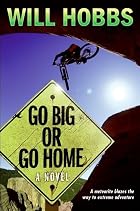
95) Go Big or Go Home / Will Hobbs
Brady's home is struck by a meteorite. The meteorite carries bacteria which infect Brady. For a little while, Brady finds that he has nearly superhuman abilities which means that he can finally compete with his more athletic cousin Quinn in sports like mountain biking, basketball, fishing, caving, and probably a few more that I've forgotten. But when his body starts fighting back against the bacteria, Brady's infection shows its dark side.
I read this with my son. For me there were too many implausibilities and it tried a little too hard to appeal to "reluctant readers" with a dizzying parade of sports.
My son like the action and the sports but ...
<SPOILER!> ... he really disliked how the space bacteria paralyzed Brady. Paralysis is an extremely frightening idea (he found Harry Potter and the Chamber of Secrets terrifying), and if I'd known about this plot development ahead of time I would have found another book. <\SPOILER!>
This was my South Dakota read for the 50 State Challenge.
246swynn

96) Civil Wars / David Moats
In December 1999, the Supreme Court of Vermont ruled that the state's marriage laws discriminated against same-sex couples. Rather than requiring the state to make marriage available to gay and lesbian couples, the Court punted: it ordered the state legislature to draft a remedy.
You could argue that the Court lacked the courage of its convictions, or you could argue that the Court's ruling was an artful strategy for securing rights that would not be immediately rescinded by voter revolt and constitutional amendment
One might say that Vermont's legislators were not uniformly enthusiastic about the Court's charge. Whether they considered marriage or domestic partnerships, any remedy that satisfied the court was bound to alienate a significant chunk of the electorate. Thus began a public discussion, at times enlightening and others acrimonious and at quite a few both, that culminated in the creation of "civil unions."
Moats follows the story: from the Court's decision, through the deliberations of Vermont's House Judiciary Committee, votes on the proposed measure in the House and then in the Senate, and the hotly contested election season that followed. He focuses on human stories alongside the legal one, informed by interviews with the principal players. It's quite obvious where Moats's sympathies lie, but he still make an effort to be even-handed toward the opposition. The only character who comes off as an irredeemable villain is the carpetbagging religious provocateur Randall Terry, founder of Operation Rescue and human reptile. If anyone has it coming, he does.
The whole tale is surprisingly affecting and is recommended.
This was my Vermont read for the 50 State Challenge.
247swynn
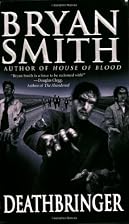
97) Deathbringer / Bryan Smith
Zombies in small-town Tennessee, raised as part of a never-quite-explained plot to overthrow God. There's enough narrative energy here to make it a satisfying Halloween read; but not enough to merit recommending.
This is my Tennessee read for the 50 State Challenge.
248swynn
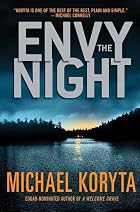
98) Envy the Night / Michael Koryta
Frank Temple II was a crack field agent for the FBI, a loving father, ... and a contract killer. Seven years ago, ratted out and facing a lifetime in prison, hiding out at a cabin on a remote Wisconsin lake, Temple turned his gun on himself and knocked off one last badguy.
Seven years later, Frank Temple III gets a call: the mobster who recruited his father into the killing game then flipped him to the feds is returning to the lake. The news is an opportunity for revenge that Temple can't turn down.
Instead of a simple revenge tale, Frank finds himself caught up in a thorny plot involving a former prison guard on the run from Very Bad People and the VBPs chasing him.
This is my Wisconsin read for the 50 State Challenge.
249swynn

99) Turn of Mind / Alice LaPlante
Jennifer White is an orthopedic surgeon suffering from Alzheimer's. She may or may not have killed her best friend -- she can't remember. For that matter, much of the time she doesn't even remember that her friend is dead.
Fair warning: the jacket copy and cover blurbs lead you to think that this is a mystery/thrilller, but there's very little of that. True, the story opens with a murder, and closes with a solution. But that's about it; a detective shows up now and then to remind us about the crime, but she doesn't really advance the plot until the last chapter. The real story is Dr. White's descent into dementia and how it affects her already-complicated family relations.
I'm ambivalent about the overall effect: a narrator with Alzheimer's is an interesting strategy, and the execution is sensitive and effective. On the other hand, the anecdotes get repetitive and the murder motif seems underexploited. I read this for a RL book club, and it should be an interesting discussion.
Set in Chicago, this counts for my Illinois read for the 50 State Challenge.
250swynn
RUNNING POST.
This Sunday I ran my first trail race, a half-marathon at a nearby state park. For fear of poison ivy I trained very little on trails, but only fell once in the race, and finished happy.
The weather was perfect and the trail gorgeous. Tell me this doesn't beat pavement:

This is one of my favorite spots in the trail, but that's not what the happy face is for: I'm trying to smile for the camera and simultaneously remain upright.

Finished in 2:13, averaging just over a ten-minute mile: not fast, but pretty close to the pace I hope to hit in next month's 50K.
This Sunday I ran my first trail race, a half-marathon at a nearby state park. For fear of poison ivy I trained very little on trails, but only fell once in the race, and finished happy.
The weather was perfect and the trail gorgeous. Tell me this doesn't beat pavement:

This is one of my favorite spots in the trail, but that's not what the happy face is for: I'm trying to smile for the camera and simultaneously remain upright.
Finished in 2:13, averaging just over a ten-minute mile: not fast, but pretty close to the pace I hope to hit in next month's 50K.
253swynn
#251, 252: Hi Katherine & Jim. More runs should be so lovely.
Most of the poison ivy I spied along the trail had turned red. I don't know whether it's still dangerous like that, but am optimistic that it will be gone in a couple more weeks.

100) Out Of Time / Lynn Abbey
Emma Merrigan is an acquisitions librarian at a university in Bower, Michigan. One night Emma finds a student in distress hiding out at the library. The girl has been beaten by her boyfriend and is afraid of returning to her apartment. Emma impulsively invites the girl home, thus becoming entangled in cosmic battle. The girl and her boyfriend, it turns out, are victims of a centuries-old curse, and Emma's intervention awakens her latent ability to travel through time.
Time-traveling is a perilous proposition, and initially Emma finds it overwhelming. But then Emma's mother appears to help her learn the ropes. Her mother had disappeared from Emma's life fifty years ago, but now it turns out that mom is a member of an international time-traveling curse-hunting task force. None of which makes her a good mother.
It's not among my favorites of urban fantasies, but it's not bad. Abbey tends to ramble and her characters tend to bicker, but this drew me in deep enough that I'm interested in reading the next in the series.
This is my Michigan read for the 50 State Challenge.
Most of the poison ivy I spied along the trail had turned red. I don't know whether it's still dangerous like that, but am optimistic that it will be gone in a couple more weeks.

100) Out Of Time / Lynn Abbey
Emma Merrigan is an acquisitions librarian at a university in Bower, Michigan. One night Emma finds a student in distress hiding out at the library. The girl has been beaten by her boyfriend and is afraid of returning to her apartment. Emma impulsively invites the girl home, thus becoming entangled in cosmic battle. The girl and her boyfriend, it turns out, are victims of a centuries-old curse, and Emma's intervention awakens her latent ability to travel through time.
Time-traveling is a perilous proposition, and initially Emma finds it overwhelming. But then Emma's mother appears to help her learn the ropes. Her mother had disappeared from Emma's life fifty years ago, but now it turns out that mom is a member of an international time-traveling curse-hunting task force. None of which makes her a good mother.
It's not among my favorites of urban fantasies, but it's not bad. Abbey tends to ramble and her characters tend to bicker, but this drew me in deep enough that I'm interested in reading the next in the series.
This is my Michigan read for the 50 State Challenge.
254swynn
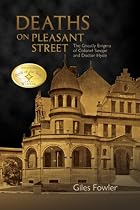
101) Deaths on Pleasant Street / Giles Fowler
This is the true-crime story of a 1909 murder case in Independence, MO.
Among the victims was Col. Thomas Swope, a Kansas City real estate developer and philanthropist. Thomas Swope was the fellow who donated Swope Park to Kansas City. He had cash, but he didn't much like his family and planned to change his will to give a large part of his fortune to charity.
Circumstantial evidence builds to point a finger at Dr. Clark Hyde, husband of Thomas Swope's niece Frances who stood to inherit a large chunk of her uncle's fortune. Through a complex plot involving typhoid fever, cyanide, and strychnine poisoning, it appears that Dr. Hyde may have killed Col. Swope then set about killing the heirs in an attempt to enlarge Frances's share of the inheritance.
With all this money, murder, and complicated family relationships, the newspapers are irresistibly drawn to the story, and the Swopes case becomes one of the early "crimes of the century."
Giles Fowler has scoured, sifted, and selected the newspaper accounts, and has searched archives and personal papers for additional details. His prose tends to purple so the book feels more like a true-crime paperback than careful history, but at least it had no trouble holding my attention. Recommended.
This is my Missouri read for the 50 State Challenge.
This topic was continued by swynn plays with daws (2).

