swynn plays with daws (2)
This is a continuation of the topic swynn plays with daws.
Talk 75 Books Challenge for 2012
Join LibraryThing to post.
This topic is currently marked as "dormant"—the last message is more than 90 days old. You can revive it by posting a reply.
1swynn
My plan for the last two months is to finish the 50 State Challenge then get back to the DAWs.
1) Genius unlimited / John T. Phillifent
2) Nero Corleone / Elke Heidenrich
3) Blue face / G.C. Edmondson
4) The long run / Matt Long
5) Century of the manikin / E.C. Tubb
6) The regiments of night / Brian N. Ball
7) Cruddy / Lynda Barry
8) Stepping on the cracks / Mary Downing Hahn
9) Marathon woman / Kathrine Switzer
10) Ole Doc Methuselah / L. Ron Hubbard
11) Hitch-22 / Christopher Hitchens
12) Dinosaur Beach / Keith Laumer
13) The cider house rules / John Irving
14) The time machine / H. G. Wells
15) Following my own footsteps / Mary Downing Hahn
16) The dibbuk box / Jason Haxton
17) The return of the time machine / Egon Friedell
18) Wilde Reise durch die Nacht / Walter Moers
19) Anna all year round / Mary Downing Hahn
20) The stardroppers / John Brunner
21) In a sunburned country / Bill Bryson
22) Destiny of the republic / Candice Millard
23) The mother tongue / Bill Bryson
24) Holding the line / Barbara Kingsolver
25) The city machine / Louis Trimble
26) Isaac's storm / Erik Larson
27) A great deliverance / Elizabeth George
28) Mention my name in Atlantis / John Jakes
29) Books on trial / Shirley & Wayne Wiegand
30) Swords and deviltry / Fritz Leiber
31) The girl in the flammable skirt / Aimee Bender
32) A tree grows in Brooklyn / Betty Smith
33) Tallahassee Higgins / Mary Downing Hahn
34) Entry to Elsewhen / John Brunner
35) Hellhound on his trail / Hampton Sides
36) Soldiers' pay / William Faulkner
37) Green phoenix / Thomas Burnett Swann
38) The ranger / Ace Atkins
39) The Indian lawyer / James Welch
40) Sleepwalker's world / Gordon R. Dickinson
41) Wild thing / Josh Bazell
42) Stolen children / Peg Kehret
43) Math girls / Hiroshi Yuki
44) BONG HITS 4 JESUS / James C.foster
45) The book of Brian Aldiss / Brian Aldiss
46) The sweet by and by / Todd Johnson
47) Under the green star / Lin Carter
48) The information revolution and world politics / Elizabeth Hanson
49) The devil you know / Mike Carey
50) Mirror image / Michael Coney
51) Killer's wedge / Ed McBain
52) The halcyon drift / Brian Stableford
53) Payment in blood / Elizabeth George
54) Dork in disguise / Carol Gorman
55) Transit to Scorpio / Alan Burt Akers
56) Solaris / Stanislaw Lem
57) Lady killer / Ed McBain
58) The wandering variables / Louis Trimble
59) Barrel fever / David Sedaris
60) Baphomet's meteor / Pierre Barbet
61) The ultimate guide to trail running / Adam Chase
62) Once a runner / John L. Parker
63) Darkover landfall / Marion Zimmer Bradley
64) God's middle finger / Richard Grant
65) A talent for the invisible / Ron Goulart
66) True confections / Katharine Weber
67) The hunter / Richard Stark
68) The lion game / James H. Schmitz
69) Escape from Five Shadows / Elmore Leonard
70) One man's paradise / Douglas Corleone
71) The book of Frank Herbert / Frank Herbert
72) The Pine Barrens / John McPhee
73) Maisie Dobbs / Jacqueline Winspear
74) The man with the getaway face / Richard Stark
75) Planet Probability / Brian N. Ball
76) Dead end in Norvelt / Jack Gantos
77) The rape case / Irving Morris
78) 'Til death / Ed McBain
79) Changeling Earth / Fred Saberhagen
80) Mosquitoes / William Faulkner
81) A spaceship for the king / Jerry Pournelle
82) Mountain rescue doctor / Christopher Van Tilburg
83) Collision course / Barrington J. Bayley
84) Brotherly love / Charles and Tess Hoffmann
85) The big thaw / Donald Harstad
86) No more dead dogs / Gordon Korman
87) How I learned to snap / Kirk Read
88) The book of Philip K. Dick / Philip K. Dick
89) The circus in winter / Cathy Day
90) Garan the eternal / Andre Norton
91) The Blight way / Patrick F. McManus
92) Runaway twin / Peg Kehret
93) Dark tide / Stephen Puleo
94) The mystic arts of erasing all signs of death / Charlie Huston
95) Go big or go home / Will Hobbs
96) Civil wars / David Moats
97) Deathbringer / Bryan Smith
98) Envy the night / Michael Koryta
99) Turn of mind / Alice LaPlante
100) Out of time / Lynn Abbey
101) Deaths on Pleasant Street / Giles Fowler
102) The sea of grass / Conrad Richter
103) The day the johnboat went up the mountain
104) Bent Road / Lori Roy
105) Captain Nobody / Dean Pitchford
106) Thunder in the Mountains
107) Malice in Maggody / Joan Hess
108) The trees / Conrad Richter
109) Not by the sword / Kathryn Watterson
110) Fighting the underworld / Philip Van Cise
111) The ridge / Michael Koryta
112) Dummy up and deal / H. Lee Barnes
113) King of Argent / John T. Phillifent
114) Riders of the purple sage / Zane Grey
115) Guilty pleasures / Laurell K. Hamilton
116) Winter's bone / Daniel Woodrell
117) The grass dancer / Susan Power
118) Examining Tuskegee / Susan M. Reverby
119) Time story / Stuart Gordon
120) Rubber legs and white tail feathers / Patrick McManus
121) The diving pool / Yoko Ogawa
122) Around the world in eighty days / Jules Verne
123) The other log of Phileas Fogg
124) Der Satanarchäolügenialkohöllische Wunschpunsch / Michael Ende
125) Crazy lady / Jane Leslie Conly
126) Among the creationists / Jason Rosenhouse
127) Needle / Hal Clement
128) Suns of Scorpio / Alan Burt Akers
129) How to read literature like a professor / Thomas C. Foster
130) Into the darkest corner / Elizabeth Haynes
131) Beezus and Romona / Beverly Cleary
1) Genius unlimited / John T. Phillifent
2) Nero Corleone / Elke Heidenrich
3) Blue face / G.C. Edmondson
4) The long run / Matt Long
5) Century of the manikin / E.C. Tubb
6) The regiments of night / Brian N. Ball
7) Cruddy / Lynda Barry
8) Stepping on the cracks / Mary Downing Hahn
9) Marathon woman / Kathrine Switzer
10) Ole Doc Methuselah / L. Ron Hubbard
11) Hitch-22 / Christopher Hitchens
12) Dinosaur Beach / Keith Laumer
13) The cider house rules / John Irving
14) The time machine / H. G. Wells
15) Following my own footsteps / Mary Downing Hahn
16) The dibbuk box / Jason Haxton
17) The return of the time machine / Egon Friedell
18) Wilde Reise durch die Nacht / Walter Moers
19) Anna all year round / Mary Downing Hahn
20) The stardroppers / John Brunner
21) In a sunburned country / Bill Bryson
22) Destiny of the republic / Candice Millard
23) The mother tongue / Bill Bryson
24) Holding the line / Barbara Kingsolver
25) The city machine / Louis Trimble
26) Isaac's storm / Erik Larson
27) A great deliverance / Elizabeth George
28) Mention my name in Atlantis / John Jakes
29) Books on trial / Shirley & Wayne Wiegand
30) Swords and deviltry / Fritz Leiber
31) The girl in the flammable skirt / Aimee Bender
32) A tree grows in Brooklyn / Betty Smith
33) Tallahassee Higgins / Mary Downing Hahn
34) Entry to Elsewhen / John Brunner
35) Hellhound on his trail / Hampton Sides
36) Soldiers' pay / William Faulkner
37) Green phoenix / Thomas Burnett Swann
38) The ranger / Ace Atkins
39) The Indian lawyer / James Welch
40) Sleepwalker's world / Gordon R. Dickinson
41) Wild thing / Josh Bazell
42) Stolen children / Peg Kehret
43) Math girls / Hiroshi Yuki
44) BONG HITS 4 JESUS / James C.foster
45) The book of Brian Aldiss / Brian Aldiss
46) The sweet by and by / Todd Johnson
47) Under the green star / Lin Carter
48) The information revolution and world politics / Elizabeth Hanson
49) The devil you know / Mike Carey
50) Mirror image / Michael Coney
51) Killer's wedge / Ed McBain
52) The halcyon drift / Brian Stableford
53) Payment in blood / Elizabeth George
54) Dork in disguise / Carol Gorman
55) Transit to Scorpio / Alan Burt Akers
56) Solaris / Stanislaw Lem
57) Lady killer / Ed McBain
58) The wandering variables / Louis Trimble
59) Barrel fever / David Sedaris
60) Baphomet's meteor / Pierre Barbet
61) The ultimate guide to trail running / Adam Chase
62) Once a runner / John L. Parker
63) Darkover landfall / Marion Zimmer Bradley
64) God's middle finger / Richard Grant
65) A talent for the invisible / Ron Goulart
66) True confections / Katharine Weber
67) The hunter / Richard Stark
68) The lion game / James H. Schmitz
69) Escape from Five Shadows / Elmore Leonard
70) One man's paradise / Douglas Corleone
71) The book of Frank Herbert / Frank Herbert
72) The Pine Barrens / John McPhee
73) Maisie Dobbs / Jacqueline Winspear
74) The man with the getaway face / Richard Stark
75) Planet Probability / Brian N. Ball
76) Dead end in Norvelt / Jack Gantos
77) The rape case / Irving Morris
78) 'Til death / Ed McBain
79) Changeling Earth / Fred Saberhagen
80) Mosquitoes / William Faulkner
81) A spaceship for the king / Jerry Pournelle
82) Mountain rescue doctor / Christopher Van Tilburg
83) Collision course / Barrington J. Bayley
84) Brotherly love / Charles and Tess Hoffmann
85) The big thaw / Donald Harstad
86) No more dead dogs / Gordon Korman
87) How I learned to snap / Kirk Read
88) The book of Philip K. Dick / Philip K. Dick
89) The circus in winter / Cathy Day
90) Garan the eternal / Andre Norton
91) The Blight way / Patrick F. McManus
92) Runaway twin / Peg Kehret
93) Dark tide / Stephen Puleo
94) The mystic arts of erasing all signs of death / Charlie Huston
95) Go big or go home / Will Hobbs
96) Civil wars / David Moats
97) Deathbringer / Bryan Smith
98) Envy the night / Michael Koryta
99) Turn of mind / Alice LaPlante
100) Out of time / Lynn Abbey
101) Deaths on Pleasant Street / Giles Fowler
102) The sea of grass / Conrad Richter
103) The day the johnboat went up the mountain
104) Bent Road / Lori Roy
105) Captain Nobody / Dean Pitchford
106) Thunder in the Mountains
107) Malice in Maggody / Joan Hess
108) The trees / Conrad Richter
109) Not by the sword / Kathryn Watterson
110) Fighting the underworld / Philip Van Cise
111) The ridge / Michael Koryta
112) Dummy up and deal / H. Lee Barnes
113) King of Argent / John T. Phillifent
114) Riders of the purple sage / Zane Grey
115) Guilty pleasures / Laurell K. Hamilton
116) Winter's bone / Daniel Woodrell
117) The grass dancer / Susan Power
118) Examining Tuskegee / Susan M. Reverby
119) Time story / Stuart Gordon
120) Rubber legs and white tail feathers / Patrick McManus
121) The diving pool / Yoko Ogawa
122) Around the world in eighty days / Jules Verne
123) The other log of Phileas Fogg
124) Der Satanarchäolügenialkohöllische Wunschpunsch / Michael Ende
125) Crazy lady / Jane Leslie Conly
126) Among the creationists / Jason Rosenhouse
127) Needle / Hal Clement
128) Suns of Scorpio / Alan Burt Akers
129) How to read literature like a professor / Thomas C. Foster
130) Into the darkest corner / Elizabeth Haynes
131) Beezus and Romona / Beverly Cleary
2swynn

102) The Sea of Grass / Conrad Richter
This is the book The Virginian should have been. They both are set in the range wars of the American West. Both take the ranchers' point of view. Both focus on a rugged, self-sufficient man who understands the land and who loves a blond beauty imported from more civilized locales east. Both are narrated in a nostalgic tone by a character removed from the main events.
But Richter is the better writer and delivers a less polemic, more focused, and more nuanced story with a fraction of the bulk. And he delivers it in lyrical prose that begs rereading.
Conrad Richter's entire oeuvre has just taken a synchronized dive into the Someday Swamp.
This is my New Mexico read for the 50 State Challenge.
3PaulCranswick
Congratulations on your new thread. The Sea of Grass looks a winner thanks to a great review.
4ronincats
Intriguing review of The Sea of Grass!
5swynn
Thanks for stopping by, Paul & Roni!
The 50 State Challenge has got me reading books I otherwise wouldn't. The Sea of Grass was an unexpected gem. I'm considering Richter's second book, The Trees for my Ohio read.
The 50 State Challenge has got me reading books I otherwise wouldn't. The Sea of Grass was an unexpected gem. I'm considering Richter's second book, The Trees for my Ohio read.
6swynn
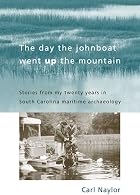
103) The Day the Johnboat Went Up the Mountain / Carl Naylor
In 1986 Carl Naylor was a scuba diving instructor in Mount Pleasant, South Carolina. Instead of teaching his winter scuba courses, he answered an ad from the South Carolina Institute of Archaeology and Anthropology seeking experienced divers to assist with excavating a shipwreck from Cooper River.
That job led to more permanent employment, which led to this book, stories from twenty years working in maritime archaeology. There are stories in here about recovering dugout canoes and other artifacts from Native American cultures, discovering Revolutionary-era gunboats and Civil-War era ships, and excavating a shipyard over 250 years old. There are also behind-the-scenes glimpses of what it's like to salvage artifacts from a mud-filled canal, encounters with alligators and snakes and jellyfish, and negotiations with amateur divers and salvagers good and bad.
Though I have a librarian's interest in acquiring and preserving historical objects, I've never given much thought to the challenges and strategies involved in preserving maritime artifacts, nor had I imagined how much the available projects overwhelm the resources for completing them. "Maritime archaeology" frankly seemed a niche endearingly narrow when I first read the description in the University of South Carolina Press catalog. But these guys have more shipwrecks than they have time or money or manpower to properly investigate. And that's just in the Palmetto State. The size of the larger field must be astounding.
Not being a naval specialist, I relied on Google for enlightenment on much of the vocabulary, and I'm sure many nautical nuances and exciting points were lost on landlubberly me. Nevertheless, I found Naylor's book fascinating. I devoured it, and recommend it heartily to anyone interested in ways we discover and preserve the historical record, especially to anyone also interested in maritime history, in archaeology, or both.
This is my South Carolina read for the 50 State Challenge.
7swynn

104) Bent Road / Lori Roy
Arthur Scott moves his family from Detroit back to his Kansas hometown when city life gets too scary. Country life, though, has its own share of problems. The Scott children have trouble making friends. Arthur's sister Ruth is stuck in an abusive marriage. An inmate has escaped from the region's mental institution and remains at large.
And then there's the little girl who vanished just as the Scotts arrived in town. It reminds everybody of how Arthur Scott's younger sister Eve died twenty-five years ago ...
It's good enough to have won the 2012 Edgar Award for Best First Novel -- which puzzles me. Oh, I think the book is good enough: the story and characters are compelling, the prose is economical and evocative, and the telling is suspenseful. If I have a complaint, it's that frequent shifts of viewpoint characters sometimes make the narrative choppier than necessary, but that seems to be a artistic choice that others may think is a feature not a bug.
But the Edgar Award is for mysteries, and this doesn't have a "mystery" feel. There are bodies, and the reader is not certain whodunnem til the end -- but investigation of the crimes is peripheral to the plot. This is more gothic family drama than crime fiction; more Faulkner's territory than Chandler's.
So they didn't ask me, which is fine: "they" rarely do. But it's a good story well told and recommended.
This is my Kansas read for the 50 State Challenge.
9swynn
>8 lyzard:: Hi Liz! Yes, the lack of consultation is occasionally frustrating, but I try to remember that the responsibility for arbiting everybody else's taste is something I don't want in my saner moments.
Still, I can think of a couple Hugos I'd like to have had the power to veto ....
Still, I can think of a couple Hugos I'd like to have had the power to veto ....
11swynn
>10 ronincats:: Hi Roni!
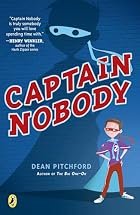
105) Captain Nobody / Dean Pitchford
This is a Middle-Grade reader about a boy named Newt whose world starts to unravel when his older brother is knocked unconscious during a football game. On Halloween Newt throws together a superhero costume from his brother's hand-me-down clothes ... and discovers that pretending to be a superhero feels sort of superheroic.
I read this one with my son. My son thought it was just okay., but I thought it was clever. I especially appreciated Newt's family dynamics, which were odd enough to be endearing but lacked dysfunctional cliches.
105) Captain Nobody / Dean Pitchford
This is a Middle-Grade reader about a boy named Newt whose world starts to unravel when his older brother is knocked unconscious during a football game. On Halloween Newt throws together a superhero costume from his brother's hand-me-down clothes ... and discovers that pretending to be a superhero feels sort of superheroic.
I read this one with my son. My son thought it was just okay., but I thought it was clever. I especially appreciated Newt's family dynamics, which were odd enough to be endearing but lacked dysfunctional cliches.

13swynn
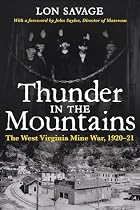
106) Thunder in the Mountains / Lon Savage
Dramatic account of the West Virginia mine wars of 1920-1921. I liked it, especially the rough-around-the-edges folk hero Sid Hatfield.
Must see Matewan.
15swynn
Well, that was exhausting. I think it'll take me about four years to be ready for the next "Most Important Election of Our Lifetime." You think CNN and Fox will let us put it off that long?
17swynn
>16 drneutron:: I'm afraid you were too generous. I heard CNN announce this morning that Paul Ryan is the "front-runner" for the 2016 Republican nomination.
Sigh. &*#^! sigh.
Sigh. &*#^! sigh.
18lyzard
Almost the first thing I heard when I turned on the TV last night was someone on Fox giving the day count to the start of the next primaries.
ETA: While I remember to ask someone - I was rather bemused to find election outcomes being broken down in terms of race and religion - do Americans have to provide that sort of information to register to vote, then?
ETA: While I remember to ask someone - I was rather bemused to find election outcomes being broken down in terms of race and religion - do Americans have to provide that sort of information to register to vote, then?
19swynn
>18 lyzard:: Yeah. It starts. Barely time for a deep breath.
"do Americans have to provide that sort of information to register to vote, then?"
No. Emphatically no. I have to think those numbers are based on exit polls or some other kind of survey. If anybody had asked me about race or religion they'd have gotten the answers "human" and "NOYBism," respectively.
"do Americans have to provide that sort of information to register to vote, then?"
No. Emphatically no. I have to think those numbers are based on exit polls or some other kind of survey. If anybody had asked me about race or religion they'd have gotten the answers "human" and "NOYBism," respectively.
20lyzard
Good to know.
I can't imagine anyone daring to ask here.
(The last time anyone tried to crack down on people recording their religion here, with respect to our census, they got a flurry of "Jedi" answers.)
I can't imagine anyone daring to ask here.
(The last time anyone tried to crack down on people recording their religion here, with respect to our census, they got a flurry of "Jedi" answers.)
21swynn
>20 lyzard:: The last time anyone tried to crack down on people recording their religion here, with respect to our census, they got a flurry of "Jedi" answers.
I remember seeing a news article about that. Serves 'em right.
I remember seeing a news article about that. Serves 'em right.
22lyzard
Well, it was so silly. The point had come up, and people were mostly joking about the possibility, and then the idiot in charge, instead of going along with the joke - in which case people would have behaved themselves - took it seriously and starting threatening dire consequences if anyone dared... So of course they did. :)
23swynn
>22 lyzard: I'd have joined the fun.
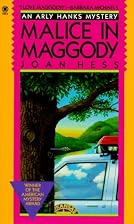
107) Malice in Maggody / Joan Hess
A local fishin' and swimmin' hole near Maggody, Arkansas is threatened with "suspended solids" (or, as Maggody's mayor calls it, "pure and simple s**t") when neighboring Starley City plans a sewage treatment plant on the creek that feeds it.
Lost for a way to delay the plant, Maggody's town council kidnaps the EPA agent sent to endorse the plans. The EPA agent doesn't seem to mind much, especially since the council provides him with ... companionship. Then the EPA's companion turns up dead.
Maggody's sheriff Arly Hanks investigates.
I've been curious about this series for years, as it's a favorite of some colleagues. This is the first book in the series and I found it okay: it's humorous and very fluffy. I'll probably read more but I'm in no hurry.
This is my Arkansas read for the 50 State Challenge. Nine states to go.
107) Malice in Maggody / Joan Hess
A local fishin' and swimmin' hole near Maggody, Arkansas is threatened with "suspended solids" (or, as Maggody's mayor calls it, "pure and simple s**t") when neighboring Starley City plans a sewage treatment plant on the creek that feeds it.
Lost for a way to delay the plant, Maggody's town council kidnaps the EPA agent sent to endorse the plans. The EPA agent doesn't seem to mind much, especially since the council provides him with ... companionship. Then the EPA's companion turns up dead.
Maggody's sheriff Arly Hanks investigates.
I've been curious about this series for years, as it's a favorite of some colleagues. This is the first book in the series and I found it okay: it's humorous and very fluffy. I'll probably read more but I'm in no hurry.
This is my Arkansas read for the 50 State Challenge. Nine states to go.
24swynn

108) The Trees / Conrad Richter
The Luckert family moves from Pennsylvania west across the Ohio following game. In the forests of the Northwest Territory they build a cabin. At first they have no neighbors but the game and the "Shawanee" natives, but soon other settlers arrive, and by the end of the book we have a nascent frontier town. The Luckerts live and love, marry or die or wander off.
Early on this was a disappointment. After The Sea of Grass I expected lyrical prose and a simple but more compelling plot. Instead the prose is more colloquial than lyrical. As for plot there isn't really: it's frontier soap opera and very episodic.
So it's a different sort of book from The Sea of Grass. But it grew on me. I generally dislike "family saga" novels but nevertheless found myself caught up in their cares. When Sulie was lost in the woods I rooted for the searchers; when Achsa got a fever and the family refused her pleas for water I wanted to wring their necks; when Genny married Louie Scurrah I worried that it bode no good.
This is the first book of a trilogy and I will continue it. Recommended for readers who like historical fiction or family sagas, and maybe others as well.
This is my Ohio read for the 50 State Challenge.
25swynn

109) Not By The Sword / Kathryn Watterson
Larry Trapp was a Grand Dragon of the White Knights of the Ku Klux Klan, responsible for the group's activities in the state of Nebraska. Michael Weisser was a cantor in a Reformed congregation in Lincoln. This is the story of how Weisser and his family reached out to Larry, and how Larry left the Klan and converted to Judaism.
The story was enough amazing to get me through some self-indulgent writing. I found some interesting insight into extremism in the Midwest, and some into Reform Judaism.
Bt for my taste Watterson sometimes gives more detail than is strictly necessary (I don't need to know Trapp's preferences in porn), and has too much affection for repeating cliches and platitudes like:
"He only hated others because deep down he hated himself"
or:
"Nobody could have dreamed they could be friends when only months before they had been bitter enemies"
or:
"How ironic that he faced death just when he truly started to live."
So ... do I recommend it? I'll base my recommendation on your answer to the following question:
Q: How many verses of Kum Bah Yah make *enough* verses of Kum Bah Yah?
0: Avoid this book.
1: Guardedly recommended. Be prepared to skim the last third.
2: Recommended. Be warned, though: it gets pretty schmaltzy.
3+: Enthusiastically recommended.
This is my Nebraska read for the 50 State Challenge.
26swynn
110) Fighting the Underworld / Philip Van Cise
In 1922, the city of Denver was all but owned and operated by a gang of confidence artists who targeted tourists. The mayor was on the gang's payroll, and the city's police were paid for protection.
That all changed when Philip Van Cise was elected District Attorney. Van Cise was disliked in the city, so much so that his own party campaigned against him during the election. He won the office only thanks to rural voters who liked his military experience.
It was only after Van Cise took office that he realized the extensive influence of the "bunco gang." He only became more determined to bring the crooks to trial. But how could he assemble evidence and make arrests without tipping off the police?
Van Cise hatched a plan to raise donations from Denverites of established means and discerning character -- that is, local philanthropists who could keep their mouths shut. With this extrabudgetary fund, Van Cise hired a team of private detectives to gather evidence. When he had enough, he called in the Colorado State Rangers to assist with arrests, and kept the suspects locked up in the basement of a church until he had everyone he wanted.
This is Van Cise's story. It has a few nuisances. What would have been immediate and transparent ninety years ago is now a little creaky. The author refers to himself in the third person: "the Colonel," "the District Attorney," as if we didn't know who was writing. Also the slang is outdated and now and then unintentionally humorous. There are melodramatic soliloquies. But these are vagaries of style. The story is still a good one, the hero is good -- a little too good, but he does punch a lawyer in the face at one point, so he is not unsympathetic.
So it's a dated but intriguing piece of true crime writing from the last century. Recommended if that sounds appealing.
This is my Colorado read for the 50 State Challenge.
In 1922, the city of Denver was all but owned and operated by a gang of confidence artists who targeted tourists. The mayor was on the gang's payroll, and the city's police were paid for protection.
That all changed when Philip Van Cise was elected District Attorney. Van Cise was disliked in the city, so much so that his own party campaigned against him during the election. He won the office only thanks to rural voters who liked his military experience.
It was only after Van Cise took office that he realized the extensive influence of the "bunco gang." He only became more determined to bring the crooks to trial. But how could he assemble evidence and make arrests without tipping off the police?
Van Cise hatched a plan to raise donations from Denverites of established means and discerning character -- that is, local philanthropists who could keep their mouths shut. With this extrabudgetary fund, Van Cise hired a team of private detectives to gather evidence. When he had enough, he called in the Colorado State Rangers to assist with arrests, and kept the suspects locked up in the basement of a church until he had everyone he wanted.
This is Van Cise's story. It has a few nuisances. What would have been immediate and transparent ninety years ago is now a little creaky. The author refers to himself in the third person: "the Colonel," "the District Attorney," as if we didn't know who was writing. Also the slang is outdated and now and then unintentionally humorous. There are melodramatic soliloquies. But these are vagaries of style. The story is still a good one, the hero is good -- a little too good, but he does punch a lawyer in the face at one point, so he is not unsympathetic.
So it's a dated but intriguing piece of true crime writing from the last century. Recommended if that sounds appealing.
This is my Colorado read for the 50 State Challenge.
27swynn
RUNNING POST.
My long-awaited 50K comes up on Saturday, and I don't feel quite ready.
About five weeks ago I developed a weird pain in my shoulder, which my doctor says is probably in my neck instead ... but he'd have to look at an xray to be sure, which he doesn't necessarily recommend because treatment would be the same either way: pain meds and rest.
The pain is worst when I lie down, which has made sleep very difficult. Those long training runs are extra difficult on three hours' sleep -- and probably didn't conform to the "rest" prescription anyway. So my training fell off about the time that it should have been peaking.
For a while I decided to cancel. But then last week I weaned myself off the pain meds. They weren't helping much with the pain anyway but were sucking my stamina, even on the shorter runs. Off the drugs I hurt a little more but felt a lot better.
Feeling better, I started thinking. My entry fee has been paid since last summer. My vacation has already been scheduled. My wife also scheduled vacation to make it a family event.
So what the heck, I'll run. But my expectations have changed. I'd hoped for a five-hour time but now I just want to finish. I think six hours is still realistic, but my focus will be on enjoying the race. Because if you're not having fun it's just pain. And I've had enough of that for now thanks.
My long-awaited 50K comes up on Saturday, and I don't feel quite ready.
About five weeks ago I developed a weird pain in my shoulder, which my doctor says is probably in my neck instead ... but he'd have to look at an xray to be sure, which he doesn't necessarily recommend because treatment would be the same either way: pain meds and rest.
The pain is worst when I lie down, which has made sleep very difficult. Those long training runs are extra difficult on three hours' sleep -- and probably didn't conform to the "rest" prescription anyway. So my training fell off about the time that it should have been peaking.
For a while I decided to cancel. But then last week I weaned myself off the pain meds. They weren't helping much with the pain anyway but were sucking my stamina, even on the shorter runs. Off the drugs I hurt a little more but felt a lot better.
Feeling better, I started thinking. My entry fee has been paid since last summer. My vacation has already been scheduled. My wife also scheduled vacation to make it a family event.
So what the heck, I'll run. But my expectations have changed. I'd hoped for a five-hour time but now I just want to finish. I think six hours is still realistic, but my focus will be on enjoying the race. Because if you're not having fun it's just pain. And I've had enough of that for now thanks.
29swynn
RUNNING POST
I'm happy to report that the 50K went better than expected. I stuck to my resolution to take it easy, with frequent walking breaks, walking up hills, and walking through aid stations. I finished in just under five and a half hours, exhausted but not beaten. I'm certain that five hours is doable, and definitely want to try again sometime.
I finished just in time to meet Dean Karnazes, Ultramarathon Man

who kindly signed my copy of his book:

I'm happy to report that the 50K went better than expected. I stuck to my resolution to take it easy, with frequent walking breaks, walking up hills, and walking through aid stations. I finished in just under five and a half hours, exhausted but not beaten. I'm certain that five hours is doable, and definitely want to try again sometime.
I finished just in time to meet Dean Karnazes, Ultramarathon Man

who kindly signed my copy of his book:

30swynn

111) The Ridge / Michael Koryta
When Wyatt French built a lighthouse in the Great Smoky Mountains of eastern Kentucky, his neighbors thought the whisky had gotten to him. But Wyatt cryptically insisted that it kept people safe.
As the book opens, deputy sheriff Kevin Kimble gets a call from Wyatt asking about his preference between suicide or murder. Later that night Wyatt is found dead of a self-inflicted gunshot wound, and the light in his lighthouse goes out. Bad news follows.
This is a nice little supernatural thriller with atmosphere, big cats, and eerie goings-on. I had a few annoyances with a couple of characters' motivations and an ambiguous ending. But it was entertaining enough, and if Koryta ever gets around to writing a sequel or a companion piece then I'm up for it.
This is my Kentucky read for the 50 State Challenge.
34swynn
Thanks, Roni! I'll retrospectively wish you one as well.
Thanksgiving weekend was low-key and relaxing with my parents and my brother's family in Iowa. A highlight was a Black Friday morning run with my brother -- in 22 degree weather but we both came prepared so it was cool in more ways than literally. My brother contracted the running bug from me, but he's taking it in a different direction and is training for his first triathlon in February. He talks about the Iron Man. I'd love to crew him.
The only stressor was running out of reading material, but I picked up a paperback for fifty cents at a Friends of the Library booksale so the crisis was averted. Here's the damage:
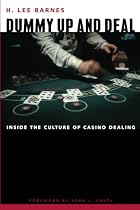
112) Dummy Up and Deal / H. Lee Barnes
A collection of very short essays describing the experiences of dealers in Las Vegas casinos. Most pieces are only a paragraph or two long. The author calls it "nonfiction narrative," by which I think he means that he has shaped and rephrased his interviewees' stories.
The effect is a sense of sitting around a table after hours with casino staff as they outdo each other's stories about breaking into the business, difficult customers, and the Las Vegas lifestyle. It's eye-opening and completely convinces me never to add "high-stakes poker dealer" to my bucket list.
This is my Nevada read for the 50 States Challenge.

113) DAW #46: King of Argent / John T. Phillifent
John Lampart was a scout for an interplanetary mining company. When he discovered an especially promising world, the company offered him a fortune to land on the planet and collect samples for a couple of years.
Problem was, the planet Argent was inhospitable. To survive there, Lampart must have his physiology altered to survive the heat, endure the sunlight and breathe the air.
Since the money was right, Lampart agreed. But Argent has a few surprises for Lampart: the planet is supposed to be barren, but teems with improbable life. The planet is even richer in precious minerals than anyone expected. And: Lampart likes it. He likes the seclusion. He likes his new physiology. And he doesn't want to lose it all to the mining company. So he tries to sabotage the record by reporting only the worst samples he can find.
So far so good. The world is interesting, the hero is a bit of a jackass but sympathetic nonetheless, and the intrigue with the company is promising. Then things go south. Lampart gets a visitor: the boss's daughter joins Lampart. Not because she loves him; no, she has her physiology painfully altered and follows him to Argent because she hates him so much she can't be anywhere near him.
There follow random soliloquies on modern society and uppity liberated women and blah blah blah. Every once in a while they encounter native wildlife, but hurry back to their shelter so that she can talk about how much she loves it here and he can go on about how he can never love her but how he guesses he can stand having her around. The intrigue with the company is wrapped up too neatly and much too improbably (SPOILER!) when the boss descends personally to Argent and steps on a bomb.
So it starts out promising but ends worse than the gaudy gold cover by Kelly Freas. Fortunately, Freas gets better.

114) Riders of the Purple Sage / Zane Grey
Rugged gunman with vengeance in mind saves innocent rancher lady from wicked Mormons.
I understand this is supposed to be Grey's best. I'm afraid the appeal is lost on me. Oh, there are gun battles at the beginning and the end, but the long middle of falling in love bored me to tears. It might have helped if the innocent rancher lady was more than a dull and one-dimensional dingbat.
On the bright side, the Zane Grey oeuvre won't clutter up the Someday Swamp.
I raided this from my father's library as a Utah read for the 50 States Challenge.

115) Guilty Pleasures / Laurell K. Hamilton
Something is killing vampires. The vampires persuade vampire-killer Anita Blake to solve the problem.
This was the paperback I found in the Friends of the Library booksale. I understand later volumes in the series are little more than vampire-fetish erotica, but this one is okay.
Thanksgiving weekend was low-key and relaxing with my parents and my brother's family in Iowa. A highlight was a Black Friday morning run with my brother -- in 22 degree weather but we both came prepared so it was cool in more ways than literally. My brother contracted the running bug from me, but he's taking it in a different direction and is training for his first triathlon in February. He talks about the Iron Man. I'd love to crew him.
The only stressor was running out of reading material, but I picked up a paperback for fifty cents at a Friends of the Library booksale so the crisis was averted. Here's the damage:
112) Dummy Up and Deal / H. Lee Barnes
A collection of very short essays describing the experiences of dealers in Las Vegas casinos. Most pieces are only a paragraph or two long. The author calls it "nonfiction narrative," by which I think he means that he has shaped and rephrased his interviewees' stories.
The effect is a sense of sitting around a table after hours with casino staff as they outdo each other's stories about breaking into the business, difficult customers, and the Las Vegas lifestyle. It's eye-opening and completely convinces me never to add "high-stakes poker dealer" to my bucket list.
This is my Nevada read for the 50 States Challenge.

113) DAW #46: King of Argent / John T. Phillifent
John Lampart was a scout for an interplanetary mining company. When he discovered an especially promising world, the company offered him a fortune to land on the planet and collect samples for a couple of years.
Problem was, the planet Argent was inhospitable. To survive there, Lampart must have his physiology altered to survive the heat, endure the sunlight and breathe the air.
Since the money was right, Lampart agreed. But Argent has a few surprises for Lampart: the planet is supposed to be barren, but teems with improbable life. The planet is even richer in precious minerals than anyone expected. And: Lampart likes it. He likes the seclusion. He likes his new physiology. And he doesn't want to lose it all to the mining company. So he tries to sabotage the record by reporting only the worst samples he can find.
So far so good. The world is interesting, the hero is a bit of a jackass but sympathetic nonetheless, and the intrigue with the company is promising. Then things go south. Lampart gets a visitor: the boss's daughter joins Lampart. Not because she loves him; no, she has her physiology painfully altered and follows him to Argent because she hates him so much she can't be anywhere near him.
There follow random soliloquies on modern society and uppity liberated women and blah blah blah. Every once in a while they encounter native wildlife, but hurry back to their shelter so that she can talk about how much she loves it here and he can go on about how he can never love her but how he guesses he can stand having her around. The intrigue with the company is wrapped up too neatly and much too improbably (SPOILER!)
So it starts out promising but ends worse than the gaudy gold cover by Kelly Freas. Fortunately, Freas gets better.

114) Riders of the Purple Sage / Zane Grey
Rugged gunman with vengeance in mind saves innocent rancher lady from wicked Mormons.
I understand this is supposed to be Grey's best. I'm afraid the appeal is lost on me. Oh, there are gun battles at the beginning and the end, but the long middle of falling in love bored me to tears. It might have helped if the innocent rancher lady was more than a dull and one-dimensional dingbat.
On the bright side, the Zane Grey oeuvre won't clutter up the Someday Swamp.
I raided this from my father's library as a Utah read for the 50 States Challenge.

115) Guilty Pleasures / Laurell K. Hamilton
Something is killing vampires. The vampires persuade vampire-killer Anita Blake to solve the problem.
This was the paperback I found in the Friends of the Library booksale. I understand later volumes in the series are little more than vampire-fetish erotica, but this one is okay.
35swynn

116) Winter's Bone / Daniel Woodrell
In the meth-cooking Ozarks of southern Missouri, Ree Dolly looks for her father who has jumped bail. If she can't find him then she and her family will lose their home.
I read this for a RL book club and it's a gobsmacker: dark, relentless, weirdly lovely and achingly real. It's the best book this group has chosen for a long time, and I'm really looking forward to the discussion.
(Who is this Daniel Woodrell and why can't I remember ever hearing about him?)
36swynn
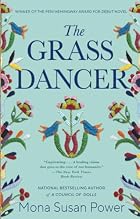
117) The Grass Dancer / Susan Power
Collection of interconnected magic realist stories about four generations on a Sioux reservation in North Dakota. The stories follow the tragedy and repercussions of an unconsummated relationship between a 19th-century Sioux girl who died young and a heyo'ka, a sort of holy fool, who loved her.
The imagery is vivid, and the characters are sharply drawn, down even to the pets: if you don't fall in love with Chuck Norris, the stray crippled Pomeranian, then you haven't a dog-loving bone in your body. And if you don't have an uncomfortable mix of anger and dread and admiration for the witch woman Mercury Thunder then you're just not paying attention. Highly recommended.
This is my North Dakota read for the 50 States Challenge.
37sibylline
Congratulations on running 50k - I am in awe, really.
I think I started the latest Hal Clement kick.
I think I started the latest Hal Clement kick.
38swynn
Thanks, Lucy!
I'm afraid I've been neglecting your thread. I must change that.
If it was you who talked Roni into reading Needle then thanks! I see there's a TIOLI challenge next month to "Read an old favorite" and that will fit right in.
I'm afraid I've been neglecting your thread. I must change that.
If it was you who talked Roni into reading Needle then thanks! I see there's a TIOLI challenge next month to "Read an old favorite" and that will fit right in.
39TadAD
>34 swynn:: I rather liked the first seven or eight of the Anita Blake books but then, yes, they became vampire erotica and finally, imo, vampire porn...the difference between the two being that porn is really boring. I also took a stab at her other series about Meredith Gentry but it started out bad, so didn't pursue it. Too bad; Hamilton is capable of writing enjoyable stuff.
40swynn
Tad,
Good to know that there are a few decent entries before the series goes south. I don't think I'll be seeking them out soon, though-- Guilty pleasures had a kind of energetic charm, but the writing was so clunky that the net effect was just okay for me.
Good to know that there are a few decent entries before the series goes south. I don't think I'll be seeking them out soon, though-- Guilty pleasures had a kind of energetic charm, but the writing was so clunky that the net effect was just okay for me.
41swynn
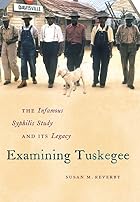
118) Examining Tuskegee / Susan M. Reverby
For forty years, from 1932 and 1972, the United States Public Health Service conducted a study on the effects of untreated late-stage syphilis. Subjects in the study were about 400 Black men from impoverished Macon County, Alabama, all of them presumed to have latent, noninfectious syphilis. The men were given periodic medical examinations and were given placebos deceptively presented as treatment.
This isn't a new story. The study came to public light in the 1970's and caused a general public outcry. It has been the subject of a bestselling book, a lawsuit, a presidential apology, a Broadway play, and an HBO movie. It arguably seeded the development of modern bioethics. The term "Tuskegee" has entered the public vocabulary as shorthand for malevolence in medical research.
But as "Tuskegee" has entered general discourse, says Reverby, it has been simplified and mythologized in ways that its participants could not possibly recognize. For example, it is often falsely claimed that researchers injected the men with syphilis; one variant of the story actually has it that researchers deliberately infected and studied the Tuskegee Airmen. Even when the myth gets the story basically correct, it still chooses facts to support simple stories about good versus evil and about passive victims versus powerful oppressors, but the myths are powerful and persistent. Some have even claimed that the facts of the study do not even matter anymore.
Susan Reverby disagrees. She writes: "The facts of the Study matter as much as their symbolic life, and their intertwining needs explanation." This book is her attempt to explain the intertwining.
Reverby divides her argument into three parts, which she designates "testimony," "testifying," and "traveling." Under "testimony" she relates the facts of the study; under "testifying" she analyzes the motives and understanding of participants, both researchers and subjects; finally, under "traveling" she explores the ways the study has been adapted and appropriated since 1972.
She finds several points where the intertwining of study and symbol is complicated. For example, it is inaccurate to portray the subjects as helpless victims. It is true that researchers deceptively told the men that a placebo was in fact a medicine; it is also true that in some cases, especially early in the study, some men were prevented from seeking treatment elsewhere. But the men were not any more helpless than their neighbors. Many of them did seek and receive treatment from private doctors or elsewhere. Reviewing their medical records, Reverby concludes that of the subjects who survived into the era of penicillin, all but one received at least some antisyphalitic treatment.
So the myth of the helpless victim is inaccurate. It is also inimical: viewing the subjects as helpless victims in need of protection has itself caused problems. In the wake of the Tuskegee study, says Reverby, many medical trials adopted a protectionistic stance, avoiding poor or minority populations for ethical reasons. (And probably for political reasons too.) The effect was to reduce Black participation in medical studies, a fact that AIDS activists noticed and challenged later in the century.
As my long-winded comments indicate, I found a lot to think about here. It certainly challenged my understanding of "Tuskegee,", and it left me with some questions matching no comfortable answer.
Interesting as it was, I don't know whether to recommend it. The writing is not so academic that it is unreadable, but there were sentences and even paragraphs which I had to read several times -- and some whose meaning is still unclear to me. For example, Reverby quotes Nurse Edna Rivers talking about her rapport with the study's subjects. Rivers recalls that as she drove the men to examinations in Tuskegee she could be one of the guys and listen comfortably to their sexual banter. Reverby explains:
[Nurse Edna Rivers's] position as a professional woman, representing the "super-moral" black woman, would not normally have allowed such a shift in class behavior. Although her place in the community and her representation was as a professional woman, in her car, while she was at the wheel, in a state of transition from rural country to the more urban Tuskegee, her gender, class, and sexualized hearing (if not her actually voicing) could invert in order for her to bond with the men. In her car, she created a sense of self and connection, almost invisible and able to transcend moral judgment.
I think I get the general idea, but the vocabulary is too wonky for me to be sure.
This is not the only account of the Study, so if you're interested you do have some choice. Reverby says that John H. Jones's Bad Blood is regarded as the "definitive" work on the study, and I don't recall her aiming any significant criticism at it. Jones's book has collected excellent reviews both professional and AmazonDotCommian, and is still in print after twenty years. I haven't read it so I can't say for certain, but I expect that it is a bit easier going. If you're interested just in the facts of the case, that might be a better place to start.
Still, I can't *not* recommend a book that I've found so rewarding. Just be warned that it's not a light read.
This is my Alabama read for the 50 State Challenge. One more state to go! But first, a palate-cleansing DAW ...
42qebo
Aaagh, I’ve missed the thread switch. Congrats on 50K! I’ve been slacking off on running...
And nearly 50 states too.
And nearly 50 states too.
43swynn
Thanks, Katherine!
I have also been slacking off on running the last couple of weeks, although I've been telling myself it's just "recovery."
Fortunately, I have found some exercises that have been very helpful in reducing my shoulder/neck pain; unfortunately, running now seems to make things worse.
So while the therapy works its magic I'm dramatically cutting mileage. This makes my legs sad. But I'm sleeping again and that trumps happy legs. So far.
I have also been slacking off on running the last couple of weeks, although I've been telling myself it's just "recovery."
Fortunately, I have found some exercises that have been very helpful in reducing my shoulder/neck pain; unfortunately, running now seems to make things worse.
So while the therapy works its magic I'm dramatically cutting mileage. This makes my legs sad. But I'm sleeping again and that trumps happy legs. So far.
44swynn

119) DAW #47: Time Story / Stuart Gordon
Tagline: Doubled in time, doubled in destiny!
The plan: Steal fifteen Moongems. Sell them and bank the fortune. Go into suspended animation for fifty years while the heat cools off.
Philip Kitson's plan begins well: he does get away with the Moongems. But when he goes to meet his buyer, it's somebody else who waits for him. With authorities in hot pursuit, Kitson speeds through highways and offroad an finally loses his pursuers by diving down a well. Getting back out of the well is a problem to solve later.
After the cops disperse, Kitson realizes that he's stuck down the well. So when a mysterious woman throws him a rope and tells him that she will rescue him alone and that he should leave the Moongems in the well, he is in no place to argue.
The woman introduces herself as Hawinda and demonstrates that she knows a lot more about Kitson than she ought. She knows about the Moongems. She knows about the suspended animation berth.
She even has a berth picked out for herself. More disturbingly, Hawinda seems to know what will happen to Kitson after he wakes up, and she gives him instructions with the warning that if he does not follow her instructions he will cease to exist.
While Kitson and Hawinda sleep civilization falls. Their fifty-year sleep lasts for three hundred years and they wake up in a feudal society based loosely on pre-Roman Britain. Hawinda's strange instructions make a little more sense in this new context.
But there are still problems with the instructions: Hawinda seems to have misjudged their arrival by a year. Kitson can't follow her instructions when he has been sold into bonded servitude. Hawinda herself strongly resembles a nobleman's daughter named Hawisa. Have they returned to Hawinda's home time, or to some altered variant of it? And will the Moongems still be down the well where Kitson left them?
It's a solid little story with time-travel puzzles and palace intrigue. I enjoyed it.
I also like the paranoid surreal cover by Josh Kirby.

120) Rubber Legs and White Tail-Hairs / Patrick McManus
Earlier this year I read McManus's The Blight Way and said "I don't get it."
I get it now. This is a collection of short essays on fishing, hunting, camping, and guy mythology. Some are better than others and a handful are quite funny.
I read this with my son and he was less enthusiastic: too much irony and hyperbole I think and not enough slapstick and sarcasm.
I'll read more McManus, but I'll keep him to myself.
45ronincats
Time Story sounds interesting (Shades of The Door Into Summer in some aspects!) and I've never heard of it.
46sibylline
It does sound interesting - I'd love it if you posted the date these Daws were published.......
47swynn
45 & 46> Stuart Gordon is a new-to-me author, and Time Story was a pleasant surprise, so I'm glad I could make it sound interesting.
Lucy, all the DAWs I have read this year were published in 1972 or 1973, within the first year of the imprint's existence. I will add dates to future comments.
Lucy, all the DAWs I have read this year were published in 1972 or 1973, within the first year of the imprint's existence. I will add dates to future comments.
49swynn
Lucy,
I'm interested in your observation that the early seventies was "transitional." I guess I think of the "transitional" period for science fiction being somewhat earlier, in the mid-sixties, with New Wave authors like Ellison and Aldiss and a shift from plot-heavy technical gimcrackery to social and political themes and literary experimentation.
I think of the early 70's as being a time when those two traditions coexisted in tension, maybe with "hard" sf in decline. Which I suppose is a sort of transition, but the hard sf comes back pretty strong post-Star Wars, doesn't it?
But my sense of this chronology is pretty vague, and not based on any rigorous studies. So I'm interested in your insights. What do you mean by "transitional"?
I'm interested in your observation that the early seventies was "transitional." I guess I think of the "transitional" period for science fiction being somewhat earlier, in the mid-sixties, with New Wave authors like Ellison and Aldiss and a shift from plot-heavy technical gimcrackery to social and political themes and literary experimentation.
I think of the early 70's as being a time when those two traditions coexisted in tension, maybe with "hard" sf in decline. Which I suppose is a sort of transition, but the hard sf comes back pretty strong post-Star Wars, doesn't it?
But my sense of this chronology is pretty vague, and not based on any rigorous studies. So I'm interested in your insights. What do you mean by "transitional"?
50sibylline
I agree with you absolutely that it starts a little earlier, a shift towards less of a barrage of science to more development of characters and attention to social issues - Aldiss being a leader in both. My focus has also been on the rise of women as both strong characters and women writing sf; the Tiptree phenom seems to me to be at the center of that whirlwind, not that I know enough to say for sure, but it seems that way and I am having a wonderful time exploring the older stuff. I read a lot of sf for awhile, then stopped now I'm trying to go back and fill in the gaps.
I wonder if the shift away from science had to do with the explosion of new information in so many fields that if felt more risky to try to explain anything? So..... just start out with FTL and the heck with it...... I still think there's a feeling that at any moment some discoveries will be made that changes everything unrecognizably, there's a kind of humility around the pace of change.
I wonder if the shift away from science had to do with the explosion of new information in so many fields that if felt more risky to try to explain anything? So..... just start out with FTL and the heck with it...... I still think there's a feeling that at any moment some discoveries will be made that changes everything unrecognizably, there's a kind of humility around the pace of change.
51swynn
Lucy,
Thanks for the elaboration. With respect to "the rise of women as both strong characters and women writing sf," I'd say this first year of DAW titles is even *pre*-transition. Out of 48 titles, we have 3 books by women and 2 women authors, one of them writing under a masculine pseudonym.
In fact, in DAW's first three years, Andre Norton and Marilyn Zimmer Bradley were its *only* female authors. In 1975, DAW picked up Tanith Lee and in 1976 it added C.J. Cherryh. More came later.
DAW's current male-female ratio is dramatically different. Of its novels published in 2011-2012, 75% are by female authors. Quelle change.
Women characters for these early DAWs are pretty much what you'd expect from an early-seventies boys' club: virgins and femmes fatales and wicked queens. There's occasional invective against "women's liberation."
But there are hints of change. There are some strong women characters, and even some of the virgins are actually able to *do* stuff, to which the male heroes react with amused surprise as if watching a very clever puppy.
Thanks for the elaboration. With respect to "the rise of women as both strong characters and women writing sf," I'd say this first year of DAW titles is even *pre*-transition. Out of 48 titles, we have 3 books by women and 2 women authors, one of them writing under a masculine pseudonym.
In fact, in DAW's first three years, Andre Norton and Marilyn Zimmer Bradley were its *only* female authors. In 1975, DAW picked up Tanith Lee and in 1976 it added C.J. Cherryh. More came later.
DAW's current male-female ratio is dramatically different. Of its novels published in 2011-2012, 75% are by female authors. Quelle change.
Women characters for these early DAWs are pretty much what you'd expect from an early-seventies boys' club: virgins and femmes fatales and wicked queens. There's occasional invective against "women's liberation."
But there are hints of change. There are some strong women characters, and even some of the virgins are actually able to *do* stuff, to which the male heroes react with amused surprise as if watching a very clever puppy.
52sibylline
I'm chuckling - thank you for that summary - it's interesting. I've recently read another article about women 'taking over' sf these days. What do you think about that?
53swynn
>52 sibylline:: Oh, I can think of better things to worry about. I worry about shrinking markets for short stories and disappeared markets for middle-length works. I worry about how trends in publishing affect new writers. I worry about whether the next generation will read science fiction at all instead of consuming ever-more-sophisticated video games.
But women taking over? Honestly, my gut reaction is "Bring it." If they're writing stories that people are willing to buy and keep the genre going, then the more the merrier.
But then I may be out of the loop. Do guys have to write under female pseudonyms to get published now? Do they get harassed at cons? Or is it just nostalgia for the He-Man Woman Haters Club?
It occurs to me that a "women taking over" meme may have less to do with authors' gender and more to do with the proliferation of paranormal romance and urban fantasy. I do think it's about time for a new fad. But that will come soon enough.
But women taking over? Honestly, my gut reaction is "Bring it." If they're writing stories that people are willing to buy and keep the genre going, then the more the merrier.
But then I may be out of the loop. Do guys have to write under female pseudonyms to get published now? Do they get harassed at cons? Or is it just nostalgia for the He-Man Woman Haters Club?
It occurs to me that a "women taking over" meme may have less to do with authors' gender and more to do with the proliferation of paranormal romance and urban fantasy. I do think it's about time for a new fad. But that will come soon enough.
54swynn
120) Old Dartmouth Under Trial / Marilyn Tobias
In 1881 Dartmouth president Samuel Bartlett was brought to trial before the board of trustees on charges that he'd been behaving as a high-handed petty tyrant.
Bartlett's support was not strong: about two-thirds of the faculty and two-thirds of the graduating seniors signed memos urging the trustees to remove Bartlett from office, and the charges were brought by the college alumni. In the end Bartlett squeaked by on a vote of 6 to 4, maybe due to an unexpected improvement in the college's finances. Bartlett continued to serve as president until 1892 when he resigned to pursue literary endeavors.
The story is interesting for its own sake, as a potboiler of academic politics, but Marilyn Tobias links the story to other trends in New England and more generally the United States-- urbanization, the rising middle class, professionalization of academic work -- that influenced the development of higher education in the U.S.
Tobias's method is to examine demographic data on each of the stakeholder groups -- faculty, students, alumni, and trustees. In the data she finds support for a narrative about changing economics and expectations.
As interesting as the story and its lessons are, though, her book is tough going. She does not tell the story of the trial; instead she leads with demographic information about the faculty. Details of the trial are given piecewise and only in the context of her demographic discussions, so for me it was difficult to decide just what did happen.
Some of her claims seem to be bare assertions. For example, she frequently compares Bartlett to a previous president who she tells us had the same management philosophy. But short of her assurance, we have no evidence that Lord's and Bartlett's styles were identical. Tobias repeatedly asks why the previous president was so well-liked while Bartlett met such opposition? In answering , she overlooks the simple possibility that President Lord may have had a better interpersonal style, while President Bartlett may have been a jackass. From the faculty complaints included in an appendix, the jackass hypothesis seems reasonable.
It also gets a little repetitive. Some historical trends such as increased mobility or urbanization affect different groups in similar ways, but Tobias recaps the effects for each group.
I am probably being too hard on Tobias. After all, she is not writing popular history; this is a revision of her dissertation and it very much reads like one. I am not a historian, so I cannot judge its merits as a dissertation. For casual readers though I won't recommend it.
This is my New Hampshire read for the 50 State Challenge and concludes my 2012 tour of the United States.
In 1881 Dartmouth president Samuel Bartlett was brought to trial before the board of trustees on charges that he'd been behaving as a high-handed petty tyrant.
Bartlett's support was not strong: about two-thirds of the faculty and two-thirds of the graduating seniors signed memos urging the trustees to remove Bartlett from office, and the charges were brought by the college alumni. In the end Bartlett squeaked by on a vote of 6 to 4, maybe due to an unexpected improvement in the college's finances. Bartlett continued to serve as president until 1892 when he resigned to pursue literary endeavors.
The story is interesting for its own sake, as a potboiler of academic politics, but Marilyn Tobias links the story to other trends in New England and more generally the United States-- urbanization, the rising middle class, professionalization of academic work -- that influenced the development of higher education in the U.S.
Tobias's method is to examine demographic data on each of the stakeholder groups -- faculty, students, alumni, and trustees. In the data she finds support for a narrative about changing economics and expectations.
As interesting as the story and its lessons are, though, her book is tough going. She does not tell the story of the trial; instead she leads with demographic information about the faculty. Details of the trial are given piecewise and only in the context of her demographic discussions, so for me it was difficult to decide just what did happen.
Some of her claims seem to be bare assertions. For example, she frequently compares Bartlett to a previous president who she tells us had the same management philosophy. But short of her assurance, we have no evidence that Lord's and Bartlett's styles were identical. Tobias repeatedly asks why the previous president was so well-liked while Bartlett met such opposition? In answering , she overlooks the simple possibility that President Lord may have had a better interpersonal style, while President Bartlett may have been a jackass. From the faculty complaints included in an appendix, the jackass hypothesis seems reasonable.
It also gets a little repetitive. Some historical trends such as increased mobility or urbanization affect different groups in similar ways, but Tobias recaps the effects for each group.
I am probably being too hard on Tobias. After all, she is not writing popular history; this is a revision of her dissertation and it very much reads like one. I am not a historian, so I cannot judge its merits as a dissertation. For casual readers though I won't recommend it.
This is my New Hampshire read for the 50 State Challenge and concludes my 2012 tour of the United States.
56swynn

121) The Diving Pool / Yoko Ogawa
Three novellas by the author of The Housekeeper and the Professor. They were all misses for me.
The Diving Pool. A girl whose parents run an orphanage wishes she didn't have parents like all of the other kids. She nurtures a crush on one of the boys in the orphanage who is also on the diving team, and she tortures one of the girls because she likes to hear her cry.
The Pregnancy Diaries. A young woman records details of her sister's pregnancy. Also food.
The Dormitory. A young woman helps her cousin secure a room in a dormitory so that he can go to school in Tokyo. The dormitory and its manager, a triple amputee, are deteriorating. Meantime, the woman's husband has moved to Sweden and sends her instructions for joining him, which she ignores.

122) Around the World in Eighty Days / Jules Verne
This is my third reading of this novel, and my least rewarding. I read it in elementary school and again in high school and thought it was fun both times.
This time, it's still sort of fun ... the imperialism is a bit thick but the story has a breezy pace and ample comic relief.
But this time the hero got on my nerves. Why in the world is Phileas Fogg a hero? And why did I ever think he was? Faced with a problem he either throws money at it or calmly allows somebody else to solve it for him. He doesn't really accomplish anything other than allow himself to be carried around the world secure in his smug dullness. Really, Fix is more admirable than Fogg.
Ah, well. This reading wasn't an end in itself; it's background for the next DAW, which reimagines the story with space aliens. That should liven things up.
58swynn
55> Lucy, it seemed like a good idea at the time. I am interested in the history of higher education, and saw this volume reviewed as an interesting case study for several late-nineteenth-century trends. I was also looking for a New Hampshire read, so I picked it up.
And it was interesting, so mission accomplished. It wasn't as fun as I'd hoped, but one eats one's vegetables from time to time.
57> Coming right up!
And it was interesting, so mission accomplished. It wasn't as fun as I'd hoped, but one eats one's vegetables from time to time.
57> Coming right up!
59ronincats
It's been a long time since I read Around the World in 80 Days. Did you ever see the movie? Not extremely faithful to the book, but oh, what a cast, and lots of fun. (The 1956 version, with David Niven, and loads of cameos by well-knowns.)
60swynn
>59 ronincats:: The only adaptation I've seen of Around the World in 80 Days is the old Saturday morning cartoon from the seventies. I ought to seek out the 1956 version, but I've zero interest in the recent version with Arnold Schwarzeneger as ... something. Wasn't there a made-for-tv version with Eric Idle as Passepartout? I'd watch that one.
61TadAD
The only video version (I enjoyed the book) I find at all interesting is the 1956 version. What I find most interesting about watching the film is that it is usually considered a Niven film. However, my impression when watching it is that it is much more a Cantinflas vehicle. I don't know much about him other than that he was a rather famous internationally (especially in Mexico), on a par with some of the Hollywood luminaries.
62swynn
>61 TadAD:: Happily, my library has the 1956 version on DVD. I'll make a point of watching it sometime next week.
63sibylline
Funny synchronicity - I was just trying to decide yesterday when messing with books (we moved a couple of years ago, Steve, and the books are still very randomly shelved) whether to put Around the World in Eighty Days with the children's classics or SF( - I went with children because it fit better; it's quite a large book, illustrated.)
65swynn
63> Definitely more children's classic than SF ... or is it? See below.
64> I'm looking forward to it, Roni!

123) The Other Log of Phileas Fogg / Philip Jose Farmer
Tagline: The interstellar drama behind Jules Verne's Around the World in Eighty Days is revealed at last in this startling new novel by the Hugo-winning author of Tarzan Alive.
Date: 1973
Farmer compares events in Around the World in Eighty Days to the true story as revealed in Phileas Fogg's journal, discovered in 1947 when Fogg's former residence at 7 Saville Row was renovated.
It turns out that Fogg was a soldier in a centuries-old secret war between Eridanean and Capellean forces for control of Earth. As an Eridanean agent, Fogg set out around the world under orders from his superiors and not, as Verne believed, merely to settle a bet. Fogg proceeds on his journey and into skirmishes with Capellean agents before returning to London for one final showdown before arriving back at the Reform club with his famous punctuality.
For more details, jump down to the spoilers warning.
It sounds like a one-joke routine and maybe it is-- I expect one's reaction to it depends a lot on one's willingness to play patiently along. I usually don't have patience for this sort of thing. Bored of the Rings? More like Bored of Bored. Pride and Prejudice and Zombies? Fun for about 50 pages. So as I was nearing the end of this and still having fun I wondered: what did Farmer do to keep me going?
For one thing, he knows his source material intimately. The concept of a scholarly monograph gives him a chance for a running commentary on the text of Around the World in Eighty Days. He finds numerous inconsistencies and unlikely occurrences in Verne's story, some of which I'd noticed, most of which I hadn't. With the text fresh in my mind, the commentary itself was fun for me and had me repeatedly saying, "That's right," and "Why didn't I catch that?"
Farmer leverages those inconsistencies for his own story. He repeatedly asks, "Why did Verne write X when we know that X is not the case?" For example: how could Fogg, whom we know to be an experienced and knowledgeable seaman, be ignorant of the International Date Line? He then follows the question by a faux-scholarly conjecture, e.g., perhaps Fogg had himself spread this public explanation in order to divert attention from subsequent events at his flat. This strategy of using flaws in the original story as evidence for his alternative explanation gives the other log an air of plausibility.
But plausibility isn't really the point, is it? The story is outlandish and Farmer knows it. Despite the scholarly facade, Farmer jumps in with both feet. Characters are drawn not only from Eighty Days but also from Verne's other writings, with cameos by characters from works by Burroughs, Doyle, and Stevenson. It is manically playful, and fun from beginning to end.
It won't ever appear on a "Read before you die" list, but it's an affectionate homage to Victorian adventure stories and worth a look if you love those books like Farmer does. If you do give it a try, I recommend a reread of Around the World in Eighty Days first.
SPOILERS FOLLOW!
Fogg's mission is twofold: first, it provides a diversion for an unspecified Eridanean campaign.
But Fogg's journey is also a battle over disruptor technology. Disruptors are devices which allow their users instantaneous travel, but two disruptors are needed: one to transmit and one to receive. The Eridaneans have only one disruptor, disguised as a large watch and carried by the agent Passepartout.
Until recently, Eridanean intelligence indicated that the Capelleans also had only one disruptor, in the hands of a rogue Capellean agent who has become the Rajah of Bundelcund. But new intelligence indicates that the Capelleans had found a new disruptor in China; the second disruptor could make the Capelleans dangerously powerful.
It happens that Fogg's itinerary takes him near Bundelcund. In Verne's story, the railroad across India has not in fact been completed. In the remotest part of the country Fogg & company must travel by elephant from one railroad terminal to the next. It is during this leg journey that Verne tells how Passepartout rescued the maiden Aouda from the Bundelcundian Hindus. (Hindus of a very strange sort, Farmer points out, whose holy rituals involve smoking opium.)
What Verne leaves out is that, on the night before rescuing Aouda, Fogg and Passepartout jump into the rajah's palace using Passepartout's disruptor. There they battle the rajah's soldiers, kill the rajah, and destroy the rajah's disrupter with a timed charge set to detonate just after it transports Fogg and Passepartout back to their jungle camp. Before they leave, Fogg recognizes a Capellean villain who will follow them the rest of their journey: Captain Nemo.
The following night Fogg and Passepartout rescue Aouda as Verne describes. What we know now, though, is that Aouda is in fact an Eridanean agent sent to spy on the Rajah of Bundelcund.
Captain Nemo secretly joins them later on their steamer journey from China to San Francisco. Nemo receives a message from his chief ordering any Capelleans with disruptors and in range to set the devices on transmit. Nemo attempts to take Fogg and Passepartout prisoner and use their disruptor to answer his chief's call. Instead the heroes turn the tables, setting the disruptor on "transmit" but taking Nemo with them as *their* hostage. They transport onto a derelict ship with a single Capellean sailor aboard. They battle to a truce: Fogg kills the sailor, Nemo nearly kills Passepartout, and they return to the steamer no wiser than they began. They later learn that the derelict was the Mary Celeste.
Maneuvering and strategizing continues across the American continent and into London, where Fix briefly detains Fogg long enough for the Capelleans to form a plan. Fogg returns to his flat in order to engage in some mental exercises necessary for his Eridanean health, but doing so is very nearly fatal. Nemo appears with a small Capellean contingent. Their plan is to capture Passepartout, Fogg, and Aouda, but Passepartout manages to warn the other two, spoiling the Capellean's plan. As Nemo strategizes, he receives a message from the Eridanean leadership that the Capellean chief has been killed and the headquarters destroyed. The Eridaneans order Nemo to let Passepartout, Fogg, and Aouda escape unharmed.
Enraged, Nemo determines to burn the house with everyone inside. But one of Nemo's agents cracks: Fix, in following Fogg around the world, has developed a grudging admiration for the Eridanean. He cannot bear to see Fogg die so ignobly. Fix knocks out his erstwile compatriots and rescues Fogg.
The Capellean forces never recover from the damage. Fogg retires to the country where Passepartout manages his estate. Fix becomes a detective for the queen. Nemo changes his name and lies low for a little while earning a living as a teacher. Later he matches wits with another famous detective and dies at the Reichenbach Falls.
64> I'm looking forward to it, Roni!

123) The Other Log of Phileas Fogg / Philip Jose Farmer
Tagline: The interstellar drama behind Jules Verne's Around the World in Eighty Days is revealed at last in this startling new novel by the Hugo-winning author of Tarzan Alive.
Date: 1973
Farmer compares events in Around the World in Eighty Days to the true story as revealed in Phileas Fogg's journal, discovered in 1947 when Fogg's former residence at 7 Saville Row was renovated.
It turns out that Fogg was a soldier in a centuries-old secret war between Eridanean and Capellean forces for control of Earth. As an Eridanean agent, Fogg set out around the world under orders from his superiors and not, as Verne believed, merely to settle a bet. Fogg proceeds on his journey and into skirmishes with Capellean agents before returning to London for one final showdown before arriving back at the Reform club with his famous punctuality.
For more details, jump down to the spoilers warning.
It sounds like a one-joke routine and maybe it is-- I expect one's reaction to it depends a lot on one's willingness to play patiently along. I usually don't have patience for this sort of thing. Bored of the Rings? More like Bored of Bored. Pride and Prejudice and Zombies? Fun for about 50 pages. So as I was nearing the end of this and still having fun I wondered: what did Farmer do to keep me going?
For one thing, he knows his source material intimately. The concept of a scholarly monograph gives him a chance for a running commentary on the text of Around the World in Eighty Days. He finds numerous inconsistencies and unlikely occurrences in Verne's story, some of which I'd noticed, most of which I hadn't. With the text fresh in my mind, the commentary itself was fun for me and had me repeatedly saying, "That's right," and "Why didn't I catch that?"
Farmer leverages those inconsistencies for his own story. He repeatedly asks, "Why did Verne write X when we know that X is not the case?" For example: how could Fogg, whom we know to be an experienced and knowledgeable seaman, be ignorant of the International Date Line? He then follows the question by a faux-scholarly conjecture, e.g., perhaps Fogg had himself spread this public explanation in order to divert attention from subsequent events at his flat. This strategy of using flaws in the original story as evidence for his alternative explanation gives the other log an air of plausibility.
But plausibility isn't really the point, is it? The story is outlandish and Farmer knows it. Despite the scholarly facade, Farmer jumps in with both feet. Characters are drawn not only from Eighty Days but also from Verne's other writings, with cameos by characters from works by Burroughs, Doyle, and Stevenson. It is manically playful, and fun from beginning to end.
It won't ever appear on a "Read before you die" list, but it's an affectionate homage to Victorian adventure stories and worth a look if you love those books like Farmer does. If you do give it a try, I recommend a reread of Around the World in Eighty Days first.
SPOILERS FOLLOW!
Fogg's mission is twofold: first, it provides a diversion for an unspecified Eridanean campaign.
But Fogg's journey is also a battle over disruptor technology. Disruptors are devices which allow their users instantaneous travel, but two disruptors are needed: one to transmit and one to receive. The Eridaneans have only one disruptor, disguised as a large watch and carried by the agent Passepartout.
Until recently, Eridanean intelligence indicated that the Capelleans also had only one disruptor, in the hands of a rogue Capellean agent who has become the Rajah of Bundelcund. But new intelligence indicates that the Capelleans had found a new disruptor in China; the second disruptor could make the Capelleans dangerously powerful.
It happens that Fogg's itinerary takes him near Bundelcund. In Verne's story, the railroad across India has not in fact been completed. In the remotest part of the country Fogg & company must travel by elephant from one railroad terminal to the next. It is during this leg journey that Verne tells how Passepartout rescued the maiden Aouda from the Bundelcundian Hindus. (Hindus of a very strange sort, Farmer points out, whose holy rituals involve smoking opium.)
What Verne leaves out is that, on the night before rescuing Aouda, Fogg and Passepartout jump into the rajah's palace using Passepartout's disruptor. There they battle the rajah's soldiers, kill the rajah, and destroy the rajah's disrupter with a timed charge set to detonate just after it transports Fogg and Passepartout back to their jungle camp. Before they leave, Fogg recognizes a Capellean villain who will follow them the rest of their journey: Captain Nemo.
The following night Fogg and Passepartout rescue Aouda as Verne describes. What we know now, though, is that Aouda is in fact an Eridanean agent sent to spy on the Rajah of Bundelcund.
Captain Nemo secretly joins them later on their steamer journey from China to San Francisco. Nemo receives a message from his chief ordering any Capelleans with disruptors and in range to set the devices on transmit. Nemo attempts to take Fogg and Passepartout prisoner and use their disruptor to answer his chief's call. Instead the heroes turn the tables, setting the disruptor on "transmit" but taking Nemo with them as *their* hostage. They transport onto a derelict ship with a single Capellean sailor aboard. They battle to a truce: Fogg kills the sailor, Nemo nearly kills Passepartout, and they return to the steamer no wiser than they began. They later learn that the derelict was the Mary Celeste.
Maneuvering and strategizing continues across the American continent and into London, where Fix briefly detains Fogg long enough for the Capelleans to form a plan. Fogg returns to his flat in order to engage in some mental exercises necessary for his Eridanean health, but doing so is very nearly fatal. Nemo appears with a small Capellean contingent. Their plan is to capture Passepartout, Fogg, and Aouda, but Passepartout manages to warn the other two, spoiling the Capellean's plan. As Nemo strategizes, he receives a message from the Eridanean leadership that the Capellean chief has been killed and the headquarters destroyed. The Eridaneans order Nemo to let Passepartout, Fogg, and Aouda escape unharmed.
Enraged, Nemo determines to burn the house with everyone inside. But one of Nemo's agents cracks: Fix, in following Fogg around the world, has developed a grudging admiration for the Eridanean. He cannot bear to see Fogg die so ignobly. Fix knocks out his erstwile compatriots and rescues Fogg.
The Capellean forces never recover from the damage. Fogg retires to the country where Passepartout manages his estate. Fix becomes a detective for the queen. Nemo changes his name and lies low for a little while earning a living as a teacher. Later he matches wits with another famous detective and dies at the Reichenbach Falls.
66swynn
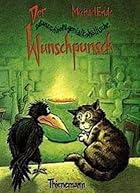
124) Der Satanarchäolügenialkohöllische Wunschpunsch / Michael Ende
Date: 1988
A cat and a raven save the world from their masters, a black magician and an evil witch.
The heroes are cute, the villains charmingly wicked, the dialogue is sharp, and the story moves along nicely. Recommended.
This is available in an English translation under the drab title, "Night of Wishes."
67ronincats
The Farmer story sounds like fun. It's amazing how many books by Phillip Jose Farmer I have not read.
68swynn
Roni,
I'm pretty sure that's the first Farmer I've finished. I tried the Riverworld books and The Lovers years ago and couldn't get into them, don't remember why. I did read "Riders of the Purple Wage" in a collection of Hugo-winning short fiction: I don't remember much except that it was a miss for me at the time.
The Phileas Fogg book makes me think I should give Farmer another chance.
I'm pretty sure that's the first Farmer I've finished. I tried the Riverworld books and The Lovers years ago and couldn't get into them, don't remember why. I did read "Riders of the Purple Wage" in a collection of Hugo-winning short fiction: I don't remember much except that it was a miss for me at the time.
The Phileas Fogg book makes me think I should give Farmer another chance.
69swynn
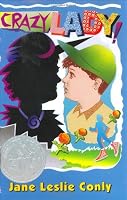
125) Crazy Lady / Jane Leslie Conly
Date: 1993
Vernon and his friends spend their free time stealing candy bars and provoking the local crazy lady. Crazy drunk Maxine dresses outlandishly, pulls her mentally handicapped son along in her wanderings around town, and launches into drunken tirades at the drop of a hat. Very entertaining for Vernon and his middle-school delinquent friends.
But Vernon is failing English and doesn't want to repeat a grade. He seeks help from a retired schoolteacher who happens to be a friend of Maxine. The teacher agrees to help Vernon and asks him to pay her with his time ... which will be spent helping Maxine. Initially Vernon finds the volunteer work embarassing, but then he establishes a complicated relationship with Maxine, and a more lasting friendship with the handicapped son.
This won the Newbery Award for best novel in 1994, but it never clicked for me. It struck me as a hodgepodge issues novel: the hero confronts substance abuse, mental handicaps, peer pressure, the death of his mother, a distant relationship with his father. The touch is too heavy and the surprises too few. It's probably perfect for class discussions.
I read this with my son, whose reaction was similarly unimpressed.
70DorsVenabili
Hi Swynn! I think I'm caught up now. I agree with your comments on Bent Road. It was captivating from the start, but more so because of the characters and setting and not so much that the mystery was particularly compelling.
Also, is there a Philip Jose Farmer you would recommend? I've always been somewhat interested in reading him.
And most importantly, congrats on the 50k! That's awesome!
Also, is there a Philip Jose Farmer you would recommend? I've always been somewhat interested in reading him.
And most importantly, congrats on the 50k! That's awesome!
71swynn
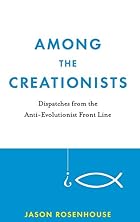
126) Among the Creationists / Jason Rosenhouse
Date: 2012
Jason Rosenhouse is a mathematician with an avocational interest in creationism. He attends creationist conferences, listens to creationist presentations and engages in dialog with the presenters and attendees. In this book, Rosenhouse recounts visits to three creationist conferences and a visit to the Creation Museum in Petersburg, Kentucky.
Rosenhouse finds the creationists' arguments easy to dismiss, but that only piques his interest in the people who make them. The creationists seem quite nice, and surprisingly reasonable in many ways. So why do so many people, genial and otherwise intellectually engaged, accept and promote such vapid arguments?
The answers are tied to religion, but they're complicated. Creationist objections are more nuanced than knee-jerk reactions to academics who challenge the historicity of folklore. Sure, evolutionary theory conflicts with creation myths; but many believers also suspect that it undermines the authority of God and the value of human life.
Not only are the creationists' motives more nuanced, but their claims are more diverse and less unanimous than Rosenhouse expects. There are young earth creationists and old earth creationists. There are creationists who read the Genesis myth literally and others who view it through metaphors of varying degree. There are even creationists who accept some or even all of evolutionary theory. Rosenhouse mentions quite a variety, summarizing their arguments and why he does not accept them.
My response to the book is ambivalent I'm afraid. I appreciate Rosenhouse's effort to understand the creationists. Too often, popular science writers dismiss creationists as superstitious luddites -- which does not match my experience. I grew up in an evangelical church, largely surrounded by creationists, most of whom are strong advocates for education. Few would regard themselves as anti-science; most honestly feel that the case for creation is strong enough that it would triumph over evolution on any level playing field. I think they're wrong, but backwoods ignoramuses they mostly aren't.
So Rosenhouse's human story is needed and welcome. In fact, I don't think he follows it far enough. Too often he seems more interested in explaining why the creationists are wrong than in exploring the logical substructure that makes the argument persuasive. In his defense, perhaps in most cases there's not much substructure to explore. But if his purpose is primarily to humanize creationists for an audience prone to demonizing them, then he spends too much time providing refutations and pondering his own responses to abstruse philosophical questions like theodicy, original sin, and the inevitability of human evolution.
Also there are a few points where Rosenhouse can't resist a snide or sarcastic summation of some creationist claim. Which I completely understand: he shows more restraint than I would be able to do. But if his aim is to alter the tone of the discourse I think he's not altogether successful.
I note that my ambivalence is the minority opinion: reviews on Amazon are uniformly positive. And despite my response I think it fills a niche that nobody else's book does right now. So I'll recommend it to those who find the premise interesting.
72swynn
>70 DorsVenabili:: Hi, Kerry!
Thanks for the congrats. Unfortunately, I haven't read enough Farmers to recommend any other than The Other Log of Phileas Fogg.
I know that many readers have enjoyed the Riverworld series, which begins with To Your Scattered Bodies Go. I started it years ago but lost interest early and never finished. But that was long ago and may have had more to do with the reader than the book.
TYSBG was made into a crappy Sci Fi Channel movie, which is an honor bestowed upon very good science fiction (Earthsea, Dune, and The Lathe of Heaven come to mind), so perhaps that recommends it.
Maybe Roni can recommend a starting point?
Thanks for the congrats. Unfortunately, I haven't read enough Farmers to recommend any other than The Other Log of Phileas Fogg.
I know that many readers have enjoyed the Riverworld series, which begins with To Your Scattered Bodies Go. I started it years ago but lost interest early and never finished. But that was long ago and may have had more to do with the reader than the book.
TYSBG was made into a crappy Sci Fi Channel movie, which is an honor bestowed upon very good science fiction (Earthsea, Dune, and The Lathe of Heaven come to mind), so perhaps that recommends it.
Maybe Roni can recommend a starting point?
73swynn

127) Needle / Hal Clement
Date: 1950
Roni (ronincats) and Lucy (sibyx) recently reread this 1950 novel about a boy and the alien policeman who rides around in his body. I read it about thirty years ago and loved it. Based on the 75ers' positive responses I just gave it a reread.
Mostly it holds up. I'm not as enthusiastic about it this time around: the prose is more sterile and the plot more porous than I remember. But it's not bad, has a terrific premise, and wears its age much better than I expected. I was able to recall the enthusiasm of my first read without embarrassment, which is a pretty good reward for rereading a childhood favorite.
Thanks Roni & Lucy!
74sibylline
Great cover art for that Needle!
Thanks for the Rosenhouse review - really thoughtful and I appreciate it. I come from a long long long line of skeptics and free-thinkers so Creationism is impossible for me to fathom. Intrigued by the different nuances inside the creationist approach.
Thanks for the Rosenhouse review - really thoughtful and I appreciate it. I come from a long long long line of skeptics and free-thinkers so Creationism is impossible for me to fathom. Intrigued by the different nuances inside the creationist approach.
75ronincats
Yeah, that's MY copy of Needle there.
I'm not a person to recommend Farmer books--I never cared much for the Riverworld books, which are his most popular, and looking at his bibliography on Wikipedia, I don't think I've read anything else by him.
I'm not a person to recommend Farmer books--I never cared much for the Riverworld books, which are his most popular, and looking at his bibliography on Wikipedia, I don't think I've read anything else by him.
76qebo
71: I have this one high on the wishlist, awaiting the paperback. I’ve been reading his blog sporadically for years. I gather you don't know of anyone who explores the “logical substructure” well?
77swynn
>74 sibylline:: In a way I envy you Lucy-- my heretical turn and a conflict-averse personality make family reunions awkward at times. One thing I admired about Rosenhouse's memoir was the apparent ease with which he engaged the creationists despite his awareness of being a minority of one. Perhaps his example will rub off.
> 75: You can have it back now, Roni. :) No strategy for approaching Farmer on this thread, then. The next of Farmer's books published by DAW is a collection of short stories (#63), then there's a Tarzan pastiche, "Hadon of Ancient Opar" at #100. So I'll probably read at least one more next year.
> 76: I don't, and maybe "logical substructure" isn't a very useful phrase. What I found myself wanting was more probing of the reasons for creationist belief, which interest me more than Rosenhouse's reasons for rejecting them.
Maybe there's just not much to probe: when you hit "Because I'm a Christian and that's what Christians believe," there is little more to say. But he does refer to -- and quote at length -- Christian thinkers with thoughtful positions on a variety of questions. These especially he seems to dismiss too quickly, though with arguments that often match my gut reactions. To check my own preconceptions, I wonder how they would respond to Rosenhouse's arguments.
I don't know anybody who has addressed that territory better than Rosenhouse.
> 75: You can have it back now, Roni. :) No strategy for approaching Farmer on this thread, then. The next of Farmer's books published by DAW is a collection of short stories (#63), then there's a Tarzan pastiche, "Hadon of Ancient Opar" at #100. So I'll probably read at least one more next year.
> 76: I don't, and maybe "logical substructure" isn't a very useful phrase. What I found myself wanting was more probing of the reasons for creationist belief, which interest me more than Rosenhouse's reasons for rejecting them.
Maybe there's just not much to probe: when you hit "Because I'm a Christian and that's what Christians believe," there is little more to say. But he does refer to -- and quote at length -- Christian thinkers with thoughtful positions on a variety of questions. These especially he seems to dismiss too quickly, though with arguments that often match my gut reactions. To check my own preconceptions, I wonder how they would respond to Rosenhouse's arguments.
I don't know anybody who has addressed that territory better than Rosenhouse.
78sibylline
I think maybe when you get into the question of why people believe things, you move into behavioral science and psychology? I would imagine Rosenhouse was steering clear of that minefield. I would hazard that spiritual belief systems have been adaptive and have helped people to cope with the problems of living and dying. As the world becomes a more crowded place, however..... well.... that's another minefield, innit?
79qebo
77: What I found myself wanting was more probing of the reasons for creationist belief, which interest me more than Rosenhouse's reasons for rejecting them.
Yeah, that’s what I’d want too. My family tends toward apatheism; god vs not-god is not the central issue as it is for some atheists, for example, and I don’t have much understanding or visceral sense of what creationists would _lose_ by accepting the science of evolution.
Yeah, that’s what I’d want too. My family tends toward apatheism; god vs not-god is not the central issue as it is for some atheists, for example, and I don’t have much understanding or visceral sense of what creationists would _lose_ by accepting the science of evolution.
80swynn
>78 sibylline:: I think that's a fair point. Rosenhouse isn't a sociologist, and maybe my questions need a more sociological approach. He reports on his experiences and his related ruminations, and perhaps that's all it's fair to ask. But my sense is that his purpose is to ask the question, "How do reasonable people believe these things?" I think he makes some progress in exploring that question, but wanted him to go further.
> 79: I think the book is definitely worth checking out. Creationists are represented more fairly by Rosenhouse than they are by Dawkins or Coyne for example. I suspect the understanding you're looking for will remain elusive on some questions, but it's still worth a visit -- if only because I'm interested in your thoughts on the book.
> 79: I think the book is definitely worth checking out. Creationists are represented more fairly by Rosenhouse than they are by Dawkins or Coyne for example. I suspect the understanding you're looking for will remain elusive on some questions, but it's still worth a visit -- if only because I'm interested in your thoughts on the book.
81swynn
I watched the film version of "Around the World in Eighty Days" this week, and I'm afraid I was disappointed. Which is unfair, because it was an extravagant film with lovely landscapes and a continuous game of "Name that 50's screen star," a sport which I enjoy. And David Niven was pretty good.
I think my main problem was watching the film too soon after reading the book. The film couldn't measure up to the story so recently refreshed in my mind (and then so affectionately and playfully exploited in the Farmer book).
It struck me that a chief difference in the film vis-a-vis the book was the film's interest in landscapes, exotic locales and foreign customs. For a book about travel, Verne's book is remarkably *un*interested in those things, observing how much Egypt and India and China look like Britain. Fogg, a sort of 18th-century accidental tourist, regards the scenery as a nuisance and unEnglish customs as benightedness. I think I prefer the film's sentiment in principle but, alas, the book's execution.
I think my main problem was watching the film too soon after reading the book. The film couldn't measure up to the story so recently refreshed in my mind (and then so affectionately and playfully exploited in the Farmer book).
It struck me that a chief difference in the film vis-a-vis the book was the film's interest in landscapes, exotic locales and foreign customs. For a book about travel, Verne's book is remarkably *un*interested in those things, observing how much Egypt and India and China look like Britain. Fogg, a sort of 18th-century accidental tourist, regards the scenery as a nuisance and unEnglish customs as benightedness. I think I prefer the film's sentiment in principle but, alas, the book's execution.
82sibylline
I did the same thing a year or so ago with The Time Machine - watching both the new and older version (older was wayyyyyy better in some inexplicably weird way) and reading the novel. Also Journey to the Center of the Earth - which has two movies too. The older one was better once again, captured something more of the naive kookiness of the book.
83lyzard
The older one was better once again, captured something more of the naive kookiness of the book.
That's a great observation.
That's a great observation.
84DorsVenabili
Thanks for the attempt at a Farmer recommendation. A detect a lack of enthusiasm for his stuff. Ha! Anyway, I'm very hit and miss with male-authored sci-fi from that era, but I do keep trying. For example, I just purchased Roadside Picnic, as it is today's Kindle Daily Deal.
85swynn
Kerry, I'm looking forward to your thoughts on the Strugatskys. I recognize the name, but have read none of their work.
On the other hand, this guy is an old favorite:

128) DAW #49: The Suns of Scorpio / Alan Burt Akers
Tagline: Slave of the colossus builders or scourge of the inland sea?
Date: 1973
This is the second in the "Dray Prescot" series, following Transit to Scorpio, which I summarized at some length here. In this one, Prescot goes from galley slave to pirate king to Spartacan leader of a slave rebellion.
Ethically, it's a mess. Dramatically, it's confused. And yet ... it's almost as fun as the last time I read it. I can't explain my fondness for these trashy, overwrought planetary romances so I won't bother trying. If the thought of John Carter knockoffs appeals to you, you might give them a try.
The cover with its ominous skull-headed warrior is by Tim Kirk. This edition also has six dynamic line-drawing illustrations by Kirk that evoke the same testosterone-amped aesthetic as the text. The guy is terrific.
SPOILERS FOLLOW!
Dray Prescot finds himself puttering around Earth following the events of Transit to Scorpio. He fights with the British at Waterloo then wanders off to India looking for distractions from the memory of his lost love Delia of Vallia.
From a Bombay beach Prescot is whisked away once again to Kregen. This time he awakes on the continent Turismond near Akhram. Turismond contains a large inland sea called The Eye of the World, and the fortress of Akhram sits at one extremity of the sea, where a canal connects the inner sea to the outer ocean. Akhram is occupied by the Todalpheme, a monklike brotherhood charged with calculating tides and regulating traffic on the canal.
From the fortress of Akhram, Prescot can see the surrounding fields. The bucolic scene is interrupted one day by a slavers' raid. The Todalpheme explain that there are two nations on The Eye of the World: Grodno on the northern shore and Zair on the southern. Both nations practice slavery, but the raid was carried out by slavers from Grodno. Prescot announces he will go to the cities of Grodno.
For a moment, Prescot is caught up in the blue haze that twice before has taken him back to earth. But this time he touches down in the courtyard of Akhram. In the sky Prescot sees a scarlet bird fighting a dove, by which sign he understands that the Star Lords and the Savanti disagree about what to require of him.
He continues on toward Grodno. Before long his is taken captive and made a slave on a brickmaking crew in the city of Magdag. In Magdag there is a mania for building: houses and temples stand empty but construction crews continue to build new ones.
Prescot makes some friends, including Genal and Pugnarses and the lovely slave girl Holly. There is no shortage of plots among the slaves for rebellion, but most of them are poorly conceived and doomed to failure, so he does not participate. When he refuses to assist in one of these plots, the conspirators frame him and he is made a galley slave.
Prescot finds himself chained to an oar with three other slaves: Zorg of Felteraz, Nath, and Zolta. Prescot and Zorg surreptitiously weaken the chain binding them to the bench. But galley slave is an awful assignment, and one day as the ship is fleeing from pirates of Zair, Zorg dies a victim of malnourishment, overwork, and the whip.
Soldiers hastily remove Zorg's body to replace him with a fresh slave. Prescot takes the opportunity to break the weakened chain, snatch a sword from one of the soldiers, and cause havoc on board. The Zairean pirate captures the ship and frees the galley slaves.
Prescot and his friends Nath and Zolta quickly prove their worth as sailors. Soon Prescot has his own pirate ship. Operating from the Zairean city of Sanurkazz, Prescot raids the ships of Grodno for the glory of Zair. He finds Zorg's widow in Felteraz and shacks up with her for awhile. He is initiated into the Krozairs, an elite warrior class of Zair.
Then the Vallians show up. Prescot's beloved Delia has sent agents all over Kregen looking for Prescot. Tharu and Vomanus have heard rumors that the Lord of Strombor is playing corsair on The Eye of the World and track Prescot to Sanurkazz. They demand that he return with them to Vallia. He does not argue.
En route, though, they are captured and Prescot finds himself right back in the city of Magdag. This time, though, he is treated as an honored guest because the Magdagians think he is a Vallian nobleman and Vallia is a valuable trading partner.
Unfortunately, Princess Shusheeng of Magdag takes too much interest in him. Prescot knows he can only deflect her advances for so long. At night he sneaks out of the palace and meets up with his Genal and Pugnarses in the slave warrens, where he plans a proper slave rebellion. He teaches them how to forge weapons and how to use them. He leads them in drills and looks for the right opportunity to rise up.
The right opportunity comes in the form of a festival called the Great Death, celebrating the eclipse of the green sun Genodras by the red sun Zim. Since Magdaggians worship Genodras, its eclipse is treated as a divine death: all of Magdag hides inside until the green sun reappears. But just as Prescot is finalizing preparations, Magdaggian soldiers arrest him.
Genal and Pugnarses have betrayed him, incorrectly believing him to be a rival for Holly's affections. They have told the Magdaggians that Prescot is a dreaded pirate king from Sanurkazz. He can now look forward to being sacrificed in a Great Death ritual to revive the green sun Genodras. Unfortunately for Genal and Pugnarses, so can they.
But Princess Shusheeng's love for Prescot overcomes her bitterness at his denials. She frees him with plans of running away with him. Prescot, though, has other plans: he frees other slaves in the palace (including Genal and Pugnarses who are now really really sorry about that whole Judas thing), then joins back up with the other revolutionaries in the slave warrens. The revolt proceeds as scheduled, and the slaves' superior training carries the day.
Just as the slaves triumph, Prescot is surrounded by the blue glow: the Star Lords will return him to Earth. He screams that he will stay on Kregen.
Whether his will to stay overpowers that of the Star Lords is revealed in the next volume, Warrior of Scorpio (DAW #65).
On the other hand, this guy is an old favorite:

128) DAW #49: The Suns of Scorpio / Alan Burt Akers
Tagline: Slave of the colossus builders or scourge of the inland sea?
Date: 1973
This is the second in the "Dray Prescot" series, following Transit to Scorpio, which I summarized at some length here. In this one, Prescot goes from galley slave to pirate king to Spartacan leader of a slave rebellion.
Ethically, it's a mess. Dramatically, it's confused. And yet ... it's almost as fun as the last time I read it. I can't explain my fondness for these trashy, overwrought planetary romances so I won't bother trying. If the thought of John Carter knockoffs appeals to you, you might give them a try.
The cover with its ominous skull-headed warrior is by Tim Kirk. This edition also has six dynamic line-drawing illustrations by Kirk that evoke the same testosterone-amped aesthetic as the text. The guy is terrific.
SPOILERS FOLLOW!
Dray Prescot finds himself puttering around Earth following the events of Transit to Scorpio. He fights with the British at Waterloo then wanders off to India looking for distractions from the memory of his lost love Delia of Vallia.
From a Bombay beach Prescot is whisked away once again to Kregen. This time he awakes on the continent Turismond near Akhram. Turismond contains a large inland sea called The Eye of the World, and the fortress of Akhram sits at one extremity of the sea, where a canal connects the inner sea to the outer ocean. Akhram is occupied by the Todalpheme, a monklike brotherhood charged with calculating tides and regulating traffic on the canal.
From the fortress of Akhram, Prescot can see the surrounding fields. The bucolic scene is interrupted one day by a slavers' raid. The Todalpheme explain that there are two nations on The Eye of the World: Grodno on the northern shore and Zair on the southern. Both nations practice slavery, but the raid was carried out by slavers from Grodno. Prescot announces he will go to the cities of Grodno.
For a moment, Prescot is caught up in the blue haze that twice before has taken him back to earth. But this time he touches down in the courtyard of Akhram. In the sky Prescot sees a scarlet bird fighting a dove, by which sign he understands that the Star Lords and the Savanti disagree about what to require of him.
He continues on toward Grodno. Before long his is taken captive and made a slave on a brickmaking crew in the city of Magdag. In Magdag there is a mania for building: houses and temples stand empty but construction crews continue to build new ones.
Prescot makes some friends, including Genal and Pugnarses and the lovely slave girl Holly. There is no shortage of plots among the slaves for rebellion, but most of them are poorly conceived and doomed to failure, so he does not participate. When he refuses to assist in one of these plots, the conspirators frame him and he is made a galley slave.
Prescot finds himself chained to an oar with three other slaves: Zorg of Felteraz, Nath, and Zolta. Prescot and Zorg surreptitiously weaken the chain binding them to the bench. But galley slave is an awful assignment, and one day as the ship is fleeing from pirates of Zair, Zorg dies a victim of malnourishment, overwork, and the whip.
Soldiers hastily remove Zorg's body to replace him with a fresh slave. Prescot takes the opportunity to break the weakened chain, snatch a sword from one of the soldiers, and cause havoc on board. The Zairean pirate captures the ship and frees the galley slaves.
Prescot and his friends Nath and Zolta quickly prove their worth as sailors. Soon Prescot has his own pirate ship. Operating from the Zairean city of Sanurkazz, Prescot raids the ships of Grodno for the glory of Zair. He finds Zorg's widow in Felteraz and shacks up with her for awhile. He is initiated into the Krozairs, an elite warrior class of Zair.
Then the Vallians show up. Prescot's beloved Delia has sent agents all over Kregen looking for Prescot. Tharu and Vomanus have heard rumors that the Lord of Strombor is playing corsair on The Eye of the World and track Prescot to Sanurkazz. They demand that he return with them to Vallia. He does not argue.
En route, though, they are captured and Prescot finds himself right back in the city of Magdag. This time, though, he is treated as an honored guest because the Magdagians think he is a Vallian nobleman and Vallia is a valuable trading partner.
Unfortunately, Princess Shusheeng of Magdag takes too much interest in him. Prescot knows he can only deflect her advances for so long. At night he sneaks out of the palace and meets up with his Genal and Pugnarses in the slave warrens, where he plans a proper slave rebellion. He teaches them how to forge weapons and how to use them. He leads them in drills and looks for the right opportunity to rise up.
The right opportunity comes in the form of a festival called the Great Death, celebrating the eclipse of the green sun Genodras by the red sun Zim. Since Magdaggians worship Genodras, its eclipse is treated as a divine death: all of Magdag hides inside until the green sun reappears. But just as Prescot is finalizing preparations, Magdaggian soldiers arrest him.
Genal and Pugnarses have betrayed him, incorrectly believing him to be a rival for Holly's affections. They have told the Magdaggians that Prescot is a dreaded pirate king from Sanurkazz. He can now look forward to being sacrificed in a Great Death ritual to revive the green sun Genodras. Unfortunately for Genal and Pugnarses, so can they.
But Princess Shusheeng's love for Prescot overcomes her bitterness at his denials. She frees him with plans of running away with him. Prescot, though, has other plans: he frees other slaves in the palace (including Genal and Pugnarses who are now really really sorry about that whole Judas thing), then joins back up with the other revolutionaries in the slave warrens. The revolt proceeds as scheduled, and the slaves' superior training carries the day.
Just as the slaves triumph, Prescot is surrounded by the blue glow: the Star Lords will return him to Earth. He screams that he will stay on Kregen.
Whether his will to stay overpowers that of the Star Lords is revealed in the next volume, Warrior of Scorpio (DAW #65).
87swynn
>86 sibylline:: Oh yes, the names are ... distinctive. And they're repeated at every opportunity, in prose that has to be read to be believed:
We made the journey in two-wheeled cart drawn by a docile ass, a somewhat different variety from that of the Plains of Segesthes but with the same patient cadences, and as I handled the reins those two lay in back and groaned with every jolt of the wheels.
"My head! Mother Zinzu the Blessed! For a little wine to moisten these cracked lips!"
"You drank it all last night," said Zolta disagreeably.
"And that wench you found me! Aie! How she--"
"You have no stomach for the finer arts, Nath, and that is the truth, by Zim-Zair."
"Ha! Since when have you used Krozair oaths, my fat tallowed sea snake?"
Then we were all silent, for a space, for we remembered our friend Zorg of Felteraz, to whose widow we now traveled.
This goes on for fifty volumes. Why do I love them? I just don't know.
We made the journey in two-wheeled cart drawn by a docile ass, a somewhat different variety from that of the Plains of Segesthes but with the same patient cadences, and as I handled the reins those two lay in back and groaned with every jolt of the wheels.
"My head! Mother Zinzu the Blessed! For a little wine to moisten these cracked lips!"
"You drank it all last night," said Zolta disagreeably.
"And that wench you found me! Aie! How she--"
"You have no stomach for the finer arts, Nath, and that is the truth, by Zim-Zair."
"Ha! Since when have you used Krozair oaths, my fat tallowed sea snake?"
Then we were all silent, for a space, for we remembered our friend Zorg of Felteraz, to whose widow we now traveled.
This goes on for fifty volumes. Why do I love them? I just don't know.
88swynn

129) How to Read Literature Like a Professor / Thomas C. Foster
Literary Analysis 101 with a sense of humor. There's nothing terribly insightful here, but the playful tone is welcome, as is the list of recommended reading.

130) Into the Darkest Corner / Elizabeth Haynes
Four years ago Cathy Bailey was in an abusive relationship and barely escaped with her life. Her ex left her with scars, post-traumatic stress, and a severe case of OCD. She is finally confronting her fears, opening up, and starting a new relationship with the handsome bachelor shrink in the upstairs flat. Then her ex is released from prison ...
Part Gaslight, part Sleeping With the Enemy, this book won Amazon UK's 2011 Book of the Year Award, and was named one of Library Journal's best thrillers of 2012.
Me, I don't get it. I found it slow, repetetive and predictable, with a heroine whose actions were irrational in ways that can't be blamed on PTSD and OCD. More like FVTS: Female Victim in Thriller Syndrome. But mine seems to be the minority opinion so don't let me put you off it.

131) Beezus and Ramona / Beverly Cleary
I read this one with my son. It's an old favorite of us both. One of yours too I expect.
89swynn
Before I forget: for anyone who happens to be wandering through my thread,
May the end of your 2012 be filled with family, with warmth, and with books. Happy Holidays!
May the end of your 2012 be filled with family, with warmth, and with books. Happy Holidays!
90ronincats

Glitterfy.com - Christmas Glitter Graphics
I want to wish you a glorious celebration of that time of year when we all try to unite around a desire for Peace on Earth and Good Will Toward All. Merry Christmas, Steve!

92swynn
Thanks for the Christmas wishes; in return I wish everyone a happy New Year.

132) DAW #50: Strange Doings / R. A. Lafferty
Date: 1973
Last year I read Lafferty's first novel and wasn't quite sure what to make of it. Well, Past Master might still be a mystery to me, but this excellent collection of Lafferty's stories convinces me that he was a crazy smart creative craftsman and knew just what he was doing. Lafferty usually has two or three strands going beyond the main narrative: there's metanarrative, religious allegory, and wordplay out the wazoo.
If the stories have a weakness it's the characters, who are mostly flat, especially the women. But the nuanced prose and narrative tricks more than make up for that. As you'd expect, some stories are stronger than others; as you'd expect from Lafferty some are more accessible than others. But there's not a dud in the bunch.
The cover is by Jack Gaughan, and a good one it is. Gaughan also provides four interior illustrations (for "Once on Aranea," "World Abounding," "Ride a Tin Can," and "Dream") which are also appropriately weird.
Rainbird. An aging inventor thinks back on his life and all the things he could have invented in only he hadn't wasted so much time on false starts, blind alleys. So he invents a retrogressor to go back in time to advise his younger self on living efficiently. This is the most sentimental piece, with a plain message on the meaning of success.
Camels and Dromedaries, Clem. Clem Clendenning is a traveling salesman. One night on the road Clem calls his hotel to make sure that he is registered properly. The hotel connects him to his room ... and Clem hears himself answer the phone.
Continued on Next Rock. An archaeological team excavating a mound digs up a series of stones inscribed with glyphs which, translated, turn out to be a love poem. Each inscription ends with a glyph meaning "to be continued," and each subsequent stone is found in an older layer than the last. Stranger still, there are hints that the poem may be addressed to a member of the team.
Once on Aranea. Scarble is left alone on the planet Aranea to test the planet for human habitability. Aranea's native fauna include a spider-like organism. Preliminary studies indicate that the spiders are not harmful; in fact, they have a sort of affection for humans. Too much affection, it turns out ...
Sodom and Gomorrah, Texas. A census taker in Texas quickly counts all nine people in his assigned sector. But that hardly seems worth the trouble, so he decides to count the little people as well. No, no the children. The little people.
The Man with the Speckled Eyes. There are six men in the world who manage all the world's inventions. If it doesn't go through one of the six then the invention goes nowhere. Then four of the six disappear; and the fifth interviews an inventor who claims to have invented an anti-gravity machine that only works sometimes.
All but the Words. Why haven't we established contact with extraterrestrial intelligence? Maybe it's just because the people who have been looking don't really like to talk. When the message changes from "we are here" to "lonely woman seeks relationship," we get more communication than we bargained for.
The Transcendent Tigers. By unfortunate oversight, a precocious child with the ability to see into other dimensions is given a powerful gift. Fortunately, the world-destroying effects will be limited to planet Earth ...
World Abounding. Seven explorers -- six couples and a lone man -- land on the verdant world Apthonia to test the planet for human habitability. (This seems to be set in the same universe as "Once on Aranea.") Apthonia has already been visited by five parties, but each has been very close-mouthed about their expedition, reporting only "You wouldn't believe it." The party's first assignment is to locate the marker planted by the original discoverer. They find its site, but it is buried under layers of soil and new growth. When they dig for it they uncover human remains. Which is odd, because no human has ever died on Apthonia. Then things turn odder when all three women wake up with morning sickness. And downright strange when they give birth a few days later.
Dream. Everyone in the city wakes up with memories of the same nightmare: living in a stinking world pelted by dirty green rain that smells like a four letter word. The nightmare recurs and eventually some of the dreamers hear a whisper: "You are not dreaming. This is the real world. But when you wake you will be dreaming."
Ride a Tin Can. The Shelni are an alien organism determined to be unintelligent, so they're fair game for food. This is fortunate for the meat market, since the Shelni seem to like being harvested and butchered. Then a folklorist discovers she is able to understand the Shelni language, collects their stories, and falls in love with them.
Aloys. A genius mathematician with social phobia receives an award he does not quite comprehend. En route to the ceremony he is approached by a scam artist with a mysterious offer.
Entire and Perfect Chrysolite. Conjuring spirits is dangerous business, but there are no laws against conjuring geography. On a lark, August Shackleton and his coterie of adventurous souls sail to the the vast sea south of Libya to conjure the mythical continent of Africa.
Incased in Ancient Rind. The runaway greenhouse effect has recreated prediluvian conditions on earth: "a mist rose from the earth and watered all the surface of the ground." It doesn't rain anymore; and the sun, moon, and stars are not visible from the planet's surface. On the other hand, people have life expectancies again as long as Methuselah's. Most people settle contentedly into the new status quo, but a few still fly above the vapor canopy to see the blue sky and the stars.
The Ugly Sea. A parable about a man who hates the ocean but who nevertheless goes to sea for a girl.
Cliffs that Laughed. A parable about a pirate, his stolen bride, and their ghosts. And about how to tell a story.

132) DAW #50: Strange Doings / R. A. Lafferty
Date: 1973
Last year I read Lafferty's first novel and wasn't quite sure what to make of it. Well, Past Master might still be a mystery to me, but this excellent collection of Lafferty's stories convinces me that he was a crazy smart creative craftsman and knew just what he was doing. Lafferty usually has two or three strands going beyond the main narrative: there's metanarrative, religious allegory, and wordplay out the wazoo.
If the stories have a weakness it's the characters, who are mostly flat, especially the women. But the nuanced prose and narrative tricks more than make up for that. As you'd expect, some stories are stronger than others; as you'd expect from Lafferty some are more accessible than others. But there's not a dud in the bunch.
The cover is by Jack Gaughan, and a good one it is. Gaughan also provides four interior illustrations (for "Once on Aranea," "World Abounding," "Ride a Tin Can," and "Dream") which are also appropriately weird.
Rainbird. An aging inventor thinks back on his life and all the things he could have invented in only he hadn't wasted so much time on false starts, blind alleys. So he invents a retrogressor to go back in time to advise his younger self on living efficiently. This is the most sentimental piece, with a plain message on the meaning of success.
Camels and Dromedaries, Clem. Clem Clendenning is a traveling salesman. One night on the road Clem calls his hotel to make sure that he is registered properly. The hotel connects him to his room ... and Clem hears himself answer the phone.
Continued on Next Rock. An archaeological team excavating a mound digs up a series of stones inscribed with glyphs which, translated, turn out to be a love poem. Each inscription ends with a glyph meaning "to be continued," and each subsequent stone is found in an older layer than the last. Stranger still, there are hints that the poem may be addressed to a member of the team.
Once on Aranea. Scarble is left alone on the planet Aranea to test the planet for human habitability. Aranea's native fauna include a spider-like organism. Preliminary studies indicate that the spiders are not harmful; in fact, they have a sort of affection for humans. Too much affection, it turns out ...
Sodom and Gomorrah, Texas. A census taker in Texas quickly counts all nine people in his assigned sector. But that hardly seems worth the trouble, so he decides to count the little people as well. No, no the children. The little people.
The Man with the Speckled Eyes. There are six men in the world who manage all the world's inventions. If it doesn't go through one of the six then the invention goes nowhere. Then four of the six disappear; and the fifth interviews an inventor who claims to have invented an anti-gravity machine that only works sometimes.
All but the Words. Why haven't we established contact with extraterrestrial intelligence? Maybe it's just because the people who have been looking don't really like to talk. When the message changes from "we are here" to "lonely woman seeks relationship," we get more communication than we bargained for.
The Transcendent Tigers. By unfortunate oversight, a precocious child with the ability to see into other dimensions is given a powerful gift. Fortunately, the world-destroying effects will be limited to planet Earth ...
World Abounding. Seven explorers -- six couples and a lone man -- land on the verdant world Apthonia to test the planet for human habitability. (This seems to be set in the same universe as "Once on Aranea.") Apthonia has already been visited by five parties, but each has been very close-mouthed about their expedition, reporting only "You wouldn't believe it." The party's first assignment is to locate the marker planted by the original discoverer. They find its site, but it is buried under layers of soil and new growth. When they dig for it they uncover human remains. Which is odd, because no human has ever died on Apthonia. Then things turn odder when all three women wake up with morning sickness. And downright strange when they give birth a few days later.
Dream. Everyone in the city wakes up with memories of the same nightmare: living in a stinking world pelted by dirty green rain that smells like a four letter word. The nightmare recurs and eventually some of the dreamers hear a whisper: "You are not dreaming. This is the real world. But when you wake you will be dreaming."
Ride a Tin Can. The Shelni are an alien organism determined to be unintelligent, so they're fair game for food. This is fortunate for the meat market, since the Shelni seem to like being harvested and butchered. Then a folklorist discovers she is able to understand the Shelni language, collects their stories, and falls in love with them.
Aloys. A genius mathematician with social phobia receives an award he does not quite comprehend. En route to the ceremony he is approached by a scam artist with a mysterious offer.
Entire and Perfect Chrysolite. Conjuring spirits is dangerous business, but there are no laws against conjuring geography. On a lark, August Shackleton and his coterie of adventurous souls sail to the the vast sea south of Libya to conjure the mythical continent of Africa.
Incased in Ancient Rind. The runaway greenhouse effect has recreated prediluvian conditions on earth: "a mist rose from the earth and watered all the surface of the ground." It doesn't rain anymore; and the sun, moon, and stars are not visible from the planet's surface. On the other hand, people have life expectancies again as long as Methuselah's. Most people settle contentedly into the new status quo, but a few still fly above the vapor canopy to see the blue sky and the stars.
The Ugly Sea. A parable about a man who hates the ocean but who nevertheless goes to sea for a girl.
Cliffs that Laughed. A parable about a pirate, his stolen bride, and their ghosts. And about how to tell a story.
93swynn

133) The Jester at Scar / E. C. Tubb
Date: 1970
(The eye-catching cover is by Paul Alexander for the 1982 reprint. And those aren't phalluses. They're shrooms. Really.)
This is the 5th volume in Tubb's "Dumarest of Terra" series. This one finds Dumarest on the planet Scar, whose environment is ideal for the culture of fungi and molds, and whose economy is based entirely on the culture, engineering, and export of mushrooms.
Dumarest has once again run out of money. As an independent mushroom prospector he hopes to make enough cash to continue his search for Earth. Complicating his quest is the ring given to him in the last volume by Kalin. Someone wants the ring and has sent mercenaries to retrieve it, not particularly caring whether Dumarest survives the retrieval.
Meanwhile, a spaceship malfunction brings a couple of dignitaries to Scar: Jocelyn, ruler of the planet Jest, and his new bride Adrienne. Jest is a very poor planet, and Jocelyn seeks settlers among the desperate poor of Scar.
Jocelyn doesn't want just any settlers though: he's looking for the elusive trait "luck." (Although why he'd expect to find "lucky" souls among the desperate poor of a shroom planet is never clearly explained).) Dumarest of course is a very good candidate, and Jocelyn makes him a tempting offer. But Dumarest knows a trap when he sees one, and Jocelyn's bride seems more attracted to Dumarest than she is to her new husband.
(SPOILER!) Dumarest survives all attempts on his life, including the offer of a comfortable life on Jest. He strikes it rich on Scar with an improbable mushroom find, then loses most of his newfound fortune. He's left with just enough to continue his quest on some other planet in volume 6. Come to think of it, this probably is no spoiler.

96swynn

134) DAW #51: Where Were You Last Pluterday? / Paul van Herck
Date: English Translation 1973, original (Dutch: Sam, of de Pluterdag, 1968)
This is an odd little book, and I'm not entirely sure what to make of it. I hesitate to call it science fiction although it has science fiction elements. If I had to give it a label I'd call it surrealist satire: it's a little Kafka and a little Monty Python. Sometimes I didn't get the joke, but there are plenty of recognizable targets including science fiction tropes, sexism, urbanization and capitalist privilege.
So there was plenty to laugh at even though a lot of it whizzed over my head.
The plot is quite intricate, and I won't recount it in detail (sorry, Roni!), but it involves things like this:
Science fiction is banned. Apparently it gives people too many ideas. Science fiction authors turn to mysteries, or to psychological novels, or commit suicide. John Wyndham contemplates a career in shoelace sales. "Robert Copperlein" writes pornography.
Our hero Sam falls in love with Julie, a girl far out of his economic class. He manages to start a conversation and asks her on a date. She tells him sure, and suggests they meet next Pluterday. He agrees, then asks all his friends what "Pluterday" is. Nobody knows. He learns (much later) that Pluterday is an 8th day of the week, and only rich people know about it.
Sam is a science fiction author, so he's out of the job because of the ban. He telephones the Muse for ideas that aren't science fiction. She tells him that he should write a history of the Jewish people, since nobody has ever done that before. He borrows a time machine for primary research, submits his manuscript piecewise through time, and ends up writing the Bible. When he returns to the present, he is rich from the royalties.
Sam dies several times. The first time he shows up at the pearly gates with his time machine. St Peter suggests that he use the time machine to return to a time before his murder and avoid it. Of course, after Sam writes the Bible then St Peter is happy to return him to Earth out of professional courtesy.
Eventually Sam follows Julie to the year 2050, a very confusing time. Only the rich can afford shoes; traffic is so congested that having an accident is a capital crime; and marriage laws so casual that Sam finds himself with a wife before he knows he's married. Apparently this happens a lot to time travelers who land in 2050.
And there are little green Martians everywhere like cockroaches.
Sam and Julie do eventually get together, but only after Sam has duplicated himself a couple of times, spent some time in a mental institution, and conspired with a communist revolutionary (also named Sam). Eventually <SPOILER>
It's also full of postmodern interruptions, where the author breaks the narrative to tell you what he's up to. For example, here's how the whole thing starts:
Sam was scratching desperately at the crumbling edge
of the abyss. With fear he felt the cramp slowly, but
surely, reaching his fingertips.
He fell.
And ...
To be quite honest, Sam was not hanging at all above
an abyss. And there was no cramp at all in his fingertips.
For miles around there wasn't even a trace of an abyss at
whose edge one could scratch in despair. But recently I
met with a publisher who confided to me that in judging a
manuscript he only glanced at the first sentence. He must
be on tenterhooks by now.
Though I didn't always know what to make of it, my overall impression was positive, and I'll recommend it.
The cover is by Karel Thole. It's awfully busy, but then so is the book so maybe it's appropriate.
97swynn
135) The Race Beat / Gene Roberts and Hank Klibanoff
This is the story of the journalists, photojournalists, and television reporters who covered the civil rights movement. Highly recommended.
98swynn

136) Lallia / E.C. Tubb
On Aarn, Dumarest is attacked once again by a mercenary trying to recover Kalin's ring. Dumarest overpowers the would-be thief and leaves him bound and gagged. When the mercenary turns up dead, Dumarest has to get off Aarn in a hurry.
Dumarest signs on with a small-time trader heading to the Web, a group of planet relatively close to one another. The plan is to hop between planets, trading one cargo for another hoping for a big score. Unfortunately for Dumarest's plans, planets in the Web tend to be sparsely populated, without any major terminals for interstellar traffic.
When the ship lands on Krieg, the natives ask the crew to preside over a little trial. Lallia, a loose woman with feminine wiles, is accused of being a witch. The crew of course rescues Lallia and she and Dumarest fall in love.
(I won't spoil anything by telling you Lallia's fate. But I will observe that when Earl Dumarest falls in love with you, you might as well just put on the red shirt and volunteer for hazard duty.)

