qebo’s 2013 books (1)
This topic was continued by qebo’s 2013 books (2).
Talk 75 Books Challenge for 2013
Join LibraryThing to post.
This topic is currently marked as "dormant"—the last message is more than 90 days old. You can revive it by posting a reply.
1qebo

Monarch butterflies in Mexico for the winter. (See my 2012 garden thread for context.)
Source: Monarch Watch (Copyrighted. Materials may be used for educational purposes. I hope this counts.)
Other threads
Non-Fiction Challenge : the relevant subset of this thread
ROOT Challenge : old books read (goal: >= 2 / month), new books acquired (goal: <= 2 / month) – HAH!
Scientific American : summaries, if I stick to the plan...

2qebo
January
#01: Needle by Hal Clement -- (Jan 1)
#02: Through the Eye of a Needle by Hal Clement -- (Jan 4)
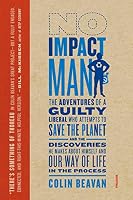
#03: No Impact Man by Colin Beavan -- (Jan 8)
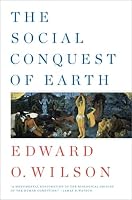
#04: The Social Conquest of Earth by E. O. Wilson -- (Jan 10)
#05: Tulipomania by Mike Dash -- (Jan 17)
#06: Atlantic - January / February 2013 -- (Jan 20)
#07: Scientific American - January 2013 -- (Jan 24)
#08: Them by Jon Ronson -- (Jan 25)
#09: Hiero's Journey by Sterling Lanier -- (Jan 28)
February
#10: The Ghost Map by Steven Johnson -- (Feb 1)
#11: Among the Creationists by Jason Rosenhouse -- (Feb 3)
#12: Ready Player One by Ernest Cline -- (Feb 16)
#13: Scientific American - February 2013 -- (Feb 18)
#14: Mr. Penumbra's 24-Hour Bookstore by Robin Sloan -- (Feb 20)
March
#15: Darwinia by Robert Charles Wilson -- (Mar 11)
#16: Toms River by Dan Fagin -- (Mar 15)
#17: Atlantic - March 2013 -- (Mar 16)
#18: The Ancestor's Tale by Richard Dawkins -- (Mar 17)
#19: Scientific American - March 2013 -- (Mar 20)
#20: Gone Girl by Gillian Flynn -- (Mar 22)
#21: In the Bleak Midwinter by Julia Spencer-Fleming -- (Mar 24)
#22: Dark Places by Gillian Flynn -- (Mar 28)
#01: Needle by Hal Clement -- (Jan 1)
#02: Through the Eye of a Needle by Hal Clement -- (Jan 4)
#03: No Impact Man by Colin Beavan -- (Jan 8)
#04: The Social Conquest of Earth by E. O. Wilson -- (Jan 10)
#05: Tulipomania by Mike Dash -- (Jan 17)
#06: Atlantic - January / February 2013 -- (Jan 20)
#07: Scientific American - January 2013 -- (Jan 24)
#08: Them by Jon Ronson -- (Jan 25)
#09: Hiero's Journey by Sterling Lanier -- (Jan 28)
February
#10: The Ghost Map by Steven Johnson -- (Feb 1)
#11: Among the Creationists by Jason Rosenhouse -- (Feb 3)
#12: Ready Player One by Ernest Cline -- (Feb 16)
#13: Scientific American - February 2013 -- (Feb 18)
#14: Mr. Penumbra's 24-Hour Bookstore by Robin Sloan -- (Feb 20)
March
#15: Darwinia by Robert Charles Wilson -- (Mar 11)
#16: Toms River by Dan Fagin -- (Mar 15)
#17: Atlantic - March 2013 -- (Mar 16)
#18: The Ancestor's Tale by Richard Dawkins -- (Mar 17)
#19: Scientific American - March 2013 -- (Mar 20)
#20: Gone Girl by Gillian Flynn -- (Mar 22)
#21: In the Bleak Midwinter by Julia Spencer-Fleming -- (Mar 24)
#22: Dark Places by Gillian Flynn -- (Mar 28)
3qebo
I’m back for year three...
I got distracted by caterpillars and butterflies in 2012, and the book discipline (not to mention the thread visitation) went kersplat. Can’t promise any better in 2013, but I begin with good intentions.
The rough plan for 2013:
Atlantic (1 issue / month = 1 book): 12 w/o summaries (possible bonus: read some 2011 articles)
Scientific American (1 issue / month = 1 book): 12 w/ summaries
science / nature: 12
history / biography / culture (non-fiction or fiction): 12
American history (non-fiction or fiction): 12
group reads: 4-6 (may overlap with other books)
Early Reviewer: 4-6 (may overlap with other books)
miscellaneous / fluff: 12
I got distracted by caterpillars and butterflies in 2012, and the book discipline (not to mention the thread visitation) went kersplat. Can’t promise any better in 2013, but I begin with good intentions.
The rough plan for 2013:
Atlantic (1 issue / month = 1 book): 12 w/o summaries (possible bonus: read some 2011 articles)
Scientific American (1 issue / month = 1 book): 12 w/ summaries
science / nature: 12
history / biography / culture (non-fiction or fiction): 12
American history (non-fiction or fiction): 12
group reads: 4-6 (may overlap with other books)
Early Reviewer: 4-6 (may overlap with other books)
miscellaneous / fluff: 12
4PaulCranswick
Katherine - I'm first up for a change to wish you every joy in 2013. Great to see you back.
5cushlareads
Happy New Year Katherine! I like your plan. I have great intentions about keeping up with threads...
6norabelle414
Happy New Year Katherine!
7streamsong
Happy New Year, Katherine!
I so loved your monarchs last year; and of course your reading. I've scattered a trail of stars to find my way back.
I so loved your monarchs last year; and of course your reading. I've scattered a trail of stars to find my way back.
8The_Hibernator
Glad you decided to join again! I thought you were going to switch to Club Read for a while there. ;) Happy New Year!
9qebo
8: Turns out that I can hit 75 books/magazines read without much difficulty; it's the reviewing that gets me. I do not enjoy writing, and I'm painfully slow. Club Read is tempting, as is the category challenge, but counting keeps me going at a reasonably steady pace.
10lauralkeet
I am so happy to have stumbled upon the origins of "qebo" on the introductions thread!! I've always wondered. Now tell me, am I pronouncing it correctly if I say kee-bow? Actually I pretty much just think of you as Katherine these days but again, I've always wondered.
11qebo
10: That's how I've been pronouncing it internally, and when I have to introduce myself at meetups. Coincidentally, a recent cat arrival is S, not named by me, so my thread titles of "qebo's ..." fit nicely.
From the intro thread, for people who have better things to do than look for it:
Q.E.B.O. are the initials of the four cats who resided with me some years ago when I needed a login; a hasty decision that stuck.
From the intro thread, for people who have better things to do than look for it:
Q.E.B.O. are the initials of the four cats who resided with me some years ago when I needed a login; a hasty decision that stuck.
12richardderus
Happy 2013, Katherine! Some very good reading planned.
13qebo

#1: Needle by Hal Clement -- (Jan 1)
The Hunter, a 4 lb blob of jelly, is pursuing a criminal fugitive when the space capsules that carry them crash off the coast of a small Pacific island, population in the low 100s. With its symbiotic host killed in the crash, the Hunter finds a new home in the body of teenager Bob, who is napping on the beach with his friends, relaxing before a plane trip across ocean and continent to boarding school. The Hunter can’t complete its job away from the island, so establishes communication by manipulating muscles and nerves, which Bob feels as symptoms of mysterious illness. The school doctor sends him home. Together the pair search for the fugitive, who is almost certainly in the body of another islander, possibly one of Bob’s friends. The Hunter is composed of small cells evolved from a virus, and resides between the larger cells of its host, able to sense and heal damage under the primary rule: do not harm the host. The fugitive is a similar organism who operates by different rules. Most of the action revolves around Bob and his friends, who roam the island by bicycle and boat, more freely that might feel comfortable to the modern parent. This is the 1940s. Dad is an engineer in the island economy, constructing the culture tanks where germs consume garbage to produce oil. Mom makes sandwiches on the periphery. It’s squeaky clean, with nice polite helpful people, and no seriously ominous tone because it’s never quite clear what the consequences might be if the fugitive is allowed to persist. Dialogue is stilted; the Hunter is grammatically formal, Bob not much less so, even among friends. Diagrams could be drawn from the descriptions, measurements included (the island shape and arrangement of natural and manufactured features, a wound precisely oriented and located in bone and muscle), which is rather sweet and geeky but sometimes tedious. Clues are dropped, the island doctor is enlisted (patient confidentiality seems not to be a thing), observations are made. The search is more methodical than exciting. And yet, the earnest cooperation of host and symbiote is appealing. I wished for success, and I’m curious to read the sequel, written nearly 30 years later.
Confession: I began this several days ago, and stopped 13 pages short of the end yesterday.
14gennyt
Happy New Thread and New Year, Katherine (I'm glad of the QEBO explanation, too)!
I like your good intentions, and empathise with your difficulty with getting reviews written. My vague plan this year is to make sure that I do post an update for every book completed, with at least one sentence about it. Perhaps if I say 'only one sentence' rather than 'at least one' I will feel less guilty about not writing more. But the hope is that a brief mention of the completed book may prompt comments and questions which will then encourage me to write a bit more. I find I say far more about a book when commenting in passing on someone else's thread, than I manage to on my own thread when I so rarely get any review written at all...
I like your good intentions, and empathise with your difficulty with getting reviews written. My vague plan this year is to make sure that I do post an update for every book completed, with at least one sentence about it. Perhaps if I say 'only one sentence' rather than 'at least one' I will feel less guilty about not writing more. But the hope is that a brief mention of the completed book may prompt comments and questions which will then encourage me to write a bit more. I find I say far more about a book when commenting in passing on someone else's thread, than I manage to on my own thread when I so rarely get any review written at all...
17rosalita
Happy 2013, Katherine. I know how you feel about reviews — I put entirely too much pressure on myself to review every book, but not this year!
18TadAD
>13 qebo:: Squeaky clean is such a good description of that book, not just in terms of morality and the like, but also in terms of everything being so meticulously neat and orderly.
19lauralkeet
>11 qebo:: thanks! Sadly all of our cats' names begin with consonants -- so do the dogs' names for that matter -- so I can't use them for a "handle"! We have, however, been known to use the combination of initials as a password before.
20Linda92007
I do not enjoy writing
Oh, but I do love reading your thoughts, Katherine. You inspire me to do more science reading!
Oh, but I do love reading your thoughts, Katherine. You inspire me to do more science reading!
25norabelle414
>22 qebo: Amen.
26qebo
Yay! I'm getting an ER book: Toms River by Dan Fagin.
Also the Atlantic magazine arrived today, and it's January/February so I get more time to read it. The 3rd day of the year and already I'm worried about keeping pace.
In other news, my boss's personality did not magically change over the holiday break.
Also the Atlantic magazine arrived today, and it's January/February so I get more time to read it. The 3rd day of the year and already I'm worried about keeping pace.
In other news, my boss's personality did not magically change over the holiday break.
27detailmuse
Hi qebo, I always enjoy your comments on lisa's (labfs39) thread and finally tracked you down! Looking forward to following your reading this year.
28qebo
27: I just hopped over to your Club Read thread and see that we have a couple of non-fiction TBRs in common. I'll add a comment over there...
29PaulCranswick
Katherine - just stopping by to wish you the finest of weekends.
30qebo

#2: Through the Eye of a Needle by Hal Clement – (Jan 4)
Set seven years (though written nearly thirty years) after Needle, in which the Hunter, a 4 lb blob of green jelly, arrived on a small island in the Pacific in pursuit of a criminal of his species and took up symbiotic residence in the body of teenager Bob; together they deduced the location of, and destroyed, the criminal. The Hunter remained with Bob through college years away from home, and now they have returned to the island, with a problem: Bob is mysteriously ill with weakness and fatigue, and the Hunter believes his presence to be the cause, but is also afraid to leave because Bob’s immune system has become dependent. The Hunter is a detective, not trained in medical matters, and decides the best hope for a solution is to find others of his species with more expertise. How? Well in the previous book, a component from the criminal’s space capsule was found in the ocean. And since then, the Hunter has gone through a college astronomy course, and realized that the “people” from his home planet should be able to figure out where he crashed. Perhaps they are on the island, but don’t know where the Hunter is or whether he survived, don’t know what happened to the criminal, and can’t reveal themselves.
In Needle, Bob told nobody about the Hunter except the island doctor, most of the dialog was internal between Bob and the Hunter, and most of the activity consisted of Bob roaming the island with a bunch of buddies. Since then, Bob has told his parents. Now he and the Hunter need help exploring the coast for clues. It happens that the doctor’s daughter Jenny, who works in the office organizing medical records, has a boat that she constructed from a kit, and a buddy’s sister Maeta, who works in the library and is processing the college textbooks that Bob brought home, is an excellent swimmer. And Bob now has a little sister, and his mother and the doctor’s wife get involved out of concern and interest. So suddenly females abound. The author is maybe a tad at pains to observe that Bob can be “slow on the uptake” in comparison to Jenny and Maeta, even though he went to college and they did not, and that traits such as bossiness and wishful thinking are general human foibles rather than feminine, as if these are new ideas that haven’t quite sunk in and need explicit statement and repetition, but these are mere quibbles of datedness. The overall impression is more human. There is also a troubled little boy who wants to be included, but has a reputation for playing mean-spirited practical jokes. As in the previous book, geeky bits are scattered throughout, such as a lesson on osmosis, and the “vector sum” of a route to the beach, but in this book are more naturally integrated and less expoundingly tedious. With the wider cast of characters and interaction, I was enjoyably engaged in the story.
31AnneDC
Hi Katherine! Just dropping in to wish you a belated happy new year and drop off my star. I sympathize, truly, with the reviewing quandary, and have vowed to do better myself this year. But look at you--two done already!
33qebo
Hmm, guess I should write some reviews. Or lead a more exciting life. I've finished reading No Impact Man and The Social Conquest of Earth. Don't want to fall behind this early in the year, so I'll try to catch up over the weekend.
34NielsenGW
I disagree with your premise that reading fantastic literature and reviewing them for the masses is somehow not an "exciting" life. :) Cheers!
35norabelle414
>33 qebo: You should post pictures of half-naked Canadians. I hear that boosts one's visitors.
Or post more pictures of gardens and/or house renovations and/or cats!
Or post more pictures of gardens and/or house renovations and/or cats!
36markon
Love the photos of the monarchs at the top of your thread. I got to see something like this in California a few years ago when I was there in January. They looked like dead leaves hanging on the trees until you stood an looked awhile and realized they were all moving.
37qebo
34: LT is "the masses"?
35: Not sure I want _that_ many visitors.
36: Oh cool! I've seen videos of the monarchs in Mexico, but nothing remotely like it in person. I'd supposed there was a single location in California too, but it's a fuzzier situation (http://www.monarchlab.org/Lab/Research/Topics/Migration/WhereToGo.aspx).
35: Not sure I want _that_ many visitors.
36: Oh cool! I've seen videos of the monarchs in Mexico, but nothing remotely like it in person. I'd supposed there was a single location in California too, but it's a fuzzier situation (http://www.monarchlab.org/Lab/Research/Topics/Migration/WhereToGo.aspx).
38LizzieD
You are way ahead of me in reading and reviewing, Katherine, and I sigh. Good job! Your statement that reviewing fiction is easier than reviewing non-fiction because you don't care as much made me smile a bit wryly. I'll add a sigh to that one too. If I read one science book this year, I'll be so impressed with myself that I'll be unbearable.
39qebo
#3: No Impact Man by Colin Beavan – (Jan 8)
The author decided to stop ranting about environmental destruction, and do something about it. With the somewhat reluctant cooperation of his wife, while living in a New York apartment with a toddler and dog, he embarked on a year long project to reduce or counteract his impact on the planet. In stages they reduced trash, eliminated all but self-propelled travel, purchased no new products, consumed only local food, shut off the electricity and relied on a solar panel, and got involved with city environmental organizations. This was not 100% pure; the adults had jobs, the child was in daycare, and the rules allowed socializing in the homes of friends. The year was not without marital discord, but his wife seized the opportunity to change unsatisfying habits (too much TV, too much shopping), she loved the scooter and the rickshaw, and if he was going to transform their shared life for his goals, then she was going to write her opinions on the bathroom wall. She did not, however, take to the peppermint tea as a substitute for coffee. The book is not much of a how-to; it is more rationale and musings and consequences and relationships. A documentary, recorded through year, complements the book, with little additional information but a view of the personalities in action. There is a blog too.
I read this because it’s January, and time to improve.
41labfs39
Your review made me think about how impact in the countryside is so difference from impact in the city. City: self-propelled travel, but much harder or impossible in the countryside, or there would be no going to work, school, friends, Goodwill, etc. Country: can raise own food, reducing that footprint. Then there is location. Solar panels are less helpful in the Seattle winter when we don't see the sun for months, and the days are so short.Makes me think that everyone's footprint is different and everyone's solution is different.
42tiffin
I'm with the wife about not giving up coffee...although the odd peppermint tea is ok.
>41 labfs39:: agree. If I were to walk to town to do things, it would take me most of a day just to get there.
>41 labfs39:: agree. If I were to walk to town to do things, it would take me most of a day just to get there.
43rebeccanyc
This guy had his 15 minutes of fame in a New York Times article. I haven't read the book, but in the article he came across as incredibly arrogant and irritating.
44qebo
41,42: I lived in Boston for 8 years without a car, walked to work, walked to the grocery store, etc. I had a car in Philadelphia, but after the job in the suburbs ended, the car was idle for 3 years because walking or trolley/subway were simpler. Here, public transportation stops at 6pm. I’m close enough to walk more places than I actually do, primarily because of the time factor. The grocery store is no further than it was in Boston or Philadelphia, but I have a car and it has a parking lot, and walking would add 40 minutes, and because of the convenience I can go there on a whim for a few items rather than arranging an evening around supplies for a week. It’s a sloppy habit. I’m more concerned at the moment though about plastic packaging.
43: Yeah, he was not happy about the article, as noted in both the book and the documentary. In the documentary, he comes across as more arrogant, and his wife comes across as more human, than in the book. The article has a tone of oh those silly urbanites, and the project is indeed part gimmick to sell a book. (At the end of the book is a description of how it was manufactured.) Any rules that maintain ties to the wider world will be artificial. They could turn off their own heat because they lived in an apartment building. They could not buy stuff because they already had stuff. The difference made by a single individual is minuscule on the scale of the planet. So it’s easy to dismiss the project, but it had a core of sincerity that has continued.
43: Yeah, he was not happy about the article, as noted in both the book and the documentary. In the documentary, he comes across as more arrogant, and his wife comes across as more human, than in the book. The article has a tone of oh those silly urbanites, and the project is indeed part gimmick to sell a book. (At the end of the book is a description of how it was manufactured.) Any rules that maintain ties to the wider world will be artificial. They could turn off their own heat because they lived in an apartment building. They could not buy stuff because they already had stuff. The difference made by a single individual is minuscule on the scale of the planet. So it’s easy to dismiss the project, but it had a core of sincerity that has continued.
45rebeccanyc
Oh, I do think it had a "core of sincerity" but I agree with you that the difference a single individual makes is miniscule. We have a car in NYC but we use it almost entirely to leave NYC. When I was single, I just rented cars if I needed them or borrowed one, but my sweetie needs one occasionally for work, so we've had the same one for 13 years. I take the subway and walk everywhere. Agree with you that packaging is shocking.
46labfs39
I read the NYT article (thanks for the link, Rebecca). Why does the wife get two pair of calf skin boots, but the daughter gets a pair of ballet slippers from a thrift store for a buck?
I agree that it's a nice idea to lower our individual impact, but how about some policy changes too?
I agree that it's a nice idea to lower our individual impact, but how about some policy changes too?
47qebo
46: Because the wife went on a shopping binge before the project began. And yes to policy changes, in an ideal world, which is not what we have.
48ffortsa
Rebecca, I gave up my car last year and have relied on zip cars since then. It cuts my transportation costs by at least 70% - no garage, no cost for maintenance, no gas costs, since gas is included. So far, no hassles at all.
I recall the nyt article, and quite apart from that have been trying to be more conscious of my own footprint. Not too consistent yet, alas.
I recall the nyt article, and quite apart from that have been trying to be more conscious of my own footprint. Not too consistent yet, alas.
49ffortsa
Katharine, the spread-out geography of exurban life is both its blessing and its curse. I know of a couple who retired to someplace in the southwest, far from any city, only to realize how far they are from essential healthcare. I could do without a lot of the over-stimulation of a city, but there are some advantages.
On the other hand, I have no good place for a tomato plant. Sigh.
On the other hand, I have no good place for a tomato plant. Sigh.
50qebo
I've been not-yet-actively considering a local move to a smaller house and bigger yard. A situation that does not appear to exist unless I get a cabin out in the country, thus introducing another set of problems, especially car dependency. Here I can walk to downtown and the train station and my brothers' houses and a hospital; all give a sense of security. A bigger yard, which I want for gardening, typically comes with a bigger house, which I don't want because of the maintenance and heating. So then, multi-family or set up a cooperative? A nice idea in the abstract, but this would add a layer of management responsibility.
I'm not too consistent about footprint reduction either. I've considered getting a bicycle, but I'm a complete wimp about bicycling in traffic. I don't enjoy cooking, so I get too much packaged food. This is where I think I could be aiming for better habits.
I'm not too consistent about footprint reduction either. I've considered getting a bicycle, but I'm a complete wimp about bicycling in traffic. I don't enjoy cooking, so I get too much packaged food. This is where I think I could be aiming for better habits.
52ffortsa
Me too, regarding the cooking. I used to cook for myself regularly, but partly because of nonsense in the relationship, and partly because we have a very good deli hot table downstairs which goes half-price at 8PM, I've gotten ludicrously lazy about cooking dinner. And then Jim likes to eat breakfast out. When I get determined, I usually buy vegetables in the Greenmarket on Saturday, and of course half of them get tossed when they spoil.
I was under the impression that you had a fairly good-sized yard for gardening. How ambitious are to you in that regard?
I was under the impression that you had a fairly good-sized yard for gardening. How ambitious are to you in that regard?
53ffortsa
>51 Whisper1: Oh Linda, I was typing when you were typing. Happy Saturday to you too, and Katherine, of course.
54ffortsa
Katharine, forgot to ask - are you counting a year's worth of The Atlantic as 1 book, or as one book per issue?
55qebo
52: I'm not sure yet, which is among the reasons I'm staying put for now. I can't have a tree; it would hang over everything else. I can fit only a few small bushes.
Greenmarket
Similarly... I live a mile from what is supposed to be the oldest continuously operating farmer's market in the country (http://www.centralmarketlancaster.com/), and I rarely go there because my ventures into cooking are so sporadic that anything fresh is at risk of rotting. I don't dare join a CSA.
Greenmarket
Similarly... I live a mile from what is supposed to be the oldest continuously operating farmer's market in the country (http://www.centralmarketlancaster.com/), and I rarely go there because my ventures into cooking are so sporadic that anything fresh is at risk of rotting. I don't dare join a CSA.
56qebo
54: I'm counting 1 issue = 1 book. With the New Yorkers, I counted 1 month (3-5 issues) = 1 book, but I skipped a lot. I think culture is lost on me. :-) I'm reading the current Atlantic cover to cover. This is sort of a freebie, because I've decided not to summarize (you're doing an amazingly thorough job), and I can read the short articles in bits and pieces.
59qebo
58: If I were 5 years behind, I wouldn't be writing full page summaries. I'd be aiming for the recycling bin.
60tymfos
Hi!
Makes me think that everyone's footprint is different and everyone's solution is different.
I totally agree. City, country, and village/smalltown life are all very different, and come with different energy saving challenges.
I see you won an ER copy of Toms River. Me, too: my copy arrived yesterday. Looks like it might be interesting. We shall see . . .
Makes me think that everyone's footprint is different and everyone's solution is different.
I totally agree. City, country, and village/smalltown life are all very different, and come with different energy saving challenges.
I see you won an ER copy of Toms River. Me, too: my copy arrived yesterday. Looks like it might be interesting. We shall see . . .
61qebo
Well that inspired me to check, and indeed there is a package plopped inside the front storm door. Oh dear, it's 450 pages.
62ronincats
Keep an eye open, Katherine. San Diego has houses on less land than anywhere else I've ever seen, but there are still a number of small older houses on larger lots in a lot of neighborhoods. I'm closer to my medical services than I would be if I were downtown, with library and stores two blocks away, even if I'm not in the central City. I'm sure Lancaster has some similar situations. (My friend out in Millersville right next to the university has a small house with a HUGE yard!)
63qebo
62: Yeah, the real estate listings are not yielding much, but I've passed by houses that seem viable so it's a matter of keeping at it. Fortunately I'm not in a hurry, and I bought my current house for cash so I can deal with an overlap. Though there is the contract job, which could last for years or could end next month...
64cushlareads
I'm really enjoying the discussion of No Impact Man and think I might buy it for my husband. We are quite inconsistent about what we do and don't do but have got much more sustainable in the last few years. We try to eat mostly our own vegetables in summer (although our lettuce supply is about to run out for a few weeks, aaagh) and have a compost bin and a worm farm, so the amount of rubbish we're throwing out is much lower than it used to be. We own 2 cars, but one gets used mainly at weekends (and while the kids are young we wouldn't give it up). Tim walks to work and buses home, but I'll be driving 10 minutes each way. We very seldom do takeaways and cook dinner unless we're going out, but that's partly because we have kids and also because one is allergic to various things, which makes us eat out less. But we have central heating, which sucks power (and which I adore) and occasionally a heated towel rail... No Impact Man would not approve of me! So none of our low impact stuff is a lot of effort really.
#48 Judy, cool to hear that zipcars are working well for you. In Switzerland they have a similar thing called Mobility - we tried it for the first 6 weeks and then succumbed to buying a very small car.
#48 Judy, cool to hear that zipcars are working well for you. In Switzerland they have a similar thing called Mobility - we tried it for the first 6 weeks and then succumbed to buying a very small car.
66qebo
Currently mired in:
(1) A review of The Social Conquest of Earth, going through a zillion flags to get notes in electronic form. Also read the article about E. O. Wilson in the November 2011 Atlantic.
(2) A long article about banking in the current Atlantic, which I can't say is of much interest but I'm sure it's good for me and I aspire to read the magazine cover to cover for the count.
(1) A review of The Social Conquest of Earth, going through a zillion flags to get notes in electronic form. Also read the article about E. O. Wilson in the November 2011 Atlantic.
(2) A long article about banking in the current Atlantic, which I can't say is of much interest but I'm sure it's good for me and I aspire to read the magazine cover to cover for the count.
67cushlareads
#65 Yep, it's cool. It took 3 years frm when I gave it to Tim for a Christmas present to set it up, but now we have lots of worms eating leftover vege peelings. Don't know how it'd go in your hot summers though.
69sibylline
Q - Where have I been? I keep finding threads that I have neglected since the new year..... really.... only two weeks. I think this happened last year too, and I realized I have to allow a month to find everyone.
I read a bit about No Impact Man..... where I live there are people who are so obsessed with these matters that they really get their 'knickers in a twist' constantly and sometimes hilariously. A friend of ours decided not to have a car, just ride his bike.... HERE! in Vermont. Well guess what happened? He became the cleverest ride cadger EVER. Eventually he did give it up. His wife kept her car, btw, so she ended up carting him here and there too. I have had conversations with people who worry, seriously, about how many shoes they have. I go bug-eyed. Imelda Marcos is a problem, a Vermonter HAS to have many shoes..... mostly different kinds that can deal with mud, ice, rain, heat, cold...... not Jimmy Choo's....
One thing you can do locally is seek out, join, support your local C.S.A. (community supported agriculture). Probably the most significant footprint shortening thing a person can do is eat food grown within a couple of hours of where they live as much as they can manage. It's the one thing I do make an effort over -
I read a bit about No Impact Man..... where I live there are people who are so obsessed with these matters that they really get their 'knickers in a twist' constantly and sometimes hilariously. A friend of ours decided not to have a car, just ride his bike.... HERE! in Vermont. Well guess what happened? He became the cleverest ride cadger EVER. Eventually he did give it up. His wife kept her car, btw, so she ended up carting him here and there too. I have had conversations with people who worry, seriously, about how many shoes they have. I go bug-eyed. Imelda Marcos is a problem, a Vermonter HAS to have many shoes..... mostly different kinds that can deal with mud, ice, rain, heat, cold...... not Jimmy Choo's....
One thing you can do locally is seek out, join, support your local C.S.A. (community supported agriculture). Probably the most significant footprint shortening thing a person can do is eat food grown within a couple of hours of where they live as much as they can manage. It's the one thing I do make an effort over -
70qebo
69: I dunno about a CSA. I've seen the vats of vegetables that my sister-in-law gets, and suddenly she'll have to learn how to cook some surprise item. And she enjoys cooking, and is cooking for multiple people. I do not and am not. A partial share is possible, but I don't think it's partial enough. Perhaps better to trek to the farmer's market on a regular basis. On Saturday I did, and got a romanesco cauliflower because they guy selling it described it as fractal.
71qebo
69: I keep finding threads that I have neglected since the new year
Yeah, I'm still finding them too. I'll open a thread with dozens of posts, and realize I've seen the top photo before, so obviously I've been here and why did I not drop a comment when there were few enough posts to actually read attentively?
Yeah, I'm still finding them too. I'll open a thread with dozens of posts, and realize I've seen the top photo before, so obviously I've been here and why did I not drop a comment when there were few enough posts to actually read attentively?
72rebeccanyc
70 That's my problem with a CSA. It's WAY too much food for two people. And as for farmer's markets, the best one is downtown (I used to go when I lived downtown) and the nearest ones to me are more than 10 blocks away and I'm not good at keeping track of which is open which day. Sigh! Should do better at this. Very funny about the cauliflower!
74rebeccanyc
Community Supported Agriculture. Urban residents pay money to a farmer in advance, essentially buying a share in the farmer's crop. Then each week they pick up a box with an assortment of whatever the farmer has that week. So you don't know what you're going to get or how much of it. Maybe Lucy and Katherine can expand on this.
75SandDune
We have similar fruit or vegetable boxes that tend to be for organic vegetables. But usually put together by a box company rather than the farmer and delivered to you. We've had them before in the smaller sizes but it is more time consuming even though I do normally cook from scratch. Fruit isn't a problem - my family can usually eat any amount of fruit that's thrown at it, but vegetables require more thought.
76qebo
73,74: That's about it. You'll know in advance approximately what the farmer expects to grow, but sometimes there are experiments and sometimes a crop doesn't do so well.
77sibylline
I would have thought by now that the CSA farms serving urban areas would be doing better at assembling smaller boxes! I dip in and out of our local one for the same reason and I feed three...... and how much squash or radish or whatever can a person eat??? Carrots we can eat by the bushel...... but it is improving some here.... Locally I can go to one farm and just pick out what I want if I 'belong' and that helps A LOT. Although you have to be quick like a bunny for the good stuff!
A biologist I know locally is a Buddhist and for a long set of reasons (an argument with a group of English Buddhists) she did an exhaustive research about whether being a vegetarian made your footprint smaller. Her conclusions (and she is one of the most practical minded sciency people I know) was that it is best to eat food grown near you and that includes meat, because meat is an efficient deliverer of nutrition and energy, renewable and etc. and provided the animal is living off of what grows at hand, it isn't a bad thing at all. There is also someone, I think, who has written about giving up being a vegetarian, for much the same reasons, who actually now hunts his deer every year for the same reason, and various birds etc. Transporting and overprocessing food is one of the craziest things we do among the very many crazy things people do. Obviously no one can buy everything locally, but I am a firm believer that every little thing that you can do, without jumping through hoops, is worth it.
A biologist I know locally is a Buddhist and for a long set of reasons (an argument with a group of English Buddhists) she did an exhaustive research about whether being a vegetarian made your footprint smaller. Her conclusions (and she is one of the most practical minded sciency people I know) was that it is best to eat food grown near you and that includes meat, because meat is an efficient deliverer of nutrition and energy, renewable and etc. and provided the animal is living off of what grows at hand, it isn't a bad thing at all. There is also someone, I think, who has written about giving up being a vegetarian, for much the same reasons, who actually now hunts his deer every year for the same reason, and various birds etc. Transporting and overprocessing food is one of the craziest things we do among the very many crazy things people do. Obviously no one can buy everything locally, but I am a firm believer that every little thing that you can do, without jumping through hoops, is worth it.
78tiffin
The Dalai Lama had to give up being a vegetarian for health reasons . We eat only locally raised meat and poultry, bought from the farmers as often as possible and humanely killed. Just read an article this morning about 1st world countries sudden interest in quinoa causing it to be priced out of reach for the Peruvian farmers who ate it for centuries.
ETA: we eat about 3-4 vegetarian meals a week, so are kind of half and half.
ETA: we eat about 3-4 vegetarian meals a week, so are kind of half and half.
79qebo
includes meat, because meat is an efficient deliverer of nutrition and energy, renewable and etc. and provided the animal is living off of what grows at hand, it isn't a bad thing at all
A position that I respect, but that would require more research that I'm prepared to devote to the cause at the moment, both on the science side and the what is actually available locally side (those quaint Amish farms that surround me are not known for their concern about animal welfare). Some of this I realize is habit; after 35+ years of veggie, meat would feel too weird. In the abstract though, getting meat from here wouldn't bother me so much. Hunting, however, is steps further, though again in the abstract it bothers me less than factory farming.
ETA: I'm not on especially moral high ground here, with a bunch of sloppy habits that indirectly do harm.
A position that I respect, but that would require more research that I'm prepared to devote to the cause at the moment, both on the science side and the what is actually available locally side (those quaint Amish farms that surround me are not known for their concern about animal welfare). Some of this I realize is habit; after 35+ years of veggie, meat would feel too weird. In the abstract though, getting meat from here wouldn't bother me so much. Hunting, however, is steps further, though again in the abstract it bothers me less than factory farming.
ETA: I'm not on especially moral high ground here, with a bunch of sloppy habits that indirectly do harm.
81lauralkeet
>79 qebo:: Agree with your points there, Katherine. I have a similar local-availability issue (not surprising since I live probably less than an hour from you, on the edge of quaint Amish country). I've been veg for 5 years now and even for me, meat would "feel too weird".
82markon
36/37: Thanks for the monarch link - I wasn't aware of the theory that the monarchs in California simply expand there range and fall back to CA in the winter. Interesting.
So is the discussion of No impact man and ways to reduce our foot print. I'm a cook and my church has a CSA that delivers to church on Sunday, but I haven't found the right persons to split with yet. I garden a little, but have not manged to raise, say, enough tomatoes for me to eat for a year.
I've tried bussing to work, but am a wimp about rainy days as the bus is a 15 minute walk from my house. And getting to fun things at night or on weekends in a reasonable amount of time is impossible on the transit system here.
Love that photo of the cauliflower!
So is the discussion of No impact man and ways to reduce our foot print. I'm a cook and my church has a CSA that delivers to church on Sunday, but I haven't found the right persons to split with yet. I garden a little, but have not manged to raise, say, enough tomatoes for me to eat for a year.
I've tried bussing to work, but am a wimp about rainy days as the bus is a 15 minute walk from my house. And getting to fun things at night or on weekends in a reasonable amount of time is impossible on the transit system here.
Love that photo of the cauliflower!
83qebo
80,82: The fractal cauliflower tastes pretty good too. Maybe I'll try growing some in a raised bed this year, and compete with the caterpillars.
82: A church CSA contract seems a good idea. Hmm... the one I attend sporadically has an eco committee that might care to arrange such a thing.
82: A church CSA contract seems a good idea. Hmm... the one I attend sporadically has an eco committee that might care to arrange such a thing.
84banjo123
Well, I haven't read No Impact Man, but I like the idea. Not because I would ever do it myself, but because I think that sometimes taking an idea to extremes, and then sharing the good and bad, can help us reflect on what we would like to change in our lives.
85sibylline
I know several others like the Dalai Lama - it's quite interesting. I could easily give up all meat except maybe chicken and the occasional turkey, in fact, that is mostly what we do it, more or less the same as Tui. My spousal unit cures his own salmon (doesn't fish for it though, obviously!) involving several rather disgusting steps so I'm always coming across limp pieces of it wrapped up in the fridge. Ugh. (I'm not allowed to say ugh or I get glared at.) He would eat more red meat, but I'm not too crazy about it, so we rarely do.
I love this discussion -- a church sponsored CSA arrangement sounds brilliant.
I love this discussion -- a church sponsored CSA arrangement sounds brilliant.
86PaulCranswick
Very interesting indeed. I, like Rhian, had never heard of CSA but the cooperative traditions in the UK in the early 20th century onwards set a yardstick for communities to pool together which was never really seized upon. I sometimes think that human nature is basically selfish but things like this remind me that it doesn't need to be.
Have a lovely weekend Katherine.
Have a lovely weekend Katherine.
87labwriter
>77 sibylline:it is best to eat food grown near you and that includes meat, because meat is an efficient deliverer of nutrition and energy, renewable and etc. and provided the animal is living off of what grows at hand, it isn't a bad thing
One of my favorite cookbooks, for those who eat meat, naturally: The Butcher's Guide to Well-raised Meat, by Joshua & Jessica Applestone and Alexandra Zissu. A quote from a review on the back of the book: "An honest, irreverent, and informative reference that is sure to influence irreversibly the way we buy, prepare, and appreciate meat."
This book is an interesting read, even if you don't use any of the recipes and techniques (although the recipes are excellent): a unique book--"guide, memoir, manifesto, and reference."
Joshua & Jessica are the owners of Fleisher's Grass-Fed & Organic Meats in Kingston, New York. Zissu is described as "a green living expert, author of The Conscious Kitchen.
Highly recommended.
One of my favorite cookbooks, for those who eat meat, naturally: The Butcher's Guide to Well-raised Meat, by Joshua & Jessica Applestone and Alexandra Zissu. A quote from a review on the back of the book: "An honest, irreverent, and informative reference that is sure to influence irreversibly the way we buy, prepare, and appreciate meat."
This book is an interesting read, even if you don't use any of the recipes and techniques (although the recipes are excellent): a unique book--"guide, memoir, manifesto, and reference."
Joshua & Jessica are the owners of Fleisher's Grass-Fed & Organic Meats in Kingston, New York. Zissu is described as "a green living expert, author of The Conscious Kitchen.
Highly recommended.
88qebo
87: The Conscious Kitchen has gone onto my wishlist.
89qebo
#4: The Social Conquest of Earth by E. O. Wilson – (Jan 10)
(Science, Religion, and History group read)
The key term is “eusociality” (“true social condition”), defined as groups with multiple generations and a cooperative division of labor that appears altruistic, with some members taking on roles that reduce lifespan or offspring so that other members can increase lifespan or offspring. Both ant and human societies can be so described. This book is about the similarities and differences, the evolution of ants, the evolution of humans in corresponding steps, the controversy of kin selection versus group selection, and human nature as the inevitable consequence of a tension between individual and group selection.
It reads less cohesively than one might hope, with repetition not as reminder or emphasis but more as if the parts were not carefully stitched into a whole, and vague speculation patched onto specifics. Terms such as “altruism” and “cooperation” are left somewhat open to interpretation. It is not intended to be a scholarly treatment. (Though at the end is a list of references for each chapter.) I wanted more comprehensive and detailed evidence in the sections about ants, because this is Wilson’s area of expertise, and tentatively accepted the sections about humans as sketched hypothesis rather than formal theory. Reservations aside, it is quintessential Wilson, with biophilia throughout, and an insistence that we can and should see ourselves in other creatures. “History makes no sense without prehistory, and prehistory makes no sense without biology.”
The summary below is vastly simplified, prone to corruption by misunderstanding, and mostly for my own benefit (because my memory is poor and I’ll be pursuing some of those references), presented for anyone else who may find it useful, as either a preview or an excuse not to read the entire book. Note that I don’t necessarily agree with it all.
Ant Evolution
Ants evolved from solitary winged wasps, about 150 million years ago. (The discovery of Sphecomyrma freyi “ranked in scientific importance with Archaeopteryx ... and Australopithecus“.) Eventually the queens continued to fly briefly, and the workers ceased to fly. About 130 million years ago, a radical change occurred: gymnosperms (conifers, cycads, ginkgos) gave way to angiosperms (flowering plants). Ants were “lifted in the tide” of this more complex environment, and by 65 million years ago most of the two dozen subfamilies had appeared. Two evolutionary advances were partnership with aphids and other insects that thrive on plant sap, and the addition of seeds to prey and carrion as a food source. Now, ants dominate the insects. All ants on earth weigh roughly the same as all humans.
The crucial evolutionary step is a persistent nest within foraging range of food, exploring and returning to the same spot rather than roaming through a region. Among solitary animals, young typically disperse from the nest to breed. Many species of sawfly form coordinated aggregations, but females travel from prey to prey to lay eggs, and none has crossed over to eusociality. The threshold of eusociality is reached when some of the young remain in the nest. As soon as a cohesive group exists, natural selection acts upon it. A cooperating group fares better than independent individuals in constructing and defending a nest, and locating and transporting food. Eusociality may occur in response to environmental pressures, for example if predators steal eggs when the mother leaves the nest to forage for food. With a wider variety of food, the harvest season is extended, and the potential for overlap of generations is increased.
The more elaborate and extensive the nest, the more ferocious ants are in defending it. In two strains of fire ant, one with few queens and odor-based territorial behavior, the other with many queens and no territorial behavior, the difference is in a single gene that is key to odor recognition and identification of nestmates.
How might division of labor emerge? It is preexisting behavior of solitary insects. When two normally solitary bees are placed together so that only one nest can be built, they form a hierarchy and divide labor. The dominant female stays in the nest to guard and lay eggs, while the subordinate female forages for food. Individuals tend to move from one task to another in sequence, avoiding a task that is already done or in progress, and vary in the level of stimulation that triggers activity. So when two individuals are placed together, the one with the lower threshold begins a task, and the other takes on a different task. A division of labor does not require genetic change in behavior. All that is necessary is for the dispersal mechanism to be suppressed so that offspring remain in the nest.
Only the queen reproduces. While natural selection is acting on the colony as a superorganism, it is actually acting on the individual queen’s genes. The queen and workers share a low variety of the genes prescribing caste, and a higher variety of genes for other traits such disease resistance. Initially, workers had a different role from but similar appearance to the queen. Once the workers were anatomically distinct, the eusocial colony could not revert. How could anatomical differences occur? Wing development, for example, is regulated by a gene network. By 150 million years ago, the network had been altered in some species so that genes were not expressed under some circumstances. Any fertilized egg can become a queen or a worker, depending on environmental conditions, e.g. season and food and pheromones.
Group Selection vs Kin Selection
A classic explanation for altruism has been the theory of kin selection, proposed by William D. Hamilton in 1964, and summarized in the inequality rb > c (r = relatedness, b = benefit, c = cost). The inclusive fitness of an individual is its own fitness (number of offspring) plus the effect of its actions on the fitness of collateral relatives. An altruistic individual may fail to reproduce, but genes shared with relatives survive, and altruism increases with closeness of relationship. Wilson was an early proponent of this theory, hooked by the association of haplodiploid reproduction in wasps and bees and ants with eusocial behavior. The problem, though, is that this association doesn’t apply to termites, or shrimp, or mole rats. And not all haplodiploid species are eusocial. And clonal species, with an even closer genetic relationship, aren’t eusocial. In some bird and mammal species, offspring may remain at home to help raise younger siblings, delaying their own reproduction in favor of their parents’. This has been attributed to kin selection, but studying a wider range of species suggests that correlation with the degree of relationship isn’t so clear, and the driving factor may be expectation of inheritance when resources are scarce. Measures of relationship in two systems may be identical, but yield different levels of cooperation. Measures of relationship may be on opposite ends of the spectrum, but yield equal levels of cooperation. In essence, none of the terms in the equation could be unambiguously defined, and became “whatever it takes to make Hamilton’s inequality work”.
In a 2010 Nature article, Martin Nowak, Corina Tarnita, and Wilson presented a game theory model demonstrating that kin selection as an explanation for ant eusociality is incorrect. To Wilson’s satisfaction. This is a highly controversial conclusion. In this book, he does not give technical specifics, and he does not present the array of arguments pro and con. He believes that the case is closed: game theory models show that selection “reverberates” up and down multiple levels, and can be applied universally, with degree of relationship irrelevant, whereas kin theory models have limited scope and can always be restated in terms of group selection.
Human Evolution and Human Nature
The prerequisite of a protected and persistent nest applies to other animals that have achieved a eusocial level of organization: shrimp that build nests in marine sponges, mole rats with a queen and workers and soldiers. How does it apply to humans? A campsite with fire. The split of humans and chimpanzees occurred about 6 million years ago. Both have grasping hands suitable for tools. Both have cultural transmission of tool use. Both form organized packs for hunting. Both occupy and defend territory. Chimpanzees, however, roam through an area of many square miles in search of food. Homo erectus controlled fire a million years ago.
Unlike ants, individual humans reproduce. As groups become cohesive entities, natural selection operates on two levels simultaneously: individual selection (within groups) and group selection (between groups). Although group selection happens with other animals, it does not rise to the same level. In humans, individual and group selection are in chronic tension, and this is the core of human nature. Individual selection is responsible for much of “sin”; in competition within the group, the more selfish individual prevails. Group selection is responsible for much of “virtue”; in competition between groups, the more internally cooperative group prevails. Neither extreme will do. Too far in the direction of individuals, and society would dissolve. Too far in the direction of groups, and society would resemble an ant colony of robots.
“I believe that ample evidence, arising from multiple branches of learning in the sciences and humanities, allows a clear definition of human nature.” Human nature is neither genetic code, nor cultural universals. “Human nature is the inherited regularities of mental development common to our species. They are the ‘epigenetic rules,’ which evolved by the interaction of genetic and cultural evolution.” Examples: incest avoidance, and color vocabulary (which is based on the way brains are wired to perceive color). Cultural variation is determined by two properties, both subject to natural selection: the degree of flexibility in epigenetic rules, and the inclination to imitate. Wide variation in a dimension (e.g. marriage) doesn’t mean that genes are not involved. The expression of genes may be plastic, and plasticity itself is adaptive. Genetic evolution has not ceased, but continues in conjunction with culture. A “textbook example” is lactose tolerance. With global interaction, variation within populations increases, and variation between populations decreases.
The creative arts are “filtered through the narrow biological channels of human cognition”, e.g. what is visually appealing, complex enough to be interesting, simple enough to be comprehensible. The conflict between individual and group is the foundation of the humanities. The study of interacting genetic and cultural evolution should “make the pathways to harmony among the three great branches”: natural science, social science, humanities.
Because of group selection, tribalism is fundamental. Social organization has progressed through egalitarian bands and hierarchical chiefdoms and centralized states, but this is cultural evolution, not genetic evolution. We retain tribal psychology in an interlocking system of groups, instinctively favoring in-group members. War is the inevitable curse. Organized religion is an expression of tribalism; illogic is not a weakness, but a strength that binds members together. The myths and gods of organized religion are “stultifying and divisive”, encourage ignorance, and distract from problems of the real world. (Ahem. Please don’t kill the messenger.) The Neolithic significantly increased food supply, but did not change human nature. “Humanity failed to seize the great opportunity given it at the dawn of the Neolithic era. It might then have halted population growth below the constraining minimum limit.” But it didn’t, and we are now facing the consequences. One instinct that might redeem us: the golden rule.
90qebo
Hmm, that's kind of long. And I left a lot out. I better pare it down before I put it on the review page.
91ffortsa
Thanks for such an extensive summary. Wilson seems to be right in there in the great wrestling match to define human nature. Wish I knew more about the other thoughts on the matter.
92streamsong
Good morning--and a very late Happy New Year!
Great review of The Social Conquest of Earth. I just couldn't make myself read that one at this time but perhaps one day I'll get back to it. I do have Ghost Map acquired from the library and ready to go.
Great discussion on carbon footprint. Mine is too large, I know. I can't make the extreme effort that Impact Man did, but I know I can make small changes of the "One day a week, I will do xxxx". As mentioned above, it doesn't change much in the grand scheme of things, but progress in the right direction and becoming more conscious of choices is also a victory.
Great review of The Social Conquest of Earth. I just couldn't make myself read that one at this time but perhaps one day I'll get back to it. I do have Ghost Map acquired from the library and ready to go.
Great discussion on carbon footprint. Mine is too large, I know. I can't make the extreme effort that Impact Man did, but I know I can make small changes of the "One day a week, I will do xxxx". As mentioned above, it doesn't change much in the grand scheme of things, but progress in the right direction and becoming more conscious of choices is also a victory.
93drneutron
Excellent discussion of The Social Conquest of Earth! Sounds like an interesting book that needs to go on my reading pile. Someday. :)
94rebeccanyc
Very interesting review; thanks for the detail. Although I admire Wilson for his work, I've found him pretty unreadable since I struggled through Consilience 15 years ago. Maybe I should try again.
95NielsenGW
That is quite a staggering review of Social Conquest. Well done.
I've had E.O. on my radar ever since The Tapir's Morning Bath, but sadly I've already read a book in this section (DDC 599). It'll have to be added to my "one day someday" list.
I've had E.O. on my radar ever since The Tapir's Morning Bath, but sadly I've already read a book in this section (DDC 599). It'll have to be added to my "one day someday" list.
96qebo
Thanks all! I'm rather meh on human nature, more interested in the ants and the kin selection vs group selection controversy, wanted more sciency specifics than grand speculative themes, but E. O. Wilson is 83 and at a different life stage than I am.
97qebo
94: I've had Consilience on the shelf for ages, may get to it this year.
95: Oh damn, another book for the wishlist.
95: Oh damn, another book for the wishlist.
98ronincats
I've favorited your review so that I can refer to it again. Great review, Katherine! I did not feel competent to do so because of a lack of background in this area, but your review hits all the important areas I remember from my reading. I had to laugh when you commented how much was left out--remember me saying that about my summaries of The Closing of the Western Mind? It seems inevitable when dealing with books of such complexity.
99The_Hibernator
Wow, that's quite the review of The Social Conquest of Earth! I always love how detailed you get. :) That reminds me that I promised to make a The Ghost Map thread....should do that now.
100qebo
I may just plot the entire thing onto the review page. Not sure I'm up to spending more time editing, and it's no longer than Jeremy's (which people should read!).
ETA: Yeah, done, moving on. Maybe someday I'll revisit.
ETA: Yeah, done, moving on. Maybe someday I'll revisit.
101labfs39
Thanks for the thorough review, as it's not a book I'm likely to get to. I did read and enjoy The Ghost Map- is that another shared read in the same group?
103sibylline
Great precis of the Wilson. I know I won't read it, too lazy, so I really appreciate your efforts. I've read most of his other books. Lots about epigenetics in this weeks Science Weekly.
104SqueakyChu
> 70
Katherine, I've belonged to a CSA for 5 years now, and I love it. When my kids moved out, and I had fewer people to cook for, I split a share with a good friend. She takes one week of the four per month, and I take the other three. That works for us because she loves the organic produce and lives alone. Most of the produce, because it's freshly picked will last quite a while.
My very favorite cookbook for figuring out how to cook some of the more unusual items (for me, recently, they were turnips, then kohlrabi) is Farmer John's Cookbook. The recipes are a little off the beaten track but turn out so good. This farmer and his organic farm, Angelic Organics, follow Rudolf Steiner's philosophy of anthroposophy which is quite fascinating.
Katherine, I've belonged to a CSA for 5 years now, and I love it. When my kids moved out, and I had fewer people to cook for, I split a share with a good friend. She takes one week of the four per month, and I take the other three. That works for us because she loves the organic produce and lives alone. Most of the produce, because it's freshly picked will last quite a while.
My very favorite cookbook for figuring out how to cook some of the more unusual items (for me, recently, they were turnips, then kohlrabi) is Farmer John's Cookbook. The recipes are a little off the beaten track but turn out so good. This farmer and his organic farm, Angelic Organics, follow Rudolf Steiner's philosophy of anthroposophy which is quite fascinating.
105SqueakyChu
> 83
A church CSA contract seems a good idea.
Funny that you should mention this. The CSA to which I belong was started five years ago by some members of my synagogue. We run the CSA pickup from our synagogue building although the CSA is open to people of all religions. I have done the CSA newsletter for five years now and always try to incorporate something Jewish in it.
I'm now at the point of giving up doing the Newsletter because, although great fun, it is very time consuming, and, as you see from what I do here on LT, my free time is becoming scarcer. I was thinking of simply transferring my Newsletter ideas to our CSA's Facebook page.
The bottom line:
Running a CSA out of a church or synagogue does work! I'd recommend Calvert Farm which is located in Cecil County, Maryland. Farmer Pam Stegall is a delight to work with. Her farm labor are mostly Amish field laborers from Pennsylvania. She's our farmer!! :)
A church CSA contract seems a good idea.
Funny that you should mention this. The CSA to which I belong was started five years ago by some members of my synagogue. We run the CSA pickup from our synagogue building although the CSA is open to people of all religions. I have done the CSA newsletter for five years now and always try to incorporate something Jewish in it.
I'm now at the point of giving up doing the Newsletter because, although great fun, it is very time consuming, and, as you see from what I do here on LT, my free time is becoming scarcer. I was thinking of simply transferring my Newsletter ideas to our CSA's Facebook page.
The bottom line:
Running a CSA out of a church or synagogue does work! I'd recommend Calvert Farm which is located in Cecil County, Maryland. Farmer Pam Stegall is a delight to work with. Her farm labor are mostly Amish field laborers from Pennsylvania. She's our farmer!! :)
107sibylline
It makes so much sense to do CSA's in a group like that. Plus, I would think the church folk would find a use for whatever ended up 'left-over'.
Hi Q - wondering how you are this week?
Hi Q - wondering how you are this week?
108qebo

#5: Tulipomania by Mike Dash – (Jan 17)
Tulips originated in the Pamir and Tien Shan mountains of Asia, were carried across the steppe by Turkish nomads, and achieved a “position of eminence” in the Ottoman Empire. It was probably in the Istanbul gardens of Suleyman that European ambassadors encountered tulips. By 1559 tulips had definitely arrived in Europe, and over the next few decades they spread, thanks in part to the enthusiasm of Flemish botanist Carolus Clusius, and the convenience of mailing bulbs. In 1593, Clusius accepted a position at the University of Leiden, and arrived with his collection of tulip bulbs to establish a botanical garden. Clusius classified nearly three dozen types by color and shape and bloom time, a mixture of wildflowers and cultivars.
Tulips can be grown from seeds or bulbs. Seeds are iffy; they may not bloom for six or seven years, and may not especially resemble the parents. Offsets from bulbs are essentially clones and may bloom within a year or two, but at this rate, even under ideal circumstances, new varieties remain rare for years. With different species unnaturally packed together and hybridizing in gardens, hundreds of varieties appeared, in colors more intense and distinct than other available flowers such as lilies and carnations. Tulips with simple coloring, like the wild ancestors, were considered “rude”. The most valued varieties were patterned. Strangely and unpredictably, single color “breeder” bulbs might or might not produce “broken” offsets, though seeds always produced breeders, and broken bulbs always produced more of the same. The reason, not discovered until the 20th century: the mosaic virus, transmitted by aphids.
By 1600, the United Provinces (or Dutch Republic) had become the richest country in Europe. The tulip was a status symbol throughout Europe, exotic and rare and expensive, but in the United Provinces the tulip connoisseurs were businessmen and merchants with country homes and gardens, not aristocrats. Initially tulips came from elsewhere, and were bought and sold by not always reputable rhizotomi “root cutters”, but by 1630, nearly every town in the United Provinces had professional horticulturists. This led to a marketing problem: tulips bloom for a mere few days each year, so had to be sold as bulbs, and bulbs do not reveal what they will become. The solution: illustrated catalogs, filled with varieties of Admiraels and Genereals and Generalissimos, named by their creators. As the local supply of tulips increased, prices of the more common varieties dropped. Tulips now were bought by artisans and tradesmen, or by peddlers who sold them at country markets to farmers and laborers. It became an attractive prospect to buy a few bulbs, plant them in pots or small garden plots, and turn them into money.
The tulip trade was necessarily tied to the calendar, with bulbs exchanged in the summer, after the flowers were gone and before the bulbs had to be returned to the ground. This though was a system for people who cared about the flowers for aesthetic reasons. The new “florists” did not. The unit of exchange shifted from the tangible bulb to the abstract promissory note. Now trade could occur year round, and middlemen could get involved. Thus arose a futures market, chains of speculation tied to bulbs not yet available, commitments made on the untested assumption that the next link was financially solvent and honorable. Prices peaked in late 1636, and crashed in early 1637. The bulb growers proposed a plan for recovery: pay the promised amount for the actual bulb, or pay 10% to annul the contract, but they lacked authority to enforce it. The Court of Holland wanted nothing to do with the mess, and recommended temporary suspension of contracts pending an investigation that never happened. So growers and traders were left to settle disputes among themselves, and mostly did; money that didn’t exist wasn’t worth pursuing through the legal system. In the end, the rise and fall of tulip mania had little effect on the economy as a whole.
This is a short, engaging, informative book, with chapters on boom and bust set in the cultural context of the United Provinces and the Ottoman Empire. It might have benefited from a few illustrations of tulips and a map or two, but the descriptions and anecdotes do a more than sufficient job of painting a detailed picture.
109qebo
107: Hmm, yeah, I haven't been around much. No particular reason. Not much spare time today, so I'll hope to get around to the threads tomorrow.
110phebj
Interesting review of Tulipmania Katherine. I just gave it a thumb.
112qebo

#6: Atlantic - January/February 2013 -- (Jan 20)
I’ve been watching sadly as these magazines pile up without so much as a skim through the TOC, so this year I’ll be keeping current with the reading as an experiment in subscription value, but I don’t want to get bogged down in summaries. So, done, read cover to cover. I’d recommend the article Awakening. The freaky gist is that anesthesia is not 100% effective, and some people remain conscious during surgery but cannot communicate. A monitoring device that was supposed inform doctors of the patient’s state is also flawed, so another is being developed. All entangled with the question of what is consciousness anyway?
113qebo

#7: Scientific American – January 2013 -- (Jan 24)
Also read cover to cover. And this one I will summarize, if I'm good. I haven't yet...
114norabelle414
>108 qebo: Great review! Thanks Katherine.
115alcottacre
I figure it is about time I check in here, Katherine. No Impact Man caught my eye. I will have to see if my local library has that one.
116qebo
9 books read this month. That's different. Last two years it's been 6. Reviews may not arrive until the weekend.
118qebo
Ooh, I'm getting an ER book: The Drunken Botanist by Amy Stewart. I was hopeful because it's the only book I requested, and I have a bunch of her other books.
119NielsenGW
Me too! I'm always pumped when an ER fills a Dewey section. Unfortunately, I won't be able to get to it for a bit -- I have the next six months planned out.
120tiffin
>108 qebo:: how interesting!
121sibylline
The garden of our old house had these tulip bulbs that 'infected' every other bulb we ever planted, an incredibly hardy red/yellow swirl pattern...... it seemed amazing to me, no matter what I planted those just seemed to take over..... as far as I know they are still there in force!
122The_Hibernator
Way to go on keeping up with those magazines. Mine have been piling a bit lately.
123qebo
122: Well, I shoulda summarized Scientific American by now... Got partly done yesterday, but my office is so cold from the wind today that I'm not hanging out here for more than a few minutes at a time this evening.
124Whisper1
Lucy
Nature is amazing indeed. Years ago when I lived in a very large house and had many beds of flowers, I remember the marvel that perrenials continued to come back year after year after year and spread wildly. The need to perpetuate is very strong.
I remember when reading Jurassic Park that Crichton was very aware of how life called to life. Using the example of why humans should not have attempted to clone and then control the dinosaurs, the impossibility of this was made clear.
Likewise, after surgery and the trama to the body, the bones, tissues, etc call to be healed and to mend..to be whole.
Nature is amazing indeed. Years ago when I lived in a very large house and had many beds of flowers, I remember the marvel that perrenials continued to come back year after year after year and spread wildly. The need to perpetuate is very strong.
I remember when reading Jurassic Park that Crichton was very aware of how life called to life. Using the example of why humans should not have attempted to clone and then control the dinosaurs, the impossibility of this was made clear.
Likewise, after surgery and the trama to the body, the bones, tissues, etc call to be healed and to mend..to be whole.
125qebo
Behinder and behinder I get... Somehow in the course of what seemed to be routine house tasks I managed to destruct something in my back; spasmy twingy things happening, sitting in a chair at the computer is not where I wish to be... (Nowhere near what you've gone through, Linda. Merely uncomfortable.)
127tiffin
Oh crumb, me too! If misery likes company, I'll hirple on over and prop you up. I did mine cleaning the study, lugging boxes and bags of books out to the car. Feel better soon!
129Whisper1
I hope you feel better soon. Back pain is very bothersome. Can you put heat on the area?
130PaulCranswick
Sorry to see you are struggling with back ache Katherine - SWMBO has back pain often and I know it can make you so uncomfortable. My low centre of gravity is hopeless for seeing well in the cinema but helps avoid back pain!
133qebo
127: Heh, "hirple" about describes it.
The internet sez neither cold nor hot is a sure thing, try both. I'm hoping hot will do it; cold in February is not a pleasant prospect. Have to sit at the computer for work today.
The internet sez neither cold nor hot is a sure thing, try both. I'm hoping hot will do it; cold in February is not a pleasant prospect. Have to sit at the computer for work today.
134tiffin
That's a guid Scottish word, Katherine. Heat and cold is actually the answer: ice pack for a bit then heating pad. The ice reduces the inflammation; the heat soothes.
135tymfos
What Tui just said is good. And my chiropractor says when you use heat, don't keep it on for more than 30 minutes at a time.
Hope you feel better soon!
Hope you feel better soon!
136qebo
The amorphous ache and twinginess has settled into a precise spot, which seems to be responding to ice and ibuprofen. Sitting at the computer is still uncomfortable, so reviews are on hiatus, and I've taken on the 600+ page The Ancestor's Tale, which a bunch of people in the Evolve! group have been muttering about reading for awhile, here.
138streamsong
Stopping by to commiserate.
I fell on the ice a little over a week ago and have been dealing with back and neck ever since. Heat, cold, ibuprofen, chiropracter (and her wonderful electro stim machine that relaxes spasmed muscles!). Her husband and partner, also a chiro, uses the kinesiology tape so I may give that a try on my neck.
Work today is a very long sitting day of working the entire day in a bio safety cabinet. I'm taking an ice pack with me!
I fell on the ice a little over a week ago and have been dealing with back and neck ever since. Heat, cold, ibuprofen, chiropracter (and her wonderful electro stim machine that relaxes spasmed muscles!). Her husband and partner, also a chiro, uses the kinesiology tape so I may give that a try on my neck.
Work today is a very long sitting day of working the entire day in a bio safety cabinet. I'm taking an ice pack with me!
139rebeccanyc
Sorry to hear about your back. When I had back problems years ago, a physical therapist gave me exercises to do (once the immediate trauma was gone) that basically strengthen your stomach and thigh muscles so the back doesn't have to do so much. I'm sure you can find some online nowadays, but she drew me little stick figures to show me what to do! Sitting is the worst, isn't it?
140qebo
What a decrepit bunch we are. Fortunately, for my health if not for my income, both of my work projects are on semi-hold for a few days, aside from brief tasks here and there, while I wait for things to happen.
141qebo
139: For years I used an exercise ball as a chair; it was much enjoyed when colleagues' kids came to the office. Alas, I tried it at home and the cats killed it within days.
142ffortsa
Sorry about your back. Here's hoping you're feeling better soon.
I've been spending some time in my new office, although not situated yet. We have dual screens (nice) on adjustable armatures. That should be great, but each time I try to lower a screen to eye level it immediately pops up again, and I end up with my head cocked back to work. Not good. Other people are complaining about the non-adjustable adjustable screens - we shall see what happens. After all, I doubt my penny-pinching company will hire a chiropractor full time to soothe our aching necks!
I've been spending some time in my new office, although not situated yet. We have dual screens (nice) on adjustable armatures. That should be great, but each time I try to lower a screen to eye level it immediately pops up again, and I end up with my head cocked back to work. Not good. Other people are complaining about the non-adjustable adjustable screens - we shall see what happens. After all, I doubt my penny-pinching company will hire a chiropractor full time to soothe our aching necks!
146qebo
142: I'd have triple screens if I could. Pseudo-adjustable is worse than fixed; gets your hopes up.
145: Improving but still avoiding problem activities such as sitting at the computer. Apparently not working today. A critical server was moved and the IT guy's wife just had a baby, so getting it set up in the new location is not his highest priority.
145: Improving but still avoiding problem activities such as sitting at the computer. Apparently not working today. A critical server was moved and the IT guy's wife just had a baby, so getting it set up in the new location is not his highest priority.
147ffortsa
One of my co-workers solved the secret of the adjustable monitors - an Allen wrench! Evidently you can unscrew one of the joints until the arm sort of floats to where you want it, and then tighten the thing up again. Excellent!
My new team doesn't get moved to JC until the 25th, but i should have a working deskspace before then with my old team. Then I'll actually have to get dressed to go to work. Sigh. I never expected working at home to be nice, but it is. As long as we have an opportunity now and then to get together and scribble on a whiteboard, which we will do on Tuesday as we discuss three or four different designs for a system addition. Next week I have to split my time between old and new teams. Should be interesting - and a lot of work.
My new team doesn't get moved to JC until the 25th, but i should have a working deskspace before then with my old team. Then I'll actually have to get dressed to go to work. Sigh. I never expected working at home to be nice, but it is. As long as we have an opportunity now and then to get together and scribble on a whiteboard, which we will do on Tuesday as we discuss three or four different designs for a system addition. Next week I have to split my time between old and new teams. Should be interesting - and a lot of work.
149thornton37814
Falling on the ice is not fun at all. I hope your back is on the mend.
150labfs39
A sit stand desk is the best, but expensive. Is there a table or file cabinet where you could slide things around to accommodate some standing time?
151phebj
Hi Katherine, I saw on Lucy's thread you haven't been feeling well. Hope today's a better day!
152qebo
I'm kind of a decrepit mess these days, which is why I haven't been around much. Mostly recovered from back trouble, then got hit by an evil virus all of a sudden on Friday, so I basically slept for three days until it mostly went away. Feel semi normal today, but still low energy. I blame February. Still here, still reading, sorry sorry sorry that I haven't been sociable, will return to threads and reviews when I can sustain focus.
153phebj
No worries about LT stuff; just glad to hear things are getting better. I forgot you were having back problems. What a double whammy!
155sibylline
I fell on the ice earlier this year too - took forever for my back to feel right. I wear those things on my shoes A LOT now - had 'em on today in fact.
So sorry about the virus and feeling bad. No apologizing - and don't worry about catching up on my thread at least, just come back when you're ready!
So sorry about the virus and feeling bad. No apologizing - and don't worry about catching up on my thread at least, just come back when you're ready!
156Whisper1
I hope each day finds you more and more healed. Threads will wait. We are a very patient group. Take care.
158lauralkeet
Aw, sorry you've been sick and in pain. Yuck.
159norabelle414
Dear Katherine; I hope you feel better soon!
161qebo
Thanks all. I've made it through an entire day awake and fairly functional, though I expect to fade early. Also I can eat normal food again. And drink coffee! I hope this isn’t a trouble comes in threes kind of deal. No plans whatsoever for the weekend except to catch up on reviews, and perhaps a bit of frivolous retail therapy for house and garden items.
164rebeccanyc
Glad you're feeling a little better, but take it easy!
167markon
Katherine, hope you keep feeling better this weekend. Take care and don't overdo - the stomach virus around is nasty!
168qebo
#8: Them by Jon Ronson – (Jan 25)
A journalist hangs around with various extremists who have in common a belief that the world is controlled by a small group of conspirators.
He shadows Omar Bakri Mohammed, who describes himself as “Osama Bin Laden’s man in Great Britain” and holds rallies advocating the transformation of Great Britain into an Islamic nation, who launches thousands of helium balloons proclaiming holy war that sink to the ground because the attached postcards were too heavy, who collects money for Hamas and Hizbullah in giant plastic Coca-Cola bottles because that’s what was available at the Cash and Carry.
He visits Rachel Weaver, who recounts the Ruby Ridge siege that happened when she was 10. He accompanies Randy Weaver to the Branch Davidian church in Waco, where volunteers constructing a new church wear the “Death to the New World Order” t-shirts that Randy Weaver sells at gun shows, though Randy Weaver has come to believe that Ruby Ridge was a clash of egos.
He treks to Bohemian Grove with Alex Jones, who broadcasts a talk show from his home and is funding the new Branch Davidian church. He attends a meeting of the Canadian Jewish Congress and others in coalition to protest an appearance by David Icke, whose views would seem to accord with Alex Jones’, except for the twist that the global elite are descended from extraterrestrial lizards. The coalition assumes that lizard is code word for Jew. Canadian immigration officials assume that lizard is code word for Jew. Actually, interrogation reveals that that lizard means lizard, with an elaborate typology. And alarmingly, the fans of David Icke are the coalition’s core constituents: people concerned about global capitalism.
He travels to a Bilderberg Group meeting with Big Jim Tucker, journalist for The Spotlight, who calls a friend every day with a cryptic message announcing that he is still alive, who gets drunk and sings “Yes We Have No Bananas” with tourists in a bar.
He visits Thom Robb, Grand Wizard if the Knights of the Ku Klux Klan, who reads self help books and runs personality skills workshops in an effort to give the KKK an image makeover, who worries that maybe he is weird, whose followers tediously dither whether the cross should be soaked in kerosene before or after it is raised.
The episodes are related in breezy style, heavy on conversational and anecdotal charm, light on the extremist bits. The overall impression is of bumbling eccentrics, foibled rather than fearsome. This is perhaps a useful perspective to keep in mind, but not exactly illuminating.
170detailmuse
Catching up with a belated appreciation for your notes on The Social Conquest of Earth.
>The dominant female stays in the nest to guard and lay eggs, while the subordinate female forages for food
made me wonder about social dominance/submission in general, and then
>Individuals tend to move from one task to another in sequence, avoiding a task that is already done or in progress, and vary in the level of stimulation that triggers activity. So when two individuals are placed together, the one with the lower threshold begins a task, and the other takes on a different task.
made me wonder if dominance/submission also originates in biologic stimulation thresholds? Any reading to recommend on this topic?
>The dominant female stays in the nest to guard and lay eggs, while the subordinate female forages for food
made me wonder about social dominance/submission in general, and then
>Individuals tend to move from one task to another in sequence, avoiding a task that is already done or in progress, and vary in the level of stimulation that triggers activity. So when two individuals are placed together, the one with the lower threshold begins a task, and the other takes on a different task.
made me wonder if dominance/submission also originates in biologic stimulation thresholds? Any reading to recommend on this topic?
173NielsenGW
168> That sounds like my kind of book! I had a tentative pick for DDC 322, but now this one has taken the slot. You're the first person in a long while to add something to my wishlist. Well done with the review of Them.
174sibylline
Extraterrestrial lizards, eh?
Here's some stuff to watch out for folks:
Lizard Facts:
What’s All That Head-bobbing About?
Head-bobbing is a way that lizards communicate. Male anoles nod their heads up and down to signal to other anoles that they are males and to chase off other males at mating time.
Bobbing sometimes means a male is ready to fight another animal. It also can mean that the animal is defending its territory.
Some lizards do “push-ups” for the same reason. They push up with their front legs, which may make them look larger to an opponent.
Each species of lizard has its own pattern of head-bobbing and push-ups. This is one way in which lizards can tell which individuals belong to their own species.
Other ways in which lizards communicate include waving their tails, opening their jaws wide, changing their colors, sticking out their dewlaps, or showing off their brightly colored undersides.
Do Lizards Have Many Ways to Defend Themselves?
Yes, lizards defend themselves in many ways.
The most common self-defense for a lizard is running away. But some lizards do the opposite: they freeze when they see an enemy, counting on their camouflage colors or bright patterns to help hide them. A few species of lizards even “play dead.” These lizards hope they will not be interesting to a predator if that predator thinks they are already dead.
Just as the glass lizard uses its tail to distract an attacker, other lizards also bluff, or play tricks. Some try to look more fierce than they are by lashing their tails, hissing, or puffing out their bodies to look larger.Some lizards, including monitors, use their jaws for biting. They clamp their jaws and sink their teeth into an attacker’s body and then hang on. Even a lizard that is not poisonous can do a lot of damage by biting its enemy.
It's a dangerous world out there. It's the head bobbers to keep a look out for.
Here's some stuff to watch out for folks:
Lizard Facts:
What’s All That Head-bobbing About?
Head-bobbing is a way that lizards communicate. Male anoles nod their heads up and down to signal to other anoles that they are males and to chase off other males at mating time.
Bobbing sometimes means a male is ready to fight another animal. It also can mean that the animal is defending its territory.
Some lizards do “push-ups” for the same reason. They push up with their front legs, which may make them look larger to an opponent.
Each species of lizard has its own pattern of head-bobbing and push-ups. This is one way in which lizards can tell which individuals belong to their own species.
Other ways in which lizards communicate include waving their tails, opening their jaws wide, changing their colors, sticking out their dewlaps, or showing off their brightly colored undersides.
Do Lizards Have Many Ways to Defend Themselves?
Yes, lizards defend themselves in many ways.
The most common self-defense for a lizard is running away. But some lizards do the opposite: they freeze when they see an enemy, counting on their camouflage colors or bright patterns to help hide them. A few species of lizards even “play dead.” These lizards hope they will not be interesting to a predator if that predator thinks they are already dead.
Just as the glass lizard uses its tail to distract an attacker, other lizards also bluff, or play tricks. Some try to look more fierce than they are by lashing their tails, hissing, or puffing out their bodies to look larger.Some lizards, including monitors, use their jaws for biting. They clamp their jaws and sink their teeth into an attacker’s body and then hang on. Even a lizard that is not poisonous can do a lot of damage by biting its enemy.
It's a dangerous world out there. It's the head bobbers to keep a look out for.
175qebo
174: It's the head bobbers to keep a look out for.
Especially the _different_ head bobbers. For better or worse, we can't tell on LT.
Especially the _different_ head bobbers. For better or worse, we can't tell on LT.
179lauralkeet
>175 qebo:-178: So funny!
180tiffin
>177 qebo:: made me laugh out loud at that one!
185lyzard
Internally, in most species; there are other species known as "eared lizards" which have an external structure and an ear opening as well.
Here endeth today's herpetological factoid. :)
Here endeth today's herpetological factoid. :)
187sibylline
I read a couple of different sites, but the writer of this one has a great sense of humor.
188qebo

#9: Hiero's Journey by Sterling Lanier – (Jan 28)
Hiero Desteen, Secondary Priest-Exorcist and Senior Killman of the Church Universal, is chosen by the Science Committee to travel from the Abbey Central in Sask to the Lost Cities of the southeast, in search of the computers that hold archives of the time before The Death. (He is one of six chosen to travel in different directions.)
It is the post-apocalypic world of the year 7476, thousands of years after human civilization destroyed itself with nuclear weapons and artificial disease. The Kandan Confederacy consists of Metz Republic in the west, the Otwah League in the east, city states of the southeast such as D’alwah on the coast of the Lantik, etc. The evil Unclean seek domination, and in recent years have been closing in, ambushing convoys and colonies of the abbey. The Unclean are assisted by the Leemutes, animals with lethal (non-reproducible) mutations, invariably disgusting in appearance: furhoppers, hairy howlers, man-rats, slimers, were-bears. In the background, observing and stepping in as needed, are the Eleveners, adherents of the eleventh commandment: “Thou shalt not destroy the Earth nor the Life thereon.” The Unclean and Eleveners are both alliances formed by scientists after The Death. The Unclean were psychologists, biochemists, physicists. The Eleveners were ecologists.
Hiero travels on the morse (mutated moose) Klootz, through the boreal forest and swamp to the Inland Sea (formerly the Great Lakes), to the port of Neeyana (possibly once Indiana), around a desert of lingering radiation, into the land of the Vilah-ree, onward to the site of an ancient city. Along the way he is joined by the intelligent bear Gorm, the runaway D’alwah princess Luchare, the Elevener Brother Aldo, merchant ship Captain Gimp and crew. He battles the Unclean wizards S’nerg and S’duna and S’carn, collecting technologically sophisticated devices from those he slays. He seeks guidance by casting and interpreting the 40 symbols, which warn him about the House... Communication by mind is the norm, though the relatively primitive societies of the southeast communicate vocally; Luchare has to be taught. As he encounters enemies, Hiero strengthens mental powers of shielding his own mind and penetrating others.
My reading experience was perhaps influenced by a poor electronic version, 837 pages (it’s not nearly this long, the numbers skipped) with no chapter divisions (they exist, but were not linked separately) and mental dialogue unmarked by punctuation or italics; the journey often felt like a mishmashy trudge, episodes strung together rather than an overarching story or character development. I was unaware of the glossary until I reached the end, and it would have provided coherence. There are some cool bits, especially the fungi. I’m curious enough to continue on to the second book.
189qebo
Caught up with January reviews... The evil virus is still with me though its power is diminishing, and I'll be away for a chunk of today, so maybe hopefully tomorrow I'll do thread rounds and begin February reviews...
190SqueakyChu
> 107
I would think the church folk would find a use for whatever ended up 'left-over'.
Our CSA donates leftover boxes or produce left in our "swap box" to a local food pantry.
*looks around for lizards...or lyzards*
I would think the church folk would find a use for whatever ended up 'left-over'.
Our CSA donates leftover boxes or produce left in our "swap box" to a local food pantry.
*looks around for lizards...or lyzards*
193SqueakyChu
Heh!
194labfs39
Glad you're feeling a little better, qebo. What a fascinatingly weird book. I'm looking forward to your review of number 2, when you get there.
197qebo
Where did the weekend go? I got half a review written. Also yesterday went to Harrisburg to see Flight of the Butterflies in IMAX 3D, and today indulged in a bit of retail therapy with terrarium plants. The review won't get done this evening, so I'm heading out to do thread rounds. If you were here and I'm slow to visit, it's because I'm appallingly behind with 100s of post to catch up on...
198The_Hibernator
The weekend went really fast for me, too. Nice that you got out to see Flight of the Butterflies. Looks interesting. :) I took a well-needed relaxation this weekend.
199qebo
Another ER book on its way: The Real North Korea by Andrei Lankov. So this makes three, of which I've received two, of which I've read the first chapter of one.
Evil virus resurfaced yesterday, though not as bad as before. Blech. What a crappy month this has been. Hoping magic will occur in March.
Evil virus resurfaced yesterday, though not as bad as before. Blech. What a crappy month this has been. Hoping magic will occur in March.
200sibylline
I hope you feel better soon. I am quite glad I had my flu shot, I think. But for other reasons, this has been a long hard winter for me too. I am looking forward to spring with indecent anticipation. (And it can be a long wait up north here, so I must try to be patient and content with small, very small, signs of spring.)
Really good review of Hiero. Very thoughtful. Glad you will go on. Book 2 picks up, I think, in many ways I like it better than #1.
Really good review of Hiero. Very thoughtful. Glad you will go on. Book 2 picks up, I think, in many ways I like it better than #1.
201swynn
Caught up now. Glad to hear that you're mostly on the mend, and hope you continue to improve.
Breezy and anecdotal matches my recollection of Them, which I enjoyed. At the time I thought I'd read more of Ronson's work, and I ought to get back to that.
Hiero's journey sounds like a mixed bag, and I'll wait to see what you think of the rest.
Breezy and anecdotal matches my recollection of Them, which I enjoyed. At the time I thought I'd read more of Ronson's work, and I ought to get back to that.
Hiero's journey sounds like a mixed bag, and I'll wait to see what you think of the rest.
202ffortsa
I hope you're feeling better now. The bad buggies this winter have been really persistent.
203tymfos
Sorry you've had to battle back pain and an evil virus. Glad to hear that you're improving.
Great reviews of Them and Hiero's Journey, but they don't sound like ones I'll probably read.
Great reviews of Them and Hiero's Journey, but they don't sound like ones I'll probably read.
206tiffin
Ok. {sending away the guys from Monty Python yelling "bring out your dead"...sorry guys, not needed}
207Linda92007
I'm very curious about The Real North Korea, Katherine. I hope that one shows up on your doorstep soon. Sorry you have had such a bad time with the evil virus.
209lauralkeet
I had the same thought last night. Hope to see you around here soon Katherine.
210qebo
Thanks for thinking of me. Combo of mystery virus (doctors shrug, say it'll go away...) and random other stuff. Updating posts 1 & 2 as I read, but otherwise not feeling up to posting.
212sibylline
Thanks for letting us all know - I hope things begin to improve for you soon. I don't like the sound of a mystery virus, those can hang about for ages.
213phebj
Hi Katherine. I hope you feel better soon. Mystery virus doesn't sound very re-assuring. :-(
214qebo
Worst is merely getting anyone to believe me. The congestion is in eustachian tubes, which aren't so easy to get at. Fatigue is extremely obvious to me, but not to anyone who doesn't know me. No fever, no sore throat, no sneezing or coughing, blood tests are normal.
215lauralkeet
Sounds yucky. I hope you feel better soon!
216rebeccanyc
What Laura said about yucky and feeling better soon! Must be really painful there!
217banjo123
Feel better! I has some kind of eustachian tube dysfunction before, and it was quite a bear--dizzy all the time. And takes FOREVER to clear up.
219ffortsa
LOL. Sorry you're going through that muffled feeling, and especially sorry for the fatigue. I hope it all clears much sooner than forever.
220qebo
Yeah. I'm five weeks and five relapses into this thing. Some days feel near normal, but I don't trust them any more. Have done appropriate medical things, and now family is asking around whether there's anything else I could be doing, but consensus seems to be it's annoying but non-lethal and there's nothing to be done but wait it out. Fortunately I work at home so I can manage about 3/4 time by taking breaks as needed, and my boss for all his flaws has been understanding. This is completely out of the blue; I'm not prone to illness, and in late January I was out running and going to the gym and immersed in home renovation tasks. I don't wish my thread to descend into my whine of the day, so stay tuned... LT is high on the priority list.
221ffortsa
That's a very long time to be sick with a virus. Maybe a specialist is in order if it keeps up. At least an ENT to check out the ears.
225ffortsa
It just doesn't sound right. Maybe the ENT should see a doctor - five weeks, it's definitely not a cold.
226sibylline
Thank heavens you can work at home. I've been reading all about the new trend of making people go to the office. It just sounds bossypants to me. (I'll make you cos I can.)
Hang on.
Hang on.
227ffortsa
Sib, having done both (and recently, because of the storm), there is great value in face-to-face meetings and work. Yahoo is in real trouble, and it makes sense to pull people together and see what synergies might occur.
On the other hand, it is often very productive, especially for people with very technical work, to have uninterrupted time at home (or otherwise) to keep focus.
On the other hand, it is often very productive, especially for people with very technical work, to have uninterrupted time at home (or otherwise) to keep focus.
228qebo
225: Maybe the ENT should see a doctor
He said it was going around the office. Somehow the idea of an ENT office filled with employees coughing and sneezing doesn't inspire confidence...
226,227: Depends on the situation. I'm working for a tiny company, interact primarily with two other people who live in different cities. I've mostly worked for small companies or small groups within large companies, and the face-to-face communication is important, though not necessarily every day. All sorts of stuff gets conveyed in casual conversation that wouldn't make it into in an email or a phone call.
He said it was going around the office. Somehow the idea of an ENT office filled with employees coughing and sneezing doesn't inspire confidence...
226,227: Depends on the situation. I'm working for a tiny company, interact primarily with two other people who live in different cities. I've mostly worked for small companies or small groups within large companies, and the face-to-face communication is important, though not necessarily every day. All sorts of stuff gets conveyed in casual conversation that wouldn't make it into in an email or a phone call.
229rebeccanyc
I once had a job where I was both editing and managing an editorial department. I had to show up at the office for the management aspect, but I couldn't edit there because people were always coming by to talk to me. So I convinced the boss that I had to work at home sometimes. This was back in the early 90s, and it was a very small organization.
230lauralkeet
I work for a large multi-national and typically go into the office. I like the social interaction, for the most part. I have the flexibility to work from home when I want or need to -- for example, if I have an early morning conference call with people in Asia, or if I just need uninterrupted think time. I also like to work from home on Fridays if I don't have meetings that require face-to-face interaction. As an added bonus I can usually get laundry done during the workday! :)
238labfs39
You still have your health issue? That is one tenacious bug! I'm so sorry you are still feeling punk. Is it time to see a new doctor?
239qebo
238: I'm navigating the medical system as best I can, and fortunately there is a network of family acquaintances to ask for advice (Darryl has chimed in too via PM). It's frustrating; they're finding all sorts of things that I DON'T have, and getting an appointment with any specialist involves getting a referral then waiting a few weeks. The medical system is overwhelmed, and tries to filter out non-essentials, and it's taken awhile for me to convince the regular doctor that this is serious business. This is one of those I-can't-believe-this-is-happening-to-me situations. So far as I was aware, I was perfectly healthy and active in January, then whammo, suddenly I'm a chronic invalid. Still able to work well enough to scrape by, but not much energy or enthusiasm for other pursuits.
240rebeccanyc
So sorry to hear you are still feeling so bad and that the medical system is so frustrating. Wish there was a magic wand I could wave, but will have to settle for saying "hang in there."
241ronincats
Sorry to hear that, Katherine. Let's hope one of these referrals can provide some answers.
243labfs39
Hopefully they will figure it out soon. P.S. my daughter's first ever science symposium is tomorrow night. She studied the birds in our backyard. No birds ever came to her food sampling station, ever. In 10 observation sessions (2.5 hours). She was upset at first but has bounced back with a ton of conclusions and ways to do it differently next time.
244lauralkeet
I'm so sorry to hear you're still unwell. Thinking of you ...
245banjo123
I hope you are feeling better soon! I have a friend here who come down with vertigo on vacation, and has been battling it for months. I think it's a little better now.
>243 labfs39: That's what I hate about science fairs. THey are designed for projects with clear and easy results. So if kids come up with a creative idea, and it doesn't pan out (which is what mostly happens in science) it doesn't look good and feels like a failure. Like Thomas Edison said "Results! I have gotten a lot of results. I know several thousand things that won't work."
>243 labfs39: That's what I hate about science fairs. THey are designed for projects with clear and easy results. So if kids come up with a creative idea, and it doesn't pan out (which is what mostly happens in science) it doesn't look good and feels like a failure. Like Thomas Edison said "Results! I have gotten a lot of results. I know several thousand things that won't work."
246labfs39
>245 banjo123: Thanks, Rhonda. I am going to use that Edison quote with her tonight, if she gets a little down at the fair.
This topic was continued by qebo’s 2013 books (2).

