This topic is currently marked as "dormant"—the last message is more than 90 days old. You can revive it by posting a reply.
1deebee1
In 2012, I was a little more focused in my reading. Wonderful distractions remained -- the lure of hundreds of potential reads in my library, the opening of new directions by fellow CR members through their remarkable threads -- but with less time to read than in previous years, I had to be more drastic in my choices. I adopted a rule that if by about 20 pages I wasn't into a book yet, then it was out. With this "rule", I ended the year reading just a measly 42 books, but excepting 2 or 3, all else were good to excellent. I've always preferred reading translated literature, but in 2012, I started to seek out authors whose works are highly regarded in their countries but are less known by Western readers. I discovered new-to-me Latin American writers. I must have been quite taken by their writing -- 3 of my 5 best fiction reads last year were from this region. In 2012, I read a respectable number of non-fiction. I didn't realize it until I was doing the stats that they composed a third of my reading.
Here are the best of them:
Fiction
Deep Rivers by José Maria Arguedas
The Lizard's Tail by Luisa Valenzuela
The Spell by Hermann Broch
The Edge of the Storm by Agustin Yañez
Death in Rome by Wolfgang Koeppen
Non-fiction
The Embarrassment of Riches: An Interpretation of Dutch Culture in the Golden Age by Simon Schama
A Peace to End All Peace: The Fall of the Ottoman Empire and the Creation of the Modern Middle East by David Fromkin
Life: A Natural History of the First Four Billion Years of Life on Earth by Richard Fortey
Here are the best of them:
Fiction
Deep Rivers by José Maria Arguedas
The Lizard's Tail by Luisa Valenzuela
The Spell by Hermann Broch
The Edge of the Storm by Agustin Yañez
Death in Rome by Wolfgang Koeppen
Non-fiction
The Embarrassment of Riches: An Interpretation of Dutch Culture in the Golden Age by Simon Schama
A Peace to End All Peace: The Fall of the Ottoman Empire and the Creation of the Modern Middle East by David Fromkin
Life: A Natural History of the First Four Billion Years of Life on Earth by Richard Fortey
2deebee1
I would like to be more coherent (read: ambitious) in my reading in 2012 by organizing it around certain themes. The ideas for these mini-projects mainly came from books I read or started to read last year, many of which opened topics which intrigued me, as well as an attempt to justify my excessive (though guilt-free) book purchases on specific topics. Under each theme, my approach would be to read on the context first -- which may be anything from history, biography, essay, to magazine article that could provide some background on the topic. Then, a number (a realistic low of 3) fiction works on the theme. If this experiment in minis prove interesting and doable, then I might gather the courage to do serious reading projects later (inspired by grand projects here on CR such as Barry's Medieval Ages lit, Dan's Bible marathon, Linda's Nobels, Rebecca's Rougon-Macquart series), who knows?
The list below is a partial one which I expect to get filled as I go along.
The Romans
Non-fiction: The Fall of the Roman Empire: A New History of Rome and the Barbarians by Peter Heather
Fiction
Augustus by John Williams
Claudius the God by Robert Graves
Memoirs of Hadrian by Marguerite Yourcenar
Germany after WWII through Reunification
Non-fiction: ?
Fiction
The Hothouse by Wolfgang Koeppen
Too Far Afield by Gunter Grass
The Life and Adventures of Trobadora Beatrice as Chronicled by her Minstrel Laura by Irmtraud Morgner
Something by Stefan Heym
Russia, the Revolution through the Stalin Years
Non-fiction: Year One of the Russian Revolution by Victor Serge
Fiction
Children of the Arbat by Anatoli Rybakov
The Life and Adventures of Private Ivan Chonkin by Vladimir Vojnovitsj
Petersburg by Andrej Bely
More Latin America
a) Dictator/"reign of terror" novels
Non-fiction: ?
Fiction
The Chase by Alejo Carpentier
Reasons of State by Alejo Carpentier
I, the Supreme by Augusto Roa Bastos
The Long Night of White Chickens by Francisco Goldman
b) Old world/New World
Non-fiction: ?The Open Veings of Latin America by Eduardo Galeano
Fiction
The Witness by Juan Jose Saer
The Book of Lamentations by Rosario Castellanos
Island-related
Non-fiction: ?
Fiction
My World is not of this Kingdom by Jõao de Melo
The Invention of Morel by Adolfo Bioy Caseres
The Iguana by Anna Maria Ortese
The list below is a partial one which I expect to get filled as I go along.
The Romans
Non-fiction: The Fall of the Roman Empire: A New History of Rome and the Barbarians by Peter Heather
Fiction
Augustus by John Williams
Claudius the God by Robert Graves
Memoirs of Hadrian by Marguerite Yourcenar
Germany after WWII through Reunification
Non-fiction: ?
Fiction
The Hothouse by Wolfgang Koeppen
Too Far Afield by Gunter Grass
The Life and Adventures of Trobadora Beatrice as Chronicled by her Minstrel Laura by Irmtraud Morgner
Something by Stefan Heym
Russia, the Revolution through the Stalin Years
Non-fiction: Year One of the Russian Revolution by Victor Serge
Fiction
Children of the Arbat by Anatoli Rybakov
The Life and Adventures of Private Ivan Chonkin by Vladimir Vojnovitsj
Petersburg by Andrej Bely
More Latin America
a) Dictator/"reign of terror" novels
Non-fiction: ?
Fiction
The Chase by Alejo Carpentier
Reasons of State by Alejo Carpentier
I, the Supreme by Augusto Roa Bastos
The Long Night of White Chickens by Francisco Goldman
b) Old world/New World
Non-fiction: ?The Open Veings of Latin America by Eduardo Galeano
Fiction
The Witness by Juan Jose Saer
The Book of Lamentations by Rosario Castellanos
Island-related
Non-fiction: ?
Fiction
My World is not of this Kingdom by Jõao de Melo
The Invention of Morel by Adolfo Bioy Caseres
The Iguana by Anna Maria Ortese
3deebee1
Recommended by fellow CRers
Religion and the Decline of Magic by Keith Thomas (dmsteyn)
Firefly by Severo Sarduy (steven03tx)
Toilers of the Sea by Victor Hugo (rebeccanyc)
B.S. Johnson books (charbutton)
Sheila Fitzpatrick books (marieke54)
The Great Arizona Orphan Abduction by Linda Gordon (mkboylan)
My Century by Aleksandre Wat (rebeccanyc)
Religion and the Decline of Magic by Keith Thomas (dmsteyn)
Firefly by Severo Sarduy (steven03tx)
Toilers of the Sea by Victor Hugo (rebeccanyc)
B.S. Johnson books (charbutton)
Sheila Fitzpatrick books (marieke54)
The Great Arizona Orphan Abduction by Linda Gordon (mkboylan)
My Century by Aleksandre Wat (rebeccanyc)
4rebeccanyc
What a great idea to have a section for recommendations! I'm going to have to copy that!
5avaland
Hi deebee, I'll keep that Valenzuela title in the back of my mind. I remember Andy/depressaholic reviewed her Clara for Belletrista back in 2010 (a href="http://www.belletrista.com/2010/issue5/anth_16.php">HERE) and I've read her in at least one anthology (I have a couple of older anthologies of Argentine and Latin American women yet to explore).
6deebee1
Copy away, Rebecca!
Nice to see you here, Lois, and thanks for the link to Belletrista. I've also looked at the BOMB article -- interesting stuff. Valuenzuela is a fascinating writer, pity that her books are not so easily available. I found only 2 titles of hers in English on Amazon UK where I get my books. I guess I have to look elsewhere.
Nice to see you here, Lois, and thanks for the link to Belletrista. I've also looked at the BOMB article -- interesting stuff. Valuenzuela is a fascinating writer, pity that her books are not so easily available. I found only 2 titles of hers in English on Amazon UK where I get my books. I guess I have to look elsewhere.
7RidgewayGirl
May I copy your idea to keep a list of Club Read recommendations in one place? As it now stands, I read a great book and think to myself that I should thank the person who brought it to my attention, if only I could remember who it was!
8deebee1
RG, please go ahead! I have to admit that the idea is not original -- I actually saw this on somebody's thread in Club Read a couple of years ago, I don't remember whose, and I thought it a cool idea.
9charbutton
I will also steal this idea!
12Linda92007
I would steal that idea, deebee, but the list would be so long it would surely freeze my thread. You are a wonderful source of recommendations and I look forward to your 2013 reading.
13dchaikin
I admire your groupings, they look so interesting. Very curious about the book on the Roman Empire by Peter Heather.
I won't steal your recommendation idea either, same problem as Linda. However I do add books to the wishlist referencing where I found them.
I won't steal your recommendation idea either, same problem as Linda. However I do add books to the wishlist referencing where I found them.
14arubabookwoman
I reference the source of books added to my wishlist too. Amazing how many are from Club Read!
15janemarieprice
Love the recommendation section as well.
I have Augustus on my shelves so will be interested to see what you think of it.
I have Augustus on my shelves so will be interested to see what you think of it.
16DieFledermaus
I like your categories and will be following your thread with interest. Some of the books you listed are on the the pile or wishlist.
17deebee1
A little catching up, still from 2012 reads. Just mini-reviews now.
The Spell by Hermann Broch (1976, Austria)
Translated from the German by H.F. Broch de Rothermann
The arrival of a charismatic and pernicious stranger in a mountain village upturns the life of its inhabitants. Espousing ideas of purity, return to nature and the forgotten ways of their ancestors, and rejection of progress, he attracts the young men to his movement. The villagers retain a deep connection with the soil, with the fruits of the labors of their hands, and when the young man, whose rash and mysterious personality made attempts to open the long-closed gold mines deep in the mountains, he awakens the long dormant dreams of the villagers of wealth. This mountain is their Mother, and its riches are the entitlement of her sons and daughters. Under his spell, the darkest urges of their collective consciousness are awakened which lead to a climax of bestial horror that recalled their pagan origins, and a tragedy that vindicated the resistance of the few. After these events, the village returns to normal life, and even the stranger is absorbed into the inalterable cycle of daily life. But part of humaneness has been lost forever.
Broch wrote the first version of this novel in 1935, at the dawn of the Third Reich, and was working on the third version when he died in 1951. It was first published in 1976. (The English translation was published in 1986. The translator is the author's son). In this philosophical novel of powerful symbolisms, he depicts the impact of Adolf Hitler on the hearts and minds of the German people. Broch's commentary at the end of the book explains his interest in getting into the heart of mass psychology, their functions and impact. He probes the motivations and the hidden recesses of the individual's psyche, the areas of the mythical mind that lead him or her to acts that are illogical, hysterical. Through the journals of the village doctor, our narrator, Broch explores the metaphysical sources of this mania, the interplay which constantly links the landscape of the soul with the scenery of the action. It is both profound and ominous in its characterization of the Nazi phenomenon.
The novel can be hard going in the parts where the narrator interjects the narrative with lengthy philosophical reflections and the extension of this into the exchanges between him and another central character, Mother Gisson, and I'm sure there are things that I missed. It made a deep impression on me, however, and made me curious about the average German's mindset when all this was happening. This book was one of my most memorable reads of 2012.
The Spell by Hermann Broch (1976, Austria)
Translated from the German by H.F. Broch de Rothermann
The arrival of a charismatic and pernicious stranger in a mountain village upturns the life of its inhabitants. Espousing ideas of purity, return to nature and the forgotten ways of their ancestors, and rejection of progress, he attracts the young men to his movement. The villagers retain a deep connection with the soil, with the fruits of the labors of their hands, and when the young man, whose rash and mysterious personality made attempts to open the long-closed gold mines deep in the mountains, he awakens the long dormant dreams of the villagers of wealth. This mountain is their Mother, and its riches are the entitlement of her sons and daughters. Under his spell, the darkest urges of their collective consciousness are awakened which lead to a climax of bestial horror that recalled their pagan origins, and a tragedy that vindicated the resistance of the few. After these events, the village returns to normal life, and even the stranger is absorbed into the inalterable cycle of daily life. But part of humaneness has been lost forever.
Broch wrote the first version of this novel in 1935, at the dawn of the Third Reich, and was working on the third version when he died in 1951. It was first published in 1976. (The English translation was published in 1986. The translator is the author's son). In this philosophical novel of powerful symbolisms, he depicts the impact of Adolf Hitler on the hearts and minds of the German people. Broch's commentary at the end of the book explains his interest in getting into the heart of mass psychology, their functions and impact. He probes the motivations and the hidden recesses of the individual's psyche, the areas of the mythical mind that lead him or her to acts that are illogical, hysterical. Through the journals of the village doctor, our narrator, Broch explores the metaphysical sources of this mania, the interplay which constantly links the landscape of the soul with the scenery of the action. It is both profound and ominous in its characterization of the Nazi phenomenon.
The novel can be hard going in the parts where the narrator interjects the narrative with lengthy philosophical reflections and the extension of this into the exchanges between him and another central character, Mother Gisson, and I'm sure there are things that I missed. It made a deep impression on me, however, and made me curious about the average German's mindset when all this was happening. This book was one of my most memorable reads of 2012.
18LisaMorr
I enjoyed your review and I plan on adding that to my WishList. In terms of learning more about the average German's mindset, you might like to read Berlin at War which I just finished. I can't say that it helped me to understand the average German's mindset, or even if you would consider a Berliner an average German (there were more non-conformists in Berlin than elsewhere in Germany), but I learned a lot.
19baswood
Excellent review of The Spell, Herman Broch deebee. It sounds fascinating and one I will look out for.
20dchaikin
Yes, excellent review. (I missed the mini part). I'm fascinated by it.
(The touchstone goes to the wrong book. It should go here: The Spell)
(The touchstone goes to the wrong book. It should go here: The Spell)
21DieFledermaus
The Spell sounds really interesting though there are a couple Broch books I'd like to read first.
22Linda92007
Excellent review of The Spell, deebee. The Death of Virgil and The Sleepwalkers also look interesting, but I may wait a bit on Broch, having recently finished another novel with long philosophical sections.
23letterpress
Only a week into the new year and I'm already reading these threads with my BookDepository wishlist open in another window. Not good, not good. The Spell sounds fascinating, thanks for sharing your thoughts.
24deebee1
Thanks, LisaMorr, for mentioning Berlin at War, I will have a look at it. I'm doing a mini-theme on Germany (post #2), and something that focuses on Berlin in the war period might help better understand the sentiments of German people postwar, and the writings that emanated from this time.
Thanks, Barry, I'm glad that this caught your attention.
Dan, thanks for supplying the right link. Will rectify.
DieF, I have his two better known books The Death of Virgil and The Sleepwalkers which I want to get to, sooner rather than later, but I had the impression that The Spell was an easier introduction to his works than these two, which was why I chose to pick it up first. Also, it fit with a reading theme I wanted to focus on starting last year.
Linda Like you, I also feel the need for "lighter" or different fare after such books. Those two books seem a bit daunting, but I think that reading The Spell gave me the needed push to try one of either later this year.
letterpress My Amazon wishlist is a permanently open window, both on my laptop and (even more dangerously now) Ipad -- I've given up trying to fight the temptation. Didn't even bother to make a new year's resolution. If that's any relief to you...
Thanks, Barry, I'm glad that this caught your attention.
Dan, thanks for supplying the right link. Will rectify.
DieF, I have his two better known books The Death of Virgil and The Sleepwalkers which I want to get to, sooner rather than later, but I had the impression that The Spell was an easier introduction to his works than these two, which was why I chose to pick it up first. Also, it fit with a reading theme I wanted to focus on starting last year.
Linda Like you, I also feel the need for "lighter" or different fare after such books. Those two books seem a bit daunting, but I think that reading The Spell gave me the needed push to try one of either later this year.
letterpress My Amazon wishlist is a permanently open window, both on my laptop and (even more dangerously now) Ipad -- I've given up trying to fight the temptation. Didn't even bother to make a new year's resolution. If that's any relief to you...
26deebee1
Still another from last year...

The Singapore Grip by J.G. Farrell (1978, UK)
The third in Farrell's Empire trilogy, The Singapore Grip is about the last days of Singapore as a British colony, and its fall to the Japanese. Walter Blackett is the head of a big trading company, the epitome of the Western colonialist and businessman who makes it big in Asia, driving the creation of wealth for the empire. He is more occupied about marrying off his daughter to a suitably wealthy family, is unconcerned about the big war happening in Europe, and belittles the Japanese threat in the shores of Malaya. Matthew Webb is the son of Blackett's business partner and heir to half the company, but having spent his time in Europe, he is clueless about the company and has no interest in owning it. His concerns are the principles and ideals of brotherhood, goodness in human nature, and retaining an extraordinary optimism about the global order. Blackett and Webb, together with their family and friends, within the small white expat circle of Singapore act out their own versions of reality, disconnected and absurd and in their oversized belief in their own power, indifferent to the growing conflagration that was engulfing the Pacific, coming ever closer to their shores. Farell couldn't seem to disparage the shallow, callous expats enough in his portrayal of them, keeping only Matthew and a couple of secondary characters, including Brendan Archer (from the Troubles) as the sympathetic figures. Our characters get caught up in the sudden spiral of events, the chaos and destruction as the Japanese pummelled the city to its knees. Salvation came either by fleeing or surrendering. Either way, reality finally catches up with them.
At 704 pages, this book was much too long, dragging until halfway through. Until this part, Farrell's narrative moved between the petty diversions and worries of the white elite, and Matthew's perorations about the human condition. Between Matthew's lengthy reflections and arguments, and Blackett's constant reference to the the early days of the company (but that business should change with the times!), Farrell sketches a mini-economic history lesson on oppression and the "evils" of capitalism that leaves no doubt about where his sympathies lay. This meaning of the Singapore Grip he took pains to depict (the grip also had other meanings) that it seemed repetitive sometimes. The story picked up when the Japanese attacked. Movement quickly shift from almost nil to frantic, and here Farrell fares much better.
With this, I've now read the trilogy, and I must say this was the weakest of the three. Farrell seemed to be a bit unsure of his footing here, perhaps because here he tries to paint a larger canvas and tends to lose focus. Compared with the two other novels, Troubles and The Siege of Krishnapur, here, he dwells heavily on the context and events that were more regional in scope but which had a very direct effect on the subject of the book. Still, interesting stuff to learn which made me want to read up on Malaya's experience under the British rule, and the making of Singapore.

The Singapore Grip by J.G. Farrell (1978, UK)
The third in Farrell's Empire trilogy, The Singapore Grip is about the last days of Singapore as a British colony, and its fall to the Japanese. Walter Blackett is the head of a big trading company, the epitome of the Western colonialist and businessman who makes it big in Asia, driving the creation of wealth for the empire. He is more occupied about marrying off his daughter to a suitably wealthy family, is unconcerned about the big war happening in Europe, and belittles the Japanese threat in the shores of Malaya. Matthew Webb is the son of Blackett's business partner and heir to half the company, but having spent his time in Europe, he is clueless about the company and has no interest in owning it. His concerns are the principles and ideals of brotherhood, goodness in human nature, and retaining an extraordinary optimism about the global order. Blackett and Webb, together with their family and friends, within the small white expat circle of Singapore act out their own versions of reality, disconnected and absurd and in their oversized belief in their own power, indifferent to the growing conflagration that was engulfing the Pacific, coming ever closer to their shores. Farell couldn't seem to disparage the shallow, callous expats enough in his portrayal of them, keeping only Matthew and a couple of secondary characters, including Brendan Archer (from the Troubles) as the sympathetic figures. Our characters get caught up in the sudden spiral of events, the chaos and destruction as the Japanese pummelled the city to its knees. Salvation came either by fleeing or surrendering. Either way, reality finally catches up with them.
At 704 pages, this book was much too long, dragging until halfway through. Until this part, Farrell's narrative moved between the petty diversions and worries of the white elite, and Matthew's perorations about the human condition. Between Matthew's lengthy reflections and arguments, and Blackett's constant reference to the the early days of the company (but that business should change with the times!), Farrell sketches a mini-economic history lesson on oppression and the "evils" of capitalism that leaves no doubt about where his sympathies lay. This meaning of the Singapore Grip he took pains to depict (the grip also had other meanings) that it seemed repetitive sometimes. The story picked up when the Japanese attacked. Movement quickly shift from almost nil to frantic, and here Farrell fares much better.
With this, I've now read the trilogy, and I must say this was the weakest of the three. Farrell seemed to be a bit unsure of his footing here, perhaps because here he tries to paint a larger canvas and tends to lose focus. Compared with the two other novels, Troubles and The Siege of Krishnapur, here, he dwells heavily on the context and events that were more regional in scope but which had a very direct effect on the subject of the book. Still, interesting stuff to learn which made me want to read up on Malaya's experience under the British rule, and the making of Singapore.
27rebeccanyc
I agree with you completely about The Singapore Grip being the weakest of the three but, like you, I enjoyed reading about the place and the period, as I knew nothing about it before.
28kidzdoc
Another great review, deebee. Troubles and The Siege of Krishnapur are two of the top 20 novels I've read in the past 5 years, but I've been a bit hesitant to read The Singapore Grip, as everyone who has read says that it's far weaker than the other two novels in The Empire Trilogy. I do plan to give it a go this year, though.
29SassyLassy
deebee and rebecca, I agree with you about the relative strengths of the Farrell trilogy, but I wonder if he spent more time on setting up The Singapore Grip for background for his readers, for whom Singapore would have been more remote than Ireland or the Krishnapur of history books , even though it had been a British colony.
Once it picked up, it really took off, to quote deebee in the sudden spiral of events, the chaos and destruction as the Japanese pummelled the city to its knees. doc, I hope you will read it, especially in light of some of the other Asian reading you have planned for this year.
Once it picked up, it really took off, to quote deebee in the sudden spiral of events, the chaos and destruction as the Japanese pummelled the city to its knees. doc, I hope you will read it, especially in light of some of the other Asian reading you have planned for this year.
30baswood
Interesting to read your review of The Singapore Grip which I can't remember if I have read or not. It was a long time ago that I read J G Farrell, but remember being impressed with his writing.
31henkmet
I would steal your wish list idea if only I had reserved more space near the top of my thread. And The Spell will be the first book on it. Thanks for the review!
32Rebeki
Hi deebee, your 2013 reading plans look really exciting and, as always, I look forward to making lots of new discoveries on your thread. I'm particularly interested to see how your German and Russian reads turn out.
The Spell sounds intriguing, if rather challenging...
The Spell sounds intriguing, if rather challenging...
33deebee1
Sassy, I also had that impression though I still feel he was too liberal in putting in information (sometimes repetitive) that did not add to or move the story.
34deebee1
Another from 2012...

The Embarrasment of Riches: An Interpretation of Dutch Culture in the Golden Age by Simon Schama (1987, UK)
Schama's interpretation of the Dutch Republic's cultural history from its formative years to the height of its domination of global trade, is a fascinating read.
Their wealth was regarded by the Dutch as a reward that came from their strong ethic of moderation and hard work, at the same time an embarrassment for its being an expression of a materialist temperament that was contrary to their Biblical ideals of modesty and simplicity. Reconciliation, however, could be easily found through instutionalized acts of piety facilitated by official sanctions and reprieve. Flexibility was the word, and religious faith can be abiding and tolerant, possessing an incredible malleability that can accommodate human foibles and shortcomings according to the needs of the occasion. It was a convenient, contemporary, and impressively liberal interpretation that did not find awkward the marriage of religious ethics and riches. They seemed to have found the perfect middle ground. In this book, Schama provides an interesting portrait of how the Dutch settled the paradoxes of their being Dutch.
In the first part, he writes about moral geography and patriotic scripture: the creation of the Dutch identity based on strong Biblical roots, the Dutch seeing themselves as the incarnation of the Old Testament Jews (chosen people) whose identity was linked to the ever present peril of floods (the deluge) and the dangers brought by envious neighbors (the French, the English) who looked at them as "the indigested vomit of the sea", and how patriotism was engendered by the revolt against Spain.
The second part talks of feasting, fasting and timely atonement, survival, and the embarassment of riches. He mentions how the symbolism of the whales was taken to extreme -- it was an omen, a punishment, exploited by preachers to convey a version of Jonah's story for modern-day reprobates. Carnival feasting would be offset by the austere regime of Lent, and this cycle of pagan gorging and pious atonement would be repeated throughout the year. Some foods were invested with moral qualities that they believed the Dutch embodied (e.g. cheese, herring). The "overload" of wealth had corrupted the patriotic spirit according to the spiritual fathers, but materialism was easily moralized away: the abundance of wealth (or corruption of money) can be pardoned with the occasional propitiatory gesture of philanthropy.
The third part is about housewives and hussies, homeliness and worldliness, and children. The national obsession for cleanliness is discussed here. Henry James, traveling in 1874, had this to say: "Where could the speck or two possibly have come from unless produced by spontaneous generation: there are no specks on the road...nor on the trees whose trunks are to all appearance carefully sponged every morning. The speck exists evidently only as a sort of mathematical point, capable of extension in the good woman's Batavian brain, and the operation with the copper kettle is, as the metaphysicans would say, purely subjective. It is a necessity, not as regards the house, but as regards her own temperament." (Henry James, 1874). A clean home is a godly home, and vices that men are prey to they can pursue elsewhere at their leasure, leave outside the front door that demarcates the sinful world and the sanctified home. This is the principle which legitimated the famed prostitution houses of Amsterdam, which Schama also devotes a section to. The Dutch family home is the cradle of virtues, and ideal school for the world, and to soil it would be to destroy it.
The brief last chapter deals with social hierarchy, who were in and who were out.
Schama is an exceptional writer, and he writes with wit and flair so there is no dull moment in this large 700-page book. The book is a delightful read, and the many illustrations add to the exuberance of the narrative. This was my first book by Schama and I enjoyed it very much. I have started on my second Schama.

The Embarrasment of Riches: An Interpretation of Dutch Culture in the Golden Age by Simon Schama (1987, UK)
Schama's interpretation of the Dutch Republic's cultural history from its formative years to the height of its domination of global trade, is a fascinating read.
Their wealth was regarded by the Dutch as a reward that came from their strong ethic of moderation and hard work, at the same time an embarrassment for its being an expression of a materialist temperament that was contrary to their Biblical ideals of modesty and simplicity. Reconciliation, however, could be easily found through instutionalized acts of piety facilitated by official sanctions and reprieve. Flexibility was the word, and religious faith can be abiding and tolerant, possessing an incredible malleability that can accommodate human foibles and shortcomings according to the needs of the occasion. It was a convenient, contemporary, and impressively liberal interpretation that did not find awkward the marriage of religious ethics and riches. They seemed to have found the perfect middle ground. In this book, Schama provides an interesting portrait of how the Dutch settled the paradoxes of their being Dutch.
In the first part, he writes about moral geography and patriotic scripture: the creation of the Dutch identity based on strong Biblical roots, the Dutch seeing themselves as the incarnation of the Old Testament Jews (chosen people) whose identity was linked to the ever present peril of floods (the deluge) and the dangers brought by envious neighbors (the French, the English) who looked at them as "the indigested vomit of the sea", and how patriotism was engendered by the revolt against Spain.
The second part talks of feasting, fasting and timely atonement, survival, and the embarassment of riches. He mentions how the symbolism of the whales was taken to extreme -- it was an omen, a punishment, exploited by preachers to convey a version of Jonah's story for modern-day reprobates. Carnival feasting would be offset by the austere regime of Lent, and this cycle of pagan gorging and pious atonement would be repeated throughout the year. Some foods were invested with moral qualities that they believed the Dutch embodied (e.g. cheese, herring). The "overload" of wealth had corrupted the patriotic spirit according to the spiritual fathers, but materialism was easily moralized away: the abundance of wealth (or corruption of money) can be pardoned with the occasional propitiatory gesture of philanthropy.
The third part is about housewives and hussies, homeliness and worldliness, and children. The national obsession for cleanliness is discussed here. Henry James, traveling in 1874, had this to say: "Where could the speck or two possibly have come from unless produced by spontaneous generation: there are no specks on the road...nor on the trees whose trunks are to all appearance carefully sponged every morning. The speck exists evidently only as a sort of mathematical point, capable of extension in the good woman's Batavian brain, and the operation with the copper kettle is, as the metaphysicans would say, purely subjective. It is a necessity, not as regards the house, but as regards her own temperament." (Henry James, 1874). A clean home is a godly home, and vices that men are prey to they can pursue elsewhere at their leasure, leave outside the front door that demarcates the sinful world and the sanctified home. This is the principle which legitimated the famed prostitution houses of Amsterdam, which Schama also devotes a section to. The Dutch family home is the cradle of virtues, and ideal school for the world, and to soil it would be to destroy it.
The brief last chapter deals with social hierarchy, who were in and who were out.
Schama is an exceptional writer, and he writes with wit and flair so there is no dull moment in this large 700-page book. The book is a delightful read, and the many illustrations add to the exuberance of the narrative. This was my first book by Schama and I enjoyed it very much. I have started on my second Schama.
35rebeccanyc
This sounds fascinating. I felt the same way about Schama's writing when I read Citizens last year, and this looks like another one I should read.
36baswood
Excellent review of Embarrassment of riches deebee. I am looking forward to comments by some of our Dutch readers on Club Read.
37henkmet
Very nice review, deebee. I'm Dutch and now very interested to read the book. This period is heavily idealised in our history lessons and though I have come some way, I still feel I need to get more perspective.
edit to add: wikipedia mentions someone accuses Schama of ignoring the Dutch slave trade as major source of their wealth. fwiw
edit to add: wikipedia mentions someone accuses Schama of ignoring the Dutch slave trade as major source of their wealth. fwiw
38edwinbcn
Interesting mini-themes, deebee! You have some interesting reads going on for the theme on Germany. According to my catalog I should have one book by Broch, Die Schuldlosen (Transl. The guiltless) but haven't read it. Based on your review of The Spell, I am now definitely interested in this author and will look out for Der Tod des Virgil (Death of Virgil) and other work.
Excellent review of The embarrassment of riches. Last year, I read the chapter on whaling, which highlight the unique approach of Simon Schama to history; I should find time to read the whole book.
I am also increasingly troubled by the fact that the NYB review books aren't available through bookshops in China. I think I will eventually have to start ordering books as from Rebeccanyc and your reviews (and the downloaded catalog) I can see that I would be interested in reading so many books.
Excellent review of The embarrassment of riches. Last year, I read the chapter on whaling, which highlight the unique approach of Simon Schama to history; I should find time to read the whole book.
I am also increasingly troubled by the fact that the NYB review books aren't available through bookshops in China. I think I will eventually have to start ordering books as from Rebeccanyc and your reviews (and the downloaded catalog) I can see that I would be interested in reading so many books.
39petermc
#34 - The Embarrassment of Riches is a book I have owned since the early '90s and, after many attempts, have failed utterly to get much past chapter one. I don't know whether it's the author or whether I've just not been in the right head space at the time(s). However, I appreciated your review which was excellent.
40dchaikin
Great reviews both of The Singapore Grip and The Embarrasment of Riches. You are reminding me that I really should read J.G. Farrell.
41deebee1
I'm sure you will enjoy it, rebecca, it is nowhere as dense as Citizens the subject being what it is. I liked the writing so much that I've decided to get my hands on all his books. I'm now dipping in and out of The Power of Art which is also wonderfully written.
Barry, does your reading of Middle Ages extend to the whole of Europe? This book provides a treasure trove of material that might be of interest.
henk, I would be very interested to know your take on it. Indeed the book does not mention anything about the slave trade, perhaps because Schama's theme was not Dutch history (of wealth, of trading empire, colonialism, etc) where sources or basis of such wealth should be explored. Rather, he takes objects that defined the prevailing attitudes, view, and preoccupations of the day and builds his accounts around them, based on existing "documentation" (monuments, paintings, illustrations, parish records, etc). Would you know if this "idealised" history is still what is being taught in school these days?
edwin, I look forward to what you think of Broch, when you get to him. I'm keen on reading The Death of Virgil soon, which would go under my Roman theme. I hope you enjoy the Schama book -- it would be interesting to know your reactions to what the "expert outsider" thinks. As for the NYRB books, would you not be able to request your foreign language bookshop to order them for you?
peter, perhaps there is an approach to non-fiction writing that appeals to you, and this just wasn't up your alley? In any case, i hope your next attempt, if you do decide to pick it up again will be more successful.
dan, I recommend starting with The Siege of Krishnapur, wonderful book.
Barry, does your reading of Middle Ages extend to the whole of Europe? This book provides a treasure trove of material that might be of interest.
henk, I would be very interested to know your take on it. Indeed the book does not mention anything about the slave trade, perhaps because Schama's theme was not Dutch history (of wealth, of trading empire, colonialism, etc) where sources or basis of such wealth should be explored. Rather, he takes objects that defined the prevailing attitudes, view, and preoccupations of the day and builds his accounts around them, based on existing "documentation" (monuments, paintings, illustrations, parish records, etc). Would you know if this "idealised" history is still what is being taught in school these days?
edwin, I look forward to what you think of Broch, when you get to him. I'm keen on reading The Death of Virgil soon, which would go under my Roman theme. I hope you enjoy the Schama book -- it would be interesting to know your reactions to what the "expert outsider" thinks. As for the NYRB books, would you not be able to request your foreign language bookshop to order them for you?
peter, perhaps there is an approach to non-fiction writing that appeals to you, and this just wasn't up your alley? In any case, i hope your next attempt, if you do decide to pick it up again will be more successful.
dan, I recommend starting with The Siege of Krishnapur, wonderful book.
42deebee1

Oblomov by Ivan Ganchorov (1858, Russia)
Translated from the Russian by Natalie Duddington
The novel opens with Oblomov lying in bed one morning. It proceeds to describe the man, the rather squalid room, the furniture, and the exchanges with Zahar, his old, grumbling, lazy, but loyal servant. The day continues, Oblomov has his meals, friends drop in, invitations accepted or rejected -- all this conducted within the confines of his bed. Between conversations or attempts at plans for the day, he returns to his semi-awakened state, and immerses himself in the fairy tale images of his pampered childhood, especially of the food and preparation of it, around which family life revolved. Life was a tranquil pool. Even his imaginings of the future mirrored the dreamy days of his childhood -- a string of quiet and languid days spent strolling thoughtfully in the gardens with a charming wife... The day would be over before long. This constituted his daily routine. One day, Stoltz, a dear friend arrives, and Oblomov is introduced to a friend, Olga. Young, lovely Olga is drawn to Oblomov who couldn't believe his luck. Despite his love for her, he was ambiguous in how he expressed himself. Oblomov felt she deserved more, and that he was not the right man for her. He knew that she would very shortly mature and realize that there was a world out there, into which he would not be able to accompany her. Because of his rejection, she went away, and it was while she was trying to get over Oblomov that she realized she belonged with Stoltz, progressive, energetic, and a man with plans for the future. The three remain very good friends, the affection between them remaining solid and untarnished until the end. Oblomov never changed, never made that long-promised visit to his neglected estate, never moved away, never took another job in his life, never fell in love again, never changed his daily habits, never lost his love for food, never lifted a finger to do anything so that long years of these left him even softer, fatter, and slower in his middle age, and his death was as quiet as his life uneventful.
Based on the little I knew of this book, I was prepared to dislike Oblomov from page one -- I didn't take to slothful behaviour. But he becomes a dear figure, especially as we see his unselfishness and self-sacrificing nature, his wisdom and strength of character, displayed when he gave up Olga. He couldn't help his nature, it was how he was brought up, what he became, how he viewed the world. Oblomov was not lazy or indolent, rather he was devoid of will. He just did not see the point of effort. He knew the consequences of his inaction, his indecision, but he acted like a doomed man -- accepting of everything, a defeatist. We see not a disintegration of a character, but the continued existence of a half-formed one, and that is what makes Oblomov tragic.
Oblomov meant to symbolize Russia's aristrocratic class, and Olga and Stoltz, the arrival of change, of the new things, of new ways of thinking. Goncharov's writing is engaging, the characters are very well-drawn, and the ideas fully developed. It is great reading in every sense of the word.
43rebeccanyc
I've been meaning to read that for years! (I guess I'm almost as slothful as Oblomov.)
44RidgewayGirl
I was going to star your review, but then discovered that you didn't see the point of going to all the trouble of posting it to the book's page.
45baswood
deebee, loved your review of Oblomov. I read it some time ago and felt it had a certain languid magical appeal. I too came under the spell of the character. I am going to make it a priority re-read.
46letterpress
Oblomov has been on and off my wishlist for ages. It's going back on, close to the top. That review really should go on the book page.
Edited to add: Schama is AWESOME!
Edited to add: Schama is AWESOME!
47Linda92007
An excellent and insightful review of Oblomov, deebee. Another to add to the wishlist.
48deebee1
The review is now on the book page. Thanks, RG and LP, for the reminder to post. Yes, barry, spell is the word. I couldn't put it down.
49deebee1
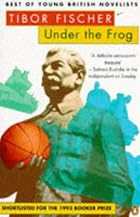
Under the Frog by Tibor Fischer (1992, UK)
Life in Hungary under the Communists was like living under the frog, in a shithole, according to Gyuri and his friends. Gyuri's foremost goals are dodging the Army and getting out of Hungary. He is class-x which is a political handicap so things are more difficult for him, but joining the Army's basketball team gave him small privileges, as well as freeing him from becoming cannon fodder. From 1944 when the Germans occupied Hungary, to October 1956 during the Revolution, we get acquainted with the rather banal life of this young man whose preoccupations were centered around his libido, but who seems to be rather less charming than his playing colleagues, failing to make a conquest every time. Between basketball practice and chasing girls, he hatches absurd childish plans of getting out of the country. Slowly, however, he begins to be confronted with reality, and he even gets an idea of how the system works, how the hated secret police operated, not through any effort or interest on his part, but of simply being in the right place at the right time. The book culminates in the heady days of the revolution, and we see Gyuri grow up at last, albeit in a painful way.
The book is meant to be funny and serious at the same time, and there are a number of laugh out loud scenes, especially concerning the antics of the basketball buddies who behaved like young men everywhere. This recipe, however, quickly becomes monotonous -- there is nothing so offputting as young men in their mid to late-20s still behaving as if they were 13. The number of words that this book drove me to consult the dictionary was staggering for the number of pages it has. It was interesting to encounter words unfamiliar to me the first few times, but this kept on until the very last line. I found this rather brattish display by the author, not unlike the story's main character, quite irritating. To have cassandraing, sesquipedalian, collops, aposiopesis appear within 4 pages of each other was too much acrobatics, in my opinion. The story starts on a high note, drops significantly for most of the narrative, then picks up again when the revolution begins. It's a feeble attempt, however, at a comic approach to the subject of growing up in a Communist East Europe. It all seems to ring a false note. The book reminded me of Joseph Sckvorecky's The Swell Season which, however, is a far worthwhile read, the author's own experience lending it authenticity and pathos.
50baswood
Under the frog definitely one to avoid.
51rebeccanyc
The title sounds like the best part. Thanks for warning us!
52deebee1

A Walk on the Wild Side by Nelson Algren (1957, US)
Nelson Algren's own words describe this book best.
The book asks why lost people sometimes develop into greater human beings than those who have never been lost in their whole lives. Why men who have suffered at the hands of other men are the natural believers in humanity, while those whose part has been simply to acquire, to take all and give nothing, are the most contemptuous of mankind."
A Walk on the Wild Side is a story about the lost and lonely men and women of Perdido Street in 1930s New Orleans. It is a stark and often poignant portrayal of the lives of society's down and out, losers and has-beens, lived out in the streets, cheap hotels, dingy bars, and brothels of this city. Dove Linkhorn, 16-years old, son of an itinerant preacher, is recently arrived, with big dreams of easy money and a good life. Dove is willing to work hard, and he is willing to try his hand at anything. He knew that his youth and his muscles are his strength, but his illiteracy was a liability. So he does what he could to learn to read. Among pimps, whores, con-men and suchlike, he got his education, and it didn't end in reading. Dove gets in and out of scrapes, and gets to understand many things. Life was tough, people were hard-bitten, disillusioned, and there was plenty to be angry about. Little acts of compassion, of sympathy, of loyalty, however, shine through their shared misery, and once in a while, a courageous soul emerges who reminds them of their pride of themselves, and unspoken dreams.
Algren does not idealize poverty or glorify these miserable characters, nobody does extraordinary things, neither does anybody overcome his or her miserable existence, but they are more real and the more human for it. The story is a series of small dramas, and Algren sometimes tends toward the melodramatic. But Algren's writing is wonderful and has a melancholic ring to it, he uses lyrics of songs to good effect in setting the mood. In his words, we almost hear the sound of music and songs which happen to be playing or being sung, almost always heard through the open door as Dove walks by. Where he came from, it was always a church door. Here in New Orleans, it would be a jukebox.
A good read, and a vivid reminder that the misery portrayed in this novel is a situation that is again being felt in many parts of the US and Europe. Algren was not describing a world very different from what we are faced with these days -- high unemployment, migration, aggressive door-to-door marketing, more and more homeless, the large amount of advertisements we see on walls or sales notices pushed under our doors -- they also characterized Dove's New Orleans then. It is sobering to see the similarities.
53dmsteyn
Good review of what sounds like an interesting book. I've heard of Algren, but I've never considered reading one of his books. I really liked the quote at the beginning, as well.
54rebeccanyc
I've always heard of that book but, like Dewald, never thought of reading it. You make it sound intriguing.
55SassyLassy
Thanks to Lou Reed, I've always associated that title with NYC. This book sounds excellent. I like writing from that era and will look for this one.
56baswood
Great review of A Walk on the Wild Side, Nelson Algreen, which has long been one of my favourite American novels. I agree with you that the book has a melancholic ring to it.
dewald, rebecca, Sassy, don't hesitate in taking that walk on the wild side.
dewald, rebecca, Sassy, don't hesitate in taking that walk on the wild side.
57kidzdoc
Ooh, lots of great reviews here as usual! A Walk on the Wild Side jumps to the top of my wish list, especially since it's set in New Orleans. Oblomov and The Embarassment of Riches have been added as well. Fabulous reviews as always, deebee!
59deebee1
Cool, that's what this music is. Thanks, rebecca. Interestingly, Algren's book was actually the inspiration for this song. At least that's what wikipedia says:
In the 2001 documentary Classic Albums: Lou Reed: Transformer, Reed says that it was Nelson Algren's 1956 novel, A Walk on the Wild Side, that was the launching off point for the song, even though the song grew to be inhabited by characters from his own life. As with several other Reed songs from the 1970s, the title may also be an allusion to an earlier song, in this case Mack David and Elmer Bernstein's song of the same name, the Academy Award-nominated title song of the 1962 film based on Algren's novel. During his performance of the song on his 1978 Live: Take No Prisoners album, Reed humorously explains the song's development from a request that he write the music for the never completed musical version of Algren's novel.
In the 2001 documentary Classic Albums: Lou Reed: Transformer, Reed says that it was Nelson Algren's 1956 novel, A Walk on the Wild Side, that was the launching off point for the song, even though the song grew to be inhabited by characters from his own life. As with several other Reed songs from the 1970s, the title may also be an allusion to an earlier song, in this case Mack David and Elmer Bernstein's song of the same name, the Academy Award-nominated title song of the 1962 film based on Algren's novel. During his performance of the song on his 1978 Live: Take No Prisoners album, Reed humorously explains the song's development from a request that he write the music for the never completed musical version of Algren's novel.
60rebeccanyc
Back in the 80s, I knew someone who bought a black leather jacket just so that if she ran into Lou Reed he might pay attention to her!
62deebee1
Another read from 2012. Still got 4 to go...

The Procedure by Harry Mulisch (1998, The Netherlands)
Translated from the Dutch by Paul Vincent
It is late sixteenth century and the Jews of Prague are in danger. Rufolf II, lord of Austria, king of Bohemia and Hungary, emperor of the Holy Roman Empire orders Rabbi Jehudah Low to his court. In the presence of Europe's most distinguished thinkers and personalities (Tycho Brahe, Johannes Kepler, and Arcimboldo are there), the emperor expresses his wish to be given a golem. In order to guarantee the safety of his people, the Rabbi Jehudah Low, tries to create a golem following ancient Cabalist texts. ("A golem, according to Low, is a human being without a language. So you could see him as the antipode to a figure from a play, as the latter consists of language without a human form. That is only supplied by an actor.") He is assisted in this endeavor by his son-in-law. They are taking time, and the emperor is getting impatient. Finally, the experiment is done but something had gone terribly wrong. Rabbi Low would need to face the emperor, and the consequences of his failure. Four hundred years later, an eminent Dutch biologist, Viktor Werker, mourning the loss of his stillborn daughter, creates an eobiont, a complex organic crystal that has a metabolism and can reproduce. It causes an international furor over questions of ethics and morality, but in certain quarters, he was being praised as the modern day Pygmalion. The world, though, was not prepared for it, and Werker pays the ultimate price for unlocking the mystery of life.
I enjoyed this slim, clever novel. I like Mulisch's clean prose, and the way he constructs and puts together the various seemingly unrelated details that form a coherent picture only at the very end, and assume parallels that were not evident before. His characters are always lucid, extremely cerebral and cultured individuals who come across as cold and detached, as Werker here is. I don't like them very much, but I like the way they reason. Mulisch peoples his books with thinkers and intellectuals of the day, acting as a kind of chorus to the main narrative, and their exchanges are always stimulating and fun, if not brilliant. In this short novel, Mulisch writes of grand themes of hubris, immortality, love interspersed with short discourses on linguistics, art, genetics, philosophy, and closes with an ending worthy of an honest-to-goodness thriller.

The Procedure by Harry Mulisch (1998, The Netherlands)
Translated from the Dutch by Paul Vincent
It is late sixteenth century and the Jews of Prague are in danger. Rufolf II, lord of Austria, king of Bohemia and Hungary, emperor of the Holy Roman Empire orders Rabbi Jehudah Low to his court. In the presence of Europe's most distinguished thinkers and personalities (Tycho Brahe, Johannes Kepler, and Arcimboldo are there), the emperor expresses his wish to be given a golem. In order to guarantee the safety of his people, the Rabbi Jehudah Low, tries to create a golem following ancient Cabalist texts. ("A golem, according to Low, is a human being without a language. So you could see him as the antipode to a figure from a play, as the latter consists of language without a human form. That is only supplied by an actor.") He is assisted in this endeavor by his son-in-law. They are taking time, and the emperor is getting impatient. Finally, the experiment is done but something had gone terribly wrong. Rabbi Low would need to face the emperor, and the consequences of his failure. Four hundred years later, an eminent Dutch biologist, Viktor Werker, mourning the loss of his stillborn daughter, creates an eobiont, a complex organic crystal that has a metabolism and can reproduce. It causes an international furor over questions of ethics and morality, but in certain quarters, he was being praised as the modern day Pygmalion. The world, though, was not prepared for it, and Werker pays the ultimate price for unlocking the mystery of life.
I enjoyed this slim, clever novel. I like Mulisch's clean prose, and the way he constructs and puts together the various seemingly unrelated details that form a coherent picture only at the very end, and assume parallels that were not evident before. His characters are always lucid, extremely cerebral and cultured individuals who come across as cold and detached, as Werker here is. I don't like them very much, but I like the way they reason. Mulisch peoples his books with thinkers and intellectuals of the day, acting as a kind of chorus to the main narrative, and their exchanges are always stimulating and fun, if not brilliant. In this short novel, Mulisch writes of grand themes of hubris, immortality, love interspersed with short discourses on linguistics, art, genetics, philosophy, and closes with an ending worthy of an honest-to-goodness thriller.
63rebeccanyc
#61 I lost track of her, deebee, but if I ever should run into her again, I'll ask her.
#62 Sounds like an interesting book.
#62 Sounds like an interesting book.
64DieFledermaus
Great reviews as usual. I've seen Tibor Fischer's stuff at the stores and might have been interested in Under the Frog but will avoid - book bullet dodged.
Will add The Procedure to the list though - I have his The Discovery of Heaven on the pile but it always looks daunting.
Will add The Procedure to the list though - I have his The Discovery of Heaven on the pile but it always looks daunting.
65Rise
- 62
hubris, immortality, love ... linguistics, art, genetics, philosophy
A total novel? Glad to hear of its "clean prose" despite these dense subjects. I already have The Procedure so glad to see your positive review of it.
hubris, immortality, love ... linguistics, art, genetics, philosophy
A total novel? Glad to hear of its "clean prose" despite these dense subjects. I already have The Procedure so glad to see your positive review of it.
66henkmet
I enjoyed several of Mulisch' books, didn't read the Procedure yet though. I completely failed to understand the hype around The discovery of heaven; I found it a draconian novel, unsympathetically displaying the author's erudition and rather lacking in imagination for all that. I may be in a minority of one though so it'd be interesting to see how you (DieF) like it.
Anyway, thanks for reminding me on The Procedure.
Anyway, thanks for reminding me on The Procedure.
67deebee1
DieF, I read somewhere that Fischer himself never lived in Hungary, though he had the connections on which the story was loosely based -- parents are Hungarians (who moved to the UK before he was born), father was actually a basketball player. I appreciate satire when used as commentary of living under repression, but not juvenilization of such a topic, which I doubt anybody who went through the experience would do. I think this was my main problem with the book. Many LT readers, however, like it.
DieF and Henk, I had mixed feelings about The Discovery of Heaven. I loved the first chapter, think it's one of the best opening pages of any novel. The chapter hooked me, so I had high expectations. Novel fizzled though about a third way through. Mulisch just wasn't able to replicate the dazzle of the first chapter, and though I took no issue with him unsympathetically displaying the author's erudition as Henk did, I feel his characterizations were rather shallow. A fun romp, though, so I encourage DieF to pick it up.
DieF and Henk, I had mixed feelings about The Discovery of Heaven. I loved the first chapter, think it's one of the best opening pages of any novel. The chapter hooked me, so I had high expectations. Novel fizzled though about a third way through. Mulisch just wasn't able to replicate the dazzle of the first chapter, and though I took no issue with him unsympathetically displaying the author's erudition as Henk did, I feel his characterizations were rather shallow. A fun romp, though, so I encourage DieF to pick it up.
68dchaikin
Catching up deebee1. Great stuff on Oblomov. I'm fascinated by A Walk on the Wild Side (that's going on the wishlist).
69deebee1

The Three Christs of Ypsilanti by Milton Rocheach (US, 1964)
The Three Christs of Ypsilanti documents an experiment led by Milton Rocheach in 1959 at the Ypsilanti State Hospital in Michigan, that aimed to explore the processes involved when individual systems of belief are challenged, that is, the behavioural change that may occur as a result of confrontation with the ultimate contradiction for human beings -- when more than one person claims the same identity. A second aim was to observe how messages purporting to come from significant authority figures existing in the imagination of the delusional individuals could influence behaviour.
Rocheach brought together the three Christs into daily contact for a period of two years: Clyde Benson, the oldest of the three, a farmer who succumbed to great personal losses; Joseph Cassel, a francophone Canadian, a would-be writer who endured abuse and physical violence as a child; Leon Gabor, the youngest, and the highest functioning in the group, who suffered from the compulsive religiosity and psychotic behaviour of his mother. The daily meetings were meant to bring about a collision of their "primitive beliefs" which could shock the three Christs into recognizing the truth and result in lasting changes in their behaviour, and as Rocheach himself said, to help the men "trancend loneliness." Later, Rocheach attempted to further resolve the dilemma of identity by introducing interventions from the subjects' imagined figures of authority -- such as an imaginary wife for Leon, and a father figure for Joseph, whose identities themselves evolved along the experiment. Rocheach, however, after 25 months concluded that the confrontation approach did not work and so terminated the experiment. Twenty years later (in an afterword to the book), he confesses to regretting writing and publishing when he did, having realized along time that the experiment was not about confrontation among three people, but four, including himself. That while he failed to cure the three Christs of their delusion, they had cured him of his God-like delusion that by his "omniscient and omnipotent" arranging of their daily lives within an institutional framework, he could change them permanently. He also admitted that etchical dilemmas posed by the research was a reason for its termination, and suggested instead that self-confrontation, based on the results of later experiments he did, rather than the confrontational method of the three Christs, was more effective in bringing about long-term behavioural changes, and didn't pose the same ethical issues.
Rocheach's account reads like a well-written novel, it is riveting, and the elegant writing is a surprise. For me, it was harrowing to read the degree of manipulation of these people's lives, especially the second part of the research which led the men to anticipate certain things, raised their hopes, or depressed them accordingly. There were the fake letters, the fake notes, the fake telephone calls. It made me angry to see especially Leon being led to believe that his wife was "just there" to see to his well-being, sending him daily promises of small rewards for certain behaviour. It was heartbreaking to see the men react and respond in all their humanness, with sincerity and utter belief, although Leon and Joseph would sometimes comment on their being merely "instruments." That the subjects saw through it all, in their delusional way, is telling in itself. Rocheach assures us that since the time of the experiment, changes have occurred in the institutional settings and frameworks governing treatment of mental illnesses, which implies that in this new setting, an experimental approach like this might no longer be permissible. The rather naive theoretical suppositions and approach he employed was supported by the prevailing views of introducing novel approaches to treatment of the mentally ill, ideas which were more radical than those of the pyschiatric mainstream then.
Thanks to Darryl (kidzdoc) whose review on his thread brought this book to my attention. A very worthwhile and memorable read. I would love to see the stage play based on it.
70rebeccanyc
This book sounded so depressing when Darryl read it that I mentally scratched it off my list of books I might read someday. Your review almost tempts me but . . .
71Linda92007
Fascinating review of The Three Christs of Ypsilanti, deebee. I also became aware of this through Darryl's review and downloaded it to my Kindle, but have allowed it to get buried there, unread. Is the stage play by the same name?
72deebee1
Rebecca, the subject is indeed depressing but I thought that the book provided significant insights into the inner workings of the minds of the mentally ill, and provided a better understanding of the nature of paranoia, and the processes these individuals employ to deal with the world that is threatening to them. Moreover, I would argue that the many quotations by Rocheach of their letters, dialogues, notes show a literary quality that novels incorporating perspectives of a mentally ill person, would be hard pressed to imitate. (book nudge...)
Linda, the book doesn't mention the title, but a google search came up with the following:
http://www.pwcenter.org/events.php?pid=132
Linda, the book doesn't mention the title, but a google search came up with the following:
http://www.pwcenter.org/events.php?pid=132
73rebeccanyc
I do read a lot of depressing books, deebee; it was the way Rokeach treated the patients that I thought would just make me angry. But your nudge may be working . . .
74SassyLassy
While familiar with the title, as I keep looking over NYRB lists, I had no idea what this book was about. However reprehensible, I think we should know of these studies in order to remain on the lookout for other abuses, such as Dr Ewen Cameron's CIA funded experiments with LSD at McGill. I know there are review boards now, but the basis of some of these older experiments still crops up in newer work and abuses.
Excellent review and I went back and read kidzdoc's too, as I wasn't in Club Read when he wrote it. They give two different approaches, but each makes me interested in this book.
Excellent review and I went back and read kidzdoc's too, as I wasn't in Club Read when he wrote it. They give two different approaches, but each makes me interested in this book.
75kidzdoc
Great review of The Three Christs of Ypsilanti, deebee. As you said, it does read more like a well written novel than it does a clinical treatise. I was accepting of the clinicians' passive observation of the three men in the beginning of the study, when they were placed together, but strongly opposed to the active intervention used when the men didn't fundamentally change their views of themselves. It's an excellent read in its own right, but it's even more valuable IMO as a documentation of medical history and a look into the dangers of unsupervised clinical experimentation.
I had no idea that a play was made from the book! I'd be willing to travel nearly anywhere just to see it in person.
I had no idea that a play was made from the book! I'd be willing to travel nearly anywhere just to see it in person.
76mkboylan
and The Three Christs goes on the wish list! Wow! That sounds fascinating. Thanks for the great review. Thread starred.
77deebee1
Thanks, all. Yes, Darryl, I also object to that "active intervention", that's part freaked me out.
Sassy, I'm with you there on the importance of awareness about these things in order to prevent abuses, but there should be a difference between legitimate clinical interventions in a medical environment, and those being conducted "on the sly" for other questionable reasons, like CIA-led ones. The question is how is this established, when information is likely not easily accessible?
Below is an article I found by google search, on CIA interventions. Absolutely horrifying.
http://archive.truthout.org/the-hidden-tragedy-cias-experiments-children62208
Sassy, I'm with you there on the importance of awareness about these things in order to prevent abuses, but there should be a difference between legitimate clinical interventions in a medical environment, and those being conducted "on the sly" for other questionable reasons, like CIA-led ones. The question is how is this established, when information is likely not easily accessible?
Below is an article I found by google search, on CIA interventions. Absolutely horrifying.
http://archive.truthout.org/the-hidden-tragedy-cias-experiments-children62208
78baswood
The three Christs of Ypsilanti sounds like a horrific experiment. Who is making money from the book I wonder, no doubt the indefatigable Milton Rochaech.
79rebeccanyc
Only if he's getting money from beyond the grave! But whoever's getting it, it's not the patients he mistreated.
80zenomax
What a splendid review deebee. It always makes me smile grimly when we are assured that we were wrong then but we have learned from our mistakes. I am convinced there are countless opportunities for people to play god, and if they are in a position of authority they may feel able to convince,without discomforting themselves, that they have the right, even duty.
81LisaMorr
Enjoyed your reviews of The Procedure and The Three Christs of Ypsilanti; on to the WishList they go.
82rachbxl
I've spent a large part of today catching up with everyone's threads and I'm so pleased to have found yours. Love your idea of mini-theme projects; I don't think I'd have the discipline at the moment but maybe I'm just lazy. The big theme reads you mention (Barry's, Dan's, for example) fill me with excitement about doing something like that 'one day', but maybe your is more realistic and therefore mre do-able. Anyway, I look forward to reading about your progress.
83deebee1

In Other Rooms, Other Wonders by Daniyal Mueenuddin (2009, Pakistan)
A collection of eight short stories, in one way or another related to the household of a K.K. Harouni, a Pakistani landowner, in his estate in Lahore. Nawabdin Electrician is about Nawab and his expertise in messing with the electric meters of tube wells, which saves rupees that find their way into various pockets instead of to the electric company. This makes Nawab sought after by farm managers far and wide, makes him relatively well-off, and a target for robbery. Saleema, married to a good-for-nothing, does menial work now and then in the master's house, and cultivates sexual relationships with other servants that are repaid with favours that allow her to "merely exist". Her existence spirals into the nightmarish world of drugs and prostitution, she resorts to begging and dies. Provide, provide is about Harouni himself, who learns he has cancer and has a few months to live. Within that short period, he aggressively secures political favours for his sons, in order to protect the family who will be vulnerable, once he dies, to the enemies he made in the course of his long political life.
These are the first three stories, and the rest are very much of the same mould -- corruption and abuses of power, petty and grand, according to one's position in the social scale; women who are weak, needy, treated merely as sexual objects; the old landowner who lives in the past and the forgotten glory of his ancestors, and the small preoccupations of the servant class, showing the contrasts between the lives of the wealthy and the poor. The stories depict the society's traditions that are still strongly based on feudal practices and relationships. The characters experience brief moments of triumph, and joy, which are gone too soon.
Many LT readers loved this book. I was prepared to see "wonders" as they did, and as the title promised. I was truly disappointed that I didn't see any. It's just probably not my cup of tea.
ETA: cover photo
84rachbxl
>83 deebee1: interesting, deebee. I read maybe one story ages ago and it left me a bit lukewarm so I didn't persist, though I knew lots of LTers rate it highly, as you say. I'm currently trying to go back and finish books I've abandoned over the last couple of years so I might get to this one again (although most of the others were abandoned just because life intervened, not because I wasn't enjoying them).
85dmsteyn
Nice review, deebee. I've heard of the book, but it doesn't really sound like my cup of tea, either. Wondering whether the title has anything to do with Truman Capote's Other Voices, Other Rooms...
86LisaMorr
>83 deebee1: Your description of the book immediately interested me, even though the book was not wonderful for you. Thanks for your comments.
87deebee1

The Day of the Owl by Leonardo Sciascia (1961, Italy)
Translated from the Italian by Archibald Colquhoun Arthur Oliver
A small town in Sicily. In plain view of many witnesses one early morning, a man is gunned down as he was boarding a bus. Nobody claims to have seen it. The bus conductor merely says, "They've killed him." Who are "they"? Surely somebody knows something? But nobody is talking. Captain Bellodi, an antifascist partisan, cultivated, dedicated professional, is new to the place. He comes from the wealthier regions in the northern part of the country, and as an outsider, was thought by the higher authorities, to be good in bringing some movement to disturb the inertia of this backward region. Early in his investigations, two more deaths occur, one after the other. Everyone knew it was no coincidence. People are called in to the precinct, including the brothers and business partners of Salvatore Calasberna, the first deceased. He learns that Calasberna had been assiduously courted by the mob, but never succumbed to their demands, mistakenly believing he needed no protection. The captain amazes the people around him with his courtesy, quick mind, and impartial handling of "interested persons", his clear, direct language, all of which personified a system of justice and authority totally unfamiliar to them, and unknown in this place. But the wall of silence, ignorance, and fear is very strong. Here, nothing is either black or white, and different rules govern. It does not take him long to learn this. But he is willing to persevere.
The owl of the title refers to a Sicilian saying about the owl symbolizing death. Sciascia's brilliant portrayal of the Mafia is unique in that he does not write directly about the Mafia. What we see instead is a delicate unpeeling of layers -- perceptions, suppositions, hesitations -- forming a subtle but nonetheless sharp characterization of what is hidden but strongly felt. There is no blood and gore, but danger is an ever-present element, and Sciascia does not make us forget that. This is a short but intense novel, a rich portrayal of the psychology of fear, a marvelous read.
Highly recommended.
ETA: cover photo
88kidzdoc
Nice review of In Other Rooms, Other Wonders, deebee. I own it, but I haven't read it yet.
I read The Day of the Owl several years ago, but I don't remember enjoying it as much as you did. I think I'll give it another go later this year.
I read The Day of the Owl several years ago, but I don't remember enjoying it as much as you did. I think I'll give it another go later this year.
89dchaikin
Terrific review of The Day of the Owl. Too bad about Mueenuddin. I had that book in mind, was also hoping for wonders.
90deebee1

Life: An Unauthorized Biography by Richard Fortey (1997, UK)
This is a big book, the story of four billion years of evolution, a history of our planet before man appears. Fortey takes the reader to a fascinating journey in time that begins in the shores of Spitsbergen. His recollection of his first expedition, in that bare, gray rocky outcrop, draws us into the world of rocks and the stories that tell of the beginnings of our planet, spun from dust and rock. He guides us through the processes which gave rise to conditions that proved favourable to the formation of the most primitive forms of life, which are evidenced in fossil records, some organisms of which are very much still with us. Then on to the development of more complex organisms, the places they inhabited. He pictures for us the rich marine broth, the periodic crisis the planet goes through with the climatic cycles, that eventually released creatures from this marine soup to slouch landwards. He depicts the silent greening of the world in the Devonian period, and the wondrous engineering of a tree. In these carboniferous forests, we behold the instance when the last physical, threshold was crossed: from the ground to the air. He talks of continental drift, and of dinosaurs great and small, including a fascinating chapter on theories of the end and controversies surrounding them. Then there is the appearance of mammals, and the special case of Australian mammals. The last chapter, as befits its place in the evolution of life in our planet, is about us, humans, our origins and the earliest journeys of our ancestors.
While many things from this book are familiar to most people, it bears being reminded of them because Fortey's narrative is so wonderfully written, his curiousity and wonder infusing every page, that what is already fascinating becomes wondrous. This book came out in 1997, so some of the information may already be outdated, still it is a worthwhile read of the origins of the greatest wonder of all. I'll certainly be looking for his other, newer books.
91dmsteyn
Sounds like a good book on an important subject, deebee1. My father is busy reading Dawkins's The Ancestor's Tale, which covers similar ground.
93dchaikin
Sounds like you got a lot out Fortey. I read his book Earth: an Intimate History, and I'm glad I read it. But it seems to have left me hesitant to jump into this one.
94NielsenGW
90> Fortey is indeed a lot of fun. I really enjoyed his Dry Storeroom No. 1.
96rebeccanyc
Just catching up, and glad to hear about The Day of the Owl, as it's often on display in my favorite bookstore, and I haven't yet bought it. But now I will. I have Dry Storeroom #1, but haven't read it!
97deebee1
Dewald, your father might enjoy this for its different approach, as rather than a walk back through time as Dawkins's book is, this one starts from the very beginning.
MK, i'm sure you will enjoy it.
Dan, I accuse you for leading me to immediately click on the Purchase button of Amazon's book page of Earth, as soon as I read your post. And this was before I even had my morning coffee! :-)
Nielsen, I'm sure I will get to this book one day. I like how he writes.
japaul, good to know what to expect.
rebecca, I think you will like The Day of the Owl. It was my first Sciascia and definitely will not be the last.
MK, i'm sure you will enjoy it.
Dan, I accuse you for leading me to immediately click on the Purchase button of Amazon's book page of Earth, as soon as I read your post. And this was before I even had my morning coffee! :-)
Nielsen, I'm sure I will get to this book one day. I like how he writes.
japaul, good to know what to expect.
rebecca, I think you will like The Day of the Owl. It was my first Sciascia and definitely will not be the last.
98deebee1

A Time of Gifts: From the Hook of Holland by Patrick Leigh Fermor (1977, UK)
When PLF was 18, equipped only with his rucksack, sketchbook, and a staff much like a medieval pilgrim, he went on an an epic journey that took him from the Hook of Holland to Constantinople. This book, the first of a trilogy, chronicles his adventure as far as Hungary, in the period when war clouds had begun forming in Europe. The sense of place and people he evokes is wonderful, and the mix of curiousity and expansive knowledge that he had, makes each experience almost magical more so because he knew he was describing and experiencing a world that would soon be upturned. Fermor's prose is rich and lyrical so that we are happy to lose ourselves in his ramblings about art, architecture, and literature as he trudges between cities heavy with so much history, and the peasant's countryside. Fermor soaked up every bit of detail, and through the prism of his skill for language, portrays for us images that stays in our minds, in their whole and in their rich detail, more than any instant digital photo could ever capture and do.
Lovely book, and one that I will bring with me next time I happen to be in any of the places he passed through. I just might capture a bit of his wonder.
That's it...my last book read in 2012 still. Took ages, but now I can properly start reviews for my 2013 reads.
99deebee1
Reviews coming up for:
Cronus' Children by Yves Navarre
Oriental Tales by Marguerite Yourcenar
Reasons of State by Alejo Carpentier
Ferdydurke by Witold Gombrowiscz
The Fall of the Roman Empire: A New History by Peter Heather
Portraits of a Marriage by Sándor Márai
Cronus' Children by Yves Navarre
Oriental Tales by Marguerite Yourcenar
Reasons of State by Alejo Carpentier
Ferdydurke by Witold Gombrowiscz
The Fall of the Roman Empire: A New History by Peter Heather
Portraits of a Marriage by Sándor Márai
100deebee1

Cronus' Children by Yves Navarre (1980, France)
Translated by Howard Girven
Winner of the Prix Goncourt 1981
Cronus (or Kronos), in Greek mythology, was the leader of the first generation of Titans, divine decendants of Gaia, the earth, and Uranus, the sky. Cronus overthrew his father, ruled during the mythological Golden Age, and was overthrown by his own son, Zeus. It is said that Cronus was castrated by his son Zeus just like he had done with his father Uranus before.
Cronus, in this novel, is 74-year old Henri Prouillan, ex-minister, leading citizen, and resented father, husband, and brother of the Prouillan family. All that happens in this novel takes place within a day, beginning in the late morning of the 9th of July until dawn next day. This date is significant. Henri, in the salon of his grand apartment at Place d'Antioche, gets ready to bring the old dog to the vet, for a last and final visit. It is significant, too, that he chooses this day to bring the beloved dog there. All of Henri's children have gone, his wife is dead, and only the loyal housekeeper, remains. It seems Henri is alone with his thoughts that day, but the thoughts of members of his entire family, and those closest to them, wherever they were in the world actually converge in that house at Place d'Antioche, as each remember what took place there exactly two decades ago that day, and how their lives and their relationships were forever changed from that moment.
Twenty years ago, Bertrand, the youngest of the four children, was a brilliant student and poet. For 20 years now, he has been living in the family estate in Moncrabeau, away from the eyes of his family, a broken shell of a being, product of his father's cold decision to "cure" him of his homosexuality, flagrant, scandalous and harmful for Proullan's rising political career. It was the 9th of July, his birthday, when he returned from having this treatment, and the family learned everything.
Navarre strips layer after layer from the lives of the characters, to reveal their weaknesses, their disappointments, and their failures, and the unacknowledged but strong bonds that connect them to each other. Luc, the eldest, is a successful industrialist but could not sustain relationships; Sebastien could not get over losing his family in a painful divorce; Claire, an artist, continues to grieve for her dead husband; and Suzanne, Prouillan's sister, lives in the legacy of her dead playwright husband. Loss and grief is a common experience and hounded them, seemingly an extension of the first loss and grief they went through 20 years ago. That they were marked forever by the event shows in their living for a time when their world was still whole, untainted by the monstrous deed. Time has not purged the anger, the helplessness, the bitterness, and the guilt, most specially the guilt over Bertrand. They were complicit in the act.
We never know the thoughts of Prouillan and Bertrand, the central characters. He drives the story, but we never access Prouillan's motives, interests, and feelings. We can only guess that he did what he did in order to tame Bertrand, the rebel child. For Prouillan, there were no half-measures, even if it destroyed lives. Bertrand lives through the kindness of the family paid to look after him, and we know almost nothing of his animal existence. We know him though before his world fell through, as we read through his passionate missives to an older lover. We learn that the lover killed himself, and somehow we get the feeling that Prouillan must be behind it.
This book is not an easy read, there is so much tension and antagonism that simmers below the surface, in the characters' recollections. They are each tortured individuals, marked by the father, at the same time, feeling as helpless now as they were when they were children, in the face of this coldhearted individual. Cronus' reach is far and enduring, and we realize that he himself is the children's greatest tragedy.
Yves Navarre (born 1940) was a French gay writer, whose works were on homosexuality and related issues. He was awarded the Prix Goncourt in 1981 for this novel. He was François Mitterand´s main advocate in the gay community in the 1980s. He killed himself in 1994.
101rebeccanyc
Oh, I adore Patrick Leigh Fermor, and it was A Time of Gifts that introduced me to him. What an amazing book. Are you planning to move on to its continuation in Between the Woods and the Water? I was thrilled to learn last year that the final volume, covering the end of his journey, will be published posthumously!
Interesting review of Cronus's Children, but probably not a book for me.
Interesting review of Cronus's Children, but probably not a book for me.
102baswood
Excellent review of A Time of Gifts I am also a big fan of Patrick Leigh Fermor and have not read this one yet.
I had not heard of Cronus's children and another excellent review.
I had not heard of Cronus's children and another excellent review.
103henkmet
Thanks for a very nice review of Cronus' children. I'll add it to my list.
104Rise
I hope to find a copy of A Time of Gifts. It looks like a promising trilogy to follow. And nonfiction trilogies must be uncommon compared to those of fiction.
105zenomax
Another PLF follower here. You really captured his enduring appeal deebee.
The way he took in information and interpreted it, and questioned it, coming up with new possibilities was quite unique.
101 I hadn't realised the 3rd piece of the trilogy was about to be published. That's great news. I guess so done must have edited his notes because he notoriously had problems completing the third instalment.
The way he took in information and interpreted it, and questioned it, coming up with new possibilities was quite unique.
101 I hadn't realised the 3rd piece of the trilogy was about to be published. That's great news. I guess so done must have edited his notes because he notoriously had problems completing the third instalment.
106deebee1
Rebecca, I have Between the Woods and the Water and will find time to read it this summer as it's likely that I'll be spending the holiday in a few of the places he writes about. Glad to know about the final volume's publication. I await further news.
Henk, hope you like it, whenever you get to the book. For all the heavy themes and rather grim subject, I rather enjoyed the book. Found it gripping and it in fact stayed with me longer than I thought it would. There is very good writing there, too, so compelling in fact that I'm tempted to look for another book of his, Sweet Tooth.
Rise, it's worth looking for. Hope you enjoy the book as much as I did.
Zeno, I wonder how much of this processing of information that contributed to the uniqueness and the beauty of his writing was due more to the fact that the complete writing (of the instalments) was done much, much later, when time, distance, and life experience certainly bore on the quality of his writing. How would it have turned out if he had written it soon after the journey, I wonder? Whatever the case, travel writing is definitely the richer for these books.
Henk, hope you like it, whenever you get to the book. For all the heavy themes and rather grim subject, I rather enjoyed the book. Found it gripping and it in fact stayed with me longer than I thought it would. There is very good writing there, too, so compelling in fact that I'm tempted to look for another book of his, Sweet Tooth.
Rise, it's worth looking for. Hope you enjoy the book as much as I did.
Zeno, I wonder how much of this processing of information that contributed to the uniqueness and the beauty of his writing was due more to the fact that the complete writing (of the instalments) was done much, much later, when time, distance, and life experience certainly bore on the quality of his writing. How would it have turned out if he had written it soon after the journey, I wonder? Whatever the case, travel writing is definitely the richer for these books.
107kidzdoc
Very enjoyable review of A Time of Gifts, deebee. I have the Kindle version of it, and I'll probablyread it over the summer.
Powerful review of Cronus' Children; I'll pass on it, though.
Powerful review of Cronus' Children; I'll pass on it, though.
108arubabookwoman
Amazon makes it so easy--I've 'one-clicked' into my library The Three Christs of Ypsilanti. Re the Truth-Out article, Jane Mayer's book The Dark Side: The Inside Story of How the War on Terror Turned into a War on Americn Ideals opens with a long section on CIA mind experiments. Also regarding barbaric treatments on children, I read My Lobotomy by Howard Duffy a few years ago--the author received lobotomy basically because his step-mother found him difficult to handle. The doctor who lobotomized him routinely lobotomized children for similar reasons. This was in the 1950's.
109dchaikin
catching up...
- #97 - I'll talk to Fortey about a commission.
- I HAVE to read Patrick Leigh Fermor. Thanks for the lovely reminder.
- And that's a wonderful review of Cronus' Children. Thanks for bringing it to our attention.
- #97 - I'll talk to Fortey about a commission.
- I HAVE to read Patrick Leigh Fermor. Thanks for the lovely reminder.
- And that's a wonderful review of Cronus' Children. Thanks for bringing it to our attention.
110deebee1

Oriental Tales by Marguerite Yourcenar (1938, France)
Translated from the French by Alberto Manguel
A collection of 10 exquisite stories, set in an "Orient" that stretches from the Balkans to China. The stories are a retelling of authentic fables and legends, fantasies, and allegories whose themes are on love, loyalty, betrayal, conquest, and sacrifice.
I was swept away by the first story, "How Wang-fo was saved", which is based on a Taoist fable. It tells of an old painter who loved the image of things and not the things themselves, and who was known far and wide for his great talent. He is summoned by the Emperor, and hears the Celestial One's laments for his impoverished soul. "You lied, Wang-fo, you old impostor. The world is nothing but a mass of muddled colors thrown into the void by an insane painter, and smudged by our tears." Wang-fo's paintings showed beauty and perfection that the Emperor sought in vain all his life for they existed only in Wang-fo's art. For this, he would be punished dearly, but art remains his faithful ally, and through it, he devises a beautiful way of escaping the terrible fate that was in store for him.
"Marko's smile" is from a Balkan ballad of the Middle Ages, about a fearless Serbian hero who fought against the Turks, whose smile was awakened by a beautiful dancing girl. "The Milk of Death" is from another Balkan ballad about a young mother who was walled into a lookout tower in the belief that the skeleton will support the weighty body of stone until Judgment Day. "The last love of Prince Genji" borrows characters and setting from the 11th century Japanese classic Genji Monogatari, and tells of the Japanese Don Juan retiring from the world and his death, an imaginative "filling up" of what was not mentioned in the classic text. "The man who loved the nereids" about a man who has "left the world of facts to enter that of illusions" and "Aphrodissia, the widow" about forbidden love, are based on superstitions held by the present-day Greeks. "Our lady of the swallow" is a lovely story about the Nymphs who were walled in by the monk and villagers in a cave, believing they were cast-offs by God during creation, and by their pagan presence endangered the Christian souls. "Kali beheaded" is a story inspired by a Hindu myth about the terrible goddess. "The end of marko Kraljevic" was inspired by another Serbian ballad of the death of a hero at the hands of a mysterious stranger. Closing the collection is another story of about an old painter, "The sadness of Cornelius Berg", who is simply tired of life.
Yourcenar's storytelling is wonderful, the kind one returns to again and again, for the beauty of the language and the enchanted worlds she recreates with it. This is a beautiful collection, and a very good book to get lost in.
112deebee1
Deborah, I looked up Mayer's book in Amazon and was disappointed to know it got very poor review(s). It seems she starts off with the wrong premise (the US opposed use of torture before 9/11). The commenters, though, mention Alfred McCoy's A Question of Torture as the definitive one to read on the subject. So I've added that to my wishlist. But, hey, thanks to you that I was led to it.
Interesting that you mention lobotomy. Well, it is fiction, but I just recently finished Cronus' Children (post 100) about a young man who was lobotomized to "cure" him of his homosexuality. I'm ignorant of real life cases, and would certainly be interested to learn more. Duffy's book seems a good place to start. Thanks for mentioning.
Interesting that you mention lobotomy. Well, it is fiction, but I just recently finished Cronus' Children (post 100) about a young man who was lobotomized to "cure" him of his homosexuality. I'm ignorant of real life cases, and would certainly be interested to learn more. Duffy's book seems a good place to start. Thanks for mentioning.
113SassyLassy
Deebee, do you know if this was a collection of her works edited by Manguel, or was he strictly the translator? He always has an incredible talent for finding tales and putting them together in a collection, and this one sounds wonderful. Great review.
114baswood
Good review of Oriental Tales, Marguerite Yourcenar
115deebee1
Sassy, I understand he was the translator of this entire collection which he did in 1985. The book appeared in the original French in 1938 as Nouvelles Orientales.
116deebee1

Reasons of State by Alejo Carpentier (1974, Cuba)
Translated by Francis Partridge (1976)
The first decade of the 20th century sees the leader of an unnamed Latin American country spending more of his time in Paris than home. There, he cultivates the company of high society, indulges his passion for the classics and art, and satisfies his tastes for fine cuisine, drink, and women. A francophile to the core, France is for him, his spiritual home and real earthly home, not that backward, steaming jungle of a place where he came from, but which he believes, is his destiny to govern like a father to his children.
The novel opens with the Head of State performing his morning toilette in his grand Paris apartment, when the arrival of bad news from home ruins his reveries of the previous night's pleasures. A rebellion led by a trusted army general demanded his immediate return. At home, the Head of State himself leads the campaign which take him and the army to the hinterlands. The defeat of the rebels comes swiftly, and retribution on the sympathetic village almost gaily carried out by the victorious troops. Decadence and the good life have not dulled the President's warrior instincts, and he rides back to capital as victorious hero. More medals, more monuments -- testaments to his glorious deeds, celebrated his triumph. He takes a side trip to New York for treatment for his arthritis staying not a day more than needed (he needed the Americans, but how he hated the way these Yankees did things), and off he goes again to take refuge, after so many trials and tribulations this past year, in the charms of a Paris summer. This time, though, there is no welcome mat thrown upon his arrival, no invitations arrive, and social calls are politely but firmly refused. He finds out that the world had learned and been shown images of the massacre during the campaign that he himself led. News had reached this far shore. Still contemplating how he could recover his lost status, news arrive of a new rebellion led by someone close to him, and he is forced to go home again. He wins as before. This time though, he vows to make sure no more rebellions ever occur.
He builds grand edifices, monuments, and we see them bigger and grander every time, growing it seems in reverse proportion to his legitimacy as a leader, now being tested as talks circulate about the growing unrest, and the hushed whisperings about THAT overstayig resident of the Palace. Attacks start to come from all sides, even in his very own quarters, but the enemy remains shapeless, faceless. For "reasons of state", the Head of State uses all resources at his disposal to quelch this threat. And this is when really, truly, the reign of terror begins.
Between all this, we see his machinations -- selling off the vast banana plantations and installations to US companies. He has to pander to the Americans, crude and uncultured as they are (according to him), as geography and financial requirements dictate. He claimed to know his people, understood their longings, and, like a puppeteer who pulled strings and spoke in voices that charmed the audience, he promoted spectacle so they will forget to ask questions. He calls for elections, to show his people and the rest of the world, what a lover of democracy he was -- he wins, of course, by a landslide but nobody talks of the mysterious voices that threatened, that insinuated, that spooked everyone, that made sure no disaffection manifests itself in the ballots. When world opinion (or at least by those who mattered for him -- French) turned against him, he gathered all forces and with plenty of imagination, attempted to build up his country's image and restore prestige to himself. He was not loathe to sending cultural objects as donations to the great French museums, which he was sure, they would love.
This is no crass Head of State, no Idi Amin who behaves outlandishly in polite and exalted circles. He is the most cultured gentleman, who styles himself as a modern and progressive leader. Back home, he is known as a stern, almost ascetic, man free of vices that lesser men are prey to. Yet, known only to his closest aide and his housekeeper, he retains the vulgar habits of any commoner, with his girlie magazines, his licentious adventures, and alcoholism. There is the dichotomy, the contradictions. But the image of a strong, unbendable leader has to endure, and indeed all that he achieved. But only until he was one day, quietly, in the middle of the anarchy that had descended on the capital, taken away in a ship by his most trusted friend, to live out his remaining years in that faraway country which he considered his spiritual home. The final coup had taken place, and he was the last to know. Over there, in Paris, he lives out the rest of his years, in forgotten exile.
Carpentier's charting of the dictator's career makes for a compelling portrait of political power. The story is straightforward and easy to follow, quite unusual for Carpentier. But as usual for this author, digressions into art, literature, philosophy, and history abound which enriches, rather than bogging down the narrative. Though I found this novel interesting, it seemed a bit predictable, and a little too pat. Perhaps I want my dictators (fictional or not) to get their just desserts in the end. But perhaps Carpentier was really just more true to reality -- considering everything, do dictators really ever get what they deserve? Still a very well-written novel, and a pleasure to read. It should not be easy to translate Carpentier, who engages in plenty of word play, but Francis Partridge does a wonderful job.
117dmsteyn
Great review of Reasons of State, Deebee! Sounds like an interesting meditation on dictatorship, which should be hard to pull off. I also want my dictators to get their just desserts, but as you allude, this often doesn't happen in real life, so it's understandable that Carpentier goes for this option.
118rebeccanyc
I'm skipping your review, deebee, since I have this on the TBR. But I'm sure I'll enjoy it, since you turned me into a Carpentier fan!
119kidzdoc
Nice review of Oriental Tales, deebee; I'll probably pass on it. However, your review of Reasons of State is quite enticing, so I'll add it to my wish list.
120deebee1
Dewald, I agree with you that good writing on dictators/ dictatorships should be hard to pull off, but Carpentier does it nicely. I'm planning to read a few more novels on this theme this year, so it would be interesting to see other authors' treatment of the subject. I'm mostly looking forward to I, Supreme by Augusto Roa Bastos, which allows the reader to get into the mind of the dictator.
Rebecca, I look forward to what you think of it!
Darryl, if you haven't tried Carpentier, this is a good place to start.
Rebecca, I look forward to what you think of it!
Darryl, if you haven't tried Carpentier, this is a good place to start.
121kidzdoc
Thanks, deebee. I'll probably read The Lost Steps first, since I already own it, unless you would strongly suggest reading Reasons of State ahead of it.
122RidgewayGirl
Excellent review of Reasons of State!
123rebeccanyc
#120 I'm sure I'll like it, deebee. I'm just spacing out my Carpentiers a little so I have them to look forward too.
#121 I think you'll also like The Kingdom of This World, but I may have mentioned that already.
#121 I think you'll also like The Kingdom of This World, but I may have mentioned that already.
124kidzdoc
>123 rebeccanyc: Yes, you did mention The Kingdom of This World, Rebecca; it's also on my (Amazon) wish list.
125Linda92007
Great review of A Time of Gifts, deebee. I have only read A Time to Keep Silence, but based on that I'm anxious to read the first and second books of the Constantinople trilogy, both of which I have on my Kindle.
Your review of Reasons of State is also intriguing. I have been unable to find Carpentier's books at our library, so I just purchased The Lost Steps and Explosion in a Cathedral.
Your review of Reasons of State is also intriguing. I have been unable to find Carpentier's books at our library, so I just purchased The Lost Steps and Explosion in a Cathedral.
126rebeccanyc
I had to buy a used copy of Reasons of State from ABE Books.
127baswood
Used copies are the best rebecca. Excellent review Reasons of State I must now log into Abe books to ensure that rebecca has not snaffled the last copy.
128rebeccanyc
I only like used books if they aren't too used! I ended up with a hard cover copy of RoS.
129deebee1
Darryl, you can't go wrong with starting with The Lost Steps, it is considered his masterpiece!
Thanks, RidgewayGirl and Linda!
Rebecca, I do exactly the same with my Carpentiers. I regret, though, that there are only 4 of his books I've not read (at least those translated into English). So few left to look forward to...
Barry, I hope you made it in time.
I'm fine with used copies, provided they don't have notes or highlighting in them. With the Carpentier books, we don't really have much choice as it seems only the originals in Spanish get reprinted these days. I just took a peek and saw in Amazon UK that his novella The Chase is selling used copies for GBP 0.01,and a "new" copy for GBP 177.95! I wonder if I shouldn't put my copy back on the market...it certainly looks more "new" than "used."
Thanks, RidgewayGirl and Linda!
Rebecca, I do exactly the same with my Carpentiers. I regret, though, that there are only 4 of his books I've not read (at least those translated into English). So few left to look forward to...
Barry, I hope you made it in time.
I'm fine with used copies, provided they don't have notes or highlighting in them. With the Carpentier books, we don't really have much choice as it seems only the originals in Spanish get reprinted these days. I just took a peek and saw in Amazon UK that his novella The Chase is selling used copies for GBP 0.01,and a "new" copy for GBP 177.95! I wonder if I shouldn't put my copy back on the market...it certainly looks more "new" than "used."
130Midnight_Louie
After reading your thread here, and Rebeccanyc's review, The Lost Steps has found it's way onto my wishlist now, which seems to he growing by leaps and bounds since I found this group! Not that I am complaining :)
131rebeccanyc
#130 found it's way onto my wishlist now, which seems to he growing by leaps and bounds since I found this group!
Now you know you're a REAL Club Read member -- that's what happens to all of us!
Now you know you're a REAL Club Read member -- that's what happens to all of us!
132deebee1

Ferdydurke by Witold Gombrowiscz (1937, Poland)
Translated from the Polish by Danuta Borchardt (2000)
This book is, as Susan Sontag in the Introduction says, "an epic in defense of immaturity", and it is like no other. Gombrowicz insists on the word immaturity, and not youth, because it represents something unattractive, something inferior. Thus being, how can such a book grab us? But grab me it did, as I was in turns amused, repelled, entertained, annoyed, mostly provoked by the idea of immaturity as embodied by Joey (can a name be more annoying than this?) and his friends. I read on, more out of curiousity at how much more bizarre and eccentric things can turn, how twistedness and contrariness can continue to be served up without the author exhausting the themes with repetition. But Gombrowicz is not the master for nothing, and the excellent translation captured the nuances and moods, that the reading (including a couple of chapters which were more like essays by the writer on writing), was a pleasure and an experience in itself.
Joey is a 17-year old schoolboy, recently 30-year old writer who was torn between his obsession of projecting an image of serious maturity to the outside world through his writing and his inability to let go of his infantile self.
But I was, alas, a juvenile, and juvenility was my only cultural institution. Caught and held back twice - first by my childish past, which I could not forget, and the second time by the childishness of other people's notions of me, a caricature that had sunk into their souls - I was the melancholy prisoner of all that is green, why, an insect in a deep, dense thicket.
Joey's transformation into his juvenile self occurred as a result of his abduction by a professor Pimko into an absurd world where everything was grotesque, upside down and inside out -- the big was small, the small monstrously big, the shapes unnatural, gestures outrageous, actions manic, and reasoning absurd. Here, he could let himself go; the more infantile one was, the better. Pimko takes him to a schoolyard full of sniveling brats where his idiotic pupa paralyzes him amidst their infantile tricks, violence and teenage braggadocio. (In the translator's notes, "pupa" is described as Gombrowicz's metaphor for the gentle, insidious, but infantilizing and humiliation that human beings inflict on one another, or belittlement.) Here, it is the vilest, most disgusting, and most distorted expressions and behaviour that are rewarded. After a while he realizes he has to run away, lest he fall prey to all this freakishness.
Yet instead of running away I wiggled my toe inside my shoe, and the wiggling paralyzed me and foiled my intentions to run, because how was I to run while I was still wiggling my toe...?...All I needed was - the will to run. But I lacked the will. Because to run one needs the will, but where is the will to come from when one is wiggling one's toe....
Joey's education in this world continues beyond the school confines, to his boarding house where he becomes infatuated with the daughter of his landlady, who represented everything he was not. Between school and home, we see his encounters with contrasts: maturity/immaturity in all its forms, modernity/old fashioned ways; youth/old age; innocence/knowledge; ability/ineptness; awkwardness/sophistication; politeness/impoliteness; faces/counter-faces; composition/decomposition; symmetry/assymetry; artificiality/naturalness; thesis/antithesis; theory/practice.
He journeys with Kneadus, a classmate, into the countryside to look for a farmhand whom they wished to emulate (again the contrast -- cityboy/farmboy), and came to the estate of Joey's aunt and uncle. Here, he finds another world where the lords of the manor and the peasantry entrap and hold onto each other in childishness. He sees more contrasts: city ways/rugged farmhand ways; the city streets/the countryside; lords/servants.
Blind actions. Automatic reflexes. Atavistic instincts. Lordly-childish fancy. I walked as if into the anachronims of a gigantic slap in the face, which was simultaneously a tradition of many centuries and an infantile smack, and it liberated, in one fell swoop, the lord and the child.
After a while, Joey decides to escape from this world where he felt totally infantilized. And again, an abduction takes place which he thought would bring him back to the city...and, we hope, the maturity that has so far eluded him. But really, what hope does he have? At the book's closing, Joey assumes the author's voice taunting, challenging, provoking us, "graceful bundles of body parts, now let it all begin -- come, step up to me, begin your kneading, make me a new mug so I will again have to run from you....Because there is no escape from the mug, other than into another mug...." And ends with, "It's the end, what a gas, And who's read it is an ass!" I can see Joey sticking out his tongue at me, and doing an anti-face grimace. How can it not be.
This was a fun read, and I found some of the situations truly hilarious. There is nothing subtle about them. An example is the face/anti-face contest which was so inane and truly gross, but also so stupidly funny. It struck me that this was not so unreal, as kids actually do it. What I didn't enjoy though was the brutality with servants (hitting the face -- mug/pupa?) though it was regarded common practice by masters, and was accepted without question by, and even was a point of honor among servants. I was also turned off by references to rape of the female servant by Kneadus.
The playfulness of the subject extends to the fantastic wordplay that Gombrowicz employs, which I enjoyed very much. And we do not mind the inanity and grossness that assail us readers, the pokes at our sensibilities -- it is all fun. And why should a mirror into ourselves show only what is decent, mature, and sophisticated? Why can't we look at the mirror of Ferdydurke, see our own pupas and laugh at the same time? We might yet take advice from Joey, in his former 30-year old self, when he reflected:
What is the connection, where is the bond between the king of beekeepers and the inner man, between the man and the youth, between the youth and the boy, the boy and the child that, after all, he once was, what comfort is the king to the little brat in you? A life unmindful of these bonds, a life that does not evolve in unbroken continuity from one phase to another is like a house that is being built from the top down, and must inevitably end in a schizophrenic split of the inner self.
134StevenTX
Great review of Ferdydurke. This has been high on my priority list for a long time, but I just haven't gotten to it. A few years ago, though, I did read his pair of short novels: Cosmos and Pornografia. They are also very good and somewhat disturbing, but dark and humorless.
135rebeccanyc
I've also had Ferdydurke on the TBR for a long time. I enjoyed your review, but am not sure I'll be moving it up soon; I'll have to be in the mood for that type of book.
137Linda92007
That is a fabulous review of Ferdydurke, deebee, but I don't think that Gombrowicz is for me.
138Rise
An unusual "YA" book! It reminds me of the gross jokes of Alfred Jarry.
139baswood
Intriguing review of Ferdydurke I think the immaturity would annoy me too much to read this book.
140deebee1
Steven, I'm ready to read more of Gombrowicz though perhaps not too soon.
Rebecca, I agree. The book is quite demanding that way.
Dan, I think his writing is brilliant, and his imagination strange but not perverse.
Linda, if one day you feel like going for the unusual, this may be a good candidate.
Rise, I've not read Jarry, but I hope to see the similarities when I get around to reading him.
Barry, I was afraid it would turn me off too as many times it verged on slapstick but I found the wit actually very engaging, and that there was something deep and subversive in this parody of mindlessness.
Rebecca, I agree. The book is quite demanding that way.
Dan, I think his writing is brilliant, and his imagination strange but not perverse.
Linda, if one day you feel like going for the unusual, this may be a good candidate.
Rise, I've not read Jarry, but I hope to see the similarities when I get around to reading him.
Barry, I was afraid it would turn me off too as many times it verged on slapstick but I found the wit actually very engaging, and that there was something deep and subversive in this parody of mindlessness.
141deebee1
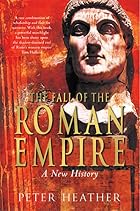
The Fall of the Roman Empire: A New History by Peter Heather (UK, 2005)
In this book, Heather presents an alternative argument to the prevalent view explaining the cause of the fall of the empire: that Rome's own internal transformations had so weakened it by the fourth century, that it was ready to collapse under its own weight by the fifth. Heather seeks to find the explanation of this collapse elsewhere: that Europe's barbarians, transformed by centuries of contact with Rome, eventually brought the empire down. Heather then proceeds with an exploration of the workings of the later Roman empire and the changes that created it.
Pax romana
Heather opens part 1 with a battle scene in 54 BC in what is now eastern Belgium, in which he invites the reader to have a close inspection at the details of the engagement which demonstrated the astonishing fighting capacities of the legionnaire, who was the foundation of the military might of the Roman imperial power. While the Roman military system and Rome's conquests were the results of centuries of warfare, Rome did not depend on military force alone to build the empire. Targeted diplomacy (as well as ruthlessness, where necessary) was its twin strategy, but more than to build or to expand its territories, it was geared towards ensuring the integrity of its borders. We are introduced to the Romans and what initially defined Romanness: the perpetuation of the ruling class's vision of an exclusively educated elite destined to lead humankind. By the 4th century, republicanism or its pretence had practically disappeared, no one thought of the emperor as anything but an autocratic monarch who was expected to behave like one. By this time, too, the Empire was governed by two emperors, to rule the eastern and the western halves. Heather regards as the fundamental change of all being the dimension of the imperial evolution that underlies the rest of the changes: the creation of Roman rural and urban landscapes outside Italy, and the expansion of the political community which led to the sidelining of Rome and her Senate. With the arrival of the legions, life was transformed in the conquered provinces and provincials everywhere began to remake their lives after the Roman patterns and value systems. When the same political culture, lifetyle and value systems established themselves in this huge area, all inhabitants became legitimately Roman. This new identity was bound to motivate the new Romans to assert their right to involve in the political process, and to partake of the power and largesse that the empire's vast estate brought with it. One of the consequences of this to be seen later was that it emboldened usurpers to the throne.
Germania, or east of the Rhine, however, in the late Roman period, remained beyond the imperial frontier (this ancient line being discernible still in the divide between the Romance and the Germanic languages). The legions, in the conquests of the 1st century, halted on the Rhine and the Danube -- and explains why late Romans didn't consider the German tribesmen to be a real threat, and instead focused their attention to the east, to Persia, where the greater threat lay. Roman expansion halted on this frontier because beyond that, the level of economic development was starkly subsistence that the income derived did not justify the costs of conquest (population had no coinage, literacy,not even villages to speak of).
Heather discusses the client kingdoms, and the expansion of Germania through the three centuries, brought about by migrations from the northwest to the southeast, the changes in the political structure of the barbarian groups, intensive agriculture and development of their economic sectors. It is interesting to note that the foundation of these transformations were the interactions of these groups with the Roman empire at the frontier, and the influence of the Roman way of life on these border and client kingdoms. The developing Germanic world, however, posed only a latent threat to the empire, as it lacked overall unity. The Empire cultivated a relationship with these kingdoms in order to keep them in check and ensure stability, through a system of payments and controls. So far the barbarians knew where they stood.
Barbarian invasions
The first crisis with the barbarians occurred in 376 -- a vast number of Goths appeared in Roman territory on the Danube seeking safe haven. They were driven there by the heavy fighting with the people of the Huns, who had arrived from the northeast. The Huns appeared thus on the world stage. The Huns threw the Roman Empire and a large number of Gothes into a new and unprecedentedly close relationship, both parties of which didn't desire it, and were not committed to the asylum agreement they negotiated in 376. Food shortages and black-marketeering inside the Danube led the Goths to start hostilities which broke into open revolt. In the meantime, the Goths had found new allies: Huns and Alans who were recruited to the Gothic cause with promises of booty. The Gothic forces attacked the frontier cities and towns on the Thracian Plain through raiding forces. Roman forces from the east, who were busy in Persia, had to be brought in to put the Goths in their place. Against all expectations, the Roman army suffered a devastating loss, and the victory at Hadrianople gave the Goths free hand to range across Thrace in 378. A peace treaty was signed which included land grants, and it seemed, that the Goths had given up fighting for farming. For now, anyway.
This was the first of the series of losses against waves of invasion by the barbarian hordes and signalled the beginning of the (Western) empire's downfall. The second crisis occurred about 30 years after, when the Roman frontier security was breached by four major invasions from the west, within a short period. These invasions were caused by the displacements brought about by a second Hunnic advance into Europe, into its very center. While the Vandals, Alans, and Suevi were rampaging Gaul and Spain, the Western empire's instability was worsened by the revolt of Constantine III. In 410, a Gothic supergroup led by Alaric, sacked Rome. Heather describes it as "one of the most civilised sacks of a city ever witnessed." Alaric's Goths were Christian, and left untouched Rome's holiest sites. Invasions and successive usurpations weakened the central authorities. The first impact was felt in the serious decline of tax revenues from Spain and parts of Gaul, occupied by the Visigoths, now territories lost to the Roman system. This significant loss of income would cause substantial damage to the army, a key pillar of the empire. Recruitment and training suffered, so that the quantity and the quality of the Roman army was now different from what it was at the height of the conquests.
In 428, the Vandals, under Geiseric sailed from Iberia to the north African coast. The goal was the city of Carthage -- the jewel in the Roman crown. North Africa was Rome's granary, and it not only supplied wheat, but olive oil and wine. In short, it fed Rome. Moreover, the revenues that North Africa generated enabled the empire to support its army, the single largest expense item of the imperial budget. North Africa came under Geiseric's control, and the disappearance of a major source of wealth resulting in reduction in revenues for the western Roman state was a fiscal disaster. In the meantime, attempts to recover the lost provinces ended in catastrophic failures, and further plans were junked because of a bigger threat now looming: Attila the Hun.
Fall of empires
In a matter of four decades, the Huns rose from nobodies to superpower. Attila had risen through the incorporation of a large number of Germanic groups, and the removal of surplus kings. He launched massive military campaigns against the Empire in the 440s and early 450s. His death, however, in 453 led to the collapse of the Hunnic empire, after which the different Gothic groups went their own separate ways, and new independent groups arose from the wreckage of the empire. Hunnic domination had served as a counterforce that controlled the numerous Gothic and independent groups, and its extinction released these divergent groups and factions to once again, and with greater impunity this time knowing how much weakened the Roman empire was, to harass what was left of the western Roman state. Rome was sacked by Geiseric's Vandals, and the newcomers established themselves as part of the Empire's body politic, the Visigothic king even playing a key role in deciding the imperial succession. This signalled the birth of a new order. Without the Huns to keep in check other immigrants in the west, and the empire's own military power diminished, there was no choice but to let them in. The Roman west faced a crisis of imperial succession, and while eastern emperors tried to restrore stability in the west, none of the regimes installed succeeded. By this time, with the falling away of territories, all that was left of the western empire was just Italy and a tiny territory in southeastern Gaul. The struggle for power in Italy became a less and less attractive proposition to would-be emperors, and the last regimes were so short-lived as one after another ruler decided to leave and abandon the west. In 476, the western Roman empire ceased to be.
In sum, according to Heather, the western Empire broke up because of the presence of too many immigrant groups who established themselves on its territory, and who managed to expand through warfare their holdings, thus decreasing the sources of revenues of the Empire to maintain its army and the integrity of its territories, which led to the weakening of the central authorities.
I found Heather's arguments compelling, and the way he presented his counter-arguments to the prevailing ones. He mentions where gaps and lack of documentary evidence lie, and where suppositions are derived from flimsy available evidence, so that arguments are advised to be regarded with caution. Despite the dense subject, his writing is neither dull nor turgid, and I found myself drawn into the narrative immediately and all the way to the end. Though there are plenty of names mentioned, and though he inserts into the narrative details of court infighting where it was necessary to explain certain decisions, on the whole it does not get confusing because Heather focuses on major players and major events, and doesn't introduce more information than needed to get the big picture. The more than 100 pages of notes, timeline, glossary, dramatis personae, etc. are a big help, and maps are inserted where you need them. This organization of the book never made me feel as if I was drowning in details.
Reading this has made me curious to read as well on the dominant argument that the collapse was caused by internal factors. Also, it made me interested in looking for books on the period after, the early Medieval, and about the rise of these barbarian groups. I very much enjoyed this book, which I picked up as my "travel read" on a short trip we made to Merida, in the Spanish Extremedura in early January. Merida was the capital of the Roman empire in Iberia, and the impressive ruins and rich artifacts from the period attest to its importance as a revenue-generating region. I felt that my having read a bit before enriched my appreciation of what I saw, especially in the visit to the Visigothic church which displayed artifacts from their occupation. It was satisfying to know a little bit more about how they came to be there, especially since the museum didn't have very good background information on the (rather rough and simplistic) Visigothic objects. I will be posting a few photos below from these visits.
142SassyLassy
Well thought out and organized review! Does Heather discuss the combination of arguments; that an internally weakened empire was unable to integrate the newcomers successfully, rather than set itself up in opposition?
Sounds like a really interesting book. Looking forward to the pictures.
Sounds like a really interesting book. Looking forward to the pictures.
143deebee1
Roman ruins and artifacts, and Visigothic objects, Merida and Alcantara, Extremedura region, Spain.
Merida (Emerita Augusta) was founded in 25 BC by Octavius Augustus, and became the capital of the Roman province of Lusitania.

The theatre

The temple of Diana. Note the ugly building built right into the center of the temple. This was constructed by the Catholic conqueror of Merida, during the Reconquista, who defeated the Moors and installed himself as the first governor. He had intended to demolish the temple to build his palace (it was the highest point in the city), but thought it better to use the columns as a sort of decorative element (!).

The forum

One of the gates.

Splendid mosaic floor.

Luscious female nude.

The longest bridge surviving from ancient times, with a length of 792 meters, spanning the Guadiana river, built during the reign of Trajan.

What is regarded as the most important bridge in the Empire, spanning the Tagus river in Alcantara, built in 105-106. Al Qantarat simply means "the bridge" in Arabic. Its height is 71 meters, with a width of 8 meters, spanning 214 meters. On the Triumphal Arch in the middle are two marble plates with the inscription of the Emperor's name, Trajan, and the year of construction. Also is written, Pontem perpetui mansurum in saecula (I have built a bridge which will last forever).

This small temple on the edge of one side of the bridge has the builder's name inscribed on the top of the door, Caius Iulius Lacer.

Visigothic tombstone. Note the rather crudely done inscription.

The Visigoths preferred images from nature, in a simplistic and straighforward style.
Merida (Emerita Augusta) was founded in 25 BC by Octavius Augustus, and became the capital of the Roman province of Lusitania.

The theatre

The temple of Diana. Note the ugly building built right into the center of the temple. This was constructed by the Catholic conqueror of Merida, during the Reconquista, who defeated the Moors and installed himself as the first governor. He had intended to demolish the temple to build his palace (it was the highest point in the city), but thought it better to use the columns as a sort of decorative element (!).

The forum

One of the gates.

Splendid mosaic floor.

Luscious female nude.

The longest bridge surviving from ancient times, with a length of 792 meters, spanning the Guadiana river, built during the reign of Trajan.

What is regarded as the most important bridge in the Empire, spanning the Tagus river in Alcantara, built in 105-106. Al Qantarat simply means "the bridge" in Arabic. Its height is 71 meters, with a width of 8 meters, spanning 214 meters. On the Triumphal Arch in the middle are two marble plates with the inscription of the Emperor's name, Trajan, and the year of construction. Also is written, Pontem perpetui mansurum in saecula (I have built a bridge which will last forever).

This small temple on the edge of one side of the bridge has the builder's name inscribed on the top of the door, Caius Iulius Lacer.

Visigothic tombstone. Note the rather crudely done inscription.

The Visigoths preferred images from nature, in a simplistic and straighforward style.
144rebeccanyc
Not only have you given me a great education, but you've inspired me to add this book to my wishlist even though I've never had any interest in the fall of the Roman empire before. I wish I'd known how interesting Merida was. I was there overnight in the late 80s for a flight from there to Madrid and from Madrid home, and all I did was walk on the beach! I would have gotten there earlier and explored.
145baswood
Excellent review Debbie and some wonderful pictures. This book goes straight onto next months to buy list. Thank you for providing so much information.
147Linda92007
Great review and pictures, deebee. My partner was recently looking for a book on one of the Roman emperors, although I don't recall which. I think this might interest us both.
148kidzdoc
Fabulous review of The Fall of the Roman Empire, deebee! Thanks for sharing it and those photos with us.
149dchaikin
Very curious about how the arguments Heather makes are looked at by his peers. Very interesting stuff. Those pictures are marvelous.
150DieFledermaus
Terrific review of Ferdyduke - hoping to read that one before the end of the month.
Also a thoroughly informative review of The Fall of the Roman Empire
Also a thoroughly informative review of The Fall of the Roman Empire
151JDHomrighausen
What an excellent review of the Roman empire book. Coincidentally I'm just finishing my Roman empire class! You wrote:
In sum, according to Heather, the western Empire broke up because of the presence of too many immigrant groups who established themselves on its territory, and who managed to expand through warfare their holdings, thus decreasing the sources of revenues of the Empire to maintain its army and the integrity of its territories, which led to the weakening of the central authorities.
I think that could just easily be flipped around: it wasn't necessarily the fault of the immigrant groups, but of the Romans for not integrating them enough into the empire. The Goths sacked Rome because Rome was selling their kids into slavery, among other things. Roman documents of the time describing the Goths and other Germanic tribes show a profound ignorance of basic facts of life - i.e. are they nomadic or settled, what their diet was like, etc. One could easily argue that the Romans failed to overcome their cultural arrogance enough to integrate the Germanic tribes into the successful model of Roman annexation and respect for local customs in the Eastern provinces.
(Thanks for helping me review for my final Friday! :P)
In sum, according to Heather, the western Empire broke up because of the presence of too many immigrant groups who established themselves on its territory, and who managed to expand through warfare their holdings, thus decreasing the sources of revenues of the Empire to maintain its army and the integrity of its territories, which led to the weakening of the central authorities.
I think that could just easily be flipped around: it wasn't necessarily the fault of the immigrant groups, but of the Romans for not integrating them enough into the empire. The Goths sacked Rome because Rome was selling their kids into slavery, among other things. Roman documents of the time describing the Goths and other Germanic tribes show a profound ignorance of basic facts of life - i.e. are they nomadic or settled, what their diet was like, etc. One could easily argue that the Romans failed to overcome their cultural arrogance enough to integrate the Germanic tribes into the successful model of Roman annexation and respect for local customs in the Eastern provinces.
(Thanks for helping me review for my final Friday! :P)
152deebee1
Rebecca, I've never had any great interest in the Roman Empire in general until I got to this. I've visited the big ruins from Africa to southeast Europe, and lots of smaller ones in many places, including one a 10 minute walk from where I live, so their ubiquitousness and seeming uniformity made them less interesting to me than say, Celtic artifacts. This book has made that period come alive (no pun intended) for me, and I'm eager now to read more on the subject. I hope you enjoy it as much as I did.
Are you sure it was Mérida? Mérida is a tiny city near the Portuguese border and doesn't have an airport, as it's served by either Madrid or Seville. It doesn't have a beach either, as the nearest coast is close to 300 kilometers (which is either in Huelva down south, or Lisbon in Portugal!). I was thinking that perhaps you were in A Coruña or Vigo instead, in northwest Spain for the trans-Atlantic leg of your trip. Not known for their Roman ruins, but the beaches are lovely there, though!
Barry, thanks. I feel privileged already, having added to your book purchase list.
Nana, Linda, Darryl, DieF, thanks.
Dan, according to wikipedia (sorry, not the best reference, but certainly the easiest to access) Heather isn't the only and certainly was not the first proponent of the "catastrophic collapse" theory, among the several schools explaining Rome's decline. The gaping hole in surviving evidence from the 4th and 5th centuries explains the emergence of many varied theories. As the jury is still out, Heather, I think, stands as much chance as the next historian in the battle of interpretations. What would be interesting to read would be an analysis of the different theories, and which one school seems to hold up better against certain criteria, given lack of evidence.
Are you sure it was Mérida? Mérida is a tiny city near the Portuguese border and doesn't have an airport, as it's served by either Madrid or Seville. It doesn't have a beach either, as the nearest coast is close to 300 kilometers (which is either in Huelva down south, or Lisbon in Portugal!). I was thinking that perhaps you were in A Coruña or Vigo instead, in northwest Spain for the trans-Atlantic leg of your trip. Not known for their Roman ruins, but the beaches are lovely there, though!
Barry, thanks. I feel privileged already, having added to your book purchase list.
Nana, Linda, Darryl, DieF, thanks.
Dan, according to wikipedia (sorry, not the best reference, but certainly the easiest to access) Heather isn't the only and certainly was not the first proponent of the "catastrophic collapse" theory, among the several schools explaining Rome's decline. The gaping hole in surviving evidence from the 4th and 5th centuries explains the emergence of many varied theories. As the jury is still out, Heather, I think, stands as much chance as the next historian in the battle of interpretations. What would be interesting to read would be an analysis of the different theories, and which one school seems to hold up better against certain criteria, given lack of evidence.
153rebeccanyc
Oops, my brain obviously wasn't working! I was in Malaga, not Merida, although I have been in Merida in Mexico (that's where I ran out of books to read, for those who have read that story on my thread).
154dchaikin
#152 - I looked up wikipedia after posting...scanned the fall of the Roman Empire page and was suitably overwhelmed. Then I moved on to something else. I would like to read Heather's theory
#151 - Jonathan - The Roman Empire culture was entirely dependent on slavery...OK, that's a guess, i don't have a source. Anyway, I think even if the Germanic tribes were somehow assimilated it would still have involved Germanic child slaves, it just would have been balanced with Germanic senators and whatnot.
#151 - Jonathan - The Roman Empire culture was entirely dependent on slavery...OK, that's a guess, i don't have a source. Anyway, I think even if the Germanic tribes were somehow assimilated it would still have involved Germanic child slaves, it just would have been balanced with Germanic senators and whatnot.
155deebee1
> 142 Does Heather discuss the combination of arguments; that an internally weakened empire was unable to integrate the newcomers successfully, rather than set itself up in opposition?
Sassy, sorry I missed that post. Heather does not approach it that way, and does not conclude that the collapse was a result of failure on the part of the hosts. In the entire narrative, it didn't seem that Rome had purposely set itself up in opposition to the immigrants. Rome wouldn't have anything to gain by that, and the policy that they've always adopted from the beginning, they continued to observe, it seemed, all the way to the end: that the outsider groups were kept in check through a policy of accommodation -- payments, exchanges, negotiations. That the newcomers didn't really get a short deal is shown by the fact that inside Roman territory, they were actually given land grants as part of the deal. Also, many of those captured during battle were incorporated into the Roman army, some rose to high ranks. A few descendants of captured barbarians who remained in Roman soil and did well even made it to the ruling elite.
Immigrants, willing or otherwise, in 376, were far from a new phenomenon for the Roman Empire. Throughout its hisotry, it had taken in outsiders, supplemented by large-scale migrations...There was even a technical term for the latter: receptio....There is, however, another common denominator to all documented cases of licensed migration into the Empire. Emperors never admitted on trust. They always made sure that they were militarily in control of proceedings, either through having defeated the would-be immigrants first, or by having sufficient force on hand to deal with any trouble. (p. 160)
It must also be noted that the barbarian groups over time, had themselves become sophisticated militarily, and they were keenly aware of the dwindling capacity of the Roman army to defend their territories as they could see for themselves. The supergroups (Vandals, Huns) composed of the various alliances had no intention of just quietly disappearing into the fabric of Roman society, more and more they were able to extract larger payments from Rome just to keep the peace, e.g. before Attila, Rome was paying 300 tons of gold to the Huns a year. At the height of Attila's power, he required 2,000 tons. Rome paid up, of course, but already with its loss of significant income sources (Spain, Africa), this became more and more difficult to do. Higher taxes had to be extracted, the ruling class had to start paying tax, etc. etc so that, internally, it became more and more difficult to maintain the system. The barbarian groups saw this too, and knew their time had come.
Sassy, sorry I missed that post. Heather does not approach it that way, and does not conclude that the collapse was a result of failure on the part of the hosts. In the entire narrative, it didn't seem that Rome had purposely set itself up in opposition to the immigrants. Rome wouldn't have anything to gain by that, and the policy that they've always adopted from the beginning, they continued to observe, it seemed, all the way to the end: that the outsider groups were kept in check through a policy of accommodation -- payments, exchanges, negotiations. That the newcomers didn't really get a short deal is shown by the fact that inside Roman territory, they were actually given land grants as part of the deal. Also, many of those captured during battle were incorporated into the Roman army, some rose to high ranks. A few descendants of captured barbarians who remained in Roman soil and did well even made it to the ruling elite.
Immigrants, willing or otherwise, in 376, were far from a new phenomenon for the Roman Empire. Throughout its hisotry, it had taken in outsiders, supplemented by large-scale migrations...There was even a technical term for the latter: receptio....There is, however, another common denominator to all documented cases of licensed migration into the Empire. Emperors never admitted on trust. They always made sure that they were militarily in control of proceedings, either through having defeated the would-be immigrants first, or by having sufficient force on hand to deal with any trouble. (p. 160)
It must also be noted that the barbarian groups over time, had themselves become sophisticated militarily, and they were keenly aware of the dwindling capacity of the Roman army to defend their territories as they could see for themselves. The supergroups (Vandals, Huns) composed of the various alliances had no intention of just quietly disappearing into the fabric of Roman society, more and more they were able to extract larger payments from Rome just to keep the peace, e.g. before Attila, Rome was paying 300 tons of gold to the Huns a year. At the height of Attila's power, he required 2,000 tons. Rome paid up, of course, but already with its loss of significant income sources (Spain, Africa), this became more and more difficult to do. Higher taxes had to be extracted, the ruling class had to start paying tax, etc. etc so that, internally, it became more and more difficult to maintain the system. The barbarian groups saw this too, and knew their time had come.
156deebee1
> 161, lilbrat, how exciting that you have a class on this subject. I'm sure you did excellently in the final!
Part of my answer to your point would be my post above (#155). Heather doesn't mention the point about child slavery. I don't know how strongly that would have been a factor, as it was not anything new on that time, whether to Romans or non-Romans. And if I remember correctly, the Goths had come down from France where they were already occupying and taking for themselves part of the empire's revenues. They were not exactly in a weak position or prisoners where their kids could be easily taken from them.
I don't think Romans were obliged to completely understand the immigrants way of life, and morally responsible to integrate newcomers. They were brilliant strategists, so all that politics and moves toward the immigrant groups were calculated and had a strategic purpose. Even if they had the interest to allow newcomers in this more "welcoming" and culturally open way, they would have had a hard time of it -- the groups were many, varied, came in waves over centuries, and came from all parts of the European landmass. In history, and in our own times, it has never been the attitude or practice of host (countries) to "understand" immigrants in order to assimilate them. It has always been the other way around. Cultural arrogance of the Romans could be a factor, but then there is also the argument that this arrogance wasn't directed merely at outsiders. This arrogance (I think) could also be seen within the Roman system itself which revolved around the Roman educated class. The rest of the unwashed Roman masses did not count. We do not see them at all in writings that have come down to us, it didn't seem that the educated Roman class was very much interested in knowing about the "basic facts of life", customs, etc of their lower classes. They were culturally arrogant even within their own Roman state. To be culturally broad seemed an alien idea to them.
But hey, after taking a course on it, you obviously know so much more about all this, and have a much broader perspective, so who am I to argue? :-)
Part of my answer to your point would be my post above (#155). Heather doesn't mention the point about child slavery. I don't know how strongly that would have been a factor, as it was not anything new on that time, whether to Romans or non-Romans. And if I remember correctly, the Goths had come down from France where they were already occupying and taking for themselves part of the empire's revenues. They were not exactly in a weak position or prisoners where their kids could be easily taken from them.
I don't think Romans were obliged to completely understand the immigrants way of life, and morally responsible to integrate newcomers. They were brilliant strategists, so all that politics and moves toward the immigrant groups were calculated and had a strategic purpose. Even if they had the interest to allow newcomers in this more "welcoming" and culturally open way, they would have had a hard time of it -- the groups were many, varied, came in waves over centuries, and came from all parts of the European landmass. In history, and in our own times, it has never been the attitude or practice of host (countries) to "understand" immigrants in order to assimilate them. It has always been the other way around. Cultural arrogance of the Romans could be a factor, but then there is also the argument that this arrogance wasn't directed merely at outsiders. This arrogance (I think) could also be seen within the Roman system itself which revolved around the Roman educated class. The rest of the unwashed Roman masses did not count. We do not see them at all in writings that have come down to us, it didn't seem that the educated Roman class was very much interested in knowing about the "basic facts of life", customs, etc of their lower classes. They were culturally arrogant even within their own Roman state. To be culturally broad seemed an alien idea to them.
But hey, after taking a course on it, you obviously know so much more about all this, and have a much broader perspective, so who am I to argue? :-)
157deebee1
Dan, I know you're doing a Bible reading project. I wonder if you were considering to read, too, about the spread of Christianity under the Roman Empire or at least about the times of Roman rule that provided the context of stories of the New Testament?
159SassyLassy
Thanks for the reasoned reply. I should do some reading on this era.
Struck by the Visigoth images. I don't recall seeing any before.
Struck by the Visigoth images. I don't recall seeing any before.
161JDHomrighausen
> 156, 160
I too loved the pics!
Deebee - I'm not claiming to be an expert here. :) However in studying for the final I remembered more specifics about the Romans selling Goths' kids into slavery. It wasn't the Goths in Italy, but the ones who settled in Thrace after the Battle of Adrianople (another terrible Roman mistake).
But of course, asking historical questions in retrospect is always so difficult, especially about the Roman empire, something so embedded in the Western imagination. This is a funny list our prof put up in a powerpoint slide - reasons scholars (and some, I suspect, pseudo-scholars) have given for the fall of the Roman empire:
http://www.utexas.edu/courses/rome/210reasons.html
I too loved the pics!
Deebee - I'm not claiming to be an expert here. :) However in studying for the final I remembered more specifics about the Romans selling Goths' kids into slavery. It wasn't the Goths in Italy, but the ones who settled in Thrace after the Battle of Adrianople (another terrible Roman mistake).
But of course, asking historical questions in retrospect is always so difficult, especially about the Roman empire, something so embedded in the Western imagination. This is a funny list our prof put up in a powerpoint slide - reasons scholars (and some, I suspect, pseudo-scholars) have given for the fall of the Roman empire:
http://www.utexas.edu/courses/rome/210reasons.html
162LolaWalser
203. Tristesse
Awwww! This is the best. From now on I'm telling everyone the Roman Empire died of the blues.
Awwww! This is the best. From now on I'm telling everyone the Roman Empire died of the blues.
164Polaris-
Stopping by deebee...it has taken me a while to clear the decks, but now I'm catching up with your Club Read thread for this year. As I would have expected there are many excellent reviews here that have me opening extra LT tabs left, right and centre! Very glad I starred your thread back at year's start - even if I didn't have the time to digest what you posted when you did. I've lost count of the number of fine books I've added due to a recommendation or enticing review by you!
We're currently enjoying a BBC repeat screening on the wonderful 1970s series 'I Claudius' based on Robert Graves books. I remember those books once helped me distract myself entirely, in brief though frequent snatches, from the army basic training I was then undergoing, and have always had a soft spot for them.
I've added Yourcenar's Memoirs of Hadrian to my wishlist, and I'll keep an eye out for when you get to that one in any case. Oh, and thanks for including your photographs of Merida - I love Spain, and I hope I'm able to visit one day.
Wolfgang Koeppen's The Hothouse looks like powerful and moving literature from the unique setting of post-war Germany. That one's been added too.
Thanks for your review of A Walk on the Wild Side as well. I already have The Neon Wilderness by Algren, and I hope I find a good early edition of the former in the future. Looking forward to more of your Club Read!
We're currently enjoying a BBC repeat screening on the wonderful 1970s series 'I Claudius' based on Robert Graves books. I remember those books once helped me distract myself entirely, in brief though frequent snatches, from the army basic training I was then undergoing, and have always had a soft spot for them.
I've added Yourcenar's Memoirs of Hadrian to my wishlist, and I'll keep an eye out for when you get to that one in any case. Oh, and thanks for including your photographs of Merida - I love Spain, and I hope I'm able to visit one day.
Wolfgang Koeppen's The Hothouse looks like powerful and moving literature from the unique setting of post-war Germany. That one's been added too.
Thanks for your review of A Walk on the Wild Side as well. I already have The Neon Wilderness by Algren, and I hope I find a good early edition of the former in the future. Looking forward to more of your Club Read!
165rebeccanyc
Stopped by to let you know that I finally got The Fall of the Roman Empire, which I had wishlisted based on your review. I hadn't realized what a tome it is, so not sure when I'll read it, maybe not until next summer.
Haven't seen you around in a while. Hope all is OK and that you'll eventually have a chance to update us on your reading.
Haven't seen you around in a while. Hope all is OK and that you'll eventually have a chance to update us on your reading.

