1Quicksilver66
As there are so many Tolkien lovers here I thought I should start this thread so that we can be contained and quarantined from the non-Tolkien lovers and stop infecting the Travels in Arabia Deserta thread with our obsession.
As requested, here are some pictures of my History of Middle Earth set and some of my other favourite Tolkien books.
Each volume of the History was limited to 1000 copies, published by Harper Collins in 2001/2. The 3 volumes print all 12 volumes of the History on india paper to reduce the volumes down to a manageable compass. They are each slip-cased, but I don’t like the slipcases because they are covered in a fabric which very quickly becomes grubby so I have stored them away, removed the volumes and covered each on with an Adjustable Lyfjacket for protection. These books are really beautiful and they have become my favourite and most prized volumes of all my books -

The slipcases -

The books are gilt edged, well bound and lay flat -


These are the George Allen and Unwin boxed De Luxe editions of Lord of the Rings and Poems and Stories. The Lord of the Rings ia also printed on india paper and has the huge fold out maps which are so much better than the smaller versions used by the skinflint Harper and Collins -


Poems and Stories has a cover and illustration designed by the great Pauline Baynes, Tolkiens favoured illustrator -


This is the signed de luxe Children of Hurin. Harper Collins actually did a nice job with this one. The book is boxed and the box lined with felt. There is a nice ribbon to help in removing the book from the box. The book is bound in Nigerian Goatskin, limited to 500 copies signed by Christopher Tolkien and the Tolkien Estates favoured illustrator, Alan Lee -


These are my original copies of the Hobbit, the Silmarillion, Unfinished Tales, Letters and the History of Middle Earth, all published by the sorely missed George Allen and Unwin. With the exception of the Hobbit, they are all first editions -


This is the boxed set of the History of the Hobbit which is quite nice -


Finally, some of my favourite books about Tolkien. The best Tolkien critics are Paul Kocher and Tom Shippey. Most of the books about Tolkien rushed out to cash in on the films are a waste of space in my view. Humphrey Carpenters biography is also very good, as is the Atlas of Middle Earth by Karen Wynn Fonstad. The last book here is a gem - Journeys of Frodo is by Lytton Strachey’s niece, Barbarra Strachey, and it maps the journeys in Lord of the Rings beautifully -


Enough said - hope I haven’t bored you or overloaded your computers with images.
As requested, here are some pictures of my History of Middle Earth set and some of my other favourite Tolkien books.
Each volume of the History was limited to 1000 copies, published by Harper Collins in 2001/2. The 3 volumes print all 12 volumes of the History on india paper to reduce the volumes down to a manageable compass. They are each slip-cased, but I don’t like the slipcases because they are covered in a fabric which very quickly becomes grubby so I have stored them away, removed the volumes and covered each on with an Adjustable Lyfjacket for protection. These books are really beautiful and they have become my favourite and most prized volumes of all my books -

The slipcases -

The books are gilt edged, well bound and lay flat -


These are the George Allen and Unwin boxed De Luxe editions of Lord of the Rings and Poems and Stories. The Lord of the Rings ia also printed on india paper and has the huge fold out maps which are so much better than the smaller versions used by the skinflint Harper and Collins -


Poems and Stories has a cover and illustration designed by the great Pauline Baynes, Tolkiens favoured illustrator -


This is the signed de luxe Children of Hurin. Harper Collins actually did a nice job with this one. The book is boxed and the box lined with felt. There is a nice ribbon to help in removing the book from the box. The book is bound in Nigerian Goatskin, limited to 500 copies signed by Christopher Tolkien and the Tolkien Estates favoured illustrator, Alan Lee -


These are my original copies of the Hobbit, the Silmarillion, Unfinished Tales, Letters and the History of Middle Earth, all published by the sorely missed George Allen and Unwin. With the exception of the Hobbit, they are all first editions -


This is the boxed set of the History of the Hobbit which is quite nice -


Finally, some of my favourite books about Tolkien. The best Tolkien critics are Paul Kocher and Tom Shippey. Most of the books about Tolkien rushed out to cash in on the films are a waste of space in my view. Humphrey Carpenters biography is also very good, as is the Atlas of Middle Earth by Karen Wynn Fonstad. The last book here is a gem - Journeys of Frodo is by Lytton Strachey’s niece, Barbarra Strachey, and it maps the journeys in Lord of the Rings beautifully -


Enough said - hope I haven’t bored you or overloaded your computers with images.
2parchment
I am no fan of Tolkien, but for those of you that are, and might want to obtain a fine edition, there's an auction that ends tomorrow of the original Danish set with the illustrations by H.M. The Queen of Denmark at:
https://www.stadsauktion.se/1306/192739-tolkien-ringernas-herre-dansk-oversattni...
https://www.stadsauktion.se/1306/192739-tolkien-ringernas-herre-dansk-oversattni...
3drasvola
> 1
Thanks, David, for your very well documented and attractive collection. Thanks too for sharing with others who will certainly appreciate your identification and knowledge with the matter. Your books are beautiful. It is indeed a very good idea to have a separate thread for a subject that keeps coming up.
Alas, I'm not a particular fan of Tolkien, which is a most objectionable aspect in my overall literary tastes, and admit that there must be some probable obscure reason for my deformity.
Thanks, David, for your very well documented and attractive collection. Thanks too for sharing with others who will certainly appreciate your identification and knowledge with the matter. Your books are beautiful. It is indeed a very good idea to have a separate thread for a subject that keeps coming up.
Alas, I'm not a particular fan of Tolkien, which is a most objectionable aspect in my overall literary tastes, and admit that there must be some probable obscure reason for my deformity.
4LesMiserables
> 1
I am absolutely stunned by those black volumes. Speechless.
I am currently reading the LOTR again. My third full reading. Gandulf has just fall to the Balrog.
I am absolutely stunned by those black volumes. Speechless.
I am currently reading the LOTR again. My third full reading. Gandulf has just fall to the Balrog.
5boldface
>1 Quicksilver66:
Sumptuous and highly desirable volumes, David. I'm very envious! Do you have the 'J. R. R. Tolkien Companion: Chronology and Reader's Guide' (2 vols.) by Wayne Hammond and Christina Scull and their The Lord of the Rings: A Reader's Companion?
Sumptuous and highly desirable volumes, David. I'm very envious! Do you have the 'J. R. R. Tolkien Companion: Chronology and Reader's Guide' (2 vols.) by Wayne Hammond and Christina Scull and their The Lord of the Rings: A Reader's Companion?
7cronshaw
>1 Quicksilver66: That's a very impressive collection. I've never read Tolkien but I've always loved the original dustjacket design for The Hobbit!
8Quicksilver66
I do, Jonathan. The second volume of the Companion is excellent and has some fascinating articles - the first volume, being a super detailed chronology is a bit difficult to delve into. The Readers Guide is good also.
10LesMiserables
> 1
First claim on a sale! Should ever the situation arise that you desire to part ways, contact me.
First claim on a sale! Should ever the situation arise that you desire to part ways, contact me.
11Quicksilver66
I can't imagine selling but you never know ! But you can still find copies on Abe, EBay, etc or specialist Tolkien sellers like the Tolkien Library. Harper Collins also published the History in 3 non LE India paper volumes. Volumes 2 and 3 are still available on Amazon or from Harper Collins. Volume 1 has become scarce.
12kafkachen
Oh wow, thanks for the sharing. the only editions I have got is the LOtR and Hobbit by FS.
13boldface
>11 Quicksilver66: "Harper Collins also published the History in 3 non LE India paper volumes."
But are these, I wonder, printed on their standard wood-pulp paper which browns in fewer than ten years? My problem is that my copies of the later individual first editions (10-12) became browned (toned, I think, is the technical term) some years ago. This bugs me every time I look at them. Curiously, the first volume to be published by Harper Collins, Volume 9 'Sauron Defeated', has not toned. Maybe they inherited some of Unwin Hyman's paper stock. The first few volumes, which were published by George Allen & Unwin, were quite classy, with stained top edges.
However, when Harper Collins started offering print-on-demand facsimiles of the first edition, they also offered, for the first time, the Index to match, which I bought. Previously, this had only been available in paperback. The quality is good for print-on-demand, which I normally avoid. The printing is crisp and even (like the snow in Good King Wenceslaus, although it's not deep), and the paper is white and fairly smooth - and so far, after admittedly only three years, pristine.
The point of all this waffling, is to 'enable' myself to get volumes 10-12 in the print-on-demand version in the hope that the paper will last better. I won't, of course, go so far as to dispose of any first editions because they're quite valuable, particularly as a set.
Apart from these technical issues, I think the History of Middle Earth is a remarkable achievement - first, of course, in terms of the irrepressible enthusiasm, determination and inventiveness of J. R. R. himself in producing such a body of work, but not least because of the way in which his son Christopher has managed to analyse, sort, date and present this great mass of material with such a high degree of success. It would have driven many a lesser man mad.
But are these, I wonder, printed on their standard wood-pulp paper which browns in fewer than ten years? My problem is that my copies of the later individual first editions (10-12) became browned (toned, I think, is the technical term) some years ago. This bugs me every time I look at them. Curiously, the first volume to be published by Harper Collins, Volume 9 'Sauron Defeated', has not toned. Maybe they inherited some of Unwin Hyman's paper stock. The first few volumes, which were published by George Allen & Unwin, were quite classy, with stained top edges.
However, when Harper Collins started offering print-on-demand facsimiles of the first edition, they also offered, for the first time, the Index to match, which I bought. Previously, this had only been available in paperback. The quality is good for print-on-demand, which I normally avoid. The printing is crisp and even (like the snow in Good King Wenceslaus, although it's not deep), and the paper is white and fairly smooth - and so far, after admittedly only three years, pristine.
The point of all this waffling, is to 'enable' myself to get volumes 10-12 in the print-on-demand version in the hope that the paper will last better. I won't, of course, go so far as to dispose of any first editions because they're quite valuable, particularly as a set.
Apart from these technical issues, I think the History of Middle Earth is a remarkable achievement - first, of course, in terms of the irrepressible enthusiasm, determination and inventiveness of J. R. R. himself in producing such a body of work, but not least because of the way in which his son Christopher has managed to analyse, sort, date and present this great mass of material with such a high degree of success. It would have driven many a lesser man mad.
14Conte_Mosca
>1 Quicksilver66: Really stunning!
Recently I have been more interested in Tolkien's non-Middle Earth poetry (I recently bought The Fall Of Arthur, and before that I really enjoyed The Legend Of Sigurd and Gudrun), but these are enough to tempt me back to the fold. I may not return to The Lord of the Rings just yet as I glutted on it in the 90s, but perhaps I will try the Children of Hurin which I have never read.
Recently I have been more interested in Tolkien's non-Middle Earth poetry (I recently bought The Fall Of Arthur, and before that I really enjoyed The Legend Of Sigurd and Gudrun), but these are enough to tempt me back to the fold. I may not return to The Lord of the Rings just yet as I glutted on it in the 90s, but perhaps I will try the Children of Hurin which I have never read.
15boldface
>14 Conte_Mosca:
Michael, I've been contemplating The Fall of Arthur, the book that is, not the King. Can you give me a few facts to help the decision process? You know it won't take much! I'm assuming that what exists of this poem is worth reading, and isn't just a case of someone in the Tolkien Department at HarperCollins scratching his head and saying, "We've issued 'The Hobbit' 50th-Anniversary-edition, the Special-Collector's-Edition, the Original Dustjacket Edition, the Interim-Collector's-Edition-Signed-By-Tolkien's-Housekeeper's-Nephew's-Dog-and-Bound-in-Orc-Hide - and the curtain material. Are sure there's nothing else?" But how long is the extant poem, and am I right in thinking the book includes notes and other supporting matter, etc?
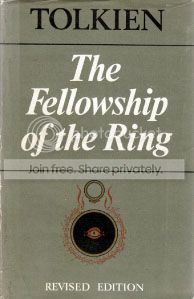
Michael, I've been contemplating The Fall of Arthur, the book that is, not the King. Can you give me a few facts to help the decision process? You know it won't take much! I'm assuming that what exists of this poem is worth reading, and isn't just a case of someone in the Tolkien Department at HarperCollins scratching his head and saying, "We've issued 'The Hobbit' 50th-Anniversary-edition, the Special-Collector's-Edition, the Original Dustjacket Edition, the Interim-Collector's-Edition-Signed-By-Tolkien's-Housekeeper's-Nephew's-Dog-and-Bound-in-Orc-Hide - and the curtain material. Are sure there's nothing else?" But how long is the extant poem, and am I right in thinking the book includes notes and other supporting matter, etc?
16Quicksilver66
-13
The non LE combined History is actually printed on quite decent paper - thin (but not as thin as India paper), quite decent quality and not pulpy - it does not feel like the sort of paper that will yellow.
I know what you mean about the print on demand series. I was tempted by these but because they are print on demand they feel a bit like a fraud - which is why I decided to get the de luxe India paper editions instead. They were a lot more expensive than the print on demand volumes but considerably less than a full set of first editions. However, if you are only looking for a nice set to read and take out and about then the print on demand books are a good idea. I have heard they are nice as well and I may get the print on demand History Index as well as Christopher Tolkiens translation of King Hederick the Wise, also available in print on demand.
The old Allen and Unwin Tolkien hardbacks were beautifully produced. They used good paper stock which does not brown, they were properly bound and featured nice cloth bindings and coloured top pages. They were tastefully designed and beautifully produced. Comparing them with the current standard output of Harper Collins is a stark illustration of how poorly books are produced now, with their cruddy paper and glued bindings. However, I will say that Harper Collins have made a little more effort with their Tolkien titles, which are currently better produced than most hardbacks on the market today (but still not a patch on Allen and Unwin).
- 14.
The Children of Hurin is a beautiful tale. But like most of Tokiens Middle Earth legends, it is also sad.
The non LE combined History is actually printed on quite decent paper - thin (but not as thin as India paper), quite decent quality and not pulpy - it does not feel like the sort of paper that will yellow.
I know what you mean about the print on demand series. I was tempted by these but because they are print on demand they feel a bit like a fraud - which is why I decided to get the de luxe India paper editions instead. They were a lot more expensive than the print on demand volumes but considerably less than a full set of first editions. However, if you are only looking for a nice set to read and take out and about then the print on demand books are a good idea. I have heard they are nice as well and I may get the print on demand History Index as well as Christopher Tolkiens translation of King Hederick the Wise, also available in print on demand.
The old Allen and Unwin Tolkien hardbacks were beautifully produced. They used good paper stock which does not brown, they were properly bound and featured nice cloth bindings and coloured top pages. They were tastefully designed and beautifully produced. Comparing them with the current standard output of Harper Collins is a stark illustration of how poorly books are produced now, with their cruddy paper and glued bindings. However, I will say that Harper Collins have made a little more effort with their Tolkien titles, which are currently better produced than most hardbacks on the market today (but still not a patch on Allen and Unwin).
- 14.
The Children of Hurin is a beautiful tale. But like most of Tokiens Middle Earth legends, it is also sad.
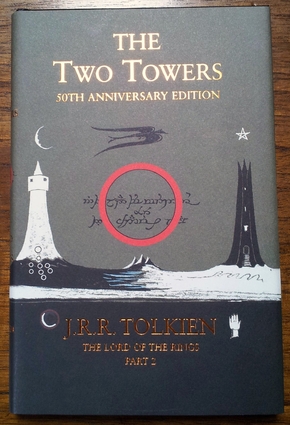
17boldface
> 16
Thanks for your comments, David. That's reassuring. Of course, if I could afford/justify-to-SWMBO the Super Deluxe version, I would love to have it. I see that the only supposedly perfect copy on AbeBooks is £1500. Perhaps I could cheekily offer half, like they do on Bargain Hunt!
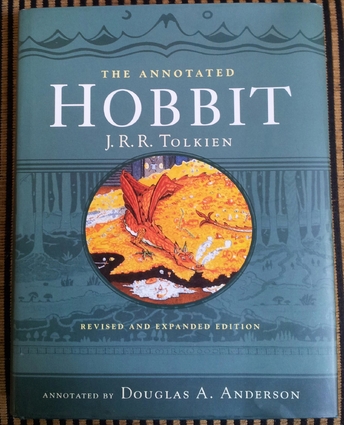
Thanks for your comments, David. That's reassuring. Of course, if I could afford/justify-to-SWMBO the Super Deluxe version, I would love to have it. I see that the only supposedly perfect copy on AbeBooks is £1500. Perhaps I could cheekily offer half, like they do on Bargain Hunt!
18Quicksilver66
> SWMBO is currently out of the UK on business, which is how I was able to sneak these volumes through the front door. God knows what she’s going to say when she gets back. She’s already going to be mad because I’ve killed most of the house plants. I may have to seek refuge in your shed.
P.S - I’ll swap my India paper editions for your full set of firsts if you want - just to help you out (:
P.S - I’ll swap my India paper editions for your full set of firsts if you want - just to help you out (:
20Conte_Mosca
>15 boldface: It is definitely worth reading Jonathan. It is just a shame there is not more of it.
My interest is less as a Tolkien fan (although I am an admirer) but as a huge fan of old English alliterative verse. I bought it at the same time I bought the new translation of the Alliterative Morte D'Arthur by the marvellous Simon Armitage (which incidentally I cannot recommend highly enough).
The 40 pages of poetry which Tolkien completed is definitely of a high standard, and it is a real shame he set it aside (although had he not done so, we might not have got The Lord Of The Rings!). He did apparently plan to later finish it, but never did.
The book includes several commentaries which take up the remainder of the book (233 pages in total), and which will be of great interest to anyone with an interest in Old English poetry (or indeed its relationship with The Silmarillion - there is a 46 page commentary titled "The Unwritten Poem And Its Relation To The Silmarillion").
It is not a book I would recommend to the casual reader uninitiated (or uninterested) in early poetry, but if this kind of thing is of interest generally, then I would definitely recommend it (good poetry doesn't require a finished narrative).
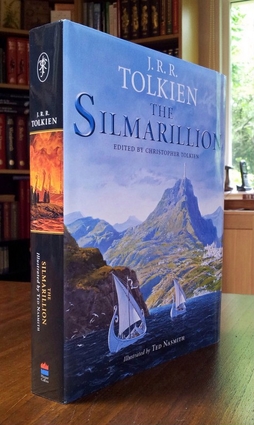
EDIT: To clarify that the Simon Armitage translation of The Alliterative Morte D'Arthur is called The Death of King Arthur.
My interest is less as a Tolkien fan (although I am an admirer) but as a huge fan of old English alliterative verse. I bought it at the same time I bought the new translation of the Alliterative Morte D'Arthur by the marvellous Simon Armitage (which incidentally I cannot recommend highly enough).
The 40 pages of poetry which Tolkien completed is definitely of a high standard, and it is a real shame he set it aside (although had he not done so, we might not have got The Lord Of The Rings!). He did apparently plan to later finish it, but never did.
The book includes several commentaries which take up the remainder of the book (233 pages in total), and which will be of great interest to anyone with an interest in Old English poetry (or indeed its relationship with The Silmarillion - there is a 46 page commentary titled "The Unwritten Poem And Its Relation To The Silmarillion").
It is not a book I would recommend to the casual reader uninitiated (or uninterested) in early poetry, but if this kind of thing is of interest generally, then I would definitely recommend it (good poetry doesn't require a finished narrative).
EDIT: To clarify that the Simon Armitage translation of The Alliterative Morte D'Arthur is called The Death of King Arthur.
22UK_History_Fan
> 18
So David, have you decided on a pronunciation for your wife's acronym: is it SWiMBO, SWaMBO, SWyMBO, SeWaMBO, etc.? Personally, I like SWiMBO, but I fear for your domestic bliss, that if she ever hears you using it, it could sound too close to "bimbo" if spoken too quickly :-) Obviously this is all tongue-in-cheek and in no way am I attempting to cast any aspersions on SWMBO just in case I ever meet her. I fear she will March up to London the next time I keep you out past bedtime and order you home, meanwhile giving me evil, glaring looks :-)
So David, have you decided on a pronunciation for your wife's acronym: is it SWiMBO, SWaMBO, SWyMBO, SeWaMBO, etc.? Personally, I like SWiMBO, but I fear for your domestic bliss, that if she ever hears you using it, it could sound too close to "bimbo" if spoken too quickly :-) Obviously this is all tongue-in-cheek and in no way am I attempting to cast any aspersions on SWMBO just in case I ever meet her. I fear she will March up to London the next time I keep you out past bedtime and order you home, meanwhile giving me evil, glaring looks :-)
23Quicksilver66
> 22
Tell me about it !!! Hell hath no fury like a woman scorned by books and book talk.
Tell me about it !!! Hell hath no fury like a woman scorned by books and book talk.
24cronshaw
>22 UK_History_Fan: Maybe SWooMBO to have assonance with 'who'?
25Conte_Mosca
>22 UK_History_Fan:, 23 Tell me about it too! Inspired my Jonathan I tentatively floated the idea of a "shed" to my wife this morning. It is fair to say that the reception was a little frosty, but I haven't given up hope yet!
26rampkr
>1 Quicksilver66: Were you aware that the first 1000 copies of The Silmarillion were retained for five years after publication and then issued as a numbered & slipcased edition bound in red leather? The first 100 copies were also signed by Christopher Tolkien.
This happened to be at about the same time (thirty years ago) that I wrote to GA&U asking if they were planning to issue The Silmarillion in a black boxed edition to match The Hobbit, TLOTR & the Poems & Stories. The answer was no, but they included a flyer for the above edition. This was way out of my price range, but unbeknownst to me my parents contacted the publisher and were told that although they were technically all sold, some were still 'on option' and may become available. So a couple of months later I got a surprise 21st birthday present - copy number 10.
If I had to rescue one book from a fire or flood, that would be it (and not only do I think it beautiful, but it still smells as good today as it did when I got it!).
This happened to be at about the same time (thirty years ago) that I wrote to GA&U asking if they were planning to issue The Silmarillion in a black boxed edition to match The Hobbit, TLOTR & the Poems & Stories. The answer was no, but they included a flyer for the above edition. This was way out of my price range, but unbeknownst to me my parents contacted the publisher and were told that although they were technically all sold, some were still 'on option' and may become available. So a couple of months later I got a surprise 21st birthday present - copy number 10.
If I had to rescue one book from a fire or flood, that would be it (and not only do I think it beautiful, but it still smells as good today as it did when I got it!).
27Quicksilver66
> 26
I have heard of this edition. You are a very lucky man to have such a historic and beautiful edition. Can you post some photographs of it then it will be my turn to be green with envy.
I love the Silmarillion. The first time I tried to read it I was far to young and I struggled with it. I read it again in my late teens, slowly and methodically, and it blew me away with its depth and beauty.
I have heard of this edition. You are a very lucky man to have such a historic and beautiful edition. Can you post some photographs of it then it will be my turn to be green with envy.
I love the Silmarillion. The first time I tried to read it I was far to young and I struggled with it. I read it again in my late teens, slowly and methodically, and it blew me away with its depth and beauty.
28rampkr
>27 Quicksilver66: I've uploaded some photo's to my member's gallery - I'll add them here when I remember how to do it.
I was in my late teens when I first read it (probably a good thing - you were lucky your first attempt didn't put you off for good), and was stunned by it. I thought it was not only beautifully written but also very moving, and I get the same reaction each time I reread it - in fact I'm sure it gets better every time I do.
I was in my late teens when I first read it (probably a good thing - you were lucky your first attempt didn't put you off for good), and was stunned by it. I thought it was not only beautifully written but also very moving, and I get the same reaction each time I reread it - in fact I'm sure it gets better every time I do.
29cronshaw
>26 rampkr: Your parents are saints.
30rampkr
Doesn't do them justice I'm afraid, but best I could do (the front and back ARE the same colour, not sure why they look so different!).


31rampkr
>29 cronshaw: - Well, they did owe me. The first FS books I ever bought were secondhand Iliad & Odyssey. My mother took one of them out of its slipcase, Mmmmm'd not very encouragingly, and then tried to put it back in with a board each side of one edge of the slipcase, creasing and tearing a number of pages in the process.
I did forgive her eventually.
But yes, you're right!
I did forgive her eventually.
But yes, you're right!
32Quicksilver66
> 30
Stunning - absolutely beautiful edition, right down to Christopher Tolkien’s beautiful signature (compare it to the signature on my copy of the Children of Hurin).
Stunning - absolutely beautiful edition, right down to Christopher Tolkien’s beautiful signature (compare it to the signature on my copy of the Children of Hurin).
33rampkr
I have the signed Children of Hurin too, and I was very surprised by the difference in signature. But given his age, I suppose it shouldn't be too surprising.
He had obviously spent time on the earlier one, and it looks like he had inherited his father's interest in penmanship along with everything else.
He had obviously spent time on the earlier one, and it looks like he had inherited his father's interest in penmanship along with everything else.
34boldface
>20 Conte_Mosca:
Many thanks, Michael. Consider me enabled! I will certainly have a look at the Simon Armitage as well.
>21 EclecticIndulgence:
The original books always were a mixture of Unwin and Harper Collins, as the latter firm took over the former during the course of publication. Thus, only after the first edition was complete were subsequent editions published solely by Harper Collins.
Do give us pics of your gems when you can, Elclectic!
>25 Conte_Mosca:
She can't refuse a sick man, surely. Just tell her you'll move into it to protect her from FAD contagion.
>26 rampkr:, 30
Wow, wow and thrice wow!!!
Many thanks, Michael. Consider me enabled! I will certainly have a look at the Simon Armitage as well.
>21 EclecticIndulgence:
The original books always were a mixture of Unwin and Harper Collins, as the latter firm took over the former during the course of publication. Thus, only after the first edition was complete were subsequent editions published solely by Harper Collins.
Do give us pics of your gems when you can, Elclectic!
>25 Conte_Mosca:
She can't refuse a sick man, surely. Just tell her you'll move into it to protect her from FAD contagion.
>26 rampkr:, 30
Wow, wow and thrice wow!!!
35UK_History_Fan
OK, if you people don't stop posting pictures of beautiful books that are quickly becoming "must haves" then I will be forced to demand this site be renamed "Tolkien Book Porn and Other Addictions." LOL
36Firumbras
I have posted a few photos of my own Tolkien books to my Flickr photostream. Be warned - in no way can this match Quicksilver's and Rampkr's collections - thanks for posting, both.
I have only the first six volumes of the History of Middle Earth, together with the Silmarillion and Book of Lost Tales. All these are paperbacks from the 80s with covers by Roger Garland - that curiously Dali-esque interpreter of Middle Earth (whose work I enjoy). I also include pictures of some of Tolkien's own scholarly editions and translations of Medieval English texts, the more recently published 'apocryphal' works, and Shippey's and Carpenter's indispensable books.
http://www.flickr.com/photos/firumbras/
Given the lack of uniformity in design and quality between the volumes published by Unwin and by Harper Collins, I think Folio should seriously investigate publication of the 12 volumes of the History of Middle Earth - I think fans are crying out for a handsome, consolidated set.
- edited for typos.
I have only the first six volumes of the History of Middle Earth, together with the Silmarillion and Book of Lost Tales. All these are paperbacks from the 80s with covers by Roger Garland - that curiously Dali-esque interpreter of Middle Earth (whose work I enjoy). I also include pictures of some of Tolkien's own scholarly editions and translations of Medieval English texts, the more recently published 'apocryphal' works, and Shippey's and Carpenter's indispensable books.
http://www.flickr.com/photos/firumbras/
Given the lack of uniformity in design and quality between the volumes published by Unwin and by Harper Collins, I think Folio should seriously investigate publication of the 12 volumes of the History of Middle Earth - I think fans are crying out for a handsome, consolidated set.
- edited for typos.
38wcarter
Fellow Tolkien fans may be interested in the Tolkien Bestiary by David Day, which was published way back in 1979. It contains about 200 colour, and black and white, paintings and drawings of the inhabitants of Middle Earth - the good, bad and indifferent.
Cover and selected paintings follow.
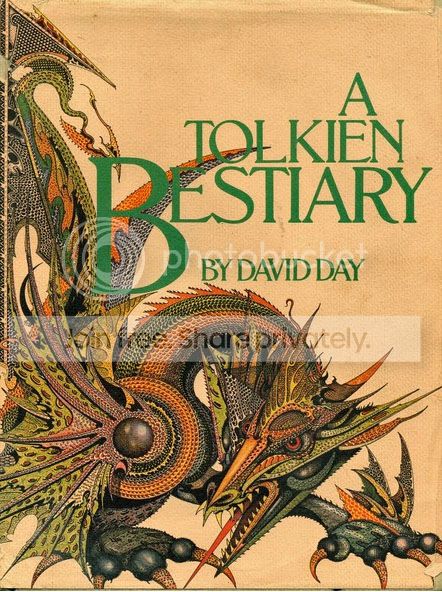

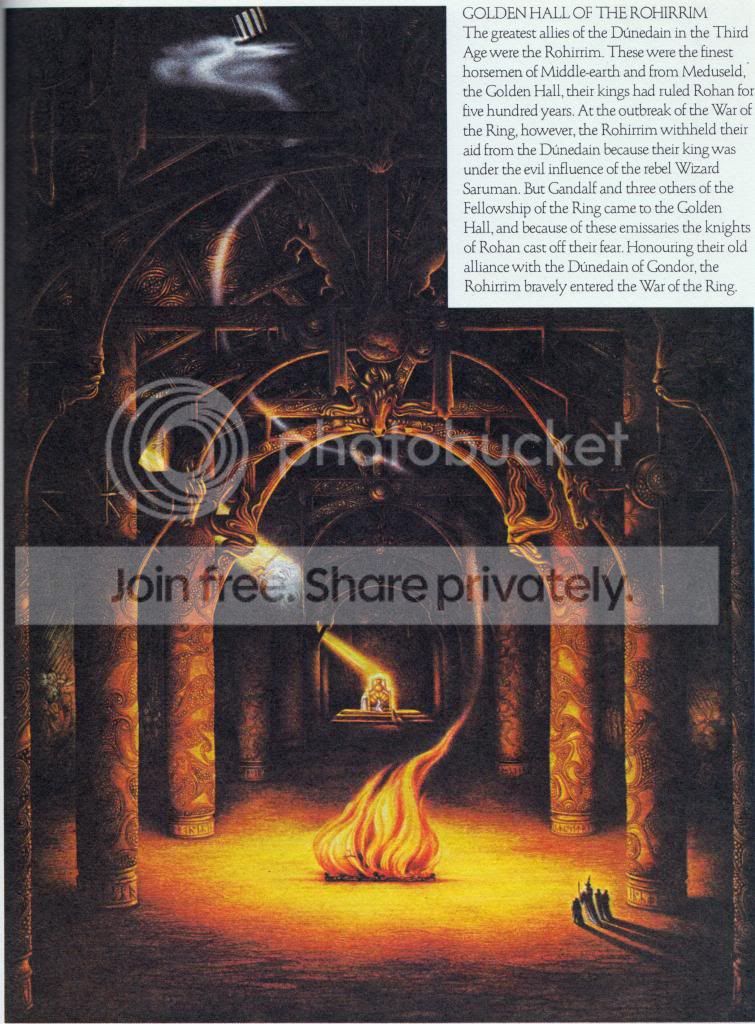
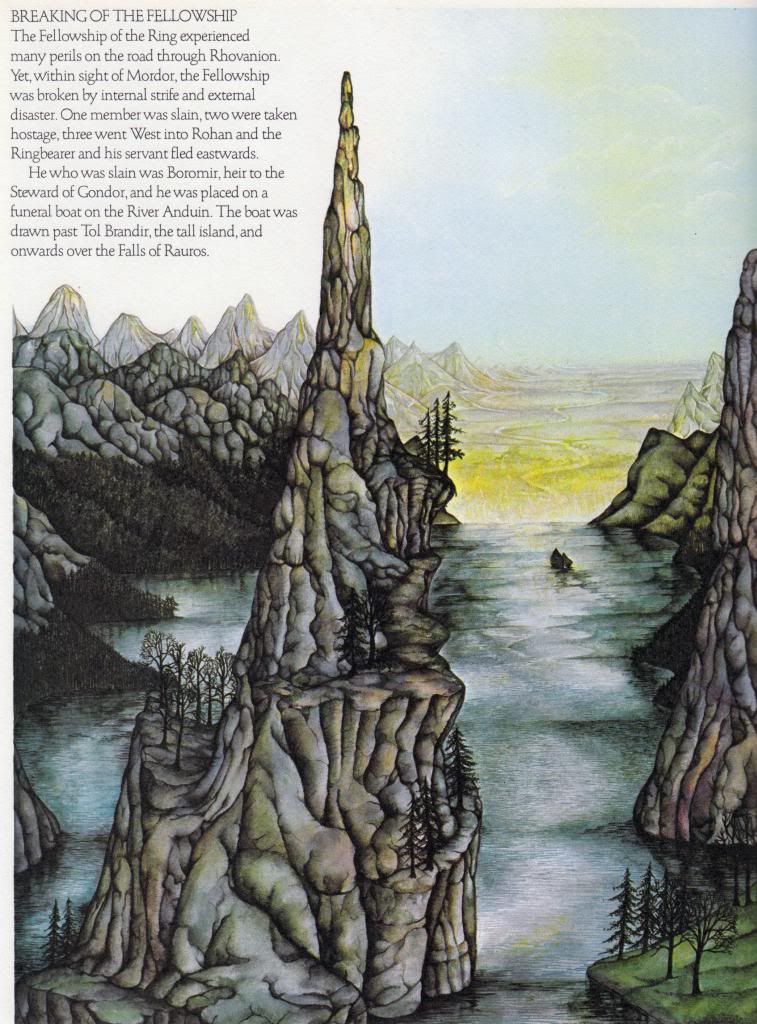
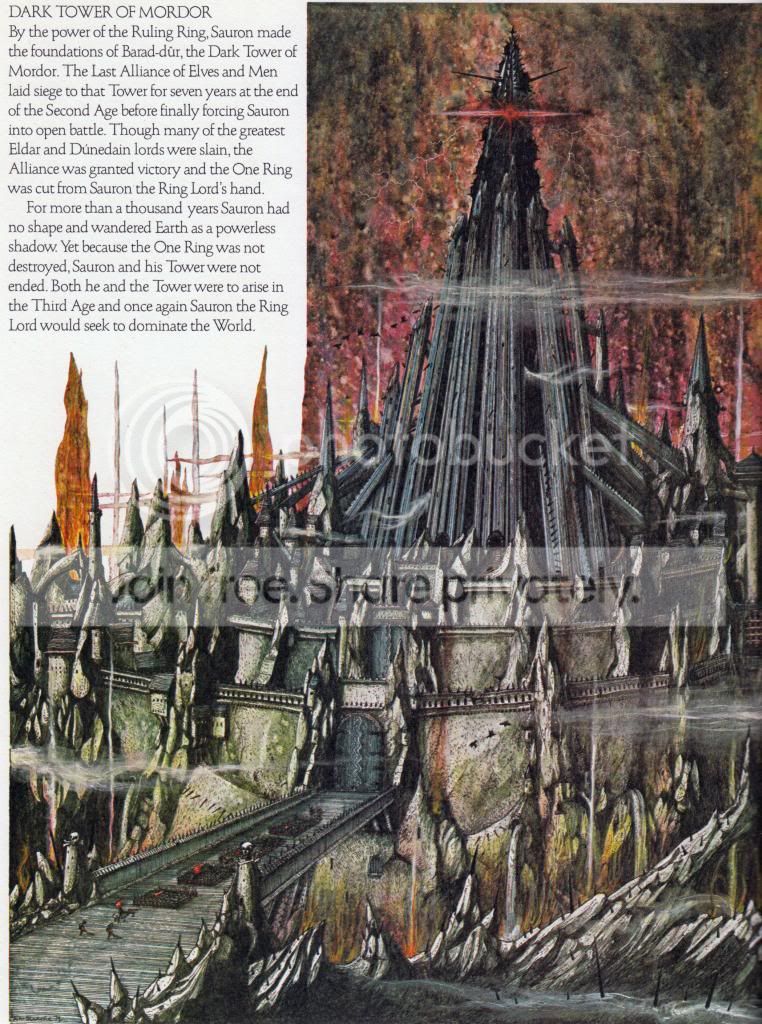
Cover and selected paintings follow.
39Quicksilver66
-36
A lovely collection of books. I particularly like the cover art for The Road to Middle Earth.
- 38
Beautiful art work. I have heard of David Days book and I have long been tempted to search out a copy of it. It is quite controversial and many commentators criticise Day as he invented stuff for his book which can't actually be found in Tolkien. But the attractiveness of his book acts as a magnet for Tolkien fans.
A lovely collection of books. I particularly like the cover art for The Road to Middle Earth.
- 38
Beautiful art work. I have heard of David Days book and I have long been tempted to search out a copy of it. It is quite controversial and many commentators criticise Day as he invented stuff for his book which can't actually be found in Tolkien. But the attractiveness of his book acts as a magnet for Tolkien fans.
41boldface
>40 Bond_Girl:
I think the covers are very striking and original. I have The Hobbit and the Silmarillion, but not LOTR. However, I have all these in the LE versions which are the same except for the bindings. The striking black and white FS illustrations, by 'Ingahild Grathmer' (redrawn by Eric Fraser) (LOTR), Eric Fraser (Hobbit) and Francis Mosley (Silmarillion), are different from all the usual Harper Collins, etc., editions. Perhaps there could have been a few more of them. A slight minus point is that the texts don't incorporate the latest corrections but, having said that, these are not substantial enough to deter anyone except the specialist.
I think the covers are very striking and original. I have The Hobbit and the Silmarillion, but not LOTR. However, I have all these in the LE versions which are the same except for the bindings. The striking black and white FS illustrations, by 'Ingahild Grathmer' (redrawn by Eric Fraser) (LOTR), Eric Fraser (Hobbit) and Francis Mosley (Silmarillion), are different from all the usual Harper Collins, etc., editions. Perhaps there could have been a few more of them. A slight minus point is that the texts don't incorporate the latest corrections but, having said that, these are not substantial enough to deter anyone except the specialist.
42Firumbras
> 40
I own the 'vegetable parchment' covered editions, and I really like them. These are colourful, nicely-contrasted covers, unified by the same spiral motif, with an inset image on the front. Inside, there are no colour illustrations, just emblematic black and white vignettes which I think satisfy most preconceptions of the work. They are compact volumes with a nice heft. The maps are a significant improvement on those in the Harper Collins editions. Lovely paper and type, as you'd expect from FS. Oddly enough my Silmarillion is heavily foxed, while my LOTR is not, despite being bought at the same time, a decade ago. This isn't a 'defect' that bothers me though - I quite like it.
All told, this is one of Folio's triumphs.
I've never handled the leather-bound LE Tolkien, but would be tempted by the Silmarillion on the secondary market. Would love to see photos of these, if anyone is willing to share.
I own the 'vegetable parchment' covered editions, and I really like them. These are colourful, nicely-contrasted covers, unified by the same spiral motif, with an inset image on the front. Inside, there are no colour illustrations, just emblematic black and white vignettes which I think satisfy most preconceptions of the work. They are compact volumes with a nice heft. The maps are a significant improvement on those in the Harper Collins editions. Lovely paper and type, as you'd expect from FS. Oddly enough my Silmarillion is heavily foxed, while my LOTR is not, despite being bought at the same time, a decade ago. This isn't a 'defect' that bothers me though - I quite like it.
All told, this is one of Folio's triumphs.
I've never handled the leather-bound LE Tolkien, but would be tempted by the Silmarillion on the secondary market. Would love to see photos of these, if anyone is willing to share.
43Quicksilver66
I like the illustrations for the FS edition (by none other than the Queen of Denmark). But I far prefer the old vegetable parchment bindings. The current bindings are a little to bright and shiny for my taste.
44elenchus
>42 Firumbras:
Are the maps fold-out, or endpapers as in the current FS edition of LOTR?
>43 Quicksilver66:
I like the current bindings, but agree they are a bit 'shiny' and while well-done, don't impress me as unusual or especially high quality. I also don't have nor have I held the vegetable parchment editions to serve as comparison, which perhaps makes it easier for me to love the edition I do own.
Are the maps fold-out, or endpapers as in the current FS edition of LOTR?
>43 Quicksilver66:
I like the current bindings, but agree they are a bit 'shiny' and while well-done, don't impress me as unusual or especially high quality. I also don't have nor have I held the vegetable parchment editions to serve as comparison, which perhaps makes it easier for me to love the edition I do own.
45Firumbras
> 44
My Silmarillion (blue parchment binding) has a very nice fold- out map of Beleriand. The other volumes' maps are endpapers .
My Silmarillion (blue parchment binding) has a very nice fold- out map of Beleriand. The other volumes' maps are endpapers .
46Bond_Girl
Thank you very much, everyone! My hands have been itching to replace our crumbling copies of LOTR, and so it might be one of my renewal ideas unless Folio comes out with new books by the end of the summer.
Quicksilver, I had no idea the Queen of Denmark illustrated... well, anything! A very amusing tidbit and it certainly adds to the charm of the edition.
Quicksilver, I had no idea the Queen of Denmark illustrated... well, anything! A very amusing tidbit and it certainly adds to the charm of the edition.
47Firumbras
> 38
That's a book I hadn't encountered before - though I have David Day's study of source material in 'Tolkien's Ring'. Nice pictures too - (from more than one illustrator?), if veering close to heavy metal aesthetic!
That's a book I hadn't encountered before - though I have David Day's study of source material in 'Tolkien's Ring'. Nice pictures too - (from more than one illustrator?), if veering close to heavy metal aesthetic!
48DanMat
Ha, yes something quite metalish about them!
I'm surprised how much I like these Cor Blok illustrations...
http://www.tolkienlibrary.com/tolkien-book-store/corblokart.htm
* Here's his site with zoomed scans: http://www.corblok.com/
I'm surprised how much I like these Cor Blok illustrations...
http://www.tolkienlibrary.com/tolkien-book-store/corblokart.htm
* Here's his site with zoomed scans: http://www.corblok.com/
49elenchus
>48 DanMat:
Agreed: not the set I'd select if I were forced to pick 'just one', but compelling esp in their idiosyncratic style and vision. But now I think of it, not sure which illustrator I'd pick if forced to pick just one!
Agreed: not the set I'd select if I were forced to pick 'just one', but compelling esp in their idiosyncratic style and vision. But now I think of it, not sure which illustrator I'd pick if forced to pick just one!
50wcarter
>47 Firumbras: Firumbras
Yes, the Tolkien Bestiary is the work of eleven different illustrators. Many of the 50+ paintings (about half) are spread across two pages, and there are B&W drawings on almost every page of the book.
The text describes every character and creature in LotR and the appropriate illustrations are nearby.
Yes, the Tolkien Bestiary is the work of eleven different illustrators. Many of the 50+ paintings (about half) are spread across two pages, and there are B&W drawings on almost every page of the book.
The text describes every character and creature in LotR and the appropriate illustrations are nearby.
51Smiler69
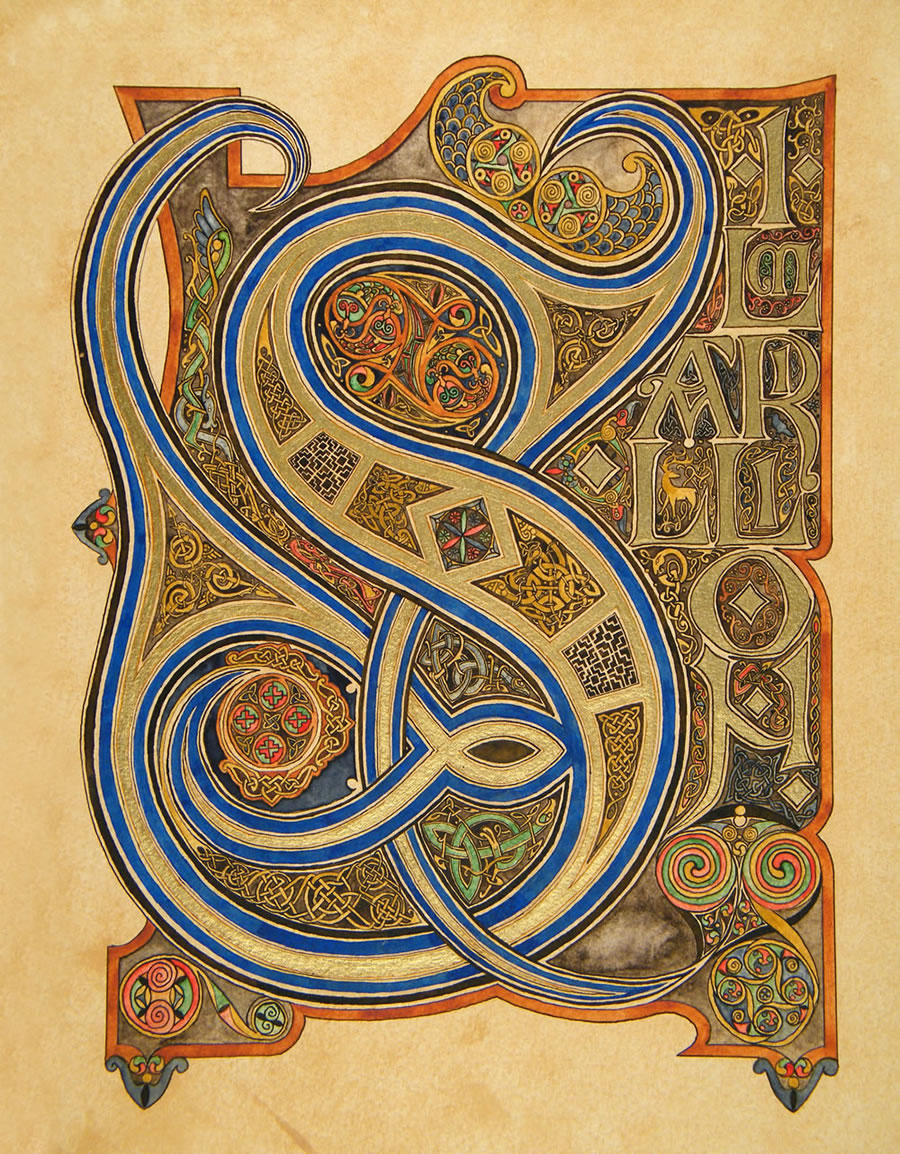
While I can't consider myself a Tolkien "fan" having only read The Hobbit so far, I thought I would re-post a link that J_ipsen put up on the Arabia Deserta thread. It's an illuminated manuscript version of The Similarion and so beautiful that it would probably tempt almost any hard-core bibliophile. Now all it's wanting is a publisher.
http://www.neatorama.com/2011/08/26/j-r-r-tolkiens-silmarillion-as-an-illuminate...
The book's creator, Benjamin Harff says the following is his favourite page, and I can see why:
http://www.neatorama.com/2011/08/26/j-r-r-tolkiens-silmarillion-as-an-illuminate...
The book's creator, Benjamin Harff says the following is his favourite page, and I can see why:
52Quicksilver66
> 48
Tolkien liked Cor Bloks work as well and actually purchased some of his illustrations.
> 51
Stunning. I would love for this to be published.
Tolkien liked Cor Bloks work as well and actually purchased some of his illustrations.
> 51
Stunning. I would love for this to be published.
54DanMat
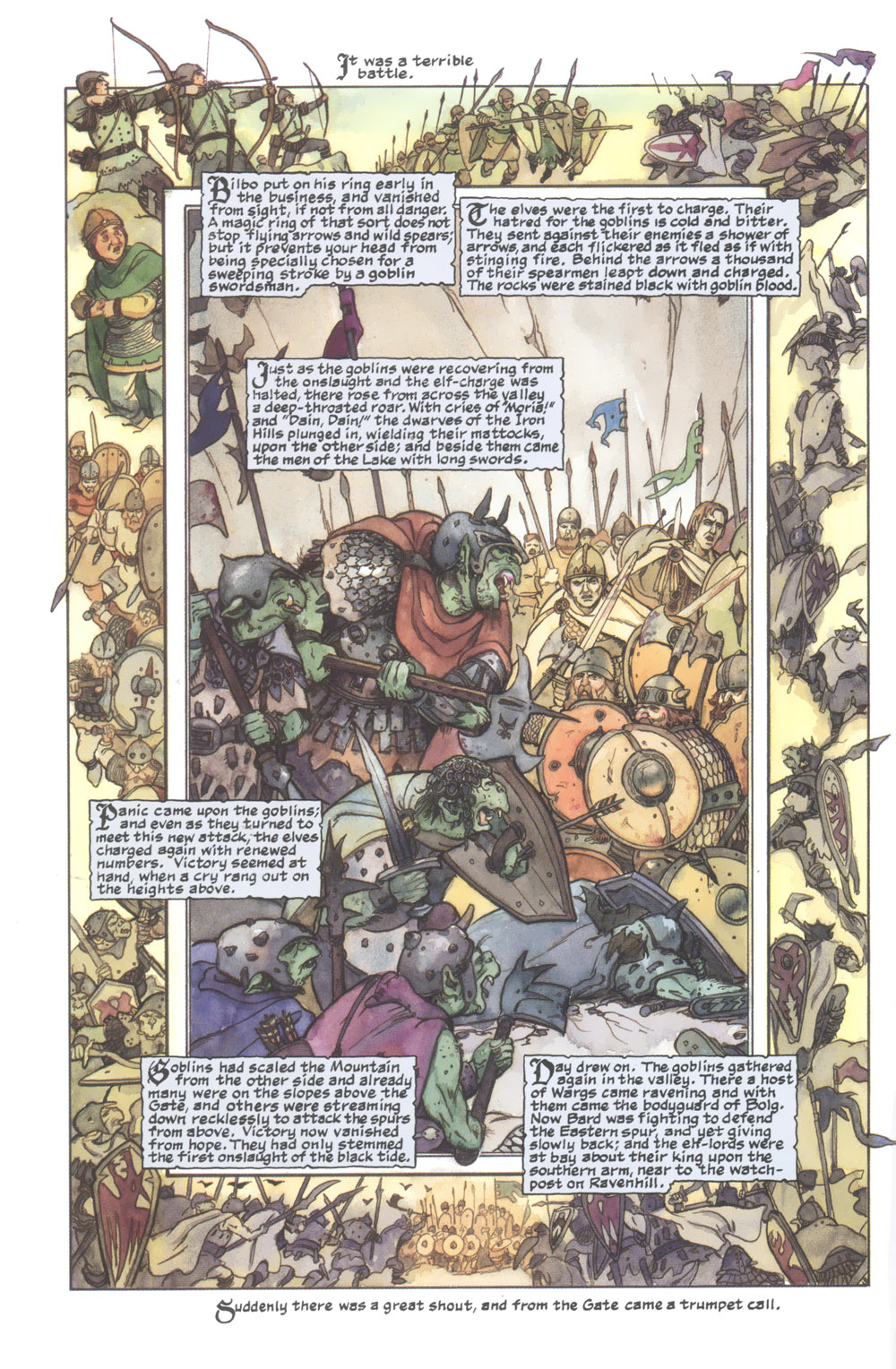
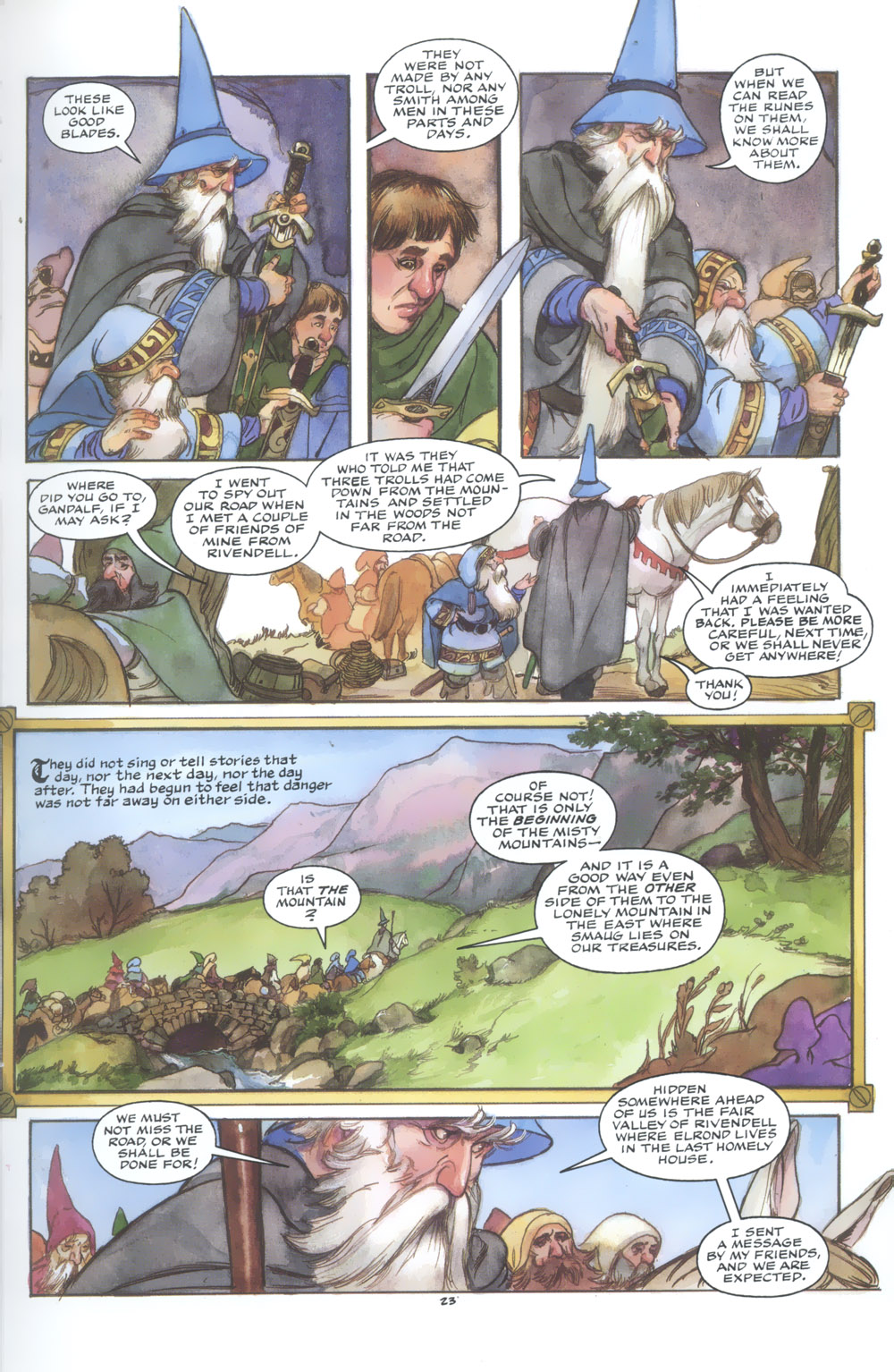
Remember the Hobbit graphic novel from the early nineties by David Wenzel?
 ..
..
*Sorry, the third one won't resize for some reason...
 ..
..
*Sorry, the third one won't resize for some reason...
55elenchus
Is that OOP? A nephew owns a newish copy of an "Illustrated Hobbit" which I meant to flip through but, sadly, never did. I wonder if that's the same!
56DanMat
Might be, albeit a new cover by someone other than David Wenzel:
http://www.amazon.com/The-Hobbit-Illustrated-Edition-Fantasy/dp/0345445600/ref=s...
http://www.amazon.com/The-Hobbit-Illustrated-Edition-Fantasy/dp/0345445600/ref=s...
57affle
>15 boldface: The fall of Arthur is reviewed by Tom Shippey in the current issue of the TLS.
58affle
Again in the current issue of the TLS, in the 'Then and now' section which reprints items from the TLS archive, we can read CS Lewis's review of The Hobbit from 2 October 1937. Last sentence: 'Prediction is dangerous: but "The Hobbit" may well prove a classic.'
60Quicksilver66
- 59
And me. Is it available on line?
And me. Is it available on line?
61Conte_Mosca
>58 affle: Thanks Alan, you have just sent me off to read it. Nice to see that the reviewer shares my high regard for Simon Armitage's alliterative verse, particularly Gawain and his version of the Alliterative Morte. Overall I think Shippey's review is a helpful and insightful one.
>59 boldface:,60 Jonathan, David, for now you can read the review for free here:
http://www.the-tls.co.uk/tls/public/article1278838.ece
>59 boldface:,60 Jonathan, David, for now you can read the review for free here:
http://www.the-tls.co.uk/tls/public/article1278838.ece
62Firumbras
>61 Conte_Mosca:
thanks for this review. I hadn't known about it at all, and it's interesting that his Arthur was an attempt at synthesising Arthurian traditions, like his Sigurd. One for buying!
thanks for this review. I hadn't known about it at all, and it's interesting that his Arthur was an attempt at synthesising Arthurian traditions, like his Sigurd. One for buying!
64boldface
Further to >13 boldface: above, I have now received the print-on-demand version of History of Middle Earth vol.10, Morgoth's Ring. Here are a few photos. The paper is actually pale cream when set beside the glossy white frontispiece. While the binding is glued like a paperback the textblock is not glued to the spine. It flexes when the book is opened, leaving a gap when you look down the spine from the top. Overall, I'm still impressed at what can be produced in the way of an instant book. While print-on-demand editions of vintage books can be poorly printed, reflecting the state of the original, the reproduction of a book of the digital age can be virtually indistinguishable from the original. Having said that, it doesn't quite match Quicksilver's super deluxe version!


Edited 1,000,000 times to achieve very little!


Edited 1,000,000 times to achieve very little!
65DanMat
-66
No problem!
*Wait, I'm not supposed to say that anymore.
http://www.cbsnews.com/8301-3445_162-57580598/no-problem-yes-its-a-big-problem/
**The POD looks of good quality! Thanks for the images! Even the quondam ent-sized!
No problem!
*Wait, I'm not supposed to say that anymore.
http://www.cbsnews.com/8301-3445_162-57580598/no-problem-yes-its-a-big-problem/
**The POD looks of good quality! Thanks for the images! Even the quondam ent-sized!
66boldface
>64 boldface:
Thanks, but I sort of got there eventually! Probably not worth all the effort, and one has come out full size when I thought I had reduced it, but I've had enough for one day!
Edited to confirm that the wayward giant image has now been tamed.
Edited again to say, "Phew! I need a cup of tea and a lie-down."
Thanks, but I sort of got there eventually! Probably not worth all the effort, and one has come out full size when I thought I had reduced it, but I've had enough for one day!
Edited to confirm that the wayward giant image has now been tamed.
Edited again to say, "Phew! I need a cup of tea and a lie-down."
67Quicksilver66
> 64
Thank you for posting that Jonathan. The production values of the Harper Collins POD Tolkien service look to be good. On the Tolkien website they emphasise that this is almost a bespoke product, made in accordance with traditional book binding methods. So its a shame that the spine is glued and not sewn. Despite that, it looks to be a well made book. I have ordered the POD King Hederick the Wise (Christopher Tolkien) and I will order the POD Index to the History of Middle Earth, so I will be able to judge for myself.
Morgoth's Ring, I think, was originally a Harper Collins volume so I wonder if the earlier HOME titles, which were published by George Allen and Unwin, have Allen and Unwin dust jackets and coloured top pages when ordered via Print on Demand?
> 61
Thanks. I shall look forward to reading that over the weekend.
Thank you for posting that Jonathan. The production values of the Harper Collins POD Tolkien service look to be good. On the Tolkien website they emphasise that this is almost a bespoke product, made in accordance with traditional book binding methods. So its a shame that the spine is glued and not sewn. Despite that, it looks to be a well made book. I have ordered the POD King Hederick the Wise (Christopher Tolkien) and I will order the POD Index to the History of Middle Earth, so I will be able to judge for myself.
Morgoth's Ring, I think, was originally a Harper Collins volume so I wonder if the earlier HOME titles, which were published by George Allen and Unwin, have Allen and Unwin dust jackets and coloured top pages when ordered via Print on Demand?
> 61
Thanks. I shall look forward to reading that over the weekend.
68boldface
> 67 "I wonder if the earlier HOME titles, which were published by George Allen and Unwin, have Allen and Unwin dust jackets and coloured top pages when ordered via Print on Demand?"
I doubt it on both counts. By the way, in comparing my two copies of Morgoth's Ring, I see that the print-on-demand text incorporates corrections to the (few) misprints in the original, so it's not in that sense a facsimile. Otherwise, however, the typesetting is identical. The Foreword in the new edition omits a paragraph listing a couple of misprints in the previous volume, so I presume all volumes now have corrected texts.
For the record, the publisher imprints were originally:
_1. The Book of Lost Tales, part I (1983) : George Allen & Unwin (stained top-edge)
_2. The Book of Lost Tales, part II (1984) : George Allen & Unwin (stained top-edge)
_3. The Lays of Beleriand (1985) : George Allen & Unwin (stained top-edge)
_4. The Shaping of Middle-Earth : The Quenta, The Ambarkanta and the Annals, together with the earliest 'Silmarillion' and the first Map (1986) : George Allen & Unwin (but dust jacket spine reads 'Allen & Unwin') (stained top-edge)
_5. The Lost Road and Other Writings : Language and Legend before 'The Lord of the Rings' (1987) : Unwin Hyman (dust jacket: 'Unwin Hyman' - no logo)
(No staining on this or subsequent volumes)
_6. The Return of the Shadow : The History of The Lord of the Rings, Part One (1988) : Unwin Hyman (dust jacket: 'Unwin Hyman' with logo)
_7. The Treason of Isengard : The History of The Lord of the Rings, Part Two (1989) : Unwin Hyman (dust jacket: 'Unwin Hyman' with logo)
_8. The War of the Ring : The History of The Lord of the Rings, Part Three (1990) : Unwin Hyman (dust jacket: 'Unwin Hyman' with logo)
_9. Sauron Defeated : The End of the Third Age (The History of The Lord of the Rings, Part Four) - The Notion Club Papers and the Drowning of Anadûnê (1992) : HarperCollins (logo and 'Harper Collins' on spine)
10. Morgoth's Ring : The Later Silmarillion, Part One - The Legends of Aman (1993) : HarperCollins (logo and 'Harper Collins' on spine)
11. The War of the Jewels : The Later Silmarillion, Part Two - The Legends of Beleriand (1994) : HarperCollins (logo and 'Harper Collins' on spine)
12. The Peoples of Middle-Earth : HarperCollins (logo and 'Harper Collins' on spine)
13. Index (2002) : HarperCollins (paperback)
Thus, you can see from the above that top-edge staining was discontinued when George Allen & Unwin became Unwin Hyman and well before Harper Collins came on the scene.
I doubt it on both counts. By the way, in comparing my two copies of Morgoth's Ring, I see that the print-on-demand text incorporates corrections to the (few) misprints in the original, so it's not in that sense a facsimile. Otherwise, however, the typesetting is identical. The Foreword in the new edition omits a paragraph listing a couple of misprints in the previous volume, so I presume all volumes now have corrected texts.
For the record, the publisher imprints were originally:
_1. The Book of Lost Tales, part I (1983) : George Allen & Unwin (stained top-edge)
_2. The Book of Lost Tales, part II (1984) : George Allen & Unwin (stained top-edge)
_3. The Lays of Beleriand (1985) : George Allen & Unwin (stained top-edge)
_4. The Shaping of Middle-Earth : The Quenta, The Ambarkanta and the Annals, together with the earliest 'Silmarillion' and the first Map (1986) : George Allen & Unwin (but dust jacket spine reads 'Allen & Unwin') (stained top-edge)
_5. The Lost Road and Other Writings : Language and Legend before 'The Lord of the Rings' (1987) : Unwin Hyman (dust jacket: 'Unwin Hyman' - no logo)
(No staining on this or subsequent volumes)
_6. The Return of the Shadow : The History of The Lord of the Rings, Part One (1988) : Unwin Hyman (dust jacket: 'Unwin Hyman' with logo)
_7. The Treason of Isengard : The History of The Lord of the Rings, Part Two (1989) : Unwin Hyman (dust jacket: 'Unwin Hyman' with logo)
_8. The War of the Ring : The History of The Lord of the Rings, Part Three (1990) : Unwin Hyman (dust jacket: 'Unwin Hyman' with logo)
_9. Sauron Defeated : The End of the Third Age (The History of The Lord of the Rings, Part Four) - The Notion Club Papers and the Drowning of Anadûnê (1992) : HarperCollins (logo and 'Harper Collins' on spine)
10. Morgoth's Ring : The Later Silmarillion, Part One - The Legends of Aman (1993) : HarperCollins (logo and 'Harper Collins' on spine)
11. The War of the Jewels : The Later Silmarillion, Part Two - The Legends of Beleriand (1994) : HarperCollins (logo and 'Harper Collins' on spine)
12. The Peoples of Middle-Earth : HarperCollins (logo and 'Harper Collins' on spine)
13. Index (2002) : HarperCollins (paperback)
Thus, you can see from the above that top-edge staining was discontinued when George Allen & Unwin became Unwin Hyman and well before Harper Collins came on the scene.
69Quicksilver66
> 68
Thanks - really useful to have that bibliographical information. I loved the top staining on the Allen and Unwin books - I am aware of no other publisher currently doing this on a regular basis.
I can’t resist posting some more photographs of my Tolkien bookshelves -


Thanks - really useful to have that bibliographical information. I loved the top staining on the Allen and Unwin books - I am aware of no other publisher currently doing this on a regular basis.
I can’t resist posting some more photographs of my Tolkien bookshelves -


70Conte_Mosca
>69 Quicksilver66: This is turning out to be a very beautiful thread indeed!
71housefulofpaper
> 69
And a little flash of your Tartarus Press books too! (Sorry everybody else, for going off-subject!)
And a little flash of your Tartarus Press books too! (Sorry everybody else, for going off-subject!)
72Quicksilver66
- 69. Tartarus Press are great. Maybe we should start a Tartarus Press thread ...,.,.,,,
73wcarter
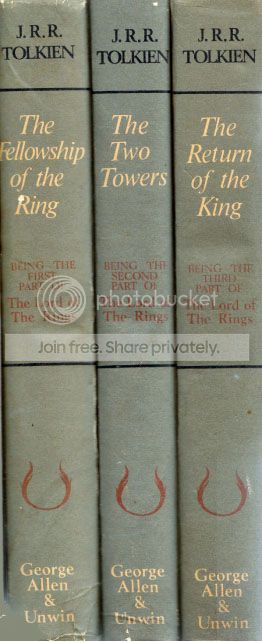
I have read LotR at least nine times, and have a second edition that I bought in 1966. It still has the price sticker - $2.70 for the three volume set.
The spines are looking a little weathered, but the covers and interiors are pristine. These volumes look almost identical to the first edition which was published in 1954 and went through 15 impressions, but according to the forward has "a number of errors and inconsistencies corrected".
There are fold out maps at the back of each volume but no illustrations.
The spines are looking a little weathered, but the covers and interiors are pristine. These volumes look almost identical to the first edition which was published in 1954 and went through 15 impressions, but according to the forward has "a number of errors and inconsistencies corrected".
There are fold out maps at the back of each volume but no illustrations.
74boldface
> 73
I also bought those - the second edition - at the time. And (for David) they have top edges stained red. The jackets immediately previous to these had a white background and a similar though not identical 'eye' design.
> 69
I see you've also invested in the single-volume History of the Hobbit, David. The original 2-vol. edition was riddled with errors, was it not!? I must get around to cataloguing the rest of my Tolkien books, if only to keep track of them. It's not easy to keep up with the Tolkien industry conveyor belt! Almost as bad as Shakespeare.
I also bought those - the second edition - at the time. And (for David) they have top edges stained red. The jackets immediately previous to these had a white background and a similar though not identical 'eye' design.
> 69
I see you've also invested in the single-volume History of the Hobbit, David. The original 2-vol. edition was riddled with errors, was it not!? I must get around to cataloguing the rest of my Tolkien books, if only to keep track of them. It's not easy to keep up with the Tolkien industry conveyor belt! Almost as bad as Shakespeare.
75LesMiserables
In what order should Tolkien be read?
I have limited knowledge but might suggest The Hobbit then LOTR then The Silmarillion? Then.....
I have limited knowledge but might suggest The Hobbit then LOTR then The Silmarillion? Then.....
76rampkr
David, a big thank you for starting this thread, and to everyone else who has contributed - it's been great to see all the pictures of the different volumes, and also the links and extra information about the different editions.
I stopped collecting the History of Middle Earth after volume 4 (I don't remember why) and of course I regret it now. I did get volume 6, The Return of the Shadow, in paperback a few years later though and have to say I found it a struggle (it seemed to be repeating the same part of the story but with a name changed here and a name changed there) so that didn't spur me on to get any more at the time. However, although I had heard of the Print-on-Demand facility I had no idea the books would look as good as they do (based on the pictures in post 64), and seeing the titles of the later volumes as mentioned above, 9-13 are now very tempting.
Many years ago I asked the owner of a local second-hand bookshop if he could keep an eye out for a first edition of The Hobbit (ah, the innocence of youth). "Certainly, " he said, as he wrote down the title, "who's it by?".
I stopped collecting the History of Middle Earth after volume 4 (I don't remember why) and of course I regret it now. I did get volume 6, The Return of the Shadow, in paperback a few years later though and have to say I found it a struggle (it seemed to be repeating the same part of the story but with a name changed here and a name changed there) so that didn't spur me on to get any more at the time. However, although I had heard of the Print-on-Demand facility I had no idea the books would look as good as they do (based on the pictures in post 64), and seeing the titles of the later volumes as mentioned above, 9-13 are now very tempting.
Many years ago I asked the owner of a local second-hand bookshop if he could keep an eye out for a first edition of The Hobbit (ah, the innocence of youth). "Certainly, " he said, as he wrote down the title, "who's it by?".
77rampkr
>75 LesMiserables: For those who enjoyed The Silmarillion, I would say Unfinshed Tales would be a good follow-up.
78LesMiserables
I think I will purchase the three volume History of the Middle-Earth at some point later in the year. Enabled by LT-FS.
79Firumbras
> 48 DanMat
Those Cor Blok illustrations grow on you! I like the duck-egg blue study of that curiously bird-like Gollum. The style overall is a little like F. S. Lowry in Middle Earth, but I think I'm persuaded enough to buy his book 'A Tolkien Tapestry'.
Those Cor Blok illustrations grow on you! I like the duck-egg blue study of that curiously bird-like Gollum. The style overall is a little like F. S. Lowry in Middle Earth, but I think I'm persuaded enough to buy his book 'A Tolkien Tapestry'.
80LesMiserables
> 79
Oh I hate them!
Oh I hate them!
81Quicksilver66
> 73
A classic edition, Warwick. Very nice.
> 75
If you want to start from the earliest days of Middle Earth (the First Age and before) and work through chronologically, start with the Silmarillion, followed by the Hobbit and Lord of the Rings. Children of Hurin and Unfinished Tales fill in some more of the details in the stories told in these three works and I think are best left to the end. The History of Middle Earth provides even more detail and should be the last thing you read as you will need a detailed grasp of Tolkiens main body of work to appreciate these as they consist of a fascinating and beautiful collection of the drafts and other writings that went into these three main works.
> 76
Your welcome. First editions of the Hobbit start at about 30 k - an astonishing price !
A classic edition, Warwick. Very nice.
> 75
If you want to start from the earliest days of Middle Earth (the First Age and before) and work through chronologically, start with the Silmarillion, followed by the Hobbit and Lord of the Rings. Children of Hurin and Unfinished Tales fill in some more of the details in the stories told in these three works and I think are best left to the end. The History of Middle Earth provides even more detail and should be the last thing you read as you will need a detailed grasp of Tolkiens main body of work to appreciate these as they consist of a fascinating and beautiful collection of the drafts and other writings that went into these three main works.
> 76
Your welcome. First editions of the Hobbit start at about 30 k - an astonishing price !
82Quicksilver66
Here are some more nice books from my Tolkien collection -
This is the Annotated Hobbit, a very nicely produced and fascinating book which annotates Tolkien's references and is full of interesting diagrams and drawings -


The Atlas of Middle Earth by Karen Wynn Fonstad is indispensable and very well regarded -


Sigurd and Gudrun De Luxe (slipcased) -

The Fall of King Arthur De Luxe (slipcased) -

These Harper Collins "De Luxe” books are not as “De Luxe” as they should be in my view. The spines are stiff and the books and slipcases mark easily. The paper is nice and thick though and the print quality is also good.
Nice thick companion volumes from Harper Collins. I also have the matching Readers Guide to Lord of the Rings -

These are the covers of the two volume History of the Hobbit, the slipcase of which is in my first post. These beautiful books are easier to read than the one volume edition. But the one volume edition has many corrections and about 70 pages of new material -

This is the Annotated Hobbit, a very nicely produced and fascinating book which annotates Tolkien's references and is full of interesting diagrams and drawings -


The Atlas of Middle Earth by Karen Wynn Fonstad is indispensable and very well regarded -


Sigurd and Gudrun De Luxe (slipcased) -

The Fall of King Arthur De Luxe (slipcased) -

These Harper Collins "De Luxe” books are not as “De Luxe” as they should be in my view. The spines are stiff and the books and slipcases mark easily. The paper is nice and thick though and the print quality is also good.
Nice thick companion volumes from Harper Collins. I also have the matching Readers Guide to Lord of the Rings -

These are the covers of the two volume History of the Hobbit, the slipcase of which is in my first post. These beautiful books are easier to read than the one volume edition. But the one volume edition has many corrections and about 70 pages of new material -

83LesMiserables
Can you explain the thinking behind the History of the Hobbit?
84Quicksilver66
-83
It's the same concept as the History of Middle Earth. It reprints Tolkien's original drafts with a detailed commentary on the composition and development of the novel. It's more fun than it sounds.
It's the same concept as the History of Middle Earth. It reprints Tolkien's original drafts with a detailed commentary on the composition and development of the novel. It's more fun than it sounds.
85LesMiserables
84.
Thanks. Definitely on my purchase list now. (Yes I have one of these which I seem to have more success in completing items within, whereas my To be Read list expands unchecked.)
Thanks. Definitely on my purchase list now. (Yes I have one of these which I seem to have more success in completing items within, whereas my To be Read list expands unchecked.)
86boldface
Inspired by all these wonderful pictures and eager to practise my html skills (or possibly lack thereof) here are a few photos from my own Tolkien collection. Some of the books have been illustrated already by David/Quicksilver, but I have a few internal pics which are different from his.
I begin with these first editions of The History of Middle Earth:

Another view of the Second Edition of The Lord of the Rings (1966):

And now the 50th Anniversary Edition (2005):


Here’s a single-volume edition of LOTR, illustrated by Alan Lee:

The Folio Society LE version (the typesetting inside is the same as the standard FS edition):


If no objections are forthcoming, I’ll post some Hobbits and Silmarillions next, including a couple of limited editions of each.
I begin with these first editions of The History of Middle Earth:

Another view of the Second Edition of The Lord of the Rings (1966):

And now the 50th Anniversary Edition (2005):


Here’s a single-volume edition of LOTR, illustrated by Alan Lee:

The Folio Society LE version (the typesetting inside is the same as the standard FS edition):


If no objections are forthcoming, I’ll post some Hobbits and Silmarillions next, including a couple of limited editions of each.
87LesMiserables
No objections from me; keep em' rolling!
88Quicksilver66
I agree - keep them coming. Great photographs Jonathan and thanks for posting. I particularly like the calligraphy on the slipcase of the LE FS LOTR.
89boldface
There are countless editions of The Hobbit since it was first published in 1937. Here are just a few of the more recent ones. In the first picture, a Harper Collins limited edition of 1997 (60th Anniversary) is shown at the bottom with the slipcase next to it. Centre left is the 50th Anniversary standard edition of 1987. Next to that are the Folio Society LE (slipcase illustrated) and the current standard FS binding. At the top is The Annotated Hobbit already shown in Quicksilver’s photos above:


The Harper Collins 1997 LE quarter bound in leather with cloth sides, all edges gilt, illustrated and signed by Alan Lee, was produced in association with Hatchards, the Piccadilly booksellers who hold several royal warrants, to mark their own 200th Anniversary:


The Annotated Hobbit (Revised Edition), with another double-page spread:

Up next – a few Silmarillions.


The Harper Collins 1997 LE quarter bound in leather with cloth sides, all edges gilt, illustrated and signed by Alan Lee, was produced in association with Hatchards, the Piccadilly booksellers who hold several royal warrants, to mark their own 200th Anniversary:


The Annotated Hobbit (Revised Edition), with another double-page spread:

Up next – a few Silmarillions.
90LesMiserables
Wonderful stuff; thank you.
91elenchus
>89 boldface:
It appears the Annotated Hobbit is illustrated by various artists, perhaps selecting specific instances deemed particularly good for the scene being illustrated?
It appears the Annotated Hobbit is illustrated by various artists, perhaps selecting specific instances deemed particularly good for the scene being illustrated?
92LesMiserables
I am trying to ascertain if these editions
http://www.amazon.co.uk/gp/product/0007149158/ref=ox_sc_act_title_2?ie=UTF8&...
http://www.amazon.co.uk/The-Complete-History-Middle-Earth-Part/dp/0007149166/ref...
http://www.amazon.co.uk/The-History-Middle-earth-Part-Pt/dp/0007149174/ref=pd_bx...
http://www.amazon.co.uk/History-Hobbit-one-J-R-Tolkien/dp/0007440820/ref=pd_sim_...
have good sewn bindings.
I would be loathe to pay a bundle of cash for glued bindings.
http://www.amazon.co.uk/gp/product/0007149158/ref=ox_sc_act_title_2?ie=UTF8&...
http://www.amazon.co.uk/The-Complete-History-Middle-Earth-Part/dp/0007149166/ref...
http://www.amazon.co.uk/The-History-Middle-earth-Part-Pt/dp/0007149174/ref=pd_bx...
http://www.amazon.co.uk/History-Hobbit-one-J-R-Tolkien/dp/0007440820/ref=pd_sim_...
have good sewn bindings.
I would be loathe to pay a bundle of cash for glued bindings.
93Conte_Mosca
This has been a completely inspirational thread. I could never aspire to the wonderful collections shown here, but thanks to the wonderful pictures here I have just ordered The Annotated Hobbit and Karen Wynn Fonstad's Atlas Of Middle Earth to supplement my rather humble collection (by comparison!), which - in terms of Tolkien's Middle Earth oeuvre - consists of the 50th Anniversary hardback editions of LoTR, 70th Anniversary The Hobbit, two different FS sets of LoTR plus the FS Silmarillion and The Hobbit. I do also have the Sllmarillion and Unfinished Tales as first editions, although alas the Silmarillion is a second printing). Oh, and the very lovely Journeys of Frodo, and my latest acquisition The Children of Hurin which I was inspired to pick up earlier in this thread.
94boldface
>92 LesMiserables:
I don't have that edition of The History of Middle Earth, but The History of the Hobbit one-volume edition is sewn. As the others appear to be "in series", I assume they are too, but best if someone who has them to hand can confirm.
Edited to say that the H of the H is of reasonable quality for a modern standard hardback, which is not to say it approaches FS quality! The paper looks good now, although I can't absolutely vouch for its ultimate longevity.
I don't have that edition of The History of Middle Earth, but The History of the Hobbit one-volume edition is sewn. As the others appear to be "in series", I assume they are too, but best if someone who has them to hand can confirm.
Edited to say that the H of the H is of reasonable quality for a modern standard hardback, which is not to say it approaches FS quality! The paper looks good now, although I can't absolutely vouch for its ultimate longevity.
95LesMiserables
> 94
Thanks for that. I would imagine that the others are sewn if they are uniform and part of a series.
Thanks for that. I would imagine that the others are sewn if they are uniform and part of a series.
96LesMiserables
Now for a tricky question.
Is the LOTR a trilogy of three individual books or one book in three parts?
Is the LOTR a trilogy of three individual books or one book in three parts?
98elenchus
Or ... a single story of six books released in a publisher's series of 3 volumes, sometimes available as a single volume.
99boldface
>96 LesMiserables:
Tolkien wanted The Lord of the Rings to be seen as one book and tried very hard to persuade his publisher to issue it in one volume. For practical reasons Unwin refused. First and foremost, there were still paper shortages after the Second World War and they also felt that a single-volume edition (and we're talking hardbacks here) would have to be priced too high to attract most buyers, quite apart from the physical difficulties of binding a book of that size. Now, of course, there has been an india paper version which is the same technique applied to complete editions of the Bible. This was not a suitable method for a first edition.
The fact remains, though, that LOTR is a single story and no one has ever said to me, "I've just read The Two Towers. Do you think it's worth reading the other two?"
Tolkien wanted The Lord of the Rings to be seen as one book and tried very hard to persuade his publisher to issue it in one volume. For practical reasons Unwin refused. First and foremost, there were still paper shortages after the Second World War and they also felt that a single-volume edition (and we're talking hardbacks here) would have to be priced too high to attract most buyers, quite apart from the physical difficulties of binding a book of that size. Now, of course, there has been an india paper version which is the same technique applied to complete editions of the Bible. This was not a suitable method for a first edition.
The fact remains, though, that LOTR is a single story and no one has ever said to me, "I've just read The Two Towers. Do you think it's worth reading the other two?"
100boldface
I can’t compete with rampkr’s beautiful limited first edition Silmarillion (>26 rampkr:, 30, above), but here are one or two rather less august copies. The FS LE (slipcase illustrated) is in the centre, flanked, on the left, by a 1998 Harper Collins LE (slipcase shown extreme right), similar in style to The Hobbit LE illustrated earlier. Below the LE is the equivalent trade edition. A later version of that is at the bottom right (more about these later):

Below is the ‘ordinary’ first edition of 1977. In those dim and distant days before the internet I had it on pre-order from Heffer’s in Cambridge for months in what was the most anticipated event to date in the Tolkien fanatic’s calendar. I took the train to Cambridge specially to collect it on publication day. Sadly, a few years later, while being super careful, as you do, I spilt coffee on it and nearly trashed the house before the FAD-and-related-illness Emergency Squad gave me a shot. The copy shown here is also a first edition, but it’s not the one – book nuts will know what I mean:

The FS standard edition:

So, now to the 1998 HarperCollins LE. This has plates not by Alan Lee, but by one of the other great Tolkien illustrators, Ted Nasmith. His influence is seen in the Peter Jackson films but it’s reported he was unable to work directly for Jackson because of unavoidable family commitments. There are 18 full page illustrations. It contains the uncorrected first edition text and is signed by Christopher Tolkien (as editor) and Ted Nasmith:


I say this edition has 18 illustrations. The LE does. Actually, the trade edition has 20 because the front and back of the dust jacket reproduce two more which are not in the book itself.
However, in 2004, a new Ted Nasmith edition came out. The 18 (or 20) are now 45. This is a standard edition, printed on high quality coated paper and contains the newly-revised text:


Before I go on to other areas of Tolkien. A word about Unfinished Tales. This was published in 1980, just three years after The Silmarillion, and as well as more background about the Ring it contains a few more nuggets from what was actually Tolkien’s main interest vis-à-vis his invented world. After all, The Lord of the Rings was (initially, at least) a rather irritating distraction imposed on him by his publisher. It led to all sorts of complications and inconsistencies with his existing and as yet unpublished tales. It seems, however, that Christopher Tolkien, in his turn, had to dance to the demands of those same publishers, because he has since stated that both The Silmarillion as published and Unfinished Tales were rushed through the press somewhat prematurely, before he had fully got to grips with the mass of material his father had left. Editorially, he tried to find the best available versions of tales which his father, in the course of a lifetime, had shaped and reshaped continually in an often vain attempt to achieve consistency with all the other tales that were also in a state of flux. Hence, they are ‘finished’, but in a very real sense also ‘unfinished’. The History of Middle Earth series stands partly as a testimony to the son’s determination to make good these early attempts and to devote the time and effort necessary to do full justice to his father’s legacy.
Here is the first edition of Unfinished Tales. Note the real cloth and stained top edge. As said before, the George Allen & Unwin editions were materially of a higher quality than most of today’s standard offerings:


__________________________
Next up, examples of some of Tolkien’s more peripheral works, including some editions from the 1960s and 1970s of stories now collected under the title, ‘Tales from the Perilous Realm’.

Below is the ‘ordinary’ first edition of 1977. In those dim and distant days before the internet I had it on pre-order from Heffer’s in Cambridge for months in what was the most anticipated event to date in the Tolkien fanatic’s calendar. I took the train to Cambridge specially to collect it on publication day. Sadly, a few years later, while being super careful, as you do, I spilt coffee on it and nearly trashed the house before the FAD-and-related-illness Emergency Squad gave me a shot. The copy shown here is also a first edition, but it’s not the one – book nuts will know what I mean:

The FS standard edition:

So, now to the 1998 HarperCollins LE. This has plates not by Alan Lee, but by one of the other great Tolkien illustrators, Ted Nasmith. His influence is seen in the Peter Jackson films but it’s reported he was unable to work directly for Jackson because of unavoidable family commitments. There are 18 full page illustrations. It contains the uncorrected first edition text and is signed by Christopher Tolkien (as editor) and Ted Nasmith:


I say this edition has 18 illustrations. The LE does. Actually, the trade edition has 20 because the front and back of the dust jacket reproduce two more which are not in the book itself.
However, in 2004, a new Ted Nasmith edition came out. The 18 (or 20) are now 45. This is a standard edition, printed on high quality coated paper and contains the newly-revised text:


Before I go on to other areas of Tolkien. A word about Unfinished Tales. This was published in 1980, just three years after The Silmarillion, and as well as more background about the Ring it contains a few more nuggets from what was actually Tolkien’s main interest vis-à-vis his invented world. After all, The Lord of the Rings was (initially, at least) a rather irritating distraction imposed on him by his publisher. It led to all sorts of complications and inconsistencies with his existing and as yet unpublished tales. It seems, however, that Christopher Tolkien, in his turn, had to dance to the demands of those same publishers, because he has since stated that both The Silmarillion as published and Unfinished Tales were rushed through the press somewhat prematurely, before he had fully got to grips with the mass of material his father had left. Editorially, he tried to find the best available versions of tales which his father, in the course of a lifetime, had shaped and reshaped continually in an often vain attempt to achieve consistency with all the other tales that were also in a state of flux. Hence, they are ‘finished’, but in a very real sense also ‘unfinished’. The History of Middle Earth series stands partly as a testimony to the son’s determination to make good these early attempts and to devote the time and effort necessary to do full justice to his father’s legacy.
Here is the first edition of Unfinished Tales. Note the real cloth and stained top edge. As said before, the George Allen & Unwin editions were materially of a higher quality than most of today’s standard offerings:


__________________________
Next up, examples of some of Tolkien’s more peripheral works, including some editions from the 1960s and 1970s of stories now collected under the title, ‘Tales from the Perilous Realm’.
101Firumbras
Devotees might enjoy more of Ted Nasmith's work for the Silmarillion from his website. He is not my preferred Tolkien illustrator (which would be Alan Lee), although he comes out with some very striking and evocative landscapes. In realising 'human' figures and architecture his work is less to my taste.
http://tednasmith.mymiddleearth.com/site-map/j-r-r-tolkien/the-silmarillion/
http://tednasmith.mymiddleearth.com/site-map/j-r-r-tolkien/the-silmarillion/
102mujahid7ia
Great thread, thanks everyone for all the photos.
103Conte_Mosca
Great indeed, and in driving me to dig out my own humble Tolkien collection, it has had the side benefit of helping me update my LT catalogue!
104Firumbras
> 100
Thanks, Boldface, for a very informative entry on the Silmarillion and Book of Lost Tales. I hadn't appreciated before that the second Nasmith-illustrated Silmarillion had more pictures.
The textual history of one shared part of the Silmarillion and Book of Lost Tales - Turin / The Children of Hurin - is fascinating. There is what we could call the condensed prose version in The Silmarillion, the longer ('partial') prose version in The Book of Lost Tales; an incomplete metrical (alliterative) version - in The Lays of Beleriand; a fragmentary couplet version omitted from the Lays of Beleriand, and then the restored, complete Lay published as a discrete volume in 2007.
It would be fascinating exercise in textual scholarship to bring all these versions into one book, perhaps in a parallel text arrangement!
Thanks, Boldface, for a very informative entry on the Silmarillion and Book of Lost Tales. I hadn't appreciated before that the second Nasmith-illustrated Silmarillion had more pictures.
The textual history of one shared part of the Silmarillion and Book of Lost Tales - Turin / The Children of Hurin - is fascinating. There is what we could call the condensed prose version in The Silmarillion, the longer ('partial') prose version in The Book of Lost Tales; an incomplete metrical (alliterative) version - in The Lays of Beleriand; a fragmentary couplet version omitted from the Lays of Beleriand, and then the restored, complete Lay published as a discrete volume in 2007.
It would be fascinating exercise in textual scholarship to bring all these versions into one book, perhaps in a parallel text arrangement!
105boldface
>104 Firumbras:
Just reading your concise account makes my head spin! But, yes, it is fascinating and that's what makes the History of Middle Earth so valuable. To have them all together would be amazing, but I'm not sure what format would accommodate all those parallel versions.
Just reading your concise account makes my head spin! But, yes, it is fascinating and that's what makes the History of Middle Earth so valuable. To have them all together would be amazing, but I'm not sure what format would accommodate all those parallel versions.
106Firumbras
To complement the other in-message picture postings, (and superseding my post 36 above) here are my altogether humbler paperbacks of the History of Middle Earth (vols 1-6 only) , plus Lost Tales & Silmarillion; all covers by Roger Garland.


107boldface
> 106
Those are great covers. I always think it's a shame that we only see the spines of our books 99% of the time.
Those are great covers. I always think it's a shame that we only see the spines of our books 99% of the time.
108Quicksilver66
Great photographs Jonathan. Do you have the Alan Lee illustrate Lord of the Rings. That was issued in a beautiful de luxe signed edition and it is on my list of Tolkien desirables to acquire one of these days.
Unfinished Tales is one of my favourite Tolkien books. I like the fragmentary nature of the tales and the glimpses it provides of the vast history and mythology that lay behind Tolkien's work. This was the first original, first edition Tolkien book I bought myself. It was published just as I was discovering Tolkien. It cost me the then princely sum of £8.95 back in 1980. At the time I was to young to understand it and I did not read it fully for about another 5 years. I loved having it though - it made me feel like an adult.
> 92
Those History of Middle Earth volumes are the same text and layout as my de luxe versions, just not printed on india paper. I have seen them before and they are big, hefty volumes. I can’t remember if the bindings are sewn but they are decent quality books. The most collectable version comes in a big slip case housing all 3 volumes and this set is very difficult to find. The History of the Hobbit one volume edition is poorly produced with a stiff, glued binding and not good quality paper. A great shame. Despite this it is a book still worth obtaining.
Unfinished Tales is one of my favourite Tolkien books. I like the fragmentary nature of the tales and the glimpses it provides of the vast history and mythology that lay behind Tolkien's work. This was the first original, first edition Tolkien book I bought myself. It was published just as I was discovering Tolkien. It cost me the then princely sum of £8.95 back in 1980. At the time I was to young to understand it and I did not read it fully for about another 5 years. I loved having it though - it made me feel like an adult.
> 92
Those History of Middle Earth volumes are the same text and layout as my de luxe versions, just not printed on india paper. I have seen them before and they are big, hefty volumes. I can’t remember if the bindings are sewn but they are decent quality books. The most collectable version comes in a big slip case housing all 3 volumes and this set is very difficult to find. The History of the Hobbit one volume edition is poorly produced with a stiff, glued binding and not good quality paper. A great shame. Despite this it is a book still worth obtaining.
109Quicksilver66
My newest Tolkien acquisition arrived yesterday, the print on demand edition of Christopher Tolkien’s translation of the Icelandic saga of King Heidrek the Wise.
This Saga was one of Tolkien’s primary inspirations. The tale features two dwarfs named Balin and Dwalin, a game of riddles, a legendary sword, a character called Durin the Deathless and a mysterious area known as Mirkwood. The work is incredibly Tolkienesque.
This is my first print on demand book ordered from Harper Collins. I agree with Boldface that the quality is good and it is indistinguishable from a “regular edition” - in fact, it is better with good quality paper, durable binding and a laminated dust jacket.


I’ve also photographed a newspaper clipping about Tolkien that I cut out from some newspaper years ago. I keep it inside my copy of Unfinished Tales. It’s by Jenny Turner and you can just about read it across the two photographs below. She sets out an interesting proposition when she says that one of the reasons Tolkien created Middle Earth was to keep alive the type of learning that he loved with its own “university of learned allusions and further reading lists around you as you read...It makes you feel like a serious scholar. It puts all sorts of lore and learning within your grasp as you read...”. I recognise that feeling absolutely.


This Saga was one of Tolkien’s primary inspirations. The tale features two dwarfs named Balin and Dwalin, a game of riddles, a legendary sword, a character called Durin the Deathless and a mysterious area known as Mirkwood. The work is incredibly Tolkienesque.
This is my first print on demand book ordered from Harper Collins. I agree with Boldface that the quality is good and it is indistinguishable from a “regular edition” - in fact, it is better with good quality paper, durable binding and a laminated dust jacket.


I’ve also photographed a newspaper clipping about Tolkien that I cut out from some newspaper years ago. I keep it inside my copy of Unfinished Tales. It’s by Jenny Turner and you can just about read it across the two photographs below. She sets out an interesting proposition when she says that one of the reasons Tolkien created Middle Earth was to keep alive the type of learning that he loved with its own “university of learned allusions and further reading lists around you as you read...It makes you feel like a serious scholar. It puts all sorts of lore and learning within your grasp as you read...”. I recognise that feeling absolutely.


110LesMiserables
Nice article, I concur!
111boldface
>108 Quicksilver66:
No, I don't have a LE one-volume LOTR signed by Alan Lee, just the standard edition of 1991 shown fifth row of illustrations down in my post >86 boldface: above. This is a much better-produced book than the latest Harper Collins offerings with a proper cloth binding and acid-free paper.
I hope LesMis isn't too confused in comparing our different views of the single-volume History of the Hobbit! In >94 boldface: above, I said that this book was sewn and "of reasonable quality for a modern standard hardback." I've just looked at it again. It is definitely sewn - I can clearly see the actual threads, although they are not readily visible except in a couple of places. There are ten holes down the page where the threads are sewn. The paper is probably not acid-free. At present, it is a good healthy colour and relatively smooth and looks perfectly acceptable. As I also said above, It may well not last in that condition. Having said that, it is an essential edition (at present) because it corrects countless misprints in the first (2-volume) edition, so we're stuck with it for now for good or ill!
>109 Quicksilver66:
Thanks for posting those pictures of Heidrek's Saga. Why is this print-on-demand? Was it published ages ago - if it was, I missed it. From your description it sounds to be essential reading and my finger is hovering metaphorically over the 'Buy' button as I type!
Jenny Turner is the maiden name of my son's Australian mother-in-law, but I doubt it's her! She cites some common criticisms of Tolkien and the LOTR in particular. I'm always intrigued by the way in which Tolkien has been maligned and dismissed by his detractors. The problem is that so few people fully appreciate where he is coming from. They compare LOTR to a modern fantasy novel and expect it to be written accordingly. I can't but think they have not even read it to the end. They certainly seem to have little or no appreciation of Tolkien's philological background, the term suggesting, as it does quite literally, that he loved language. His invented world was created to allow his languages to exist and develop and not the other way round. He was inspired by the Sagas (Heidrek's especially, it would seem) and by a desire to create a mythology that was peculiarly English. I have a transcript of an interview he gave on Radio 4 to William Elvin (you couldn't make it up) in 1968, around the time the BBC radio version of The Hobbit was produced, in which he says just this. Thank God for Tom Shippey who as a philologist himself understands all this and says it much more eloquently than I ever could, backed up by chapter and verse. Reading between the lines, there are Catholic doctrines (not Anglo-Catholic - that's C of E) woven into the plot, but they are not obvious to the casual reader. Just the other evening, I was reading Tom Shippey's article comparing the Peter Jackson films with the text, in which he teases out some of these doctrines and other ideas underlying the book which are ignored in the films because modern film audiences have different expectations.
Sorry for rambling on!
No, I don't have a LE one-volume LOTR signed by Alan Lee, just the standard edition of 1991 shown fifth row of illustrations down in my post >86 boldface: above. This is a much better-produced book than the latest Harper Collins offerings with a proper cloth binding and acid-free paper.
I hope LesMis isn't too confused in comparing our different views of the single-volume History of the Hobbit! In >94 boldface: above, I said that this book was sewn and "of reasonable quality for a modern standard hardback." I've just looked at it again. It is definitely sewn - I can clearly see the actual threads, although they are not readily visible except in a couple of places. There are ten holes down the page where the threads are sewn. The paper is probably not acid-free. At present, it is a good healthy colour and relatively smooth and looks perfectly acceptable. As I also said above, It may well not last in that condition. Having said that, it is an essential edition (at present) because it corrects countless misprints in the first (2-volume) edition, so we're stuck with it for now for good or ill!
>109 Quicksilver66:
Thanks for posting those pictures of Heidrek's Saga. Why is this print-on-demand? Was it published ages ago - if it was, I missed it. From your description it sounds to be essential reading and my finger is hovering metaphorically over the 'Buy' button as I type!
Jenny Turner is the maiden name of my son's Australian mother-in-law, but I doubt it's her! She cites some common criticisms of Tolkien and the LOTR in particular. I'm always intrigued by the way in which Tolkien has been maligned and dismissed by his detractors. The problem is that so few people fully appreciate where he is coming from. They compare LOTR to a modern fantasy novel and expect it to be written accordingly. I can't but think they have not even read it to the end. They certainly seem to have little or no appreciation of Tolkien's philological background, the term suggesting, as it does quite literally, that he loved language. His invented world was created to allow his languages to exist and develop and not the other way round. He was inspired by the Sagas (Heidrek's especially, it would seem) and by a desire to create a mythology that was peculiarly English. I have a transcript of an interview he gave on Radio 4 to William Elvin (you couldn't make it up) in 1968, around the time the BBC radio version of The Hobbit was produced, in which he says just this. Thank God for Tom Shippey who as a philologist himself understands all this and says it much more eloquently than I ever could, backed up by chapter and verse. Reading between the lines, there are Catholic doctrines (not Anglo-Catholic - that's C of E) woven into the plot, but they are not obvious to the casual reader. Just the other evening, I was reading Tom Shippey's article comparing the Peter Jackson films with the text, in which he teases out some of these doctrines and other ideas underlying the book which are ignored in the films because modern film audiences have different expectations.
Sorry for rambling on!
112LesMiserables
Couple of quick questions.
The Children of Hurin : is this story to be found in full anywhere in the History of the Middle Earth volumes or in any version/edition of the Silmarillion or Unfinished Tales?
Bilbos Last Song: any comments? Worth a purchase?
The Children of Hurin : is this story to be found in full anywhere in the History of the Middle Earth volumes or in any version/edition of the Silmarillion or Unfinished Tales?
Bilbos Last Song: any comments? Worth a purchase?
113boldface
> 112
Re Children of Hurin, yes there are several versions. See Firumbras's post 104 above.
'Bilbo's Last Song' is a short poem which Tolkien gave as a farewell present to his secretary, Joy Hill. The published book has illustrations by Pauline Baynes who illustrated some of Tolkien's 'little' books, such as The Adventures of Tom Bombadil, Farmer Giles of Ham and Smith of Wootton Major. (She also illustrated the Narnia books of Tolkien's friend, C. S. Lewis.) If you like Pauline Baynes's work, then this little book is a good example. The poem is very short but touching in the context of The Hobbit and The LOTR.
Re Children of Hurin, yes there are several versions. See Firumbras's post 104 above.
'Bilbo's Last Song' is a short poem which Tolkien gave as a farewell present to his secretary, Joy Hill. The published book has illustrations by Pauline Baynes who illustrated some of Tolkien's 'little' books, such as The Adventures of Tom Bombadil, Farmer Giles of Ham and Smith of Wootton Major. (She also illustrated the Narnia books of Tolkien's friend, C. S. Lewis.) If you like Pauline Baynes's work, then this little book is a good example. The poem is very short but touching in the context of The Hobbit and The LOTR.
114LesMiserables
> 113
Ah! Thanks. A goldmine thread. (or should that be a mithril thread!)
Ah! Thanks. A goldmine thread. (or should that be a mithril thread!)
115boldface
> 114
I forgot to add that the poem has been set to music along with several others by Donald Swann in his song cycle, The Road Goes Ever On, Second Edition, 1978. I shall be discussing this book soon.
I forgot to add that the poem has been set to music along with several others by Donald Swann in his song cycle, The Road Goes Ever On, Second Edition, 1978. I shall be discussing this book soon.
116elenchus
>112 LesMiserables:
But Children of Hurin is available in the long version published as a separate book only in that book, correct? That is, there are several versions, and I'm not saying the long-form version published separately is best, but I don't believe you can find that version compiled elsewhere. Please advise if I've got that wrong.
But Children of Hurin is available in the long version published as a separate book only in that book, correct? That is, there are several versions, and I'm not saying the long-form version published separately is best, but I don't believe you can find that version compiled elsewhere. Please advise if I've got that wrong.
117Firumbras
> 116
Yes, the 'full' Children of Hurin is only in that standalone 2007 book in that form and length. It isn't anthologised elsewhere.
Yes, the 'full' Children of Hurin is only in that standalone 2007 book in that form and length. It isn't anthologised elsewhere.
118LesMiserables
Rush of blood to the head. Just pulled the trigger on...
1 "The History of the Hobbit: one-volume edition" Tolkien, J.R. R.; Hardcover
1 "Mr Bliss" Tolkien JRR Hardcover
1 "The Monsters and the Critics and Other Essays" Tolkien, J. R. R.; Paperback
1 "The History of Middle-earth: Part 3: Pt. 3" Tolkien, Christopher; Hardcover;
1 "The Annotated Hobbit" Tolkien, J. R. R.; Hardcover;
1 "The Letters of J. R. R. Tolkien: A Selection" Carpenter, Humphrey; Paperback
1 "The Complete History of Middle-Earth: Part 2" Tolkien, Christopher; Hardcover;
1 "Bilbo's Last Song" Tolkien, J R R; Hardcover;
1 "The Drove Roads of Scotland" A.R.B. Haldane; Paperback
1 "The Complete History of Middle-Earth : Part 1" Tolkien, Christopher; Hardcover
1 "Tales from the Perilous Realm: Roverandom and Other Classic Faery Stories" Tolkien, Paperback
I'll worry about the wife later...
Oh, and The Children of Hurin in Paperback
1 "The History of the Hobbit: one-volume edition" Tolkien, J.R. R.; Hardcover
1 "Mr Bliss" Tolkien JRR Hardcover
1 "The Monsters and the Critics and Other Essays" Tolkien, J. R. R.; Paperback
1 "The History of Middle-earth: Part 3: Pt. 3" Tolkien, Christopher; Hardcover;
1 "The Annotated Hobbit" Tolkien, J. R. R.; Hardcover;
1 "The Letters of J. R. R. Tolkien: A Selection" Carpenter, Humphrey; Paperback
1 "The Complete History of Middle-Earth: Part 2" Tolkien, Christopher; Hardcover;
1 "Bilbo's Last Song" Tolkien, J R R; Hardcover;
1 "The Drove Roads of Scotland" A.R.B. Haldane; Paperback
1 "The Complete History of Middle-Earth : Part 1" Tolkien, Christopher; Hardcover
1 "Tales from the Perilous Realm: Roverandom and Other Classic Faery Stories" Tolkien, Paperback
I'll worry about the wife later...
Oh, and The Children of Hurin in Paperback
120Firumbras
> 109
I'm amazed at the quality of the P-O-D Heidrek. I had been looking for it secondhand on Abe; a 1st, dustjacketed ed. was proving to be as rare as extremely expensive hens' teeth.
This was Christopher Tolkien's main 'output' from his academic career; a scholarly edited text and translation, published in 1960, part of Nelson's Icelandic texts series - a really good effort to bring the texts with parallel translation to a wider audience. They could be quite slender volumes, but with nice blue boards and cornflower-blue dustjackets (pics available on abebooks).
Other titles, by different editors, included the Saga of the Jomsvikings; Gunnlaug Serpent-tongue, and the Saga of the Volsungs.
I'm amazed at the quality of the P-O-D Heidrek. I had been looking for it secondhand on Abe; a 1st, dustjacketed ed. was proving to be as rare as extremely expensive hens' teeth.
This was Christopher Tolkien's main 'output' from his academic career; a scholarly edited text and translation, published in 1960, part of Nelson's Icelandic texts series - a really good effort to bring the texts with parallel translation to a wider audience. They could be quite slender volumes, but with nice blue boards and cornflower-blue dustjackets (pics available on abebooks).
Other titles, by different editors, included the Saga of the Jomsvikings; Gunnlaug Serpent-tongue, and the Saga of the Volsungs.
121Firumbras
> 118
Outstanding. You'll enjoy the Letters in particular. The ones from the period before publication of LOTR, as things between JRRT and his publishers get a little heated, are nail-bitingly absorbing!
Outstanding. You'll enjoy the Letters in particular. The ones from the period before publication of LOTR, as things between JRRT and his publishers get a little heated, are nail-bitingly absorbing!
122Conte_Mosca
>118 LesMiserables: I completely love the randomness of The Drove Roads of Scotland in amongst all that lot! I take it you have been reading an earlier copy of Slightly Foxed (it's a great book by the way, I found myself hunting down a copy too, as it is just the sort of thing I like).
123LesMiserables
121 thanks, looking forward to them
122 yes, SFd ! Can't seem to find Country Boy by Hillyer though
122 yes, SFd ! Can't seem to find Country Boy by Hillyer though
124Quicksilver66
> 111
I have just taken another look at my one volume History of the Hobbit, Jonathan. Perhaps I was a bit harsh on it. It’s not that bad but I was comparing it to the similar format Companions which have smoother paper and less stiff bindings.
I too am surprised by the way critics wilfully misunderstand Tolkien. The problem for critics is that he is impossible to characterise or place in a literary pigeon-hole so they dismiss as nothing more than a fantasy writer. I cant regard Tolkien as a fantasy writer. The gulf between Tolkien and, say, David Eddings or Raymond Feist is massive - these writers only superficially resemble Tolkien in that they have appropriated some of his tropes and themes, otherwise its like comparing gold to some other unmentionable substance. My original paperback copy of the Silmarillion which I bought in 1980 had a quote on the back which sums Tolkien up quite well. It said that in the space of one lifetime he became “the creative equivalent of a people”.
> 120, 111
This is an exact reproduction of the Nelsons Icelandic Texts volume, right down to the title page. It has the cornflower blue dust jacket. It was published in 1960 and I can’t see that it’s been reprinted (at least not in this edition/translation). Its a nice addition to both my Icelandic Sagas and Tolkien collections. It’s a lovely little volume. Press that “buy” button Jonathan.
> 118
Nice collection of books coming your way. It’s great to have a taste for Tolkien. There is so much to read and re-read.
I have just taken another look at my one volume History of the Hobbit, Jonathan. Perhaps I was a bit harsh on it. It’s not that bad but I was comparing it to the similar format Companions which have smoother paper and less stiff bindings.
I too am surprised by the way critics wilfully misunderstand Tolkien. The problem for critics is that he is impossible to characterise or place in a literary pigeon-hole so they dismiss as nothing more than a fantasy writer. I cant regard Tolkien as a fantasy writer. The gulf between Tolkien and, say, David Eddings or Raymond Feist is massive - these writers only superficially resemble Tolkien in that they have appropriated some of his tropes and themes, otherwise its like comparing gold to some other unmentionable substance. My original paperback copy of the Silmarillion which I bought in 1980 had a quote on the back which sums Tolkien up quite well. It said that in the space of one lifetime he became “the creative equivalent of a people”.
> 120, 111
This is an exact reproduction of the Nelsons Icelandic Texts volume, right down to the title page. It has the cornflower blue dust jacket. It was published in 1960 and I can’t see that it’s been reprinted (at least not in this edition/translation). Its a nice addition to both my Icelandic Sagas and Tolkien collections. It’s a lovely little volume. Press that “buy” button Jonathan.
> 118
Nice collection of books coming your way. It’s great to have a taste for Tolkien. There is so much to read and re-read.
125boldface
>118 LesMiserables:
You've got enough there for many a long winter evening!
>124 Quicksilver66:
Yes, I agree that Tolkien should not be pigeon-holed in the modern 'fantasy' genre. When The LOTR first came out it was likened (by sympathetic critics) in its scope and breadth to Ariosto's Orlando Furioso.
Thanks for the info on Heidrek. You will be pleased to know I have indeed pressed the button. It's far too easy to be enabled these days. No longer do you set out eagerly for the bookshop only to come to your senses by the time you get there.
You've got enough there for many a long winter evening!
>124 Quicksilver66:
Yes, I agree that Tolkien should not be pigeon-holed in the modern 'fantasy' genre. When The LOTR first came out it was likened (by sympathetic critics) in its scope and breadth to Ariosto's Orlando Furioso.
Thanks for the info on Heidrek. You will be pleased to know I have indeed pressed the button. It's far too easy to be enabled these days. No longer do you set out eagerly for the bookshop only to come to your senses by the time you get there.
126boldface
‘Tales from the Perilous Realm’ is a collection, first published in 1997, of shorter Tolkien works: Roverandom, Farmer Giles of Ham, The Adventures of Tom Bombadil, Smith of Wootton Major, and Leaf by Niggle. Here is the ‘de luxe’ edition of Tales from the Perilous Realm, signed by Alan Lee on the title page:

Note that it contains one pull-out colour illustration as frontispiece; the rest, throughout the book, are black and white drawings.
The following are some previous editions of the various tales, with the addition of another story, Mr. Bliss:

Tree and Leaf contains Tolkien’s lecture ‘On Fairy Stories’ and his own story, ‘Leaf by Niggle’, a remarkable tale in which he proceeds to put some of the ideas propounded in the lecture into practice. It is in fact a paradigm of his concept of creativity.
The top row shows three editions from the 1960s/1970s, illustrated by Pauline Baynes:
The Adventures of Tom Bombadil and Other Verses from the Red Book is a collection of poems, first published in 1961. This is the 8th impression, 1974:


Smith of Wootton Major tells the story of a very special village feast and was first published in 1967. This is the Second Edition, 1975, again illustrated by Pauline Baynes:


Farmer Giles of Ham predates the publication of The LOTR. It was first published in 1949. This is the ‘Reset New Format’ edition of 1976, illustrated once again by Pauline Baynes . . .


. . . and the 1999 Harper Collins edition, sadly with paper now beginning to brown at the edges. (I include the same illustration as used for the above frontispiece for comparison):


Roverandom tells the story of an enchanted dog and was inspired by an incident on a family holiday in 1925 when Tolkien’s son Michael lost his favourite toy dog on the beach. It was published posthumously in 1998 in this edition, with illustrations by the author:


Mr. Bliss is another posthumously published story. The book reproduces Tolkien’s original manuscript and illustrations on the right-hand pages with a printed transcription opposite. This first edition dates from 1982:


Finally in this section, here are two editions of the ‘Father Christmas Letters’. Spanning the years 1920 to 1943 Tolkien’s children, John, Michael, Christopher and Priscilla, received letters from Father Christmas, fully illustrated by himself – with the help of an accident-prone Polar Bear and an elf named Ilbereth. Many of them came complete with envelopes bearing North Polar stamps. The letters were collected and published in 1976. The larger book here is the revised edition of 1999. Next to it is a diminutive selection published the year before, in 1998:

Interior of large format . . .

. . . and of the miniature:

In my next, I have a few examples of books of maps and a musical setting of some of Tolkien's poems from Middle Earth.

Note that it contains one pull-out colour illustration as frontispiece; the rest, throughout the book, are black and white drawings.
The following are some previous editions of the various tales, with the addition of another story, Mr. Bliss:

Tree and Leaf contains Tolkien’s lecture ‘On Fairy Stories’ and his own story, ‘Leaf by Niggle’, a remarkable tale in which he proceeds to put some of the ideas propounded in the lecture into practice. It is in fact a paradigm of his concept of creativity.
The top row shows three editions from the 1960s/1970s, illustrated by Pauline Baynes:
The Adventures of Tom Bombadil and Other Verses from the Red Book is a collection of poems, first published in 1961. This is the 8th impression, 1974:


Smith of Wootton Major tells the story of a very special village feast and was first published in 1967. This is the Second Edition, 1975, again illustrated by Pauline Baynes:


Farmer Giles of Ham predates the publication of The LOTR. It was first published in 1949. This is the ‘Reset New Format’ edition of 1976, illustrated once again by Pauline Baynes . . .


. . . and the 1999 Harper Collins edition, sadly with paper now beginning to brown at the edges. (I include the same illustration as used for the above frontispiece for comparison):


Roverandom tells the story of an enchanted dog and was inspired by an incident on a family holiday in 1925 when Tolkien’s son Michael lost his favourite toy dog on the beach. It was published posthumously in 1998 in this edition, with illustrations by the author:


Mr. Bliss is another posthumously published story. The book reproduces Tolkien’s original manuscript and illustrations on the right-hand pages with a printed transcription opposite. This first edition dates from 1982:


Finally in this section, here are two editions of the ‘Father Christmas Letters’. Spanning the years 1920 to 1943 Tolkien’s children, John, Michael, Christopher and Priscilla, received letters from Father Christmas, fully illustrated by himself – with the help of an accident-prone Polar Bear and an elf named Ilbereth. Many of them came complete with envelopes bearing North Polar stamps. The letters were collected and published in 1976. The larger book here is the revised edition of 1999. Next to it is a diminutive selection published the year before, in 1998:

Interior of large format . . .

. . . and of the miniature:

In my next, I have a few examples of books of maps and a musical setting of some of Tolkien's poems from Middle Earth.
127LesMiserables
Brilliant images, thanks.
I also agree that Tolkien is beyond comparison with the likes of Eddings, Rowling, Brooks. I mean to disrespect to these examples, but Tolkien created a complete world, mythology, linguistic environment etc. The others tell good stories.
David, I lay the blame firmly at your feet for enabling my latest giddy purchases, masterly accomplished by the cunning aid of Boldface et al.
I also agree that Tolkien is beyond comparison with the likes of Eddings, Rowling, Brooks. I mean to disrespect to these examples, but Tolkien created a complete world, mythology, linguistic environment etc. The others tell good stories.
David, I lay the blame firmly at your feet for enabling my latest giddy purchases, masterly accomplished by the cunning aid of Boldface et al.
128Quicksilver66
Sorry Les Mis. But you will thank us in the long run !
129Quicksilver66
> 126. Great photographs Jonathan. It seems that you have every Tolkien book ever published ! I love the Pauline Baynes illustrations best.
My first Lord of the Rings was the one volume paperback with the classic Pauline Baynes illustrations on the cover. I have now lost that book but I think I will look for a second hand copy. I loved her cover art for Lord of the Rings - it has never been bettered in my view.
My first Lord of the Rings was the one volume paperback with the classic Pauline Baynes illustrations on the cover. I have now lost that book but I think I will look for a second hand copy. I loved her cover art for Lord of the Rings - it has never been bettered in my view.
131LesMiserables

My humble Tolkien collection. Soon to be bolstered.
133Quicksilver66
-131
Nice collection. There are a few paperbacks there (the Silmarillion and the Complete Guide to Middle Earth) that were amongst my first Tolkien books and looking at those covers now really takes me back. What is in the box set set at the back - the one headed " 25 Anniversary Collection"?
- 132.
I love you too! Don't tell my wife.
Nice collection. There are a few paperbacks there (the Silmarillion and the Complete Guide to Middle Earth) that were amongst my first Tolkien books and looking at those covers now really takes me back. What is in the box set set at the back - the one headed " 25 Anniversary Collection"?
- 132.
I love you too! Don't tell my wife.
134LesMiserables
> 133
That's a 25th anniversary paperback set of the LOTR ... the books are in front in the pick. Got It for 50p in a charity shop in Glasgow 3 years ago. The blue Pb of the Silmarillion, the Unfinished Tales, Tom Bombadil and the Guide to Middle Earth are all from my mid teen years around 30 years past now. Funny I still have them.
After I took that pic this morning my FS rejoining order arrived and my free book, in addition to the set, was the standard Hobbit shown in #89 pic 1 far right.
That's a 25th anniversary paperback set of the LOTR ... the books are in front in the pick. Got It for 50p in a charity shop in Glasgow 3 years ago. The blue Pb of the Silmarillion, the Unfinished Tales, Tom Bombadil and the Guide to Middle Earth are all from my mid teen years around 30 years past now. Funny I still have them.
After I took that pic this morning my FS rejoining order arrived and my free book, in addition to the set, was the standard Hobbit shown in #89 pic 1 far right.
135boldface
>134 LesMiserables:
Thanks for sharing the photos. Remembering where we were when we acquired our books is all part of the romance, at least with our early purchases. Nowadays, a book is as likely to conjure up an image of us sitting in front of the computer with that finger hovering over the 'buy' button!
Thanks for sharing the photos. Remembering where we were when we acquired our books is all part of the romance, at least with our early purchases. Nowadays, a book is as likely to conjure up an image of us sitting in front of the computer with that finger hovering over the 'buy' button!
136LesMiserables
>>135 boldface:
That is true and the romance is gone in that respect, but the changes have brought wider markets to peruse and keener prices. It is rare to pay RRP for a book online nowadays from say Amazon or book depository.
That is true and the romance is gone in that respect, but the changes have brought wider markets to peruse and keener prices. It is rare to pay RRP for a book online nowadays from say Amazon or book depository.
137jveezer
There's a new illustrated Hobbit coming out in September. Anyone seen any of the new Jemima Catlin illustrations? It's going to be available in both hardback and a deluxe foiled slipcase edition, whatever that is. Not sure if it will be available on both sides of the pond or not.
138boldface
Today, it’s Maps and Music:

David (Quicksilver) has already featured Karen Fonstad’s The Atlas of Middle Earth (see >82 Quicksilver66: above), but I am illustrating what I presume are two earlier editions. This one is the first edition (although a 7th printing – I bought it in 1990) as published by Houghton Mifflin in 1981. The dust jacket is at the top with the actual book beneath, and this is followed by a couple of interior shots (different from David’s):


Just like modern maps, maps of Middle Earth are always going out of date. Well, they did until at least the mid-1990s, when the full extent of Christopher Tolkien’s researches at last became known on completion of the twelfth and last volume of his History of Middle Earth. However, Houghton Mifflin had already rushed out a revised edition of the Atlas in 1991, when Fonstad had only had access to the first nine volumes - even then, volume 9 was still in typescript. I think David’s copy, shown above, is the 1991 Houghton Mifflin Revised Edition. Mine is the first issue of this Revised Edition in the UK, published by Grafton/Harper Collins in 1992:

We’ve already seen the work of two great Tolkien illustrators, Ted Nasmith and Alan Lee. A third is surely the Canadian artist John Howe, who, with Lee, was one of the main conceptual artists who worked on Peter Jackson’s LOTR films. In the 1990s, he produced three pictorial versions of Middle Earth maps (based on Christopher Tolkien’s originals) in collaboration with Brian Sibley who produced some accompanying text in an integral booklet. One map was for The Hobbit; the other two were The Map of Tolkien’s Middle-Earth (1994) . . .

Booklet on the left, folded map on the right:


. . . and The Map of Tolkien’s Beleriand (1999):


Brian Sibley had adapted both The Hobbit and, in collaboration with Michael Bakewell, The Lord of the Rings for BBC Radio, the former in 8 parts in 1968, the latter in 13 parts in 1981. These were both subsequently issued on cassette and later on CD:


I suppose it was inevitable that before long someone would set Tolkien’s poems and songs to music. Donald Swann (1923–1994) was born in Wales and up until 1840 his ancestors were British. In the interim, his great-grandfather had emigrated from Lincolnshire to Russia and married the daughter of a clockmaker to the Tsar. Donald Swann’s father was a Russian doctor, his mother a Russian nurse, but their son had a thoroughly English education in London and Oxford. He’s perhaps best known, at least in the UK, as the pianist and composing half of the very successful musical comedy duo, Flanders & Swann, who specialised in setting Michael Flanders’ satirical and comic words to well-known songs and to his own original music. But Swann also wrote incidental music for plays and operas, including ‘Perelandra’, based on C. S. Lewis’s eponymous book, part of his so-called Space Trilogy. It comes as no surprise, then, that he should turn his hand to setting poems and songs from the works of J. R. R. Tolkien. The result was the song cycle, The Road Goes Ever On, published as a book in 1968. Tolkien himself contributed to the project. Swann initially set six songs and describes Tolkien’s input in his Foreword: “After he had heard the six songs Professor Tolkien approved five but bridled at my music for ‘Namárië’. He had heard it differently in his mind, he said, and hummed a Gregorian chant . . . Number 5 is thus words and theme by Professor Tolkien.” Before publication Swann added a seventh song, ‘Errantry’, which comes from The Adventures of Tom Bombadil. Tolkien also produced the Elvish script which tops and tails each page and added an entire appendix discussing Elvish terms in the songs, not to mention a whole manuscript page of Elvish, entirely and exclusively for this book:
(N.B. The rose tint is a digital error. The paper is cream.)


A Second Edition was published in 1978, containing an eighth setting, ‘Bilbo’s Last Song’. Bilbo apparently sang this poignant song as he was about to embark at the Grey Havens for his final journey into the West. It doesn’t appear in LOTR, but was written much later and given by Tolkien to his secretary Joy Hill as a farewell gift. The embellishments which are printed in red in the first edition of the book are printed in green in the second:


Next time, some Tolkien picture books.

David (Quicksilver) has already featured Karen Fonstad’s The Atlas of Middle Earth (see >82 Quicksilver66: above), but I am illustrating what I presume are two earlier editions. This one is the first edition (although a 7th printing – I bought it in 1990) as published by Houghton Mifflin in 1981. The dust jacket is at the top with the actual book beneath, and this is followed by a couple of interior shots (different from David’s):


Just like modern maps, maps of Middle Earth are always going out of date. Well, they did until at least the mid-1990s, when the full extent of Christopher Tolkien’s researches at last became known on completion of the twelfth and last volume of his History of Middle Earth. However, Houghton Mifflin had already rushed out a revised edition of the Atlas in 1991, when Fonstad had only had access to the first nine volumes - even then, volume 9 was still in typescript. I think David’s copy, shown above, is the 1991 Houghton Mifflin Revised Edition. Mine is the first issue of this Revised Edition in the UK, published by Grafton/Harper Collins in 1992:

We’ve already seen the work of two great Tolkien illustrators, Ted Nasmith and Alan Lee. A third is surely the Canadian artist John Howe, who, with Lee, was one of the main conceptual artists who worked on Peter Jackson’s LOTR films. In the 1990s, he produced three pictorial versions of Middle Earth maps (based on Christopher Tolkien’s originals) in collaboration with Brian Sibley who produced some accompanying text in an integral booklet. One map was for The Hobbit; the other two were The Map of Tolkien’s Middle-Earth (1994) . . .

Booklet on the left, folded map on the right:


. . . and The Map of Tolkien’s Beleriand (1999):


Brian Sibley had adapted both The Hobbit and, in collaboration with Michael Bakewell, The Lord of the Rings for BBC Radio, the former in 8 parts in 1968, the latter in 13 parts in 1981. These were both subsequently issued on cassette and later on CD:


I suppose it was inevitable that before long someone would set Tolkien’s poems and songs to music. Donald Swann (1923–1994) was born in Wales and up until 1840 his ancestors were British. In the interim, his great-grandfather had emigrated from Lincolnshire to Russia and married the daughter of a clockmaker to the Tsar. Donald Swann’s father was a Russian doctor, his mother a Russian nurse, but their son had a thoroughly English education in London and Oxford. He’s perhaps best known, at least in the UK, as the pianist and composing half of the very successful musical comedy duo, Flanders & Swann, who specialised in setting Michael Flanders’ satirical and comic words to well-known songs and to his own original music. But Swann also wrote incidental music for plays and operas, including ‘Perelandra’, based on C. S. Lewis’s eponymous book, part of his so-called Space Trilogy. It comes as no surprise, then, that he should turn his hand to setting poems and songs from the works of J. R. R. Tolkien. The result was the song cycle, The Road Goes Ever On, published as a book in 1968. Tolkien himself contributed to the project. Swann initially set six songs and describes Tolkien’s input in his Foreword: “After he had heard the six songs Professor Tolkien approved five but bridled at my music for ‘Namárië’. He had heard it differently in his mind, he said, and hummed a Gregorian chant . . . Number 5 is thus words and theme by Professor Tolkien.” Before publication Swann added a seventh song, ‘Errantry’, which comes from The Adventures of Tom Bombadil. Tolkien also produced the Elvish script which tops and tails each page and added an entire appendix discussing Elvish terms in the songs, not to mention a whole manuscript page of Elvish, entirely and exclusively for this book:
(N.B. The rose tint is a digital error. The paper is cream.)


A Second Edition was published in 1978, containing an eighth setting, ‘Bilbo’s Last Song’. Bilbo apparently sang this poignant song as he was about to embark at the Grey Havens for his final journey into the West. It doesn’t appear in LOTR, but was written much later and given by Tolkien to his secretary Joy Hill as a farewell gift. The embellishments which are printed in red in the first edition of the book are printed in green in the second:


Next time, some Tolkien picture books.
139Conte_Mosca
>137 jveezer: You can get a glimpse at a few images here:
http://www.amazon.co.uk/The-Hobbit-J-R-Tolkien/dp/0007497911/ref=tmm_hrd_title_1...
The "click to look inside" doesn't work as it takes you to a different edition, but there are some alternate main images which show you the inside of the book. I quite like the way that many of the images are embedded in the text.
http://www.amazon.co.uk/The-Hobbit-J-R-Tolkien/dp/0007497911/ref=tmm_hrd_title_1...
The "click to look inside" doesn't work as it takes you to a different edition, but there are some alternate main images which show you the inside of the book. I quite like the way that many of the images are embedded in the text.
141Quicksilver66
> 138
The Road Goes Ever On is a beautiful book, even for the musically illiterate such as myself.
The Road Goes Ever On is a beautiful book, even for the musically illiterate such as myself.
142LesMiserables

Drat! Just been enabled again. Thanks Boldface.
Couldn't resist at...
AUD$101.01Save $96.60
48% off
RRP $197.61
Free delivery to Australia from Book Depository
144LesMiserables
But please no one start a part 2 thread!
146LesMiserables
145
Boom boom
Boom boom
147boldface
Throwing all caution to the wind and making this thread even longer, now for a few books about Tolkien’s art. In the first photo below there are three books relating specifically to this. On the left is Pictures By J. R. R. Tolkien; in the middle, The Art of The Hobbit by J. R. R. Tolkien (slipcase at the top, book below); and on the right, J. R. R. Tolkien: Artist & Illustrator:

Pictures By J. R. R. Tolkien, with Foreword and Notes by Christopher Tolkien, was first published in 1979 by George Allen & Unwin. It’s a large format book, around 32cm (12½”) tall and almost as wide, and collects together in one volume “all the pictures (paintings, drawings, designs) by J. R. R. Tolkien which were published in a series of six Calendars from 1973 to 1979, with a gap in 1975.” An ‘Enlarged and Updated Edition’ was published in 1992 by Harper Collins. This is the first edition, bound in good quality brown cloth (my copy lacks the original slipcase):


This next picture, ‘The Death of Smaug’, was used as the cover art on my old paperback ‘Hobbit’, which, unfortunately, I have (temporarily, I hope) mislaid:


Almost as large in format, The Art of The Hobbit by J. R. R. Tolkien is a recent book (2011) by that redoubtable double-act in modern Tolkien scholarship, Wayne G. Hammond and Christina Scull. “To celebrate the 75th anniversary of the publication of The Hobbit, the complete artwork created by the author for his story has been collected. . . . Including related pictures, more than one hundred sketches, drawings, paintings, maps, and plans are presented here, preliminary and alternate versions and experimental designs as well as finished art. Some of these images are now published for the first time, and others for the first time in colour.” Fresh digital scans were obtained from the originals:


In the earliest of their collaborations, J. R. R. Tolkien: Artist & Illustrator, published in 1995, Wayne G. Hammond and Christina Scull have written what amounts to an artistic biography of Tolkien. Unlike the first two books I’ve shown, which are essentially books of illustrations with captions and/or introductory notes, this one is a fully written account of Tolkien’s artistic development, from the drawings and paintings of his earliest childhood years to those produced later in life to adorn his creative writing, both published and unpublished. As with all their books, this is a scholarly study and each chapter has endnotes with further comment, sources, etc. It’s also profusely illustrated (and I mean profusely), mostly in colour (where appropriate):


Finally, and moving from pictures to the cinema, there have been many tie-ins in recent years with Peter Jackson’s films. Here are two early ones - they were both published at the time of the release of LOTR-Fellowship of the Ring, in 2001, and served to satisfy the demand for background information on the movie and also, of course, to generate even greater expectations for the next two. The text of both is by our old friend, Brian Sibley:


_____


Final post coming up (put out the flags!): miscellaneous books, mainly about Tolkien rather than by him.

Pictures By J. R. R. Tolkien, with Foreword and Notes by Christopher Tolkien, was first published in 1979 by George Allen & Unwin. It’s a large format book, around 32cm (12½”) tall and almost as wide, and collects together in one volume “all the pictures (paintings, drawings, designs) by J. R. R. Tolkien which were published in a series of six Calendars from 1973 to 1979, with a gap in 1975.” An ‘Enlarged and Updated Edition’ was published in 1992 by Harper Collins. This is the first edition, bound in good quality brown cloth (my copy lacks the original slipcase):


This next picture, ‘The Death of Smaug’, was used as the cover art on my old paperback ‘Hobbit’, which, unfortunately, I have (temporarily, I hope) mislaid:


Almost as large in format, The Art of The Hobbit by J. R. R. Tolkien is a recent book (2011) by that redoubtable double-act in modern Tolkien scholarship, Wayne G. Hammond and Christina Scull. “To celebrate the 75th anniversary of the publication of The Hobbit, the complete artwork created by the author for his story has been collected. . . . Including related pictures, more than one hundred sketches, drawings, paintings, maps, and plans are presented here, preliminary and alternate versions and experimental designs as well as finished art. Some of these images are now published for the first time, and others for the first time in colour.” Fresh digital scans were obtained from the originals:


In the earliest of their collaborations, J. R. R. Tolkien: Artist & Illustrator, published in 1995, Wayne G. Hammond and Christina Scull have written what amounts to an artistic biography of Tolkien. Unlike the first two books I’ve shown, which are essentially books of illustrations with captions and/or introductory notes, this one is a fully written account of Tolkien’s artistic development, from the drawings and paintings of his earliest childhood years to those produced later in life to adorn his creative writing, both published and unpublished. As with all their books, this is a scholarly study and each chapter has endnotes with further comment, sources, etc. It’s also profusely illustrated (and I mean profusely), mostly in colour (where appropriate):


Finally, and moving from pictures to the cinema, there have been many tie-ins in recent years with Peter Jackson’s films. Here are two early ones - they were both published at the time of the release of LOTR-Fellowship of the Ring, in 2001, and served to satisfy the demand for background information on the movie and also, of course, to generate even greater expectations for the next two. The text of both is by our old friend, Brian Sibley:


_____


Final post coming up (put out the flags!): miscellaneous books, mainly about Tolkien rather than by him.
148LesMiserables
Lovely, boldface. Concerning your last sentence. Is there much on the Inklings out there?
149boldface
>148 LesMiserables:
I have two or three books which focus on Tolkien's relationships with C. S. Lewis and the Inklings, but I'm sure there are more out there. The list of books about Tolkien is seemingly endless and more appear every year, not to mention papers and articles of all kinds. It's an industry. I can't possibly keep up with it all!
I have two or three books which focus on Tolkien's relationships with C. S. Lewis and the Inklings, but I'm sure there are more out there. The list of books about Tolkien is seemingly endless and more appear every year, not to mention papers and articles of all kinds. It's an industry. I can't possibly keep up with it all!
150wcarter
Enabled yet again!
Just ordered the 1992 edition of the Pictures of Tolkien from a Sydney dealer via Abe.
Looks like a beautiful volume.
Just ordered the 1992 edition of the Pictures of Tolkien from a Sydney dealer via Abe.
Looks like a beautiful volume.
151LesMiserables
Just had my first chance to examine my free book as part of my rejoining the FS: The Hobbit (reprinted 2012 16th printing, illustrations by Eric Fraser). Now I was initially struck by the almost Gothic feel I perceived from the Illustrations but I think they grow on you quickly. The full page illustration of the Battle of the Five Armies on page 9 is just so right in its stark clear lines.
152boldface
In this last* post (Cheers! Cries of “About time” and “Doesn’t he have anything else to do?”), a selection of miscellaneous books, mainly about Tolkien rather than by him.
The Tolkien equivalent of Folio 60 is J. R. R. Tolkien: A Descriptive Bibliography by Wayne G. Hammond (yes, him again), “with the assistance of” Douglas A. Anderson. This is much more than a dry-as-dust bibliography (although it’s that as well). It’s also full of commentary, giving, for example, lots of information on Tolkien’s dealings with his publishers in the lead-up to publication of his major works, detailed notes on cover changes, etc.
The listings are divided into seven sections, lettered A to G:
A. Books by J. R. R. Tolkien
B. Books edited, translated, or with contributions by J. R. R. Tolkien
C. Contributions to Periodicals
D. Published Letters and Excerpts
E. Art by J. R. R. Tolkien
F. Miscellanea
G. Translations
The only drawback is that it was published way back in 1993, the last book included in Section A being Sauron Defeated, volume 9 of the eventual 12-volume History of Middle-Earth. There are a few black and white illustrations (not very good quality in my printing, although the rest of the book is well made and printed on archival quality paper). As far as I can discover, there has been only one edition and two printings of this book, the first in 1993 in the St Paul’s/Winchester Bibliography series and the second (unchanged in content) in 2002. Here is the 2002 edition, published jointly by Oak Knoll Press and The British Library. It was issued without a dust jacket:


The late Humphrey Carpenter was a multi-talented man and a prolific author, who packed into one relatively short life what might seem to most of us the stuff of several: award-winning biographer, children’s writer, drama teacher, historian, professional jazz musician (see http://www.guardian.co.uk/news/2005/jan/05/guardianobituaries.booksobituaries). His biography of Tolkien was published by George Allen & Unwin in 1977. This was followed, in fairly quick succession, by two more books (also Allen & Unwin): an account of the informal Oxford literary group, of which Tolkien was a member, The Inklings: C. S. Lewis, J. R. R. Tolkien, Charles Williams, and their friends (1978), and a generous selection from Tolkien’s letters, Letters of J. R. R. Tolkien (1981). All three are still in print but here, in the top row, are the first editions:

In the centre, below The Inklings, is the first edition of a book containing seven essays (in fact, mostly lectures) by Tolkien, The Monsters and the Critics and Other Essays, edited by Christopher Tolkien and published by George Allen & Unwin in 1983. The title refers to a lecture on Beowulf delivered in 1936; the other essays are: ‘On Translating Beowulf’ (1940), ‘Sir Gawain and the Green Knight’ (1953), ‘On Fairy-Stories’ (1939), ‘English and Welsh’ (1955), ‘A Secret Vice’ (1931) (about making up languages), and Tolkien’s ‘Valedictory Address’, given in Oxford on 5 June 1959 on his retirement as Merton Professor of English Language and Literature. There is a Foreword by Christopher Tolkien.
Flanking the Monsters in the picture above, are two early alphabetically-arranged ‘companions’. The first is The Tolkien Companion, edited by J. E. A. Tyler with drawings and decorations by Kevin Reilly, Pan Books (Picador) paperback (1976). This pre-dates publication of The Silmarillion and so relies heavily for the early history on Tolkien’s appendices to The LOTR. The second and perhaps better known book, The Complete Guide to Middle-Earth: From The Hobbit to The Silmarillion dates from 1978, just after the publication of The Silmarillion, and is a revision of a book first published in 1971.
Below, we have another crop of Tolkieniana.

Professor Paul H. Kocher (1907–1998) retired from the English faculty at Stanford in 1970. In 1980, he published A Reader's Guide to The Silmarillion, but his first book on Tolkien was Master of Middle-earth: the Fiction of J. R. R. Tolkien . It was published in the US by Houghton Mifflin in 1972 – when Tolkien was still a living author. Despite the fact that it appeared long before the Silmarillion, Kocher’s ideas are still relevant, as he examines Tolkien’s concept of Middle-earth, ‘The Hobbit’, ‘Cosmic Order’, ‘Sauron and the Nature of Evil’, ‘The Free Peoples’, and Aragorn’ (whom he sees as the central figure of LOTR). He also has a chapter on Tolkien’s shorter works, such as Leaf by Niggle, showing how they relate to Tolkien’s world as a whole. An edition was published by Penguin in 1974 and another by Pimlico in 2002, but my copy (top left in the picture above) is the first UK edition, published by Thames & Hudson, under the variant title, Master of Middle Earth : the Achievement of J.R.R. Tolkien in 1973. In the same year the book earned its author the Mythopoeic Society's Scholarship in Inkling Studies Award.
The Ring of Words: Tolkien and the Oxford English Dictionary is a much more recent book (Oxford University Press, 2006) which focuses on a little-known facet of Tolkien’s early career, just after the First World War, when he contributed to the still ongoing project of the OED. The authors of the book, Peter Gilliver, Jeremy Marshall, and Edmund Weiner, give a full account of Tolkien’s work as a lexicographer and then go on to examine over 100 words he used in his fiction in the light of his work on the Dictionary. Fascinating! Incidentally, the title is derived from one of the Songs of Travel by Robert Louis Stevenson, ‘Bright is the Ring of Words’.
An early book in Middle-earth studies, Tolkien and the Critics: Essays on J. R. R. Tolkien’s The Lord of the Rings brings together fifteen pieces by various authors, including C. S. Lewis (‘The Dethronement of Power’) and W. H. Auden (‘The Quest Hero’). The book, edited by Neil D. Isaacs and Rose A. Zimbardo, was first published in 1968 by University of Notre Dame Press, Indiana, but some of the essays date from the previous decade. Pictured is the Sixth Printing, 1976.
The Silmarillion was published on the 15 September 1977. How, then, does my copy of Tolkien and the Silmarillion by Clyde Kilby come to have the purchase date 2 August 1977 written in the front? The answer lies in the position of the author as Curator of the Wade Collection at Wheaton, Illinois, and upon a mission. Clyde Kilby, in the course of his studies as a professor of English at Wheaton College, had corresponded with C. S. Lewis and after the latter’s death in 1963 had determined to create a repository of Lewis papers at Wheaton. His work on Lewis led him to other members of the Inklings, including Owen Barfield, Charles Williams, and J. R. R. Tolkien, and to pursue a quest to collect their papers as well. Thus it was that in 1964 Kilby conspired to meet Tolkien in Oxford. I say ‘conspired’ because he went to the length of visiting Tolkien’s doctor to ascertain what subterfuge he would have to adopt in order to get an audience with the great man, who at this date was constantly being besieged by Press and fans. Whether or not he expected to have to disguise himself as a gas meter reader to gain access I know not, but as Kilby himself entertainingly puts it, the good doctor merely advised, “Just go down there and ring the door-bell”. All must have gone to plan because the bulk of this book describes how in the summer of 1966 Kilby stayed with Tolkien for several weeks, working with him on the manuscript of ‘The Silmarillion’. The Wade Center now houses an extensive collection of the papers of not only those Inklings mentioned above, but also of G.K. Chesterton, George MacDonald, and Dorothy L. Sayers. My copy of Kilby’s book is the first UK edition, published in 1977.
After twenty-three years of reading and re-reading The Hobbit and The Lord of the Rings, David Harvey felt that “there was something greater, more significant, more meaningful than was immediately apparent upon the printed page.” The key to enlightenment, he thought, would be to study the means by which Tolkien creates the illusion of depth in his invented world, encapsulated in the question, “What are the details of this historical background?” The results of his researches are to be found in this book, The Song of Middle-Earth : J. R. R. Tolkien’s Themes, Symbols and Myths. The first (and, I think, only) edition of 1985 is pictured above.
An earlier book on the same theme is Ruth S. Noel’s The Mythology of Middle-Earth, published by Thames and Hudson in 1977. She divides it into four parts: Themes (e.g., Fate, the Denial of Death), Places (e.g., Middle-earth, Numenor), Beings (e.g., Hobbits, Men, Wizards), and Things (e.g., Dragons, Rings of Power). She looks for sources in Scandinavian and Arthurian myth, the Sagas, even Charlemagne. A paperback edition was issued in 1979 (with the variant title, The Mythology of Tolkien’s Middle-Earth), but mine is the first edition, 1977, published by Thames and Hudson (Houghton Mifflin in the USA).
* As usual, I’ve wittered on for far too long, so, despite promising that this would be the last of it, I shall have to leave the final 7+ books for a grand finale (or is that a whimper?).
The Tolkien equivalent of Folio 60 is J. R. R. Tolkien: A Descriptive Bibliography by Wayne G. Hammond (yes, him again), “with the assistance of” Douglas A. Anderson. This is much more than a dry-as-dust bibliography (although it’s that as well). It’s also full of commentary, giving, for example, lots of information on Tolkien’s dealings with his publishers in the lead-up to publication of his major works, detailed notes on cover changes, etc.
The listings are divided into seven sections, lettered A to G:
A. Books by J. R. R. Tolkien
B. Books edited, translated, or with contributions by J. R. R. Tolkien
C. Contributions to Periodicals
D. Published Letters and Excerpts
E. Art by J. R. R. Tolkien
F. Miscellanea
G. Translations
The only drawback is that it was published way back in 1993, the last book included in Section A being Sauron Defeated, volume 9 of the eventual 12-volume History of Middle-Earth. There are a few black and white illustrations (not very good quality in my printing, although the rest of the book is well made and printed on archival quality paper). As far as I can discover, there has been only one edition and two printings of this book, the first in 1993 in the St Paul’s/Winchester Bibliography series and the second (unchanged in content) in 2002. Here is the 2002 edition, published jointly by Oak Knoll Press and The British Library. It was issued without a dust jacket:


The late Humphrey Carpenter was a multi-talented man and a prolific author, who packed into one relatively short life what might seem to most of us the stuff of several: award-winning biographer, children’s writer, drama teacher, historian, professional jazz musician (see http://www.guardian.co.uk/news/2005/jan/05/guardianobituaries.booksobituaries). His biography of Tolkien was published by George Allen & Unwin in 1977. This was followed, in fairly quick succession, by two more books (also Allen & Unwin): an account of the informal Oxford literary group, of which Tolkien was a member, The Inklings: C. S. Lewis, J. R. R. Tolkien, Charles Williams, and their friends (1978), and a generous selection from Tolkien’s letters, Letters of J. R. R. Tolkien (1981). All three are still in print but here, in the top row, are the first editions:

In the centre, below The Inklings, is the first edition of a book containing seven essays (in fact, mostly lectures) by Tolkien, The Monsters and the Critics and Other Essays, edited by Christopher Tolkien and published by George Allen & Unwin in 1983. The title refers to a lecture on Beowulf delivered in 1936; the other essays are: ‘On Translating Beowulf’ (1940), ‘Sir Gawain and the Green Knight’ (1953), ‘On Fairy-Stories’ (1939), ‘English and Welsh’ (1955), ‘A Secret Vice’ (1931) (about making up languages), and Tolkien’s ‘Valedictory Address’, given in Oxford on 5 June 1959 on his retirement as Merton Professor of English Language and Literature. There is a Foreword by Christopher Tolkien.
Flanking the Monsters in the picture above, are two early alphabetically-arranged ‘companions’. The first is The Tolkien Companion, edited by J. E. A. Tyler with drawings and decorations by Kevin Reilly, Pan Books (Picador) paperback (1976). This pre-dates publication of The Silmarillion and so relies heavily for the early history on Tolkien’s appendices to The LOTR. The second and perhaps better known book, The Complete Guide to Middle-Earth: From The Hobbit to The Silmarillion dates from 1978, just after the publication of The Silmarillion, and is a revision of a book first published in 1971.
Below, we have another crop of Tolkieniana.

Professor Paul H. Kocher (1907–1998) retired from the English faculty at Stanford in 1970. In 1980, he published A Reader's Guide to The Silmarillion, but his first book on Tolkien was Master of Middle-earth: the Fiction of J. R. R. Tolkien . It was published in the US by Houghton Mifflin in 1972 – when Tolkien was still a living author. Despite the fact that it appeared long before the Silmarillion, Kocher’s ideas are still relevant, as he examines Tolkien’s concept of Middle-earth, ‘The Hobbit’, ‘Cosmic Order’, ‘Sauron and the Nature of Evil’, ‘The Free Peoples’, and Aragorn’ (whom he sees as the central figure of LOTR). He also has a chapter on Tolkien’s shorter works, such as Leaf by Niggle, showing how they relate to Tolkien’s world as a whole. An edition was published by Penguin in 1974 and another by Pimlico in 2002, but my copy (top left in the picture above) is the first UK edition, published by Thames & Hudson, under the variant title, Master of Middle Earth : the Achievement of J.R.R. Tolkien in 1973. In the same year the book earned its author the Mythopoeic Society's Scholarship in Inkling Studies Award.
The Ring of Words: Tolkien and the Oxford English Dictionary is a much more recent book (Oxford University Press, 2006) which focuses on a little-known facet of Tolkien’s early career, just after the First World War, when he contributed to the still ongoing project of the OED. The authors of the book, Peter Gilliver, Jeremy Marshall, and Edmund Weiner, give a full account of Tolkien’s work as a lexicographer and then go on to examine over 100 words he used in his fiction in the light of his work on the Dictionary. Fascinating! Incidentally, the title is derived from one of the Songs of Travel by Robert Louis Stevenson, ‘Bright is the Ring of Words’.
An early book in Middle-earth studies, Tolkien and the Critics: Essays on J. R. R. Tolkien’s The Lord of the Rings brings together fifteen pieces by various authors, including C. S. Lewis (‘The Dethronement of Power’) and W. H. Auden (‘The Quest Hero’). The book, edited by Neil D. Isaacs and Rose A. Zimbardo, was first published in 1968 by University of Notre Dame Press, Indiana, but some of the essays date from the previous decade. Pictured is the Sixth Printing, 1976.
The Silmarillion was published on the 15 September 1977. How, then, does my copy of Tolkien and the Silmarillion by Clyde Kilby come to have the purchase date 2 August 1977 written in the front? The answer lies in the position of the author as Curator of the Wade Collection at Wheaton, Illinois, and upon a mission. Clyde Kilby, in the course of his studies as a professor of English at Wheaton College, had corresponded with C. S. Lewis and after the latter’s death in 1963 had determined to create a repository of Lewis papers at Wheaton. His work on Lewis led him to other members of the Inklings, including Owen Barfield, Charles Williams, and J. R. R. Tolkien, and to pursue a quest to collect their papers as well. Thus it was that in 1964 Kilby conspired to meet Tolkien in Oxford. I say ‘conspired’ because he went to the length of visiting Tolkien’s doctor to ascertain what subterfuge he would have to adopt in order to get an audience with the great man, who at this date was constantly being besieged by Press and fans. Whether or not he expected to have to disguise himself as a gas meter reader to gain access I know not, but as Kilby himself entertainingly puts it, the good doctor merely advised, “Just go down there and ring the door-bell”. All must have gone to plan because the bulk of this book describes how in the summer of 1966 Kilby stayed with Tolkien for several weeks, working with him on the manuscript of ‘The Silmarillion’. The Wade Center now houses an extensive collection of the papers of not only those Inklings mentioned above, but also of G.K. Chesterton, George MacDonald, and Dorothy L. Sayers. My copy of Kilby’s book is the first UK edition, published in 1977.
After twenty-three years of reading and re-reading The Hobbit and The Lord of the Rings, David Harvey felt that “there was something greater, more significant, more meaningful than was immediately apparent upon the printed page.” The key to enlightenment, he thought, would be to study the means by which Tolkien creates the illusion of depth in his invented world, encapsulated in the question, “What are the details of this historical background?” The results of his researches are to be found in this book, The Song of Middle-Earth : J. R. R. Tolkien’s Themes, Symbols and Myths. The first (and, I think, only) edition of 1985 is pictured above.
An earlier book on the same theme is Ruth S. Noel’s The Mythology of Middle-Earth, published by Thames and Hudson in 1977. She divides it into four parts: Themes (e.g., Fate, the Denial of Death), Places (e.g., Middle-earth, Numenor), Beings (e.g., Hobbits, Men, Wizards), and Things (e.g., Dragons, Rings of Power). She looks for sources in Scandinavian and Arthurian myth, the Sagas, even Charlemagne. A paperback edition was issued in 1979 (with the variant title, The Mythology of Tolkien’s Middle-Earth), but mine is the first edition, 1977, published by Thames and Hudson (Houghton Mifflin in the USA).
* As usual, I’ve wittered on for far too long, so, despite promising that this would be the last of it, I shall have to leave the final 7+ books for a grand finale (or is that a whimper?).
153boldface
>148 LesMiserables:
Further to my rather vague reply in >149 boldface:, I've found four books on Amazon about the Inklings, including Carpenter's. I've only read the last so I can't comment, but they may be worth checking out if you're interested.
http://www.amazon.co.uk/The-Inklings-Handbook-Writings-Williams/dp/1902694139/re...
http://www.amazon.co.uk/The-Magical-World-Inklings-Williams/dp/1908011017/ref=pd...
http://www.amazon.co.uk/The-Inklings-Oxford-Tolkien-Friends/dp/0310285038/ref=pd...
http://www.amazon.co.uk/The-Inklings-Lewis-Tolkien-Friends/dp/0007748698/ref=pd_...
Further to my rather vague reply in >149 boldface:, I've found four books on Amazon about the Inklings, including Carpenter's. I've only read the last so I can't comment, but they may be worth checking out if you're interested.
http://www.amazon.co.uk/The-Inklings-Handbook-Writings-Williams/dp/1902694139/re...
http://www.amazon.co.uk/The-Magical-World-Inklings-Williams/dp/1908011017/ref=pd...
http://www.amazon.co.uk/The-Inklings-Oxford-Tolkien-Friends/dp/0310285038/ref=pd...
http://www.amazon.co.uk/The-Inklings-Lewis-Tolkien-Friends/dp/0007748698/ref=pd_...
154LesMiserables
> 152
Bravo!
and
Incidentally, the title is derived from one of the Songs of Travel by Robert Louis Stevenson, ‘Bright is the Ring of Words’.
Love this! As a dyed in the wool RLS fan, I just love this triva. A little bit like Salinger's use of Burns.
Bravo!
and
Incidentally, the title is derived from one of the Songs of Travel by Robert Louis Stevenson, ‘Bright is the Ring of Words’.
Love this! As a dyed in the wool RLS fan, I just love this triva. A little bit like Salinger's use of Burns.
155LesMiserables
>>153 boldface:
Thanks. That is an area I wish to delve into. I really have to re-read some of Tolkien's work thought do it justice. Currently reading chapter 'Treebeard' in LOTR....
Thanks. That is an area I wish to delve into. I really have to re-read some of Tolkien's work thought do it justice. Currently reading chapter 'Treebeard' in LOTR....
156boldface
Summer has now arrived in England with temperatures nudging double figures. Not only that, with double figures beginning with a ‘2’. Not only that, they’re positive numbers. This means that I’ve had to prepare this at night, because I want to be outside to enjoy the novelty during the day, and I can’t see the computer screen in broad daylight. So it’s now 11.00 in the evening and I’m sitting outside with candles and oil-lamps to add a touch of magic. After this final burst, I shall be able to sit back comfortably once more and take a few well-earned puffs of pipe-weed. And I think LesMis deserves a pouch for staying with me to the end (well, so far, anyway).
My favourite Tolkien scholar is Tom Shippey. He is uniquely placed to appreciate, assess, and comment on, Tolkien’s work, having literally followed in his master’s footsteps to a remarkable degree. Both men went to King Edward’s School, Birmingham, both taught Old English at Oxford and they both held, some sixty or so years apart, the chair of English Language and Medieval Literature at Leeds University.
Shippey has written (in the Preface to the revised edition of his book, The Road to Middle-Earth) that when the two finally met, in 1972, he immediately felt a bond and a certain responsibility, as his academic successor, to protect his legacy. He goes on to say that after Tolkien’s death just a year later, he
“felt increasingly that {Tolkien} would not have been happy with many of the things people said about his writings, and that someone with a similar background to himself ought to try to provide—as Tolkien and E. V. Gordon wrote in the ‘Preface’ to their 1925 edition of Sir Gawain and the Green Knight—‘a sufficient apparatus for reading {these remarkable works} with an appreciation as far as possible of the sort which its author may be supposed to have desired’.”
In the first photo there are three titles by Shippey (contrary to reports I can count: two of them are editions of the same book):

Roots and Branches: Selected Papers on Tolkien collects twenty-three of his essays, some dating back many years, some published for the first time. They are presented under four headings: The Roots: Tolkien and his Predecessors; Heartwood: Tolkien and Scholarship; The Trunk: The Lord of the Rings, The Silmarillion; and Twigs and Branches: Minor Works by Tolkien. The book was published in 2007 by Walking Tree Publishers, Zurich.
Shippey’s two major books on Tolkien are perhaps a better place to start, although his sometimes quite complex arguments demand rigorous attention from the reader. The Road to Middle-Earth was originally published as long ago as 1982 (the first edition is to the right of Roots and Branches). In it, he addresses head-on some of the criticisms levelled at Tolkien’s creation. In the case of the LOTR, for example, he refutes accusations such as ‘escapism’ and the presentation of good and evil as absolutes. The book is an apology (in the original sense) and perhaps the most carefully reasoned one you’ll find. He begins by showing the professional background of which Tolkien was a part. One strand of this was the struggle within the English faculty at Oxford between those who wanted to move the syllabus away from an emphasis on ‘Lang’ in favour of ‘Lit’. Needless to say Tolkien was a passionate defender of ‘Lang’. He also delves into the background culture of philology. If this all sounds a bit academic, it is—there’s no getting away from it—but you’ll come away with a much deeper understanding of Tolkien.
The book was reissued by Grafton in 1992 and Houghton Mifflin brought out a ‘Third Edition‘ in 2003 which adds a new chapter, ‘The Course of Actual Composition’. This looks at The History of Middle Earth in some detail but also asks the intriguing question of whether the publication of The History of Middle Earth has been ‘a good thing’ or not—citing an analogy by a nineteenth-century philologist, is it possible that by picking over the bones of composition to such an extent, our enjoyment of the finished soup is somehow diminished?
The ‘Revised and Expanded Edition’ (Harper Collins, 2005) (bottom left in the picture) adds an extra appendix on ‘Peter Jackson’s Film Versions’.
In J. R. R. Tolkien: Author of the Century, a title which reflects the position of the LOTR at the top of several popular reading polls at the time it was published in 2000, Shippey covers much of the same ground as in his previous book, but focused in chapters on the major works. There is a chapter on The Hobbit, three on LOTR, one on The Simarillion, one on the shorter works. An Afterword looks at Tolkien criticism over the years, particularly adverse criticism, and answers some of it, e.g. Germaine Greer, specifically; and he looks at Tolkien’s legacy. The edition pictured is the first UK paperback edition (Harper Collins, 2001).
Both of Shippey’s books are recipients of the Mythopoeic Scholarship Award for Inkling Studies from the Mythopoeic Society. If you read nothing else on Tolkien, read these. His work stands as a fitting testimony to the mission he set himself when he first met Tolkien all those years ago.
Next, a couple of books about Tolkien and his relationship with fellow writers, i.e., the Inklings. One of the leading lights of this Oxford group, and someone with whom Tolkien had a specially close working relationship, was C. S. Lewis. J. R. R. Tolkien and C. S. Lewis: The Story of a Friendship by Colin Duriez was first published by HiddenSpring (Paulist Press), Mahwah, N.J. in the US, and Sutton in the UK, in 2003. This is the first UK paperback (Sutton, 2005):

Duriez’s theme is that “without Tolkien there would have been no Lewis, and without Lewis, no Tolkien.” That may be an exaggeration, but there’s no denying that neither would have turned out quite the same without the other. Although the book focuses on the two named writers, Duriez takes full account of their place within the Inklings as a whole.
The Company They Keep : C.S. Lewis and J.R.R. Tolkien as Writers in Community by Professor Diana Pavlac Glyer of Azusa Pacific University is also about the Inklings with special reference to Tolkien and Lewis. Having analysed correspondence, diaries, and their working papers, she demonstrates that all the Inklings influenced each other to some extent (Humphrey Carpenter in his book, The Inklings, argues that they didn’t!). The book was published by Kent State University Press in 2007:

Finally, Joseph Pearce, Tolkien: Man and Myth comes from a Catholic perspective. Tolkien was a devout Roman Catholic and, while he consciously avoided any references to religious practice, his Catholicism shaped many of the underlying themes, such as the nature of evil and the corruption of the will. However, the book does offer a wider view than just the religious aspect. Pierce’s book was published by Harper Collins in 1998:

The last book, on the right, is for completists only, although it does contain a useful synopsis of the respective plots!
____________________
Earlier, I posted photos of the first two editions of Donald Swann’s Song Cycle, The Road Goes Ever On. A Third Edition, containing yet another song, 'Lúthien Tinúviel', was published in Germany (don’t ask me why Germany) in 1993 by Olaf Hille Verlag. The Harper Collins version of this appeared in 2002 and (after enabling myself in researching these notes!) I’ve just taken delivery of it. I was eager to get this, not only for the extra song, but also because there is a CD of all the songs being performed. I had already heard some of them in the BBC broadcast in 1968 to which I referred in an earlier post. It’s good to hear them again. But beware, if you’re looking for this edition on the second-hand market (it’s out of print)—there are some very silly prices being asked ($900????!!!!!!) and most copies now lack the CD. However, unless the CD and the added song are essential, the first two editions are much better. This latest version is basically a photographic reprint of the second edition, with the new song added as an appendix. Everything is now black and white where the earlier editions had touches of red (first edition) or green (second edition) in the Elvish script. The print is fuzzy by comparison and the very white paper is nothing special—it was cream laid in the Unwin first edition.
____________________
“And that
(Said John)
Is
That.” (A. A. Milne)
My favourite Tolkien scholar is Tom Shippey. He is uniquely placed to appreciate, assess, and comment on, Tolkien’s work, having literally followed in his master’s footsteps to a remarkable degree. Both men went to King Edward’s School, Birmingham, both taught Old English at Oxford and they both held, some sixty or so years apart, the chair of English Language and Medieval Literature at Leeds University.
Shippey has written (in the Preface to the revised edition of his book, The Road to Middle-Earth) that when the two finally met, in 1972, he immediately felt a bond and a certain responsibility, as his academic successor, to protect his legacy. He goes on to say that after Tolkien’s death just a year later, he
“felt increasingly that {Tolkien} would not have been happy with many of the things people said about his writings, and that someone with a similar background to himself ought to try to provide—as Tolkien and E. V. Gordon wrote in the ‘Preface’ to their 1925 edition of Sir Gawain and the Green Knight—‘a sufficient apparatus for reading {these remarkable works} with an appreciation as far as possible of the sort which its author may be supposed to have desired’.”
In the first photo there are three titles by Shippey (contrary to reports I can count: two of them are editions of the same book):

Roots and Branches: Selected Papers on Tolkien collects twenty-three of his essays, some dating back many years, some published for the first time. They are presented under four headings: The Roots: Tolkien and his Predecessors; Heartwood: Tolkien and Scholarship; The Trunk: The Lord of the Rings, The Silmarillion; and Twigs and Branches: Minor Works by Tolkien. The book was published in 2007 by Walking Tree Publishers, Zurich.
Shippey’s two major books on Tolkien are perhaps a better place to start, although his sometimes quite complex arguments demand rigorous attention from the reader. The Road to Middle-Earth was originally published as long ago as 1982 (the first edition is to the right of Roots and Branches). In it, he addresses head-on some of the criticisms levelled at Tolkien’s creation. In the case of the LOTR, for example, he refutes accusations such as ‘escapism’ and the presentation of good and evil as absolutes. The book is an apology (in the original sense) and perhaps the most carefully reasoned one you’ll find. He begins by showing the professional background of which Tolkien was a part. One strand of this was the struggle within the English faculty at Oxford between those who wanted to move the syllabus away from an emphasis on ‘Lang’ in favour of ‘Lit’. Needless to say Tolkien was a passionate defender of ‘Lang’. He also delves into the background culture of philology. If this all sounds a bit academic, it is—there’s no getting away from it—but you’ll come away with a much deeper understanding of Tolkien.
The book was reissued by Grafton in 1992 and Houghton Mifflin brought out a ‘Third Edition‘ in 2003 which adds a new chapter, ‘The Course of Actual Composition’. This looks at The History of Middle Earth in some detail but also asks the intriguing question of whether the publication of The History of Middle Earth has been ‘a good thing’ or not—citing an analogy by a nineteenth-century philologist, is it possible that by picking over the bones of composition to such an extent, our enjoyment of the finished soup is somehow diminished?
The ‘Revised and Expanded Edition’ (Harper Collins, 2005) (bottom left in the picture) adds an extra appendix on ‘Peter Jackson’s Film Versions’.
In J. R. R. Tolkien: Author of the Century, a title which reflects the position of the LOTR at the top of several popular reading polls at the time it was published in 2000, Shippey covers much of the same ground as in his previous book, but focused in chapters on the major works. There is a chapter on The Hobbit, three on LOTR, one on The Simarillion, one on the shorter works. An Afterword looks at Tolkien criticism over the years, particularly adverse criticism, and answers some of it, e.g. Germaine Greer, specifically; and he looks at Tolkien’s legacy. The edition pictured is the first UK paperback edition (Harper Collins, 2001).
Both of Shippey’s books are recipients of the Mythopoeic Scholarship Award for Inkling Studies from the Mythopoeic Society. If you read nothing else on Tolkien, read these. His work stands as a fitting testimony to the mission he set himself when he first met Tolkien all those years ago.
Next, a couple of books about Tolkien and his relationship with fellow writers, i.e., the Inklings. One of the leading lights of this Oxford group, and someone with whom Tolkien had a specially close working relationship, was C. S. Lewis. J. R. R. Tolkien and C. S. Lewis: The Story of a Friendship by Colin Duriez was first published by HiddenSpring (Paulist Press), Mahwah, N.J. in the US, and Sutton in the UK, in 2003. This is the first UK paperback (Sutton, 2005):

Duriez’s theme is that “without Tolkien there would have been no Lewis, and without Lewis, no Tolkien.” That may be an exaggeration, but there’s no denying that neither would have turned out quite the same without the other. Although the book focuses on the two named writers, Duriez takes full account of their place within the Inklings as a whole.
The Company They Keep : C.S. Lewis and J.R.R. Tolkien as Writers in Community by Professor Diana Pavlac Glyer of Azusa Pacific University is also about the Inklings with special reference to Tolkien and Lewis. Having analysed correspondence, diaries, and their working papers, she demonstrates that all the Inklings influenced each other to some extent (Humphrey Carpenter in his book, The Inklings, argues that they didn’t!). The book was published by Kent State University Press in 2007:

Finally, Joseph Pearce, Tolkien: Man and Myth comes from a Catholic perspective. Tolkien was a devout Roman Catholic and, while he consciously avoided any references to religious practice, his Catholicism shaped many of the underlying themes, such as the nature of evil and the corruption of the will. However, the book does offer a wider view than just the religious aspect. Pierce’s book was published by Harper Collins in 1998:

The last book, on the right, is for completists only, although it does contain a useful synopsis of the respective plots!
____________________
Earlier, I posted photos of the first two editions of Donald Swann’s Song Cycle, The Road Goes Ever On. A Third Edition, containing yet another song, 'Lúthien Tinúviel', was published in Germany (don’t ask me why Germany) in 1993 by Olaf Hille Verlag. The Harper Collins version of this appeared in 2002 and (after enabling myself in researching these notes!) I’ve just taken delivery of it. I was eager to get this, not only for the extra song, but also because there is a CD of all the songs being performed. I had already heard some of them in the BBC broadcast in 1968 to which I referred in an earlier post. It’s good to hear them again. But beware, if you’re looking for this edition on the second-hand market (it’s out of print)—there are some very silly prices being asked ($900????!!!!!!) and most copies now lack the CD. However, unless the CD and the added song are essential, the first two editions are much better. This latest version is basically a photographic reprint of the second edition, with the new song added as an appendix. Everything is now black and white where the earlier editions had touches of red (first edition) or green (second edition) in the Elvish script. The print is fuzzy by comparison and the very white paper is nothing special—it was cream laid in the Unwin first edition.
____________________
“And that
(Said John)
Is
That.” (A. A. Milne)
157Firumbras
Thanks Boldface, for a most enriching visual bibliography of JRRT! There are books here I'll be scouting out on ABE for some time to come.
I'll add one interesting book here, in case you don't know it (I have not read it yet myself) : Lee & Solpova, The Keys of Middle Earth (2005) - a look at the analoges & sources of Tolkien, with extracts, in medieval English writing.
I'll add one interesting book here, in case you don't know it (I have not read it yet myself) : Lee & Solpova, The Keys of Middle Earth (2005) - a look at the analoges & sources of Tolkien, with extracts, in medieval English writing.
160LesMiserables
Excellent boldface. One thing that rankled me after the LOTR rightly clinched the top BBC Big Read spot was the undue criticism that it received by the snipers, asserting that the result was as a result of a quirk in time and popularity; a fad!
161LesMiserables
My humble paperback edition of Children of Hurin has just arrived today from the Book Depository. But first I have to finish LOTR then the Silmarillion and most probably Unfinished Tales before it gets an outing!
163LesMiserables
162
Perhaps and perhaps not! (Might be 2015!) ;-)
Perhaps and perhaps not! (Might be 2015!) ;-)
164Quicksilver66
Terrific pictures, Jonathan. I love the cover of the Road to Middle Earth. I have the revised paperback which is not so attractive. Although I will keep the revised edition I have ordered a copy of the 1st edition hardback.
165boldface
>164 Quicksilver66:
Thanks, David. And yes, the old hardbacks are always more attractive to engage with.
Thanks, David. And yes, the old hardbacks are always more attractive to engage with.
166CarltonC
This has been a fascinating thread, even for those of use who have only read The Hobbit and LOTR, albeit several times. Many thanks for sharing.
167Quicksilver66
> 165
I would love to get my hands on that descriptive bibliography as well. Looks like an essential book for any Tolkien collector.
I would love to get my hands on that descriptive bibliography as well. Looks like an essential book for any Tolkien collector.
169LesMiserables
My 'Tokien' order arrived from amazon uk.
Alas!
As the 'parcel' came into my sight for the first time, my heart sank. Burst open at both ends, held together with sellotape, it was a disaster. Inside there was one dishevelled piece of brown paper, the purpose of which I have yet to ascertain.
To cut to the chase: the heavy volumes were hammered. History of Middle Earth Parts 1 and 3, crushed spines. Not good enough.
After a bit of an online discussion with amazon they moved from a position of send them back to the UK(!) to a position of dispose of them and we will send replacements. The weight combined is over 3kg and anyone who knows Australia Post will know that the shipping costs by airmail to the UK would exceed the price of the books.
What annoys me is that you have to argue for them to make them see sense - and you are not always successful in doing so!
That is where Folio excel, contrary to others.
*Edited to add: ARGGHHHHHHHHHHHHHHHHHHHHHHHHHHHHHHHHHHHHH!
Alas!
As the 'parcel' came into my sight for the first time, my heart sank. Burst open at both ends, held together with sellotape, it was a disaster. Inside there was one dishevelled piece of brown paper, the purpose of which I have yet to ascertain.
To cut to the chase: the heavy volumes were hammered. History of Middle Earth Parts 1 and 3, crushed spines. Not good enough.
After a bit of an online discussion with amazon they moved from a position of send them back to the UK(!) to a position of dispose of them and we will send replacements. The weight combined is over 3kg and anyone who knows Australia Post will know that the shipping costs by airmail to the UK would exceed the price of the books.
What annoys me is that you have to argue for them to make them see sense - and you are not always successful in doing so!
That is where Folio excel, contrary to others.
*Edited to add: ARGGHHHHHHHHHHHHHHHHHHHHHHHHHHHHHHHHHHHHH!
170Quicksilver66
I sympathise - thats lousy. Amazon are not great at packaging - and even when the book is not damaged in transit, Amazon will often send books that are grubby, dog eared and look as if they have been generally chucked around. Hopefully the replacements will be ok.
171LesMiserables
170
You are correct. The quality control does not exist. I am mad at myself though as I have been burnt before with Amazon; if you order multiple books you are asking for trouble, whilst solitary items are normally packed well. But with shipping costs for single books being quite high, you have a quandary: save on shipping with multiple items but run the risk of the slapdash packaging, or order individual items and get stung for costs.
I think I will just stick to the Book Depository: no shipping fees, but packed individually. The only downside is the availability and usually more expensive books.
You are correct. The quality control does not exist. I am mad at myself though as I have been burnt before with Amazon; if you order multiple books you are asking for trouble, whilst solitary items are normally packed well. But with shipping costs for single books being quite high, you have a quandary: save on shipping with multiple items but run the risk of the slapdash packaging, or order individual items and get stung for costs.
I think I will just stick to the Book Depository: no shipping fees, but packed individually. The only downside is the availability and usually more expensive books.
172boldface
>169 LesMiserables:
I'm sorry to hear that, LesMis. I shudder every time I have to order from Amazon. I wish there was an option to choose superior (i.e., adequate) packaging, even if the books cost slightly more. I recently had a nightmare ordering some volumes of Letters from a Life (Benjamin Britten). Both Amazon and Book Depository failed to pack them well enough. Being heavy books, firm packaging is essential. I do hope you have better luck next time.
Incidentally, is it still possible to order them the old fashioned way, through a bookshop, or is that hopelessly expensive?
I'm sorry to hear that, LesMis. I shudder every time I have to order from Amazon. I wish there was an option to choose superior (i.e., adequate) packaging, even if the books cost slightly more. I recently had a nightmare ordering some volumes of Letters from a Life (Benjamin Britten). Both Amazon and Book Depository failed to pack them well enough. Being heavy books, firm packaging is essential. I do hope you have better luck next time.
Incidentally, is it still possible to order them the old fashioned way, through a bookshop, or is that hopelessly expensive?
173LesMiserables
172
Yes, over here it is quite beyond the pale, regarding the price Of books. There has been quite a bit of protectionism regarding local prices but the work-around is buy offshore.
Regarding Amazon's packaging, I shudder to think what it would be like to be a fly on the wall in their packing depots.
Yes, over here it is quite beyond the pale, regarding the price Of books. There has been quite a bit of protectionism regarding local prices but the work-around is buy offshore.
Regarding Amazon's packaging, I shudder to think what it would be like to be a fly on the wall in their packing depots.
174Quicksilver66
Both these guys are good for Tolkien books. I have ordered from them before and I can reccomend them. Being small traders you can negotiate with them on price and P+P -
http://www.tolkienlibrary.com/
http://www.tolkienbookshelf.com/
http://www.tolkienlibrary.com/
http://www.tolkienbookshelf.com/
175wcarter
Strangely, I have ordered a lot (too much!) from Amazon US and UK, and have no damage to any of my deliveries, even with large deliveries.
It may help that my office is 500 metres from a regional mail centre, and I always have deliveries made to the office where they can be handed across the counter, not stuffed in a mailbox or left at the front door.
It may help that my office is 500 metres from a regional mail centre, and I always have deliveries made to the office where they can be handed across the counter, not stuffed in a mailbox or left at the front door.
176Quicksilver66
I often find it helps when ordering from Amazon to tick the box that says you are ordering as a gift. I think they take a bit more care then.
177LesMiserables
> 176
Noted!
Noted!
180Quicksilver66
> 178
Print on demand volumes have a publication date of 2010 and will have a different ISBN to the original volumes.
> 179
It’s working for me. Try clearing your cookies.
Print on demand volumes have a publication date of 2010 and will have a different ISBN to the original volumes.
> 179
It’s working for me. Try clearing your cookies.
181LesMiserables
This evening I have just completed The Two Towers. I last read it around twenty five years ago, and this is my third reading since I first read it as a lad when I was 14 years old I think. I am surprised at how much I had forgotten of the Tolkien story and how much had been overwritten by the Jackson trilogy.
One other revelation I have discovered again that was forgotten is how skilled Tolkien was at just writing, never mind creating whole new worlds! A master wordsmith indeed.
One other revelation I have discovered again that was forgotten is how skilled Tolkien was at just writing, never mind creating whole new worlds! A master wordsmith indeed.
182Conte_Mosca
>181 LesMiserables: You sound a little like me. I thought I knew The Lord Of Rings really well, having read it cover to cover several times 20-30 years ago. But when I returned to it recently I discovered what I really knew well was not the books, nor indeed the Jackson trilogy, but the 13 hour BBC radio version which I must have listened to 100 times since the last time I read the books! And I still love the BBC version. Brian Sibley's script was near perfect, as was the casting and the wonderful soundtrack.
183LesMiserables
> 182
I have just purchased exactly this, and the Hobbit, and am looking to listen to these to and from work over the coming month.
I have just purchased exactly this, and the Hobbit, and am looking to listen to these to and from work over the coming month.
184Conte_Mosca
>183 LesMiserables: My piece of useless trivia for the day. Sir Ian Holm played Frodo Baggins in the BBC radio serial in 1981 (the same year he was nominated for an Oscar for his role in Chariots of Fire), and then 20 years later played Bilbo Baggins in the Peter Jackson movies...
...and a truly great Frodo he was too.
...and a truly great Frodo he was too.
185SirFolio16
Hello all,
I am looking to give my copy of The Red Book of Westmarch a new home. It is in like new condition and has never been read.
Here is a link to the site where I originally purchased it (some great pics).
http://www.indyprops.com/pp-rb.htm
I am changing the focus of my library and I want to make sure that the books I have decided to part with end up in good homes. Hence why I am giving you guys first crack at this volume.
If anyone is interested please send me a private message.
RAY
I am looking to give my copy of The Red Book of Westmarch a new home. It is in like new condition and has never been read.
Here is a link to the site where I originally purchased it (some great pics).
http://www.indyprops.com/pp-rb.htm
I am changing the focus of my library and I want to make sure that the books I have decided to part with end up in good homes. Hence why I am giving you guys first crack at this volume.
If anyone is interested please send me a private message.
RAY
188boldface
>187 Quicksilver66:
Thanks, David. This is exactly what I meant when I said the standard Tolkien bibliography needs updating.
Thanks, David. This is exactly what I meant when I said the standard Tolkien bibliography needs updating.
189LesMiserables
187, 188
On that point, do you think, considering the publication date that Hammond's double volume remains a good buy today or is it a little dated?
On that point, do you think, considering the publication date that Hammond's double volume remains a good buy today or is it a little dated?
190boldface
>189 LesMiserables:
Not sure what you mean by "double" volume. Hammond is up-to-date as far as 1992, so not dated in that sense. It just needs continuing in a second edition or supplementary volume. It is still the essential authority for the years it covers.
Not sure what you mean by "double" volume. Hammond is up-to-date as far as 1992, so not dated in that sense. It just needs continuing in a second edition or supplementary volume. It is still the essential authority for the years it covers.
192boldface
Ah! I see what you mean. If you're interested in Tolkien and his books you will find a lot of background to both here. I wouldn't say they were dated yet.
193LesMiserables
192
Enabled.
Enabled.
194Quicksilver66
-190
The Companion and Guide are great books for dipping into. A good buy for the Tolkien lover - you can dip into it and learn things serendipitously which is always the best way to find things out.
-189
Hammond is apparently working on an update according to his website. But it's going slow and there is currently no agreement to publish it.
The Companion and Guide are great books for dipping into. A good buy for the Tolkien lover - you can dip into it and learn things serendipitously which is always the best way to find things out.
-189
Hammond is apparently working on an update according to his website. But it's going slow and there is currently no agreement to publish it.
195LesMiserables
I will be on the look out for a nice edition of the LOTR from now on, given the glorious examples on this thread. I really need to stop hogging my son's Harper Collins 50th anniversary edition which I am presently reading. I mean I did buy it for his 13th birthday after all!
I like the look of those india paper editions. Something special about them I think.
Does anyone have any idea if any publisher has plans to produce a LOTR 60th Anniversary Special Edition for 1954-2014?
I like the look of those india paper editions. Something special about them I think.
Does anyone have any idea if any publisher has plans to produce a LOTR 60th Anniversary Special Edition for 1954-2014?
196boldface
>195 LesMiserables:
As to your question, I don't know, but I would be very surprised indeed if the publishers pass up a sales opportunity like that.
As to your question, I don't know, but I would be very surprised indeed if the publishers pass up a sales opportunity like that.
197briarhills
Oh no. I should't have stumbled upon this thread. Totally enabling an addict. Not only have I found several new editions and books that I now must have, I think my Tolkien shelves shall overflow and I must invest in new shelves. Again.
198LesMiserables
What a wonderful experience I have just realised, having reread The Lord of The Rings again after many many years. I have not enjoyed a book reading like this for a good while. If my memory serves me this is my third reading and I last read it about 25 years ago. So much seemed new again and I think all of the details of the Scouring of the Shire had me at the edge of my seat. Bravo!
Read it again friends. It is worth every page.
Read it again friends. It is worth every page.
199LesMiserables
Well it looks like I'm going to have to stop procrastinating and get reading another book. I have so many Folios screaming at me that it's unsettling. I had intended to go right to the Silmarillion but Don Quixote is resting half finished, I have the half finished never to be finished Underworld by Don Delillo still waiting attention alongside the half finished never to be finished Great War for Civilisation by Fisk.
Decisions!
Decisions!
200LesMiserables
Just a quick update for the record. I am currently reading the Silmarillion and wanted to recommend the letter from Tolkien to Milton Waldman 1951 which can be found in my 2nd edition. I think this is probably one of the most clarifying essays of Tolkien's master plan, bar none. Well worth a read.
After reading #138 above I purchased the BBC radio dramatisations. The Hobbit was a 5 hour/CD and seems a little dated now. I could not take to Gandalf's voice at all! Overall though I am still generally pleased I have the set. I have now started the Lord of the Rings dramatisation and I am much more attuned to this production so far. Gandalf has a more credible voice thankfully and so far I like the other characters. This is all very subjective of course so apologies if I am appearing over 'precious'.
After reading #138 above I purchased the BBC radio dramatisations. The Hobbit was a 5 hour/CD and seems a little dated now. I could not take to Gandalf's voice at all! Overall though I am still generally pleased I have the set. I have now started the Lord of the Rings dramatisation and I am much more attuned to this production so far. Gandalf has a more credible voice thankfully and so far I like the other characters. This is all very subjective of course so apologies if I am appearing over 'precious'.
201Conte_Mosca
>200 LesMiserables: Re the BBC productions, I agree with your assessment entirely. The Lord Of The Rings is absolutely essential listening in my opinion, but The Hobbit much less so.
202boldface
>200 LesMiserables:, 201
I'm very interested to hear your comments. These matters are always subjective, of course. My enjoyment of The Hobbit production is coloured by circumstance. I listened to this production when it was first broadcast in (I think) 1968. Being the first such production, there was nothing to compare it with and I was very excited to hear it (aged 15). I liked particularly Paul Daneman's voice as Bilbo and the music. I could never quite decide whether it was irritating or compelling. My school had games afternoons twice a week and I was fortunate that one of them coincided with the transmission time and that I hated sport and usually substituted the much shorter option of a music lesson. This meant I could rush home and listen to The Hobbit (no catch-up on the Internet in those days!). Having said that, coming to it cold in 2013, with the later LOTR adaptations on radio and film under our belts, must be a very different experience. The production is mannered by modern standards, perhaps almost stylised - the music has a lot to do with that.
As for the LOTR radio adaptation, it is more straightforward. The only thing I don't like about it is Gerard Murphy as the narrator. He lacks presence and gravitas to my ears.
I'm very interested to hear your comments. These matters are always subjective, of course. My enjoyment of The Hobbit production is coloured by circumstance. I listened to this production when it was first broadcast in (I think) 1968. Being the first such production, there was nothing to compare it with and I was very excited to hear it (aged 15). I liked particularly Paul Daneman's voice as Bilbo and the music. I could never quite decide whether it was irritating or compelling. My school had games afternoons twice a week and I was fortunate that one of them coincided with the transmission time and that I hated sport and usually substituted the much shorter option of a music lesson. This meant I could rush home and listen to The Hobbit (no catch-up on the Internet in those days!). Having said that, coming to it cold in 2013, with the later LOTR adaptations on radio and film under our belts, must be a very different experience. The production is mannered by modern standards, perhaps almost stylised - the music has a lot to do with that.
As for the LOTR radio adaptation, it is more straightforward. The only thing I don't like about it is Gerard Murphy as the narrator. He lacks presence and gravitas to my ears.
203LesMiserables
Paul Daneman's voice as Bilbo is as you say is quite effective and comfortably charming too.
204yolana
LOTR 50th anniversary edition is 50 bucks at overstock right now
http://www.overstock.com/Books-Movies-Music-Games/Lord-Of-The-Rings-Hardcover/10...
The Hobbit deluxe edition is 23
http://www.overstock.com/Books-Movies-Music-Games/The-Hobbit-Hardcover/770098/pr...
I've only bought from overstock a few times but it was problem free. Both of these have slipcovers though and I don't know how well they ship those.
http://www.overstock.com/Books-Movies-Music-Games/Lord-Of-The-Rings-Hardcover/10...
The Hobbit deluxe edition is 23
http://www.overstock.com/Books-Movies-Music-Games/The-Hobbit-Hardcover/770098/pr...
I've only bought from overstock a few times but it was problem free. Both of these have slipcovers though and I don't know how well they ship those.
205JerryMmm
@Quicksilver66 I would love to see your pictures, but they're blocked by photobucket. Apparently they are too popular..
206Quicksilver66
> 205
I know. Pain in the backside - something about exceeding my bandwidth for the month. I am not sure if they will be restored next month or if I have to succumb and pay the money Photobucket are asking for ?
I know. Pain in the backside - something about exceeding my bandwidth for the month. I am not sure if they will be restored next month or if I have to succumb and pay the money Photobucket are asking for ?
207Conte_Mosca
>206 Quicksilver66: I always just upload the photos to my junk drawer on LT and link to them there. Free and easy!
208Quicksilver66
> 207
My Photobucket bandwith should reset on 1st August so hopefully my pictures will reappear. At least I hope so as I have some more Tolkien books I want to catalogue here.
What is the Junk Drawer? I can't find it on LT site.
My Photobucket bandwith should reset on 1st August so hopefully my pictures will reappear. At least I hope so as I have some more Tolkien books I want to catalogue here.
What is the Junk Drawer? I can't find it on LT site.
209JerryMmm
in Home \ Unused should be a module called Junk Drawer. You can upload pix there.
I sometimes use imageshack.us for random pix in random fora. But the junk drawer on LT would be perfect for your pix about books for a thread on Talk on LT.
I sometimes use imageshack.us for random pix in random fora. But the junk drawer on LT would be perfect for your pix about books for a thread on Talk on LT.
210Quicksilver66
> 209
Thanks. I will check it out.
Thanks. I will check it out.
211LesMiserables
Has anyone read The Philosophy of Tolkien: The Worldview Behind the Lord of the Rings ?
This looks great.
This looks great.
212boldface
>211 LesMiserables:
I haven't read that one. There's a review here:
http://www.wordandspirit.co.uk/blog/2011/01/20/book-review-the-philosophy-of-tol...
>208 Quicksilver66:
Good to see your pictures restored, David!
I haven't read that one. There's a review here:
http://www.wordandspirit.co.uk/blog/2011/01/20/book-review-the-philosophy-of-tol...
>208 Quicksilver66:
Good to see your pictures restored, David!
214Quicksilver66
A few more Tolkien books for the gallery.
This is the first one volume paperback edition of the Lord of the Rings in 1968. It’s in pretty good condition considering it’s age and the colours are still bright and vibrant. I have always loved this cover art by Pauline Baynes -


This is the first one volume paperback edition of the Lord of the Rings in 1968. It’s in pretty good condition considering it’s age and the colours are still bright and vibrant. I have always loved this cover art by Pauline Baynes -


215Quicksilver66
This is the first edition of Lord of the Rings (but not the first impression otherwise it would be worth 30 times as much despite being identical in every particular). Whats special about this set is that it one of the box sets issued by George Allen and Unwin. Its rare to find these in good condition - this set is excellent and the box set has done its job well because the unread books inside are in very fine condition with no fading, bright and vibrant covers and in superb condition, which is again rare for this edition.


The title page states George Allen and Unwin and Tolkien’s US publishers, Houghton Miflin. The reason is that George Allen and Unwin arranged for their printers to run of copies for both publishers - unbound copies were then shipped to Houghton and Miflin for them to bind into their own covers -

The maps are fantastically bright and clean -


Top staining !! -

A surprising feature of the first edition is this forward by Tolkien which I have never seen before and was dropped from subsequents editions. It’s a shame because it’s a charming Tolkien fiction in which he takes the stance that he is merely the translator and compiler from the much earlier books written by Bilbo, Frodo and Sam. This perspective is lost or diluted in the later editions -


The title page states George Allen and Unwin and Tolkien’s US publishers, Houghton Miflin. The reason is that George Allen and Unwin arranged for their printers to run of copies for both publishers - unbound copies were then shipped to Houghton and Miflin for them to bind into their own covers -

The maps are fantastically bright and clean -


Top staining !! -

A surprising feature of the first edition is this forward by Tolkien which I have never seen before and was dropped from subsequents editions. It’s a shame because it’s a charming Tolkien fiction in which he takes the stance that he is merely the translator and compiler from the much earlier books written by Bilbo, Frodo and Sam. This perspective is lost or diluted in the later editions -


216Quicksilver66
Finally, a few interesting books picked up on ebay. The first book is the one posted by Warwick, above - A Tolkien Bestiary. This is the hardback. Day is a bit controversial as some say he has interposed his own interpretations and not strictly followed Tolkien. I have not detected any of this so far and the entries I have read seem fairly accurate, but Day writes with style and verve and is not content to simply parrot Tolkien - I think this is a good thing and it’s probably this which has led to the accusations of imposition. It’s copiously illustrated by a number of artists - for the most part good but there are a few I am not keen on -

This is an interesting curiosity - the Tolkien Treasury is a compilation of all sorts of stuff in a huge over-sized hardback volume. It was published in the USA. The first section has serious critical essays - for the most part by well known critics and authors and culled from other sources. This is followed by a section of full colour illustrations then a section on “Fandom” which includes interesting essays by fans, dubious poetry and other such tributes. For the most part this material is interesting and entertaining. The oddest section is “The Middle Earth Gourmet” which contains recipes such as - “Smaug’s Gems”, “Scotch Egg Strider”, “Shire Pudding”, “Fruit Fool a’ la Sackville-Baggins, etc !!!!!!


This is an interesting curiosity - the Tolkien Treasury is a compilation of all sorts of stuff in a huge over-sized hardback volume. It was published in the USA. The first section has serious critical essays - for the most part by well known critics and authors and culled from other sources. This is followed by a section of full colour illustrations then a section on “Fandom” which includes interesting essays by fans, dubious poetry and other such tributes. For the most part this material is interesting and entertaining. The oddest section is “The Middle Earth Gourmet” which contains recipes such as - “Smaug’s Gems”, “Scotch Egg Strider”, “Shire Pudding”, “Fruit Fool a’ la Sackville-Baggins, etc !!!!!!

218LesMiserables
Nice pics. Thanks.
219Quicksilver66
> 217, 218
Thanks. I need to restore my bank balance now.
Thanks. I need to restore my bank balance now.
220boldface
>215 Quicksilver66:
Those are great pictures, David. What is the date of the boxed set? I first read LOTR in similar first editions, but they were individual volumes from the library. I like that first edition cover design best of all.
Those are great pictures, David. What is the date of the boxed set? I first read LOTR in similar first editions, but they were individual volumes from the library. I like that first edition cover design best of all.
221Quicksilver66
> 215
The box set is 1962, Jonathan. It’s a great cover design - very simple and elegant and the best of the hardbacks, I think. The lettering on the box reminds me of the modern Everyman’s Library volumes.
The box set is 1962, Jonathan. It’s a great cover design - very simple and elegant and the best of the hardbacks, I think. The lettering on the box reminds me of the modern Everyman’s Library volumes.
222Pisatel
Some generous photographs of the current Folio versions would be nice. (Esp. showing illustrations, and the like).
223boldface
After a few days' lull, I'm going to continue this in a Tolkien Thread (2). I'm not sure how to link to it here, but perhaps someone more tecky than I am may like to do so.
224drasvola
My infinitesimal contribution; the continuation of this thread is at:
http://www.librarything.com/topic/157761
http://www.librarything.com/topic/157761
226drasvola
I believe it is the only thing that can be done once a second thread has been started, Jonathan. The way to create a continuation is to click the bottom line 'Continue this topic in another topic' and write-in the sequence. At least that is what I know. So my post was a solution... It will work.
228drasvola
> 227
That line is not always there. It only shows when the thread begins to be too 'heavy'. LT has its peculiarities... A wonderful thread, by the way, thanks to all the hard work of all the Tolkien fans. Very enabling!
That line is not always there. It only shows when the thread begins to be too 'heavy'. LT has its peculiarities... A wonderful thread, by the way, thanks to all the hard work of all the Tolkien fans. Very enabling!
230cpg
>229 GoriceXII:
Mine is the "Seventh printing 2012" and arrived about a month ago. I can't for the life of me see any "pixelation".
Mine is the "Seventh printing 2012" and arrived about a month ago. I can't for the life of me see any "pixelation".
231cpg
>230 cpg:
Actually, here's a 600 dpi scan of the word "kindled" from the top line of page 14. Clearly, at this level of magnification there is "pixelation". But with my 1.25 reading glasses holding the book as close as I can focus, I can't see the jaggies. Sometimes great eyesight can be a curse, I guess!

Actually, here's a 600 dpi scan of the word "kindled" from the top line of page 14. Clearly, at this level of magnification there is "pixelation". But with my 1.25 reading glasses holding the book as close as I can focus, I can't see the jaggies. Sometimes great eyesight can be a curse, I guess!

233SirFolio16
Hello all,
I am clearing some shelf space and I have three volumes that I am going to put up on e-bay, but figured I would give you guys first stab since then I know they would go to a home where they will be appreciated.
1) Poems and Stories - 1980 - Allen & Unwin, New York - DE LUXE EDITION
2) The Lord of the Rings - 1982 - Allen & Unwin, New York - DE LUXE EDITION
3) The Hobbit or There and Back Again - 1976 - Allen & Unwin, New York - DE LUXE EDITION
They are all in VG+ to Near Fine condition.
If you are interested please PM me.
RAY
I am clearing some shelf space and I have three volumes that I am going to put up on e-bay, but figured I would give you guys first stab since then I know they would go to a home where they will be appreciated.
1) Poems and Stories - 1980 - Allen & Unwin, New York - DE LUXE EDITION
2) The Lord of the Rings - 1982 - Allen & Unwin, New York - DE LUXE EDITION
3) The Hobbit or There and Back Again - 1976 - Allen & Unwin, New York - DE LUXE EDITION
They are all in VG+ to Near Fine condition.
If you are interested please PM me.
RAY
234LesMiserables
If you have not watched this lovely lecture on Tolkien by Malcolm Guite then please do so. I don't think you'll be disappointed. http://www.youtube.com/watch?v=C_T9qXMen1g
It is one of five on the Inklings. The fellow has a podcast too, on his own site.
It is one of five on the Inklings. The fellow has a podcast too, on his own site.
235boldface
>234 LesMiserables:
Yes, I've seen these before. They're very entertaining and Guite is an engaging speaker. A bit like sitting round the fire with Gandalf.
Yes, I've seen these before. They're very entertaining and Guite is an engaging speaker. A bit like sitting round the fire with Gandalf.
236LesMiserables
Currently reading Carpenter's 'The Inklings'. Absolutely loving the experience.
237boldface
>236 LesMiserables:
It's a great read. If you want more, try The Company They Keep : C. S. Lewis and J. R. R. Tolkien as Writers in Community by Diana Pavlac Glyer (The Kent State University Press, 2007), pictured in >156 boldface: above. Despite the title she discusses other members of the Inklings as well, eg Owen Barfield and Charles Williams. She sets out to question the received wisdom that the Inklings had little influence on each other and that JRRT would have written as he did if he had never met them
It's a great read. If you want more, try The Company They Keep : C. S. Lewis and J. R. R. Tolkien as Writers in Community by Diana Pavlac Glyer (The Kent State University Press, 2007), pictured in >156 boldface: above. Despite the title she discusses other members of the Inklings as well, eg Owen Barfield and Charles Williams. She sets out to question the received wisdom that the Inklings had little influence on each other and that JRRT would have written as he did if he had never met them
238LesMiserables
237
Thanks Boldface. What a treasure this thread is! Thanks for the nod to the other biographical perspective.
One thing I wished to ask you concerned the part in my current read where Carpenter describes the stroll in Addinson's walk where Tolkien illuminates an important matter to Lewis regarding language and nature. Now I understand the thread of the story and Lewis accepting myth as fact and the distinction between sub-creator and Creator (and so all other myths relative to the Christian myth) and Tolkien expounding this point from his Catholicism but Carpenter seems to stop here and does not extrapolate where Tolkien gets this position from; whether he has arrived there through reason or faith.
Perhaps he revisits this but I doubt it, so do you know the best resource that examines Tolkien's philosophical and theological beliefs on this matter? I have a hunch if I read Barfield or Steriner I might work it out but does Carpenter delve into this in his Tolkien biography?
Your own thoughts most welcome of course.
Thanks Boldface. What a treasure this thread is! Thanks for the nod to the other biographical perspective.
One thing I wished to ask you concerned the part in my current read where Carpenter describes the stroll in Addinson's walk where Tolkien illuminates an important matter to Lewis regarding language and nature. Now I understand the thread of the story and Lewis accepting myth as fact and the distinction between sub-creator and Creator (and so all other myths relative to the Christian myth) and Tolkien expounding this point from his Catholicism but Carpenter seems to stop here and does not extrapolate where Tolkien gets this position from; whether he has arrived there through reason or faith.
Perhaps he revisits this but I doubt it, so do you know the best resource that examines Tolkien's philosophical and theological beliefs on this matter? I have a hunch if I read Barfield or Steriner I might work it out but does Carpenter delve into this in his Tolkien biography?
Your own thoughts most welcome of course.
239boldface
>238 LesMiserables:
You bring up an interesting point. I'm afraid it's more than thirty years since I read either Carpenter's biography or his book on the Inklings from cover to cover, but I've just re-read the passage you refer to. Tolkien's faith in Christianity is obviously total and unshakeable and, of course, his whole argument depends on it.
After Tolkien's father died in South Africa, where the family had been living for some years, his mother, Mabel, settled permanently back home in Birmingham with her two sons, JRR and his younger brother, Hilary. She had been a Nonconformist by upbringing but converted to Catholicism in 1900 when JRR was eight. As a result, both her family and most of the Tolkiens, who were Baptists, disowned them. When she died of diabetes just four years later, JRR's faith was already central to his life. Indeed, it appears only to have been strengthened by her tragic and premature demise. Humphrey Carpenter, in the biography, quotes Tolkien, writing in 1913: "My own dear mother was a martyr indeed, and it is not to everybody that God grants so easy a way to his great gifts as he did to Hilary and myself, giving us a mother who killed herself with labour and trouble to ensure us keeping the faith." In 1941, in a letter to his son, Michael, he described Mabel as someone "to whom you owe so much - for she was a gifted lady of great beauty and wit, greatly stricken by God with grief and suffering, who died in youth (at 34) of a disease hastened by persecution of her faith {my italics in both quotes}. This idea of sacrifice was not only central to his religion but it was played out, as he saw it, in his own family history.
Even while his mother was still alive, he was reading and greatly enjoying Andrew Lang's fairy books. As Carpenter points out, the last tale in The Red Fairy Book is The Story of Sigurd (Yes it is - thank you Folio Society), about the slaying of a dragon. When he saw the connection between myths and language a few years later, all the ingredients for his own writings were there.
This rather gross simplification doesn't answer your question properly, but it's safe to say that his faith came early. When he became engrossed also in pagan myth, his ability to reconcile it intellectually with his faith must have come as a great relief.
There are books out there which will repay further study, not least Tolkien's own. His poem Mythopoeia . . .
http://home.ccil.org/~cowan/mythopoeia.html
. . . is actually all about that discussion with Lewis in Addison's Walk. Also, his essay On Fairy Stories is vital for understanding where Tolkien was coming from on this issue.
I would also recommend Tom Shippey's two books, J. R. R. Tolkien: Author of the Century (2000) and The Road to Middle-earth (revised and expanded edition, 2005), both of which, in tracing Tolkien's sources and the influences acting on him in scholarly detail, explore his Christianity and potential conflicts such as the nature of evil, etc. Colin Duriez's book, J. R. R. Tolkien and C. S. Lewis : The Story of a Friendship (US edition, 2003; UK edition, 2005) (the subtitle in my copy is as I've written it, but the touchstone must refer to another edition) hones in on the interaction of the two best known members of the Inklings. Finally, Joseph Pearce also looks at these two figures and "explores the significance of Middle Earth and what it represented in Tolkien's thinking. Myth, to him, was not a leap from reality but a leap into reality." He's good on the religious influences. The book (I've mentioned all these before in previous posts above) is Tolkien: Man and Myth (1998).
You bring up an interesting point. I'm afraid it's more than thirty years since I read either Carpenter's biography or his book on the Inklings from cover to cover, but I've just re-read the passage you refer to. Tolkien's faith in Christianity is obviously total and unshakeable and, of course, his whole argument depends on it.
After Tolkien's father died in South Africa, where the family had been living for some years, his mother, Mabel, settled permanently back home in Birmingham with her two sons, JRR and his younger brother, Hilary. She had been a Nonconformist by upbringing but converted to Catholicism in 1900 when JRR was eight. As a result, both her family and most of the Tolkiens, who were Baptists, disowned them. When she died of diabetes just four years later, JRR's faith was already central to his life. Indeed, it appears only to have been strengthened by her tragic and premature demise. Humphrey Carpenter, in the biography, quotes Tolkien, writing in 1913: "My own dear mother was a martyr indeed, and it is not to everybody that God grants so easy a way to his great gifts as he did to Hilary and myself, giving us a mother who killed herself with labour and trouble to ensure us keeping the faith." In 1941, in a letter to his son, Michael, he described Mabel as someone "to whom you owe so much - for she was a gifted lady of great beauty and wit, greatly stricken by God with grief and suffering, who died in youth (at 34) of a disease hastened by persecution of her faith {my italics in both quotes}. This idea of sacrifice was not only central to his religion but it was played out, as he saw it, in his own family history.
Even while his mother was still alive, he was reading and greatly enjoying Andrew Lang's fairy books. As Carpenter points out, the last tale in The Red Fairy Book is The Story of Sigurd (Yes it is - thank you Folio Society), about the slaying of a dragon. When he saw the connection between myths and language a few years later, all the ingredients for his own writings were there.
This rather gross simplification doesn't answer your question properly, but it's safe to say that his faith came early. When he became engrossed also in pagan myth, his ability to reconcile it intellectually with his faith must have come as a great relief.
There are books out there which will repay further study, not least Tolkien's own. His poem Mythopoeia . . .
http://home.ccil.org/~cowan/mythopoeia.html
. . . is actually all about that discussion with Lewis in Addison's Walk. Also, his essay On Fairy Stories is vital for understanding where Tolkien was coming from on this issue.
I would also recommend Tom Shippey's two books, J. R. R. Tolkien: Author of the Century (2000) and The Road to Middle-earth (revised and expanded edition, 2005), both of which, in tracing Tolkien's sources and the influences acting on him in scholarly detail, explore his Christianity and potential conflicts such as the nature of evil, etc. Colin Duriez's book, J. R. R. Tolkien and C. S. Lewis : The Story of a Friendship (US edition, 2003; UK edition, 2005) (the subtitle in my copy is as I've written it, but the touchstone must refer to another edition) hones in on the interaction of the two best known members of the Inklings. Finally, Joseph Pearce also looks at these two figures and "explores the significance of Middle Earth and what it represented in Tolkien's thinking. Myth, to him, was not a leap from reality but a leap into reality." He's good on the religious influences. The book (I've mentioned all these before in previous posts above) is Tolkien: Man and Myth (1998).
240LesMiserables
239
Thanks so much Boldface. What would we do without you?
I'll look into those.
Thanks so much Boldface. What would we do without you?
I'll look into those.
241LesMiserables
Well have I have just finished The Inklings: C. S. Lewis, J. R. R. Tolkien, Charles Williams, and Their Friends by Humphrey Carpenter and what a splendid book it is. Most agreeably balanced in judgement though unmistakably orientated towards an analysis of Lewis and his contemporaries.
I found it a rich resource for further reading too, with a comprehensive bibliography and sources section. For those who are interested in Tolkien, this is not at first perhaps as fulsome on himself as one might have hoped for, but certainly not a disappointment either, as much is gleaned about 'Tollers' from the interactions of the Inklings. High recommended, I couldn't put it down and finished what is quite a meaty book in a few days.
I found it a rich resource for further reading too, with a comprehensive bibliography and sources section. For those who are interested in Tolkien, this is not at first perhaps as fulsome on himself as one might have hoped for, but certainly not a disappointment either, as much is gleaned about 'Tollers' from the interactions of the Inklings. High recommended, I couldn't put it down and finished what is quite a meaty book in a few days.
243LesMiserables
I have added a few books to my Tolkien gamut since #131.


244LesMiserables
I have taken down The Monsters and the Critics and other essays as I really wish to read the essay on Fairy Stories.
245boldface
>244 LesMiserables:
Your collection's shaping up nicely now. After On Fairy Stories try Leaf by Niggle which is a distillation of JRRT's creative philosophy.
Your collection's shaping up nicely now. After On Fairy Stories try Leaf by Niggle which is a distillation of JRRT's creative philosophy.
246LesMiserables
Well I managed to read On fairy Stories by Tolkien. A rather large essay, with around 20,000 words including notes, it's more like a novella!
Edited: Also read the short story Leaf by Niggle and the poem Mythopoeia today which are quite lovely works in themselves.
In all three individual works here you certainly get a sense, a deep impression, of Tolkien the man and his contemplatives of our world.
Edited: Also read the short story Leaf by Niggle and the poem Mythopoeia today which are quite lovely works in themselves.
In all three individual works here you certainly get a sense, a deep impression, of Tolkien the man and his contemplatives of our world.
247LesMiserables
This is slightly off topic but since Tolkien lead me there, what the heck! After reading The Inklings by Humphrey Carpenter, I took a visit to my local University library and happened to stumble upon with a serendipitous fluke an eye catching spine on the shelf... The Power of Myth by Joseph Campbell. I eased it from the shelf and started reading... an hour later I thought that I had better check it out. I can only describe it as a thought provoking exploration of myth and reality, religion and universe. If your interest was piqued by the mythological conversion of Lewis with the help of Tolkien and friends then I highly recommend this one.
248boldface
>247 LesMiserables:
Thanks, LesMis. I'll try to get hold of a copy. . .
. . . I've just checked Abe and I see there's even a CD - "The complete soundtrack from the phenomenally popular PBS series whose message about myth, ritual, and spiritual potentialities exhilarated millions of people."
So, you're not alone!
Thanks, LesMis. I'll try to get hold of a copy. . .
. . . I've just checked Abe and I see there's even a CD - "The complete soundtrack from the phenomenally popular PBS series whose message about myth, ritual, and spiritual potentialities exhilarated millions of people."
So, you're not alone!
250LesMiserables
The version I have borrowed has no illustrations ISBN 0613190734 either. Basic mass market hard cover, but did the trick.
I have also borrowed Zimbardo and Isaacs Understanding the LOTR, David Harvey's The Song of Middle Earth, Views of Middle Earth by Clark and Timmons, JRR Tolkien by Michael Coren.
Haven't looked through them yet but hope to do so shortly.
I have also borrowed Zimbardo and Isaacs Understanding the LOTR, David Harvey's The Song of Middle Earth, Views of Middle Earth by Clark and Timmons, JRR Tolkien by Michael Coren.
Haven't looked through them yet but hope to do so shortly.
251LesMiserables
Michael Coren's book, JRR Tolkien is a nice little biography that can be read in a single sitting as I have done so this evening. Not a book I would rush out to buy, it does though offer enough of a warm loveable tale to borrow it from your library. And loveable it is. The author certainly extends warmth to all whom he writes about who knew Tolkien and recalls only the positives not the negatives that cropped up say between Tollers and Jack over the years.
252tarangurgi
I attended an auction in South East London today and bought a 3 volume graphic novel version of The Hobbit , Eclipse publishers, 1990, for £9 , excellent condition . I know very little about this however and would be grateful for any other info about it. Certainly very different from any other Tolkien I have seen before!
253LesMiserables
252
It looks like you got a nice bargain.
http://www.tolkienlibrary.com/tolkien-book-store/001223.htm
It looks like you got a nice bargain.
http://www.tolkienlibrary.com/tolkien-book-store/001223.htm
254tarangurgi
253
thanks for the link; financially dangerous website! Unfortunately , as I should have clarified, my purchases are soft-backed ,so I suspect not as collectible. Still worth a place of honour in my book-cave (as my wife describes it) though
thanks for the link; financially dangerous website! Unfortunately , as I should have clarified, my purchases are soft-backed ,so I suspect not as collectible. Still worth a place of honour in my book-cave (as my wife describes it) though
255aaronpepperdine
I have finally finished tracking down all of the Harper Collins deluxe editions. I think they are a bit hit and miss - Children of Hurin is wonderful, with Alan Lee's full page color illustrations throughout, as well as black and white chapter headings, but the Lord of the Rings and the Hobbit do not have Mr. Lee's corresponding illustrations, and are therefore (in my opinion) a missed opportunity.
However, they all do look quite wonderful on the shelf.

However, they all do look quite wonderful on the shelf.

256Jason461
>255 aaronpepperdine:
Those are gorgeous. Very nice set. You could, course, sub in the Lee-illustrated Hobbit & LOTR.
Those are gorgeous. Very nice set. You could, course, sub in the Lee-illustrated Hobbit & LOTR.
258aaronpepperdine
> 256
I have the Lee-illustrated Hobbit & LOTR (and the matching Nasmith-illustrated Silmarillion) on a different shelf. We are an odd bunch here on LT.
> 257
I bought them from Abe and Amazon. You can find all the ISBNs on the UK HarperCollins Tolkien Deluxe page (http://www.tolkien.co.uk/category/Exclusive+%26+Deluxe), though the format is slightly different than ISBNs in the States, and you have to remove the dashes sometimes to get Amazon or Abe to recognize the number.
As for the S&G logo: Houghton Mifflin released S&G, as well as the Children of Hurin, as deluxe editions in the States. I ran across both of these before I discovered the whole line of Harper Collins deluxe editions from the UK. Unfortunately, though S&G only differed from the UK versions in that it has the different publisher's logo, the US version of Children of Hurin has the title running vertically down the spine, and the size of the Tolkien symbol was all wrong.
So when I discovered the UK Harper Collins versions and decided to complete the set, I replaced the US version of the Children of Hurin because it looked horribly out of place, but I decided it wasn't worth spending another $70 just fix the mis-matching logo, because the rest of the spine is identical.
I am not intentionally collecting the non-deluxe volumes at this point, though I have quite a few sitting around.
I have the Lee-illustrated Hobbit & LOTR (and the matching Nasmith-illustrated Silmarillion) on a different shelf. We are an odd bunch here on LT.
> 257
I bought them from Abe and Amazon. You can find all the ISBNs on the UK HarperCollins Tolkien Deluxe page (http://www.tolkien.co.uk/category/Exclusive+%26+Deluxe), though the format is slightly different than ISBNs in the States, and you have to remove the dashes sometimes to get Amazon or Abe to recognize the number.
As for the S&G logo: Houghton Mifflin released S&G, as well as the Children of Hurin, as deluxe editions in the States. I ran across both of these before I discovered the whole line of Harper Collins deluxe editions from the UK. Unfortunately, though S&G only differed from the UK versions in that it has the different publisher's logo, the US version of Children of Hurin has the title running vertically down the spine, and the size of the Tolkien symbol was all wrong.
So when I discovered the UK Harper Collins versions and decided to complete the set, I replaced the US version of the Children of Hurin because it looked horribly out of place, but I decided it wasn't worth spending another $70 just fix the mis-matching logo, because the rest of the spine is identical.
I am not intentionally collecting the non-deluxe volumes at this point, though I have quite a few sitting around.
259wcarter
There is some fascinating information, and many magnificent pictures on this very long thread, but it has reached the stage where I now dread opening it as it takes so long to load to read new comments because of these features.
Is it time to start a Part Two Tolkien thread?
Is it time to start a Part Two Tolkien thread?
260drasvola
> 259
I feel exactly the same way. Maybe some of the main posters could venture an opinion?
I feel exactly the same way. Maybe some of the main posters could venture an opinion?
261aaronpepperdine
Yes please. I will start it now.
263LesMiserables
sine die
264drasvola
Please note that this thread continues (with a backjump in dates) at:
http://www.librarything.com/topic/157761
Thank you for your cooperation!
http://www.librarything.com/topic/157761
Thank you for your cooperation!
265deepak.agrawal
Hello All,
I am a new member and an avid Tolkien fan. For my own geek activity I am starting on a handwritten leather bound journal style diary of a faithful Hindi translation of 'The Hobbit' complete with drawings and all. Something, as done by Indy Magnoli (please follow the link below to see) but in Hindi.
http://www.indyprops.com/pp-rb.htm
If any body is interested in their own copy then please contact me through my email deepak.agrawal.msoe@gmail.com
I am a new member and an avid Tolkien fan. For my own geek activity I am starting on a handwritten leather bound journal style diary of a faithful Hindi translation of 'The Hobbit' complete with drawings and all. Something, as done by Indy Magnoli (please follow the link below to see) but in Hindi.
http://www.indyprops.com/pp-rb.htm
If any body is interested in their own copy then please contact me through my email deepak.agrawal.msoe@gmail.com
266wcarter
>265 deepak.agrawal:
Good grief! What an awesome and demanding task, I wish you all the best with this.
Has a Hindi translation been done by someone else previously?
Can you buy a copy of the Red Book of Westmarch that your link goes to?
Good grief! What an awesome and demanding task, I wish you all the best with this.
Has a Hindi translation been done by someone else previously?
Can you buy a copy of the Red Book of Westmarch that your link goes to?

