Reading, Running, and Reprobates (swynn's 2d)
This is a continuation of the topic Reading, Running, and Rithmetick (swynn).
Talk 75 Books Challenge for 2013
Join LibraryThing to post.
This topic is currently marked as "dormant"—the last message is more than 90 days old. You can revive it by posting a reply.
1swynn
Here's the second thread, which will probably get me to the end of the year.
Despite my new year's resolutions, there was very little math on this thread, and instead was heavy with testosteroney noirish thrillers. So I've changed "Rithmetick" to "Reprobates," for the sake of truth in advertising.
With the rest of the year, I'll continue the 50 state challenge: as of June 1, I had 35 states to go so I need about 1 1/2 books per week for that challenge.
Here are my reads so far:
1) The windup girl / Paolo Bacigalupi
2) Joey Pigza swallowed the key / Jack Gantos
3) The proper edge of the sky / Edward A. Geary
4) Aloha from Hell / Richard Kadrey
5) The Emperor of All Maladies / Siddharta Mukherjee
6) Burn / Nevada Barr
7) Joey Pigza loses control / Jack Gantos
8) Pebble in the sky / Isaac Asimov
9) Trophy hunt / C. J. Box
10) Fun and games / Duane Swierczynski
11) The light that never was / Lloyd Biggle, Jr.
12) The last dog on earth / Daniel Ehrenhaft
13) Trust your eyes / Linwood Barclay
14) Love song / Ethan Mordden
15) Technos / E. C. Tubb
16) Rope / Nevada Barr
17) King's ransom / Ed McBain
18) The housekeeper and the professor / Yoko Ogawa
19) Revenge / Yoko Ogawa
20) The most they ever had / Rick Bragg
21) The 1973 annual world's best science fiction
22) The survivor / Gregg Hurwitz
23) Finding the arctic / Matthew Sturm
24) What would Joey do? / Jack Gantos
25) Six-gun tarot / R. S. Belcher
26) Weisenheimer / Mark Oppenheimer
27) Veruchia / E. C. Tubb
28) Shadow on the snow / Bill Wallace
29) Out of range / C. J. Box
30) Shotgun sorceress / Lucy Snyder
31) The beekeeper's apprentice / Laurie R. King
32) They disappeared / Rick Mofina
33) Sideways stories from Wayside School / Louis Sachar
34) Mayenne / E. C. Tubb
35) In plain sight / C. J. Box
36) The book of Gordon Dickson / Gordon R. Dickson
37) Coyote autumn / Bill Wallace
38) The whale and the supercomputer / Charles Wohlforth
39) Friends come in boxes / Michael G. Coney
40) Some remarks / Neal Stephenson
41) Pride of Chanur / C. J. Cherryh
42) Eating aliens / Jackson Landers
43) Blood in their eyes / Grif Stockley
44) I am not Joey Pigza / Jack Gantos
45) Ocean on top / Hal Clement
46) Believing bullshit / Stephen Law
47) The toughest Indian in the world / Sherman Alexie
48) Prophet of bones / Ted Kosmatka
49) The life and times of Guglielmo Libri / P. Alessandra Maccioni Ruju & Marco Mostert
50) Maigret at the crossroads / Georges Simenon
51) The disappearing spoon / Sam Kean
52) Beauty / Bill Wallace
53) Chanur's venture / C. J. Cherryh
54) Wayside School is falling down / Louis Sachar
55) NOS4A2 / Joe Hill
56) The getaway / Jim Thompson
57) And Hell followed with her / David Neiwert
58) A cold and lonely place / Sarah J. Henry
59) Gulp / Mary Roach
60) The communipaths + The noblest experiment in the galaxy / Suzette Haden Elgin and Louis Trimble
61) Anna dressed in blood / Kendare Blake
62) Fatal journey / Peter Mancall
63) The deputy / Victor Gischler
64) Dead until dark / Charlaine Harris
65) The Kif strike back / C. J. Cherryh
66) Chanur's homecoming / C. J. Cherryh
67) The Schwa was here / Neal Shusterman
68) Shoot the piano player / David Goodis
69) A bad day for scandal / Sophie Littlefield
70) Bernhard the conqueror / Sam J. Lundwall
71) Tijerina and the courthouse raid / Peter Nabokov
72) Shotgun lullaby / Steve Ulfelder
73) Ready player one / Ernest Cline
74) Pines / Blake Crouch
75) Joyland / Stephen King
76) A hell of a woman / Jim Thomppson
77) Jason's gold / Will Hobbs
78) Rhapsody in black / Brian Stableford
79) My beloved world / Sonia Sotomayor
80) Point and shoot / Duane Swierczynski
81) Locomotion / Jacqueline Woodson
82) The wasp factory / Iain Banks
83) Free fire / C. J. Box
84) The hot spot / Charles Williams
85) The circus fire / Stewart O'Nan
86) Spillover / David Quammen
87) Total oblivion, more or less / Alan DeNiro
88) The Union prison at Fort Delaware / Brian Temple
89) Notes from the midnight driver / Jordan Sonnenblick
90) The bat / Jo Nesbø
91) The colony / John Tayman
92) Lake country / Sean Doolittle
93) Ex-heroes / Peter Clines
94) Chicago death trap / Nat Brandt
95) All cry chaos / Leonard Rosen
96) What's become of Screwloose? And other inquires / Ron Goulart
97) Settled in the wild / Susan Hand Shetterly
98) Blood trail / C.J. Box
99) The games / Ted Kosmatka
100) Never wipe your ass with a squirrel / Jason Robillard
101) Walking on glass / Iain Banks
102) The asphalt jungle / W. R. Burnett
103) Wool / Hugh Howey
104) By the Iowa sea / Joe Blair
105) And she was / Alison Gaylin
106) Leviathan / Scott Westerfield
107) Storm kings / Lee Sandlin
108) Below zero / C. J. Box
109) Cornbread mafia / James Higdon
110) Red dog / Bill Wallace
111) Wachtmeister Studer / Friedrich Glauser
112) The sword of Lankor / Howard L. Cory
113) Give the boys a great big hand / Ed McBain
114) Behemoth / Scott Westerfield
115) Thirteen diamonds / Alan Cook
116) The wrong end of time / John Brunner
117) Night kill / Ann Littlewood
118) Killing the poormaster / Holly Metz
119) One for the books / Joe Queenan
120) When she woke / Hillary Jordan
121) Cockfighter / Charles Willeford
122) Equal rites / Terry Pratchett
123) Help for the haunted / John Searles
124) Coyote wind / Peter Bowen
125) Rot and ruin / Jonathan Maberry
126) The drowning girl / Caitlin R. Kiernan
127) Hell's belles / Clark Secrest
128) Alone in the ice world / Maryann Easley
129) A tap on the window / Linwood Barclay
130) Nowhere to run / C. J. Box
131) Devil in the grove / Gilbert King
132) Girl of nightmares / Kendare Blake
133) The signal and the noise / Nate Silver
134) Silverlock / John Myers Myers
135) Ape house / Sara Gruen
136) The bride wore black / Cornell Woolrich
137) Goliath / Scott Westerfield
138) Wayward / Blake Crouch
139) The dogs who found me / Ken Foster
140) Truck / John Jerome
141) Night film / Marisha Pessl
142) Notre Dame vs. The Klan / Todd Tucker
143) Savage Season / Joe R. Lansdale
144) Nine years under / Shari Booker
145) Detroit : an American autopsy / Charlie LeDuff
Despite my new year's resolutions, there was very little math on this thread, and instead was heavy with testosteroney noirish thrillers. So I've changed "Rithmetick" to "Reprobates," for the sake of truth in advertising.
With the rest of the year, I'll continue the 50 state challenge: as of June 1, I had 35 states to go so I need about 1 1/2 books per week for that challenge.
Here are my reads so far:
1) The windup girl / Paolo Bacigalupi
2) Joey Pigza swallowed the key / Jack Gantos
3) The proper edge of the sky / Edward A. Geary
4) Aloha from Hell / Richard Kadrey
5) The Emperor of All Maladies / Siddharta Mukherjee
6) Burn / Nevada Barr
7) Joey Pigza loses control / Jack Gantos
8) Pebble in the sky / Isaac Asimov
9) Trophy hunt / C. J. Box
10) Fun and games / Duane Swierczynski
11) The light that never was / Lloyd Biggle, Jr.
12) The last dog on earth / Daniel Ehrenhaft
13) Trust your eyes / Linwood Barclay
14) Love song / Ethan Mordden
15) Technos / E. C. Tubb
16) Rope / Nevada Barr
17) King's ransom / Ed McBain
18) The housekeeper and the professor / Yoko Ogawa
19) Revenge / Yoko Ogawa
20) The most they ever had / Rick Bragg
21) The 1973 annual world's best science fiction
22) The survivor / Gregg Hurwitz
23) Finding the arctic / Matthew Sturm
24) What would Joey do? / Jack Gantos
25) Six-gun tarot / R. S. Belcher
26) Weisenheimer / Mark Oppenheimer
27) Veruchia / E. C. Tubb
28) Shadow on the snow / Bill Wallace
29) Out of range / C. J. Box
30) Shotgun sorceress / Lucy Snyder
31) The beekeeper's apprentice / Laurie R. King
32) They disappeared / Rick Mofina
33) Sideways stories from Wayside School / Louis Sachar
34) Mayenne / E. C. Tubb
35) In plain sight / C. J. Box
36) The book of Gordon Dickson / Gordon R. Dickson
37) Coyote autumn / Bill Wallace
38) The whale and the supercomputer / Charles Wohlforth
39) Friends come in boxes / Michael G. Coney
40) Some remarks / Neal Stephenson
41) Pride of Chanur / C. J. Cherryh
42) Eating aliens / Jackson Landers
43) Blood in their eyes / Grif Stockley
44) I am not Joey Pigza / Jack Gantos
45) Ocean on top / Hal Clement
46) Believing bullshit / Stephen Law
47) The toughest Indian in the world / Sherman Alexie
48) Prophet of bones / Ted Kosmatka
49) The life and times of Guglielmo Libri / P. Alessandra Maccioni Ruju & Marco Mostert
50) Maigret at the crossroads / Georges Simenon
51) The disappearing spoon / Sam Kean
52) Beauty / Bill Wallace
53) Chanur's venture / C. J. Cherryh
54) Wayside School is falling down / Louis Sachar
55) NOS4A2 / Joe Hill
56) The getaway / Jim Thompson
57) And Hell followed with her / David Neiwert
58) A cold and lonely place / Sarah J. Henry
59) Gulp / Mary Roach
60) The communipaths + The noblest experiment in the galaxy / Suzette Haden Elgin and Louis Trimble
61) Anna dressed in blood / Kendare Blake
62) Fatal journey / Peter Mancall
63) The deputy / Victor Gischler
64) Dead until dark / Charlaine Harris
65) The Kif strike back / C. J. Cherryh
66) Chanur's homecoming / C. J. Cherryh
67) The Schwa was here / Neal Shusterman
68) Shoot the piano player / David Goodis
69) A bad day for scandal / Sophie Littlefield
70) Bernhard the conqueror / Sam J. Lundwall
71) Tijerina and the courthouse raid / Peter Nabokov
72) Shotgun lullaby / Steve Ulfelder
73) Ready player one / Ernest Cline
74) Pines / Blake Crouch
75) Joyland / Stephen King
76) A hell of a woman / Jim Thomppson
77) Jason's gold / Will Hobbs
78) Rhapsody in black / Brian Stableford
79) My beloved world / Sonia Sotomayor
80) Point and shoot / Duane Swierczynski
81) Locomotion / Jacqueline Woodson
82) The wasp factory / Iain Banks
83) Free fire / C. J. Box
84) The hot spot / Charles Williams
85) The circus fire / Stewart O'Nan
86) Spillover / David Quammen
87) Total oblivion, more or less / Alan DeNiro
88) The Union prison at Fort Delaware / Brian Temple
89) Notes from the midnight driver / Jordan Sonnenblick
90) The bat / Jo Nesbø
91) The colony / John Tayman
92) Lake country / Sean Doolittle
93) Ex-heroes / Peter Clines
94) Chicago death trap / Nat Brandt
95) All cry chaos / Leonard Rosen
96) What's become of Screwloose? And other inquires / Ron Goulart
97) Settled in the wild / Susan Hand Shetterly
98) Blood trail / C.J. Box
99) The games / Ted Kosmatka
100) Never wipe your ass with a squirrel / Jason Robillard
101) Walking on glass / Iain Banks
102) The asphalt jungle / W. R. Burnett
103) Wool / Hugh Howey
104) By the Iowa sea / Joe Blair
105) And she was / Alison Gaylin
106) Leviathan / Scott Westerfield
107) Storm kings / Lee Sandlin
108) Below zero / C. J. Box
109) Cornbread mafia / James Higdon
110) Red dog / Bill Wallace
111) Wachtmeister Studer / Friedrich Glauser
112) The sword of Lankor / Howard L. Cory
113) Give the boys a great big hand / Ed McBain
114) Behemoth / Scott Westerfield
115) Thirteen diamonds / Alan Cook
116) The wrong end of time / John Brunner
117) Night kill / Ann Littlewood
118) Killing the poormaster / Holly Metz
119) One for the books / Joe Queenan
120) When she woke / Hillary Jordan
121) Cockfighter / Charles Willeford
122) Equal rites / Terry Pratchett
123) Help for the haunted / John Searles
124) Coyote wind / Peter Bowen
125) Rot and ruin / Jonathan Maberry
126) The drowning girl / Caitlin R. Kiernan
127) Hell's belles / Clark Secrest
128) Alone in the ice world / Maryann Easley
129) A tap on the window / Linwood Barclay
130) Nowhere to run / C. J. Box
131) Devil in the grove / Gilbert King
132) Girl of nightmares / Kendare Blake
133) The signal and the noise / Nate Silver
134) Silverlock / John Myers Myers
135) Ape house / Sara Gruen
136) The bride wore black / Cornell Woolrich
137) Goliath / Scott Westerfield
138) Wayward / Blake Crouch
139) The dogs who found me / Ken Foster
140) Truck / John Jerome
141) Night film / Marisha Pessl
142) Notre Dame vs. The Klan / Todd Tucker
143) Savage Season / Joe R. Lansdale
144) Nine years under / Shari Booker
145) Detroit : an American autopsy / Charlie LeDuff
2swynn
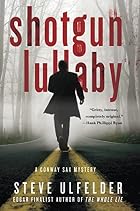
72) Shotgun Lullaby / Steve Ulfelder
Date: 2013
Third in Ulfelder's "Conway Sax" series of mysteries. The featured detective is a tough-guy recovering alcoholic, a former race car driver and sometime mechanic -- "sometime," that is, when he's not knocking heads.
In this one, Sax gets drawn into the life of Gus Biletnikov, a twentysomething addict who shows up at Sax's AA meeting. Gus is young and charming. He wins over all the regulars at the meeting, but especially Sax because in addition to his youth and charm, Gus resembles Sax's estranged son.
Then someone with a shotgun shoots up the halfway house where Gus has been staying. Three people are killed, and Sax is convinced that the target was Gus. When Sax starts asking about who might want Gus dead, he's spoiled for choice: there's the wannabe gangster who supplied Gus with drugs; the wannabe's very-real-gangster father; Gus's own hostile and distant father; his beautiful but socipathic stepmother; and an ex-con with a grudge against the whole family.
I read Purgatory Chasm a couple of years ago and had mixed feelings about it: the pacing felt uneven, and it seemed like the main character spent more time driving than investigating. Compared to that first book, this one felt tighter and more engaging. The story is entertainingly tangled, the prose is sharp, and Ulfelder effectively evokes disappointments, anger, and dedication in father-son relationships -- effectively enough to make even his most ruthless characters human.
I'm glad I gave this series another chance. Recommended.
Oh, and: this is a Massachusetts read for my 50 states challenge.
4swynn
Hi, Roni! Make yourself at home.
Yep. Expect these pages to fill with dirty rotten scoundrels. (Not all of them human. Not nearly.)
Yep. Expect these pages to fill with dirty rotten scoundrels. (Not all of them human. Not nearly.)
7swynn
Welcome, Liz & Jim!
Sorry about the math, Jim, but that only means there'll be just as much math the second half of the year as there was the first. Despite my best intentions.
Sorry about the math, Jim, but that only means there'll be just as much math the second half of the year as there was the first. Despite my best intentions.
9swynn
>8 lyzard:: Only on weekends.
10swynn

73) Ready Player One / Ernest Cline
Date: 2011
This one has been recommended by just about everybody. According to my swamp notes, it was Norabelle's review that first caught my attention, but hers wasn't the last. It was even the first title thrown up by Bookbrowsr when I investigated possibilities for lahochstetler's TIOLI challenge. This is definitely a bandwagon read.
Like others I'll say that as a story it's nothing special. But as a love letter to eighties geek nostalgia it's the most entertaining thing I've read in a very long time, to the extent that I resented sleep and work for taking me away from it.
Thank you, bandwagon. It rocked.
12Sandydog1
Hey Steve,
'Another runner! I'm a runner too. My definition? A runner is a jogger who gives a crap and tries.
I'm enjoying your posts.
Regards,
Steve
'Another runner! I'm a runner too. My definition? A runner is a jogger who gives a crap and tries.
I'm enjoying your posts.
Regards,
Steve
13rosalita
I liked 'Ready Player One' fine, but not having been a big part of the video-game scene I think a lot of it went over my head. It was still a very fun read, though!
14swynn
>11 ronincats:, 13: Yes it was a lot of fun. Some references went over my head too-- I grew up in the '80s but had limited access to computer games, and didn't pay much attention to pop music. Much of the games and music I only experienced later. I was more a science fiction, D&D, and movie nerd, but the book certainly played to those obsessions too.
15swynn
12: Welcome, Steve! Woot! for another runner.
***RUNNING POST***
I'm still recovering from the calf injury of a few weeks ago, but am starting to build mileage again. This Thursday I ran a local 5K. My 25:17 time was pretty slow for me, and I took some trash talk for it, but I finished feeling good so I guess I'm on the rebound.
I'd hoped to run an ultra in September, but that is out of the question now. I'm trying to select a target that will be challenging, satisfying ... and still realistic.
One possibility is a half-marathon at the Roots & Blues & BBQ Festival in Columbia, Missouri. The distance is realistic, and even if the race doesn't go well, there's Blues Traveler and Mavis Staples and Bela Fleck.
Another possibility is running my first triathlon. Over the last few weeks, I've started swimming in order to maintain *some* cardiovascular conditioning. It's quite a different workout from running, and I hope to continue swimming as cross-training even as I build mileage again. There's a local triathlon in September, not a standard distance but close to a "sprint distance," short enough to make training for that realistic. The only thing I'm lacking is a bike. Which is kind of important.
***RUNNING POST***
I'm still recovering from the calf injury of a few weeks ago, but am starting to build mileage again. This Thursday I ran a local 5K. My 25:17 time was pretty slow for me, and I took some trash talk for it, but I finished feeling good so I guess I'm on the rebound.
I'd hoped to run an ultra in September, but that is out of the question now. I'm trying to select a target that will be challenging, satisfying ... and still realistic.
One possibility is a half-marathon at the Roots & Blues & BBQ Festival in Columbia, Missouri. The distance is realistic, and even if the race doesn't go well, there's Blues Traveler and Mavis Staples and Bela Fleck.
Another possibility is running my first triathlon. Over the last few weeks, I've started swimming in order to maintain *some* cardiovascular conditioning. It's quite a different workout from running, and I hope to continue swimming as cross-training even as I build mileage again. There's a local triathlon in September, not a standard distance but close to a "sprint distance," short enough to make training for that realistic. The only thing I'm lacking is a bike. Which is kind of important.
16swynn
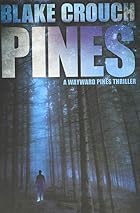
74) Pines / Blake Crouch
Date: 2012
Ethan Burke wakes up beaten half to death on a riverbank near Wayward Pines, Idaho. He has no ID, no cash, and no memory of who he is or what he's doing in Wayward Pines, Idaho.
Burke stumbles into town and starts to sort things out: he's a Secret Service agent investigating the disappearance of two fellow agents. His injuries are from a accident: his car was T-boned by a Mack truck as he arrived in Wayward Pines. Burke's partner was killed in the crash; Burke should be in the hospital but he wasn't safe there for some reason he can't quite recall .
Wayward Pines, it turns out, is deeply weird: Burke can't contact his wife or his supervisor at the Agency; the only road of town leads right back in; and when Burke finds the two missing agents, one is dead and the other is happily married and aged about twenty years.
Pines is a nominee for the International Thriller Award in the "Best Paperback Original" category, and I'd call its combination of creepiness and action deserving.
In an afterword, Crouch explains that the television series "Twin Peaks" was the inspiration for the sinister backwoods town of Wayward Pines. Personally, I don't get the "Twin Peaks" vibe from it but that's okay. Sure, there's the federal investigator digging up more skeletons than he bargained for, but the claustrophobic tension is something else entirely. It's more like "The Village," if only "The Village" had been good.
This is an Idaho read for my 50 state challenge.
17rosalita
Hmm, that Crouch book sounds good. I read his book 'Run' and thought it had some promise but was overall pretty flawed. This one sounds like it's worth a library checkout, at least.
18swynn
>17 rosalita:: Uh-oh. I hadn't heard of Crouch before, and was impressed with this one. I looked at some of his other works, and 'Run' sounded promising. Maybe not.
Looking at some of the reviews on Amazon, it looks like some readers complain about the plot of 'Run' being repetetive; the phrase 'rinse, wash, repeat' comes up.
I wouldn't say that about Pines. If anything, I think a person could complain that it can't quite decide what genre it wants to be: (MILD SPOILER WARNING) it starts out with claustrophobic, small-town spookiness, then turns into an zombie-ish mob-vs-victim chase; then Crouch brings it home by cranking up the weirdness with a science-fictional turn.
It's a matter of taste, of course, but the combination worked for me. The explanation is a little over-the-top maybe, but then so is the puzzle it's tasked with solving.
If you can get it from the library then yeah: give it a try.
Looking at some of the reviews on Amazon, it looks like some readers complain about the plot of 'Run' being repetetive; the phrase 'rinse, wash, repeat' comes up.
I wouldn't say that about Pines. If anything, I think a person could complain that it can't quite decide what genre it wants to be: (MILD SPOILER WARNING) it starts out with claustrophobic, small-town spookiness, then turns into an zombie-ish mob-vs-victim chase; then Crouch brings it home by cranking up the weirdness with a science-fictional turn.
It's a matter of taste, of course, but the combination worked for me. The explanation is a little over-the-top maybe, but then so is the puzzle it's tasked with solving.
If you can get it from the library then yeah: give it a try.
20swynn
I hope to get back to it eventually. But right now it's mostly fluff that keeps my attention, and I figure I might as well be honest about it.
21rosalita
#18 by @swynn> I started out my review of run pretty positively, but ended up saying essentially "it was great, except for the beginning and the end and that part in the middle". But it could just be me, too. I wouldn't let it sway you if you stumble on a free copy.
I think 'Pines' sounds good. I'll definitely check that one out. I would say Crouch's plotting was more problematic than his writing; 'Run' was definitely readable and kept me turning the pages.
I think 'Pines' sounds good. I'll definitely check that one out. I would say Crouch's plotting was more problematic than his writing; 'Run' was definitely readable and kept me turning the pages.
22swynn
>21 rosalita:: Hope you enjoy it, Rosalita!
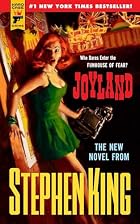
75) Joyland / Stephen King
The summer after his freshman year, Devin Jones goes to work for a small independent amusement park in North Carolina.
Despite its garish cover and its appearance in the "Hard Case Crime" line, this is not really crime fiction or even especially suspenseful. Mostly it's just faux nostalgia for carny life with some pontificating about young love and its loss; halfway through King remembers he's trying to tell a ghost story; ninety percent through he figures he'd better throw in some action to wrap things up.
The characters as usual for King are good. That combined with the lack of suspense and gore will probably make this one appealing to some of his critics. From me it gets a "meh."
This is a North Carolina read for my 50 state challenge.
75) Joyland / Stephen King
The summer after his freshman year, Devin Jones goes to work for a small independent amusement park in North Carolina.
Despite its garish cover and its appearance in the "Hard Case Crime" line, this is not really crime fiction or even especially suspenseful. Mostly it's just faux nostalgia for carny life with some pontificating about young love and its loss; halfway through King remembers he's trying to tell a ghost story; ninety percent through he figures he'd better throw in some action to wrap things up.
The characters as usual for King are good. That combined with the lack of suspense and gore will probably make this one appealing to some of his critics. From me it gets a "meh."
This is a North Carolina read for my 50 state challenge.
26swynn
Hi Kathy! Yes, that one was a lot of fun, unlike my next. Thanks for coaxing me onto the bandwagon.
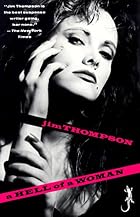
76) A Hell of a Woman / Jim Thompson
Date: 1954
Frank Dillon is a door-to-door salesman and collector for a retailer that sells cheap goods at inflated prices to people who can't afford them, on installment. He's also skimming profits, shuffling accounts to make his work appear better than it is. He's also a rotten excuse for a human being, and our narrator.
At his latest stop Frank meets Mona, a beautiful and free-loving woman whose aunt has been pimping her out for years. Frank hatches the idea of helping Mona out by disposing of her aunt. It's only right that Mona should be appropriately grateful; the hundred grand her aunt has stashed away doesn't hurt either.
Through his narration we're treated to Frank's self-justifying dialog, his paranoid misanthropic and misogynistic worldview, and his shifting interpretations of events present and past. It's a nasty but absorbing place to be, inside Frank's head. He's a classic unreliable narrator, and by the end not even Frank can sort out which of his stories he wants to believe.
"It's true, goddamnit!" It had to be true. Something had to be true beside what -- what was true.
Of course, it's a Jim Thompson novel, so you know it won't end well. But it's a Jim Thompson novel, so a bad ending couldn't happen to a more deserving guy.
I can't say it was fun, and I can't recommend it exactly, but it is an inventive and fascinating character study.
76) A Hell of a Woman / Jim Thompson
Date: 1954
Frank Dillon is a door-to-door salesman and collector for a retailer that sells cheap goods at inflated prices to people who can't afford them, on installment. He's also skimming profits, shuffling accounts to make his work appear better than it is. He's also a rotten excuse for a human being, and our narrator.
At his latest stop Frank meets Mona, a beautiful and free-loving woman whose aunt has been pimping her out for years. Frank hatches the idea of helping Mona out by disposing of her aunt. It's only right that Mona should be appropriately grateful; the hundred grand her aunt has stashed away doesn't hurt either.
Through his narration we're treated to Frank's self-justifying dialog, his paranoid misanthropic and misogynistic worldview, and his shifting interpretations of events present and past. It's a nasty but absorbing place to be, inside Frank's head. He's a classic unreliable narrator, and by the end not even Frank can sort out which of his stories he wants to believe.
"It's true, goddamnit!" It had to be true. Something had to be true beside what -- what was true.
Of course, it's a Jim Thompson novel, so you know it won't end well. But it's a Jim Thompson novel, so a bad ending couldn't happen to a more deserving guy.
I can't say it was fun, and I can't recommend it exactly, but it is an inventive and fascinating character study.
27swynn
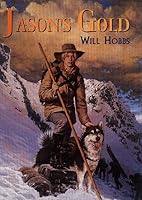
77) Jason's Gold / Will Hobbs
Date: 1999
Jason stows away on a boat bound for Alaska in hopes of striking it rich in the newly-opened gold fields. He takes the Chilkoot Trail to the headwaters of the Yukon, then boats down the Yukon toward Dawson City, but is forced to overwinter in the wilderness.
It's a survival and adventure story, but it was the "historical fiction" part that didn't work for me, since the obsession with historical detail and Jason's habit of bumping into famous people got in the way of story.
And see the dog on the cover? Yeah: the Gordon Korman Law applies.
28swynn

78) DAW #79: Rhapsody in Black / Brian Stableford
Tagline: The light they sought could blind a hundred worlds
Date: 1973
Second in Stableford's "Hooded Swan" series. In the first entry, starship pilot Grainger found himself stranded for two years on a nearly-uninhabited planet. The only other inhabitant was "the wind," a psychological symbiote who took up unwanted residence in Grainger's head. Following his rescue, Grainger accepted indenture as pilot of a cutting-edge starship, The Hooded Swan.
In this one, Grainger's boss has heard rumors of valuable cargo on the planet Rhapsody, a barren and rocky planet whose network of caves is home to an ascetic religious commune.
SPOILERS FOLLOW!
Grainger and crew are arrested as soon as they land. It seems that the secret cargo has triggered social unrest on Rhapsody, and it's decided that the offworlders will be safer in prison until the problems are resolved. The jail is not an effective one, though, and the prisoners escape.
Grainger wanders through caves for awhile before being Shanghaied by a group of outcasts. The outcasts are heretics whose very existence is denied by church officials. They don't know what the secret cargo is, but they do know its location. It was discovered in a grotto recently opened by Rhapsody's miners, and is being held in the same grotto, under guard.
Fortunately for the outcasts the guard is minimal. Grainger and his new captors take the grotto, along with a handful of hostages. Just what they've taken, though, is a puzzle: the grotto seems to be empty except for a few simple life forms: a luminescent lichen on the walls, a dendritic growth on the floor, and a worm that consumes the latter.
Grainger ponders the ecosystem and hits on the solution: the worm is a highly efficient consumer of copper-carbon molecules. This is important because cupric carbon is one of the most common building materials in the galaxy. Properly weaponized, the worms can be used to destroy entire cities.
Of course, the religious community on Rhapsody isn't interested in destroying cities. But they have decided that this lucrative discovery is a sign that God wants to reward them with an easier life. The heretics really don't care about worms or cities; instead they want a ticket off Rhapsody and acknowledgment from the church that they exist.
That's something the church isn't inclined to do. The church sends Grainger's boss to negotiate and the heretics' leader grows increasingly frustrated. In a tense showdown, Grainger gains the upper hand and secures his freedom, along with his boss.
It's not clear, though, whether anyone gets the valuable cargo. The grotto's ecosystem was an isolated and delicate one. The worms seem to have an allergy to humans, and die within days of exposure. Grainger's boss gathered as much as he could in sterilized containers, so these critters may show up again; but an immediate and widespread threat they won't be.
I thought the first volume was an excellent adventure, and I enjoyed this one too. I like Grainger's cynical and independent voice, and his developing relationship with his psychic passenger.
29UnrulySun
Steve, I thought you might get a kick out of this:

(click the pic for the full comic-- it's worth it!)

(click the pic for the full comic-- it's worth it!)
30swynn
>29 UnrulySun:: I *love* the comic, Kathy. Thanks!
At my last class reunion I met an friend who like me started running later in life.
"I run so I don't eat my kids," she said.
"I run so I can eat whatever the hell I want," I replied.
"Oooh yeah, that's good too," she replied.
At my last class reunion I met an friend who like me started running later in life.
"I run so I don't eat my kids," she said.
"I run so I can eat whatever the hell I want," I replied.
"Oooh yeah, that's good too," she replied.
31DorsVenabili
#10 - Ready Player One has been on my wishlist forever. I do enjoy a little 80s nostalgia now and then, so I don't know what's stopping me from picking it up.
32swynn
>31 DorsVenabili:: Read it, Kerri! You know you want to.

79) My Beloved World / Sonia Sotomayor
I saw Sonia Sotomayor on The Daily Show a few months ago when she was doing publicity for her book. She came across as so thoughtful and warm and articulate that I tossed her memoir into the Someday Swamp. Then weejane listened to the audiobook in February and liked it, so it stayed on the radar.
(I was inclined to like Sotomayor even before her DS appearance thanks to unintended promotion by Rush Limbaugh. Let's just say that anyone he hates so thoroughly can only be a decent human being.)
She's just as disarming on the page as she was on John Stewart's show. Her memoir covers her childhood in Bronx projects, her entry into Princeton, and her early career as a New York ADA and attorney in private practice.
Charm is pretty much all there is though: the memoir is studiously noncontroversial. Sometimes she can't help revealing some of her opinions, as when she describes her interest in Puerto Rican independence. Even then, though, she cautions that these were youthful passions and shouldn't be taken to imply anything about her current views. So despite 300 charming pages I finished the book feeling that I knew her just as little as when I began.
So why the memoir, if she's not going to say anything interesting? The purpose seems to be encouragement and inspiration for talented young people: Sotomayor talks about being a successful Puerto-Rican-American, a successful woman, a successful person with diabetes, a successful person raised in the projects. If she can do it then so can you. Princeton or the federal bench may be a different world than the one you're used to, and may even seem hostile but with hard work, curiosity and persistence you can realize your dreams.
Despite the can-do message and the evasiveness, Sotomayor manages an air of grace and gratitude. I might still wish for meatier content, and may not have gained any insight on her mind, but I did finish even more convinced of the quality of her character.

79) My Beloved World / Sonia Sotomayor
I saw Sonia Sotomayor on The Daily Show a few months ago when she was doing publicity for her book. She came across as so thoughtful and warm and articulate that I tossed her memoir into the Someday Swamp. Then weejane listened to the audiobook in February and liked it, so it stayed on the radar.
(I was inclined to like Sotomayor even before her DS appearance thanks to unintended promotion by Rush Limbaugh. Let's just say that anyone he hates so thoroughly can only be a decent human being.)
She's just as disarming on the page as she was on John Stewart's show. Her memoir covers her childhood in Bronx projects, her entry into Princeton, and her early career as a New York ADA and attorney in private practice.
Charm is pretty much all there is though: the memoir is studiously noncontroversial. Sometimes she can't help revealing some of her opinions, as when she describes her interest in Puerto Rican independence. Even then, though, she cautions that these were youthful passions and shouldn't be taken to imply anything about her current views. So despite 300 charming pages I finished the book feeling that I knew her just as little as when I began.
So why the memoir, if she's not going to say anything interesting? The purpose seems to be encouragement and inspiration for talented young people: Sotomayor talks about being a successful Puerto-Rican-American, a successful woman, a successful person with diabetes, a successful person raised in the projects. If she can do it then so can you. Princeton or the federal bench may be a different world than the one you're used to, and may even seem hostile but with hard work, curiosity and persistence you can realize your dreams.
Despite the can-do message and the evasiveness, Sotomayor manages an air of grace and gratitude. I might still wish for meatier content, and may not have gained any insight on her mind, but I did finish even more convinced of the quality of her character.
33swynn
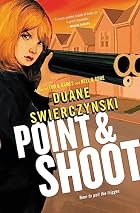
80) Point and Shoot / Duane Swierczynski
Third and last in Swierczynski's Charlie Hardie series. The first was over-the-top crazy fun; the second was over-the-over-the-top crazy fun. This one is so over-the-over-the-over-the top it has to start in outer space. Literally.
Well, low earth orbit.
Hardie's enemies have put him in an orbiting satellite for reasons that are never explained plausibly but have something to do with guarding information so valuable that it can't be adequately secured anywhere on-planet. All Hardie knows is that he has to stay in the satellite or his family dies, and his duty runs a year.
Nine months in, there's a knock on the door.
More than that is spoiler, really, but from the jacket copy you can gather that Hardie is rescued from the satellite by someone who looks exactly like himself. The two Hardies return to earth and run to the family's rescue -- but who exactly is Hardie's new partner, and for whom is he really working?
Fair warning: it's violent and frequently implausible. There are problems with continuity. Frankly, even having read it all the way to the end and much of it twice I'm not quite sure what happened. It will remind you of superhero comics and popcorn action movies.
But if you're easily distracted by sharp dialog, psychotic characters, and frequent explosions -- that is, if you are a fan of superhero comics and popcorn action movies -- you won't mind a bit. It's crazy fun.
Caveat: read these books in order, beginning with Fun and Games. If you don't, you will be lost.
34swynn
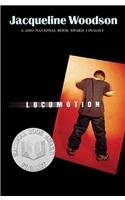
81) Locomotion / Jacqueline Woodson
Eleven-year-old Lonnie's parents died in a fire, leaving Lonnie and his sister orphaned and sent to separate foster homes. Lonnie expresses his feelings of anger, loss, longing, and love in a series of mostly free-verse poems. It's excellent.
35thornton37814
I picked up the Sotomayor book for our leased books program at our library, and it has checked out very well. I think a lot of people are curious about her.
36qebo
If you put your reviews on the review pages, you'd get lots of upthumbing...
32: I saw the same show and had the same reaction. Dunno if I’ll ever get around to reading the book, but grace and gratitude are attractive features.
32: I saw the same show and had the same reaction. Dunno if I’ll ever get around to reading the book, but grace and gratitude are attractive features.
37swynn
>35 thornton37814:: Glad to hear it's moving well at your library, Lori! Our copy has only checked out twice since it was added in early March -- and one of those checkouts was mine.
>36 qebo:: Good to see you, Katherine! I generally don't post on the review pages for a variety of reasons, but I'm glad you've liked them here in my little LT corner. If you get around to the Sotomayor, I hope that the grace and gratitude will be enough for you.
>36 qebo:: Good to see you, Katherine! I generally don't post on the review pages for a variety of reasons, but I'm glad you've liked them here in my little LT corner. If you get around to the Sotomayor, I hope that the grace and gratitude will be enough for you.
38swynn

82) The Wasp Factory / Iain Banks
Frank Cauldhame is a sixteen-year old reprobate: a torturer of animals, murderer of relatives, inventor of a ritualistic and demanding private religion. The madness seems to run in Frank's family: his father is a connoisseur of petty manipulation, and his brother Eric was sent to an institution after setting fire to dogs and trying to force-feed worms to local children.
In fact, Eric should still be in the institution. He has just escaped, and is heading home.
The book follows Frank's thoughts and preparations for his brother's return. His head is an unpleasant place, rather like that of Frank Dillon's in A Hell of a Woman but at its very own level of crazy. Banks also seems to have more on his mind than Thompson: politics and religion for example. But his main theme is the dichotomy of fate and choice, and human attempts to control it with imperfect knowledge.
It's a thoughtful, wickedly comic, and artfully structured book. Recommended for those who like that sort of thing, who don't mind a lack of sympathetic characters, and who are ready to accept a strong dose of nastiness.
The edition I have includes blurbs from various book reviews-- that's common enough for books that have admiring reviews, and The Wasp Factory has its share. But this one also includes less adulatory blurbs, like one from the Evening Standard which calls it "a repulsive piece of work," or this one from the The Times:
As a piece of writing, The Wasp Factory soars to the level of mediocrity. Maybe the crassly explicit language, the obscenity of the plot, were thought to strike an agreeably avant-garde note. Perhaps it is all a joke, meant to fool literary London into respect for rubbish.
Badges of honor, I suppose. Count me fooled.
39qebo
38: Well that one's sure getting mixed reviews. Yours and Darryl’s appeared on the same evening. Definitely a not-for-me book.
40swynn
I hadn't seen Darryl's review until after I finished, and was a little surprised at the difference in our reactions. I don't disagree with his assessment of TWF as depraved and nauseating, but "meritless" ... I hope there's lively discussion in the group read thread.
41ronincats
Well, I had already determined that I was going to stick to Banks' Culture novels. From your description, this mainstream book is NOT up my alley, regardless of whether it is clever or crass.
42UnrulySun
I tend to agree with you Steve! It's one of those books you have to go into without squeamishness or prejudice or expectation. Just let it make you think and feel, for better or worse.
43swynn
>41 ronincats:: It's certainly not for everybody, Roni.
I've only read one other Banks novel, Inversions, which was quite a different thing. I don't remember much about it, except that it impressed me. I thought I'd read some more but when I found out that Inversions was in a series -- it certainly didn't feel like a series book! -- and that the series opener wasn't available in my library I didn't pursue further.
I think I'd like to read some more Banks.
>42 UnrulySun:: I'm glad to have some company in my positive response to TWF, Kathy! I think we're in the minority over on the group-read thread.
I've only read one other Banks novel, Inversions, which was quite a different thing. I don't remember much about it, except that it impressed me. I thought I'd read some more but when I found out that Inversions was in a series -- it certainly didn't feel like a series book! -- and that the series opener wasn't available in my library I didn't pursue further.
I think I'd like to read some more Banks.
>42 UnrulySun:: I'm glad to have some company in my positive response to TWF, Kathy! I think we're in the minority over on the group-read thread.
44swynn

83) Free Fire / C.J. Box
7th in Box's series featuring Wyoming game warden Joe Pickett, and the first one that felt like a dud.
The sixth entry closed with Joe newly unemployed, and this one opens with him working as a hand on his in-laws' ranch. Then he gets a visit from ghe governor, who needs a special investigator for a politically sensitive case.
The case involves a small-town lawyer in West Yellowstone who walked into a Yellowstone camp and gunned down four campers, then went to the ranger station and turned himself in. A jurisdictional peculiarity means that he can't be tried for the murders, so he walks free.
It's Joe's job to find out why the campers were killed, and why an investigation involving park and federal investigators couldn't find a plausible explanation. Also he's supposed to keep a low profile and provide the governor with plausible deniability.
Trouble of course ensues, and at least one state vehicle meets a bad end.
I think this one suffered from being read rigth after the Wasp Factory. After TWF's artful and transgressive inventiveness, Free Fire felt thin and timid and gimmicky. I don't think that it's just a matter of "pale by comparison" though: several characters act foolishly against their own interests for no clear advantage other than advancing the plot.
I've enjoyed the series so far, so I think I'll blame most of my reaction on poor timing and will continue the series.
45swynn

84) The Hot Spot / Charles Williams
Date: 1953
Harry Madox is down on his luck, selling used cars in a nowhere town with one movie screen. Involved with the boss's wife, in love with the girl in the loans office, Harry hatches a plan to rob the bank and skip town permanently. The bank job goes right, but nothing else: the sheriff is on to him, the wrong woman gives him an alibi, and the right woman is tangled up in trouble that only a gun can solve.
This is classic fifties noir: tough guys, femmes fatales, negotiable morals, sharp dialog, poetic justice.
46richardderus
Happy seventh Thingaversary, Steve! Mine's in two weeks or so. Can't believe how much this place has changed my social and reading life.
Happy Sunday, you Noir-hound you.
Happy Sunday, you Noir-hound you.
47swynn
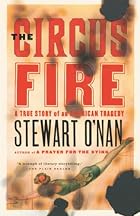
85) The Circus Fire / Stewart O'Nan
Date: 2000
On July 6, 1945 in Hartford Connecticut, at the afternoon show of the "Greatest Show on Earth," the "big top" tent caught fire. The canvas had been waterproofed in paraffin, and the entire structure burned quickly and with unimaginable heat. 167 people died, 67 of them children.
Stewart O'Nan captures the fire and its aftermath from dozens of viewpoints whose cumulative effect is absorbing, exhausting, and horrifying. Based on documents and interviews, O'Nan tells of those who escaped unharmed, of those who escaped with injury, and of those who were identified by family members. There are also stories of heroism, and afterward the story of a community and legal system trying to make sense of the tragedy.
Recommended with a warning: it is uncomfortable in spots. Fire is an awful way to die and even an awful thing to survive, and O'Nan does not turn away from its effects. His descriptions are not gratuitous but they are unsettling: there were parts I had to skim because I lacked the stomach for them, something The Wasp Factory's fictional cruelties could not accomplish.
49swynn
>46 richardderus:: Thanks for the Thingaversary wishes, Richard. I must have missed your message last night as we cross-posted. Seven years ... has this thing really been around that long?
>48 UnrulySun:: Hope you find it as fascinating as I did, Kathy!
>48 UnrulySun:: Hope you find it as fascinating as I did, Kathy!
50swynn

86) Spillover / David Quammen
Zoonoses are animal infections that can spread into human populations. "Spillover" is the event in which the infection jumps species.
There is no shortage of zoonoses: plague, influenza, hendra, ebola, Lyme disease, AIDS. Quammen investigates zoonoses through a combination of travel writing, interviews, and pop science.
He visits spillover sites in Australia, Africa, China, and the Indian subcontinent. He treks through ebola country central Africa with a biological survey team; visits China's open-air meat markets; observes bat harvesters in Malaysia; and follows the likely path of HIV from a remote region of Cameroon to Kinshasa, from which city AIDS launched around the globe.
Along the way he interviews researchers and physicians about specific diseases and about zoonoses in particular. He gives us the basics of zoonotic ecology: reservoir species, transmissibility, virulence, mutation rates. I'm not really qualified to judge, but it sounded solid to me, and mostly free of sensational doomsday predictions.
His style, though, ... many reviews of Spillover praise Quammen's style, some even going so far as to call him a "master storyteller" or compare him to Faulkner. Really. I don't get it. No question that Quamman can be engaging, but he can also be just as annoying.
Quammen seems to vacillate between two styles. First is an elaborate style with a large vocabulary and frequent literary flourishes. When it works it's quite good, but there are pages where he shows off too much and the similes swarm like mosquitoes. Like gnats. Like poetasting termites even. You get the idea. At its worst it turns into complete fabrication: the chapter on AIDS contains a completely fictional short story about the Man Who Brought AIDS to Kinshasa. In contrast to the literary style, Quammen also employs a folksy, aw-shucks-just-a-journalist pose that is supposed to be reassuring but instead is jarring and sometimes condescending.
Sometimes the two styles juxtapose in a way that is almost comical. Take this passage, where Quammen introduces the only mathematical equation in the book:
So they had five crucial variables and they wanted to understand the net effect. They wanted to trace the dynamics. This led them to a simple equation. There will be no math questions in the quiz at the end of this book, but I thought you might like to cast your eyes upon it. Ready? Don’t flinch, don’t worry, don’t blink:
R_0 = βN/(α + b + v)
In English: The evolutionary success of a bug is directly related to its rate of transmission through the host population and inversely but intricately related to its lethality, the rate of recovery from it, and the normal death rate from all other causes.
Honestly, who in the world is comfortable with the terms "directly related" and "inversely related" but then gets the willies when faced with a fraction? And what part of the fraction reflects "intricateness"? Later he reprints the same fraction with apologies to all the non-mathematical folks like humble himself, then uses the terms "multiplier" and "numerator" in his plain-English explanation.
Rant over. Yes, I found the style(s) distracting but I learned something and was entertained while doing so. Quammen does assemble a large number of pretty good stories, and his travel-journalism approach adds to its appeal, even though I'd have preferred more literary restraint. Recommended if you're interested in the subject.
51swynn
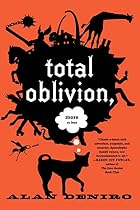
87) Total Oblivion, More or Less / Alan DeNiro
Date: 2009
When Scythians invade Minnesota, Macy and her family flee St. Paul for the promise of work and safety in St. Louis. But it's not just Minnesota that has gone weird.
Macy and her family head south on the Mississippi and encounter multiple surreal dangers of a world falling apart ... or maybe building itself into some new status quo. Besides the barbarian hordes, there is a new Greek-speaking empire based in what used to be New Orleans, giraffes roam the great plains, and a bizarre new plague is spreading, and the stars are unfamiliar.
Despite the chaos that their world has become, Macy's family is still family, with family problems: Macy's mother is pregnant as her parents try to salvage their marriage; Macy's sister is an adolescent looking for independence; and her brother is a fourteen-year old boy who isn't quite sure what he's looking for. Macy herself is a middle child, trying to make sense of her chaotic world and her chaotic family.
I enjoy imaginative travelogues, but this one didn't work for me. Macy's world never really felt like a real place to me. To be fair, the chaos is probably the point but I'd like to have had a stronger anchor than Macy's mostly disinterested reportage and the thin plot.
On the positive side it's quite imaginative so it's frequently fun, and the matter-of-fact style works well in spots, but mostly it felt aimless and random. It's received some excellent reviews and was on the Locus recommended reading list back in 2010. So I'll assume I'm missing something; whatever it is, I missed it so I can't recommend it.
52swynn
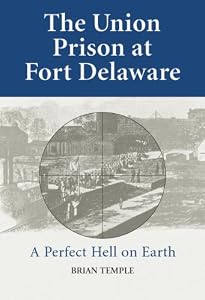
88) The Union Prison at Fort Delaware / Brian Temple
Date: 2003
Pea Patch Island is a muddy bump in the middle of the Delaware River, near where it empties into Delaware Bay. After the War of 1812, the fedeeral government decided it was an ideal site for a fort, defending access to Philadelphia.
During the Civil War, when it became clear that the Confederacy was unlikely to mount a naval attack on Philadelphia, Fort Delaware was converted to a prison facility. Over the course of the conflict it held prisoners of war, deserters, and political prisoners.
It was an unpleasant place to live, even by Civil War standards. When you think about living in a prison built four feet below sea level on a mudbank in the middle of a river, you can probably guess some of the problems inmates encountered. Besides the mud and filth, the prisoners had to deal with vermin, insufficient rations, and as conditions became more crowded, rampant disease. In summer the sun baked the ground hard and in winter the river breezes kept the place frigid. In either case most prisoners had insufficient shelter.
Bad as it was, it wasn't quite Andersonville. And some prisoners seem to have lived there pretty well. Officers received deference of course, and those who had cash enough for the sutler's overpriced goods could eke out a tolerable existence. As could those who had family and friends close enough to provide extra clothing and foods. For others, the place was -- as the subtitle claims -- "a perfect Hell on Earth."
Brian Temple mines letters, memoirs, diaries, and official records to tell the story of the fort and the people who lived there. The writing is clear and moves along well. Recommended for those interested in the subject.
This is a Delaware read for my 50 state challenge.
53swynn
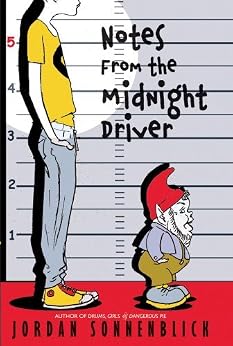
89) Notes From the Midnight Driver / Jordan Sonnenblick
Date: 2006
Alex is 16 and his parents are recently divorced. His mother has just started dating again, and his father has moved in with Alex's old third-grade teacher. One night while his mother is on a date, Alex raids the liquor cabinet, jumps in the car, and drives off to confront his father. It seems like a good idea to a drunk 16-year old. Most bad ideas probably do. Instead of confronting his father, Alex wrecks the car in the neighbor's yard, tearing up the landscaping and decapitating a lawn gnome.
The judge assigns him community service, which he is to work off providing company to Solomon Lewis, a cantankerous old coot in a local nursing home. The rest you can guess: after initial misunderstandings, the adolescent and the senior citizen discover common interests, learn from each other, and become fast friends. Predictable in outline, but Sonnenblick fills it in nicely.
You can see the tearjerker ending coming from page 10 -- you can probably see it coming from my last paragraph -- but when it arrives it feels natural rather than cheap. It gets "recommendeds" from my son and myself.
55swynn
>54 MickyFine:: I like it too, Micky. It was reissued with a photographic cover, of which I'm less fond:
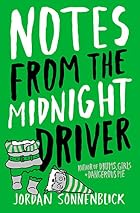
The gnome-behind-the-wheel idea is cute, but the lighting is weird and looks more creepy than fun. I think the original cover captures the book's tone much better.
The gnome-behind-the-wheel idea is cute, but the lighting is weird and looks more creepy than fun. I think the original cover captures the book's tone much better.
57swynn
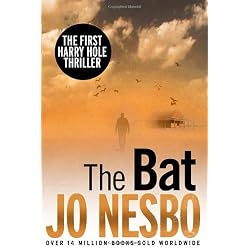
90) The Bat / Jo Nesbø
Date: 1997 (English Translation 2012)
Harry Hole is a Norwegian cop in Australia, observing and advising the Australian police in a murder investigation. The victim is a Norwegian expatriate starlet, found raped and murdered. As the investigation proceeds, it becomes clear that she is only one of a number -- perhaps a startlingly large number-- of victims across the country.
I read this on the the enthusiastic recommendation of a friend in a RL reading group. Actually, it wasn't this title she recommended but rather the series. In fact, she warned that this one was not quite up to the standard set by later volumes. But compulsive start-at-the-beginning me? I have to start at volume one.
Despite the warning, it's quite satisfying. Of course I love the noirish elements: disillusionment with social norms, a self-destructively flawed hero, substance abuse, casual violence, a cast of outcasts. Everyone in Nesbø's Australia is an outcast: either an expatriate or a descendant of exiled prisoners, or an aboriginal robbed of his heritage or ripped from it. That kind of landscape is perfect for pondering themes of alienation and loneliness, which Nesbø does compellingly.
It's not perfect: it's a bit talky, and while several characters are well-developed, the victim is strangely not one of them. Still, it's a good mystery with a pensive mood and rich imagery. If the rest get better then count me in.
58swynn

91) The Colony / John Tayman
From 1865 to 1969, Hansen's disease -- "leprosy" -- was a criminal offense in Hawaii. Anyone determined to be symptomatic was sent to quarantine in the village Kalaupapa on the island Moloka'i. Those who failed to report for examination or to comply with quarantine were hunted down and forcibly shipped away. Husbands were separated from wives, and parents from children. In some cases, patients were declared dead and their property claimed by the state.
The worst of it is, none of it was necessary. It turns out that Hansen's disease is not nearly as virulent as was once thought: only 5% of the population is suceptible, and most of those with the disease are not contagious.
Of course, nineteenth-century health officials can't be criticized for not knowing this. They can, however, be judged for a baffling series of managerial blunders. For example, they expected the colony to be essentially self-supporting, with patients building their own shelter and growing their own food. But they began by sending twelve of the most seriously advanced cases to establish the colony. Those who weren't too sick to work had to nurse those who were, with nobody left to labor at building a settlement.
Despite mismanagement and corruption, the colony in Moloka'i eventually became a tolerable place to live, even the most famous "leper colony" in the world. Tayman's narrative features cameos from Mark Twain, Robert Louis Stevenson, Jack London, and Charles Warren Stoddard. But the colony also produced its own celebrities: the "leper priest" Father Damien (now St. Damien), storyteller Makia Malo, and memoirist Olivia Breitha. To the longtime residents of Kalaupapa, the colony is not a fearful place of confinement. It's home.
Tayman's style is what the kids call "creative nonfiction": he frequently describes the interior lives of his subjects, and adds details that he can't possibly know in order to evoke a certain mood. I wasn't surprised to learn that some of his subjects have criticized his creative decisions. He has plenty of endnotes, but they're still selective: on several points I consulted the endnotes wondering, "How could he pretend to know *that*?" only to find either no reference or just an argument for plausibility. And the book design is baffling: those cliffs on the cover are lovely, but they don't match the cliffs described in the text which overlook land not water. Turns out the cover photograph is actually Italian rather than Hawaiian. And why are all of the interior photographs collected in the endnotes?
All that said, the narrative certainly is exciting and yes, it's mostly plausible. Despite the criticism, I do think he's depicted the residents of Kalaupapa respectfully. They certainly come across more as human beings than as victims of a dreaded and irrationally-feared disease.
This is a Hawaii read for my 50 state challenge.
59swynn

92) Lake Country / Sean Doolittle
Mike Barlowe and Darryl Potter are ex-Marines in St. Paul, out of luck and mostly out of work: Mike works odd jobs here and there to get by, and Darryl does collection work for a bookie. Then Darryl decides to get into the justice racket.
Five years ago, when Mike and Darryl were stationed in Iraq, the daughter of a fellow Marine was killed in an automobile accident, a head-on collision with a drowsy driver. The victim's father was killed in a transport on his way home for the funeral. Back in Minnesota, the drowsy driver was convicted of misdemeanor reckless driving and sentenced to ten days in jail and five years' probation.
On the fifth anniversary of the accident, Darryl decides to teach the driver a lesson. Darryl kidnaps the driver's daughter and plans to ... well, that's the whole problem: nobody knows Darryl's plan, not even Mike. But Mike does know that Darryl is not the most stable stick in the dynamite crate.
Mike doesn't want the girl hurt, but he owes Darryl his life and so he doesn't want Darryl hurt either. But with everyone looking for Darryl, an ending where nobody gets hurt looks decreasingly likely.
This won the 2013 International Thriller Award for best original paperback, and it's not bad. It's fast, suspenseful, and mostly plausible, with a sympathetic cast of characters. Recommended.
This is a Minnesota read for my 50 State Challenge.
60swynn
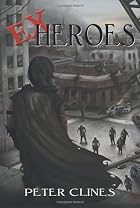
93) Ex-Heroes / Peter Clines
Date: 2010
Zombies and super-heroes face off in postapocalyptic Hollywood.
That's enough really to tell you whether you want to read this book.
If it sounds like a bad idea, then you're right: there are pages full of one zombie death after another, the plot doesn't always make sense, and by way of explanations you'll read the lamest pseudoscientific bafflegab you've encountered since Star Trek : Voyager was canceled. Stay away.
But did I mention: super-heroes *and* zombies? Plus, super-powered zombies? If it sounds like a good idea, then you're also right: The heroes are appealing and their powers are nifty. The villain is effectively menacing. And it all comes to a climax in an appropriately intense knock-down drag-out superpowered brawl. What more do you want, giant alien robots? If your inner adolescent is crying "Cool!" then listen to that poor child for once because it's just as fun as you secretly hope.
I picked this up on the strength of Jim's (drneutron's) enthusiastic review. You were right, Jim. Thanks!
(Come to think of it, though: the sequel really should feature a giant alien robot invasion.)
61UnrulySun
Hey Steve. I have Notes From the Midnight Driver on the shelf... I picked it up without knowing it at all, just because of the cool cover. One of these days, I'll actually read it. :)
64swynn
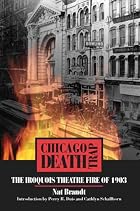
94) Chicago Death Trap / Nat Brandt
Date: 2003
Here's another fire narrative, describing the Iroquois Theater fire in Chicago which killed over 600 people in 1903, many of the victims children. In terms of lives lost, it is to date the worst indoor fire in U.S. history.
The fire started when bare wires on a malfunctioning spotlight sparked and ignited a backstage curtain. An actor nearby tried to put out the fire, first by beating it with his hands and then by tossing a fire-retardant powder that was essentially baking soda. There were no water buckets, fire extinguishers, or sprinkler systems in place, despite municipal fire codes requiring them.
But availability of fire extinguishers was hardly the only regulation ignored. So many were flaunted that Brandt can provide each of 17 chapters with an epigraph quoting a violated regulation from the city fire code. There were unmarked or locked emergency exits, blocked escape routes, inadequate lighting, improper venting, improperly wired controls, the list goes on.
Within two minutes, the fire had spread to the gallery, and within five the theater was an inferno. Theatergoers trampled one another to escape, but with exits blocked and fire escapes frozen, many never had a chance. When a delivery door was opened backstage, the inrush of oxygen turned the parquet into a blast furnace.
With all of the code violations, you'd think heads would roll in the aftermath but you'd be wrong. Ultimately, nobody was held responsible except for the Fuller construction company which settled out of court. The architect who designed the violations, the managers who requested and exacerbated the violations, the city inspector who approved the violations, and the fireman who winked at the ongoing violations not only got off scot-free; several went on to successful and even celebrated careers.
Compared to The Circus Fire, Brandt's book focuses less on personal narratives and more on what went wrong. He has separate chapters describing how people responded in different parts of the building, and how the code violations directly contributed to the crowd's behavior and the consequent disaster. In the aftermath he details how the responsible parties squirmed away from consequences. The relative lack of personal narratives makes Chicago Death Trap easier to stomach than The Circus Fire, but the outrageous behavior of responsible parties makes it even more infuriating.
As for style, Brandt lacks O'Nan's touch but he certainly gets the story told effectively. Recommended for those who are inerested.
This is an Illinois read for my 50 State Challenge.
65swynn
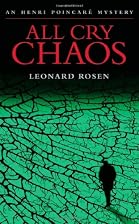
95) All Cry Chaos / Leonard Rosen
American mathematician Jame Fenster is assassinated on the eve of a WTO meeting. Fenster had been scheduled to address the organization on the "The Inevitability of Globalization." Interpol agent Henri Poincaré investigates.
As the investigation proceeds, the world seems to be falling apart, generally and personally for Poincaré: anti-globalization protesters keep things stirred up; a Christian doomsday cult predicts yet another rapture, inspiring suicide bombers for Jesus; and an old adversary takes out hits on Poincaré's family. Trying to make sense of his life and his world, Poincaré finds himself drawn to the fractals Fenster studied, which seem to suggest an underlying order to, well, everything.
The mathematics is very slight, basically defining "fractals" over and over again with pictures. At least Rosen understands the definition, which puts him ahead of William P. Young, but I'd have appreciated a little more depth. Also at the end there's a rant about dynamic systems, which Rosen seems to think are generally more deterministic than I understand them to be, but it's all very high-level and generally matches my understanding, so -- yay! -- somebody gets it right for once. Or at least not wrong.
As for the rest, I have mixed feelings. The murder is a neat little puzzle, and I did enjoy trying to fit the pieces together. On the other hand, some of the pieces I just didn't buy. (Minor SPOILERS follow!) The solution seems unnecessarily convoluted. The plot requires rational characters to behave irrationally. And honestly I'm sick to death of stories where security-obsessed geniuses protect their data with natural-language passwords that leave cryptologists flummoxed but can be guessed by a clever detective.
It's gotten excellent reviews, and I'll grant that it's thoughtful and ambitious. But I found it disappointing, and won't recommend it.
66qebo
65: OK, so this got me wondering, who is William P. Young and what did he do wrong? And is there a rant about it? Yes there is! How did I miss such a wonderful thing? Ah, it’s from the year before I joined the 75ers.
67swynn
Sorry about the oblique reference, Katherine. Yes, I was talking about The Shack, in which Young invokes fractals as lovely and mystical things even though he's not quite sure just what a fractal is. (To be fair, I'll grant that "Object with self-similar structure at every level of resolution" does contain big words.) If there were a contest, I'd nominate The Shack for Worst Ever Waste of Ink and Tree Pulp, but only in part for Young's mathematical obtuseness.
68lyzard
Everyone in Nesbø's Australia is an outcast: either an expatriate or a descendant of exiled prisoners...
Of course, what not everyone understands is that the descendants of exiled prisoners are often proud of the fact; it's not usually a basis for outcast-dom. As for expats, well, there was my broadly British mother who spent many a year exhorting various Australian sporting teams to "kill those bloody Poms". :)
Of course, what not everyone understands is that the descendants of exiled prisoners are often proud of the fact; it's not usually a basis for outcast-dom. As for expats, well, there was my broadly British mother who spent many a year exhorting various Australian sporting teams to "kill those bloody Poms". :)
69swynn
Liz,
Thanks for the gentle corrective, and perhaps "outcast" isn't the right word generally -- although I think for some characters, especially some of the expatriates, it is. I think it applies to Detective Hole himself, and his outcast condition is largely of his own devising. Others characters, such as members of Sydney's gay community, may be "outcasts" elsewhere but have found a home Nesbø's Sydney.
Whether a matter of shame, pride, or indifference, most of the characters have a sense of being from somewhere else, and in the case of aborignal characters a sense of being from somewhere that just isn't there anymore. Maybe "displaced" is a better term for the common condition, which Nesbø uses to create a mood of alienation.
Then again, I may just be missing the point, or seeing one where there isn't. It wouldn't be the first time.
Thanks for the gentle corrective, and perhaps "outcast" isn't the right word generally -- although I think for some characters, especially some of the expatriates, it is. I think it applies to Detective Hole himself, and his outcast condition is largely of his own devising. Others characters, such as members of Sydney's gay community, may be "outcasts" elsewhere but have found a home Nesbø's Sydney.
Whether a matter of shame, pride, or indifference, most of the characters have a sense of being from somewhere else, and in the case of aborignal characters a sense of being from somewhere that just isn't there anymore. Maybe "displaced" is a better term for the common condition, which Nesbø uses to create a mood of alienation.
Then again, I may just be missing the point, or seeing one where there isn't. It wouldn't be the first time.
70lyzard
Don't take my arguments too much to heart - they weren't intended quite seriously! I can perfectly understand how a theme of displacement and alienation would work in such a novel.
71swynn

96) DAW #60: What's Become of Screwloose? And Other Inquiries / Ron Goulart
Tagline: Ten stories of mechanical mayhem, impossible intrigue, and scandalous science
Date: 1971
This is a collection of stories, plot-heavy with light banter, mostly paranoid fantasies about a world gone crazy with malfunctioning and occasionally malevolent machinery. All of them are light, and most of them are short, which is a good thing because the jokes wear thin quickly.
What's become of Screwloose?
Mary Redland, daughter of a late and eccentric servomechanism tycoon has gone missing. Our detective hero is hired to find her, but he'll fight off homicidal dishwashers and overprotective tutorbots before he's done.
Junior partner
Arlen Keever is a successful and stern businessman, but his time is almost up. Before he dies, he must show his son the secret of his business success: personnel management. And voodoo.
Hardcastle
Bob Lambrick and his wife have moved to California for a fresh start. They're renting an automatic house because it's a new experience, and they're friends with the owners so they got a deal on the rent. But the house doesn't like Bob much.
Into the Shop
Stu Clemens is a police officer though much of his work is performed by his vehicle, a "lawagon." The lawagon is programmed to identify, pursue, and apprehend criminals. In a pinch it can also act as judge, jury and executioner because it never makes mistakes. You know the rest.
Prez
Norbert Penner is a young man, sort of between jobs, and very much in lust with Benny Mailand-Scott. Fortunately, the lust is mutual. Unfortunately, Benny's cybernetic dog Prez doesn't like Penner.
Confessions
Jose Silvera is a freelance writer, lately paid to write speeches for the politician Hugo Kohinoor. When Silvera learns that Kohinoor has been invited to a party thrown by a publisher who owes Silvera money, Silvera invites himself along. Things don't go as planned: first, he's thrown out of the party. Next, Kohinoor turns up dead and persona non grata Silvera must solve the murder.
Monte Cristo complex
Vincent Hawthorne investigates the curious case of the Dismantler, an irrational criminal who commits unprovoked acts of dismantling on innocent robots.
The Yes-Men of Venus
Pastiche of John Carter and imitators.
Keeping an eye on Janey
This is my favorite in the collection, about a robotic bed working as a P.I. investigating infidelity cases. It seems the bed has also read too much Spillane and takes its P.I. role a little too seriously.
Hobo jungle
Ben Jolson of the Chameleon Patrol disguises himself as a folk singer to infiltrate the poor tired masses of the Depression-era planet Murdstone. His assignment is to recover a fortune embezzled from the planet's welfare programs.
The cover, which captures the colorful and chaotic tone of the stories quite well, is by Josh Kirby.
72swynn
72: No worries, Liz. I appreciate the nudge to wonder whether I said what I really meant, whether it was intended that way or not!
I also get the urge to be proud of disreputable forbears. Very early in my library career I briefly worked in the local and family history department of a small public library. You should see the way those researchers' eyes lit up when they talked about their great-grand uncle the horse thief or the cousin who'd killed a man in a duel or how great-great-grandmother scandalized her Connecticut hometown when she left her husband for the wilds of Oklahoma.
These were kind and responsible people who'd played by the rules all their lives, but by God they loved the thought of wildness in their blood.
I totally get that.
I also get the urge to be proud of disreputable forbears. Very early in my library career I briefly worked in the local and family history department of a small public library. You should see the way those researchers' eyes lit up when they talked about their great-grand uncle the horse thief or the cousin who'd killed a man in a duel or how great-great-grandmother scandalized her Connecticut hometown when she left her husband for the wilds of Oklahoma.
These were kind and responsible people who'd played by the rules all their lives, but by God they loved the thought of wildness in their blood.
I totally get that.
73lyzard
And it's the same sort of thing here, combined in many cases with the injustice, or at least perceived injustice, of the sentences passed. This is particularly true of people with an Irish background, whose ancestors seem in many cases to have been guilty chiefly of being Irish. "Loitering with intent", I guess. :)
And when anyone's tracing a family tree and hits a convict---EVERYONE hears about it!
And when anyone's tracing a family tree and hits a convict---EVERYONE hears about it!
74swynn
It's funny how the things one generation wants to cover up are precisely the things that a later generation wants to celebrate.
My mother recently shared with me that her father kept a regular diary, detailing the life of a dairy farmer in upstate New York through the better part of the 20th century. He passed on some time ago, but Grandma isn't sure what to do with the diaries. Give them to the county historical society, or to a library with a local history collection, I told her. They'd kill for that kind of primary source.
Well, she said, the thing is he didn't only write about the farm. He also wrote about things going on in the community. Gossipy things that don't need to be shared. She'll want to go through and take some of that out first.
Oh, yes, by all means donate your Rolex to the watch museum. But that fancy wristband might distract from the timekeeping mechanism. Be sure to get rid of that first.
My mother recently shared with me that her father kept a regular diary, detailing the life of a dairy farmer in upstate New York through the better part of the 20th century. He passed on some time ago, but Grandma isn't sure what to do with the diaries. Give them to the county historical society, or to a library with a local history collection, I told her. They'd kill for that kind of primary source.
Well, she said, the thing is he didn't only write about the farm. He also wrote about things going on in the community. Gossipy things that don't need to be shared. She'll want to go through and take some of that out first.
Oh, yes, by all means donate your Rolex to the watch museum. But that fancy wristband might distract from the timekeeping mechanism. Be sure to get rid of that first.
75swynn
97) Settled in the Wild / Susan Hand Shetterly
Date: 2010
In 1971, the author and her husband picked up and moved to a cabin in Surry, Maine with no electricity, no indoor plumbing, and no telephone. The idea was to live more simply and closer to the land. In this book she shares observations, brief essays, and meditations on the things she has witnessed in forty years of paying attention: the crickets, the cormorants, the fish and the deer and the wolves and one rescued raven.
This is my neighborhood of millions of lives, depending on who you count. From springtails to moose, from June bugs to people, from boreal shrimp to harbor porpoises, it is a small, green place by water. It is a tiny irreplaceable place where we go about the everyday magic of our lives.
... and the less everyday magic of sharing the spell with others. This is a gem of observation and insight, and the prose is just as careful and keen as the author's attention. Recommended.
This is a Maine read for my 50 State Challenge.
76swynn

98) Blood Trail / C.J. Box
Someone is killing hunters in Wyoming. Joe Pickett investigates.
It was okay. This one felt less gimmicky than the last entry in the series, but I saw the surprise climax coming from about halfway through, which pretty much sucked the suspense out of it.
I'll get a cover and touchstone added when the index finishes rebuilding.
77swynn
99) The Games / Ted Kosmatka
Date: 2012
Earlier this year I read and had mixed feelings about Kosmatka's latest book, Prophet of Bones. His first book was The Games, which gathered some critical love and made Locus's list of Recommended Reads for 2012.
My feelings are mixed.
It's set in a near-future world where the Olympics have been augmented by a new blood sport: genetically-engineered organisms fight to the death for the amusement of the masses. The only rule is that the organisms must contain no human DNA, apparently as a nod to the yogurt-eaters who frown on blood sports.
The United States has dominated this new game thanks to the creations of Silas Williams, a geneticist who has achieved a sort of celebrity for his creations. With increason competition from China, however, Silas has been shut out of the design phase this time around: the next gladiator has been designed by a sort of cloud supercomputer, with human input from a savant puzzle-solver.
Silas is on hand, though, for the gladiator's birth and through its training. As the Olympics draw near, he becomes increasingly concerned about the gladiator's abilities, and worries that Team USA may have built more than it can handle.
The good: It's a well-paced thriller with an engaging cast. I like how Kosmatka pulls as much suspense out of the design and testing phases as he does out of the competition itself. This could easily have been a story that played itself out in a series of mighty battles. Instead it works across on the entire process: planning, development, training, and competition. Kosmatka gets not only suspense out of that, but also some pensive moments about the engineering process, ethics, and shared responsibility. Kudos for that.
The bad: Although the thriller works pretty well, I can't quite believe the world it lives in. World-buildings is also what I disliked about Prophet of Bones. There are too many details that just don't make sense to me.
For example: Kosmatka's world has become so hostile toward blood sports that even bow hunting is played with rubber-tipped arrows against deer that have been implanted with microchips to score hits. Are the people in that world really going to go crazy over what amounts to genetically-engineered dog fights? Sure, Kosmatka includes a protest movement but I think he underestimates the strength such a movement would have, and the likelihood that the politically-sensitive IOC would approve "The Games" in such a world.
Also: Team America has placed all its chances on one gladiator, produced by an untested process. But with so much money and prestige at stake, how likely is it that we would really put all of our eggs in one ... well, forget the basket. Why would we put all of our eggs in one dimple of one carton?
And while the genetic exposition sounded plausible to non-geneticist me, Kosmatka's explanations tend to seem less plausible the further he wanders from biology, provoking moments of "Wait, what?" Consider Silas's explanation of why the supercomputer "Brannin" is so much more powerful than any other computer, ever. After some talk about how the computer exists mostly in VR, and therefore is unconstrained by physical limits (wait, what?):
Instead of bytes made of zeros and ones, the Brannin uses light, on or off, and that's the speed at which it computes. Something like six trillion floating-point operations per second, give or take.
Wait, what? How does Silas think his cell phone works? Little ones and zeroes pushing each other around under the touch screen? Does the speaker really not see that lights on and lights off *are* zeroes and ones? I'm no computer scientist, but my understanding is that the "ones" and "zeroes" in my tablet are embodied by the presence or absence of electrical charge. I'm ready to believe that you can gain speed by replacing charge and no-charge with light and no-light, but this explanation doesn't come near saying why. And what turns the light on and off, exactly?
While it's better than Prophet of Bones, it was more disappointing than thrilling for me, and I won't recommend it.
78qebo
75: Huh. I have this, downloaded as a Nook deal awhile back. Maybe I should read it.
77: Wait, what, how is this virtual reality created?
This book and his other sound kinda interesting. Oh well.
77: Wait, what, how is this virtual reality created?
This book and his other sound kinda interesting. Oh well.
79swynn
78: I think you'd like the Shetterly book, Katherine. Besides, it's made up of short and relatively independent essays. Worst case, you read a couple and decide it's not for you.
On the virtual reality in The Games: there's some handwavey stuff suggesting the processing power comes from a network of supercomputers, but by the end it's pretty clear the answer is "magic."
If the books sound interesting you might still give them a try. Others have liked them a lot.
On the virtual reality in The Games: there's some handwavey stuff suggesting the processing power comes from a network of supercomputers, but by the end it's pretty clear the answer is "magic."
If the books sound interesting you might still give them a try. Others have liked them a lot.
80swynn
100) Never Wipe Your Ass With a Squirrel / Jason Robillard
A guide to ultrarunning, with cussing and poop jokes. I enjoyed it more than I probably should have done, and even came away with a couple of tips. (Running in a kilt. Hm. I expect that works best for runners with thighs thinner than mine.)
81UnrulySun
Hi Steve! Running in a kilt doesn't sound at all appealing... wouldn't it be a bit... unsupportive?
Do you have any races coming up? I have to wonder if you still go out and run in all this heat, and if so why aren't you dead? I can't walk to my car without becoming dehydrated and nearly passing out.
The Oatmeal (of that running cartoon from before) has hit gold with his "blerch" idea. It's been making the rounds and now there's a running shirt! Don't you need one? ;)

Do you have any races coming up? I have to wonder if you still go out and run in all this heat, and if so why aren't you dead? I can't walk to my car without becoming dehydrated and nearly passing out.
The Oatmeal (of that running cartoon from before) has hit gold with his "blerch" idea. It's been making the rounds and now there's a running shirt! Don't you need one? ;)

82swynn
81: On running in a kilt: yes. In fact, that's the point. Robillard claims that it reduces chafing. I imagine the physics a little differently, but he's the voice of experience so there ya go. Actually, he's a fan of naked running, but he acknowledges that sort of thing is frowned upon in most 5Ks so a kilt can be the next best thing.
Me, I think I'll just stick with Bodyglide for now.
***WARNING: WHINGEY RUNNING POST***
I ran a 5K this morning and ... it was awful.
Part of it is my own fault: I've been slow in getting back into a training schedule, and although I haven't been training like a marathoner I've been eating like one. Yeah, The Blerch. I weighed in last Monday to discover that I'd packed on almost 20 pounds over the summer, which tends to slow a guy down.
The 5K was the "Run Through the Jungle," a local run that winds around a golf course for almost two miles. I've done it before and had a blast. This year, though ... it was 83 degrees and climbing at the start of the race, with the heat index pushing 90. By two miles in I had nothing left, and walked about half of the last mile, finishing with my worst time ever.
I've decided not to let it get me too down. I've been in much worse shape, and probably not even as bad as it felt this morning. But I do have work cut out for me.
There's another local 5K next weekend, probably in similar temperatures. I don't expect it to be pretty, but I do hope to finish running.
Me, I think I'll just stick with Bodyglide for now.
***WARNING: WHINGEY RUNNING POST***
I ran a 5K this morning and ... it was awful.
Part of it is my own fault: I've been slow in getting back into a training schedule, and although I haven't been training like a marathoner I've been eating like one. Yeah, The Blerch. I weighed in last Monday to discover that I'd packed on almost 20 pounds over the summer, which tends to slow a guy down.
The 5K was the "Run Through the Jungle," a local run that winds around a golf course for almost two miles. I've done it before and had a blast. This year, though ... it was 83 degrees and climbing at the start of the race, with the heat index pushing 90. By two miles in I had nothing left, and walked about half of the last mile, finishing with my worst time ever.
I've decided not to let it get me too down. I've been in much worse shape, and probably not even as bad as it felt this morning. But I do have work cut out for me.
There's another local 5K next weekend, probably in similar temperatures. I don't expect it to be pretty, but I do hope to finish running.
83swynn

101) Walking on Glass / Iain Banks
Date: 1985
The run may have been bad, but the reading's been good.
This is Banks's second novel (after The Wasp Factory). It's a set of three loosely connected novellas told in alternating chapters: a young artist walks across London to meet a girl; a paranoid schizophrenic wanders around London cutting hood ornaments off cars and pouring sugar in the tanks of motorcycles; two people imprisoned in a castle play games whose rules they don't know for chances to guess the answer to an unanswerable riddle.
It's structurally more complicated and narratively less successful than The Wasp Factory The lack of a strong central character made it more difficult to engage than TWF, but the writing is clever and full of literary and science-fiction references; and it made me think about the human compulsion to make sense of an insensible world with imperfect information. Like TWF, much of it went right over my head, and re-reading would probably be rewarding.
84swynn

102) The Asphalt Jungle / W.R. Burnett
Date: 1949
A bunch of crooks rob a jewelry store. Things go wrong.
There's nothing terribly clever about the crime. The crooks pick a lock, then apply a drill to the safe. What's really good about this piece is the ensemble: these aren't just tough guys, they're human characters who work so well that in later texts they've become cliches: the has-been hoodlum who wants to get one big score before retiring to the country; the experienced professional who's gone straight but can't resist the lure of one more take; the overreaching scoundrel so desperate for cash that he takes risks he shouldn't; and the mechanical planner who thinks he's in control. And then there's the city: an unidentified midwestern metropolis with rampant crime on the streets and corruption in the precinct house, the city is the most compelling character in the cast.
Oddly, I was underwhelmed by the Huston movie when I saw it years ago: Its manners seemed so dated; I couldn't figure out who the protagonist was supposed to be; and Marilyn's appeal was lost on me. My expectations for the book were accordingly measured. I get it now, and I'll give the movie another chance.
85swynn

103) Wool / Hugh Howey
This is the book all the cool kids are reading. It's about a post-apocalyptic world where the remnant of humanity lives in underground silos. The purpose of the silos, who built them, why, and whether there are more than just one, are all mysteries, and investigating them is a crime. The punishment for even asking the questions is being sent outside to die.
Juliette isn't really interested in thos questions. She's a maintenance worker and a good one, with the bad luck of stepping into the middle of a political quagmire she knew nothing about. But Juliette's ignorance of silo politics doesn't approach the politicians' underestimation of Juliette ...
The good includes an appealing and believable heroine, a despicable and believable villain, a richly imagined world with plenty of room to expand, and a well-paced and engaging plot. The bad includes unanswered questions and a couple points that stretch credibility. On balance, it's an excellent story, and recommended.
86swynn
*** RUNNING POST ***
I didn't do the 5K this weekend, but I'm feeling much better since last week's bellyaching post.
I put in 28 miles this week. It was mostly slow, much of it around a 10 minute pace, so I'm still feeling sluggish and out of shape, but it feels less like despair and more like starting a training cycle: plenty of work to do, but very doable.
I've picked out my next target race, a 50K in Iowa next January. I don't expect I'll complain much about the heat. In the meantime there'll be several more 5K's, plus a trail half-marathon in October.
I didn't do the 5K this weekend, but I'm feeling much better since last week's bellyaching post.
I put in 28 miles this week. It was mostly slow, much of it around a 10 minute pace, so I'm still feeling sluggish and out of shape, but it feels less like despair and more like starting a training cycle: plenty of work to do, but very doable.
I've picked out my next target race, a 50K in Iowa next January. I don't expect I'll complain much about the heat. In the meantime there'll be several more 5K's, plus a trail half-marathon in October.
87ronincats
I picked that one up for free on my Kindle a while ago--I'm glad to hear you are recommending it.
89rosalita
Whereabouts in Iowa is the 50K, swynn? Perhaps an LT meetup might be arranged? Given the usual disclaimers about January travel in Iowa, etc...
90swynn
It's in Dubuque on Sunday, January 19.
I'm certainly up for a Iowa meetup-- I'll probably be driving through Iowa City on Saturday if that's a more convenient location.
I'm certainly up for a Iowa meetup-- I'll probably be driving through Iowa City on Saturday if that's a more convenient location.
91rosalita
Swynn, the Iowa City location would probably be more convenient (I live about 10 miles from there), although I love Dubuque. If you're running 50K on Sunday, though, you may be rather busy that day! :-)
I'll ping porch_reader (Amy) to put it on her radar as well. We live in the same small town.
I'll have to check with my friend Marcus to see if he is running in that 50K. He is a pathologist and does quite a few ultra-marathon type events, traveling everywhere from New Mexico to Michigan to the Pacific Northwest and points in between. I can't imagine he wouldn't be doing one so close to home.
I'll ping porch_reader (Amy) to put it on her radar as well. We live in the same small town.
I'll have to check with my friend Marcus to see if he is running in that 50K. He is a pathologist and does quite a few ultra-marathon type events, traveling everywhere from New Mexico to Michigan to the Pacific Northwest and points in between. I can't imagine he wouldn't be doing one so close to home.
92swynn

104) By the Iowa Sea / Joe Blair
Date: 2012
When he was younger, Joe Blair was an adventurous soul, fond of his motorcycle and wherever it might take him. But somehow he finds himself trapped in Coralville, Iowa, with a mortgage and four kids, one severely autistic, and he's married to a woman whom he's not sure he loves anymore. The Cedar River flood of 2008 serves as backdrop and metaphor for the crisis in Blair's marriage.
Library Journal picked this memoir as one of the 10 best books of 2012. I can see why they chose it, but it didn't quite click with me. I appreciated and identified with the frustrations and joys of parenting a special-needs child. I can't complain about the prose, which is polished smooth and decorated with clever images, very MFA. And I love his love for the rolling hills of eastern Iowa. It's a beautiful landscape, and nice to see it so well appreciated.
!!!!SPOILERS!!!! follow.
Unfortunately, Joe himself comes across as a jackass. And not even an interesting sort of jackass but the sordid sort who tries to convince his wife to sleep with other men so that he won't feel so guilty about his own affairs. Such as they are, anyway: there's one woman he admits to having a sort-of physical relationship with, but when it comes down to the act he's impotent. It's hard to see his attraction to her, because he portrays her as a bosomy but empty-headed hippie, and just a little psycho.
"Honest, honey, she meant nothing to me. It was just for the sex and the sex wasn't even that good. I don't know why I did it and dear me I'm not proud of it, but there it is and I sure am sorry."
Fortunately for Joe, it all works out in the end. He learns that he really did love his wife all along, and his wife learns that her controlling ways had sent him into the arms of another (See, honey? It wasn't really my fault at all.) From this crisis their marriage emerges like Cedar Rapids from the flood, or something. And he wants his wife to know that he will be her shore. Or something.
Fine by me. He's her husband not mine and I wish her luck.
The book has been praised for its honesty, and if by "honest" you mean he's willing to write frankly about masturbation and dildos, then I guess it's honest enough. But if by "honest" you mean telling the truth or hard insight into one's own character then it feels more crafty and cynical than honest. Despite its multiple strengths I won't recommend it.
This was an Iowa read for my 50 State Challenge. This makes 25 states visited this year: halfway there!
93swynn
91: I think Iowa City would work on Saturday. Assuming everything goes according to plan, my schedule for Saturday will involve as little activity as possible. A bookstore visit and lunch -- that is what's done at a LT meetup, right? -- would fit right in.
94rosalita
Indeed! There is both a coffeeshop and a diner within a block of a good-sized used bookstore (The Haunted Bookshop), with the venerated Prairie Lights Books just a few blocks away. So that's one possibility. I'm sure we can think of others before January rolls around.
95swynn
105) And She Was / Alison Gaylin
Date: 2012
Back in 1998, little Iris Neff disappeared from a party. Carol Wentz has felt guilty about it ever since, because she had spoken harshly to the girl just before she went missing. In fact, Carol has made finding Iris her life's focus. But now it's 2009 and Carol too has disappeared, days after announcing to friends that she had found Iris.
Carol's husband hires private investigator Brenna Spector. Brenna specializes in missing persons, because she knows what it's like to lose a loved one: her own sister disappeared long ago. Brenna also has a rare memory disorder, Hyperthemistic Syndrome, which is like photographic memory on steroids: she experiences memories so vividly that she enters a sort of trance state when they occur.
The husband, it turns out, has things to hide, as does everybody associated with the case. To solve it, Brenna must sort fact from deception and even confront some very personal memories of her own.
This was nominated for an International Thriller award but I was skeptical: the memory disorder sounded a little gimmicky, and the author has a background in romantic suspense so I was worried about ... well, let's be grown up and call it cooties.
I'm happy to report that my worries were baseless. It's a solid and entertaining story. Yes, the memory disorder is a little gimmicky, but Gaylin has so carefully considered how the condition affects her character's everyday life that it's more interesting than annoying. It's also cootie-free, though there are men -- two, naturally -- who could become romantic interests in future installments. So we'll see how that works out. I'm up for another.
My only compaint is an inexplicable hostility to libraries. Brennan finds it necessary to use a computer at the small local library, and while she finds the information she needs, everything about the library and the people in it is unpleasant. I could forgive the painful stereotype of an angry uptight sushing librarian, but Brennan's sneering about the patrons running a bake sale fundraiser makes no sense in the context of her snark about the library's excessive endowment.
96swynn
***RUNNING POST***
31 miles last week, and things continue to improve.
Last weekend, I did 16 miles on trails at Lake Wapello State Park, nine Saturday evening then seven more early Sunday. My pace was pretty slow on the trails, almost twelve-minute miles on average, but it did feel good to run on dirt again. Less good to see the poison ivy, which was robust, but it's the midwest-- what's one to do?
31 miles last week, and things continue to improve.
Last weekend, I did 16 miles on trails at Lake Wapello State Park, nine Saturday evening then seven more early Sunday. My pace was pretty slow on the trails, almost twelve-minute miles on average, but it did feel good to run on dirt again. Less good to see the poison ivy, which was robust, but it's the midwest-- what's one to do?
97swynn

106) Leviathan / Scott Westerfield
I'm late to the party on this one. It's been in the swamp for awhile, and Katherine's review convinced me to fish it out. As advertised, it's plenty of action-packed steampunky fun, and I will finish the series.
98qebo
87: and Katherine's review convinced me
An argument for short reviews. :-) That one took care of three books in six sentences.
I stopped running (and pretty much everything else) when I was sick over the winter, then began walking daily, finally got back to running last month. Sort of. Still walking after hills, and I don’t dare check my pace because I’m sure it’s pathetic and demoralizing. You are way ahead of me.
An argument for short reviews. :-) That one took care of three books in six sentences.
I stopped running (and pretty much everything else) when I was sick over the winter, then began walking daily, finally got back to running last month. Sort of. Still walking after hills, and I don’t dare check my pace because I’m sure it’s pathetic and demoralizing. You are way ahead of me.
99swynn
>98 qebo:: It was the "Fun fun fun" that sold it, as fun was just was I was looking for. And Leviathan delivered, so thanks!
And I know how it is coming back from an injury-- hang in there!
107) Storm Kings / Lee Sandlin
Date: 2013
This is a history of personalities in tornado science, from Benjamin Franklin to Tetsuya Fujita. The history of ideas about tornadoes is interesting enough, with early experts speculating that tornadoes were made of electricity, or water, or wind, or the imagination of hysterical rubes. But the odd, obsessed, brilliant and belligerent personalities are a surprise-- and make for excellent stories.
I read this with my son, who is fascinated by severe weather. He enjoyed Sandlin's vivid descriptions of historically significant storms, and wished there were more storms and less "blah blah blah."
I disagree, and think that Sandlin juggled all the pieces of his story without ever dropping a ball or letting me tire of a trick. His descriptions of storms are riveting; his reconstructions of discarded theories are clear and fascinating; and his stories about personalities are well-selected and entertaining. Recommended.
And I know how it is coming back from an injury-- hang in there!
107) Storm Kings / Lee Sandlin
Date: 2013
This is a history of personalities in tornado science, from Benjamin Franklin to Tetsuya Fujita. The history of ideas about tornadoes is interesting enough, with early experts speculating that tornadoes were made of electricity, or water, or wind, or the imagination of hysterical rubes. But the odd, obsessed, brilliant and belligerent personalities are a surprise-- and make for excellent stories.
I read this with my son, who is fascinated by severe weather. He enjoyed Sandlin's vivid descriptions of historically significant storms, and wished there were more storms and less "blah blah blah."
I disagree, and think that Sandlin juggled all the pieces of his story without ever dropping a ball or letting me tire of a trick. His descriptions of storms are riveting; his reconstructions of discarded theories are clear and fascinating; and his stories about personalities are well-selected and entertaining. Recommended.
100UnrulySun
Popping in to say Hi, Steve. :) Leviathan has been one of my "someday" books for so long now. If only I could read through osmosis! So many stories I want to take in.
101thornton37814
I will have to admit that your tornado chaser book sounds fascinating. I always enjoy weather. I watch the Weather Channel anytime there's a major event. It just fascinates me.
102MickyFine
>97 swynn: Glad you finally got around to it, Steve. Bright side of waiting so long is you can read all three books in the trilogy in short succession if you want.
103swynn
>100 UnrulySun:: I know the feeling, Kathy! I'm glad I got around to this one. Now only grumblety thousand more TBRs to go.
>101 thornton37814:: If you're a weather buff, I think you'll like it, Lori!
>102 MickyFine:: Yes, that is a good thing, Micky. There are a couple of dozen series where I've read the first book and liked it, but never gotten around to continuing. Now if I ever want to continue these series, I'll feel obliged to reread the first book again. Not for this series! I'm picking up Behemoth at the library this weekend.
>101 thornton37814:: If you're a weather buff, I think you'll like it, Lori!
>102 MickyFine:: Yes, that is a good thing, Micky. There are a couple of dozen series where I've read the first book and liked it, but never gotten around to continuing. Now if I ever want to continue these series, I'll feel obliged to reread the first book again. Not for this series! I'm picking up Behemoth at the library this weekend.
104swynn

108) Below Zero / C. J. Box
Ninth in Box's series of mysteries/thrillers about Wyoming game warden Joe Pickett. In this one, Joe's daughter gets text messages from April, the Picketts' foster daughter who was killed way back in Winterkill, the third entry in the series.
Maybe the girl sending the texts is April, and maybe she isn't. Whoever she is, she has the misfortune of being along for the ride on a dying gangster's cross-country murder spree.
It was okay. The plot was porous and the premise ridiculous, but it went fast and there was some nice tension between Pickett and the feds.
105MickyFine
>103 swynn: Excellent. :)
106swynn
109) The Cornbread Mafia / James Higdon
Follows the exploits of a group of pot farmers from Marion County, Kentucky, who started cultivating marijuana in order to supplement their tobacco-crop income and ended up behind the single largest marijuana bust in U.S. history.
Higdon's account is extremely sympathetic to the farmers: you can almost hear Hank Jr. in the background singing "Just the good ol' boys." And why not? Higdon makes a plausible case that the principals are nonviolent offenders, undeserving of the ridiculously long prison sentences inherited from Reagan's "war on drugs"; worse, that they're victims of a corrupt system that has occasionally also been a direct competitor. You wonder whether Higdon's view of the drug producers might not be a little naive, but he gets entertaining stories out of it so you don't mind.
He starts by discussing the history of the region, a fertile ground for marijuana farming in more ways than one. Marion County was settled by Catholic farmers and distillers, and generally had a different view of alcohol than their protestant neighbors. In the late 19th and especially the early 20th century, many residents found their livelihood threatened by temperance movements and Prohibition. In the face of such threats, even the most religious drew a distinction between "God's law" (don't kill) and "Man's law' (don't make booze). This distinction justified behavioral norms more nuanced than "obey the law." Illegal distilleries were okay, for instance. Cooperating with law enforcement wasn't, necessarily. For example, when a Robin-Hoodish character donated air conditioners to the local hospital, everyone (except maybe the nuns running the hospital) knew the units had been stolen from General Electric. Nobody cared.
It's not surprising that, facing the harsh economics of farming, some Marion County folk started growing pot in the second half of the century just as their grandfathers made bootleg bourbon in the first. The weed seemed to like the Kentucky soil, and the locals applied their agricultural know-how to develop a connoisseur's hybrid. The strain became known as "Kentucky Bluegrass" -- a name first applied with disdain for its "hillbilly" origins, but afterward respected for its quality.
Despite their attention to quality, these guys don't exactly come off as marijuana's Heisenbergs: the story feels more like "The Dukes of Hazzard" than "Breaking Bad." Higdon tells one story after another of Marion County outlaws raising hell, sometimes related to the drug trade, sometimes just related to personalities. The stories are the sort you'd get if you could sit down with the principals and after a few beers convince them to reminesce. And that's pretty much exactly what Higdon seems to have done.
The whole thing broke up in the 1980's as a result of Reagan's "war on drugs." Federal law enforcement got involved, applied more sophisticated technology, and stiffened prison sentences to levels that are frankly bizarre for nonviolent, arguably victimless, offenses. The "Cornbread Mafia" first expanded their operations to escape increased scrutiny at home, but even in Illinois, Missouri, and Maine the feds tracked them down. The last straw was a bust near Duluth, Minnesota where federal agents seized 45 tons of marijuana.
Higdon wraps up with a chapter describing his own efforts to write and bring the book to press. He faced significant challenges from the federal government, which nearly sent him to prison for protecting his sources; and even more significant challenges in trying to pry stories out of a region famous for its reluctance to talk to law enforcement or reporters.
This is a Kentucky read for my 50 state challenge.
107swynn
110) Red Dog / Bill Wallace
Adam doesn't like his new stepfather Sam, and he hates how Sam has moved Adam's family from Tennessee to Wyoming. Now Adam and Sam are living in closer quarters than ever, in a backwoods cabin with just the two of them, Adam's mother, and his bratty little sister. Adam's only friend is a red trail dog.
Now a band of unscrupulous prospectors have decided that Sam's property is the site of a mother lode, and to access it they're ready to do whatever they have to do. Sam has to go to Cheyenne to secure his deed to the land, leaving Adam to protect his mother and sister from the claim-jumping gold-diggers.
This has some tense moments, and my son liked it. I like it less: I don't think it's aged well, what with old-fashioned corporal punishment, and a Native American character whose role is menacing silence and then death. Throw in a couple of dei ex machinis and I was even less impressed.
<SPOILER!>
On the other hand, the Gordon Korman law does not apply -- the dog survives, quite unexpectedly. So I'll give Wallace a point for that.
</SPOILER!>
109swynn
Hi Kathy! Running's better. I did a 5K last weekend, finished in just under 25 minutes, and it felt good. This weekend I'm doing a trail half, goal is just to finish on two feet.
110UnrulySun
Good luck to you! I hope you can enjoy it instead of just survive it. :D
I've finally gotten off my tuchus and started jogging again. Oy, what a hard comeback it's going to be to run the half in February.
I've finally gotten off my tuchus and started jogging again. Oy, what a hard comeback it's going to be to run the half in February.
111swynn
Thanks for the wishes. I do hope to enjoy it, and dropping all expectations other than finishing is my strategy for doing so. Low expectations will be especially important if nature delivers the cold and rain promised by the forecast.
Good luck to you too as you build mileage for the winter run!
Good luck to you too as you build mileage for the winter run!
113swynn
Hi, Roni! Actually, it's been a while since you've seen much of anything herre: I've been in a bit of a book funk the last couple of weeks, partly because my current read (Friedrich Glauser's Wachtmeister Studer) is a demanding one. (Although it's pretty good.)
Once I finish Wachtmeister Studer I think I'm due for some comfort-zone reading. The next DAW (John Brunner's The Wrong End of Time) is near the top of *that* pile. So is Behemoth.
Once I finish Wachtmeister Studer I think I'm due for some comfort-zone reading. The next DAW (John Brunner's The Wrong End of Time) is near the top of *that* pile. So is Behemoth.
114swynn
111) Wachtmeister Studer / Friedrich Glauser
Date: 1936
A body is found in woods near the Swiss village of Gerzenstein: Wendelin Witschi, a local merchant, shot in the back of the head, pockets emptied. Shortly afterward ex-con Erwin Schlumpf is seen in a Gerzenstein bar exchanging bills of large denomination.
Motive and opportunity check out. Schlumpf has been seeing Witschi's daughter and the two have been talking marriage, but Witschi may not have approved. Just as bad for him, he can't account for his whereabouts on the night of the murder. As for means, it's just a matter of time until the gun is found. The case is open and shut. Police sergeant Studer is called to take Schlumpf into custody.
But shortly after Studer arrives, Schlumpf hangs himself in his cell. Luckily Studer discovers the hanging prisoner soon enough, and Schlumpf is saved. Afterward Studer and Schlumpf have a long conversation, during which Studer decides that Schlumpf's personality, together with irregularities of the case, point to a setup. Sergeant Studer settles into Gerzenstein for an investigation.
What follows is a clever murder mystery, but even more it's an engaging exploration of life and manners in small-town Switzerland. Of course, some of the small-town issues are recognizable anywhere in the world: petty politics, petty grievances, petty pretensions, love and lust. Others are uniquely Swiss: Studer pays close attention for instance to dialect and grammar. Throw in the author's talent for telling detail, and you have an effective and atmospheric mystery.
This is Glauser's first of five mysteries featuring Sergeant Studer. The series isn't well known in the U.S.-- the English translation Thumbprint didn't appear until 2004 -- but it was extremely influential in development of German crime fiction. The annual prize for German-language crime fiction is named the Glauser in his honor. I'll read more of the series, although my German is rusty enough that it makes the going rather slow.
115swynn

112) The Sword of Lankor / Howard L. Cory
Date: 1966
Tagline: "Heed this voice from Outer Space-- or else!"
A Golden Sphere descends from the sky over the planet Lankor, and comes to rest in the city of Taveeshe, in a courtyard outside the temple of battle-god Wabbis Ka'arbu. The Sphere announces the coming of the Son of Wabbis Ka'arbu, who will lead the soldiers of Taveeshe on the Sacred Quest.
Taveeshe's king decides that the best way to find the Son of Wabbis Ka'arbu is by gladiatorial games in an arena of death. Arenas of death are greeted with enthusiasm in this sort of book, and barbarian warrior Thuron decides to give it a go.
Thuron wins of course, and the rest of the book follows his adventures on the Sacred Quest, which involve unlikely feats of endurance, giant spider monsters, pirates, a tribe of female warriors, and the inner temple of a human-sacrificing death cult. And let's not forget the lovely maiden who falls instantly for Thuron's manly manliness.
It's all very earnest, and rather loose with credibility and continuity. For example, pirates steal Thuron's magic sword in Chapter 8, and he does not recover it until Chapter 12. These facts do not stop Thuron from using the sword in Chapter 10. Magic sword indeed. Complainers, I suppose, should stop paying such close attention.
Cheesy awful as it is, I confess I enjoyed it as a counterbalance to Glauser's careful, thoughtful, and artful mystery. But it's quite skippable, even if you share my affection for swords-and-planets adventure.
116swynn
***RUNNING POST***
I finished the trail half without injury so ... success!
I ran the same race last year, but intentionally did not check last year's finishing time until after the race was over. I wanted to focus on running carefully and not start thinking that I could beat last year's time if I pushed just a little harder.
This year I finished in 2:13:15. Last year's time? 2:13:17. So not only did I finish with all parts working, I set a personal record for the course. Yes, two seconds counts.
I finished the trail half without injury so ... success!
I ran the same race last year, but intentionally did not check last year's finishing time until after the race was over. I wanted to focus on running carefully and not start thinking that I could beat last year's time if I pushed just a little harder.
This year I finished in 2:13:15. Last year's time? 2:13:17. So not only did I finish with all parts working, I set a personal record for the course. Yes, two seconds counts.
119swynn
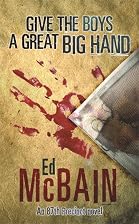
113) Give the Boys a Great Big Hand / Ed McBain
Eleventh in the 87th Precinct series. In this one, a mysterious man is leaving body parts around Isola, beginning with a severed hand left in an airline bag. The bulls -- now "the boys" -- of the 87th Precinct investigate. Evidence leads them to Isola's adult nightclubs.
It's one of the series's weaker entries so far. Much of it feels contrived to justify the title, like one of those overlong and rambling jokes that only serves to set up a third-rate pun. But considering the case it follows, the well-crafted ethical drama King's Ransom, I'll give McBain a pass on this one.
120swynn

114) Behemoth / Scott Westerfield
The Leviathan docks in Istanbul; Alek and Dylan embark on intrigue and adventures to loosen the Axis stranglehold on the Ottoman Empire. New friendships are made, secrets are revealed, steampunk mechas battle. It's just as fun as the first.
121swynn

115) Thirteen Diamonds / Alan Cook
Lillian Morgan is a retired mathematics professor living in a retirement facility. One of her fellow residents suddenly dies during a bridge party, apparently from a food allergy. Improbably, he dies holding a perfect bridge hand: thirteen diamonds. Lillian suspects foul play.
The mathematics is very slight, and puzzle-oriented: there's a brief description of the game Nim (analyzed by Berlekamp and Conway in Winning Ways for Your Mathematical Plays), a numerical cryptogram, a coin-weighing puzzle, and the Königsberg Bridge Problem.
As for the probability of a perfect bridge hand, Morgan comments only that it's extremely improbable: that she once tried to calculate the probability of such a hand, but her calculator ran out of digits.
I'm not sure how to read this comment: are we supposed to be amazed by a probability so small that it won't fit onto a pocket calculator's display? Are we supposed to be charmed by Lillian's practical, no-nonsense personality? Whatever the intent, it just made me wonder what kind of mathematics professor sets out to calculate (52!) / ( 13! 39!) on a pocket calculator only to give up upon discovering that the display is limited to eight significant digits. Her mathematical bonafides were not improved when she referred to the number 1 as "prime" -- twice.
The mathematically-challenged mathematician was a downer for me, and probably colored my impression of the book overall, which was of pervasive dullness. The writing was plain and mostly clear, but nothing special. The editing was sloppy (Favorite misspelling: "Tupperwear.") The mystery was unmysterious and for my taste the whole thing didn't end quickly enough. I won't recommend it.
122lyzard
But you'll recommend THIS, surely!?---
pirates steal Thuron's magic sword in Chapter 8, and he does not recover it until Chapter 12. These facts do not stop Thuron from using the sword in Chapter 10. Magic sword indeed.
Sold! :D
pirates steal Thuron's magic sword in Chapter 8, and he does not recover it until Chapter 12. These facts do not stop Thuron from using the sword in Chapter 10. Magic sword indeed.
Sold! :D
123swynn
Liz, I will recommend Sword of Thuron to you only because I'd love to read your summary of it.
124qebo
121: on a pocket calculator only to give up
Oh dear. What to do if the calculator won't solve the problem for you? Well she could've looked it up.
Oh dear. What to do if the calculator won't solve the problem for you? Well she could've looked it up.
125swynn
>124 qebo:: Indeed. Even pre-Wikipedia there must have been reference sources to give you odds on any Bridge hand you please.
127UnrulySun
Waving hello at Steeeeeeve!
116: Congrats on the PR! Especially without particularly aiming for it. What's next then?
116: Congrats on the PR! Especially without particularly aiming for it. What's next then?
128swynn
>126 lyzard:: Oh, well. Somehow I suspect that you'll manage to find stories just as ... perplexing.
>127 UnrulySun:: Thanks, Kathy! (By the way ... I spotted the Blerch t-shirt at the half-marathon, but didn't get a picture.)
I've started a training schedule targeting the Triple-D Winter Race, a 50K in January from Dyersville to Dubuque, Iowa. In the meantime, I'll also do some local races.
>127 UnrulySun:: Thanks, Kathy! (By the way ... I spotted the Blerch t-shirt at the half-marathon, but didn't get a picture.)
I've started a training schedule targeting the Triple-D Winter Race, a 50K in January from Dyersville to Dubuque, Iowa. In the meantime, I'll also do some local races.
129swynn
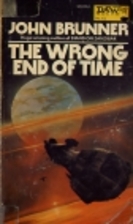
116) The Wrong End of Time / John Brunner
Date: 1971
In the near future, the United States has become increasingly decadent, insular, and torn by divisions of race and economic class. The president has become little more than a figurehead, a useful prop at parties, while the real power is held by an increasingly powerful military and the companies granted military contracts. Depending on your birth and connections, you have access either to conspicuous consumption or grinding poverty with little in between, a sort of party-school police state.
Meanwhile, the Russians have secretly developed a space program and have encountered something orbiting Pluto. It has sent a message which Russian intelligence interprets as a warning: either humans get their act together, or the visitors will bomb Earth back to the Stone Age.
Obviously the Americans are the problem, and the Russians are at wits' end for how to deal with them. In desperation, they smuggle their best intelligence agent Vassily Sheklov into the United States. Sheklov's mission is to contact subversives in the American underclass for ideas about breaking American preeminence in the world.
Vassily's contact in the U.S. is Turpin, a Russian mole who has risen to upper management in a large energy-industry firm with influential defense contracts. Turpin helps Vassily slip through American shoreline defenses, picks him up on arrival, and helps him build his cover.
Both Vassily and Turpin unknowingly receive help from an American subversive: Danty Ward, a poor Black laborer burdened with unwanted mental compulsions to do things he doesn't understand for reasons he can't quite grasp. Danty helps Vassily by deactivating shoreline defenses; he helps Turpin by showing up at the right place and the right time; and he just might be the resource Vassily needs to save the planet ...
This one is a mixed bag; there's some fascinating world-building, but there are also large parts-- politics, especially-- that aren't quite clear. It's more exposition than action, more tell than show, and the narrative bogs down in the middle.
It hasn't aged well: the dichotomy of communist idealism vs. capitalist decadence infects everything with its quaintness, even themes that should still resonate like race, corporate power, militarism, and the disappearance of the middle class. And don't get me started on the painfully rendered jive-talk. This could have been a seventies countercultural gem; instead it feels like a Blaxploitation science fiction spy thriller.
But it's interesting despite its numerous flaws, with strong black and female characters and a heavily critical take on tropes of economic progress.
I haven't decided just yet how I feel about the ending. <SPOILER!> Vassily shows Danty the visitors' message, and Danty recognizes (instantly and correctly) that the message is not a warning at all but rather a message of hope. The visitors are not threatening Earth with nuclear holocaust, they are promising that humans will master nuclear power and travel to the stars. I don't find this resolution satisfactory, and I'm not sure what it means for Brunner's critique of American society; but it certainly undermines assumptions about how a science fiction novel ought to end, and is interesting for that at least. </SPOILER!>
130swynn
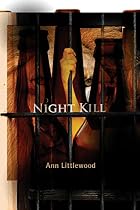
117) Night Kill / Ann Littlewood
Iris Oakley is an assistant zookeeper at Finley Zoo in Vancouver, Washington. She works with large cats; her husband Rick works with reptiles. Their marriage is new and rocky, complicated by Rick's love of nightclubs and beer and Iris's weariness for same. After a brief separation, they meet again at a zoo staff party and agree to give their marriage another try, Rick vowing to give up drinking.
The next day, Rick's remains are found in the lion exhibit. An autopsy indicates he was falling-down drunk, and had apparently fallen down into the moat surrounding the enclosure. Men, it seems, don't really change. Neither do lions: they finished Rick the way lions do, grateful for a meal that wasn't reheated ground meat.
But then Iris herself starts meeting unlikely and potentially deadly accidents. Coworkers and zoo administration are strangely unsympathetic. Iris begins to wonder whether Rick's demise was really as simple as it seemed.
The strength of this mystery is its setting at a city zoo. The mystery is just okay, but the behind-the-scenes view of zoo routine is interesting and convincing. Since the author is a former zookeeper, one assumes it's also somewhat realistic. I don't know how long the zoo gimmick can sustain a series. There are three in the series so far, and although this one worked for me I didn't find it sufficiently compelling to continue soon.
I'm counting this as a Washington read for my 50 state challenge, although some scenes are set in Oregon and in California.
131swynn
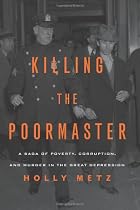
118) Killing the Poormaster / Holly Metz
On February 25, 1938, Harry Barck was killed in his office. Barck was the "poormaster" of Hoboken, responsible for distributing the city's relief funds to its unemployed and destitute citizens. He died when a spindle file pierced his chest and penetrated his heart.
You get the feeling that Barck's heart was a pretty small target. He was not well liked among Hoboken's poor, due to his dismissive and condescending, even insulting, manner. In his view, his job was to deny the requests of chiselers and layabouts and he delighted in saying "No," often forcibly ejecting the moochers from his office. Few of his clients would mourn him.
Charged with killing Barck was an unemployed Italian-American carpenter, Joe Scutellaro. Joe had been out of work for months, his livelihood a victim of recession and of the political machine that ran Hoboken. Unable to provide for his wife and two children, Scutellaro went frequently to Barck's office and was usually denied. On the day Barck died, Scutellaro claimed, Barck had suggested that if his family was so hungry then perhaps the wife could prostitute herself. Scutarello struck Barck in anger, making Barck fall onto his desk and accidentally onto the spindle.
That was Scutellaro's version; another story came from a secretary who claimed she had seen the suspect pick up the spindle and strike the poormaster with it. It was the secretary's version that police preferred and cultivated. Joe Scutellaro was charged with first-degree murder.
The political environment was ripe for murder charges. Hoboken's Mayor McFeely led a powerful political machine, which approved of Barck's methods since undistributed funds could be funneled into McFeely's personal bank accounts. Despite widespread knowledge of corruption, employed citizens in Hoboken largely sided with Boss McFeely, if only because they wished to stay employed. There was also an ethnic context: Irish-Americans running the machine had a complex and mostly hostile relationship with the city's Italian immigrants.
The politics were not only local: the nation churned in an ongoing debate about the proper handling of poverty assistance. Unions like the Workers' Defense League worked around to country to organize poor and unemployed workers. In Hoboken, a WPA worker and activist named Henry Matson began agitating for fair treatment of the poor. For his efforts, Matson was brutally beaten in a riot led by the president of Hoboken's Democratic club. After the riot, Matson -- and none of the thugs -- was arrested for "inciting to riot."
Because of the political environment, Scutellaro's and Matson's cases became causes célèbres, reported in papers around the country. New York attorney Sam Leibowitz, famous defender of the "Scottsboro Boys", came to Hoboken to represent Scutellaro pro bono. But even with Leibowitz's able counsel, the fight was anything but won.
Holly Metz's account of the Scutellaro and Matson trials is absorbing. Her explanation of the social and political context is enlightening and surprisingly engaging. Recommended.
This is a New Jersey read for my 50 State Challenge.
134swynn

119) One for the Books / Joe Queenan
Who is this Joe Queenan and why haven't I been reading him? Whoever he is, he's a book lover's book lover. He's snobbish, yes, but a snob who includes both the Proust and the O.J. Simpson oeuvres among the books whose absence would make life a little greyer, for different reasons obviously.
Frank about his own quirks, adamant about his own preferences, and passionate about his love for the codex -- not the Kindle, damn it -- Queenan is consistently engaging and frequently provocative. He's pretty funny too. Recommended for book lovers -- and if you're not one, what exactly are you doing here?
There is one passage on which I can't help but comment. It comes after a discussion of several reading plans, some (like reading a book a day for a year) more sensible than others (like spending a year reading only books you suspect you'll hate). Most of these plans peter out early. Why?
The whole endeavor was like running a marathon just to see if I could do it and then realizing halfway through the race that marathons are idiotic.
Dear Joe: if this realization only occurs to you halfway through the race it means you haven't trained properly. It should have occurred to you at least two dozen times during your long training runs. If you're likely to shrink from idiotic endeavors, you really should avoid endurance running. Also the literary works of O.J. Simpson.
Oh, and while I have your attention: thank you for your book. I'm a codex-lover too.
135swynn

120) When She Woke / Hillary Jordan
This is a re-imagining of The Scarlet Letter as a dystopian feminist science fiction tale. As if Puritan Massachusetts wasn't dystopian enough. And speaking of Puritan Massachusetts, well, you've heard of Texas ...
In a future Texas the evangelical Christians have consolidated even more power. (Well, not just Texas: its a nationwide thing, and there's even a cabinet position for the Secretary of Faith.) In order to control the cost of incarceration, criminals are subject to a skin-tinting process called "melachroming," confined briefly, then released. Misdemeanor offenders are turned yellow, arsonists green, child molesters blue, murderers -- such as women who have abortions -- red. "Chromes" tend not to do well after release, and when they disappear nobody cares much.
When she wakes, Hannah Payne is red: her crime is procuring an abortion. She had wanted the baby, but she knew that the state could use a baby to make her identify the father. Only she knows that the father is the powerful televangelist Aidan Dale, and news of a bastard child would ruin him and his ministry.
Released to the general public, Hannah embarks on a physical and spiritual journey from her sheltered evangelical Christian roots in Texas to a sense of her own identity, worth and power as a human being.
It's been widely praised, but I'm afraid I just don't get it. The prose was mostly okay but not great. Some parts felt like they had been written for a closing thought on Oprah, one of my least favorite genres. Toward the end it veers into pantheististic woo, a genre I like even less, but for those who like that sort of polemic it's not as bad as The Shack. Plotwise bits didn't make sense -- if the authorities are tracking Hannah's every move, both physical and electronic, why don't they notice when Aidan Dale deposits a hundred grand in her bank account? -- but on the other hand I could probably think of ways to fill the holes if I were more enamored with the book.
Perhaps my problem is just that I love The Scarlet Letter too well. I love its dense symbolism, its Latinate vocabulary, its Byzantine grammar, and its layered craftsmanship. When She Woke broadly borrows its structure and characters, but not its lush language and its intricacy. Jordan sets herself the difficult task of evoking Hawthorne without paling in comparison, and for me she did not succeed: I kept wishing I were reading Hawthorne instead. Yes, Hawthorne could use a lesson or two in gender relations (and in child psychology) but by the time he wrote The Scarlet Letter he needed no lessons in writing.
This is probably just a knee-jerk reaction from that geeky kid who couldn't understand what everyone was complaining about back in eleventh grade. Others seem to love When She Woke and I didn't hate it exactly. It did give me a Jones to read Hawthorne again, so perhaps I should be grateful.
136qebo
135: geeky kid who couldn't understand what everyone was complaining about back in eleventh grade
My complaints about the 11th grade American Lit teacher overshadowed any complaints about the books. I'll skip When She Woke, but based on your praise I may revisit The Scarlet Letter.
My complaints about the 11th grade American Lit teacher overshadowed any complaints about the books. I'll skip When She Woke, but based on your praise I may revisit The Scarlet Letter.
137swynn
>136 qebo:: Sorry about the teacher who poisoned the experience for you. If you do revisit it, I hope it's a rewarding experience.
138MickyFine
>135 swynn: Sorry it wasn't as enjoyable a reading experience for you, Steven. I quite enjoyed When She Woke.
140swynn
Oh, I must share this. It's a video produced by the Deutscher Bibliotheksverband, the German Library Association. The text consists of nice things about libraries.
http://www.youtube.com/watch?v=pqWnnyy8bJQ
Even better is the Verband's video from last year, most of which is in a universal language:
http://www.youtube.com/watch?v=k984fBGfJSM
The text at the end (roughly translated by rusty me) is:
"Wouldn't it be great if this place existed? But it does. Over ten thousand in Germany. Libraries."
http://www.youtube.com/watch?v=pqWnnyy8bJQ
Even better is the Verband's video from last year, most of which is in a universal language:
http://www.youtube.com/watch?v=k984fBGfJSM
The text at the end (roughly translated by rusty me) is:
"Wouldn't it be great if this place existed? But it does. Over ten thousand in Germany. Libraries."
143swynn

121) Cockfighter / Charles Willeford
Date: 1972
Frank Mansfield trains and fights roosters for a living. It's a boom and bust business, and as the book opens Frank is at the bottom of a bust: he's just lost his last game bird, and also his car, his trailer, his underage girlfriend, and all but his last few dollars in a poorly planned challenge match. His goal is to win the Cockfighter of the Year award at the prestigious Southern Conference Invitational. He has a long way to go.
Frank has a lot riding on the award: some time ago he took a vow of silence after a night of drinking and braggadocio cost him his best game bird the night before a tournament. He swore he wouldn't speak again until he'd won the award. Frank also has a fiancee of eight years whom he has decided to marry only after he wins the award. These sacrifices give his character a curious sort of focus that is somehow entangled in the American dream ...
All of us in America want money because we need it and cannot live without it, but we don't need as much money as most of us think we do. Money isn't enough. We must have something more, and my something more was the Cockfighter of the Year award.
... but they also make him an unpleasant human being. The fact that his passion is training chickens to peck, jab, and slash each other to death doesn't help. Late in the book Frank's fiancee tells him she's learned that he hates everything and everyone. She's not quite right, but she's not far off either: Frank has ideals, but if fulfilling them means he has to maim, ruin, or kill something or someone else, well, those are the hard decisions that must be made.
This entanglement of noble and despicable is everywhere in the book, especially in the game of cockfighting itself: Frank repeatedly insists is the purest sport in the world, that a cockfight can't be fixed, and he seems to believe these claims; and yet from the very first fight we players attempting dishonestly to tilt the odds. The game is ugly and brutal but also involves morbidly fascinating expertise and strategy: the handlers who send the birds to die are paradoxically the humans who know and admire them the best.
It's a fascinating exploration of moral ambiguity, helped by Willeford's unadorned and forceful prose, which dares you to look away. I found it absorbing, and I'll recommend it with a warning that it's not for everybody: there are no sympathetic characters, and casual cruelty toward animals is foregrounded.
144swynn

122) Equal Rites / Terry Pratchett
Date: 1987
This is a reread, after about twenty-five years, of my introduction to the Discworld series. It's about a girl accidentally gifted with a dying wizard's power, barred from a wizard's training because of her sex. The story is not as strong as in some later entries but it has two of my favorite characters, the Librarian and the crotchety practical witch Granny Weatherwax. It made me laugh then and it makes me laugh now.
My son was not as impressed, so we'll move on to something about dogs or survival. Or about dogs and survival.
145swynn
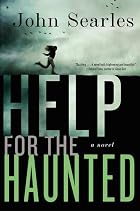
123) Help for the Haunted / John Searles
Date: 2013
Sylvester and Rose Mason are a sort of paranormal counseling team: if you're bothered by ghosts you can call them and they will provide prayer and comfort and -- for some of their clients, anyway -- relief. Dealing with the living, though, isn't always easy, and the Masons' oldest daughter has been acting out, finally dropping out of school and leaving home altogether. So when the Masons get a call from their daughter one snowy February night, they go to meet her at a church, taking their younger daughter Sylvie with them.
At the church, Sylvie's father and then her mother go into the church but do not return. Finally Sylvie herself goes into the church and sees ... something, she can't quite remember what. The next thing she knows she is at the police station, her parents are dead, and her older sister is back home claiming she'd been there all along.
For Sylvie, finding out what happened means reviewing the last few years with her family. As she remembers her sister's behavior problems, and her family's unusual livelihood, she has to reconsider everything she thought she knew.
This is a well-paced thriller with a spooky mood. I wasn't quite satisfied with the resolution, but was pretty happy with it up until the last forty pages or so.
146ronincats
Just pointing out that Moving Pictures has both a dog and survival! ;-)
147swynn
Thanks for the suggestion, Roni! It's one I haven't read yet. We started Alone in the Ice World last night, but maybe we'll get to Moving Pictures next.
148swynn
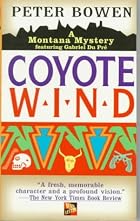
124) Coyote Wind / Peter Bowen
Gabriel Du Pré is a Métis cattle-brand inspector ("a cow-ass man" as he puts it) in small-town Montana. The county's budget for law enforcement is limited, so Du Pré gets called in for extra duty when things get busy. When a local ranch hand discovers an old plane crash in a remote area, Du Pré is asked to confirm the wreck. Things turn puzzling when the investigation turns up two skeletons ... plus an extra skull and pair of hands.
The mystery is not very mysterious: Du Pré has a strong hunch about a suspect early on, and there aren't any twists or red herrings to speak of. But Du Pré is an appealing character, a single father with a laid-back approach to life and a love for his heritage and the land. The prose has an interesting rhythm, evoking the French/Native cadences of Du Pré's speech. I liked it, and will read more.
This was a Montana read for my 50 state challenge.
149DorsVenabili
Hi swynn!
#135 - I feel like this has been on my radar, although it's not quite what I'm in the mood for lately.
#144 - I've not read any Pratchett, but I'm intrigued by the Librarian, of course. He's written roughly a million books, right? Where would you start?
#135 - I feel like this has been on my radar, although it's not quite what I'm in the mood for lately.
#144 - I've not read any Pratchett, but I'm intrigued by the Librarian, of course. He's written roughly a million books, right? Where would you start?
150swynn
Hi, Kerri!
I hope my comments about When She Woke didn't put you off it.
As for Discworld, well... Oh my. I've read probably ten or so, and I don't think there's been a dud in the bunch, and you can jump in just about anywhere. My favorites have been Feet of Clay and Carpe Jugulum. I know others are very fond of the Tiffany Aching subseries, which starts with The Wee Free Men. I have not read that, but I have heard only good about it.
Just about everybody says don't start at the beginning, and they're probably right. I have read The Color of Magic, and I remember enjoying it, but that's about all I remember. Oh, and that the most entertaining character was a suitcase, which sounds like a snarky criticism but isn't because the suitcase really was entertaining.
I know other Pratchett fans breeze by here now and then; what do the rest of you say is a good entry point?
I hope my comments about When She Woke didn't put you off it.
As for Discworld, well... Oh my. I've read probably ten or so, and I don't think there's been a dud in the bunch, and you can jump in just about anywhere. My favorites have been Feet of Clay and Carpe Jugulum. I know others are very fond of the Tiffany Aching subseries, which starts with The Wee Free Men. I have not read that, but I have heard only good about it.
Just about everybody says don't start at the beginning, and they're probably right. I have read The Color of Magic, and I remember enjoying it, but that's about all I remember. Oh, and that the most entertaining character was a suitcase, which sounds like a snarky criticism but isn't because the suitcase really was entertaining.
I know other Pratchett fans breeze by here now and then; what do the rest of you say is a good entry point?
151DorsVenabili
#150 - Thanks for the recommendations! Sometimes, I have trouble with humor paired with sci-fi or fantasy, which is why I've avoided him, but I do want to try something.
Don't start at the beginning?! Eek! I don't know if my OCD self could do that. Ha!
Don't start at the beginning?! Eek! I don't know if my OCD self could do that. Ha!
152HanGerg
Ah, Pratchett! He was a real favourite of my teenage self, but then I decided he wasn't "serious" enough and drifted away. Now, actually, I think there's quite a lot of serious comment in there alongside all the silliness, if you look carefully. I remember Small Gods being especially good in this respect. Also, the one about the fledgling film industry, Moving Pictures. Also, anything where death; the character that is, features heavily is a delight, and the aforementioned witches are also favourites of mine. They first turn up in Wyrd Sisters, if memory serves. Hmm, perhaps it's time for a re-read.
154rosalita
Please, no talk of not starting series at the beginning around Liz. It gives her the vapors. ;-)
156ronincats
Liz, the first books really weren't a series. They were one-off parodies. If you want to start at the beginning of the series, then start with Wyrd Sisters for the witches, Guards! Guards! for the City Watch series, Mort for the DEATH series, or The Wee Free Men for the Tiffany Aching series. You can ignore the Rincewind books until much later.
157UnrulySun
^^ What Roni said. AND! There's a new one coming out in the spring. So, ya better get started right away. ;)
I remember the hubbub when TP announced his Alzheimer's and mentioned he may be slagging off the writing soon... he's released what, 4 books since? 5? And they're still brilliant. I always jump right on them when they're released.
I remember the hubbub when TP announced his Alzheimer's and mentioned he may be slagging off the writing soon... he's released what, 4 books since? 5? And they're still brilliant. I always jump right on them when they're released.
158DorsVenabili
#153 - 155 - Ha! I'm glad I'm not alone.
159swynn
>151 DorsVenabili:: I also prefer to start series with book one but Pratchett is an exception, probably because I started with book 3 not realizing it was a book 3, then read more as I could get my hands on them: #4, then #1, then #6, etc. My enjoyment never suffered for the haphazard approach.
>152 HanGerg:: I'm also not a big fan of fantasy and humor. So much of feels like it was written thusly:
Step 1: Read a lot of fantasy.
Step 2: Complete the sentence: "Wouldn't it be funny if ________."
Step 3: Expand the sentence in Step 2 to 80,000 words.
Step 4: Congratulate yourself on your cleverness.
Pratchett works for me because his world is so rich, the characters are recognizable people rather than caricatures, and most of all because he writes so well with quotable turns of phrase and unexpected imagery, thus:
"It is well known that a vital ingredient of success is not knowing that what you're attempting can't be done. A person ignorant of the possibility of failure can be a half-brick in the path of the bicycle of history."
"Magic has a habit of lying low, like a rake in the grass."
I am so far behind on the Discworld series that I'll never catch up. But it's nice to know there are plenty more whenever I get around to them.
>153 lyzard:, etc.: Somebody fetch Liz the smelling salts!
>152 HanGerg:: I'm also not a big fan of fantasy and humor. So much of feels like it was written thusly:
Step 1: Read a lot of fantasy.
Step 2: Complete the sentence: "Wouldn't it be funny if ________."
Step 3: Expand the sentence in Step 2 to 80,000 words.
Step 4: Congratulate yourself on your cleverness.
Pratchett works for me because his world is so rich, the characters are recognizable people rather than caricatures, and most of all because he writes so well with quotable turns of phrase and unexpected imagery, thus:
"It is well known that a vital ingredient of success is not knowing that what you're attempting can't be done. A person ignorant of the possibility of failure can be a half-brick in the path of the bicycle of history."
"Magic has a habit of lying low, like a rake in the grass."
I am so far behind on the Discworld series that I'll never catch up. But it's nice to know there are plenty more whenever I get around to them.
>153 lyzard:, etc.: Somebody fetch Liz the smelling salts!
161swynn
>160 lyzard:: Salts! Stat!
162swynn
***Reading and running epiphany, or, How I learned to stop worrying and love the Kindle***
I have just discovered that ebooks are ideal for treadmill workouts:
1. You can adjust the font that is readable even from several feet away, even while bouncing up and down.
2. The tablet fits comfortably on that thin little ledge they provide on the treadmill's control panel.
3. Turning pages is accomplished by poking the screen.
This is a bit of a revelation for me. I'm not a stupid guy, why didn't this occur to me sooner? In fact, why aren't the gyms full of tablets, Kindles and Nooks?
Granted, one's attention is somewhat compromised while sweating. You probably don't want to read A la recherche du temps perdu with an elevated heart rate, but for straightforward plot-driven fiction it should work okay, right?
Right. I'm happy to report that it works delightfully well. Here is the first of my treadmill reads, chosen because it seemed to fit the bill for "straightforward plot-driven fiction" and because it was a Kindle daily deal:

125) Rot and Ruin / Jonathan Maberry
After the zombie apocalypse, resources are scarce. Survivors must work early and hard for their share. Children are provided for but at fifteen a young adult must find an apprenticeship or his/her rations are cut in half.
Benny Imura is approaching fifteen and doesn't know what he wants to do with his life. He *does* know that he doesn't want to be apprenticed to his older brother, zombie hunter Tom Imura. Of course by the time fifteen rolls around, his only option is zombie hunting with Tom.
Tom isn't the only zombie hunter in town. Tom teaches Benny the Imura way, which is to complete the task while showing respect for the dead. Other hunters have other philosophies, and Benny learns that zombies aren't the only monsters in the post-apocalypse countryside. They're not even the most dangerous ones.
This is a little more thoughtful than I expect from a zombie novel, but the themes are familiar and easily absorbed while sweating. Recommended treadmill reading.
I have just discovered that ebooks are ideal for treadmill workouts:
1. You can adjust the font that is readable even from several feet away, even while bouncing up and down.
2. The tablet fits comfortably on that thin little ledge they provide on the treadmill's control panel.
3. Turning pages is accomplished by poking the screen.
This is a bit of a revelation for me. I'm not a stupid guy, why didn't this occur to me sooner? In fact, why aren't the gyms full of tablets, Kindles and Nooks?
Granted, one's attention is somewhat compromised while sweating. You probably don't want to read A la recherche du temps perdu with an elevated heart rate, but for straightforward plot-driven fiction it should work okay, right?
Right. I'm happy to report that it works delightfully well. Here is the first of my treadmill reads, chosen because it seemed to fit the bill for "straightforward plot-driven fiction" and because it was a Kindle daily deal:

125) Rot and Ruin / Jonathan Maberry
After the zombie apocalypse, resources are scarce. Survivors must work early and hard for their share. Children are provided for but at fifteen a young adult must find an apprenticeship or his/her rations are cut in half.
Benny Imura is approaching fifteen and doesn't know what he wants to do with his life. He *does* know that he doesn't want to be apprenticed to his older brother, zombie hunter Tom Imura. Of course by the time fifteen rolls around, his only option is zombie hunting with Tom.
Tom isn't the only zombie hunter in town. Tom teaches Benny the Imura way, which is to complete the task while showing respect for the dead. Other hunters have other philosophies, and Benny learns that zombies aren't the only monsters in the post-apocalypse countryside. They're not even the most dangerous ones.
This is a little more thoughtful than I expect from a zombie novel, but the themes are familiar and easily absorbed while sweating. Recommended treadmill reading.
163MickyFine
>162 swynn: Huzzah for your epiphany!
165MickyFine
I do treadmill running myself but I need a steady beat to push me along. So I don't think audiobooks or ebooks would work for me, sadly.
166swynn
I do listen to music sometimes, but it doesn't seem to work for me the way it does for others: it's a welcome distraction, but I don't need it. I've also tried audiobooks with mixed success -- but if my attention wanders then suddenly I have no idea what the narrator is talking about, and it's difficult backing up to a point where I did.
This next, though, is definitely *not* a treadmill read:
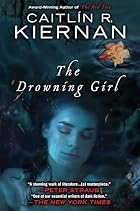
126) The Drowning Girl / Caitlin R. Kiernan
This is a literary ghost story taking the form of a memoir written by Imp, a girl who is herself unsure which of her memories are reliable. Imp writes about finding and giving a ride home to a girl found naked on the side of the road in July, or maybe it was November, possibly both. The girl may be a ghost, or a fairy-tale creature, or just an unexpected romantic interest; whatever she is, she disrupts Imp's current relationship, insinuates herself into Imp's life, and very nearly destroys her.
What's really interesting here though is not the story but the narrative technique, which is a collage of armchair philosophy and literary criticism, folklore, and self-referential rambling. The author sometimes addresses herself. One chapter is in the form of an outline for a five-act play. Others are short stories, acknowledged by the narrator as fiction. ("True but nonfactual," she'd say.) Another is stream-of-consciousness surreal venting, appearing at a point where the story calls for the narrator to go off her meds.
I have ambivalent about this book. It's certainly interesting and artful, with an intricate web of literary and folkloric references. It has certainly earned its Nebula nomination and its Bram Stoker Award win. And yet I can't say I enjoyed it. The story never really resonated with me, and the self-absorbed rambling got annoying, and the whole narrative felt uncomfortably voyeuristic, like a YouTube video of mentally disturbed people. It's almost as if the book were a private exercise in self-therapy by a haunted young woman. Which I have to concede is probably the whole point, but there seemed a bit too much art in its feigned artlessness.
I won't recommend it one way or the other. Artful but cold I'd call it after a first reading, but it is remarkably artful and I may revisit it someday.
This is a Rhode Island read for my 50 state challenge.
This next, though, is definitely *not* a treadmill read:
126) The Drowning Girl / Caitlin R. Kiernan
This is a literary ghost story taking the form of a memoir written by Imp, a girl who is herself unsure which of her memories are reliable. Imp writes about finding and giving a ride home to a girl found naked on the side of the road in July, or maybe it was November, possibly both. The girl may be a ghost, or a fairy-tale creature, or just an unexpected romantic interest; whatever she is, she disrupts Imp's current relationship, insinuates herself into Imp's life, and very nearly destroys her.
What's really interesting here though is not the story but the narrative technique, which is a collage of armchair philosophy and literary criticism, folklore, and self-referential rambling. The author sometimes addresses herself. One chapter is in the form of an outline for a five-act play. Others are short stories, acknowledged by the narrator as fiction. ("True but nonfactual," she'd say.) Another is stream-of-consciousness surreal venting, appearing at a point where the story calls for the narrator to go off her meds.
I have ambivalent about this book. It's certainly interesting and artful, with an intricate web of literary and folkloric references. It has certainly earned its Nebula nomination and its Bram Stoker Award win. And yet I can't say I enjoyed it. The story never really resonated with me, and the self-absorbed rambling got annoying, and the whole narrative felt uncomfortably voyeuristic, like a YouTube video of mentally disturbed people. It's almost as if the book were a private exercise in self-therapy by a haunted young woman. Which I have to concede is probably the whole point, but there seemed a bit too much art in its feigned artlessness.
I won't recommend it one way or the other. Artful but cold I'd call it after a first reading, but it is remarkably artful and I may revisit it someday.
This is a Rhode Island read for my 50 state challenge.
167swynn
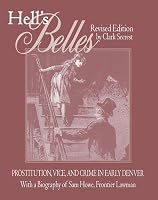
127) Hell's Belles / Clark Secrest
This is a compendium of stories about crime, prostitution, gambling, bootlegging, and corruption in late nineteenth-century Denver. Denver's reputation was among the wildest of wild-west towns, and Secrest makes the case that it earned that reputation.
The relationships among saloon owners, politicians, cops, and madams are many and strong, and Secrest's insight into them is enlightening and frequently entertaining. What he doesn't manage as well is any kind of sustained narrative. It's very eoisodic, and the stories come pretty randomly, making a sort of coffee table book of Denver naughtiness.
It's fun in small doses, so it took me a couple of months to finish. Recommended if you're interested in the region, or in late nineteenth century crime.
This is a Colorado read for my 50 state challenge.
168MickyFine
>166 swynn: Hmm, that one's piqued my interest a bit. I'll wait for another review before I add it to The List though. :)
169swynn
>168 MickyFine:: Considering my ambivalent response, I don't blame you. I know that Citizenjoyce read it for a TIOLI challenge last month ... perhaps a review is forthcoming?
170swynn

128) Alone in the Ice World / Maryann Easley
Allison's mother divorced her rich attorney father, then moved from California to way out on the north coast of Alaska to find herself. This arrangement is sooo inconvenient for Allison, especially now that she has to go and stay with her mother at a remote village hundreds of miles from the nearest mall.
Then Allison's plane crashes in the Alaskan wilderness. She is rescued by an elderly Inuit trapper, and taken to his village. But do you think he'd take her to her mother on the coast? Of course not, he's busy surviving. Besides, Allison has lessons to learn about respect and responsibility and what's important in life.
I didn't like it. It wants to be a girl-power Captains Courageous with an Arctic setting, but it's heavy-handed and even silly. (Why do all the inhabitants of a remote Inuit village start speaking only in broken English, even to each other, when the white girl shows up?) My son slept through most of it, so it gets a thumbs-down from both of us.
172swynn
Thanks, Micky! We are enjoying the next one: Ken Foster's The Dogs Who Found Me.
173swynn
129) A Tap on the Window / Linwood Barclay
Date: 2013
Cal Weaver is a private detective in western New York, recently gone a bit vigilante after the death of his son Scott. Scott was going through a wild phase and, high on Ecstasy, took a dive off a roof believing he could fly. Now Cal is on a mission to find out who sold Scott the drugs.
One rainy night as Cal is stopped for a light, someone taps his window. It's teenage girl hitching a ride, and Call is wise enough not to get involved. But then the girl recognizes him: "You're Scott's dad," she says, and Cal invites her in. When the girl later disappears Cal is determined to find her and protect her. But to do that he'll have to dig up small-town secrets, confront corrupt cops, and own up to his own bad behavior.
It's no literary thriller but it maintains suspense and the resolution is only a little over-the-top. This is the second of Barclay's thrillers I've read (after Trust Your Eyes) and have enjoyed them both.
174rosalita
The only Linwood Barclay book I've read is Fear the Worst, which was an ER selection a few years ago. I thought it was pretty decent, though a bit implausible at times. I might give that one a try.
175swynn
>174 rosalita:: Hope you like it if you try it, Julia!
130) Nowhere to Run / C. J. Box
Date: 2010
Tenth in Box's series featuring Wyoming game warden Joe Pickett. After the events of the last few books, Pickett has been temprarily assigned to an out-of-the-way and uneventful district around Baggs, Wyoming. As his very last official act in the district, he hikes into the backcountry to investigate claims of elk poaching and mutilation. When he reaches the reported area, he encounters a pair of capable and ruthless brothers who don't want no guvmint men traipsing around their property. Joe barely escapes with his life.
This one was pretty satisfying: Joe's initial confrontation with the brothers is appropriately tense and bizarre, and the aftermath is appropriately thoughtful as Joe confers with his family and contemplates getting too old for this sort of thing. The final confrontation is okay, but gets preachy and wacky-Randian and wraps up too loosely-- I hope the next entry contains some fallout from this one.
130) Nowhere to Run / C. J. Box
Date: 2010
Tenth in Box's series featuring Wyoming game warden Joe Pickett. After the events of the last few books, Pickett has been temprarily assigned to an out-of-the-way and uneventful district around Baggs, Wyoming. As his very last official act in the district, he hikes into the backcountry to investigate claims of elk poaching and mutilation. When he reaches the reported area, he encounters a pair of capable and ruthless brothers who don't want no guvmint men traipsing around their property. Joe barely escapes with his life.
This one was pretty satisfying: Joe's initial confrontation with the brothers is appropriately tense and bizarre, and the aftermath is appropriately thoughtful as Joe confers with his family and contemplates getting too old for this sort of thing. The final confrontation is okay, but gets preachy and wacky-Randian and wraps up too loosely-- I hope the next entry contains some fallout from this one.
177swynn
>176 ronincats:: Lin Carter's When The Green Star Calls. I'm looking forward to it as I enjoyed the first in the series, Under the Green Star-- unfortunately, I've gotten myself stuck with a stack of more library books than any sane person should check out at one time. (Alas, vows to reform have consistently been broken.) So I'll be reading Lin Carter sometime after:
Devil in the Grove (A Florida read)
The Signal and the Noise
Blur
Shift
Truck (A New Hampshire read)
Night Film
Girl of Nightmares
Goliath
The Bride Wore Black
Ape House (A RL book club read)
Considering the stack, I have promised myself (probably in vain) that from here to the end of the year I'll only check out books that contribute to completing my 50-state challenge. 19 states remain. (17 when the stack is complete.)
Or maybe I'll sneak Carter in over a weekend.
Blur
Shift
Truck (A New Hampshire read)
Night Film
Goliath
The Bride Wore Black
Ape House (A RL book club read)
Considering the stack, I have promised myself (probably in vain) that from here to the end of the year I'll only check out books that contribute to completing my 50-state challenge. 19 states remain. (17 when the stack is complete.)
Or maybe I'll sneak Carter in over a weekend.
179swynn
Roni, if I could figure out how to do it I'd read them all first! (Well, except for Ape House, which I'm not very enthusiastic about, but I can't discuss it if I never read it.)
I'm about 200 pages into Devil in the Grove, and will finish that Tuesday at the latest. The Signal and the Noise, Shift, and Girl of Nightmares have the soonest due dates, so they'll probably be next.
I'm about 200 pages into Devil in the Grove, and will finish that Tuesday at the latest. The Signal and the Noise, Shift, and Girl of Nightmares have the soonest due dates, so they'll probably be next.
180swynn
131) Devil in the Grove / Gilbert King
Date: 2012
This won the Pulitzer Prize for nonfiction this year, and it's deserving. It tells the story of four black men in 1949 Groveland, Florida accused of rape and facing death sentences -- assuming the Klan didn't get them first, assuming local law enforcement didn't beat them to death in custody or shoot them as they "tried to escape."
Despite the lack of evidence and despite the fact that one suspect was already in custody when the rape allegedly occurred, the fate of "The Groveland Boys" was a foregone conclusion until the NAACP got involved. Thurgood Marshall agreed to take on the case and sent his protegee Franklin Williams to Florida to defend the accused.
Outrageous as the story is, King doesn't play the story for sensation alone. His research into the case is broad, and he weaves the Groveland story into a broader fabric of American history: the state of civil rights, the birth and internal politics of the NAACP, and the character one of the last century's most influential jurists. And despite the scholarly detail and scope it's addictively readable.
I understand that Lionsgate is adapting this for a film, and I'm of two minds about it. On the one hand, yeah: there are enough nighttime chases, hooded robes, tense courtroom moments and even explosions to make the story perfectly cinematic. On the other hand, how can a movie possibly capture the broader picture? Some stories I've read suggest that they're planning to foreground a minor character, a decision which could turn the film into a story of white redemption. Just what we need -- another Mississippi Burning.
The book is enthusiastically recommended. The movie ... well, wait and see.
This is a Florida read for my 50 state challenge.
181rosalita
And another one for the wishlist. I am pledging to make reading more nonfiction a big part of my 2014 reading plans, and this would be a good one. I know what you mean about historical books into movies — it's so hard to get a nuanced story to work well on film and usually the filmmakers end up taking a shortcut or insisting upon having a single hero or heroine save the day. Life just doesn't work like that most of the time.
182swynn
>181 rosalita:: I hope you like it as much as I did, Julia!
One of the things I like about doing the 50-state challenge is that it encourages me to read more nonfiction. Left to my impulses, I'll pick fiction all the time -- especially pulpy adventure fiction with tough-guy heroes, giant robots, or zombies. But at the end of the year, my most memorable reads are disproportionately nonfiction. There's probably a lesson there, though it's hard to keep in mind when considering books that promise explosions.
One of the things I like about doing the 50-state challenge is that it encourages me to read more nonfiction. Left to my impulses, I'll pick fiction all the time -- especially pulpy adventure fiction with tough-guy heroes, giant robots, or zombies. But at the end of the year, my most memorable reads are disproportionately nonfiction. There's probably a lesson there, though it's hard to keep in mind when considering books that promise explosions.
183rosalita
I know what you mean. As much as I like reading nonfiction (honest, I do!) it never seems to be the thing that leaps into my hand when I'm looking for my next read.
184qebo
182: One of the things I like about doing the 50-state challenge is that it encourages me to read more nonfiction.
Hmm, I hadn't thought of it this way. I keep wanting to devote more reading to American history, but I pretty much zone out with great sweeping historical accounts and major political figures and such, deal better on a smaller scale w/ the lives of regular-ish people. No way I can hit all 50 in a year though, unless I go regional.
Hmm, I hadn't thought of it this way. I keep wanting to devote more reading to American history, but I pretty much zone out with great sweeping historical accounts and major political figures and such, deal better on a smaller scale w/ the lives of regular-ish people. No way I can hit all 50 in a year though, unless I go regional.
185thornton37814
Qebo> The 50 states challenge doesn't have a time limit.
186qebo
185: Hmm, to be kept in mind for next year. Optimistically... because I need another challenge to abandon when RL hits.
187swynn
186: Go for it, Katharine! As you say, you can always abandon it.

132) Girl of Nightmares / Kendare Blake
Date: 2012
This is the follow-up to Anna Dressed in Blood, which was a fun high-school paranormal story with a significant debt to Buffy the Vampire Slayer. That volume was about Cas, a ghost-slayer who fell in love with a ghost. This one continues the adventures of Cas & friends in pretty much the same vein.
Anna Dressed in Blood ended with Anna sacrificing herself to protect her living friends from the Big Bad ghostie. In this one, Cas has visions of Anna in torment, and determines to cross over to the other side to rescue her from Hell. Parallels to Buffy multiply: a smart, sexy, and empathetically-challenged replacement ghost-slayer appears; a mysterious order tries to control the ghost-slayer and mostly fails -- so many parallels that it sometimes feels like fan fiction. But if it's fan fiction at least it is a well-polished variety and mostly fun.

132) Girl of Nightmares / Kendare Blake
Date: 2012
This is the follow-up to Anna Dressed in Blood, which was a fun high-school paranormal story with a significant debt to Buffy the Vampire Slayer. That volume was about Cas, a ghost-slayer who fell in love with a ghost. This one continues the adventures of Cas & friends in pretty much the same vein.
188swynn

133) The Signal and the Noise / Nate Silver
Date: 2012
This is a popular introduction to the use of statistical analysis in a variety of contexts, from poker and chess to forecasting weather and earthquakes, to public issues like epidemiology and terrorism. The message is that predictions are hard-- and that the recent explosion in available data actually makes predictions even harder. More data means more data points describing a signal but it also means an increase in noise, making the meaningful patterns harder to find.
It's very high-level. There are lots of charts summarizing the data, though mathematical details are sparse: the only formula I explicitly recall is Bayes's theorem. It's statistical wonkery for non-wonks: it's accessible and reads well and is recommended.
189swynn
Treadmill reading:
134) Silverlock / John Myers Myers
Date: 1949
Though I'd never heard of it, this is apparently a cult classic and I snatched it up a few weeks ago when it was a Kindle daily deal. It follows the adventures of Shandon Silverlock, who gets shipwrecked then washed ashore on Circe's island where he gets turned into a swine. Escaping from that fate, Shandon careens through the plots of a dozen classics of Western literature, while characters from dozens more put in cameos.
I'm afraid it's not a classic to me: I probably missed its proper moment. The writing is certainly good enough, and had sufficient momentum to carry me through a few hours of running in place, but our hero is pretty dull and the plot is little more than a rickety framework for hanging in-jokes for English majors upon. What entertainment there is consists mostly in playing spot-the-literary-reference, a sort of Pagemaster for people who've taken Survey of Western Lit-- which is fun for what it is but I won't be rereading it.
134) Silverlock / John Myers Myers
Date: 1949
Though I'd never heard of it, this is apparently a cult classic and I snatched it up a few weeks ago when it was a Kindle daily deal. It follows the adventures of Shandon Silverlock, who gets shipwrecked then washed ashore on Circe's island where he gets turned into a swine. Escaping from that fate, Shandon careens through the plots of a dozen classics of Western literature, while characters from dozens more put in cameos.
I'm afraid it's not a classic to me: I probably missed its proper moment. The writing is certainly good enough, and had sufficient momentum to carry me through a few hours of running in place, but our hero is pretty dull and the plot is little more than a rickety framework for hanging in-jokes for English majors upon. What entertainment there is consists mostly in playing spot-the-literary-reference, a sort of Pagemaster for people who've taken Survey of Western Lit-- which is fun for what it is but I won't be rereading it.
190rosalita
Swynn, I'm glad to hear that 'The Signal and the Noise' is so good. I've got it on my wishlist, but as a mathematically challenged person I thought it might be over my head. Then again, I found the statistics class I took in college to be much more interesting than I thought it would be, and I actually did pretty well. So maybe I just can't add and subtract. :-)
192swynn
>190 rosalita:: If you are looking for interesting applications without computational details, I think The Signal and the Noise will be right up your alley.
193swynn
>191 DorsVenabili:: Hope you like it as much as I did, Kerri!
195swynn
135) Ape House / Sara Grun
When terrorists bomb a primate language lab and "liberate" the bonobo inhabitants, the apes are sold to a media nogul who plans to make them the stars of a new reality series. One of the language lab's caretakers tracks them down and a reporter follows them for their story.
I found it enjoyable enough, but rather haphazard. It's part ecothriller, part PG-13 sex comedy and part social satire (Who is in the cage? Who is performing? Whose behavior is the more rational?) Unfortunately, the parts never fit into a coherent whole for me, and by the end it descended into slapstick with stock characters and situations. There's even a hooker with a heart of gold and a junkyard dog to win your love.
Most of the other readers in the group had similar responses. The leader confessed he didn't even know what it was about. Sometimes it seemed to be about the bonobos, but large parts of the narrative were spent on the reporter's wife, who had no direct contact with the apes.
The general consensus was that The Ape House is a fun but occasionally frustrating and ultimately forgettable read.
196swynn

136) The Bride Wore Black / Cornell Woolrich
Date: 1940
Here's an interesting piece of vintage noir. A mystery woman is killing random men around the city in ways that leave the police baffled.
It's a tidy and atmospheric composition, beginning with a cast of characters that includes identifiers such as "Ken Bliss -- first of five who are doomed" and "Mrs. Nick Killeen"-- a whispered name (Yeah, the murderer's name is Mrs. Killeen; subtle is not the point.) The narrative proceeds in chapters devoted to each of five victims, with each chapter divided into three parts: the preparation, the murder, and the police investigation.
What the book lacks in subtlety it makes up in atmosphere and momentum. It's a focused and effective thriller, unfortunately marred by a ridiculous twist in the end.
A couple of thoughts on this: first, the murderer was at her groom's side when he died, so the twist assumes that she is unable to tell a gunshot wound from injuries sustained in a car accident. All this despite the fact that we're supposed to think she is attentive and perceptive, with the presence of mind even to memorize the car's license plate as it speeds away. To be fair, I have no experience with either type of injury so I guess it's possible that they really are indistinguishable. But somehow I doubt it.
Second, I think this would be a rich text for a reader interested in gender studies. It's extremely tempting to read this as a story about male anxieties about women in the workplace. There are several women in the cast and most of them are employed outside the home-- surely unusual for a book published in 1940. The women's occupations are traditional ones (housekeeper, schoolteacher, typist, artist's model, caregiver) but there are broad hints that women who work are Not To Be Trusted. The murderer's employment is a case in point: in the denouement she reveals that her work in a hospital helped her evade the police and continue her murder spree. And she's horrified when she discovers the true culprit and learns that interference with her husband's business means his death was all her fault. Yes, she says this. It's enough to make an aging English major wish all interpretive essays were so easy to outline.
Francois Truffaut adapted this into a well-regarded film in 1968. I haven't seen it yet but I know what I'm watching this weekend.
198swynn
Oh, I loved the bonobos too. I think others in the reading group had a similar feeling-- that Gruen spent too much time on the less interesting species of great apes.
200swynn

137) Goliath / Scott Westerfeld
Third in Westerfield's steampunk trilogy about an alternate WWI. In this one Nikola Tesla shows up with a city-destroying machine that could stop the war -- but its effects would be so horrifying that it may be bad policy to let him demonstrate it even once. And of course: secrets that have been hidden since book one will out.
It's fun, wraps up the series nicely, and the illustrations are even better than the story.
201swynn
Treadmill reading:
138) Wayward / Blake Crouch
This is the follow up to last year's Pines, which was nominated for an International Thriller Award (in the "Best Original Paperback" category) and which I read and enjoyed in July.
Short review: I liked this one even better than the first. Mysteries about the town's nature and origins have been answered, so the author is free to explore power relationships among the characters. Where the first one felt like a puzzle, this one feels more like a drama.
Warning: it's hard to say anything about this book without slipping hints about the first one. Spoilers necessarily follow below, but I'll try to keep them mild.
Another warning: the whole business ends with a cliff-hanger. The next installment is due in 2014. If you hate waiting for this sort of thing, don't pick Wayward up just yet.
Ethan Burke has been made sheriff of Wayward Pines, but his relationship with the town's true boss David Pilcher is uneasy. Ethan doesn't like the way Pilcher runs the town, and Pilcher doesn't know whether Ethan can be trusted.
When Pilcher's daughter turns up dead, Ethan has to investigate. Pilcher feeds Ethan a group of likely suspects, but Ethan's suspicions fall rather closer to Pilcher's inner circle. As the investigation deviates from its prescribed course, Ethan must face the possibility that he will be given an order he cannot obey. And in Wayward Pines, the stakes for disobeying an order are unacceptably high.
138) Wayward / Blake Crouch
This is the follow up to last year's Pines, which was nominated for an International Thriller Award (in the "Best Original Paperback" category) and which I read and enjoyed in July.
Short review: I liked this one even better than the first. Mysteries about the town's nature and origins have been answered, so the author is free to explore power relationships among the characters. Where the first one felt like a puzzle, this one feels more like a drama.
Warning: it's hard to say anything about this book without slipping hints about the first one. Spoilers necessarily follow below, but I'll try to keep them mild.
Another warning: the whole business ends with a cliff-hanger. The next installment is due in 2014. If you hate waiting for this sort of thing, don't pick Wayward up just yet.
Ethan Burke has been made sheriff of Wayward Pines, but his relationship with the town's true boss David Pilcher is uneasy. Ethan doesn't like the way Pilcher runs the town, and Pilcher doesn't know whether Ethan can be trusted.
When Pilcher's daughter turns up dead, Ethan has to investigate. Pilcher feeds Ethan a group of likely suspects, but Ethan's suspicions fall rather closer to Pilcher's inner circle. As the investigation deviates from its prescribed course, Ethan must face the possibility that he will be given an order he cannot obey. And in Wayward Pines, the stakes for disobeying an order are unacceptably high.
202swynn
139) The Dogs Who Found Me / Ken Foster
Stories about the author's experiences with dogs he has rescued -- mostly pit bulls -- and the ones he has made part of his family. The author lived in New York City in 2001, and in New Orleans in 2005, so his stories include memories of the attack on the Twin Towers and of Hurricane Katrina.
This is my latest shared read with my son-- he approved of it and asked for more dog stories. I enjoyed it enough to comply with that request.
204swynn
203: Me too, Roni-- I really should read more "juvenile" books. Maybe that Hunger Games series next ...
201: Bad news. According to Amazon.com's author page for Blake Crouch, "His Wayward Pines series is being produced as a TV show by M. Night Shyamalan." While I think the series could make great television, nobody has a track record like Shyamalan's for sucking all the fun out of a concept. I'll just keep telling myself: he's only producing ... he's only producing.
201: Bad news. According to Amazon.com's author page for Blake Crouch, "His Wayward Pines series is being produced as a TV show by M. Night Shyamalan." While I think the series could make great television, nobody has a track record like Shyamalan's for sucking all the fun out of a concept. I'll just keep telling myself: he's only producing ... he's only producing.
205MickyFine
>200 swynn: Glad you enjoyed the Leviathan series. In terms of YA series, Hunger Games is good fit for you. Another one you might want to try, is The Knife of Never Letting Go, which often gets raves. Be warned I ditched the latter because the bad spelling (intentional and explained within the dystopia) drove me nuts. :P
206rosalita
Micky, I am normally someone who is really bugged by misspellings and such as well. I also hate reading lots of dialogue in written in "dialect". But for whatever reason it didn't bother me much in the Chaos Walking trilogy, although I certainly noticed it. I thought the books were better than The Hunger Games, actually.
207swynn
Thanks for the additional recommendation, it's definitely one to schedule for the new year. I also want to continue Jonathan Maberry's Rot and Ruin series, Rick Riordan's Percy Jackson series, and Philip Pullman's His Dark Materials series. I confess I've not read any of them and I really ought to fix that.
208qebo
195: Hmm, overlaps with a couple of books I just read, but your review and others don’t make it sound so promising.
Glad you enjoyed Leviathan/Behemoth/Goliath!
Glad you enjoyed Leviathan/Behemoth/Goliath!
209swynn
>208 qebo:: I hate to turn someone off a book they might enjoy, but I think after Nim Chimpsky you'd probably find Ape House light fare. The best bits are the first few chapters, which seem to be based on the author's real-world experiences at a primate language lab in Des Moines.
So if you're interested you might begin there, and stop when the Hollywood subplot gets too tiresome.
So if you're interested you might begin there, and stop when the Hollywood subplot gets too tiresome.
210qebo
209: I can reach 75 if I don't do things like ditch books partway through... I think I'll skip this one.
211swynn
Speaking of ditching books partway through, I have abandoned Kovach's and Rosenstiel's Blur: How to Know What's True in the Age of Information Overload. It's about changes in the way news is manufactured and presented, shifting the onus of quality control from reporters and editors to consumers.
It's not bad. Kovach & Rosenstiel recognize and describe a wide variety of type and quality in news stories. They have organized their arguments well, and seem to be relatively impartial, offering examples of journalistic malpractice from both sides of aisle. But it's very Journalism 101, and keeps telling me things I know: be skeptical, know the story's genre, ask what's missing, check sources.
I have two chunksters (Shift and Night Film) and 17 states to get through before January 1, and every one of them is more interesting and potentially more rewarding than this.
It's not bad. Kovach & Rosenstiel recognize and describe a wide variety of type and quality in news stories. They have organized their arguments well, and seem to be relatively impartial, offering examples of journalistic malpractice from both sides of aisle. But it's very Journalism 101, and keeps telling me things I know: be skeptical, know the story's genre, ask what's missing, check sources.
I have two chunksters (Shift and Night Film) and 17 states to get through before January 1, and every one of them is more interesting and potentially more rewarding than this.
212swynn
140) Truck: On Rebuilding a Worn-Out Pickup and Other Post-Technological Adventures
Date: 1977
John Jerome was no mechanic, but rather a homesteader with basic mechanical aptitude and an ethic for self-reliance. He also needed a truck.
The plan was to buy a run-down truck, clean and restore it to working order, and use it to move stuff around. Like junked truck parts. For $200 he bought a 1950 Dodge pickup not fragile with rust (it was a recent immigrant from Arizona), still running but barely. He parked it in his barn and began the disassembly. Over the course of the project he learned the truck's stubborn quirks and sometimes-fanciful engineering, learned that expensive specialty tools can't always be avoided, and reevaluated his own motives and goals. Originally conceived as a winter's project, the restoration stretched over a year and a half.
Of course, as he works on the truck he also works on himself-- it's that sort of book, though not in a woo-woo mystical way. Jerome ponders what it means for us to use tools, and the dividing line between owning technology and being owned by it. (Spoiler: there isn't a line. Or rather, each tool-user must draw it for him/herself.)
He also pays close attention to the New Hampshire seasons as the project progresses through brilliant autumn, freezing winter, muddy spring, and the tourist-crowded summer. Attentive, thoughtful and instructive, it's recommended.
This is a New Hampshire read for my 50 state challenge.
214swynn
Happy belated Thanksgiving to you too, Roni!
I spent the holiday with family, which was good. But no wi-fi service, which was ... actually that was okay too: no emails, no Facebook, just family. I'm happy to report I'm still cool with that.
I only completed one book over the break, but what a book:
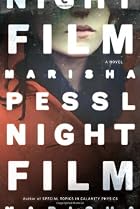
141) Night Film / Marisha Pessl
Date: 2013
Ashley Cordova, the daughter of a reclusive cult film director, has committed suicide, throwing herself down an empty elevator shaft. Years ago the girl was a prodigy on the piano, going on the concert circuit when she was only fourteen, but she retired early then disappeared from the public view until her body turned up in an abandoned building.
Investigating the event is Scott McGrath, a once-celebrated journalist whose career is now on the skids. McGrath was disgraced when he began investigating a horror film director Stanislas Cordova -- the suicide's father. McGrath had made bold and premature statements to the press and when he couldn't substantiate them he lost his job and his reputation. By investigating Ashley's suicide, he hopes to figure out what happened to this career, put it back together, and maybe get a bit of revenge.
This is a ride. It's marvelous and Byzantine and not a bit shorter than it could be. There are bizarre characters and spooky peril and you spend a good portion of the narrative not knowing what's going on. Ambiguous clues hint in multiple directions: at supernatural causes, or perversion, or conspiracy, or dreams. The ending doesn't so much resolve the ambiguity as add context to it. What you think "really happened" will depend on the ways you're inclined to view the world.
I can imagine other readers finding it confused and much too long, and I wouldn't disagree with that except to say that it nevertheless worked for me.
I spent the holiday with family, which was good. But no wi-fi service, which was ... actually that was okay too: no emails, no Facebook, just family. I'm happy to report I'm still cool with that.
I only completed one book over the break, but what a book:
141) Night Film / Marisha Pessl
Date: 2013
Ashley Cordova, the daughter of a reclusive cult film director, has committed suicide, throwing herself down an empty elevator shaft. Years ago the girl was a prodigy on the piano, going on the concert circuit when she was only fourteen, but she retired early then disappeared from the public view until her body turned up in an abandoned building.
Investigating the event is Scott McGrath, a once-celebrated journalist whose career is now on the skids. McGrath was disgraced when he began investigating a horror film director Stanislas Cordova -- the suicide's father. McGrath had made bold and premature statements to the press and when he couldn't substantiate them he lost his job and his reputation. By investigating Ashley's suicide, he hopes to figure out what happened to this career, put it back together, and maybe get a bit of revenge.
This is a ride. It's marvelous and Byzantine and not a bit shorter than it could be. There are bizarre characters and spooky peril and you spend a good portion of the narrative not knowing what's going on. Ambiguous clues hint in multiple directions: at supernatural causes, or perversion, or conspiracy, or dreams. The ending doesn't so much resolve the ambiguity as add context to it. What you think "really happened" will depend on the ways you're inclined to view the world.
I can imagine other readers finding it confused and much too long, and I wouldn't disagree with that except to say that it nevertheless worked for me.
219swynn
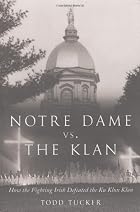
142) Notre Dame vs. the Klan / Todd Tucker
Date: 2004
In May 1924 the Ku Klux Klan was at the height of its power in Indiana. One in three white men in the state were members, and a Klansman had just secured the Republican nomination for governor. There was little doubt he'd win in November. Rallies were held in small towns throughout the state with no conflict and even with broad public approval. But "Grand Dragon" D. C. Stephenson planned the Klan's largest "Klanvocation" in South Bend, home of a growing and strongly symbolic Catholic presence: Notre Dame University.
The Klanvocation ended in a riot: students from the university confronted the Klansmen, roughed some of them up, and prevented the Klan from holding its planned parade. The following Monday students and Klansmen clashed again when students planned to disrupt the Klan's regular local meeting.
It's an interesting story, but not a long one: even at about 230 pages the book feels generously padded. We get much more background than necessary: details of the military service of Notre Dame president Matthew Walsh; the author's reminiscences of watching Birth of a Nation for the first time; Knute Rockne and The Gipper; and football scores. Sweet Mary Mother of God do we get football scores, apparently relevant because Go Fighting Irish.
Tucker's style is inviting enough, and other than the dreary sportsfandommery it moves along briskly enough. But the "Notre Dame vs. the Klan" part would really have been better treated as a feature story in a history magazine than in this long form.
Most interesting to me was the political maneuvering and conflicts within the Klan: Stephenson was tremendously ambitious and had strong rivalries with the movement's national leaders. When the Klan fell apart, in Indiana and elsewhere, it had less to do with Notre Dame's interference than with internal rivalries among sociopaths. That's a related story but a more interesting and complicated one, and judging from the footnotes somebody else has already told it. Tucker's summary heavily references M. William Lutholtz's Grand Dragon, which I've added to the Swamp accordingly.
This is an Indiana read for my 50 state challenge.
221swynn
Thanks for the heads up, Roni! It's tempting, but I avoid ERs: I fear that should an ER ever arrive in my mailbox, the fact that I've promised a review will suck all my motivation for reading the darn thing. It's irrational, but that's just how required reading tends to work on me.
Fortunately, I see it's a new edition of Daniels' Running Formula, which I can comfortably resist.
Fortunately, I see it's a new edition of Daniels' Running Formula, which I can comfortably resist.
222rosalita
I'm not so sure that's irrational, Steve. I find I often feel that way when an ER shows up. I've gotten a bit better at powering through it, though. Also, only requesting books I know I really want to read helps, too.
223qebo
I looked at my ER list the other day and it's typically about 6 months between request and review; the book tends not to arrive for a couple months, and the remainder is my procrastination, even though I've been requesting books that I actively want to read. I'm reconsidering whether I'll request more.
225swynn
222, 223: That's kind of what I'm thinking. I have trouble enough with library due dates ...
224: I did say I was tempted. With the proper bait, all resolutions are breakable.
224: I did say I was tempted. With the proper bait, all resolutions are breakable.
226swynn

143) Savage Season / Joe Lansdale
Date: 1990
Hap Collins is a manual laborer in East Texas rose fields when his ex-wife Trudy drops back into his lap figuratively and literally and with an offer: two hundred grand for an easy afternoon's work.
All Hap has to do is help Trudy find a landmark in the bottomlands where he grew up, land which he used to know like he thought he knew Trudy. Because somewhere in that swampy ground is a boat full of laundered cash from a bank robbery, hidden then lost and now waiting for Hap to help Trudy find it.
Hap agrees on one condition: Trudy has to deal in Hap's friend Leonard, a black gay ex-marine and the one person on the planet Hap trusts. Because he sure doesn't trust Trudy, not when he's thinking with the head on his shoulders and certainly not in a pinch. Hap has a hunch that things might pinch. Of course, they do.
This is an excellent country noir romp and an excellent launch to a series (like I need another one). The plot is a familiar easy-job-gone-pearshaped one, but does its job just fine and the characters are vivid. Hap and Leonard's banter in particular is sharp and funny like Sam Spade's cynical patter in stereo. It turns quite violent in the end, but Lansdale has more on his mind than mayhem: it's also about the loss of idealism, how much it costs to keep ideals and how much it costs to lose them, and how lucky you are to be alive whether you have them or not.
Recommended for those who like this sort of thing.
This is a Texas read for my 50 state challenge.
227swynn
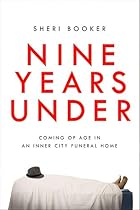
134) Nine Years Under / Sheri Booker
Date: 2013
After the death of her beloved Aunt Mary, Sheri Booker lands a part-time job at an inner-city Baltimore funeral home. She stays on staff for the next nine years, through her last few years of high school, through college and beyond, taking on increasingly responsible tasks. She also acquires a second family in the home's core staff, and even a first love in the director's son.
The stories range from entertaining to enlightening. We see a wide range of strategies for grieving; we also see fallout from gang murders. As Booker becomes interested in the business we also get increasingly insightful behind-the-scenes reportage, from makeup technique to historical commentary on the place of the mortuary industry in African American communities. Apparently a black funeral home was one business whose patronage was not coveted by white-owned businesses, so it was one industry where a smart and enterprising Black man could move into the middle class without constant interference.
We also get personal stories of varying relevance. This didn't bother me as much as it seemed to bother some reviewers-- this is a memoir, after all, and the author's personal development is a theme. Unfortunately, the style is uneven. Booker's writing is full of hyperbole, melodrama and cliche. In one romantic scene for instance, Booker's heart beats out of her chest and her spine tingles. On the other hand, another romantic scene is a prose poem of funeral-home imagery-- a choice whose effect is the opposite of what the she seems to intend.
For all its faults, though, the book has a certain energy and charm and I was never tempted to abandon it. Cautiously recommended for those who find the summary intriguing.
This was a Maryland read for my 50 State Challenge.
228qebo
227: I do find the summary intriguing, but maybe not enough to skip past 100s of other books.
229rosalita
What qebo said. It does sound intriguing, but I am becoming increasingly aware of just how many intriguing books there are out there that I haven't read.
230swynn
#228 & 229: Good choice. Whatever its merits, it's not one to bump to the top of your must-read list.
The next one may not be must-read material either, but it's certainly better:
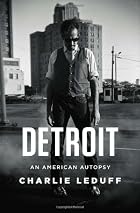
145) Detroit : An American Autopsy / Charlie LeDuff
Date: 2013
After twelve years writing for the New York Times, reporter Charlie LeDuff returns to his hometown of Detroit. As a reporter for the Detroit News he investigates the corruption, indifference, and incompetence that has made Detroit what it is.
The writing here is crisp and hits hard, and the material is horrifying. Detroit has plummeted in population from a peak of just over 2 million to around 700,000: entire neighborhoods have been abandoned, taken over by criminals and addicts. Arson is a popular entertainment. City government is largely indifferent to the mess: appointed officials enjoy junkets, parties and perks office while doing little to improve the problem. LeDuff digs in, afflicting the comfortable with stories about murders of children, firemen, and some poor soul whose body lies frozen at the bottom of an elevator shaft even after police have been called -- nobody can be bothered to retrieve the body.
LeDuff's subtitle, "an American autopsy" is a bit misleading though. He offers no clear diagnosis, and seems to be saying that the victim suffered multiple mortal wounds. Pick your favorite patsy for the economic collapse: greedy bankers, incompetent CEOs, corrupt government officials, outsourced manufacturing, white flight, a lazy American working class, the entitled underclass ... you'll find evidence to support your pet theory. LeDuff's thesis seems to be that Detroit's condition resulted from a failure of responsibility at multiple levels: worse, that Detroit may be a harbinger of a broader economic collapse, since the indifference and greed that defeated Detroit endanger no less the larger American body.
But the content feels less like reportage from an M.E.'s office than dispatches from a war zone. LeDuff is less interested in historical analysis than he is in calling attention to the ongoing misery. This he does quite effectively. Recommended.
The next one may not be must-read material either, but it's certainly better:
145) Detroit : An American Autopsy / Charlie LeDuff
Date: 2013
After twelve years writing for the New York Times, reporter Charlie LeDuff returns to his hometown of Detroit. As a reporter for the Detroit News he investigates the corruption, indifference, and incompetence that has made Detroit what it is.
The writing here is crisp and hits hard, and the material is horrifying. Detroit has plummeted in population from a peak of just over 2 million to around 700,000: entire neighborhoods have been abandoned, taken over by criminals and addicts. Arson is a popular entertainment. City government is largely indifferent to the mess: appointed officials enjoy junkets, parties and perks office while doing little to improve the problem. LeDuff digs in, afflicting the comfortable with stories about murders of children, firemen, and some poor soul whose body lies frozen at the bottom of an elevator shaft even after police have been called -- nobody can be bothered to retrieve the body.
LeDuff's subtitle, "an American autopsy" is a bit misleading though. He offers no clear diagnosis, and seems to be saying that the victim suffered multiple mortal wounds. Pick your favorite patsy for the economic collapse: greedy bankers, incompetent CEOs, corrupt government officials, outsourced manufacturing, white flight, a lazy American working class, the entitled underclass ... you'll find evidence to support your pet theory. LeDuff's thesis seems to be that Detroit's condition resulted from a failure of responsibility at multiple levels: worse, that Detroit may be a harbinger of a broader economic collapse, since the indifference and greed that defeated Detroit endanger no less the larger American body.
But the content feels less like reportage from an M.E.'s office than dispatches from a war zone. LeDuff is less interested in historical analysis than he is in calling attention to the ongoing misery. This he does quite effectively. Recommended.
231rosalita
Very nice review, swynn. The story of Detroit is such a sad one. I've only been there once, and only for a couple of days, so I don't have much familiarity with it, but the little I know is heartbreaking. And it doesn't seem that the current situation shows much promise for recovery.
232swynn
I wasn't familiar with the details either -- and I don't pretend to be now. But the examples LeDuff gives are outrageous, with schools and fire departments and ambulance services scrounging for supplies while city officials and their cronies thrive like royalty on public funds. And you're right, if LeDuff's reports are accurate then whatever killed Detroit is still killing it.
233swynn
Weird. I don't remember sitting on Santa's lap but here they got my picture:
http://blogs.post-gazette.com/index.php/opinion/rob-rogers-cartoons/30863-librar...
Thanks, Santa. Best gift ever.
http://blogs.post-gazette.com/index.php/opinion/rob-rogers-cartoons/30863-librar...
Thanks, Santa. Best gift ever.
235swynn
Indeed. But given the choice between Santa and libraries ... sorry, Santa.
Of course, "and" would be better.
146) Cry Liberty / Peter Charles Hoffer
In 1739 a group of slaves outside Charles Town staged an uprising. They secured weapons and ammunition from a backwater store and killed 23 European colonists as they moved south along Pon Pon road toward Spanish Florida. It was the largest slave rebellion in colonial North America, but it ended the same afternoon when the rebels confronted the colonial militia.
And that's pretty much what we know. Contemporary accounts are few and conflicting. There is only one eyewitness account and only to part of the rebellion, written by Carolina's lieutenant governor William Bull who probably had a personal motive to downplay the event.
Considering the scarcity of primary sources Hoffer questions some of the assumptions in standard accounts. He proposes a new reading of the evidence, showing how the rebellion could have happened, not as a carefully executed plan, but as a movement born of accident and opportunity.
The first I remember hearing about the Stono Slave Rebellion was a paragraph in J. William Harris's The Hanging of Thomas Jeremiah. Hoffer's book expands Harris's account some, but mostly with the message that there's not much more to tell.
Of course, "and" would be better.
146) Cry Liberty / Peter Charles Hoffer
In 1739 a group of slaves outside Charles Town staged an uprising. They secured weapons and ammunition from a backwater store and killed 23 European colonists as they moved south along Pon Pon road toward Spanish Florida. It was the largest slave rebellion in colonial North America, but it ended the same afternoon when the rebels confronted the colonial militia.
And that's pretty much what we know. Contemporary accounts are few and conflicting. There is only one eyewitness account and only to part of the rebellion, written by Carolina's lieutenant governor William Bull who probably had a personal motive to downplay the event.
Considering the scarcity of primary sources Hoffer questions some of the assumptions in standard accounts. He proposes a new reading of the evidence, showing how the rebellion could have happened, not as a carefully executed plan, but as a movement born of accident and opportunity.
The first I remember hearing about the Stono Slave Rebellion was a paragraph in J. William Harris's The Hanging of Thomas Jeremiah. Hoffer's book expands Harris's account some, but mostly with the message that there's not much more to tell.
236DorsVenabili
#235 - Oh, this sounds interesting! If I'm not mistaken, I think it's briefly mentioned in A People's History of the United States too, I book I've started several times, but have yet to finish (not for lack of wanting to.)
237swynn
>236 DorsVenabili:: I don't remember the Stono Slave Rebellion being discussed in my high school or undergraduate history courses. Hoffer says that it's now a part of the standard curriculum, which is a good thing: including it certainly provides perspective.
238swynn
WARNING: Jokes that seem funny to physics majors on finals week may have a limited audience.
Spotted on a bulletin board in our vestibule:

"Genius of the Day" award goes to the first who can identify this 19th Century Lothario.
Spotted on a bulletin board in our vestibule:

"Genius of the Day" award goes to the first who can identify this 19th Century Lothario.
240swynn
Gerard, you're the Genius of the Day!
The picture's a little blurry, which I'll blame on a breeze in the vestibule, but the little slips at the bottom of the flyer read:
"6.0221415 x 10^(23)"
which is known (to stressed students who have memorized it for finals) as "Avogadro's Number"
The picture's a little blurry, which I'll blame on a breeze in the vestibule, but the little slips at the bottom of the flyer read:
"6.0221415 x 10^(23)"
which is known (to stressed students who have memorized it for finals) as "Avogadro's Number"
241swynn

147) Ranchero / Rick Gavin
Date: 2011
Nick Reid is a repo man in the Mississippi delta. He's also in a transportation squeeze, so he borrows his landlady's lovingly-maintained pink 1968 Ranchero for a job. The job is to repossess a flat-screen TV from delta dipstick Percy Dubois; but instead of retrieving the television, Nick wakes up on Percy's floor with a shovel-shaped lump on his head, no television, and no Ranchero.
Nick rounds up his friend Desmond, who's roughly the size of a Geo (coincidentally, that's also Desmond's ride since it's all his ex left him in the divorce). Together they drive around the delta looking for the Ranchero. Along the way they solicit reluctant assistance where they can find it, mostly from individuals in the freelance pharmacy trade.
It's surreal and funny and culminates in a shootout with a half-crazy undertall Acadian meth king. It's fun.
This is a Mississippi read for my 50 State Challenge.
242swynn

148) It's Not the End of the Earth, But You Can See It From Here / Roger Welsch
Date: 1990
Roger Welsch was a professor at the University of Nebraska-Lincoln when he decided to move to a farm near a small rural Nebraska town. This is a collection of stories, observations, and homespun philosophical essays about how the pace of life and sense of community in "Centralia" are more rewarding than life in the big city. A surprising number of the stories are either told in or take place in a bar (or both), and most aim for droll wisdom and gentle self-deprecating humor in a Lake Wobegon sort of way.
The best stories are ones where habit and stubbornness come up against change or against contrary habit and stubbornness. In "Uncle Vic's Mule," a stubborn old coot deals with the much-deserved loss of a driver's license. In "The Bleaker County Juice War," the local tavern owner tries to change the ways of a gang of skinflint cardplayers who spend all day in the bar nursing one 35-cent glass of juice apiece.
It's fun but a bit Pollyannish about the benefits of small-town life. In particular, Welsch seems a bit too accepting of small-town bigotry. For example, he tells about a Native American friend whose teenage daughter was angry about dealing with being Indian and female in Centralia. He has the girl's father tell a story whose moral is that life just might be even tougher for white guys. Really. And then some of the behavior he wants us to think is neighborly is really just creepy -- like the postmaster who reads everybody's mail.
This is a Nebraska read for my 50 State Challenge.
243rosalita
I am very wary of books that take a Pollyanna attitude about small towns, having lived in or near them virtually all my life. There are unquestionably some wonderful things about them, but there are some not-so-great things, too. Just like everyone, everywhere. Of course, I also absolutely despite Garrison Keillor's Lake Wobegon shtick, so there's that as well.
244swynn
>243 rosalita:: I think that #148 is not the book for you, Julia! Personally, I'm sympathetic to many of his points: in particular his ruminations on the proper pace of life and unhealthy obsessions with scheduling and productivity ... man, I'm right there with him.
But bigotry isn't a cute little human failing just like many another. And I think Welsch understands that, but he's so caught up in his thesis of idyllic small-town life that he doesn't know how to handle it seriously.
But bigotry isn't a cute little human failing just like many another. And I think Welsch understands that, but he's so caught up in his thesis of idyllic small-town life that he doesn't know how to handle it seriously.
245swynn
I probably could have handled Welsch's rose-colored lenses more patiently if I hadn't also been reading this:

149) If You Could See Me Now / Peter Straub
When Miles Teagarden was a child, he spent summers with his grandmother in rural Arden, Wisconsin. The highlight of those vacations was his exciting, beautiful, seductive cousin Allison. The summer he was thirteen Allison coaxed a promise from him that they would meet again in Arden twenty years later. That night Allison drowned when she and Miles went skinny-dipping in an old quarry. Everyone in Arden thinks Miles killed her.
Now, twenty years later, Miles returns to Arden. He tells himself he's looking for solitude to finish his dissertation on D.H. Lawrence. But really he's keeping the promise he made to Allison. Unfortunately, his visit coincides with a series of unsolved murders of teenage girls. Residents of Arden are looking for someone to blame-- and the highfalutin city boy who killed that girl once long ago is a perfect scapegoat.
Straub's take on small-town coziness is pretty much the opposite of Welsch's. Straub's townsfolk mean well for the most part, but their community is insular and events have them frightened. Most of them aren't ready to light torches and chase down the freak -- but they aren't going to stand in the way of those who do. It probably says something about me, but I find Straub's account more plausible than Welsch's. It probably helps that Straub is the better writer by a wide margin.
This is a Wisconsin read for my 50 State Challenge.

149) If You Could See Me Now / Peter Straub
When Miles Teagarden was a child, he spent summers with his grandmother in rural Arden, Wisconsin. The highlight of those vacations was his exciting, beautiful, seductive cousin Allison. The summer he was thirteen Allison coaxed a promise from him that they would meet again in Arden twenty years later. That night Allison drowned when she and Miles went skinny-dipping in an old quarry. Everyone in Arden thinks Miles killed her.
Now, twenty years later, Miles returns to Arden. He tells himself he's looking for solitude to finish his dissertation on D.H. Lawrence. But really he's keeping the promise he made to Allison. Unfortunately, his visit coincides with a series of unsolved murders of teenage girls. Residents of Arden are looking for someone to blame-- and the highfalutin city boy who killed that girl once long ago is a perfect scapegoat.
Straub's take on small-town coziness is pretty much the opposite of Welsch's. Straub's townsfolk mean well for the most part, but their community is insular and events have them frightened. Most of them aren't ready to light torches and chase down the freak -- but they aren't going to stand in the way of those who do. It probably says something about me, but I find Straub's account more plausible than Welsch's. It probably helps that Straub is the better writer by a wide margin.
This is a Wisconsin read for my 50 State Challenge.
247swynn
I hope you like it, Julia! Rereading my summary, I realize I should add a few warnings: there is a supernatural element (but it's Straub, so maybe you figured); there are some nasty bits (though most graphic violence occurs offstage ... and it's Straub, so maybe you figured); and the protagonist himself isn't very likeable. All of which worked for me in building the suspense and a creeping sense of dread, but YMMV.
By the way, I expect some others in this forum will sympathize with this graphic from the Paris Review. It's from way back in April so maybe I'm the last to see it. I'm sharing it anyway:
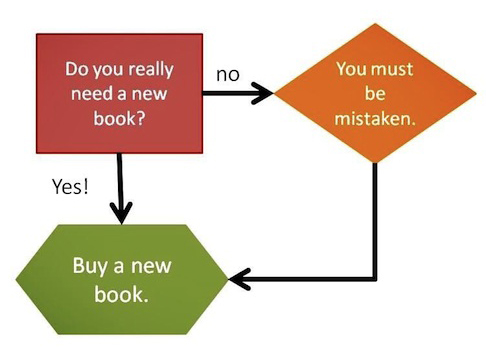
By the way, I expect some others in this forum will sympathize with this graphic from the Paris Review. It's from way back in April so maybe I'm the last to see it. I'm sharing it anyway:
248swynn
Treadmill reading:
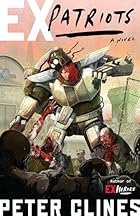
150) Ex-Patriots / Peter Clines
Crazy fun follow-up to Clines's zombies-n-superheroes story Ex-Heroes. Survivors of that book's climactic brawl learn that a military base has survived when a drone from the base zooms overhead. Of course, in keeping with the series's theme, the military base is home to graduates of a secret supersoldier program so BAM! KAPOW!
The standard trope in zombie films is that the military turns evil in a zombie apocalypse. Ex-Patriots acknowledges the theme, uses it, and plays with it-- the soldiers are antagonists, but not exactly evil: both the military and our superhero friends are goodguys but with different goals. This makes the story a bit more substantive than a simple slugfest, and questions are raised about authority and the nature of a state. Unfortunately (if you're looking for deeper substance) or fortunately (if you're logging hours on a treadmill), before the characters can explore these questions in depth they uncover a genuinely evil plot and BAM! KAPOW! BRAINS!
Over on Julia's thread there's a discussion about star-rating systems. Such things are rather personal, and everyone does it his or her own way. I don't do it at all, and here's a reason why: it's a two-star novel, but a five-star diversion. Recommended for readers looking for things like that, but read Ex-Heroes first.
150) Ex-Patriots / Peter Clines
Crazy fun follow-up to Clines's zombies-n-superheroes story Ex-Heroes. Survivors of that book's climactic brawl learn that a military base has survived when a drone from the base zooms overhead. Of course, in keeping with the series's theme, the military base is home to graduates of a secret supersoldier program so BAM! KAPOW!
The standard trope in zombie films is that the military turns evil in a zombie apocalypse. Ex-Patriots acknowledges the theme, uses it, and plays with it-- the soldiers are antagonists, but not exactly evil: both the military and our superhero friends are goodguys but with different goals. This makes the story a bit more substantive than a simple slugfest, and questions are raised about authority and the nature of a state. Unfortunately (if you're looking for deeper substance) or fortunately (if you're logging hours on a treadmill), before the characters can explore these questions in depth they uncover a genuinely evil plot and BAM! KAPOW! BRAINS!
Over on Julia's thread there's a discussion about star-rating systems. Such things are rather personal, and everyone does it his or her own way. I don't do it at all, and here's a reason why: it's a two-star novel, but a five-star diversion. Recommended for readers looking for things like that, but read Ex-Heroes first.
249rosalita
What a great explanation of where ratings fall short: a two-star novel but a five-star diversion. It's examples like that that make me think I'll never stop writing little reviews to put the ratings (if I keep doing them) in context.
250swynn
Either way, Julia, I'll be interested in your reviews. I know a lot of 75ers do them, and I am awed by those who can remember their reads well enough to decide that one book was 0.0237 points more or less satisfying than another.
151) Uphill Against Water / Peter Carrels
Date: 1999
Back in the mid-20th Century there was a mania for huge water-development projects: for hydroelectric power, for flood control, and for agriculture. With the advantage of hindsight we know that many of these projects were ill-advised from the start. The building of dams has done irreparable harm to the environment, and some irrigation projects have actually rendered sterile the soils they were supposed to turn into lush gardens.
Case in point: South Dakota's Oahe (a-WA-he) Dam and reservoir, conceived as a joint project of the Army Corps of Engineers and the U.S. Bureau of Reclamation. The ACE's interest was in power generation and flood control, the USBR's in irrigation.
Irrigation was an important part of the Oahe plan, since the new reservoir flooded thousands of acres of South Dakota's most productive farmland. Irrigation was supposed to offset this loss, turning 750,000 acres of dry South Dakota land into fields of corn and wheat as fruitful as Iowa's and Nebraska's. That was what the USBR promised -- but they didn't perform soil surveys until the dam construction under construction. Once their studies were in, the amount of land expected to benefit from irrigation dropped to about 500,000 acres, then to just under 200,000 acres, barely more land than was lost and at a staggering cost per acre. Much of the remaining project area was unsuitable for irrigation, so the USBR planned to bury drainage tiles at 6 to 12 feet below ground in order to make the whole scheme work.
From this perspective it's hard to see how anyone would support the project, but big money comes with its own momentum, and popular support was in fact strong. Regardless of the project's intrinsic merits, there was a strong sense that South Dakota was due for the attention and expense. There was also a fear that if the state didn't do something with the water then some other state would.
So when a few farmers in the project area spoke up against the project, their criticism was unwelcome and their chances of stopping the project slim. But these farmers were determined: they organized, ran for and won positions on the project board, battled powerful politicians, and eventually they won.
This is a fascinating story of a grassroots activism, of political maneuvering, and of the evolving political landscape from the 1940s to the 1980s. It includes glimpses at the careers of a couple of powerful politicians: the end of George McGovern's and the beginning of Tom Daschle's. (McGovern appears in an unflattering light, Daschle in a better one.) I suspect that Carrels underrepresents the arguments of the project's proponents, but he persuasively presents the arguments and motives of its opposition.
Recommended for readers interested in water policy, environmental policy, and activist movements.
This is a South Dakota read for my 50 state challenge.
151) Uphill Against Water / Peter Carrels
Date: 1999
Back in the mid-20th Century there was a mania for huge water-development projects: for hydroelectric power, for flood control, and for agriculture. With the advantage of hindsight we know that many of these projects were ill-advised from the start. The building of dams has done irreparable harm to the environment, and some irrigation projects have actually rendered sterile the soils they were supposed to turn into lush gardens.
Case in point: South Dakota's Oahe (a-WA-he) Dam and reservoir, conceived as a joint project of the Army Corps of Engineers and the U.S. Bureau of Reclamation. The ACE's interest was in power generation and flood control, the USBR's in irrigation.
Irrigation was an important part of the Oahe plan, since the new reservoir flooded thousands of acres of South Dakota's most productive farmland. Irrigation was supposed to offset this loss, turning 750,000 acres of dry South Dakota land into fields of corn and wheat as fruitful as Iowa's and Nebraska's. That was what the USBR promised -- but they didn't perform soil surveys until the dam construction under construction. Once their studies were in, the amount of land expected to benefit from irrigation dropped to about 500,000 acres, then to just under 200,000 acres, barely more land than was lost and at a staggering cost per acre. Much of the remaining project area was unsuitable for irrigation, so the USBR planned to bury drainage tiles at 6 to 12 feet below ground in order to make the whole scheme work.
From this perspective it's hard to see how anyone would support the project, but big money comes with its own momentum, and popular support was in fact strong. Regardless of the project's intrinsic merits, there was a strong sense that South Dakota was due for the attention and expense. There was also a fear that if the state didn't do something with the water then some other state would.
So when a few farmers in the project area spoke up against the project, their criticism was unwelcome and their chances of stopping the project slim. But these farmers were determined: they organized, ran for and won positions on the project board, battled powerful politicians, and eventually they won.
This is a fascinating story of a grassroots activism, of political maneuvering, and of the evolving political landscape from the 1940s to the 1980s. It includes glimpses at the careers of a couple of powerful politicians: the end of George McGovern's and the beginning of Tom Daschle's. (McGovern appears in an unflattering light, Daschle in a better one.) I suspect that Carrels underrepresents the arguments of the project's proponents, but he persuasively presents the arguments and motives of its opposition.
Recommended for readers interested in water policy, environmental policy, and activist movements.
This is a South Dakota read for my 50 state challenge.
251swynn

152) The Beet Queen / Louise Erdrich
When Karl and Mary Adare's mother flies away with a stunt pilot at a county fair, they are left to their own resources. Remembering an aunt in Argus, North Dakota, they hop a boxcar to go to her. Karl is soon separated from Mary and goes his own wandering way, while Mary settles down with her aunt. In a series of episodes over the forty years, Mary and Karl and their extended family reach out to one another and very occasionally connect, but more often they hurt each other.
There's the time in grade school when Mary smacks her face against the ice in a playground accident and creates a likeness of Karl; there's Mary's hateful cousin Sita, who takes everything she can of Mary's in retaliation for Mary's taking of her best friend Celestine; there's the time Mary and Celestine rescue Sita's gourmet restaurant; there's Mary's complicated attraction to Russell Kapshaw, the most decorated war hero in North Dakota; and there's the time that Celestine's daughter wins the inaugural Beet Queen pageant, when everything and everyone comes together in Argus disastrously.
These are affecting stories told with style. Recommended.
This is a North Dakota read for my 50 state challenge.
252rosalita
I have grown to really like Louise Erdrich over the past couple of years. "Round House" was one of my top books of 2013. That looks like another good one.
253swynn
>252 rosalita:: Agreed about Erdrich, Julia! I read Love Medicine a couple of years ago for another North Dakota read, and liked it very much. It took me too long to follow up with this one, and I mustn't wait so long before the next.
153) The Court-Martial of Mother Jones / Edward M. Steel
Date: 1995
In February 1913, labor leader Mother Jones was arrested in Charleston, West Virginia. She was there to protest conditions in Kanawha County, where confrontations between mine owners and striking miners had led Governor William Glasscock to declare martial law. Instead of meeting the Governor, Jones was taken into custody and handed over to military authorities in Kanawha County. There she stood trial with 47 others under charges of conspiracy and murder.
Mother Jones's part in the conspiracy was making inflammatory speeches. This wasn't the first time she'd been accused of inflammatory speech. It was kind of her specialty.
Though the fact of the court martial is a part of labor history, details of the trial were generally forgotten, except that after the trial most of the accused were released except for a few regarded as ringleaders, Mother Jones among them. Shortly afterward, the remaining defendants were also released by Governor Henry Hatfield, who succeeded Glasscock. The state of West Virginia kept no official record of the trial, not even an official verdict.
Edward Steel, a scholar of the labor movement, discovered a transcript of the trial while conducting research for a collected volume of Mother Jones's letters and speeches. That transcript takes up the bulk of this volume, together with an introduction of about 100 pages placing the trial in its historical and legal context-- a context that was very welcome to legal amateur me.
I found the story very interesting, and the trial surprisingly engaging, though the introduction was indispensable in that regard. Despite my enjoyment, I don't know that I'd recommend it to anyone else. Its intent is scholarly and its scope deliberately narrow. I'd have preferred more exposition putting the trial in the context of the broader labor movement, but that's wishing that this work was something the editor didn't intend.
This was a West Virginia read for my 50 state challenge.
153) The Court-Martial of Mother Jones / Edward M. Steel
Date: 1995
In February 1913, labor leader Mother Jones was arrested in Charleston, West Virginia. She was there to protest conditions in Kanawha County, where confrontations between mine owners and striking miners had led Governor William Glasscock to declare martial law. Instead of meeting the Governor, Jones was taken into custody and handed over to military authorities in Kanawha County. There she stood trial with 47 others under charges of conspiracy and murder.
Mother Jones's part in the conspiracy was making inflammatory speeches. This wasn't the first time she'd been accused of inflammatory speech. It was kind of her specialty.
Though the fact of the court martial is a part of labor history, details of the trial were generally forgotten, except that after the trial most of the accused were released except for a few regarded as ringleaders, Mother Jones among them. Shortly afterward, the remaining defendants were also released by Governor Henry Hatfield, who succeeded Glasscock. The state of West Virginia kept no official record of the trial, not even an official verdict.
Edward Steel, a scholar of the labor movement, discovered a transcript of the trial while conducting research for a collected volume of Mother Jones's letters and speeches. That transcript takes up the bulk of this volume, together with an introduction of about 100 pages placing the trial in its historical and legal context-- a context that was very welcome to legal amateur me.
I found the story very interesting, and the trial surprisingly engaging, though the introduction was indispensable in that regard. Despite my enjoyment, I don't know that I'd recommend it to anyone else. Its intent is scholarly and its scope deliberately narrow. I'd have preferred more exposition putting the trial in the context of the broader labor movement, but that's wishing that this work was something the editor didn't intend.
This was a West Virginia read for my 50 state challenge.
254DorsVenabili
Happy Holidays to you and your family, Sir!


257swynn
Thanks everyone for the holiday wishes! I have nearly two weeks off for the holidays, and am spending Christmas with the in-laws in northeast Oklahoma. For not-especially-social me, that means a lovely end of the year with most days clear sailing for finishing my 50 state challenge -- and of course a visit to Gardner's Books in Tulsa.
As for the challenge, Kansas is down:

154) The Ice Harvest / Scott Phillips
Charlie Arglist is an ex-lawyer, now a go-to guy for a Wichita mobster. Charlie has been an enterprising soul, finding extra cash where he can and not always with his boss's approval. In fact, he's been skimming profits. In fact, he's decided to make one last big score against his boss and skip town to where he'll never be found. Silly Charlie: A Christmas blizzard may not have been the best time to make your move ...
It's fast, dastardly, and seasonal fun. Warning: it's violent and the cast is an unsympathetic herd of lowlifes and thugs speeding toward no good end. Recommended for those who read the warning and say, "Okay, but what did you want to warn me about?"
As for the challenge, Kansas is down:

154) The Ice Harvest / Scott Phillips
Charlie Arglist is an ex-lawyer, now a go-to guy for a Wichita mobster. Charlie has been an enterprising soul, finding extra cash where he can and not always with his boss's approval. In fact, he's been skimming profits. In fact, he's decided to make one last big score against his boss and skip town to where he'll never be found. Silly Charlie: A Christmas blizzard may not have been the best time to make your move ...
It's fast, dastardly, and seasonal fun. Warning: it's violent and the cast is an unsympathetic herd of lowlifes and thugs speeding toward no good end. Recommended for those who read the warning and say, "Okay, but what did you want to warn me about?"

259swynn
155) Rudyard Kipling in Vermont / Stuart Murray
For four years, at the very beginning of his literary fame, Rudyard Kipling lived with his American wife Carrie just outside Brattleboro, Vermont, near Carrie's family. They first lived in a small farmhouse but eventually moved into a larger home they built on land sold to them by Carrie's brother Beatty.
The Vermont years were productive for Kipling: he wrote the Jungle Books, worked on Captains Courageous, and developed the idea for Kim. More importantly, he seems to have loved the landscape and the home he and Carrie built for themselves. Upon leaving Vermont in 1896, Kipling said that there were only two places on earth he cared to live, Brattleboro and Bombay, and he could stay in neither place.
Stuart Murray gives us the available details about how Brattleboro became unlivable for the Kiplings: it has to do with Carrie's brother Beatty who was a dunkard and a spendthrift and everybody's best friend-- and who resented his sister's meddling attempts to mend his ways. What begins as fraternal affection changes to resentment and ends in death threats, litigation, and bad press. It's all very sordid and American.
In addition to the gossipy bits, Murray also gives us enough context to understand just what Kipling found appealing about the place, and it does indeed sound fine. (If you're interested, the Kipling home still stands, preserved by The Landmark Trust, and is available to rent for your Vermont vacation.)
There's also some very light discussion of his work. Most appreciated by me was a defense of some of his more controversial qualities. I confess that though I enjoyed his children's books as a kid, I'd come to think of him as a colonialist and a racist. Both of which he was, of course, and his reputation has suffered accordingly in the last few decades. But Murray argues that Kipling's views on empire and race are more nuanced than he's often given credit for. Some of Kipling's most notorious writings, including "White Man's Burden," are widely misinterpreted and deserve a closer reading, says Murray.
Kipling comes off as an irritable but fundamentally sympathetic fellow, and Murray gets credit for convincing me to give him another chance. I'll pencil in Kim for 2014.
260thornton37814
The Kipling bio sounds interesting.
261qebo
Rudyard Kipling lived with his American wife Carrie just outside Brattleboro, Vermont
This I did not know.
This I did not know.
262drneutron
Me, neither. I'd love to rent his place for a vacation - and read this book while I'm there!
263dk_phoenix
Merry belated Christmas, and I hope you enjoy your time off!
264swynn
260-262: I didn't know about Kipling's time in Vermont either, until I found this book in our library's catalog while looking for Vermont reads. It's quite interesting, and short-- about 180 generously illustrated pages.
263: And happy New Year, Faith!
263: And happy New Year, Faith!
265swynn
156) Bloodhound in Blue / Adam David Russ
This is the latest shared read with my son, and is the biography of Salt Lake City police bloodhound "JJ" and his handler Michael Serio. JJ served almost nine years on the SLC police force, catching 271 criminals. Many entertaining anecdotes are told, mostly featuring JJ catching a badguy, but also detailing Serio's efforts to convince his superiors that bloodhounds had a place on SLC's K-9 team.
My son and I both enjoyed this.
266alcottacre
Happy Holidays, Steven!
267rosalita
Aww, I'm a sucker for a good dog book. And I love police procedurals, too. Sounds like a win-win.
268swynn
>266 alcottacre:: You too, Stasia!
>267 rosalita:: It is, Julia! It's nothing grand, but it's full of mostly feel-good stories about good dogs and good cops. Fair warning: JJ passed away in 2009, so the Gordon Korman Law applies.
>267 rosalita:: It is, Julia! It's nothing grand, but it's full of mostly feel-good stories about good dogs and good cops. Fair warning: JJ passed away in 2009, so the Gordon Korman Law applies.
270UnrulySun
Happy Holidays, Steve! I'll be following you into the new year, hoping to see lots more running posts-- I'm living running vicariously through you. ♥
271swynn
>269 rosalita:: It's a reference to Gordon Korman's No More Dead Dogs:
The dog always dies. Go to the library and pick out a book with an award sticker and a dog on the cover. Trust me, that dog is going down.
The dog always dies. Go to the library and pick out a book with an award sticker and a dog on the cover. Trust me, that dog is going down.
272swynn
>270 UnrulySun:: Same to you, Kathy! Yes, in the new year there will be running.
274swynn

157) Winesburg, Ohio / Sherwood Anderson
This was a re-read of an old favorite, a collection of stories about desire and the tension between youth and experience, sketched in the interior lives of residents of Winesburg, Ohio.
275swynn

158) Killing Floor / Lee Child
First in the Jack Reacher series. In this one, Reacher gets off a bus in the middle of nowhere, Georgia. He's promptly arrested for murder, then entangled in a mystery. The plot depends on a number of unlikely coincidences but it's fun and surprisingly fast despite its 500+ pages. Recommended with a warning that it contains cartoonish violence.
It seems everybody in my RL reading group is either a Jack Reacher fan or an Eve Dallas fan, or in a few cases, both. Eve Dallas holds no appeal for me (kissy books, ugh), but if this one is representative then I'll be joining the Reacher camp.
276rosalita
Steve, I love the Reacher books even though they do get a bit cartoonish at times. I've never read Eve Dallas but your description (kissy books?) makes me curious, at least. :-)
277swynn
>276 rosalita:: "Kissy" is what I understand, anyway: it's a series of science-fiction-y (near-future) mystery/romance novels by Nora Roberts (writing under the pen name "J.D. Robb").
Those who like the series seem to like it a lot -- and there's a lot to like, with thirty-some volumes already and another one coming out every few months -- so if "science fiction mystery romance" sounds appealing give 'em a try.
Those who like the series seem to like it a lot -- and there's a lot to like, with thirty-some volumes already and another one coming out every few months -- so if "science fiction mystery romance" sounds appealing give 'em a try.
278swynn

159) Pilgrim at Tinker Creek / Annie Dillard
Date: 1974
Annie Dillard observes the natural world around her home in the Blue Ridge Mountains. Taking as text her observations -- a water bug feeding on a frog, a mosquito on a copperhead, a mantis laying eggs, a swarm of migrating monarch butterflies -- informed by broad corpus of nature writing from Pliny to Farley Mowat, Dillard composes meditations on ponderous topics like sight, mortality, and our kinship with the rest of creation.
But it doesn't feel ponderous: it feels like a poem. I found myself reading aloud just to taste the words. I'd occasionally stop and reread the last paragraph in pure admiration. At the halfway mark I rationed myself to a chapter a day just to make it last.
I'm gushing, so you know it's enthusiastically recommended. It is easily one of the best books I've read this year. Or ever.
It's also my Virginia read for this year, so thank you 50 State Challenge for another gem I might not have read otherwise.
279rosalita
I like (some) science fiction. I love mysteries. I tolerate (some) romances. I'm not sure about rolling them all together into one book, but my curiosity may lead me to investigate further at the library some day.
So glad to read your review of "Pilgrim" as that was a Daily Deal ebook that Igot suckered into buying picked up earlier this month. I had a paperback at one time but ended up giving it away before I actually read it.
So glad to read your review of "Pilgrim" as that was a Daily Deal ebook that I
280swynn
If you get around to Eve Dallas I'll be interested in your reaction. I think the first is Naked In Death. I'm told they don"t have to be read in order, but that the characters' relationship develops over the course of the series.
And I'll definitely be interested in your take on Pilgrim at Tinker Creek.
And I'll definitely be interested in your take on Pilgrim at Tinker Creek.
281swynn
160) The Girls of Atomic City / Denise Kiernan
This is the story of Oak Ridge, Tennessee, from its founding in 1943 as a secret community devoted to refining fuel for nuclear weapons, to its outing in 1945 with the bombing of Hiroshima.
The story has been told before, but this account draws on interviews with the women who came to Oak Ridge in search of jobs or to help end the war, or both. The book's strength is using this material to compose a picture of daily life in Oak Ridge, which was an exercise in creating home and community in a hot muddy paranoid surveillance society.
The writing was odd in places, with strange redundancies, editorial choices, and turns of phrase. I wondered whether some of this awkwardness might result from trying to turn transcribed conversations in exposition-- I think I'd have found an oral-history format more engaging for some chapters.
Also, for a book discussing contributions of womem to the war effort, Kiernan spends an awful lot of time swooning over the handsome young available men.
Overall, it's a bit disappointing, but it's recommended for those interested in the subject.
This Tennessee read concludes my 2013 literary tour of the United States.
282thornton37814
Since Oak Ridge is local for me, I'm still planning to read that one. I am sorry you didn't like it better.
283swynn
>282 thornton37814:: It was probably a case of elevated expectations, Lori-- I wanted to love it and only liked it. Hope your experience is better, but either way I look forward to your comments.
285swynn
Happy New Year to you too, Kathy!
I thought I might finish off a quick read before midnight, but no dice.
So this wraps up 2013 for me: 160 books, which I think is a personal record. I won't approach that next year, but I will almost certainly hit 75. Details at:
http://www.librarything.com/topic/162926
I thought I might finish off a quick read before midnight, but no dice.
So this wraps up 2013 for me: 160 books, which I think is a personal record. I won't approach that next year, but I will almost certainly hit 75. Details at:
http://www.librarything.com/topic/162926

