A Dance to the Music of Time GR 2013 - August: The Soldier's Art
Talk 75 Books Challenge for 2013
Join LibraryThing to post.
This topic is currently marked as "dormant"—the last message is more than 90 days old. You can revive it by posting a reply.
1Deern
Our discussion thread for the August volume of A Dance to the Music of Time: The Soldier's Art
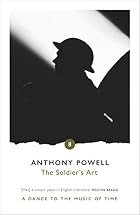


Main thread: http://www.librarything.com/topic/147074


Main thread: http://www.librarything.com/topic/147074
3gennyt
Oh dear, I don't think I'll ever catch up! I've yet to start the fourth volume (which some of you read in April!). But I have started to enjoy the books now, so I am looking forward to carrying on, even if I will be months behind the rest of you.
4Deern
Hi Genny! I agree that the warm-up phase of the series takes unusually long... I started really loving it by books 4 and 5, but every month I still have to overcome a little weariness, because I'll probably be confronted with yet another bunch of new characters. But after 15-20 pages I'm in and at the end I just want to get to the next one.
5kaggsy
4: I'm glad I'm not the only one who has to motivated themselves to take the plunge into the next book. I do love them when I get going, but you're right, it's the initial adjusting to the new situation that's hard!
6Deern
It took me 3 days to get through the first 40 pages and one day for the remaining 190. So it was quite a quick read this time and I have to admit that was partly because I skipped some paragraphs.
Spoilers coming:
The book is once again great, but I am completely unfamiliar with military ranks and while I am sure all those intrigues were extremely well done, I couldn't help myself - I felt a little bored.
But while feeling bored I knew I was missing out on something great just because I was too lazy to look up all the military stuff.
Anyway - war finally really hits and does so when we are least expecting it. Just when I was wondering if chapter 2 was completely pointless, Powell shows us what being at war means.
I've got a bad feeling re. Stringham. Now that he has finally taken on form again (after having been only mentioned in the last books or having one sad mini scene) I'd love to keep him. I also finally get his 'appeal', he must be the smartest one of the trio I'm sure, and clearly has 'something' that makes him attractive to us women with the helper's syndrome. The poem he quotes on the last pages is heartbreaking and doesn't promise anything good for his future.
Widmerpool... while I find him completely unlikeable, I don't really want to see him on the losers' side. Can't explain why. I hope he'll succeed in getting that important job.
And Nick: doesn't openly recognize Stringham because he doesn't want to lose sympathies in the F Mess. Loses an important job because in all those lazy years he hasn't even been able to improve his French. Doesn't like Trollope. Doesn't put much energy into his work but expects to be promoted.
But at least he knows everyone, which is something.
Spoilers coming:
The book is once again great, but I am completely unfamiliar with military ranks and while I am sure all those intrigues were extremely well done, I couldn't help myself - I felt a little bored.
But while feeling bored I knew I was missing out on something great just because I was too lazy to look up all the military stuff.
Anyway - war finally really hits and does so when we are least expecting it. Just when I was wondering if chapter 2 was completely pointless, Powell shows us what being at war means.
I've got a bad feeling re. Stringham. Now that he has finally taken on form again (after having been only mentioned in the last books or having one sad mini scene) I'd love to keep him. I also finally get his 'appeal', he must be the smartest one of the trio I'm sure, and clearly has 'something' that makes him attractive to us women with the helper's syndrome. The poem he quotes on the last pages is heartbreaking and doesn't promise anything good for his future.
Widmerpool... while I find him completely unlikeable, I don't really want to see him on the losers' side. Can't explain why. I hope he'll succeed in getting that important job.
And Nick: doesn't openly recognize Stringham because he doesn't want to lose sympathies in the F Mess. Loses an important job because in all those lazy years he hasn't even been able to improve his French. Doesn't like Trollope. Doesn't put much energy into his work but expects to be promoted.
But at least he knows everyone, which is something.
7brenzi
I posted this on my thread. I guess I'm finding this much more compelling than some of you because I have a hard time stopping myself from just reading on into the next volume.
SPOILERS GALORE
As we close in on the end of this volume, Germany has invaded Russia so it is now 1941. Nick is working under Maj. Widmerpool as an assistant and Stringham turns up as part of the wait staff in the mess hall, a situation neither Nick nor Widmerpool thinks is a good idea. During the Blitz, some of our familiar characters don’t survive, and another one is shot down while on a reconnaissance mission over enemy territory.
I loved this exchange between Nick and Bithel, who is the head of the Laundry unit:
”Told me you were a reader---like me---didn’t you?”
“Yes, I am. I read quite a lot.”
I no longer attempted to conceal the habit, with all its undesirable implications. At least admitting to it put one in a recognizably odd category of persons from whom less need be expected than the normal run. I love that!
And this bit about Widmerpool, really points up the character that we’ve come to know, more or less. (I really am getting to dislike him immensely.) Nick is disgusted at his lack of sympathy for Bithel, who had gotten drunk the night before and they have the following conversation. Widmerpool:
”I am not concerned with the state of his health. I simply offered him the alternative of court-marshall or acceptance of the appropriate report declaring him unsuitable for retention as an officer. The administrative documents releasing him from the army in the shortest possible period of time are now in motion. He wisely concurred, though not without an extraordinary scene.”
‘What sort of scene?’
‘Tears poured down his cheeks.’
‘He was upset?’
‘So it appeared.’
The episode plainly struck Widmerpool as of negative interest. That he should feel no pity for Bithel was reasonable enough, but it was a mark of his absolute lack of interest in human beings, as such, that the several implications of the interview---its sheer physical grotesqueness, for example, in the light of what Bithel must have drunk the night before---had made no impression on him he thought worth repeating.”
I hope we talk about Widmerpool, who I think is a monstrously complex character that Powell has brilliantly drawn. I’m thinking he suffers from Asperger’s Syndrome or something along the Autism spectrum. He’s becoming more and more sinister and dangerous as the novels advance.
Powell is clearly a genius. Everything about this magnum opus suggests that and I will definitely be rereading this, probably more than once. But this particular volume had a certain sadness to it and, like its predecessor, a melancholy overtone.
SPOILERS GALORE
As we close in on the end of this volume, Germany has invaded Russia so it is now 1941. Nick is working under Maj. Widmerpool as an assistant and Stringham turns up as part of the wait staff in the mess hall, a situation neither Nick nor Widmerpool thinks is a good idea. During the Blitz, some of our familiar characters don’t survive, and another one is shot down while on a reconnaissance mission over enemy territory.
I loved this exchange between Nick and Bithel, who is the head of the Laundry unit:
”Told me you were a reader---like me---didn’t you?”
“Yes, I am. I read quite a lot.”
I no longer attempted to conceal the habit, with all its undesirable implications. At least admitting to it put one in a recognizably odd category of persons from whom less need be expected than the normal run. I love that!
And this bit about Widmerpool, really points up the character that we’ve come to know, more or less. (I really am getting to dislike him immensely.) Nick is disgusted at his lack of sympathy for Bithel, who had gotten drunk the night before and they have the following conversation. Widmerpool:
”I am not concerned with the state of his health. I simply offered him the alternative of court-marshall or acceptance of the appropriate report declaring him unsuitable for retention as an officer. The administrative documents releasing him from the army in the shortest possible period of time are now in motion. He wisely concurred, though not without an extraordinary scene.”
‘What sort of scene?’
‘Tears poured down his cheeks.’
‘He was upset?’
‘So it appeared.’
The episode plainly struck Widmerpool as of negative interest. That he should feel no pity for Bithel was reasonable enough, but it was a mark of his absolute lack of interest in human beings, as such, that the several implications of the interview---its sheer physical grotesqueness, for example, in the light of what Bithel must have drunk the night before---had made no impression on him he thought worth repeating.”
I hope we talk about Widmerpool, who I think is a monstrously complex character that Powell has brilliantly drawn. I’m thinking he suffers from Asperger’s Syndrome or something along the Autism spectrum. He’s becoming more and more sinister and dangerous as the novels advance.
Powell is clearly a genius. Everything about this magnum opus suggests that and I will definitely be rereading this, probably more than once. But this particular volume had a certain sadness to it and, like its predecessor, a melancholy overtone.
8JonnySaunders
I've been very late with this month's installment, mainly thanks to that Forsyte clan of John Galsworthy, but I have just finished.
Like Deern I found myself having doubts about this one during chapter 2. I was getting a little bit irritated that Powell was treating the war quite flippantly and detailing what can only be considered 'insignificant' problems. However, I'm fairly sure now that Powell was very intentionally leading me down the garden path to set up the shock at the end of the chapter! The effect was brilliant.
Like others I am also even more fascinated with Widmerpool's character. The scene that brenzi quotes above and his complete disregard of others when it comes to his own prospects, made me really start to despise him for the first time. However, like Deern I couldn't help but root for him when things were looking bleak.
It was tough to rate this one, since for more than half the book I wasn't enjoying it as much as some of the others. However, there were some really excellent moments. On balance though, I felt that I could only give it 3 stars, mainly in comparison to the rest of the novels.
Like Deern I found myself having doubts about this one during chapter 2. I was getting a little bit irritated that Powell was treating the war quite flippantly and detailing what can only be considered 'insignificant' problems. However, I'm fairly sure now that Powell was very intentionally leading me down the garden path to set up the shock at the end of the chapter! The effect was brilliant.
Like others I am also even more fascinated with Widmerpool's character. The scene that brenzi quotes above and his complete disregard of others when it comes to his own prospects, made me really start to despise him for the first time. However, like Deern I couldn't help but root for him when things were looking bleak.
It was tough to rate this one, since for more than half the book I wasn't enjoying it as much as some of the others. However, there were some really excellent moments. On balance though, I felt that I could only give it 3 stars, mainly in comparison to the rest of the novels.
9Deern
A bit early, but next thread is up: http://www.librarything.com/topic/158218
I guess that's Widmerpool on the cover:
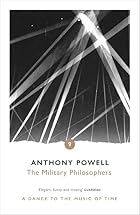
I can't make up my mind about him. I've known people who were similar in their youth but usually they got married at some point and then became a little more "socially open" (don't know how to express that correctly).
I didn't mind his treatment of Bithel because I really disliked that guy and even I wouldn't have shown him any mercy I guess. His acting re. Charles Stringham was worse, although Stringham certainly didn't wish to be kept safe by Widmerpool.
I always think that W. does feel something like friendship towards Nick. He doesn't think much of him but employs him. For someone like W. this must come close to a love declaration.
I guess that's Widmerpool on the cover:
I can't make up my mind about him. I've known people who were similar in their youth but usually they got married at some point and then became a little more "socially open" (don't know how to express that correctly).
I didn't mind his treatment of Bithel because I really disliked that guy and even I wouldn't have shown him any mercy I guess. His acting re. Charles Stringham was worse, although Stringham certainly didn't wish to be kept safe by Widmerpool.
I always think that W. does feel something like friendship towards Nick. He doesn't think much of him but employs him. For someone like W. this must come close to a love declaration.
10LizzieD
Ho! Ho!! Ho!!! I have just started this one, so I'll have to wait a day or two before commenting. I do remember when reading these the first time that it was about here that I began to realize that Widmerpool is the focus of the whole *Dance* - somewhat to my disappointment at that time. Now, like Bonnie, I find him "monstrously complex." Read on, my friends.
Meanwhile, I was interested to find "Tony" Powell mentioned from time to time in the correspondence of Nancy Mitford with Evelyn Waugh. In 1952 he advises her that Powell's book (A Buyer's Market) is considered "excellent." A bit later she is reading it and says, "I'm reading Tony's book .... - I don't think his novels have enough story, in every other way they are perfection."
Read on! Read on!!!
Meanwhile, I was interested to find "Tony" Powell mentioned from time to time in the correspondence of Nancy Mitford with Evelyn Waugh. In 1952 he advises her that Powell's book (A Buyer's Market) is considered "excellent." A bit later she is reading it and says, "I'm reading Tony's book .... - I don't think his novels have enough story, in every other way they are perfection."
Read on! Read on!!!
12Donna828
I finished this last week and got busy. Sorry about that. I like the books set in the time of WWII better than the pre-war stories about parties, dinners, etc. Funny, I never thought of myself as a person who liked war!
I know everyone has moved on from this book so I'll just post a few quick comments.
SPOILERS AHEAD:
I thought the comparison of war to the theatre was interesting. It started out with Nick buying his coat at a theatrical costume shop. This is the first book of the series that I remember beginning with making me smile...when the salesperson thought Nick was in a play called "The War!" Later on there were mentions of rehearsals and opening nights in regard to the beginning stages of war.
My favorite part was the discussion between Nick and General Liddament about the virtues of Trollope. Nick certainly had trouble defending his opinion that Trollope was difficult to read:
I'm glad that Stringham seems to be doing better. Waiting on tables and doing laundry give him a purpose in life which keeps him off the booze. Good for him! Apparently Widmerpool (I should say Major Widmerpool) feels no compassion for an old school "buddy". With him it's all about rank and moving higher up the ladder. I've been kind of neutral on Widmerpool until now. He's kind of a jerk, isn't he? His promise to help out Nick was quickly forgotten.
That was a sad coincidence in Part 2 when Chips Lovell was killed in a bombing and Priscilla had that strange premonition or fit or whatever that was and left abruptly only to meet the same kind of end when she got home. I wonder how many other characters we are going to lose in this war?
Finally, I was glad that Powell included this quote from Browning. I always like to know where these titles originate:
I know everyone has moved on from this book so I'll just post a few quick comments.
SPOILERS AHEAD:
I thought the comparison of war to the theatre was interesting. It started out with Nick buying his coat at a theatrical costume shop. This is the first book of the series that I remember beginning with making me smile...when the salesperson thought Nick was in a play called "The War!" Later on there were mentions of rehearsals and opening nights in regard to the beginning stages of war.
My favorite part was the discussion between Nick and General Liddament about the virtues of Trollope. Nick certainly had trouble defending his opinion that Trollope was difficult to read:
...the style...certain repetitive tricks of phrasing...sometimes downright dishonest in treating of individual relationships...women don't analyse their own predicaments as there represented...in fact, the author does more thinking than feeling...of course, possessor of enormous narrative gifts...marshalling material...all that amounting to genius...certain sense of character, even if stylized...and naturally as a picture of the times...
Rubbish, said General Liddament.
I'm glad that Stringham seems to be doing better. Waiting on tables and doing laundry give him a purpose in life which keeps him off the booze. Good for him! Apparently Widmerpool (I should say Major Widmerpool) feels no compassion for an old school "buddy". With him it's all about rank and moving higher up the ladder. I've been kind of neutral on Widmerpool until now. He's kind of a jerk, isn't he? His promise to help out Nick was quickly forgotten.
That was a sad coincidence in Part 2 when Chips Lovell was killed in a bombing and Priscilla had that strange premonition or fit or whatever that was and left abruptly only to meet the same kind of end when she got home. I wonder how many other characters we are going to lose in this war?
Finally, I was glad that Powell included this quote from Browning. I always like to know where these titles originate:
I shut my eyes and turned them on my heart.
As a man calls for wine before he fights,
I asked one draught of earlier, happier sights
Ere fitly I could hope to play my part.
Think first, fight afterward--the soldier's art;
One taste of the old time sets all to rights.
13Deern
Yes, the theater comparison was great! That's the thing now with the later books, almost everything becomes memorable and quotable and it's getting more difficult to pick the bits for the reviews.
In that Trollope discussion I had the feeling that Nick didn't want to show a clear opinion, as usual. He was testing the waters when he said "difficult to read" when in reality he should have said that he wasn't a fan of the Victorians. "Difficult to read" means "hey General, you're really smart for reading Trollope" and at the same time he avoids a valuation. I loved it that the general didn't accept that as an answer and let him wriggle about for a bit.
In that Trollope discussion I had the feeling that Nick didn't want to show a clear opinion, as usual. He was testing the waters when he said "difficult to read" when in reality he should have said that he wasn't a fan of the Victorians. "Difficult to read" means "hey General, you're really smart for reading Trollope" and at the same time he avoids a valuation. I loved it that the general didn't accept that as an answer and let him wriggle about for a bit.
14kaggsy
I'm very behind with my read of this but here's my review:
http://kaggsysbookishramblings.wordpress.com/2013/09/15/recent-reads-the-soldier...
This has to be one of the best so far - so full of drama - and I found it very hard to review without spoilers. This has left me very keen to read the next one quickly.
http://kaggsysbookishramblings.wordpress.com/2013/09/15/recent-reads-the-soldier...
This has to be one of the best so far - so full of drama - and I found it very hard to review without spoilers. This has left me very keen to read the next one quickly.

