Rebeccanyc Reads in 2014, Volume I: A Great Reading Year Begins!
This topic was continued by Rebeccanyc Reads in 2014, Volume II: Too Many Books To Choose From!.
Talk Club Read 2014
Join LibraryThing to post.
This topic is currently marked as "dormant"—the last message is more than 90 days old. You can revive it by posting a reply.
1rebeccanyc
Welcome to my first 2014 thread! I hope to continue the great reading and great conversations we've had over the past year. My last 2013 thread is here.
Currently Reading


Paused
Read in February
13. The Human Comedy: Selected Stories by Honoré de Balzac
12. The Wine-Dark Sea by Leonardo Sciascia
11. The Beast Within by Émile Zola*
10. Tent of Miracles by Jorge Amado
Read in January
9. New Grub Street by George Gissing
8. The War That Ended Peace: The Road to 1914 by Margaret MacMillan
7. The Radiance of the King by Camara Laye*
6. The Dead Hour by Denise Mina
5. Autobiography of a Corpse by Sigizmund Krzhizhanovsky
4. Field of Blood by Denise Mina
3. Forest of a Thousand Daemons: A Hunter's Saga by D.O. Fagunwa
2. Showdown by Jorge Amado*
1. The Road through the Wall by Shirley Jackson
Currently Reading

Paused
Read in February
13. The Human Comedy: Selected Stories by Honoré de Balzac
12. The Wine-Dark Sea by Leonardo Sciascia
11. The Beast Within by Émile Zola*
10. Tent of Miracles by Jorge Amado
Read in January
9. New Grub Street by George Gissing
8. The War That Ended Peace: The Road to 1914 by Margaret MacMillan
7. The Radiance of the King by Camara Laye*
6. The Dead Hour by Denise Mina
5. Autobiography of a Corpse by Sigizmund Krzhizhanovsky
4. Field of Blood by Denise Mina
3. Forest of a Thousand Daemons: A Hunter's Saga by D.O. Fagunwa
2. Showdown by Jorge Amado*
1. The Road through the Wall by Shirley Jackson
2rebeccanyc
Best of 2013
I'm happy to say I had a great reading year in 2013 and, as usual, failed at narrowing down my favorite reads. They are listed more or less in reverse order of when I read them.
Best of the Best
Fiction
The Count of Monte Cristo by Alexandre Dumas (hope to finish tomorrow)
The Adventures and Misadventures of Maqroll by Álvaro Mutis
A House in the Country by José Donoso
Aunt Julia and the Scriptwriter by Mario Vargas Llosa
Onitsha by J.M.G. Le Clezio
the Bridge of Beyond by Simone Schwarz-Bart
Morality Play by Barry Unsworth
Memoirs of a Porcupine by Alain Mabanckou
Kristin Lavransdatterby Sigrid Unset
The Greenlanders by Jane Smiley
The Sorrow of War by Bao Ninh
Transit by Anna Seghers
Dead Souls by Nikolai Gogol
The Issa Valley by Czeslaw Milosz
War & War by László Krasznahorkai
The Opportune Moment, 1855 by Patrik Ourednik
Lost Illusions by Honoré de Balzac
Explosion in a Cathedral by Alejo Carpentier
Bring Up the Bodies by Hilary Mantel
The Toiler of the Sea by Victor Hugo
Nonfiction
1941: The Year That Keeps Returning by Slavko Goldstein
The African by J.M.G. Le Clezio
Dersu the Trapper by V. K. Arseniev
The Riddle of the Labyrinth by Margalit Fox
Surrender on Demand by Varian Fry
An Armenian Sketchbook by Vasily Grossman
Young Stalin by Simon Sebag Montefiore
My Century by Aleksander Wat
The Black Count by Tom Reiss
The Best of the Rest
Fiction
Where There's Love, There's Hate by Adolfo Bioy Casares and Silvina Ocampo
Broken Glass by Alain Mabanckou
Hangsaman by Shirley Jackson
The Laughing Man by Victor Hugo
The Belly of Paris by Émile Zola
To Say Nothing of the Dog by Connie Willis
Astragal by Albertine Sarrazin
The Necklace and Other Tales by Guy de Maupassant
To Each His Own by Leonardo Sciascia
A Harlot High and Low by Honoré de Balzac
Kornél Esti by Dezsõ Kosztolányi
Pot Luck by Émile Zola
Nonfiction
Breaking the Maya Code by Michael D. Coe
The Broken Road: From the Iron Gates to Mount Athos by Patrick Leigh Fermor
Rue de Retour by Abdellatif Laabi
The Orientalist by Tom Reiss
Runners-Up
Maira by Darcy Ribeiro
A Dead Man's Memoir (A Theatrical Novel) by Mikhail Bulgakov
La Reine Margot by Alexandre Dumas
Case Closed by Patrik Ourednik
Blue White Red by Alain Mabanckou
The Bottom of the Jar by Abdellatif Laabi
Murther & Walking Spirits by Robertson Davies
Freud by Jonathan Lear
Fun, Fun, Fun
Sister Bernadette's Barking Dog by Kitty Burns Florey
Dance of the Seagull and Treasure Hunt by Andrea Camilleri
Lots of books by Denise Mina
Duds and Disappointments
Laughable Loves by Milan Kundera
Where'd You Go, Bernadette? by Maria Semple
Midnight in Peking: How the Murder of a Young Englishwoman Haunted the Last Days of Old China by Paul French
The Examined Life: How We Lose and Find Ourselves by Stephen Grosz
Pieces of Light: How the New Science of Memory Illuminates the Stories We Tell about Our Pasts by Charles Fernyhough
It Was a Long Time Ago and It Never Happened Anyway: Russia and the Communist Past by David Satter
I'm happy to say I had a great reading year in 2013 and, as usual, failed at narrowing down my favorite reads. They are listed more or less in reverse order of when I read them.
Best of the Best
Fiction
The Count of Monte Cristo by Alexandre Dumas (hope to finish tomorrow)
The Adventures and Misadventures of Maqroll by Álvaro Mutis
A House in the Country by José Donoso
Aunt Julia and the Scriptwriter by Mario Vargas Llosa
Onitsha by J.M.G. Le Clezio
the Bridge of Beyond by Simone Schwarz-Bart
Morality Play by Barry Unsworth
Memoirs of a Porcupine by Alain Mabanckou
Kristin Lavransdatterby Sigrid Unset
The Greenlanders by Jane Smiley
The Sorrow of War by Bao Ninh
Transit by Anna Seghers
Dead Souls by Nikolai Gogol
The Issa Valley by Czeslaw Milosz
War & War by László Krasznahorkai
The Opportune Moment, 1855 by Patrik Ourednik
Lost Illusions by Honoré de Balzac
Explosion in a Cathedral by Alejo Carpentier
Bring Up the Bodies by Hilary Mantel
The Toiler of the Sea by Victor Hugo
Nonfiction
1941: The Year That Keeps Returning by Slavko Goldstein
The African by J.M.G. Le Clezio
Dersu the Trapper by V. K. Arseniev
The Riddle of the Labyrinth by Margalit Fox
Surrender on Demand by Varian Fry
An Armenian Sketchbook by Vasily Grossman
Young Stalin by Simon Sebag Montefiore
My Century by Aleksander Wat
The Black Count by Tom Reiss
The Best of the Rest
Fiction
Where There's Love, There's Hate by Adolfo Bioy Casares and Silvina Ocampo
Broken Glass by Alain Mabanckou
Hangsaman by Shirley Jackson
The Laughing Man by Victor Hugo
The Belly of Paris by Émile Zola
To Say Nothing of the Dog by Connie Willis
Astragal by Albertine Sarrazin
The Necklace and Other Tales by Guy de Maupassant
To Each His Own by Leonardo Sciascia
A Harlot High and Low by Honoré de Balzac
Kornél Esti by Dezsõ Kosztolányi
Pot Luck by Émile Zola
Nonfiction
Breaking the Maya Code by Michael D. Coe
The Broken Road: From the Iron Gates to Mount Athos by Patrick Leigh Fermor
Rue de Retour by Abdellatif Laabi
The Orientalist by Tom Reiss
Runners-Up
Maira by Darcy Ribeiro
A Dead Man's Memoir (A Theatrical Novel) by Mikhail Bulgakov
La Reine Margot by Alexandre Dumas
Case Closed by Patrik Ourednik
Blue White Red by Alain Mabanckou
The Bottom of the Jar by Abdellatif Laabi
Murther & Walking Spirits by Robertson Davies
Freud by Jonathan Lear
Fun, Fun, Fun
Sister Bernadette's Barking Dog by Kitty Burns Florey
Dance of the Seagull and Treasure Hunt by Andrea Camilleri
Lots of books by Denise Mina
Duds and Disappointments
Laughable Loves by Milan Kundera
Where'd You Go, Bernadette? by Maria Semple
Midnight in Peking: How the Murder of a Young Englishwoman Haunted the Last Days of Old China by Paul French
The Examined Life: How We Lose and Find Ourselves by Stephen Grosz
Pieces of Light: How the New Science of Memory Illuminates the Stories We Tell about Our Pasts by Charles Fernyhough
It Was a Long Time Ago and It Never Happened Anyway: Russia and the Communist Past by David Satter
3rebeccanyc
Books Recommended by Others
(Idea for this stolen from Deebee's thread)
Carried Over from 2013
Forged: Why Fakes are the Great Art of Our Age by Jonathon Keats Recommended by RidgewayGirl
The Recognitions by William Gaddis Recommended by EnriqueFreeque
The Song of Everlasting Sorrow by Wang Anyi Recommended by steven03tx
Country of My Skull by Antjie Krog Recommended bymkboylan
Arabian Sands and The Marsh Arabs by Wilfred Thesiger Recommended by Linda92007
Slouching Towards Bethlehem by Joan Didion Recommended by MJ/detailmuse and SassyLassy
The Universe Within: Discovering the Common History of Rocks, Planets, and People by Neil Shubin Recommended by detailmuse
Seven Days in the Art World by Sarah Thornton Recommended by RidgewayGirl
Bailout: An Inside Account of How Washington Abandoned Main Street While Rescuing Wall Street by Neil Barofsky Recommended by Chris/cabegley
The Czar's Madman by Jaan Kross Recommended by SassyLassy
Imperium (recommended by SassyLassy) and Shah of Shahs (recommended by Cyrel/torontoc) by Ryszard Kapuściński
Rough-Hewn Land: A Geologic Journey from California to the Rocky Mountains by Keith Heyer Mehldahl Recommended by stretch/Kevin
Resistance a Woman's Journal of Struggle and Defiance in Occupied France by Agnes Humbert Recommended by Merrikay/mkboylan
Outwitting the Gestapo by Lucie Aubrac Recommended by Merrikay/mkboylan
The Exile Book of Yiddish Women Writers and Found Treasures edited by Frieda Johles Forman Recommended by Cyrel/torontoc
Mao's Last Revolution by Roderick MacFarquhar and Michael Schoenhals Recommended by Edwin
The Johnstown Flood by David McCullough Recommended by Colleen/NanaCC
The Informant by Kurt Eichenwald Recommended by Deborah/arubabookwoman
My War Gone By, I Miss It So by Anthony Lloyd Recommended by Paul/Polaris
New Recommendations for 2014
In the Beginning: A Short History of the Hebrew Language by Joel Hoffman Recommended by Jonathan
A Natural History of Latin by Tore Janson Recommended by Jonathan
The Blue Fox by Sjon Recommended by UraniaBought 1/22
Double Negative by Ivan Vladislavic Recommended by SassyLassy
(Idea for this stolen from Deebee's thread)
Carried Over from 2013
Forged: Why Fakes are the Great Art of Our Age by Jonathon Keats Recommended by RidgewayGirl
The Recognitions by William Gaddis Recommended by EnriqueFreeque
The Song of Everlasting Sorrow by Wang Anyi Recommended by steven03tx
Country of My Skull by Antjie Krog Recommended bymkboylan
Arabian Sands and The Marsh Arabs by Wilfred Thesiger Recommended by Linda92007
Slouching Towards Bethlehem by Joan Didion Recommended by MJ/detailmuse and SassyLassy
The Universe Within: Discovering the Common History of Rocks, Planets, and People by Neil Shubin Recommended by detailmuse
Seven Days in the Art World by Sarah Thornton Recommended by RidgewayGirl
Bailout: An Inside Account of How Washington Abandoned Main Street While Rescuing Wall Street by Neil Barofsky Recommended by Chris/cabegley
The Czar's Madman by Jaan Kross Recommended by SassyLassy
Imperium (recommended by SassyLassy) and Shah of Shahs (recommended by Cyrel/torontoc) by Ryszard Kapuściński
Rough-Hewn Land: A Geologic Journey from California to the Rocky Mountains by Keith Heyer Mehldahl Recommended by stretch/Kevin
Resistance a Woman's Journal of Struggle and Defiance in Occupied France by Agnes Humbert Recommended by Merrikay/mkboylan
Outwitting the Gestapo by Lucie Aubrac Recommended by Merrikay/mkboylan
The Exile Book of Yiddish Women Writers and Found Treasures edited by Frieda Johles Forman Recommended by Cyrel/torontoc
Mao's Last Revolution by Roderick MacFarquhar and Michael Schoenhals Recommended by Edwin
The Johnstown Flood by David McCullough Recommended by Colleen/NanaCC
The Informant by Kurt Eichenwald Recommended by Deborah/arubabookwoman
My War Gone By, I Miss It So by Anthony Lloyd Recommended by Paul/Polaris
New Recommendations for 2014
In the Beginning: A Short History of the Hebrew Language by Joel Hoffman Recommended by Jonathan
A Natural History of Latin by Tore Janson Recommended by Jonathan
Double Negative by Ivan Vladislavic Recommended by SassyLassy
4rebeccanyc
List by Country of Books Read (Nationality of Author)
Africa
Guinea
The Radiance of the King by Camara Laye
Nigeria
Forest of a Thousand Daemons: A Hunter's Saga by D.O. Fagunwa
Europe
England and the UK
New Grub Street by George Gissing
The Dead Hour by Denise Mina
Field of Blood by Denise Mina
France
The Human Comedy: Selected Stories by Honoré de Balzac
The Beast Within by Émile Zola
Italy
The Wine-Dark Sea by Leonardo Sciascia
Russia and the Soviet Union
Autobiography of a Corpse by Sigizmund Krzhizhanovsky
South America
Brazil
Tent of Miracles by Jorge Amado
Showdown by Jorge Amado
US and Canada
US Fiction
The Road through the Wall by Shirley Jackson
Canada
The War That Ended Peace: The Road to 1914 by Margaret MacMillan
Africa
Guinea
The Radiance of the King by Camara Laye
Nigeria
Forest of a Thousand Daemons: A Hunter's Saga by D.O. Fagunwa
Europe
England and the UK
New Grub Street by George Gissing
The Dead Hour by Denise Mina
Field of Blood by Denise Mina
France
The Human Comedy: Selected Stories by Honoré de Balzac
The Beast Within by Émile Zola
Italy
The Wine-Dark Sea by Leonardo Sciascia
Russia and the Soviet Union
Autobiography of a Corpse by Sigizmund Krzhizhanovsky
South America
Brazil
Tent of Miracles by Jorge Amado
Showdown by Jorge Amado
US and Canada
US Fiction
The Road through the Wall by Shirley Jackson
Canada
The War That Ended Peace: The Road to 1914 by Margaret MacMillan
5rebeccanyc
Statistics from 2013 Reading
Now for the statistics (may not add up correctly because I'm not obsessive enough to check)
Fiction: 90 (82%) Nonfiction: 20 (18%)
Male authors: 87 (78%) Female authors: 25 (22%) (number is higher because I read two books co-authored by a man and a woman)
Authors who were new to me: 54
Books recommended by other LTers: 15
Books read for or inspired by theme reads: 40
Books on my shelves longer than 1 year: 20
Books on my shelves longer than 20 years: 5
Geographic origin of authors
Africa: 7 (Congo 4, Nigeria 1, Senegal 2)
Central America & the Caribbean: 2 (Cuba 1, Guadeloupe 1)
Asia: 4 (Burma/Myanmar 1, Indonesia 2, Vietnam 1)
Europe: 65 (Belgium 1, Czechoslovakia/Czech Republic 3, England & the UK 21, France 19, Germany 1, Hungary 3, Italy 5, Norway 1, Poland 3, Russia/Soviet Union 5, Yugoslavia and the Countries It Broke Up Into 1)
Middle East and North Africa: 2 (Morocco 2)
South America: 11 (Argentina 5, Brazil 2, Chile 1, Colombia 1, Peru 2)
US and Canada: 20 (US fiction 7, US nonfiction 11, Canada 2)
Books by non-US/UK/Canadian authors: 68 (62%)
So what do I make of this?
I should continue to try to read more books by women; my total by female authors would have been much lower if I hadn't discovered Denise Mina!
I think I did pretty well at reading globally, but I would like to continue to broaden my reading.
Beyond that, I just like to read what strikes my fancy at the moment!
Now for the statistics (may not add up correctly because I'm not obsessive enough to check)
Fiction: 90 (82%) Nonfiction: 20 (18%)
Male authors: 87 (78%) Female authors: 25 (22%) (number is higher because I read two books co-authored by a man and a woman)
Authors who were new to me: 54
Books recommended by other LTers: 15
Books read for or inspired by theme reads: 40
Books on my shelves longer than 1 year: 20
Books on my shelves longer than 20 years: 5
Geographic origin of authors
Africa: 7 (Congo 4, Nigeria 1, Senegal 2)
Central America & the Caribbean: 2 (Cuba 1, Guadeloupe 1)
Asia: 4 (Burma/Myanmar 1, Indonesia 2, Vietnam 1)
Europe: 65 (Belgium 1, Czechoslovakia/Czech Republic 3, England & the UK 21, France 19, Germany 1, Hungary 3, Italy 5, Norway 1, Poland 3, Russia/Soviet Union 5, Yugoslavia and the Countries It Broke Up Into 1)
Middle East and North Africa: 2 (Morocco 2)
South America: 11 (Argentina 5, Brazil 2, Chile 1, Colombia 1, Peru 2)
US and Canada: 20 (US fiction 7, US nonfiction 11, Canada 2)
Books by non-US/UK/Canadian authors: 68 (62%)
So what do I make of this?
I should continue to try to read more books by women; my total by female authors would have been much lower if I hadn't discovered Denise Mina!
I think I did pretty well at reading globally, but I would like to continue to broaden my reading.
Beyond that, I just like to read what strikes my fancy at the moment!
6fannyprice
Wow, you did have a great year. You are exceptionally skilled at choosing books! I always find that I have way more three-star ratings than anything.
7rebeccanyc
2014 Reading Hopes (I know better than to call them "Plans"!)
Having said that, I do plan to participate in the Reading Globally theme reads and in the Author Theme Reads. Other than that, I will probably continue reading some of the types of books I've already been reading, especially those from eastern Europe and Russia, 20th century history, and Zola and other French authors. I became reinterested in the medieval period in 2013, and hope to read some books that have been languishing on shelves for decades; ditto for the Maya. However, I know I will continue to read opportunistically, as I have always done!
Of course what I most hope to do is to discover other wonderful books and authors, as I have been doing ever since joining LT and especially Club Read, thanks to all of you.
Having said that, I do plan to participate in the Reading Globally theme reads and in the Author Theme Reads. Other than that, I will probably continue reading some of the types of books I've already been reading, especially those from eastern Europe and Russia, 20th century history, and Zola and other French authors. I became reinterested in the medieval period in 2013, and hope to read some books that have been languishing on shelves for decades; ditto for the Maya. However, I know I will continue to read opportunistically, as I have always done!
Of course what I most hope to do is to discover other wonderful books and authors, as I have been doing ever since joining LT and especially Club Read, thanks to all of you.
8rebeccanyc
#6 Kris, Over the years I've become pretty good at knowing what kinds of books will appeal to me and which books I should stay far far away from. The beauty of LT is that I get exposed to books I wouldn't otherwise consider, and sometimes people have even convinced me to try a book I had planned to ignore! I might miss some good books this way, but at least I avoid too many clunkers, although I did have a few of those last year. I also gave up on two books, a category I maybe should have included in my list (de Beauvoir's Memoirs of a Dutiful Daughter and Blood of Requited Love by Manuel Puig).
9fannyprice
>8 rebeccanyc:, Rebecca, I've become much more willing to give up on books now that I rely so heavily on both the physical library and its e-book counterpart. So many things that I would have soldiered through just because I'd bought them now get abandoned. There are, however, many books that I feel obliged to finish, on the hopes that they will get better. :(
11labfs39
Happy New Year, Rebecca!
Did I tell you that I started Bloodlands over again after 120 pages, so that I could take notes? I had gotten away from it awhile, and I knew that I wanted to be able to remember some of the astonishing points and statistics. After so much reading on WWII and Eastern Europe/Russia, there is still so much to learn, especially with the newly opened archives. I'm so glad you recommended the book to me. As eye opening as The Gulag: A History last year.
Did I tell you that I started Bloodlands over again after 120 pages, so that I could take notes? I had gotten away from it awhile, and I knew that I wanted to be able to remember some of the astonishing points and statistics. After so much reading on WWII and Eastern Europe/Russia, there is still so much to learn, especially with the newly opened archives. I'm so glad you recommended the book to me. As eye opening as The Gulag: A History last year.
12rebeccanyc
This was my last read of 2013, finished last night.
110. The Count of Monte Cristo by Alexandre Dumas
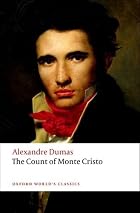
What a wonderful read this was! I was totally absorbed in the well-known tale of a young man who is unjustly imprisoned, makes a remarkable escape, and then seeks revenge on the people who were responsible for his imprisonment. I was amazed by the broad scope of Dumas's imagination, his descriptive abilities, the breadth of his knowledge, his intricate (and I mean intricate) plotting, his juggling of characters, and much more. The character of the Count is also fascinating, even if as a reader I had to suspend disbelief about some aspects of it. And I also had to suspend disbelief for a few of the plot developments at the end.
In the course of what is in essence a story of vengeance, Dumas also paints a damning portrait of Parisian society and depicts the post-revolutionary, post-Napoleon era. As I've been reading more 19th century French literature, I found this fascinating, and the notes to my Oxford World Classics edition were helpful too. Although not addressed in the notes, I also would be interested in knowing whether the inclusion of what was obviously a lesbian couple (well obvious to a 21st century reader 100s of pages before it was confirmed by one of them cutting her hair and dressing as a man) was considered shocking when the book came out in 1844. I know the original English translations were bowdlerized.
This is undoubtedly a tome, but compulsively readable. It was a great book to end the year with.
110. The Count of Monte Cristo by Alexandre Dumas
What a wonderful read this was! I was totally absorbed in the well-known tale of a young man who is unjustly imprisoned, makes a remarkable escape, and then seeks revenge on the people who were responsible for his imprisonment. I was amazed by the broad scope of Dumas's imagination, his descriptive abilities, the breadth of his knowledge, his intricate (and I mean intricate) plotting, his juggling of characters, and much more. The character of the Count is also fascinating, even if as a reader I had to suspend disbelief about some aspects of it. And I also had to suspend disbelief for a few of the plot developments at the end.
In the course of what is in essence a story of vengeance, Dumas also paints a damning portrait of Parisian society and depicts the post-revolutionary, post-Napoleon era. As I've been reading more 19th century French literature, I found this fascinating, and the notes to my Oxford World Classics edition were helpful too. Although not addressed in the notes, I also would be interested in knowing whether the inclusion of what was obviously a lesbian couple (well obvious to a 21st century reader 100s of pages before it was confirmed by one of them cutting her hair and dressing as a man) was considered shocking when the book came out in 1844. I know the original English translations were bowdlerized.
This is undoubtedly a tome, but compulsively readable. It was a great book to end the year with.
13rebeccanyc
Thanks, Paul and Lisa. I'm glad you're finding Bloodlands worthwhile, Lisa; I knew because of your extensive reading about eastern Europe that it would be a book for you. I found it shocking, horrifying and eye-opening too. Good for you for taking notes; I can never do that.
14NanaCC
The Count of Monte Cristo is a favorite. Your review makes me want to read it again, but it will have to wait. :)
15qebo
Well, if you've confined yourself to a single group, I'll just have to star you here! Happy New Year!
16laytonwoman3rd
Starred you, and hope to keep up.
17rebeccanyc
Thanks for visiting me here, Katherine and Linda! And Colleen, I couldn't have read it now if I hadn't had basically a week off! It's a page-turner, though!
18detailmuse
Rebecca what a great start already! Looking forward to the wonderful exposure your threads provide.
19cabegley
I'm so glad you liked The Count of Monte Cristo! One of my favorites. I know the length is off putting to some people, but it goes down so easily.
20dchaikin
Your first paragraph took me right back to tenth grade, but not the second paragraph; I missed all that.
How do you write all these wonderful reviews without notes? (That's a rhetorical expression of awe, not a question you need to answer)
How do you write all these wonderful reviews without notes? (That's a rhetorical expression of awe, not a question you need to answer)
21laytonwoman3rd
>19 cabegley: Chris, do you have a 2014 thread somewhere?
22cabegley
>21 laytonwoman3rd: My mother is leaning on me to start one here, Linda, and I probably will, but I haven't managed to keep one going for an entire year yet, so I'm a bit embarrassed to even try again.
23.Monkey.
I read Count of Monte Cristo a long while ago, but I loved it, too. :)
>22 cabegley: That happens to lots of folks, if you're interested in trying, just go ahead and give it a shot, no worries if you fizzle out! :)
>22 cabegley: That happens to lots of folks, if you're interested in trying, just go ahead and give it a shot, no worries if you fizzle out! :)
24rebeccanyc
Exactly, Chris, and I hope you will start a thread here. You can just post when you like, but it gives us a place to find you!
Thanks, Dan. Mostly I think about a book after I read it to figure out what points I want to make -- I do a lot of this at night when I'm having trouble sleeping! For most books, I mark pages where there are passages I might want to quote or where there's something important so I can go back to it when I write the review. For really complicated reviews, I write them out on paper first, or I outline the key points. But I feel a Question for the Avid Reader coming on . . .
Thanks, Dan. Mostly I think about a book after I read it to figure out what points I want to make -- I do a lot of this at night when I'm having trouble sleeping! For most books, I mark pages where there are passages I might want to quote or where there's something important so I can go back to it when I write the review. For really complicated reviews, I write them out on paper first, or I outline the key points. But I feel a Question for the Avid Reader coming on . . .
25Linda92007
I always mark your "best of..." lists as favorites, Rebecca. Such great resources.
26mabith
Can't wait to see what you read this year! The only thing I didn't like about The Count of Monte Cristo is that I'd waited so long to read it! I give my dad a lot of hell for not reading me any Dumas when I was a kid.
27arubabookwoman
Of course I'll be following you this year, and this year I will try to comment more.
My reaction to The Count of Monte Cristo was similar to yours. I opened it somewhat apprehensively, expecting that it might be a great big bore. I was hooked immediately and was unable to put it down, so I read it rather quickly. I haven't read anything else by Dumas, so I should remedy that soon. I also hope to get to Bloodlands this year, which I bought after you recommended it.
My reaction to The Count of Monte Cristo was similar to yours. I opened it somewhat apprehensively, expecting that it might be a great big bore. I was hooked immediately and was unable to put it down, so I read it rather quickly. I haven't read anything else by Dumas, so I should remedy that soon. I also hope to get to Bloodlands this year, which I bought after you recommended it.
28rebeccanyc
Thanks, Linda, Meredith, and Deborah. I never read any Dumas until last year, when I read Queen Margot. It was fun, but The Count of Monte Cristo is infinitely better. I would never have read either of them if the Author Theme Reads group hadn't focused on French writers last year: I was also introduced to Balzac and Hugo, both of whom I'm going to read more of.
29rebeccanyc
My first book of the year!
1. The Road through the Wall by Shirley Jackson
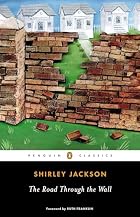
This was Shirley Jackson's first book, and it doesn't hold up to the standards she set in her later novels and short stories. But it is an interesting work for a reader who has read other books by her, as it's possible to catch a glimpse of the themes she would explore so brilliantly later.
The story takes place on Pepper Street, a suburban California community of people for whom a house there is the best they can achieve, at least for the time being. School is out for the summer, and the children of various ages play, trouble and torment each other, and clash or make peace with their families. Jackson introduces the reader to each of the families, and none of them, with the possible exception of the shunned Jewish family, is one anyone would want to be part of. There is the mother who opens her daughter's locked desk to read her private poems and other writings, and the mother who continues to refer to her 16-year-old son as her adopted son, and the girl who loves to needle the others, and the younger boy who is avoided by everyone because he is a little strange (or is he a little strange because everyone avoids him?), and many more. Every now and then some of the braver teenagers venture a few blocks away to some of the stores that serve the broader community and even meet people who don't live on Pepper Street.
What this book really portrays is the claustrophobia of conformity and an obsession with class. None of the adults wants to rock the boat; they all want to behave in the "right" way. But some changes inevitably occur, and there are outsiders. Along with the Jewish family, who are basically ignored, there is a rental house, and about two-thirds of the way through the book a very strange family with an almost nonexistent mother and two girls, the older of whom manages the family and takes care of the younger one who is apparently mentally challenged in some undefined way; the family also seems to have an inexplicable source of cash. The younger girl behaves completely freely, which is very transgressive for Pepper Street. Towards the very end of the book, a completely horrifying and shocking event takes place.
The wall is at the end of the street, and towards the end it is being knocked down so the undeveloped land beyond it can be built on. Needless to say, this disturbs the residents of Pepper Street (who might move in?), but I have been thinking about it and the title, since the breaking down of the wall only takes place when the book is almost over. So, obviously, the wall is metaphoric and creative people need to break through it.
Jackson is an excellent writer, so these points aren't as obvious as I've made them sound, but the book is almost as claustrophobic as the the street and this was an interesting but not really an enjoyable read.
1. The Road through the Wall by Shirley Jackson
This was Shirley Jackson's first book, and it doesn't hold up to the standards she set in her later novels and short stories. But it is an interesting work for a reader who has read other books by her, as it's possible to catch a glimpse of the themes she would explore so brilliantly later.
The story takes place on Pepper Street, a suburban California community of people for whom a house there is the best they can achieve, at least for the time being. School is out for the summer, and the children of various ages play, trouble and torment each other, and clash or make peace with their families. Jackson introduces the reader to each of the families, and none of them, with the possible exception of the shunned Jewish family, is one anyone would want to be part of. There is the mother who opens her daughter's locked desk to read her private poems and other writings, and the mother who continues to refer to her 16-year-old son as her adopted son, and the girl who loves to needle the others, and the younger boy who is avoided by everyone because he is a little strange (or is he a little strange because everyone avoids him?), and many more. Every now and then some of the braver teenagers venture a few blocks away to some of the stores that serve the broader community and even meet people who don't live on Pepper Street.
What this book really portrays is the claustrophobia of conformity and an obsession with class. None of the adults wants to rock the boat; they all want to behave in the "right" way. But some changes inevitably occur, and there are outsiders. Along with the Jewish family, who are basically ignored, there is a rental house, and about two-thirds of the way through the book a very strange family with an almost nonexistent mother and two girls, the older of whom manages the family and takes care of the younger one who is apparently mentally challenged in some undefined way; the family also seems to have an inexplicable source of cash. The younger girl behaves completely freely, which is very transgressive for Pepper Street. Towards the very end of the book, a completely horrifying and shocking event takes place.
The wall is at the end of the street, and towards the end it is being knocked down so the undeveloped land beyond it can be built on. Needless to say, this disturbs the residents of Pepper Street (who might move in?), but I have been thinking about it and the title, since the breaking down of the wall only takes place when the book is almost over. So, obviously, the wall is metaphoric and creative people need to break through it.
Jackson is an excellent writer, so these points aren't as obvious as I've made them sound, but the book is almost as claustrophobic as the the street and this was an interesting but not really an enjoyable read.
31rebeccanyc
It's mercifully short, Katherine!
33StevenTX
Your review of The Road Through the Wall led me to wonder if it's better to live in a dysfunctional neighborhood like Pepper Street or in today's suburbs that are so anonymous that you don't even know who your neighbors are, much less what dark secrets they try to keep. At least we are no longer obsessed with social status and other forms of discrimination.
34Rebeki
Hi Rebecca, I'm looking forward to following your reading properly this year.
I've never read anything by Dumas, but I have The Three Musketeers on my shelves, waiting to be read. It's tome-like and in French, but I'm hoping it's just as entertaining as The Count of Monte Cristo.
I've never read anything by Dumas, but I have The Three Musketeers on my shelves, waiting to be read. It's tome-like and in French, but I'm hoping it's just as entertaining as The Count of Monte Cristo.
35rebeccanyc
Thanks, Colleen. Steven, I don't live in a suburb, so I really can't compare, but I am not so sure that "we are no longer obsessed with social status and other forms of discrimination." I think we are, but in different ways: discrimination may be illegal, and people may be more careful about what they say, but I fear it's the human condition to define people as "other" in some way.
Rebecca, I'm sure I will eventually get to The Three Musketeers but, as with all tomes, I have to wait until I have a block of reading time at home since they're definitely not subway-friendly.
Rebecca, I'm sure I will eventually get to The Three Musketeers but, as with all tomes, I have to wait until I have a block of reading time at home since they're definitely not subway-friendly.
36cabegley
I enjoyed The Three Musketeers (and the rest of the d'Artagnan novels), and highly recommend them, although they're not as good as The Count of Monte Cristo. The only clunker of Dumas' I've read is the unfinished The Last Cavalier. Each of the books is very long, Rebecca, so until you break down and get a Kindle(!) so you can read them on the subway, I suspect it'll be a while until you get to them.
37rebeccanyc
Still no Kindle in my future, Chris . . .
38cabegley
I know I'm not going to tempt you over to the dark side. But it made a huge difference in my ability to read long books on my commute!
39fannyprice
>38 cabegley:, And is amazing for travel! No longer must one pack an extra suitcase of books! ;)
40rebeccanyc
If I traveled more I would probably have to go over to the dark side . . . although I might get an iPad instead. (I do love that bag of books, though.) I resisted EZ-Pass (a gizmo on your car that automatically deducts money for tolls) for years, but gave in the instant there was a sizable difference in the toll over the George Washington Bridge; I mean, I may be resistant to technological change, but I'm not stupid!
41Rebeki
#36 - Glad to hear your recommendation.
I also refuse to go over to the dark side, but I did recently buy a handbag large enough to accommodate bottled water, snacks and books for train journeys, so tomes are not a problem. I'm a slow reader by LT standards though, so most trips require only one or two books.
I also refuse to go over to the dark side, but I did recently buy a handbag large enough to accommodate bottled water, snacks and books for train journeys, so tomes are not a problem. I'm a slow reader by LT standards though, so most trips require only one or two books.
42NanaCC
The KIndle make that handbag much lighter. :) I am so happy with mine.
I wanted to add, Rebecca, that the iPad is great, but I like the Kindle better for books. The page looks like a book page. I only use the iPad for books on the treadmill. It synchs nicely with the Kindle, so that I can continue right where I left off in either direction.
I wanted to add, Rebecca, that the iPad is great, but I like the Kindle better for books. The page looks like a book page. I only use the iPad for books on the treadmill. It synchs nicely with the Kindle, so that I can continue right where I left off in either direction.
43arubabookwoman
I read a Japanese book a few years back Life in the Cul-de-Sac which explored the lives of the families living in a cul-de-sac in Tokyo. Through interrelated stories we not only got the inside story on each family (some dysfunctional of course), but also what each family was speculating about what was going on with the other families in the cul-de-sac.
I love my Kindle. The travel issue is very important for me, but also it allows me to read in bed in the dark while my husband sleeps. My only problem is when I see a review on LT that makes a book sound good, I check it out, follow the links to Amazon, and end up buying it.
I love my Kindle. The travel issue is very important for me, but also it allows me to read in bed in the dark while my husband sleeps. My only problem is when I see a review on LT that makes a book sound good, I check it out, follow the links to Amazon, and end up buying it.
45rebeccanyc
That sounds intriguing, Deborah.
46dchaikin
Lisa - my biggest complaint about my e-books is that I can't just sit down and look at them. Those e-books can get lost.
Rebecca - I'm disturbed by the parallels between The Road Through the Wall as described in your review and my neighborhood.
Rebecca - I'm disturbed by the parallels between The Road Through the Wall as described in your review and my neighborhood.
47rebeccanyc
That is disturbing, Dan!
48baswood
Enjoyed your review of the Road Through the Wall.
I would rather live in anonymous neighbourhood than a dysfunctional one
Get yourself an I-Pad or a Kindle - you know it makes sense. I have both, but I a not sure that is sensible.
I would rather live in anonymous neighbourhood than a dysfunctional one
Get yourself an I-Pad or a Kindle - you know it makes sense. I have both, but I a not sure that is sensible.
49RidgewayGirl
I have a kindle and it is very practical. It's about the size of a thin trade paperback, but I usually have one of those for public transportation. It allows me to keep reading after my SO wants to sleep. But I still prefer actual books. They look nicer on the shelf and when I'm looking for a book to read I never check the kindle -- which I use only for library books and those out of copyright books I don't have physical copies of.
50PaulCranswick
Rebecca - I will definitely star you. Over in that other place I don't bother with stars anymore as there are simply too many threads to follow. Therefore logic tells me your thread should be thus easy to keep up with. I'll try anyway as I would miss immensely your erudition and book tips.
Have a wonderful 2014.
Have a wonderful 2014.
51SassyLassy
>29 rebeccanyc: rebecca, too bad about the book, but as you say, it's always good to trace the development of a favourite author. I know Hangsaman and We have always Lived in the Castle are among your favourites.
>33 StevenTX: Steven At least we are no longer obsessed with social status and other forms of discrimination While I don't live in a suburb and have no experience with them, it seems to me that with the rise of gated communities, basically a form of suburb, social status and discrimination become dominant features of who gets to buy in. Restrictive covenants may also contribute to this. I wonder if this differs around the world.
>33 StevenTX: Steven At least we are no longer obsessed with social status and other forms of discrimination While I don't live in a suburb and have no experience with them, it seems to me that with the rise of gated communities, basically a form of suburb, social status and discrimination become dominant features of who gets to buy in. Restrictive covenants may also contribute to this. I wonder if this differs around the world.
52rebeccanyc
Sigh! Barry and Kay, I just love books too much -- I like the feel of them, I like to see them on my shelves, I like to feel them in my hands, I like to flip back and forth in them, etc. etc. But, as I said, if I traveled more, I would probably get one.
Paul, thanks for visiting me over here! And thanks for the nice thoughts.
Yes, Sassy, I really love We Have Always Lived in the Castle; Hangsaman was incredibly thought-provoking, and I enjoyed Jackson's stories in The Lottery and Other Stories. I have a biography of her, Private Demons, that an LT friend sent me, but I haven't read it yet.
Paul, thanks for visiting me over here! And thanks for the nice thoughts.
Yes, Sassy, I really love We Have Always Lived in the Castle; Hangsaman was incredibly thought-provoking, and I enjoyed Jackson's stories in The Lottery and Other Stories. I have a biography of her, Private Demons, that an LT friend sent me, but I haven't read it yet.
53detailmuse
I was an early adopter of EZ-pass (hated keeping coins on hand) but resisted e-readers; have had the Kindle app on my phone for years but really never read from it. Until ... the Kindle Paperwhite swayed me with its pleasant-looking page and its ability to be read in any light (or the dark). I've had it a week and surprised myself both by reaching for it today instead of the paper books I'm currently reading, and by getting immersed in the story. I don't love the "flashing" that sometimes happens when I turn the page, it still feels a little claustrophobic, and it's not in the same pleasure-universe as paper books. But it's practical; so easy to hold and so much easier to highlight a passage/make a note than to stop and get a pencil and later decipher my writing.
54janeajones
Happy New Year Rebecca. I read lots of Dumas when I was in HS, but haven't revisited him since except in the theatre and films -- maybe when I retire. I got a Kindle Fire for Christmas, but I haven't spent much time with it yet -- I'm very attached to looking at my bookshelves and piles of books around the house. I felt like I needed to try to keep with the times to some degree -- I don't want to end up like my mother who refuses to have a DVD player and never learned to use a computer. She does read avidly, however. Sigh.... I'm beginning to get weary with the constant updating of technology -- can't we just rest for awhile?
55rebeccanyc
I know it's inevitable . . . but . . .
56labfs39
From an archivist's point of view, paper lasts for hundreds of years. How long will your kindle last? (Just a jest.)
57mabith
56 - Good paper might last that long but mostly it's awful stuff! My children's books published in the 1980s and early 90s are terribly crumbly, and let's not discuss my YA books from the 1920s and 30s!
58.Monkey.
>57 mabith: But even that those from the 80s/90s are still far older than any Kindle will ever be. By one decade at most it'll be obsolete; new technology, revamped devices, batteries only last a few years before getting totally worn down and by that point the item they were sold for is no longer on the market so neither are new batteries, etc.
Rebecca, it is totally not inevitable!
Rebecca, it is totally not inevitable!
59mabith
I don't think it's so much about the device though, as the files. While the main file types will change there will always be converters, probably especially through Amazon. I've still got plenty of things saved from early 90s computers that have never needed converted to another type. Though of course for lots of people, they don't want to keep all their books around anyway. I don't think books are in danger, and that's good, and at the same time e-readers are lifesavers for many readers with various pain or disability issues or those who just find the size and capacity easier. We get to choose what helps us read more and that's the important part.
60.Monkey.
Amazon? Provide converters? LOL. Amazon will go "that device is obsolete, we're using these now, pay us again if you want that in a format that works on these." Anyway, it is about the device, when that device costs a couple hundred bucks. If you have to keep rebuying it every few years, while my €5 book lasts for 50+yrs, you not only pay for the books but for the "privilege" of reading them. Also, text files are way different from the multitude of (proprietary) filetypes already out there for ebooks. A simple .txt file will work on anything, new or old. Something .mobi? Not going to work forever.
Anyway, people can read on whatever they want, I'm not telling anyone they can't use an ereader if it's what works for them. I'm just saying, it is certainly not an inevitable thing that we must all turn to at some point.
Anyway, people can read on whatever they want, I'm not telling anyone they can't use an ereader if it's what works for them. I'm just saying, it is certainly not an inevitable thing that we must all turn to at some point.
61rebeccanyc
Well, even if we reach a terrible time when "real" books are no longer published, I have enough unread books on my shelves to last me a long, long, long time, not to mention books I would be happy to reread.
62mabith
That's certainly true! Though I don't think we'd ever reach a point of not publishing printed books ("real" even in quotes, I can't help reading as very ableist), we certainly won't in our lifetime. They're still making records, after all!
63janeajones
61 -- me too!
64edwinbcn
Great review of The Count : what a way to end the year, or open it, all in one. Funny you should do The Road through the Wall. I bought it last week, and noticed there weren't that many copies and reviews, wondering why. Well, now we know. However, I like using reviews as a readers' guide, so enjoyed your views on it.
65rebeccanyc
Internet out. On iphone. Will catch up later.
66rebeccanyc
Thanks, Edwin. It was a fun read and just what I needed after a couple of depressing books! I think The Road through the Wall has been out of print for a while (I read a Penguin edition published in 2013); when I spotted it in my favorite bookstore a few months ago, I had never seen it there before or even heard of it.
67rachbxl
Hi Rebecca - looking forward to another year of reading about the wonderful stuff you've been reading.
As for the kindle, I have one, but I probably wouldn't if I had all the great bookshops around me that you do. I use it a lot to download free samples (of books recommended on here, for example), and then if I really like the sample and think it's going to be a great read, I'll order the 'real' book online because I'd hate not to have a physical copy of something good; if I'm not blown away by the sample but still want to read it, I get the e-book. The only time this goes wrong is when I enjoy a sample so much I can't wait for the real book to arrive!
As for the kindle, I have one, but I probably wouldn't if I had all the great bookshops around me that you do. I use it a lot to download free samples (of books recommended on here, for example), and then if I really like the sample and think it's going to be a great read, I'll order the 'real' book online because I'd hate not to have a physical copy of something good; if I'm not blown away by the sample but still want to read it, I get the e-book. The only time this goes wrong is when I enjoy a sample so much I can't wait for the real book to arrive!
68wildbill
I find myself using Kindle apps more and more. I started with one on my phone and I was pleasantly surprised that I could actually read a book on something so small. Now I have a 7" tablet that is what I primarily use for reading ebooks. Having all my ebooks in the cloud means I don't have to use a lot of memory on my devices. A big factor in my reading more ebooks is the improvement in the selection. The prices went up but I still find some good bargains. What I really like is being able to read the book right away, instant gratification.
69kidzdoc
Nice review of The Road Through the Wall, Rebecca. My asthma acts up when I get claustrophobic so I'll pass on reading it.
Interesting discussion about electronic vs print books. I love the feel and look of print books, and I was very reluctant to get a Kindle or other e-reader. However, when I visited my best friends in Madison, Wisconsin three years ago, Dave (my closest friend from medical school) bought his wife a Kindle for her birthday just after Christmas. Murielle is a voracious reader, but she had a small fit when she saw what it was, as she told Dave that she didn't want an e-reader (she's a spirited and opinionated French-speaking Belgian, so she muttered sulphorous comments in English and French while I tried not to laugh). However, within hours of trying it she fell completely in love with it, and it was quite amusing to see her rapid transformation from an e-reader skeptic to a Kindle addict. Within a couple of weeks I ordered one for myself (the model now known as the Kindle Keyboard), and after nearly three years of perfect service I'm a huge fan of it.
I also own an iPad, which I use on a daily basis at work and at home, but I'd much rather read books on the Kindle, unless they have detailed illustrations or photos, especially ones in color. I won't give up buying dead tree books anytime soon, but I like the ability to read Kindle books on different formats (Kindle, Android smartphone, iPad or laptop), and the comfort of knowing that, as long as I have my smartphone with me, I'll always have a good book to read. And, depending on the books you buy, you could argue that the Kindle will pay for itself, especially if you take advantage of Kindle Daily Deals or free or discounted e-books. The Amazon Kindle deals are much better in the UK than they are in the US, though.
Interesting discussion about electronic vs print books. I love the feel and look of print books, and I was very reluctant to get a Kindle or other e-reader. However, when I visited my best friends in Madison, Wisconsin three years ago, Dave (my closest friend from medical school) bought his wife a Kindle for her birthday just after Christmas. Murielle is a voracious reader, but she had a small fit when she saw what it was, as she told Dave that she didn't want an e-reader (she's a spirited and opinionated French-speaking Belgian, so she muttered sulphorous comments in English and French while I tried not to laugh). However, within hours of trying it she fell completely in love with it, and it was quite amusing to see her rapid transformation from an e-reader skeptic to a Kindle addict. Within a couple of weeks I ordered one for myself (the model now known as the Kindle Keyboard), and after nearly three years of perfect service I'm a huge fan of it.
I also own an iPad, which I use on a daily basis at work and at home, but I'd much rather read books on the Kindle, unless they have detailed illustrations or photos, especially ones in color. I won't give up buying dead tree books anytime soon, but I like the ability to read Kindle books on different formats (Kindle, Android smartphone, iPad or laptop), and the comfort of knowing that, as long as I have my smartphone with me, I'll always have a good book to read. And, depending on the books you buy, you could argue that the Kindle will pay for itself, especially if you take advantage of Kindle Daily Deals or free or discounted e-books. The Amazon Kindle deals are much better in the UK than they are in the US, though.
70rebeccanyc
2. Showdown by Jorge Amado

Showdown tells the tale of the community of Tocaia Grande ("the big ambush," and the original Portuguese title), from the first settlers who arrived shortly after that big ambush to its eventual end; as the reader knows from the initial pages of the novel, a new town called Irisopolis rose at the same location. The story of Irisopolis -- one of "progress" -- "holds no interest," as Amado writes, while the story of Tocaia Grande is a tale of fascinating characters fending for themselves in what could be called Brazil's wild west at what appears to be the end of the 19th century or the beginning of the 20th.
A fight between colonels eager to claim vast swaths of cacao-growing land for themselves leads to the "big ambush" in a lovely fertile valley. After the dead have been buried, cattle drovers realize that this valley provides a shortcut on their regular route. And soon after the drovers start passing though, commerce establishes itself: a man called the Turk who seems to come from Lebanon opens a small store and bar, a formerly enslaved black man who assaulted a white plantation owner opens a blacksmith shop, and numerous prostitutes, invariably called whores, arrive. (This is definitely a bawdy book, with lots of sex and lots of vulgar slang, but it completely fits the characters of the people.) The stories of these people, and how they came to seek a life in Tocaia Grande, are compelling and fascinating.
Not far away is the cacao plantation of the victorious colonel, who has high hopes for the future of his ne'er-do-well son who has succeeded in obtaining a law degree but prefers to spend his time pretending to take additional courses while carousing in Rio de Janeiro to coming home and setting up shop near the plantation (to legally ratify all the unscrupulous land deals). The man who was responsible for the big ambush has been made a captain (a rank bought for him by the colonel, in gratitude) and, while serving as the colonel's devoted bodyguard and right-hand man, takes an interest in the development of Tocaia Grande. Eventually, he encourages several families to settle there, families that have been expelled from the land they were farming because the landowner wanted to use it for cattle or cacao. These families do a little to change the character of Tocaia Grande, but it remains a self-governing town of outlaws and the outcast.
Although there is some plot to the novel, most of it is about the relationships of these vivid and lively characters and life in the village of Tocaia Grande, including serious troubles that befall them. It can be difficult at times to keep track of all the characters, but the sweep of the novel keeps everything moving. It is also, very lightly until the very end, a commentary on the history of Brazil, of the corruption of the large landowners and the political bosses, the decadence of the wealthy, and the exploitation of the poor and darker-skinned. Per Wikipedia, Amado was a member of the Brazilian communist party and lived part of his life in exile. I would say his politics inform the perspective of the novel, but I certainly didn't feel this was a political novel except in the very broadest sense. It is a wonderful story of vivid characters in a fascinating time and place, exciting, thought-provoking, and moving.
One of the most interesting things about this book was that the blacksmith still was very connected to African religious traditions and their translation to Brazilian culture, Candomblé, and was involved, with some of the prostitutes, in various activities related these traditions.
This book, like two other books by Amado, has sat unread on my shelves for 25 or so years. I'm sorry I didn't read it sooner, and I'll definitely be turning to those other novels soon.

Showdown tells the tale of the community of Tocaia Grande ("the big ambush," and the original Portuguese title), from the first settlers who arrived shortly after that big ambush to its eventual end; as the reader knows from the initial pages of the novel, a new town called Irisopolis rose at the same location. The story of Irisopolis -- one of "progress" -- "holds no interest," as Amado writes, while the story of Tocaia Grande is a tale of fascinating characters fending for themselves in what could be called Brazil's wild west at what appears to be the end of the 19th century or the beginning of the 20th.
A fight between colonels eager to claim vast swaths of cacao-growing land for themselves leads to the "big ambush" in a lovely fertile valley. After the dead have been buried, cattle drovers realize that this valley provides a shortcut on their regular route. And soon after the drovers start passing though, commerce establishes itself: a man called the Turk who seems to come from Lebanon opens a small store and bar, a formerly enslaved black man who assaulted a white plantation owner opens a blacksmith shop, and numerous prostitutes, invariably called whores, arrive. (This is definitely a bawdy book, with lots of sex and lots of vulgar slang, but it completely fits the characters of the people.) The stories of these people, and how they came to seek a life in Tocaia Grande, are compelling and fascinating.
Not far away is the cacao plantation of the victorious colonel, who has high hopes for the future of his ne'er-do-well son who has succeeded in obtaining a law degree but prefers to spend his time pretending to take additional courses while carousing in Rio de Janeiro to coming home and setting up shop near the plantation (to legally ratify all the unscrupulous land deals). The man who was responsible for the big ambush has been made a captain (a rank bought for him by the colonel, in gratitude) and, while serving as the colonel's devoted bodyguard and right-hand man, takes an interest in the development of Tocaia Grande. Eventually, he encourages several families to settle there, families that have been expelled from the land they were farming because the landowner wanted to use it for cattle or cacao. These families do a little to change the character of Tocaia Grande, but it remains a self-governing town of outlaws and the outcast.
Although there is some plot to the novel, most of it is about the relationships of these vivid and lively characters and life in the village of Tocaia Grande, including serious troubles that befall them. It can be difficult at times to keep track of all the characters, but the sweep of the novel keeps everything moving. It is also, very lightly until the very end, a commentary on the history of Brazil, of the corruption of the large landowners and the political bosses, the decadence of the wealthy, and the exploitation of the poor and darker-skinned. Per Wikipedia, Amado was a member of the Brazilian communist party and lived part of his life in exile. I would say his politics inform the perspective of the novel, but I certainly didn't feel this was a political novel except in the very broadest sense. It is a wonderful story of vivid characters in a fascinating time and place, exciting, thought-provoking, and moving.
One of the most interesting things about this book was that the blacksmith still was very connected to African religious traditions and their translation to Brazilian culture, Candomblé, and was involved, with some of the prostitutes, in various activities related these traditions.
This book, like two other books by Amado, has sat unread on my shelves for 25 or so years. I'm sorry I didn't read it sooner, and I'll definitely be turning to those other novels soon.
71NanaCC
>70 rebeccanyc: "I'm sorry I didn't read it sooner"
I have several shelves worth where I am sure that comment could be made after I finally get to them.
Intriguing review of Showdown.
I have several shelves worth where I am sure that comment could be made after I finally get to them.
Intriguing review of Showdown.
72banjo123
Nice review of Showdown! I like Amado, though I've only read a couple of his books. Gabriela, Clove and Cinnamon is a favorite. I just got lost in his world.
73baswood
What made you pick this one off the shelf Rebecca. Showdown; Jorge Amado sounds like it would suit all those people who are reading globally.
74rebeccanyc
Colleen, I don't have them on separate shelves. In fact, most of the unread books I've had for decades are shelved on my main shelves with books I have read; it's only for the past five years or so that I've been keeping new unread books separately.
Thanks, Rhonda!
Barry, I meant to read it for last quarter's Reading Globally theme read on South America and didn't quite get to it. I picked over Dona Flor and Her Two Husbands, also on my shelves, because I was in the mood for a more serious book, and over Home Is the Sailor because it was longer.
Thanks, Rhonda!
Barry, I meant to read it for last quarter's Reading Globally theme read on South America and didn't quite get to it. I picked over Dona Flor and Her Two Husbands, also on my shelves, because I was in the mood for a more serious book, and over Home Is the Sailor because it was longer.
75fuzzy_patters
I'm adding Showdown to my wish list. I've been reading The Empire of Necessity, which is a slave revolt in South American in 1805. It's fascinating. It sounds like Showdown is a fictional depiction of the same time period and theme, so it might make for a nice follow-up read.
76janeajones
Jorge Amado is a sweeping novelist. Though I own it, I've not read Showdown, but loved Tent of Miracles when I read it about a decade ago.
77rebeccanyc
Thanks for that recommendation, Fuzzy. Actually, Showdown happens later. The time isn't given, but by a few internal references it seems to be at the end of the 19th or the beginning of the 20th century. Thinking back, the blacksmith might not have been enslaved himself, based on when slavery was abolished in Brazil, but was certainly living on a plantation in which black workers were treated abominably.
Jane, I don't have Tent of Miracles but it sounds great.
I am going to add to my review some comments about the African connection.
Jane, I don't have Tent of Miracles but it sounds great.
I am going to add to my review some comments about the African connection.
78mabith
I've not heard of Jorge Amado before. I'm trying to read more from South America this year, so I'll have to add him to my list.
79tiffin
>29 rebeccanyc:: I wonder when the Jackson book was written, Rebecca? I was getting all kinds of dejà vu reading your review of it.
I can't read serious books on my Kindle because it's too much of a pain to flip back and reread something (if there is a way to do that easily, I haven't found it), making connections with something someone said back there with something happening here, etc. So I only use it for light reads like mysteries, science fiction, light fiction that I like racing through. For serious reads, I want that book in my hands. Right now, for example, I'm reading The Hare with Amber Eyes and I can't imagine reading it on a Kindle. But for toting around to doctors' appointments and the like, the Kindle is perfect.
I can't read serious books on my Kindle because it's too much of a pain to flip back and reread something (if there is a way to do that easily, I haven't found it), making connections with something someone said back there with something happening here, etc. So I only use it for light reads like mysteries, science fiction, light fiction that I like racing through. For serious reads, I want that book in my hands. Right now, for example, I'm reading The Hare with Amber Eyes and I can't imagine reading it on a Kindle. But for toting around to doctors' appointments and the like, the Kindle is perfect.
80rebeccanyc
#78 Meredith, if you are interested in reading South American literature, you might want to check out the Reading Globally theme read from last quarter where we focused on South America; the Amado book was something I didn't quite fit into that quarter.
#79 Thanks for stopping by, Tui. Per LT, The Road through the Wall was published in 1948, and the introduction to my book said it was before "The Lottery" was published, making her instantly famous.
#79 Thanks for stopping by, Tui. Per LT, The Road through the Wall was published in 1948, and the introduction to my book said it was before "The Lottery" was published, making her instantly famous.
81Linda92007
Great review of Showdown, Rebecca. I am not at all familiar with Amado.
>75 fuzzy_patters: Another excellent slave rebellion novel is All Souls' Rising by Madison Smartt Bell. It's an historical novel about the Haitian Revolution of the 1790's. It's actually the first in a trilogy, but I have not read the other two books: Master of the Crossroads and The Stone That The Builder Refused.
>75 fuzzy_patters: Another excellent slave rebellion novel is All Souls' Rising by Madison Smartt Bell. It's an historical novel about the Haitian Revolution of the 1790's. It's actually the first in a trilogy, but I have not read the other two books: Master of the Crossroads and The Stone That The Builder Refused.
82rebeccanyc
Linda, I read a biography of Toussaint L'Ouverture by Madison Smart Bell, but haven't read his fiction. I can also highly recommend Alejo Carpentier's The Kingdom of This World, which is also about the Haitian revolution, the only time enslaved Africans in the Americas freed themselves.
83mabith
Thanks for the reading globally link! I joined the group, but I'm not sure I can ever be organized enough in my reading to participate much. Great for recommendations though.
86rebeccanyc
Thanks, Dan and Darryl. Amado is most well known for Dona Flor and Her Two Husbands and Gabriela, Clove and Cinnamon; I think his work started appearing in English in the 80s, along with a lot of South American writing, because that is when I bought several books by him, although I didn't read any until the South American read prompted me to take this one off the shelf.
87Polaris-
Hi Rebecca, I've just caught up now with your thread so far! So busy and so many interesting comments. I guess that's what happens when you effectively merge your 75'ers thread with the CR one. I'm enjoying the e-reader versus paper debate. Of course there's plenty of room for both. I have no interest yet in having an e-reader. If I still used public transport and/or lived in London then I'd probably have a different view - but as I have to drive everywhere, and hardly ever go on flights anywhere, I see no reason to dispose of my book collection anytime soon. And yes, I too like looking at their spines all arranged on the shelves how I want them.
I also loved your review of Showdown, which I just thumbed. I recently wishlisted it - I'm not sure, but I think it was when I perused the many excellent recommendations in the Reading Globally South American theme read. Even though I didn't join in with the thread really, I did thoroughly enjoy following the books and reviews that were posted.
I also loved your review of Showdown, which I just thumbed. I recently wishlisted it - I'm not sure, but I think it was when I perused the many excellent recommendations in the Reading Globally South American theme read. Even though I didn't join in with the thread really, I did thoroughly enjoy following the books and reviews that were posted.
88StevenTX
Like you I've had three of Amado's works on the shelf for years but haven't gotten to them. I'd never heard of Showdown, though.
A group I belonged to pre-LT read Gabriela, Clove and Cinnamon before I joined it and loved it so much that they started planning a trip to the city of Ilhéus, where the books is set. The trip never came off, though.
A group I belonged to pre-LT read Gabriela, Clove and Cinnamon before I joined it and loved it so much that they started planning a trip to the city of Ilhéus, where the books is set. The trip never came off, though.
89rebeccanyc
3. Forest of a Thousand Daemons: A Hunter's Saga by D. O. Fagunwa
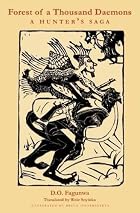
How varied are the daemons that inhabit this forest! Supernatural beings that are part human and part animal, some that are tiny and some that are enormous, some with diverse numbers of body parts, some that are truly vile, and some that can carry out all sorts of magic, for both good and evil. The first novel written in Yoruban, this book is said to have had a great influence on later Nigerian writers; it was translated into English by Wole Soyinka who wrote a very interesting Translator's Note at the beginning of the edition I read.
The novel is in two parts, but both are told by the hunter Akara-ogun to an audience that includes the "author" and that grows with each installment. In the first part, Akara-ogun, whose name means Compound-of-Spells and whose father was also a hunter and "a great one for medicine and spells" and whose mother was a witch, tells the tale of his two trips to the Irunmale Forest, the forest of a thousand daemons, and the adventures and misadventures that he encountered there as he met the varied denizens of the forest. He often had to confront dangerous and magical opponents, and several times was rescued by magical spells. While horrifying and nightmarish at times, Fagunwa's descriptions of the daemons in their infinite variety is utterly compelling, as are some of the characters Akara-ogun meets.
In the second part, Akara-ogun, tells the tale of how he, along with other hunters of his kingdom, is sent by the king on a dangerous mission to Mount Langbodo. Here too they encounter dangers along the route, including more daemons and wild beasts, but when they arrive the nature of the book changes and the hunters listen to lectures on how to be a moral person, told largely through illustrative tales.
I found it hard to understand the two parts of this book as a whole, but I can see in a metaphorical way that it is looking at how people confront what it means to be a human being, both literally and psychologically. The book was originally published in 1939 when Nigeria was still very much a British colony, so I think Fagunwa is also obliquely commenting on what it means to be an African in a world controlled by others. As noted above, his use of the Yoruban language, and of Yoruban folk tales and cosmology, was hugely influential.
My City Lights edition was enhanced by illustrations by Bruce Onobrakepya; one of them is on the cover.
How varied are the daemons that inhabit this forest! Supernatural beings that are part human and part animal, some that are tiny and some that are enormous, some with diverse numbers of body parts, some that are truly vile, and some that can carry out all sorts of magic, for both good and evil. The first novel written in Yoruban, this book is said to have had a great influence on later Nigerian writers; it was translated into English by Wole Soyinka who wrote a very interesting Translator's Note at the beginning of the edition I read.
The novel is in two parts, but both are told by the hunter Akara-ogun to an audience that includes the "author" and that grows with each installment. In the first part, Akara-ogun, whose name means Compound-of-Spells and whose father was also a hunter and "a great one for medicine and spells" and whose mother was a witch, tells the tale of his two trips to the Irunmale Forest, the forest of a thousand daemons, and the adventures and misadventures that he encountered there as he met the varied denizens of the forest. He often had to confront dangerous and magical opponents, and several times was rescued by magical spells. While horrifying and nightmarish at times, Fagunwa's descriptions of the daemons in their infinite variety is utterly compelling, as are some of the characters Akara-ogun meets.
In the second part, Akara-ogun, tells the tale of how he, along with other hunters of his kingdom, is sent by the king on a dangerous mission to Mount Langbodo. Here too they encounter dangers along the route, including more daemons and wild beasts, but when they arrive the nature of the book changes and the hunters listen to lectures on how to be a moral person, told largely through illustrative tales.
I found it hard to understand the two parts of this book as a whole, but I can see in a metaphorical way that it is looking at how people confront what it means to be a human being, both literally and psychologically. The book was originally published in 1939 when Nigeria was still very much a British colony, so I think Fagunwa is also obliquely commenting on what it means to be an African in a world controlled by others. As noted above, his use of the Yoruban language, and of Yoruban folk tales and cosmology, was hugely influential.
My City Lights edition was enhanced by illustrations by Bruce Onobrakepya; one of them is on the cover.
91baswood
Forest of a thousand Daemons Did you pick this book up on a browsing expedition in a book shop, because it seems to have limited appeal.
92rebeccanyc
Yes, exactly, Barry. I found it last fall when I was in Boston/Cambridge in a very fruitful trip to the Harvard Coop Bookstore, where I reliably find more unusual books than in any of the New York City bookstores I frequent. However, I don't know about "limited appeal," because it is a classic of African literature and, as I said, hugely influential.
Thank you, Monkey.
And thank you, Paul and Steven, for your comments about Showdown and Jorge Amado.
Thank you, Monkey.
And thank you, Paul and Steven, for your comments about Showdown and Jorge Amado.
93kidzdoc
Great review of Forest of a Thousand Daemons, Rebecca. City Lights published this? I don't think I've ever seen it on my numerous past visits there, but I'll certainly look for it on my next trip to San Francisco.
ETA: City Lights' web site indicates that it was published on August 28th of last year, which would explain why I hadn't seen it; I think my last trip to SF was earlier that month. The book's web page includes a PDF file of its first two chapters:
http://www.citylights.com/book/?GCOI=87286100679500&fa=details
ETA (2): I was very impressed with the selection in the Harvard Coop when I made my first visit there with Caroline (cameling) last spring. It made the stock in Harvard Book Store seem pedestrian in comparison.
ETA: City Lights' web site indicates that it was published on August 28th of last year, which would explain why I hadn't seen it; I think my last trip to SF was earlier that month. The book's web page includes a PDF file of its first two chapters:
http://www.citylights.com/book/?GCOI=87286100679500&fa=details
ETA (2): I was very impressed with the selection in the Harvard Coop when I made my first visit there with Caroline (cameling) last spring. It made the stock in Harvard Book Store seem pedestrian in comparison.
94laytonwoman3rd
I remember making note of Amado a few years ago when someone reviewed Dona Flor and Her Two Husbands favorably. Now I must get around to reading something of his.
95rebeccanyc
Thanks, Darryl. I see you answered your own questions! As I've never been to the City Lights bookstore, I have to rate the Harvard Coop bookstore as the best one I know for its extremely wide selection. I wish we had one of its quality in New York, although it would be very bad for my TBR shelves.
Nice to see you here, Linda.
Nice to see you here, Linda.
96kidzdoc
I love Book Culture (the original store on W 112th St; I haven't been to the new one on B'way & W 114th St yet), but it's limited by its small size compared to City Lights and the Harvard Coop, and the shelf space dedicated to textbooks for Columbia students. I've only been to the Harvard Coop once, but I found several books about health and medicine there that I had been seeking for several months, which City Lights didn't have. City Lights will likely remain my favorite bookstore, due to its stock of interesting books from university presses and small publishers that I wouldn't have heard of otherwise, along with the thousands of books in its Poetry Room and wide selection of translated and European literature.
97StevenTX
For those who want to continue the discussion of the pros and cons of e-books without completely swamping Rebecca's thread, I've created a separate topic:
http://www.librarything.com/topic/167106
http://www.librarything.com/topic/167106
98rebeccanyc
Thanks, Steven, although I enjoyed the discussion!
99rebeccanyc
4. Field of Blood by Denise Mina

Another Mina, and another Mina protagonist -- Paddy Meehan, aspiring journalist, working as a "copy boy" at a Glasgow newspaper. Like all Mina heroines, Paddy has self esteem problems and a troubled relationship with her family; I warmed to her as I was reading, but she doesn't quite stand up to Maureen O'Donnell or Alex Morrow in the other series by Mina I've read. The mystery deals with the brutal murder of a three-year old boy, presumably by other boys (so a warning for people who can's read about children killing children). Is this murder connected to a similar one eight years ago? How does the fate of another Paddy Meehan, a man framed for and convicted of a murder he didn't commit, influence the thinking of this Paddy? Of course, in a Mina book, there is more to it than a mystery, and this one eventually explores how parents treat their children, and what they will and won't do for them, as well as giving a little insight into the world of newspaper journalism back in the 80s.

Another Mina, and another Mina protagonist -- Paddy Meehan, aspiring journalist, working as a "copy boy" at a Glasgow newspaper. Like all Mina heroines, Paddy has self esteem problems and a troubled relationship with her family; I warmed to her as I was reading, but she doesn't quite stand up to Maureen O'Donnell or Alex Morrow in the other series by Mina I've read. The mystery deals with the brutal murder of a three-year old boy, presumably by other boys (so a warning for people who can's read about children killing children). Is this murder connected to a similar one eight years ago? How does the fate of another Paddy Meehan, a man framed for and convicted of a murder he didn't commit, influence the thinking of this Paddy? Of course, in a Mina book, there is more to it than a mystery, and this one eventually explores how parents treat their children, and what they will and won't do for them, as well as giving a little insight into the world of newspaper journalism back in the 80s.
100janeajones
I can hardly keep up with your thread, Rebecca -- but there's so much good stuff here! Forest of a Thousand Daemons sounds intriguing, but I think I'll skip the Mina. The murder of children is just too chilling.
101rebeccanyc
5. Autobiography of a Corpse by Sigizmund Krzhizhanovsky

This is the second book by Krzhizhanovsky that I have read, and while I can see that he is a fascinating, imaginative, and thought-provoking author, I have decided that he is not really an author for me. The stories in this collection are highly philosophical and fantastic, but I just found them too cold and abstract to be enjoyable.
Krzhizhanovsky explores not only reality and unreality, but the perception of reality and unreality, how words and themes make or don't make reality, whether an object creates the shadow or the shadow creates the object, what is the reality of the crack in a rock or a street and in time, and so on. Some stories are more physical, as in one where a man finds himself inside his lover's eye along with all her previous lovers, or one in which a man tries to bite his elbow (based on a Russian proverb which essentially translates as "almost, but not quite"), or one in which a pianist's hand drops off and runs away on its fingers, but most are much more abstract. For example, there is one in which Krzhizhanovsky explores the Land of Not, where the Nots, who are the opposite of us (the Ises) live, and one in which a man dreams -- or is he dreaming? -- of a toad which emerges from the mud of the River Styx to propose creating a bridge between the living world and the world of the dead, or one in which a man a lot like the author sends letters postmarked Moscow, referencing many authors and philosophers, to an unnamed friend in the provinces who then sends them back to a publisher in Moscow. There is also a lot that is metafictional in many of these stories, as the protagonists muse about themes and other topics.
I found this book difficult to read, not only because it requires close attention, but also because I realized I kept putting it down to read other books. In this NYRB edition, there is a helpful introduction and there are helpful notes at the end, but the endnotes are irritatingly referenced only by page number and not footnoted in the text, which led me to look for notes that weren't there and miss notes that were there.
All in all, I admire Krzhizhanovsky, but I don't particularly enjoy reading him. I have one more of his books on the TBR, but I don't think I'll be getting to it any time soon.

This is the second book by Krzhizhanovsky that I have read, and while I can see that he is a fascinating, imaginative, and thought-provoking author, I have decided that he is not really an author for me. The stories in this collection are highly philosophical and fantastic, but I just found them too cold and abstract to be enjoyable.
Krzhizhanovsky explores not only reality and unreality, but the perception of reality and unreality, how words and themes make or don't make reality, whether an object creates the shadow or the shadow creates the object, what is the reality of the crack in a rock or a street and in time, and so on. Some stories are more physical, as in one where a man finds himself inside his lover's eye along with all her previous lovers, or one in which a man tries to bite his elbow (based on a Russian proverb which essentially translates as "almost, but not quite"), or one in which a pianist's hand drops off and runs away on its fingers, but most are much more abstract. For example, there is one in which Krzhizhanovsky explores the Land of Not, where the Nots, who are the opposite of us (the Ises) live, and one in which a man dreams -- or is he dreaming? -- of a toad which emerges from the mud of the River Styx to propose creating a bridge between the living world and the world of the dead, or one in which a man a lot like the author sends letters postmarked Moscow, referencing many authors and philosophers, to an unnamed friend in the provinces who then sends them back to a publisher in Moscow. There is also a lot that is metafictional in many of these stories, as the protagonists muse about themes and other topics.
I found this book difficult to read, not only because it requires close attention, but also because I realized I kept putting it down to read other books. In this NYRB edition, there is a helpful introduction and there are helpful notes at the end, but the endnotes are irritatingly referenced only by page number and not footnoted in the text, which led me to look for notes that weren't there and miss notes that were there.
All in all, I admire Krzhizhanovsky, but I don't particularly enjoy reading him. I have one more of his books on the TBR, but I don't think I'll be getting to it any time soon.
102Linda92007
Excellent review of Autobiography of a Corpse, Rebecca. I had been wondering about that book, but having read your review, I know it is not for me.
103tiffin
There would have been at time in my younger and more limber days when I would have tried to see if I could bite my elbow (arm straight up, pulling on arm with other arm while craning neck to the side technique) but now I think I'll just let the challenge and Krzhizhanovsky blow by on the wind. Good review, Rebecca!
105baswood
Excellent thoughts on Autobiography of a Corpse other readers will know what they are in for if they pick up this book.
106rebeccanyc
Thanks, Linda, Tui, Lisa, and Barry -- glad I could steer you in the right direction!
107almigwin
89-You might also like the books by amos tutuola like the Palm Wine Drinkard. He is another African writer of folk tales and they are very beautiful, imo. My life In the bush of ghosts is another of his.
108PaulCranswick
Your thread is a reminder for me to seek out and read some Jorge Amado who has long intrigued me. Wole Soyinka is another and I want to read his Ake soon.
Trust hiccoughs with the internet are settled and that you will have a wonderful weekend.
Trust hiccoughs with the internet are settled and that you will have a wonderful weekend.
109rebeccanyc
Miriam, Tutola was cited in the intro to my copy of Fagunwa as one of the writers he most influenced. I do have a book that includes both The Palm Wine Drinkard and My Life in the Bush of Ghosts.
Paul, I am going to read more Amado; I'm glad I finally read him. Thanks for stopping by.
Paul, I am going to read more Amado; I'm glad I finally read him. Thanks for stopping by.
110kidzdoc
Great review of Autobiography of a Corpse, Rebecca. I start to pick this up when I went to Book Culture on New Year's Day, but I'm now glad that I didn't.
111rebeccanyc
6. The Dead Hour by Denise Mina

It's been a stressful week, so what better than another Denise Mina to distract me? This one, another featuring Paddy Meehan, who now has moved up from "copy boy" to the night reporter who goes to police calls, takes a look at police corruption (a topic Mina has examined before) and the drug trade as Paddy tries to figure out why a woman who was brutally beaten didn't take a chance she had to escape. Paddy's search is interwoven with the tale of a beautiful but desperate cocaine addict; it isn't clear to the reader how they are connected at first. Some of the most interesting parts of this book are about Paddy's own development; having a real job seems to have given her self-assurance she didn't have in the first novel in the trilogy and she seems to have negotiated her relationship with her family and her ex-fiancé pretty well. Of course, she still has to deal with the rampant sexism of the newsroom and the police, but she stands up to it. Atypically for Mina, there is some graphic sex in this book, as well as some grisly descriptions of the impact of overuse of cocaine; these marred the book slightly for me. I also don't like Paddy as much as Mina's other protagonists. However, as there is a real cliffhanger at the end of this novel, I'll definitely be reading the final book in the trilogy to find out where Paddy ends up.

It's been a stressful week, so what better than another Denise Mina to distract me? This one, another featuring Paddy Meehan, who now has moved up from "copy boy" to the night reporter who goes to police calls, takes a look at police corruption (a topic Mina has examined before) and the drug trade as Paddy tries to figure out why a woman who was brutally beaten didn't take a chance she had to escape. Paddy's search is interwoven with the tale of a beautiful but desperate cocaine addict; it isn't clear to the reader how they are connected at first. Some of the most interesting parts of this book are about Paddy's own development; having a real job seems to have given her self-assurance she didn't have in the first novel in the trilogy and she seems to have negotiated her relationship with her family and her ex-fiancé pretty well. Of course, she still has to deal with the rampant sexism of the newsroom and the police, but she stands up to it. Atypically for Mina, there is some graphic sex in this book, as well as some grisly descriptions of the impact of overuse of cocaine; these marred the book slightly for me. I also don't like Paddy as much as Mina's other protagonists. However, as there is a real cliffhanger at the end of this novel, I'll definitely be reading the final book in the trilogy to find out where Paddy ends up.
112labfs39
I finally wrote my review of Bloodlands, Rebecca, and then reread yours. You say so much in such a succinct way. I almost wish that instead of writing a review, I had just said: see Rebecca's! Thank you again for recommending it. It's probably the most personally influential book I've read in years.
113avaland
>12 rebeccanyc: Sorry to go back so far, but there was a point in my life where I was obsessed with The Count of Monte Cristo and read it several times. To this day, I'm not sure what it was about the book that so enthralled me, but I very much enjoyed your review of it. Perhaps it was only just, as you say, "compulsively readable."
I skim your reviews of the Mina books (skim because I wouldn't want to know too much), because I'm always casting around for another good series. I think, though, I might be overdosing at the moment between keeping up with the ones I do read and the additional Nordic and European television series. Still, I might have to pick one up and place it in the "emergency" pile. In the meanwhile, there's a new Rebus waiting for me at the bookstore.
I skim your reviews of the Mina books (skim because I wouldn't want to know too much), because I'm always casting around for another good series. I think, though, I might be overdosing at the moment between keeping up with the ones I do read and the additional Nordic and European television series. Still, I might have to pick one up and place it in the "emergency" pile. In the meanwhile, there's a new Rebus waiting for me at the bookstore.
114rebeccanyc
Thanks, Lisa. I still think about Bloodlands although it is now several years since I read it, and it has strongly influenced my thinking too.
Thanks for stopping by, Lois. I really did love The Count. If you ever want to try Mina, she has three separate trilogies, and I think the Garnethill one is the best and the one I'm currently reading the least compelling.
Thanks for stopping by, Lois. I really did love The Count. If you ever want to try Mina, she has three separate trilogies, and I think the Garnethill one is the best and the one I'm currently reading the least compelling.
115avaland
>114 rebeccanyc: Good to know.
116SassyLassy
avaland, love the idea of an "emergency pile!. Rebecca's reviews of Mina sound like she would be just the thing.
118mkboylan
Yahoo! I'm caught up with Rebecca! Guess I'm going to have to break down and read The Count of Monte Cristo. But first.......some more Mina! Might skip the Paddy ones tho.
119NanaCC
>118 mkboylan: Merrikay, If you haven't read The Count of Monte Cristo, you are in for a treat.
120rebeccanyc
Oh definitely, the Count is a delight!
121detailmuse
Catching up from back in >89 rebeccanyc:: The first novel written in Yoruban
Very interesting, plus your comment about the translator’s note, which is in the sections available in Darryl’s link in >93 kidzdoc:; I’ve printed it to read.
I’ll be the outlier, Autobiography of a Corpse catches my interest...
Very interesting, plus your comment about the translator’s note, which is in the sections available in Darryl’s link in >93 kidzdoc:; I’ve printed it to read.
I’ll be the outlier, Autobiography of a Corpse catches my interest...
122rebeccanyc
Nice to see you here, MJ. Krzhizhanovsky is definitely an important and interesting author and many people are thrilled by his writing, just not me.
123qebo
89: The first novel written in Yoruban
Oh dear, the things I don’t know, and may never get to in a finite lifetime. Perhaps when I retire I can explore the world?
Oh dear, the things I don’t know, and may never get to in a finite lifetime. Perhaps when I retire I can explore the world?
125rebeccanyc
7. The Radiance of the King by Camara Laye

In this book, Camara Laye turns the story of the white man visiting Africa on its head, because the experiences of the somewhat hapless white protagonist are seen not only through his eyes but through the reality of African landscapes and people. Clarence has been shipwrecked in Africa, lost all his money gambling with other white people, been kicked out of the white hotel, and is on the verge of also being kicked out of a dirty and decrepit African inn for nonpayment when, in the midst of a celebration linked to the king's arrival in town, he meets a beggar and a pair of teenage rascals. They take him in hand, help him out of a jam when he gets arrested, and allow him to accompany them to the south where, eventually, the king will probably show up, as Clarence believes that, largely because he is white, he can get a job working for the king. Thus begins the tale of Clarence's travels through the forests and his experiences in the town in the south where he winds up and where he is given a job that he doesn't understand.
And much of this book is really about Clarence's lack of understanding or, more accurately, his inability to see what is readily apparent to the Africans around him. From the original town, where buildings seem to fade away, to the forest, where he feels walled in by the trees and thinks he's being led around in circles, to the town he winds up in, where he has difficulty distinguishing women from each other, Clarence simply can't see what's in front of his eyes. He also can't hear the music and drumming and thinks it's all the same, and is overwhelmed by smells. He thinks people are making fun of his inability to understand their perspective. While the African landscape and town come alive in Camara's writing, as do some vivid characters, much of the book is also symbolic, for example Clarence's inability to stay awake as he his traveling through the forest and his need to be supported by the teenagers (who turn out to be the grandsons of the ruler of the town they end up in) -- Clarence is literally sleep-walking. Towards the end of the book, Clarence starts having dreams and visions in which what is really going on becomes clear to him although he still believes he is dreaming.
This book is more complex than I can really convey. On the surface, it is the story of Clarence's adventures and misadventures, but there is a lot more depth to it in terms of the nature of perception and openness to experience. A lot of it is very funny too, as there is a satiric aspect to it as well. I gained some insight into this book from the introduction by Toni Morrison to my NYRB edition.

In this book, Camara Laye turns the story of the white man visiting Africa on its head, because the experiences of the somewhat hapless white protagonist are seen not only through his eyes but through the reality of African landscapes and people. Clarence has been shipwrecked in Africa, lost all his money gambling with other white people, been kicked out of the white hotel, and is on the verge of also being kicked out of a dirty and decrepit African inn for nonpayment when, in the midst of a celebration linked to the king's arrival in town, he meets a beggar and a pair of teenage rascals. They take him in hand, help him out of a jam when he gets arrested, and allow him to accompany them to the south where, eventually, the king will probably show up, as Clarence believes that, largely because he is white, he can get a job working for the king. Thus begins the tale of Clarence's travels through the forests and his experiences in the town in the south where he winds up and where he is given a job that he doesn't understand.
And much of this book is really about Clarence's lack of understanding or, more accurately, his inability to see what is readily apparent to the Africans around him. From the original town, where buildings seem to fade away, to the forest, where he feels walled in by the trees and thinks he's being led around in circles, to the town he winds up in, where he has difficulty distinguishing women from each other, Clarence simply can't see what's in front of his eyes. He also can't hear the music and drumming and thinks it's all the same, and is overwhelmed by smells. He thinks people are making fun of his inability to understand their perspective. While the African landscape and town come alive in Camara's writing, as do some vivid characters, much of the book is also symbolic, for example Clarence's inability to stay awake as he his traveling through the forest and his need to be supported by the teenagers (who turn out to be the grandsons of the ruler of the town they end up in) -- Clarence is literally sleep-walking. Towards the end of the book, Clarence starts having dreams and visions in which what is really going on becomes clear to him although he still believes he is dreaming.
This book is more complex than I can really convey. On the surface, it is the story of Clarence's adventures and misadventures, but there is a lot more depth to it in terms of the nature of perception and openness to experience. A lot of it is very funny too, as there is a satiric aspect to it as well. I gained some insight into this book from the introduction by Toni Morrison to my NYRB edition.
126janeajones
The Radiance of the King sounds wonderful -- with the added reward of a Toni Morrison introduction -- onto the wishlist!
127rebeccanyc
8. The War That Ended Peace: The Road to 1914 by Margaret MacMillan

MacMillan, who previously wrote a book about the aftermath of World War I that I enjoyed, here looks at the years leading up to that war, largely from the perspective of high-level diplomacy and the character and actions of leaders of countries. Thus it contrasts with Barbara Tuchman's The Proud Tower, which I read several years ago, in that it presents a somewhat exhaustive history of the actions of leaders, rather than looking at discrete and illustrative examples of life in Europe before the war.
MacMillan first examines individual European countries and their relationships with each other, starting with England and Germany and moving on to France, Russia, and the Austro-Hungarian Empire. Many but not all of these chapters focus on England's relationship with these countries. She then explores the thinking of people in various countries, and how they started planning for war, before turning to a variety of crises that preceded the outbreak of war in 1914, including ones in Morocco (twice), Bosnia, and the Balkans generally. There is a lot of detail in every chapter, and sometimes it is hard to keep the people straight, but the reader does get a sense of the human beings involved in decision-making and the characters of some of the leading players.
If I had to sum up what MacMillan presents as the factors that led to war, I would include the naval arms race between Germany and England (started by Germany), the German fear of being surrounded by Russia and France, injured feelings of national pride from previous events (e.g., the Boer War for England, the loss of Alsace and Lorraine for France, the loss of the Russo-Japanese war for Russia), the way developing war plans create a force for using them (as well as the difficulty some leaders have of standing up to their military), and the belief after weathering several crises that other crises could also be resolved relatively peacefully.
This is a long book, and some of it is more interesting, some less interesting. However, MacMillan is an excellent writer and she keeps everything moving. Every now and then, she relates something that happened back in the first part of the 20th century to political and international events that are more current, as a way of demonstrating that human nature doesn't change, I guess. At first, I found this helpful and illuminating, but after a while I wearied of it.
The First World War not only destroyed two empires and redrew the map of Europe and the middle east but also killed millions of people. As MacMillan notes in her epilogue:
By the time the war ended on November 11, 1918, sixty-five million men had fought and eight and a half million had been killed. Eight million were prisoners or simply missing. Twenty-one million had been wounded and that figure only included the wounds that could be measured; no one will ever know how many were damaged or destroyed psychologically. pp. 636-637
In the end, she believes the leaders, and the countries, made a choice for war, and that is what she tries to illustrate in this book. She believes there is always a choice.

MacMillan, who previously wrote a book about the aftermath of World War I that I enjoyed, here looks at the years leading up to that war, largely from the perspective of high-level diplomacy and the character and actions of leaders of countries. Thus it contrasts with Barbara Tuchman's The Proud Tower, which I read several years ago, in that it presents a somewhat exhaustive history of the actions of leaders, rather than looking at discrete and illustrative examples of life in Europe before the war.
MacMillan first examines individual European countries and their relationships with each other, starting with England and Germany and moving on to France, Russia, and the Austro-Hungarian Empire. Many but not all of these chapters focus on England's relationship with these countries. She then explores the thinking of people in various countries, and how they started planning for war, before turning to a variety of crises that preceded the outbreak of war in 1914, including ones in Morocco (twice), Bosnia, and the Balkans generally. There is a lot of detail in every chapter, and sometimes it is hard to keep the people straight, but the reader does get a sense of the human beings involved in decision-making and the characters of some of the leading players.
If I had to sum up what MacMillan presents as the factors that led to war, I would include the naval arms race between Germany and England (started by Germany), the German fear of being surrounded by Russia and France, injured feelings of national pride from previous events (e.g., the Boer War for England, the loss of Alsace and Lorraine for France, the loss of the Russo-Japanese war for Russia), the way developing war plans create a force for using them (as well as the difficulty some leaders have of standing up to their military), and the belief after weathering several crises that other crises could also be resolved relatively peacefully.
This is a long book, and some of it is more interesting, some less interesting. However, MacMillan is an excellent writer and she keeps everything moving. Every now and then, she relates something that happened back in the first part of the 20th century to political and international events that are more current, as a way of demonstrating that human nature doesn't change, I guess. At first, I found this helpful and illuminating, but after a while I wearied of it.
The First World War not only destroyed two empires and redrew the map of Europe and the middle east but also killed millions of people. As MacMillan notes in her epilogue:
By the time the war ended on November 11, 1918, sixty-five million men had fought and eight and a half million had been killed. Eight million were prisoners or simply missing. Twenty-one million had been wounded and that figure only included the wounds that could be measured; no one will ever know how many were damaged or destroyed psychologically. pp. 636-637
In the end, she believes the leaders, and the countries, made a choice for war, and that is what she tries to illustrate in this book. She believes there is always a choice.
128janeajones
Great review, Rebecca -- it's always too easy to fall back on the assassination of the Archduke, when imperial ambitions and rivalries had been growing for so long.
129rebeccanyc
Tomorrow, I'm leaving for a trip and will be away a week. Here are the books I'm thinking of bringing with me.
New Grub Street by George Gissing
Tent of Miracles by Jorge Amado

Confessions of Felix Krull, Confidence Man by Felix Krull
The Chase by Alejo Carpentier
The Beast Within by Emile Zola

Of course, I probably won't bring all of them because I won't have time to read them all. On the other hand, I always want to err on the side of too many books!
New Grub Street by George Gissing
Tent of Miracles by Jorge Amado

Confessions of Felix Krull, Confidence Man by Felix Krull
The Chase by Alejo Carpentier
The Beast Within by Emile Zola

Of course, I probably won't bring all of them because I won't have time to read them all. On the other hand, I always want to err on the side of too many books!
130rebeccanyc
126, 128 Thanks, Jane! Yes, ironically, MacMillan points out that the Archduke was one person who could have potentially stopped the rush to war, at least from Austria-Hungary's perspective.
131baswood
Excellent review of The War that ended Peace. You said in your review that it was exhaustive and I came away with the impression that it might have been an exhausting read, still if you want to know everything then this is probably the book to read.
Some great books listed for your trip. I can recommend Confessions of Felix Krull and if I was going away for a week I would take the Zola and the Gissing to read.
Some great books listed for your trip. I can recommend Confessions of Felix Krull and if I was going away for a week I would take the Zola and the Gissing to read.
132NanaCC
>127 rebeccanyc: Great review, Rebecca. It is a book with several great reviews, so added to my wishlist. Enjoy your trip.
133Linda92007
What a great line-up of book choices, Rebecca! And great review of The Radiance of the King.
134avidmom
Delurking to wave hello and wish you a nice safe trip. Loved your reviews of The Radiance of the King and The War that Ended Peace. World War I is one of those areas of history I know so little about!
135labfs39
I was glad to hear your perspective on the MacMillan book. I probably won't pick that one up, as I am intrigued by some others mentioned in the NYRB review that you linked to on the WWI theme read thread, particularly the Hew Strachan book. And The Great War: A Photographic Narrative is waiting for me at the library. If I leave now, I can get it tonight! Bye...
137wildbill
Exceptional review of The War That Ended Peace. The discussion of the weaknesses of the book was done very gracefully.
138rebeccanyc
131 Thank you, Barry. It was a little exhausting, and the concentration on leaders and diplomatic efforts was a little wearying.
135 Thanks, Lisa. I am more interested in The Sleepwalkers by Christopher Clark, based on that NYRB article, but it will be a while before I read another tome about the origins of the war!
And thanks, Colleen, Linda, Avid, Steven, and Bill.
"See" you all when I get back!
135 Thanks, Lisa. I am more interested in The Sleepwalkers by Christopher Clark, based on that NYRB article, but it will be a while before I read another tome about the origins of the war!
And thanks, Colleen, Linda, Avid, Steven, and Bill.
"See" you all when I get back!
139fannyprice
Thanks for your review of The War That Ended Peace - I definitely will read it, but first I want to make a dent in some of the other WWI histories I've recently acquired.
140labfs39
I can highly recommend The Great War: A Photographic Narrative. I picked it up last night from the library, and it's a fabulous collection of photos from British, French, and German photographers. They cover all aspects of the war and provide a wonderful visual aid to the WWI reading I'm doing. One thing that struck me was how many colonials Britain pulled in to help her fight. Canadians, Australians, New Zealanders, Indians, Cameroonians. I would love to read some memoirs from some of these soldiers. I'm going to cross post this on the WWI thread, and see what ideas I am given.
Have a nice trip! Business or pleasure? Hope the weather cooperates and you don't run out of reading material!
Have a nice trip! Business or pleasure? Hope the weather cooperates and you don't run out of reading material!
141SassyLassy
Gissing and Zola, but you may need to pick up something on the brighter side while you're away. It would be terrible to come home with the same number of books you had when you left!
142arubabookwoman
Great reviews as usual! I am esp. intrigued by The Radiance of the King which I have on my shelf and want to get to soon. I've had Bloodlands on my shelf since you recommended it, and that's another one I hope to get to soon.
Some great choices for your trip. I'll be interested to see which ones you took, and what you think.
Some great choices for your trip. I'll be interested to see which ones you took, and what you think.
143Caroline_McElwee
Well I hope you are enjoying your holiday reading Rebecca, the only one I have read (years ago) was The Confessions of Felix Krull.
Some nice lists for me to dip into as well. You have Arabian Sands on your list of books recommended to, by the same author, my favourite is The Marsh Arabs, long overdue a re-read. Thesiger was a bit of a mysoginist, but I was fascinated by the cultures he visited and wrote about. He truly lived with these people.
Some nice lists for me to dip into as well. You have Arabian Sands on your list of books recommended to, by the same author, my favourite is The Marsh Arabs, long overdue a re-read. Thesiger was a bit of a mysoginist, but I was fascinated by the cultures he visited and wrote about. He truly lived with these people.
144mkboylan
123 Or lord Qebo - retirement is wonderful but the more you explore the bigger the world and your TBR gets. I bet you already know that!
Radiance sounds very intriguing.
Looking forward to more of your great reviews when you return. Hope you have a fun time.
Radiance sounds very intriguing.
Looking forward to more of your great reviews when you return. Hope you have a fun time.
145rebeccanyc
Thanks, everyone, for stopping by. It was work for my sweetie and vacation/relaxation for me, and we were fortunate to fly home yesterday afternoon because it is now snowing again! Also, we are going away again next Monday, so this week will be hectic, and I don't think I can post reviews or catch up with everyone's thread until Wednesday, although I may be able to do a little later this morning. Anyway, I finished New Grub Street and Tent of Miracles (slightly mixed feelings about both) and am now thoroughly enjoying Zola's The Beast Within and may finish that by the time I write reviews. Plans for the next, shorter trip, are to take a new collection of Balzac published by NYRB, The Human Comedy: Selected Stories and also to start Chinua Achebe's The African Trilogy.
146labfs39
I'm glad you had a relaxing vacation and got back before the snow began. Should be a couple of good reads for your next trip.
147Polaris-
Happy travels Rebecca! Just caught up again, and wanted to say that I loved your review of The Radiance of the King. It sounds like a thoroughly disorientating read!
I've just wishlisted that new Balzac selection - thanks for the mention - I hope you enjoy it and I look forward to your review. I see it has A Passion in the Desert in it, which is one of my favourite Balzac stories.
I've just wishlisted that new Balzac selection - thanks for the mention - I hope you enjoy it and I look forward to your review. I see it has A Passion in the Desert in it, which is one of my favourite Balzac stories.
148rebeccanyc
9. New Grub Street by George Gissing
Poverty has many faces in this novel, but they are always grim. While not, with a few exceptions, suffering from the deadly poverty of the utterly destitute, the characters nonetheless experience the grinding and soul-destroying lack of enough money to pay for the necessities of life as they see it. Gissing captures the indignities and choices of poverty: the man who keeps his overcoat on because he has jacket to wear under it; the man who lacks a penny to buy a loaf of bread locally and has to walk farther to buy a cheaper one, or the man who carefully keeps one decent set of clothes to wear to work and an infinitely shabbier one to wear all the rest of the time. Clothes may not make the man, but they reveal his finances and how far he has fallen since well-made clothes take longer to become shabby than cheap ones.
Primarily this novel is about the literary world of 1880s London and, by extenseion, the conflict between art and commerce. The would-be novelist Edward Reardon (loosely based on Gissing himself according to the introduction to my Penguin edition) aims only for art, while the up-and-comer Jasper Milvain seeks to exploit the new gossippy world of periodicals to become literarily and financially successful. Contrasting with hem is Alfred Yule, an older man who had been a classical scholar and literary success in an earlier era and who has trained his adult daughter Marian to do his research and write for him. Rounding out the characters are Marian's cousin Amy, who marries Reardon because she'd like to have a famous novelist for a husband; Milvain's two sisters who he sets to writing children's books as they have no income after their mother dies; Marian's mother who came from a less educated background than her husband and is shunned by him; and several other aspiring and poverty-stricken writers. It is the interactions of all these characters, and their rising and falling fortunes, that form this complex and depressing novel.
The characters in this novel often behave in ways that, as with Jude the Obscure (which also involves a young man forced to abandon his dreams because of poverty) that made me want to slap them and tell them to shape up. Why is Reardon so stubbornly self-destructive in so many ways. Why is Yule so cruel and unfeeling to his wife and daughter? Why is Milvain so cold and calculating? I am not complaining about Gissing's characterizations; rather my reactions show how real the characters became for me. When the possibility of both Marian and Amy receiving bequests upon the death of an uncle becomes a reality, the characters show what they are really made of and the money clarifies what had been partially hidden.
In addition to presenting the literary scene and its conflicts (plus ça change, plus c'est la même chose) and a vivid portrait of what poverty looks like, both for the utterly poor and for those who desire to remain "respectable" and "genteel" when their income cannot support it, Gissing provides a look at the role of women, the mechanics of publishing in the era, and the class distinctions among what we would now call the middle and lower classes. But overall what he creates in this novel is an overwhelming feeling of gloom, mirrored by the fog that so often envelops London.
As an additional note, the Penguin edition I read was enhanced by an insightful introduction that helped me understand the structure of the publishing world and Gissing's role in it.
Poverty has many faces in this novel, but they are always grim. While not, with a few exceptions, suffering from the deadly poverty of the utterly destitute, the characters nonetheless experience the grinding and soul-destroying lack of enough money to pay for the necessities of life as they see it. Gissing captures the indignities and choices of poverty: the man who keeps his overcoat on because he has jacket to wear under it; the man who lacks a penny to buy a loaf of bread locally and has to walk farther to buy a cheaper one, or the man who carefully keeps one decent set of clothes to wear to work and an infinitely shabbier one to wear all the rest of the time. Clothes may not make the man, but they reveal his finances and how far he has fallen since well-made clothes take longer to become shabby than cheap ones.
Primarily this novel is about the literary world of 1880s London and, by extenseion, the conflict between art and commerce. The would-be novelist Edward Reardon (loosely based on Gissing himself according to the introduction to my Penguin edition) aims only for art, while the up-and-comer Jasper Milvain seeks to exploit the new gossippy world of periodicals to become literarily and financially successful. Contrasting with hem is Alfred Yule, an older man who had been a classical scholar and literary success in an earlier era and who has trained his adult daughter Marian to do his research and write for him. Rounding out the characters are Marian's cousin Amy, who marries Reardon because she'd like to have a famous novelist for a husband; Milvain's two sisters who he sets to writing children's books as they have no income after their mother dies; Marian's mother who came from a less educated background than her husband and is shunned by him; and several other aspiring and poverty-stricken writers. It is the interactions of all these characters, and their rising and falling fortunes, that form this complex and depressing novel.
The characters in this novel often behave in ways that, as with Jude the Obscure (which also involves a young man forced to abandon his dreams because of poverty) that made me want to slap them and tell them to shape up. Why is Reardon so stubbornly self-destructive in so many ways. Why is Yule so cruel and unfeeling to his wife and daughter? Why is Milvain so cold and calculating? I am not complaining about Gissing's characterizations; rather my reactions show how real the characters became for me. When the possibility of both Marian and Amy receiving bequests upon the death of an uncle becomes a reality, the characters show what they are really made of and the money clarifies what had been partially hidden.
In addition to presenting the literary scene and its conflicts (plus ça change, plus c'est la même chose) and a vivid portrait of what poverty looks like, both for the utterly poor and for those who desire to remain "respectable" and "genteel" when their income cannot support it, Gissing provides a look at the role of women, the mechanics of publishing in the era, and the class distinctions among what we would now call the middle and lower classes. But overall what he creates in this novel is an overwhelming feeling of gloom, mirrored by the fog that so often envelops London.
As an additional note, the Penguin edition I read was enhanced by an insightful introduction that helped me understand the structure of the publishing world and Gissing's role in it.
149rebeccanyc
10. Tent of Miracles by Jorge Amado
This novel takes as its theme the strength of the racial mixture that is Brazil, more specifically Bahia, the region to which most of the enslaved Africans were taken -- or, as it was called at end of the 19th and the beginning of the 20th century when much of the action takes place, miscegenation. It has two, unequal, strands: the story of Pedro Archanjo, a self-educated anthropologist who wrote about the African roots, especially candomblé and racial mixing, of Bahian culture while remaining an important and beloved member of the community, and the story of the modern Bahians who, spurred on by the enthusiasm of a Nobel Prize-winning Columbia University professor for Archanjo's work, embark on the celebration of the centennial of his birth in 1968. The modern section is a broad satire while Archanjo's own story is lively and frequently moving, although unfortunately occasionally a tad too politically didactic. But perhaps that is attributable to the book being written in 1969.
Although Archanjo's story begins with his death (and funeral attended by all the poor people of the community), Amado quickly turns to his birth when the midwife, who arrived after the fact, recognizes him as Ojuobá, the Eyes of Xangô. And Archanjo goes on, through his life, to act as the eyes of the community, recognizing his obligations to the leaders of the ceremonies and participating in them, but also recording what is taking place. The novel is the story of the entire community, and Archango's relationships with a variety of unforgettable characters: with his closest friend Lidio, with whom he collaborates on a whole variety of projects; with a multiplicity of women, primarily Rosa and Doroteia; with his godson Tadeu who is assumed to be his real son; with an aging countess who has a zest for life and the snooty and racist family of Tadeu's fiancée; with the varied professors at the university where he works as a messenger for the medical school and encounters both virulent racists and supporters who help guide his work; and with many more. It is filled with candomblé ceremonies, drinking, bawdiness, and the struggle to survive and be productive. In a way, Archanjo is a symbol of the entire mulitracial, multicultural community and its ongoing struggle to be recognized as the strength of Bahia and Brazil.
I am glad I read the wonderful Showdown before I read this book; although it has its strong points, especially the wonderful characters, it was marred, as noted above, by a tendency towards preachiness and by the modern sections which, while entertaining, couldn't stand up to the story of Archanjo. I will definitely be reading more books by Amado.
This novel takes as its theme the strength of the racial mixture that is Brazil, more specifically Bahia, the region to which most of the enslaved Africans were taken -- or, as it was called at end of the 19th and the beginning of the 20th century when much of the action takes place, miscegenation. It has two, unequal, strands: the story of Pedro Archanjo, a self-educated anthropologist who wrote about the African roots, especially candomblé and racial mixing, of Bahian culture while remaining an important and beloved member of the community, and the story of the modern Bahians who, spurred on by the enthusiasm of a Nobel Prize-winning Columbia University professor for Archanjo's work, embark on the celebration of the centennial of his birth in 1968. The modern section is a broad satire while Archanjo's own story is lively and frequently moving, although unfortunately occasionally a tad too politically didactic. But perhaps that is attributable to the book being written in 1969.
Although Archanjo's story begins with his death (and funeral attended by all the poor people of the community), Amado quickly turns to his birth when the midwife, who arrived after the fact, recognizes him as Ojuobá, the Eyes of Xangô. And Archanjo goes on, through his life, to act as the eyes of the community, recognizing his obligations to the leaders of the ceremonies and participating in them, but also recording what is taking place. The novel is the story of the entire community, and Archango's relationships with a variety of unforgettable characters: with his closest friend Lidio, with whom he collaborates on a whole variety of projects; with a multiplicity of women, primarily Rosa and Doroteia; with his godson Tadeu who is assumed to be his real son; with an aging countess who has a zest for life and the snooty and racist family of Tadeu's fiancée; with the varied professors at the university where he works as a messenger for the medical school and encounters both virulent racists and supporters who help guide his work; and with many more. It is filled with candomblé ceremonies, drinking, bawdiness, and the struggle to survive and be productive. In a way, Archanjo is a symbol of the entire mulitracial, multicultural community and its ongoing struggle to be recognized as the strength of Bahia and Brazil.
I am glad I read the wonderful Showdown before I read this book; although it has its strong points, especially the wonderful characters, it was marred, as noted above, by a tendency towards preachiness and by the modern sections which, while entertaining, couldn't stand up to the story of Archanjo. I will definitely be reading more books by Amado.
150rachbxl
Glad you enjoyed your trip.
I've got at least one Amado on my TBR shelves, and your recent reviews are making me want to get to it/them sooner rather than later.
I've got at least one Amado on my TBR shelves, and your recent reviews are making me want to get to it/them sooner rather than later.
151Linda92007
Excellent reviews of New Grub Street and Tent of Miracles, Rebecca.
152NanaCC
I have New Grub Street on my Kindle. Now, I am looking forward to reading it.
153StevenTX
Very nice reviews. I haven't read anything by either author, but both books are in my plans down the road somewhere. I knew that New Grub Street was about publishing, but was not aware of the poverty angle. It sounds somewhat like Balzac's Lost Illusions.
154rebeccanyc
It was an interesting contrast with Lost Illusions, Steven. I found the Balzac much livelier than the Gissing, though.
155PaulCranswick
Rebecca - I really should read New Grub Street as Gissing was from my home town of Wakefield in West Yorkshire. It is surprising really how he has been allowed to fall into obscurity somewhat.
156cabegley
I've been meaning to read New Grub Street forever--I think you just bumped it up the queue.
157baswood
Good on you Rebecca for raising the profile of New Grub Street which I will get to eventually.
158rebeccanyc
Thanks, for stopping by, Paul, Chris, and Barry. I have mixed feelings about New Grub Street; I got very involved in but it was slow at times and oh so gloomy (although as everyone must know by now, I like gloomy books!).
159QuentinTom
Thanks for your review of Gissing, one of my all time favourite writers, with NGS one of his most powerful books because he was writing about what he knew: Grub Street and the life of a paid hack writer. If you haven't already, check out The Private Papers of Henry Ryecroft, which is really quite fabulous.
160SassyLassy
Echoing tomcat, great review of New Grub Street, one of my all time favourites (along with Jude the Obscure. I would also recommend The Odd Women.
You remind me again that I have to read Amado, which sadly didn't happen last quarter.
You remind me again that I have to read Amado, which sadly didn't happen last quarter.
161Rebeki
Hi Rebecca, I also like your review of New Grub Street, although I'm sorry you didn't enjoy it as much as I did. I remember, to my surprise, finding it incredibly gripping, although I agree that it was extremely gloomy!
I keeping meaning to read some Balzac and Lost Illusions sounds appealing...
I keeping meaning to read some Balzac and Lost Illusions sounds appealing...
162VivienneR
Good to hear all these glowing comments about Gissing. I have a couple of his books on Mount TBR, which I will have to move further up.
163rebeccanyc
Thanks, Murr, Sassy, Rebecca and Vivienne!
#159 Murr, The Private Papers of Henry Ryecroft sounds intriguing, but I think I will wait a while before I read more Gissing.
#160, I know what you mean, Sassy. I discovered several authors last quarter in Reading Globally who I'd like to read more of, including Amado and Donoso.
#161 Rebecca, I only discovered Balzac last year, and Lost Illusions is my favorite of the several books by him I've read.
#159 Murr, The Private Papers of Henry Ryecroft sounds intriguing, but I think I will wait a while before I read more Gissing.
#160, I know what you mean, Sassy. I discovered several authors last quarter in Reading Globally who I'd like to read more of, including Amado and Donoso.
#161 Rebecca, I only discovered Balzac last year, and Lost Illusions is my favorite of the several books by him I've read.
164almigwin
I remember enjoying Dona Flor and her two Husbands by Jorge Amado. It was a romp! and there was a film, too.
165rebeccanyc
11. The Beast Within by Émile Zola
Zola is at the top of his game with this novel that combines murder, sexual obsession, revenge, railroads, and the cynical corruption of the legal/court system in the Second Empire. Part of the Rougon-Macqart cycle, the book features Jacques Lantier, a member of the "bad" side of the family (and the brother of Étienne in Germinal and Claude in The Masterpiece) as a train driver who is tormented by his desire to kill women. The complex plot involves a multitude of other prominent characters, including a railway station manager, Roubaud, and his wife Séverine; a family, including a remarkably strong but troubled young woman, responsible for a railroad crossing in a remote rural area; Jacques' usually drunken "fireman;" and a local judge notorious for his abuse of young girls. The railroad itself is an important character, with engines often described as if they were horses or even women.
I don't want to give away too much of the plot, because this is a suspenseful novel, so suffice it to say it starts off with a murder linked to the railway; suspicion falls on the real murderers but political maneuvering leads to nobody being prosecuted. The reader then sees how the murder affects not only the murderers but other characters as well and how Jacques struggles with his own murderous impulses by avoiding women and redirecting his energy and passion to the engine he usually drives. Sexual jealousy, a passion for money, and a poisoning also enliven the story as it builds towards a somewhat melodramatic conclusion.
Zola strove not only to examine the intersection of sexual passion and the uncontrollable urge to kill, but also to explore how railroads changed society as the novel takes place in the early days of train travel -- an era which changed how people and goods could move around (and war too as, at the end of the book, soldiers are traveling in cattle cars to the front for the Franco-Prussian war). He depicts both the ease and the discomfort of train travel, as well as how the hundreds of people daily hurtling by in trains mystifies some of the rural dwellers. He shows how the coming of rail travel completely altered multiple realms of society. Additionally, he portrays the trains so vividly that the reader hears the noise, sees the belching fires and steam, feels the rattling of the cars. This is especially true in some of the most dramatic moments of the novel: when Jacques struggles to drive the train through a blizzard, when one of the characters deliberately causes a train crash, when one of the initial murderers describes to a lover how the murder took place, and at the very end with a spectacularly dramatic event that I will refrain from revealing.
Zola shows compassion for most of the murderers in this book, seeing them almost as victims themselves: of their genetic heritage, of their passions, of jealousy. The murders are horrifying, of course, but the murderers themselves are complex and generally tormented. (The literal translation of the French title would be "The Human Beast" and the murderers are surely all too human in this novel.) However, the legal system is savaged. Zola lets the reader see how it is directed towards maintaining the good name of the people who run the Empire, even if it means that the innocent are convicted and the prosecutor who concocted the theory that convicts them is promoted. Another aspect of this novel is the portrayal of sexual love; more than in the other works by Zola I've read, he gets inside the heads and bedrooms of the lovers in this book.
At his best, Zola is a great storyteller who combines unforgettable characters and a thrilling plot with vivid portrayals of social conditions and an implied criticism of the powerful. In this book, he is at his best.
Zola is at the top of his game with this novel that combines murder, sexual obsession, revenge, railroads, and the cynical corruption of the legal/court system in the Second Empire. Part of the Rougon-Macqart cycle, the book features Jacques Lantier, a member of the "bad" side of the family (and the brother of Étienne in Germinal and Claude in The Masterpiece) as a train driver who is tormented by his desire to kill women. The complex plot involves a multitude of other prominent characters, including a railway station manager, Roubaud, and his wife Séverine; a family, including a remarkably strong but troubled young woman, responsible for a railroad crossing in a remote rural area; Jacques' usually drunken "fireman;" and a local judge notorious for his abuse of young girls. The railroad itself is an important character, with engines often described as if they were horses or even women.
I don't want to give away too much of the plot, because this is a suspenseful novel, so suffice it to say it starts off with a murder linked to the railway; suspicion falls on the real murderers but political maneuvering leads to nobody being prosecuted. The reader then sees how the murder affects not only the murderers but other characters as well and how Jacques struggles with his own murderous impulses by avoiding women and redirecting his energy and passion to the engine he usually drives. Sexual jealousy, a passion for money, and a poisoning also enliven the story as it builds towards a somewhat melodramatic conclusion.
Zola strove not only to examine the intersection of sexual passion and the uncontrollable urge to kill, but also to explore how railroads changed society as the novel takes place in the early days of train travel -- an era which changed how people and goods could move around (and war too as, at the end of the book, soldiers are traveling in cattle cars to the front for the Franco-Prussian war). He depicts both the ease and the discomfort of train travel, as well as how the hundreds of people daily hurtling by in trains mystifies some of the rural dwellers. He shows how the coming of rail travel completely altered multiple realms of society. Additionally, he portrays the trains so vividly that the reader hears the noise, sees the belching fires and steam, feels the rattling of the cars. This is especially true in some of the most dramatic moments of the novel: when Jacques struggles to drive the train through a blizzard, when one of the characters deliberately causes a train crash, when one of the initial murderers describes to a lover how the murder took place, and at the very end with a spectacularly dramatic event that I will refrain from revealing.
Zola shows compassion for most of the murderers in this book, seeing them almost as victims themselves: of their genetic heritage, of their passions, of jealousy. The murders are horrifying, of course, but the murderers themselves are complex and generally tormented. (The literal translation of the French title would be "The Human Beast" and the murderers are surely all too human in this novel.) However, the legal system is savaged. Zola lets the reader see how it is directed towards maintaining the good name of the people who run the Empire, even if it means that the innocent are convicted and the prosecutor who concocted the theory that convicts them is promoted. Another aspect of this novel is the portrayal of sexual love; more than in the other works by Zola I've read, he gets inside the heads and bedrooms of the lovers in this book.
At his best, Zola is a great storyteller who combines unforgettable characters and a thrilling plot with vivid portrayals of social conditions and an implied criticism of the powerful. In this book, he is at his best.
166NanaCC
>165 rebeccanyc: The Beast Within sounds quite tempting.
167SassyLassy
Wow --- that sounds wonderful!
168rebeccanyc
Thanks, Colleen and Sassy; this was a great Zola. I've been disappointed in some (although a mediocre Zola is always better than a lot of books), but this one is up up to the high standards of Germinal (still my favorite), L'Assommoir, Nana, and some others.
169almigwin
There was a two part French film of Germinal with the ubiquitous Gerard Depardieu. I liked it a lot.
171labfs39
Germinal remains one of my favorite books, yet I haven't read many other books by Zola. Your wonderful review put The Beast Within on the top of my wishlist. When I added it, I had to chuckle because my phone has learned to suggest rebeccanyc as soon as I start typing it. :-)
I too enjoyed Depardieu's performance in Germinal. One of his best, IMO.
I too enjoyed Depardieu's performance in Germinal. One of his best, IMO.
172Linda92007
Rebecca, your review makes me want to jump right to reading The Beast Within, without following his recommended reading order. But I see that this one is quite far down the list, so I will restrain myself. Time to get busy with Zola!
173fannyprice
>165 rebeccanyc:, Rebecca, what a great review of what sounds like a fascinating book. I've never read Zola, but now I know where to start.
174rebeccanyc
169 Miriam, thanks for telling me about the movie. I'm not sure I could take Gerard Depardieu for that long, though, and he doesn't strike me as the right actor for the part.
170 That's very funny, Lisa!
172 I don't think you have to follow the recommended reading order, Linda. I read Germinal first and that's what got me hooked on Zola. Each novel can stand alone and I think it makes sense to read a really good one first; then if you get hooked, as I was, you have more tolerance for the more mediocre ones!
170 That's very funny, Lisa!
172 I don't think you have to follow the recommended reading order, Linda. I read Germinal first and that's what got me hooked on Zola. Each novel can stand alone and I think it makes sense to read a really good one first; then if you get hooked, as I was, you have more tolerance for the more mediocre ones!
175rebeccanyc
12. The Wine-Dark Sea by Leonardo Sciascia

I bought this collection of Sciascia stories after thoroughly enjoying his philosophical crime novellas last year, and several of the stories do reveal his usual cynical, understated perception and wit. However, with a few exceptions, such as the "The Ransom," "Giufà," "Demotion," and "End-Game" (my favorite), they did not hold up to Sciascia's more extended efforts. Like his novellas, they take place in Sicily and focus on the intersection of family, history, the church and the Mafia; unlike them, they span a wider historical time span. The culture of Sicily definitely comes through in these stories, but I think Sciascia generally needs more space than a limited number of pages to fully develop his themes.

I bought this collection of Sciascia stories after thoroughly enjoying his philosophical crime novellas last year, and several of the stories do reveal his usual cynical, understated perception and wit. However, with a few exceptions, such as the "The Ransom," "Giufà," "Demotion," and "End-Game" (my favorite), they did not hold up to Sciascia's more extended efforts. Like his novellas, they take place in Sicily and focus on the intersection of family, history, the church and the Mafia; unlike them, they span a wider historical time span. The culture of Sicily definitely comes through in these stories, but I think Sciascia generally needs more space than a limited number of pages to fully develop his themes.
176rebeccanyc
I'm going away again tomorrow for a little less than a week, and these are the books I'm currently planning on taking with me (subject to last-minute change, or course).

"See" you all when I get back!

"See" you all when I get back!
177Polaris-
Loved your review of The Beast Within Rebecca.
179avidmom
>165 rebeccanyc: The Beast Within sounds fabulous.
180rebeccanyc
Thanks, Paul, Lisa, and Avid! Not sure how much reading time I'll have, but I want to be prepared!
181banjo123
Have a lovely trip, Rebecca! I will be curious to read your book reviews. It looks like you ave the Everyman version of the African Trilogy with Adichie's introduction, which is really interesting.
182laytonwoman3rd
Enjoy your trip. Will be waiting to hear all about the reading when you get back.
183charbutton
Another 'thumbs up' for your review of The Beast Within.
184janeajones
Trying to catch up -- glad you're going on vacation for a few days - have a splendid time!
185Caroline_McElwee
Nice reading prospects Rebecca, I hope you enjoy. I have some Chinua Achebe near the top of a pile. The Good Prose goes into my Amazon basket me thinks. It is my Thingaversary on 21 Feb, I can make it part of that haul!
Have a good holiday.
Have a good holiday.
186urania1
Rebecca,
I couldn't agree with you more about wanting to slap some of the characters in New Grub Street.
I couldn't agree with you more about wanting to slap some of the characters in New Grub Street.
187dchaikin
Hoping you are having a great trip.
Catching up. You haven't sold me on New Grub Street, but The Beast Within sounds terrific. Amado sounds terrific too, but I would probably need to somehow bump into South America first.
Catching up. You haven't sold me on New Grub Street, but The Beast Within sounds terrific. Amado sounds terrific too, but I would probably need to somehow bump into South America first.
188rebeccanyc
I'm back. I'm deluged with e-mail and work. I was so busy on the trip I read very little except on the plane back when we were very fortunate to be on one of the few planes that landed at LaGuardia yesterday in the snow. Great job by the pilot but glad I had Balzac to distract me!
I will eventually catch up with all your threads and with this one too!
I will eventually catch up with all your threads and with this one too!
189RidgewayGirl
Glad you got home safely. Now stay warm.
190rebeccanyc
Thanks to all of you who stopped by before and during my trip: Rhonda, Linda, Charlotte, Jane, Caro, urania, and Dan -- and to Kay for stopping by afterwards. I am enjoying the Balzac stories, but it will be a while before I finish them. Not sure if I'll start the Achebe after that or something else.
191PaulCranswick
Balzac and Zola - Those two great pillars of cyclical French literature and both in the same month. Was very pleased to see that you concurred so wholeheartedly with my view of La Bete Humaine which, though less celebrated perhaps than some of his other books, is close to being his best.
192SassyLassy
Amazed that you can read while flying in such circumstances. I can't think of any author who could distract me from my efforts to keep the plane on course! Looking forward to your next reviews.
193rebeccanyc
Thanks for stopping by, Paul. I had forgotten that you were such a fan of La Bete Humaine.
Sassy, I was surprised I could read too. On the other hand, when we were leaving NYC, our plane was delayed because they were repairing something and when I looked out the window of the airport I could see they were working on the engine! Then they announced the plane would taxi around the airport to make sure it was working OK! Not very confidence inspiring. I couldn't even concentrate on the crossword puzzle, which usually I find distracting. All I could do was walk around the airport so as not to drive my sweetie crazy. When they finally announced they found us a new plane, I was thrilled.
Sassy, I was surprised I could read too. On the other hand, when we were leaving NYC, our plane was delayed because they were repairing something and when I looked out the window of the airport I could see they were working on the engine! Then they announced the plane would taxi around the airport to make sure it was working OK! Not very confidence inspiring. I couldn't even concentrate on the crossword puzzle, which usually I find distracting. All I could do was walk around the airport so as not to drive my sweetie crazy. When they finally announced they found us a new plane, I was thrilled.
194NanaCC
Oh my, Rebecca. That would have been the white knuckle flight for me. I HATE flying. Glad you made it safely.
195Polaris-
...we were very fortunate to be on one of the few planes that landed at LaGuardia yesterday in the snow. Great job by the pilot but glad I had Balzac...
That could be cover blurb worthy!
That could be cover blurb worthy!
196rebeccanyc
I'm afraid I made it sound worse than it was! The flight was completely uneventful until we got close to NYC (after all, they don't let planes take off now if they don't think they'll be able to land) when the pilot announced we were going into a "holding pattern" for 30 minutes and at the end of that he announced they had cleared a runway and we were cleared to land. So it was really only that 30 minutes of the "holding pattern" (what they used to call "circling around," I guess) that was nervous-making, and then only because I thought they'd wind up taking us to some other city where we'd be stuck. The descent itself was fine, not bumpy at all.
But very funny, Paul! (Interestingly enough, there is a blurb from Frederich Engels on the back of my NYRB edition, in which he is quoted as saying "I have learned more from Balzac than from all of the professional historians, economists, and statisticians put together." I am much more surprised that NYRB would use Engels as a blurber than that Engels admired Balzac.)
But very funny, Paul! (Interestingly enough, there is a blurb from Frederich Engels on the back of my NYRB edition, in which he is quoted as saying "I have learned more from Balzac than from all of the professional historians, economists, and statisticians put together." I am much more surprised that NYRB would use Engels as a blurber than that Engels admired Balzac.)
198rebeccanyc
13. The Human Comedy: Selected Stories by Honoré de Balzac
Balzac is known for his prolific writing and long novels, so I found it interesting to read this collection of stories and one novella. Most of them involve someone telling a story to someone else, and indeed sometimes more than one person telling more than one story, so it seems that part of what Balzac is doing is illustrating the nature of story-telling. Many of the stories focus on love and desire, often thwarted, sometimes illicit, sometimes veering on madness, sometimes very strange, as in the story about a man who befriends a panther in the North African desert. Many probably involve characters who appear in other volumes of The Human Comedy but since I haven't read that much Balzac I only recognized some of the characters from Père Goriot.
The stories that made the greatest impression on me were "The Red Inn," about murder, greed, and guilt; Sarrasine, about a man who discoversthat the woman he is obsessed with is a castrated man ; "A Passion in the Desert," about the man and the panther; "Adieu," about a woman who goes crazy because of an experience on a battlefield (although it was never clear to me why she was there in the first place) and the man who loves and tries to heal her; and "Gosbeck," which is largely about money and its role in love and marriage (and hatred, jealousy and betrayal). The novella, "The Duchesse de Langeais," was horrifying, compelling, and dramatic in parts, but suffered from an overly long (for me) digression on the nature of the people living in the Faubourg Saint Germain.
As with the other new release by NYRB I read recently, this book has notes at the end that are referenced only by page number; I find this irritating because I don't look up some things that I would be interested in knowing about and do look up some things that don't have notes. I find numbered endnotes much more helpful because then I know what to look up.
Balzac is known for his prolific writing and long novels, so I found it interesting to read this collection of stories and one novella. Most of them involve someone telling a story to someone else, and indeed sometimes more than one person telling more than one story, so it seems that part of what Balzac is doing is illustrating the nature of story-telling. Many of the stories focus on love and desire, often thwarted, sometimes illicit, sometimes veering on madness, sometimes very strange, as in the story about a man who befriends a panther in the North African desert. Many probably involve characters who appear in other volumes of The Human Comedy but since I haven't read that much Balzac I only recognized some of the characters from Père Goriot.
The stories that made the greatest impression on me were "The Red Inn," about murder, greed, and guilt; Sarrasine, about a man who discovers
As with the other new release by NYRB I read recently, this book has notes at the end that are referenced only by page number; I find this irritating because I don't look up some things that I would be interested in knowing about and do look up some things that don't have notes. I find numbered endnotes much more helpful because then I know what to look up.
199rebeccanyc
RIP Mavis Gallant, one of my favorite writers. Here's a link to her New York Times obituary.
200baswood
Enjoyed your review of The Human Comedy: Selected Stories
201labfs39
You should email NYRB and give them the feedback. I would find that incredibly frustrating as well.
203Linda92007
Nice review of The Human Comedy: Selected Stories, Rebecca. Do you have any recommendations on where to start with Balzac?
204rebeccanyc
Thanks, Barry.
Good idea, Lisa. I did post my complaint in the NYRB group but maybe I'll email them too. I'm such an avid NYRB reader they should pay attention to me!
Linda, I haven't read a lot of Balzac, but my favorite novel so far is Lost Illusions. As I said in my review, "In this tale of ambition and betrayal, friendship and revenge, deviousness and even devotion, Balzac explores the worlds of Paris and the provinces, of literature and journalism, of business and money-lending, of art and science, and of aristocratic pride versus bourgeois striving." What's not to like? Some people would probably recommend Père Goriot as a starting point, and it was the first Balzac I read.
Good idea, Lisa. I did post my complaint in the NYRB group but maybe I'll email them too. I'm such an avid NYRB reader they should pay attention to me!
Linda, I haven't read a lot of Balzac, but my favorite novel so far is Lost Illusions. As I said in my review, "In this tale of ambition and betrayal, friendship and revenge, deviousness and even devotion, Balzac explores the worlds of Paris and the provinces, of literature and journalism, of business and money-lending, of art and science, and of aristocratic pride versus bourgeois striving." What's not to like? Some people would probably recommend Père Goriot as a starting point, and it was the first Balzac I read.
205SassyLassy
Thanks for the link to the Mavis Gallant obituary. That was a wonderful quote about under tens. I haven't read her for years, but when I saw the new NYRB releases, I added her to my enormous list and now feel guilty that I haven't read them yet.
Absolutely agree about the lack of numbering in endnotes, although it is an interesting exercise to guess where a footnote will appear and where it won't. Maybe they could train editors that way.
Absolutely agree about the lack of numbering in endnotes, although it is an interesting exercise to guess where a footnote will appear and where it won't. Maybe they could train editors that way.
206StevenTX
I have several of Balzac's stories on my reading plan for this year and am looking forward to them.
I recently read a book that had unnumbered endnotes, and it was so frustrating to have to be basically reading at two places at once that I just quit using them. On the other hand I'm reading a book now that has actual footnotes--no flipping of pages at all, just look to the bottom of the page. It's so much nicer, and with electronic formatting no harder to do than endnotes.
I recently read a book that had unnumbered endnotes, and it was so frustrating to have to be basically reading at two places at once that I just quit using them. On the other hand I'm reading a book now that has actual footnotes--no flipping of pages at all, just look to the bottom of the page. It's so much nicer, and with electronic formatting no harder to do than endnotes.
207.Monkey.
Steven, I agree, while it does take up page space I think it's a much better practice than to make people flip around like crazy. In one book I was looking at recently the editor actually said people should buy two copies of books with notes, to rip them out and keep them right there handy as you're reading! I thought that was just a weeeee bit excessive, hah, but I do get where they're coming from, it breaks up thought when you have to go fiddling.
208rebeccanyc
When I'm reading a book with endnotes, I keep my bookmark in the note section as I'm reading so it's easy to flip to it. I am a fan of foonotes, but I realize they're more challenging to format in a printed book and that a lot of people don't like them, so I think in general numbered endnotes are the best compromise.
And I did send NYRB a comment from their web site today, so I'll let you all know what if anything I hear back.
And I did send NYRB a comment from their web site today, so I'll let you all know what if anything I hear back.
209LibraryPerilous
>101 rebeccanyc: Interesting thoughts on Autobiography of a Corpse. Although I love reading philosophy tracts, I tend not to enjoy philosophy-as-literature. Or metafiction. Overall, I found his stories a little too intentionally pessimistic for my taste. Your reading of his work was more nuanced and your review was helpful.
It looks like we have similar tastes in literature. I'm looking forward to following your threads in 2014.
It looks like we have similar tastes in literature. I'm looking forward to following your threads in 2014.
210rebeccanyc
Thanks, Diana.
211NanaCC
I was going to ask the same questions as Linda in post #203. I am going to look for your recommendations.
212labfs39
I'll be curious as to whether NYRB responds and what they say.
Started reading Le Clezio's Desert today, but am just too tired to focus. I may switch to the next Hans Keilson. I picked up his other two novels yesterday.
Started reading Le Clezio's Desert today, but am just too tired to focus. I may switch to the next Hans Keilson. I picked up his other two novels yesterday.
213.Monkey.
>208 by @rebeccanyc, I do too, but it's still a bit of a fuss. Half the time I keep a finger on the page, just to make it simpler, but then I'll go a few pages w/o needing to flip back and of course right when I move my hand is when the next one comes up, and so forth. It's certainly manageable, of course, but all the flipping around is a nuisance.
214Helenliz
I resort to two bookmarks, one on the notes page, the other on the page I'm reading. Saves the hand contortions, but saves the page.
215kidzdoc
I've finally caught up here! Great reading and excellent reviews as always, Rebecca. I particularly loved your enthusiastic comments about New Grub Street and The Beast Within, both of which have been added to the top of my wish list.
216rebeccanyc
#212 Lisa, You probably have to be in the right mood for Le Clezio, but I'm lookijg forward to reading Desert one of these days.
#214 Helenliz, Good idea!
#215 Darryl, thanks for stopping by. I had mixed feelings about New Grub Street but I did love The Beast Within.
#214 Helenliz, Good idea!
#215 Darryl, thanks for stopping by. I had mixed feelings about New Grub Street but I did love The Beast Within.
217wildbill
I enjoyed your review of The Human Comedy: Selected Stories. It's a good reminder that I am missing a lot by not reading more books in translation.
218rebeccanyc
Forgot to thank you on this thread, Bill, now that I've started a new one. I mostly read books in translation and I think I may be neglecting ones written in English!
This topic was continued by Rebeccanyc Reads in 2014, Volume II: Too Many Books To Choose From!.

