Rebeccanyc Reads in 2014, Volume II: Too Many Books To Choose From!
This is a continuation of the topic Rebeccanyc Reads in 2014, Volume I: A Great Reading Year Begins!.
This topic was continued by Rebeccanyc Reads in 2014, Volume II: Spring Is Here!.
Talk Club Read 2014
Join LibraryThing to post.
This topic is currently marked as "dormant"—the last message is more than 90 days old. You can revive it by posting a reply.
1rebeccanyc
Currently Reading


Discussed on This Thread
Read in April
37. Southern Seas by Manuel Vázquez Montalbán
36. The Black Sheep by Honoré de Balzac
35. Sacred Hunger by Barry Unsworth*
34. Journey to a War by W. H. Auden and Christopher Isherwood
33. Neanderthal Man: In Search of Lost Genomes by Svante Pääbo*
32. Oliver VII by Antal Szerb*
31. Hunting Season by Andrea Camilleri
30. Captains of the Sands by Jorge Amado
Read in March
29. The Sundial by Shirley Jackson*
28. The Saga of Gösta Berling by Selma Lagerlöf
27. The Angst-Ridden Executive by Manuel Vázquez Montalbán
26. The Queen's Necklace by Alexandre Dumas
25. Mastermind: How To Think Like Sherlock Holmes by Maria Konnikova
24. Tattoo by Manuel Vázquez Montalbán
23. The Interpreters by Wole Soyinka
22. Dragnet Nation: A Quest for Privacy, Security, and Freedom in a World of Relentless Surveillance by Julia Angwin
21. Boy Snow Bird by Helen Oyeyemi
20. The Pendragon Legend by Antal Szerb*
19. Landscapes of Fear by Yi-Fu Tuan
18. Home Is the Sailor by Jorge Amado
Read in February
17. The Queen's Necklace by Antal Szerb*
16. Arrow of God by Chinua Achebe*
15. No Longer at Ease by Chinua Achebe
14. Things Fall Apart by Chinua Achebe*


Discussed on This Thread
Read in April
37. Southern Seas by Manuel Vázquez Montalbán
36. The Black Sheep by Honoré de Balzac
35. Sacred Hunger by Barry Unsworth*
34. Journey to a War by W. H. Auden and Christopher Isherwood
33. Neanderthal Man: In Search of Lost Genomes by Svante Pääbo*
32. Oliver VII by Antal Szerb*
31. Hunting Season by Andrea Camilleri
30. Captains of the Sands by Jorge Amado
Read in March
29. The Sundial by Shirley Jackson*
28. The Saga of Gösta Berling by Selma Lagerlöf
27. The Angst-Ridden Executive by Manuel Vázquez Montalbán
26. The Queen's Necklace by Alexandre Dumas
25. Mastermind: How To Think Like Sherlock Holmes by Maria Konnikova
24. Tattoo by Manuel Vázquez Montalbán
23. The Interpreters by Wole Soyinka
22. Dragnet Nation: A Quest for Privacy, Security, and Freedom in a World of Relentless Surveillance by Julia Angwin
21. Boy Snow Bird by Helen Oyeyemi
20. The Pendragon Legend by Antal Szerb*
19. Landscapes of Fear by Yi-Fu Tuan
18. Home Is the Sailor by Jorge Amado
Read in February
17. The Queen's Necklace by Antal Szerb*
16. Arrow of God by Chinua Achebe*
15. No Longer at Ease by Chinua Achebe
14. Things Fall Apart by Chinua Achebe*
2rebeccanyc
Books Read on Previous Threads
Read in February
13. The Human Comedy: Selected Stories by Honoré de Balzac
12. The Wine-Dark Sea by Leonardo Sciascia
11. The Beast Within by Émile Zola*
10. Tent of Miracles by Jorge Amado
Read in January
9. New Grub Street by George Gissing
8. The War That Ended Peace: The Road to 1914 by Margaret MacMillan
7. The Radiance of the King by Camara Laye*
6. The Dead Hour by Denise Mina
5. Autobiography of a Corpse by Sigizmund Krzhizhanovsky
4. Field of Blood by Denise Mina
3. Forest of a Thousand Daemons: A Hunter's Saga by D.O. Fagunwa
2. Showdown by Jorge Amado*
1. The Road through the Wall by Shirley Jackson
Read in February
13. The Human Comedy: Selected Stories by Honoré de Balzac
12. The Wine-Dark Sea by Leonardo Sciascia
11. The Beast Within by Émile Zola*
10. Tent of Miracles by Jorge Amado
Read in January
9. New Grub Street by George Gissing
8. The War That Ended Peace: The Road to 1914 by Margaret MacMillan
7. The Radiance of the King by Camara Laye*
6. The Dead Hour by Denise Mina
5. Autobiography of a Corpse by Sigizmund Krzhizhanovsky
4. Field of Blood by Denise Mina
3. Forest of a Thousand Daemons: A Hunter's Saga by D.O. Fagunwa
2. Showdown by Jorge Amado*
1. The Road through the Wall by Shirley Jackson
3rebeccanyc
Books Recommended by Others
(Idea for this stolen from Deebee's thread)
Carried Over from 2013
Forged: Why Fakes are the Great Art of Our Age by Jonathon Keats Recommended by RidgewayGirl
The Recognitions by William Gaddis Recommended by EnriqueFreeque
The Song of Everlasting Sorrow by Wang Anyi Recommended by steven03tx
Country of My Skull by Antjie Krog Recommended bymkboylan
Arabian Sands and The Marsh Arabs by Wilfred Thesiger Recommended by Linda92007
Slouching Towards Bethlehem by Joan Didion Recommended by MJ/detailmuse and SassyLassy
The Universe Within: Discovering the Common History of Rocks, Planets, and People by Neil Shubin Recommended by detailmuse
Seven Days in the Art World by Sarah Thornton Recommended by RidgewayGirl
Bailout: An Inside Account of How Washington Abandoned Main Street While Rescuing Wall Street by Neil Barofsky Recommended by Chris/cabegley
The Czar's Madman by Jaan Kross Recommended by SassyLassy
Imperium (recommended by SassyLassy) and Shah of Shahs (recommended by Cyrel/torontoc) by Ryszard Kapuściński
Rough-Hewn Land: A Geologic Journey from California to the Rocky Mountains by Keith Heyer Mehldahl Recommended by stretch/Kevin
Resistance a Woman's Journal of Struggle and Defiance in Occupied France by Agnes Humbert Recommended by Merrikay/mkboylan
Outwitting the Gestapo by Lucie Aubrac Recommended by Merrikay/mkboylan
The Exile Book of Yiddish Women Writers and Found Treasures edited by Frieda Johles Forman Recommended by Cyrel/torontoc
Mao's Last Revolution by Roderick MacFarquhar and Michael Schoenhals Recommended by Edwin
The Johnstown Flood by David McCullough Recommended by Colleen/NanaCC
The Informant by Kurt Eichenwald Recommended by Deborah/arubabookwoman
My War Gone By, I Miss It So by Anthony Lloyd Recommended by Paul/Polaris
New Recommendations for 2014
In the Beginning: A Short History of the Hebrew Language by Joel Hoffman Recommended by Jonathan
A Natural History of Latin by Tore Janson Recommended by Jonathan
The Blue Fox by Sjon Recommended by UraniaBought 1/22
Double Negative by Ivan Vladislavic Recommended by SassyLassy
The Consolations of the Forest: Alone in a Cabin on the Siberian Taiga by Sylvain Tesson Recommended by Merrikay
The Enchanted by Rene Denfield Recommended by urania
Through the Language Glass by Guy Deutscher Recommended by bragan
(Idea for this stolen from Deebee's thread)
Carried Over from 2013
Forged: Why Fakes are the Great Art of Our Age by Jonathon Keats Recommended by RidgewayGirl
The Recognitions by William Gaddis Recommended by EnriqueFreeque
The Song of Everlasting Sorrow by Wang Anyi Recommended by steven03tx
Country of My Skull by Antjie Krog Recommended bymkboylan
Arabian Sands and The Marsh Arabs by Wilfred Thesiger Recommended by Linda92007
Slouching Towards Bethlehem by Joan Didion Recommended by MJ/detailmuse and SassyLassy
The Universe Within: Discovering the Common History of Rocks, Planets, and People by Neil Shubin Recommended by detailmuse
Seven Days in the Art World by Sarah Thornton Recommended by RidgewayGirl
Bailout: An Inside Account of How Washington Abandoned Main Street While Rescuing Wall Street by Neil Barofsky Recommended by Chris/cabegley
The Czar's Madman by Jaan Kross Recommended by SassyLassy
Imperium (recommended by SassyLassy) and Shah of Shahs (recommended by Cyrel/torontoc) by Ryszard Kapuściński
Rough-Hewn Land: A Geologic Journey from California to the Rocky Mountains by Keith Heyer Mehldahl Recommended by stretch/Kevin
Resistance a Woman's Journal of Struggle and Defiance in Occupied France by Agnes Humbert Recommended by Merrikay/mkboylan
Outwitting the Gestapo by Lucie Aubrac Recommended by Merrikay/mkboylan
The Exile Book of Yiddish Women Writers and Found Treasures edited by Frieda Johles Forman Recommended by Cyrel/torontoc
Mao's Last Revolution by Roderick MacFarquhar and Michael Schoenhals Recommended by Edwin
The Johnstown Flood by David McCullough Recommended by Colleen/NanaCC
The Informant by Kurt Eichenwald Recommended by Deborah/arubabookwoman
My War Gone By, I Miss It So by Anthony Lloyd Recommended by Paul/Polaris
New Recommendations for 2014
In the Beginning: A Short History of the Hebrew Language by Joel Hoffman Recommended by Jonathan
A Natural History of Latin by Tore Janson Recommended by Jonathan
Double Negative by Ivan Vladislavic Recommended by SassyLassy
The Consolations of the Forest: Alone in a Cabin on the Siberian Taiga by Sylvain Tesson Recommended by Merrikay
The Enchanted by Rene Denfield Recommended by urania
Through the Language Glass by Guy Deutscher Recommended by bragan
4rebeccanyc
List by Country of Books Read (Nationality of Author)
Africa
Guinea
The Radiance of the King by Camara Laye
Nigeria
The Interpreters by Wole Soyinka
The African Trilogy: Things Fall Apart, No Longer at Ease, Arrow of God by Chinua Achebe
Forest of a Thousand Daemons: A Hunter's Saga by D.O. Fagunwa
Europe
England and the UK
Sacred Hunger by Barry Unsworth
Journey to a War by W. H. Auden and Christopher Isherwood
Boy Snow Bird by Helen Oyeyemi
New Grub Street by George Gissing
The Dead Hour by Denise Mina
Field of Blood by Denise Mina
France
The Black Sheep by Honoré de Balzac
The Queen's Necklace by Alexandre Dumas
The Human Comedy: Selected Stories by Honoré de Balzac
The Beast Within by Émile Zola
Hungary
Oliver VII by Antal Szerb
The Pendragon Legend by Antal Szerb
The Queen's Necklace by Antal Szerb
Italy
Hunting Season by Andrea Camilleri
The Wine-Dark Sea by Leonardo Sciascia
Russia and the Soviet Union
Autobiography of a Corpse by Sigizmund Krzhizhanovsky
Spain
Southern Seas by Manuel Vázquez Montalbán
The Angst-Ridden Executive by Manuel Vázquez Montalbán
Tattoo by Manuel Vázquez Montalbán
Sweden
Neanderthal Man: In Search of Lost Genomes by Svante Pääbo
The Saga of Gösta Berling by Selma Lagerlöf
South America
Brazil
Captains of the Sands by Jorge Amado
Home Is The Sailor by Jorge Amado
Tent of Miracles by Jorge Amado
Showdown by Jorge Amado
US and Canada
US Fiction
The Sundial by Shirley Jackson
The Road through the Wall by Shirley Jackson
US Nonfiction
Mastermind: How To Think Like Sherlock Holmes by Maria Konnikova
Dragnet Nation by Julia Angwin
Landscapes of Fear by Yi-Fu Tuan
Canada
The War That Ended Peace: The Road to 1914 by Margaret MacMillan
Africa
Guinea
The Radiance of the King by Camara Laye
Nigeria
The Interpreters by Wole Soyinka
The African Trilogy: Things Fall Apart, No Longer at Ease, Arrow of God by Chinua Achebe
Forest of a Thousand Daemons: A Hunter's Saga by D.O. Fagunwa
Europe
England and the UK
Sacred Hunger by Barry Unsworth
Journey to a War by W. H. Auden and Christopher Isherwood
Boy Snow Bird by Helen Oyeyemi
New Grub Street by George Gissing
The Dead Hour by Denise Mina
Field of Blood by Denise Mina
France
The Black Sheep by Honoré de Balzac
The Queen's Necklace by Alexandre Dumas
The Human Comedy: Selected Stories by Honoré de Balzac
The Beast Within by Émile Zola
Hungary
Oliver VII by Antal Szerb
The Pendragon Legend by Antal Szerb
The Queen's Necklace by Antal Szerb
Italy
Hunting Season by Andrea Camilleri
The Wine-Dark Sea by Leonardo Sciascia
Russia and the Soviet Union
Autobiography of a Corpse by Sigizmund Krzhizhanovsky
Spain
Southern Seas by Manuel Vázquez Montalbán
The Angst-Ridden Executive by Manuel Vázquez Montalbán
Tattoo by Manuel Vázquez Montalbán
Sweden
Neanderthal Man: In Search of Lost Genomes by Svante Pääbo
The Saga of Gösta Berling by Selma Lagerlöf
South America
Brazil
Captains of the Sands by Jorge Amado
Home Is The Sailor by Jorge Amado
Tent of Miracles by Jorge Amado
Showdown by Jorge Amado
US and Canada
US Fiction
The Sundial by Shirley Jackson
The Road through the Wall by Shirley Jackson
US Nonfiction
Mastermind: How To Think Like Sherlock Holmes by Maria Konnikova
Dragnet Nation by Julia Angwin
Landscapes of Fear by Yi-Fu Tuan
Canada
The War That Ended Peace: The Road to 1914 by Margaret MacMillan
5rebeccanyc
14-16. The African Trilogy: Things Fall Apart, No Longer at Ease, Arrow of God by Chinua Achebe

This trilogy has cast such a spell on me that I can't decide what to read next! I will discuss each novel in turn, but first I want to write more generally about Achebe's accomplishments. For in these books he has combined compelling characters, clever plotting, and deep insight into the strengths and weaknesses of traditional Igbo culture, religion, and government with a piercing look at how British colonialism managed to devastate these traditions and how these traditions in some cases adapted to colonialism. His key characters are flawed, often tragically, and he reveals their flaws with compassion. In her introduction to the Everyman's Library edition I read, Chimamanda Ngozi Adichie discusses her debt to Achebe, but also describes his writing as "a Nigerian English and often, more specifically, an Igbo English." I am not entirely sure what she means by this, as nothing jumped out at me as not the English I am used to, unless she is referring to the many proverbs which fill the conversation of the characters and which are used to illustrate the points they wish to make without expressing them directly.
Things Fall Apart
The most famous of Achebe's works, this novel focuses on Okonkwo, a farmer in a precolonial Igbo village who, reacting to what he perceived as his father's failure and weakness, rules his household of several wives with a heavy hand and always takes an aggressive stand when the elders of the village meet to determine, by conversation and consensus, what the village should do to meet the challenges it faces. He was a famous wrestler in his youth, and longs for the warlike times of old. After one of these meetings of the elders, a young boy from a neighboring village is brought to live in Okonkwu's compound as partial payment from the village for the murder of the wife of a man in Okonkwu's village (the other payment is a young virgin from the neighboring village to replace the man's wife). This boy becomes part of the family, but then the spirits that rule the village demand a further penalty that becomes part of Okonkwu's psychological burden. The spirits and the gods definitely rule the village, through their priests and priestesses (who are more or less ordinary villagers the rest of the time), and the scenes with them, along with the scenes of the elders meeting and reaching decisions, together create a vivid portrait of what traditional Igbo life was like. Okonkwu's inability to control his aggression eventually leads him to be exiled from the village for seven years, and when he finally returns things have changed, because the British have arrived, first exerting their influence through religion, with missionaries building churches and attempting to convert the Africans. Indeed, one of Okonkwu's sons, to his dismay, becomes a Christian convert. Later, the administrators, backed up by the army, arrive; too late, the villagers try to rebel, and tragedy ensues.
This is just a broad outline of what is an endlessly fascinating novel. Achebe has deep compassion for Okonkwu's flaws, and for both the beauty and the flaws of Igbo culture. (In her introduction, Adichie remarks that one of Achebe's accomplishments was to demonstrate just how inaccurate and racist European portrayals of Africa were.) It was, of course, a patriarchal society, and if I have one complaint it is how secondary the female characters are in this novel.
No Longer at Ease
In this novel, Okonkwu's grandson Obi -- the son of the son who became a Christian and then an official in the church -- has studied in England and returned to take up a post as a senior clerk in the Lagos government just slightly before independence. The elders of his town, through an organization they have in Lagos, financed Obi's studies in England (although he is supposed to pay them back from his earnings); in fact he is the first person from the town to have this opportunity and, as such, he is expected to return to the village occasionally and act as a returning hero. But the reader knows from the first pages of the novel that Obi is on trial for bribery (while his British bosses wonder how a young man of "such promise" could fall so low); the rest of the book fills in how he got to that point. For Obi is betwixt and between in many ways. He was expected to study law, but studied English instead. He receives various perks (like a car!) along with what seems like a good salary, but has expenses that eat it up: familial and traditional ones like repaying his scholarship, paying for doctors for his mother, and supporting a brother's school expenses, but also those related to living in a city including, unexpectedly, insurance for his car. He falls in love with a girl, but there are traditional constraints to his ability to marry her and, despite the almost always good advice of a friend from his village, Obi is surprised when his father, who after all is a Christian, still believes in some Igbo religious traditions. For me, this was the weakest of the three novels, but I still felt sorry for Obi who, although weak in some ways, is caught between the present and the past, the traditions and the colonial bureaucracy.
Arrow of God
For me, this was the most remarkable of the three novels, capturing the meaning of Igbo religious practices and the strength of village and personal relationships while at the same time illustrating the rift that white colonial rule created in those traditional structures. It takes place in the period between the first two novels, when British political administration had been established in Nigeria, and focuses on Ezeulu, half man, half spirit, the Chief Priest of Ulu, who is the chief god of a loose alliance of six villages. Ezeulu takes his religious obligations very seriously, and is mostly respected in his village, but several people are opposed to him because, during a prior dispute with another village, he told the truth to the local British administrator, Captain Winterbottom, who then praised him, and thus he is accused of having a friend who is a white man. In addition, he has various issues with his wives and his children, one of whom he sent to study with the British. The novel, which includes sections told from the perspective of Winterbottom and his colleagues, dramatically and insightfully illustrates the clash between two completely different civilizations which completely fail to understand each other. To the British, Africa is hot and uncomfortable and the people are stupid if not savages; to the Africans, the British have no awareness of the importance of family relationships, traditional customs, and spiritual obligations. Of course, the British have the army behind them so the clash is unequal.
Ezeulo is a complex, thoughtful man who can ever so slightly see that perhaps some accommodation to the white man would be useful; however, he draws the line by refusing to accept a position they want him to take. Ultimately, the weight of his spiritual beliefs leads to a conflict with the people that ends in a loss of power, and tragedy. I found this novel utterly compelling in its portrayal of a man, his deeply held beliefs, and the impact of colonialism on a traditional culture.

This trilogy has cast such a spell on me that I can't decide what to read next! I will discuss each novel in turn, but first I want to write more generally about Achebe's accomplishments. For in these books he has combined compelling characters, clever plotting, and deep insight into the strengths and weaknesses of traditional Igbo culture, religion, and government with a piercing look at how British colonialism managed to devastate these traditions and how these traditions in some cases adapted to colonialism. His key characters are flawed, often tragically, and he reveals their flaws with compassion. In her introduction to the Everyman's Library edition I read, Chimamanda Ngozi Adichie discusses her debt to Achebe, but also describes his writing as "a Nigerian English and often, more specifically, an Igbo English." I am not entirely sure what she means by this, as nothing jumped out at me as not the English I am used to, unless she is referring to the many proverbs which fill the conversation of the characters and which are used to illustrate the points they wish to make without expressing them directly.
Things Fall Apart
The most famous of Achebe's works, this novel focuses on Okonkwo, a farmer in a precolonial Igbo village who, reacting to what he perceived as his father's failure and weakness, rules his household of several wives with a heavy hand and always takes an aggressive stand when the elders of the village meet to determine, by conversation and consensus, what the village should do to meet the challenges it faces. He was a famous wrestler in his youth, and longs for the warlike times of old. After one of these meetings of the elders, a young boy from a neighboring village is brought to live in Okonkwu's compound as partial payment from the village for the murder of the wife of a man in Okonkwu's village (the other payment is a young virgin from the neighboring village to replace the man's wife). This boy becomes part of the family, but then the spirits that rule the village demand a further penalty that becomes part of Okonkwu's psychological burden. The spirits and the gods definitely rule the village, through their priests and priestesses (who are more or less ordinary villagers the rest of the time), and the scenes with them, along with the scenes of the elders meeting and reaching decisions, together create a vivid portrait of what traditional Igbo life was like. Okonkwu's inability to control his aggression eventually leads him to be exiled from the village for seven years, and when he finally returns things have changed, because the British have arrived, first exerting their influence through religion, with missionaries building churches and attempting to convert the Africans. Indeed, one of Okonkwu's sons, to his dismay, becomes a Christian convert. Later, the administrators, backed up by the army, arrive; too late, the villagers try to rebel, and tragedy ensues.
This is just a broad outline of what is an endlessly fascinating novel. Achebe has deep compassion for Okonkwu's flaws, and for both the beauty and the flaws of Igbo culture. (In her introduction, Adichie remarks that one of Achebe's accomplishments was to demonstrate just how inaccurate and racist European portrayals of Africa were.) It was, of course, a patriarchal society, and if I have one complaint it is how secondary the female characters are in this novel.
No Longer at Ease
In this novel, Okonkwu's grandson Obi -- the son of the son who became a Christian and then an official in the church -- has studied in England and returned to take up a post as a senior clerk in the Lagos government just slightly before independence. The elders of his town, through an organization they have in Lagos, financed Obi's studies in England (although he is supposed to pay them back from his earnings); in fact he is the first person from the town to have this opportunity and, as such, he is expected to return to the village occasionally and act as a returning hero. But the reader knows from the first pages of the novel that Obi is on trial for bribery (while his British bosses wonder how a young man of "such promise" could fall so low); the rest of the book fills in how he got to that point. For Obi is betwixt and between in many ways. He was expected to study law, but studied English instead. He receives various perks (like a car!) along with what seems like a good salary, but has expenses that eat it up: familial and traditional ones like repaying his scholarship, paying for doctors for his mother, and supporting a brother's school expenses, but also those related to living in a city including, unexpectedly, insurance for his car. He falls in love with a girl, but there are traditional constraints to his ability to marry her and, despite the almost always good advice of a friend from his village, Obi is surprised when his father, who after all is a Christian, still believes in some Igbo religious traditions. For me, this was the weakest of the three novels, but I still felt sorry for Obi who, although weak in some ways, is caught between the present and the past, the traditions and the colonial bureaucracy.
Arrow of God
For me, this was the most remarkable of the three novels, capturing the meaning of Igbo religious practices and the strength of village and personal relationships while at the same time illustrating the rift that white colonial rule created in those traditional structures. It takes place in the period between the first two novels, when British political administration had been established in Nigeria, and focuses on Ezeulu, half man, half spirit, the Chief Priest of Ulu, who is the chief god of a loose alliance of six villages. Ezeulu takes his religious obligations very seriously, and is mostly respected in his village, but several people are opposed to him because, during a prior dispute with another village, he told the truth to the local British administrator, Captain Winterbottom, who then praised him, and thus he is accused of having a friend who is a white man. In addition, he has various issues with his wives and his children, one of whom he sent to study with the British. The novel, which includes sections told from the perspective of Winterbottom and his colleagues, dramatically and insightfully illustrates the clash between two completely different civilizations which completely fail to understand each other. To the British, Africa is hot and uncomfortable and the people are stupid if not savages; to the Africans, the British have no awareness of the importance of family relationships, traditional customs, and spiritual obligations. Of course, the British have the army behind them so the clash is unequal.
Ezeulo is a complex, thoughtful man who can ever so slightly see that perhaps some accommodation to the white man would be useful; however, he draws the line by refusing to accept a position they want him to take. Ultimately, the weight of his spiritual beliefs leads to a conflict with the people that ends in a loss of power, and tragedy. I found this novel utterly compelling in its portrayal of a man, his deeply held beliefs, and the impact of colonialism on a traditional culture.
6Caroline_McElwee
Wonderful review Rebecca. I have had Things Fall Apart in my pile for so long, and still not read it. I have no idea why. Though now I think I will have to add the others and read them as a piece.
7rebeccanyc
I've had it on my TBR since 2010, Caro, and I read it now because of the current Reading Globally theme read.
8fannyprice
Wonderful review, Rebecca. I read Things Fall Apart long ago for an African history course, but I was not aware it was part of a trilogy. Your review really evokes Mahfouz's Cairo Trilogy for me in certain respects.
10rebeccanyc
Thanks, Kris. I haven't read the Cairo Trilogy but it's been on my radar for a few years.
Lisa, I answered your question over on RG.
Lisa, I answered your question over on RG.
11labfs39
#8 I thought of The Cairo Trilogy as well, Fanny, but thought maybe it was because I own the Everyman Library edition of that one. Or perhaps the multigenerational aspect and the conflict between traditional and colonizing British culture.
12Linda92007
Fabulous review of The African Trilogy, Rebecca. I have Things Fall Apart but had not realized it was part of a trilogy.
13SassyLassy
Like fanny, I read Things Fall Apart long ago for a course, in my case SubSaharan Politics, but until LT did not realize it was part of a trilogy. I have an old Penguin edition. Do you suppose the other two novels were only released after Achebe became better know in the west? Whatever the case, your review has inspired me to read the entire trilogy.
14rebeccanyc
Thank you, Linda and Sassy. Sassy, the other volumes were initially published in 1960 and 1964 (I think, I don't have the book with me in my office), so they were available (although maybe not always in print). Who knows?
15baswood
It's good to have a review of all three books in the African trilogy. Like many readers I have read Things Fall Apart which might have been at one time the most famous novel to come out of Africa.
16laytonwoman3rd
I read Things Fall Apart in 2007, my first year keeping track here on LT, and I recall not being taken with it at all. I just spent some time visiting my thread from that year (I think I was more articulate back then!), to see why. It may have been one of the "poor timing" issues, but your review has really made me wonder if I should re-read it. I loved the one Adichie I've read, and have two more of hers on my TBR lists. This is why I love LT...
18LibraryPerilous
>5 rebeccanyc: I recently read Things Fall Apart, and I found it a painful but beautiful novel with a gut-punching ending. I'll definitely take a look at the other books in the trilogy, but I want to reread Things Fall Apart first.
Have you read any of Buchi Emecheta's novels? Many of her books show women struggling to find agency within the double patriarchal frameworks of colonialism and Igbo traditions.
Have you read any of Buchi Emecheta's novels? Many of her books show women struggling to find agency within the double patriarchal frameworks of colonialism and Igbo traditions.
19lauralkeet
>16 laytonwoman3rd:: similar experience here. I was underwhelmed by the Achebe and felt sure I was just missing something.
20rebeccanyc
Thanks, Barry. Adichie notes in her introduction that the publishers were unsure whether they should publish Things Fall Apart because they didn't know what its reception would be, and it went on to become famous as one of the first novels by an Aftrican actually published. (I have read so earlier ones.) And Adichie also notes that for her and other Africans it was one of their first opportunities to recognize themselves and their parents and grandparents in novels about Africa.
Linda (and Laura?), maybe you should try Arrow of God instead -- you can always go back and reread TFA if you like it.
Rhonda, I enjoyed Adichie's introduction too, for the personal connection it made with Achebe's work.
Diana, I have one of Buchi Emecheta's novels, The Joys of Motherhood, on my TBR, thanks to Lois/avaland who sent it to me. Thanks for reminding me.
Linda (and Laura?), maybe you should try Arrow of God instead -- you can always go back and reread TFA if you like it.
Rhonda, I enjoyed Adichie's introduction too, for the personal connection it made with Achebe's work.
Diana, I have one of Buchi Emecheta's novels, The Joys of Motherhood, on my TBR, thanks to Lois/avaland who sent it to me. Thanks for reminding me.
21laytonwoman3rd
Would that work, Rebecca, to read the third novel more or less on its own? Because I would definitely give that a try on your recommendation.
22janeajones
Great review. I've read Things Fall Apart a couple of times, and I think I read No Longer At Ease a long time ago, but I've missed Arrow of God -- sounds fascinating. You'd probably like Wole Soyinka's The Interpreters. I think it may be his only novel, and I found it a fascinating picture of a cross-section of young Nigerian intellectuals mid-20th c.
23kidzdoc
Great review of The African Trilogy, Rebecca! I loved Things Fall Apart, but was far less impressed with Things Fall Apart. I'm very glad to hear that Arrow of God was superb; I'll read it as early as this week.
24rebeccanyc
Linda, you could definitely read Arrow of God on its own. Possibly it would help to have read Things Fall Apart to read No Longer at Ease, but I wouldn't recommend that book anyway!
Jane, I have Soyinka's Of Africa on my TBR, but I didn't realize he wrote fiction too. I'll look for The Interpreters (your link goes to a different book).
Darryl, do you mean you were less impressed by No Longer at Ease? I was too, as you can tell from my review above. I do think Arrow of God is the best of the three and that you will enjoy it too.
Jane, I have Soyinka's Of Africa on my TBR, but I didn't realize he wrote fiction too. I'll look for The Interpreters (your link goes to a different book).
Darryl, do you mean you were less impressed by No Longer at Ease? I was too, as you can tell from my review above. I do think Arrow of God is the best of the three and that you will enjoy it too.
25janeajones
Actually the title is The Interpreters -- I've fixed the link -- sorry for the confusion.
27banjo123
That is funny--No Longer At Ease was my favorite of the three. But I don't think that there'd be any trouble reading just Arrow of God; and that was Achebe's favorite, I think, and also Adiche's favorite.
I am thinking of re-reading The Joys of Motherhood--I read it many years ago, and loved it, but more recently was underwhelmed by another of Emecheta's works.
I am thinking of re-reading The Joys of Motherhood--I read it many years ago, and loved it, but more recently was underwhelmed by another of Emecheta's works.
28rebeccanyc
So, not that I'm totally paranoid, but while I was cooking dinner I listened to this show on WNYC (my local public radio station) about all the info everyone knows about you, http://www.wnyc.org/story/privacy-security-and-freedom-world-surveillance/. I'm definitely going to look for her book, Dragnet Nation, but she also mentioned a search engine that doesn't track you (as Google does), DuckDuckGo, which I'm also definitely trying out.
29qebo
28: DuckDuckGo
Never heard of it. Now I'm curious.
I keep meaning to expand my reading to the world, but there's _so much_ of it...
Never heard of it. Now I'm curious.
I keep meaning to expand my reading to the world, but there's _so much_ of it...
30.Monkey.
I use ixquick.com, I prefer it to duckduckgo, and have been using it for a few years now. I've very rarely not found what I'm looking for.
31rebeccanyc
#29 Thanks for stopping by qebo. I've always read books from around the world but I've definitely expanded that since I've been on LT and especially in the Reading Globally group. If there's some area that intrigues you, I could maybe recommend something so you could dip your toe in the water . . . On the other hand, there are also books or subjects I keep meaning to explore and never find the time to do . . .
#30 Thanks for the recommendation of ixquick, Monkey. I'll take a look at that too!
#30 Thanks for the recommendation of ixquick, Monkey. I'll take a look at that too!
32qebo
>31 rebeccanyc:: I don't deal well with being scattered here and there. I'm more inclined to pick a region and stick with it for awhile. And it's not that I never read anything globally oriented; it's just that if I consider my actual pace, and see the unread books on my shelves, well, the numbers are wildly unfeasible for wishlisting all the interesting books that you and others are reading.
33rebeccanyc
I admire your self-control, qebo!
34rebeccanyc
17. The Queen's Necklace by Antal Szerb

I've had this thoroughly delightful and deceptively readable history on my shelves for more than three years, and took it down now thanks to a discussion on Urania's thread which included a picture of a reconstruction of the necklace itself. For this book is not only the story of the queen's necklace (which the queen, Marie Antoinette, never owned or wore) but also witty portraits of the cast of characters and a broad look at the art, culture, social structure, and more of France, mostly Paris, immediately before the Revolution. Szerb writes as if he is conversing with his readers, very often literally addressing them, and the reader (this one, anyway) is caught up in the story, in which, as in conversations, the digressions add to the discussion and come to be the heart of it.
Although Szerb is largely known as novelist and a literary scholar, he notes that history was his greatest interest from the time he was four years old; yet, he adds, "I have always deeply distrusted the subject as a scholarly discipline. If we could travel in time as we do in space, we would surely have some devilish surprises." And, as he noted in document that was found among his posthumous papers (he was killed in a concentration camp less than three years after finishing this book), "People in this country expect scholarly works to be unreadable; from which they are led quite logically to the erroneous conclusion that anything that is readable cannot therefore be scholarly." This book wears its scholarship lightly, but it is steeped in information taken from memoirs by many involved in the scandal, as well as other writers on all subjects and, principally, a work by Frantz Funck-Brentano, a French historian, originally published in 1901.
Szerb writes that "there are two particular periods, the Italian Renaissance and the French Revolution, which are so universally important and seminal that they can be thought of as part of the common inheritance of the entire European race." It is difficult to ignore that Szerb wrote this book in 1941 and 1942 when Hungary was allied with Nazi Germany and the cry of liberté, égalité, fraternité must have seemed far away indeed, especially for Szerb who, although baptized Catholic, had Jewish parents. Although he alludes to the origins of the Revolution, and indeed focuses on a lot of the mood in France prior to it and the role the affair of the necklace played in it, he does not touch on the Revolution itself (or its excesses or outcomes).
What makes this book so delightful is Szerb's wonderful writing; the playful yet scholarly way he interweaves discussions of poetry, theater, gardens, music, modes of speaking, the role of the church, trends in jewelry, and much more into the story of the necklace; his vivid and often ironic portraits of the fascinating major players in the scandal (con men and women are always so interesting); his reflections on life in the Ancien Regime and the origins of the Revolution; and the way he converses with the readers. Of course, the story of the necklace is exciting in itself (and I'm looking forward to reading what is said to be a highly unreliable version by Dumas), but it is so much more compelling to read about it in its context.
Although Szerb is clearly on the side of freedom, in his epilogue he describes the dying days of the Ancien Regime as "one of the most delightful of European centuries."
"And then it begins to dawn on one: this age was as beautiful as the most finely-worked lace, as a piece of Sèvres porcelain with its timeless charm and fragile delicacy; as the noble oozings of the Tokai grape, full and rich with sweetness; as the autumn air in Hungary, when the reddening leaves are scented with the inexpressible sweetness of death." p. 280
I've had this thoroughly delightful and deceptively readable history on my shelves for more than three years, and took it down now thanks to a discussion on Urania's thread which included a picture of a reconstruction of the necklace itself. For this book is not only the story of the queen's necklace (which the queen, Marie Antoinette, never owned or wore) but also witty portraits of the cast of characters and a broad look at the art, culture, social structure, and more of France, mostly Paris, immediately before the Revolution. Szerb writes as if he is conversing with his readers, very often literally addressing them, and the reader (this one, anyway) is caught up in the story, in which, as in conversations, the digressions add to the discussion and come to be the heart of it.
Although Szerb is largely known as novelist and a literary scholar, he notes that history was his greatest interest from the time he was four years old; yet, he adds, "I have always deeply distrusted the subject as a scholarly discipline. If we could travel in time as we do in space, we would surely have some devilish surprises." And, as he noted in document that was found among his posthumous papers (he was killed in a concentration camp less than three years after finishing this book), "People in this country expect scholarly works to be unreadable; from which they are led quite logically to the erroneous conclusion that anything that is readable cannot therefore be scholarly." This book wears its scholarship lightly, but it is steeped in information taken from memoirs by many involved in the scandal, as well as other writers on all subjects and, principally, a work by Frantz Funck-Brentano, a French historian, originally published in 1901.
Szerb writes that "there are two particular periods, the Italian Renaissance and the French Revolution, which are so universally important and seminal that they can be thought of as part of the common inheritance of the entire European race." It is difficult to ignore that Szerb wrote this book in 1941 and 1942 when Hungary was allied with Nazi Germany and the cry of liberté, égalité, fraternité must have seemed far away indeed, especially for Szerb who, although baptized Catholic, had Jewish parents. Although he alludes to the origins of the Revolution, and indeed focuses on a lot of the mood in France prior to it and the role the affair of the necklace played in it, he does not touch on the Revolution itself (or its excesses or outcomes).
What makes this book so delightful is Szerb's wonderful writing; the playful yet scholarly way he interweaves discussions of poetry, theater, gardens, music, modes of speaking, the role of the church, trends in jewelry, and much more into the story of the necklace; his vivid and often ironic portraits of the fascinating major players in the scandal (con men and women are always so interesting); his reflections on life in the Ancien Regime and the origins of the Revolution; and the way he converses with the readers. Of course, the story of the necklace is exciting in itself (and I'm looking forward to reading what is said to be a highly unreliable version by Dumas), but it is so much more compelling to read about it in its context.
Although Szerb is clearly on the side of freedom, in his epilogue he describes the dying days of the Ancien Regime as "one of the most delightful of European centuries."
"And then it begins to dawn on one: this age was as beautiful as the most finely-worked lace, as a piece of Sèvres porcelain with its timeless charm and fragile delicacy; as the noble oozings of the Tokai grape, full and rich with sweetness; as the autumn air in Hungary, when the reddening leaves are scented with the inexpressible sweetness of death." p. 280
35NanaCC
Very intriguing review of The Queen's Necklace, Rebecca.
36laytonwoman3rd
Sounds like I must read that one, one of these days. Thumbs up for your review, Rebecca, and thank you!
38baswood
The Queen's Necklace sounds like a must read for me Rebecca, great review and it goes straight onto next months (this month now) to buy list.
39rebeccanyc
Thanks, Colleen, Linda, Helenliz, and Barry. It was a lot of fun, but serious too.
40dchaikin
Thanks for the terrific reviews on Achebe, they might motivate me to finally read Things Fall Apart - but then I'll have to search out the other two in the series.
Fascinated by Szerb, although the necklace itself doesn't interest me. That will have to go on the list of books I would love to read given an infinite lifespan, oh well. I'll keep your review in mind - another great one.
Fascinated by Szerb, although the necklace itself doesn't interest me. That will have to go on the list of books I would love to read given an infinite lifespan, oh well. I'll keep your review in mind - another great one.
41cabegley
Great review of The Queen's Necklace, Rebecca! I already had it on my wish list after Urania's review, but now I'm itching to get my hands on it.
42rebeccanyc
Dan, thank you. I read an edition that had all three novels in it, but they are available separately. You could skip No Longer at Ease . . .
Thanks, Chris. I think I remember you reading other books about the French revolution and I think you will enjoy this one.
Thanks, Chris. I think I remember you reading other books about the French revolution and I think you will enjoy this one.
43mkboylan
The Queen's Necklace and the Achebe's sound so wonderful. I hope I get a chance to try them.
44rebeccanyc
18. Home Is the Sailor by Jorge Amado

Not the best Amado I've read, this brief novel was still a fun and thought-provoking read. In the 1920s, Captain Vasco Moscosco de Aragão arrives in the seaside town of Periperi, quickly enlivening the daily routines of the mostly retired people who live there with his wild tales of his seafaring and romantic exploits. But is he really a captain?
In addition to the 1920s, this story takes place at two other times: the 1960s, when a would-be historian is trying to sort out the truth about the captain, and the turn of the century when the "captain" was a young man with a vastly different history. While the reader comes to have little doubt that the captain is a master at telling tall tales, the novel explores the stories we tell ourselves and others, varying views of what is necessary to be respected, how we overcome the sameness of daily life, the role of fantasy and what happens when a fantasy becomes real, and ideas of what is right and wrong -- as well as, being a work by Amado, a romantic view of prostitutes and brothels, a fair amount of carousing, and some political jibes.
I read this book quickly and enjoyed it, and I'll continue to read Amado, but I'm glad I read more complex and interesting works by him first.

Not the best Amado I've read, this brief novel was still a fun and thought-provoking read. In the 1920s, Captain Vasco Moscosco de Aragão arrives in the seaside town of Periperi, quickly enlivening the daily routines of the mostly retired people who live there with his wild tales of his seafaring and romantic exploits. But is he really a captain?
In addition to the 1920s, this story takes place at two other times: the 1960s, when a would-be historian is trying to sort out the truth about the captain, and the turn of the century when the "captain" was a young man with a vastly different history. While the reader comes to have little doubt that the captain is a master at telling tall tales, the novel explores the stories we tell ourselves and others, varying views of what is necessary to be respected, how we overcome the sameness of daily life, the role of fantasy and what happens when a fantasy becomes real, and ideas of what is right and wrong -- as well as, being a work by Amado, a romantic view of prostitutes and brothels, a fair amount of carousing, and some political jibes.
I read this book quickly and enjoyed it, and I'll continue to read Amado, but I'm glad I read more complex and interesting works by him first.
45labfs39
I was curious, have you read other works by Szerb? I'm as intrigued by him as I am by your review of The Queen's Necklace.
46rebeccanyc
Lisa, I became entranced by Szerb and ran out and bought everything the bookstore had by him, so now I am reading The Pendragon Legend, which is hard to put down, and I also bought Journey by Moonlight and Oliver VII. I already own a collection of his stories, Love in a Bottle. They are all published by Pushkin Press.
47wandering_star
Great romp The Pendragon Legend.
48LolaWalser
#46
Oh, that's wonderful. So great (but also so sad) to see him gaining posthumous popularity.
I hope his literary essays get published in English soon. (I've read the German edition three years ago, but it's sort of expensive to buy...)
There's also a story collection in German in which the Hungarian narrator from The Pendragon legend reappears--hadn't seen that yet.
Oh, that's wonderful. So great (but also so sad) to see him gaining posthumous popularity.
I hope his literary essays get published in English soon. (I've read the German edition three years ago, but it's sort of expensive to buy...)
There's also a story collection in German in which the Hungarian narrator from The Pendragon legend reappears--hadn't seen that yet.
49rebeccanyc
Yesterday I finished The Pendragon Legend, which was wonderful, and Landscapes of Fear which was very interesting in a variety of ways, but I'm in the midst of a big project and I don't think I'll have time to review them, or catch up much with all your reading, until Sunday. Maybe sooner, but definitely then.
50janeajones
Lovely review of The Queen's Necklace -- looking forward to your upcoming reviews.
51lilisin
rebecca -
I just wanted to stop in and tell you that I just stumbled upon an old review of yours and very much enjoyed it. It's your review for Who Owns the Future?, a book I decided to look up due to an interview he did on Tuesday with Stephen Colbert. In any case, I have thumbed it for being very informative.
I just wanted to stop in and tell you that I just stumbled upon an old review of yours and very much enjoyed it. It's your review for Who Owns the Future?, a book I decided to look up due to an interview he did on Tuesday with Stephen Colbert. In any case, I have thumbed it for being very informative.
52rebeccanyc
Thank you, Jane, and thank you lilisin!
54rebeccanyc
19. Landscapes of Fear by Yi-Fu Tuan
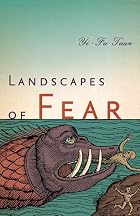
This was a fascinating book in many ways, but the most remarkable aspect of it was Tuan's grasp of a multitude of sources -- anthropological, historical, psychological, literary -- and all across the globe and across centuries and even millennia, as well as his ability to interweave information from all of them to tell his story.
What are landscapes of fear? As Tuan says in his introduction:
" Landscapes of fear? If we pause to reflect on what these are, surely swarms of images will come to mind: fear of the dark and abandonment in childhood; anxiety in strange settings or on social occasions; dread of corpses and the supernatural; uneasiness at the sight of hospitals and prisons; fear of muggers in desolate streets and neighborhoods; anxiety at the prospect of the breakdown of world order." p. 3
He goes on to explain that fears are felt by individuals and thus are subjective, but some are rooted in the environment (psychological as well as external), and that his exploration may shed light on "questions of perennial interest. What is it to be human? What is it like to live in the world?"
He continues by discussing fear in children before turning to a more or less chronological trip through human history, from "fearless" "primitive" societies to fear of nature among early hunters and farmers, natural calamities and famines, the medieval world, fear of disease, fear of human nature (looking at witches and ghosts), fear in the country and in the city, public humiliation and execution, and exile and confinement, concluding with an examination of the need for creating circles of security and a look at how we assess fears past and present.
This book was originally published in 1979 and was reissued in 2013. In his preface to the new edition, Tuan asks himself how he would write it differently if he were to write it today. After confessing that he simply could no longer retain as much diverse information as he could when he was young, he writes that he would perhaps organize the book thematically and would give more prominence to three broad ideas that recur in it. One of these ideas is what he calls the "dissonance between the ecologically sound and the sociopolitically sound." An example of this is the peacefulness and beauty of the 18th and 19th century English countryside which masked the very real dangers that resided there, including crime and violence, wild animals, oppression by landlords, famine, and poverty. He notes that a writer who praised the "ecological balance" of that landscape
"forgot to mention the gibbets on highways and at crossroads: the corpses of criminals on display there so upset the more delicate travelers that they made detours to avoid them. Yes, the landscape was comely and healthy, but it was also a landscape of fear. The ordinary people who lived on it could seem stunted and deformed by our standards, all too often missing an arm or a leg. Counterposed to the landscape, the people were uncomely and unhealthy." pp. vii-viii
The second theme he says he would have developed more fully is the idea of "fearless" societies, groups such as modern hunter-gatherers and the Amish, who are "content with the traditions of their group and to stay within the traditions of their world," which he contrasts to the yearnings of "civilized" societies. Finally he says he would have paid more attention to betrayal, as our deepest human fear.
I have focused on Tuan's comments on his work because this is such an idiosyncratic book that it is difficult for me for me to describe it. Tuan's juggling of time and place is unlike anything else I've read, and I am in awe of his ability to make connections across cultures and civilizations. He has great compassion for the people he discusses, and horror at the cruelties humans impose on each other. And the book, despite its scholarly weight, is eminently readable. Perhaps a few quotations will give a flavor of Tuan's style and focus.
"Medieval people lived close to nature and we tend to think of them as having intense joys and feelings that are largely lost to us. We may also think of them as dwelling in a calm and stable world in which the years and decades -- unlike our own -- succeeded one another with little change. To the father of a family living in the Middle Ages, this is not necessarily how the world would have appeared. Change and instability must have seemed at times the dominant features of his life: he experienced, if not the ravages of battle or epidemic, then the recurrent threat of bad weather, poor harvest, and the accidents of workplace and home. . . .
Still, we know that human beings are eminently adaptable. Despite the harshness of life, medieval men and women almost surely did not live in constant fear and trembling . . . .After the long siege of winter came the delightful spring. Between wars and epidemics were interludes of peace and contentment, all the more precious for their transiency." pp. 85-86
"So much of human fear is of other people who sustain our world but also threaten it. Destructive natural forces and diseases wear human masks, and in witches and ghosts the fear of human evil takes on a supernatural dimension. Where can one hide?" p. 129
As a side note, I bought this book partly because of its cover, which I love.
This was a fascinating book in many ways, but the most remarkable aspect of it was Tuan's grasp of a multitude of sources -- anthropological, historical, psychological, literary -- and all across the globe and across centuries and even millennia, as well as his ability to interweave information from all of them to tell his story.
What are landscapes of fear? As Tuan says in his introduction:
" Landscapes of fear? If we pause to reflect on what these are, surely swarms of images will come to mind: fear of the dark and abandonment in childhood; anxiety in strange settings or on social occasions; dread of corpses and the supernatural; uneasiness at the sight of hospitals and prisons; fear of muggers in desolate streets and neighborhoods; anxiety at the prospect of the breakdown of world order." p. 3
He goes on to explain that fears are felt by individuals and thus are subjective, but some are rooted in the environment (psychological as well as external), and that his exploration may shed light on "questions of perennial interest. What is it to be human? What is it like to live in the world?"
He continues by discussing fear in children before turning to a more or less chronological trip through human history, from "fearless" "primitive" societies to fear of nature among early hunters and farmers, natural calamities and famines, the medieval world, fear of disease, fear of human nature (looking at witches and ghosts), fear in the country and in the city, public humiliation and execution, and exile and confinement, concluding with an examination of the need for creating circles of security and a look at how we assess fears past and present.
This book was originally published in 1979 and was reissued in 2013. In his preface to the new edition, Tuan asks himself how he would write it differently if he were to write it today. After confessing that he simply could no longer retain as much diverse information as he could when he was young, he writes that he would perhaps organize the book thematically and would give more prominence to three broad ideas that recur in it. One of these ideas is what he calls the "dissonance between the ecologically sound and the sociopolitically sound." An example of this is the peacefulness and beauty of the 18th and 19th century English countryside which masked the very real dangers that resided there, including crime and violence, wild animals, oppression by landlords, famine, and poverty. He notes that a writer who praised the "ecological balance" of that landscape
"forgot to mention the gibbets on highways and at crossroads: the corpses of criminals on display there so upset the more delicate travelers that they made detours to avoid them. Yes, the landscape was comely and healthy, but it was also a landscape of fear. The ordinary people who lived on it could seem stunted and deformed by our standards, all too often missing an arm or a leg. Counterposed to the landscape, the people were uncomely and unhealthy." pp. vii-viii
The second theme he says he would have developed more fully is the idea of "fearless" societies, groups such as modern hunter-gatherers and the Amish, who are "content with the traditions of their group and to stay within the traditions of their world," which he contrasts to the yearnings of "civilized" societies. Finally he says he would have paid more attention to betrayal, as our deepest human fear.
I have focused on Tuan's comments on his work because this is such an idiosyncratic book that it is difficult for me for me to describe it. Tuan's juggling of time and place is unlike anything else I've read, and I am in awe of his ability to make connections across cultures and civilizations. He has great compassion for the people he discusses, and horror at the cruelties humans impose on each other. And the book, despite its scholarly weight, is eminently readable. Perhaps a few quotations will give a flavor of Tuan's style and focus.
"Medieval people lived close to nature and we tend to think of them as having intense joys and feelings that are largely lost to us. We may also think of them as dwelling in a calm and stable world in which the years and decades -- unlike our own -- succeeded one another with little change. To the father of a family living in the Middle Ages, this is not necessarily how the world would have appeared. Change and instability must have seemed at times the dominant features of his life: he experienced, if not the ravages of battle or epidemic, then the recurrent threat of bad weather, poor harvest, and the accidents of workplace and home. . . .
Still, we know that human beings are eminently adaptable. Despite the harshness of life, medieval men and women almost surely did not live in constant fear and trembling . . . .After the long siege of winter came the delightful spring. Between wars and epidemics were interludes of peace and contentment, all the more precious for their transiency." pp. 85-86
"So much of human fear is of other people who sustain our world but also threaten it. Destructive natural forces and diseases wear human masks, and in witches and ghosts the fear of human evil takes on a supernatural dimension. Where can one hide?" p. 129
As a side note, I bought this book partly because of its cover, which I love.
56qebo
>54 rebeccanyc: Amish, who are "content with the traditions of their group and to stay within the traditions of their world," which he contrasts to the yearnings of "civilized" societies
This seems highly romanticized.
I bought this book partly because of its cover, which I love.
It is quite fantastic.
This seems highly romanticized.
I bought this book partly because of its cover, which I love.
It is quite fantastic.
57janeajones
Fabulous review -- thanks.
58rebeccanyc
>53 labfs39: Thanks, Lisa. I'm coming down the home stretch!
>55 baswood: I do read nonfiction other than history, Barry, but not as often. And some of the books I read don't live up to my expectations, but this one did.
>56 qebo: That's a good point, qebo. To be fair to Tuan, he didn't discuss the Amish in the book, which was published in 1979, but only alluded to them in the preface to the 2013 edition. I did find the chapter on "fearless" cultures the weakest of the book. That said, overall, Tuan is not the least romantic, and even in that chapter he far from minimizes the dangers people face and their struggles of daily life.
>57 janeajones:, Thanks, Jane.
>55 baswood: I do read nonfiction other than history, Barry, but not as often. And some of the books I read don't live up to my expectations, but this one did.
>56 qebo: That's a good point, qebo. To be fair to Tuan, he didn't discuss the Amish in the book, which was published in 1979, but only alluded to them in the preface to the 2013 edition. I did find the chapter on "fearless" cultures the weakest of the book. That said, overall, Tuan is not the least romantic, and even in that chapter he far from minimizes the dangers people face and their struggles of daily life.
>57 janeajones:, Thanks, Jane.
59rebeccanyc
20. The Pendragon Legend by Antal Szerb
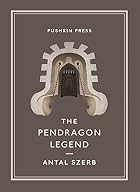
Szerb must have had a lot of fun writing this book, because I had a lot of fun reading it! It combines murder and mystery, the lure of old books, conflicts over legacies, the occult, the wilds of Wales, and engaging characters, while at the same time satirizing all of the above.
János Bákty, a young Hungarian toiling away at the British Library, not unlike Szerb himself, first encounters the Earl of Pendragon at a party he almost didn't attend. The beneficiary of a small inheritance, Bákty devotes his energy to helping "elderly English gentlemen in the pursuit of their intellectual whims." Thus, at the time he meets the Earl, he is already immersed in the study of 17th century English mystics, especially Fludd, a subject that turns out to be of deep personal interest to the Earl, who promptly invites Bákty to Pendragon.
Before Bákty travels there, he not only learns more about the legends of Pendragon (including previous earls deeply engaged in Rosicrucianism, a mysterious midnight horseman who exacts vengeance/justice, and an abandoned castle) but also accidentally (?) meets a wildly adventurous but apparently ignorant man named Maloney who, it seems, is great friends with the earl's nephew Osborne, and they are planning to go to Pendragon themselves. Before they can all go, Bákty receives a mysterious phone call warning him to stay away and encounters an alluring woman who gives him a ring to give to the Earl but makes him promise not to say who gave it to him.
Then the three young men travel to Pendragon, where Bákty meets Osborne's sister Cynthia and encounters various strange household servants. It would be an understatement to say that complications ensue: scary and mysterious night-time sounds, missing bullets from a gun, and an apparent madman in the neighboring village are only the beginning of a tale that includes the all-too-real as well as the supernatural and esoteric. "Here at last was the great and terrible adventure my anxieties had been leading me towards for ten long years," Bákty thinks.
Bákty is an endearing character, in part because the reader is able to sense that the may, at times, be a little too trusting (although he occasionally has a glimmer of unease). At one point he thinks, "it almost hurt to think how stupid I had been, how helpless and utterly, utterly stupid." Bákty's love of scholarship is contagious:
"It seemed as if I had only to open a door to see directly into the era of Asaph Pendragon. Every now and then I was overwhelmed by a strange, disconcerting happiness. I felt preternaturally old, a relic from the age of folios staring out in astonishment at the mankind of today." p. 101
And as the saga ends, he has actually learned something:
"I'm saying nothing, Lene. I can't. There are some things that have an inner truth, but become nonsense when spoken. It just isn't possible to explain . . .We live simultaneously in two worlds, and there are two levels of meaning. One can be understood by everyone, the other is beyond words and is utterly horrible." p. 302
But Bákty is far from the only delightful character in this book (including the delightfully evil ones). While the Earl remains somewhat mysterious, most of the other characters are fascinating including, in addition to those already mentioned, a stalwart and sexually advance young German woman (the Lene Bákty addresses above). And the rugged Welsh landscape is itself a character. In addition, Szerb has a wonderful sense of pacing: I found it difficult to put this book down. I will definitely continue to read more of Szerb.
Szerb must have had a lot of fun writing this book, because I had a lot of fun reading it! It combines murder and mystery, the lure of old books, conflicts over legacies, the occult, the wilds of Wales, and engaging characters, while at the same time satirizing all of the above.
János Bákty, a young Hungarian toiling away at the British Library, not unlike Szerb himself, first encounters the Earl of Pendragon at a party he almost didn't attend. The beneficiary of a small inheritance, Bákty devotes his energy to helping "elderly English gentlemen in the pursuit of their intellectual whims." Thus, at the time he meets the Earl, he is already immersed in the study of 17th century English mystics, especially Fludd, a subject that turns out to be of deep personal interest to the Earl, who promptly invites Bákty to Pendragon.
Before Bákty travels there, he not only learns more about the legends of Pendragon (including previous earls deeply engaged in Rosicrucianism, a mysterious midnight horseman who exacts vengeance/justice, and an abandoned castle) but also accidentally (?) meets a wildly adventurous but apparently ignorant man named Maloney who, it seems, is great friends with the earl's nephew Osborne, and they are planning to go to Pendragon themselves. Before they can all go, Bákty receives a mysterious phone call warning him to stay away and encounters an alluring woman who gives him a ring to give to the Earl but makes him promise not to say who gave it to him.
Then the three young men travel to Pendragon, where Bákty meets Osborne's sister Cynthia and encounters various strange household servants. It would be an understatement to say that complications ensue: scary and mysterious night-time sounds, missing bullets from a gun, and an apparent madman in the neighboring village are only the beginning of a tale that includes the all-too-real as well as the supernatural and esoteric. "Here at last was the great and terrible adventure my anxieties had been leading me towards for ten long years," Bákty thinks.
Bákty is an endearing character, in part because the reader is able to sense that the may, at times, be a little too trusting (although he occasionally has a glimmer of unease). At one point he thinks, "it almost hurt to think how stupid I had been, how helpless and utterly, utterly stupid." Bákty's love of scholarship is contagious:
"It seemed as if I had only to open a door to see directly into the era of Asaph Pendragon. Every now and then I was overwhelmed by a strange, disconcerting happiness. I felt preternaturally old, a relic from the age of folios staring out in astonishment at the mankind of today." p. 101
And as the saga ends, he has actually learned something:
"I'm saying nothing, Lene. I can't. There are some things that have an inner truth, but become nonsense when spoken. It just isn't possible to explain . . .We live simultaneously in two worlds, and there are two levels of meaning. One can be understood by everyone, the other is beyond words and is utterly horrible." p. 302
But Bákty is far from the only delightful character in this book (including the delightfully evil ones). While the Earl remains somewhat mysterious, most of the other characters are fascinating including, in addition to those already mentioned, a stalwart and sexually advance young German woman (the Lene Bákty addresses above). And the rugged Welsh landscape is itself a character. In addition, Szerb has a wonderful sense of pacing: I found it difficult to put this book down. I will definitely continue to read more of Szerb.
60Linda92007
Great review of The Pendragon Legend, Rebecca. I took a look when you mentioned it before and bought it immediately!
61StevenTX
Landscapes of Fear sounds like a fascinating book. It makes you think about how we (in the industrialized West, that is) live in a world that is safe and secure to a degree probably unprecedented in history, yet our daily lives are still shaped by fear: parents won't let children out of their sight out of doors, houses are buttoned up with security systems, airports treat everyone like criminals, and our government spies on us constantly.
the peacefulness and beauty of the 18th and 19th century English countryside which masked the very real dangers that resided there
Maybe Mr. Woodhouse in Emma wasn't quite so silly after all! Perhaps if we had a more realistic view of the "good old days" and saw how much safer we are by comparison we wouldn't be so obsessed with security.
The Pendragon Legend was on my wishlist at one time until I decided to pare it down to essentials.
the peacefulness and beauty of the 18th and 19th century English countryside which masked the very real dangers that resided there
Maybe Mr. Woodhouse in Emma wasn't quite so silly after all! Perhaps if we had a more realistic view of the "good old days" and saw how much safer we are by comparison we wouldn't be so obsessed with security.
The Pendragon Legend was on my wishlist at one time until I decided to pare it down to essentials.
62SassyLassy
Fascinating Landscapes of Fear and delightful Pendragon Legend. I'd been so good this year with restraint and I suspect you've just ended that. Actually you did already with the NYRB sale, but that's a different matter! Great reviews as usual.
63Caroline_McElwee
>54 rebeccanyc: This sounds fascinating Rebecca, and I think goes in my Amazon basket! Thumbed.
64edwinbcn
Great review Yi-Fu Tuan's Landscapes of Fear. It seems your review is the only one posted on LT, although I clearly remember the book was reviewed by someone else on Club Read.
Your review confirms that it seems a very interesting book.
Your review confirms that it seems a very interesting book.
65rebeccanyc
>61 StevenTX: Thanks, Steven. One of the things Tuan talks about in the last chapter is how we look at historical dangers differently from how we look at current dangers.
And thanks to all, Linda, Sassy, Caro, and Edwin!
And thanks to all, Linda, Sassy, Caro, and Edwin!
66kidzdoc
Great reviews of The Pendragon Legend and Landscapes of Fear, Rebecca!
67rebeccanyc
21. Boy, Snow, Bird by Helen Oyeyemi

I really admired Oyeyemi's previous novel, Mr. Fox, so I was eager to read her next work. And I'm glad I read that novel first, because it introduced me to the way Oyeyemi shifts time in her writing and interweaves myth, fairy tales, and a "reality" the reader is not supposed to take as too real. But that leads me to the problem I had with this book: the parts that are supposed to be "real" cry out to be real and they just don't succeed. The parts that take place in 1953 don't seem to really be taking place then (and include language that wouldn't have been used then); the parts that take place apparently in 1968 or 1969 are strangely devoid of the turmoil of those times; and people behave in ways that just don't ring true.
Now, maybe Oyeyemi meant for the "real" parts to be part of a fairy tale. At one point, one of the protagonists, a woman named Boy, recalls a discussion about Cindarella that her husband had with their daughter, Bird, in which Bird asked if it was a true story, " 'not the fairy godmother stuff and her dress turning back to rags at midnight -- I know that's true. But Cindarella just sweeping up all those ashes every day and never putting them into her stepmother's food or anything -- is that true?' "
The story is told in three parts. In the first, set initially in 1953 on New York's Lower East Side, a young Boy is cruelly tormented and indeed horrifyingly abused by her single father, "the ratcatcher," before she flees to the furthest stop on the first bus out of town she could get, a Massachusetts town called Flax Hill. There she meets various people and eventually marries a widower, Arturo, who has an unbelievably beautiful daughter named Snow. And yes, this book is something a riff on the Snow White story, with Boy as the wicked stepmother who eventually sends Snow away, and with various characters having complicated relationships with mirrors.
When Boy has her own baby, Bird,it becomes clear that Arturo and his parents and sister, among others, are light-skinned African-Americans (called "colored" in 1950s polite society) who have been passing for white. Here is where their reactions became unbelievable to me. Although they briefly want Bird to be sent to live with some of their darker relatives (as they previously did with Arturo's sister), they have no other reaction to being essentially "outed" in the community in which they live and to having their whole carefully constructed reality overturned. And the people in their community don't seem to change in the way they interact with the family. So not likely to have happened, even now, but especially in the 1950s in Massachusetts.
So Bird grows up in a family without Snow, and the second part of the story is Bird's, much of it told in epistolary fashion when she begins to correspond with Snow. Of course, Bird, now 13, so it must be about 1968 or so, doesn't understand why Snow has been exiled, but she is eager to learn more about her sister and especially about her somewhat distant and strange mother. Otherwise, she has a sort of typical teenage existence, including a boyfriend from a Chinese family. The story builds to a climax towards the end, when Snow is allowed to return for Thanksgiving. In the third part, again told by Boy, her friend Mia, a journalist who has been a mentor to Bird, reveals a shocking (and somewhat out of thin air) revelation about Boy's past, and the group of women (Boy, Snow, Bird, and Mia) set off to find out more.
Of course, this novel isn't really about the plot. Oyeyemi aims to explore issues of identity -- personal, racial, and gender -- and to play with our sense of reality, with mirrors that don't show certain people, spiders that converse, fairy tales that may not be so imaginary, and more. She creates vivid secondary characters, at least the women (the men seem more like cardboard figures). Part of the novel is also about releasing oneself from a spell, as discussed explicitly at one point by the older woman who runs the bookstore where Boy works, who says " 'magic spells only work until the person under the spell is really and honestly tired of it. It ends when continuing becomes simply too ghastly a prospect.' "
As with Oyeyemi's earlier novel, I admire what she set out to do, and I enjoyed parts of this book, and in fact I'm still thinking about it as I write this, but it didn't quite work for me.

I really admired Oyeyemi's previous novel, Mr. Fox, so I was eager to read her next work. And I'm glad I read that novel first, because it introduced me to the way Oyeyemi shifts time in her writing and interweaves myth, fairy tales, and a "reality" the reader is not supposed to take as too real. But that leads me to the problem I had with this book: the parts that are supposed to be "real" cry out to be real and they just don't succeed. The parts that take place in 1953 don't seem to really be taking place then (and include language that wouldn't have been used then); the parts that take place apparently in 1968 or 1969 are strangely devoid of the turmoil of those times; and people behave in ways that just don't ring true.
Now, maybe Oyeyemi meant for the "real" parts to be part of a fairy tale. At one point, one of the protagonists, a woman named Boy, recalls a discussion about Cindarella that her husband had with their daughter, Bird, in which Bird asked if it was a true story, " 'not the fairy godmother stuff and her dress turning back to rags at midnight -- I know that's true. But Cindarella just sweeping up all those ashes every day and never putting them into her stepmother's food or anything -- is that true?' "
The story is told in three parts. In the first, set initially in 1953 on New York's Lower East Side, a young Boy is cruelly tormented and indeed horrifyingly abused by her single father, "the ratcatcher," before she flees to the furthest stop on the first bus out of town she could get, a Massachusetts town called Flax Hill. There she meets various people and eventually marries a widower, Arturo, who has an unbelievably beautiful daughter named Snow. And yes, this book is something a riff on the Snow White story, with Boy as the wicked stepmother who eventually sends Snow away, and with various characters having complicated relationships with mirrors.
When Boy has her own baby, Bird,
So Bird grows up in a family without Snow, and the second part of the story is Bird's, much of it told in epistolary fashion when she begins to correspond with Snow. Of course, Bird, now 13, so it must be about 1968 or so, doesn't understand why Snow has been exiled, but she is eager to learn more about her sister and especially about her somewhat distant and strange mother. Otherwise, she has a sort of typical teenage existence, including a boyfriend from a Chinese family. The story builds to a climax towards the end, when Snow is allowed to return for Thanksgiving. In the third part, again told by Boy, her friend Mia, a journalist who has been a mentor to Bird, reveals a shocking (and somewhat out of thin air) revelation about Boy's past, and the group of women (Boy, Snow, Bird, and Mia) set off to find out more.
Of course, this novel isn't really about the plot. Oyeyemi aims to explore issues of identity -- personal, racial, and gender -- and to play with our sense of reality, with mirrors that don't show certain people, spiders that converse, fairy tales that may not be so imaginary, and more. She creates vivid secondary characters, at least the women (the men seem more like cardboard figures). Part of the novel is also about releasing oneself from a spell, as discussed explicitly at one point by the older woman who runs the bookstore where Boy works, who says " 'magic spells only work until the person under the spell is really and honestly tired of it. It ends when continuing becomes simply too ghastly a prospect.' "
As with Oyeyemi's earlier novel, I admire what she set out to do, and I enjoyed parts of this book, and in fact I'm still thinking about it as I write this, but it didn't quite work for me.
68LibraryPerilous
>67 rebeccanyc: I'm planning on reading Boy, Snow, Bird as soon as my library releases it for borrowing. Helen Oyeyemi is an author whose ideas about writing--and shifting identities--I admire. But I've had the same problem with the two Oyeyemi books I've read, Mr. Fox and White Is for Witching: great concepts written in beautiful, lyrical prose. Those qualities get lost in the shifting perspectives. It just feels as if she's trying too hard.
I would love to see her write a chronological novel. As you say, she focuses more on ideas, not plot. But I think having a centralized plot actually would help bring some of the complex identity issues she explores into sharper focus.
Incidentally, I read an interview with her once, and she listed Barbara Comyns as one of her favorite authors. Comyns traffics in many of the same areas: unreliable narrators, somewhat metaphorical prose, fairy tale like plots. But she locates her stories around a hub, and that gives them a bit more of a bite.
I would love to see her write a chronological novel. As you say, she focuses more on ideas, not plot. But I think having a centralized plot actually would help bring some of the complex identity issues she explores into sharper focus.
Incidentally, I read an interview with her once, and she listed Barbara Comyns as one of her favorite authors. Comyns traffics in many of the same areas: unreliable narrators, somewhat metaphorical prose, fairy tale like plots. But she locates her stories around a hub, and that gives them a bit more of a bite.
70rebeccanyc
>68 LibraryPerilous: That's interesting, Diana. I liked Mr. Fox a lot better than Boy, Snow, Bird, largely because the divergence from reality was better done and better suited to the story. I do wonder about her writing a chronological novel though, because Boy, Snow, Bird was pretty much chronological and the parts that were meant to be "real" were the ones that she had trouble handling convincingly.
I am a big fan of Barbara Comyns, especially of Who Was Changed and Who Was Dead. I guess I can see some resemblance, but Oyeyemi seems more interested in the fairy tales and myths than Comyns, and to have more trouble corralling her very inventive ideas into shape.
>69 labfs39: Thanks, Lisa.
I am a big fan of Barbara Comyns, especially of Who Was Changed and Who Was Dead. I guess I can see some resemblance, but Oyeyemi seems more interested in the fairy tales and myths than Comyns, and to have more trouble corralling her very inventive ideas into shape.
>69 labfs39: Thanks, Lisa.
71LibraryPerilous
>70 rebeccanyc: That's the only Comyns book I have read, and I read it after reading Mr. Fox, but I did feel that it had a dreamlike, fairy tale quality to it. It also had a linear plot, which Oyeyemi doesn't seem to enjoy writing!
Here's the interview I had read: http://www.vogue.com/culture/article/the-fantastic-and-mr-fox-helen-oyeyemi-on-h...
Here is a new interview I found interesting: http://www.theguardian.com/books/2014/mar/02/helen-oyeyemi-women-disappoint-one-...
This quote jumped out: "But people get a bit excited if there's a black person and say, 'Oh this is about that thing,' when actually it's {White Is for Witching} about expanding the genre of haunted house stories."
Another quote jumped out because I disagreed with the oversimplification it brought to the topic (passing). I'm curious: Do you feel Boy, Snow, Bird had to take place in the time and locale it did in order to make the points Oyeyemi wanted it to make?
Here's the interview I had read: http://www.vogue.com/culture/article/the-fantastic-and-mr-fox-helen-oyeyemi-on-h...
Here is a new interview I found interesting: http://www.theguardian.com/books/2014/mar/02/helen-oyeyemi-women-disappoint-one-...
This quote jumped out: "But people get a bit excited if there's a black person and say, 'Oh this is about that thing,' when actually it's {White Is for Witching} about expanding the genre of haunted house stories."
Another quote jumped out because I disagreed with the oversimplification it brought to the topic (passing). I'm curious: Do you feel Boy, Snow, Bird had to take place in the time and locale it did in order to make the points Oyeyemi wanted it to make?
72dchaikin
Just wanted to say I'm enjoying your reviews. The Pendragon Legend and Landscapes of Fear both appeal.
73baswood
Boy, Snow, Bird sounds a little confused. Rebecca I sensed that you really wanted to like the novel, because of a previous book you had read by Oyeyemi, but you ended up quite disappointed.
74kidzdoc
Nice review of Boy, Snow, Bird, Rebecca. I haven't read anything by her, and I think I'll keep it that way.
75rebeccanyc
>71 LibraryPerilous: Thanks for those links, Diana. In answer to your question, for me, the time and locale Oyeyemi chose had no sense of reality. Maybe she chose them to make a point but as a reader I never felt it was 1953 in New York, never felt what Flax Hill was really like, and absolutely never felt it was 1967 or 1968 when the Bird section takes place. And there was no sign that Oyeyemi had a grasp of the brutal historical past or the complexity of race relations in the US -- especially in the mid-60s, when there was the Black Power movement, the height of Martin Luther' King's influence, the rise of Malcolm X, etc. etc., and none of that made any impact on what anyone talked about or influenced any behavior. It was as if all these people, black and white -- and especially the people passing for white and the white and black people around them when their secret was revealed -- were operating in an historical and cultural vacuum, and that's why I said in my review that the "real" sections cried out to be real. As an English writer of Nigerian heritage, there is no reason why Oyeyemi should be immersed in US history, but one would think that if a writer wants to set a novel in a particular time and place, especially such a fraught one, she would do some research, even if the focus of her book is not on history but on human relationships.
>73 baswood: "Confused" is a good word, Barry. And yes, I did want to like it and was disappointed -- I had been looking forward to reading more Oyeyemi after reading Mr. Fox.
And thanks, Dan and Darryl.
>73 baswood: "Confused" is a good word, Barry. And yes, I did want to like it and was disappointed -- I had been looking forward to reading more Oyeyemi after reading Mr. Fox.
And thanks, Dan and Darryl.
76.Monkey.
Catching up on your thread a bit!
> 54 (Landscapes of Fear) I love that cover, too! Great review, the book sounds very interesting.
> 59 (The Pendragon Legend) This book sounds wonderful also!
> 67 (Boy, Snow, Bird) Bummer, it's especially disappointing when things don't work out when it's an author you've already enjoyed and/or just something where you can see what they're striving for but it falls short, a lot more disappointing than just a "random" book that didn't work out!
> 54 (Landscapes of Fear) I love that cover, too! Great review, the book sounds very interesting.
> 59 (The Pendragon Legend) This book sounds wonderful also!
> 67 (Boy, Snow, Bird) Bummer, it's especially disappointing when things don't work out when it's an author you've already enjoyed and/or just something where you can see what they're striving for but it falls short, a lot more disappointing than just a "random" book that didn't work out!
77banjo123
It's really frustrating to read novels that aren't historically accurate. I had a neighbor from Northern Germany, and she hated Stones from the RIver by Ursula Hegi, because she felt that it would have been impossible for the main character to save multiple people from the Nazi's without being caught. Also, she said that the food was not accurate, because the author combined foods that would not be in season at the same time.
78rebeccanyc
Helen Oyeyemi is all over promoting Boy Snow Bird. Here she is on WNYC, my local NPR station and here she is in today's New York Times Book Review.
Thanks for stopping by, Monkey and Rhonda.
Thanks for stopping by, Monkey and Rhonda.
79NanaCC
I enjoyed your review of Boy Snow Bird, Rebecca. It isn't one for me though.
80lauralkeet
I just heard the author read from her book on a radio program last night. The prose was interesting, and I knew I'd heard of the book on LT in a way that didn't completely sell me on it. I think I'll give it a pass ...
81rebeccanyc
22. Dragnet Nation: A Quest for Privacy, Security and Freedom in a World of Relentless Surveillance by Julia Angwin

I heard Julia Angwin, a Wall Street Journal reporter, speak on my local public radio station and bought this book as soon as I saw it in a bookstore. "Relentless surveillance" is what it is all about, and not just from the NSA which presumably has captured much of our information, but more (?) scarily from advertisers, social media websites, and information brokers who know astonishingly detailed things about us. But Angwin doesn't just terrify readers with gloom and doom; she explores alternatives to traditional e-mail providers and search engines and tries different methods of generating passwords and opting out of providing information to data brokers, and much more. As a reporter, she goes out and meets with many of the individuals and companies providing these services, and she describes her attempts to use them.
That's the good news. The bad news is that it's soooo easy and fast to use Google and Gmail and Facebook and LinkedIn, and soooo much more complicated or slow or confusing or all of the above to use the more private alternatives. However, I have already switched to two web browsers that promise to keep your searches private, DuckDuckGo, which Angwin uses, and iXquick which another LTer recommended when I mentioned having heard her speak, and I will probably investigate the password manager she describes and maybe work on more creative passwords. It's a lot of work, though, to try to maintain shreds of privacy, and a lot of what Angwin needs, because she is a reporter dealing with sources who want or need to be kept private, are appealing but not necessary, I hope, for me. Throughout the book, as Angwin takes the reader through a series of threats to privacy from our online lives, she emphasizes identifying one's "threat model" -- what the actual threat for each individual is. And then she conducts an audit of information available about herself.
"My audit was deeply unsettling. I had obtained only a tiny amount of the information available about myself. And even this tiny amount was disturbingly comprehensive. It included:
• Every address I had lived at dating back to college.
• Every phone number I had ever used.
• The names of nearly all my relatives (including in-laws)
• A list of nearly three thousand people with whom I had exchanged e-mail in the past seven years
• Records of about twenty-six thousand Web searches I had conducted every month dating back nearly seven years, neatly sorted into categories like "maps" and "shopping"
• A glimpse of my shopping habits
• My internal communications with my employer, The Wall Street Journal, about reporting plans.
Most of my data were held by commercial data brokers. But all of it could easily be swept into government dragnets." p. 95
Angwin begins the book with a look at how we got to this state of "suspicionless" dragnets and tells a variety of scary stories about how innocent people were caught up in "dragnets" (not necessarily those of law enforcement, but of the public availability of information, for example about mental illness, that people would rather keep private). Dramatically, she talks to a Stasi records administrator (yes, the Germans are preserving the Stasi records) to learn how the Stasi tracked people. When she showed him how Google allowed her to see a record of her previous web searches and the people she'd e-mailed using Gmail, and showed him a visualization of her LinkedIn network using a plug in, she notes that her contact was "very impressed." "The Stasi would have loved this," he told her.
In her conclusion, Angwin describes her reactions to her "year of trying to evade surveillance." On the one hand, she feels "surprisingly hopeful." On the other hand, she says she "wasn't happy with the toll that my countersurveillance techniques had taken on my psyche . . . I didn't want to live in the world that I was building -- a world of subterfuge and disinformation and covert actions. It was a world based on fear. It was not a world I wanted to leave to my children." She goes on to suggest that greater discussion of privacy issues will lead to changes, as discussion of environmental issues back in the 1970s led to improvements, and presents several ideas for giving people more control of their information. I am glad Angwin is hopeful; perhaps I am a pessimist (well, I know I am), but I think there is too much money to be made from our private information for change to come.

I heard Julia Angwin, a Wall Street Journal reporter, speak on my local public radio station and bought this book as soon as I saw it in a bookstore. "Relentless surveillance" is what it is all about, and not just from the NSA which presumably has captured much of our information, but more (?) scarily from advertisers, social media websites, and information brokers who know astonishingly detailed things about us. But Angwin doesn't just terrify readers with gloom and doom; she explores alternatives to traditional e-mail providers and search engines and tries different methods of generating passwords and opting out of providing information to data brokers, and much more. As a reporter, she goes out and meets with many of the individuals and companies providing these services, and she describes her attempts to use them.
That's the good news. The bad news is that it's soooo easy and fast to use Google and Gmail and Facebook and LinkedIn, and soooo much more complicated or slow or confusing or all of the above to use the more private alternatives. However, I have already switched to two web browsers that promise to keep your searches private, DuckDuckGo, which Angwin uses, and iXquick which another LTer recommended when I mentioned having heard her speak, and I will probably investigate the password manager she describes and maybe work on more creative passwords. It's a lot of work, though, to try to maintain shreds of privacy, and a lot of what Angwin needs, because she is a reporter dealing with sources who want or need to be kept private, are appealing but not necessary, I hope, for me. Throughout the book, as Angwin takes the reader through a series of threats to privacy from our online lives, she emphasizes identifying one's "threat model" -- what the actual threat for each individual is. And then she conducts an audit of information available about herself.
"My audit was deeply unsettling. I had obtained only a tiny amount of the information available about myself. And even this tiny amount was disturbingly comprehensive. It included:
• Every address I had lived at dating back to college.
• Every phone number I had ever used.
• The names of nearly all my relatives (including in-laws)
• A list of nearly three thousand people with whom I had exchanged e-mail in the past seven years
• Records of about twenty-six thousand Web searches I had conducted every month dating back nearly seven years, neatly sorted into categories like "maps" and "shopping"
• A glimpse of my shopping habits
• My internal communications with my employer, The Wall Street Journal, about reporting plans.
Most of my data were held by commercial data brokers. But all of it could easily be swept into government dragnets." p. 95
Angwin begins the book with a look at how we got to this state of "suspicionless" dragnets and tells a variety of scary stories about how innocent people were caught up in "dragnets" (not necessarily those of law enforcement, but of the public availability of information, for example about mental illness, that people would rather keep private). Dramatically, she talks to a Stasi records administrator (yes, the Germans are preserving the Stasi records) to learn how the Stasi tracked people. When she showed him how Google allowed her to see a record of her previous web searches and the people she'd e-mailed using Gmail, and showed him a visualization of her LinkedIn network using a plug in, she notes that her contact was "very impressed." "The Stasi would have loved this," he told her.
In her conclusion, Angwin describes her reactions to her "year of trying to evade surveillance." On the one hand, she feels "surprisingly hopeful." On the other hand, she says she "wasn't happy with the toll that my countersurveillance techniques had taken on my psyche . . . I didn't want to live in the world that I was building -- a world of subterfuge and disinformation and covert actions. It was a world based on fear. It was not a world I wanted to leave to my children." She goes on to suggest that greater discussion of privacy issues will lead to changes, as discussion of environmental issues back in the 1970s led to improvements, and presents several ideas for giving people more control of their information. I am glad Angwin is hopeful; perhaps I am a pessimist (well, I know I am), but I think there is too much money to be made from our private information for change to come.
82rebeccanyc
23. The Interpreters by Wole Soyinka

The interpreters are a group of friends in newly independent Nigeria who have returned from study abroad (in England and the US) to take up positions in the new environment: one is a journalist, one a descendent of village chiefs, one a sculptor, one a painter, one (the only woman in the group) some kind of minor government worker). There isn't much plot; in Soyinka's dense, often allusive prose, the reader learns about the individuals in turn, often returning to their pasts before coming back to the present. Soyinka introduces other characters to give a fuller picture of life in the new country, and thoroughly satirizes many of them, including those who are corrupt and those who are still imbued with British traditions. Religion plays a part in the novel as well, both the traditional Yoruban gods and Christianity. In addition, parts of the novel are quite funny, and parts are quite scatological, including a theory held by the journalist character.
I had a hard time knowing what to make of this novel, which I read thanks to a suggestion by janeajones. Clearly Soyinka is trying to paint a broad picture of both the challenges of a postcolonial society and the conflicts encountered by young men eager to find their way in a changing world. I found the women not as well developed as the male characters, and when a character reveals his homosexuality (a character who is already "confused" because he is an American in Nigeria and because, although he appears white, he is a quarter black and yearns to be thought of as black), other characters are disgusted. A lot that happens in this novel is symbolic in some way, especially the appearance in the second part of a strange church leader and his "apostles," including a young former thief re-named Noah. I would probably have to read this book again to make more sense of it, but it remains an interesting portrait of a time and place, including a vivid feeling for the waterways around Lagos before the environmental and cultural disaster caused by oil drilling.
Soyinka was the first African to receive the Nobel Prize for literature and is mostly known for his plays and memoirs; this is one of only two novels he wrote.

The interpreters are a group of friends in newly independent Nigeria who have returned from study abroad (in England and the US) to take up positions in the new environment: one is a journalist, one a descendent of village chiefs, one a sculptor, one a painter, one (the only woman in the group) some kind of minor government worker). There isn't much plot; in Soyinka's dense, often allusive prose, the reader learns about the individuals in turn, often returning to their pasts before coming back to the present. Soyinka introduces other characters to give a fuller picture of life in the new country, and thoroughly satirizes many of them, including those who are corrupt and those who are still imbued with British traditions. Religion plays a part in the novel as well, both the traditional Yoruban gods and Christianity. In addition, parts of the novel are quite funny, and parts are quite scatological, including a theory held by the journalist character.
I had a hard time knowing what to make of this novel, which I read thanks to a suggestion by janeajones. Clearly Soyinka is trying to paint a broad picture of both the challenges of a postcolonial society and the conflicts encountered by young men eager to find their way in a changing world. I found the women not as well developed as the male characters, and when a character reveals his homosexuality (a character who is already "confused" because he is an American in Nigeria and because, although he appears white, he is a quarter black and yearns to be thought of as black), other characters are disgusted. A lot that happens in this novel is symbolic in some way, especially the appearance in the second part of a strange church leader and his "apostles," including a young former thief re-named Noah. I would probably have to read this book again to make more sense of it, but it remains an interesting portrait of a time and place, including a vivid feeling for the waterways around Lagos before the environmental and cultural disaster caused by oil drilling.
Soyinka was the first African to receive the Nobel Prize for literature and is mostly known for his plays and memoirs; this is one of only two novels he wrote.
83rebeccanyc
24. Tattoo by Manuel Vázquez Montalbán
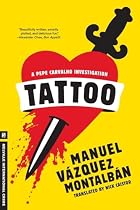
When I learned on LT that Camilleri named the delightful Inspector Montalbano in homage to Montalbán and his detective protagonist, Pepe Carvalho, I knew I had to read at least one book by him. And while Carvalho and Montalbán can't compare to Montalbano and Camilleri, I mostly enjoyed this book and would probably read more novels about Carvalho.
Pepe Carvalho is a freelance detective and, we learn, former CIA agent, in Franco-era Barcelona; his girlfriend is a prostitute and he carries a gun and a knife around with him. In this book, the owner of a beauty salon asks Carvalho to find out the name of a mysterious man who winds up dead in the water, a man who has a tattoo on his back saying "Born to raise hell in hell." Carvalho is suspicious because the man is paying him a lot for this information when he could go to the police, and in the aftermath of the discovery of the man the police start closing down bars and brothels. Carvalho's investigation takes him to Amsterdam and Rotterdam, and then back to Barcelona, with a variety of twists and turns. There was more violence, and more graphic violence, in this novel that in the Camilleris, and some of it was a little disturbing.
Like Montalbano, Carvalho is a gourmet, and the descriptions of the meals he cooked and ate in restaurants were just as delightful as those in Camilleri. The atmospherics of Barcelona and Amsterdam were the strong point of this novel, more so than the plot, although it was ingeniously plotted. And, except for his violent streak, I enjoyed the Carvalho's character.
My edition, published by Melville House in their International Crime series, was marred by sloppy proofreading: "selef" for "self" and a line that broke in the middle of the page for no reason, for example.
When I learned on LT that Camilleri named the delightful Inspector Montalbano in homage to Montalbán and his detective protagonist, Pepe Carvalho, I knew I had to read at least one book by him. And while Carvalho and Montalbán can't compare to Montalbano and Camilleri, I mostly enjoyed this book and would probably read more novels about Carvalho.
Pepe Carvalho is a freelance detective and, we learn, former CIA agent, in Franco-era Barcelona; his girlfriend is a prostitute and he carries a gun and a knife around with him. In this book, the owner of a beauty salon asks Carvalho to find out the name of a mysterious man who winds up dead in the water, a man who has a tattoo on his back saying "Born to raise hell in hell." Carvalho is suspicious because the man is paying him a lot for this information when he could go to the police, and in the aftermath of the discovery of the man the police start closing down bars and brothels. Carvalho's investigation takes him to Amsterdam and Rotterdam, and then back to Barcelona, with a variety of twists and turns. There was more violence, and more graphic violence, in this novel that in the Camilleris, and some of it was a little disturbing.
Like Montalbano, Carvalho is a gourmet, and the descriptions of the meals he cooked and ate in restaurants were just as delightful as those in Camilleri. The atmospherics of Barcelona and Amsterdam were the strong point of this novel, more so than the plot, although it was ingeniously plotted. And, except for his violent streak, I enjoyed the Carvalho's character.
My edition, published by Melville House in their International Crime series, was marred by sloppy proofreading: "selef" for "self" and a line that broke in the middle of the page for no reason, for example.
84qebo
>81 rebeccanyc: Already on the wishlist. Approaching with caution because I'm not sure I want to retreat into a cave for the rest of my life...
85baswood
Only two in the series for the Montalban books. Excellent review and thoughts on Dragnet Nation I am not sure if I should be worried or not.
86rebeccanyc
There are actually five more also published by Melville International Crime available from Amazon, Barry. I think I'll add them to my Amazon wishlist, which I keep so I can check it on my phone when I go to a bookstore. Of course, now having read Dragnet Nation, I'm thinking about not keeping an Amazon wishlist . . .
87LolaWalser
Hmm, how far ahead are you in the Montalbano series, Rebecca? The crime(s) and the killer in the last one I read were so disgusting I stopped reading them. (La caccia al tesoro)
I do like Camilleri (as a person too), but I rate Vázquez Montalbán much higher as a political writer. If you were to read only one more of the Carvalho books, I'd recommend The Buenos Aires quintet, IMO the best of the Carvalho books (the first few, including Tattoo, are untypical in some ways). It is about real history, and knowing you don't flinch at non-fiction about terrible events...
I do like Camilleri (as a person too), but I rate Vázquez Montalbán much higher as a political writer. If you were to read only one more of the Carvalho books, I'd recommend The Buenos Aires quintet, IMO the best of the Carvalho books (the first few, including Tattoo, are untypical in some ways). It is about real history, and knowing you don't flinch at non-fiction about terrible events...
88rebeccanyc
That's the last one I read, Lola (because it's the last one that's been translated into English) and I have to say I skipped a lot of the disgusting parts, but I do love Montalbano so I'm going to keep reading.
I ended up ordering three Vázquez Montalbáns from Amazon because they had three or less copies less and three gave me free shipping; however, The Buenos Aires Quintet wasn't one of them. I'll look for it in stores and then I may succumb and get it from Amazon too. The three I ordered are The Angst-Ridden Executive, Murder in the Central Committee, and Off Side. And you're right . . . I am definitely in the Grim Books Club!
I ended up ordering three Vázquez Montalbáns from Amazon because they had three or less copies less and three gave me free shipping; however, The Buenos Aires Quintet wasn't one of them. I'll look for it in stores and then I may succumb and get it from Amazon too. The three I ordered are The Angst-Ridden Executive, Murder in the Central Committee, and Off Side. And you're right . . . I am definitely in the Grim Books Club!
89fannyprice
Finally catching up on your thread, been intimidated by the large number of messages.
Enjoyed your reviews of Helen Oyeyemi's newest and of Dragnet Nation - I think I heard a similar (or the same) interview with the author. It is really ominous what is out there about each of us. In the interview, Angwin talks about getting access to the information companies had on her and how some of the information was completely inaccurate but was being used to help hospitals determine patients' ability to pay! I'm not sure if it's scarier when the information is accurate or when it's inaccurate.
In the interview, Angwin talks about how expensive some of the steps she took to protect her privacy were and then asserts that privacy is becoming a new luxury good, which was a rather thought-provoking idea.
http://www.npr.org/blogs/alltechconsidered/2014/02/24/282061990/if-you-think-you...
Enjoyed your reviews of Helen Oyeyemi's newest and of Dragnet Nation - I think I heard a similar (or the same) interview with the author. It is really ominous what is out there about each of us. In the interview, Angwin talks about getting access to the information companies had on her and how some of the information was completely inaccurate but was being used to help hospitals determine patients' ability to pay! I'm not sure if it's scarier when the information is accurate or when it's inaccurate.
In the interview, Angwin talks about how expensive some of the steps she took to protect her privacy were and then asserts that privacy is becoming a new luxury good, which was a rather thought-provoking idea.
http://www.npr.org/blogs/alltechconsidered/2014/02/24/282061990/if-you-think-you...
90rebeccanyc
Thanks for that link, Kris. I will listen to it later. I actually heard a different interview on one of my favorite shows on WNYC, my local station, the Leonard Lopate show (my other favorite is the Brian Lehrer show). Fortunately, since both shows are on during the day, I can listen to interesting segments on my phone in the evening when I'm cooking. Here is the link to the show I heard:
http://www.wnyc.org/story/privacy-security-and-freedom-world-surveillance/
One of the other things she talks about in the book is that information brokers categorize people in various ways, so since she's in some "harried working mom" category she probably sees prices that are higher than people in some other categories might see, since they presume (and she acknowledges) that she will often pick convenience over price.
http://www.wnyc.org/story/privacy-security-and-freedom-world-surveillance/
One of the other things she talks about in the book is that information brokers categorize people in various ways, so since she's in some "harried working mom" category she probably sees prices that are higher than people in some other categories might see, since they presume (and she acknowledges) that she will often pick convenience over price.
91fannyprice
Thanks for your link, as well. "She even bought a special metal-lined wallet that protected her credit cards from a possible nearby hackers." I forgot this part, but I loved that so much!
92janeajones
Enjoyed your review of Angwin's book -- I also heard her on NPR. I'm afraid I've given up on privacy -- just hoping I don't live long enough that the government wants to know everything about me.
The Interpreters is an intriguing book. I read it quite awhile ago, it lingers in my mind. Sad that Nigeria has gone down such a destructive path, ecologically and societally. There seemed to be some hope and potential in the novel.
The Interpreters is an intriguing book. I read it quite awhile ago, it lingers in my mind. Sad that Nigeria has gone down such a destructive path, ecologically and societally. There seemed to be some hope and potential in the novel.
93kidzdoc
Nice review of Dragnet Nation, Rebecca. I've also come to accept that my life is not private, largely because of my career choice. All physicians and, I think, other licensed health professionals in Georgia (and many other states I suppose) are required to have a public online listing on the Composite Board of Medical Examiners web site, which is searchable by anyone within or outside the state, free of charge and without the need to register for the site. It contains a wealth of information, including where I work, what insurance plans I accept, where I trained (medical school and residency), and whether any malpractice claims have been filed against me (and what their outcomes were), whether I've been convicted of a felony, and whether I've had my hospital privileges revoked here or in any other state (fortunately I have a clean record). Anyone can also easily look up my National Provider Identification (NPI) or Drug Enforcement Agency (DEA) numbers, which are required to write prescriptions. My web page on Children's is also online, and if I do a simple Google search (darryl + pediatrician + Atlanta) over a dozen web pages about me are instantly available, some of which include a photograph of me, such as this one from US News & World Report (http://health.usnews.com/doctors/darryl-morris-317404). I fully accept that information about physicians should be made readily available to the public free of charge, to allow patients (including myself) to learn as much as they can about the doctors that will be involved in their care or that of a loved one, but it's still a bit disconcerting that so much information about me is so easily available (although, as I said, I have nothing to hide, with the possible exception of my extreme book addiction).
I added The Interpreters to my LT library after reading your review; I've had a copy of it with an identical cover for the past few years but I haven't read it yet. I think I've only read one of his books, the memoir You Must Set Forth at Dawn, which I liked.
I added The Interpreters to my LT library after reading your review; I've had a copy of it with an identical cover for the past few years but I haven't read it yet. I think I've only read one of his books, the memoir You Must Set Forth at Dawn, which I liked.
94fannyprice
>93 kidzdoc:, Wow, Darryl, that is really crazy!
95kidzdoc
>94 fannyprice: True, but it's far worse for those physicians who have gotten into trouble. I can think of at least five physicians who have had their admitting privileges revoked by Children's since I started working there, and information about their revocations are posted to their profiles on the Georgia Composite Medical Board web site.
I just looked up my physician profile, to remind myself of what negative things we have to report on: disciplinary actions by licensing boards (in my case, this would be the state of Georgia and the American Board of Pediatrics); revocation or restriction of hospital privileges; criminal offenses; medical malpractice court judgment and/or arbitration awards in excess of $100,000 over the past 10 years; and medical malpractice settlements over the past 10 years. These profiles are made available as part of The Patient Right to Know Act, so I would assume that all physicians in the US have to provide this information, along with their DEA, NPI and state license numbers.
One of my biggest concerns is that anyone could call in prescriptions to a pharmacy, using my name and other readily available information, and that I could potentially get into trouble for prescribing medications illegally. Fortunately Schedule I, III, and III drugs, those with the highest potential for abuse or dependency, require a written prescription on a special form that wouldn't be available to the average person, and these medications cannot be called in to a pharmacy.
I just looked up my physician profile, to remind myself of what negative things we have to report on: disciplinary actions by licensing boards (in my case, this would be the state of Georgia and the American Board of Pediatrics); revocation or restriction of hospital privileges; criminal offenses; medical malpractice court judgment and/or arbitration awards in excess of $100,000 over the past 10 years; and medical malpractice settlements over the past 10 years. These profiles are made available as part of The Patient Right to Know Act, so I would assume that all physicians in the US have to provide this information, along with their DEA, NPI and state license numbers.
One of my biggest concerns is that anyone could call in prescriptions to a pharmacy, using my name and other readily available information, and that I could potentially get into trouble for prescribing medications illegally. Fortunately Schedule I, III, and III drugs, those with the highest potential for abuse or dependency, require a written prescription on a special form that wouldn't be available to the average person, and these medications cannot be called in to a pharmacy.
96fannyprice
>95 kidzdoc:, Yeah, not to hijack Rebecca's thread, but when you mentioned the DEA and NIP numbers, that was my first thought. My doctor has these crazy special prescription pads with all sorts of security features (including one that is activated by the heat from one's fingertip!) that she uses for everything, even innocuous-seeming things like nasal spray, so that people can't photocopy a slip, perhaps?
97kidzdoc
>96 fannyprice: That's right. The forms on our standard prescription pads are made of special paper, and if they are photocopied the word "VOID" appears all over them. The forms for DEA Schedule I, II and III drugs even more specialized, as they are numbered and dispensed by the State of Georgia, for added security. These prescription pads used to be kept in cabinets in the patient care areas, but now they are kept in the Pyxis MedStations, which are accessible only to nurses, who must log in with a fingerprint scanner to access these forms and patient medications.
Sorry to hijack your thread, Rebecca!
Sorry to hijack your thread, Rebecca!
98qebo
>97 kidzdoc: Sorry to hijack your thread, Rebecca!
Don't be. Informative.
Don't be. Informative.
99rebeccanyc
Wow, I wondered why there were so many unread messages on my thread! That is fascinating, Darryl, and a bit scary too. Thanks for explaining all this to us.
>92 janeajones: I read the book because of your recommendation, Jane, after I read Helon Habila's Oil on Water. It was hard for me to read it, especially the section where they're driving around the watery areas, without thinking of what has happened there. I am not sure if I felt a sense of hope from the book, except that it described young people with their lives ahead of them. Although Nigeria was newly independent, there already seemed to be a lot of corruption.
>92 janeajones: I read the book because of your recommendation, Jane, after I read Helon Habila's Oil on Water. It was hard for me to read it, especially the section where they're driving around the watery areas, without thinking of what has happened there. I am not sure if I felt a sense of hope from the book, except that it described young people with their lives ahead of them. Although Nigeria was newly independent, there already seemed to be a lot of corruption.
100mabith
Thanks for the review on Bird, Snow, Boy! I was on the fence about reading it, but I think it can go to the nebulous bottom of the to-read list. I have a premonition that my online bookclub will choose it for next year, and your review has definitely helped me be more prepared if I do read it.
101rebeccanyc
Glad I could help, Meredith!
102labfs39
Your review of Dragnet Nation is timely for me: I was having a conversation recently about the fact that in general people seem scarily unconcerned about privacy, especially young people. Sure, there is an outcry about the NSA, but then people turn right back around and jump on Facebook, posting pictures of their children, talking about when they are leaving on vacation (and their houses abandoned), etc. I heard an interesting interview about the long term effect Mommy bloggers have on their children's lives. What is it like to grow up knowing that everything you've done since you were born is public knowledge? Complete with photos? I think partly we don't think about lack of privacy because it has been happening gradually over time. Does anyone else remember having an aneurysm when Google Maps allowed anyone and everyone to see a close up view of personal houses (even whether their were cars in the driveway)? The time lapse argument didn't come close to alleviating my concerns. I also think fannyprice is right about privacy becoming a luxury good. When grocery store loyalty cards came into vogue, I remember thinking "never will I let people track my purchases like that". Then as every receipt came back with the amount of how much I could have saved had I used a loyalty card, my indignation gave way to frugality. I don't know what the answer is. Part of me doesn't want to know how much others know; part of me values the conveniences; and part of me is outraged. Where is the balance?
Although I think reading the book would be too depressing for me, I value the discussion that has arisen over it. Thanks for the links too!
Although I think reading the book would be too depressing for me, I value the discussion that has arisen over it. Thanks for the links too!
103rebeccanyc
Thanks for those interesting thoughts, Lisa. I too have avoided grocery shop loyalty cards and stayed away from E-Z Pass (electronic toll collection gizmo on your car) for a long time, until the difference in price made it crazy not to get it, and now of course having to stop and find the money seems a long way off.
The book is not too depressing because Angwin, despite everything she finds out, doesn't want to create a world of fear for her children. I'm just more pessimistic than she is.
The book is not too depressing because Angwin, despite everything she finds out, doesn't want to create a world of fear for her children. I'm just more pessimistic than she is.
104rebeccanyc
25. Mastermind: How To Think Like Sherlock Holmes by Maria Konnikova
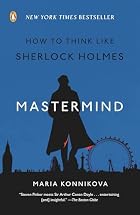
As a lover of Sherlock Holmes, I wanted to like this book more than I did. Konnikova interweaves references to Sherlock Holmes stories and Holmes's thought processes with information from modern neuroscience and psychology about how our brains work. She uses the metaphor of the "brain attic," a place where we store and organize information. Alas, many ideas in this book were already familiar to me from other books I've read, such as Daniel Kahneman's Thinking, Fast and Slow, as well as books about neuroscience. So such points as that we have two modes of thinking, that we have to pay attention to remember anything (although paying attention is difficult), that our minds tend to create narratives that seem to make sense, and that our brains change as we use them were nothing new for me.
Konnikova, who has a PhD in psychology, is a lively writer, and the references to Holmes and Watson are usually apropos. Basically, she advocates that we observe carefully, explore possibilities imaginatively, make deductions from actual evidence rather than our preconceptions, consistently practice new ways of thinking to make them habitual, and never stop educating ourselves. Nothing earth-shattering there. Towards the end, she describes Holmes as a hunter and lists the characteristics of a hunter that would serve us in good stead: ever-ready attention, environmental appropriateness, adaptability, acknowledging limitations, cultivating quiet, and constant vigilance. Again, she introduces a metaphor, like the brain attic, that is moderately useful for organizing ideas, but the ideas themselves are not new.
Further, she says in her introduction, "This book aims to help. It takes Holmes's methodology to explore and explain the steps necessary for building up habits of thought that will allow you to engage mindfully with yourself and your world as a matter of course." For people expecting a more practical book, this is not it.
For me, the best part of the book were the Sherlock Holmes references, and it has reminded me to continue my rereading of the Holmes stories.
As a lover of Sherlock Holmes, I wanted to like this book more than I did. Konnikova interweaves references to Sherlock Holmes stories and Holmes's thought processes with information from modern neuroscience and psychology about how our brains work. She uses the metaphor of the "brain attic," a place where we store and organize information. Alas, many ideas in this book were already familiar to me from other books I've read, such as Daniel Kahneman's Thinking, Fast and Slow, as well as books about neuroscience. So such points as that we have two modes of thinking, that we have to pay attention to remember anything (although paying attention is difficult), that our minds tend to create narratives that seem to make sense, and that our brains change as we use them were nothing new for me.
Konnikova, who has a PhD in psychology, is a lively writer, and the references to Holmes and Watson are usually apropos. Basically, she advocates that we observe carefully, explore possibilities imaginatively, make deductions from actual evidence rather than our preconceptions, consistently practice new ways of thinking to make them habitual, and never stop educating ourselves. Nothing earth-shattering there. Towards the end, she describes Holmes as a hunter and lists the characteristics of a hunter that would serve us in good stead: ever-ready attention, environmental appropriateness, adaptability, acknowledging limitations, cultivating quiet, and constant vigilance. Again, she introduces a metaphor, like the brain attic, that is moderately useful for organizing ideas, but the ideas themselves are not new.
Further, she says in her introduction, "This book aims to help. It takes Holmes's methodology to explore and explain the steps necessary for building up habits of thought that will allow you to engage mindfully with yourself and your world as a matter of course." For people expecting a more practical book, this is not it.
For me, the best part of the book were the Sherlock Holmes references, and it has reminded me to continue my rereading of the Holmes stories.
106banjo123
The privacy issues are interesting. I wonder, really, if there was more privacy when people lived in smaller, agrarian communities.
107mabith
It is definitely a privilege, not just monetarily, to be able to even worry over-much about privacy. Worrying about some future possible violation is hard if you have a lot of current and immediate troubles on your mind. I would rather agree to XYZ in downloading a phone game (or anything that gives me some happiness/use) and have that game to distract me when I need it than give up that day-to-day distraction/happiness/helpfulness to be slightly safer in the unimaginable event that the information is used in some negative way.
108rebeccanyc
26. The Queen's Necklace by Alexandre Dumas

This isn't my cover; I have a used hardcover that just is solid dark green.
Well, like everything by Dumas that I've read, this is a rollicking read, but I wish I had read it before I read the book of the same name by Antal Szerb. That's because Szerb tried to figure out what really happened, while Dumas lets his imagination run riot, and I kept thinking "that didn't really happen, no that's something he made up." For example, Szerb is convinced that Jeanne de Motte never met Marie Antoinette, yet in this novel she visits her frequently at Versailles; similarly, Szerb is convinced that the queen never owned or wore the necklace but in the Dumas version she owns it briefly. Szerb casts a veil over whether the queen had lovers, as her detractors insisted, but in this novel she at the very least falls in love easily. Similarly, Dumas seems to invent a subplot involving a fake Portuguese ambassador.
Nonetheless, this is a lively tale of plot and counterplot, intrigue, mysterious characters, love, and above all honor. I enjoyed it, but not as much as I could have.
There seems to be no modern translation of this novel. No translator is listed for my edition, a 1951 publication, and the language at times is old-fashioned and obscure. There are also a variety of print-on-demand editions.

This isn't my cover; I have a used hardcover that just is solid dark green.
Well, like everything by Dumas that I've read, this is a rollicking read, but I wish I had read it before I read the book of the same name by Antal Szerb. That's because Szerb tried to figure out what really happened, while Dumas lets his imagination run riot, and I kept thinking "that didn't really happen, no that's something he made up." For example, Szerb is convinced that Jeanne de Motte never met Marie Antoinette, yet in this novel she visits her frequently at Versailles; similarly, Szerb is convinced that the queen never owned or wore the necklace but in the Dumas version she owns it briefly. Szerb casts a veil over whether the queen had lovers, as her detractors insisted, but in this novel she at the very least falls in love easily. Similarly, Dumas seems to invent a subplot involving a fake Portuguese ambassador.
Nonetheless, this is a lively tale of plot and counterplot, intrigue, mysterious characters, love, and above all honor. I enjoyed it, but not as much as I could have.
There seems to be no modern translation of this novel. No translator is listed for my edition, a 1951 publication, and the language at times is old-fashioned and obscure. There are also a variety of print-on-demand editions.
109rebeccanyc
>105 labfs39: Why am I not surprised, Lisa?
>106 banjo123: I think there were privacy issues of a different kind, Rhonda. In small towns now, everyone seems to know everything about everyone else. But they didn't have the potential of knowing all about everyone on the planet.
>107 mabith: That's a very good point, Meredith, and it can be said about a lot of things that people who are stressed or working several jobs or have health or family issues don't have the time or energy to devote their attention to. That's why the solution can't be something that individuals have to do on their own, but something at a policy and enforcement level like, for example, air pollution regulations, since pollution primarily affects people who are poor and who can't resolve the issue themselves (e.g., taking the lead out of gasoline). On the other hand, that's why I'm pessimistic about anything being done about it.
>106 banjo123: I think there were privacy issues of a different kind, Rhonda. In small towns now, everyone seems to know everything about everyone else. But they didn't have the potential of knowing all about everyone on the planet.
>107 mabith: That's a very good point, Meredith, and it can be said about a lot of things that people who are stressed or working several jobs or have health or family issues don't have the time or energy to devote their attention to. That's why the solution can't be something that individuals have to do on their own, but something at a policy and enforcement level like, for example, air pollution regulations, since pollution primarily affects people who are poor and who can't resolve the issue themselves (e.g., taking the lead out of gasoline). On the other hand, that's why I'm pessimistic about anything being done about it.
110mabith
>106 banjo123: I live in an elderly and/or disabled only apartment building and there is absolutely no privacy here. There are people who hang out in the lobby constantly and keep tabs on everyone. Being a young woman and having men I've never spoken to come up and tell me what car I drive is only one of many excitements. Same thing in the small towns I grew up in, especially for my friends whose extended families all lived there too (cue the "I saw your daughter walking around town with..." phone calls).
It's hard to optimistic about anything involving politics right now, at least involving new federal regulatory laws.
I had the Antal Szerb book on my list, so now I'll definitely put it on hold until I read the Dumas. Thanks!
It's hard to optimistic about anything involving politics right now, at least involving new federal regulatory laws.
I had the Antal Szerb book on my list, so now I'll definitely put it on hold until I read the Dumas. Thanks!
111baswood
The Queen's Necklace, Alexandre Dumas. Having an adventure story slightly spoiled by having read a truer more sober account is something that probably does not happen very often.
113NanaCC
>108 rebeccanyc:. I have the book written by Szerb on my Kindle, and now I'm torn. I loved The Count of Monte Cristo and had thought about The Queen's Necklace. After reading your review, I think I need to read the Dumas first. I'd like to be able to enjoy both.
114rebeccanyc
>111 baswood: and >113 NanaCC: Well, I like Dumas, but this isn't The Count of Monte Cristo, and possibly it was marred by the somewhat old-fashioned translation. On the other hand, Szerb was a wonderful discovery and I've gone out and bought more of his books; he's such a delightful writer.
115rebeccanyc
On Thursday, I'm going to visit relatives with long plane trips each way, making for a great reading opportunity. I will whittle this down slightly, but here are the books I'm considering bringing.
One I'm currently reading:
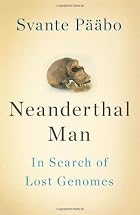
Two I just bought:
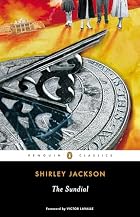
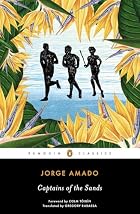
And several from the TBR:

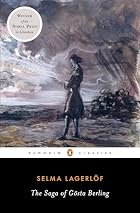

One I'm currently reading:
Two I just bought:
And several from the TBR:


116LibraryPerilous
I enjoyed the Pevear/Volokhonsky translation of Leskov's stories, and I've been meaning to get 'round to Barry Unsworth, perhaps starting with Morality Play.
You seem to like Jorge Amado. I made a stab at Gabriela, Cinnamon, and Clove and thought his prose was beautiful.
You seem to like Jorge Amado. I made a stab at Gabriela, Cinnamon, and Clove and thought his prose was beautiful.
117japaul22
I'll be interested to hear what you think of The Saga of Gosta Berling whenever you get to it, since I'm planning to read it with a group read in May.
Seems like you can't go wrong with any of the books you're considering!
Seems like you can't go wrong with any of the books you're considering!
118rebeccanyc
>116 LibraryPerilous: I will definitely get to the Leskov, but I'm thinking of leaving it behind on this trip. The only Barry Unsworth I've read is Morality Play, and I loved it so much I went out at bought more. I first read Amado for last quarter's Reading Globally theme read on South America, although I'd had some of his books on my TBR for decades, so I've been buying more of him.
>117 japaul22: I heard about The Saga of Gosta Berling here on LT and it sounded like a fun read.
As I look at the pictures of the books I'm thinking of bringing, I have to wonder if Penguin is taking over the world (four of the seven books pictured). All the four books I bought yesterday (the two shown and two others) are published by Penguin too.
>117 japaul22: I heard about The Saga of Gosta Berling here on LT and it sounded like a fun read.
As I look at the pictures of the books I'm thinking of bringing, I have to wonder if Penguin is taking over the world (four of the seven books pictured). All the four books I bought yesterday (the two shown and two others) are published by Penguin too.
119almigwin
>118 rebeccanyc:: I really love Barry Unsworth and I think Sacred Hunger is his best!
Len says I say 'wonderful' about too many things, but if they are wonderful, they are.
Len says I say 'wonderful' about too many things, but if they are wonderful, they are.
120Caroline_McElwee
I have long been intending to read Sacred Hunger and do have it somewhere. Will look forward to your review.
Have a good trip Rebecca.
Have a good trip Rebecca.
121NanaCC
>119 almigwin: I had forgotten about Sacred Hunger until you mentioned it Miriam. I really did enjoy that one, and Morality Play was also very good. I have Losing Nelson and Stone Virgin on my shelf, and should really get to them.
ETA: Rebecca, I hope you have a great trip and enjoy the books you bring.
ETA: Rebecca, I hope you have a great trip and enjoy the books you bring.
122rebeccanyc
Thanks, Miriam, Caro, and Colleen!
123labfs39
Safe travels and happy reading! I noticed all the penguin covers, but was a little envious. Penguin classics publishes some good books that might otherwise be out of print. So not all bad?
124SassyLassy
How I envy you being able to read on a plane! Great possibilities here, but for a vacation I'd be tempted by the Jackson, Amado and Lagerlof. I read Sacred Hunger some years ago. It was the first Unsworth I read and I've been reading him ever since. It will keep you reading. Great selection though, and then there will be all those new books you're sure to come bring back. Enjoy your trip.
125rebeccanyc
>123 labfs39: Yes, Lisa; in fact the Jackson book and another by Jackson that I bought at the same time are 2014 reissues, so they're keeping up with the times.
>124 SassyLassy: I'm leaning towards those too, but I will decide as late as possible tonight (can't leave it until tomorrow since I'm leaving at 6:45 AM and want to reduce the number of things I have to do in the morning to washing up and getting dressed!).
>124 SassyLassy: I'm leaning towards those too, but I will decide as late as possible tonight (can't leave it until tomorrow since I'm leaving at 6:45 AM and want to reduce the number of things I have to do in the morning to washing up and getting dressed!).
126mkboylan
>54 rebeccanyc: Landscapes of fear sounds intriguing.
>81 rebeccanyc: Dragnet Nation sounds excellent but depressing but at least it has suggestions. Altho I asked a couple of people about DuckDuckGo and Ixquick and they said yeah not so much on the privacy. Angwin has to be the expertest (:)) tho, right? I'm using them anyway.
>81 rebeccanyc: Dragnet Nation sounds excellent but depressing but at least it has suggestions. Altho I asked a couple of people about DuckDuckGo and Ixquick and they said yeah not so much on the privacy. Angwin has to be the expertest (:)) tho, right? I'm using them anyway.
127mkboylan
I found Jeff Jarvis book Public Parts How Sharing in the Digital Age Improves the Way We Work and Live to be a VERY interesting perspective about privacy on the internet. I recommend it.
I enjoyed all of your excellent reviews, as usual! Killing my TBS as usual.
I enjoyed all of your excellent reviews, as usual! Killing my TBS as usual.
128qebo
>104 rebeccanyc: Oh this sounds a combination of fun and informative, even it not entirely new. Tossed onto the WL.
129rebeccanyc
I'm back. I am super busy and will catch up with everyone's threads and post my own reviews later this week. I finished The Saga of Gosta Berling and The Sundial, and may finish Captains of the Sands by the time I get a chance to post reviews.
>126 mkboylan: and 127 Merrikay, thanks! And thanks for the recommendation of the Jarvis book too.
>128 qebo: I think you may be familiar with some modern neuroscience, so it may not be new to you either. But the Sherlock Holmes parts are fun.
>126 mkboylan: and 127 Merrikay, thanks! And thanks for the recommendation of the Jarvis book too.
>128 qebo: I think you may be familiar with some modern neuroscience, so it may not be new to you either. But the Sherlock Holmes parts are fun.
131rebeccanyc
Thanks, Lisa. Aiming for Friday to catch up!
132avidmom
Delurking to say hello. Enjoying all the reviews - especially Dragnet Nation. It's bad enough that the "big" things are watching us, but just about anyone anywhere with a camera/video phone can catch what you're doing too. The whole thing creeps me out!
133yolana
Thanks for the review of Boy, Snow, Bird I've had it sitting on the to be read pile for a while. it looks like I have to be in just the right frame of mind to read it.
134rebeccanyc
Thanks for stopping by, Avid and yolana!
135fannyprice
>106 banjo123:, It strikes me that there are different kinds of privacy. >109 rebeccanyc:, I had the exact same thought, Rebecca. I grew up in a town where everyone knew everything about their neighbors and to think of privacy in that context would have been ridiculous. But now, I have never even met my neighbors. Yet, if I knew their names, I bet I could find out quite a bit about them without ever meeting them.
136rebeccanyc
27. The Angst-Ridden Executive by Manuel Vázquez Montalbán
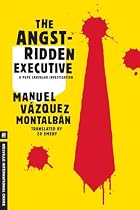
Another Pepe Carvalho mystery, and an opportunity to get to know the detective and his world better. This was a more complex book than the first one I read, as the killing of said executive and the disappearance of another (both of whom Carvalho knew from his past) lead Carvalho into an exploration of a group of friends who differed in their reaction to the Franco era and its aftermath. More good food, and again a little more violence and a little less fun than in the Camilleri mysteries whose detective is named after Montalbán. However, I like the insight into politics Montalbán provides, and I'll continue to read this series.
Another Pepe Carvalho mystery, and an opportunity to get to know the detective and his world better. This was a more complex book than the first one I read, as the killing of said executive and the disappearance of another (both of whom Carvalho knew from his past) lead Carvalho into an exploration of a group of friends who differed in their reaction to the Franco era and its aftermath. More good food, and again a little more violence and a little less fun than in the Camilleri mysteries whose detective is named after Montalbán. However, I like the insight into politics Montalbán provides, and I'll continue to read this series.
137rebeccanyc
28. The Saga of Gösta Berling by Selma Lagerlöf
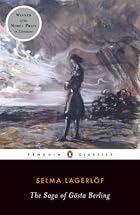
This is a romantic novel in every sense of the word, and mythical too. Set along a lake in northern Sweden in the early part of the 19th century, it tells the tale of Gösta Berling interwoven with the stories of other residents of the area, along with a dash of the supernatural.
Who is Gösta Berling? In the prologue, the reader learns that he started out in life as a preacher but fell prey to drink, was defrocked and set out as a traveling beggar. But the majoress (wife of a major) of Ekeby, owner of seven mines and the most powerful and richest person (not just woman) around, takes him to her household as one of the twelve "cavaliers" who live there -- a group of men who have fallen on hard times and who live a life of entertainment that borders on dissolution, playing music, eating and drinking, wild parties, etc. Unlike many of the cavaliers, Gösta is young.
The novel takes place over the course of a year -- 12 months -- starting at a Christmas feast at which the cavaliers make a pact with the devil that gives them control of Ekeby for a year and sends the majoress out into the world to beg for her living. Gösta attracts women and vice versa. As the year progresses, several tragic romantic attachments occur, with flashbacks to others. At the same time, other events take place in the villages and farms surrounding the lake, and each of the cavaliers faces a challenge of some kind. The novel builds to its climax as the next Christmas rolls around and the pact with the devil expires.
Such is a broad outline of the novel, but it hardly gives the flavor of Lagerlöf's writing or the broad scope of the book. Local history, geography, the beauty and the threat of nature, fairy tales, and a strong thread of self-effacing religion all play a role. Lagerlöf, as novelist, frequently addresses the reader, often characterizing the time she is writing about (less than 100 years earlier) as olden times, a time of legend. Her characters are often more symbolic than real, and their actions sometimes not entirely believable but this is not a book meant to be taken literally. Her writing can be dramatic, and this worked best for me lyrical (but often haunted) passages about nature. In fact nature, as it affects people, is a character too. Some examples of Lagerlöf's writing:
"He knew every tree the way you know your siblings and playmates." p. 240
"But we were thinking, we, in the peculiar spirit of self-observation, which had already made its way inside us. We were thinking about him with the eyes of ice and the long, crooked fingers, he who sits in the soul's darkest corner and tears apart our being, the way old women pick apart scraps of silk and wool." p. 112
"Oh month of May, that lovely time when the birches blend their light greenery into the dark of the spruce forests, and when the south wind comes again far from the south saturate by heat!
I must seem more ungrateful than others who have enjoyed your gifts, you beautiful month. Not a word have I used to show your beauty. . . .
May others listen to talk of flowers and sunshine, but for myself I choose dark nights, full of visions and adventures, for me the hard fates, for me the sorrow-filled passions of wild hearts." pp. 226-227
The grieving mouth is easily forced to smile, but someone who is happy cannot weep. The old ballads believe in tears and sighs, in sorrow alone and the signs of sorrow. Sorrow is real, is lasting, it is the firm bedrock under loose sand. In sorrow one can believe and in the signs of sorrow.
But happiness is only sorrow that is playacting. There is really nothing on the earth but sorrow." p. 296
Depressed yet? There is some fun in this book too!
At times, the thread of piety and the virtues of serving others without thought of person vanity got to me, but there was also plenty of adventure and romance. This book grew on me.
This is a romantic novel in every sense of the word, and mythical too. Set along a lake in northern Sweden in the early part of the 19th century, it tells the tale of Gösta Berling interwoven with the stories of other residents of the area, along with a dash of the supernatural.
Who is Gösta Berling? In the prologue, the reader learns that he started out in life as a preacher but fell prey to drink, was defrocked and set out as a traveling beggar. But the majoress (wife of a major) of Ekeby, owner of seven mines and the most powerful and richest person (not just woman) around, takes him to her household as one of the twelve "cavaliers" who live there -- a group of men who have fallen on hard times and who live a life of entertainment that borders on dissolution, playing music, eating and drinking, wild parties, etc. Unlike many of the cavaliers, Gösta is young.
The novel takes place over the course of a year -- 12 months -- starting at a Christmas feast at which the cavaliers make a pact with the devil that gives them control of Ekeby for a year and sends the majoress out into the world to beg for her living. Gösta attracts women and vice versa. As the year progresses, several tragic romantic attachments occur, with flashbacks to others. At the same time, other events take place in the villages and farms surrounding the lake, and each of the cavaliers faces a challenge of some kind. The novel builds to its climax as the next Christmas rolls around and the pact with the devil expires.
Such is a broad outline of the novel, but it hardly gives the flavor of Lagerlöf's writing or the broad scope of the book. Local history, geography, the beauty and the threat of nature, fairy tales, and a strong thread of self-effacing religion all play a role. Lagerlöf, as novelist, frequently addresses the reader, often characterizing the time she is writing about (less than 100 years earlier) as olden times, a time of legend. Her characters are often more symbolic than real, and their actions sometimes not entirely believable but this is not a book meant to be taken literally. Her writing can be dramatic, and this worked best for me lyrical (but often haunted) passages about nature. In fact nature, as it affects people, is a character too. Some examples of Lagerlöf's writing:
"He knew every tree the way you know your siblings and playmates." p. 240
"But we were thinking, we, in the peculiar spirit of self-observation, which had already made its way inside us. We were thinking about him with the eyes of ice and the long, crooked fingers, he who sits in the soul's darkest corner and tears apart our being, the way old women pick apart scraps of silk and wool." p. 112
"Oh month of May, that lovely time when the birches blend their light greenery into the dark of the spruce forests, and when the south wind comes again far from the south saturate by heat!
I must seem more ungrateful than others who have enjoyed your gifts, you beautiful month. Not a word have I used to show your beauty. . . .
May others listen to talk of flowers and sunshine, but for myself I choose dark nights, full of visions and adventures, for me the hard fates, for me the sorrow-filled passions of wild hearts." pp. 226-227
The grieving mouth is easily forced to smile, but someone who is happy cannot weep. The old ballads believe in tears and sighs, in sorrow alone and the signs of sorrow. Sorrow is real, is lasting, it is the firm bedrock under loose sand. In sorrow one can believe and in the signs of sorrow.
But happiness is only sorrow that is playacting. There is really nothing on the earth but sorrow." p. 296
Depressed yet? There is some fun in this book too!
At times, the thread of piety and the virtues of serving others without thought of person vanity got to me, but there was also plenty of adventure and romance. This book grew on me.
138rebeccanyc
29. The Sundial by Shirley Jackson
Shirley Jackson is at her creepiest best in this novel, although nothing can compare to We Have Always Lived in the Castle. The story concerns the Hallorans, who live in the "big house" in a New England village, and starts just after the grown son of the family (the grandson of the house's builder) has been killed when his mother pushed him down the stairs. The family consists of the widow and her young daughter, Fancy, as well as the murderous mother, Orianna, her husband Richard, the son of the builder (who is confined to a wheelchair) and his never married sister Aunt Fanny. Hangers-on include a strange young man named Essex, apparently hired to organize the library, and Miss Ogilvie, the tutor for young Fancy.
After her son's murder, Orianna consolidates his control of the household, to the displeasure of many of the other residents. Soon Aunt Fanny has a vision that her father, long dead, has told her that the world will soon end, but that those in the big house will survive to inherit the new world that will replace it. And so they prepare for the end of the world. They buy so many supplies of every kind that they confound the people in the village and the servants and have to burn books from library to turn the shelves into storage bins. They welcome some others into the safe big house, some who just turn up and one who they recruit so he can help produce the future generations that will be needed after the end of the world. In her total deviousness, Orianna prevents people from leaving the house. And then she trows a party for the villagers on the eve of destruction* where, under the influence of alcohol, much is revealed, some that is true and some that is made up.
It is the idea of this group of more or less crazy people preparing for the end of the world that informs the novel and gives Jackson wondrous opportunities to satirize everything from people's pretensions (we learn that family is not as "old" or "good" as it pretends to be) to people who predict the world's end (there is another, much more déclassé, group in town with their own ideas about this) to interpersonal to dramas and village-big house relations. And so much more.
I marvel at Jackson's ability to create such a sense of creepiness when, as readers, we know the world isn't going to end, and to create such a variety of sleazy and crazy characters, who differ in the the nature and degree of their sleaziness and craziness, and to subtly satirize class pretensions in so many ways -- and to make some of this almost laugh-out-loud funny! I really enjoyed this book.
*Totally irrelevant to this book, but I couldn't resist that. Does anyone else remember the Barry McGuire song?
Shirley Jackson is at her creepiest best in this novel, although nothing can compare to We Have Always Lived in the Castle. The story concerns the Hallorans, who live in the "big house" in a New England village, and starts just after the grown son of the family (the grandson of the house's builder) has been killed when his mother pushed him down the stairs. The family consists of the widow and her young daughter, Fancy, as well as the murderous mother, Orianna, her husband Richard, the son of the builder (who is confined to a wheelchair) and his never married sister Aunt Fanny. Hangers-on include a strange young man named Essex, apparently hired to organize the library, and Miss Ogilvie, the tutor for young Fancy.
After her son's murder, Orianna consolidates his control of the household, to the displeasure of many of the other residents. Soon Aunt Fanny has a vision that her father, long dead, has told her that the world will soon end, but that those in the big house will survive to inherit the new world that will replace it. And so they prepare for the end of the world. They buy so many supplies of every kind that they confound the people in the village and the servants and have to burn books from library to turn the shelves into storage bins. They welcome some others into the safe big house, some who just turn up and one who they recruit so he can help produce the future generations that will be needed after the end of the world. In her total deviousness, Orianna prevents people from leaving the house. And then she trows a party for the villagers on the eve of destruction* where, under the influence of alcohol, much is revealed, some that is true and some that is made up.
It is the idea of this group of more or less crazy people preparing for the end of the world that informs the novel and gives Jackson wondrous opportunities to satirize everything from people's pretensions (we learn that family is not as "old" or "good" as it pretends to be) to people who predict the world's end (there is another, much more déclassé, group in town with their own ideas about this) to interpersonal to dramas and village-big house relations. And so much more.
I marvel at Jackson's ability to create such a sense of creepiness when, as readers, we know the world isn't going to end, and to create such a variety of sleazy and crazy characters, who differ in the the nature and degree of their sleaziness and craziness, and to subtly satirize class pretensions in so many ways -- and to make some of this almost laugh-out-loud funny! I really enjoyed this book.
*Totally irrelevant to this book, but I couldn't resist that. Does anyone else remember the Barry McGuire song?
139rebeccanyc
30. Captains of the Sands by Jorge Amado

Written when Amado was only 25, this book demonstrates his writing talent but borders slightly on the politically didactic and sentimental. The Captains of the Sands are a group of orphaned boys who, under the leadership of Pedro Bala, live in an abandoned and decaying warehouse on the sands of Bahia and survive by stealing. As is often mentioned, they are men in the bodies of children. Some of the novel deals with their criminal activities, some with their hardships, some with their yearning for the love of mothers and the guidance of fathers, and some with (this being Amado) sex. The reader gets to know Pedro and some of the other Captains of the Sands individually, including one who is crippled, one who is an artist and a reader, and one who dreams of becoming a priest, and this is one of the strengths of the novel. Several outsiders interact with the group, providing insight into the religious (both Catholic and candomblé) and the judicial systems. Racial issues also emerge.
Two-thirds of the way through the book, a girl comes to live with the Captains, and this results in various upsets among the group. At a certain point, Pedro is captured by the police and confined to the children's "reformatory" -- this section is chilling. At the end of the book, some of the Captains have grown older and left for other activities and Pedro, whose father was killed as a strike leader,feels a call to be politically active. I found these political parts a little obvious, but they were clearly heartfelt for Amado who, because of his own political leanings, had to flee Brazil for Mexico as he was finishing this novel, the last of six "Bahian" novels he wrote starting in his teens.
I am glad I read some of Amado's later, more complicated novels before reading this one, but I nonetheless found it a compelling book.

Written when Amado was only 25, this book demonstrates his writing talent but borders slightly on the politically didactic and sentimental. The Captains of the Sands are a group of orphaned boys who, under the leadership of Pedro Bala, live in an abandoned and decaying warehouse on the sands of Bahia and survive by stealing. As is often mentioned, they are men in the bodies of children. Some of the novel deals with their criminal activities, some with their hardships, some with their yearning for the love of mothers and the guidance of fathers, and some with (this being Amado) sex. The reader gets to know Pedro and some of the other Captains of the Sands individually, including one who is crippled, one who is an artist and a reader, and one who dreams of becoming a priest, and this is one of the strengths of the novel. Several outsiders interact with the group, providing insight into the religious (both Catholic and candomblé) and the judicial systems. Racial issues also emerge.
Two-thirds of the way through the book, a girl comes to live with the Captains, and this results in various upsets among the group. At a certain point, Pedro is captured by the police and confined to the children's "reformatory" -- this section is chilling. At the end of the book, some of the Captains have grown older and left for other activities and Pedro, whose father was killed as a strike leader,
I am glad I read some of Amado's later, more complicated novels before reading this one, but I nonetheless found it a compelling book.
140rebeccanyc
Whew! Now I'm caught up with reviews. Now going to try to catch up with all of your threads.
141LibraryPerilous
>138 rebeccanyc:, I might have to give Jackson another shot. I made a stab at The Haunting of Hill House recently and didn't care for it, but I do remember enjoying the creep factor of We Have Always Lived in the Castle when I read it (gulp!) twenty years ago.
So many great protest songs have come out of American music, especially in the 60s. CCR's "Fortunate Son" was selected for LOC preservation earlier this week. Compelling images in the video you linked. Here's a good lament for the dying art: http://www.bbc.com/culture/story/20140204-where-are-all-the-protest-songs
The Saga of Gösta Berling sounds right up my alley. Your description of the book's religious themes remind me of Ingmar Bergman's wonderful Trilogy of Light films, especially my favorite, Winter Light. Bumped to the top of TBR Mountain.
Great reviews as always, Rebecca, and I hope you had a lovely holiday.
So many great protest songs have come out of American music, especially in the 60s. CCR's "Fortunate Son" was selected for LOC preservation earlier this week. Compelling images in the video you linked. Here's a good lament for the dying art: http://www.bbc.com/culture/story/20140204-where-are-all-the-protest-songs
The Saga of Gösta Berling sounds right up my alley. Your description of the book's religious themes remind me of Ingmar Bergman's wonderful Trilogy of Light films, especially my favorite, Winter Light. Bumped to the top of TBR Mountain.
Great reviews as always, Rebecca, and I hope you had a lovely holiday.
142fannyprice
Love Shirley Jackson. Hadn't heard of The Sundial, but it sounds great.
143rebeccanyc
>141 LibraryPerilous: Diana, I didn't enjoy The Haunting of Hill House, and I felt Jackson's first novel, The Road through the Wall, which I read earlier this year, wasn't up to her later work, but I love pretty much everything else by her I've read, including Hangsaman and The Lottery and Other Stories. ETA Thanks for the link.
>142 fannyprice: Kris, I hadn't heard of it either, but someone mentioned some other Jackson books on the Girlybooks thread and I found out that Penguin has been reissuing Jackson novels (which I should have realized, since The Road through the Wall was a recent Penguin reissue) and then I was fortunate to find The Sundial and The Bird's Nest in my favorite bookstore.
>142 fannyprice: Kris, I hadn't heard of it either, but someone mentioned some other Jackson books on the Girlybooks thread and I found out that Penguin has been reissuing Jackson novels (which I should have realized, since The Road through the Wall was a recent Penguin reissue) and then I was fortunate to find The Sundial and The Bird's Nest in my favorite bookstore.
144laytonwoman3rd
>138 rebeccanyc: Eve of Destruction...you bet! And now Barry Maguire looks like an aging Rick Harrison, and sings contemporary Christian music.
145VivienneR
>138 rebeccanyc: and >144 laytonwoman3rd: Eve of Destruction was one of my favourites back in the 60s, I just can't imagine him singing contemporary Christian music.
>140 rebeccanyc: I'm still trying to catch up on threads too. It's like trying to catch a runaway train!
>140 rebeccanyc: I'm still trying to catch up on threads too. It's like trying to catch a runaway train!
146banjo123
Nice reviews! The quotations form Gosta Berling are amazing--I have it wish listed now!
148rebeccanyc
>144 laytonwoman3rd: >145 VivienneR: I can't see him as contemporary Christian either . . . It's not that he was great singer; it was that it was such a compelling song.
Thanks, Rhonda and Avid -- yes, I'm enjoying the covers too.
Thanks, Rhonda and Avid -- yes, I'm enjoying the covers too.
149rebeccanyc
31. Hunting Season by Andrea Camilleri

This historical mystery takes place in and around Vigàta, the stomping grounds 100 years later of Camilleri's delightful Inspector Montalbano. Alas, this story is slighter. Part sex farce, part satire of 1880s Sicilian life, the tale begins when a mysterious stranger comes to town and sets up as a pharmacist. Soon members of a philandering marchese's family start dying, and for a long time this appears to be just a string of bad luck as they all apparently die of natural causes. In fact, the reader only finds out what really happened when the murderer voluntarily confesses. Perhaps this is also a satire of Sicilian vengeance. Moderately entertaining, but not up to the Montalbanos.

This historical mystery takes place in and around Vigàta, the stomping grounds 100 years later of Camilleri's delightful Inspector Montalbano. Alas, this story is slighter. Part sex farce, part satire of 1880s Sicilian life, the tale begins when a mysterious stranger comes to town and sets up as a pharmacist. Soon members of a philandering marchese's family start dying, and for a long time this appears to be just a string of bad luck as they all apparently die of natural causes. In fact, the reader only finds out what really happened when the murderer voluntarily confesses. Perhaps this is also a satire of Sicilian vengeance. Moderately entertaining, but not up to the Montalbanos.
150Linda92007
Great series of reviews, Rebecca. The Saga of Gösta Berling is already on my TBR pile, as part of my Nobel reading goal, and your review has me really looking forward to it.
151kidzdoc
Great reviews as always, Rebecca! I've added The Story of Gösta Berling to my wish list.
I would have sworn that I owned Sacred Hunger, but my LT library says otherwise. I'll add it to my burgeoning wish list as well.
I would have sworn that I owned Sacred Hunger, but my LT library says otherwise. I'll add it to my burgeoning wish list as well.
152lauralkeet
>151 kidzdoc: oh yes Darryl, you need to read Sacred Hunger. It's excellent.
153rebeccanyc
Thanks, Linda and Darryl. >152 lauralkeet: I loved Unsworth's Morality Play when I read it last year (thanks to an LT recommendation), and that's what inspired me to buy Sacred Hunger. I expect to read it soon, maybe even next.
154rebeccanyc
I decided I would repost my best books of the first quarter here (from the best books thread), and do a little analysis of my reading so far this year.
First -- the best books (plus disappointments)
Fiction
Showdown by Jorge Amado - A tale of fascinating characters fending for themselves in what could be called Brazil's wild west.
The Radiance of the King by Camara Laye -- A book that turns the tale of a white man visiting Africa on its head.
The Beast Within by Émile Zola -- One of Zola's best.
Things Fall Apart and Arrow of God by Chinua Achebe -- A combination of compelling characters, clever plotting, and deep insight into the strengths and weaknesses of traditional Igbo culture, religion, and government, as well as a piercing look at how British colonialism devastated these traditions.
The Pendragon Legend by Antal Szerb -- Murder and mystery, the lure of old books, conflicts over legacies, the occult, the wilds of Wales, and engaging characters -- and a satire of all of the above.
Nonfiction
The Queen's Necklace by Antal Szerb -- A thoroughly delightful and readable history that mixes discussions of poetry, theater, gardens, music, modes of speaking, the role of the church, trends in jewelry, and much more into the story of the necklace.
New authors I've discovered: Jorge Amado, Camara Laye, Chinua Achebe, and Antal Szerb were all new to me, although their books had been languishing on my TBR shelves for years. I've bought more books by all of them now.
Disappointments:
Boy, Snow, Bird by Helen Oyeyemi
Mastermind: How To Think Like Sherlock Holmes by Maria Konnikova
Autobiography of a Corpse by Sigizmund Krzhizhanovsky
Now the analysis.
Fiction: 24 Nonfiction: 5
Books by men: 20 Books by women: 9
Books by nationality of author:
Africa: 6 Europe:13 South America: 4 US & Canada: 6 (2 fiction, 4 nonfiction)
Books originally written in English by people from the UK, US, or Canada: 10
Books read because of an LT theme read: 6
Books read because of an LT recommendation: 4
Books on TBR for longer than 1 year: 7
Books on TBR for longer than 20 years: 2
Authors new to me: 13
I also think I've been reading more "fun" books and less of my usual serious or gloomy books, although some of the "fun" books are also "serious."
As usual, I will continue to read as the fancy takes me, but it's interesting to see where that led me last quarter.
First -- the best books (plus disappointments)
Fiction
Showdown by Jorge Amado - A tale of fascinating characters fending for themselves in what could be called Brazil's wild west.
The Radiance of the King by Camara Laye -- A book that turns the tale of a white man visiting Africa on its head.
The Beast Within by Émile Zola -- One of Zola's best.
Things Fall Apart and Arrow of God by Chinua Achebe -- A combination of compelling characters, clever plotting, and deep insight into the strengths and weaknesses of traditional Igbo culture, religion, and government, as well as a piercing look at how British colonialism devastated these traditions.
The Pendragon Legend by Antal Szerb -- Murder and mystery, the lure of old books, conflicts over legacies, the occult, the wilds of Wales, and engaging characters -- and a satire of all of the above.
Nonfiction
The Queen's Necklace by Antal Szerb -- A thoroughly delightful and readable history that mixes discussions of poetry, theater, gardens, music, modes of speaking, the role of the church, trends in jewelry, and much more into the story of the necklace.
New authors I've discovered: Jorge Amado, Camara Laye, Chinua Achebe, and Antal Szerb were all new to me, although their books had been languishing on my TBR shelves for years. I've bought more books by all of them now.
Disappointments:
Boy, Snow, Bird by Helen Oyeyemi
Mastermind: How To Think Like Sherlock Holmes by Maria Konnikova
Autobiography of a Corpse by Sigizmund Krzhizhanovsky
Now the analysis.
Fiction: 24 Nonfiction: 5
Books by men: 20 Books by women: 9
Books by nationality of author:
Africa: 6 Europe:13 South America: 4 US & Canada: 6 (2 fiction, 4 nonfiction)
Books originally written in English by people from the UK, US, or Canada: 10
Books read because of an LT theme read: 6
Books read because of an LT recommendation: 4
Books on TBR for longer than 1 year: 7
Books on TBR for longer than 20 years: 2
Authors new to me: 13
I also think I've been reading more "fun" books and less of my usual serious or gloomy books, although some of the "fun" books are also "serious."
As usual, I will continue to read as the fancy takes me, but it's interesting to see where that led me last quarter.
155janeajones
Catching up here -- glad you liked The Saga of Gosta Berling -- I think it's quite splendid too.
156rebeccanyc
32. Oliver VII by Antal Szerb
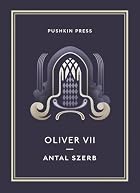
It is difficult to believe that Szerb could write such a light and witty novel in the dark dark days of 1942, but there is more depth to this book than appears on the surface. The story begins as farce, with the painter Sandoval "rescuing" the elderly Count Antas, enjoying drinks in a cafe with a very much younger lady, as his wife enters the same cafe. But things are not all they seem; Sandoval is in fact spiriting the count off to some rural castle to keep him out of the way when a revolution against the young King Oliver VII takes place. The country of Alturia is in economic disarray, and some of the king's advisers want him to sign a deal with businessman Coltor, of the neighboring country of Norlandia, to pay huge sums to Alturia to essentially take over its economy and run the country. It is this that the revolutionaries are protesting.
But all is not as it seems. It develops that Oliver himself is behind the plot, as he doesn't really want to be king and instead wants to explore what we would now call the world of the 99%. Winding up incognito as Oscar in Venice, he falls in with a group of international con men (and a con woman), and delightful complications ensue, as Oliver pretending to be Oscar pretends to be Oliver. In the course of this ever entertaining novel, Szerb confronts issues of identity, love, loyalty, and friendship, as well as what it means to be a ruler, but does this with such imagination and with such a deft touch that the reader is completely enthralled by the tale itself.
The afterword by the translator (who seems to me to have done an excellent job and who has translated all the Szerb books I've been reading) notes that this book was written after the one that is considered Szerb's masterpiece and further develops some of its themes, Journey by Moonlight. This gave me a little pause, as perhaps I should have read that one first, but at least I have it to look forward to.
It is difficult to believe that Szerb could write such a light and witty novel in the dark dark days of 1942, but there is more depth to this book than appears on the surface. The story begins as farce, with the painter Sandoval "rescuing" the elderly Count Antas, enjoying drinks in a cafe with a very much younger lady, as his wife enters the same cafe. But things are not all they seem; Sandoval is in fact spiriting the count off to some rural castle to keep him out of the way when a revolution against the young King Oliver VII takes place. The country of Alturia is in economic disarray, and some of the king's advisers want him to sign a deal with businessman Coltor, of the neighboring country of Norlandia, to pay huge sums to Alturia to essentially take over its economy and run the country. It is this that the revolutionaries are protesting.
But all is not as it seems. It develops that Oliver himself is behind the plot, as he doesn't really want to be king and instead wants to explore what we would now call the world of the 99%. Winding up incognito as Oscar in Venice, he falls in with a group of international con men (and a con woman), and delightful complications ensue, as Oliver pretending to be Oscar pretends to be Oliver. In the course of this ever entertaining novel, Szerb confronts issues of identity, love, loyalty, and friendship, as well as what it means to be a ruler, but does this with such imagination and with such a deft touch that the reader is completely enthralled by the tale itself.
The afterword by the translator (who seems to me to have done an excellent job and who has translated all the Szerb books I've been reading) notes that this book was written after the one that is considered Szerb's masterpiece and further develops some of its themes, Journey by Moonlight. This gave me a little pause, as perhaps I should have read that one first, but at least I have it to look forward to.
157rebeccanyc
33. Neanderthal Man: In Search of Lost Genomes by Svante Pääbo

This fascinating book works on many levels. Not only does it tell the story of how Pääbo and his team of colleagues painstakingly developed methods to determine the genomes of Neanderthals and discovered that modern humans (except those of entirely African descent) have some 2-3% of Neanderthal DNA in our genomes, but it also is a memoir of Pääbo's intellectual development and paints a wonderful picture of the intensely creative and collaborative (and competitive) nature of modern science.
Pääbo became interested in the past as a teenager, when his mother took him to Egypt and he learned about mummies. Later on, studying them seemed too slow and irrelevant to him; he started out in medicine but then decided to try to isolate DNA from mummies and became interested in biochemistry and molecular biology, particularly the developing field of extracting and studying DNA. After his graduate work, he initially worked with dinosaurs and other extinct animals but, as he notes, when the field of ancient DNA analysis stabilized in the mid-1990s, he wanted to turn again to human remains.
The two biggest challenges in dealing with Neanderthal (and other hominid) DNA are, first, extracting enough DNA from decaying bones filled with bacteria and, second, and perhaps more challenging, finding a way to avoid contamination with modern human DNA. A lot of this book is about how Pääbo and his group painstakingly developed "clean" techniques for dealing with this contamination and for many years had to constantly examine their results and their methods to ensure that the results they were publishing in preeminent international science journals like Science and Nature were supportably free of modern human DNA contamination. Another challenge, involving international collaboration and negotiations, was finding Neanderthal remains from different locations that were sufficiently well preserved to still contain Neanderthal DNA. And imaginative molecular biologists needed to develop ways of tagging the Neanderthal DNA and imaginative computer programmers needed to develop algorithms for analyzing the genomes.
As Pääbo describes the work he and his team did, he also tells the stories of conferences attended, collaborations with other researchers and with companies that make DNA sequencers, publication in scientific journals and how that works, the methods labs and their leaders use to attract other researchers to work with them, the work that goes into creating and maintaining an open and creative atmosphere in a lab, the effort of ensuring that all the imaginable sources of problems with the scientific work have been addressed, the technical revolution in molecular biology, the kinds of illustrative "trees" that show when populations branched off from common ancestors, theories of population migrations, and much more -- including a bit of his personal life as well.
Research continues to identify the DNA of other hominids, including the somewhat mysterious Denisovans, and to determine what the DNA we inherited from Neanderthals codes for (some initial work shows that one sequence is involved in increasing sperm motility, crucial for enhancing the likelihood that a male's genetic material will survive in organisms that don't, like some of the apes, rely on one alpha male impregnating all the group's females).
As Pääbo writes when he learns incontrovertibly that Neanderthals had contributed DNA to modern humans, "it was amazingly cool . . . Neanderthals weren't totally extinct. Their DNA lived on in people today."

This fascinating book works on many levels. Not only does it tell the story of how Pääbo and his team of colleagues painstakingly developed methods to determine the genomes of Neanderthals and discovered that modern humans (except those of entirely African descent) have some 2-3% of Neanderthal DNA in our genomes, but it also is a memoir of Pääbo's intellectual development and paints a wonderful picture of the intensely creative and collaborative (and competitive) nature of modern science.
Pääbo became interested in the past as a teenager, when his mother took him to Egypt and he learned about mummies. Later on, studying them seemed too slow and irrelevant to him; he started out in medicine but then decided to try to isolate DNA from mummies and became interested in biochemistry and molecular biology, particularly the developing field of extracting and studying DNA. After his graduate work, he initially worked with dinosaurs and other extinct animals but, as he notes, when the field of ancient DNA analysis stabilized in the mid-1990s, he wanted to turn again to human remains.
The two biggest challenges in dealing with Neanderthal (and other hominid) DNA are, first, extracting enough DNA from decaying bones filled with bacteria and, second, and perhaps more challenging, finding a way to avoid contamination with modern human DNA. A lot of this book is about how Pääbo and his group painstakingly developed "clean" techniques for dealing with this contamination and for many years had to constantly examine their results and their methods to ensure that the results they were publishing in preeminent international science journals like Science and Nature were supportably free of modern human DNA contamination. Another challenge, involving international collaboration and negotiations, was finding Neanderthal remains from different locations that were sufficiently well preserved to still contain Neanderthal DNA. And imaginative molecular biologists needed to develop ways of tagging the Neanderthal DNA and imaginative computer programmers needed to develop algorithms for analyzing the genomes.
As Pääbo describes the work he and his team did, he also tells the stories of conferences attended, collaborations with other researchers and with companies that make DNA sequencers, publication in scientific journals and how that works, the methods labs and their leaders use to attract other researchers to work with them, the work that goes into creating and maintaining an open and creative atmosphere in a lab, the effort of ensuring that all the imaginable sources of problems with the scientific work have been addressed, the technical revolution in molecular biology, the kinds of illustrative "trees" that show when populations branched off from common ancestors, theories of population migrations, and much more -- including a bit of his personal life as well.
Research continues to identify the DNA of other hominids, including the somewhat mysterious Denisovans, and to determine what the DNA we inherited from Neanderthals codes for (some initial work shows that one sequence is involved in increasing sperm motility, crucial for enhancing the likelihood that a male's genetic material will survive in organisms that don't, like some of the apes, rely on one alpha male impregnating all the group's females).
As Pääbo writes when he learns incontrovertibly that Neanderthals had contributed DNA to modern humans, "it was amazingly cool . . . Neanderthals weren't totally extinct. Their DNA lived on in people today."
158qebo
>157 rebeccanyc: Oooh, want. Mostly because of the behind-the-results aspect.
159laytonwoman3rd
>157 rebeccanyc: Wow....that one sounds excellent. I'd have been hesitant to pick it up, despite a long-standing interest in the subject matter, because sometimes such books can be impossible for me to follow. But with your endorsement, onto the wishlist it goes.
160Nickelini
As Pääbo writes when he learns incontrovertibly that Neanderthals had contributed DNA to modern humans, "it was amazingly cool . . . Neanderthals weren't totally extinct. Their DNA lived on in people today."
I never thought of it that way. How interesting.
I enjoyed your review very much. Having recently read Lone Survivors, I think I've had enough of this topic for now, but it's good to hear about other books on the subject.
I never thought of it that way. How interesting.
I enjoyed your review very much. Having recently read Lone Survivors, I think I've had enough of this topic for now, but it's good to hear about other books on the subject.
161rebeccanyc
>158 qebo: I thought that one might appeal to you, Katherine.
>159 laytonwoman3rd: Linda, there is quite a bit of science in the book. It all seemed understandable to me, but I have some familiarity with molecular techniques. However, if those parts make your eyes glaze over, you could just skip them.
>160 Nickelini: I've had Lone Survivors on my TBR since it came out, Joyce, but haven't read it yet. Maybe I should dig it out.
>159 laytonwoman3rd: Linda, there is quite a bit of science in the book. It all seemed understandable to me, but I have some familiarity with molecular techniques. However, if those parts make your eyes glaze over, you could just skip them.
>160 Nickelini: I've had Lone Survivors on my TBR since it came out, Joyce, but haven't read it yet. Maybe I should dig it out.
162kidzdoc
Great reviews of Neanderthal Man and Oliver VII, Rebecca. I worked in a molecular biology lab before I started medical school, so I think I would enjoy Svante Pääbo's book.
163laytonwoman3rd
>161 rebeccanyc: Thanks for the extra information, Rebecca. I can usually grasp the science quite well if it's presented quite well. The trick is to remember that not every reader has a background in scientific inquiry, and not to write for the general public the way you would write for a professional journal. I'm always thrilled when I find an author who can do that.
164rebeccanyc
>162 kidzdoc: Thanks, Darryl!
>163 laytonwoman3rd: I think it was presented clearly, Linda, and I know exactly what you mean about writing for a general audience because of my experience as a science editor working with professors and other scientists!
>163 laytonwoman3rd: I think it was presented clearly, Linda, and I know exactly what you mean about writing for a general audience because of my experience as a science editor working with professors and other scientists!
165mkboylan
I DO love your variety - so interesting..
Tell me it's not true about Barry Maguire! Yusuf was bad enough.
Tell me it's not true about Barry Maguire! Yusuf was bad enough.
167baswood
Catching up on your thread and enjoying all your reviews.
Eve of Desruction was one of those terrible catchy songs that I could not get out of my head at the time and so I was not tempted by your link. It is no surprise that Barry Maguire has turned to the dark side.
Eve of Desruction was one of those terrible catchy songs that I could not get out of my head at the time and so I was not tempted by your link. It is no surprise that Barry Maguire has turned to the dark side.
168rebeccanyc
Thanks, Barry. I couldn't get it out of my head either -- that's why I thought others should have the opportunity for the same!
169rebeccanyc
34. Journey to a War by W. H. Auden and Christopher Isherwood

I bought this book, after seeing it mentioned on LT, because I was taken by the idea of Auden (one of my favorite poets) and Isherwood as war correspondents. In 1938, they were commissioned by British and US publishers to travel to China, which had been invaded by Japan the previous year, and to report on what they saw. The book is written in prose by Isherwood, apparently based on both of their diaries, and the prose is preceded and followed by poetry by Auden (largely sonnets, and one long, "preachy" (Auden's word) "Commentary").
Everywhere they went (and I gave up searching on Google for the locations of the cities and towns they visited -- a map would have been a huge plus for this book), they were greeted as honored guests, even when in several cases the Chinese people they met tried every means, utterly politely, of dissuading them from visiting the front. They met Agnes Smedley and even the Generalissimo (Chiang Kai-Shek) and Madame Chiang, and multitudes of other local leaders, missionaries and religious leaders, military leaders, train workers, hotel owners, "coolies" (such was the language of the time) who pulled rickshaws and carried packages and luggage and even people, interpreters, and many others, both British and Chinese. They describe towns devastated by the Japanese invasion, breathtakingly beautiful scenery, charming hotels and not so charming ones, train trips delayed by Japanese bombing, the way the Chinese welcomed them so wholeheartedly but seemed unprepared for the war, their unsuccessful efforts to visit the Communist Eighth Route Army (the Communists were collaborating in the defense of China at the time), propaganda and army songs, Chinese opera, food and drink (lots of drink), life in the international concessions of otherwise occupied Shanghai, scary trips over mountain passes, the still almost colonial attitude of the British in China, and much more.
All of this is told in a understated but witty way. Even the impact of the war is understated, and I know from other reading how cruel the Japanese invasion of China was. But this is a story of their journey, not of the war itself. Early in their stay, they were told about the German invasion of Austria, and they were to return to a Britain that was soon to be plunged into a war of its own.

I bought this book, after seeing it mentioned on LT, because I was taken by the idea of Auden (one of my favorite poets) and Isherwood as war correspondents. In 1938, they were commissioned by British and US publishers to travel to China, which had been invaded by Japan the previous year, and to report on what they saw. The book is written in prose by Isherwood, apparently based on both of their diaries, and the prose is preceded and followed by poetry by Auden (largely sonnets, and one long, "preachy" (Auden's word) "Commentary").
Everywhere they went (and I gave up searching on Google for the locations of the cities and towns they visited -- a map would have been a huge plus for this book), they were greeted as honored guests, even when in several cases the Chinese people they met tried every means, utterly politely, of dissuading them from visiting the front. They met Agnes Smedley and even the Generalissimo (Chiang Kai-Shek) and Madame Chiang, and multitudes of other local leaders, missionaries and religious leaders, military leaders, train workers, hotel owners, "coolies" (such was the language of the time) who pulled rickshaws and carried packages and luggage and even people, interpreters, and many others, both British and Chinese. They describe towns devastated by the Japanese invasion, breathtakingly beautiful scenery, charming hotels and not so charming ones, train trips delayed by Japanese bombing, the way the Chinese welcomed them so wholeheartedly but seemed unprepared for the war, their unsuccessful efforts to visit the Communist Eighth Route Army (the Communists were collaborating in the defense of China at the time), propaganda and army songs, Chinese opera, food and drink (lots of drink), life in the international concessions of otherwise occupied Shanghai, scary trips over mountain passes, the still almost colonial attitude of the British in China, and much more.
All of this is told in a understated but witty way. Even the impact of the war is understated, and I know from other reading how cruel the Japanese invasion of China was. But this is a story of their journey, not of the war itself. Early in their stay, they were told about the German invasion of Austria, and they were to return to a Britain that was soon to be plunged into a war of its own.
170LibraryPerilous
Auden is a favorite poet of mine, and I love both Isherwood and travelogues, too--can't wait to read this one.
Auden and Isherwood moved to the States after the trip to China, sailing to New York together.
The events described in your review remind me a bit of one of Auden's early (1920s) poems, and a favorite of mine, "The Secret Agent":
"Control of the passes was, he saw, the key
To this new district, but who would get it?
He, the trained spy, had walked into the trap
For a bogus guide, seduced by the old tricks."
Auden and Isherwood moved to the States after the trip to China, sailing to New York together.
The events described in your review remind me a bit of one of Auden's early (1920s) poems, and a favorite of mine, "The Secret Agent":
"Control of the passes was, he saw, the key
To this new district, but who would get it?
He, the trained spy, had walked into the trap
For a bogus guide, seduced by the old tricks."
171mkboylan
What a great review. Think I will add that to my TBR. I just finished The Devil of Nanking so am wanting to know more about that invasion and this sounds like an easier read than some of the more focued and graphic works?
172wandering_star
That does sound very interesting!
174rebeccanyc
Thanks, Diana, Merrikay, wandering, and Rhonda! Diana, I knew they moved to New York, but I didn't know about their earlier collaborations until I looked them up on Wikipedia.
One of the things that's most interesting about it, aside from its authors, is that it could only have been written when it was. It is much more about "the last days of Old China" than the terrible book I read last year, Midnight in Peking: How the Murder of Young Englishwoman Haunted the Last Days of Old China; at the same time, it is very much from a British point of view.
One of the things that's most interesting about it, aside from its authors, is that it could only have been written when it was. It is much more about "the last days of Old China" than the terrible book I read last year, Midnight in Peking: How the Murder of Young Englishwoman Haunted the Last Days of Old China; at the same time, it is very much from a British point of view.
175baswood
Very interesting review of Journey to a War
176StevenTX
I've enjoyed catching up on your reviews of Neanderthal Man: In Search of Lost Genomes and Journey to a War. Both were very informative. It's a shame, though, that publishers skimp on things like maps--especially in something billed as the "Armchair Traveller Series."
177rebeccanyc
>176 StevenTX: My edition is NOT part of the "Armchair Traveller Series," whatever that is. And maybe people in 1938 were more familiar with Chinese geography. But it wouldn't have hurt the publishers to add one when they reprinted it.
And thanks, Barry and Steven.
ETA the missing NOT in the first sentence. Sorry for any confusion!
And thanks, Barry and Steven.
ETA the missing NOT in the first sentence. Sorry for any confusion!
178NanaCC
Journey to War sounds very interesting.
179mkboylan
When I was reading one about the Ukrainian Resistance in WWII it was just crazy not having a map. It drove me bonkers.
180kidzdoc
Nice review of Journey to a War, Rebecca. That does sound interesting, and I also like Auden's poetry, so I'll add it to my wish list.
181dchaikin
Catching up with your last seven reviews. So many interesting things...another appealing Szerb, Neanderthal Man sounds fascinating...and so on.
182rebeccanyc
Thanks, Colleen, Merrikay (that would drive me bonkers too), Darryl, and Dan.
183rebeccanyc
35. Sacred Hunger by Barry Unsworth
Barry Unsworth set himself a big task in writing this book, because he tries to encompass everything about the so-called triangular trade in the mid-18th century in one novel: from the making of the slave-carrying ships to the economics behind the trade, from the way crew members were obtained for the ship and the relationships among them to the practices of buying Africans from other Africans and Europeans, from the methods of keeping order on the ship to the ideals of racial equality, from personal relationships to finding one's identity.
The story begins in 1752 as businessman William Kemp is having a slave ship built, the Liverpool Merchant, a ship that will travel to the coast of Africa under Captain Thurso and his first mate Barton, along with Kemp's disgraced nephew, Matthew Paris, as the ship's doctor. There, they will sell English textiles, liquor, and other goods to fill the ship with African slaves, travel to Jamaica where they will exchange the slaves for sugar, and travel from there back to England. In the meantime, Kemp's grown son, Erasmus, is acting, not very adeptly, in a play organized by the brother of the young woman he is in love with; Erasmus has always disliked Paris, and this will become a conflict that runs through the book. Eventually, the ship obtains its crew and sets off to Africa, where horrific scenes of buying human beings alternate with horrific interactions among the crew on the ship and between them and the Africans brought on board. After a variety of scenes between Thurso and the Africans and Europeans selling slaves, the ship sets sail for Jamaica, with an unusual artist onboard as a paying passenger. But all does not go smoothly. The second part of the story takes place 12 years later. Changes have happened in the Kemp family, and Erasmus has become a powerful businessman himself. He sets out on a mission to find out what happened to the Liverpool Merchant, which never returned to port, traveling to Florida after he learns about a community of black and white people living together in the wilds of the Florida keys.
Several themes run through this novel. There is the "sacred hunger" for money and financial success, and how this corrupts people. There is the quest for identity and feeling comfortable in one's own skin. There is the question of morality: how can human beings buy other human beings and treat them as less than human? There is personal resentment and how this leads to lifetime of a desire for revenge. There is even science: the doctor, Paris, has been translating (from Latin) Harvey's treatise on circulation and the heart and had been imprisoned in England for questioning the church's view on evolution based on fossils he had collected. And there is a view of an attempt at utopia, the relationships between white people and black people who had been enslaved and who came from a variety of tribes, and the challenges the people face. And of course there is racism, in a variety of forms.
This is an ambitious historical novel, and it doesn't completely work. With Unsworth's Morality Play, I never doubted for a moment that I was in 14th century England. With this novel, while Unsworth brilliantly recreates the sights and sounds and smells of England, the ship, Africa, and the Florida wilderness, and while he portrays vividly a variety of venal, weak, tormented, greedy, and power-hungry characters, there were many times when I felt he was showing the readers how much he knew about a lot of topics and taking a teaching, if not a preaching, role. The last section, and the ending, seemed a little as if he was writing a second novel and tacking it on to the first.
That said, however, Unsworth is a wonderful writer and this is a compelling, fascinating, and moving book despite its flaws.
Barry Unsworth set himself a big task in writing this book, because he tries to encompass everything about the so-called triangular trade in the mid-18th century in one novel: from the making of the slave-carrying ships to the economics behind the trade, from the way crew members were obtained for the ship and the relationships among them to the practices of buying Africans from other Africans and Europeans, from the methods of keeping order on the ship to the ideals of racial equality, from personal relationships to finding one's identity.
The story begins in 1752 as businessman William Kemp is having a slave ship built, the Liverpool Merchant, a ship that will travel to the coast of Africa under Captain Thurso and his first mate Barton, along with Kemp's disgraced nephew, Matthew Paris, as the ship's doctor. There, they will sell English textiles, liquor, and other goods to fill the ship with African slaves, travel to Jamaica where they will exchange the slaves for sugar, and travel from there back to England. In the meantime, Kemp's grown son, Erasmus, is acting, not very adeptly, in a play organized by the brother of the young woman he is in love with; Erasmus has always disliked Paris, and this will become a conflict that runs through the book. Eventually, the ship obtains its crew and sets off to Africa, where horrific scenes of buying human beings alternate with horrific interactions among the crew on the ship and between them and the Africans brought on board. After a variety of scenes between Thurso and the Africans and Europeans selling slaves, the ship sets sail for Jamaica, with an unusual artist onboard as a paying passenger. But all does not go smoothly. The second part of the story takes place 12 years later. Changes have happened in the Kemp family, and Erasmus has become a powerful businessman himself. He sets out on a mission to find out what happened to the Liverpool Merchant, which never returned to port, traveling to Florida after he learns about a community of black and white people living together in the wilds of the Florida keys.
Several themes run through this novel. There is the "sacred hunger" for money and financial success, and how this corrupts people. There is the quest for identity and feeling comfortable in one's own skin. There is the question of morality: how can human beings buy other human beings and treat them as less than human? There is personal resentment and how this leads to lifetime of a desire for revenge. There is even science: the doctor, Paris, has been translating (from Latin) Harvey's treatise on circulation and the heart and had been imprisoned in England for questioning the church's view on evolution based on fossils he had collected. And there is a view of an attempt at utopia, the relationships between white people and black people who had been enslaved and who came from a variety of tribes, and the challenges the people face. And of course there is racism, in a variety of forms.
This is an ambitious historical novel, and it doesn't completely work. With Unsworth's Morality Play, I never doubted for a moment that I was in 14th century England. With this novel, while Unsworth brilliantly recreates the sights and sounds and smells of England, the ship, Africa, and the Florida wilderness, and while he portrays vividly a variety of venal, weak, tormented, greedy, and power-hungry characters, there were many times when I felt he was showing the readers how much he knew about a lot of topics and taking a teaching, if not a preaching, role. The last section, and the ending, seemed a little as if he was writing a second novel and tacking it on to the first.
That said, however, Unsworth is a wonderful writer and this is a compelling, fascinating, and moving book despite its flaws.
184LibraryPerilous
Do you plan on reading the sequel?
185rebeccanyc
>184 LibraryPerilous: I didn't realize there was a sequel, but now I see that it's The Quality of Mercy. Have you read it? I do plan to read more Unsworth, but am more likely to try something else.
186kidzdoc
Great review of Sacred Hunger, Rebecca. Your next to last paragraph threw me for a loop, as your preceding comments made me expect that you were going to praise the book. I'm surprised that I don't see this book in my LT library, as I'm all but certain that I own it. I'll still read it at some point, though.
187NanaCC
>183 rebeccanyc: I read Sacred Hunger a long time ago, but I remember really liking it.
188avidmom
>183 rebeccanyc: Definitely wishlisting that one. I would like to know more about the slave triangle.
189rebeccanyc
>185 rebeccanyc: Thanks, Darryl. I do think the book is excellent, just flawed. But I would rather see an author attempt to do to much and not quite achieve it than aim low and write a boring book.
>187 NanaCC:, >188 avidmom: Thanks!
>187 NanaCC:, >188 avidmom: Thanks!
190almigwin
>183 rebeccanyc: Great review and thanks for telling me about the sequel which I have just ordered. I loved the book so much I guess I never saw any flaws. I'm sure you are right but when an author is as good as that I get so grateful I can hardly criticize.
191cabegley
Catching up, Rebecca. You've added to my wishlist, as usual, particularly with Journey to a War. Sacred Hunger was the first Unsworth I read, quite a few years ago, and I reread it about 8 years ago. As with Miriam, I loved the book, and it set me off on reading many others of his.
192rebeccanyc
Thanks, Miriam and Chris. I am definitely going to read more Unsworth.
But speaking of books about the journeys of slave ships, has anyone ever read Middle Passage? Reading Sacred Hunger reminded me that I've had this book on my TBR for years, and I just found it and see I bought it in 1991 (still wrote my name and the date in books back then).
But speaking of books about the journeys of slave ships, has anyone ever read Middle Passage? Reading Sacred Hunger reminded me that I've had this book on my TBR for years, and I just found it and see I bought it in 1991 (still wrote my name and the date in books back then).
193wandering_star
>189 rebeccanyc: I would rather see an author attempt to do to much and not quite achieve it than aim low and write a boring book. Hear, hear!
194almigwin
>192 rebeccanyc: I liked all of Charles Johnson'S WORK AND I LOVED mIDDLE pASSAGE IF YOU CAN SAY YOU LOVE A TRAGIC BOOK
195LibraryPerilous
>192 rebeccanyc: Yes, Middle Passage is worth reading.
>185 rebeccanyc: I've not read any Unsworth yet, but several people have recommended Morality Play. I'll probably start with that title.
>185 rebeccanyc: I've not read any Unsworth yet, but several people have recommended Morality Play. I'll probably start with that title.
196Linda92007
Excellent review of Sacred Hunger, Rebecca. I own that and also recently picked up a copy of Morality Play at a library book sale.
197rebeccanyc
>194 almigwin:, >195 LibraryPerilous: Thanks for the recommendations of Middle Passage, Miriam and Diana.
>195 LibraryPerilous:, >196 Linda92007: I read Morality Play because I read a great review of it on LT and it definitely lived up to my expectations, And thanks, Linda.
>195 LibraryPerilous:, >196 Linda92007: I read Morality Play because I read a great review of it on LT and it definitely lived up to my expectations, And thanks, Linda.
198SassyLassy
>169 rebeccanyc: I ordered Journey to a War after edwin mentioned it last year and your review has made me even happier that I did. Now all I have to do is read it!
Agreeing completely with you and w_s about I would rather see an author attempt to do to much and not quite achieve it than aim low and write a boring book.
Agreeing completely with you and w_s about I would rather see an author attempt to do to much and not quite achieve it than aim low and write a boring book.
199baswood
Excellent review of Sacred Hunger which is on my book shelf. I think it will stay there for a while longer, perhaps until my reading takes me into the eighteenth century.
200rebeccanyc
Barry, it was your review of Morality Play that got me started on Unsworth.
201fannyprice
>157 rebeccanyc:, I'll definitely be picking up Neanderthal Man: In Search of Lost Genomes. I learn about so many great books from you!
202rebeccanyc
36. The Black Sheep by Honoré de Balzac
This is quite the tale of greed, selfishness, gambling, thievery, corruption, plot and counterplot -- and art. Balzac tells the story of a good and a bad brother (said to be based somewhat on his brother and himself, although there is no way his brother could have been as evil as Philippe), their widowed mother Agathe, and various relatives and hangers-on, including his mother's brother who has received the entire inheritance of their father because he erroneously believed that Agathe was not his child.
The story starts in Paris: after their father's death, Joseph (the good brother) and Philippe received educations because their father, a high-level clerk, had been a big supporter of Napoleon. Philippe served brilliantly in the army under Napoleon, but refused to serve under the Bourbons after Napoleon's defeat, and is at loose ends, not able to hold down a job because of his drinking, womanizing, general carousing, and gambling. Joseph, on the other hand, is becoming an artist, having first become entranced by the art students at a local school. Agathe loves Philippe the most, because of his glorious military career and because he is handsome; she doesn't understand the world of art that so attracts Joseph and finds him unattractive (he is described as being ugly). Soon, Philippe runs out of money and so steals from his mother and brother, neither of whom have very much to begin with, and from their aunt who basically lives with the family. As the first part ends, the aunt has died from the shock of the theft and Agathe has for once turned against Philippe; Philippe is basically homeless and in the gutter when he is arrested as a participant in a plot against the king.
The scene shifts in the second part, as Agathe and Joseph travel to the provinces where the uncle with the money lives. Staying with Agathe's godmother, who lives in the house next door, they learn that the uncle, Jean-Jacques, has come under the influence of his housekeeper-mistress, Flore, who rules the household with an iron hand, even to the point of allowing her lover, Max, to live with them. Of course, they are trying to fleece him of his money. Max is the head of a secret group of young men, called the Knights of Idleness, that wreaks havoc in the town of Issoudun through their nightly "pranks"; like Philippe, he is a former army officer from the Napoleonic era and, also like Philippe, he is a man who is only out for himself. Agathe and Joseph prove to be no match for Max and Flore, and return to Paris without the inheritance and after some horrifying episodes. In the last part, Philippe is paroled to Issoudun, where needless to say he worms his way into the Jean-Jacques household, setting off an inevitable clash between the two evil geniuses of this novel (or three, including Flore). I will not reveal the end result, so as to avoid spoilers, but I will say that as a reader I had to suspend disbelief about the change in Philippe from a weak man at the mercy of his vices to a disciplined plotter. But thoroughly no good throughout!
This was an all-around fun read, although it dragged in a few places (for example, the detailed description of the history and geography of Issoudun). Balzac created some truly evil characters and let them try to outwit each other, with much opportunity for treachery and dastardly deeds. And some of the other characters, like a lawyer friend of Joseph's and the miserly husband of Agathe's godmother, are also well drawn. Along the way, the book provides insight into the politics and economics of post-Napoleonic France, the pitiless attitude towards poor people, the struggle of artists, the role of lawyers, the mutual disdain of Parisians and people living in the provinces, and the everyone-knows-everything atmosphere of small towns. I first heard about this novel here on LT, and I'm glad I read it.
ETA My edition could really have benefited from end notes, as I was driven to Wikipedia frequently to look up historical and literary references; Penguin editions often have them, but this one didn't.
This is quite the tale of greed, selfishness, gambling, thievery, corruption, plot and counterplot -- and art. Balzac tells the story of a good and a bad brother (said to be based somewhat on his brother and himself, although there is no way his brother could have been as evil as Philippe), their widowed mother Agathe, and various relatives and hangers-on, including his mother's brother who has received the entire inheritance of their father because he erroneously believed that Agathe was not his child.
The story starts in Paris: after their father's death, Joseph (the good brother) and Philippe received educations because their father, a high-level clerk, had been a big supporter of Napoleon. Philippe served brilliantly in the army under Napoleon, but refused to serve under the Bourbons after Napoleon's defeat, and is at loose ends, not able to hold down a job because of his drinking, womanizing, general carousing, and gambling. Joseph, on the other hand, is becoming an artist, having first become entranced by the art students at a local school. Agathe loves Philippe the most, because of his glorious military career and because he is handsome; she doesn't understand the world of art that so attracts Joseph and finds him unattractive (he is described as being ugly). Soon, Philippe runs out of money and so steals from his mother and brother, neither of whom have very much to begin with, and from their aunt who basically lives with the family. As the first part ends, the aunt has died from the shock of the theft and Agathe has for once turned against Philippe; Philippe is basically homeless and in the gutter when he is arrested as a participant in a plot against the king.
The scene shifts in the second part, as Agathe and Joseph travel to the provinces where the uncle with the money lives. Staying with Agathe's godmother, who lives in the house next door, they learn that the uncle, Jean-Jacques, has come under the influence of his housekeeper-mistress, Flore, who rules the household with an iron hand, even to the point of allowing her lover, Max, to live with them. Of course, they are trying to fleece him of his money. Max is the head of a secret group of young men, called the Knights of Idleness, that wreaks havoc in the town of Issoudun through their nightly "pranks"; like Philippe, he is a former army officer from the Napoleonic era and, also like Philippe, he is a man who is only out for himself. Agathe and Joseph prove to be no match for Max and Flore, and return to Paris without the inheritance and after some horrifying episodes. In the last part, Philippe is paroled to Issoudun, where needless to say he worms his way into the Jean-Jacques household, setting off an inevitable clash between the two evil geniuses of this novel (or three, including Flore). I will not reveal the end result, so as to avoid spoilers, but I will say that as a reader I had to suspend disbelief about the change in Philippe from a weak man at the mercy of his vices to a disciplined plotter. But thoroughly no good throughout!
This was an all-around fun read, although it dragged in a few places (for example, the detailed description of the history and geography of Issoudun). Balzac created some truly evil characters and let them try to outwit each other, with much opportunity for treachery and dastardly deeds. And some of the other characters, like a lawyer friend of Joseph's and the miserly husband of Agathe's godmother, are also well drawn. Along the way, the book provides insight into the politics and economics of post-Napoleonic France, the pitiless attitude towards poor people, the struggle of artists, the role of lawyers, the mutual disdain of Parisians and people living in the provinces, and the everyone-knows-everything atmosphere of small towns. I first heard about this novel here on LT, and I'm glad I read it.
ETA My edition could really have benefited from end notes, as I was driven to Wikipedia frequently to look up historical and literary references; Penguin editions often have them, but this one didn't.
203rebeccanyc
37. Southern Seas by Manuel Vázquez Montalbán

In this Pepe Carvalho novel, Pepe is called upon to find out about what a Barcelona construction company owner was doing for the year before he turned up murdered. For this businessman was supposedly on a midlife crisis trip to the South Seas, but it turned out he never went. So where was he and what was he doing? Pepe's investigation leads him to exploring the building of a lower class housing area, housing that was supposed to be better than the slums the people came from, the politics of the post-Franco era, poetry, disillusionment of various kinds, class issues, and of course food and wine. One of the most delightful characters is a Marquess who is a partner of the dead man, and devotes himself largely to the pleasures of life, and one of the most unpleasant is the other partner, a man who devotes himself to fitness -- nonalcoholic drinks and limited food, as well as horrifying-sounding spa treatments. As I've come to realize, every Pepe Carvalho I've read ends with the bad guy(s) treating Pepe violently, but he manages to come through. This one, though, ends with a scene that animal lovers should skipas a dog Pepe has adopted is brutally killed in revenge.

In this Pepe Carvalho novel, Pepe is called upon to find out about what a Barcelona construction company owner was doing for the year before he turned up murdered. For this businessman was supposedly on a midlife crisis trip to the South Seas, but it turned out he never went. So where was he and what was he doing? Pepe's investigation leads him to exploring the building of a lower class housing area, housing that was supposed to be better than the slums the people came from, the politics of the post-Franco era, poetry, disillusionment of various kinds, class issues, and of course food and wine. One of the most delightful characters is a Marquess who is a partner of the dead man, and devotes himself largely to the pleasures of life, and one of the most unpleasant is the other partner, a man who devotes himself to fitness -- nonalcoholic drinks and limited food, as well as horrifying-sounding spa treatments. As I've come to realize, every Pepe Carvalho I've read ends with the bad guy(s) treating Pepe violently, but he manages to come through. This one, though, ends with a scene that animal lovers should skip
204baswood
Enjoyed your review of The Black Sheep Yet another book that I ought to have read by now. Still I do the next best thing: I read your reviews.
205NanaCC
>202 rebeccanyc: Ditto Barry in the post above.
206rebeccanyc
Thanks, Barry and Colleen. I feel that way about some of the books you two review too.
207dchaikin
>204 baswood: sometimes the best part of LT are all the great reviews if books we should but never do read
Fun review of The Black Sheep, Rebecca.
Fun review of The Black Sheep, Rebecca.
208rebeccanyc
Not a book, but I read "The Man in the Woods," one of the recently discovered unpublished Shirley Jackson stories in this week's The New Yorker (available I think to nonsubscribers as well as subscribers here). It is weird and creepy, with echos of Greek mythology and medieval sorcery.
209fannyprice
I'm so excited about those stories.
210rebeccanyc
>209 fannyprice: Me too, Kris. According to this interview with one of Jackson's children, a collection they're calling Garlic in Fiction will come out next spring. I've read a few other ones in The New Yorker.
211rebeccanyc
I've started a new thread because I had the time to do it, not because I have any new reviews to post, because I don't!
This topic was continued by Rebeccanyc Reads in 2014, Volume II: Spring Is Here!.

