This topic is currently marked as "dormant"—the last message is more than 90 days old. You can revive it by posting a reply.
1cabegley

Currently reading: Joseph Balsamo by Alexandre Dumas
My 2014 reads:
16. Our Mutual Friend by Charles Dickens
15. 12 Years a Slave by Solomon Northup
14. The Talisman Ring by Georgette Heyer
13. All Creatures Great and Small by James Herriot
12. The Bridge on the Drina by Ivo Andric, translated by Lovett F. Edwards
11. Mr. Penumbra's 24-Hour Bookstore by Robin Sloan
10. Five Days at Memorial: Life and Death in a Storm-Ravaged Hospital by Sheri Fink
9. The Goldfinch by Donna Tartt
8. The Cuckoo's Calling by Robert Galbraith/J.K. Rowling
7. Mrs. Woolf and the Servants: An Intimate History of Domestic Life in Bloomsbury by Alison Light
6. The Luminaries by Eleanor Catton
5. My Life in France by Julia Child with Alex Prud'homme
4. Hyperbole and a Half by Allie Brosh
3. Point Counter Point by Aldous Huxley
2. Americanah by Chimamanda Ngozi Adichie
1. Take the Cannoli by Sarah Vowell
2cabegley
My 2013 reading year in review:
TOP FICTION 2013
Life After Life by Kate Atkinson
The Lowland by Jhumpa Lahiri
We Need New Names by NoViolet Bulawayo
The Flamethrowers by Rachel Kushner
TOP NONFICTION 2013
Team of Rivals: The Political Genius of Abraham Lincoln by Doris Kearns Goodwin
Island of the Lost by Joan Druett
The Immortal Life of Henrietta Lacks by Rebecca Skloot
TOP CLASSICS 2013
Anna Karenina by Leo Tolstoy
Don Quixote by Miguel de Cervantes
TOP MYSTERIES 2013
Broken Harbor by Tana French
Strong Poison and Have His Carcase by Dorothy L. Sayers
TOP COLLECTIONS 2013
The Best American Science and Nature Writing 2012, edited by Dan Ariely
The Best American Nonrequired Reading 2012, edited by Dave Eggers
TOP TRANSLATION 2013
Eugene Onegin by Alexander Pushkin, translated by James E. Falen
TOP HUMOROUS 2013
Bedwetter: Stories of Courage, Redemption and Pee by Sarah Silverman
The McSweeney’s Joke Book of Book Jokes
Sleepwalk with Me by Mike Birbiglia
TOP HISTORICAL FICTION 2013
The Untouchable by John Banville (also Top Spy)
An Unfinished Season by Ward Just
The Lacuna by Barbara Kingsolver
(near history--I didn't read a lot of pre-1900 historical fiction in 2013)
TOP CREEPY 2013
We Have Always Lived in the Castle by Shirley Jackson
TOP REREADS 2013
In the Time of the Butterflies by Julia Alvarez
Lord of the Flies by William Golding
TOP THOUGHT-PROVOKING 2013
A Room of One’s Own by Virginia Woolf
Bailout: An Inside Account of How Washington Abandoned Main Street While Rescuing Wall Street by Neil Barofsky
The Gate of Angels, Penelope Fitzgerald
TOP WESTERN 2013
Dead Man's Walk by Larry McMurtry
TOP FANTASY 2013
American Gods by Neil Gaiman
TOP FUN READ 2013
Where'd You Go, Bernadette by Maria Semple
TOP "YOU'RE ONLY GETTING TO THIS NOW?" 2013
Shame by Salman Rushdie
From Here to Eternity by James Jones
Love in the Time of Cholera by Gabriel Garcia Marquez
The Jewel in the Crown by Paul Scott
The Maltese Falcon by Dashiell Hammett
TOP EAVESDROP ON A COVERSATION 2013
As Always, Julia: The Letters of Julia Child and Avis DeVoto, edited by Joan Reardon
TOP BIOGRAPHY OR MEMOIR 2013
Joseph Banks: A Life by Patrick O'Brian
Enemies, A Love Story: An Oral History of Siskel and Ebert by Josh Schollmeyer
TOP TITLE 2013
The Possessed: Adventures with Russian Books and the People Who Read Them by Elif Batuman (sadly, did not live up to the title)
ICKIEST SEX SCENES 2013
1Q84 by Haruki Murakami
TOP FICTION 2013
Life After Life by Kate Atkinson
The Lowland by Jhumpa Lahiri
We Need New Names by NoViolet Bulawayo
The Flamethrowers by Rachel Kushner
TOP NONFICTION 2013
Team of Rivals: The Political Genius of Abraham Lincoln by Doris Kearns Goodwin
Island of the Lost by Joan Druett
The Immortal Life of Henrietta Lacks by Rebecca Skloot
TOP CLASSICS 2013
Anna Karenina by Leo Tolstoy
Don Quixote by Miguel de Cervantes
TOP MYSTERIES 2013
Broken Harbor by Tana French
Strong Poison and Have His Carcase by Dorothy L. Sayers
TOP COLLECTIONS 2013
The Best American Science and Nature Writing 2012, edited by Dan Ariely
The Best American Nonrequired Reading 2012, edited by Dave Eggers
TOP TRANSLATION 2013
Eugene Onegin by Alexander Pushkin, translated by James E. Falen
TOP HUMOROUS 2013
Bedwetter: Stories of Courage, Redemption and Pee by Sarah Silverman
The McSweeney’s Joke Book of Book Jokes
Sleepwalk with Me by Mike Birbiglia
TOP HISTORICAL FICTION 2013
The Untouchable by John Banville (also Top Spy)
An Unfinished Season by Ward Just
The Lacuna by Barbara Kingsolver
(near history--I didn't read a lot of pre-1900 historical fiction in 2013)
TOP CREEPY 2013
We Have Always Lived in the Castle by Shirley Jackson
TOP REREADS 2013
In the Time of the Butterflies by Julia Alvarez
Lord of the Flies by William Golding
TOP THOUGHT-PROVOKING 2013
A Room of One’s Own by Virginia Woolf
Bailout: An Inside Account of How Washington Abandoned Main Street While Rescuing Wall Street by Neil Barofsky
The Gate of Angels, Penelope Fitzgerald
TOP WESTERN 2013
Dead Man's Walk by Larry McMurtry
TOP FANTASY 2013
American Gods by Neil Gaiman
TOP FUN READ 2013
Where'd You Go, Bernadette by Maria Semple
TOP "YOU'RE ONLY GETTING TO THIS NOW?" 2013
Shame by Salman Rushdie
From Here to Eternity by James Jones
Love in the Time of Cholera by Gabriel Garcia Marquez
The Jewel in the Crown by Paul Scott
The Maltese Falcon by Dashiell Hammett
TOP EAVESDROP ON A COVERSATION 2013
As Always, Julia: The Letters of Julia Child and Avis DeVoto, edited by Joan Reardon
TOP BIOGRAPHY OR MEMOIR 2013
Joseph Banks: A Life by Patrick O'Brian
Enemies, A Love Story: An Oral History of Siskel and Ebert by Josh Schollmeyer
TOP TITLE 2013
The Possessed: Adventures with Russian Books and the People Who Read Them by Elif Batuman (sadly, did not live up to the title)
ICKIEST SEX SCENES 2013
1Q84 by Haruki Murakami
4cabegley
2014 plays (and other cultural events):
Twelfth Night (Broadway, Shakespeare's Globe company, late January)
Rosencranz and Guildenstern Are Dead (off-Broadway, The Acting Company, late January)
God of Carnage (Westport, Music Theater of Connecticut, early February)
Twelfth Night (Broadway, Shakespeare's Globe company, late January)
Rosencranz and Guildenstern Are Dead (off-Broadway, The Acting Company, late January)
God of Carnage (Westport, Music Theater of Connecticut, early February)
5cabegley
Goals and Plans for 2014:
My biggest goal for 2014 is to unplug and read more. I spent far too much time with my iPad in 2013, and it really shows--I read 57 books (about 22,800 pages), as compared to 76 (about 29,600 pages) in 2012. I can't even claim to have been reading more articles on my tablet, either. I accidentally discovered that one of my favorite games, Rummikub, has an app, and I have wasted far too many hours on it. (I should probably delete the app, but I don't think I'm ready to take that step yet!)
(More TK)
My biggest goal for 2014 is to unplug and read more. I spent far too much time with my iPad in 2013, and it really shows--I read 57 books (about 22,800 pages), as compared to 76 (about 29,600 pages) in 2012. I can't even claim to have been reading more articles on my tablet, either. I accidentally discovered that one of my favorite games, Rummikub, has an app, and I have wasted far too many hours on it. (I should probably delete the app, but I don't think I'm ready to take that step yet!)
(More TK)
6cabegley
Books Purchased in 2014:
More Tales of the City, Armistead Maupin
The Proud Tower: A Portrait of the World Before the War, 1890-1914, Barbara W. Tuchman
This House Is Haunted, John Boyne
When Will There Be Good News?, Kate Atkinson
Kristin Lavransdatter, Sigrid Unset (different translation than I already owned)
The Treasure, Selma Lagerlof
The Monuments Men: Allied Heroes, Nazi Thieves, and the Greatest Treasure Hunt in History, Robert M. Edsel
Night and Day, Virginia Woolf
Everyday Drinking, Kingsley Amis
Salvage the Bones, Jesmyn Ward
Making of the Atomic Bomb, Richard Rhodes
Curious, If True: Strange Tales by Mrs. Gaskell, Elizabeth Gaskell
The Cruise of the Cachalot: Round the World After Sperm Whales, Frank, T. Bullen
The Queen's Necklace, Antal Szerb
More Tales of the City, Armistead Maupin
The Proud Tower: A Portrait of the World Before the War, 1890-1914, Barbara W. Tuchman
This House Is Haunted, John Boyne
When Will There Be Good News?, Kate Atkinson
Kristin Lavransdatter, Sigrid Unset (different translation than I already owned)
The Treasure, Selma Lagerlof
The Monuments Men: Allied Heroes, Nazi Thieves, and the Greatest Treasure Hunt in History, Robert M. Edsel
Night and Day, Virginia Woolf
Everyday Drinking, Kingsley Amis
Salvage the Bones, Jesmyn Ward
Making of the Atomic Bomb, Richard Rhodes
Curious, If True: Strange Tales by Mrs. Gaskell, Elizabeth Gaskell
The Cruise of the Cachalot: Round the World After Sperm Whales, Frank, T. Bullen
The Queen's Necklace, Antal Szerb
8dchaikin
That is a big downside to the iPad- too many distractions on the fingertips. Nice to see you back this year.
9baswood
I have recently got an I-Pad and have discovered there is an ap for my favourite game, which is Baldurs Gate: an old Dungeons and Dragons game - I am trying to resist.
10arubabookwoman
Hi Chris. I'm looking forward to following your reading this year.
Fortunately, I never got into games, and don't have an ipad or iPhone. I know I'd be overdoing it if a did. Last year my problem wasn't that I didn't read much (I read over 150 books), but that I didn't review much or post on LT. Unfortunately, I've also just discovered Pinterest, which shows how far behind the times I am!
Fortunately, I never got into games, and don't have an ipad or iPhone. I know I'd be overdoing it if a did. Last year my problem wasn't that I didn't read much (I read over 150 books), but that I didn't review much or post on LT. Unfortunately, I've also just discovered Pinterest, which shows how far behind the times I am!
11rebeccanyc
Glad you started a thread here, Chris, and looking forward to your reading.
12cabegley
Hi, all, and thanks for the welcome back! I will try to stick around, but it's not that easy! Every year I have trouble keeping up with my own thread, and then I fall behind reading all your threads, and then it all goes to hell. How do you all do it?
13Cait86
You have a great list of books up there in post #2! I look forward to following your reading this year.
15laytonwoman3rd
Great to see a thread with your name on it, Chris! And your 2013 round-up is fascinating.
16cabegley
Oh, thanks!

1. Take the Cannoli: Stories from the New World by Sarah Vowell (2000, 219 pages)
I have read all four of Sarah Vowell's full-length books, and very much enjoyed her quirky, funny nerdview of history and politics. This early collection of essays, which mostly come from her pieces for NPR's "This American Life," was a good start to the year for me, and I appreciated seeing the development of her authorial voice. Vowell's work, by the way, is very much enhanced by her literal voice, in much the same way that the work of her fellow NPR denizen, David Sedaris, is. I've listened to two of her books on audio, and can now call up her voice in my head when reading her words on the page--if you haven't heard her as herself, you may know her as Violet from the Pixar movie "The Incredibles," or you can listen to some of her "This American Life" pieces here.
Vowell tends to immerse herself in the situations she wants to report on, somewhat like George Plimpton's participatory journalism, but without the sports equipment. Standout essays for me were "Chelsea Girl," in which she stayed at the famous Chelsea Hotel and talked about some of its famous residents (as a side note, if anyone has a good book about this subject to recommend, please do so!); "What I See When I Look at the Face on the $20 Bill," in which she and her sister Amy follow the Trail of Tears as a way of honoring their part-Cherokee heritage; and "Drive Through Please," when she finally decides at the age of 28 to learn to drive a car.

1. Take the Cannoli: Stories from the New World by Sarah Vowell (2000, 219 pages)
I have read all four of Sarah Vowell's full-length books, and very much enjoyed her quirky, funny nerdview of history and politics. This early collection of essays, which mostly come from her pieces for NPR's "This American Life," was a good start to the year for me, and I appreciated seeing the development of her authorial voice. Vowell's work, by the way, is very much enhanced by her literal voice, in much the same way that the work of her fellow NPR denizen, David Sedaris, is. I've listened to two of her books on audio, and can now call up her voice in my head when reading her words on the page--if you haven't heard her as herself, you may know her as Violet from the Pixar movie "The Incredibles," or you can listen to some of her "This American Life" pieces here.
Vowell tends to immerse herself in the situations she wants to report on, somewhat like George Plimpton's participatory journalism, but without the sports equipment. Standout essays for me were "Chelsea Girl," in which she stayed at the famous Chelsea Hotel and talked about some of its famous residents (as a side note, if anyone has a good book about this subject to recommend, please do so!); "What I See When I Look at the Face on the $20 Bill," in which she and her sister Amy follow the Trail of Tears as a way of honoring their part-Cherokee heritage; and "Drive Through Please," when she finally decides at the age of 28 to learn to drive a car.
17fannyprice
I do enjoy me some Sarah Vowell. I think I've only read/listened to The Wordy Shipmates, but I always mean to get back to her.
18dchaikin
I had Vowell in mind for audio books, this just emphasizes that I should get her books. Any of them should do.
19cabegley
Dan, she's great on audio. I especially recommend Assassination Vacation. Kris, I think she'd be good for your commutes.
20NanaCC
My husband is not an audiobook fan, but we listened to Vowell's Assassination Vacation years ago on a car trip and he really liked it. He calls it the "dead presidents" book. I've enjoyed the ones I've listened to.
21cabegley
Well, new year, new bookshelf organization. I always get the urge at this time to rearrange my unread shelves. I have so many unread books (over 1000 tagged TBR, according to LT), and I think if I leave them on the same shelves they eventually become part of the furniture. So, late yesterday afternoon, I started rearranging them all. It took me til almost 6 this evening, but I'm finally done. This year was a major reorg, but now they are, in order:
New and notable
Contemporary American fiction
Contemporary Canadian fiction
Contemporary British Isles fiction
Contemporary Australian and New Zealand fiction
Historical fiction
European fiction
Classics (English language)
Nobelists
African fiction
South American fiction
East Asian fiction
South Asian fiction
Russian fiction
Short stories
Science fiction and fantasy
Mysteries and thrillers
Modernists and post-modernists
Older fiction
Dramas
Humor
Biography
Memoir
General nonfiction
Essays
Mathematics
Neuroscience
Biology, earth science and evolution
Exploration
Environmental
Physics
Astronomy
Seafaring
American history
WWII history
African history
European history
Russian history
Literary theory and history
True crime
Women and gender studies
Letters
Food and wine
I'm exhausted but sitting here delighted, and wanting to read about twenty books at once, and I wanted to share the madness with people who would understand.
New and notable
Contemporary American fiction
Contemporary Canadian fiction
Contemporary British Isles fiction
Contemporary Australian and New Zealand fiction
Historical fiction
European fiction
Classics (English language)
Nobelists
African fiction
South American fiction
East Asian fiction
South Asian fiction
Russian fiction
Short stories
Science fiction and fantasy
Mysteries and thrillers
Modernists and post-modernists
Older fiction
Dramas
Humor
Biography
Memoir
General nonfiction
Essays
Mathematics
Neuroscience
Biology, earth science and evolution
Exploration
Environmental
Physics
Astronomy
Seafaring
American history
WWII history
African history
European history
Russian history
Literary theory and history
True crime
Women and gender studies
Letters
Food and wine
I'm exhausted but sitting here delighted, and wanting to read about twenty books at once, and I wanted to share the madness with people who would understand.
24dchaikin
Sounds like a fun day. My wife and I rearranged books recently as we gave up some bookshelves that really needed to go. She didn't seem to get why moving things around was so emotional to me. When all turned out ok, my first sense was relief. Only later did I start to appreciate the changes.
25rebeccanyc
Chris, that organization is fascinating, but then I'm always fascinated by how people organize their books. It is somewhat similar to my method, but I think a little more detailed (for example, I keep classics with contemporary works, but still broken down by country or region).
So is this organization just for your unread books, or do you organize the books you've already read the same way?
So is this organization just for your unread books, or do you organize the books you've already read the same way?
26.Monkey.
Oh I definitely separate my classics, too, those don't belong with modern! :P I don't separate fic by country, though, but by genre. Granted, if I had better shelving, and more fic from more countries, there's every chance I'd do it by fic - genre - country/region as well, lol. And for me, I do it for both read and unread, with read being in rows behind the unread (though not necessarily the same rows, because the placing of the read ones came after, and just kind of started by what I was reading and putting it in the upper left and working my way through them, lol.
27cabegley
I just have read books separated into fiction and nonfiction, alphabetically, and then further (by room) into what I think there's even a slight chance my teenagers might find interesting (those go in the family room) and stuff even I can't delude myself into thinking they'll pick up (those are in my bedroom). I'm terribly lax about refiling, though, so there are a number of stacks on those shelves.
Rebecca, I think this organization came in part out of a memory of you talking about your books being organized by region, which I thought sounded like a good way of looking at them. It's all very fuzzy, though--where do expats go? I opted for the most part to shelve expats based on their subject matter, so, for instance, Salman Rushdie is in South Asia, but Vladimir Nabokov is in America, but I'm sure I didn't always follow this. And where does contemporary turn into "older," and when does that become classics? Does Elie Wiesel go with the Nobelists (I decided yes), and does Gabriel Garcia Marquez's nonfiction stay with his fiction (I decided no)?
Rebecca, I think this organization came in part out of a memory of you talking about your books being organized by region, which I thought sounded like a good way of looking at them. It's all very fuzzy, though--where do expats go? I opted for the most part to shelve expats based on their subject matter, so, for instance, Salman Rushdie is in South Asia, but Vladimir Nabokov is in America, but I'm sure I didn't always follow this. And where does contemporary turn into "older," and when does that become classics? Does Elie Wiesel go with the Nobelists (I decided yes), and does Gabriel Garcia Marquez's nonfiction stay with his fiction (I decided no)?
28.Monkey.
Haha, oh the pains of trying to get everything sorted "right" according to your own methods are numerous, I know!! I definitely wouldn't put Nabokov in the US, he might have adopted the country but he was always a Russian at heart, and he longed for his old home, I could never think to call him anything else. I, too, wouldn't put non-fic with fic, there's plenty of authors who do mostly one but dabble in the other here and there, I don't think those belong together, they belong with their topic. Ah, awards, what trouble! No I definitely don't think I would make special award collections, that would just mix everything up! I really really need to go through all my books and fix sorting, among some other things, but it's so daunting I don't want to touch it! lol.
29Cait86
>27 cabegley: - All of those organization questions are why I have two categories - Read and TBR. Within those categories everything is alphabetized by author. I sometimes contemplate reorganizing in a more subject-based way, but I feel like I won't remember where I put things! I suppose it helps that my books are all in the same room, in one very large bookcase - but then, I have only been seriously buying books of my own for a few years, so I don't have a ton yet.
30RidgewayGirl
I love the rearranging of bookshelves. It's easy in the US, where the vast majority of my shelves are in two adjacent rooms, but here they are on three separate floors, so there's more effort involved. But it's perfect for the TBR -- there are always several books that look more attractive and ready-to-read after a rearrangement. I will say that arranging by book spine color looks fabulous but is highly impractical.
31Linda92007
Chris, I am going to borrow from your categories and try to do some book organizing of my own, but probably on a much simplified level. Right now my books are in terribly disarray, with books shelved haphazardly throughout the house. Over the last year we converted a bedroom to an office/library of sorts, bought new bookshelves, and are trying to make the numbers more manageable by culling for donations (a painful process). Amazingly, I know where most things are despite my current disorganization, except for those boxed in various hideaways!
32japaul22
I'm with Cait - I just have my fiction separated in "already read" and TBR shelves and alphabetized. I don't have enough books to separate into genres or countries, but I'm working on it! I've only been really buying books for a year when we moved to a bigger house and I finally have room to justify really collecting. I still use the library a lot since I'm cheap at heart!
My nonfiction I have separated more by subject (biography, cultural history, war history, geology and sciences, baby/pregnancy, wine and food, exploration, economics, gardening, music history, etc.). Organizing books is almost as fun as reading them (but not quite!).
My nonfiction I have separated more by subject (biography, cultural history, war history, geology and sciences, baby/pregnancy, wine and food, exploration, economics, gardening, music history, etc.). Organizing books is almost as fun as reading them (but not quite!).
33rebeccanyc
#26 Within each category I keep my classics separate from the contemporary because I try to arrange them more or less chronologically. The country I assign someone to is based on where I am most likely to think of finding that author. And if someone is mostly a fiction writer I keep any nonfiction with the fiction. Also, I only started keeping my unread books separate in the past five years or so, so there are a lot of unread books mixed in with the books I've read on my main shelves.
Anyway, my system is designed for the way I think about my books and it more or less works for me, although since we renovated our apartment and I had to reshelve all the books in different places I'm not always sure where something is. I do love hearing about other systems, though. (Could absolutely never alphabetize!)
Anyway, my system is designed for the way I think about my books and it more or less works for me, although since we renovated our apartment and I had to reshelve all the books in different places I'm not always sure where something is. I do love hearing about other systems, though. (Could absolutely never alphabetize!)
34fannyprice
This conversation is impressive! The only extent to which my physical books are organized is that I keep the WW1, polar exploration, and Middle East books in their own areas. Children's books are also on a separate shelf. For the rest, it's largely by size - where do they fit? That's where they go. Oh, cookbooks are also separate, but that just seems obvious.
35detailmuse
Luscious list in #2! Looking forward to seeing this year's.
A bookshelf reorg is in the works for me, too many new books from the past few years double-shelved somewhat near (or not) existing books on similar topics. That reduces me to browsing my TBRs in LT, which is nowhere near as satisfying as browsing bookshelves. I'm keeping fewer books after I've read them, and this year my "Your Library" and "Read But Unowned" collections may each comprise 50%.
A bookshelf reorg is in the works for me, too many new books from the past few years double-shelved somewhat near (or not) existing books on similar topics. That reduces me to browsing my TBRs in LT, which is nowhere near as satisfying as browsing bookshelves. I'm keeping fewer books after I've read them, and this year my "Your Library" and "Read But Unowned" collections may each comprise 50%.
36avidmom
You've made me want to go search for a Sarah Vowell book right away! I can totally relate to your reorganize the bookshelves project. It is exhausting - but fun. I thought that I would get rid of a big, giant stack of stuff when I spent the day cleaning out and reorganizing my books last month and freeing up more shelf space. I ended up getting rid of a small tiny anthill of books (which my best friend took off my hands thankfully!) and deciding simply to buy another bookcase! HA! I'm exhausted but sitting here delighted, and wanting to read about twenty books at once, and I wanted to share the madness with people who would understand.
I understand!
Also love the fact you've listed your "Top Creepy" read for 2013. I love creepy stuff.
I understand!
Also love the fact you've listed your "Top Creepy" read for 2013. I love creepy stuff.
37cabegley
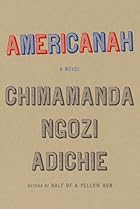
2. Americanah by Chimamanda Ngozi Adichie (2013, 477 pages)
Adichie's newest novel tells the story, mostly in flashback, of Ifemelu and Obinze, Nigerians who fall in love in school, part when Ifemelu goes to college in the U.S., and are eventually reunited in Nigeria. Adichie tackles big, tough subjects, such as race and immigration and poverty and depression, and when she's addressing these issues in the course of the story (both for Ifemelu, and for Obinze, who emigrates illegally to England), I think she does it well. I was particularly interested in Ifemelu's experience of learning what it means to be black in America--as she points out, she was never black when she lived in Nigeria, that she wasn't identified by her race until she moved to the U.S., and and also that she didn't have the cultural background of someone who had grown up in the U.S., so in many cases did not understand why something was racist.
But Adichie has also made Ifemelu a blogger (her blog is "Raceteenth or Various Observations About American Blacks (Those Formerly Known as Negroes) by a Non-American Black"), and it is in the inclusion of the blog posts that I think she missteps, by breaking the cardinal rule of "Show, don't tell." And I think Adichie shows very well, so I'm not sure why she resorted to tell.
My 15-year-old daughter gave me this book for Christmas, with the recommendation to "listen to her TED talk." She later sent me this NPR story.
I find star ratings too difficult, but essentially I liked it but didn't love it. I think it's worth reading, but overall I preferred her Half of a Yellow Sun.
38Polaris-
Hi Chris! Just caught up with your thread so far this year... Love the lists of your top reads of 2013.
I've just added Joseph Banks: A Life by Patrick O'Brian. As an arborist I've been interested in Banks for a while - he seems to crop up in several places. I remember "wow"-ing at the huge Banksia nuts on display at the Natural History Museum in London one time with my brother's family. Then, when I was the Tree Officer in the London Borough of Hounslow a few years back, I inspected a bunch of trees in the grounds of what used to be his west London estate for 40-odd years - Spring Grove House. Some of the trees had been planted by him - so it was an honour to give them the once over (I briefly had a bit of a wander inside the big house as well - though it is mainly the later Victorian decor of the later owner Andrew Pears of Pears Soap fame - their factory was down the road at Brentford on the Thames. Some nice Banks artifacts were about though.) .
Then I went to Australia last year for the first time and saw all these dozens of different examples of Banksia sp. nut trees - large and small - and was blown away by the variety of things that his name was put to. The little I know of him so far - the voyages with Captain Cook, the friendship with Linnaeus, etc. is enough to tell me that his biography will be a fascinating read - and that you considered it one of your best reads of last year further bolsters that suspicion. Nice one!
I've just added Joseph Banks: A Life by Patrick O'Brian. As an arborist I've been interested in Banks for a while - he seems to crop up in several places. I remember "wow"-ing at the huge Banksia nuts on display at the Natural History Museum in London one time with my brother's family. Then, when I was the Tree Officer in the London Borough of Hounslow a few years back, I inspected a bunch of trees in the grounds of what used to be his west London estate for 40-odd years - Spring Grove House. Some of the trees had been planted by him - so it was an honour to give them the once over (I briefly had a bit of a wander inside the big house as well - though it is mainly the later Victorian decor of the later owner Andrew Pears of Pears Soap fame - their factory was down the road at Brentford on the Thames. Some nice Banks artifacts were about though.) .
Then I went to Australia last year for the first time and saw all these dozens of different examples of Banksia sp. nut trees - large and small - and was blown away by the variety of things that his name was put to. The little I know of him so far - the voyages with Captain Cook, the friendship with Linnaeus, etc. is enough to tell me that his biography will be a fascinating read - and that you considered it one of your best reads of last year further bolsters that suspicion. Nice one!
39cabegley
Hi, Paul--thanks! I find Banks fascinating, both from the Royal Society angle and from the botany angle. I like hearing about your encounters with his legacy. Have you read Brother Gardeners by Andrea Wulf? I think it would be up your alley.
40NanaCC
>37 cabegley: Thank you for posting your review, Chris. I know that you think I'll like it, but reading your comment "overall I preferred her Half of a Yellow Sun" I wonder if I should read that one first?
41cabegley
>40 NanaCC: Yes. I'll give it to you this weekend, when we're off to see Twelfth Night.
42wandering_star
Chipping in a bit late, but I love the conversation about bookshelf reorganisation. I very deliberately do NOT organise my bookshelves, because otherwise I know I would start thinking late in the evening about a new method and before I knew it I would still be reshelving at 2am.
Yes, sometimes it takes a little while to find a book I want to read, but I still think that's a better use of my time overall ;-)
Yes, sometimes it takes a little while to find a book I want to read, but I still think that's a better use of my time overall ;-)
43.Monkey.
Even if mine weren't organized, I'd still know where they all were. Just like I know where the ones in the ...7? 8? stacks of 15-20something titles that have nowhere to go are located. But I'm too "OCD" about things like that, I have to have my stuff sorted or I go nuts.
44mabith
43 - That's me too. Plus being a little neurotic about my books gives me a nice sense of control, saving me from being neurotic in areas where it would impact my life in a negative way. I have a very good visual memory so finding things isn't really the issue.
45avaland
>37 cabegley: Yep, that's about my conclusion, too. I quit before the end. I much prefer her first two novels.
46Polaris-
Thanks Chris for recommending Brother Gardeners. It looks like a really good read - just wishlisted it!
47cabegley
>45 avaland: I'm so glad it's not just me! I really wanted to love it.
>46 Polaris-: You're welcome, Paul--I hope you enjoy it! My boss gave it to me, after he read a review of it and thought it would be perfect for me. It was--and there aren't too many people to whom I can recommend a history of botany and gardening!
>46 Polaris-: You're welcome, Paul--I hope you enjoy it! My boss gave it to me, after he read a review of it and thought it would be perfect for me. It was--and there aren't too many people to whom I can recommend a history of botany and gardening!
48lauralkeet
I liked Americanah a lot although I agree with Chris & Lois that Half of a Yellow Sun is a masterpiece.
49SassyLassy
Chris, add me to your list of people to whom you can recommend histories of botany and gardening! The Brother Gardeners looks great.
50LolaWalser
she was never black when she lived in Nigeria, that she wasn't identified by her race until she moved to the U.S., and and also that she didn't have the cultural background of someone who had grown up in the U.S., so in many cases did not understand why something was racist.
You've made me very curious about Americanah (it seems I liked Half of a yellow sun less than most). It's fascinating how much of our identity is something conferred on us by other people. As someone who had a similar or even partly identical experience (but opposite-colour), I am very interested in how foreigners of colour experience American society and what transformations they undergo.
51cabegley
46, 49> Paul and SassyLassy, Wulf wrote a follow-up, Founding Gardeners, which was ok, but not as good. You both might also want to look at The Natures of John and William Bartram.
>50 LolaWalser: I do recommend you read it, Lola. I thought that aspect of the book worked very well. You may also want to check out We Need New Names by NoViolet Bulawayo.
>50 LolaWalser: I do recommend you read it, Lola. I thought that aspect of the book worked very well. You may also want to check out We Need New Names by NoViolet Bulawayo.
52Polaris-
Ooh, thanks again! The Natures of John and William Bartram looks like a lovely and captivating book. Straight on to the wishlist. It looks like the kind of book that will really transport me back in time and take me into the flora of 18th century America - I'll love it!
53cabegley

3. Point Counter Point by Aldous Huxley (1928, 432 pages)
I have always been an avid reader, but throughout my teens and early in college I read indiscriminately--Louisa May Alcott and Stephen King, Alex Haley and Piers Anthony, Flowers in the Attic and whatever book my father was currently leaving on the back of the toilet, they were all gobbled down. When I was in high school, two of my mother's cousins passed along bags of Harlequin romances they'd finished with, and after a boy in my homeroom I had the most desperate crush on observed to his friend that I was reading a different book every day, those Harlequins became my mainstay for a month or more, in the misguided hope that my impressive book-a-day pace would tempt the boy in my direction. (Foolish, foolish girl!) And then, in college, I was assigned Aldous Huxley's Point Counter Point, and it changed the way I looked at books forever. For the first time in my life, I think, I really recognized that books could be about more than the plot, and that good writing could make you love a book even if you loathed all the characters.
I'm pretty sure I read Point Counter Point again soon after college, but at some point it disappeared from my library, and somewhere along the way every last bit of the book leaked out of my consciousness, because 25 years or so along, here I was reading the book again for the first time. Huxley uses the conversations and actions of a group of intellectuals, artists and writers, mostly, to explore passion and reason, the physical life vs. the intellectual life. Some of the characters are based on Huxley and his friends and acquaintances of the time, including D.H. Lawrence, Katherine Mansfield and John Middleton Murry. For me, the most brilliant part of the book is the opening quarter, which moves from person to person, primarily at a party, introducing the characters and themes. There is also an orchestra, playing Bach's Suite in B minor, for flute and strings.
"In the opening largo John Sebastian had, with the help of Pongileoni's snout and the air column, made a statement: There are grand things in the world, noble things; there are men born kingly; there are real conquerors, intrinsic lords of the earth. But of an earth that is, oh! complex and multitudinous, he had gone on to reflect in the fugal allegro. You seem to have found the truth; clear, definite, unmistakeable, it is announced by the violins; you have it, you triumphantly hold it. But it slips out of your grasp to present itself in a new aspect among the cellos and yet again in terms of Pongileoni's vibrating air column. The parts live their separate lives; they touch, their paths cross, they combine for a moment to create a seemingly final and perfected harmony, only to break apart again. Each is always alone and separate and individual. 'I am I,' asserts the violin; 'the world revolves round me.' 'Round me,' calls the cello. 'Round me,' the flute insists. And all are equally right and equally wrong; and none of them will listen to the others.
"In the human fugue there are eighteen hundred million parts. The resultant noise means something perhaps to the statistician, nothing to the artist. It is only by considering one or two parts at a time that the artist can understand anything. Here, for example, is one particular part; and John Sebastian puts the case. The Rondeau begins, exquisitely and simply melodious, almost a folk song. It is a young girl singing to herself of love, in solitude, tenderly mournful. A young girl singing among the hills, with the clouds drifting overhead. But solitary as one of the floating clouds, a poet had been listening to her song. The thoughts that it provoked in him are the Sarabande that follows the Rondeau. His is a slow and lovely meditation on the beauty (in spite of squalor and stupidity), the profound goodness (in spite of all the evil), the oneness (in spite of such bewildering diversity) of the world. It is a beauty, a goodness, a unity that no intellectual research can discover, that analysis dispels, but of whose reality the spirit is from time to time suddenly and overwhelmingly convinced. A girl singing to herself under the clouds suffices to create the certitude. Even a fine morning is enough. Is it illusion or the revelation of profoundest truth? Who knows?"
The structure and theme set with this passage, Huxley brings his characters forward, singly and in groups, combining and recombining to examine modern man, and the intellectual life vs. the instinctual life. The reader gets the occasional glimpse into the notebooks of Philip Quarles, an author and intellectual (whose natural tendency towards introversion was heightened by a childhood accident that lamed him), as he plans a novel constructed like a Beethoven composition: "The musicalization of fiction. Not in the symbolist way, by subordinating sense to sound. . . . But on a large scale, in the construction. Meditate on Beethoven. The changes of moods, the abrupt transitions. . . . More interesting still, the modulations, not merely from one key to another, but from mood to mood. A theme is stated, then developed, push out of shape, imperceptibly deformed, until, though still recognizably the same, it has become quite different. In sets of variations the process is carried a step further. . . . Put a novelist in the novel. He justifies aesthetic generalizations, which may be interesting--at least to me. He also justifies experiment. Specimens of his work may illustrate other possible or impossible ways of telling a story. And if you have him telling parts of the same story as you are, you can make a variation on the theme." He plans to use versions of his friends as characters. But, as he cautions, "The great defect of a novel of ideas is that it's a made-up affair. Necessarily; for people who can reel off neatly formulated notions aren't quite real; they're slightly monstrous. Living with monsters becomes rather tiresome in the long run."
While some of his characters are monstrous (particularly Maurice Spandrell, based on Baudelaire, who deliberately lives a life of debauchery and vice, and is consequently bored and unable to feel), and none are particularly likable, the book ends before they become tiresome.
55cabegley
Yesterday, my mother (NanaCC/Colleen) and I had the pleasure of seeing the Shakespeare's Globe production of Twelfth Night, which currently has a limited engagement on Broadway. Costumes, staging, music and casting (all-male) are done as far as possible as they were in Shakespeare's time (the stage is candlelit, although there are electric lights in the wings and the audience). It was a marvelous, funny, exhilarating performance, with Samuel Barnett (Viola), Mark Rylance (Olivia) and Stephen Fry (Malvolio) the standouts. The same cast (minus Fry, and plus some children) is also performing Richard III, and although both productions are only through mid February, I'm going to try to get tickets. If you're in the New York area, I highly recommend this unforgettable production.
56cabegley
>54 NanaCC: Thanks, Nana!
58SassyLassy
Wonderful review. I could hear the Bach as I read.
I thought I had read this book, but it appears I haven't. I'll have to find it.
I thought I had read this book, but it appears I haven't. I'll have to find it.
59edwinbcn
Nice review of Point Counter Point. It reminds me that I should get back to reading Huxley.
60baswood
Yes a good review of a fascinating book, almost makes me want to pick it up and read it again. Will you put in the book page so we can thumb your review?
61rebeccanyc
I did read some Huxley years ago, but never Point Counter Point. I do have it on the TBR, though . . . . Great review.
62laytonwoman3rd
Excellent review, Chris. (You should post it on the book page.) I remember my husband reading it when we were in college, and being very impressed with it---he was taking a music appreciation course at the same time, and studying Bach. A very happy coincidence, I think. I asked him last night if he thought I would like Point Counter Point, and he said the same thing you did--he remembers liking it, but not much about it. I suspect he'll be re-reading it one of these days.
63wandering_star
Flowers In The Attic! I never read this, even though everyone at my school was reading it, as I was a tremendously pompous teenager. However, I greatly enjoyed a recent Literary Disco re-read/takedown of it... it almost made me sorry I hadn't read it at an impressionable age.
I was slightly less pompous by the time everyone got into Barbara Taylor Bradford so I read a few of those. I don't know if she was a bestseller in the US? As I remember, her books generally featured a poor woman being seduced and abandoned by a wealthy young man; the woman's daughter would then grow into a business tycoon and crush the wealthy man's family. For hundreds of pages.
I was slightly less pompous by the time everyone got into Barbara Taylor Bradford so I read a few of those. I don't know if she was a bestseller in the US? As I remember, her books generally featured a poor woman being seduced and abandoned by a wealthy young man; the woman's daughter would then grow into a business tycoon and crush the wealthy man's family. For hundreds of pages.
64Linda92007
Excellent review of Point Counter Point, Chris. I think this would be a good reintroduction for me to Huxley's work, as the blending of the story and music sounds interesting.
65cabegley
Thanks, all, for the compliments! I have posted the (slightly edited) review on the book page.
>63 wandering_star: Lifetime aired a new TV movie of Flowers in the Attic here in the U.S. this weekend, starring Heather Graham, Ellen Burnstyn and Kieran Shipka. I did not see it (and don't plan to), so I can't tell you whether it was any good or not, but from the ads, it looked just as creepy-tacky as the book. Barbara Taylor Bradford was a bestseller in the U.S., I think, but I never read her. Judy Blume had just gone adult (Wifey, Forever...) when I was in high school, though, so I definitely had a copy of one of those, which was passed around from girl to girl, hidden in my sweater drawer!
>63 wandering_star: Lifetime aired a new TV movie of Flowers in the Attic here in the U.S. this weekend, starring Heather Graham, Ellen Burnstyn and Kieran Shipka. I did not see it (and don't plan to), so I can't tell you whether it was any good or not, but from the ads, it looked just as creepy-tacky as the book. Barbara Taylor Bradford was a bestseller in the U.S., I think, but I never read her. Judy Blume had just gone adult (Wifey, Forever...) when I was in high school, though, so I definitely had a copy of one of those, which was passed around from girl to girl, hidden in my sweater drawer!
66fannyprice
I watched the new Flowers in the Attic last night. It was pretty bad and not even in a so bad it's good way. Heather Graham is literally the worst actress ever. I hear they are already making the sequel.
67laytonwoman3rd
I have posted the (slightly edited) review on the book page. And I have given it a thumb.
68lauralkeet
What a fabulous review, Chris. I'm going to be on the lookout for Point Counter Point. Now off to apply my thumb.
69Cait86
I really love your review of Point Counter Point because I identify so strongly with the personal story you told about it. Your lines, "it changed the way I looked at books forever. For the first time in my life, I think, I really recognized that books could be about more than the plot, and that good writing could make you love a book even if you loathed all the characters" hit home, as I had the same experience in grade 11 when I read Wuthering Heights. Like you, I had always loved to read, but for the first time I was amazed at the things human beings can do with words. I think that reading experience is the reason I am now a high school English teacher.
I've never read anything by Huxley, but if this book changed your reading life so drastically, then I think I had better read it!
I've never read anything by Huxley, but if this book changed your reading life so drastically, then I think I had better read it!
70cabegley
Thank you, Linda, Laura, and Cait! I'll be interested to hear your thoughts if you read it.
Cait, have you done Wuthering Heights with your classes? And if so, what were the reactions? I am always a bit apprehensive when my teenagers are reading books I love, because I really want them to love the books, too, and I'm afraid they won't. But it gives me such joy when they do connect with one of my favorites.
Cait, have you done Wuthering Heights with your classes? And if so, what were the reactions? I am always a bit apprehensive when my teenagers are reading books I love, because I really want them to love the books, too, and I'm afraid they won't. But it gives me such joy when they do connect with one of my favorites.
71.Monkey.
>69 Cait86: Cait, not even Brave New World?? :O
For me there was no one book, no big shift. I have always enjoyed reading both for entertainment and for ...enlightenment, so to speak. :)
For me there was no one book, no big shift. I have always enjoyed reading both for entertainment and for ...enlightenment, so to speak. :)
72almigwin
Cate, I'm another cheerleader for your great review of Huxley's Point Counter Point.
I'm afraid I used whatever analytical skills I possessed on poetry and philosophy, and just jumped into fiction as a fly on the wall, and enjoyed being wherever it was. I read all of his novels many times, but just enjoyed them without thinking of what he was trying to say philosophically or politically. (Except for Brave New World), obviously.
I do know he caused a great rift with Ottoline Morrell, the Bloomsbury hostess, by a caricature of her in Chrome Yellow.
btw Sybille Bedford wrote a wonderful biography of Huxley. She knew him in the south of France.
I guess I will have to go back and read him again and again.
I'm afraid I used whatever analytical skills I possessed on poetry and philosophy, and just jumped into fiction as a fly on the wall, and enjoyed being wherever it was. I read all of his novels many times, but just enjoyed them without thinking of what he was trying to say philosophically or politically. (Except for Brave New World), obviously.
I do know he caused a great rift with Ottoline Morrell, the Bloomsbury hostess, by a caricature of her in Chrome Yellow.
btw Sybille Bedford wrote a wonderful biography of Huxley. She knew him in the south of France.
I guess I will have to go back and read him again and again.
73.Monkey.
>72 almigwin: I didn't find Crome Yellow to be very interesting, though I know it caused a bit of a fuss. It's short but it was all I could do to slog through it!
74Cait86
>70 cabegley: - I've never taught Wuthering Heights to a class, though I have recommended it to senior students who enjoy classic novels. English class in Ontario is very different than what we traditionally expect, I think. We tend not to study whole-class novels anymore, and instead students choose a novel to read from a list of five or six, and form book clubs within the class. We try to choose novels that are engaging and actually at a student's reading level. Our goal, far more that literary analytical skills, is to make sure that they enjoy reading. I have a new job this year at a very progressive school - it just opened in September, and we were hired based on our ability/desire to shake things up in the classroom - and we only have grades 9 and 10 this year (next year we will have 11s, and the year after 12s). Our 9s get to choose from: The Fault in Our Stars, Ender's Game, Elsewhere, Jurassic Park, Karma, and The Absolutely True Diary of a Part Time Indian. In grade 10, the novel choices are: To Kill a Mockingbird, Maus, Extremely Loud and Incredibly Close, Little Brother, Escape from Camp 14, and The Book Thief. All of the novel choices went over very well in first semester. The kids really appreciate the choice in what they read, and they like the book club atmosphere of discussion meetings. For more focused analytical skills, we tend to use shorter texts like articles, essays, short stories, etc., though even then we tend to give the kids a choice between two texts. Our students really drive our program, and their interests help determine a lot of what we read. Sorry - that was probably WAY more information than was necessary - I tend to get carried away when it comes to talking about teaching!!
>71 .Monkey.: - Not even Brave New World! I definitely hole in my literary education :)
>71 .Monkey.: - Not even Brave New World! I definitely hole in my literary education :)
75cabegley

4. Hyperbole and a Half: Unfortunate Situations, Flawed Coping Mechanisms, Mayhem, and Other Things That Happened by Allie Brosh (2013, 369 pages)
Allie Brosh's graphic memoir is a nonlinear series of essays about her childhood, her dogs, her ruthless self examination, and, perhaps most importantly, her struggles with depression. There are quite a few laugh-out-loud moments throughout, particularly when it comes to her dogs, but it's the depression pieces that will stay with me.
This is the third graphic memoir I've read after first enjoying an excerpt of it in The Best American Nonrequired Reading series (the other two being Persepolis by Marjane Satrapi and Fun Home by Alison Bechdel), and each one has been very rewarding. Hyperbole and a Half grew out of Brosh's blog, which I encourage you to check out to see if you'd like the book. I also suggest reading Kris/fannyprice's excellent review of it on her thread, which is what made me read it when I did, and also has pictures.
76cabegley
>74 Cait86: Absolutely not more information than necessary! My daughter is in 10th grade, and her English class operates the same way. Those are some great book choices! The Fault in Our Stars and The Book Thief, in particular, are among my favorite books I've read in the last few years.
77cabegley
>72 almigwin: Thanks, Miriam! I am in awe of your reading breadth and depth.
78NanaCC
>75 cabegley: I'm glad you liked it, Chris. :)
79mabith
74, 76 - So glad more schools are doing that! I went to a teeny tiny boarding school, and we got to choose a couple things during the year on our own, but otherwise the teachers picked pretty random stuff, almost none of it typical high school fare (we had combined English and History and no history textbooks, so got really good non-fiction too).
80cabegley

5. My Life in France by Julia Child with Alex Prud'homme (2006, 352 pages)
"This is a book about some of the many things I have loved most in life: my husband, Paul Child; la belle France; and the many pleasures of cooking and eating."
In 1948, Julia Child accompanied her husband Paul to his new U.S. Information Service posting in Paris. She didn't speak French and (surprisingly to me) she didn't really cook. But she was determined to get the most out of the opportunity she'd been given, so she immersed herself in the language, both by taking classes and by getting out into the city, especially its food markets, and talking with the natives. She also decided to take cooking lessons at the Cordon Bleu. Julia eventually started her own cooking lessons with two French friends, and the three of them decided to work on a book that would really teach Americans to cook French food, which had become Julia's passion. That book grew from a small volume of recipes her partners (Simone Beck and Louisette Bertholle) had already written to the massive, 700+ page (and that was only Volume 1!) Mastering the Art of French Cooking. Back in the U.S. in the 1960s, a cooking demonstration on a Massachusetts public television show led to the first successful cooking show, The French Chef, and Julia became a public icon. (Today, you can visit an exact recreation of her home kitchen at the Smithsonian in Washington, D.C.)
Julia Child was a big woman (6' 2") with a big personality, and her whole self really shines through in this memoir. I felt very much as if she was sitting next to me on the couch, telling me stories. In the quote at the top, Julia described her book to a T--the book is as much about a happy, passionate 50-year marriage, and about her love of France (the country and its people), as it is about food. Julia wrote this book with Paul's grandnephew, relying on the hundreds of letters the couple had written home throughout their stay in France. Paul is best known today as Julia Child's husband, but he was an artist and photographer who had photos in the Museum of Modern Art collection, and the book is enlivened by Paul's pictures throughout. (On a previous stay, pre-Julia, in France in the 1920s, Paul had worked on the stained-glass windows at the American Church in Paris. His willingness, despite lifelong vertigo, to climb up into the eaves to work on the high windows earned him the nickname "Tarzan of the Apse.")
A good companion read to this would be As Always, Julia: The Letters of Julia Child and Avis DeVoto. Julia and Avis struck up a pen-pal correspondence when Julia wrote a fan letter to Avis's husband (American historian Bernard DeVoto) regarding a column he'd written about how he hated stainless-steel knives. Avis was instrumental in getting Mastering the Art of French Cooking published, and that long and fascinating process, as well as Julia and Paul's experiences with McCarthyism (which led to their disillusionment with government work and their eventual return to private life), is covered in more detail in their letters than it was in My Life in France.
Julia died before this book was finished, and while I think Alex Prud'homme did an excellent job of maintaining Julia's voice throughout, the end feels a bit disjointed and rushed, but that didn't take away much from the pleasure of reading this book. Just one caution--don't read it on an empty stomach!
81lauralkeet
I picked up As Always, Julia in a Kindle daily deal ages ago. I keep meaning to get to it. Thanks for the nudge.
83NanaCC
>80 cabegley: I will have to read those two, Chris. I have a paperback of The French Chef Cookbook that I used to use many years ago. It has recipes from her television show. "The Eighteenth Show, Chicken Livers A La Francaise" sounds delightful, however, I never did that one for I was the only one in our family who would have eaten it at the time. :)
84cabegley
>83 NanaCC: ooh, bring it with you next time you visit. The whole family likes chicken liver.
86fannyprice
>75 cabegley:, Chris, I'm so glad you liked Hyperbole and a Half - thanks for the shout out.
87cabegley
I had a very enjoyable evening in New York last night, watching The Acting Company's performance of Rosencrantz and Guildenstern Are Dead, which they are currently doing in repertory with Hamlet, with the actors playing the same parts in both plays. While I'm sure there have been better productions, I enjoyed this one, and it was a joy to finally see one of my favorite plays on stage. What a huge task for the two main actors, who are never off stage, and rarely not speaking for two-plus hours.
88Linda92007
Your evening in NYC sounds like fun! I wish we lived close enough to be able to take advantage of all its offerings, without having to treat it as a full-blown trip.
89cabegley
We are spoiled, living an hour's train ride from midtown, but we really don't take advantage of it enough. The last two weekends have been an anomaly for me, and I have no non-work-related city plans any time soon.
90mkboylan
Hi Chris - Getting caught up on your thread. Laughing at your arrangement of books in the family room you think your kids might pick up. My kids used to tease me about my selection of "coffee table" books - "Oh Mom you think you're so sly!"
I like some organization by region so I can quickly grab a different perspective of the same region when I finish one.
The Brother Gardeners is going on my WL also.
50 I'm with Lola on Americannah. Fascinating to hear about those experiences.
Wow the review of Point Counter Point was so interesting, reading about your experience with it. I need to check that out.
Looking forward to following your thread again this year.
I like some organization by region so I can quickly grab a different perspective of the same region when I finish one.
The Brother Gardeners is going on my WL also.
50 I'm with Lola on Americannah. Fascinating to hear about those experiences.
Wow the review of Point Counter Point was so interesting, reading about your experience with it. I need to check that out.
Looking forward to following your thread again this year.
91cabegley
Hi, Merrikay! Thanks for your kind comments. Did your kids ever pick the books up? Every once in a while now mine will come to me for suggestions. Our oldest was home from college recently and was looking for something to read, and I got her to pick up Tana French's The Likeness, which she really enjoyed. But I went through years where my endorsement was the kiss of death!
92almigwin
83 There was a lovely chicken liver mousse recipe in the magazine section of yesterday's new York times. if you can't find it, I'll copy it for you. It was created by one of the line cooks in a great restaurant.
93cabegley
Thanks, Miriam! Here's the article, which I enjoyed, with links to the recipes for chicken liver pate and bacon onion jam to the right. I'm considering making it to bring to a Super Bowl party this weekend. (Several people in the comments section say it's Julia Child's recipe!)
94Caroline_McElwee
Hi Chris, finally caught up with your 2014 thread. Love the lists.
Last year I got a third through Team of Rivals and was loving it, but didn't want to take it away with me, so put it on the side, and never got back to it. So it is definitely on the list to finish this year.
I agree with you with regard to Americanah I liked it, but preferred her earlier novels. But that is always going to be the way, every now and then a favourite writer doesn't quite hit the spot.
Liked your Huxley review. I might have to put that on my list of possibilities.
Last year I got a third through Team of Rivals and was loving it, but didn't want to take it away with me, so put it on the side, and never got back to it. So it is definitely on the list to finish this year.
I agree with you with regard to Americanah I liked it, but preferred her earlier novels. But that is always going to be the way, every now and then a favourite writer doesn't quite hit the spot.
Liked your Huxley review. I might have to put that on my list of possibilities.
95rachbxl
Lovely review of the Julia Childs book - and what a surprise that she didn't cook when she arrived in France! I think I'll look out for that one.
I've almost finished listening to Americanah, and so far would agree that it's not as good as her other novels. I think I'd be enjoying it more if it were written by someone else, if you see what I mean - as it's Adichie I had high hopes.
I've almost finished listening to Americanah, and so far would agree that it's not as good as her other novels. I think I'd be enjoying it more if it were written by someone else, if you see what I mean - as it's Adichie I had high hopes.
96almigwin
The beginnings of Julia Child with cooking are shown brilliantly by Meryl Streep in the film Julie and Julia about the girl who cooked her way through Mastering the Art of French Cooking. It shows the other two women who worked on the book with Julia, her friendship with Avis DeVoto, and very tenderly shows the wonderful relationship she had with Paul, her enormously supportive husband.
97cabegley
>94 Caroline_McElwee: Good to see you here, Caroline! Team of Rivals is hefty. I had it on Kindle, which made it much easier, but I have Goodwin's No Ordinary Time about the Roosevelts in paper, and it's so (physically) heavy I keep passing it by for other books.
>95 rachbxl: I know what you mean, Rachel. We do put high expectations on authors we love.
>96 almigwin: I agree, Miriam--Meryl Streep was terrific as Julia Child, and I especially liked her scenes with Stanley Tucci as Paul. The Julia sections were my favorite parts of the movie.
>95 rachbxl: I know what you mean, Rachel. We do put high expectations on authors we love.
>96 almigwin: I agree, Miriam--Meryl Streep was terrific as Julia Child, and I especially liked her scenes with Stanley Tucci as Paul. The Julia sections were my favorite parts of the movie.
98NanaCC
Oh Chris, No Ordinary Time is so good. Use your book pillow. :)
99cabegley
>98 NanaCC: That's fine for at home--it's lugging it on the train that I am dreading.
100NanaCC
I was thinking you might have two books going. It is the kind of book that lends itself to that.
102RidgewayGirl
Well, so do I, but I also usually have several books going at once.
103cabegley
>102 RidgewayGirl: :-)
I am always afraid if I start opening up multiple books, I'll never finish any of them.
I am always afraid if I start opening up multiple books, I'll never finish any of them.
104cabegley
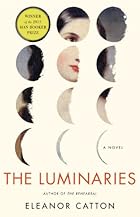
6. The Luminaries by Eleanor Catton (2013, 834 pages)
This book, set in New Zealand during the gold rush, was fascinating, not the least for its structure. If I understand the parameters Catton set for herself (and I'm not certain I do), each of twelve characters represented a different astrological sign, and each of seven additional characters represented the seven heavenly bodies known at the time (Mercury, Venus, Mars, Jupiter, Saturn, sun and moon), with an additional (deceased) character identified as "terra firma." The interactions among these characters (here's where I start speculating) were dictated by the movements of the stars and planets at the time the actions of the book were set. Also, each section is exactly half the length of the section before it.
To me, the impressive feat is that the reader can disregard the existence of each of these rules and simply enjoy an absorbing, engaging yarn, full of mystery, murder, gold, love, lust, revenge, betrayal . . . I don't want to give anything away, but suffice it to say that I could not put the book down. I'm not sure if the progressive compression was a factor in hurtling me forward? But I found myself staying up well past my bedtime on multiple nights, just to read a bit further.
As much as I enjoyed the story itself, it's the structure that keeps me thinking about the book. While I have no knowledge of (or interest in) astrology, it so happens that one of the titles my company publishes is a horoscope magazine. I've told my editor of it about the book, and I'm hoping we'll do a feature on it, which should answer some of my questions. Stay tuned!
105cabegley
I made a delightful purchase this weekend:

Thus enabling me to combine two of my favorite things, books and wine:


Thus enabling me to combine two of my favorite things, books and wine:

106SassyLassy
Wow, I've been looking for one of those forever; actually I'd take both.
107mabith
Ooh, great card catalog! We have a few kicking around in my family (perk of having a librarian relative who knows when they're getting rid of stuff).
108Caroline_McElwee
I love the new purchase Chris. Will you keep different things in different draws?
109lauralkeet
Ooh very cool purchase! I think we should all come around for a closer look and a tasting :)
110laytonwoman3rd
Is that modified in any way, or does a bottle of wine really fit so neatly into a standard card catalog drawer? What an amazing idea!
111cabegley
I found it on Craigslist, Sassy, but I think I just got lucky. Meredith, I'm jealous! Linda, it's not modified at all! I thought I was going to have to take the rods out, but the bottle fit without even doing that. Caroline, right now I'm planning on using the drawers for wine and liquor, although I'm sure other things will come to me. I'll label the drawers once I decide. It has the pull-out surfaces for writing at the midpoint, which will be ideal for using as a bar/sideboard. I'm planning on cleaning it up a bit before I start stocking it. Laura--of course! You're all invited.
112RidgewayGirl
That is amazing and perfect.
116cabegley
I really can't take credit for the idea--I saw it online somewhere and thought "I have to do this!"
117fannyprice
>104 cabegley:, whoa, that is fascinating. I have got to read this now, based on your comments about the structure. When your company publishes, please post a link!
118NanaCC
>104 cabegley: I am looking forward to reading The Luminaries. Great review. I was afraid my lack of knowledge about astrology would effect the reading experience, but your review has removed that obstacle. :) Thanks!
119rebeccanyc
#96 & 97 I loved the Julia parts of Julie and Julia too; in fact, I would have loved a movie that was all Meryl Streep and Julia and no Julie but, as the friend I saw the movie with pointed out, it wouldn't have attracted younger viewers without Julie and her blog.
I have The Luminaries too and so am glad you enjoyed it as that bodes well for me. I'm going to have to wait until the summer, I think, when I'll have more time to read at home, because it is such a tome.
I have The Luminaries too and so am glad you enjoyed it as that bodes well for me. I'm going to have to wait until the summer, I think, when I'll have more time to read at home, because it is such a tome.
120cabegley
>117 fannyprice: Will do. It takes a while, though, so I'm not sure when that will be.
>118 NanaCC: Nana, I think you will really like it. You really can, as a reader, ignore the astrology. I don't think you'll be missing much of anything that way. (Although I do encourage you to notice and admire the structure!)
>119 rebeccanyc: All Meryl Streep would generally be a good thing for a movie. (Although I do think Amy Adams is a good actress--have you seen American Hustle?) I hear you about the heft of The Luminaries--it probably would have sat unread for much longer if I didn't have it on my Kindle. It's a relatively quick read, though, in spite of its length, so once you do have some time away from the subway, I think you'll get through it in no time.
>118 NanaCC: Nana, I think you will really like it. You really can, as a reader, ignore the astrology. I don't think you'll be missing much of anything that way. (Although I do encourage you to notice and admire the structure!)
>119 rebeccanyc: All Meryl Streep would generally be a good thing for a movie. (Although I do think Amy Adams is a good actress--have you seen American Hustle?) I hear you about the heft of The Luminaries--it probably would have sat unread for much longer if I didn't have it on my Kindle. It's a relatively quick read, though, in spite of its length, so once you do have some time away from the subway, I think you'll get through it in no time.
121rebeccanyc
I haven't seen American Hustle yet, Chris, but I've heard great things about it. We almost never go to movies anymore because it's so irritating to sit through 15 minutes of ads and 15 minutes of previews (well, it feels like that anyway), so I will probably wait for Netflix.
122cabegley

7. Mrs. Woolf and the Servants: An Intimate History of Domestic Life in Bloomsbury by Alison Light (2008, 400 pages)
Virginia Woolf, like the rest of England's upper-middle class in the late 19th and early 20th century, relied heavily throughout her life on domestic help, both live-in and, later, daily. Without someone to take care of the backbreaking, endless labor of running a household and keeping its inhabitants cleaned and fed, Woolf would never have had the opportunity to write, room of her own or not. And yet, Woolf was never comfortable with sharing her household with her servants, whom she felt drained her of energy and encroached on her precious privacy. Alison Light explores Virginia Woolf's life through the lens of her interactions with her various domestics--interactions that were often uncomfortable and irritating to her. She constantly schemed in her diary and her letters to rid herself of servants, and yet needed them to the point that she was never really free of them.
Light ranges about (sometimes bewilderingly) on a variety of topics--this book is at once a biography of Woolf, a tease about Bloomsbury, an exploration of service in early 20th century England, and a treatise on feminism, with forays into interwar British history and the development of the Labor movement. Light also delves deeply in to the psychology, or her perception of the psychology of her subjects, and I sometimes questioned her conclusions (and her qualifications for making these conclusions).
I found this book interesting, but also frustrating. It's my own fault, really. I was expecting a different book than the one I read, and I'm not sure why. "Mrs. Woolf" takes predominance in the title, and so I should have realized that she would take predominance in the narrative, but I was expecting more about the servants and service, and less about Virginia Woolf herself. It did goad me into checking Hermione Lee's Virginia Woolf biography out of the library, in part because I felt that Light expected her reader to already have a strong background in Woolf's life and the life in Bloomsbury. (At one point, Light says "In times of extreme violence and threat the intellectual's capacity to doubt and question could be a double-edged sword. 'We do represent the last utterances of the civilised,' her friend Morgan Forster had written to her." Leading this reader, at least, to Wikipedia to confirm that we were, indeed, talking about E.M. Forster.)
There's been interesting discussion elsewhere in Club Read, most significantly on Char's thread starting here, about prominent and privileged women "speaking for the group" when their experiences don't represent the experiences of all, particularly of women of color or lower-income women. Something Light mentioned towards the end of the book brought this conversation strongly to mind:
At least one working woman had been 'irked' by Virginia's class-blindness in Three Guineas and had taken her to task for it: 'your book would make some people think that you consider working women, and the daughters of educated men as a race apart. Do you think we enjoy being "hewers of wood and drawers of water", that we do menial tasks from choice and are fitted for nothing else?' In a nine-page letter Agnes Smith, an unemployed weaver from Huddersfield, expressed her indignation. Though she was in deep sympathy with Woolf's pacifism, she argued that Virginia ignored the economic and emotional dependence of women like herself, which she deemed far worse. Family dominated and directed her life just as much, if not more, since wages were so low -- 'a working woman who refuses to work will starve', as she put it succinctly.
. . .
More letters were exchanged, and photographs of their homes, and some warmth grew between them, though they were never on first-name terms. Virginia asked her to come and visit; Agnes returned the invitation. Agnes's letters are touching and generous, Virginia's haven't survived. Agnes deferred to Virginia's talent and she restrained herself from pointing out her privilege, but she also wanted to educate Virginia. She saw that the Mrs Woolfs of this world couldn't help their ignorance.
I would have liked more of this interaction, but coming across it towards the end was a delight to me.
Much of what Light did discuss about the lives of these girls and women in service was heartbreaking, and a strong reminder to me about how very recent universal education is. "In 1945 the Labour government put the school-leaving age up to fifteen (sixteen was thought too expensive a measure), and there was free milk for all school children; these two things ensured the end of the British skivvy, although the woman who fought for both of them, Ellen Wilkinson, 'red Ellen', the first British woman to become a Minister of Education, took a lethal overdose, depressed by the lack of more radical reforms." This, which we take for granted now, passing just a couple of generations ago.
123cabegley
In referencing a talk given by the daughter of Leonard Woolf's gardener, Light said, ". . . her father emerged from the shadows -- a Rodmell boy who found himself in the trenches as a gunner, watching in horror as his beloved horses were maimed and blown up. No wonder he took to growing things for the rest of his life."
My mother's father was a gardener/caretaker on an estate in New Jersey from just after his service in WWII until the early 1980s, and while I don't necessarily agree with Alison Light's psychological analysis here, it did make me think. My grandfather was a USO driver for part of the war, and had engaging stories about his brushes with celebrities, but he was also a medic, on the beaches in day 2 of the Normandy invasion--something he never talked about, but that woke him up screaming on occasion. I do wonder if gardening was in any way therapeutic for him.
My mother's father was a gardener/caretaker on an estate in New Jersey from just after his service in WWII until the early 1980s, and while I don't necessarily agree with Alison Light's psychological analysis here, it did make me think. My grandfather was a USO driver for part of the war, and had engaging stories about his brushes with celebrities, but he was also a medic, on the beaches in day 2 of the Normandy invasion--something he never talked about, but that woke him up screaming on occasion. I do wonder if gardening was in any way therapeutic for him.
124cabegley
I picked up Mrs. Woolf and the Servants in part because we're watching Downton Abbey right now, and I wanted to read more about the servant life. I don't find the depiction of the interactions between servants and masters very realistic in Downton, and this book had me wondering why we never see Lady Grantham meeting with Mrs. Hughes, which she must have had to do at least daily, to plan out the meals, the day, etc.
Also, for your reading pleasure, if the most recent episode (U.S. airing) of Downton Abbey took place entirely on Facebook.
Also, for your reading pleasure, if the most recent episode (U.S. airing) of Downton Abbey took place entirely on Facebook.
125baswood
Excellent review of Mrs Woolf and the Servants which sounds a fascinating read and shows a side of Virginia Woolf and the Bloomsbury group which is obvious when you think about it, but would not be so readily apparent from reading their literature.
Enjoyed your review of The luminaries
Although it is a neat idea I couldn't possibly hide my bottles of wine in a filing cabinet.
Enjoyed your review of The luminaries
Although it is a neat idea I couldn't possibly hide my bottles of wine in a filing cabinet.
126cabegley
Thanks, Barry.
I have some lovely bottles that deserve better storage, and will have it, but most of our wine is for casual drinking (right now it's a plethora of Albariño and Torrontes). They'll be fine in a card catalog.
I have some lovely bottles that deserve better storage, and will have it, but most of our wine is for casual drinking (right now it's a plethora of Albariño and Torrontes). They'll be fine in a card catalog.
127NanaCC
>123 cabegley: I never thought about the therapeutic aspect of gardening for dad. You have me wondering about that.
128lauralkeet
Very interesting review. I recently bought a kindle edition of Mrs Woolf, pretty much on impulse.
129fannyprice
Enjoyed your thoughts on Mrs Woolf and the Servants. I've got it on kindle and have been meaning to read it for a while now. Thanks for the warning about the expected background knowledge!
130SassyLassy
Mrs Woolf and the Servants sounds fascinating. I don't expect it would have been easy to work for Virginia.
Interesting about your grandfather. Beyond the deep peace and mental reordering that gardening brings as a solitary pursuit, Horticulture Therapy is actually a discipline, used in many places, sometimes considered as part of the broader Recreation Therapy umbrella, sometimes on its own.
Interesting about your grandfather. Beyond the deep peace and mental reordering that gardening brings as a solitary pursuit, Horticulture Therapy is actually a discipline, used in many places, sometimes considered as part of the broader Recreation Therapy umbrella, sometimes on its own.
131cabegley
>127 NanaCC: Nana, I mostly put that comment in there for you. Interesting to think about. Do you know if he did any gardening before the war?
>128 lauralkeet:, 129 Thanks, Laura and Kris. I also bought it on Kindle, at some point, when it was offered as a deal. I'd heard of it elsewhere on LT beforehand, and it seemed interesting. Kris, I do think it would help to have background first, just to get more out of it. (And to be less frustrated!)
>130 SassyLassy: Thanks for that information on Horticulture Therapy, Sassy. I can understand it working well as therapy, but I thought Light was making an awfully big leap to imply he chose gardening as a direct reaction to his war experiences.
>128 lauralkeet:, 129 Thanks, Laura and Kris. I also bought it on Kindle, at some point, when it was offered as a deal. I'd heard of it elsewhere on LT beforehand, and it seemed interesting. Kris, I do think it would help to have background first, just to get more out of it. (And to be less frustrated!)
>130 SassyLassy: Thanks for that information on Horticulture Therapy, Sassy. I can understand it working well as therapy, but I thought Light was making an awfully big leap to imply he chose gardening as a direct reaction to his war experiences.
132NanaCC
>131 cabegley: I am pretty sure that he worked on the estate before he joined the army, and was promised a job when he came back. I know that he won many gardening awards for his employer, and I think that most of those were from before the war.
133dchaikin
I had no idea these famous English 20th-century writers were so privileged. Just ignorance on my part I guess, but thanks for the lesson.
And great and informative review of The Luminaries.
And great and informative review of The Luminaries.
134fannyprice
>133 dchaikin:, Dan, as I read more and more about servants and service in England, I am continually surprised to learn that the bar for having at least one domestic helper was quite low and that most servants did not work in a "Downton Abbey"-type setting.
135cabegley
Thanks, Dan!
I agree with Kris--the middle class, as a rule, had servants, at least up to WWI, and a good number in the interwar period.
I agree with Kris--the middle class, as a rule, had servants, at least up to WWI, and a good number in the interwar period.
136cabegley
8. The Cuckoo's Calling by Robert Galbraith/J.K. Rowling (2013, 455 pages)
When beautiful model Lula Landry falls to her death from her balcony, the police rule it a suicide. Her brother, however, doesn't agree, and hires down-on-his-luck private detective Cormoran Strike to try to prove she was murdered. Strike, with the help of his plucky new temp Robin Ellacott, digs deep into the world of the rich and famous to uncover the evidence the police either missed or ignored.
The Cuckoo's Calling was released in 2013 under the name Robert Galbraith, to good reviews and slow sales, until the news was leaked that the author was actually J.K. Rowling, at which point sales, of course, shot into the stratosphere. Whether Rowling had anything to do with the leak or not (for the record, I don't think she did), she managed beforehand to publish a well-received (at least by critics) book for adults on its merits alone, rather than on the strength of her name, thereby silencing those who said she would only ever be the Harry Potter author.
I really enjoyed The Cuckoo's Calling. As I said on Kay/RidgewayGirl's thread, I think the mystery genre plays to Rowling's strengths of plotting, pacing and story. (Her previous adult effort, The Casual Vacancy, was an attempt at literary fiction, and I don't think her writing is strong enough for her to excel in that area.) While she doesn't break new ground with her story or her detective (troubled past? check. fond of the pub? check. woman troubles? check. money problems? check.), she kept me interested from first to last. Rowling drops red herrings galore on her way to the conclusion, and I never quite put the mystery together before the big reveal. If Wikipedia is to be believed, a sequel is coming out in 2014, and I'm sure I'll seek it out.
138cabegley
I think you will. Don't you love those very Rowlingesque names? Every time I read Lula Landry I thought of Luna Lovegood.
139RidgewayGirl
I saw the character of Cormoran Strike less as breaking no new ground than as being respectful of the genre. She's clearly a fan of the classic PI tale, since she referenced it so beautifully here. I'm looking forward to the next one, too.
140NanaCC
>138 cabegley: :) or Alice?
141cabegley
>139 RidgewayGirl: Fair enough. I do agree that it was a classic PI tale.
>140 NanaCC: God, I hope not. (Alice is my daughter, for those of you not my mom. She's very much like Luna Lovegood, of the Harry Potter series, albeit without the penchant for things unexplained by science and reason. NOTHING like Lula Landry of The Cuckoo's Calling.)
>140 NanaCC: God, I hope not. (Alice is my daughter, for those of you not my mom. She's very much like Luna Lovegood, of the Harry Potter series, albeit without the penchant for things unexplained by science and reason. NOTHING like Lula Landry of The Cuckoo's Calling.)
142NanaCC
>141 cabegley: Sorry. I haven't read the book. I was referring to Luna Lovegood.
143lauralkeet
Aw, your daughter is like Luna Lovegood? How sweet.
144charbutton
I'm finally catching up on your thread!
Thanks for the review of The Luminaries. I've seen positive statements about it all over Twitter but hadn't got round to finding out what the book is actually about! It sounds intriguing to say the very least.
Mrs Woolf and the Servants also sounds like one for my 'to buy' list. I've struggled with the couple of Woolf's novels that I've tried to read but I'm fascinating by the Bloomsbury set. I love that women pulled her about her privileged view of life and that she responded to this.
Thanks for the review of The Luminaries. I've seen positive statements about it all over Twitter but hadn't got round to finding out what the book is actually about! It sounds intriguing to say the very least.
Mrs Woolf and the Servants also sounds like one for my 'to buy' list. I've struggled with the couple of Woolf's novels that I've tried to read but I'm fascinating by the Bloomsbury set. I love that women pulled her about her privileged view of life and that she responded to this.
145kaylaraeintheway
I'm heading over to eBay/Craigslist/Amazon right now to look for a card catalog! Such a brilliant idea. Also, thank you for your reviews on The Luminaries, Mrs. Woolf and the Servants, and Cuckoo's Calling--I'll be adding those to my ever-expanding TBR list :)
146cabegley
Thanks, Char and Kayla!
Char, I really think The Luminaries is worth it. And a much easier, more entertaining read than I expected. And yes, that woman who called her on her rich people problems, and her reaction to it, was one of my favorite parts of the book.
Kayla, I hope you find a card catalog! I think they're beautiful pieces of furniture, and it's great to repurpose them. My brother-in-law, who is a real oenophile, is coming over for dinner tonight, and to be honest I dread his reaction. But I'm not going to be putting valuable wine into it. And I should apologize for adding to Mount TBR, but it's an unavoidable hazard of joining Club Read.
Char, I really think The Luminaries is worth it. And a much easier, more entertaining read than I expected. And yes, that woman who called her on her rich people problems, and her reaction to it, was one of my favorite parts of the book.
Kayla, I hope you find a card catalog! I think they're beautiful pieces of furniture, and it's great to repurpose them. My brother-in-law, who is a real oenophile, is coming over for dinner tonight, and to be honest I dread his reaction. But I'm not going to be putting valuable wine into it. And I should apologize for adding to Mount TBR, but it's an unavoidable hazard of joining Club Read.
147cabegley
9. The Goldfinch by Donna Tartt (2013, 784 pages)
One of Rebecca's questions for the avid reader was (and I'm paraphrasing) "do you read other reviews before writing your own?" And sometimes, I do. I don't think they really change what I'm going to say, but I'm curious--how does my experience compare to others'?
In the case of The Goldfinch, I saw what I had suspected--people really, really like this book. And it makes me feel a bit bad to say, I didn't, so much. I wanted to. And it's well written. And I think it will stay with me for a long time--it's very memorable. So what I want to tell you is, I think it's probably a good book. And don't let my experience put you off. But I did not, and could not, like it.
Ahead, there be SPOILERS.
Theo Decker, our first-person protagonist, is a suspended 13-year-old private-school student, on his reluctant way to a school meeting with his mother to discuss his transgressions, when a sudden squall diverts mother and son into the Metropolitan Museum of Art, where Theo's mother introduces his to Fabritius's The Goldfinch, a small masterpiece:

A terrorist bomb goes off shortly thereafter in the museum, killing Theo's mother and several others (including Welty, an elderly antiques dealer whose lovely young niece Theo was admiring shortly before the attack, and who flits in and out of Theo's life thereafter), and in the confusion, Theo leaves with a ring of Welty's and The Goldfinch, both pressed upon him by Welty himself in his last moments. The grief-stricken Theo (and here is where Tartt shines--Theo's grief is so real and immediate) bounces from the wealthy family of a friend of his to his wastrel, gambling father to the Dickensian Hobie (partner of the dead Welty), screwing his life up royally in myriad ways, and experiencing tragedy after bad luck after tragedy, and yet always ending up just this side of trouble. While he is rarely able to actually look at The Goldfinch (years go by where he is afraid to even go near it, for fear of attracting the attention of the authorities), its existence gives him comfort, this one thing of beauty in his screwed-up life.
It's a fascinating story, with great dilemmas and beautiful thoughts on the power of art, and what makes family, and how we deal with grief, and death, and life. And yet. Theo is such a passive protagonist. He doesn't do much. Things just happen to him. And near the end (I warned you there would be spoilers, and here they continue, and no, I'm not blanking them out because really this whole post is spoilers), when he finally decides to be active and actually do something, yet again someone swoops in and takes that decision out of his hands and miraculously, well, not fixes things, but eliminates the worst of the problems. Theo's Russian friend Boris (who is on the one hand my favorite character and on the other such a ridiculous caricature, who even after living in and out of the United States for many years has not grasped the use of articles) functions as a deus ex machina multiple times in the book, most explicitly in the section I'm talking about here, creating the problems and then solving them, while Theo just bumps along.
This book is baggy and unwieldy and haunting all at once. I'm sure it will stick with me, and maybe that makes it a better book for me than I think it was.
148RidgewayGirl
It's so fun when someone whose reading tastes are similar to mine strongly disagrees with me about a book. The Marriage Plot was another like that -- a substantial and involving book that I loved but a lot of others did not. It does make me wish that we lived in some Jasper Fforde world, where disagreeing about a book would turn us into mortal enemies (Sherlock and Moriarty style) or at least necessitate a duel of some kind.
Boris's accent -- I liked that I would end up reading his dialog in a Russian accent in my head. I didn't pick up on the why didn't he learn to speak proper English thing, maybe because my Father-in-Law still sounded like Colonel Klink after living in the US for forty years -- although he arrived when he was already an adult and Boris was so quick with everything else. I wonder if he kept his accent to charm the ladies?
Boris's accent -- I liked that I would end up reading his dialog in a Russian accent in my head. I didn't pick up on the why didn't he learn to speak proper English thing, maybe because my Father-in-Law still sounded like Colonel Klink after living in the US for forty years -- although he arrived when he was already an adult and Boris was so quick with everything else. I wonder if he kept his accent to charm the ladies?
149rebeccanyc
I hope you will post that review on the book page, Chris, to counter all those rave reviews!
150NanaCC
>147 cabegley: & 148 Chris and Kay, your differing reviews make me feel a little bit like Gumby right now. I tend to like the books that both of you read and like. I'll like it....I won't like it...I should read it.....I shouldn't read it....and then again, maybe....
151lauralkeet
Chris, I read The Goldfinch over the Christmas holidays and rated it 4 stars. I might have been influenced by reading it on the beach in St Thomas. :) But when I got home I couldn't get my head back into it enough to write a review. I enjoyed the experience of reading it (or was that the sea talking?!), but I also understand and agree with many of your points. I'm conflicted, I guess.
153cabegley
>148 RidgewayGirl: Pistols at dawn, Kay! I agree with you about disagreements. In my RL book group, our best discussions come when not everyone feels the same way about the book. (This book is actually for my book group, so I'm looking forward to the the conversation!) I don't think I would have had a problem with Boris's somewhat fractured English if he'd started speaking it as an adult. But he lived in English-speaking countries even before he met Theo, so I found it somewhat suspect. And accents are always a good pickup tool . . .
>149 rebeccanyc: Done, Rebecca!
>151 lauralkeet: Conflicted is a good word, Laura. I think it would describe my feelings as well.
>150 NanaCC:, 152 I think you should at least try it, Nana. I'd be interested to hear your thoughts.
>149 rebeccanyc: Done, Rebecca!
>151 lauralkeet: Conflicted is a good word, Laura. I think it would describe my feelings as well.
>150 NanaCC:, 152 I think you should at least try it, Nana. I'd be interested to hear your thoughts.
154cabegley
>148 RidgewayGirl: I forgot to say, Kay, but The Marriage Plot is on my shelf of books to read next. We'll see if you and I have a more similar reaction to this one. (I hope so--I really like Eugenides.)
156Caroline_McElwee
Chris, I like your review. I loved the book whilst noting its flaws, and not really understanding why I enjoyed it so much. I put it down to the friendships in the book.
157cabegley

10. Five Days at Memorial: Life and Death in a Storm-Ravaged Hospital by Sheri Fink (2013, 578 pages)
There's been so much talk about this book in Club Read already that a description seems unnecessary.
Sheri Fink's description of life in Memorial Hospital during those five days in and after Hurricane Katrina was immediate and real, and so distressing that I considered not finishing. I texted my mother (who, as you will know if you spend time on her thread, was reading the book as well) to say that I wanted someone to tell me that some good came out of it, or I was going to stop. I didn't stop, and I have to say it doesn't seem like there was much good that came out of it (see Hurricane Sandy).
Much as I had a hard time seeing it through to the end, I highly recommend this thought-provoking book. I'll be putting my further thoughts in the Five Days at Memorial thread.
158lauralkeet
OK, that's it. I have to read this, especially since my library has it in a Kindle edition. I will put my request in soon.
159cabegley

11. Mr. Penumbra's 24-Hour Bookstore by Robin Sloan (2012, 288 pages)
When the Internet company Clay Jannon is working for goes out of business, he has a tough time avoiding webstraction long enough to search for a new job. To counteract this, he prints out job listings and reads them on long walks through San Francisco. It is on one of these long walks that he sees a Help Wanted sign in a strange little bookstore, and, on impulse, walks in.
Mr. Penumbra's store is open 24 hours a day, although there aren't a lot of paying customers. Instead, some rather odd people keep coming in and borrowing books from the high back shelves of the store. In trying to figure out just what is really going on in the store, Clay ends up in a mystery involving a secret society, the birth of print, and codebreaking.
This sounded right up my alley, but while it was perfectly entertaining, it's not a book that will stick with me for long. It's also very much a book of its time. I'm glad I read it now, because I have a hard time picturing enjoying it five or ten years from now. I thought it would be a love story about books, but it turned into more of a tech lovefest (although Sloan gets in plenty of digs at the wired-in crowd).
It does have the best cover I've encountered in a long while, but for those of you who haven't read other reviews of it, I won't say why. Some things are better discovered on their own.
160NanaCC
>159 cabegley: I have this on my "Borrow from Chris" wishlist. :)
161lauralkeet
>159 cabegley: I thought about reading this when it was getting all the hype, but now that it's died down I feel less compelled. Your review convinces me to let it go ...
162cabegley
Nana, it's right here waiting for you.
Laura, I hope I didn't talk you out of something you'd like, but if it wasn't at the top of your list I think you're making the right move. So many books; so little time . . .
Laura, I hope I didn't talk you out of something you'd like, but if it wasn't at the top of your list I think you're making the right move. So many books; so little time . . .
163Caroline_McElwee
Hmm, I had >159 cabegley: in my pile too, and like you Chris, was looking forward to something I'd love, I'll save it for when I need something light.
164mkboylan
>157 cabegley: I know it's not funny but I couldn't help laughing out loud at your (See Hurricane Sandy).
I just could not get into Penumbra and gave up.
Have to go check your comments on the Memorial thread.
I just could not get into Penumbra and gave up.
Have to go check your comments on the Memorial thread.
165lauralkeet
>162 cabegley: not at all, Chris. I was pretty well convinced I would never get around to it. You've just removed any guilt I felt about that!!
166cabegley
>164 mkboylan: She actually got into Sandy in the book. We will never learn.
I hear you about Penumbra. It felt very facile. But it was light, and a good palate cleanser.
I haven't gotten over to the Memorial thread yet, Merrikay. But I have to do so soon--I haven't turned the wireless on on my Kindle, because once I do the book will disappear (I borrowed it from the library), along with all my notes and highlights. I thought I would do it this weekend, but I spent my free time on reading The Bridge on the Drina instead.
>165 lauralkeet: Guilt removal is kinda my thing. :-P
I hear you about Penumbra. It felt very facile. But it was light, and a good palate cleanser.
I haven't gotten over to the Memorial thread yet, Merrikay. But I have to do so soon--I haven't turned the wireless on on my Kindle, because once I do the book will disappear (I borrowed it from the library), along with all my notes and highlights. I thought I would do it this weekend, but I spent my free time on reading The Bridge on the Drina instead.
>165 lauralkeet: Guilt removal is kinda my thing. :-P
167cabegley

12. The Bridge on the Drina by Ivo Andric, translated by Lovett F. Edwards (1945, 318 pages)
At the beginning of the 16th century, a young Christian boy was taken from his family, along with other boys in his and surrounding villages in what is now Bosnia and Herzegovina, as a levy by the Turks who had conquered the area. The boy was converted to the Muslim faith and became Mehmed Pasa Sokolovic, a Grand Vizir of the Ottoman Empire. But always, he remembered the agony of the crossing of the Drina, with his devastated mother on one bank, and the uncertain passage to the other side via ferry. He ordered a bridge built over the Drina, in the town of Visegrad. The Bridge on the Drina tells the tale of the bridge (which started construction in the latter half of the 16th century) and the inhabitants of Visegrad up through 1914, through changes in distant governance and uncertain times. For four centuries (and clearly longer, as events subsequent to the writing of this book bore out), the residents of this troubled region maintained their diverse ethnic identities and their factions, and rose and fell in consequence depending on the foreign power in control at the time. This is a fine book, wonderfully well written, with so much food for thought.
Highly recommended.
168NanaCC
>167 cabegley: that sounds interesting, Chris.
169dchaikin
Your review brings back good memories. Well, actually they are kind of dark memories with impalings and whatnot.
170cabegley

13. All Creatures Great and Small by James Herriot (1972, 448 pages)
When I was a child, I received a paperback boxed set of James Herriot's first three memoirs of his life as a veterinarian in Yorkshire in the 1930s-1950s. I loved these books then, and turned to the first one as a comfort read now.
They didn't say anything about this in the books, I thought, as the snow blew in through the gaping doorway and settled on my naked back.
I lay face down on the cobbled floor in a pool of nameless muck, my arm deep inside the straining cow, my feet scrabbling for a toe hold between the stones. I was stripped to the waist and the snow mingled with the dirt and the dried blood on my body. I could see nothing outside the circle of flickering light thrown by the smoky oil lamp which the farmer held over me.
No, there wasn't a word in the books about searching for your ropes and instruments in the shadows; about trying to keep clean in a half bucket of tepid water; about the cobbles digging into your chest. Nor about the slow numbing of the arms, the creeping paralysis of the muscles as the fingers tried to work against the cow's powerful expulsive efforts.
There was no mention anywhere of the gradual exhaustion, the feeling of futility and the little far-off voice of panic.
My mind went back to that picture in the obstetrics book. A cow standing in the middle of a gleaming floor while a sleek veterinary surgeon in a spotless parturition overall inserted his arm to a polite distance. he was relaxed and smiling, the farmer and his helpers were smiling, even the cow was smiling. There was no dirt or blood or sweat anywhere.
Herriot (real name Alf Wight) had a knack for telling these heartwarming stories, and a clear love for the Yorkshire countryside and its inhabitants. I've discovered as an adult that "memoir" is a very loose term here, with a number of the stories apparently borrowed or made up, and circumstances modified at will to make for a good story. And I'm ok with that. I found myself laughing out loud repeatedly, and then trying in vain to make my daughter see what was so funny.
My one real quibble is that All Creatures Great and Small was originally published in England in two volumes (If Only They Could Talk and It Shouldn't Happen to a Vet), and combined as one book for American audiences. While I do not remember this from my childhood paperback (and couldn't lay my hand on it to confirm), in the ebook (omnibus) edition I read, the two volumes are clearly slapped together, resulting in an introductory paragraph halfway through the book.
That aside, this was a thoroughly enjoyable read, and with several more volumes to go, I look forward to more of these cozy stories in the future.
171cabegley
>169 dchaikin: Oh, Dan, the impaling was really hard to get through. I kind of read it sideways, like I didn't want to get too close to it.
172Caroline_McElwee
>167 cabegley: - Chris, I must go back to this novel. I started it years ago, but my dreams became so much more violent than I generally have, I had to put it aside. I had intended to go back to it sooner.
173rebeccanyc
>169 dchaikin: What Dan said! I loved this book.
174RidgewayGirl
I've added The Bridge on the Drina to my wish list, with reservations.
175Linda92007
Nice review of The Bridge on the Drina, Chris. I have it on the shelves waiting to be read and your review has bumped it up the list.
176lauralkeet
>170 cabegley: comfort read, indeed. I read the book years and years ago (I guess as a young adult more than a child), after enjoying the TV series. I still can't look at Robert Hardy without thinking of Siegried Farnon.
177Caroline_McElwee
That series was fun Laura.
178cabegley
Rebecca, I think it was you and our mutual friend Pam who put The Bridge on the Drina on my radar, so thank you!
Caroline, do give it another try. To you and Kay I would say that if you can get past the impalement, which is a challenge, it's well worth the effort. And none of the rest of the violence comes close.
Linda, I look forward to hearing your thoughts when you get to it!
Laura and Caroline, I didn't even know until I looked Herriot up on Wikipedia this week that there was a series! The stories are so entertaining--I can easily see them transferred to the screen.
Caroline, do give it another try. To you and Kay I would say that if you can get past the impalement, which is a challenge, it's well worth the effort. And none of the rest of the violence comes close.
Linda, I look forward to hearing your thoughts when you get to it!
Laura and Caroline, I didn't even know until I looked Herriot up on Wikipedia this week that there was a series! The stories are so entertaining--I can easily see them transferred to the screen.
179lauralkeet
>178 cabegley: I didn't even know until I looked Herriot up on Wikipedia this week that there was a series!
It's available on Netflix streaming. It was made in the late 70s/early 80s so the production values might be a bit dated but I still recommend it.
It's available on Netflix streaming. It was made in the late 70s/early 80s so the production values might be a bit dated but I still recommend it.
180lesmel
>178 cabegley: & >179 lauralkeet: have you watched The Incredible Dr. Pol? It's on Animal Planet. He's a large- and small-animal vet in Michigan. The series sort of reminds me of the Herriot stories.
181lauralkeet
>180 lesmel: I haven't heard of that one -- good to know!
182cabegley
>180 lesmel: Thanks for the tip!
183cabegley

14. The Talisman Ring by Georgette Heyer (1936, 323 pages)
And now we come to my guilty pleasures. Still in need of some comfort reading, I turned to the (mostly) reliable Georgette Heyer (last year's Heyer read, Faro's Daughter, was disappointing). Heyer's Regency romances are much finer stuff than your dime-store Harlequin, but I am not going to try to convince you that they are great literature. They are, however, fairly well written and plotted, and pure escapist fun.
In my experience, Heyer has two kinds of heroine--the older (mid 20s), independent-minded woman who has yet to marry, and can hold her own in a verbal sparring match, and the younger, usually French, girl who does not understand conventions and tosses her head a lot. Guess which one I prefer?
The Talisman Ring gave me an initial sinking feeling, when dying Lord Lavenham introduces his young French granddaughter Eustacie to her older cousin Sir Tristram Shield, with his dying wish that they marry. Eustacie tosses her head but is willing to enter into a marriage of convenience, as long as she can have a house in town and a lover on the side. Sir Tristram is rather too practical for Eustacie, who sighs romantically over the stories of her cousin Ludovic, currently in exile and suspected of murder.
I didn't relish spending all my time with Eustacie, but a quarter of the way through the book 25ish, independent-minded Sarah Thane walks down the stairs of an inn and into our story, and all was well with my world.
The Talisman Ring is a murder mystery and an adventure story, with the romance thrown in on the side, and I will give away none of the plot. In fact, in my opinion the best way to read a Heyer book is without reading even the back cover. Suffice it to say that this was quite a romp, and fulfilled all my comfort-reading needs.
184avidmom
>183 cabegley: Still yet to read a Georgette Heyer, even though my aunt (the retired English teacher) absolutely loves them and insists I read one. Your review makes me think I should take her advice. :)
185cabegley
Susie, I really enjoy them. I've seen her called the successor to Jane Austen, but I think that's hyperbole. However, there are only six (completed) Austen novels, and Heyer isn't a bad author to turn to when you've read them all.
Some of my favorites are Cotillion, Venetia, The Grand Sophy, and Frederica.
Some of my favorites are Cotillion, Venetia, The Grand Sophy, and Frederica.
186LolaWalser
I read a bunch of Heyers when I was a girl but I don't think I can keep any of her plots separate. I do remember that The talisman ring was the very first! I used to skip the bits with the conversation between the boring, secondary characters.
She can throw a neat curve ball--I especially remember that once the silly fop turned out to be the hero (such characters are usually either sidekicks or villains in her books), and there was one book in which the conventional marriage remained conventional and sensibly passionless to the end. I was horribly disappointed. :)
She can throw a neat curve ball--I especially remember that once the silly fop turned out to be the hero (such characters are usually either sidekicks or villains in her books), and there was one book in which the conventional marriage remained conventional and sensibly passionless to the end. I was horribly disappointed. :)
187NanaCC
Chris, I think my favorite is An Infamous Army.
188cabegley
Lola--I know which fop you refer to, and it surprised and delighted me.
Nana, that was my first Heyer, and I agree it's a good one. Her description of the Battle of Waterloo is highly regarded, and I've read that it is actually used in military schools.
Nana, that was my first Heyer, and I agree it's a good one. Her description of the Battle of Waterloo is highly regarded, and I've read that it is actually used in military schools.
189fannyprice
I love all the head tossing. I enjoyed The Grand Sophy. I believe it had the other type of heroine in it. :)
190baswood
I see that you are reading Our Mutual Friend that will keep you quiet for a while.
193cabegley
Hi, Merrikay! I'm so far behind on people's threads. And I need to post about 12 Years a Slave and Our Mutual Friend. Maybe tonight . . .
194laytonwoman3rd
Very interested in your thoughts on both of those books, Chris. I sympathize with the "behind on threads" thing. I guess we just have to learn to live with it; this is such a prolific bunch of readers and posters!
195RidgewayGirl
It's actually quite nice to be behind on various threads-it's something to look forward to.
196cabegley

15. Twelve Years a Slave by Solomon Northup (1853, 152 pages)
I have not yet seen the movie--I have a hard time with watching violence, and this movie looked so hard to take. I decided to read the book both because the story sounded so important, and in the hopes that with foreknowledge I might be able to watch the movie.
For those who haven't seen the movie or read the book, Solomon Northup was a free black man living in New York state in the 1800s, who was lured to Washington, D.C., by the promise of work (he was a talented violinist), and then drugged and sold into slavery. For 12 years, he worked as a slave in Louisiana, before he took the desperate step of telling a Canadian abolitionist his story. The abolitionist, at great risk to his own life, sent a letter to Northup's family and friends, who got the governor of New York to aid them in rescuing him.
Northup's story is heartbreaking, and his descriptions of the horrors he endured are hard to take. I still haven't been able to bring myself to watch the movie.
197cabegley

16. Our Mutual Friend by Charles Dickens (1865, 880 pages)
This may be my favorite Dickens yet, about the evil that men do for money. An enormous cast of characters, and myriad plot threads, will keep you entertained for many hours. I point you to Barry's fabulous review, with which I cannot hope to compete. (Plus, I waited too long to write this.)
198NanaCC
Chris, I have wanted to read Twelve Years a Slave, and you have pushed me to it.
I also love anything I've read by Dickens, and the fact that you call this one a favorite makes it even more enticing.
Now, all I need to do is finish our taxes, and I can get back to reading. Almost done. :)
I also love anything I've read by Dickens, and the fact that you call this one a favorite makes it even more enticing.
Now, all I need to do is finish our taxes, and I can get back to reading. Almost done. :)
199rebeccanyc
>196 cabegley: The movie is harrowing and there were parts I couldn't watch. But I kept telling myself how infinitely worse it was for the people who had to experience the horrors themselves.
200laytonwoman3rd
I'm not sure I have the fortitude anymore even to read Twelve Years a Slave (although part of me wants to), and I know I couldn't bear the movie. I never watched Amistad for the same reason. I've seen all the movies I can manage about the holocaust and concentration camps, too. I agree that these things are important, but just hearing about them now reminds me of the lesson, and I will not forget. I hope a great many people continue to read and watch, just the same.
>197 cabegley: Thanks for reminding me about OMF...I started it a while back, and was enjoying it very much, but put it aside for some reason. I want to get back to it before my daughter decides to repossess her copy!
>197 cabegley: Thanks for reminding me about OMF...I started it a while back, and was enjoying it very much, but put it aside for some reason. I want to get back to it before my daughter decides to repossess her copy!
201avidmom
>196 cabegley: I've been avoiding the movie for the same reasons you have. What a nightmare to have to endure! Glad the movie has brought the book to our attention, but still ......
202lauralkeet
I watched the movie on my recent return flight from the UK. It's very very good. But I think the awful parts were mitigated by the 6-inch screen. I'm sure the hubs will want to see it when it comes out on DVD or On Demand and I'll have to see how I feel about it then.
203cabegley
Nana, I would definitely recommend both to you. Finish those taxes so you can get back to what's really important!
Rebecca, I hear you. I loved Lupita Nyong'o's Oscar speech, where she said, "It doesn’t escape me for one moment that so much joy in my life is thanks to so much pain in someone else’s. And so I want to salute the spirit of Patsey for her guidance. And for Solomon, thank you for telling her story and your own." That resonated in my head while I was reading.
Linda, I think you're right--we should read and watch what we can, but it can become too hard to bear. And do pick back up Our Mutual Friend--it's a good ride.
Exactly, Susie.
Laura, Tom has taken the DVD out of the library, and Alice and I have said we want to try, but we just can't bring ourselves to it yet. Having read it has prepared me a little, but I'm still not sure.
Rebecca, I hear you. I loved Lupita Nyong'o's Oscar speech, where she said, "It doesn’t escape me for one moment that so much joy in my life is thanks to so much pain in someone else’s. And so I want to salute the spirit of Patsey for her guidance. And for Solomon, thank you for telling her story and your own." That resonated in my head while I was reading.
Linda, I think you're right--we should read and watch what we can, but it can become too hard to bear. And do pick back up Our Mutual Friend--it's a good ride.
Exactly, Susie.
Laura, Tom has taken the DVD out of the library, and Alice and I have said we want to try, but we just can't bring ourselves to it yet. Having read it has prepared me a little, but I'm still not sure.

