
This topic is currently marked as "dormant"—the last message is more than 90 days old. You can revive it by posting a reply.
1bragan
Here I am with a new thread for a new quarter, still reading away! Although this particular book sure took me long enough:
34. Island in the Sea of Time by S. M. Stirling

The entire island of Nantucket is somehow transported from the year 1998 all the way back to 1250 B.C. The exact reason and mechanism for this aren't really explored here; it remains a deep mystery to everyone involved. Instead, Stirling focuses on what happens next: how the islanders survive, what kinds of technology they are able to reinvent or maintain, how they reorganize their society, and what encounters they have with the people of that era. That last thing gets very messy and complicated; there are a lot of bloody conflicts in the second half of the book.
This is a really intriguing premise. I have slightly mixed feelings about how Stirling handles it, though, because what he presents strikes me as a highly unrealistic best-case scenario for this situation, in terms of just how much people are able to accomplish in a very short period of time, and I think he glosses over a lot of technological and psychological difficulties. To his credit, he doesn't ignore them, but he does gloss over them. And I never could quite stop being aware of the fact that the author was manipulating everything about the situation to take the story in exactly the directions he wanted it. (E.g., they just happen to have a talented blacksmith, but most of their guns get destroyed early on. Yay, sword fights for everybody!) Of course, all authors do this, but it always works better when you don't notice it.
None of that, however, kept me from being interested in how things were going for the Nantucketers and what they were accomplishing. Stirling really does put a lot of attention into all the details, and conjures up the feeling of suddenly entering a vanished, long-ago world pretty well. I found it all much more engaging than I initially expected to, even when nothing much was going on. Actually... Possibly especially when nothing much was going on, because just about halfway through the book, which is where most of the real action starts, I was beginning to get tired. Not that I'd stopped being interested, exactly, but... Well, this isn't exactly a fast-paced page-turner, and it was taking me so long to get through it that by that point I just kind of felt like I wanted to get to the conclusion so I could go on to something else.
Even when I did, though, I don't know that it was a terribly satisfying conclusion. The central conflict is temporarily resolved, but the feel of the ending was very much, "Thus ends Book One! Stay tuned for the sequel!" Whether I actually will pick up the next book or not, I don't really know. I'd kind of like to return to this world and see how it fares as the years pass, but, man, 600 pages of this at a shot may just be a little too much for me.
Rating: An admittedly ungenerous 3.5/5, mainly just for taking me what felt like about three thousand years to read.
34. Island in the Sea of Time by S. M. Stirling

The entire island of Nantucket is somehow transported from the year 1998 all the way back to 1250 B.C. The exact reason and mechanism for this aren't really explored here; it remains a deep mystery to everyone involved. Instead, Stirling focuses on what happens next: how the islanders survive, what kinds of technology they are able to reinvent or maintain, how they reorganize their society, and what encounters they have with the people of that era. That last thing gets very messy and complicated; there are a lot of bloody conflicts in the second half of the book.
This is a really intriguing premise. I have slightly mixed feelings about how Stirling handles it, though, because what he presents strikes me as a highly unrealistic best-case scenario for this situation, in terms of just how much people are able to accomplish in a very short period of time, and I think he glosses over a lot of technological and psychological difficulties. To his credit, he doesn't ignore them, but he does gloss over them. And I never could quite stop being aware of the fact that the author was manipulating everything about the situation to take the story in exactly the directions he wanted it. (E.g., they just happen to have a talented blacksmith, but most of their guns get destroyed early on. Yay, sword fights for everybody!) Of course, all authors do this, but it always works better when you don't notice it.
None of that, however, kept me from being interested in how things were going for the Nantucketers and what they were accomplishing. Stirling really does put a lot of attention into all the details, and conjures up the feeling of suddenly entering a vanished, long-ago world pretty well. I found it all much more engaging than I initially expected to, even when nothing much was going on. Actually... Possibly especially when nothing much was going on, because just about halfway through the book, which is where most of the real action starts, I was beginning to get tired. Not that I'd stopped being interested, exactly, but... Well, this isn't exactly a fast-paced page-turner, and it was taking me so long to get through it that by that point I just kind of felt like I wanted to get to the conclusion so I could go on to something else.
Even when I did, though, I don't know that it was a terribly satisfying conclusion. The central conflict is temporarily resolved, but the feel of the ending was very much, "Thus ends Book One! Stay tuned for the sequel!" Whether I actually will pick up the next book or not, I don't really know. I'd kind of like to return to this world and see how it fares as the years pass, but, man, 600 pages of this at a shot may just be a little too much for me.
Rating: An admittedly ungenerous 3.5/5, mainly just for taking me what felt like about three thousand years to read.
3NanaCC
"mainly just for taking me what felt like about three thousand years to read."
I think I will pass on this one, but good review....
I think I will pass on this one, but good review....
4bragan
>2 mkboylan: Yay, shiny new thread! Last month was pretty slow for me, book-wise, but I feel ready to revitalize my reading here. :)
>3 NanaCC: Admittedly, the length of time it took me to finish the thing might be as much my own fault as the book's, but still. Even if it wasn't bad, it never exactly qualified as "hard to put down."
>3 NanaCC: Admittedly, the length of time it took me to finish the thing might be as much my own fault as the book's, but still. Even if it wasn't bad, it never exactly qualified as "hard to put down."
5dchaikin
Joining the new thread, but not sold on the first book. Actually wondering how it earned the 3.5 stars you gave it.
7bragan
>5 dchaikin: To be honest, I'm not sure how it earned them, or why I found it as readable as I did, even if it was slow-going... But I really might given it four stars if I just hadn't gotten tired of it before the author did. I think it's one of those books where you really have to have a certain kind of nerdy mindset to enjoy at all. (At least for the first half, anyway. Then it helps if you enjoy battle scenes.)
In fact, I'd say qualifies as part of a whole category of geek wish-fulfillment SF, the sort of time-travel or post-apocalyptic story in which there's an opportunity to basically rebuild civilization and all the people with lots of detailed knowledge about how basic technology works and weird hobbies like making their own chain mail suddenly come into their own. I was pretty leery of it going in on that basis, but I think it's actually better than most such things tend to be, even with all the stuff it sort of glosses past.
In fact, I'd say qualifies as part of a whole category of geek wish-fulfillment SF, the sort of time-travel or post-apocalyptic story in which there's an opportunity to basically rebuild civilization and all the people with lots of detailed knowledge about how basic technology works and weird hobbies like making their own chain mail suddenly come into their own. I was pretty leery of it going in on that basis, but I think it's actually better than most such things tend to be, even with all the stuff it sort of glosses past.
8fannyprice
>7 bragan:, "But I really might given it four stars if I just hadn't gotten tired of it before the author did." I've felt that way before about books that I actually enjoyed for 80% of the book. It can really ruin your experience of a book. I feel like the best fiction should leave you wanting 5 more pages, never feeling like you had 5 (or more) pages too many.
9bragan
>8 fannyprice:: Yes, definitely not the first time I've had that experience, and, sadly, I'm sure it won't be the last.
10bragan
35. Science and Religion: Are They Compatible? edited by Paul Kurtz
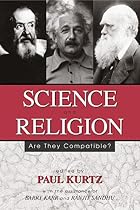
A number of the essays included in this volume were taken from lectures given at a conference held by the Center for Inquiry, a skeptics' organization, and many of the rest were originally published in the The Skeptical Inquirer magazine. This is not, by and large, a crowd that's particularly well-disposed towards religion, so it's probably not much of a surprise that most of these pieces, if they really address the question in the book's title at all, seem to conclude that the answer is that no, they're not compatible, and that science is (or should be) the clear winner in the conflict between them. There are, however, a few token entries by religious believers from both in and outside the skeptical community, as well as contributions from those who maintain that religion begins where science's ability to answer the very biggest questions ends, or that science and religion are (or should be) completely separate domains, one dealing with facts and one with morality.
It's a mixed bag of a collection. There are a number of articles -- mostly, I think, the ones that really grapple with the big philosophical issues -- that are eloquent, profound, provocative, and very much worth reading. Others, however, are disappointingly superficial. A number seem to be mostly variations on fairly standard arguments in favor of atheism, some of which take a rather dismissive tone about the whole thing. Many don't deal with the big-picture questions at all, but instead focus on some specific factual claim made by religions believers, often a small subset of religious believers, and whether it can be proved or disproved by science. (There is, for example, an entire section on Intelligent Design creationism.) And while those topics are no doubt worth talking about, I have to say that when I picked this book up, I wasn't exactly hoping for yet another creationism debate or a discussion about the Shroud of Turin. Also somewhat disappointing -- although in retrospect it probably shouldn't have been a surprise -- is the way that so much of it focuses so narrowly on Christianity. There seems to be to be something a little off about the idea of a book purporting to be about "science and religion" that barely acknowledges that non-Western religions even exist.
Rating: It's very hard to rate this one. The best stuff in it is very good indeed, but largish chunks of it really were just not at all what I was hoping for. I think I'm going to give it a slightly stingy 3.5/5.
A number of the essays included in this volume were taken from lectures given at a conference held by the Center for Inquiry, a skeptics' organization, and many of the rest were originally published in the The Skeptical Inquirer magazine. This is not, by and large, a crowd that's particularly well-disposed towards religion, so it's probably not much of a surprise that most of these pieces, if they really address the question in the book's title at all, seem to conclude that the answer is that no, they're not compatible, and that science is (or should be) the clear winner in the conflict between them. There are, however, a few token entries by religious believers from both in and outside the skeptical community, as well as contributions from those who maintain that religion begins where science's ability to answer the very biggest questions ends, or that science and religion are (or should be) completely separate domains, one dealing with facts and one with morality.
It's a mixed bag of a collection. There are a number of articles -- mostly, I think, the ones that really grapple with the big philosophical issues -- that are eloquent, profound, provocative, and very much worth reading. Others, however, are disappointingly superficial. A number seem to be mostly variations on fairly standard arguments in favor of atheism, some of which take a rather dismissive tone about the whole thing. Many don't deal with the big-picture questions at all, but instead focus on some specific factual claim made by religions believers, often a small subset of religious believers, and whether it can be proved or disproved by science. (There is, for example, an entire section on Intelligent Design creationism.) And while those topics are no doubt worth talking about, I have to say that when I picked this book up, I wasn't exactly hoping for yet another creationism debate or a discussion about the Shroud of Turin. Also somewhat disappointing -- although in retrospect it probably shouldn't have been a surprise -- is the way that so much of it focuses so narrowly on Christianity. There seems to be to be something a little off about the idea of a book purporting to be about "science and religion" that barely acknowledges that non-Western religions even exist.
Rating: It's very hard to rate this one. The best stuff in it is very good indeed, but largish chunks of it really were just not at all what I was hoping for. I think I'm going to give it a slightly stingy 3.5/5.
11fannyprice
>10 bragan:, Thanks for your review of Science and Religion: Are They Compatible?. Despite being the holder of a BA in Religion and being deeply interested in science, I find myself completely uninterested in the debates between science and religion. It seems to me that the debate is dominated by the extremists who are least likely to be moved by the other side and that everyone is just yelling for the sake of yelling. Frankly, I find militant atheism just as off-putting as militant religiousity. This is, of course, an extremely unnuanced view of the debate; I'm sure there are more thoughtful conversations going on.
12rebeccanyc
>10 bragan: I have read about scientists who are religious, but they separate science and religion in their minds more or less as follows (oversimplified): science deals with what is testable by experiment, and religion deals with faith that is not testable by experiment. I can't find the site I was thinking of, but here is a PBS site with statements by several scientists about how they reconcile evolution with religion.
>11 fannyprice: I have the same reaction you have, Kris, to the extremists on both sides. And my background is in science.
>11 fannyprice: I have the same reaction you have, Kris, to the extremists on both sides. And my background is in science.
13bragan
>11 fannyprice: I think it can be a conversation worth having, but, sadly, you're right, there's a lot of annoying and over-simplistic arguing on both sides. There are some much more nuanced discussions, even in this particular book, but one thing that struck me particularly about some of the more defense-of-atheism-themed pieces is that I that I can't help thinking that certain religious folks I know would protest that what they're arguing against isn't their idea of what religion is at all. As a science-minded atheist, myself, I know it's deeply frustrating when religious people criticize scientific ideas without taking the time to actually understand them, and I'm increasingly thinking that's something that probably goes both ways.
And, while I can understand wanting to take a pull-no-punches attitude towards something you think is a great social ill, people yelling at each other seldom makes for a very productive discussion.
>12 rebeccanyc: Indeed. I think the figure is that, in the US, about 40% of scientists profess some kind of religious belief. Which is much lower than in the general population, but hardly negligible. I actually hoped there'd be more discussion in here about that, about the ways in which people reconcile or compartmentalize those two very different approaches to the world, just in psychological terms. Unfortunately, there wasn't much, but there were a couple of well-written pieces by people who do take that approach themselves, plus Stephen Jay Gould's well-known piece on science and religion as "non-overlapping magesteria," in which he talks rather a lot about how the Catholic Church, in particular, reconciles religion with evolution.
My own personal feeling is that whether religion and science are compatible depends a lot on what you mean by "religion" and what you mean by "compatible." :)
And, while I can understand wanting to take a pull-no-punches attitude towards something you think is a great social ill, people yelling at each other seldom makes for a very productive discussion.
>12 rebeccanyc: Indeed. I think the figure is that, in the US, about 40% of scientists profess some kind of religious belief. Which is much lower than in the general population, but hardly negligible. I actually hoped there'd be more discussion in here about that, about the ways in which people reconcile or compartmentalize those two very different approaches to the world, just in psychological terms. Unfortunately, there wasn't much, but there were a couple of well-written pieces by people who do take that approach themselves, plus Stephen Jay Gould's well-known piece on science and religion as "non-overlapping magesteria," in which he talks rather a lot about how the Catholic Church, in particular, reconciles religion with evolution.
My own personal feeling is that whether religion and science are compatible depends a lot on what you mean by "religion" and what you mean by "compatible." :)
14rebeccanyc
>13 bragan: My own personal feeling is that whether religion and science are compatible depends a lot on what you mean by "religion" and what you mean by "compatible." :)
Very funny, and true too.
Very funny, and true too.
16fannyprice
>13 bragan:, so true.
17bragan
>15 ljbwell:: Hiya! It has been of year of interesting reading so far, I think. Just the way I like it!
18bragan
36. This Book Is Full of Spiders: Seriously Dude, Don't Touch It by David Wong
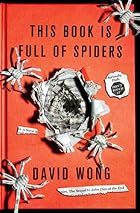
The comedy/horror sequel to David Wong's previous comedy/horror novel John Dies at the End. The first book was a bizarre mess of a story, with a sometimes rather crude and juvenile sense of humor, but I found it ridiculously entertaining. And this one, I think, is better than the first one. More polished, more coherent... Well, OK, comparatively speaking, it's more coherent. I was going to say it also has fewer dick jokes, but it turns out it was mostly saving up to make one great big one at the end. But it's wonderfully funny. (The book as a whole, I mean, not the giant dick joke.) There were long stretches where I found myself laughing with pretty much every page. It's also a surprisingly good horror novel, with sections that are genuinely suspenseful and creepy, and some really imaginative monsters.
It's definitely not a book for everybody, what with the gore and the smart-assed humor and the high levels of general insanity. And it does have some flaws: a bit of dragginess in the middle, an almost literal deus ex machina ending, one tiny but annoying plot hole that bugged me way more than it should have. In the end, though, I'm not sure I cared; it was engaging enough, and hilarious enough, to pretty much get away with it all. It was also exactly what I was in the mood for right now, and I enjoyed the heck out of it.
Rating: a possibly overenthusiastic 4.5/5
The comedy/horror sequel to David Wong's previous comedy/horror novel John Dies at the End. The first book was a bizarre mess of a story, with a sometimes rather crude and juvenile sense of humor, but I found it ridiculously entertaining. And this one, I think, is better than the first one. More polished, more coherent... Well, OK, comparatively speaking, it's more coherent. I was going to say it also has fewer dick jokes, but it turns out it was mostly saving up to make one great big one at the end. But it's wonderfully funny. (The book as a whole, I mean, not the giant dick joke.) There were long stretches where I found myself laughing with pretty much every page. It's also a surprisingly good horror novel, with sections that are genuinely suspenseful and creepy, and some really imaginative monsters.
It's definitely not a book for everybody, what with the gore and the smart-assed humor and the high levels of general insanity. And it does have some flaws: a bit of dragginess in the middle, an almost literal deus ex machina ending, one tiny but annoying plot hole that bugged me way more than it should have. In the end, though, I'm not sure I cared; it was engaging enough, and hilarious enough, to pretty much get away with it all. It was also exactly what I was in the mood for right now, and I enjoyed the heck out of it.
Rating: a possibly overenthusiastic 4.5/5
20mkboylan
Interesting and great review of the science/religion issue. always fun getting caught up with you.
21bragan
>19 connie53: Hello, Connie! And happy reading to both of us!
>20 mkboylan: Thanks! It's fun being me, I have so much interesting stuff on my bookshelves. :)
>20 mkboylan: Thanks! It's fun being me, I have so much interesting stuff on my bookshelves. :)
22rebeccanyc
>18 bragan: I LOVE the title. But I'm not reading the book!
23bragan
>22 rebeccanyc: Isn't that an awesome title? Fortunately, I am not at all arachnophobic.
24bragan
37. Distrust That Particular Flavor by William Gibson
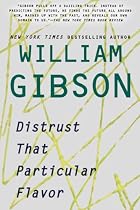
A collection of essays and articles by science fiction author William Gibson, spanning a period from 1989 to 2011 and taken from a wide variety of places, including magazines, book introductions, and even the biography page on Gibson's personal website. Some of the topics are about what you'd expect from Gibson (technology, science fiction, his longstanding fascination with Japan), while others are surprisingly random (a review of a Steely Dan album, a rambling piece about shopping for vintage watches on eBay).
Gibson's a good writer, and has a lot of interesting thoughts about technology and modern society, but I have to say, overall I found this collection a little disappointing. Not bad, mind you, but not nearly as good as I was expecting. There are a handful of really good essays, and even the ones I was more indifferent to often often featured a vivid turn of phrase or an interesting insight here and there. But as a whole, it feels oddly disjointed, and these pieces, perhaps because they were written for fairly specific audiences, often feel weirdly devoid of some important sense of context. Some of them also get a little repetitive, as he addresses some of the same topics and even uses some of the same turns of phrase more than once. The little afternotes in which Gibson repeatedly apologizes for not really being a non-fiction writer and frequently offers up the opinion that he didn't actually know what he was talking about when he wrote the piece in question don't really help, either.
Mind you, I'm not sorry I read this. It was probably worth it just for the two or three best essays. But Gibson's probably right; you're better off reading his novels.
Rating: 3.5/5, mostly just on the strength of the few best pieces.
A collection of essays and articles by science fiction author William Gibson, spanning a period from 1989 to 2011 and taken from a wide variety of places, including magazines, book introductions, and even the biography page on Gibson's personal website. Some of the topics are about what you'd expect from Gibson (technology, science fiction, his longstanding fascination with Japan), while others are surprisingly random (a review of a Steely Dan album, a rambling piece about shopping for vintage watches on eBay).
Gibson's a good writer, and has a lot of interesting thoughts about technology and modern society, but I have to say, overall I found this collection a little disappointing. Not bad, mind you, but not nearly as good as I was expecting. There are a handful of really good essays, and even the ones I was more indifferent to often often featured a vivid turn of phrase or an interesting insight here and there. But as a whole, it feels oddly disjointed, and these pieces, perhaps because they were written for fairly specific audiences, often feel weirdly devoid of some important sense of context. Some of them also get a little repetitive, as he addresses some of the same topics and even uses some of the same turns of phrase more than once. The little afternotes in which Gibson repeatedly apologizes for not really being a non-fiction writer and frequently offers up the opinion that he didn't actually know what he was talking about when he wrote the piece in question don't really help, either.
Mind you, I'm not sorry I read this. It was probably worth it just for the two or three best essays. But Gibson's probably right; you're better off reading his novels.
Rating: 3.5/5, mostly just on the strength of the few best pieces.
25bragan
38. Holding Your Eight Hands: An Anthology of Science Fiction Verse edited by Edward Lucie-Smith

A 1969 anthology of science fiction-themed poetry. Well, more or less, anyway. Some of these piece are no doubt more accurately described as fantasy, and it's arguable whether others exactly qualify as speculative fiction at all. But I'm not inclined to quibble too much about genre boundaries, in any case. A lot of them, possibly the majority, are essentially tiny, self-contained stories in verse, although not always clear and coherent stories. The subject matter varies, but there's a surprising amount of religious imagery and a not-at-all-surprising number of nuclear apocalypses and other gloomy scenarios. (1969 was not the most optimistic and cheerful time for SF.)
When it comes to poetry, I'm afraid I'm very much the "I don't know much, but I know what I like" sort. I'd hoped I'd like this, as I like science fiction and have enjoyed some other SF poetry I've read. But... I don't know. Some of these, I must confess, I didn't exactly "get." Others I understood perfectly well, but they just didn't do much of anything for me. Most of them were okay, and intellectually kind of interesting, but there just weren't all that many I can say I actively liked.
Mind you, I'm not saying these poems are bad, or even mediocre. They've obviously been carefully crafted by thoughtful, artistic people. I think this is one of those cases where the editor's personal tastes and mine just don't line up all that well. Although, interestingly, I did like the two poems Lucie-Smith himself contributed better than most of them, and his introduction was pretty good.
Rating: An ungenerous and completely subjective 3/5.

A 1969 anthology of science fiction-themed poetry. Well, more or less, anyway. Some of these piece are no doubt more accurately described as fantasy, and it's arguable whether others exactly qualify as speculative fiction at all. But I'm not inclined to quibble too much about genre boundaries, in any case. A lot of them, possibly the majority, are essentially tiny, self-contained stories in verse, although not always clear and coherent stories. The subject matter varies, but there's a surprising amount of religious imagery and a not-at-all-surprising number of nuclear apocalypses and other gloomy scenarios. (1969 was not the most optimistic and cheerful time for SF.)
When it comes to poetry, I'm afraid I'm very much the "I don't know much, but I know what I like" sort. I'd hoped I'd like this, as I like science fiction and have enjoyed some other SF poetry I've read. But... I don't know. Some of these, I must confess, I didn't exactly "get." Others I understood perfectly well, but they just didn't do much of anything for me. Most of them were okay, and intellectually kind of interesting, but there just weren't all that many I can say I actively liked.
Mind you, I'm not saying these poems are bad, or even mediocre. They've obviously been carefully crafted by thoughtful, artistic people. I think this is one of those cases where the editor's personal tastes and mine just don't line up all that well. Although, interestingly, I did like the two poems Lucie-Smith himself contributed better than most of them, and his introduction was pretty good.
Rating: An ungenerous and completely subjective 3/5.
26bragan
39. The Solitude of Prime Numbers by Paolo Giordano

Alice is an anorexic rich girl. Mattia is a mathematical genius who is carrying around a guilty secret. Neither has been successful at forming bonds with other human beings, and both of them have scars, both literal and figurative, that the rest of the world actively ignores. But maybe they could truly connect with each other, if they'd ever let themselves.
OK, that sort of makes it sound like it might be a cheesy romance. It's really, really not. In fact, I found it rather painful to read, not so much because it contains bullying and self-harm and other disturbing and depressing subjects, but because I so badly wanted to reach through the pages and smack both of them until they made different choices, said what they were thinking, and started treating themselves better. But it was mostly the good kind of pain, and the "Aargh, I care about these characters and they keep making me suffer with them!" kind of wanting to smack them, not the, "Aargh, the author has made these characters too annoying and stupid!" kind.
The writing is very good, even in translation: simple and understated and rather compelling. There is, perhaps, something that feels slightly artificial in how pure these characters are in their isolation and their damage, if that makes sense. But I think there's also something that feels true in it, anyway, so that ultimately, it works. I'm not entirely sure about the ending, which had just enough ambiguity to leave me mildly troubled, but in principle, at least, I think it's probably better than any of the possible endings I was imagining.
Rating: A slightly stingy 4/5.

Alice is an anorexic rich girl. Mattia is a mathematical genius who is carrying around a guilty secret. Neither has been successful at forming bonds with other human beings, and both of them have scars, both literal and figurative, that the rest of the world actively ignores. But maybe they could truly connect with each other, if they'd ever let themselves.
OK, that sort of makes it sound like it might be a cheesy romance. It's really, really not. In fact, I found it rather painful to read, not so much because it contains bullying and self-harm and other disturbing and depressing subjects, but because I so badly wanted to reach through the pages and smack both of them until they made different choices, said what they were thinking, and started treating themselves better. But it was mostly the good kind of pain, and the "Aargh, I care about these characters and they keep making me suffer with them!" kind of wanting to smack them, not the, "Aargh, the author has made these characters too annoying and stupid!" kind.
The writing is very good, even in translation: simple and understated and rather compelling. There is, perhaps, something that feels slightly artificial in how pure these characters are in their isolation and their damage, if that makes sense. But I think there's also something that feels true in it, anyway, so that ultimately, it works. I'm not entirely sure about the ending, which had just enough ambiguity to leave me mildly troubled, but in principle, at least, I think it's probably better than any of the possible endings I was imagining.
Rating: A slightly stingy 4/5.
27bragan
40. Through the Language Glass: Why the World Looks Different in Other Languages by Guy Deutscher

There are a lot of big, interesting questions to be asked about language and psychology and culture. Does language divide things up in ways that are "natural," based on categories that exist in the real world, or is it entirely arbitrary? For instance, are "blue" and "green" obvious, separate colors that any language would recognize as distinct, or can we slice up the spectrum any old way? And what effects do linguistic differences have on us? If you speak a language that has only one word for both "blue" and "green," do you actually perceive those colors differently? Does it make any real difference in how you think about color in the world around you?
Deutscher delves into these questions in a fair amount of detail, with a particular focus on those questions of color, getting into how various languages differ when it comes to labeling colors and how ideas about what that means have changed over the years. This is more interesting than it sounds, honestly. I was fascinated to learn, among other things, that it was once seriously believed by many people that the ancient Greeks must have been colorblind, because Homer, whose descriptions are otherwise quite vivid, uses a notably limited number of color words, some of which seem very strangely chosen.
But while color is a main focus of the book, it's not the only one. Deutscher also considers the possibility that languages that categorize nouns randomly as masculine or feminine might have some influence on how people think of the objects named by those nouns. And he introduces us to an Australian language where it is impossible to say something is "in front of you" or "to your left" or "to your right." Instead, everything is expressed using cardinal directions, so that the thing in front of you is described instead as being "north of you," but only, of course, if you happen to be facing north. Perhaps unsurprisingly, speakers of this language are really good at knowing which direction is which at all times, which Deutscher suggests is because their language forces them to pay attention to this subject.
His arguments on that, and on pretty much everything else, seem reasonable and not remotely radical, but according to Deutscher, they are opposed to the conventional wisdom in linguistics today, which insists that the cultural and psychological influences of language are, if not nonexistent, then never more than utterly trivial. He sees this stance as a case of the pendulum swinging back a bit too far, after a period in which many linguists bought into now thoroughly discredited ideas about language shaping human thought even to the extent that that which we don't have words for is literally unthinkable.
It's all very interesting stuff, or at least it is to me, anyway. And Deutscher is a great writer, explaining complicated things in a lucid, engaging, easy-to-understand fashion, peppered with sly touches of humor. Definitely recommended for people with an interest in language and culture. And possibly those interested in the psychology of color, too.
Rating: 4/5

There are a lot of big, interesting questions to be asked about language and psychology and culture. Does language divide things up in ways that are "natural," based on categories that exist in the real world, or is it entirely arbitrary? For instance, are "blue" and "green" obvious, separate colors that any language would recognize as distinct, or can we slice up the spectrum any old way? And what effects do linguistic differences have on us? If you speak a language that has only one word for both "blue" and "green," do you actually perceive those colors differently? Does it make any real difference in how you think about color in the world around you?
Deutscher delves into these questions in a fair amount of detail, with a particular focus on those questions of color, getting into how various languages differ when it comes to labeling colors and how ideas about what that means have changed over the years. This is more interesting than it sounds, honestly. I was fascinated to learn, among other things, that it was once seriously believed by many people that the ancient Greeks must have been colorblind, because Homer, whose descriptions are otherwise quite vivid, uses a notably limited number of color words, some of which seem very strangely chosen.
But while color is a main focus of the book, it's not the only one. Deutscher also considers the possibility that languages that categorize nouns randomly as masculine or feminine might have some influence on how people think of the objects named by those nouns. And he introduces us to an Australian language where it is impossible to say something is "in front of you" or "to your left" or "to your right." Instead, everything is expressed using cardinal directions, so that the thing in front of you is described instead as being "north of you," but only, of course, if you happen to be facing north. Perhaps unsurprisingly, speakers of this language are really good at knowing which direction is which at all times, which Deutscher suggests is because their language forces them to pay attention to this subject.
His arguments on that, and on pretty much everything else, seem reasonable and not remotely radical, but according to Deutscher, they are opposed to the conventional wisdom in linguistics today, which insists that the cultural and psychological influences of language are, if not nonexistent, then never more than utterly trivial. He sees this stance as a case of the pendulum swinging back a bit too far, after a period in which many linguists bought into now thoroughly discredited ideas about language shaping human thought even to the extent that that which we don't have words for is literally unthinkable.
It's all very interesting stuff, or at least it is to me, anyway. And Deutscher is a great writer, explaining complicated things in a lucid, engaging, easy-to-understand fashion, peppered with sly touches of humor. Definitely recommended for people with an interest in language and culture. And possibly those interested in the psychology of color, too.
Rating: 4/5
28rebeccanyc
>37 bragan: That does sound like an interesting book. I've read various books about language over the years, and have more on the TBR of course, so this is a topic that definitely intrigues me.
29wandering_star
I think Deutscher must be one of those people who regularly contribute to Radiolab - I've heard both the story about colours in Homer and the one about cardinal directions ("there is a bug on your south leg") on different Radiolab podcasts. Fascinating!
30bragan
>28 rebeccanyc: If it's a topic you're interested in, I heartily recommend Deutscher's The Unfolding of Language, too, about how languages evolve. He gets into a lot of nitty-gritty detail there, much more than in this one, but to me it never felt dry at all. Really fascinating stuff.
>29 wandering_star: I really should listen to Radiolab more regularly. I've only heard a few episodes, but they were really interesting.
>29 wandering_star: I really should listen to Radiolab more regularly. I've only heard a few episodes, but they were really interesting.
31SassyLassy
>40 fannyprice: As one who is often terrorized by trying to decide whether a particular shade is blue or green, I am hugely relieved to discover that maybe it's a matter of language! This was somewhat reenforced when I was idly looking at paint samples. In Canada, they have both a French name and an English one. Sometimes it's pretty straightforward, like Simply White/Simplement Blanc, but what is one to make of Stratton Blue/ Vert Lamier (Green Lamium)?
Seriously, it sounds like a fascinating book on a topic that is endlessly fascinating.
Seriously, it sounds like a fascinating book on a topic that is endlessly fascinating.
32wandering_star
Ooh, The Unfolding Of Language sounds fascinating too. I think you would really like Radiolab - and there is a big back catalogue!
33bragan
>31 SassyLassy: I think everybody has that problem to some extent, though, or at least everybody who speaks a language that bothers distinguishing blue and green. I know I do, anyway. There are just so many indeterminate greeny-bluey shades in-between! But I guess that's why they call it a spectrum.
And it speaks to just how broad and imprecise our normal color words are that people who sell paint have to make up all kinds of bizarre and completely non-obvious labels to describe all the tiny variations in shade., while the rest of us can look at sixteen different paint samples and think of them all as "pretty much green."
>32 wandering_star: The big back catalog is a little daunting, actually. I have far too may podcasts I'm behind on, already!
And it speaks to just how broad and imprecise our normal color words are that people who sell paint have to make up all kinds of bizarre and completely non-obvious labels to describe all the tiny variations in shade., while the rest of us can look at sixteen different paint samples and think of them all as "pretty much green."
>32 wandering_star: The big back catalog is a little daunting, actually. I have far too may podcasts I'm behind on, already!
34OscarWilde87
>27 bragan:: Intrigued by your review. I think I will give the book a try some time.
35bragan
>34 OscarWilde87: Hope it doesn't disappoint if you do! But I don't think it will.
36OscarWilde87
>35 bragan:: I'm quite a nerd for linguistics. But seeing that the library doesn't have the book I'll wait till I get hold of a reasonably priced second-hand version.
37bragan
>36 OscarWilde87: That's annoying. Good luck finding it! Because if you're a self-described nerd for linguistics, then I definitely recommend Deutscher's books.
38OscarWilde87
>37 bragan:: I'll definitely check him out. It's only a matter of time (and, sadly, money...)
39bragan
>38 OscarWilde87: Boy, do I know about those two constraints.
40fannyprice
>27 bragan:, I really enjoyed Through the Language Glass: Why the World Looks Different in Other Languages. John McWhorter's got a new book out The Language Hoax: Why the World Looks the Same in Any Language that expresses exactly the opposite view (duh, based on that title, right?). I love McWhorter's writings on language, so I will definitely be picking that up too.
>30 bragan:, The Unfolding of Language is also on my wishlist.
>30 bragan:, The Unfolding of Language is also on my wishlist.
41bragan
>40 fannyprice: Ooh, that sounds like it might be worth looking at for the other side of the issue.
42fannyprice
>41 bragan:, Yeah, I mean, honestly, it is a tough argument to come down on one side or the other of in any clear-cut or extremist way. On the one hand, it seems so self-evident that there would be a relationship between the way people perceive the world and the language they use to talk about their perceptions of the world. But the example you cited above from Deutscher's book illustrates why that idea is so dangerous - of course every single Greek was not colorblind!
On the other hand, having studied the historical evolution of language a bit, it is evident that much of any given language is random, nonsensical, borrowed from another language, historical accretions from ancestor languages, etc. Just because English tends to have two words for many commonly consumed animals - one for the animal in the field and the other for the animal on your plate - doesn't mean that English speakers perceived these things to be somehow different (though they may now, given how distant most people are from their food sources!). It's the product of historical events and arbitrary decisions that enough speakers of the language made and continued to make over time.
In any event, the "truth" is almost certainly somewhere in between and neither Deutscher nor McWhorter are silly, so it's a bit sad that both books came out under such extremist titles. One wonders if this was a marketing decision and how the authors felt about it.
On the other hand, having studied the historical evolution of language a bit, it is evident that much of any given language is random, nonsensical, borrowed from another language, historical accretions from ancestor languages, etc. Just because English tends to have two words for many commonly consumed animals - one for the animal in the field and the other for the animal on your plate - doesn't mean that English speakers perceived these things to be somehow different (though they may now, given how distant most people are from their food sources!). It's the product of historical events and arbitrary decisions that enough speakers of the language made and continued to make over time.
In any event, the "truth" is almost certainly somewhere in between and neither Deutscher nor McWhorter are silly, so it's a bit sad that both books came out under such extremist titles. One wonders if this was a marketing decision and how the authors felt about it.
43bragan
>42 fannyprice: You know, even as I was typing it, "the other side of the issue" didn't feel quite right to say, because Deutscher in fact actively ridicules the extremist idea that language is all-powerful in shaping human thought, and the ideas he does advocate are extremely modest and perfectly sensible. The title (or rather, subtitle) is reasonable enough in one sense, because it does reflect the book's focus on color, but of course, it doesn't remotely convey the fact that the differences he's talking about are small and subtle and only applicable in certain specific areas.
Sadly enough, I think mildly sensationalistic exaggeration in the title is almost par for the course when it comes to popular non-fiction books (and especially popular science books). Although I guess How People Who Speak Different Languages Can Have Really Subtle Differences in the Way They Relate to Colors, Which Only Become Obvious with Careful Scientific Investigation isn't nearly as eye-catching and likely to sell books.
Sadly enough, I think mildly sensationalistic exaggeration in the title is almost par for the course when it comes to popular non-fiction books (and especially popular science books). Although I guess How People Who Speak Different Languages Can Have Really Subtle Differences in the Way They Relate to Colors, Which Only Become Obvious with Careful Scientific Investigation isn't nearly as eye-catching and likely to sell books.
44OscarWilde87
>42 fannyprice:
An even more dangerous aspect is the fact that language can and has been used to willfully influence perception and thought processes.
>43 bragan: I so love that title you came up with. You certainly have a point there. I would probably be one of the few who'd still buy the book with your title.
Just because English tends to have two words for many commonly consumed animals - one for the animal in the field and the other for the animal on your plate - doesn't mean that English speakers perceived these things to be somehow different (though they may now, given how distant most people are from their food sources!)Of course language is arbitrary but then again, once the words are there they can change perception of things. An example are the many words for snow in the Inuit language compared to our "snow". This reflects a cultural importance to my mind. In the same way having two words for animals might reflect cultural importance now or in the future, describing just the trend you describe.
An even more dangerous aspect is the fact that language can and has been used to willfully influence perception and thought processes.
>43 bragan: I so love that title you came up with. You certainly have a point there. I would probably be one of the few who'd still buy the book with your title.
45bragan
>44 OscarWilde87: It does become all too easy to exaggerate the the extent to which words not only reflect the culture of their speakers, but shape them. The classical example (which Deutscher mocks rather mercilessly) is the idea that since Hopi lacks a future tense, speakers of Hopi must have some radically different perception of and relation to time, one that lacks any real sense of the future. When in fact it's actually perfectly possible to talk about the future in Hopi.
The conclusion Deutscher comes to, which I think he puts very well, is that the limits of what you can't say in a given language don't really matter. If there's no word for something, people will borrow one, or make one up, or simply describe what they're talking about. It doesn't limit your ability to think about whatever-it-is. What can matter, he contends, is what your language forces you to think about when you speak, such as what direction everything's facing, or whether a certain shade is more green than blue.
(The idea that the Inuit have a hundred or so different words for snow turns out to be kind of a myth, though.)
And I probably would read the book with that title, too, but I fear the two of us probably constitute a very niche market!
The conclusion Deutscher comes to, which I think he puts very well, is that the limits of what you can't say in a given language don't really matter. If there's no word for something, people will borrow one, or make one up, or simply describe what they're talking about. It doesn't limit your ability to think about whatever-it-is. What can matter, he contends, is what your language forces you to think about when you speak, such as what direction everything's facing, or whether a certain shade is more green than blue.
(The idea that the Inuit have a hundred or so different words for snow turns out to be kind of a myth, though.)
And I probably would read the book with that title, too, but I fear the two of us probably constitute a very niche market!
46rebeccanyc
All this discussion is making me more eager to read these books!
47bragan
>46 rebeccanyc: Yay!
48labfs39
Your review of Through the Language Glass was so intriguing that I have found my way to your thread, read the interesting discussion on the book, and starred your thread for future thought-provoking reading.
49OscarWilde87
>45 bragan: Oh, I wasn't intending to exaggerate the interdependency of language and culture. While I agree with that Hopi example (I read about that somewhere), I would still not dismiss the thought completely. Sadly, quite often such examples are exploited by media or even creative marketing companies, leading to such false beliefs as "Hopi don't talk about the future". Tenses are just on a way higher level than word-building. When you have words expressing the concept of "future tense" you don't need an actual tense for it. (It might sound strange to ears of speakers who have and use future tenses, but that's one of the interesting things about linguistics.)
About the Inuit: It's been some time since my studies but what I remember is that the Inuit language has a different word-building pattern than English. I think we discussed in a morphology class that the Inuit language makes heavy use of suffixation where English would rather use compounds to form new words. That's the main reason why the Inuit language has so many words for snow. Still, they differentiate further than other people would when it comes to the subject of snow. And that is just because they have a stronger need to do this than most other people. This actually goes along with what you pointed out Deutscher was saying (if I got that correctly). We make up new words for concepts we need an expression for. And we do that until we're happy about it and communication is made easier (this is somewhat simplifying it, I admit). I think in English one would rather come up with a new compound word for a 'whatever-it-is' than with a completely new word, depending on the frequency of its usage/usability.
I do love that aspect about directions. I recently read an article about why our maps are as they are with north being at the top. Highly interesting! But then again: We might belong to a niche market, just as you say.
About the Inuit: It's been some time since my studies but what I remember is that the Inuit language has a different word-building pattern than English. I think we discussed in a morphology class that the Inuit language makes heavy use of suffixation where English would rather use compounds to form new words. That's the main reason why the Inuit language has so many words for snow. Still, they differentiate further than other people would when it comes to the subject of snow. And that is just because they have a stronger need to do this than most other people. This actually goes along with what you pointed out Deutscher was saying (if I got that correctly). We make up new words for concepts we need an expression for. And we do that until we're happy about it and communication is made easier (this is somewhat simplifying it, I admit). I think in English one would rather come up with a new compound word for a 'whatever-it-is' than with a completely new word, depending on the frequency of its usage/usability.
I do love that aspect about directions. I recently read an article about why our maps are as they are with north being at the top. Highly interesting! But then again: We might belong to a niche market, just as you say.
50mkboylan
ok I can no longer resist - and yay! - my library has it.
My first awareness of some of these issues came when my art prof told us there is no word for art in Balinese because it is not thought of as a separate field - everyone is expected to be creative and produce art.
My second one involved a woman from the Phillipines and one from Vietnam but I can never remember which way this discussion went. She told her father-in-law who was learning English that there is no English word specific to addressing cousins vs. other relationships, as there is in his language. His reply was that then he wouldn't know how to talk to that person because he wouldn't know how he needed to address him, including what topics would be appropriate for conversation.
and then from my Native American prof - a video of a Native American woman speaking who could not be heard because her language sounds were not picked up by the Euro American listener. It's just all so fascinating.
I used to put up a slide of a dandelion and ask my students what it was. I told those who said weed they would then be more likely to spend their weekend weeding, while those of us who called it a flower could kick back and read and have a glass of iced tea while watching them weed.
My first awareness of some of these issues came when my art prof told us there is no word for art in Balinese because it is not thought of as a separate field - everyone is expected to be creative and produce art.
My second one involved a woman from the Phillipines and one from Vietnam but I can never remember which way this discussion went. She told her father-in-law who was learning English that there is no English word specific to addressing cousins vs. other relationships, as there is in his language. His reply was that then he wouldn't know how to talk to that person because he wouldn't know how he needed to address him, including what topics would be appropriate for conversation.
and then from my Native American prof - a video of a Native American woman speaking who could not be heard because her language sounds were not picked up by the Euro American listener. It's just all so fascinating.
I used to put up a slide of a dandelion and ask my students what it was. I told those who said weed they would then be more likely to spend their weekend weeding, while those of us who called it a flower could kick back and read and have a glass of iced tea while watching them weed.
51bragan
41. The Pretender: Rebirth by Steven Long Mitchell and Craig W. Van Sickle
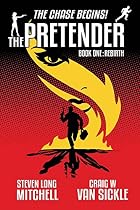
I've been a huge fan of the 90s TV series The Pretender since I first discovered it on DVD a few years back. The basic premise is that the main character, Jarod, is a genius who was kidnapped by an evil corporation when he was very young. They trained him to solve problems, to learn any skill incredibly quickly, and to get into people's heads, and they put him to work using these abilities for their own ends. Then one day he escaped, and now he wanders around the US slipping into different roles using his chameleon-like abilities, helping people (especially people whose problems touch on his own issues about identity and family), and evading pursuit while searching for his parents and investigating the mysteries of the past.
It's kind of an odd little show, a strange mixture of formulaic 80s-style TV and the more complex, shades-of-gray, story-arc-based sort of thing that TV was then in the process of becoming. In many ways, I think it worked far better than it really ought to have.
It was canceled with most its big mysteries still unsolved, then brought back for a series of TV movies which were in turn canceled before they could wrap everything up. Although that may not actually be a bad thing; the last one was pretty WTFish, in a not-good way.
Given all that, when I heard the original showrunners were eager to revive the show in any form they could, starting with a series of novels, I was equal parts trepidatious and curious. And... well, I was right to be trepidatious.
To begin with, I was expecting this to be a sequel, or maybe a prequel or something set sometime during the series. It's not. It's a reboot, more or less. It starts over right from the beginning, after Jarod's escape, and while it borrows a great deal from the series' pilot episode, including entire scenes lifted almost verbatim, many of the details are different. The biggest of these is the timeframe: everything has been moved forward by 20 years, so that Jarod's initial abduction, which originally took place in 1963, now happens in 1983. Which I think is hugely problematic, as I believe the entire premise works much better, and is much easier to accept, when it's rooted in that particular point in history. In fact , the whole "reboot" thing just befuddled me at first, because I couldn't for the life of me figure out what the point was. Surely, people who aren't fans of the series are not going to bother picking up this book, and people who are fans would much prefer something that's part of the series as they already know and love it? I know I certainly would! But then a friend of mine who is also a fan of the show pointed out that the authors have been talking about their hopes for a movie version, and no doubt wanted to have a fresh, up-to-date version all ready to go. Which, although I don't much like it, does makes a certain amount of sense. Not that I think it's ever going to happen.
Anyway. The plot starts off following the pilot of the TV series reasonably closely, even putting Jarod in the same place, playing the same role. But then it diverges wildly, becoming a drawn-out, muddled, faintly ridiculous story involving some kind of terrorist plot. Exactly what kind, I don't know, because it ends in the middle, to be continued in the the next volume. Which I am not remotely interested enough to go and pick up.
The writing's pretty bad, too. You can really tell these guys are screenwriters with little or no experience writing prose. Although I think one of them is probably better than the other, judging by the way the quality varies. At its worst, though, it's written in some kind of clueless, over-the-top attempt at an action thriller style, featuring weird random italics all over the place and some embarrassingly painful attempts to make things sexy.
At least the writers haven't forgotten how to do dialog for these characters. They do try a little too hard to make every single one of Miss Parker's lines clever and snarky, but otherwise, both Parker and Jarod are recognizable as the characters I remember. There are even a few moments with some surprisingly good insights into Jarod's perception and how his mind works as he's doing the things he does. Sydney is extremely underused, though, which... Well, I was going to say "which is a pity, because he's my favorite character," but it's probably just as well. Since the backstory he had in the series no longer works in the new time frame, they seem to have substituted in some utterly generic dead-wife-and-child tragedy in his past. Which I actually find really dismaying. To me, some of the most compelling things about the series were the twisted and poignant relationship between Sydney and Jarod, and the complex thematic issues it raises about nature vs. nurture, cycles of victimhood, and how a well-meaning man can find himself doing terrible things. Gut Syd's past, and I think you inevitably lose a lot of that. (Yes, I know. My compulsion to over-analyze TV shows makes me extremely difficult to satisfy.)
But even if it does okay with the main characters, disturbing changes to Sydney aside, the secondary characters are entirely two-dimensional, sometimes almost to the point of caricature. And, OK, that was often true of the bad-guy-character-of-the-week on the show, too, but somehow it's much more painfully obvious when you see it in writing. Also, for some unfathomable reason, they have chosen to add to the Jarod-hunting team a computer genius who is possibly the most obnoxious, annoying, stupidly written character I have seen in ages. I kept wishing they'd just kill him off so I didn't have to endure him anymore, and desperately, desperately missing Broots. (And why they didn't just include Broots instead, I have no idea. Yes, he wasn't in the pilot, but it's not like they didn't change a zillion other things, already.)
So, yeah. Mostly, this was a misguided idea, badly done. I have the urge to go watch a few episodes of the TV series now, in an attempt to get this version out of my head.
Rating: 1.5/5.
I've been a huge fan of the 90s TV series The Pretender since I first discovered it on DVD a few years back. The basic premise is that the main character, Jarod, is a genius who was kidnapped by an evil corporation when he was very young. They trained him to solve problems, to learn any skill incredibly quickly, and to get into people's heads, and they put him to work using these abilities for their own ends. Then one day he escaped, and now he wanders around the US slipping into different roles using his chameleon-like abilities, helping people (especially people whose problems touch on his own issues about identity and family), and evading pursuit while searching for his parents and investigating the mysteries of the past.
It's kind of an odd little show, a strange mixture of formulaic 80s-style TV and the more complex, shades-of-gray, story-arc-based sort of thing that TV was then in the process of becoming. In many ways, I think it worked far better than it really ought to have.
It was canceled with most its big mysteries still unsolved, then brought back for a series of TV movies which were in turn canceled before they could wrap everything up. Although that may not actually be a bad thing; the last one was pretty WTFish, in a not-good way.
Given all that, when I heard the original showrunners were eager to revive the show in any form they could, starting with a series of novels, I was equal parts trepidatious and curious. And... well, I was right to be trepidatious.
To begin with, I was expecting this to be a sequel, or maybe a prequel or something set sometime during the series. It's not. It's a reboot, more or less. It starts over right from the beginning, after Jarod's escape, and while it borrows a great deal from the series' pilot episode, including entire scenes lifted almost verbatim, many of the details are different. The biggest of these is the timeframe: everything has been moved forward by 20 years, so that Jarod's initial abduction, which originally took place in 1963, now happens in 1983. Which I think is hugely problematic, as I believe the entire premise works much better, and is much easier to accept, when it's rooted in that particular point in history. In fact , the whole "reboot" thing just befuddled me at first, because I couldn't for the life of me figure out what the point was. Surely, people who aren't fans of the series are not going to bother picking up this book, and people who are fans would much prefer something that's part of the series as they already know and love it? I know I certainly would! But then a friend of mine who is also a fan of the show pointed out that the authors have been talking about their hopes for a movie version, and no doubt wanted to have a fresh, up-to-date version all ready to go. Which, although I don't much like it, does makes a certain amount of sense. Not that I think it's ever going to happen.
Anyway. The plot starts off following the pilot of the TV series reasonably closely, even putting Jarod in the same place, playing the same role. But then it diverges wildly, becoming a drawn-out, muddled, faintly ridiculous story involving some kind of terrorist plot. Exactly what kind, I don't know, because it ends in the middle, to be continued in the the next volume. Which I am not remotely interested enough to go and pick up.
The writing's pretty bad, too. You can really tell these guys are screenwriters with little or no experience writing prose. Although I think one of them is probably better than the other, judging by the way the quality varies. At its worst, though, it's written in some kind of clueless, over-the-top attempt at an action thriller style, featuring weird random italics all over the place and some embarrassingly painful attempts to make things sexy.
At least the writers haven't forgotten how to do dialog for these characters. They do try a little too hard to make every single one of Miss Parker's lines clever and snarky, but otherwise, both Parker and Jarod are recognizable as the characters I remember. There are even a few moments with some surprisingly good insights into Jarod's perception and how his mind works as he's doing the things he does. Sydney is extremely underused, though, which... Well, I was going to say "which is a pity, because he's my favorite character," but it's probably just as well. Since the backstory he had in the series no longer works in the new time frame, they seem to have substituted in some utterly generic dead-wife-and-child tragedy in his past. Which I actually find really dismaying. To me, some of the most compelling things about the series were the twisted and poignant relationship between Sydney and Jarod, and the complex thematic issues it raises about nature vs. nurture, cycles of victimhood, and how a well-meaning man can find himself doing terrible things. Gut Syd's past, and I think you inevitably lose a lot of that. (Yes, I know. My compulsion to over-analyze TV shows makes me extremely difficult to satisfy.)
But even if it does okay with the main characters, disturbing changes to Sydney aside, the secondary characters are entirely two-dimensional, sometimes almost to the point of caricature. And, OK, that was often true of the bad-guy-character-of-the-week on the show, too, but somehow it's much more painfully obvious when you see it in writing. Also, for some unfathomable reason, they have chosen to add to the Jarod-hunting team a computer genius who is possibly the most obnoxious, annoying, stupidly written character I have seen in ages. I kept wishing they'd just kill him off so I didn't have to endure him anymore, and desperately, desperately missing Broots. (And why they didn't just include Broots instead, I have no idea. Yes, he wasn't in the pilot, but it's not like they didn't change a zillion other things, already.)
So, yeah. Mostly, this was a misguided idea, badly done. I have the urge to go watch a few episodes of the TV series now, in an attempt to get this version out of my head.
Rating: 1.5/5.
53bragan
>48 labfs39: Hello! Alas, I fear that after that discussion-provoking review about language and culture, now you get to move on to me having nerd rage about a book based on a TV-show. That sort of randomness is probably about what you can expect from my thread. :)
>49 OscarWilde87: Indeed, the fact that linguists are too quick to "dismiss the thought completely," having dismissed the stupider extremes of it, is a big part of Deutscher's point, I think.
And, right, as I understand it, Inuit is an agglutinative language, one that does things with suffixes and prefixes stuck onto individual words which English would do by using more words. So, in a sense, they do have a zillion words for snow, but in that sense I'd think they have a zillion words for pretty much everything, since there are zillions of ways to modify any root. The number of roots they have referring to snow may not actually be any higher than what English has. So it's not nearly as simple as "Look how many words they have for snow; this is something they clearly pay a lot of attention to and that their language better equips them to think about than English-speakers." Which is usually the implication when people bring that up.
So, don't hold out on me, why is north at the top?
>50 mkboylan: Yay! I do hope you like it.
I find these sorts of examples endlessly fascinating. Deutscher does talk a little bit about words that people use for relatives, and how in some cultures relationships that we see as utterly different are lumped together with the same word, whereas others that we lump together are carefully differentiated. That sort of thing clearly does have a lot to do with culture, and whether there's considered to be any practical difference in how you relate to your mother's sister's daughter, say, vs. your mother's brother's daughter.
And, ha, I'm with you on the weeding!
>49 OscarWilde87: Indeed, the fact that linguists are too quick to "dismiss the thought completely," having dismissed the stupider extremes of it, is a big part of Deutscher's point, I think.
And, right, as I understand it, Inuit is an agglutinative language, one that does things with suffixes and prefixes stuck onto individual words which English would do by using more words. So, in a sense, they do have a zillion words for snow, but in that sense I'd think they have a zillion words for pretty much everything, since there are zillions of ways to modify any root. The number of roots they have referring to snow may not actually be any higher than what English has. So it's not nearly as simple as "Look how many words they have for snow; this is something they clearly pay a lot of attention to and that their language better equips them to think about than English-speakers." Which is usually the implication when people bring that up.
So, don't hold out on me, why is north at the top?
>50 mkboylan: Yay! I do hope you like it.
I find these sorts of examples endlessly fascinating. Deutscher does talk a little bit about words that people use for relatives, and how in some cultures relationships that we see as utterly different are lumped together with the same word, whereas others that we lump together are carefully differentiated. That sort of thing clearly does have a lot to do with culture, and whether there's considered to be any practical difference in how you relate to your mother's sister's daughter, say, vs. your mother's brother's daughter.
And, ha, I'm with you on the weeding!
54bragan
>52 mkboylan: Well, at least I got to amuse myself while I was reading it by imagining the negative review I was going to write. :)
55bragan
42. Books, Books, Books: A Hilarious Collection of Literary Cartoons edited by S. Gross and Jim Charlton

A 1988 collection of cartoons about books, reading, writing, publishing, and literature. A lot of these are New Yorker cartoons. I must confess, I've never been a huge fan of New Yorker cartoons. They often seem to... kind of forget to be funny. But there are enough cartoons in here that gave me a smile or a chuckle to make it well worth the brief amount of time it took me to flip through it, and certainly enough to make it worth the dollar I paid for it at the last Friends of the Library sale.
Here's a sample cartoon that I think my fellow LTers are likely to appreciate:

Rating: 3.5/5

A 1988 collection of cartoons about books, reading, writing, publishing, and literature. A lot of these are New Yorker cartoons. I must confess, I've never been a huge fan of New Yorker cartoons. They often seem to... kind of forget to be funny. But there are enough cartoons in here that gave me a smile or a chuckle to make it well worth the brief amount of time it took me to flip through it, and certainly enough to make it worth the dollar I paid for it at the last Friends of the Library sale.
Here's a sample cartoon that I think my fellow LTers are likely to appreciate:

Rating: 3.5/5
56OscarWilde87
>53 bragan:: Basically the reason is the same as always. Because people in power wanted it that way. But if you want to read up on the issue with a little more detail, here you go:
http://america.aljazeera.com/opinions/2014/2/maps-cartographycolonialismnortheur...
A history of the map as we know it.
http://america.aljazeera.com/opinions/2014/2/maps-cartographycolonialismnortheur...
A history of the map as we know it.
57bragan
>56 OscarWilde87: Thanks, that was interesting! I'd seen that "upside-down" map before. And for quite a while, I had the globe on my desk turned south pole-up, just for a slightly different perspective on the world.
58avidmom
Playing catch up. I have nothing much to add to the discussion, except the language book sounds really interesting. Sorry The Pretender was a bust (but hey, at least now you know!). I love the New Yorker cartoon. I have not started talking to my books yet (I do talk to other inanimate objects though), so at least a piece of my sanity still remains.
59bragan
>58 avidmom: I can't swear I've never talked to my books. And I know I sometimes find myself talking to the authors or characters while I'm reading. But that doesn't count, right? :)
60fannyprice
How are there so many posts here in one day! Now I really will fail my language exam! ;)
>43 bragan:, Haha, that would be an awesome title.
>44 OscarWilde87: and >45 bragan:, I'm glad you both mentioned the Eskimo snow myth. It's quite pervasive. Did Deutscher mention it in his book?
>45 bragan:, "The conclusion Deutscher comes to, which I think he puts very well, is that the limits of what you can't say in a given language don't really matter. If there's no word for something, people will borrow one, or make one up, or simply describe what they're talking about. It doesn't limit your ability to think about whatever-it-is. What can matter, he contends, is what your language forces you to think about when you speak, such as what direction everything's facing, or whether a certain shade is more green than blue."
I think this is a great way to sum up his argument and definitely rings true when I think about my experiences learning Arabic. The comment about family terms in >53 bragan: especially - Arabic always identifies whether relatives are paternal or maternal, whether a niece or nephew is a sister's kid or a brother's, because one is expected to have different relationships with these people based on who they are related through.
>43 bragan:, Haha, that would be an awesome title.
>44 OscarWilde87: and >45 bragan:, I'm glad you both mentioned the Eskimo snow myth. It's quite pervasive. Did Deutscher mention it in his book?
>45 bragan:, "The conclusion Deutscher comes to, which I think he puts very well, is that the limits of what you can't say in a given language don't really matter. If there's no word for something, people will borrow one, or make one up, or simply describe what they're talking about. It doesn't limit your ability to think about whatever-it-is. What can matter, he contends, is what your language forces you to think about when you speak, such as what direction everything's facing, or whether a certain shade is more green than blue."
I think this is a great way to sum up his argument and definitely rings true when I think about my experiences learning Arabic. The comment about family terms in >53 bragan: especially - Arabic always identifies whether relatives are paternal or maternal, whether a niece or nephew is a sister's kid or a brother's, because one is expected to have different relationships with these people based on who they are related through.
61bragan
>60 fannyprice: I have no idea how there is so much discussion here, either! But it's going to be my excuse for all the other things I'm not keeping up with. :)
Don't fail your language exam, though. That would be really ironic!
Deutscher didn't mention the Eskimo snow thing, no. I'm sure I read a good discussion of that in a different book, though, and it's annoying me that I can't remember which one.
Don't fail your language exam, though. That would be really ironic!
Deutscher didn't mention the Eskimo snow thing, no. I'm sure I read a good discussion of that in a different book, though, and it's annoying me that I can't remember which one.
62labfs39
Alas, I fear that after that discussion-provoking review about language and culture, now you get to move on to me having nerd rage about a book based on a TV-show.
Not at all. I remember that show, although I haven't seen it in a million years. I wonder if Netflix has it. ;-)
ETA: Speaking of Inuit's and language, have you read any of Yuri Rytkheu's books? I read Dream in Polar Fog and found the language quite interesting.
Not at all. I remember that show, although I haven't seen it in a million years. I wonder if Netflix has it. ;-)
ETA: Speaking of Inuit's and language, have you read any of Yuri Rytkheu's books? I read Dream in Polar Fog and found the language quite interesting.
63OscarWilde87
>57 bragan: Glad you liked it. First time I saw this upside-down map was either in New Zealand or Australia. Back then I thought it odd and funny at first.
>60 fannyprice: Good luck with your exam!
>61 bragan: I enjoyed the discussion a lot. Then I looked back at how much we posted and briefly thought "Whoopsie". Thanks for the discussion!
>60 fannyprice: Good luck with your exam!
>61 bragan: I enjoyed the discussion a lot. Then I looked back at how much we posted and briefly thought "Whoopsie". Thanks for the discussion!
64rebeccanyc
>62 labfs39: I rad Dreams in Polar Fog too, although I don't remember the language aspects specifically. I found the anthropological aspects of it interesting, but the book a little heavy-handed in its message.
65bragan
>62 labfs39: Netflix does have it, but only if you have the DVD plan; it's not available streaming.
I'd never heard of Rytkheu, but Dream in Polar Fog sounds like it might be interesting.
>63 OscarWilde87: Heh. Well, it's nice to have a bit of lively discussion here once in a while. What's funny is that you never know just which books are going to spark one. Although maybe it's not really surprising that it's the language book. That seems to be a topic a lot of people are interested in, perhaps because it's one thing all of us share.
>64 rebeccanyc: I've been looking at the reviews, and a lot of them say the same thing. I'm debating whether or not to add it to my wishlist. It looks like it might be worth reading, anyway.
I'd never heard of Rytkheu, but Dream in Polar Fog sounds like it might be interesting.
>63 OscarWilde87: Heh. Well, it's nice to have a bit of lively discussion here once in a while. What's funny is that you never know just which books are going to spark one. Although maybe it's not really surprising that it's the language book. That seems to be a topic a lot of people are interested in, perhaps because it's one thing all of us share.
>64 rebeccanyc: I've been looking at the reviews, and a lot of them say the same thing. I'm debating whether or not to add it to my wishlist. It looks like it might be worth reading, anyway.
66labfs39
>64 rebeccanyc: I remember it was one of the books I liked more than you.
>65 bragan: Bragan, here is an excerpt from my review and captures what I liked:
If you are looking for a well-written piece of literature, this is not it. The style and the plot construction feel amateurish. The beauty of this work lies in the details about the Chukchi way of life. The author, himself, was born in Chukotka lands and writes convincingly of the ice, Northern Lights, walrus hunts, and ceremonial rituals. He uses Chukchi words throughout, and I hope the author's dozen novels and collections of stories help preserve the language.
I've purchased another of his works, The Chukchi Bible, but haven't read it yet.
>65 bragan: Bragan, here is an excerpt from my review and captures what I liked:
If you are looking for a well-written piece of literature, this is not it. The style and the plot construction feel amateurish. The beauty of this work lies in the details about the Chukchi way of life. The author, himself, was born in Chukotka lands and writes convincingly of the ice, Northern Lights, walrus hunts, and ceremonial rituals. He uses Chukchi words throughout, and I hope the author's dozen novels and collections of stories help preserve the language.
I've purchased another of his works, The Chukchi Bible, but haven't read it yet.
67bragan
>66 labfs39: Yes, that sounds like it might be enough to make it interesting to me.
68yolana
42 @fannyprice So what would you books recommend for studying (or beginning to study) the history and evolution of language. I've picked up bits here and there (for example the historical class differences behind two english words for the same animal) but really don't have a clue where to start though the Deutscher book is definitely on my wish list.
69bragan
>68 yolana: I don't know where I'd suggest starting if you want to make a serious scholarly study of linguistics, but for a really fun popular-level book that covers a lot of interesting (if slightly random) ground, I'd recommend Biting the Wax Tadpole by Elizabeth Little, which I read a while back and really enjoyed. You might also want to check out something by David Crystal. He's drier than Deutscher, but worth reading.
70labfs39
I love languages and translation too, so I've added Biting the Wax Tadpole to the list. Thanks!
71bragan
43. David Copperfield by Charles Dickens
This is, of course, the life story -- the very detailed life story -- of Mr. David Copperfield, from his birth onwards, including his horrifically unhappy childhood, his romantic entanglements, and the doings of his various interesting friends.
It's definitely the characters that make this one enjoyable. Copperfield himself is carefully and believably drawn, and he knows a lot of entertainingly quirky people, many of whom turn out to have some interesting hints of depth underneath their quirks. I imagine I will be unlikely ever to forget Mr. Micawber, or Uriah Heep, or David's formidable, eccentric Aunt Betsy.
I'm not sure it has a plot, exactly, so much as a loose connection of subplots, but that's fine; they're decent enough subplots. It does all get a little melodramatic at the end, although I suppose for Dickens, it's probably pretty mild on that score. I do have to say, though, that Victorian ideas about women and relationships and marriage inevitably strike my modern sensibilities as weird and kind of creepy, which always puts a little uncomfortable distance between me and the characters in such novels, and this one doesn't really qualify as an exception.
It also goes on a bit too long. Not that this is the sort of book one picks up expecting a rollicking, fast-paced thrill ride. It's more the sort to immerse yourself in when you're looking to live somebody else's life for a while, and if you're rushing through it, you're probably doing it wrong. Still, I think I would have been happier with it if it were a couple hundred pages shorter. It doesn't help that Dickens has this habit of writing characters who tend to repeat themselves over and over. I don't know whether that's his attempt at naturalistic dialog, or whether it's the result of him trying to make a word count, but it does get annoying. Although, fortunately, either that eased off substantially by the middle of the book, or I'd gotten used to it enough by then that it stopped bugging me quite so much.
In the end, it's a book I am glad to have read, but also glad to finally be finished with.
Rating: a somewhat ungenerous 3.5/5
This is, of course, the life story -- the very detailed life story -- of Mr. David Copperfield, from his birth onwards, including his horrifically unhappy childhood, his romantic entanglements, and the doings of his various interesting friends.
It's definitely the characters that make this one enjoyable. Copperfield himself is carefully and believably drawn, and he knows a lot of entertainingly quirky people, many of whom turn out to have some interesting hints of depth underneath their quirks. I imagine I will be unlikely ever to forget Mr. Micawber, or Uriah Heep, or David's formidable, eccentric Aunt Betsy.
I'm not sure it has a plot, exactly, so much as a loose connection of subplots, but that's fine; they're decent enough subplots. It does all get a little melodramatic at the end, although I suppose for Dickens, it's probably pretty mild on that score. I do have to say, though, that Victorian ideas about women and relationships and marriage inevitably strike my modern sensibilities as weird and kind of creepy, which always puts a little uncomfortable distance between me and the characters in such novels, and this one doesn't really qualify as an exception.
It also goes on a bit too long. Not that this is the sort of book one picks up expecting a rollicking, fast-paced thrill ride. It's more the sort to immerse yourself in when you're looking to live somebody else's life for a while, and if you're rushing through it, you're probably doing it wrong. Still, I think I would have been happier with it if it were a couple hundred pages shorter. It doesn't help that Dickens has this habit of writing characters who tend to repeat themselves over and over. I don't know whether that's his attempt at naturalistic dialog, or whether it's the result of him trying to make a word count, but it does get annoying. Although, fortunately, either that eased off substantially by the middle of the book, or I'd gotten used to it enough by then that it stopped bugging me quite so much.
In the end, it's a book I am glad to have read, but also glad to finally be finished with.
Rating: a somewhat ungenerous 3.5/5
72SassyLassy
>43 bragan: Although often given to people as an introduction to Dickens, I don't think David Copperfield is one of his better books, although as you say there are some great characters. I do like Dickens's use of particular expressions to identify his characters, and many of their sayings have entered the language.
Interesting about your reactions to Victorian ideas and current sensibilities. Suspending current sensibilities and seeing the novel as best you can as a Victorian while reading, and then looking at it through today's lens once finished has worked well. Victorian "relationships" in personal terms meant identifying great aunts and second cousins, not the state of your union with your significant other (another expression that would have been totally alien!)
An excellent book on Victorian marriages is Parallel Lives: Five Victorian Marriages by Phyllis Rose. It looks at the way people lived within and outside marriage from today's perspective, while showing how they lived their lives trying to fit in as best they could to their own times. Charles Dickens is one of the people whose marriage is discussed, as is George Eliot, who wasn't actually married.
Looking forward to your review of That's Disgusting
Interesting about your reactions to Victorian ideas and current sensibilities. Suspending current sensibilities and seeing the novel as best you can as a Victorian while reading, and then looking at it through today's lens once finished has worked well. Victorian "relationships" in personal terms meant identifying great aunts and second cousins, not the state of your union with your significant other (another expression that would have been totally alien!)
An excellent book on Victorian marriages is Parallel Lives: Five Victorian Marriages by Phyllis Rose. It looks at the way people lived within and outside marriage from today's perspective, while showing how they lived their lives trying to fit in as best they could to their own times. Charles Dickens is one of the people whose marriage is discussed, as is George Eliot, who wasn't actually married.
Looking forward to your review of That's Disgusting
73bragan
>72 SassyLassy: It's definitely not the book I'd give someone as an introduction to Dickens, either, if only because it is so long. And while I found it worthwhile, I also wouldn't rank it among my favorites of his; those would probably be A Tale of Two Cities (although I will admit that I read it so long ago I don't entirely remember why I liked it so much) and the old favorite, A Christmas Carol. I even enjoyed Oliver Twist, which was the last Dickens book I read, better, overall. It was more mawkish and full of coincidences than David Copperfield, but it had some wonderfully sharp and darkly humorous social commentary in it.
You're so right about some of the characters' best sayings, though, even if I sometimes wish they would repeat them less often. I'm particularly taken with Mr. Micawber's signature advice: "Annual income twenty pounds, annual expenditure nineteen pounds nineteen and six, result happiness. Annual income twenty pounds, annual expenditure twenty pounds nought and six, result misery." If only we were all able to follow it better than he did!
I do like to think I'm usually pretty good at being able to approach books on their own terms in the context of the culture they were written in. Heck, one of the interesting thing about reading books that were written in other times or places is the glimpse it gives you into somebody else's world and how they think. But the expectations placed on women in Victorian literature is one thing that really gets past my mental defenses. Some portion of my brain takes it personally, can't help imagining what would have happened to me if I'd be born a century or so earlier and feeling weirdly panicky about the thought.
I'm pretty sure it goes back to when I was forced to read Jane Austen's Emma in high school (which was never, ever a good circumstance to encounter a book under, for me). I think it was the first thing from that period I'd read that really involved women at all, and my reaction was basically, "Oh, my god, what the hell is is? What is this horrible, constrained, nightmarish, dystopian world you've dumped me in? Get me out of here, I can't breathe!" I haven't been able to revisit Austen since, having developed some kind of very strong conditioned response from that early negative experience.
Mind you, David Copperfield isn't especially bad on that score; Dickens is actually making a very clear point about how it's much better to marry a woman with a good head on her shoulders who's capable of being a full partner in the marriage than one who is basically infantilized, or to marry a woman who is still essentially a child so you can "form her character" to your liking. But the very fact that he needs to make that point at all... Seriously. Creepy.
Parallel Lives sounds like it might be interesting, though. I'd heard Dickens ended his own marriage in a way that treated his wife very poorly, and also that David Copperfield was his most autobiographical novel. I couldn't help but wonder as I was reading if there were elements of wish-fulfillment for him in what happens with David's marriage.
And I'm about 100 pages into That's Disgusting now and finding it very interesting, but, man, it's not a book you want to be reading while you eat!
You're so right about some of the characters' best sayings, though, even if I sometimes wish they would repeat them less often. I'm particularly taken with Mr. Micawber's signature advice: "Annual income twenty pounds, annual expenditure nineteen pounds nineteen and six, result happiness. Annual income twenty pounds, annual expenditure twenty pounds nought and six, result misery." If only we were all able to follow it better than he did!
I do like to think I'm usually pretty good at being able to approach books on their own terms in the context of the culture they were written in. Heck, one of the interesting thing about reading books that were written in other times or places is the glimpse it gives you into somebody else's world and how they think. But the expectations placed on women in Victorian literature is one thing that really gets past my mental defenses. Some portion of my brain takes it personally, can't help imagining what would have happened to me if I'd be born a century or so earlier and feeling weirdly panicky about the thought.
I'm pretty sure it goes back to when I was forced to read Jane Austen's Emma in high school (which was never, ever a good circumstance to encounter a book under, for me). I think it was the first thing from that period I'd read that really involved women at all, and my reaction was basically, "Oh, my god, what the hell is is? What is this horrible, constrained, nightmarish, dystopian world you've dumped me in? Get me out of here, I can't breathe!" I haven't been able to revisit Austen since, having developed some kind of very strong conditioned response from that early negative experience.
Mind you, David Copperfield isn't especially bad on that score; Dickens is actually making a very clear point about how it's much better to marry a woman with a good head on her shoulders who's capable of being a full partner in the marriage than one who is basically infantilized, or to marry a woman who is still essentially a child so you can "form her character" to your liking. But the very fact that he needs to make that point at all... Seriously. Creepy.
Parallel Lives sounds like it might be interesting, though. I'd heard Dickens ended his own marriage in a way that treated his wife very poorly, and also that David Copperfield was his most autobiographical novel. I couldn't help but wonder as I was reading if there were elements of wish-fulfillment for him in what happens with David's marriage.
And I'm about 100 pages into That's Disgusting now and finding it very interesting, but, man, it's not a book you want to be reading while you eat!
74yolana
69 Thanks, the Little book is only 4 bucks with shipping from amazon so I went ahead and ordered it. I have to decide which Crystal book to start with.
75bragan
>74 yolana: I hope you enjoy it! I thought it was a really fascinating and fun book.
76bragan
44. That's Disgusting: Unraveling the Mysteries of Repulsion by Rachel Herz

Psychologist Rachel Herz presents a detailed exploration of the emotion of disgust: what happens in our brains and bodies when something repulses us, the extent to which disgust is cultural or innate, what kinds of things most commonly disgust us and why, and what implications our capacity for disgust and the ways it can be triggered might have for individuals and society.
I have somewhat mixed feelings about this book. The topic is a deeply interesting one, and Herz raises all kinds of really thought-provoking questions about our reactions, both rational and irrational, to things that make us go, "Yuck!" And some of the specifics she gets into are absolutely fascinating. For instance, I was surprised to discover that disgust is something that needs to be learned; it doesn't show up in very small children. Which, now that I think about it, probably explains quite a few things about very small children. It also makes perfect sense; which of the things we encounter are wholesome and which are dangerous is something that's going to vary a lot in different places and circumstances, so it's actually quite useful if our instincts about what to avoid and what to approach are programmable, so to speak, rather than hard-wired.
Unfortunately, though, I think this book is flawed, as a lot of books of this nature are, in that the author seems to let her conclusions get ahead of the actual science. For example, she asserts some rather simplistic evolutionary explanations for some rather complex phenomena without necessarily backing them up very well. She also, rather surprisingly, mixes in a fair bit of Freudian psychology, which isn't particularly scientific at all. So it seems to me to be a good idea to take most of her more sweeping and general statements with a fairly large grain of salt.
Also, a warning: Being as it's about the nature of disgust, this book necessarily talks about a lot of truly disgusting things. I really do not recommend reading it while eating. Especially if, like me, you rank a bit high on the "easily disgusted scale." (You can assess your own disgust-level ranking with a handily provided quiz early in the book.)
Rating: 3.5/5

Psychologist Rachel Herz presents a detailed exploration of the emotion of disgust: what happens in our brains and bodies when something repulses us, the extent to which disgust is cultural or innate, what kinds of things most commonly disgust us and why, and what implications our capacity for disgust and the ways it can be triggered might have for individuals and society.
I have somewhat mixed feelings about this book. The topic is a deeply interesting one, and Herz raises all kinds of really thought-provoking questions about our reactions, both rational and irrational, to things that make us go, "Yuck!" And some of the specifics she gets into are absolutely fascinating. For instance, I was surprised to discover that disgust is something that needs to be learned; it doesn't show up in very small children. Which, now that I think about it, probably explains quite a few things about very small children. It also makes perfect sense; which of the things we encounter are wholesome and which are dangerous is something that's going to vary a lot in different places and circumstances, so it's actually quite useful if our instincts about what to avoid and what to approach are programmable, so to speak, rather than hard-wired.
Unfortunately, though, I think this book is flawed, as a lot of books of this nature are, in that the author seems to let her conclusions get ahead of the actual science. For example, she asserts some rather simplistic evolutionary explanations for some rather complex phenomena without necessarily backing them up very well. She also, rather surprisingly, mixes in a fair bit of Freudian psychology, which isn't particularly scientific at all. So it seems to me to be a good idea to take most of her more sweeping and general statements with a fairly large grain of salt.
Also, a warning: Being as it's about the nature of disgust, this book necessarily talks about a lot of truly disgusting things. I really do not recommend reading it while eating. Especially if, like me, you rank a bit high on the "easily disgusted scale." (You can assess your own disgust-level ranking with a handily provided quiz early in the book.)
Rating: 3.5/5
77lyzard
Dickens is actually making a very clear point about how it's much better to marry a woman with a good head on her shoulders who's capable of being a full partner in the marriage than one who is basically infantilized, or to marry a woman who is still essentially a child so you can "form her character" to your liking.
And in so doing contradicts nearly everything he says about marriage throughout the rest of his writing... :)
And in so doing contradicts nearly everything he says about marriage throughout the rest of his writing... :)
78bragan
>77 lyzard: I... guess it's good that he questioned the point once? :) Although I'm not sure I remember enough about how he handled it in the rest of his books to actually chime in with an opinion about that one way or another.
79mkboylan
>76 bragan: That's Disgusting sounds like fun. I hadn't thought about things being wholesome or dangerous in different circumstances and places. Not along those lines anyway - interesting.
80bragan
>79 mkboylan: For all its flaws, it really does successfully get you thinking about this sort of thing in new and interesting ways.
81SassyLassy
Apart from concerns about disease transmission, I've often wondered why some parents teach their children to be disgusted by so many things, especially in the insect world and animal worlds. Not many of those children will ever be able to satisfy their natural curiosity or have an interest in science. I did get a laugh from your comment on children's innate lack of disgust now that I think about it, probably explains quite a few things about very small children
82bragan
>81 SassyLassy: I don't understand the extreme disgust so many people have for "creepy-crawly" things in general. Especially spiders. Spiders are amazing. (On the other hand, I am terribly easily grossed out by mold and fungus, all of which, I'm sure, is equally interesting from a scientific perspective.)
One interesting thing that the author points out is that if the concern is disease transmission, it would make much more sense to be disgusted by public computer keyboards than by cockroaches.
One interesting thing that the author points out is that if the concern is disease transmission, it would make much more sense to be disgusted by public computer keyboards than by cockroaches.
83OscarWilde87
I enjoyed reading your review of David Copperfield as that book is somewhere on my wishlist (although somewhat at the bottom).
84bragan
>83 OscarWilde87: I do think it's worth getting to... Just don't expect to go zipping through it, obviously. :)
85labfs39
I've often wondered why some parents teach their children to be disgusted by so many things
I've tried hard not to do this, even disguising my disgust for mushrooms (what are we doing eating fungus! blech) for years. I think my daughter was nine before she caught on that I wasn't just giving her my mushrooms out of altruism. :-) She loves them. I had botulism as a kid from canned mushrooms gone bad, and since then I have a strong aversion.
I've tried hard not to do this, even disguising my disgust for mushrooms (what are we doing eating fungus! blech) for years. I think my daughter was nine before she caught on that I wasn't just giving her my mushrooms out of altruism. :-) She loves them. I had botulism as a kid from canned mushrooms gone bad, and since then I have a strong aversion.
86RidgewayGirl
Yep. I've had to hold snakes and various insects and also eat raw bell peppers (they are delicious when cooked). Parenthood. It does not allow for fear or disgust.
88NanaCC
>82 bragan: "it would make much more sense to be disgusted by public computer keyboards than by cockroaches."
:-) My son used to do desktop support at the company he works for. He was so grossed out at times that he started carrying a bottle of hand sanitizer with him.
:-) My son used to do desktop support at the company he works for. He was so grossed out at times that he started carrying a bottle of hand sanitizer with him.
89bragan
>88 NanaCC: That's probably very wise of him! Apparently keyboards are way, way germier than, say, public toilet seats.
90bragan
45. The Confabulist by Steven Galloway
Martin Strauss is an elderly man who has been diagnosed with some kind of brain disorder that robs him of memories and often leaves him with invented ones in their place. Harry Houdini is, well, Harry Houdini. And as we learn the stories of both men's lives, it turns out there are some significant connections between them.
I wanted to like this book a lot. I really did. It's got all kinds of elements that make it seem right up my alley. It's got a narrator so unreliable that even he doesn't always know what the truth is. It's got skepticism and spy stuff. It's got magic, illusion, and deception, all of which are not only interesting in their own right, but can also make for some great literary metaphors. It's got an ending that's a combination of twisty and thoughtful. And it's got Harry Houdini, a truly amazing man who did some truly amazing things.
And yet, it just managed to leave me completely cold. It's not bad, I guess. Implausible in a lot of respects, but not bad. It was a fast read, certainly. But it just did absolutely nothing for me. I can't help thinking that I might have liked it better if I'd gone into it knowing much less about Harry Houdini. Because most of the novel consists of scenes from Houdini's life, painting a picture of him that is part factual, part fictional, and part speculative, and all I could think as I was reading it is how much more interesting and engaging I found William Kalush and Larry Sloman's biography The Secret Life of Houdini. The fictional version, however jazzed up with drama it may have been, just didn't add much of anything to the real story, for me. Maybe if the writing were especially good, it would have been worthwhile, but Galloway's prose is just... flavorless.
I have heard a lot of good things about The Cellist of Sarajevo, though, so I may pick that up sometime and give Galloway another chance. But for this one... If Houdini as a subject interests you and you're not completely allergic to nonfiction, I really recommend just reading The Secret Life of Houdini instead.
Rating: An admittedly ungenerous 2.5/5.
(Note: This was an Early Reviewers book.)
Martin Strauss is an elderly man who has been diagnosed with some kind of brain disorder that robs him of memories and often leaves him with invented ones in their place. Harry Houdini is, well, Harry Houdini. And as we learn the stories of both men's lives, it turns out there are some significant connections between them.
I wanted to like this book a lot. I really did. It's got all kinds of elements that make it seem right up my alley. It's got a narrator so unreliable that even he doesn't always know what the truth is. It's got skepticism and spy stuff. It's got magic, illusion, and deception, all of which are not only interesting in their own right, but can also make for some great literary metaphors. It's got an ending that's a combination of twisty and thoughtful. And it's got Harry Houdini, a truly amazing man who did some truly amazing things.
And yet, it just managed to leave me completely cold. It's not bad, I guess. Implausible in a lot of respects, but not bad. It was a fast read, certainly. But it just did absolutely nothing for me. I can't help thinking that I might have liked it better if I'd gone into it knowing much less about Harry Houdini. Because most of the novel consists of scenes from Houdini's life, painting a picture of him that is part factual, part fictional, and part speculative, and all I could think as I was reading it is how much more interesting and engaging I found William Kalush and Larry Sloman's biography The Secret Life of Houdini. The fictional version, however jazzed up with drama it may have been, just didn't add much of anything to the real story, for me. Maybe if the writing were especially good, it would have been worthwhile, but Galloway's prose is just... flavorless.
I have heard a lot of good things about The Cellist of Sarajevo, though, so I may pick that up sometime and give Galloway another chance. But for this one... If Houdini as a subject interests you and you're not completely allergic to nonfiction, I really recommend just reading The Secret Life of Houdini instead.
Rating: An admittedly ungenerous 2.5/5.
(Note: This was an Early Reviewers book.)
91bragan
46. Stitches: A Memoir by David Small
A memoir in graphic novel form. The author grew up in an unhappy home where nobody ever talked about their problems or much of anything else, then at the age of fourteen found himself silenced in a much more literal fashion when surgery to remove a growth on his neck damaged his vocal cords. It starts off a bit slow, perhaps, but becomes quite compelling, in a painful sort of way. The black and white artwork is very well done, and, appropriately enough, often manages to communicate a lot with very few words.
Rating: 4/5
A memoir in graphic novel form. The author grew up in an unhappy home where nobody ever talked about their problems or much of anything else, then at the age of fourteen found himself silenced in a much more literal fashion when surgery to remove a growth on his neck damaged his vocal cords. It starts off a bit slow, perhaps, but becomes quite compelling, in a painful sort of way. The black and white artwork is very well done, and, appropriately enough, often manages to communicate a lot with very few words.
Rating: 4/5
92labfs39
Although I was unlikely to read another book by Steven Galloway after reading The Cellist of Sarajevo and the controversy of his unacknowledged source, I am glad to know that I won't be missing anything by avoiding The Confabulist.
93bragan
>92 labfs39: I was going to say that I hadn't heard anything about this controversy, although now that you mention it, I think it rings a vague bell, and I did hear about it somewhere -- probably on LT -- and just didn't may much attention to it.
94labfs39
It's easier to enjoy the book if you don't know about it, I think. I have a hard time enjoying a book if I can't respect the author (i.e. Orlando Figes), and I hate being duped (James Frey).
95bragan
>94 labfs39: Me, too. I had just bought a copy of Jonah Lehrer's Imagine: How Creativity Works when it came out that he'd made up some of the quotations. I got rid of it unread, in a fit of disgust.
96bragan
47. Apocalypse Cow by Michael Logan
Here's a twist on the zombie apocalypse genre that I'm pretty sure I've never seen before: a zombie virus that affects animals, but not humans. It's accidentally released by government scientists, and the resulting zombie mayhem starts in a slaughterhouse, where the cows are suddenly the ones doing the slaughtering. Things get worse from there, naturally, as we follow the adventures of a guilt-ridden slaughterhouse survivor, the inept reporter who fumbled her opportunity to reveal the truth about the virus' origins, and a teenage boy whose hippie mother refuses to believe that animals would ever attack a vegan.
It's a ridiculous premise, obviously, but the book runs with it in ways that are often extremely funny. Although, needless to say, it's a very dark sort of humor. I admit the animal lover in me cringed in a couple of places, and I probably could have done without the idea of animals humping their victims before eating them. But I laughed out loud fairly frequently, anyway.
It's also got a decent (even if ridiculous) action/horror/government conspiracy plot that's almost impossible not to imagine as a movie, and the humor is the kind that doesn't forget that for the characters at least, things are very serious. The ending (which might or might not be setting up a sequel) is a little anticlimactic. But, really, who cares? It's got zombie cows. And it delivers exactly the kinds of things you expect a book to deliver when you open it knowing that it's about zombie cows. Honestly, what more could you possibly want? It almost deserves four stars just for the title alone.
Rating: 4/5
Here's a twist on the zombie apocalypse genre that I'm pretty sure I've never seen before: a zombie virus that affects animals, but not humans. It's accidentally released by government scientists, and the resulting zombie mayhem starts in a slaughterhouse, where the cows are suddenly the ones doing the slaughtering. Things get worse from there, naturally, as we follow the adventures of a guilt-ridden slaughterhouse survivor, the inept reporter who fumbled her opportunity to reveal the truth about the virus' origins, and a teenage boy whose hippie mother refuses to believe that animals would ever attack a vegan.
It's a ridiculous premise, obviously, but the book runs with it in ways that are often extremely funny. Although, needless to say, it's a very dark sort of humor. I admit the animal lover in me cringed in a couple of places, and I probably could have done without the idea of animals humping their victims before eating them. But I laughed out loud fairly frequently, anyway.
It's also got a decent (even if ridiculous) action/horror/government conspiracy plot that's almost impossible not to imagine as a movie, and the humor is the kind that doesn't forget that for the characters at least, things are very serious. The ending (which might or might not be setting up a sequel) is a little anticlimactic. But, really, who cares? It's got zombie cows. And it delivers exactly the kinds of things you expect a book to deliver when you open it knowing that it's about zombie cows. Honestly, what more could you possibly want? It almost deserves four stars just for the title alone.
Rating: 4/5
97baswood
>47 bragan: The review should go immediately to the top of the hot reviews as obviously this book should be read by everyone. Apocalypse Cow You saw it first on Betty's thread.
98bragan
>97 baswood: Well, how could you not want to read about zombie cows? :)
99NanaCC
>96 bragan: :D the title is a riot. I may have to tell my hubby about this one. He is the zombie aficionado in this family.
100wandering_star
Sounds brilliant! The second zombie book you have inspired me to add to my wishlist this year, along with The New Dead.
101bragan
>99 NanaCC: Every family needs one! Otherwise you won't be prepared when the zombies start attacking.
>100 wandering_star: Just as zombies spread by biting, zombie books spread by LibraryThing...
>100 wandering_star: Just as zombies spread by biting, zombie books spread by LibraryThing...
103bragan
>102 mkboylan: I am deeply amused by that actually showing up on the hot reviews.
104mkboylan
>103 bragan: I LOVE IT!
106bragan
48. Judging a Book by Its Lover by Lauren Leto

A collection of essays, mostly humorous, about books, readers, and literature, including rules for "bookstore hookups," speculation about what it would be like to invite various famous literary couples to dinner, and a guide to "how to write like any author," among other things.
Being a book person myself -- of course! -- I was hoping this was a book I would really click with, but... Yeah, not so much. Some of it is amusing, and there are a couple of more serious pieces at the end that are rather nice. And the section about how to fake it when talking about books you haven't read is full of a lot of interesting trivia about various authors. But that "faking it" conceit just bugs me, even if it is tongue-in-cheek. (And given the anecdote she relates elsewhere involving lying about having read Infinite Jest, it may not be entirely tongue-in-cheek.) This, I'm afraid, is where the failure to click comes in. Because while Leto clearly does genuinely love books, she's way too preoccupied with the idea of looking cool and hip and impressing people with your ability to talk about books at cocktail parties, or wherever it is cool, hip people get together to talk about books. I don't know, because that is really, really not what being a reader is about for me, and it annoys me that Leto keeps talking to me as if she's assuming it is.
She's also.. Well, I was going to say "a little too snarky," but that's not really it; I like me some good snark. It's more that she's often just not quite witty enough to make the leap from "uncomfortably judgmental" into "acerbically funny" when she's slinging the snark.
I feel like I'm probably being way too hard on what is really a fairly fluffy and mostly perfectly readable little book. I think I'm just allergic to a certain kind of pretentiousness, and I can't help but detect more than a whiff of it here.
Rating: 2.5/5. Which I recognize is uncharitable. I do seem to be particularly cranky about my ratings lately.

A collection of essays, mostly humorous, about books, readers, and literature, including rules for "bookstore hookups," speculation about what it would be like to invite various famous literary couples to dinner, and a guide to "how to write like any author," among other things.
Being a book person myself -- of course! -- I was hoping this was a book I would really click with, but... Yeah, not so much. Some of it is amusing, and there are a couple of more serious pieces at the end that are rather nice. And the section about how to fake it when talking about books you haven't read is full of a lot of interesting trivia about various authors. But that "faking it" conceit just bugs me, even if it is tongue-in-cheek. (And given the anecdote she relates elsewhere involving lying about having read Infinite Jest, it may not be entirely tongue-in-cheek.) This, I'm afraid, is where the failure to click comes in. Because while Leto clearly does genuinely love books, she's way too preoccupied with the idea of looking cool and hip and impressing people with your ability to talk about books at cocktail parties, or wherever it is cool, hip people get together to talk about books. I don't know, because that is really, really not what being a reader is about for me, and it annoys me that Leto keeps talking to me as if she's assuming it is.
She's also.. Well, I was going to say "a little too snarky," but that's not really it; I like me some good snark. It's more that she's often just not quite witty enough to make the leap from "uncomfortably judgmental" into "acerbically funny" when she's slinging the snark.
I feel like I'm probably being way too hard on what is really a fairly fluffy and mostly perfectly readable little book. I think I'm just allergic to a certain kind of pretentiousness, and I can't help but detect more than a whiff of it here.
Rating: 2.5/5. Which I recognize is uncharitable. I do seem to be particularly cranky about my ratings lately.
107kidzdoc
>48 labfs39: Judging a Book By Its Lover sounds awful. Thanks for taking one for the team.
108RidgewayGirl
Yeah, that's a fine line between snarkily humorous and just plain judgmental, and when it misses, it can be bad.
109bragan
>107 kidzdoc: It's not awful, really. It just rubbed me the wrong way.
>108 RidgewayGirl: There is, and I recognize that that can be a hard target to hit, and that different people are going to place the line between those two things in different places. For me, Leto sometimes stays on the right side of it, but not very consistently.
>108 RidgewayGirl: There is, and I recognize that that can be a hard target to hit, and that different people are going to place the line between those two things in different places. For me, Leto sometimes stays on the right side of it, but not very consistently.
110baswood
Great review of Judging a book by its lover I think the title says it all.
111mkboylan
>106 bragan:
"She's also.. Well, I was going to say "a little too snarky," but that's not really it; I like me some good snark. It's more that she's often just not quite witty enough to make the leap from "uncomfortably judgmental" into "acerbically funny" when she's slinging the snark."
Really, you should copyright that paragraph. :)
"She's also.. Well, I was going to say "a little too snarky," but that's not really it; I like me some good snark. It's more that she's often just not quite witty enough to make the leap from "uncomfortably judgmental" into "acerbically funny" when she's slinging the snark."
Really, you should copyright that paragraph. :)
112bragan
>111 mkboylan:: *bows*
113rebeccanyc
Do you pick books because they have great titles? Jumping in on the Apocalypse Cow bandwagon, but Judging a Book by Its Lover isn't bad either (as a title, that is).
114bragan
>113 rebeccanyc: I confess, I did pick Apocalypse Cow mostly for the title. I cannot resist a great punny title! Judging A Book By Its Lover isn't one I picked out for myself, though. That one just sort of showed up on my doorstep.
115rebeccanyc
>114 bragan: I confess one of the main reasons I bought Who Was Changed and Who Was Dead was because I loved the title, but I ended up loving the book and Barbara Comyns too. I did once have a mental list of books whose titles were the best things about them, but I can't remember what books I had on that list other than Jewish Pirates of the Caribbean, but unfortunately it was an extremely misleading title.
116bragan
>115 rebeccanyc: A disappointing book with an amazing title is like false advertising of the most annoying kind.
117bragan
49. Hey Nostradamus! by Douglas Coupland
This story is told from four different points of view over the course of fifteen years, but at the center of it is one person: Jason, who survived a horrific school shooting when he was seventeen. I... really do not know what to make of this book. It is obviously a sort of reaction to Columbine, and more specifically a reaction to the simplistic perception of dead Christian teens as religious martyrs; Coupland's portrayal of religion and religious communities here is complex and far from entirely positive. But beyond that, and beyond the obvious point that experiences like this can mess people up, I'm just not quite sure what Coupland's doing here. It's a weird book. Very well written, very readable, but weird. Mostly it's a quiet literary work about religion and dysfunctional families and emotions, except for these odd moments where it suddenly seems to have grafted in a few pages from a melodrama or a crime thriller. And big chunks of the story just seem to be... missing. Things happen. We don't know why. We don't see their beginnings or their ends. We don't know what they mean. Maybe that's the point, I don't know. It's thought-provoking, I suppose. But ultimately it's not a very satisfying read. Interesting, yes. But not satisfying.
Rating: 3.5/5
This story is told from four different points of view over the course of fifteen years, but at the center of it is one person: Jason, who survived a horrific school shooting when he was seventeen. I... really do not know what to make of this book. It is obviously a sort of reaction to Columbine, and more specifically a reaction to the simplistic perception of dead Christian teens as religious martyrs; Coupland's portrayal of religion and religious communities here is complex and far from entirely positive. But beyond that, and beyond the obvious point that experiences like this can mess people up, I'm just not quite sure what Coupland's doing here. It's a weird book. Very well written, very readable, but weird. Mostly it's a quiet literary work about religion and dysfunctional families and emotions, except for these odd moments where it suddenly seems to have grafted in a few pages from a melodrama or a crime thriller. And big chunks of the story just seem to be... missing. Things happen. We don't know why. We don't see their beginnings or their ends. We don't know what they mean. Maybe that's the point, I don't know. It's thought-provoking, I suppose. But ultimately it's not a very satisfying read. Interesting, yes. But not satisfying.
Rating: 3.5/5
118bragan
50. The Pseudopod Tapes, Vol. 1 by Alasdair Stuart
Psuedopod is a short story horror podcast that I listen to regularly (even if I always do seem to be a few episodes behind). The producers, Escape Artists, also do a science fiction 'cast (Escape Pod) and a fantasy one (PodCastle). They're all pretty great, but in some ways, Psuedopod is my least favorite of the three, just because horror is kind of a hit-and-miss genre for me, and when a horror story fails to work for you, it often fails badly.
But even on those occasions when the story itself doesn't do much for me, I'm always happy I listened, anyway, because they're always followed by host Alasdair Stuart's wonderful "outro"s, in which he somehow always finds really insightful things to say. Even if I don't always get much out of the story, he always seems to, which means that I do, after all. And he then uses that as a jumping-off point to talk about thoughts and experiences of his own on a variety of subjects: the horror genre, writing and creativity, pop culture, martial arts, growing up on the Isle of Man, the everyday struggles of his own life and everyone else's and how to face them with courage. Whatever it is he's talking about, he does it articulately and with a lot of humor and heart, and I always look forward to listening to him.
So I was delighted when I heard these segments were being collected into a book. Sadly, though, I just don't think they're nearly as successful in this format. Stripped of all references to the stories they originally accompanied and recast as standalone pieces, they feel entirely too disjointed and devoid of context. They were clearly written to play in audio format, and they lose a lot in the absence of Stuart's expressive voice. They also haven't been edited well; there are quite a few typos and other kinds of annoying mistakes, some of which actually make the sentences they're infesting a little difficult to parse. So, it's a bit disappointing, and really just not the same as listening to them on the podcast. That probably won't stop me from buying volume 2 when it comes out, though.
Rating: 3.5/5
Psuedopod is a short story horror podcast that I listen to regularly (even if I always do seem to be a few episodes behind). The producers, Escape Artists, also do a science fiction 'cast (Escape Pod) and a fantasy one (PodCastle). They're all pretty great, but in some ways, Psuedopod is my least favorite of the three, just because horror is kind of a hit-and-miss genre for me, and when a horror story fails to work for you, it often fails badly.
But even on those occasions when the story itself doesn't do much for me, I'm always happy I listened, anyway, because they're always followed by host Alasdair Stuart's wonderful "outro"s, in which he somehow always finds really insightful things to say. Even if I don't always get much out of the story, he always seems to, which means that I do, after all. And he then uses that as a jumping-off point to talk about thoughts and experiences of his own on a variety of subjects: the horror genre, writing and creativity, pop culture, martial arts, growing up on the Isle of Man, the everyday struggles of his own life and everyone else's and how to face them with courage. Whatever it is he's talking about, he does it articulately and with a lot of humor and heart, and I always look forward to listening to him.
So I was delighted when I heard these segments were being collected into a book. Sadly, though, I just don't think they're nearly as successful in this format. Stripped of all references to the stories they originally accompanied and recast as standalone pieces, they feel entirely too disjointed and devoid of context. They were clearly written to play in audio format, and they lose a lot in the absence of Stuart's expressive voice. They also haven't been edited well; there are quite a few typos and other kinds of annoying mistakes, some of which actually make the sentences they're infesting a little difficult to parse. So, it's a bit disappointing, and really just not the same as listening to them on the podcast. That probably won't stop me from buying volume 2 when it comes out, though.
Rating: 3.5/5
119RidgewayGirl
The Copeland book sounds interesting, although I probably won't read it. Copeland and I had our moment when we were younger.
Sorry The Pseudopod Tapes didn't work for you, but I'm going to try out those three podcasts!
Sorry The Pseudopod Tapes didn't work for you, but I'm going to try out those three podcasts!
120bragan
>119 RidgewayGirl: Coupland is such a variable author for me. Some of his stuff I've loved, some of it I really disliked, some was OK but forgettable, and some, like this one, just kind of leave me scratching my head a bit. This was the first thing of his I'd read in ages, though.
And I very much recommend the podcasts! You can find them here, and, of course, they're on iTunes.
And I very much recommend the podcasts! You can find them here, and, of course, they're on iTunes.
121bragan
51. Devil in a Blue Dress by Walter Mosley
It's 1948 in Los Angeles, and WWII vet Ezekiel "Easy" Rawlins is just trying to live a quiet life in the tiny house he's proud to be able to afford. Except he may not be able to afford it much longer, having recently been fired from his aircraft factory job. So when he's offered a couple of mortgage payments worth of cash to do a job for a friend's gangster buddy, he takes it. The task seems simple: go into a few bars and clubs of the kind where the white gangster would stick out too much, ask around about a certain woman the gangster is trying to find, and report back. Of course, it turns out to be nowhere near as simple as it sounds, and by the end there are quite a few dead bodies piling up.
The plot starts out slow and eventually gets convoluted enough that I probably should have had more sleep before reading it. It's not bad, but not by itself incredibly compelling. The novel has a lot of other things going for it, though: It's very smoothly written, in a simple style that hints at a lot going on underneath the surface. Easy himself also has a lot going on underneath the surface, and I found him increasingly interesting as the story went on. There's a good noir-ish atmosphere and it does a deft and effective job of conveying the desperation -- sometimes quiet, sometimes violent -- of being a black man in that particular time and place. (It occurs to me, somewhat shamefully, that I'm not sure I've read much of anything set in this particular time period that wasn't mostly about white people. The world Easy lives in is thus largely unfamiliar to me, and it really shouldn't be.)
This is the first in a series, and I'd say it's one I'm reasonably likely to continue with at some point. Although that brings me to one annoying feature of the edition of the book I have: It also includes a short story about Easy, which is fine, except that it's set decades later and included before the novel, rather than after it. Meaning that the a new reader like me gets a look at these characters' futures before even being properly introduced to them, which really does not seem to be doing it the right way around. Worse, the story ends with the instruction to "Read Six Easy Pieces for the conclusion." I mean... what? Did they give us an incomplete story?! As far as I can tell from using the "look inside" feature at Amazon, I think it probably is the entire story, and it does at least get as far as telling us whodunnit, even if it ends pretty abruptly afterward. Whether the piece is actually lacking its conclusion or not, though, this is just a crass and offensive bit of marketing. An excerpt from another book included in the back, clearly presented as a teaser is one thing, but this? Come on!
Rating: Forgetting the stupid publisher's tricks and focusing just on the novel itself, I'm going to call it 4/5.
It's 1948 in Los Angeles, and WWII vet Ezekiel "Easy" Rawlins is just trying to live a quiet life in the tiny house he's proud to be able to afford. Except he may not be able to afford it much longer, having recently been fired from his aircraft factory job. So when he's offered a couple of mortgage payments worth of cash to do a job for a friend's gangster buddy, he takes it. The task seems simple: go into a few bars and clubs of the kind where the white gangster would stick out too much, ask around about a certain woman the gangster is trying to find, and report back. Of course, it turns out to be nowhere near as simple as it sounds, and by the end there are quite a few dead bodies piling up.
The plot starts out slow and eventually gets convoluted enough that I probably should have had more sleep before reading it. It's not bad, but not by itself incredibly compelling. The novel has a lot of other things going for it, though: It's very smoothly written, in a simple style that hints at a lot going on underneath the surface. Easy himself also has a lot going on underneath the surface, and I found him increasingly interesting as the story went on. There's a good noir-ish atmosphere and it does a deft and effective job of conveying the desperation -- sometimes quiet, sometimes violent -- of being a black man in that particular time and place. (It occurs to me, somewhat shamefully, that I'm not sure I've read much of anything set in this particular time period that wasn't mostly about white people. The world Easy lives in is thus largely unfamiliar to me, and it really shouldn't be.)
This is the first in a series, and I'd say it's one I'm reasonably likely to continue with at some point. Although that brings me to one annoying feature of the edition of the book I have: It also includes a short story about Easy, which is fine, except that it's set decades later and included before the novel, rather than after it. Meaning that the a new reader like me gets a look at these characters' futures before even being properly introduced to them, which really does not seem to be doing it the right way around. Worse, the story ends with the instruction to "Read Six Easy Pieces for the conclusion." I mean... what? Did they give us an incomplete story?! As far as I can tell from using the "look inside" feature at Amazon, I think it probably is the entire story, and it does at least get as far as telling us whodunnit, even if it ends pretty abruptly afterward. Whether the piece is actually lacking its conclusion or not, though, this is just a crass and offensive bit of marketing. An excerpt from another book included in the back, clearly presented as a teaser is one thing, but this? Come on!
Rating: Forgetting the stupid publisher's tricks and focusing just on the novel itself, I'm going to call it 4/5.
122NanaCC
>121 bragan: I plan to read Devil in a Blue Dress sometime this summer. I recently listened to The Man in My Basement, which was my first Mosley, and I found it disappointing. But I have been encouraged to try more and I will. I don't know what edition of Devil in a Blue Dress I have, but I will keep your comments in mind.
123bragan
>122 NanaCC: The first Mosley I read was Blue Light, which I can't actually say was a good book, but it did give the strong impression of Mosley as someone who seemed like he'd be a really good writer in a genre that better suited him. So I figured I ought to give him a second chance.
124wandering_star
Have you seen the film of Devil In A Blue Dress? I remember it being pretty good. It also stars Jennifer Beals as the main female character, which is extremely appropriate casting for a reason that I can't go into without spoiling the plot.
125bragan
>124 wandering_star: I haven't. I didn't even know there was one until last night, when I was looking at some other reviews of the book and someone mentioned it. I can see it making a very good movie, done right.
126bragan
52. Inherit the Wind by Jerome Lawrence and Robert E. Lee

This volume contains the text of the play Inherit the Wind, as performed in 1955. I'm not sure how close it is to the movie version of the same name, since it's been at least a couple of decades since I've seen that. It is, of course, based on the (in)famous Scopes Monkey Trial, in which a schoolteacher was prosecuted for violating a law banning the teaching of evolution.
Although it's inspired by the real-life events, this story should not be mistaken for history (as an introductory note from the playwrights makes appropriately clear). It's probably not very realistic as a depiction of what goes on in courtrooms, either. And it's not exactly subtle about making its scientific inquiry-vs-religious dogma point. But is is a good drama, with some fantastic lines of dialog. And, subtle or not, the point it's making is certainly one I can get behind. I enjoyed it a lot.
Rating: 4/5

This volume contains the text of the play Inherit the Wind, as performed in 1955. I'm not sure how close it is to the movie version of the same name, since it's been at least a couple of decades since I've seen that. It is, of course, based on the (in)famous Scopes Monkey Trial, in which a schoolteacher was prosecuted for violating a law banning the teaching of evolution.
Although it's inspired by the real-life events, this story should not be mistaken for history (as an introductory note from the playwrights makes appropriately clear). It's probably not very realistic as a depiction of what goes on in courtrooms, either. And it's not exactly subtle about making its scientific inquiry-vs-religious dogma point. But is is a good drama, with some fantastic lines of dialog. And, subtle or not, the point it's making is certainly one I can get behind. I enjoyed it a lot.
Rating: 4/5
127bragan
53. The Best American Science Writing 2012 edited by Michio Kaku
There are some interesting scientific topics covered in this collection, particularly in the biology section. But none of these articles impressed me as stand-out examples of good science writing. In fact, several of them I wouldn't even call science writing at all; they're opinion pieces. And while I might be willing to give a pass on that score to P. J. O'Rourke's lament for the current state of the US space program, I can't help but wonder what the hell Jackson Lears' long, vicious critique of "New Atheist" writer Sam Harris is doing here. No doubt there is a place for such things, but I really don't think this is it.
That aside, it's not a bad collection, but compared to The Best American Science and Nature Writing 2011, which I read a while back, it was a bit disappointing.
Rating: 3.5/5
There are some interesting scientific topics covered in this collection, particularly in the biology section. But none of these articles impressed me as stand-out examples of good science writing. In fact, several of them I wouldn't even call science writing at all; they're opinion pieces. And while I might be willing to give a pass on that score to P. J. O'Rourke's lament for the current state of the US space program, I can't help but wonder what the hell Jackson Lears' long, vicious critique of "New Atheist" writer Sam Harris is doing here. No doubt there is a place for such things, but I really don't think this is it.
That aside, it's not a bad collection, but compared to The Best American Science and Nature Writing 2011, which I read a while back, it was a bit disappointing.
Rating: 3.5/5
128bragan
And with that, you might not be seeing me here much for a while. I'm scheduled for surgery tomorrow, and during my six-week recovery period, my intention is to spend much more time reading and much less time on the internet. If all goes according to that plan, I'll surely have lots of interesting books to talk about here, but you will likely see me posting about them less frequently.
129RidgewayGirl
Good luck on the surgery, and I hope you have a speedy recovery. Enjoy the reading time!
130bragan
>129 RidgewayGirl: Thanks!
132baswood
Hope to see you back here fighting fit after recovering from your operation. Get well soon.
133VivienneR
Best wishes for a speedy recovery following your surgery and looking forward to hearing about all the interesting books you read.
134rebeccanyc
Good luck with the surgery, and have fun during recovery with all the reading!
139Poquette
Echoing all the above good wishes for your surgery and recovery. Come back soon!
Just catching up on your thread. Loved the earlier discussion about language (Deutscher v. McWhorter). Also your review of Science and Religion.
Just catching up on your thread. Loved the earlier discussion about language (Deutscher v. McWhorter). Also your review of Science and Religion.
140OscarWilde87
Good luck with the surgery and a speedy recovery!
141bragan
Thanks for all the good wishes! My surgery went very well, apparently, and I have been out of the hospital since Thursday evening. I'm still not online much, but figured I would at least check in here. I've finished four books since my disappearance, he kind of light, simple books my brain is up to at the moment, but the reviews for those can wait, I think.
143RidgewayGirl
I'm glad everything went well. Take care of yourself and get some reading done!
144rebeccanyc
What Barry and Kay said!
146bragan
Thanks again for all the good thoughts, guys! I am still convalescing, but things seem to still be going OK, albeit very slowly. So far, I've finished nine books since my surgery, which I am finally going to get started on reviewing. I think it's going to take me a while, though. I get tired very easily, and sitting up at the computer can make me sore after a while, so I'm just going to take it a little at a time. Starting with:
54. The Book of Totally Useless Information by Don Vorhees

A twenty-year-old collection of random bits of information, some of it more pointless than others. Examples include: "What is the origin of the legend that storks bring babies?", "Why do we give names to hurricanes?" "Who first thought of freezing foods?" and "How does yeast make bread rise?" That sort of thing. The answers aren't terribly in-depth, and I'd venture to say that most of what was new to me was not that interesting, and most of what was interesting was not really new. There's also a weird emphasis on trivia about corporate logos and mascots and products, which I found a tiny bit off-putting. Plus, there are a few entries I find myself rather skeptical about and suspect may simply be repeating interesting but not necessarily true stories.
So, not the greatest book of this kind I've ever come across. (I nominate The Book of General Ignorance and You Might Be a Zombie and Other Bad News for that honor.) But it did a reasonably good job of giving my brain something easy to focus on while I was in the hospital, which I appreciated, so I'm rating it a little higher than I might have otherwise.
Rating: 3/5
54. The Book of Totally Useless Information by Don Vorhees

A twenty-year-old collection of random bits of information, some of it more pointless than others. Examples include: "What is the origin of the legend that storks bring babies?", "Why do we give names to hurricanes?" "Who first thought of freezing foods?" and "How does yeast make bread rise?" That sort of thing. The answers aren't terribly in-depth, and I'd venture to say that most of what was new to me was not that interesting, and most of what was interesting was not really new. There's also a weird emphasis on trivia about corporate logos and mascots and products, which I found a tiny bit off-putting. Plus, there are a few entries I find myself rather skeptical about and suspect may simply be repeating interesting but not necessarily true stories.
So, not the greatest book of this kind I've ever come across. (I nominate The Book of General Ignorance and You Might Be a Zombie and Other Bad News for that honor.) But it did a reasonably good job of giving my brain something easy to focus on while I was in the hospital, which I appreciated, so I'm rating it a little higher than I might have otherwise.
Rating: 3/5
147bragan
55. The Headless Cupid by Zilpha Keatley Snyder

Four siblings deal with their new stepsister, Amanda, who has just come to live with them. Amanda is a New Agey type with an interest in the occult, and she offers to induct them into her secrets. I know I read this as a kid, but I didn't really remember any of it. I'm willing to bet I liked it better then, though. I think for a kid there's likely to be some fun ambiguity about whether Amanda actually has magic powers, but to jaded adult me, it was painfully obvious that she was messing with them, rather nastily. At least one of the "initiations" she puts them through is pretty funny to watch, and there's some nice humor in the idea that the supernaturally obsessed Amanda is completely missing some actual supernatural phenomena right under her nose. But it was all overshadowed, rather, by how very much I wanted to slap the girl.
Rating: 3/5

Four siblings deal with their new stepsister, Amanda, who has just come to live with them. Amanda is a New Agey type with an interest in the occult, and she offers to induct them into her secrets. I know I read this as a kid, but I didn't really remember any of it. I'm willing to bet I liked it better then, though. I think for a kid there's likely to be some fun ambiguity about whether Amanda actually has magic powers, but to jaded adult me, it was painfully obvious that she was messing with them, rather nastily. At least one of the "initiations" she puts them through is pretty funny to watch, and there's some nice humor in the idea that the supernaturally obsessed Amanda is completely missing some actual supernatural phenomena right under her nose. But it was all overshadowed, rather, by how very much I wanted to slap the girl.
Rating: 3/5
149bragan
56. Dave Barry Does Japan by Dave Barry

Humorist Dave Barry's account of his 1992 tourist trip to Japan. This features some of Barry's observations about Japanese culture (or the tiny little bit of it he experienced), but is mostly dominated by the usual hapless-tourist-afraid-of-eating-things-with-tentacles kind of humor. This being Dave Barry, it manages to be very funny, in any case. Well, except for the chapter where he visits Hiroshima. It's hard to make Hiroshima funny, so he is thoughtful about it, instead, without somehow making that feel like a jarring shift in tone.
When it comes to his observations on Japanese culture, though, such as they are, I am struck by how much either Japan or American perceptions of Japan have changed since this was written. I was surprised at Barry's impression: "What I'm about to say is extremely presumptuous, considering my abysmally limited knowledge of Japanese culture, but I'll say it anyway: I think Japan isn't as much fun as the United States. If countries were TV-show characters, Japan would be Sergeant Joe Friday on the old Dragnet, wearing a suit, filmed in black and white, grinding away at his job, getting just the facts." A far cry from today's stereotypes of Japan as a wacky, wacky place!
Rating: 4/5

Humorist Dave Barry's account of his 1992 tourist trip to Japan. This features some of Barry's observations about Japanese culture (or the tiny little bit of it he experienced), but is mostly dominated by the usual hapless-tourist-afraid-of-eating-things-with-tentacles kind of humor. This being Dave Barry, it manages to be very funny, in any case. Well, except for the chapter where he visits Hiroshima. It's hard to make Hiroshima funny, so he is thoughtful about it, instead, without somehow making that feel like a jarring shift in tone.
When it comes to his observations on Japanese culture, though, such as they are, I am struck by how much either Japan or American perceptions of Japan have changed since this was written. I was surprised at Barry's impression: "What I'm about to say is extremely presumptuous, considering my abysmally limited knowledge of Japanese culture, but I'll say it anyway: I think Japan isn't as much fun as the United States. If countries were TV-show characters, Japan would be Sergeant Joe Friday on the old Dragnet, wearing a suit, filmed in black and white, grinding away at his job, getting just the facts." A far cry from today's stereotypes of Japan as a wacky, wacky place!
Rating: 4/5
150bragan
>148 NanaCC: Thanks! At least these reviews have been pretty short. I think that's probably it for today, though. Back to more lying on the sofa reading (and healing).
151rebeccanyc
Glad to see you back! Relax and read those books!
152bragan
>151 rebeccanyc: Thanks! Reading right along! Although somehow, my TBR pile still keeps getting bigger instead of smaller...
153bragan
57. Blood Lite II: Overbite edited by Kevin J. Anderson
An anthology of humorous horror stories. I thought the first collection (titled, unsurprisingly, Blood Lite) was kind of a mixed bag. This one is, too, although overall perhaps a slightly less interesting one. There are a few delightful stories -- Lucien Soulban's "Good Breeding," about Lovecraftian horrors trying to figure out what to do with themselves after bringing about the apocalypse, is a hilariously entertaining standout -- but far too many are more gimmick than story, or are playing with tired Halloweeny tropes in not terribly interesting ways.
Rating: 3/5
An anthology of humorous horror stories. I thought the first collection (titled, unsurprisingly, Blood Lite) was kind of a mixed bag. This one is, too, although overall perhaps a slightly less interesting one. There are a few delightful stories -- Lucien Soulban's "Good Breeding," about Lovecraftian horrors trying to figure out what to do with themselves after bringing about the apocalypse, is a hilariously entertaining standout -- but far too many are more gimmick than story, or are playing with tired Halloweeny tropes in not terribly interesting ways.
Rating: 3/5
154bragan
58. The Toaster Project: Or a Heroic Attempt to Build a Simple Electric Appliance from Scratch by Thomas Thwaites
Design student Thomas Thwaites chronicles his attempts at a truly ambitious project: creating a toaster "from scratch." Which means not only fashioning and assembling all of the components, but even digging and refining the ore for the metal parts. As the picture on the front cover testifies, his success was... mixed. But the difficulties he had highlight quite effectively just how complex even the apparently simplest of modern technology really is, and how many interdependent parts there are to manufacturing processes.
If you're not up for reading the book (although it's a short, quick read), Thwaites' TED talk summarizes the project pretty nicely.
Rating: 4/5
Design student Thomas Thwaites chronicles his attempts at a truly ambitious project: creating a toaster "from scratch." Which means not only fashioning and assembling all of the components, but even digging and refining the ore for the metal parts. As the picture on the front cover testifies, his success was... mixed. But the difficulties he had highlight quite effectively just how complex even the apparently simplest of modern technology really is, and how many interdependent parts there are to manufacturing processes.
If you're not up for reading the book (although it's a short, quick read), Thwaites' TED talk summarizes the project pretty nicely.
Rating: 4/5
155lesmel
>154 bragan: Just quirky enough to go on my TBR! I'll probably watch the TED talk during lunch, too. :)
156bragan
59. The Prophet of Yonwood by Jeanne DuPrau
This is a prequel to DuPrau's City of Ember kids' series, although it stands on its own very nicely, without any need to have read the other books in the series. The story features a girl who, in a country facing the looming threat of a possibly apocalyptic war, comes to a small town to help her aunt prepare her recently deceased great-grandfather's house to sell. She soon learns that something interesting is going on there: a local woman experienced a powerful vision of a devastated future and now lies semi-conscious, muttering cryptic words that most of the town believes hold the key to averting disaster, if only they have enough dedication and faith.
This was published in 2006, and is clearly influenced by the political climate of the time, being very much a commentary on war, religion, and the dangers of blind belief in a way that feels like it should be painfully heavy-handed, but somehow manages to work surprisingly well, anyway. The world-building is very lightly sketched, and aspects of the ending are a little too pat, but overall I was surprised by how much I liked this.
Rating: 4/5
This is a prequel to DuPrau's City of Ember kids' series, although it stands on its own very nicely, without any need to have read the other books in the series. The story features a girl who, in a country facing the looming threat of a possibly apocalyptic war, comes to a small town to help her aunt prepare her recently deceased great-grandfather's house to sell. She soon learns that something interesting is going on there: a local woman experienced a powerful vision of a devastated future and now lies semi-conscious, muttering cryptic words that most of the town believes hold the key to averting disaster, if only they have enough dedication and faith.
This was published in 2006, and is clearly influenced by the political climate of the time, being very much a commentary on war, religion, and the dangers of blind belief in a way that feels like it should be painfully heavy-handed, but somehow manages to work surprisingly well, anyway. The world-building is very lightly sketched, and aspects of the ending are a little too pat, but overall I was surprised by how much I liked this.
Rating: 4/5
157rebeccanyc
>152 bragan: somehow, my TBR pile still keeps getting bigger instead of smaller...
That's the story of my life!
That's the story of my life!
158bragan
>157 rebeccanyc: I'm not sure I believe that they actually have the capacity to shrink.
159rebeccanyc
>158 bragan: Maybe they reproduce when we aren't looking . . . .
160bragan
>159 rebeccanyc: I'm fairly sure mine do.
161dchaikin
Happy to see you back and recovering and reading like crazy. I'll have to check out The Toaster Project TED talk.
162avidmom
>146 bragan: So glad you're back and giving us the heads up on these quirky fun reads. I read a Dave Barry book once; it thoroughly cracked me up. He's quite the comedian. Have you ever seen Alton Brown explain how yeast works? He uses puppets .... http://www.youtube.com/watch?v=FqxkMqsEQI0
Keep mending and reading!
Keep mending and reading!
163bragan
>161 dchaikin: Thanks! The reading just gets more intense from there, too. Eventually, I will catch up with the reviews. Eventually...
>162 avidmom: Dave Barry is consistently hilarious, and I recommend pretty much all his books. Even the ones that aren't his best are still pretty darned funny. Enough so that I try not to read him in public much, lest I break out into uncontrollable, inexplicable-to-those-around-me laughter. (It may, by the way, have been a mistake to read something by him in a state where it hurt to laugh.)
And I had not seen the Alton Brown bit, but I have now. If you ask me, all explanations are better with puppets, although somehow I'm feeling less like a nice slice of sourdough now than I was before.
>162 avidmom: Dave Barry is consistently hilarious, and I recommend pretty much all his books. Even the ones that aren't his best are still pretty darned funny. Enough so that I try not to read him in public much, lest I break out into uncontrollable, inexplicable-to-those-around-me laughter. (It may, by the way, have been a mistake to read something by him in a state where it hurt to laugh.)
And I had not seen the Alton Brown bit, but I have now. If you ask me, all explanations are better with puppets, although somehow I'm feeling less like a nice slice of sourdough now than I was before.
164bragan
60. Telegraph Avenue by Michael Chabon
Archy and Nat own a music store in Oakland, specializing in old and rare vinyl recordings of jazz, funk, and soul. It's difficult to keep such an enterprise afloat, though, especially when a big, flashy multi-media megastore competitor is about to move into the neighborhood. Their wives, Gwen and Aviva, midwives who attend to home births, also face some of the same small-and-traditional vs. big-and-wealthy conflict themselves after Gwen loses her cool at a disapproving doctor. Meanwhile, some people and events from the past raise their heads unexpectedly, and, well, a bunch of other stuff happens.
Honestly, though, plot isn't the attraction here. Which is just as well, as it meanders around a lot and then just sort of peters out, possibly because it's reached the point where Chabon felt like he had enough pages and might as well wrap it up. But that is absolutely fine and does not make the book one whit less enjoyable. Because, holy crap, when he puts his mind to it, Chabon can write. Sentence after sentence proves to be an utter joy to read: smart and fresh and insightful, sometimes moving and sometimes fun. Also, packed with references to everything from science to comic books to 80s kitsch to kung fu movies to the entire complex history of African-American music. In fact, I'd say that at heart this novel is very much a celebration of culture. All kinds of culture: black and white, high and low, serious and silly and everything in-between, all stirred together into one great big glorious stew. The allusions to things I'm familiar with were all aptly and delightfully used, and the ones to things I wasn't familiar with, mostly musical things, made me feel as if I somehow were familiar with them. I'm not quite sure how Chabon manages that, but my hat is off to him for it.
Rating: 4.5/5
Archy and Nat own a music store in Oakland, specializing in old and rare vinyl recordings of jazz, funk, and soul. It's difficult to keep such an enterprise afloat, though, especially when a big, flashy multi-media megastore competitor is about to move into the neighborhood. Their wives, Gwen and Aviva, midwives who attend to home births, also face some of the same small-and-traditional vs. big-and-wealthy conflict themselves after Gwen loses her cool at a disapproving doctor. Meanwhile, some people and events from the past raise their heads unexpectedly, and, well, a bunch of other stuff happens.
Honestly, though, plot isn't the attraction here. Which is just as well, as it meanders around a lot and then just sort of peters out, possibly because it's reached the point where Chabon felt like he had enough pages and might as well wrap it up. But that is absolutely fine and does not make the book one whit less enjoyable. Because, holy crap, when he puts his mind to it, Chabon can write. Sentence after sentence proves to be an utter joy to read: smart and fresh and insightful, sometimes moving and sometimes fun. Also, packed with references to everything from science to comic books to 80s kitsch to kung fu movies to the entire complex history of African-American music. In fact, I'd say that at heart this novel is very much a celebration of culture. All kinds of culture: black and white, high and low, serious and silly and everything in-between, all stirred together into one great big glorious stew. The allusions to things I'm familiar with were all aptly and delightfully used, and the ones to things I wasn't familiar with, mostly musical things, made me feel as if I somehow were familiar with them. I'm not quite sure how Chabon manages that, but my hat is off to him for it.
Rating: 4.5/5
165dchaikin
Telegraph Avenue sounds terrific. I'm a little surprised I haven't heard much about it.
166baswood
If ever I wanted to own a shop it would be dealing in old and rare vinyl recordings, in fact I already have the merchandise in my loft, but I would be loath to sell it. I would probably end up giving it away to the person who most wanted it.
Good to see you reading furiously Betty, but I suppose your recuperation has at least stopped you going out to buy more books.
Good to see you reading furiously Betty, but I suppose your recuperation has at least stopped you going out to buy more books.
167bragan
>165 dchaikin: I hadn't heard much about it either. And, honestly, didn't think it sounded so much like my kind of thing. But I liked some of Chabon's other stuff, so when I saw it at a library sale I thought, what the heck. Turned out to be a very good call. Mind you, I think I read it under ideal conditions. The enforced bed rest, which meant I literally had nothing else to do, meant I was very happy to just lose myself in the writing and let the book unfold at its own leisurely pace.
>166 baswood: You would think I'd finally be reading faster than I was acquiring books, but alas.... First my mother, when she showed up to look after me for a couple of weeks, arrived with a bag full of books she didn't want anymore and told me I could have. Then a friend popped by for a visit and brought me a couple more. And a surprising number arrived in the mail for various random reasons. Oops?
>166 baswood: You would think I'd finally be reading faster than I was acquiring books, but alas.... First my mother, when she showed up to look after me for a couple of weeks, arrived with a bag full of books she didn't want anymore and told me I could have. Then a friend popped by for a visit and brought me a couple more. And a surprising number arrived in the mail for various random reasons. Oops?
168bragan
OK, that last one finished up the books I read in May. On to June, and hoping to catch up sometime soon.
61. Wild: From Lost to Found on the Pacific Crest Trail by Cheryl Strayed

When Cheryl Strayed was 26, her beloved mother died of a particularly swift and brutal form of cancer. The loss devastated her, so much so that three years later her grief still felt raw, her life was spinning out of control, and her marriage was dissolving for no very good reason. At this point, she made an impulsive and frankly pretty crazy decision: in an attempt to get her head together, she would spend three months hiking over a thousand miles through the wilderness on the Pacific Crest Trail. This, despite the fact that she had no backpacking experience whatsoever.
In this memoir, she talks about her mother's life and death, her own complex, difficult, and often self-destructive emotions, her experiences along the trail, what she expected her journey to do for her, and what it actually did. It's all very well-written. Her difficulties and emotions are conveyed with a remarkable and often rather painful honesty, and her descriptions of her days on the trail ring very true. I've never done anything remotely like her wilderness odyssey, but in the places where her experiences overlap a bit with my own much more limited ones -- particularly hiking through the desert while tired and dehydrated -- I found myself thinking, "Yes, she's captured it. That is exactly what it's like."
I must confess that Cheryl herself -- her personality and her choices -- resonated much less well with me than her perceptions of life on the trail. At many points, I found it difficult not to feel judgmental towards her for behaviors and attitudes that seemed to me flighty, irresponsible, or self-absorbed. Although, in fairness, her narrative voice as she recounts all this decades later does give the impression of having gained some thoughtful maturity. And, given that, the openness with which she is willing to reveal her flawed younger self to readers, with neither whitewashing nor excuses, is admirable and appreciated.
Rating: 4/5
61. Wild: From Lost to Found on the Pacific Crest Trail by Cheryl Strayed

When Cheryl Strayed was 26, her beloved mother died of a particularly swift and brutal form of cancer. The loss devastated her, so much so that three years later her grief still felt raw, her life was spinning out of control, and her marriage was dissolving for no very good reason. At this point, she made an impulsive and frankly pretty crazy decision: in an attempt to get her head together, she would spend three months hiking over a thousand miles through the wilderness on the Pacific Crest Trail. This, despite the fact that she had no backpacking experience whatsoever.
In this memoir, she talks about her mother's life and death, her own complex, difficult, and often self-destructive emotions, her experiences along the trail, what she expected her journey to do for her, and what it actually did. It's all very well-written. Her difficulties and emotions are conveyed with a remarkable and often rather painful honesty, and her descriptions of her days on the trail ring very true. I've never done anything remotely like her wilderness odyssey, but in the places where her experiences overlap a bit with my own much more limited ones -- particularly hiking through the desert while tired and dehydrated -- I found myself thinking, "Yes, she's captured it. That is exactly what it's like."
I must confess that Cheryl herself -- her personality and her choices -- resonated much less well with me than her perceptions of life on the trail. At many points, I found it difficult not to feel judgmental towards her for behaviors and attitudes that seemed to me flighty, irresponsible, or self-absorbed. Although, in fairness, her narrative voice as she recounts all this decades later does give the impression of having gained some thoughtful maturity. And, given that, the openness with which she is willing to reveal her flawed younger self to readers, with neither whitewashing nor excuses, is admirable and appreciated.
Rating: 4/5
169bragan
62. The Dewey Decimal System by Nathan Larson

New York City -- and possibly the rest of the US? It's never entirely clear -- has been devastated by a series of rapid, highly coordinated terrorist attacks. But, crippled and substantially depopulated, the city continues to limp along. Our story follows "Dewey Decimal," so called because he's set up residence in the New York Public Library, and because he doesn't remember his actual name. There are a lot of other things he doesn't remember, too, not to mention his periods of confusion and his OCD tendencies. But somehow, he still manages to function as a hit man for the city's corrupt DA.
It's a really interesting setup, but while the resulting novel isn't bad, it just never clicked with me quite the way I was hoping it would. The backstory of what happened to NYC, and what the city's been through since, are frustratingly lightly sketched and not entirely convincing. Dewey himself almost comes across more as a random collection of damage than as a character. And while the plot, which is full of violence and double-crosses, is decent enough, it has a slightly generic feel to it. There's not much there that I haven't seen before, more or less, and nothing that couldn't work equally well in any setting at all with only minimal changes. Again, it's not bad. It's a quick, decently written noir-ish thriller. But it's not quite what I was hoping for, somehow.
Rating: 3.5/5

New York City -- and possibly the rest of the US? It's never entirely clear -- has been devastated by a series of rapid, highly coordinated terrorist attacks. But, crippled and substantially depopulated, the city continues to limp along. Our story follows "Dewey Decimal," so called because he's set up residence in the New York Public Library, and because he doesn't remember his actual name. There are a lot of other things he doesn't remember, too, not to mention his periods of confusion and his OCD tendencies. But somehow, he still manages to function as a hit man for the city's corrupt DA.
It's a really interesting setup, but while the resulting novel isn't bad, it just never clicked with me quite the way I was hoping it would. The backstory of what happened to NYC, and what the city's been through since, are frustratingly lightly sketched and not entirely convincing. Dewey himself almost comes across more as a random collection of damage than as a character. And while the plot, which is full of violence and double-crosses, is decent enough, it has a slightly generic feel to it. There's not much there that I haven't seen before, more or less, and nothing that couldn't work equally well in any setting at all with only minimal changes. Again, it's not bad. It's a quick, decently written noir-ish thriller. But it's not quite what I was hoping for, somehow.
Rating: 3.5/5
170bragan
63. Jim Henson: The Biography by Brian Jay Jones
I utterly adore the Muppets. I did when I was a little kid, and I do just as much now. Not in that nostalgic way that I still enjoy a lot of things from my childhood, either, but because their appeal is genuinely timeless and every bit as strong for a fortysomething as for a six-year-old. And that's putting it mildly. The Muppets, for me, are the very embodiment of pure, unadulterated, childlike joy, and that's a rare and precious thing in this world.
So, of course, I was happy to pick up a copy of this new biography of their legendary creator. It's very comprehensive, giving a good sense of what Henson was like -- not a saint, but a really nice, idealistic, and extraordinarily creative guy -- as well as what it was like to work on the Muppets and how Henson's ideas (and his puppets) took shape over time. It is a little bit long, and one could complain that some of the same things about Henson's life and personality get said over and over again, but, honestly, I didn't mind at all. I was just happy to spend the time in Henson's company, however vicariously. And the chapter describing his death and his memorial service, I don't mind admitting, had me weeping uncontrollably.
Rating: 4/5
I utterly adore the Muppets. I did when I was a little kid, and I do just as much now. Not in that nostalgic way that I still enjoy a lot of things from my childhood, either, but because their appeal is genuinely timeless and every bit as strong for a fortysomething as for a six-year-old. And that's putting it mildly. The Muppets, for me, are the very embodiment of pure, unadulterated, childlike joy, and that's a rare and precious thing in this world.
So, of course, I was happy to pick up a copy of this new biography of their legendary creator. It's very comprehensive, giving a good sense of what Henson was like -- not a saint, but a really nice, idealistic, and extraordinarily creative guy -- as well as what it was like to work on the Muppets and how Henson's ideas (and his puppets) took shape over time. It is a little bit long, and one could complain that some of the same things about Henson's life and personality get said over and over again, but, honestly, I didn't mind at all. I was just happy to spend the time in Henson's company, however vicariously. And the chapter describing his death and his memorial service, I don't mind admitting, had me weeping uncontrollably.
Rating: 4/5
171bragan
And, yay, I am finally caught up! At least until I finish the book I'm currently reading, anyway. But I will try not to get behind again.
64. Travels in the Scriptorium by Paul Auster
This is a tricky book to talk about for those who haven't read it. On the one hand, I think it's the sort of thing where it's probably best if you go into it knowing as little about it as possible. On the other hand, I think it's also the sort of thing where if you approach it with the wrong expectations, the result might be really frustrating. So, well, I'll say this: it opens with an old man sitting in a white room without knowing where he is or how he got there or even quite who he is. And I'll also say that if, based on that, you're expecting a plot or a puzzle to solve, you're likely to be disappointed. Because what this book is doing is something much more... abstract.
I'll also say that the conceit, which I twigged to gratifyingly early on, is one that appealed to me, and that in the end the whole thing worked for me, in its own strange way. Whether it should have worked quite that well, I'm not at all sure. As soon as I finished it, I started thinking back on specific details, wondering exactly what they might mean or if they actually meant anything at all.
Basically, it's an odd little literary experiment of a book, but an interesting and I think a worthwhile one. And it's short enough that it can (and probably should) be read in one sitting.
Rating: A slightly bemused 4/5.
64. Travels in the Scriptorium by Paul Auster
This is a tricky book to talk about for those who haven't read it. On the one hand, I think it's the sort of thing where it's probably best if you go into it knowing as little about it as possible. On the other hand, I think it's also the sort of thing where if you approach it with the wrong expectations, the result might be really frustrating. So, well, I'll say this: it opens with an old man sitting in a white room without knowing where he is or how he got there or even quite who he is. And I'll also say that if, based on that, you're expecting a plot or a puzzle to solve, you're likely to be disappointed. Because what this book is doing is something much more... abstract.
I'll also say that the conceit, which I twigged to gratifyingly early on, is one that appealed to me, and that in the end the whole thing worked for me, in its own strange way. Whether it should have worked quite that well, I'm not at all sure. As soon as I finished it, I started thinking back on specific details, wondering exactly what they might mean or if they actually meant anything at all.
Basically, it's an odd little literary experiment of a book, but an interesting and I think a worthwhile one. And it's short enough that it can (and probably should) be read in one sitting.
Rating: A slightly bemused 4/5.
172RidgewayGirl
I'm sorry you didn't like The Dewey Decimal System as I keep looking at that series and thinking that it sounds promising. But I'll give Telegraph Hill a try. The reviews so far had not attracted me to it, but Michael Chabon is a reliably good author.
Avid, I watched the yeast video with my kids and then moved right on and watched the pizza video. We are going to have pizza this week.
Avid, I watched the yeast video with my kids and then moved right on and watched the pizza video. We are going to have pizza this week.
173bragan
>172 RidgewayGirl: Well, I didn't exactly actively dislike The Dewey Decimal System, so I wouldn't necessarily recommend against reading it. It just didn't do as much for me as I'd hoped. I probably won't bother with the sequel, though.
Man, now I'm hungry for pizza! I think it's probably lunchtime. :)
Man, now I'm hungry for pizza! I think it's probably lunchtime. :)
174OscarWilde87
Just catching up on your reviews. Especially liked the one of the Auster book.
175Poquette
I am so glad you talked about Travels in the Scriptorium. It is on my TBR list. A couple of years ago I read Auster's New York Trilogy. It was an interesting introduction to postmodern writing and I look forward to more Auster. Indeed, the nature of postmodernism is calculated to demolish expectations if the reader is looking for something that fits the traditional fictional paradigm.
176avidmom
Such good stuff here! Congrats on getting caught up. I'd be most interested in the Henson book & Telegraph Avenue.
The Muppets, for me, are the very embodiment of pure, unadulterated, childlike joy, and that's a rare and precious thing in this world.
Yes! And we have one (or two?) seasons of The Muppet Show on DVD. I want to watch it right now! HA!
>172 RidgewayGirl: Alton Brown is so much fun; I loved watching "Good Eats" on the Food Network!
Mmmmm .... pizza.
I don't think I've spent one second of my life NOT being hungry for pizza. :)
The Muppets, for me, are the very embodiment of pure, unadulterated, childlike joy, and that's a rare and precious thing in this world.
Yes! And we have one (or two?) seasons of The Muppet Show on DVD. I want to watch it right now! HA!
>172 RidgewayGirl: Alton Brown is so much fun; I loved watching "Good Eats" on the Food Network!
Mmmmm .... pizza.
I don't think I've spent one second of my life NOT being hungry for pizza. :)
177bragan
65. Skin Game by Jim Butcher
In this latest installment of Jim Butcher's Dresden Files series, wizard Harry Dresden finds himself committed to pulling off an ambitious supernatural heist plan with a group of bad guys who will very likely try to kill him as soon as they no longer need him (or maybe before that, if they lose their tempers). Meanwhile, he worries a bit about the extent to which he himself qualifies as a good guy these days and just how long he can continue to do so.
Skin Game delivers, once again, pretty much everything I expect from a Harry Dresden novel: Some decent character stuff (including one minor character getting to have a truly impressive Moment of Awesome). Some irreverent humor from the still-irrepressible Harry. And a plot that starts slow and builds up page-turning momentum by the end, with lots of action and lots of fun twists and turns.
Plot-wise this one might be a little more self-contained than most of this series has been recently, although it's still extremely continuity-heavy and definitely not a place to jump in on the series. It also sets up a couple of interesting things that I'll be looking forward to seeing play out in future volumes.
Rating: 4/5
In this latest installment of Jim Butcher's Dresden Files series, wizard Harry Dresden finds himself committed to pulling off an ambitious supernatural heist plan with a group of bad guys who will very likely try to kill him as soon as they no longer need him (or maybe before that, if they lose their tempers). Meanwhile, he worries a bit about the extent to which he himself qualifies as a good guy these days and just how long he can continue to do so.
Skin Game delivers, once again, pretty much everything I expect from a Harry Dresden novel: Some decent character stuff (including one minor character getting to have a truly impressive Moment of Awesome). Some irreverent humor from the still-irrepressible Harry. And a plot that starts slow and builds up page-turning momentum by the end, with lots of action and lots of fun twists and turns.
Plot-wise this one might be a little more self-contained than most of this series has been recently, although it's still extremely continuity-heavy and definitely not a place to jump in on the series. It also sets up a couple of interesting things that I'll be looking forward to seeing play out in future volumes.
Rating: 4/5
178bragan
>174 OscarWilde87: Thanks! It was not a particularly easy book to review.
>175 Poquette: Postmodernist writing is such strange stuff, and so variable in its results, for me. Sometimes it blows me away with its clever meta-ness and subversion-of-expectations, sometimes it's clearly trying a little too hard to be clever and subversive, and sometimes it's just incomprehensible. I'm never sure what I'm going to get, and sometimes after I've finished reading it, I'm still not sure what it is I got.
>176 avidmom: There is never, ever a bad time to watch The Muppet Show! Although I will probably never forgive Disney for not releasing the last couple of seasons on DVD.
>175 Poquette: Postmodernist writing is such strange stuff, and so variable in its results, for me. Sometimes it blows me away with its clever meta-ness and subversion-of-expectations, sometimes it's clearly trying a little too hard to be clever and subversive, and sometimes it's just incomprehensible. I'm never sure what I'm going to get, and sometimes after I've finished reading it, I'm still not sure what it is I got.
>176 avidmom: There is never, ever a bad time to watch The Muppet Show! Although I will probably never forgive Disney for not releasing the last couple of seasons on DVD.
179rebeccanyc
>178 bragan: Agree about the variability of postmodernist writing.
180lesmel
>177 bragan: I read this yesterday. Totally agree! It is more self-contained than the others. Though, I felt like I had skipped a book at first when he was talking about "the parasite."
181bragan
>180 lesmel: Yes, I was slightly confused about that for a moment, too. Although in my case, I wondered whether there was something I'd managed to forget in the previous book since I read it. Of course, it did eventually make sense. Well, the "You have got to be kidding me!" kind of sense that things make in Harry's world, anyway. :)
182bragan
66. On Looking: Eleven Walks with Expert Eyes by Alexandra Horowitz
Alexandra Horowitz takes a walk around a block, mostly in her native New York City, with ten people (plus one dog), each of whom has some unusual perspective or pecific area of expertise, asking as she does so: what are they seeing that the rest of us would probably miss? A toddler finds his attention drawn to tiny details an adult would dismiss as uninteresting. A geologist points out fossils embedded in building stones. An expert in typography critiques the lettering on signs. A blind woman describes what it's like for her to navigate the street. An entomologist turns over rocks to reveal the bugs teeming underneath. And so on.
One walk around the block with someone gives you fairly superficial access to their expertise, of course, and there were times when I found myself thinking that I would really have liked to get a little deeper into the science, or to have more of a first-hand account of her walking companions' perceptions, rather than focusing quite so much on Horowitz's own ruminations about trying to see more than she would have on her own. But that would have been a different sort of book, I suppose, and this one isn't bad. Every additional perspective is interesting, and there is definitely something to be said for encouraging oneself and others to take a second (and third, and eleventh) look at spaces that seem mundane and familiar.
Rating: a very slightly generous 4/5
Alexandra Horowitz takes a walk around a block, mostly in her native New York City, with ten people (plus one dog), each of whom has some unusual perspective or pecific area of expertise, asking as she does so: what are they seeing that the rest of us would probably miss? A toddler finds his attention drawn to tiny details an adult would dismiss as uninteresting. A geologist points out fossils embedded in building stones. An expert in typography critiques the lettering on signs. A blind woman describes what it's like for her to navigate the street. An entomologist turns over rocks to reveal the bugs teeming underneath. And so on.
One walk around the block with someone gives you fairly superficial access to their expertise, of course, and there were times when I found myself thinking that I would really have liked to get a little deeper into the science, or to have more of a first-hand account of her walking companions' perceptions, rather than focusing quite so much on Horowitz's own ruminations about trying to see more than she would have on her own. But that would have been a different sort of book, I suppose, and this one isn't bad. Every additional perspective is interesting, and there is definitely something to be said for encouraging oneself and others to take a second (and third, and eleventh) look at spaces that seem mundane and familiar.
Rating: a very slightly generous 4/5
183Poquette
Sounds like an interesting play on "six blind men and an elephant." I love the idea of the book, but it sounds like maybe it falls a bit short on depth. Or did I misunderstand?
184bragan
>183 Poquette: "A bit short on depth" is probably right, but it's a nice enough read, anyway.
185dchaikin
Jim Hensen's bio and the Paul Auster appeal.
>182 bragan: - oye, a walk around my block by any kind of thinking expert would only bore or dishearten - although we didn't make the list of the most boring cities in Houston (see Steven's thread)
>182 bragan: - oye, a walk around my block by any kind of thinking expert would only bore or dishearten - although we didn't make the list of the most boring cities in Houston (see Steven's thread)
186baswood
What a great idea for a book On Looking: Eleven Walks with expert eyes. There is a lot to be said for taking two three or eleven looks at places, but there is more to be said for taking one good long hard look.
Enjoyed your review.
Enjoyed your review.
187bragan
>185 dchaikin: Oh, I don't know. Maybe seeing things that nobody usually sees might be the one thing that could make your blocks less boring!
And I really, really need to start catching up with everybody else's threads at some point.
And I really, really need to start catching up with everybody else's threads at some point.
188bragan
>186 baswood: Yes, it immediately struck me as an absolutely fantastic idea for a book that it just couldn't not end up on my TBR pile.
189NanaCC
>182 bragan: What a great idea. I am usually walking with my iPod on, listening to a book, and rarely pay much attention to anything around me (except for watching for bears).
190wandering_star
Yes, great idea. It's a pity it didn't work out quite as well as you'd hoped.
191bragan
>189 NanaCC: I'm usually walking down the street reading a paper book. Which gets me some interesting looks. :)
>190 wandering_star: It wasn't as amazing a book as it perhaps could have been, but it was still definitely worth a look. Um, so to speak.
>190 wandering_star: It wasn't as amazing a book as it perhaps could have been, but it was still definitely worth a look. Um, so to speak.
193NanaCC
>192 baswood: Yes, Barry, bears! New Jersey has so many, and they don't seem to be afraid of much. I had one come up onto my deck to check out my hanging flowers. I just don't want to meet them while I'm walking.
194bragan
>193 NanaCC: Ah, obviously you are not in the "endless suburban strip mall hell" part of NJ where I grew up. :)
195bragan
67. True Grit by Charles Portis
When fourteen-year-old Mattie Ross' father is murdered, she sets out to revenge herself on the killer, hiring a US Marshal with a mean reputation to track him down and then simply and steadfastly refusing to be left behind on the hunt. It's a very simple story, one that goes exactly where it tells you at the outset it's going to go. But it's a surprisingly compelling one. Largely that's due to the main character; the stolid, determined, tough and serious-minded Mattie is a pretty memorable gal. But a lot of it also has to do with the voice it's written in. First person narration is something of a literary conceit, really, one that usually requires a certain amount of suspension of disbelief, no matter how unconscious and effortless that might be. Seldom is it truly quite believable that a novel would in fact be told by its main character exactly the way it is told, especially when the character is not herself a professional writer. Not this one, though. Everything about it, from the slightly stilted language to Mattie's not infrequent digressions into political or religious opinions, feels absolutely authentic, as though it could indeed have been written years later by a real person who really lived these experiences. Nothing about it feels the least bit artful or artificial, and yet, as a novel, it reads absolutely smoothly. It's a darned impressive effect.
Rating: 4/5
When fourteen-year-old Mattie Ross' father is murdered, she sets out to revenge herself on the killer, hiring a US Marshal with a mean reputation to track him down and then simply and steadfastly refusing to be left behind on the hunt. It's a very simple story, one that goes exactly where it tells you at the outset it's going to go. But it's a surprisingly compelling one. Largely that's due to the main character; the stolid, determined, tough and serious-minded Mattie is a pretty memorable gal. But a lot of it also has to do with the voice it's written in. First person narration is something of a literary conceit, really, one that usually requires a certain amount of suspension of disbelief, no matter how unconscious and effortless that might be. Seldom is it truly quite believable that a novel would in fact be told by its main character exactly the way it is told, especially when the character is not herself a professional writer. Not this one, though. Everything about it, from the slightly stilted language to Mattie's not infrequent digressions into political or religious opinions, feels absolutely authentic, as though it could indeed have been written years later by a real person who really lived these experiences. Nothing about it feels the least bit artful or artificial, and yet, as a novel, it reads absolutely smoothly. It's a darned impressive effect.
Rating: 4/5
196avidmom
We love both the classic & the remake movie of that story. Glad to hear that the novel the movies come from is a good one! :)
197bragan
>196 avidmom: I haven't seen either version of the movie, but am now even more interested in doing so than I was when I decided to pick up the book first.
198fannyprice
I'm finally caught up with your thread! I feel like I've reached the summit of Everest. I hope you're recovering well.
>68 yolana:, Yolanda, so sorry! I clearly have not checked in on Betty's thread for far too long.
I'm definitely not an expert, but here are some things on language history that I have read or listened to and found insightful. Serious linguists may differ.
Our Magnificent Bastard Tongue: The Untold History of English and The Power of Babel: A Natural History of Language both by John McWhorter are just fantastic. The Power of Babel was the first language history book I ever read and it worked like a gateway drug on me. Some of McWhorter's ideas are controversial but I find him to be thoughtful, practical (rather than hysterical) about language change, and if he wrote a cereal box I'd read it.
How Language Works: How Babies Babble, Words Change Meaning, and Languages Live or Die is great if you're just starting out. It provides an overview of lots of basics. The Fight for English: How Language Pundits Ate, Shot, and Left is about historical variation in English and the so-called "grammar wars". Both are by David Crystal.
I loved Bill Bryson's The Mother Tongue: English and How It Got That Way. I'd also recommend the previously-mentioned Through the Language Glass: Why the World Looks Different in Other Languages by Guy Deutscher.
And finally, I'll put in a plug for Letter Perfect: The Marvelous History of Our Alphabet From A to Z (which is apparently also known as Language Visible) by David Sacks which worked magic similar to The Power of Babel on me.
I'd also highly recommend The History of English podcast, which can be downloaded for free either through this website: http://historyofenglishpodcast.com/ or by searching the apple podcast store. It's done by a very well-informed and passionate amateur and I find that listening to people talk about language is a totally different experience because you can hear sound changes illustrated, hear relationships between words that might be obscured by their written forms, etc.
Ok, geek out over. Sorry for the long delay.
Oh, p.s., I also sometimes just to to wikipedia and look up things like "history of english language" and stumble around clicking on various different linguistic terms.
Now I'm really done.
>68 yolana:, Yolanda, so sorry! I clearly have not checked in on Betty's thread for far too long.
I'm definitely not an expert, but here are some things on language history that I have read or listened to and found insightful. Serious linguists may differ.
Our Magnificent Bastard Tongue: The Untold History of English and The Power of Babel: A Natural History of Language both by John McWhorter are just fantastic. The Power of Babel was the first language history book I ever read and it worked like a gateway drug on me. Some of McWhorter's ideas are controversial but I find him to be thoughtful, practical (rather than hysterical) about language change, and if he wrote a cereal box I'd read it.
How Language Works: How Babies Babble, Words Change Meaning, and Languages Live or Die is great if you're just starting out. It provides an overview of lots of basics. The Fight for English: How Language Pundits Ate, Shot, and Left is about historical variation in English and the so-called "grammar wars". Both are by David Crystal.
I loved Bill Bryson's The Mother Tongue: English and How It Got That Way. I'd also recommend the previously-mentioned Through the Language Glass: Why the World Looks Different in Other Languages by Guy Deutscher.
And finally, I'll put in a plug for Letter Perfect: The Marvelous History of Our Alphabet From A to Z (which is apparently also known as Language Visible) by David Sacks which worked magic similar to The Power of Babel on me.
I'd also highly recommend The History of English podcast, which can be downloaded for free either through this website: http://historyofenglishpodcast.com/ or by searching the apple podcast store. It's done by a very well-informed and passionate amateur and I find that listening to people talk about language is a totally different experience because you can hear sound changes illustrated, hear relationships between words that might be obscured by their written forms, etc.
Ok, geek out over. Sorry for the long delay.
Oh, p.s., I also sometimes just to to wikipedia and look up things like "history of english language" and stumble around clicking on various different linguistic terms.
Now I'm really done.
199bragan
>198 fannyprice: It is indeed a giant mountain of books!
And thank you. I'm healing well, I think. But slowly. Which is expected, but annoying. Even I might kind of like to be able to do things other than reading!
Those are really interesting-looking language book suggestions. I am making a note of several of them, myself. The only ones I have read, other than Through the Language Glass, are The Mother Tongue and Language Visible, but I did enjoy both of those.
And thank you. I'm healing well, I think. But slowly. Which is expected, but annoying. Even I might kind of like to be able to do things other than reading!
Those are really interesting-looking language book suggestions. I am making a note of several of them, myself. The only ones I have read, other than Through the Language Glass, are The Mother Tongue and Language Visible, but I did enjoy both of those.
200bragan
68. Raising Steam by Terry Pratchett
It's steam engine time in Terry Pratchett's latest Discworld novel, as the Disc gets its first railroad. Meanwhile, a group of reactionary dwarfs are going around blowing things up.
I don't think Pratchett is capable of writing a bad Discworld novel, but I dunno. Maybe I just wasn't in the right mood for this one, but it seemed kind of flat to me, as if it was missing something. More humor, maybe, or some kind of crazy, magical Discworldian plot twist. It does pick up steam towards the end (so to speak), but I'm starting to wonder if maybe this Technology X Comes to Discworld plot formula is getting a little played out.
Rating: 3.5/5, although I'm pretty sure that's only so low because my expectations of Pratchett are always so high.
It's steam engine time in Terry Pratchett's latest Discworld novel, as the Disc gets its first railroad. Meanwhile, a group of reactionary dwarfs are going around blowing things up.
I don't think Pratchett is capable of writing a bad Discworld novel, but I dunno. Maybe I just wasn't in the right mood for this one, but it seemed kind of flat to me, as if it was missing something. More humor, maybe, or some kind of crazy, magical Discworldian plot twist. It does pick up steam towards the end (so to speak), but I'm starting to wonder if maybe this Technology X Comes to Discworld plot formula is getting a little played out.
Rating: 3.5/5, although I'm pretty sure that's only so low because my expectations of Pratchett are always so high.
201bragan
69. Starman: The Truth Behind the Legend of Yuri Gagarin by Jamie Doran and Piers Bizony
This is a biography of Yuri Gagarin, the first human in space, but it's one that often takes a step back from Gagarin's life to offer us a somewhat broader perspective on the Soviet space program and the politics of the time. And that's a very good thing, I think. Space buff that I am, I knew quite a lot about the US side of the space race, but the Russian side has always been much more obscure. Which is not surprising, of course, given the Soviets' penchant for secrecy and obfuscation. Indeed, much of this book was based on interviews with people who really didn't feel free to talk very much until the 1990s. So it's very welcome for its ability to shed a little light on a murky but fascinating part of space history, as well as for the somewhat bittersweet portrait it paints of Gagarin himself as a smart, charming, interesting guy who suffered a bit under the weight of his fame and the strain of life in the USSR, and who died far, far too young.
Rating: 4/5
This is a biography of Yuri Gagarin, the first human in space, but it's one that often takes a step back from Gagarin's life to offer us a somewhat broader perspective on the Soviet space program and the politics of the time. And that's a very good thing, I think. Space buff that I am, I knew quite a lot about the US side of the space race, but the Russian side has always been much more obscure. Which is not surprising, of course, given the Soviets' penchant for secrecy and obfuscation. Indeed, much of this book was based on interviews with people who really didn't feel free to talk very much until the 1990s. So it's very welcome for its ability to shed a little light on a murky but fascinating part of space history, as well as for the somewhat bittersweet portrait it paints of Gagarin himself as a smart, charming, interesting guy who suffered a bit under the weight of his fame and the strain of life in the USSR, and who died far, far too young.
Rating: 4/5
202dchaikin
>201 bragan: - Starman sounds like a winner, a book to keep in mind.
>200 bragan: - this, however, sounds like a Pratchett fail. I'll pass.
>200 bragan: - this, however, sounds like a Pratchett fail. I'll pass.
203bragan
>202 dchaikin: I do recommend Starman for anybody who might be interested in the subject. As for the Pratchett... I'm not sure I'd go so far as to say a "fail," but not quite up to his usual high standard, anyway.
204fannyprice
>201 bragan:, The Gagarin bio sounds neat - I like the sound of a wider perspective.
205bragan
>204 fannyprice: I'd still like to read a more general account of the Soviet space program, I think, but I did like the fact that this one didn't just have a narrow focus on Gagarin.
206LolaWalser
>195 bragan:
I happened to read a book by Portis a couple weeks ago--Gringos; loved it. Much recommended, especially as you liked True Grit (I haven't read that, only saw the 1969 movie).
The plot of Gringos is set in Mexico, involving a bunch of colourful American and European expats and natives. I think you'd be especially tickled by the New Age pyramid/calendar mystics and their "scientific" approach to exobiology. There are also Mayanologists and archaeologists and artefact smugglers/dealers, just trying to make a dishonest living.
I happened to read a book by Portis a couple weeks ago--Gringos; loved it. Much recommended, especially as you liked True Grit (I haven't read that, only saw the 1969 movie).
The plot of Gringos is set in Mexico, involving a bunch of colourful American and European expats and natives. I think you'd be especially tickled by the New Age pyramid/calendar mystics and their "scientific" approach to exobiology. There are also Mayanologists and archaeologists and artefact smugglers/dealers, just trying to make a dishonest living.
207bragan
>206 LolaWalser: That sounds like fun! I think I'll add that one to the wishlist. After True Grit, I definitely wouldn't mind reading more by Portis.
208bragan
70. The Island of the Day Before by Umberto Eco
In the mid-1600s, a shipwrecked man fetches up not on land, but on another, strangely derelict ship in sight of an island he cannot reach because he can't swim and has no boat. Although that description gives you absolutely no idea what this book is about. Because mostly it's about long, rambling philosophical discussions on theology, time, navigation, love, sympathetic magic, and, above all, the nature of the universe. What is the world made of? Is there such a thing as empty space? How do the planets move? Are there other worlds than this?
I'm afraid that kind of makes it sound more interesting than it is, though. There's an odd feeling of pointlessness about much of it, for me, because these issues are all addressed from a 17th-century perspective -- well, more or less -- and so the cosmological and scientific ideas are mostly wrong, or at best only vaguely right. Of course, a look at how people thought about such things in the past is interesting in itself, or can be, but long, long discussions like the ones here don't work so well in the service of a novel; after a while they start to get tedious. On the other hand, since this isn't a textbook on the evolution of natural philosophy, but rather mixes its science, history, and philosophy in with fanciful ideas, anachronisms, and metaphors, its use in educating the reader is limited, too. One might certainly come away from it having been exposed to new ideas (or rather, to very old ones), but not necessarily with a very good understanding of those ideas and their historical context.
And, in my case, there wasn't a lot that was unfamiliar and exciting to me, anyway. There were times when I couldn't help conjuring up the mental image of Umberto Eco sitting in a college dorm in a haze of pot smoke going, "Did I just blow your miiiiind?" Which, well, no, Umberto. No, you really kind of didn't.
Which is too bad, because a lot of what he's doing here, otherwise, is actually very clever, featuring different layers of narrative that are tangled up in a really nifty way. I think he's also doing some good stuff with language, although, sadly, I fear that inevitably a lot of that gets lost in translation.
Rating: 3/5, but I have to admit that's basically me giving it an "E for Effort."
In the mid-1600s, a shipwrecked man fetches up not on land, but on another, strangely derelict ship in sight of an island he cannot reach because he can't swim and has no boat. Although that description gives you absolutely no idea what this book is about. Because mostly it's about long, rambling philosophical discussions on theology, time, navigation, love, sympathetic magic, and, above all, the nature of the universe. What is the world made of? Is there such a thing as empty space? How do the planets move? Are there other worlds than this?
I'm afraid that kind of makes it sound more interesting than it is, though. There's an odd feeling of pointlessness about much of it, for me, because these issues are all addressed from a 17th-century perspective -- well, more or less -- and so the cosmological and scientific ideas are mostly wrong, or at best only vaguely right. Of course, a look at how people thought about such things in the past is interesting in itself, or can be, but long, long discussions like the ones here don't work so well in the service of a novel; after a while they start to get tedious. On the other hand, since this isn't a textbook on the evolution of natural philosophy, but rather mixes its science, history, and philosophy in with fanciful ideas, anachronisms, and metaphors, its use in educating the reader is limited, too. One might certainly come away from it having been exposed to new ideas (or rather, to very old ones), but not necessarily with a very good understanding of those ideas and their historical context.
And, in my case, there wasn't a lot that was unfamiliar and exciting to me, anyway. There were times when I couldn't help conjuring up the mental image of Umberto Eco sitting in a college dorm in a haze of pot smoke going, "Did I just blow your miiiiind?" Which, well, no, Umberto. No, you really kind of didn't.
Which is too bad, because a lot of what he's doing here, otherwise, is actually very clever, featuring different layers of narrative that are tangled up in a really nifty way. I think he's also doing some good stuff with language, although, sadly, I fear that inevitably a lot of that gets lost in translation.
Rating: 3/5, but I have to admit that's basically me giving it an "E for Effort."
209Poquette
Hi Bragan, I too had mixed feelings about The Island of the Day Before. In fact, it is my least favorite Eco. I tried hard to like it because I have so much of what he has written almost on a pedestal. Even kind of understanding what he was up to doesn't help. But at least your comments are amusing! ;-)
210bragan
Yeah, I feel like, I like a lot of what Eco seems to be trying to do here, but it just doesn't quite add up to something that works as a novel.
211baswood
Enjoyed your review of The Island of the Day Before. One to avoid at the book swop or library sale.
212rebeccanyc
The Island of the Day Before is one of several unread Ecos I have on my TBR, although I did read and enjoy The Name of the Rose and Foucault's Pendulum when I read them many many years ago. Now I know I don't have to get to this one anytime soon -- thanks!
213bragan
>212 rebeccanyc: I think this is the point where, wishy-washy reviewer that I am, I normally say something like, "Well, it could be just me, and you might like it a lot better than I did." But I see there are quite a few other reviews saying similar things, and somehow you never hear it mentioned when people talk about Eco's notable books, so in this case, I do think it's not just me. :)
I am glad I finally got around to reading my copy, though, as it was getting entirely too close to having spent two decades on the TBR Pile.
I am glad I finally got around to reading my copy, though, as it was getting entirely too close to having spent two decades on the TBR Pile.
214bragan
71. Horrorstör by Grady Hendrix

The Cuyahoga, Ohio branch of Orsk, a giant imitation-IKEA furniture store, is having some weird problems with vandalism and other strange and disturbing things happening at night. So a handful of employees spend the night in the store, hoping to catch whatever-it-is in the process of happening. For what they end up facing, though, they're really not being paid enough.
It's an interesting and nicely original setting for a horror story, and the ads for various bits of furniture with funny-sounding names that appear at the head of each chapter make for a fun, clever touch. And the horror elements, while hardly groundbreaking, are decently done. The writing and the characters are nothing special, though, and none of it moved me too deeply with fear or laughter or anything else. So, basically, it's a fast, reasonably entertaining read, but not especially memorable. The experience of reading it was almost exactly like that of watching a decent-but-not-exceptional horror movie. It's not going to enrich your life any, but there are worse ways to kill a couple of hours.
Rating: 3.5/5
(Note: This was an Early Reviewers book.)

The Cuyahoga, Ohio branch of Orsk, a giant imitation-IKEA furniture store, is having some weird problems with vandalism and other strange and disturbing things happening at night. So a handful of employees spend the night in the store, hoping to catch whatever-it-is in the process of happening. For what they end up facing, though, they're really not being paid enough.
It's an interesting and nicely original setting for a horror story, and the ads for various bits of furniture with funny-sounding names that appear at the head of each chapter make for a fun, clever touch. And the horror elements, while hardly groundbreaking, are decently done. The writing and the characters are nothing special, though, and none of it moved me too deeply with fear or laughter or anything else. So, basically, it's a fast, reasonably entertaining read, but not especially memorable. The experience of reading it was almost exactly like that of watching a decent-but-not-exceptional horror movie. It's not going to enrich your life any, but there are worse ways to kill a couple of hours.
Rating: 3.5/5
(Note: This was an Early Reviewers book.)
215RidgewayGirl
The concept's clever, though.
216bragan
>215 RidgewayGirl: Very. It was probably worth a read just for that.
217LolaWalser
That's the one Eco that's been a dud for me. Uncharacteristically boring. It's been too long for details, but I seem to recall thinking that it suffered from reduction of voices, practically only one character. And a tropical island--is there a more boring thing in the universe? That dismally stupid empty sunshine and water turning brains and paper into mush. Utterly uncongenial to a hyper-intellectual bibliophile. Eco isn't a great prose writer, he's a great talker about ideas and in novels that propensity is best served by conversations. Otherwise might as well just write an essay or a lecture.
I never forgot that poor dog at the beginning, though.
I never forgot that poor dog at the beginning, though.
218SassyLassy
>213 bragan: My copy hasn't spent two decades on the TBR, but it is getting close to one decade on the in progress pile. Sometimes I make great headway with it, other times I think "What's the point?" I will finish it eventually but it's good to know that there are at least two other people who found it lacking.
219bragan
>217 LolaWalser: I don't have that kind of antipathy towards tropical islands; I'm sure there are interesting things to be done with them, but Eco is definitely not doing them. I do think there is something clever in the way that he plays around with levels of narrative, with the author describing and commenting on the character's writings as the character creates a fiction that blurs together with his own reality, which is then slyly acknowledged by the author asa fiction. In principle, I love that kind of thing. In practice, I think only part of it works. There's a level of distance between the reader and the characters that flattens everything out, and I think that's probably where the "reduction of voices" thing comes in.
And the ideas, I think, would have been much better delivered in an essay or a lecture; this story just wasn't remotely the best medium for them. The dog, however, is horrific and memorable, and probably the single most interesting and affecting thing in the entire novel.
>218 SassyLassy: I was actually rather glad to be in a position where I didn't have anything else to do, and could just read it quickly and get it over with.
And the ideas, I think, would have been much better delivered in an essay or a lecture; this story just wasn't remotely the best medium for them. The dog, however, is horrific and memorable, and probably the single most interesting and affecting thing in the entire novel.
>218 SassyLassy: I was actually rather glad to be in a position where I didn't have anything else to do, and could just read it quickly and get it over with.
220fannyprice
>214 bragan:, Doesn't sound like my cup of tea, but I am thrilled with the idea of something poking fun at IKEA!
221bragan
>220 fannyprice: This is where I confess that I've never actually been to an Ikea, as the nearest one is something like 300 miles away. Although I do know somebody who actually drove that far to buy a bed once.
222bragan
72. Debt: The First 5,000 Years by David Graeber
Graeber, an anthropologist, takes a long, hard look at the history and meaning of debt, credit, money, and markets. It's a complex history, and a violent one; Graeber sees war and conquest as one of the driving engines behind the world's economic evolution. He also focuses a lot on the many ways in which debts, throughout history, have been paid off in human lives, from an African tribe where a man who wants to marry is expected to trade another woman for his prospective wife, to the surprising number of cultures where a debtor's family members might be sold or seized to repay or secure a debt, to the imprisonment or even execution of debtors.
I think some of the connections Graeber draws are a bit tenuous, and I honestly don't know quite what to think about most of the broader points he's making. But it's provocative in a good way, it's full of a lot of interesting and frequently surprising bits of history and anthropology, and it certainly provides some new perspectives on subjects that most of us take entirely too much for granted. If nothing else, Graeber makes it clearly, blindingly obvious that the simplistic models economists use about the origins of the marketplace have very little to do with real human culture and human behavior, even if they have perhaps shaped both of those things since.
Rating: 4/5
Graeber, an anthropologist, takes a long, hard look at the history and meaning of debt, credit, money, and markets. It's a complex history, and a violent one; Graeber sees war and conquest as one of the driving engines behind the world's economic evolution. He also focuses a lot on the many ways in which debts, throughout history, have been paid off in human lives, from an African tribe where a man who wants to marry is expected to trade another woman for his prospective wife, to the surprising number of cultures where a debtor's family members might be sold or seized to repay or secure a debt, to the imprisonment or even execution of debtors.
I think some of the connections Graeber draws are a bit tenuous, and I honestly don't know quite what to think about most of the broader points he's making. But it's provocative in a good way, it's full of a lot of interesting and frequently surprising bits of history and anthropology, and it certainly provides some new perspectives on subjects that most of us take entirely too much for granted. If nothing else, Graeber makes it clearly, blindingly obvious that the simplistic models economists use about the origins of the marketplace have very little to do with real human culture and human behavior, even if they have perhaps shaped both of those things since.
Rating: 4/5
223rebeccanyc
Interesting to have an anthropological perspective on finance. I believe Graeber was deeply involved in the Occupy movement as well.
224bragan
>224 bragan: I believe he was. He doesn't talk about that in the book, but he does talk about being an activist in the so-called anti-globalization movement, although he (understandably, I think) hates that name. Basically, campaigning for the forgiveness of third world debt. The book, I think, makes it very clear why he's in favor of that.
225bragan
73. Trail of the Spellmans by Lisa Lutz
Book number five in Lisa Lutz's Spellmans series, featuring the quirky Izzy Spellman, her even quirkier family, and their quirky family PI business. In this one, the Spellmans take on several unusual surveillance cases, and we get pretty much everything I've come to expect from a Spellmans novel: a slight but entertaining-enough plot that takes a back seat to character and humor, various family members scheming and keeping secrets from each other, and Izzy dealing (or, rather, attempting not to deal) with some issues in her personal life.
When I put it that way, it makes this series sound kind of same-y, and maybe it is, a bit, but what the heck. It's a formula that works. And it actually does have more character development than I might expect from this sort of thing, as various characters grow and change and find themselves in different life situations over time. That certainly continues to be true in this one, and while not all the changes are necessarily the ones I would root for, I appreciate it, anyway. It's a nice, realistic grounding for a lot of the silliness.
Mostly, though, like all the rest of the series, this one is just a fun, quick read, and it made an ideal palate-cleanser for me between heavier and more serious books.
Rating: 4/5
Book number five in Lisa Lutz's Spellmans series, featuring the quirky Izzy Spellman, her even quirkier family, and their quirky family PI business. In this one, the Spellmans take on several unusual surveillance cases, and we get pretty much everything I've come to expect from a Spellmans novel: a slight but entertaining-enough plot that takes a back seat to character and humor, various family members scheming and keeping secrets from each other, and Izzy dealing (or, rather, attempting not to deal) with some issues in her personal life.
When I put it that way, it makes this series sound kind of same-y, and maybe it is, a bit, but what the heck. It's a formula that works. And it actually does have more character development than I might expect from this sort of thing, as various characters grow and change and find themselves in different life situations over time. That certainly continues to be true in this one, and while not all the changes are necessarily the ones I would root for, I appreciate it, anyway. It's a nice, realistic grounding for a lot of the silliness.
Mostly, though, like all the rest of the series, this one is just a fun, quick read, and it made an ideal palate-cleanser for me between heavier and more serious books.
Rating: 4/5
226bragan
74. The Fault in Our Stars by John Green

Two teenagers with cancer meet, bond over a book, fall in love, and contemplate life, death, and what any of it might or might not mean. This one's gotten a lot of hype -- enough so that it was hard not to be distracted by expectations while reading it -- but I think it lives up to it well. It's sad, funny, thoughtful, philosophical, and honest. I'm not sure I need to add more than that to the avalanche of reviews, really.
Rating: 4.5/5

Two teenagers with cancer meet, bond over a book, fall in love, and contemplate life, death, and what any of it might or might not mean. This one's gotten a lot of hype -- enough so that it was hard not to be distracted by expectations while reading it -- but I think it lives up to it well. It's sad, funny, thoughtful, philosophical, and honest. I'm not sure I need to add more than that to the avalanche of reviews, really.
Rating: 4.5/5
227baswood
Encouraged by your thoughts on The Fault of the Stars as I have to read it next month for my book club. I tend to start books that have been over hyped with a negative attitude. I will try and keep an open mind.
228bragan
>227 baswood: I have heard some criticisms of it, mainly that the teenage characters are "too articulate" to feel like ordinary teenagers. But I personally do not consider it a flaw that the dialog and the narrative voice are articulate.
229bragan
75. Humans of New York by Brandon Stanton

Brandon Stanton wanders around New York City taking photographs of people he sees on the streets and subways. People with interesting faces, interesting clothes, or interesting tattoos. People doing interesting things. People who look like they have interesting stories. People who happen to be nearby when he finds an interesting place to take a picture. With each photo, he includes a line or three of text, which might feature something that person said to him, or the circumstances under which he took the picture, or just a note of where it was taken.
It's all weirdly compelling, to the extent that once I started it, I just kept compulsively turning pages until I'd finished the whole book. I feel as if I should indulge in some high-brow speculation about why it's compelling: that it paints a vivid portrait of life in a particular place; or that you can't help but wonder about all these lives we're seeing only one tiny moment of, where these people came from and what they did after the camera was off them; or that it says something important, if hard to pin down, about the nature and diversity of humanity. But, honestly, I think it might be simpler than that. I think there might just be something in us that relishes the opportunity to stare at strangers, especially unusual-looking ones.
Rating: 4/5

Brandon Stanton wanders around New York City taking photographs of people he sees on the streets and subways. People with interesting faces, interesting clothes, or interesting tattoos. People doing interesting things. People who look like they have interesting stories. People who happen to be nearby when he finds an interesting place to take a picture. With each photo, he includes a line or three of text, which might feature something that person said to him, or the circumstances under which he took the picture, or just a note of where it was taken.
It's all weirdly compelling, to the extent that once I started it, I just kept compulsively turning pages until I'd finished the whole book. I feel as if I should indulge in some high-brow speculation about why it's compelling: that it paints a vivid portrait of life in a particular place; or that you can't help but wonder about all these lives we're seeing only one tiny moment of, where these people came from and what they did after the camera was off them; or that it says something important, if hard to pin down, about the nature and diversity of humanity. But, honestly, I think it might be simpler than that. I think there might just be something in us that relishes the opportunity to stare at strangers, especially unusual-looking ones.
Rating: 4/5
230baswood
I enjoyed reading your thoughts on Humans of New York. As a one time keen photographer of people I find it compellingly fascinating to wonder at the lives behind the pictures.
231bragan
I should add that the photographer also has a blog with more of the same kinds of pictures.
232rebeccanyc
I've looked at Humans of New York many times in the bookstore and I don't know why I haven't bought it yet . . . Maybe because I see all those humans every day . . .
233bragan
>232 rebeccanyc: Well, there are a lot of humans in NYC, so I imagine there are some there you haven't seen. ;)

235kidzdoc
Brandon Stanton has a Facebook page as well, which I follow and often find amusing and touching:
https://www.facebook.com/humansofnewyork/info
https://www.facebook.com/humansofnewyork/info
236bragan
76. The Blind Assassin by Margaret Atwood

This one had been sitting on my TBR Pile for entirely too long, but I'm so glad I finally got around to it. It's not only very well-written book, it's also brilliantly structured. There are two main threads to the narrative. In one, an elderly woman writes out the story of her life, and that of her strange, sensitive sister. It's not a happy story, as is clear from the fact that it begins with the sister's almost certainly suicidal death. The second features the text of the sister's posthumously published novel, which is itself a story-within-a-story, about a woman visiting her lover, who spins her a tale about a distant world. The two stories twine around one another, interspersed occasionally with snippets of newspaper articles, and eventually come together in a really elegant and satisfying (albeit still not happy) way. It's great stuff, and has left me wondering why on earth I've read so few of Atwood's novels so far, because, damn, that woman can write.
Rating: 4.5/5

This one had been sitting on my TBR Pile for entirely too long, but I'm so glad I finally got around to it. It's not only very well-written book, it's also brilliantly structured. There are two main threads to the narrative. In one, an elderly woman writes out the story of her life, and that of her strange, sensitive sister. It's not a happy story, as is clear from the fact that it begins with the sister's almost certainly suicidal death. The second features the text of the sister's posthumously published novel, which is itself a story-within-a-story, about a woman visiting her lover, who spins her a tale about a distant world. The two stories twine around one another, interspersed occasionally with snippets of newspaper articles, and eventually come together in a really elegant and satisfying (albeit still not happy) way. It's great stuff, and has left me wondering why on earth I've read so few of Atwood's novels so far, because, damn, that woman can write.
Rating: 4.5/5
237NanaCC
I have The Blind Assassin on audio. I've tried twice but the audio version has this awful music playing and the reader uses such an exaggerated style that I just couldn't do it. I will have to get the book.
238bragan
>237 NanaCC: Oh, that sounds really annoying. And I think it may well be a book that's likely to work better in print than on audio, anyway.
239OscarWilde87
Finally catching up with your thread. Great reviews, as always. I especially liked the one of True Grit. The book's on my wishlist now.
240bragan
>239 OscarWilde87: There's a lot of it to catch up on at the moment, I guess! And I definitely do recommend True Grit.
241bragan
77. Hallucinations by Oliver Sacks

Neurologist Oliver Sacks turns his attention to the topic of people who see (or hear, or, occasionally, smell or feel) things that aren't actually there. There's a little bit of overlap here with some of his earlier books, but I'd say there's more than enough that's new to make it worthwhile even if you've read everything else he's written. It's not an exhaustive look at the topic of hallucinations, because he doesn't really get into hallucinations that come with psychosis, such as schizophrenia -- a topic that seems like it could well fill another whole book by itself. He talks about a huge variety of other things that can cause hallucinations, though. Indeed, I had no idea there were so many things that could cause hallucinations! There's blindness (total or partial) or sensory deprivation, which can lead to the brain inventing images to fill the nothingness. There's drugs such as LSD, of course. And a number of diseases, including some I never would have associated with hallucinations. Migraines, which often come with visual auras, but can sometimes get even weirder. Fever delirium. Brain damage. Perfectly ordinary brains getting confused on waking up or falling asleep. And lets not forget phantom limbs...
As usual with Sack's books, there are a lot of fascinating descriptions of things his patients and others have experienced, intermixed with some layman's-level explanations about what's going on in the brain when this stuff happens, at least as far as it's actually understood. There are also some relevant accounts of the author's own personal experience; among other things, Sacks took a surprising amount of drugs back in the 60s. In the end, also as usual, I'm left with a bemused appreciation of how incredibly complex our brains are and just how deeply weird things can get when they go a bit wrong. I also keep expecting to start hallucinating myself any moment, but hopefully that will pass.
Rating: 4/5

Neurologist Oliver Sacks turns his attention to the topic of people who see (or hear, or, occasionally, smell or feel) things that aren't actually there. There's a little bit of overlap here with some of his earlier books, but I'd say there's more than enough that's new to make it worthwhile even if you've read everything else he's written. It's not an exhaustive look at the topic of hallucinations, because he doesn't really get into hallucinations that come with psychosis, such as schizophrenia -- a topic that seems like it could well fill another whole book by itself. He talks about a huge variety of other things that can cause hallucinations, though. Indeed, I had no idea there were so many things that could cause hallucinations! There's blindness (total or partial) or sensory deprivation, which can lead to the brain inventing images to fill the nothingness. There's drugs such as LSD, of course. And a number of diseases, including some I never would have associated with hallucinations. Migraines, which often come with visual auras, but can sometimes get even weirder. Fever delirium. Brain damage. Perfectly ordinary brains getting confused on waking up or falling asleep. And lets not forget phantom limbs...
As usual with Sack's books, there are a lot of fascinating descriptions of things his patients and others have experienced, intermixed with some layman's-level explanations about what's going on in the brain when this stuff happens, at least as far as it's actually understood. There are also some relevant accounts of the author's own personal experience; among other things, Sacks took a surprising amount of drugs back in the 60s. In the end, also as usual, I'm left with a bemused appreciation of how incredibly complex our brains are and just how deeply weird things can get when they go a bit wrong. I also keep expecting to start hallucinating myself any moment, but hopefully that will pass.
Rating: 4/5
243bragan
78. The Last Policeman by Ben H. Winters

Young Detective Henry Palace is called out to the scene of what appears to be a suicide, but, sensing that there is more here than meets the eye, he doggedly sets about investigating the possibility of murder. Given that a large asteroid is scheduled to hit the Earth in six months' time, though, most of his colleagues don't quite understand why this one suicide should be regarded any differently than the zillions of others that have been happening lately, or why he even cares at all.
I found this an enjoyable read. The mystery is decent, the pre-apocalyptic setting is interesting and well-rendered, and there's something weirdly charming about Palace and his insistence on clinging to order and procedure, even as the world is about to end. I already have the two sequels to this; I'm looking forward to reading them soon.
Rating: 4/5

Young Detective Henry Palace is called out to the scene of what appears to be a suicide, but, sensing that there is more here than meets the eye, he doggedly sets about investigating the possibility of murder. Given that a large asteroid is scheduled to hit the Earth in six months' time, though, most of his colleagues don't quite understand why this one suicide should be regarded any differently than the zillions of others that have been happening lately, or why he even cares at all.
I found this an enjoyable read. The mystery is decent, the pre-apocalyptic setting is interesting and well-rendered, and there's something weirdly charming about Palace and his insistence on clinging to order and procedure, even as the world is about to end. I already have the two sequels to this; I'm looking forward to reading them soon.
Rating: 4/5

