fannyprice reads in 2014, part two
This is a continuation of the topic fannyprice reads in 2014.
Talk Club Read 2014
Join LibraryThing to post.
This topic is currently marked as "dormant"—the last message is more than 90 days old. You can revive it by posting a reply.
3rebeccanyc
I'm considering a lot these days . . .
4fannyprice
>2 avidmom:, I have realized that my currently reading collection looks insane. No one could actually be currently reading that many books. But I kind of am; they're queued up for me or in some state of partially readness on my kindle.

Finished The End is Nigh (The Apocalypse Triptych) an anthology of short fiction edited by John Joseph Adams and Hugh Howey. This book is the first in a "triptych" of stories centered around apocalypses - each book will deal with a different phase, from pre-, to during, to post-. Each story in this book deals with the prelude to the end of the world, which comes about in a variety of ways. Like any anthology, there were some stories that I disliked, but overall this was a really good collection with more great stories than not. I'll definitely be picking up the subsequent volumes, as many of the contributors will be writing about the same universes in those installments.

Finished The End is Nigh (The Apocalypse Triptych) an anthology of short fiction edited by John Joseph Adams and Hugh Howey. This book is the first in a "triptych" of stories centered around apocalypses - each book will deal with a different phase, from pre-, to during, to post-. Each story in this book deals with the prelude to the end of the world, which comes about in a variety of ways. Like any anthology, there were some stories that I disliked, but overall this was a really good collection with more great stories than not. I'll definitely be picking up the subsequent volumes, as many of the contributors will be writing about the same universes in those installments.
5valkyrdeath
>4 fannyprice: And so another book goes onto my ever increasing wishlist! That sounds a really interesting way of organising the books.
6Linda92007
>1 fannyprice: That is quite the assortment of "reading or considering" books! I have 5 going at the current time and am definitely feeling that is on the verge of being too many.
8fannyprice
I've gotten very behind on posting reviews again. Quick summing up may have to do.
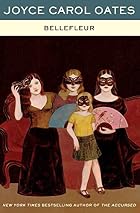
Bellefleur by Joyce Carol Oates was a sprawling, rambling, endlessly digressive Gothic saga about multiple generations of family in upstate New York, timeframe squishy (a bit more on that later), living together (for the most part) in an often surreal castle. There is a loose forward-moving narrative that tells the story of how one estranged member of the family comes to dominate it by marrying her cousin and embarking on a crusade to rebuild the family's lost glory, but this isn't really a book "about" that. It's really more like a huge collection of short stories about a single family. Each chapter is about a different member of the family or incident in their history, jumping around through space and time.
Weirdness abounded in this book, with elements of what I guess would be called Gothic-tinged magical realism? Mysterious weather events; a mythical-seeming pregnancy resulting in a deformed child whose semi attached twin is simply lopped off at home like its no big deal; enchanted mirrors; people disappearing in strange rooms, ponds; an abundance of runaways and foundlings; ghosts, shapeshifters, possible vampires, giant mythical beasts rumored to carry off children.
While there is an elaborately constructed family tree in the front of the book, one gets the sense that this is a bit of a joke, as only a few of the individuals present have dates associated with their names & these names are often re-used in later generations. Additionally, there is a weird sense that all of the characters are existing at the same time, either because they are physically present or because stories and myths about them permeate the lives of the current generation. Such as the founder of the dynasty and builder of the castle, who upon his death demanded that his skin be stretched over a civil war era drum and that the drum be beaten to announce mealtimes and the arrival of guests. Or the fact that the Bellefleur dead are said to live underneath the waters of a pond on the grounds.
Ultimately I didn't love this book, which was often just a little too aimless and digressing, but it is definitely one that I will remember.
Bellefleur by Joyce Carol Oates was a sprawling, rambling, endlessly digressive Gothic saga about multiple generations of family in upstate New York, timeframe squishy (a bit more on that later), living together (for the most part) in an often surreal castle. There is a loose forward-moving narrative that tells the story of how one estranged member of the family comes to dominate it by marrying her cousin and embarking on a crusade to rebuild the family's lost glory, but this isn't really a book "about" that. It's really more like a huge collection of short stories about a single family. Each chapter is about a different member of the family or incident in their history, jumping around through space and time.
Weirdness abounded in this book, with elements of what I guess would be called Gothic-tinged magical realism? Mysterious weather events; a mythical-seeming pregnancy resulting in a deformed child whose semi attached twin is simply lopped off at home like its no big deal; enchanted mirrors; people disappearing in strange rooms, ponds; an abundance of runaways and foundlings; ghosts, shapeshifters, possible vampires, giant mythical beasts rumored to carry off children.
While there is an elaborately constructed family tree in the front of the book, one gets the sense that this is a bit of a joke, as only a few of the individuals present have dates associated with their names & these names are often re-used in later generations. Additionally, there is a weird sense that all of the characters are existing at the same time, either because they are physically present or because stories and myths about them permeate the lives of the current generation. Such as the founder of the dynasty and builder of the castle, who upon his death demanded that his skin be stretched over a civil war era drum and that the drum be beaten to announce mealtimes and the arrival of guests. Or the fact that the Bellefleur dead are said to live underneath the waters of a pond on the grounds.
Ultimately I didn't love this book, which was often just a little too aimless and digressing, but it is definitely one that I will remember.
9fannyprice
The Riddle of the Labyrinth: The Quest to Crack an Ancient Code by Margalit Fox. This book was fabulous! I devoured it like savory cupcake and was sad when it was over. Fox tells the story of the discovery and eventual decipherment of Linear B (spoiler alert:
Two of these people -- Arthur Evans, the archaeologist who in 1900 discovered tablets containing this strange script, and Michael Ventris, a British architect who was credited with the script's eventual decipherment -- are famous (relatively speaking), while the third, an American (female!) classics professor named Alice Kobler, has never been given the appropriate credit for her role in the decipherment. It is Kobler's story that Fox most wants to focus on, but she begins at the beginning with the tablets' discovery in Knossos, Crete. Other than knowing that Linear B was a mysterious script that had bedeviled scholars for decades, I was not familiar with any of the story, so I enjoyed even the portions that might be old ground for those who've read about Linear B before.
For being a relatively short book, Fox packs in tons of detail about Victorian archaeology practices and beliefs about the ancient world (who knew a proper English gentleman could just purchase an ancient ruin in those days!), ancient Greek prehistory, the findings of the excavations at Knossos, the personal lives of her three main figures, and of course, the features and structures of the Linear B script itself. Most fascinatingly for me as a language nerd, she spends a lot of time talking about the process of deciphering an unknown language in an unknown script (Linear B being both and having no "Rosetta Stone" with which to work against, it presented the most challenging type of decipherment.
She also talks about the types of writing systems (alphabetical, syllabic, logographic) and grammars of ancient languages, all along tying it back to the ways that scholars tried to approach deciphering Linear B and how their biases and approaches sometimes led them down a dead alley. She brings in several techniques and lessons from codebreaking (including a Sherlock Holmes "Dancing Man" code in which all of the letters are human-shaped) to further illustrate these lessons. She also holds back a lot of information from the reader about what was eventually discovered about Linear B, so that the reader feels like she is going on a process of discovery with the scholars being discussed. I liked this way of telling the story very much.
This book was a huge hit with me. Fox has one other book, on sign language, which I am definitely checking out.
10fannyprice
I am on a wonderful run of thrilling non-fiction books. I will have to choose my next one very carefully after how good this one and the linear B book are.
A Spy Among Friends: Kim Philby and the Great Betrayal by Ben Macintyre is Macintyre's examination of Kim Philby, possibly the most infamous British/Soviet double agent during the Cold War, through the lens of his social circles to show how the attitudes and practices of these small, exclusive circles allowed Philby to escape suspicion for so long, even when evidence of his perfidy was almost undeniable.
To do this, Macintyre brings the reader into the story through the figure of Nicholas Elliott, a fellow spy and close friend of Philby's who, unlike Philby, never spied for the Soviets. When Philby was finally undeniably determined to be a Soviet spy in the 1960s, Elliott had the thankless task of travelling to Beirut (where Philby was stationed at the time) to coerce a confession from his former friend.
Throughout the book, the careers of Elliott and Philby move in almost heartbreaking tandem, as Philby turns almost every success Elliott has into a failure by transmitting information to the Soviets. For instance, Elliott during WWII made contact with dozens of anti-Communist Catholics in Eastern Germany, which was considered a huge "win" for him and for Britain; Philby passed the names and addresses of these people to his Soviet handlers, who probably murdered all of them when they occupied Eastern Germany. Of course, Philby transferred information from more people than just Elliott throughout his tenure and Macintyre makes this very clear, but this setup allows the reader to see that in addition to betraying his country and causing the deaths of untold numbers of anti-Communist activists in throughout the Eastern Bloc and Germany, Philby also betrayed the very people who would be his staunchest defenders throughout his life.
Macintyre discusses how Philby's privileged background and elite connections created a shield for him, as other similarly privileged foreign policy and intelligence elites in Britain simply could not believe that someone like him would betray his country. Philby actively sought to expand his social connections to powerful people who could reinforce this shield and (willingly or inadvertently) provide him with advance warning if he were under suspicion. Philby operated as though he knew he would eventually be taken down and wanted his takedown to implicate as many others as possible. He was not unsuccessful in this, as it could be argued that much of British unwillingness to investigate Philby was because of the horrible light it would shed on how blind the British and American intelligence communities had been to a traitor in their midst. Though the notoriously paranoid CIA counterintelligence cold warrior James Jesus Angleton would later claim that he had always been suspicious of Philby, contemporary accounts that Macintyre quotes from indicate that Angleton was just as taken in by Philby as everyone else.
Macintyre also shows the role that class prejudices played in the unwillingness of Britain's foreign intelligence service (MI6, which was overwhelmingly upper-class) to listen to the warnings of Britain's domestic intelligence service (MI5, which was more middle-class and upstart) about penetrations of the establishment or to allow MI5 to investigate suspicious MI6 spies. These extended so far as to choosing Elliott, rather than the working class MI5 spyhunter who had investigated Philby for years, to travel to Beirut to confront him, probably in part because of some weird idea of "honor" or "gentlemanliness".
These connections and prejudices allowed people to overlook Philby's past dalliances with Communism during his university days, his marriage to a foreign communist, his friendships with other double agents. Even after Philby left MI6 under a cloud of suspicion (prompted by the flight of two other members of the Cambridge spy ring to Moscow almost immediately after one of them met with Philby, who had received information about British knowledge of spies matching the description of one of the friends), his friends defended him and succeeded in convincing the Foreign Secretary to publicly exonerate him. This led to ... wait for it ... Philby being given two jobs as a journalist in Beirut by those of his class who felt he'd been done wrong and his reactivation as an MI6 agent!
Macintyre contrasts Philby with the case of George Blake, another British-Soviet double agent who was half-Egyptian, half-Jewish, lacked Philby's ties to the elite, and was swiftly given the most severe sentence to that date when his espionage was exposed. Blake wasn't "one of them," so it was easier for the elites of MI6 and the Foreign Office to believe that he was capable of espionage.
Other than knowing that Philby was a member of the "Cambridge Six" spy ring of Britons recruited during their university days to spy for the Soviets and that he was somehow related to the story told in Tinker Tailor Soldier Spy, I didn't really know anything about this story. I haven't read any other books on the topic, so I can't speak to how Macintyre's approach might differ.
For me, this book was wildly successful - it was tense and gripping, as I wondered when Philby would make a mistake and be unmasked; it was infuriating, as I watched the British foreign policy and intelligence establishment staunchly refuse to believe that Philby could betray them, despite continued evidence that he was up to something; I marvelled at the luck that that kept saving Philby's neck when it appeared his number was up. There were so many little details that made me feel like this book was written for me, like the discussion of the role that various Middle Eastern cities played as hotbeds of espionage during the cold war, or the descriptions of 1950s Washington DC, where Philby was stationed (I even google mapped his old house, whose address is given in the book! I might take a drive by!). There is so much more I could say, but this review is overlong as it is.
I received a free copy of an advance proof from NetGalley.
11fannyprice
The Quick: A Novel by Lauren Owen, is a Gothic-Victorian hybrid novel about two siblings from Yorkshire who eventually find themselves in London embroiled in a vampire war. From the publisher description, it was not clear that this was a vampire story, and upon discovering that this was how the book was going to go (perhaps about 20% of the way into this tome), I became significantly less interested. The book also suffers, in my opinion, from following the brother (who is the least interesting character) for nearly the first third of the book; later the narrative becomes more multifaceted, focusing on the sister, partisans in the vampire war, a pair of independent vampire hunters and scholars, and other characters. But by that point, I was both overwhelmed and bored. This book just didn't work for me, but I received an advance review copy from NetGalley, so I felt I should finish it. I think a more careful marketing plan is in order, so that it is clear that the story is a vampire one.
12rebeccanyc
I loved The Riddle of the Labyrinth too (and it got me to read a book about deciphering the Mayan language that had been on my TBR for 30 or so years), and I'm eager to read A Spy among Friends when it comes out in the US. Great reviews!
ETA I'm going to look for Margalit Fox's other book too. Thanks for mentioning it.
ETA I'm going to look for Margalit Fox's other book too. Thanks for mentioning it.
13Polaris-
Vampires ahoy!
Enjoyed your reviews of The Riddle of the Labyrinth and A Spy Among Friends: Kim Philby and the Great Betrayal. The latter certainly whets my appetite for espionage non-fiction (as well as fiction), so I've added it to my wishlist.
Enjoyed your reviews of The Riddle of the Labyrinth and A Spy Among Friends: Kim Philby and the Great Betrayal. The latter certainly whets my appetite for espionage non-fiction (as well as fiction), so I've added it to my wishlist.
14baswood
Great review of A Spy among friends.
16fannyprice
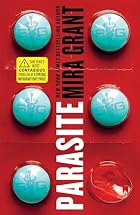
Parasite, the first in a trilogy by Mira Grant is set in the relatively near future (2027 or so) in which most people have willingly implanted themselves with a genetically engineered tapeworm to escape the effects of antibiotic overuse, increases in auto-immune disorders and other conditions caused by excessive hygiene. People have been living like this for about 10 years at this point with no ill effects, everyone loves their "implant," as the tapeworms are called, and one is even credited with saving it's host's life after an accident that should have killed her.
This individual, a twenty-something woman named Sal, formerly known as Sally, had a massive unexplained seizure six years ago that led to a car accident. She was in a coma and literally about to be unplugged from life support when she woke up, completely fine except for the fact that she had no memory of her life before that moment. Her implant is credited with saving her, but she has to basically start her life over from childhood, learning to walk, talk, etc. Her medical care is paid for by SymboGen, or some similarly generically named company, the maker of her implant, which realizes the incredible publicity and scientific value Sal's survival has for their product.
This is the first book in a trilogy and it very much felt like that, especially since nearly everything that would happen in the book has been revealed in publicity for it - people's implants are taking control of them, turning them into zombies; there is a giant secret at the heart of the implants' invention that the company's founder and CEO is trying to conceal; rogue scientists are conspiring to reveal the secret of the implant; Sal will somehow get involved with all of this. There are a few "surprises" here and there, but most of them were fairly predictable given the series of hints that are dropped about Sal throughout the book.
In many ways, this book is like a less action-packed version of Grant's previous Newsflesh trilogy, as both books feature a heroine who is somewhat prickly and medically weird, gets involved in uncovering a conspiracy that will reveal things about herself, and are told through a combination of traditional narration and fake documents from both the story's past and its future. There are certainly interesting ethical issues about the relative value of different kinds of lives raised in this book and maybe those will be explored more in the future, but there were times when I really just wanted to laugh because Grant is asking us to take seriously the idea that there are walking, talking tapeworms going around in human bodies making decisions and planning a war against humans. And I really couldn't cope with that. I was kind of disappointed in this book, given how much positive press it has gotten in sci-fi focused venues.
17NanaCC
>16 fannyprice: It's not a genre I would generally go for, and your review has ensured that I won't go for this one. :)
18rebeccanyc
Probably not a book for me, but I enjoyed learning about it until I got to the tapeworms!
19wandering_star
A Spy Among Friends sounds fascinating, onto the wishlist! I've also been dithering over the Margalit Fox book but I think you've now convinced me.
I actually gave up on The Quick even before I got to the vampire bit! (Fortunately I'd got it from a bookstore and therefore didn't feel I needed to persist with it). I had a look at the LT reviews and it's pretty clear that the unexpected appearance of the vampires turned a lot of readers off...
I actually gave up on The Quick even before I got to the vampire bit! (Fortunately I'd got it from a bookstore and therefore didn't feel I needed to persist with it). I had a look at the LT reviews and it's pretty clear that the unexpected appearance of the vampires turned a lot of readers off...
20fannyprice
>19 wandering_star:, Yeah, honestly, even if one likes vampires, The Quick is still pretty tedious. I kept waiting for Charlotte or whatever her name was to bust out and become some badass vampire hunter or something....But no. I also thought it was weird how the author would devote pages and pages to describing things that seemed unimportant, but then dispense with 50 years of a character's life in an offhand comment.
21baswood
Enjoyed your review of Parasite. Science fiction books should not make you laugh. (at least when they don't mean to)
22mabith
I had the same reaction to The Riddle of the Labyrinth, and I didn't realize she had a book on sign language. Definitely going to look for that.
23LibraryPerilous
>10 fannyprice: If you're interested in reading more about the Cambridge Five, Miranda Carter's Anthony Blunt: His Lives is recommended.
Incidentally, Kim Philby was the son of St John Philby.
The Riddle of the Labyrinth and The End Is Nigh sound great.
Great links in #7.
Incidentally, Kim Philby was the son of St John Philby.
The Riddle of the Labyrinth and The End Is Nigh sound great.
Great links in #7.
24fannyprice
Starting an ARC of July Crisis: The World's Descent into War, Summer 1914 while still working on Iron Curtain: The Crushing of Eastern Europe, 1944-1956. I've entered crunch time for my Arabic studies, with a proficiency test coming up in July, so most of my time is being spent preparing for that.
25fannyprice
I've not been doing very well reading or keeping this up, given the Arabic crunch time. I've finished three books, all of them lighter, science-fictiony type books. Really enjoyed Annihilation, the first in Jeff VanderMeer's trilogy about scientific explorations of a mysterious zone. It was weird, genuinely creepy, and engrossing. The second installment, Authority was less interesting and I felt at times like I was missing the point.
The third book, an advance review copy of The Girl With All the Gifts - about a mysterious group of children being held in a scientific research facility - started out promisingly, but the book quickly devolved (in my opinion) into a more conventional "let's go on the run from zombies (essentially) and marauding bands of humans" story. Though I did find the ending somewhat surprisingly brutal for a book that otherwise seemed like it was going down a generally mainstream path.
I'm still reading both the books mentioned in >24 fannyprice: above, but also reading an advance review copy of Reading Joss Whedon, an anthology of critical essays about his oeuvre, including television shows, films, comics, webseries. I enjoyed the essays on Buffy the Vampire Slayer quite a lot, but I'm finding the ones on Angel - the Buffy spinoff - less interesting, because I never really liked that show as much.
Also trying to read as much as I can in Arabic, mostly news and short prose.
The third book, an advance review copy of The Girl With All the Gifts - about a mysterious group of children being held in a scientific research facility - started out promisingly, but the book quickly devolved (in my opinion) into a more conventional "let's go on the run from zombies (essentially) and marauding bands of humans" story. Though I did find the ending somewhat surprisingly brutal for a book that otherwise seemed like it was going down a generally mainstream path.
I'm still reading both the books mentioned in >24 fannyprice: above, but also reading an advance review copy of Reading Joss Whedon, an anthology of critical essays about his oeuvre, including television shows, films, comics, webseries. I enjoyed the essays on Buffy the Vampire Slayer quite a lot, but I'm finding the ones on Angel - the Buffy spinoff - less interesting, because I never really liked that show as much.
Also trying to read as much as I can in Arabic, mostly news and short prose.
26Polaris-
>25 fannyprice: Well, I'd say you're doing pretty well! I've not been doing very well on the reading front lately either, or keeping up with people's threads and other talk stuff for the last few weeks... but I don't have Arabic exams to cope with! I've always flattered myself that I could maybe one day learn Arabic, based on the tenuous advantage that I claim from knowing how to swear and be rude in the language from my Hebrew slang, and also make that chchchch sound both tongues have in common.
Did you know Hebrew before Arabic, or vice versa? I hope you don't mind me asking, but if so, have you found them similar languages in the way the grammar rules work - sort of structurally...? Good luck in any case.
Oh, if you happen to be reading the Arab press, what sort of things are they reporting on the Qatari/FIFA World Cup corruption scandal?
Did you know Hebrew before Arabic, or vice versa? I hope you don't mind me asking, but if so, have you found them similar languages in the way the grammar rules work - sort of structurally...? Good luck in any case.
Oh, if you happen to be reading the Arab press, what sort of things are they reporting on the Qatari/FIFA World Cup corruption scandal?
27dchaikin
Wishing you well through crunch time. I really enjoyed reading through your April reviews. The Riddle of the Labyrinth does especially sound like great fun.
29fannyprice
'Victims Can Lie as Much as Other People'
Somaly Mam: The Holy Saint (and Sinner) of Sex Trafficking
I am fascinated by the revelations that Somaly Mam, the Cambodian anti-sex trafficking activist who has received much laudatory press for her work rescuing girls from sex slavery has been accused of fabricating elements of her biography and those of the women she works with. Mam was made famous to Americans in part because of NY Times columnist Nicholas Kristof, who came under much fire in the book Playing the Whore: The Work of Sex Work that I read earlier this year and that provoked a fair amount of conversation on my previous thread.
Both articles pose the question: does it matter that parts of her story are not true, if she's done so much good? Unsurprisingly, both conclude yes, it does matter because NGOs run in part on trust.
Somaly Mam: The Holy Saint (and Sinner) of Sex Trafficking
I am fascinated by the revelations that Somaly Mam, the Cambodian anti-sex trafficking activist who has received much laudatory press for her work rescuing girls from sex slavery has been accused of fabricating elements of her biography and those of the women she works with. Mam was made famous to Americans in part because of NY Times columnist Nicholas Kristof, who came under much fire in the book Playing the Whore: The Work of Sex Work that I read earlier this year and that provoked a fair amount of conversation on my previous thread.
Both articles pose the question: does it matter that parts of her story are not true, if she's done so much good? Unsurprisingly, both conclude yes, it does matter because NGOs run in part on trust.
30fannyprice
>26 Polaris-:, Hey Paul, I realized I never responded to your questions about Arabic and Hebrew. Firstly, of course you could learn Arabic! It is certainly more of a challenge for native speakers of English than French or Spanish would be, but especially if you have some exposure to Hebrew - understanding things like the lack of vowels, the triliteral root system, the right-to-left reading and writing system - all of this would help you greatly, I think.
I had Hebrew before I had Arabic, but I confess that the extent to which I "had" Hebrew seems more limited every day. I remember getting around in Israel with the language, but I can't remember learning any grammar (though I must have!), so I can't really address that question. Hebrew and Arabic both have a number of letters that represent what seem to non-speakers to be the "same sound" - tet and tav always drove me crazy, why are there two "t's" that sound exactly the same?! In Hebrew these pairs seem for the most part to actually make the same sound - in Arabic, they make very different sounds. I've always wondered if this is a result of some of the changes that happened when Hebrew was revived into modern Hebrew. I really want to find a good book about Semitic languages and also one about the history of Hebrew.
The thing honestly that was hardest for me when I first moved over to Arabic was that the "vav" in Hebrew looks exactly like the initial form of "alif" in Arabic, so I was starting all my words with a "v" sound instead the appropriate Arabic sound (usually an "a", since alif in the initial position often serves as a seat for a short vowel on a glottal stop). My teachers thought I was insane.
I had Hebrew before I had Arabic, but I confess that the extent to which I "had" Hebrew seems more limited every day. I remember getting around in Israel with the language, but I can't remember learning any grammar (though I must have!), so I can't really address that question. Hebrew and Arabic both have a number of letters that represent what seem to non-speakers to be the "same sound" - tet and tav always drove me crazy, why are there two "t's" that sound exactly the same?! In Hebrew these pairs seem for the most part to actually make the same sound - in Arabic, they make very different sounds. I've always wondered if this is a result of some of the changes that happened when Hebrew was revived into modern Hebrew. I really want to find a good book about Semitic languages and also one about the history of Hebrew.
The thing honestly that was hardest for me when I first moved over to Arabic was that the "vav" in Hebrew looks exactly like the initial form of "alif" in Arabic, so I was starting all my words with a "v" sound instead the appropriate Arabic sound (usually an "a", since alif in the initial position often serves as a seat for a short vowel on a glottal stop). My teachers thought I was insane.
31fannyprice
Some quick catching up.


I've really been craving domestic suspense lately, so I picked up the somewhat similarly-named Before We Met and Before I Go to Sleep recently. The former - which centers on a woman who begins to discover a series of increasingly disturbing truths about her husband after he fails to return home from a business trip - was interesting enough, but I often felt like I was reading the book equivalent of a lifetime movie. I guess that's the risk with domestic suspense. But it was well-done and pretty creepy - I followed the main character's discoveries with an increasingly pit-like feeling in my stomach.
Before I Go to Sleep was much more successful for me - unsettling and engrossing. Written primarily as a series of journal entries recorded by a woman who has lost both her memory of her past and her ability to form new memories, this book was so unsettling and really made me think about how vulnerable and isolated people with more realistic disabilities and chronic medical conditions can be. Christine wakes up every morning with no memory of who she is, how old she is, where she is, who the man in bed beside her is. Each morning she must relearn these things by looking at photos her husband has taped to the bathroom mirror and listening to his retelling of her past. She has been in this condition for nearly 20 years, since being the victim of a hit and run, according to her husband.
Well, of course, things are not as they seem, or we wouldn't be reading this book. Christine discovers that she's been seeing a psychologist behind Ben (her husband)'s back and - at the psychologist's suggestion - keeping a secret journal. He calls her every day to tell her where to find it and remind her to write in it. When the book opens, Christine has re-discovered her journal, started reading and found scrawled inside the cover a message to herself "Don't Trust Ben." So she begins to read, to attempt to figure out what is going on in her life. What she finds reveals a pattern of lies and inconsistencies that at first are explained away by Ben, Christine, and the psychologist as Ben's attempt to shield Christine from everything that she has lost because of the accident and prevent her from reliving these losses every day. Christine reads that (according to Ben), she has a history of paranoia and dissociative behavior; this, combined with the fact that she cannot remember writing down the words in her own journal, leads her to question the journal's veracity as well. Is she being manipulated? By whom? Is she simply nuts?
I thought this way of conveying information was very clever. At first, the reader - like Christine - only knows what Christine is told or what she reads. But because the reader - unlike Christine - can remember things and more easily see connections and inconsistencies, the truth will dawn on the reader long before it comes to Christine. Some readers found this annoying, I thought it worked to underscore how vulnerable Christine was and heighten the tension.
The one major weak point was the ending, which seemed at first to be rather unbelievable and neat - everything is resolved, the heroine has come through a traumatic experience relatively unscathed and everyone is happy. But the more I reflected on this, the more I wondered if the ending could also be read as actually fairly dark. It seemed possible to me that the author meant the reader to once again split his/her perspective from Christine's and see that while everything has been neatly wrapped up from Christine's point of view, the reader should remember Christine's earlier acceptance of simplistic explanations and be wary of seeing this as a happy, tidy ending.
Major plot spoilers providing more specific detail related to this line of thinking follow.Perhaps I am just fooling myself, attributing more cleverness to the author than is warranted, but otherwise the ending is just too shiny in a way that strains credulity. Christine's real husband (yes, the Ben that she spends most of her time with in the book is, of course, not really her husband) has an affair with her best friend, divorces her, leaves her for nearly 20 years, and then suddenly appears revealing he's never stopped loving her and Christine is like "oh, ok, great." No questions asked, now they're back together again? How can the reader not think of everything Christine is ignoring that is wrong in this situation? Or the fact that Christine was waltzed out of a home for disabled people nearly four months ago by a man claiming to be her husband and her supposed best friend and her grown son didn't notice and didn't try to contact her or her husband during this time? Her friend dismisses the lack of contact with the son as "he's been busy and it's far away" and Christine accepts that weak-a$$ explanation just like she accepted fake Ben's other weak-a$$ explanations. That's too f*cked up for me to believe it's a plot hole the author just didn't notice. Christine may not be in the same kind of dangerous charade of a life as before, but I cannot believe that the reader is meant to accept that everything is now ok. Even if we're meant to believe that she is regaining her memory - which could also be a lie, since she's remembered and forgotten things before and can only rely on her unreliable journal and the claims of others on the matter of her memory - she is still incredibly isolated and vulnerable and utterly dependent on others.
With my reading of the ending of this book, I'd give it five stars.


I've really been craving domestic suspense lately, so I picked up the somewhat similarly-named Before We Met and Before I Go to Sleep recently. The former - which centers on a woman who begins to discover a series of increasingly disturbing truths about her husband after he fails to return home from a business trip - was interesting enough, but I often felt like I was reading the book equivalent of a lifetime movie. I guess that's the risk with domestic suspense. But it was well-done and pretty creepy - I followed the main character's discoveries with an increasingly pit-like feeling in my stomach.
Before I Go to Sleep was much more successful for me - unsettling and engrossing. Written primarily as a series of journal entries recorded by a woman who has lost both her memory of her past and her ability to form new memories, this book was so unsettling and really made me think about how vulnerable and isolated people with more realistic disabilities and chronic medical conditions can be. Christine wakes up every morning with no memory of who she is, how old she is, where she is, who the man in bed beside her is. Each morning she must relearn these things by looking at photos her husband has taped to the bathroom mirror and listening to his retelling of her past. She has been in this condition for nearly 20 years, since being the victim of a hit and run, according to her husband.
Well, of course, things are not as they seem, or we wouldn't be reading this book. Christine discovers that she's been seeing a psychologist behind Ben (her husband)'s back and - at the psychologist's suggestion - keeping a secret journal. He calls her every day to tell her where to find it and remind her to write in it. When the book opens, Christine has re-discovered her journal, started reading and found scrawled inside the cover a message to herself "Don't Trust Ben." So she begins to read, to attempt to figure out what is going on in her life. What she finds reveals a pattern of lies and inconsistencies that at first are explained away by Ben, Christine, and the psychologist as Ben's attempt to shield Christine from everything that she has lost because of the accident and prevent her from reliving these losses every day. Christine reads that (according to Ben), she has a history of paranoia and dissociative behavior; this, combined with the fact that she cannot remember writing down the words in her own journal, leads her to question the journal's veracity as well. Is she being manipulated? By whom? Is she simply nuts?
I thought this way of conveying information was very clever. At first, the reader - like Christine - only knows what Christine is told or what she reads. But because the reader - unlike Christine - can remember things and more easily see connections and inconsistencies, the truth will dawn on the reader long before it comes to Christine. Some readers found this annoying, I thought it worked to underscore how vulnerable Christine was and heighten the tension.
The one major weak point was the ending, which seemed at first to be rather unbelievable and neat - everything is resolved, the heroine has come through a traumatic experience relatively unscathed and everyone is happy. But the more I reflected on this, the more I wondered if the ending could also be read as actually fairly dark. It seemed possible to me that the author meant the reader to once again split his/her perspective from Christine's and see that while everything has been neatly wrapped up from Christine's point of view, the reader should remember Christine's earlier acceptance of simplistic explanations and be wary of seeing this as a happy, tidy ending.
Major plot spoilers providing more specific detail related to this line of thinking follow.
With my reading of the ending of this book, I'd give it five stars.
32fannyprice
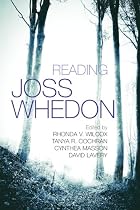
Also finished Reading Joss Whedon, a collection of critical essays on the writer-director's body of work. This was a well-done collection that included distinct sections on his major shows - Buffy The Vampire Slayer, Angel, Dollhouse, and Firefly - and his work in both comic books, webseries (Dr Horrible - hilarious, for anyone who hasn't seen it), and his most recent films, Cabin in the Woods and The Avengers. I really enjoy a lot of Whedon's work, so I thought I would be a good audience for this book, which I received an ARC of from Net Galley. I really loved the essays on Buffy - there was an especially great piece from an academic in the field of disaster studies and her piece looked at the portrayal of disaster victim behavior in Buffy and Angel and how fictional media portrayals of post-disaster behavior influence real-life responses, drawing in examples from Hurricane Katrina and the Haiti earthquake. That was fascinating and revealed to me a whole new field of study I hadn't been aware even existed. I also liked the essays about feminism and Dollhouse, since that show seemed so at odds with Whedon's self-avowed feminism. But for the most part, I simply wasn't the right audience for this book. It was much more "lit-crit" than I had expected and I realized I just wasn't interested in such an extensive exploration of Whedon's work. I do think that anyone interested in popular culture, media studies, or feminist theory would get a lot out of it. But a very serious interest in Whedon's work is definitely required.
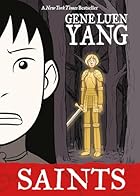
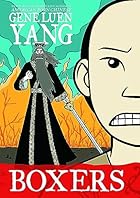
Finally, Boxers and Saints, Gene Luen Yang's graphic novel set about the Boxer Rebellion in China told from the perspective of a young man who becomes a rebel leader and a young woman who converts to Christianity and stands against the rebellion. I loved Boxers, but was less enamored with Saints. Boxers felt like a full story, showing the history of foreign colonial contact with the Chinese and fleshing out motivations for its characters. I loved the artwork, especially the Chinese gods that the rebels envisioned themselves transforming into; I also loved the author's decision to depict all foreign speech in meaningless scribble while the Chinese dialogue was written in English. This heightened the reader's identification with the Chinese rebel perspective because like the Chinese villagers, the reader literally has no idea what the foreign missionaries and soldiers are saying and must judge them solely based on their actions. Saints, which is about 1/3 the size of Boxers, definitely felt like a sidenote. It focuses on a girl who is unwanted, called a devil, vows to be the most devilish devil she can be, and decides that aligning herself with the so-called "foreign devils" by converting to Christianity is the most evil thing she can do. Unlike the main character in Boxers, who rises to the status of prominent rebel leader fairly quickly, she struggles throughout her book to find a purpose and seems like a bystander in her own story. This might have been intentional, as Yang in both books draws attention to the male warrior's fear of contamination by women - whose "Yin" will weaken their fighting spirit - and their attitudes that women can't really contribute in a meaningful way to society. But the female character's general listlessness, combined with the shorter narrative, made this perspective feel like more of an afterthought to the "real" story presented in Boxers. I am posting the combined review on the bookpages for both volumes, because they are intended to be read as a set.
Reading these two volumes made me realize that I know absolutely nothing about Chinese history. If anyone has any recommendations for a good first overview book of non-contemporary Chinese history, I would love them.
Finally, Boxers and Saints, Gene Luen Yang's graphic novel set about the Boxer Rebellion in China told from the perspective of a young man who becomes a rebel leader and a young woman who converts to Christianity and stands against the rebellion. I loved Boxers, but was less enamored with Saints. Boxers felt like a full story, showing the history of foreign colonial contact with the Chinese and fleshing out motivations for its characters. I loved the artwork, especially the Chinese gods that the rebels envisioned themselves transforming into; I also loved the author's decision to depict all foreign speech in meaningless scribble while the Chinese dialogue was written in English. This heightened the reader's identification with the Chinese rebel perspective because like the Chinese villagers, the reader literally has no idea what the foreign missionaries and soldiers are saying and must judge them solely based on their actions. Saints, which is about 1/3 the size of Boxers, definitely felt like a sidenote. It focuses on a girl who is unwanted, called a devil, vows to be the most devilish devil she can be, and decides that aligning herself with the so-called "foreign devils" by converting to Christianity is the most evil thing she can do. Unlike the main character in Boxers, who rises to the status of prominent rebel leader fairly quickly, she struggles throughout her book to find a purpose and seems like a bystander in her own story. This might have been intentional, as Yang in both books draws attention to the male warrior's fear of contamination by women - whose "Yin" will weaken their fighting spirit - and their attitudes that women can't really contribute in a meaningful way to society. But the female character's general listlessness, combined with the shorter narrative, made this perspective feel like more of an afterthought to the "real" story presented in Boxers. I am posting the combined review on the bookpages for both volumes, because they are intended to be read as a set.
Reading these two volumes made me realize that I know absolutely nothing about Chinese history. If anyone has any recommendations for a good first overview book of non-contemporary Chinese history, I would love them.
33StevenTX
>32 fannyprice: - If anyone has any recommendations for a good first overview book of non-contemporary Chinese history...
I read several works on Chinese history a few years ago, and the one I would recommend as an excellent introduction is The Cambridge Illustrated History of China by Patricia Ebrey.
I read several works on Chinese history a few years ago, and the one I would recommend as an excellent introduction is The Cambridge Illustrated History of China by Patricia Ebrey.
34rebeccanyc
Before I Go To Sleep sounds really creepy, and probably not for me, but I enjoyed your review and your spoiler thoughts.
35mabith
Wow, Before I Go To Sleep does sound super creepy, and not something I'd normally pick up myself but your review makes it really tempting. I would definitely see a movie of it!
36fannyprice
>35 mabith:, I believe it is being made into a movie with Nicole Kidman and Colin Firth. :)
37wandering_star
tet and tav always drove me crazy, why are there two "t's" that sound exactly the same
Thai is the same - if I remember rightly there are three ways of writing the 's' sound, two 'l' sounds and so on. I was complaining about this to a Thai friend, who kindly pointed out that in English, there are many different ways of spelling the same vowel sound, even if we don't expect it for consonants!
Boxers and Saints is on my gifts wishlist. I may nudge it up (ie drop a few hints). A very readable one-volume history of China is China: A New History by John King Fairbank. I think the most recent edition goes up to the early C21, but it starts right back in prehistoric times.
A year or two ago I read History in Three Keys which looks at three different ways of thinking about the Boxer rebellion - as a series of historical facts, as a lived experience, and as a constructed, 'meaningful' history. I would recommend it as an interesting book about ways of thinking about historical events, not just as a history of the rebellion itself.
Thai is the same - if I remember rightly there are three ways of writing the 's' sound, two 'l' sounds and so on. I was complaining about this to a Thai friend, who kindly pointed out that in English, there are many different ways of spelling the same vowel sound, even if we don't expect it for consonants!
Boxers and Saints is on my gifts wishlist. I may nudge it up (ie drop a few hints). A very readable one-volume history of China is China: A New History by John King Fairbank. I think the most recent edition goes up to the early C21, but it starts right back in prehistoric times.
A year or two ago I read History in Three Keys which looks at three different ways of thinking about the Boxer rebellion - as a series of historical facts, as a lived experience, and as a constructed, 'meaningful' history. I would recommend it as an interesting book about ways of thinking about historical events, not just as a history of the rebellion itself.
38fannyprice
>37 wandering_star:, Thanks for the suggestions! History in Three Keys does sound fascinating. I love books like that.

