Rebeccanyc Reads in 2014, Volume IV: The Second Half Year Begins!
This is a continuation of the topic Rebeccanyc Reads in 2014, Volume II: Spring Is Here!.
This topic was continued by Rebeccanyc Reads in 2014, Volume V: Does Fall Mean More Serious Reading?.
Talk Club Read 2014
Join LibraryThing to post.
This topic is currently marked as "dormant"—the last message is more than 90 days old. You can revive it by posting a reply.
1rebeccanyc
Currently Reading


Read in September
84. Love in a Bottle by Antal Szerb
83. The Spectre of Alexander Wolf by Gaito Gazdanov
82. The Dead Girls by Jorge Ibargüengoitia*
81. The Burning of the World: A Memoir of 1914 by Béla Zombory-Moldován
Read in August
80. The Wild Ass's Skin by Honoré de Balzac
79. The Sleepwalkers: How Europe Went to War in 1914 by Christopher Clark (started in June)
78. The Women's War by Alexandre Dumas*
77. The Mongolian Conspiracy by Rafael Bernal
76. Ninety-Three by Victor Hugo
75. What the Robin Knows: How Birds Reveal the Secrets of the Natural World by Jon Young (started in June)
74. The Charterhouse of Parma by Stendhal
73. The President by Miguel Ángel Asturias
72. Land of Love and Drowning by Tiphanie Yanique
71. Stories by Anton Chekhov (started in July)
Read in July
70. Off Side by Manuel Vázquez Montalbán
69. Lucky Us by Amy Bloom*
68. The Mad and the Bad by Jean-Patrick Manchette
67. Pedro Páramo by Juan Rulfo*
66. Come Along with Me by Shirley Jackson
65. Slip of the Knife by Denise Mina
64. Angelica's Smile by Andrea Camilleri
63. The Treasure by Selma Lagerlöf*
62. One Day of Life by Manlio Argueta
61. Journey by Moonlight by Antal Szerb*
60. A Replacement Life by Boris Fishman


Read in September
84. Love in a Bottle by Antal Szerb
83. The Spectre of Alexander Wolf by Gaito Gazdanov
82. The Dead Girls by Jorge Ibargüengoitia*
81. The Burning of the World: A Memoir of 1914 by Béla Zombory-Moldován
Read in August
80. The Wild Ass's Skin by Honoré de Balzac
79. The Sleepwalkers: How Europe Went to War in 1914 by Christopher Clark (started in June)
78. The Women's War by Alexandre Dumas*
77. The Mongolian Conspiracy by Rafael Bernal
76. Ninety-Three by Victor Hugo
75. What the Robin Knows: How Birds Reveal the Secrets of the Natural World by Jon Young (started in June)
74. The Charterhouse of Parma by Stendhal
73. The President by Miguel Ángel Asturias
72. Land of Love and Drowning by Tiphanie Yanique
71. Stories by Anton Chekhov (started in July)
Read in July
70. Off Side by Manuel Vázquez Montalbán
69. Lucky Us by Amy Bloom*
68. The Mad and the Bad by Jean-Patrick Manchette
67. Pedro Páramo by Juan Rulfo*
66. Come Along with Me by Shirley Jackson
65. Slip of the Knife by Denise Mina
64. Angelica's Smile by Andrea Camilleri
63. The Treasure by Selma Lagerlöf*
62. One Day of Life by Manlio Argueta
61. Journey by Moonlight by Antal Szerb*
60. A Replacement Life by Boris Fishman
2rebeccanyc
Read Earlier This Year/Discussed on Previous Threads
Read in June
59. Reading Chekhov: A Critical Journey by Janet Malcolm
58. Invisible Cities by Italo Calvino
57. The Songlines by Bruce Chatwin
56. Forty-One False Starts: Essays on Artists and Writers by Janet Malcolm*
55. Terra Nullius: A Journey through No One's Land by Sven Lindqvist
54. The White Rock: An Exploration of the Inca Heartland by Hugh Thomson*
53. Troubled Daughters, Twisted Wives edited by Sarah Weinman
52. Murder in the Central Committee by Manuel Vázquez Montalbán
51. Time Present and Time Past by Deirdre Madden
50. The Forbidden Kingdom by jan Jacob Slauerhoff
49. In Patagonia by Bruce Chatwin*
48. Deep History: The Architecture of Past and Present edited by Andrew Shryock and Daniel Lord Smail
47. American Innovations by Rivka Galchen
46. If on a Winter's Night a Traveler by Italo Calvino
Read in May
45. Autonauts of the Cosmoroute by Julio Cortázar and Carol Dunlop*
44. Middle Passage by Charles Johnson*
43. The Reconstruction of Nations: Poland, Ukraine, Lithuania, Belarus, 1569-1999 by Timothy Snyder
42. The Bird's Nest by Shirley Jackson*
41. The Quality of Mercy by Barry Unsworth
40. Money by Émile Zola
39. The Worst Journey in the World by Apsley Cherry-Garrard*
38. Death in Venice and Other Tales by Thomas Mann
Read in April
37. Southern Seas by Manuel Vázquez Montalbán
36. The Black Sheep by Honoré de Balzac
35. Sacred Hunger by Barry Unsworth*
34. Journey to a War by W. H. Auden and Christopher Isherwood
33. Neanderthal Man: In Search of Lost Genomes by Svante Pääbo*
32. Oliver VII by Antal Szerb*
31. Hunting Season by Andrea Camilleri
30. Captains of the Sands by Jorge Amado
Read in March
29. The Sundial by Shirley Jackson*
28. The Saga of Gösta Berling by Selma Lagerlöf
27. The Angst-Ridden Executive by Manuel Vázquez Montalbán
26. The Queen's Necklace by Alexandre Dumas
25. Mastermind: How To Think Like Sherlock Holmes by Maria Konnikova
24. Tattoo by Manuel Vázquez Montalbán
23. The Interpreters by Wole Soyinka
22. Dragnet Nation: A Quest for Privacy, Security, and Freedom in a World of Relentless Surveillance by Julia Angwin
21. Boy Snow Bird by Helen Oyeyemi
20. The Pendragon Legend by Antal Szerb*
19. Landscapes of Fear by Yi-Fu Tuan
18. Home Is the Sailor by Jorge Amado
Read in February
17. The Queen's Necklace by Antal Szerb*
16. Arrow of God by Chinua Achebe*
15. No Longer at Ease by Chinua Achebe
14. Things Fall Apart by Chinua Achebe*
13. The Human Comedy: Selected Stories by Honoré de Balzac
12. The Wine-Dark Sea by Leonardo Sciascia
11. The Beast Within by Émile Zola*
10. Tent of Miracles by Jorge Amado
Read in January
9. New Grub Street by George Gissing
8. The War That Ended Peace: The Road to 1914 by Margaret MacMillan
7. The Radiance of the King by Camara Laye*
6. The Dead Hour by Denise Mina
5. Autobiography of a Corpse by Sigizmund Krzhizhanovsky
4. Field of Blood by Denise Mina
3. Forest of a Thousand Daemons: A Hunter's Saga by D.O. Fagunwa
2. Showdown by Jorge Amado*
1. The Road through the Wall by Shirley Jackson
Read in June
59. Reading Chekhov: A Critical Journey by Janet Malcolm
58. Invisible Cities by Italo Calvino
57. The Songlines by Bruce Chatwin
56. Forty-One False Starts: Essays on Artists and Writers by Janet Malcolm*
55. Terra Nullius: A Journey through No One's Land by Sven Lindqvist
54. The White Rock: An Exploration of the Inca Heartland by Hugh Thomson*
53. Troubled Daughters, Twisted Wives edited by Sarah Weinman
52. Murder in the Central Committee by Manuel Vázquez Montalbán
51. Time Present and Time Past by Deirdre Madden
50. The Forbidden Kingdom by jan Jacob Slauerhoff
49. In Patagonia by Bruce Chatwin*
48. Deep History: The Architecture of Past and Present edited by Andrew Shryock and Daniel Lord Smail
47. American Innovations by Rivka Galchen
46. If on a Winter's Night a Traveler by Italo Calvino
Read in May
45. Autonauts of the Cosmoroute by Julio Cortázar and Carol Dunlop*
44. Middle Passage by Charles Johnson*
43. The Reconstruction of Nations: Poland, Ukraine, Lithuania, Belarus, 1569-1999 by Timothy Snyder
42. The Bird's Nest by Shirley Jackson*
41. The Quality of Mercy by Barry Unsworth
40. Money by Émile Zola
39. The Worst Journey in the World by Apsley Cherry-Garrard*
38. Death in Venice and Other Tales by Thomas Mann
Read in April
37. Southern Seas by Manuel Vázquez Montalbán
36. The Black Sheep by Honoré de Balzac
35. Sacred Hunger by Barry Unsworth*
34. Journey to a War by W. H. Auden and Christopher Isherwood
33. Neanderthal Man: In Search of Lost Genomes by Svante Pääbo*
32. Oliver VII by Antal Szerb*
31. Hunting Season by Andrea Camilleri
30. Captains of the Sands by Jorge Amado
Read in March
29. The Sundial by Shirley Jackson*
28. The Saga of Gösta Berling by Selma Lagerlöf
27. The Angst-Ridden Executive by Manuel Vázquez Montalbán
26. The Queen's Necklace by Alexandre Dumas
25. Mastermind: How To Think Like Sherlock Holmes by Maria Konnikova
24. Tattoo by Manuel Vázquez Montalbán
23. The Interpreters by Wole Soyinka
22. Dragnet Nation: A Quest for Privacy, Security, and Freedom in a World of Relentless Surveillance by Julia Angwin
21. Boy Snow Bird by Helen Oyeyemi
20. The Pendragon Legend by Antal Szerb*
19. Landscapes of Fear by Yi-Fu Tuan
18. Home Is the Sailor by Jorge Amado
Read in February
17. The Queen's Necklace by Antal Szerb*
16. Arrow of God by Chinua Achebe*
15. No Longer at Ease by Chinua Achebe
14. Things Fall Apart by Chinua Achebe*
13. The Human Comedy: Selected Stories by Honoré de Balzac
12. The Wine-Dark Sea by Leonardo Sciascia
11. The Beast Within by Émile Zola*
10. Tent of Miracles by Jorge Amado
Read in January
9. New Grub Street by George Gissing
8. The War That Ended Peace: The Road to 1914 by Margaret MacMillan
7. The Radiance of the King by Camara Laye*
6. The Dead Hour by Denise Mina
5. Autobiography of a Corpse by Sigizmund Krzhizhanovsky
4. Field of Blood by Denise Mina
3. Forest of a Thousand Daemons: A Hunter's Saga by D.O. Fagunwa
2. Showdown by Jorge Amado*
1. The Road through the Wall by Shirley Jackson
3rebeccanyc
List by Country of Books Read (Nationality of Author)
Africa
Guinea
The Radiance of the King by Camara Laye
Nigeria
The Interpreters by Wole Soyinka
The African Trilogy: Things Fall Apart, No Longer at Ease, Arrow of God by Chinua Achebe
Forest of a Thousand Daemons: A Hunter's Saga by D.O. Fagunwa
Europe
England and the UK
Fiction
Slip of the Knife by Denise Mina
The Quality of Mercy by Barry Unsworth
Sacred Hunger by Barry Unsworth
Journey to a War by W. H. Auden and Christopher Isherwood
Boy Snow Bird by Helen Oyeyemi
New Grub Street by George Gissing
The Dead Hour by Denise Mina
Field of Blood by Denise Mina
Nonfiction
The Sleepwalkers: How Europe Went to War in 1914 by Christopher Clark
The Songlines by Bruce Chatwin
The White Rock: An Exploration of the Inca Heartland by Hugh Thomson
In Patagonia by Bruce Chatwin
The Worst Journey in the World by Apsley Cherry-Garrard
Journey to a War by W. H. Auden and Christopher Isherwood
France
The Wild Ass's Skin by Honoré de Balzac
The Women's War by Alexandre Dumas
Ninety-Three by Victor Hugo
The Charterhouse of Parma by Stendhal
The Mad and the Bad by Jean-Patrick Manchette
Money by Émile Zola
The Black Sheep by Honoré de Balzac
The Queen's Necklace by Alexandre Dumas
The Human Comedy: Selected Stories by Honoré de Balzac
The Beast Within by Émile Zola
Germany
Death in Venice and Other Tales by Thomas Mann
Hungary
Love in a Bottle by Antal Szerb
Journey by Moonlight by Antal Szerb
Oliver VII by Antal Szerb
The Pendragon Legend by Antal Szerb
The Queen's Necklace by Antal Szerb
Italy
Angelica's Smile by Andrea Camilleri
Invisible Cities by Italo Calvino
If on a Winter's Night a Traveler by Italo Calvino
Hunting Season by Andrea Camilleri
The Wine-Dark Sea by Leonardo Sciascia
Ireland
Time Present and Time Past by Deirdre Madden
The Netherlands
The Forbidden Kingdom by jan Jacob Slauerhoff
Russia and the Soviet Union
The Spectre of Alexander Wolf by Gaito Gazdanov
Stories by Anton Chekhov
Autobiography of a Corpse by Sigizmund Krzhizhanovsky
Spain
Off Side by Manuel Vázquez Montalbán
Murder in the Central Committee by Manuel Vázquez Montalbán
Southern Seas by Manuel Vázquez Montalbán
The Angst-Ridden Executive by Manuel Vázquez Montalbán
Tattoo by Manuel Vázquez Montalbán
Sweden
The Treasure by Selma Lagerlöf
Terra Nullius: A Journey through No One's Land by Sven Lindquist
Neanderthal Man: In Search of Lost Genomes by Svante Pääbo
The Saga of Gösta Berling by Selma Lagerlöf
Mexico, Central America, and the Caribbean
El Salvador
One Day of Life by Manlio Argueta
Guatemala
The President by Miguel Ángel Asturias
Mexico
The Dead Girls by Jorge Ibargüengoitia
The Mongolian Conspiracy by Rafael Bernal
Pedro Páramo by Juan Rulfo
US Virgin Islands
Land of Love and Drowning by Tiphanie Yanique
South America
Argentina
Autonauts of the Cosmoroute by Julio Cortázar and Carol Dunlop
Brazil
Captains of the Sands by Jorge Amado
Home Is The Sailor by Jorge Amado
Tent of Miracles by Jorge Amado
Showdown by Jorge Amado
US and Canada
US Fiction
Lucky Us by Amy Bloom
Come Along with Me by Shirley Jackson
A Replacement Life by Boris Fishman
Troubled Daughters, Twisted Wives edited by Sarah Weinman
American Innovations by Rivka Galchen
Middle Passage by Charles Johnson
The Bird's Nest by Shirley Jackson
The Sundial by Shirley Jackson
The Road through the Wall by Shirley Jackson
US Nonfiction
What the Robin Knows: How Birds Reveal the Secrets of the Natural World by Jon Young
Reading Chekhov: A Critical Journey by Janet Malcolm
Forty-One False Starts: Essays on Artists and Writers by Janet Malcolm
Deep History: The Architecture of Past and Present edited by Andrew Shryockand Daniel Lord Smail
The Reconstruction of Nations: Poland, Ukraine, Lithuania, Belarus, 1569-1999 by Timothy Snyder
Mastermind: How To Think Like Sherlock Holmes by Maria Konnikova
Dragnet Nation by Julia Angwin
Landscapes of Fear by Yi-Fu Tuan
Canada
The War That Ended Peace: The Road to 1914 by Margaret MacMillan
Africa
Guinea
The Radiance of the King by Camara Laye
Nigeria
The Interpreters by Wole Soyinka
The African Trilogy: Things Fall Apart, No Longer at Ease, Arrow of God by Chinua Achebe
Forest of a Thousand Daemons: A Hunter's Saga by D.O. Fagunwa
Europe
England and the UK
Fiction
Slip of the Knife by Denise Mina
The Quality of Mercy by Barry Unsworth
Sacred Hunger by Barry Unsworth
Journey to a War by W. H. Auden and Christopher Isherwood
Boy Snow Bird by Helen Oyeyemi
New Grub Street by George Gissing
The Dead Hour by Denise Mina
Field of Blood by Denise Mina
Nonfiction
The Sleepwalkers: How Europe Went to War in 1914 by Christopher Clark
The Songlines by Bruce Chatwin
The White Rock: An Exploration of the Inca Heartland by Hugh Thomson
In Patagonia by Bruce Chatwin
The Worst Journey in the World by Apsley Cherry-Garrard
Journey to a War by W. H. Auden and Christopher Isherwood
France
The Wild Ass's Skin by Honoré de Balzac
The Women's War by Alexandre Dumas
Ninety-Three by Victor Hugo
The Charterhouse of Parma by Stendhal
The Mad and the Bad by Jean-Patrick Manchette
Money by Émile Zola
The Black Sheep by Honoré de Balzac
The Queen's Necklace by Alexandre Dumas
The Human Comedy: Selected Stories by Honoré de Balzac
The Beast Within by Émile Zola
Germany
Death in Venice and Other Tales by Thomas Mann
Hungary
Love in a Bottle by Antal Szerb
Journey by Moonlight by Antal Szerb
Oliver VII by Antal Szerb
The Pendragon Legend by Antal Szerb
The Queen's Necklace by Antal Szerb
Italy
Angelica's Smile by Andrea Camilleri
Invisible Cities by Italo Calvino
If on a Winter's Night a Traveler by Italo Calvino
Hunting Season by Andrea Camilleri
The Wine-Dark Sea by Leonardo Sciascia
Ireland
Time Present and Time Past by Deirdre Madden
The Netherlands
The Forbidden Kingdom by jan Jacob Slauerhoff
Russia and the Soviet Union
The Spectre of Alexander Wolf by Gaito Gazdanov
Stories by Anton Chekhov
Autobiography of a Corpse by Sigizmund Krzhizhanovsky
Spain
Off Side by Manuel Vázquez Montalbán
Murder in the Central Committee by Manuel Vázquez Montalbán
Southern Seas by Manuel Vázquez Montalbán
The Angst-Ridden Executive by Manuel Vázquez Montalbán
Tattoo by Manuel Vázquez Montalbán
Sweden
The Treasure by Selma Lagerlöf
Terra Nullius: A Journey through No One's Land by Sven Lindquist
Neanderthal Man: In Search of Lost Genomes by Svante Pääbo
The Saga of Gösta Berling by Selma Lagerlöf
Mexico, Central America, and the Caribbean
El Salvador
One Day of Life by Manlio Argueta
Guatemala
The President by Miguel Ángel Asturias
Mexico
The Dead Girls by Jorge Ibargüengoitia
The Mongolian Conspiracy by Rafael Bernal
Pedro Páramo by Juan Rulfo
US Virgin Islands
Land of Love and Drowning by Tiphanie Yanique
South America
Argentina
Autonauts of the Cosmoroute by Julio Cortázar and Carol Dunlop
Brazil
Captains of the Sands by Jorge Amado
Home Is The Sailor by Jorge Amado
Tent of Miracles by Jorge Amado
Showdown by Jorge Amado
US and Canada
US Fiction
Lucky Us by Amy Bloom
Come Along with Me by Shirley Jackson
A Replacement Life by Boris Fishman
Troubled Daughters, Twisted Wives edited by Sarah Weinman
American Innovations by Rivka Galchen
Middle Passage by Charles Johnson
The Bird's Nest by Shirley Jackson
The Sundial by Shirley Jackson
The Road through the Wall by Shirley Jackson
US Nonfiction
What the Robin Knows: How Birds Reveal the Secrets of the Natural World by Jon Young
Reading Chekhov: A Critical Journey by Janet Malcolm
Forty-One False Starts: Essays on Artists and Writers by Janet Malcolm
Deep History: The Architecture of Past and Present edited by Andrew Shryockand Daniel Lord Smail
The Reconstruction of Nations: Poland, Ukraine, Lithuania, Belarus, 1569-1999 by Timothy Snyder
Mastermind: How To Think Like Sherlock Holmes by Maria Konnikova
Dragnet Nation by Julia Angwin
Landscapes of Fear by Yi-Fu Tuan
Canada
The War That Ended Peace: The Road to 1914 by Margaret MacMillan
4rebeccanyc
Books Recommended by Others
(Idea for this stolen from Deebee's thread)
Carried Over from 2013
Forged: Why Fakes are the Great Art of Our Age by Jonathon Keats Recommended by RidgewayGirl
The Recognitions by William Gaddis Recommended by EnriqueFreeque
Arabian Sands and The Marsh Arabs by Wilfred Thesiger Recommended by Linda92007
The Universe Within: Discovering the Common History of Rocks, Planets, and People by Neil Shubin Recommended by detailmuse
Seven Days in the Art World by Sarah Thornton Recommended by RidgewayGirl
Bailout: An Inside Account of How Washington Abandoned Main Street While Rescuing Wall Street by Neil Barofsky Recommended by Chris/cabegley
The Czar's Madman by Jaan Kross Recommended by SassyLassy Bought 8/5/14
The Exile Book of Yiddish Women Writers and Found Treasures edited by Frieda Johles Forman Recommended by Cyrel/torontoc
Mao's Last Revolution by Roderick MacFarquhar and Michael Schoenhals Recommended by Edwin
The Informant by Kurt Eichenwald Recommended by Deborah/arubabookwoman
New Recommendations for 2014
In the Beginning: A Short History of the Hebrew Language by Joel Hoffman Recommended by Jonathan
A Natural History of Latin by Tore Janson Recommended by Jonathan
The Blue Fox by Sjon Recommended by UraniaBought 1/22
Double Negative by Ivan Vladislavic Recommended by SassyLassy
The Consolations of the Forest: Alone in a Cabin on the Siberian Taiga by Sylvain Tesson Recommended by Merrikay Bought 7/18
The Enchanted by Rene Denfield Recommended by urania
Through the Language Glass by Guy Deutscher Recommended by bragan Bought 4/23/14
Story of a Secret State by Jan Karski Recommended by Lisa
Troubled Daughters, Twisted Wives edited by Sarah Weinman Recommended by Kay/RidgewayGirl Bought 6/6
Kicking the Sky by Anthony De Sa Recommended by Darryl/kidzdoc
Atlas of Remote Islands by Judith Schalansky Recommended by Suzanne/Poquette Bought 6/6
Twelve Who Don't Agree by Valery Panyushkin Recommended by Suzanne/Chatterbox
In the Days of the Comet by H. G. Wells Recommended by Barry/baswood Bought July 22
The Delighted States: A Book of Novels, Romances, & Their Unknown Translators, Containing Ten Languages, Set on Four Continents, & Accompanied by Maps, Portraits, Squiggles, Illustrations & a Variety of Helpful Indexes by Adam Thirlwell Recommended by Suzanne/Poquette Bought 4/5/14
The Medusa Frequency by Russell Hoban Recommended by Suzanne/Poquette
History in Three Keys by Paula Cohen Recommended by wandering_star and lilisin
The Heart of Midlothian by Sir Walter Scott Recommended by SassyLassy
(Idea for this stolen from Deebee's thread)
Carried Over from 2013
Forged: Why Fakes are the Great Art of Our Age by Jonathon Keats Recommended by RidgewayGirl
The Recognitions by William Gaddis Recommended by EnriqueFreeque
Arabian Sands and The Marsh Arabs by Wilfred Thesiger Recommended by Linda92007
The Universe Within: Discovering the Common History of Rocks, Planets, and People by Neil Shubin Recommended by detailmuse
Seven Days in the Art World by Sarah Thornton Recommended by RidgewayGirl
Bailout: An Inside Account of How Washington Abandoned Main Street While Rescuing Wall Street by Neil Barofsky Recommended by Chris/cabegley
The Exile Book of Yiddish Women Writers and Found Treasures edited by Frieda Johles Forman Recommended by Cyrel/torontoc
Mao's Last Revolution by Roderick MacFarquhar and Michael Schoenhals Recommended by Edwin
The Informant by Kurt Eichenwald Recommended by Deborah/arubabookwoman
New Recommendations for 2014
In the Beginning: A Short History of the Hebrew Language by Joel Hoffman Recommended by Jonathan
A Natural History of Latin by Tore Janson Recommended by Jonathan
Double Negative by Ivan Vladislavic Recommended by SassyLassy
The Enchanted by Rene Denfield Recommended by urania
Story of a Secret State by Jan Karski Recommended by Lisa
Kicking the Sky by Anthony De Sa Recommended by Darryl/kidzdoc
Twelve Who Don't Agree by Valery Panyushkin Recommended by Suzanne/Chatterbox
The Medusa Frequency by Russell Hoban Recommended by Suzanne/Poquette
History in Three Keys by Paula Cohen Recommended by wandering_star and lilisin
The Heart of Midlothian by Sir Walter Scott Recommended by SassyLassy
5rebeccanyc
Favorite Books of the Second Quarter, with Comments on My Reading So Far This Year
Favorite Books
Fiction
Middle Passage by Charles Johnson
The Bird's Nest by Shirley Jackson
Sacred Hunger by Barry Unsworth
Oliver VII by Antal Szerb
Nonfiction
There are so many books on this list because of the books I read for the Reading Globally Travel and Exploration literature theme read.
Forty-One False Starts: Essays on Artists and Writers by Janet Malcolm
The White Rock: An Exploration of the Inca Heartland by Hugh Thompson
In Patagonia by Bruce Chatwin
Autonauts of the Cosmoroute by Julio Cortázar and Carol Dunlop
The Worst Journey in the World by Apsley Cherry-Garrard
Neanderthal Man: In Search of Lost Genomes by Svante Pääbo
I am particularly proud this quarter of reading quite a few books that had been on my TBR for a long time.
I am disappointed that my reading has not been as globally diverse as it usually is, but I expect that to change next quarter with the Reading Globally theme read on Mexican and Central American literature.
I discovered one new writer who I will continue to read, Deirdre Madden; read two authors who had been on TBR for a long time for the first time, Italo Calvino and Bruce Chatwin; and continued my reading of several others who I discovered within the past year, Jorge Amado, Antal Szerb, Barry Unsworth, Balzac, and Manuel Vázquez Montálban.
Reading Analysis
Second Quarter First Half Year
Fiction/Nonfiction: 18/12 43/16
Male/Female Authors: 23/7 43/16
Authors not US or UK: 15 33
Countries/Regions of Origin
Africa 0 (quarter)/4 (Guinea & Nigeria) (first half)
Europe
France 2 /5
Germany 1/ 1
Hungary 1 /3
Italy 2 /2
Ireland1 /1
The Netherlands 1 /1
Russia 0 / 1
Spain 2 /4
South America 2 /4 (Argentina, Brazil)
Time on the TBR
More than 1 year: 9 /17
More than 10 years: 4 /6
More than 20 years: 3 / 4
More than 30 years: 2 /2
Writers New to Me in the Second Quarter
Bruce Chatwin
Sven Lindqvist
Hugh Thomson
Deirdre Madden
Jan Jacob Slauerhoff
Italo Calvino
Charles Johnson
Apsley Cherry-Garrard
Svante Pääbo
Writers New to Me in the First Quarter
Selma Lagerlöf
Maria Konnikova
Wole Soyinka
Julia Angwin
Antal Szerb
Yi-Fu Tuan
Chinua Achebe
George Gissing
Camara Laye
D. O. Fagunwa
Favorite Books
Fiction
Middle Passage by Charles Johnson
The Bird's Nest by Shirley Jackson
Sacred Hunger by Barry Unsworth
Oliver VII by Antal Szerb
Nonfiction
There are so many books on this list because of the books I read for the Reading Globally Travel and Exploration literature theme read.
Forty-One False Starts: Essays on Artists and Writers by Janet Malcolm
The White Rock: An Exploration of the Inca Heartland by Hugh Thompson
In Patagonia by Bruce Chatwin
Autonauts of the Cosmoroute by Julio Cortázar and Carol Dunlop
The Worst Journey in the World by Apsley Cherry-Garrard
Neanderthal Man: In Search of Lost Genomes by Svante Pääbo
I am particularly proud this quarter of reading quite a few books that had been on my TBR for a long time.
I am disappointed that my reading has not been as globally diverse as it usually is, but I expect that to change next quarter with the Reading Globally theme read on Mexican and Central American literature.
I discovered one new writer who I will continue to read, Deirdre Madden; read two authors who had been on TBR for a long time for the first time, Italo Calvino and Bruce Chatwin; and continued my reading of several others who I discovered within the past year, Jorge Amado, Antal Szerb, Barry Unsworth, Balzac, and Manuel Vázquez Montálban.
Reading Analysis
Second Quarter First Half Year
Fiction/Nonfiction: 18/12 43/16
Male/Female Authors: 23/7 43/16
Authors not US or UK: 15 33
Countries/Regions of Origin
Africa 0 (quarter)/4 (Guinea & Nigeria) (first half)
Europe
France 2 /5
Germany 1/ 1
Hungary 1 /3
Italy 2 /2
Ireland1 /1
The Netherlands 1 /1
Russia 0 / 1
Spain 2 /4
South America 2 /4 (Argentina, Brazil)
Time on the TBR
More than 1 year: 9 /17
More than 10 years: 4 /6
More than 20 years: 3 / 4
More than 30 years: 2 /2
Writers New to Me in the Second Quarter
Bruce Chatwin
Sven Lindqvist
Hugh Thomson
Deirdre Madden
Jan Jacob Slauerhoff
Italo Calvino
Charles Johnson
Apsley Cherry-Garrard
Svante Pääbo
Writers New to Me in the First Quarter
Selma Lagerlöf
Maria Konnikova
Wole Soyinka
Julia Angwin
Antal Szerb
Yi-Fu Tuan
Chinua Achebe
George Gissing
Camara Laye
D. O. Fagunwa
6LibraryPerilous
From 209 in the previous thread: I'll be interested in your thoughts on Chekhov's stories. It's been quite some time since I've read any, but I remember that there was a marked tonal shift between earlier and later works (perhaps brought on by his illness?) and that I actually preferred his happier, earlier stories. Or, I could just be imagining all of this.
Re: Oulipo, many of the group's works are vanity projects and are very much constrained by the rules that have been set forth. Perec's A Void, for example, is a lipogrammatic book in which 'e' does not appear. However, this leads to, e.g., Perec spelling Shakespeare as Shakspar; he's unable to eliminate 'e' entirely, so he just makes up spellings as he goes along. However, the Motte-edited anthology is very interesting, especially if you like math (which I do, even though it's not my strong suit).
Re: Oulipo, many of the group's works are vanity projects and are very much constrained by the rules that have been set forth. Perec's A Void, for example, is a lipogrammatic book in which 'e' does not appear. However, this leads to, e.g., Perec spelling Shakespeare as Shakspar; he's unable to eliminate 'e' entirely, so he just makes up spellings as he goes along. However, the Motte-edited anthology is very interesting, especially if you like math (which I do, even though it's not my strong suit).
7Poquette
Hi Rebecca, I am so sorry you didn't take to Calvino's Invisible Cities. That is one of my all-time favorite books. Recognizing, of course, that each of us brings different things to the table.
Regarding Calvino's numbering system, it is a Fibonacci sequence which goes like this: 1, 1, 2, 3, 5, 8, 13, etc. Each number in the sequence represents the sum of the preceding two numbers. Proportions based on the Fibonacci numbers interestingly appear in nature, and have various math applications that I shall leave to the mathematicians to explain. Calvino was being too cute by half in using this concept to number his chapters. Oulipo, if anything, was a group with a sense of humor — not the laugh-out-loud variety, but the crack-a-smile kind of thing.
Regarding Calvino's numbering system, it is a Fibonacci sequence which goes like this: 1, 1, 2, 3, 5, 8, 13, etc. Each number in the sequence represents the sum of the preceding two numbers. Proportions based on the Fibonacci numbers interestingly appear in nature, and have various math applications that I shall leave to the mathematicians to explain. Calvino was being too cute by half in using this concept to number his chapters. Oulipo, if anything, was a group with a sense of humor — not the laugh-out-loud variety, but the crack-a-smile kind of thing.
8LibraryPerilous
>7 Poquette: Interestingly, the Oulipo conference I attended in (I think) '98 was full of humorless Frenchmen and a rude, even by NYC standards, waitstaff. ;)
Some of the scientists can chime in and explain (or correct me!) but don't Fibonacci sequences play a role in epigenetics?
Some of the scientists can chime in and explain (or correct me!) but don't Fibonacci sequences play a role in epigenetics?
9rebeccanyc
>6 LibraryPerilous: Malcolm discusses that Chekhov's stories were lighter and even humorous when he first started writing but later became more serious. She describes him as having an "older" perspective even when he was young.
Oulipo definitely sounds like it isn't for me; even though the math sounds intriguing, I'm not sure I go along with authors applying math to literature (at least if it detracts, in my opinion, from the literature).
>7 Poquette: Thanks for the info about the Fibonacci sequence, Suzanne. And, definitely, it would be a boring world if we all liked the same books! "Too cute by half," though, is more or less what I thought!
>8 LibraryPerilous: rude, even by NYC standards, waitstaff Sigh! We have such a bad (and undeserved :)) reputation!
Here is Wikipedia on Fibonacci numbers. It very quickly got much too math-y for me, but if you scroll all the way down it says a little about Fibonacci numbers in nature. It also is a little incomprehensible.
However, back to >7 Poquette:, unless I am dense (which is completely possible), I don't see how the Fibonacci sequence as I understand it applies to the sequence Calvino used in Invisible Cities. As I said in my review, "The numbers go 1, then 2, 1, then 3, 2, 1, then 4, 3, 2, 1, then repeat the sequence 5, 4, 3, 2, 1 for several sections, and then wind down 5, 4, 3, 2, followed by 5, 4, 3, followed by 5, 4, and ending with 5." So I am missing how "it is a Fibonacci sequence which goes like this: 1, 1, 2, 3, 5, 8, 13, etc." But this probably relates to how I was done in by freshman calculus, after liking math all through school!
Oulipo definitely sounds like it isn't for me; even though the math sounds intriguing, I'm not sure I go along with authors applying math to literature (at least if it detracts, in my opinion, from the literature).
>7 Poquette: Thanks for the info about the Fibonacci sequence, Suzanne. And, definitely, it would be a boring world if we all liked the same books! "Too cute by half," though, is more or less what I thought!
>8 LibraryPerilous: rude, even by NYC standards, waitstaff Sigh! We have such a bad (and undeserved :)) reputation!
Here is Wikipedia on Fibonacci numbers. It very quickly got much too math-y for me, but if you scroll all the way down it says a little about Fibonacci numbers in nature. It also is a little incomprehensible.
However, back to >7 Poquette:, unless I am dense (which is completely possible), I don't see how the Fibonacci sequence as I understand it applies to the sequence Calvino used in Invisible Cities. As I said in my review, "The numbers go 1, then 2, 1, then 3, 2, 1, then 4, 3, 2, 1, then repeat the sequence 5, 4, 3, 2, 1 for several sections, and then wind down 5, 4, 3, 2, followed by 5, 4, 3, followed by 5, 4, and ending with 5." So I am missing how "it is a Fibonacci sequence which goes like this: 1, 1, 2, 3, 5, 8, 13, etc." But this probably relates to how I was done in by freshman calculus, after liking math all through school!
10labfs39
I bought Journey by Moonlight just before I left for my trip to Maine based on your rave reviews of other books by Szerb. I look forward to your comments on this one.
11LibraryPerilous
>9 rebeccanyc: Ha! Totally undeserved! ;) Maybe it's just that the waitstaff at the vegan places I frequented when I lived there were ruder than the rest. Angelica Kitchen was the worst, but Caravan of Dreams has always had nice folk working there. Being vegan wasn't so common then, so there were lots of chips on lots of shoulders.
Thanks for the link. I don't quite understand what I just read!
I found this interesting blog post: http://richardskinner.weebly.com/blogposts/category/italo%20calvino
Thanks for the link. I don't quite understand what I just read!
I found this interesting blog post: http://richardskinner.weebly.com/blogposts/category/italo%20calvino
12rebeccanyc
>10 labfs39: Lisa, Journey by Moonlight is said to be Szerb's masterpiece, but I must say so far (about 20 pages) I like several of his other works better.
>11 LibraryPerilous: Thanks. That blog post was interesting. And maybe -- just kidding! -- it was the vegan diet that made them so rude!
>11 LibraryPerilous: Thanks. That blog post was interesting. And maybe -- just kidding! -- it was the vegan diet that made them so rude!
14qebo
>13 mabith: I should do that too. :-)
>9 rebeccanyc: Invisible Cities
I can see this appealing in the right frame of mind. Whether I'll ever be in that frame of mind, I dunno, but I've WLed it in case.
>9 rebeccanyc: Invisible Cities
I can see this appealing in the right frame of mind. Whether I'll ever be in that frame of mind, I dunno, but I've WLed it in case.
15Poquette
>8 LibraryPerilous: "Oulipo conference" sounds counterintuitive! The original Oulipo group, of which Calvino was a member, was an offshoot of an offshoot — both engaging in literary gags with a pseudo-intellectual irony attached to it. They would probably be chortling that conferences were being held! When the pedants take over, the fun is usually over as well!
But don't take my word for it. Here is what Calvino has to say about it:
There is a good reason why many people dislike post-modern literature because it takes too much effort to understand what the author is up to. But if we can enjoy the playfulness, writers like Calvino can be very rewarding. Paul Auster is another writer whose imagination runs wild.
As we all know, the avant-garde writers were simply trying to break out of the monotony of the typical novel. They weren't trying to give us a hard time, they were merely experimenting with the form for their own edification. Sadly, when we are looking for a good old-fashioned read, they are usually not going to satisfy.
But don't take my word for it. Here is what Calvino has to say about it:
"Along with a mathematician friend of his, Queneau founded the Ouvroir de Littérature Potentielle, Oulipo for short, a group of ten people who carry out mathematico-literary research. . . The dominant feature here is play, and the acrobatics of the intellect and the imagination. It is no coincidence that Oulipo is an offshoot of the Collège de Pataphysique, that "academy" of mockery and practical joking founded in memory of Alfred Jarry. It is the (semiclandestine) magazine of the Collège de Pataphysique, Subsidia Pataphysica, that publishes the work of Oulipo, as for example a study of mathematical problems posed by the series of rhymes in the metrical form of the sestina in the work of the Provençal poets (and in Dante), a series that can be represented as a spiral.">9 rebeccanyc: The thing about Calvino is that he was operating in a spirit of play in almost all of his fiction. It is never the same in any two of his novels. The fact that he garbled the Fibonacci sequence in Invisible Cities is part of the gag. Not to be taken too seriously!
There is a good reason why many people dislike post-modern literature because it takes too much effort to understand what the author is up to. But if we can enjoy the playfulness, writers like Calvino can be very rewarding. Paul Auster is another writer whose imagination runs wild.
As we all know, the avant-garde writers were simply trying to break out of the monotony of the typical novel. They weren't trying to give us a hard time, they were merely experimenting with the form for their own edification. Sadly, when we are looking for a good old-fashioned read, they are usually not going to satisfy.
16rebeccanyc
>15 Poquette: All of that is very illuminating, Suzanne, and educational for me too. While I am willing to try to "enjoy the playfulness," I think a whole book of it is a struggle for me. I don't always require "a good old-fashioned read" but I generally like a few landmarks of place, or plot or character to find my way. As I mentioned (I think on my earlier thread), I picked up Invisible Cities because of a comment on my review of Magdalena Tulli's Dreams and Stones. Having now read both, I can see some comparison, but the Tulli was much less static than the Calvino.
By the way, I gave up on Auster a long time ago because I couldn't get through City of Glass back in the 80s. I guess I should try him again.
By the way, I gave up on Auster a long time ago because I couldn't get through City of Glass back in the 80s. I guess I should try him again.
17Poquette
>16 rebeccanyc: I am so relieved that I am not to blame for Invisible Cities! ha ha! I went over the moon when I read it, as my review demonstrates.
Someone recommended Dreams and Stones to me a couple of years ago. I need to get hold of that.
As for Paul Auster, I know what you mean! I have read the New York Trilogy, which includes City of Glass, but I confess that I had to do a lot of homework to find out what was going on. Again, that's the problem with these experimental writers. It is never a matter of a straightforward read! Despite all this, the more I learn about post-modernism, the more I enjoy it, warts and all!
Someone recommended Dreams and Stones to me a couple of years ago. I need to get hold of that.
As for Paul Auster, I know what you mean! I have read the New York Trilogy, which includes City of Glass, but I confess that I had to do a lot of homework to find out what was going on. Again, that's the problem with these experimental writers. It is never a matter of a straightforward read! Despite all this, the more I learn about post-modernism, the more I enjoy it, warts and all!
18rebeccanyc
>17 Poquette: I am a big fan of Tulli. The first book I read by her was In Red and I totally loved it. It still is my favorite. Apparently, she has translated Calvino into Polish, presumably.
I keep trying with postmodernism, but it's tough for me!
I keep trying with postmodernism, but it's tough for me!
19LibraryPerilous
Ja, the pomo, it hurts the brain and the eyes sometimes.
I quit on Auster myself. However, Pynchon is one of my all time favorites, and I won't hear a word against him. :) Has anyone made it through a David Foster Wallace book?
I quit on Auster myself. However, Pynchon is one of my all time favorites, and I won't hear a word against him. :) Has anyone made it through a David Foster Wallace book?
20baswood
I read the first chapter of Infinite Jest
21rebeccanyc
>19 LibraryPerilous: I haven't read any Pynchon since I was a teenager, but I loved him then (The Crying of Lot 49 and Gravity's Rainbow). No David Foster Wallace for me, though!
>20 baswood: Well, that confirms me in my opinion, then!
>20 baswood: Well, that confirms me in my opinion, then!
22RidgewayGirl
I made it halfway through Infinite Jest.
23LibraryPerilous
Well, even @baswood is way ahead of me. I haven't read a page of it! I think I'll pass.
@rebeccanyc, my favorite Pynchon is Against the Day. It's literary almost-steampunk before steampunk really took off. I recently found out that a man named Dexter Palmer, who wrote his dissertation on Joyce and Pynchon, wrote a novel called The Dream of Perpetual Motion as a sort of response to Against the Day. I plan to read both later this summer.
@rebeccanyc, my favorite Pynchon is Against the Day. It's literary almost-steampunk before steampunk really took off. I recently found out that a man named Dexter Palmer, who wrote his dissertation on Joyce and Pynchon, wrote a novel called The Dream of Perpetual Motion as a sort of response to Against the Day. I plan to read both later this summer.
24rebeccanyc
60. A Replacement Life by Boris Fishman

There is much to like in this debut novel by Fishman who, like his protagonist, came to this country from Minsk at the age of 10, but it didn't wow me as much as the New York Times reviewers (Book Review and daily paper) who raved about it.
Slava Gelman is trying to distance himself from his immigrant parents and grandparents and all the other Jews from the former Soviet Union who live in Brooklyn. He wants to be a writer and is working in a lowly job for the "Century," which is said to be older than The New Yorker but is clearly based on it. At the start of the novel, an early morning phone call from his mother (who, like the rest of the family, he has forbidden to call him) tells him his grandmother "isn't" -- that is, she has died. Thus begins Slava's journey back to his family, his family history, and immigrant Brooklyn, where the past lives on. But Slava is torn. Even as he becomes more entwined in the Russian immigrant community, starting with his grandfather who gets him involved in a scheme to get reparations money from the German government for Soviet Jews who didn't fall quite in the categories the money is supposed to be used for, and continuing with many in the community who scheme to get him involved with the luscious, vapid, but clever Vera, he also begins a relationship with Arianna, a very American (but still Jewish) coworker at the Century.
There were three things I really liked about this book: the characterization of the atmosphere and the inhabitants of Russified South Brooklyn, the questions of the nature of truth and justice that the novel raises, and the differences between the Russian immigrants, for whom the past informs the present, and the "Americans" who more or less live in the present. Slava's grandfather is a wonderful character, a man who "grew up in other people's gardens," as the Russian saying goes, meaning he found a way, even in Soviet Russia, to always be the one who could provide sausage, or vodka, or whatever people needed. Needless to say, this created a lot of people both indebted to him and resentful of him, people who also ended up in Brooklyn. (Incidentally, when I lived downtown, the owner of the laundromat I frequented was a Russian immigrant who complained to me once that he made a lot of money in the black market in the Soviet Union, and here, in New York, he had to run a laundromat.) The other people in the neighborhood are equally vividly brought to life, as is the life of the community itself.
The older generation of these Jewish immigrants suffered horribly, not only under the Soviets, but earlier during the Nazi takeover of eastern Europe; Slava's grandmother, whose horrific Holocaust story eventually emerges, had applied, legitimately, for German reparations, but the letter accepting her claim arrived a few days after she died. The grandfather twists Slava's arm to write ("you're a writer, right?") a claim for him, based on the grandmother's history, and one thing leads to another and Slava is soon writing claims for dozens of others. Of course, being partly American, he has qualms about this and worries about being found out, thinks he's being followed, and researches as discreetly as he can what the penalties for this kind of fraud might be. The former Russians view it differently: all the suffering was caused by the Germans, so why are some eligible for reparations and some not? And after all, as the grandfather points out, most of those who would be "eligible" were in fact murdered by the Nazis and their helpers. (One of the interesting things in this novel is the relationship between the Jewish immigrants from the former Soviet Union and the non-Jewish immigrants, many of whom were -- and may still be -- antisemitic.) All of this leads up to Slava being discovered -- but how? And how will he deal with it? What is truth? What is justice?
The parts that didn't work as well for me in this novel were the "American" parts -- Slava's work at the Century and especially his relationship with Arianna. I understand they were needed to develop Slava's character and to provide contrast with the immigrant community's attitudes, but the Russian material was just lots more vibrant, including the differences in the expressiveness of the language.

There is much to like in this debut novel by Fishman who, like his protagonist, came to this country from Minsk at the age of 10, but it didn't wow me as much as the New York Times reviewers (Book Review and daily paper) who raved about it.
Slava Gelman is trying to distance himself from his immigrant parents and grandparents and all the other Jews from the former Soviet Union who live in Brooklyn. He wants to be a writer and is working in a lowly job for the "Century," which is said to be older than The New Yorker but is clearly based on it. At the start of the novel, an early morning phone call from his mother (who, like the rest of the family, he has forbidden to call him) tells him his grandmother "isn't" -- that is, she has died. Thus begins Slava's journey back to his family, his family history, and immigrant Brooklyn, where the past lives on. But Slava is torn. Even as he becomes more entwined in the Russian immigrant community, starting with his grandfather who gets him involved in a scheme to get reparations money from the German government for Soviet Jews who didn't fall quite in the categories the money is supposed to be used for, and continuing with many in the community who scheme to get him involved with the luscious, vapid, but clever Vera, he also begins a relationship with Arianna, a very American (but still Jewish) coworker at the Century.
There were three things I really liked about this book: the characterization of the atmosphere and the inhabitants of Russified South Brooklyn, the questions of the nature of truth and justice that the novel raises, and the differences between the Russian immigrants, for whom the past informs the present, and the "Americans" who more or less live in the present. Slava's grandfather is a wonderful character, a man who "grew up in other people's gardens," as the Russian saying goes, meaning he found a way, even in Soviet Russia, to always be the one who could provide sausage, or vodka, or whatever people needed. Needless to say, this created a lot of people both indebted to him and resentful of him, people who also ended up in Brooklyn. (Incidentally, when I lived downtown, the owner of the laundromat I frequented was a Russian immigrant who complained to me once that he made a lot of money in the black market in the Soviet Union, and here, in New York, he had to run a laundromat.) The other people in the neighborhood are equally vividly brought to life, as is the life of the community itself.
The older generation of these Jewish immigrants suffered horribly, not only under the Soviets, but earlier during the Nazi takeover of eastern Europe; Slava's grandmother, whose horrific Holocaust story eventually emerges, had applied, legitimately, for German reparations, but the letter accepting her claim arrived a few days after she died. The grandfather twists Slava's arm to write ("you're a writer, right?") a claim for him, based on the grandmother's history, and one thing leads to another and Slava is soon writing claims for dozens of others. Of course, being partly American, he has qualms about this and worries about being found out, thinks he's being followed, and researches as discreetly as he can what the penalties for this kind of fraud might be. The former Russians view it differently: all the suffering was caused by the Germans, so why are some eligible for reparations and some not? And after all, as the grandfather points out, most of those who would be "eligible" were in fact murdered by the Nazis and their helpers. (One of the interesting things in this novel is the relationship between the Jewish immigrants from the former Soviet Union and the non-Jewish immigrants, many of whom were -- and may still be -- antisemitic.) All of this leads up to Slava being discovered -- but how? And how will he deal with it? What is truth? What is justice?
The parts that didn't work as well for me in this novel were the "American" parts -- Slava's work at the Century and especially his relationship with Arianna. I understand they were needed to develop Slava's character and to provide contrast with the immigrant community's attitudes, but the Russian material was just lots more vibrant, including the differences in the expressiveness of the language.
25laytonwoman3rd
>24 rebeccanyc: Making a note to look out for that one...
26rebeccanyc
61. Journey by Moonlight by Antal Szerb

This is a much more somber book than the other works by Szerb that I've read, as well a book that explores the desire for death should be, but it is still just as playful, ironic, learned, and fascinated by deception and play-acting as the others. The protagonist, Mihály, despite being on his honeymoon at the start of the novel, is drawn to death as a moth is drawn to a flame, unconsciously at first but later more and more consciously. In fact, he becomes more and more conscious as the book progresses.
At the beginning, he sets out for a nightcap, leaving his bride Erzsi (with whom, while she was still married to her first husband, Zoltán, he'd had an affair) in their Venice hotel room, but finds himself wandering all night through back alleys, including those near where "the gondolas of the dead begin their journey." (As the novel begins: "On the train everything seemed fine. The trouble began in Venice, in the back alleys.") As explanation to Erzsi, Mihály starts talking about the group of friends he hung out with as a teenager: siblings Éva and Tamás with whom Mihály was fascinated; Ervin, born Jewish and not only converting to Catholicism, but eventually becoming a Franciscan monk; and Janós, who surprisingly turns up on the honeymoon and always plays a devious, if not criminal, role. As teenagers, Mihály, Éva, and Tamás engaged in "plays" directed by Éva, in which she ended up cheating, betraying, and killing the two young men. In fact, Tamás eventually succeeded in killing himself (after once encouraging Mihály to join him in a suicide attempt, sensually describing the allure of the process of dying), and Éva (whom Mihály strenuously denies having been in love with) disappeared from Mihály's life, as did Ervin and Janós.
As a teenager and young man, Mihály had turned his back on his bourgeois family, and especially his father, choosing instead a somewhat serious study of history and religion, but he had eventually returned to the family, becoming a partner in the family investment business. It is from that position that he decided to marry Erzsi. But, on his honeymoon, he finds himself removing his money from Erzsi's bag (she is the financial manager of the couple) and the next day leaving their train to get coffee and winding up on a different train going in the opposite direction from the one Erzsi is on. Surprisingly (or not so surprisingly) untroubled by this error (Freud would have had a field day), he goes on a journey of self-exploration with many twists and turns and entertaining characters. The reader also gets Erzsi's perspective as she too, winding up in Paris, goes on a parallel journey of self-exploration. In Mihály's journey, he confronts some of the ghosts of his past, but remains somewhat passive and responsive to the situations he finds himself in; he is thus contrasted with people like his father, Erzsi's first husband (also a man of business), and Janós who seem to vigorously take on the world, at least the world of money and power.
In the afterword to Oliver VII (which Szerb wrote later but which I read earlier), Len Rix, the translator of all of Szerb's novels, points out that the latter book continues to explore some of the themes in Journey by Moonlight but does so in a more light-hearted way and with the protagonist more in control of his life. Nevertheless, I can see that in both books Szerb explores people who want to escape from their responsibilities, people pretending to be other than who they are as a way of discovering who they are, and deception, intrigue, and criminal activity.
This is a fascinating and deep book that I'm still thinking about several days after finishing it.

This is a much more somber book than the other works by Szerb that I've read, as well a book that explores the desire for death should be, but it is still just as playful, ironic, learned, and fascinated by deception and play-acting as the others. The protagonist, Mihály, despite being on his honeymoon at the start of the novel, is drawn to death as a moth is drawn to a flame, unconsciously at first but later more and more consciously. In fact, he becomes more and more conscious as the book progresses.
At the beginning, he sets out for a nightcap, leaving his bride Erzsi (with whom, while she was still married to her first husband, Zoltán, he'd had an affair) in their Venice hotel room, but finds himself wandering all night through back alleys, including those near where "the gondolas of the dead begin their journey." (As the novel begins: "On the train everything seemed fine. The trouble began in Venice, in the back alleys.") As explanation to Erzsi, Mihály starts talking about the group of friends he hung out with as a teenager: siblings Éva and Tamás with whom Mihály was fascinated; Ervin, born Jewish and not only converting to Catholicism, but eventually becoming a Franciscan monk; and Janós, who surprisingly turns up on the honeymoon and always plays a devious, if not criminal, role. As teenagers, Mihály, Éva, and Tamás engaged in "plays" directed by Éva, in which she ended up cheating, betraying, and killing the two young men. In fact, Tamás eventually succeeded in killing himself (after once encouraging Mihály to join him in a suicide attempt, sensually describing the allure of the process of dying), and Éva (whom Mihály strenuously denies having been in love with) disappeared from Mihály's life, as did Ervin and Janós.
As a teenager and young man, Mihály had turned his back on his bourgeois family, and especially his father, choosing instead a somewhat serious study of history and religion, but he had eventually returned to the family, becoming a partner in the family investment business. It is from that position that he decided to marry Erzsi. But, on his honeymoon, he finds himself removing his money from Erzsi's bag (she is the financial manager of the couple) and the next day leaving their train to get coffee and winding up on a different train going in the opposite direction from the one Erzsi is on. Surprisingly (or not so surprisingly) untroubled by this error (Freud would have had a field day), he goes on a journey of self-exploration with many twists and turns and entertaining characters. The reader also gets Erzsi's perspective as she too, winding up in Paris, goes on a parallel journey of self-exploration. In Mihály's journey, he confronts some of the ghosts of his past, but remains somewhat passive and responsive to the situations he finds himself in; he is thus contrasted with people like his father, Erzsi's first husband (also a man of business), and Janós who seem to vigorously take on the world, at least the world of money and power.
In the afterword to Oliver VII (which Szerb wrote later but which I read earlier), Len Rix, the translator of all of Szerb's novels, points out that the latter book continues to explore some of the themes in Journey by Moonlight but does so in a more light-hearted way and with the protagonist more in control of his life. Nevertheless, I can see that in both books Szerb explores people who want to escape from their responsibilities, people pretending to be other than who they are as a way of discovering who they are, and deception, intrigue, and criminal activity.
This is a fascinating and deep book that I'm still thinking about several days after finishing it.
27baswood
Enjoyed reading your review of Journey by Moonlight, which as you know I have read recently. It was interesting to hear your thoughts on it being an experienced Szerb reader (I have only read the one book by him) in that you found it a much more sombre book. I suppose one of it's major themes being death and whether one should or should not consider suicide must make it so. Having said that there is as you say much more to the book than that and in no way is it a depressing read. I agree with you that it is an exploration of people coming to grips with who they are. There is much to enjoy and it is a book that I have kept to read again. I loved Mihaly.
28Poquette
Journey by Moonlight is already on my Wish List thanks to Barry. It is good to have your review as well, Rebecca, for it fleshes the novel out even more. I look forward to reading it — eventually!
29rebeccanyc
>27 baswood: Thanks, Barry. As I think I mentioned on your thread, I didn't read your review of Journey by Moonlight when you wrote it because I knew I would be reading the book soon, and in fact I only read it after I wrote mine. I think you loved Mihaly more than I did; I was intrigued by him, and I enjoyed his journey, but I was frustrated by his decision at the end of the book. By the way, if you want to read more by Szerb, I've enjoyed all his books but I think The Pendragon Legend was my favorite. I still have a book of his short stories to read, Love in a Bottle.
>28 Poquette: Thanks, Suzanne.
>28 Poquette: Thanks, Suzanne.
30Linda92007
Great review of Journey by Moonlight, Rebecca. Thanks to you and Barry, I already have both it and The Pendragon Legend waiting on my Kindle.
31rebeccanyc
Thanks, Linda.
32rebeccanyc
62, One Day of Life by Manlio Argueta

In this at times poetic, at times harrowing novel, Argueta traces the life of Lupe, a grandmother apparently in her 40s, over the course of one day that turns out to be an eventful one. A Salvadoran peasant, her day begins at 5:30 AM when she hears a particular bird and sees a big star reach the hole in the thatch roof of her home. Lupe's story, which is told in chapters titled by the time of day, is mixed with chapters told by other characters, including her 15-year-old granddaughter Adolfina who has become involved in farmer protests int he capital, a local boy who has joined the police and become trained for "special" services, and others. It develops over the course of the day and the novel that Lupe's husband and other men, partly under the influence of younger priests who have taken something of an activist role, have joined a Christian farmworkers organization which has, needless to say, aroused the ire of the large landowners as well as the government which is (although unsaid) supported by the US as part of the global cold war against communism (this novel presumably takes place in the 70s). Several of the men have taken to the hills, Lupe's son has been gruesomely killed, and when the police come calling no good can result. Reference is also made to the events of 1932, when a peasant uprising against a US-supported government was brutally suppressed in what became known as "the massacre."
The strength of this novel lies in Lupe's connection to the natural world and in its depiction of the horrors of this particular time and place. It's weakness lies in its expression of the politics of the situation and in some of the characters' reflections on their personal and political growth -- both tend towards the didactic and can be repetitive. In addition, I noticed a few instances where Lupe used words that no peasant who barely reached first grade would use -- "predilection," for example -- and I found these jarring.
All that said, I found much of this novel compelling, and I appreciated Argueta telling it largely from a woman's point of view (indeed, several women, if you include Adolfina's sections). It also reminded me of historical events, as part of Adolfina's story involves the occupation of the cathedral, and Archbishop Romero plays a role helping the protestors -- as those of us who are old enough remember, he was later assassinated while celebrating mass. El Salvador is once again in the news, along with other Central American countries, with its children fleeing to the US to escape violence, and it is difficult not to see that the issues confronted in this novel have repercussions today.

In this at times poetic, at times harrowing novel, Argueta traces the life of Lupe, a grandmother apparently in her 40s, over the course of one day that turns out to be an eventful one. A Salvadoran peasant, her day begins at 5:30 AM when she hears a particular bird and sees a big star reach the hole in the thatch roof of her home. Lupe's story, which is told in chapters titled by the time of day, is mixed with chapters told by other characters, including her 15-year-old granddaughter Adolfina who has become involved in farmer protests int he capital, a local boy who has joined the police and become trained for "special" services, and others. It develops over the course of the day and the novel that Lupe's husband and other men, partly under the influence of younger priests who have taken something of an activist role, have joined a Christian farmworkers organization which has, needless to say, aroused the ire of the large landowners as well as the government which is (although unsaid) supported by the US as part of the global cold war against communism (this novel presumably takes place in the 70s). Several of the men have taken to the hills, Lupe's son has been gruesomely killed, and when the police come calling no good can result. Reference is also made to the events of 1932, when a peasant uprising against a US-supported government was brutally suppressed in what became known as "the massacre."
The strength of this novel lies in Lupe's connection to the natural world and in its depiction of the horrors of this particular time and place. It's weakness lies in its expression of the politics of the situation and in some of the characters' reflections on their personal and political growth -- both tend towards the didactic and can be repetitive. In addition, I noticed a few instances where Lupe used words that no peasant who barely reached first grade would use -- "predilection," for example -- and I found these jarring.
All that said, I found much of this novel compelling, and I appreciated Argueta telling it largely from a woman's point of view (indeed, several women, if you include Adolfina's sections). It also reminded me of historical events, as part of Adolfina's story involves the occupation of the cathedral, and Archbishop Romero plays a role helping the protestors -- as those of us who are old enough remember, he was later assassinated while celebrating mass. El Salvador is once again in the news, along with other Central American countries, with its children fleeing to the US to escape violence, and it is difficult not to see that the issues confronted in this novel have repercussions today.
33rebeccanyc
63. The Treasure by Selma Lagerlöf

I tracked down a used copy of this compelling novella after reading about it on urania's thread, and I'm delighted that I did. In beautiful prose, it tells the tale of Elsalill, a teenage orphan girl who escapes when three men invade the home where she is living, steal her foster father's treasure chest filled with silver money, kill everyone else including her beloved foster sister, and set fire to the home. Much ensues, including mysterious and supernatural events, as the dead foster sister cannot rest easy in her grave until her killer is punished and haunts both Elsaiill and the killer (who remains in town because the winter ice has blockaded the harbor well past the time when it usually breaks up). There is also, as urania noted, a wonderful dog who understands things his master and other people cannot. Unknowingly, Elsalill falls in love with the wrong person, but eventually all is revealed and Elsalill has a terrible choice to make. Lagerlöf has wonderful pacing: I read this novella almost in one sitting and couldn't put it down as it reached its conclusion. I really loved this book!
PS A warning to anyone who reads the Daughters Inc. edition I read: do NOT read the foreword by June Arnold first as it contains spoilers that ruin the effect of some of the revelations in this book!

I tracked down a used copy of this compelling novella after reading about it on urania's thread, and I'm delighted that I did. In beautiful prose, it tells the tale of Elsalill, a teenage orphan girl who escapes when three men invade the home where she is living, steal her foster father's treasure chest filled with silver money, kill everyone else including her beloved foster sister, and set fire to the home. Much ensues, including mysterious and supernatural events, as the dead foster sister cannot rest easy in her grave until her killer is punished and haunts both Elsaiill and the killer (who remains in town because the winter ice has blockaded the harbor well past the time when it usually breaks up). There is also, as urania noted, a wonderful dog who understands things his master and other people cannot. Unknowingly, Elsalill falls in love with the wrong person, but eventually all is revealed and Elsalill has a terrible choice to make. Lagerlöf has wonderful pacing: I read this novella almost in one sitting and couldn't put it down as it reached its conclusion. I really loved this book!
PS A warning to anyone who reads the Daughters Inc. edition I read: do NOT read the foreword by June Arnold first as it contains spoilers that ruin the effect of some of the revelations in this book!
34rebeccanyc
64. Angelica's Smile by Andrea Camilleri
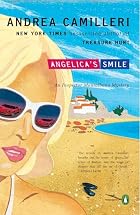
I meant to wait to read this latest Inspector Montalbano mystery to be translated into English, but I just couldn't hold off more than a couple of weeks. And it is every bit as enjoyable as the others, with the delightful characters, the delicious food, and the tension between Montalbano and his long-suffering lady friend Livia. "Angelica's smile" refers not only to the alluring character Angelica, but also to a character in Orlando Furioso who Montalbano had long been fascinated by. I have to say I had a sneaking suspicion about who would wind up being the mastermind of the unusual burglaries that Montalbano is investigating, but that in no way detracted from my enjoyment of the story.
I meant to wait to read this latest Inspector Montalbano mystery to be translated into English, but I just couldn't hold off more than a couple of weeks. And it is every bit as enjoyable as the others, with the delightful characters, the delicious food, and the tension between Montalbano and his long-suffering lady friend Livia. "Angelica's smile" refers not only to the alluring character Angelica, but also to a character in Orlando Furioso who Montalbano had long been fascinated by. I have to say I had a sneaking suspicion about who would wind up being the mastermind of the unusual burglaries that Montalbano is investigating, but that in no way detracted from my enjoyment of the story.
35LibraryPerilous
The Treasure sounds fantastic; the local university's library has a 1925 copy, translated by Arthur Chater.
the tension between Montalbano and his long-suffering lady friend Livia
I confess this is why I was unable to enjoy the Camilleri offering I tried: Montalbano struck me as a chauvinist. (Or, more accurately, I felt that Camilleri doesn't like women and his writing reflects this.)
Still, your reviews always make this series sound tempting, especially the references to food. I'm also intrigued by the Orlando Furioso allusion.
Edited: chauvinistic pig sounded too mean. :)
the tension between Montalbano and his long-suffering lady friend Livia
I confess this is why I was unable to enjoy the Camilleri offering I tried: Montalbano struck me as a chauvinist. (Or, more accurately, I felt that Camilleri doesn't like women and his writing reflects this.)
Still, your reviews always make this series sound tempting, especially the references to food. I'm also intrigued by the Orlando Furioso allusion.
Edited: chauvinistic pig sounded too mean. :)
36laytonwoman3rd
You weigh down my wishlist, Rebecca!! (Not that it's a bad thing.) I have a couple of Selma Lagerlof's books in the house; I must get them into the rotation soon.
37baswood
Enjoyed your latest batch of reviews. One day of life sounds very worthy, but I don't think I want to read it, however The Treasure, Selma Lagerlof would appear to have some fantasy elements, which makes it interesting. I have still got the first Montalbano to read.
38Poquette
All of your Montalbano reviews are dragging me closer to indulging. But I have so many books to be read already! Woe is me . . .
39rebeccanyc
>35 LibraryPerilous: I don't get the feeling that either Camilleri or Montalbano doesn't like women, and Livia certainly gives as good as she gets. Maybe Montalbano is a little chauvinist, and certainly most of the characters are men, but he lives in Sicily after all.
>36 laytonwoman3rd: I read The Saga of Gosta Berling first, and enjoyed it, but maybe this one was just the perfect length and subject for my mood. So sorry (not!) about adding to your wishlist, Linda!
>37 baswood: Thanks, Barry. RL has been stressful, so I didn't have time to write up the reviews until today. "Worthy" is a good word for One Day of Life -- I did feel a little virtuous for reading it, but it's not a perfect book (if even such a thing exists) by any means. On the other hand, I would call The Treasure "perfect" for what it set out to do.
>37 baswood: >38 Poquette: Yes, yes, yes, everyone who likes Italy and food and good characters should read Montalbano. But, be sure to start at the beginning, with The Shape of Water and see this series page for the sequence, because the characters all develop as the series goes on.
>36 laytonwoman3rd: I read The Saga of Gosta Berling first, and enjoyed it, but maybe this one was just the perfect length and subject for my mood. So sorry (not!) about adding to your wishlist, Linda!
>37 baswood: Thanks, Barry. RL has been stressful, so I didn't have time to write up the reviews until today. "Worthy" is a good word for One Day of Life -- I did feel a little virtuous for reading it, but it's not a perfect book (if even such a thing exists) by any means. On the other hand, I would call The Treasure "perfect" for what it set out to do.
>37 baswood: >38 Poquette: Yes, yes, yes, everyone who likes Italy and food and good characters should read Montalbano. But, be sure to start at the beginning, with The Shape of Water and see this series page for the sequence, because the characters all develop as the series goes on.
40rebeccanyc
Today is my 8-year Thingaversary!!! I'm in the midst of a busy and stressful period, so I only could spend half an hour in the bookstore today and hope to finish buying my allotted 9 books! on Friday or over the weekend. But I just wanted to say briefly that LT has changed my life and reading habits more than I ever could have imagined when I signed up 8 years ago, and a lot of that is due to you, my fellow Club Readers. So thank you all very much.
And here are the books I bought today.
Come Along with Me by Shirley Jackson
Notre Dame de Paris by Victor Hugo
Cosmicomics by Italo Calvino
I toyed with Stories by Machado de Assis, which doesn't seem to be listed on LT yet, and may end up getting it, but since I haven't read two other books I have by Machado de Assis it doesn't seem like such a good idea to get a third. (I have read one book by him, Don Casmurro).
And here are the books I bought today.
Come Along with Me by Shirley Jackson
Notre Dame de Paris by Victor Hugo
Cosmicomics by Italo Calvino
I toyed with Stories by Machado de Assis, which doesn't seem to be listed on LT yet, and may end up getting it, but since I haven't read two other books I have by Machado de Assis it doesn't seem like such a good idea to get a third. (I have read one book by him, Don Casmurro).
42LibraryPerilous
Happy Thingaversary! Hope the stressful, busy period settles down soon.
43rebeccanyc
Thanks, Barry and Diana. It's hard to believe it's been 8 years -- they've flown by.
45lauralkeet
Woo hoo! Happy Thingaversary. I can't believe it's been 8 years!
47laytonwoman3rd
Happy Thingaversary, Rebecca! Eight years feels like a new lifetime in some ways, doesn't it?
48rebeccanyc
Thanks, Meredith, Laura, Colleen, and Linda! And yes, Laura and Linda, a lot has happened in those eight years, and I'm grateful that LT has been a part of it! Colleen, mysteries and creepy stories are helping!
49SassyLassy
Congratulations. Looking forward to your next eight years of wonderful reviews.
51wandering_star
Happy Thingaversary and enjoy the rest of your shopping!
52Poquette
I've just been reading about Machado de Assis and that The Postumous Memoirs of Bras Cubas is his best book - at least in the mind of one writer. Is that one of the books you have?
53rebeccanyc
Thanks, Sassy, Suzanne, and Wandering_Star.
>52 Poquette: I do have The Posthumous Memoirs of Bras Cubas along with apparently a book of stories called The Alienist although I have no memory of buying this and don't know where it is.
>52 Poquette: I do have The Posthumous Memoirs of Bras Cubas along with apparently a book of stories called The Alienist although I have no memory of buying this and don't know where it is.
54dchaikin
Enjoyed catching up here. Great reviews of Malcolm, Fishman, Szerb, Argueta & Lagerlof. I really do want to read Janet Malcolm.
55rebeccanyc
65. Slip of the Knife by Denise Mina
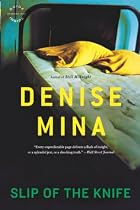
This is the third in Mina's Paddy Meehan series. Six years have elapsed since the cliffhanger of the second, and Paddy is no longer struggling as a rookie reporter but is making good money as a columnist. Her life has calmed down and she is much more self-assured. However, when Terry, a journalist she has known for much of her life (and who she briefly dated), is brutally killed, possibly by the IRA, Paddy finds out that she has inherited some documents and a house from him and begins to investigate what happened to him. Then, his colleague, a photographer, with whom he had been collaborating on a book of photographs, is killed in a set-up meant to look as if he had suffered a stroke after taking too much cocaine, and Paddy begins to think the photographs had something to do with it. As in any Mina book, there are issues to be explored, including the IRA and whether it is operating in Scotland, police silences and corruption, betrayal, and British intelligence. This book also circles back to some of the characters from the first book in the series. I have come to be more interested in Paddy as this series has evolved, and this was just the right distraction for a stressful time.
This is the third in Mina's Paddy Meehan series. Six years have elapsed since the cliffhanger of the second, and Paddy is no longer struggling as a rookie reporter but is making good money as a columnist. Her life has calmed down and she is much more self-assured. However, when Terry, a journalist she has known for much of her life (and who she briefly dated), is brutally killed, possibly by the IRA, Paddy finds out that she has inherited some documents and a house from him and begins to investigate what happened to him. Then, his colleague, a photographer, with whom he had been collaborating on a book of photographs, is killed in a set-up meant to look as if he had suffered a stroke after taking too much cocaine, and Paddy begins to think the photographs had something to do with it. As in any Mina book, there are issues to be explored, including the IRA and whether it is operating in Scotland, police silences and corruption, betrayal, and British intelligence. This book also circles back to some of the characters from the first book in the series. I have come to be more interested in Paddy as this series has evolved, and this was just the right distraction for a stressful time.
56rebeccanyc
66. Come Along with Me: Classic Short Stories and an Unfinished Novel by Shirley Jackson
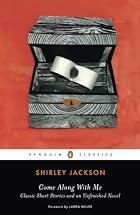
I'm a Shirley Jackson fan, so I was happy to find this volume which includes her unfinished last novel, as well as otherwise uncollected stories chosen by her husband, and a couple of essays/lectures. The unfinished novel, "Come Along with Me," featured an intriguing and completely unreliable and possibly deluded protagonist who, after her husband dies, moves to an unidentified city/town, decides her name is Angela Motorman, and starts to hold seances. I was sorry it was unfinished. The stories vary in quality; I liked the later, creepier ones better, in which Jackson so deftly illustrates the terrible effects of conformity and the powers of the human mind to deceive. I particularly enjoyed "The Beautiful Stranger," "The Summer People," "A Visit" (I think this was my favorite), "Louisa, Please Come Home" (which was anthologized in Troubled Daughters, Twisted Wives), and "The Little House." Missing from these stories was the skewering of racism that was highlighted in several of the stories in The Lottery and Other Stories which I read several years ago. I also enjoyed the essays/lectures on experience and fiction (followed by an illustrative story, "The Night We All Had Grippe"), reactions to "The Lottery" (followed by the story itself), and advice to a young writer.
I'm a Shirley Jackson fan, so I was happy to find this volume which includes her unfinished last novel, as well as otherwise uncollected stories chosen by her husband, and a couple of essays/lectures. The unfinished novel, "Come Along with Me," featured an intriguing and completely unreliable and possibly deluded protagonist who, after her husband dies, moves to an unidentified city/town, decides her name is Angela Motorman, and starts to hold seances. I was sorry it was unfinished. The stories vary in quality; I liked the later, creepier ones better, in which Jackson so deftly illustrates the terrible effects of conformity and the powers of the human mind to deceive. I particularly enjoyed "The Beautiful Stranger," "The Summer People," "A Visit" (I think this was my favorite), "Louisa, Please Come Home" (which was anthologized in Troubled Daughters, Twisted Wives), and "The Little House." Missing from these stories was the skewering of racism that was highlighted in several of the stories in The Lottery and Other Stories which I read several years ago. I also enjoyed the essays/lectures on experience and fiction (followed by an illustrative story, "The Night We All Had Grippe"), reactions to "The Lottery" (followed by the story itself), and advice to a young writer.
59rebeccanyc
>54 dchaikin: Thanks, Dan.
>57 NanaCC: Yes, you do, Colleen. I would start with Garnethill, the first in her Garnethill trilogy, which I consider her strongest.
>58 baswood: I am, Barry, and thanks to Penguin, which has been reissuing a lot of her novels, I've been able to read a lot of her over the past year or so. I think my favorite remains the first one I read, We Have Always Lived in the Castle.
So, things have calmed down a little and I was able to finish my Thingaversary shopping spree today. Here are the additional books I bought.
The Songs of the Kings by Barry Unsworth
Therese Raquin by Emile Zola
The Mad and the Bad by Jean-Patrick Manchette
Thirst by Mahmoud Dowlatabadi
The Consolations of the Forest by Sylvain Tesson (an LT recommendation)
Land of Love and Drowning by Tiphanie Yanique
So much to read, so little time!
>57 NanaCC: Yes, you do, Colleen. I would start with Garnethill, the first in her Garnethill trilogy, which I consider her strongest.
>58 baswood: I am, Barry, and thanks to Penguin, which has been reissuing a lot of her novels, I've been able to read a lot of her over the past year or so. I think my favorite remains the first one I read, We Have Always Lived in the Castle.
So, things have calmed down a little and I was able to finish my Thingaversary shopping spree today. Here are the additional books I bought.
The Songs of the Kings by Barry Unsworth
Therese Raquin by Emile Zola
The Mad and the Bad by Jean-Patrick Manchette
Thirst by Mahmoud Dowlatabadi
The Consolations of the Forest by Sylvain Tesson (an LT recommendation)
Land of Love and Drowning by Tiphanie Yanique
So much to read, so little time!
60kidzdoc
Happy belated Thingaversary, Rebecca! Where did you find Thirst? I hadn't heard of it, and I see that it's scheduled to come out in the US on August 12th. I also look forward to your thoughts on Land of Love and Drowning.
61rebeccanyc
>60 kidzdoc: Thanks, Darryl. I found all six books listed above, including Thirst, at one of my favorite bookstores, Crawford-Doyle on the upper east side. Amazon indicates it was published in June, so I don't know where you got the August date. You read The Colonel, didn't you?
I was excited to see Land of Love and Drowning too, because I enjoyed a book of short stories by Yanique, How To Escape a Leper Colony, which I read a few years ago. Hope to get to it soon.
I was excited to see Land of Love and Drowning too, because I enjoyed a book of short stories by Yanique, How To Escape a Leper Colony, which I read a few years ago. Hope to get to it soon.
62kidzdoc
>61 rebeccanyc: Ah. The Kindle version of Thirst comes out on August 12th, but as you said, the print edition is already available. I did read The Colonel earlier this year, and I'll try to get to Missing Soluch, which I also own, soon.
I haven't read and don't own How to Escape a Leper Colony, but I have been tempted to buy it.
I haven't read and don't own How to Escape a Leper Colony, but I have been tempted to buy it.
63rebeccanyc
67. Pedro Páramo by Juan Rulfo

"I came to Comala because I had been told that my father, a man named Pedro Páramo, lived there." So begins this brief, complex novella, originally published in 1955, that is said to have been hugely influential for the Spanish-language literature that followed it. The speaker has made a deathbed promise to his mother to return to her hometown, of which she has nothing but poetic memories, and seek out his father, who she feels didn't give them their due. But the Comala the speaker finds is nothing like the the Comala his mother remembered; it is literally a ghost town, inhabited only by the dead who clearly are not resting easily in their graves, as they roam around the town and also talk to each other while in their graves. And what they talk about is what they would have talked about while living -- curiosity about who is saying what about whom.
The narrator, whose name we learn is Juan Preciado, is not the only speaker in this book. Other characters speak about the past (largely in the third person), and it is not always clear, especially at first, who is who and what is happening when. This book bears careful reading. So, from the murmurings of the restless spirits, both the reader and Juan Preciado piece together the history of the town, and the rapaciousness of Pedro Páramo, who became the the town's biggest (only?) landowner through theft, murder, and rape, characteristics which he apparently inherited from his father and passed down to the one son he recognized, a son who was killed while riding his beloved horse. He had one love, a woman who was mad by the time he finally brought her to live with him, but otherwise was obsessed with his own interests. In the opening paragraph, in which the narrator quotes his mother, she says "Some call him one thing, some another." One of those names is surely the devil; it is often remarked how hot it is in Comala and in one sense it is hell, or at least purgatory. (The local Catholic priest plays a conflicted and not very honorable role.)
It rains a lot in this novella, and Rulfo includes many descriptions of the rain's impact on the earth. There are some lovely descriptions of the natural environment too, although death always seems to intrude. As the father of the mad woman Pedro Páramo loves says, "The world presses in on every side; it scatters fistfuls of our dust across the land and takes bits and pieces of us as if to water the earth with our blood. What did we do? Why have our souls rotted away?"
In the introduction to my edition, Susan Sontag quotes Rulfo as saying, "In my life there are many silences. In my writing, too." It is those silences that challenge the reader to figure out all that Rulfo has included in this compelling work.

"I came to Comala because I had been told that my father, a man named Pedro Páramo, lived there." So begins this brief, complex novella, originally published in 1955, that is said to have been hugely influential for the Spanish-language literature that followed it. The speaker has made a deathbed promise to his mother to return to her hometown, of which she has nothing but poetic memories, and seek out his father, who she feels didn't give them their due. But the Comala the speaker finds is nothing like the the Comala his mother remembered; it is literally a ghost town, inhabited only by the dead who clearly are not resting easily in their graves, as they roam around the town and also talk to each other while in their graves. And what they talk about is what they would have talked about while living -- curiosity about who is saying what about whom.
The narrator, whose name we learn is Juan Preciado, is not the only speaker in this book. Other characters speak about the past (largely in the third person), and it is not always clear, especially at first, who is who and what is happening when. This book bears careful reading. So, from the murmurings of the restless spirits, both the reader and Juan Preciado piece together the history of the town, and the rapaciousness of Pedro Páramo, who became the the town's biggest (only?) landowner through theft, murder, and rape, characteristics which he apparently inherited from his father and passed down to the one son he recognized, a son who was killed while riding his beloved horse. He had one love, a woman who was mad by the time he finally brought her to live with him, but otherwise was obsessed with his own interests. In the opening paragraph, in which the narrator quotes his mother, she says "Some call him one thing, some another." One of those names is surely the devil; it is often remarked how hot it is in Comala and in one sense it is hell, or at least purgatory. (The local Catholic priest plays a conflicted and not very honorable role.)
It rains a lot in this novella, and Rulfo includes many descriptions of the rain's impact on the earth. There are some lovely descriptions of the natural environment too, although death always seems to intrude. As the father of the mad woman Pedro Páramo loves says, "The world presses in on every side; it scatters fistfuls of our dust across the land and takes bits and pieces of us as if to water the earth with our blood. What did we do? Why have our souls rotted away?"
In the introduction to my edition, Susan Sontag quotes Rulfo as saying, "In my life there are many silences. In my writing, too." It is those silences that challenge the reader to figure out all that Rulfo has included in this compelling work.
64dchaikin
>63 rebeccanyc: great stuff!
65LibraryPerilous
>63 rebeccanyc: The writing sounds very lyrical.
66baswood
Enjoyed your review of Pedro Paramo I could be tempted by that one. Do the speakers have names? I was wondering about the difficulty of working out who is speaking about who. Wolf Hall by Hilary Mantel was said to present similar problems because speakers were not identified after their piece of dialogue and so where there were more than two people speaking the reader has to use a bit of intuition.
67rebeccanyc
>64 dchaikin: >65 LibraryPerilous: >66 baswood: Thanks, Dan, Diana, and Barry.
Barry, the speakers do have names, although the reader doesn't always know who they are until someone else addresses them. There are various characters who recur through the book and it sometimes takes a while to understand who a character is and how he or she is related to the others. It is different from Wolf Hall in that the characters aren't necessarily in dialogue with each other -- some are essentially monologues. It all becomes clearer as the book goes on.
Barry, the speakers do have names, although the reader doesn't always know who they are until someone else addresses them. There are various characters who recur through the book and it sometimes takes a while to understand who a character is and how he or she is related to the others. It is different from Wolf Hall in that the characters aren't necessarily in dialogue with each other -- some are essentially monologues. It all becomes clearer as the book goes on.
68rebeccanyc
68. The Mad and the Bad by Jean-Patrick Manchette
I couldn't resist a book with this title (although it differs from the original French title, Ô dingos, Ô chateaux; according to my biggest French dictionary, a "dingo" is someone who's loony) even though I had mixed feelings about the other Manchette, also in an NYRB edition, that I read, Fatale. I ended up enjoying this one a lot more -- it's a fast-paced, satirical, chase and crime novel that can be more than a little gruesome at times.
The story involves a hired killer, Thompson, who has been given the assignment of kidnapping Peter, the nephew of a Hartog, a wealthy architect (who gained his wealth, and the nephew, when his brother and sister-in-law were killed in a crash) and his nanny, Julie, recently sprung from a low-key mental institution by Hartog. It soon emerges that kidnapping is not the only item on the agenda; Thompson and his henchmen are supposed to kill both Peter and Julie and make it look as though Julie killed Peter and then herself. Although he identity of the person who hired Thompson remains a mystery until the end of the novel, I have to say I figured it out almost at the beginning. However, this didn't interfere with my enjoyment of the novel as it is the cat-and-mouse game of the killers versus Peter and Julie and the high-speed, not always believable action (including murder, car theft, a battle in a department store, arson, and a strange "castle" high in a remote area) that kept me reading. The key characters are intriguingly developed and strangely fascinating. Parts of the book are even funny.
Manchette is said to be the French equivalent of Hammett and Chandler and other US noir writers and to write from a leftist perspective. The "battle" in the department store certainly parodies consumerism. The introduction to my NYRB edition suggests that Manchette "alludes to and parodies literary writers such as Baudelaire and Stendhal," but my familiarity with French literature is insufficient to be able to identify when he does this. All in all, this book should be read for its definitely violent fun.
I couldn't resist a book with this title (although it differs from the original French title, Ô dingos, Ô chateaux; according to my biggest French dictionary, a "dingo" is someone who's loony) even though I had mixed feelings about the other Manchette, also in an NYRB edition, that I read, Fatale. I ended up enjoying this one a lot more -- it's a fast-paced, satirical, chase and crime novel that can be more than a little gruesome at times.
The story involves a hired killer, Thompson, who has been given the assignment of kidnapping Peter, the nephew of a Hartog, a wealthy architect (who gained his wealth, and the nephew, when his brother and sister-in-law were killed in a crash) and his nanny, Julie, recently sprung from a low-key mental institution by Hartog. It soon emerges that kidnapping is not the only item on the agenda; Thompson and his henchmen are supposed to kill both Peter and Julie and make it look as though Julie killed Peter and then herself. Although he identity of the person who hired Thompson remains a mystery until the end of the novel, I have to say I figured it out almost at the beginning. However, this didn't interfere with my enjoyment of the novel as it is the cat-and-mouse game of the killers versus Peter and Julie and the high-speed, not always believable action (including murder, car theft, a battle in a department store, arson, and a strange "castle" high in a remote area) that kept me reading. The key characters are intriguingly developed and strangely fascinating. Parts of the book are even funny.
Manchette is said to be the French equivalent of Hammett and Chandler and other US noir writers and to write from a leftist perspective. The "battle" in the department store certainly parodies consumerism. The introduction to my NYRB edition suggests that Manchette "alludes to and parodies literary writers such as Baudelaire and Stendhal," but my familiarity with French literature is insufficient to be able to identify when he does this. All in all, this book should be read for its definitely violent fun.
69VivienneR
Sounds like The Mad and the Bad is fun. One for the wishlist.
70baswood
I had never heard of Manchette, but then much of French culture passes me by. Enjoyed the review.
71rebeccanyc
>69 VivienneR: Fun, if you can take the gruesome and violent with your fun, Vivienne.
>70 baswood: As with so many writers, the lovely New York Review Books editions introduced me to Manchette; otherwise, I would not have heard of him either, Barry.
>70 baswood: As with so many writers, the lovely New York Review Books editions introduced me to Manchette; otherwise, I would not have heard of him either, Barry.
72NanaCC
>68 rebeccanyc: The Mad and the Bad might be one for my wishlist. It is groaning right now. :)
74rebeccanyc
>72 NanaCC: Sorry (not really!) to add to your wishlist!
>73 Poquette: but when will I get to it? That's the story of my life!
>73 Poquette: but when will I get to it? That's the story of my life!
75rebeccanyc
69. Lucky Us by Amy Bloom

I love Amy Bloom's short stories; they are psychologically perceptive, humanely compassionate, and wonderfully written (Bloom can say more in a sentence than some writers can in paragraphs). So I was really excited when she branched out to novel writing, but then I was disappointed in her first novel, Away, although it too was beautifully written. I felt it was all over the place and a lot of it strained my credulity. Now that I've read her second novel, this one, I see that a lot of what she did in the first was intentional, and I got more in synch with the scope of her novel writing and less bothered by the improbable plot points. In other words, while some of the novel annoyed me as I was reading it, I ended up being really moved by it.
The novel tells the tale of Eva, who is abandoned by her mother at her father's house (the first lines of the book are: "My father's wife died. My mother said we should drive down to his place and see what might be in it for us"), as she begins a second life with her English professor father and her new sister, Iris; as she and Iris run away to Hollywood so Iris can pursue her acting dreams; and after they leave in disgrace from Hollywood, along with her father, to go to Long Island where, initially, Iris acts (and I mean acts) as a governess for a wealthy family and the father pretends to be an English butler. And this is just in the first 50 pages. Set against the backdrop of the second world war, the novel brings in a multiplicity of other characters who interact with Eva, Iris, and their father, as complication upon complication ensues.
Ultimately, what I found most moving about this novel was Eva's search for family, and for direction in her life, and the ideas that some of us (maybe most of us?) have to create our own families, and that sometimes we find our path in life through chance, chance that we need to seize. But I also was impressed by how Bloom creates such diverse characters; even the ones who appear briefly come to life as individuals. Also, I think she handled well telling the story in different voices, some of it even in letters from some of the characters to others. And I liked how she deftly wove in topics like racism, homophobia, antisemitism, and wartime paranoia about people of German descent without seeming to talk about "issues". Another aspect of the novel I liked is the role of deception in creating who we are, and of dissembling in making people happy. (By the way, Bloom is also a psychotherapist.)
Some of this book is very sad, as when Eva says (in a section which is written from her first person perspective): "I had gotten used to the idea that people lived and you loved them, or didn't, and then they died and you were bound to miss them, often even if you didn't love them. I was used to Gus being dead and now he was not only alive, but stupid and angry, and he'd trailed all my dead and gone people into my house, right along with that sad, wet hat and his lined, hard face." Another unutterably sad, but true line: "Our day of crying on the couch in the carriage house was behind us. We were like the soldiers in Stalingrad, moving forward only because backward wasn't possible." But some of the novel is joyful, and some funny, and it ends up being difficult to know whether the title, "Lucky Us," is straightforward or ironic. Of course, that is probably Bloom's intention.
I guess I have gotten used to the idea that Bloom does something different in her novels than she does in her short stories, because I ended up loving this book, even as I suspended disbelief at some of the plot developments and coincidences.

I love Amy Bloom's short stories; they are psychologically perceptive, humanely compassionate, and wonderfully written (Bloom can say more in a sentence than some writers can in paragraphs). So I was really excited when she branched out to novel writing, but then I was disappointed in her first novel, Away, although it too was beautifully written. I felt it was all over the place and a lot of it strained my credulity. Now that I've read her second novel, this one, I see that a lot of what she did in the first was intentional, and I got more in synch with the scope of her novel writing and less bothered by the improbable plot points. In other words, while some of the novel annoyed me as I was reading it, I ended up being really moved by it.
The novel tells the tale of Eva, who is abandoned by her mother at her father's house (the first lines of the book are: "My father's wife died. My mother said we should drive down to his place and see what might be in it for us"), as she begins a second life with her English professor father and her new sister, Iris; as she and Iris run away to Hollywood so Iris can pursue her acting dreams; and after they leave in disgrace from Hollywood, along with her father, to go to Long Island where, initially, Iris acts (and I mean acts) as a governess for a wealthy family and the father pretends to be an English butler. And this is just in the first 50 pages. Set against the backdrop of the second world war, the novel brings in a multiplicity of other characters who interact with Eva, Iris, and their father, as complication upon complication ensues.
Ultimately, what I found most moving about this novel was Eva's search for family, and for direction in her life, and the ideas that some of us (maybe most of us?) have to create our own families, and that sometimes we find our path in life through chance, chance that we need to seize. But I also was impressed by how Bloom creates such diverse characters; even the ones who appear briefly come to life as individuals. Also, I think she handled well telling the story in different voices, some of it even in letters from some of the characters to others. And I liked how she deftly wove in topics like racism, homophobia, antisemitism, and wartime paranoia about people of German descent without seeming to talk about "issues". Another aspect of the novel I liked is the role of deception in creating who we are, and of dissembling in making people happy. (By the way, Bloom is also a psychotherapist.)
Some of this book is very sad, as when Eva says (in a section which is written from her first person perspective): "I had gotten used to the idea that people lived and you loved them, or didn't, and then they died and you were bound to miss them, often even if you didn't love them. I was used to Gus being dead and now he was not only alive, but stupid and angry, and he'd trailed all my dead and gone people into my house, right along with that sad, wet hat and his lined, hard face." Another unutterably sad, but true line: "Our day of crying on the couch in the carriage house was behind us. We were like the soldiers in Stalingrad, moving forward only because backward wasn't possible." But some of the novel is joyful, and some funny, and it ends up being difficult to know whether the title, "Lucky Us," is straightforward or ironic. Of course, that is probably Bloom's intention.
I guess I have gotten used to the idea that Bloom does something different in her novels than she does in her short stories, because I ended up loving this book, even as I suspended disbelief at some of the plot developments and coincidences.
77lauralkeet
Excellent review, Rebecca. I guess I need to read some Amy Bloom. I've been tempted before but for some reason never acted on it.
79rebeccanyc
Thanks, Cyrel, Laura, and Barry. I still like her short stories better than her novels, but it is nice to see an author expanding her reach and doing something different in the novels than in the short stories. I especially recommend Where the God of Love Hangs Out and A Blind Man Can See How Much I Love You.
80Poquette
Nice review of Amy Bloom. I read Love Invents Us way back when and thought she was a very good writer but have read nothing of hers since. I am so stuck in the 19th century!
81rebeccanyc
I haven't read Love Invents Us, so will have to look for it. I've been reading a lot of 19th century writers too, and trying to keep up my globally diverse reading, but when I like a contemporary US/British writer (which is not all that frequent) I try to keep up with his or her work.
82rebeccanyc
70. Off Side by Manuel Vázquez Montalbán
Even though I am sufficiently unknowledgeable about soccer (or, as it's called in this book, football) that a lot of the details went right by me, I enjoyed this Pepe Carvalho novel probably more than the others I've read. There was less violence, and more food and philosophy as Carvalho is called to investigate death threats to the new star soccer player brought to the premier Barcelona team from England. In the course of the investigation, the book explores the changes in Barcelona, real estate speculation, drug addiction and prostitution, and the power structure, and introduces a variety of interesting characters. If I have any complaint, it's that Carvalho's usual hangers-on are relegated to very peripheral roles. But all in all, this was a satisfying read.
Even though I am sufficiently unknowledgeable about soccer (or, as it's called in this book, football) that a lot of the details went right by me, I enjoyed this Pepe Carvalho novel probably more than the others I've read. There was less violence, and more food and philosophy as Carvalho is called to investigate death threats to the new star soccer player brought to the premier Barcelona team from England. In the course of the investigation, the book explores the changes in Barcelona, real estate speculation, drug addiction and prostitution, and the power structure, and introduces a variety of interesting characters. If I have any complaint, it's that Carvalho's usual hangers-on are relegated to very peripheral roles. But all in all, this was a satisfying read.
84rebeccanyc
Not a clue, Barry, not a clue!
86Helenliz
The offside rule is also explained in terms of shopping, as follows:
You're in a shoe shop, second in the queue for the till. Behind the shop assistant on the till is a pair of shoes which you have seen and which you must have....
The female shopper in front of you has seen them also and is eyeing them with desire. Both of you have forgotten your purses. It would be rude to push in front of the first woman if you had no money to pay for the shoes.
The shop assistant remains at the till waiting.
Your friend is trying on another pair of shoes at the back of the shop and sees your dilemma. She prepares to throw her purse to you. If she does so, you can catch the purse, then walk round the other shopper and buy the shoes! At a pinch she could throw the purse ahead of the other shopper and "whilst it is in flight" you could nip around the other shopper, catch the purse and buy the shoes!
BUT, you must always remember that until the purse has "actually been thrown", it would be plain wrong for you to be in front of the other shopper and you would be OFFSIDE!
I once dated a football fan, so had it explained to me in great detail. My, that was fun...
You're in a shoe shop, second in the queue for the till. Behind the shop assistant on the till is a pair of shoes which you have seen and which you must have....
The female shopper in front of you has seen them also and is eyeing them with desire. Both of you have forgotten your purses. It would be rude to push in front of the first woman if you had no money to pay for the shoes.
The shop assistant remains at the till waiting.
Your friend is trying on another pair of shoes at the back of the shop and sees your dilemma. She prepares to throw her purse to you. If she does so, you can catch the purse, then walk round the other shopper and buy the shoes! At a pinch she could throw the purse ahead of the other shopper and "whilst it is in flight" you could nip around the other shopper, catch the purse and buy the shoes!
BUT, you must always remember that until the purse has "actually been thrown", it would be plain wrong for you to be in front of the other shopper and you would be OFFSIDE!
I once dated a football fan, so had it explained to me in great detail. My, that was fun...
87rebeccanyc
>86 Helenliz: Thanks, Helenliz. That explains it a lot better than my somewhat lackadaisical effort to find out from Google what the offside rule is!
88mabith
It's definitely easier to learn just by watching the game. Not that you *need* to know it, of course...
89lesmel
>86 Helenliz: Shopping analogy FTW!! I actually understood that. I'm not sure what that says about my sports or shopping skills...maybe a little too much about my shopping skills. lol
90rebeccanyc
71. Stories by Anton Chekhov

Of course, I've read stories by Chekhov over the years, but this was the first time I set out to read a collection of his stories, although this and other collections have sat on my shelves for a long time. As I read them, over the course of several weeks, I grew more and more impressed with Chekhov's ability not only to provide deep insight into the characters of a huge variety of people and not only to convey a vivid sense of the natural world of Russia, but also to present to the reader just enough to capture the essence of the people and the places, almost impressionistically, and to do so with such great variety as well. Many of the characters he created in these stories will stay with me for a long time.
This collection, selected and translated by the team of Richard Pevear and Larissa Volokhonsky, is organized in chronological order, with Chekhov's earlier, more sketchy stories first, and the later more complex and darker ones towards the end. There are too many wonderful stories for me to list them all, but some of my favorites are "The Huntsman," the very creepy "Sleepy," "A Boring Story," "Gusev," "Ward No. 6," "The Black Monk," "The House with the Mezzanine," and "In the Ravine." Chekhov explores how people really treat each other, most often not as nicely as we would like to think, what they think about, and the individuality of each character. I am looking forward to reading more of his work.

Of course, I've read stories by Chekhov over the years, but this was the first time I set out to read a collection of his stories, although this and other collections have sat on my shelves for a long time. As I read them, over the course of several weeks, I grew more and more impressed with Chekhov's ability not only to provide deep insight into the characters of a huge variety of people and not only to convey a vivid sense of the natural world of Russia, but also to present to the reader just enough to capture the essence of the people and the places, almost impressionistically, and to do so with such great variety as well. Many of the characters he created in these stories will stay with me for a long time.
This collection, selected and translated by the team of Richard Pevear and Larissa Volokhonsky, is organized in chronological order, with Chekhov's earlier, more sketchy stories first, and the later more complex and darker ones towards the end. There are too many wonderful stories for me to list them all, but some of my favorites are "The Huntsman," the very creepy "Sleepy," "A Boring Story," "Gusev," "Ward No. 6," "The Black Monk," "The House with the Mezzanine," and "In the Ravine." Chekhov explores how people really treat each other, most often not as nicely as we would like to think, what they think about, and the individuality of each character. I am looking forward to reading more of his work.
91rebeccanyc
72. Land of Love and Drowning by Tiphanie Yanique

This book cast a spell on me, and I found it difficult to put down. Some years ago, I read How To Escape from a Leper Colony, a collection of stories by Yanique, who is from the US Virgin Islands, and although I did enjoy it, it is nice to see how she has grown as a writer since then.
Principally, this is the story of two troubled sisters, as they grow from infancy into girlhood, young womanhood, and ultimately old age, and the men, children, and magic (both good and bad) in their lives. However, the novel also encompasses what is happening in the Virgin Islands and the US starting from the "transfer" of St. Thomas, St. John, and some other islands from Danish to US rule, going through World War II when US VI men were drafted as they were now US citizens and discovered racism in the US south, and into the Civil Rights movement and the turmoil of the sixties (finally brought to the residents of St. Thomas through the new medium of television) and a parallel movement on the islands to resist new efforts by "continental" white people to privatize the beaches. For the most part, the more political parts of this novel are handled deftly and well integrated into the plot and character development.
Yanique tells the stories of the sisters, Eeona and Anette, from multiple points of view, including their own (Eeona tells her story in schoolbook "proper" English, while Anette speaks with the voice of the islanders). In some sections, written in the third person, occasionally the narrator refers to herself as "we old wives," almost a Greek chorus effect. Eeona and Anette are the daughters of Owen Arthur Bradshaw, a ship captain and wealthy man, before Prohibition interferes with the rum trade, and his wife Antoinette, a powerhouse in her own right. To try to escape from his improper love for his own daughter, Eeona, Owen starts a relationship with an "outside" woman, the "witch" Rebekah, and fathers a son, Jacob Esau, with her who is born at almost the same time as his and Antoinette's daughter Anette. The relationship between these two children will reverberate through the novel. And Rebekah is not the only "witch," as mythical tales of strange beings and strange powers course through the novel, particularly for those who, like Antoinette and her descendents, come from the coral reef island of Anegada, named "the drowned land" because it is so flat but also because it is the site of so many shipwrecks. The sea, the beaches, the islands themselves also play a role in this book.
At the beginning of the book, Yanique describes the complex essence of the islanders.
"The people who had come together to make Captain Owen Arthur Bradshaw could be traced back to West Africans forced to the islands as slaves and West Africans who came over free to offer their services as goldsmiths. Back to European men who were kicked out of Europe as criminals and to European women of aristocratic blood who sailed to the islands for adventure. Back to Asians who came as servants and planned to return to their Indies, and to Asians who only wanted to see if there was a western side to their Indies. And to Caribs who sat quietly making baskets in the countryside, plotting a way to kill all the rest and take back what their God had granted them for a millennium." p. 4
These are the "we," but they are always in relationship with what is going on in the world, especially in the United States, the "continent".
A lot happens in this book, including a hurricane (does every Caribbean novel have to have a hurricane?) and, while I was totally caught up it, it is not perfect. The loose ends were wrapped up a little too comfortably for me towards the end, and some of the supernatural events didn't quite work for me, although I could accept most of them within the realm of the characters' understanding of events. I also found it irritating that FEMA (which was created in 1978) was described as providing relief for a hurricane that happened in the 60s, and there were several inexcusable typos, including "gate" for "gait" and "site" for "sight". Nonetheless, I really enjoyed this book and will be excited to see what Yanique writes next.

This book cast a spell on me, and I found it difficult to put down. Some years ago, I read How To Escape from a Leper Colony, a collection of stories by Yanique, who is from the US Virgin Islands, and although I did enjoy it, it is nice to see how she has grown as a writer since then.
Principally, this is the story of two troubled sisters, as they grow from infancy into girlhood, young womanhood, and ultimately old age, and the men, children, and magic (both good and bad) in their lives. However, the novel also encompasses what is happening in the Virgin Islands and the US starting from the "transfer" of St. Thomas, St. John, and some other islands from Danish to US rule, going through World War II when US VI men were drafted as they were now US citizens and discovered racism in the US south, and into the Civil Rights movement and the turmoil of the sixties (finally brought to the residents of St. Thomas through the new medium of television) and a parallel movement on the islands to resist new efforts by "continental" white people to privatize the beaches. For the most part, the more political parts of this novel are handled deftly and well integrated into the plot and character development.
Yanique tells the stories of the sisters, Eeona and Anette, from multiple points of view, including their own (Eeona tells her story in schoolbook "proper" English, while Anette speaks with the voice of the islanders). In some sections, written in the third person, occasionally the narrator refers to herself as "we old wives," almost a Greek chorus effect. Eeona and Anette are the daughters of Owen Arthur Bradshaw, a ship captain and wealthy man, before Prohibition interferes with the rum trade, and his wife Antoinette, a powerhouse in her own right. To try to escape from his improper love for his own daughter, Eeona, Owen starts a relationship with an "outside" woman, the "witch" Rebekah, and fathers a son, Jacob Esau, with her who is born at almost the same time as his and Antoinette's daughter Anette. The relationship between these two children will reverberate through the novel. And Rebekah is not the only "witch," as mythical tales of strange beings and strange powers course through the novel, particularly for those who, like Antoinette and her descendents, come from the coral reef island of Anegada, named "the drowned land" because it is so flat but also because it is the site of so many shipwrecks. The sea, the beaches, the islands themselves also play a role in this book.
At the beginning of the book, Yanique describes the complex essence of the islanders.
"The people who had come together to make Captain Owen Arthur Bradshaw could be traced back to West Africans forced to the islands as slaves and West Africans who came over free to offer their services as goldsmiths. Back to European men who were kicked out of Europe as criminals and to European women of aristocratic blood who sailed to the islands for adventure. Back to Asians who came as servants and planned to return to their Indies, and to Asians who only wanted to see if there was a western side to their Indies. And to Caribs who sat quietly making baskets in the countryside, plotting a way to kill all the rest and take back what their God had granted them for a millennium." p. 4
These are the "we," but they are always in relationship with what is going on in the world, especially in the United States, the "continent".
A lot happens in this book, including a hurricane (does every Caribbean novel have to have a hurricane?) and, while I was totally caught up it, it is not perfect. The loose ends were wrapped up a little too comfortably for me towards the end, and some of the supernatural events didn't quite work for me, although I could accept most of them within the realm of the characters' understanding of events. I also found it irritating that FEMA (which was created in 1978) was described as providing relief for a hurricane that happened in the 60s, and there were several inexcusable typos, including "gate" for "gait" and "site" for "sight". Nonetheless, I really enjoyed this book and will be excited to see what Yanique writes next.
92lauralkeet
>86 Helenliz: what a brilliant explanation. I have to admit while the offside rule is not rocket science, I've never been able to understand it until it was put in terms of shoe shopping.
93detailmuse
Rebecca happy (belated) Thingaversary! I’ve learned so much by reading about your reading. Now you’ve interested me in The Treasure (my library system has one copy) and make me want to pull that volume of Chekov from my TBRs. I’m also interested to see you acquired Cosmicomics, I just ordered it today.
95rebeccanyc
>93 detailmuse: Thanks, MJ. Nice to see you back. Not sure when I will get to Cosmicomics but despite my mixed reaction to Invisible Cities I felt ready for more Calvino.
>94 baswood: There's more Chekhov in my future too, Barry.
>94 baswood: There's more Chekhov in my future too, Barry.
96VivienneR
>71 rebeccanyc: The Mad and the Bad isn't in our library system but I found a couple of other titles by Jean Patrick Manchette. I'll start with Three to Kill.
I haven't read Chekov for a long time, thanks for the reminder to get back to him.
I haven't read Chekov for a long time, thanks for the reminder to get back to him.
97Poquette
>71 rebeccanyc: — Your review of Chekhov's Stories reminds me that I need to catch up on Russian literature. Maybe next year . . .
98rebeccanyc
>96 VivienneR: I haven't read that one, but I did read Fatale, which came out in an NYRB edition a year or two ago.
>97 Poquette: I've read a lot of Russian literature over the years, so I was a little surprised when I realized I'd never done more than dip into Chekhov.
>97 Poquette: I've read a lot of Russian literature over the years, so I was a little surprised when I realized I'd never done more than dip into Chekhov.
99LibraryPerilous
Land of Love and Drowning sounds fascinating.
I thought you might enjoy this article about the seven greatest Hungarian novelists of the twentieth century, if you've not already seen it. Szerb is on the list.
I thought you might enjoy this article about the seven greatest Hungarian novelists of the twentieth century, if you've not already seen it. Szerb is on the list.
100rebeccanyc
>99 LibraryPerilous: Thanks; it was a really interesting book.
And thank for that list; in addition to Szerb, I've read and liked Gyula Krudy and Dezső Kosztolányi, and I have a book by Sandor Marai on the TBR, but the others are unfamiliar to me -- and intriguing!
And thank for that list; in addition to Szerb, I've read and liked Gyula Krudy and Dezső Kosztolányi, and I have a book by Sandor Marai on the TBR, but the others are unfamiliar to me -- and intriguing!
101rebeccanyc
73. The President by Miguel Ángel Asturias

Never named, but based on Guatemala's early 20th century dictator Manuel Estrada Cabrera, the president controls a web of hatchet men and informers (in fact, even ordinary people write to him to inform on their neighbors and others) to maintain his iron control over the unnamed country. Asturias wrote this book starting in 1922 in Guatemala, and then finished it in Paris in 1932, but politics prevented its publication until 1946.
The story begins among the desperate beggars sleeping on the porch of the cathedral; one of them, known as the Zany because of his craziness, kills a colonel who is taunting him. As with the "accidental" killing in The Case of Comrade Tulayev, this sets in motion an effort to frame political enemies for the murder, thus killing two or more birds with one stone. In this case, the enemies chosen are a general, formerly a favorite but who might or might not be siding with the "revolutionaries," and a lawyer who has also fallen from presidential favor; the beggars from the cathedral porch are forced to "confess" that they saw these two murder the colonel. Plot and counterplot take off from there, with others drawn into the conspiracy, sometimes horrifyingly so, as in the case of a poor woman who is thought to be connected to the general and,after being tortured and forced to let her infant son die, is sold to a brothel .
Although there are many subplots, and many characters, the heart of the novel is the president's "favorite," Miguel Angel Face ("He was as beautiful and as wicked as Satan.") and his surprising (to him) developing relationship with Camilla, the daughter of the disgraced general. Originally assigned by the president to help the general "escape," Angel Face involved the daughter in the scheme and either kidnapped her or spirited her away, according to what he told others. Angel Face is by no means an angel, but he does eventually experience the pangs of conscience as he comes to love Camilla.
Asturias was influenced by the French surrealists, and there are a variety of surreal effects and dream sequences in this book, as well as some lyrical descriptions of nature and landscape, some satirical sections, and some terrifying portrayals of the prison experience. Overall, it explores the insanity of dictatorship at many levels: not only how it views the slightest thing as an assault on the government (for example, when an illiterate sacristan accidentally tears down a presidentially important poster instead of the one for an event that has already happened and is thrown into jail as a revolutionary) but also how it affects people psychologically, whether they are struggling to survive, in prison, or (temporarily) a favorite of the dictatorship. It also dramatically explores the use of newspapers in spreading propaganda and information that isn't true but that serves the presidential agenda. Marred only by one anti-Semitic paragraph, this is a complex book and a devastating indictment,

Never named, but based on Guatemala's early 20th century dictator Manuel Estrada Cabrera, the president controls a web of hatchet men and informers (in fact, even ordinary people write to him to inform on their neighbors and others) to maintain his iron control over the unnamed country. Asturias wrote this book starting in 1922 in Guatemala, and then finished it in Paris in 1932, but politics prevented its publication until 1946.
The story begins among the desperate beggars sleeping on the porch of the cathedral; one of them, known as the Zany because of his craziness, kills a colonel who is taunting him. As with the "accidental" killing in The Case of Comrade Tulayev, this sets in motion an effort to frame political enemies for the murder, thus killing two or more birds with one stone. In this case, the enemies chosen are a general, formerly a favorite but who might or might not be siding with the "revolutionaries," and a lawyer who has also fallen from presidential favor; the beggars from the cathedral porch are forced to "confess" that they saw these two murder the colonel. Plot and counterplot take off from there, with others drawn into the conspiracy, sometimes horrifyingly so, as in the case of a poor woman who is thought to be connected to the general and,
Although there are many subplots, and many characters, the heart of the novel is the president's "favorite," Miguel Angel Face ("He was as beautiful and as wicked as Satan.") and his surprising (to him) developing relationship with Camilla, the daughter of the disgraced general. Originally assigned by the president to help the general "escape," Angel Face involved the daughter in the scheme and either kidnapped her or spirited her away, according to what he told others. Angel Face is by no means an angel, but he does eventually experience the pangs of conscience as he comes to love Camilla.
Asturias was influenced by the French surrealists, and there are a variety of surreal effects and dream sequences in this book, as well as some lyrical descriptions of nature and landscape, some satirical sections, and some terrifying portrayals of the prison experience. Overall, it explores the insanity of dictatorship at many levels: not only how it views the slightest thing as an assault on the government (for example, when an illiterate sacristan accidentally tears down a presidentially important poster instead of the one for an event that has already happened and is thrown into jail as a revolutionary) but also how it affects people psychologically, whether they are struggling to survive, in prison, or (temporarily) a favorite of the dictatorship. It also dramatically explores the use of newspapers in spreading propaganda and information that isn't true but that serves the presidential agenda. Marred only by one anti-Semitic paragraph, this is a complex book and a devastating indictment,
102LibraryPerilous
Sounds fascinating!
103baswood
Enjoyed your review of The President. (I always click on the spoilers)
104rebeccanyc
Thanks, Diana and Barry. I always click on the spoilers too, Barry, but I felt one was warranted here. I first heard about this book on LT several years ago and have had it on my TBR for years; it was the Reading Globally theme read on Mexico and Central America that prompted me to take it off the shelves.
106StevenTX
I've had The President on my TBR for a long time as well so I'm grateful that you hid the "spoiler." I'm not sure if I'll get to it this quarter, though.
108RidgewayGirl
That sounds really good, except for the dream sequences.
109sibylline
After your visits to the my cranky thread, I thought I should come over to see your reviews.
As a child I read (or had read to me) The Wonderful Adventures of Nils, but have read no other Lagerlof, sounds as if I oughtta.
When working on the MFA decades ago when I used to read in a more focussed (as opposed to my present random and frivolous) way, I plowed happily through all of Chekhov's stories. Ever since, at least a couple of times a month I hear about something happening to someone in RL, and I think, "Oh, that was just what happened in the Chekhov story about....." . Almost uncanny.
What the Robin Knows was one of my excellent reads in the spring. Heart and Blood: Living With Deer in America is a superb follow-up. I'm looking for an equivalent about coyotes, but so far no luck.
Also, I love what you wrote about how LT has changed your reading.
As a child I read (or had read to me) The Wonderful Adventures of Nils, but have read no other Lagerlof, sounds as if I oughtta.
When working on the MFA decades ago when I used to read in a more focussed (as opposed to my present random and frivolous) way, I plowed happily through all of Chekhov's stories. Ever since, at least a couple of times a month I hear about something happening to someone in RL, and I think, "Oh, that was just what happened in the Chekhov story about....." . Almost uncanny.
What the Robin Knows was one of my excellent reads in the spring. Heart and Blood: Living With Deer in America is a superb follow-up. I'm looking for an equivalent about coyotes, but so far no luck.
Also, I love what you wrote about how LT has changed your reading.
110rebeccanyc
>105 .Monkey.: >106 StevenTX: >107 Poquette: >108 RidgewayGirl: Thanks, Monkey, Steven, Suzanne, and Kay.
>109 sibylline: Thanks for visiting, Lucy. I have What the Robin Knows up at my family's house in the mountains, so I've been reading it off and all during the summer. I expect to finish it when we are up there this coming weekend. It is inspiring and fascinating. I have mixed feelings about deer since one hit our car earlier this year (we were fine, car needed work), but I read an interesting, if somewhat frustrating, book about them a few years ago, The Hidden Life of Deer.
And I'll definitely be reading more Chekhov -- he does have amazing insight into human behavior!
>109 sibylline: Thanks for visiting, Lucy. I have What the Robin Knows up at my family's house in the mountains, so I've been reading it off and all during the summer. I expect to finish it when we are up there this coming weekend. It is inspiring and fascinating. I have mixed feelings about deer since one hit our car earlier this year (we were fine, car needed work), but I read an interesting, if somewhat frustrating, book about them a few years ago, The Hidden Life of Deer.
And I'll definitely be reading more Chekhov -- he does have amazing insight into human behavior!
111rebeccanyc
74. The Charterhouse of Parma by Stendhal

Wow! I had no idea what a page-turner this book was, despite the blurb on my copy from The New Yorker that says ""An epic tale of war, love, sex, politics, and religion . . . an action-packed narrative." Actually, there is less of war, despite early vivid scenes at the Battle of Waterloo, and much more of love, sex, and politics. In some ways, perhaps surprisingly, it is the politics that is the most interesting.
The novel starts with Fabrizio del Dongo's largely unhappy childhood and his passion for joining Napoleon's army, and then settles down to following the ups and downs of his fortunes; under the guidance and political shenanigans of his aunt, "the Duchess," and her lover Count Mosca, "the Count," who is a minister to the Prince of Parma, he obtains a high-ranking religious position despite being almost completely unsuited for a religious life. The Duchess is in love with Fabrizio, but he is a young man who loves chasing women but has never felt love himself. In the course of following an actress he has been involved with, he ends up killing her lover, an actor, and thus has to flee Parma. Many many complications ensue and eventually he is captured by subterfuge and confined to a fortress where, despite the ever-growing risk that he will be killed, either by the law or by poison, lo and behold, he falls genuinely in love for the first time -- with the jailer's daughter who, needless to say, has been promised to a rich man. Many many more complications ensue.
While Fabrizio is the ostensible hero of this tale, he is a somewhat colorless young man, and the characters who really stand out are the Duchess and the Count and the other schemers of the court of the Prince of Parma. The depth and breadth of their scheming, and especially the Count's interactions with the prince and others, are an endless delight, and involve, among other aspects, the Count's getting the Duchess married to someone else (that's when she becomes the Duchess), blackmail, poisoning, spying, escape schemes, and sexual favors given and withheld. Despite being quite the 19th century soap opera, this novel does explore serious topics, including the politics of not yet unified Italy, the role of petty princes and the nobility, the corruption of the church, what makes people act the way they do, and somewhat snide comparisons of the Italians (passionate) with the French (practical and ironic). Another theme Stendhal explores is how people reinvent themselves, as Fabrizio runs through several names and identities in the course of the novel, as do various other characters. In places, Stendhal (or his narrator, for he was "told" this tale by some Italian), addresses the reader, a very modern touch. (For example, "I fear that Fabrizio's credulity will deprive him of the reader's sympathy; but after all, this is what he was like, why flatter him more than any other man?")
I have had one copy of this book on the TBR since 1973, but apparently I forgot that I owned it and bought a new translation in 2000; that is the one I read. It is a Modern Library edition that is enhanced by several illustrations and a map, as well as by Balzac's review of the book, Stendhal's response, and a New York Times Book Review review of this translation. While Balzac was largely enthusiastic, he made some criticisms which I found very apt about the beginning and end of the book. All in all, I can't believe it's taken me over 40 years to read it!

Wow! I had no idea what a page-turner this book was, despite the blurb on my copy from The New Yorker that says ""An epic tale of war, love, sex, politics, and religion . . . an action-packed narrative." Actually, there is less of war, despite early vivid scenes at the Battle of Waterloo, and much more of love, sex, and politics. In some ways, perhaps surprisingly, it is the politics that is the most interesting.
The novel starts with Fabrizio del Dongo's largely unhappy childhood and his passion for joining Napoleon's army, and then settles down to following the ups and downs of his fortunes; under the guidance and political shenanigans of his aunt, "the Duchess," and her lover Count Mosca, "the Count," who is a minister to the Prince of Parma, he obtains a high-ranking religious position despite being almost completely unsuited for a religious life. The Duchess is in love with Fabrizio, but he is a young man who loves chasing women but has never felt love himself. In the course of following an actress he has been involved with, he ends up killing her lover, an actor, and thus has to flee Parma. Many many complications ensue and eventually he is captured by subterfuge and confined to a fortress where, despite the ever-growing risk that he will be killed, either by the law or by poison, lo and behold, he falls genuinely in love for the first time -- with the jailer's daughter who, needless to say, has been promised to a rich man. Many many more complications ensue.
While Fabrizio is the ostensible hero of this tale, he is a somewhat colorless young man, and the characters who really stand out are the Duchess and the Count and the other schemers of the court of the Prince of Parma. The depth and breadth of their scheming, and especially the Count's interactions with the prince and others, are an endless delight, and involve, among other aspects, the Count's getting the Duchess married to someone else (that's when she becomes the Duchess), blackmail, poisoning, spying, escape schemes, and sexual favors given and withheld. Despite being quite the 19th century soap opera, this novel does explore serious topics, including the politics of not yet unified Italy, the role of petty princes and the nobility, the corruption of the church, what makes people act the way they do, and somewhat snide comparisons of the Italians (passionate) with the French (practical and ironic). Another theme Stendhal explores is how people reinvent themselves, as Fabrizio runs through several names and identities in the course of the novel, as do various other characters. In places, Stendhal (or his narrator, for he was "told" this tale by some Italian), addresses the reader, a very modern touch. (For example, "I fear that Fabrizio's credulity will deprive him of the reader's sympathy; but after all, this is what he was like, why flatter him more than any other man?")
I have had one copy of this book on the TBR since 1973, but apparently I forgot that I owned it and bought a new translation in 2000; that is the one I read. It is a Modern Library edition that is enhanced by several illustrations and a map, as well as by Balzac's review of the book, Stendhal's response, and a New York Times Book Review review of this translation. While Balzac was largely enthusiastic, he made some criticisms which I found very apt about the beginning and end of the book. All in all, I can't believe it's taken me over 40 years to read it!
113sibylline
I read the Elizabeth Marshall Hidden Life of Deer too - Heart and Blood leaves it in the dust, believe me: a superb, almost astonishing book.
114rebeccanyc
>112 .Monkey.: It was much more fun than I expected it to be.
>113 sibylline: I'll look for that deer book; it does sound better than the one I read.
>113 sibylline: I'll look for that deer book; it does sound better than the one I read.
115baswood
All in all, I can't believe it's taken me over 40 years to read it! I don't think I have that long.
Seriously though excellent review of The Charterhouse of Parma. I am looking forward to making an acquaintance with M. Stendhal
Seriously though excellent review of The Charterhouse of Parma. I am looking forward to making an acquaintance with M. Stendhal
116rebeccanyc
Thanks, Barry. I'm going to work my way back to The Red and the Black, which I tried to read probably 30 or more years ago and gave up on.
117Poquette
Loved your review of The Charterhouse of Parma, Rebecca! I hope to get to it soon.
118kidzdoc
I've fallen far behind on several Club Read threads, including your own, Rebecca. Catching up...
>82 rebeccanyc: I hadn't heard of Manuel Vázquez Montalbán until I started reading about Barcelona in June. I've added Off Side to my wish list after I read your compelling review of it.
>86 Helenliz: That's a great explanation of the offsides rule! I wish I had seen that when I watched the World Cup in June.
>90 rebeccanyc: The Chekhov has been added to my wish list.
>91 rebeccanyc: Great review of Land of Love and Drowning; I haven't read anything by her, so maybe I'll give this a try.
>101 rebeccanyc: I tried reading The President several years ago but I didn't get far with it. I'll give it another go sometime in the future.
>111 rebeccanyc: The Charterhouse of Parma sounds very interesting! That's another one for the wish list.
>82 rebeccanyc: I hadn't heard of Manuel Vázquez Montalbán until I started reading about Barcelona in June. I've added Off Side to my wish list after I read your compelling review of it.
>86 Helenliz: That's a great explanation of the offsides rule! I wish I had seen that when I watched the World Cup in June.
>90 rebeccanyc: The Chekhov has been added to my wish list.
>91 rebeccanyc: Great review of Land of Love and Drowning; I haven't read anything by her, so maybe I'll give this a try.
>101 rebeccanyc: I tried reading The President several years ago but I didn't get far with it. I'll give it another go sometime in the future.
>111 rebeccanyc: The Charterhouse of Parma sounds very interesting! That's another one for the wish list.
119rebeccanyc
>117 Poquette: I thought that might pique your interest, Suzanne, and thanks.
>118 kidzdoc: Thanks for stopping by, Darryl. I know how busy you are both in RL and in the 75 books group.
Somebody on LT told me about Montalban because he or she knew how much I love the Camilleri mystery series and Camilleri named his detective, Montalbano, after Montalban. They do give a sense of the changes in Barcelona over the years. Sadly, only a few have been translated into English.
I think you might enjoy Land of Love and Drowning; i also enjoyed her book of stories, How to Escape from a Leper Colony.
The beginning of The President takes place among the beggars who sleep on the cathedral porch; while this is important to set the stage, the story really begins to develop later on, so if you only read the beginning you might not appreciate the difference in the rest of the novel.
>118 kidzdoc: Thanks for stopping by, Darryl. I know how busy you are both in RL and in the 75 books group.
Somebody on LT told me about Montalban because he or she knew how much I love the Camilleri mystery series and Camilleri named his detective, Montalbano, after Montalban. They do give a sense of the changes in Barcelona over the years. Sadly, only a few have been translated into English.
I think you might enjoy Land of Love and Drowning; i also enjoyed her book of stories, How to Escape from a Leper Colony.
The beginning of The President takes place among the beggars who sleep on the cathedral porch; while this is important to set the stage, the story really begins to develop later on, so if you only read the beginning you might not appreciate the difference in the rest of the novel.
120lilisin
116 -
I got halfway through Red and Black and stopped reading as I lost interest. I haven't had the desire to finish it or try another Stendhal since.
I got halfway through Red and Black and stopped reading as I lost interest. I haven't had the desire to finish it or try another Stendhal since.
121rebeccanyc
>120 lilisin: I couldn't get through The Red and the Black either, but that was at least 30 years ago, so I thought it was time to try Stendhal again. You make me wonder about moving on to The Red and the Black, but at worst I can always stop reading it again.
122rebeccanyc
75. What the Robin Knows: How Birds Reveal the Secrets of the Natural World by Jon Young
I became interested in bird behavior when robins built a nest on the porch of my family's house in the mountains earlier this summer, found this book online, and have been reading it off and on when we've come up here this summer. It is a very interesting look not only at bird calls and what they mean (with links to online audio of the calls), but also at the best ways to observe birds and learn what they are telling us about other animals -- in essence, using traditional tracking skills.
The book can be read on several levels. For bird lovers who can identify a huge variety of birds (as the author can, and I definitively can't), the information on individual species and their behaviors and calls will be fascinating. For those of us who are more interested in bird behavior in general, those details form the backdrop for more widespread patterns. And underlying this all is Young's interest in teaching people how to observe, how to lessen the fear we cause in birds, how to interpret the calls of birds so we can notice other animals in the natural world going about their everyday lives. This is the part that was most interesting for me, and I found the connection Young makes to traditions of tracking, both in the US and Africa, very intriguing. Essentially, Young makes the point that birds, in warning each other about threats (and it is fascinating how specifically they can do this), also let people who are attuned to bird language know what other animals might be passing by. I hasten to add that there is a multipage bibliography at the end of the book that includes scientific articles; Young treads lightly on the science in the book itself, but I felt he had a firm grasp on it.
Young also makes the point that like other animals, human beings had to be attuned to the calls and behavior of birds back in our early days -- for survival.
"Eons ago, Homo sapiens were just as alert and aware as all other creatures, and for the same reason. They needed to be. Now we don't need to be -- or do we, but just don't understand this anymore? Our sensory equipment and brains are still designed for this awareness. Thee instincts are still in each of us, just buried, maybe deeply buried. Connecting with bird language begins the process of unearthing them. p.181
I find all this tremendously appealing but realistically know that living in the heart of New York City, albeit right across the street from a park with birds, squirrels, and the occasional raccoon, I will probably never find a "sit spot" or spend 40 minutes each day in it, recording what birds and other animals I see and what they are doing. Realistically, I will never develop tracking skills so I can see the animals that live in the woods near our upstate house. However, there is a part of me that is very responsive to nature and animal behavior, and I think Jon Young has a very cool job spending his life teaching people how to understand and see more.
I became interested in bird behavior when robins built a nest on the porch of my family's house in the mountains earlier this summer, found this book online, and have been reading it off and on when we've come up here this summer. It is a very interesting look not only at bird calls and what they mean (with links to online audio of the calls), but also at the best ways to observe birds and learn what they are telling us about other animals -- in essence, using traditional tracking skills.
The book can be read on several levels. For bird lovers who can identify a huge variety of birds (as the author can, and I definitively can't), the information on individual species and their behaviors and calls will be fascinating. For those of us who are more interested in bird behavior in general, those details form the backdrop for more widespread patterns. And underlying this all is Young's interest in teaching people how to observe, how to lessen the fear we cause in birds, how to interpret the calls of birds so we can notice other animals in the natural world going about their everyday lives. This is the part that was most interesting for me, and I found the connection Young makes to traditions of tracking, both in the US and Africa, very intriguing. Essentially, Young makes the point that birds, in warning each other about threats (and it is fascinating how specifically they can do this), also let people who are attuned to bird language know what other animals might be passing by. I hasten to add that there is a multipage bibliography at the end of the book that includes scientific articles; Young treads lightly on the science in the book itself, but I felt he had a firm grasp on it.
Young also makes the point that like other animals, human beings had to be attuned to the calls and behavior of birds back in our early days -- for survival.
"Eons ago, Homo sapiens were just as alert and aware as all other creatures, and for the same reason. They needed to be. Now we don't need to be -- or do we, but just don't understand this anymore? Our sensory equipment and brains are still designed for this awareness. Thee instincts are still in each of us, just buried, maybe deeply buried. Connecting with bird language begins the process of unearthing them. p.181
I find all this tremendously appealing but realistically know that living in the heart of New York City, albeit right across the street from a park with birds, squirrels, and the occasional raccoon, I will probably never find a "sit spot" or spend 40 minutes each day in it, recording what birds and other animals I see and what they are doing. Realistically, I will never develop tracking skills so I can see the animals that live in the woods near our upstate house. However, there is a part of me that is very responsive to nature and animal behavior, and I think Jon Young has a very cool job spending his life teaching people how to understand and see more.
123lauralkeet
>75 rebeccanyc: That title had a vaguely familiar ring to it and sure enough, Lucy/@sibyx read it late last year. It piqued my interest then, and again now ... which is a sure sign I should wishlist it.
124sibylline
The reference librarian in me never rests, and I poked about a bit because I know I read a marvelous book on urban birdwatching several years ago. I didn't find it - but if you make your query urban bird watcher - you get a number of books that look very good, in particular David Lindo The Urban Birder. When we went to New York to see 'The Gates' in Central Park we saw a redtail catch a squirrel and fly up to the nest on 5th avenue. And I remember from my other read that Central Park is on a flyway for many small finchy-warblery birds.
125baswood
I should know more about bird calls, perhaps What the Robin knows might help. We have robins in South West France
126rebeccanyc
>124 sibylline: Thanks, Lucy. I'll take a look. I'm a terrible birder, though. I have a friend who's great at bird watching and identification, and years ago we went on a series of organized bird walks in Central Park (which is, indeed, a major part of a flyway for migrating birds each spring and fall). She and the others kept spotting birds and I couldn't even get my binoculars up in time to see them!
>125 baswood: Barry, even though the birds Young mentions are mainly in the eastern US (where he grew up) or the western US (where he lives now), the general principles and concepts should be applicable anywhere.
Young has a web site, www.birdlanguage.com, which offers the first chapter "free" -- you do have to provide your name and e-mail address, though.
>125 baswood: Barry, even though the birds Young mentions are mainly in the eastern US (where he grew up) or the western US (where he lives now), the general principles and concepts should be applicable anywhere.
Young has a web site, www.birdlanguage.com, which offers the first chapter "free" -- you do have to provide your name and e-mail address, though.
127sibylline
I'm terrible at it too. I go crazy here in the spring when the ducks come..... and somehow they never look anything like the pix in the books.... and they are floating VERY NEAR BY in the pond so really I have no excuse but I have managed to learn the basics and can occasionally identify a less common bird (notice I do NOT say uncommon). One thing that has helped me a little is listening to bird calls and singing on this Audubon cd I have. I'm better at listening than seeing I think.
128rebeccanyc
There are some basic birds I know (like the robin, the phoebe, the chickadee), and we hear a barred owl sometimes, but even though I have a bird ID app on my phone, I don't get very far with it. A man I was talking to once said I should practice with binoculars at home to get the knack of raising them to a certain point, but really, who has the time?
129StevenTX
I enjoyed The Charterhouse of Parma as well. I remember reading one commentator's observation that you can't read it without falling in love with Gina (most male readers, at least). I found that to be true.
I'm no expert on birds, but I enjoy observing them and trying to identify those that make their home in my yard. It's interesting to watch how the populations change over the years. Robins used to be just spring visitors here, but now they are common year-round, while the once ubiquitous house sparrows have disappeared. The dominant bird here, though, is the mockingbird. They are bold and very intelligent. I was not surprised to read of a study recently that shows that after only a brief encounter they can identify specific humans even days later when the person is wearing different clothes. I know not to trim one of my magnolia trees while they are nesting there, or I'll get attacked every time I come near it.
I'm no expert on birds, but I enjoy observing them and trying to identify those that make their home in my yard. It's interesting to watch how the populations change over the years. Robins used to be just spring visitors here, but now they are common year-round, while the once ubiquitous house sparrows have disappeared. The dominant bird here, though, is the mockingbird. They are bold and very intelligent. I was not surprised to read of a study recently that shows that after only a brief encounter they can identify specific humans even days later when the person is wearing different clothes. I know not to trim one of my magnolia trees while they are nesting there, or I'll get attacked every time I come near it.
130Poquette
>122 rebeccanyc: Many years ago I had three friends with whom I went birding almost every week, usually around sunrise on Saturday or Sunday. We had so many wonderful places to choose from in the San Francisco Bay Area, which is on the Pacific flyway, and in the spring and fall when the migrations took place we saw countless species of birds. We used to keep checklists. Those were the good old days. Anyway, I enjoyed your review of What the Robin Knows. I am sorry it wasn't available when I was deep into the subject!
131rachbxl
Catching up (this thread only - I daren't look back at previous parts) and drooling a little over what you've been reading. Lots of things for my wishlist here, but more immediately I'll give Journey by Moonlight a nudge up my TBR shelves.
132rebeccanyc
>129 StevenTX: I found Gina a little annoying at times, but I did thoroughly enjoy her amoral scheming as well as that of the count. I don't think we have mockingbirds up north, or at least nobody's ever told me we do since I certainly wouldn't recognize one.
>130 Poquette: That's why Central Park is such a great place for birders -- they often stop there on their migration because it offers trees and food.
>131 rachbxl: Nice to see you back, Rachel. I highly recommend Journey by Moonlight, although my favorite Szerb is The Pendragon Legend.
>130 Poquette: That's why Central Park is such a great place for birders -- they often stop there on their migration because it offers trees and food.
>131 rachbxl: Nice to see you back, Rachel. I highly recommend Journey by Moonlight, although my favorite Szerb is The Pendragon Legend.
133rebeccanyc
76. Ninety-Three by Victor Hugo

My cover A better cover
The back cover of my edition says "such diverse critics as Robert Louis Stevenson and André Maurois" consider this Hugo's "greatest work." While it has a broad scope, and Hugo's trademark usually fascinating digressions and philosophizing, it lacks the brilliant plotting and characterization that made the novels I've previously read, The Toilers of the Sea and The Laughing Man, so compelling.
Ninety-three, of course, is 1793, the year of the Terror and, more apropos for this novel, the year of the revolt against the Revolution in the Vendée. Despite my previous reading about the French Revolution, I never bothered to look up where the Vendée is, but this time I did and it is just south of Brittany, where the monarchist rebellion in this novel takes place.
The book begins at sea, and is thrilling in the way that everything I've read by Hugo about the sea has been, and then shifts to land, in Brittany. A local aristocrat and former general (?), the Marquis de Lantenac, who fled to exile in England, has returned surreptitiously to lead the counter-revolution among the peasants. On the ground, the remnants of an elite Republican army unit attempt to track him down. In the battles that follow, three young children are separated from their mother, adopted first by this army unit and then captured by the Royalists. They, and their mother, play a key role in the plot developments at the end of the novel. This section is up to Hugo's best.
But then the scene switches to Paris, and the Convention, and Danton, Robespierre, and Marat, and endless endless conversations among them and discussions of the history of the Revolution. I can see that Hugo was trying to broaden the scope of the novel and its portrait of the horrors (and productive aspects) of Year II of the Revolution, but the novel bogs down considerably in this section and would have been unbearable if not for the end notes provided by the translator and the list of important people in the Appendix. As far as I can tell, the only important plot development in this section is the order of the Committee of Public Safety sending a former priest, Cimourdain, now a blood-thirsty revolutionary, to keep an eye on Gauvain, a Republican army leader in the Brittany region and, it turns out, the grand-nephew of the Marquis de Lantenac. (There is, it turns out, for coincidences abound in romantic fiction, also a personal connection between Cimourdain and the marquis and Gauvain.)
The last part of the novel shifts back to Brittany and the locale of the climactic scenes could not have been more dramatically portrayed: La Tourgue, a tower and attached castle dating back to the Middle Ages. Hugo's description of these structures and their dungeons and escape hatches is brilliant. The mismatched battle between the seventeen defenders and the Republican army arrayed against them offers the opportunity for intrigue, pathos, courage, character, and conscience. However, some of the plot developments strain credulity, and all in all the characters are not as fully developed as in other Hugo novels I've read.
The French Revolution is certainly fascinating, and I'm glad I read this book, but I don't consider it Hugo's best.

My cover A better cover
The back cover of my edition says "such diverse critics as Robert Louis Stevenson and André Maurois" consider this Hugo's "greatest work." While it has a broad scope, and Hugo's trademark usually fascinating digressions and philosophizing, it lacks the brilliant plotting and characterization that made the novels I've previously read, The Toilers of the Sea and The Laughing Man, so compelling.
Ninety-three, of course, is 1793, the year of the Terror and, more apropos for this novel, the year of the revolt against the Revolution in the Vendée. Despite my previous reading about the French Revolution, I never bothered to look up where the Vendée is, but this time I did and it is just south of Brittany, where the monarchist rebellion in this novel takes place.
The book begins at sea, and is thrilling in the way that everything I've read by Hugo about the sea has been, and then shifts to land, in Brittany. A local aristocrat and former general (?), the Marquis de Lantenac, who fled to exile in England, has returned surreptitiously to lead the counter-revolution among the peasants. On the ground, the remnants of an elite Republican army unit attempt to track him down. In the battles that follow, three young children are separated from their mother, adopted first by this army unit and then captured by the Royalists. They, and their mother, play a key role in the plot developments at the end of the novel. This section is up to Hugo's best.
But then the scene switches to Paris, and the Convention, and Danton, Robespierre, and Marat, and endless endless conversations among them and discussions of the history of the Revolution. I can see that Hugo was trying to broaden the scope of the novel and its portrait of the horrors (and productive aspects) of Year II of the Revolution, but the novel bogs down considerably in this section and would have been unbearable if not for the end notes provided by the translator and the list of important people in the Appendix. As far as I can tell, the only important plot development in this section is the order of the Committee of Public Safety sending a former priest, Cimourdain, now a blood-thirsty revolutionary, to keep an eye on Gauvain, a Republican army leader in the Brittany region and, it turns out, the grand-nephew of the Marquis de Lantenac. (There is, it turns out, for coincidences abound in romantic fiction, also a personal connection between Cimourdain and the marquis and Gauvain.)
The last part of the novel shifts back to Brittany and the locale of the climactic scenes could not have been more dramatically portrayed: La Tourgue, a tower and attached castle dating back to the Middle Ages. Hugo's description of these structures and their dungeons and escape hatches is brilliant. The mismatched battle between the seventeen defenders and the Republican army arrayed against them offers the opportunity for intrigue, pathos, courage, character, and conscience. However, some of the plot developments strain credulity, and all in all the characters are not as fully developed as in other Hugo novels I've read.
The French Revolution is certainly fascinating, and I'm glad I read this book, but I don't consider it Hugo's best.
134rebeccanyc
77. The Mongolian Conspiracy by Rafael Bernal
This was a fun read, if the reader can get past the multiple dead bodies and repeated use of the f-word, for the protagonist of this 1969 novel, only translated into English last year, is Filiberto Garcia, a former fighter in the Mexican Revolution who is now the Mexico City police department's unofficial hitman. At the beginning of the book, he is summoned to the office of his superior and a person who wants to remain unnamed (but who recognizes as an up-and-coming politician) and is assigned to be the point person working with an FBI agent and a KGB agent to thwart a suspected plot to kill the US President and the Mexican President when the US President visits in a few days. The Russians are involved because they told the Mexicans that they had intercepted news of this plot from their spies in Outer Mongolia, and that it was a plot created by the Chinese Communists. Garcia is chosen for the investigation not only because of his professional expertise but because he hangs out in Mexico City's "Chinatown," a down-and-out street of cheap restaurants and has good relationships with their Chinese owners and workers (he ignores their opium smoking and dealing and participates in their gambling).
As the plot develops, there are hints that all is not as it seems, that the money that supposedly has been sent from China is too much for a mere (!) double assassination; in addition, Garcia develops a relationship with a young Chinese woman, Marta, but was she sent to keep an eye on him? Is it international intrigue, or is it a home-grown plot? And if so, is it drug smuggling or something more sinister? There are many complications before Garcia, more than the US and Soviet agents who tend to condescend to him, figures out what is going on. Everybody is spying on everyone else and some of the scenes with Garcia and the two agents would be hilarious if they weren't so chilling.
Despite being perfectly readable as the satirical noir classic that it is, this book also comments bitingly on some aspects of internal Mexican political intrigue, corruption, and brutality. On the negative side, Garcia can be quite offensive in his characterization of women and his relationships with them (although this is somewhat redeemed by his growing fondness for Marta). I didn't know what to expect when I picked up this novel, but I couldn't put it down once I started it.
This was a fun read, if the reader can get past the multiple dead bodies and repeated use of the f-word, for the protagonist of this 1969 novel, only translated into English last year, is Filiberto Garcia, a former fighter in the Mexican Revolution who is now the Mexico City police department's unofficial hitman. At the beginning of the book, he is summoned to the office of his superior and a person who wants to remain unnamed (but who recognizes as an up-and-coming politician) and is assigned to be the point person working with an FBI agent and a KGB agent to thwart a suspected plot to kill the US President and the Mexican President when the US President visits in a few days. The Russians are involved because they told the Mexicans that they had intercepted news of this plot from their spies in Outer Mongolia, and that it was a plot created by the Chinese Communists. Garcia is chosen for the investigation not only because of his professional expertise but because he hangs out in Mexico City's "Chinatown," a down-and-out street of cheap restaurants and has good relationships with their Chinese owners and workers (he ignores their opium smoking and dealing and participates in their gambling).
As the plot develops, there are hints that all is not as it seems, that the money that supposedly has been sent from China is too much for a mere (!) double assassination; in addition, Garcia develops a relationship with a young Chinese woman, Marta, but was she sent to keep an eye on him? Is it international intrigue, or is it a home-grown plot? And if so, is it drug smuggling or something more sinister? There are many complications before Garcia, more than the US and Soviet agents who tend to condescend to him, figures out what is going on. Everybody is spying on everyone else and some of the scenes with Garcia and the two agents would be hilarious if they weren't so chilling.
Despite being perfectly readable as the satirical noir classic that it is, this book also comments bitingly on some aspects of internal Mexican political intrigue, corruption, and brutality. On the negative side, Garcia can be quite offensive in his characterization of women and his relationships with them (although this is somewhat redeemed by his growing fondness for Marta). I didn't know what to expect when I picked up this novel, but I couldn't put it down once I started it.
136baswood
<133 Rebecca did you come to any conclusion about how much of Hugo's Ninety Three was historical fact or historical fiction. This does sound like a book where a lot of notes are needed.
I enjoyed your review of The Mongolian Conspiracy
I enjoyed your review of The Mongolian Conspiracy
137rebeccanyc
>135 .Monkey.: Thanks, Monkey!
>136 baswood: I have to think it is mostly fiction based on fact, i.e., there were nobles who fled to England and came back to lead uprisings, there was counter-revolutionary activity in the Vendée, Danton and Robespierre and Marat were real people, etc. But I am not enough of a history buff to know. I think Hugo mentions real people to give background but the main characters are fictional.
>136 baswood: I have to think it is mostly fiction based on fact, i.e., there were nobles who fled to England and came back to lead uprisings, there was counter-revolutionary activity in the Vendée, Danton and Robespierre and Marat were real people, etc. But I am not enough of a history buff to know. I think Hugo mentions real people to give background but the main characters are fictional.
138RidgewayGirl
Ninety-three sounds like I'd like it.
139avidmom
>133 rebeccanyc: Ninety-three sounds like a great piece of historical fiction, but I'd have to go educate myself about the French Revolution first! I believe you recommended Schama's Citizen; it almost came home with me from the library the other day ..... almost.
141rebeccanyc
>138 RidgewayGirl: It drags a bit in the middle, but all in all I enjoyed it. It's not Hugo's best, though.
>139 avidmom: I'm definitely glad I knew something about the French Revolution before reading this book. Schama's Citizens is a tome, but readable, and has great illustrations; I read it after reading Hilary Mantel's A Place of Greater Safety, which I also recommend before trying Ninety-Three. Hugo wrote it some 80 years after the Revolution, so it was still relatively recent history for him and his readers.
>140 edwinbcn: I sort of eased into 19th century French literature with all the Zola I've been reading for several years now, and then with the Author Theme Reads group focus on French literature last year. Then I got the idea of spending August, literarily, in France, so I'm reading a lot right now, but soon I'll have to get back to all the books from other places that have been languishing on my TBR shelves.
>139 avidmom: I'm definitely glad I knew something about the French Revolution before reading this book. Schama's Citizens is a tome, but readable, and has great illustrations; I read it after reading Hilary Mantel's A Place of Greater Safety, which I also recommend before trying Ninety-Three. Hugo wrote it some 80 years after the Revolution, so it was still relatively recent history for him and his readers.
>140 edwinbcn: I sort of eased into 19th century French literature with all the Zola I've been reading for several years now, and then with the Author Theme Reads group focus on French literature last year. Then I got the idea of spending August, literarily, in France, so I'm reading a lot right now, but soon I'll have to get back to all the books from other places that have been languishing on my TBR shelves.
143Poquette
Rebecca, I was just reading about Hugo's Ninety-Three and the famous Vendean resistance in Bartleby & Co., where Vila-Matas visited Julien Gracq who was originally from the Vendée and retired there. I hope to read Hugo eventually and your excellent review leads me to hope it will be sooner rather than later.
144rebeccanyc
>142 Nickelini: >143 Poquette: Thanks, Joyce and Suzanne.
145lyzard
Interesting comments on the French Revolution literature. There is also La Vendee by Anthony Trollope, another example of 19th century historical fiction, and one of the few Trollopes I haven't read.
146rebeccanyc
>145 lyzard: Thanks, Liz, for stopping by. I've never actually read any Trollope (gasp!), and I find the number of books he wrote daunting! If I were to try reading him, do you have any recommendations for where I should start?
148qebo
>147 lauralkeet: Where is the Like button???
149rebeccanyc
>147 lauralkeet: Where do you find these, Laura? You had me laughing out loud!
150laytonwoman3rd
>148 qebo: Really! That is priceless, Laura.
151lauralkeet
>148 qebo: >149 rebeccanyc: >150 laytonwoman3rd: My first thought was "what a can of worms you've opened" so I Googled "can of worms" and most of the images were pretty yucky, actually, but then there was this one, which was just perfect!!
But where is Liz?!
But where is Liz?!
152rebeccanyc
>151 lauralkeet: As far as I can remember, this is the first time Liz has posted on my thread, so she may not stop by here often.
153lyzard
I'm here, I'm here! We're just suffering from time-zone dislocation.
(For the record, I don't post here much, but I do lurk a lot.)
Yes, thanks, Laura! :D
I think I would need to know what you might "want" from Trollope before answering that question, Rebecca. I personally find Trollope's novels valuable for their detailed and accurate depiction of Victorian life and his marvellous character studies, though some people feel that not enough "happens" in his books.
It is almost traditional to tell people to start with the Barchester series, which are social comedies dealing predominantly with country life for the upper middle-classes. Church politics dominate the first couple of books but recede in the rest. The Palliser series has a more political focus and is more generally serious. Trollope's two best-received standalones are He Knew He Was Right, which is a remarkable study of the disintegration of a marriage, and The Way We Live Now, which is a scathing portrait of a society that Trollope felt was becoming selfish and corrupt and losing its sense of values. (These days it invariably provokes, "Nothing's changed, has it?")
If you're not sure you want to take the full plunge, you might start with one of the shorter* standalones like The Vicar Of Bullhampton, An Eye For An Eye, Miss Mackenzie or Orley Farm.
(*Relatively speaking)
(For the record, I don't post here much, but I do lurk a lot.)
Yes, thanks, Laura! :D
I think I would need to know what you might "want" from Trollope before answering that question, Rebecca. I personally find Trollope's novels valuable for their detailed and accurate depiction of Victorian life and his marvellous character studies, though some people feel that not enough "happens" in his books.
It is almost traditional to tell people to start with the Barchester series, which are social comedies dealing predominantly with country life for the upper middle-classes. Church politics dominate the first couple of books but recede in the rest. The Palliser series has a more political focus and is more generally serious. Trollope's two best-received standalones are He Knew He Was Right, which is a remarkable study of the disintegration of a marriage, and The Way We Live Now, which is a scathing portrait of a society that Trollope felt was becoming selfish and corrupt and losing its sense of values. (These days it invariably provokes, "Nothing's changed, has it?")
If you're not sure you want to take the full plunge, you might start with one of the shorter* standalones like The Vicar Of Bullhampton, An Eye For An Eye, Miss Mackenzie or Orley Farm.
(*Relatively speaking)
154lauralkeet
Liz led tutored reads for the first two Barchester books, which was how I became a fan, and we continued with group reads after that. If you decide to read the Barchester books, I highly recommend the tutored read threads. I could probably find links to them.
155NanaCC
I've only read the first book in the Barchester series, and Liz's tutored read thread was very helpful. I plan to read the second book before the end of the year, and will use the tutored thread for that too.
156rebeccanyc
>153 lyzard: Liz, thanks for those thoughtful recommendations. I am not worried about books in which "not enough "happens,"" but as a general rule I prefer more serious books to comedies, so I might start (although I know not when) with the Palliser series. Or maybe a stand-alone . . .
However the fact that you did tutored reads (>154 lauralkeet:, 155) for the first two Barchester books might lead me in that direction, as I really enjoyed your tutored read for The Monk, even though I zipped through it faster than the thread.
Of course, the TBR is so teetering, I hate (not really) to add anything to it . . .
However the fact that you did tutored reads (>154 lauralkeet:, 155) for the first two Barchester books might lead me in that direction, as I really enjoyed your tutored read for The Monk, even though I zipped through it faster than the thread.
Of course, the TBR is so teetering, I hate (not really) to add anything to it . . .
157.Monkey.
Of course, the TBR is so teetering, I hate (not really) to add anything to it . . .
Hahaha, story of my life! I think it should just be called LT-syndrome. ;)
Hahaha, story of my life! I think it should just be called LT-syndrome. ;)
158lauralkeet
>156 rebeccanyc: I prefer more serious books to comedies
His "comedy" is more satirical than comical, if that helps. It's not like PG Wodehouse or anything. In the Barchester books he mocks the church and the clergy, the press, and certain quirks of society.
His "comedy" is more satirical than comical, if that helps. It's not like PG Wodehouse or anything. In the Barchester books he mocks the church and the clergy, the press, and certain quirks of society.
159rebeccanyc
78. The Women's War by Alexandre Dumas

Intrigue, deception, romance, treachery, loyalty, bravery, hidden (and deliberately confused) identities -- although no book can match the totally wonderful The Count of Monte Cristo, in this novel Dumas does not disappoint the reader looking for fast-paced action and plot twists and turns (and some fascinating characters, as well).
The Women's War took place in the mid-17th century. After Louis XIII died, his widow, known as Anne of Austria for her place of birth, took over as regent for the still underage Louis XIV. Her rule was contested by the brother and cousin of Louis XIII, known collectively as the princes; they were imprisoned and the wife of the cousin, the Princesse de Condé, took over as the leader of the rebellion. Hence, the women's war. This war is historical fact, and Dumas read contemporary and historical works about it, but then, as Robin Buss details in the introduction to his new translation, published by Penguin Classics, he developed his own plot, introducing fictional characters as well as changing some of the roles of historical characters.
So there is also a women's war in the heart of the Baron de Canolles, who plays a major role in this novel (although not, apparently, in actual history), as he loves both Nanon de Lartigues, who is the mistress of one of the leaders of the Queen's cause, and Claire, who is a supporter of the princess. Another important character is the devilishly evil brother of Nanon, who chooses a variety of false identities over the course of the novel and who can be counted on (up to a crucial moment) to do the very thing that will cause the most problems.
I don't want to detail the plot because the way Dumas keeps its twists and turns going -- and the reader on the edge of her chair -- is too delightful. Suffice it to say that identity deception and confusion play major roles, as does the scheming of most of the characters. Dumas also describes vividly both the intensity of several sieges and attacks and the back-and-forth among the queen's and the princess's advisors (some of whom are historical characters). And there is a swashbuckling component as well. Although it petered out a little at the very end, this was a fun summer read!
ETA I bought this book because of a tempting review by SassyLassy a year or more ago.

Intrigue, deception, romance, treachery, loyalty, bravery, hidden (and deliberately confused) identities -- although no book can match the totally wonderful The Count of Monte Cristo, in this novel Dumas does not disappoint the reader looking for fast-paced action and plot twists and turns (and some fascinating characters, as well).
The Women's War took place in the mid-17th century. After Louis XIII died, his widow, known as Anne of Austria for her place of birth, took over as regent for the still underage Louis XIV. Her rule was contested by the brother and cousin of Louis XIII, known collectively as the princes; they were imprisoned and the wife of the cousin, the Princesse de Condé, took over as the leader of the rebellion. Hence, the women's war. This war is historical fact, and Dumas read contemporary and historical works about it, but then, as Robin Buss details in the introduction to his new translation, published by Penguin Classics, he developed his own plot, introducing fictional characters as well as changing some of the roles of historical characters.
So there is also a women's war in the heart of the Baron de Canolles, who plays a major role in this novel (although not, apparently, in actual history), as he loves both Nanon de Lartigues, who is the mistress of one of the leaders of the Queen's cause, and Claire, who is a supporter of the princess. Another important character is the devilishly evil brother of Nanon, who chooses a variety of false identities over the course of the novel and who can be counted on (up to a crucial moment) to do the very thing that will cause the most problems.
I don't want to detail the plot because the way Dumas keeps its twists and turns going -- and the reader on the edge of her chair -- is too delightful. Suffice it to say that identity deception and confusion play major roles, as does the scheming of most of the characters. Dumas also describes vividly both the intensity of several sieges and attacks and the back-and-forth among the queen's and the princess's advisors (some of whom are historical characters). And there is a swashbuckling component as well. Although it petered out a little at the very end, this was a fun summer read!
ETA I bought this book because of a tempting review by SassyLassy a year or more ago.
160NanaCC
>159 rebeccanyc: That sounds like a good one, Rebecca. I loved The Count of Monte Christo, and even if it doesn't "match the totally wonderful The Count of Monte Cristo" I'm sure it would be a great read, based upon your review.
161kidzdoc
Catching up again...nice reviews of Ninety-Three and The Women's War, Rebecca.
162StevenTX
I had not heard of The Women's War but it sounds fun and somewhat educational, somewhat on the order of Queen Margot would you say?
163SassyLassy
So glad it worked for you, rebecca! It was fun and the characterization was excellent.
164rebeccanyc
>160 NanaCC:, >161 kidzdoc: Thanks, Colleen and Darryl.
>162 StevenTX: Yes, I would put it in the same category as Queen Margot with maybe a little more romance. You have to take the "history" with several grains of salt, though.
>163 SassyLassy: You got me started on Dumas, Sassy!
>162 StevenTX: Yes, I would put it in the same category as Queen Margot with maybe a little more romance. You have to take the "history" with several grains of salt, though.
>163 SassyLassy: You got me started on Dumas, Sassy!
165Poquette
Nice review of The Women's War. Would like to read more of Dumas and this would be a great candidate! I too loved The Count of Monte Cristo and have been thinking of rereading it just for fun.
166lyzard
>158 lauralkeet: Laura is quite right - certain of Trollope's novels are "comedy", but only in the broad, general sense that you can usually expect a happy ending for the central characters (and that doesn't even completely hold true).
French 19th century literature is a terrible and embarrassing gap in my reading, and I really need to do something about it...one of these years...
French 19th century literature is a terrible and embarrassing gap in my reading, and I really need to do something about it...one of these years...
167rebeccanyc
>165 Poquette: Thanks, Suzanne. Dumas is a lot of fun, isn't he?
>158 lauralkeet: >166 lyzard: Thanks Laura and Liz; that is encouraging. And Liz, I got into 19th century French literature sort of accidentally through discovering Zola a few years ago. On the other hand, I really haven't read much 19th century English literature at all . . .
>158 lauralkeet: >166 lyzard: Thanks Laura and Liz; that is encouraging. And Liz, I got into 19th century French literature sort of accidentally through discovering Zola a few years ago. On the other hand, I really haven't read much 19th century English literature at all . . .
168rebeccanyc
79. The Sleepwalkers: How Europe Went to War in 1914 by Christopher Clark

Trees, trees, so many trees! Where, oh where, is the forest?
Now I'll get serious, for this is a serious book. For a student of history, it would be a treasure trove. As the flap copy on my edition says, this is a "minute-by-minute" tale, using "fresh sources" of the events leading up to World War I. Clark takes the reader though the details, and I mean details, of diplomatic discussions, military plans, personalities and personal conflicts, leadership qualities and the lack of them, and even the press and popular opinion. And he is the first to tell the reader how complex the crises leading up to the war were. As he notes in his introduction:
"The exceptionally intricate structure of this crisis is another distinctive feature. . . . the story of how this war came about must make sense of the multilateral interactions among five autonomous players of equal importance -- Germany, Austria-Hungary, France, Russia, and Britain -- six, if we add Italy, plus various other strategically important and equally autonomous sovereign actors, such as the Ottoman Empire and the states of the Balkan peninsula, a region of high political tension and instability in the years before the outbreak of war." p. xxvi
And:
"This book thus strives to understand the July Crisis of 1914 as a modern event, perhaps the most complex of modern times, perhaps of any time so far. It is less concerned with why the war happened than with how it came about. Questions of why and how are logically inseparable but they lead us in different directions. The question of how invites to look closely at the sequences of interactions that produced certain outcomes. By contrast, the question of why invites us to search in remote and categorical causes: imperialism, nationalism, armaments, alliances, high finance, ideas of national honour, the mechanics of mobilization. The why approach brings a certain analytical clarity, but it also has a distorting effect, because it creates the illusion of a steadily building causal pressure; the factors pile up on top of each other pushing down on the events; political actors become mere executors of forces long established and beyond their control.
The story this book tells is, by contrast saturated with agency. The key decision-makers -- kings, emperors, foreign ministers, ambassadors, military commanders and a host of lesser officials -- walked towards danger in watchful, calculated steps. The outbreak of war was the culmination of chains of decisions made by political actors with conscious objectives, who were capable of a degrees of self-reflection, acknowledged a range of options, and formed the best judgements they could on the basis of the best information they had to hand." p. xxix
I have quoted the introduction at such length because it is followed by 562 pages of such detailed information that I would be at a loss to describe most of it better than Clark has above. The book sorely needs a list of the people mentioned, with their titles and roles, because I would venture there are more than 100 names that recur and it is difficult for even the most dedicated reader to keep track of them. And I was far from the most dedicated reader, reading this bit by bit over the course of two months and, starting somewhere between half and two-thirds of the way through, just skimming it. Because for the nonscholarly reader, there is just too much here. Not that Clark doesn't write well, because he does, but I found myself longing for summaries and conclusions.
If I can draw some conclusions of my own from my not so dedicated reading, I have two. First, Clark blames neither the assassination of the Archduke and his wife, nor Germany, for "starting" the war. If he would assign the "blame" anywhere other than the complexity of the alliances and interactions among the nations and the weight of the crises and interactions leading up to the assassination, he would seem to lay some responsibility on Russia, which declared a general mobilization of its troops days before Germany did. But, as he writes, "there is no smoking gun in this story; or, rather, there is one in the hands of every major character." Second, he notes that all the players "filtered the world through narratives that were built from pieces of experience glued together with fears, projections, and interests masquerading as maxims." Of course, we all still do that.
I don't mean to completely put down this book, because it is a remarkable achievement. Clark has woven together information from probably hundreds of original sources to tell a tale that starts in 1903 with the murder of the king and queen of Serbia and ends with the outbreak of war in August 1914. As well as spanning more than a decade, it spans a continent. And he tells the tale well, in readable prose. Some of it is even exciting. For the right reader, this book would be fascinating. For me, it was more than I wanted to know.

Trees, trees, so many trees! Where, oh where, is the forest?
Now I'll get serious, for this is a serious book. For a student of history, it would be a treasure trove. As the flap copy on my edition says, this is a "minute-by-minute" tale, using "fresh sources" of the events leading up to World War I. Clark takes the reader though the details, and I mean details, of diplomatic discussions, military plans, personalities and personal conflicts, leadership qualities and the lack of them, and even the press and popular opinion. And he is the first to tell the reader how complex the crises leading up to the war were. As he notes in his introduction:
"The exceptionally intricate structure of this crisis is another distinctive feature. . . . the story of how this war came about must make sense of the multilateral interactions among five autonomous players of equal importance -- Germany, Austria-Hungary, France, Russia, and Britain -- six, if we add Italy, plus various other strategically important and equally autonomous sovereign actors, such as the Ottoman Empire and the states of the Balkan peninsula, a region of high political tension and instability in the years before the outbreak of war." p. xxvi
And:
"This book thus strives to understand the July Crisis of 1914 as a modern event, perhaps the most complex of modern times, perhaps of any time so far. It is less concerned with why the war happened than with how it came about. Questions of why and how are logically inseparable but they lead us in different directions. The question of how invites to look closely at the sequences of interactions that produced certain outcomes. By contrast, the question of why invites us to search in remote and categorical causes: imperialism, nationalism, armaments, alliances, high finance, ideas of national honour, the mechanics of mobilization. The why approach brings a certain analytical clarity, but it also has a distorting effect, because it creates the illusion of a steadily building causal pressure; the factors pile up on top of each other pushing down on the events; political actors become mere executors of forces long established and beyond their control.
The story this book tells is, by contrast saturated with agency. The key decision-makers -- kings, emperors, foreign ministers, ambassadors, military commanders and a host of lesser officials -- walked towards danger in watchful, calculated steps. The outbreak of war was the culmination of chains of decisions made by political actors with conscious objectives, who were capable of a degrees of self-reflection, acknowledged a range of options, and formed the best judgements they could on the basis of the best information they had to hand." p. xxix
I have quoted the introduction at such length because it is followed by 562 pages of such detailed information that I would be at a loss to describe most of it better than Clark has above. The book sorely needs a list of the people mentioned, with their titles and roles, because I would venture there are more than 100 names that recur and it is difficult for even the most dedicated reader to keep track of them. And I was far from the most dedicated reader, reading this bit by bit over the course of two months and, starting somewhere between half and two-thirds of the way through, just skimming it. Because for the nonscholarly reader, there is just too much here. Not that Clark doesn't write well, because he does, but I found myself longing for summaries and conclusions.
If I can draw some conclusions of my own from my not so dedicated reading, I have two. First, Clark blames neither the assassination of the Archduke and his wife, nor Germany, for "starting" the war. If he would assign the "blame" anywhere other than the complexity of the alliances and interactions among the nations and the weight of the crises and interactions leading up to the assassination, he would seem to lay some responsibility on Russia, which declared a general mobilization of its troops days before Germany did. But, as he writes, "there is no smoking gun in this story; or, rather, there is one in the hands of every major character." Second, he notes that all the players "filtered the world through narratives that were built from pieces of experience glued together with fears, projections, and interests masquerading as maxims." Of course, we all still do that.
I don't mean to completely put down this book, because it is a remarkable achievement. Clark has woven together information from probably hundreds of original sources to tell a tale that starts in 1903 with the murder of the king and queen of Serbia and ends with the outbreak of war in August 1914. As well as spanning more than a decade, it spans a continent. And he tells the tale well, in readable prose. Some of it is even exciting. For the right reader, this book would be fascinating. For me, it was more than I wanted to know.
169Poquette
The Sleepwalkers might be a good reference volume in addition to its value as a narrative. I am a freak for timelines, and your description puts it squarely in that neck of the woods. I thought I had read all the books on WWI that I wanted to, but your excellent review tempts me, Rebecca.
170rebeccanyc
Well, I wouldn't want to discourage you, Suzanne, but it isn't exactly a timeline. Yes, it moves in chronological order, but it jumps around from country to country and thematically. And so much is going on (well, the way Clark tells it with his infinite attention to detail) that it is hard to get a grip on what was happening where when. But you may have more stamina than I had. And, thanks!
171Poquette
Your comments remind me of what I am going through with Herodotus! It "moves in chronological order but jumps around . . . and so much is going on," etc., etc. And it is definitely "hard to get a grip on what was happening where and when."
Once I finish Herodotus, it will be a while before I'll be ready to attack another densely packed tome! But you have definitely piqued my interest.
Once I finish Herodotus, it will be a while before I'll be ready to attack another densely packed tome! But you have definitely piqued my interest.
172labfs39
Phew! I caught up on this thread (although I did have to give up on the second thread which I had kept starred while I worked through the third and fourth). So many great reviews! Sometimes I think I should stop trying to wishlist books you recommend and simply scan your library when I am in need of a new book. :-)
173rebeccanyc
>171 Poquette: It's because of your posts on Herodotus that I think you might get more out of this book than I did.
>172 labfs39: Thanks, Lisa! Ha ha ha -- there are probably more books I haven't read than books I have read in my library! And I feel the same way about your thread.
>172 labfs39: Thanks, Lisa! Ha ha ha -- there are probably more books I haven't read than books I have read in my library! And I feel the same way about your thread.
174baswood
Thanks for your review of The Sleepwalkers. A book for the person that wants to know everything that happened. It would appear that you must have an interest in the subject and already know some details to get the best out of the book. It's good to know that there is such a book out there should you want to read it.
175rebeccanyc
I did decide to read several books about the beginnings of WWI this year (and earlier read Margaret Macmillan's The War That Ended Peace), but neither it nor The Sleepwalkers will remain in my memory the way that The Guns of August does some 20 years after I read it. I suppose that having read both history and fiction dealing with the war helped me put up with all the details in this book, but it was really just stubbornness that kept me reading it.
176rebeccanyc
80. The Wild Ass's Skin by Honoré de Balzac
This is the first Balzac I've read that falls into his group of "philosophical studies" and although in some ways it differs from other novels of his I've read, in others it fits right in. At the start of the story, Raphael de Valentin, having lost his last gold piece in a gambling house, is ready to throw himself into the Seine but delays his plunge because he wants to do it at night. Wandering into an old antique shop to kill time, he finds himself entranced by the objects which take him on a trip around the world and across time. When he meets the 102-year-old owner, the owner offers him some words of advice about pursuing knowledge (savoir) rather than will (vouloir) or power (pouvoir); when Raphael spurns that advice, he offers him a magical skin of a wild ass (an onager) that will grant the wishes of its owner but shrink every time it does so and, in shrinking, sap the life and energy of the owner until the skin disappears and with that its owner will die. Although he urges Raphael not to take the skin, Raphael claims he wants to "live to excess," and wishes to take part in a wild dinner party "of royal splendor, a Bacchanalian feast," with witty fellow guests and "wild revelry." No sooner does he leave the antique store than he runs into a friend who invites him to just such a party!
The second part of the book involves Raphael telling his friend, Émile, when both are exceedingly drunk and the party-goers (all male) are surrounded by prostitutes, about his life up until this party. Although he grew up in a wealthy family, the family lost its wealth after his father died and Raphael decided to live an abstemious life and write, taking lodgings in a garret with a devoted landlady and her adoring daughter and writing a book about the will. After a time, he fell in with a friend who won a lot of money through gambling and who encourages Raphael to pursue a life in society, where he becomes obsessed with a "woman without a heart" (the title of the second section) who epitomizes society. At the end of this section, unthinkingly, he wishes for riches and, lo and behold, he finds he has inherited a huge amount of money from an uncle. In the final section, the magic skin has dwindled and Raphael's health is failing; he leaves no corner unturned (and no money unspent) in trying to find a way to stretch the skin. He also falls in love with a woman who loves him too.
Although I didn't like this book as much as some other Balzacs I've read (perhaps because I prefer realism to the magic skin, and perhaps because a lot of it felt claustrophobic), there were parts of this book that were wonderful, including the visit to the antique store, the description of the wild party, the visits to scientists in the final section (I imagine Balzac having a lot of fun making fun of them) and the visits of doctors to Raphael (ditto), and some descriptions of beautiful natural areas, also in the final part. The themes of the contrast between the material excesses of society and real love and nature, and of the need for will to be tempered by knowledge and self-control, are a little obvious, and the ending a tad melodramatic, but all in all I'm glad I read this book.
This is the first Balzac I've read that falls into his group of "philosophical studies" and although in some ways it differs from other novels of his I've read, in others it fits right in. At the start of the story, Raphael de Valentin, having lost his last gold piece in a gambling house, is ready to throw himself into the Seine but delays his plunge because he wants to do it at night. Wandering into an old antique shop to kill time, he finds himself entranced by the objects which take him on a trip around the world and across time. When he meets the 102-year-old owner, the owner offers him some words of advice about pursuing knowledge (savoir) rather than will (vouloir) or power (pouvoir); when Raphael spurns that advice, he offers him a magical skin of a wild ass (an onager) that will grant the wishes of its owner but shrink every time it does so and, in shrinking, sap the life and energy of the owner until the skin disappears and with that its owner will die. Although he urges Raphael not to take the skin, Raphael claims he wants to "live to excess," and wishes to take part in a wild dinner party "of royal splendor, a Bacchanalian feast," with witty fellow guests and "wild revelry." No sooner does he leave the antique store than he runs into a friend who invites him to just such a party!
The second part of the book involves Raphael telling his friend, Émile, when both are exceedingly drunk and the party-goers (all male) are surrounded by prostitutes, about his life up until this party. Although he grew up in a wealthy family, the family lost its wealth after his father died and Raphael decided to live an abstemious life and write, taking lodgings in a garret with a devoted landlady and her adoring daughter and writing a book about the will. After a time, he fell in with a friend who won a lot of money through gambling and who encourages Raphael to pursue a life in society, where he becomes obsessed with a "woman without a heart" (the title of the second section) who epitomizes society. At the end of this section, unthinkingly, he wishes for riches and, lo and behold, he finds he has inherited a huge amount of money from an uncle. In the final section, the magic skin has dwindled and Raphael's health is failing; he leaves no corner unturned (and no money unspent) in trying to find a way to stretch the skin. He also falls in love with a woman who loves him too.
Although I didn't like this book as much as some other Balzacs I've read (perhaps because I prefer realism to the magic skin, and perhaps because a lot of it felt claustrophobic), there were parts of this book that were wonderful, including the visit to the antique store, the description of the wild party, the visits to scientists in the final section (I imagine Balzac having a lot of fun making fun of them) and the visits of doctors to Raphael (ditto), and some descriptions of beautiful natural areas, also in the final part. The themes of the contrast between the material excesses of society and real love and nature, and of the need for will to be tempered by knowledge and self-control, are a little obvious, and the ending a tad melodramatic, but all in all I'm glad I read this book.
177rebeccanyc
81. The Burning of the World: A Memoir of 1914 by Béla Zombory-Moldován
This brief memoir was charming and chilling by turns. The author's grandson, Peter Zombory-Moldován, found it in a locked box and translated and edited it (letting the readers know in the introduction that there is more he is saving for another day). It begins with 30-year-old Béla, an artist and art teacher, learning while on vacation with friends that he is being called up to serve as a low-level officer in the war which is just beginning. It then details the brief few days before he leaves to report for duty, the all-too-short training period, a march towards the front, and then the gripping and horrifying description of the first (of several) battles between the troops of Austria-Hungary (in this case, Hungary) and Russia at Rava Ruska in what was then Galicia. He is wounded, the troops retreat, he eventually gets back to Budapest where he is treated for his head wound and not really treated for his psychological distress. He is put on leave for three months, and attempts to regain his equilibrium, but he cannot paint and doesn't want to see his old friends. Finally, he goes to the seashore and there finds some peace of mind and paints again. There the memoir ends, but his grandson tells us in the introduction that Béla did not again serve on the front lines.
The strengths of this memoir are its portrait of the life of a relatively privileged young man who is thrust into a war he never expected, the description of the confusion of battle, and the insight into the artistic life of pre-war Budapest (the grandson helpfully footnotes the names of multiple artists and writers). One point that interested me was that the jokes the people in the army told were about Jews (Cohen and Weiss); they weren't mean or antisemitic jokes (most, as might be expected, were about sex), but it felt odd to me that these non-Jewish Hungarians were telling jokes about Jews.
This brief memoir was charming and chilling by turns. The author's grandson, Peter Zombory-Moldován, found it in a locked box and translated and edited it (letting the readers know in the introduction that there is more he is saving for another day). It begins with 30-year-old Béla, an artist and art teacher, learning while on vacation with friends that he is being called up to serve as a low-level officer in the war which is just beginning. It then details the brief few days before he leaves to report for duty, the all-too-short training period, a march towards the front, and then the gripping and horrifying description of the first (of several) battles between the troops of Austria-Hungary (in this case, Hungary) and Russia at Rava Ruska in what was then Galicia. He is wounded, the troops retreat, he eventually gets back to Budapest where he is treated for his head wound and not really treated for his psychological distress. He is put on leave for three months, and attempts to regain his equilibrium, but he cannot paint and doesn't want to see his old friends. Finally, he goes to the seashore and there finds some peace of mind and paints again. There the memoir ends, but his grandson tells us in the introduction that Béla did not again serve on the front lines.
The strengths of this memoir are its portrait of the life of a relatively privileged young man who is thrust into a war he never expected, the description of the confusion of battle, and the insight into the artistic life of pre-war Budapest (the grandson helpfully footnotes the names of multiple artists and writers). One point that interested me was that the jokes the people in the army told were about Jews (Cohen and Weiss); they weren't mean or antisemitic jokes (most, as might be expected, were about sex), but it felt odd to me that these non-Jewish Hungarians were telling jokes about Jews.
178baswood
The Wild Ass's skin seems to have a similar theme to The Picture of Dorian Gray.
179rebeccanyc
Can you believe I've never read The Picture of Dorian Gray????? Of course, I think I know what it's about (it helps not to have read it, no?) and yes, I would say there are some similarities.
180labfs39
>178 baswood: That was my first thought too, Barry. If you are interested in reading Dorian Gray, Rebecca, there is a new Oxford edition that contains the original pre-edited/censored version and lots of helpful notes. It's called The Picture of Dorian Gray: An Annotated, Uncensored Edition.
181Poquette
Two interesting reviews, Rebecca.
>179 rebeccanyc: and >180 labfs39: BTW, in case you are interested, the Norton Critical Edition of The Picture of Dorian Gray contains both the original novella and the expanded and somewhat expurgated version which came out the following year in book form, as well as a plethora of supplementary materials, footnotes, etc. I read it earlier this year and really enjoyed it. You almost feel like you've taken a course when you finish with a Norton edition!
>179 rebeccanyc: and >180 labfs39: BTW, in case you are interested, the Norton Critical Edition of The Picture of Dorian Gray contains both the original novella and the expanded and somewhat expurgated version which came out the following year in book form, as well as a plethora of supplementary materials, footnotes, etc. I read it earlier this year and really enjoyed it. You almost feel like you've taken a course when you finish with a Norton edition!
182rebeccanyc
>180 labfs39: >181 Poquette: Thanks, Lisa and Suzanne. Lisa, that link goes to a Harvard University Press edition, not Oxford. Suzanne, that sounds a little daunting . . .
183labfs39
>182 rebeccanyc: Sorry, bad memory on my part. It was Belknap Press, not Oxford.
>181 Poquette: I love Norton Critical Editions, Suzanne. In this case the Norton Edition contains "both the 1890 Lippincott’s and the 1891 book versions of The Picture of Dorian Gray, allowing students to compare the two published versions", whereas the Belknap contains "Wilde’s uncensored typescript", published for the first time. From what I understand both of Lippincott's published versions were censored, it was a matter of to what degree. The typescript is straight from Wilde with no editing.
Earlier this year I did a side by side reading of the 1891 version and the typescript, it was fascinating.
>181 Poquette: I love Norton Critical Editions, Suzanne. In this case the Norton Edition contains "both the 1890 Lippincott’s and the 1891 book versions of The Picture of Dorian Gray, allowing students to compare the two published versions", whereas the Belknap contains "Wilde’s uncensored typescript", published for the first time. From what I understand both of Lippincott's published versions were censored, it was a matter of to what degree. The typescript is straight from Wilde with no editing.
Earlier this year I did a side by side reading of the 1891 version and the typescript, it was fascinating.
184Poquette
>183 labfs39: . . . the Belknap contains "Wilde’s uncensored typescript", published for the first time.
Now that WOULD be interesting. Thanks for clarifying.
Now that WOULD be interesting. Thanks for clarifying.
185rebeccanyc
82. The Dead Girls by Jorge Ibargüengoitia

This book starts with a car trip in which Serafina, accompanied by three men, travels to a remote Mexican village where she shoots, but doesn't kill, a baker, and the men then set fire to the bakery. Then, Ibargüengoitia takes the reader on a highly enjoyable, if sometimes mildly gruesome, journey, as everything starts to fall apart for Serafina and her past comes to light. Based loosely on a real scandal, in which the bodies of six girls were found buried in the yard of a Mexican brothel, most of the book is written as testimony that could have come from police reports. Nonetheless, it is highly readable.
The reader hears from Serafina and her sister Arcangela (love those names!) who run several brothels, their other sister Eulalia who wants nothing to do with the business but nonetheless becomes involved in it, some of the prostitutes who work for them, some of the people they pay off, an army captain who becomes Serafina's lover and who works ceaselessly to protect them, the wounded baker (who had previously been Serafina's lover), and many more. After a period of building up their business, including the spectacular inauguration of a new brothel which everybody who's anybody in the town attends, everything starts to fall apart for the sisters, dramatically, and their behavior and actions spiral out of control. While telling a compelling tale, Ibargüengoitia satirizes widespread corruption -- everybody is out for her- or himself, getting paid or paid off, implicating others and lying to stay out of jail. He has a mostly matter of fact way of writing that slyly reveals the humor in some of these events.
Once I started this book, I found it hard to put down. It is out of print and I had to buy a used copy; sadly, the only other books by Ibargüengoitia that have been translated into English are also out of print and are wildly expensive.

This book starts with a car trip in which Serafina, accompanied by three men, travels to a remote Mexican village where she shoots, but doesn't kill, a baker, and the men then set fire to the bakery. Then, Ibargüengoitia takes the reader on a highly enjoyable, if sometimes mildly gruesome, journey, as everything starts to fall apart for Serafina and her past comes to light. Based loosely on a real scandal, in which the bodies of six girls were found buried in the yard of a Mexican brothel, most of the book is written as testimony that could have come from police reports. Nonetheless, it is highly readable.
The reader hears from Serafina and her sister Arcangela (love those names!) who run several brothels, their other sister Eulalia who wants nothing to do with the business but nonetheless becomes involved in it, some of the prostitutes who work for them, some of the people they pay off, an army captain who becomes Serafina's lover and who works ceaselessly to protect them, the wounded baker (who had previously been Serafina's lover), and many more. After a period of building up their business, including the spectacular inauguration of a new brothel which everybody who's anybody in the town attends, everything starts to fall apart for the sisters, dramatically, and their behavior and actions spiral out of control. While telling a compelling tale, Ibargüengoitia satirizes widespread corruption -- everybody is out for her- or himself, getting paid or paid off, implicating others and lying to stay out of jail. He has a mostly matter of fact way of writing that slyly reveals the humor in some of these events.
Once I started this book, I found it hard to put down. It is out of print and I had to buy a used copy; sadly, the only other books by Ibargüengoitia that have been translated into English are also out of print and are wildly expensive.
186baswood
Corruption is a familiar story, but this one based on a real crime sounds particularly good. Enjoyed your review.
If I was the owner of several brothels I think I might spiral out of control.
If I was the owner of several brothels I think I might spiral out of control.
187rebeccanyc
Thanks, and very funny, Barry!
188laytonwoman3rd
The Frida Kahlo self-portrait seems exceptionally appropriate for the cover of that novel!
189rebeccanyc
83. The Spectre of Alexander Wolf by Gaito Gazdanov

Despite this short novel's intriguing and exciting premise, it is mostly a philosophical work, and despite the interest of some of the philosophical issues it treats, including coincidence, destiny, and how the past influences the present, I must say it dragged a bit before reaching a perhaps inevitable conclusion.
The premise is this: during the Russian civil war, the narrator, then 16 years old and fighting on the side of the Whites, became separated from his unit and after a lone horseman riding a striking white horse shot his black horse from under him, shot the rider before he could be shot himself and then fled on the white horse when he heard the hoof steps of other riders approaching. Years later, in Paris, he read a story in English that could only have been written by the man he believed he had killed (who, in the vivid imagination of a teenager, he believed he "murdered," even though he was in the middle of a war and killed in self-defense, and has been haunted by this ever since), as it described the scene exactly as the narrator remembered it although from the opposite point of view. Great scenario! The book is by a man named Alexander Wolf, and the narrator, now a journalist, contacts his London publisher, but with no results except learning that Wolf is not a nice man. Then, by chance, he runs into an older Russian in a Russian restaurant in Paris and learns that he knows Alexander, aka Sasha, Wolf and in fact was one of the men who rescued him.
Of course, eventually the narrator meets Sasha, but in the interim, and afterwards, he covers a boxing fight (and the reader learns a lot about the fighting styles of the two participants), meets a woman by chance, falls in love, muses about love and death and happiness, learns about one of her previous lovers who remains unnamed, muses some more about love and death and happiness, covers police action to capture/kill a noted criminal, and muses some more.
The reader also has to suspend some disbelief, even if accepting the role of coincidence in this book, as I, for one, was surprised that a former White army soldier, even if he was only 16 at the time, could end up being friendly with men who had fought on the other side (although, since they were also in exile, they might not have been totally happy with the outcome) and that a character who was described as a morphine addict could be so highly functioning. But that's the world of Gaido Gazdanov.
I don't want to give the impression I didn't enjoy this book, because I did; I just tired of some of the narrator's philosophical musings, especially during his romance with the woman he meets. One high point, though, was when the narrator quotes and references a book I just read, The Wild Ass's Skin by Balzac. Makes one appreciate the role of chance and coincidence!

Despite this short novel's intriguing and exciting premise, it is mostly a philosophical work, and despite the interest of some of the philosophical issues it treats, including coincidence, destiny, and how the past influences the present, I must say it dragged a bit before reaching a perhaps inevitable conclusion.
The premise is this: during the Russian civil war, the narrator, then 16 years old and fighting on the side of the Whites, became separated from his unit and after a lone horseman riding a striking white horse shot his black horse from under him, shot the rider before he could be shot himself and then fled on the white horse when he heard the hoof steps of other riders approaching. Years later, in Paris, he read a story in English that could only have been written by the man he believed he had killed (who, in the vivid imagination of a teenager, he believed he "murdered," even though he was in the middle of a war and killed in self-defense, and has been haunted by this ever since), as it described the scene exactly as the narrator remembered it although from the opposite point of view. Great scenario! The book is by a man named Alexander Wolf, and the narrator, now a journalist, contacts his London publisher, but with no results except learning that Wolf is not a nice man. Then, by chance, he runs into an older Russian in a Russian restaurant in Paris and learns that he knows Alexander, aka Sasha, Wolf and in fact was one of the men who rescued him.
Of course, eventually the narrator meets Sasha, but in the interim, and afterwards, he covers a boxing fight (and the reader learns a lot about the fighting styles of the two participants), meets a woman by chance, falls in love, muses about love and death and happiness, learns about one of her previous lovers who remains unnamed, muses some more about love and death and happiness, covers police action to capture/kill a noted criminal, and muses some more.
The reader also has to suspend some disbelief, even if accepting the role of coincidence in this book, as I, for one, was surprised that a former White army soldier, even if he was only 16 at the time, could end up being friendly with men who had fought on the other side (although, since they were also in exile, they might not have been totally happy with the outcome) and that a character who was described as a morphine addict could be so highly functioning. But that's the world of Gaido Gazdanov.
I don't want to give the impression I didn't enjoy this book, because I did; I just tired of some of the narrator's philosophical musings, especially during his romance with the woman he meets. One high point, though, was when the narrator quotes and references a book I just read, The Wild Ass's Skin by Balzac. Makes one appreciate the role of chance and coincidence!
190baswood
One high point, though, was when the narrator quotes and references a book I just read, The Wild Ass's Skin by Balzac. Makes one appreciate the role of chance and coincidence
It is amazing how often things like that happen.
It is amazing how often things like that happen.
191labfs39
Hmm, I might pass on this one despite, as you say, a great scenario. Is the novel supposed to be autobiographical?
192rebeccanyc
Thanks, Barry and Lisa. I'm not sure how much of the novel is autobiographical: Gazdanov is the approximate age of the narrator (born in 1903), did fight for the Whites, and did emigrate to and live in Paris. But I doubt he had the central experience of the narrator, or that would be in his Wikipedia entry; on the other hand, I'm sure he fell in love and knew something about boxing and the criminal underworld.
193tonikat
I have heard some of that outline of Gazdanov's book before but I didn't know the book and you've made me curious. It reminds me of the Wilfred Owen poem in which the narrator meets the German he killed, I don't know Owen well and can't remember which it is. But intrigued by what may come of the meeting you describe, may be one for people to note in current times.
196rebeccanyc
>193 tonikat: I don't want to give away the ending, Tony, but I would say it's not "one for people to note in current times."
>194 Helenliz: >195 Poquette: Thanks, Helenliz and Suzanne.
>194 Helenliz: >195 Poquette: Thanks, Helenliz and Suzanne.
197tonikat
>196 rebeccanyc: oh dear. I'm still intrigued though.
198rebeccanyc
84. Love in a Bottle by Antal Szerb
I've had this collection of stories and three early novellas/long stories on my shelves longer than any other of the Szerbs I've read this year, and I'm glad I waited to read it because Szerb's novels and historical work are definitely far superior to these shorter works. I enjoyed reading the stories because they provide insight into the themes Szerb explores in his longer fiction, including love and the urge for death, working and obsession, and a little bit of the magical, and of course Szerb is a wonderful writer. I particularly enjoyed the first story, after which the collection is named, "The Incurable," and "Fin de Siecle," which involves various real writers. The translator, Len Rix, who has translated all the Szerbs I've read, notes in his introduction that the novellas, which I would call long stories, are very early works of Szerb, and are of interest chiefly because they show Szerb's early interests before he developed some of his distinctive style. I would agree with that, although they were charming in their way. A reader new to Szerb should not start with this collection.
I've had this collection of stories and three early novellas/long stories on my shelves longer than any other of the Szerbs I've read this year, and I'm glad I waited to read it because Szerb's novels and historical work are definitely far superior to these shorter works. I enjoyed reading the stories because they provide insight into the themes Szerb explores in his longer fiction, including love and the urge for death, working and obsession, and a little bit of the magical, and of course Szerb is a wonderful writer. I particularly enjoyed the first story, after which the collection is named, "The Incurable," and "Fin de Siecle," which involves various real writers. The translator, Len Rix, who has translated all the Szerbs I've read, notes in his introduction that the novellas, which I would call long stories, are very early works of Szerb, and are of interest chiefly because they show Szerb's early interests before he developed some of his distinctive style. I would agree with that, although they were charming in their way. A reader new to Szerb should not start with this collection.
199FlorenceArt
>198 rebeccanyc: I had never heard of this author but he sounds fascinating. I will look for his longer works. Thank you for the review!
200rebeccanyc
>199 FlorenceArt: Journey by Moonlight is considered his masterpiece, but I preferred The Pendragon Legend and the nonfiction The Queen's Necklace. I also enjoyed Oliver VII; in fact, it grew on me after I read it.
201baswood
Thanks for steering me clear of Love in a Bottle I would have been tempted by the short stories because I enjoyed Journey by Moonlight so much
202tonikat
Very interesting, I'll stick with the novels for now then. I'd be very interested to read his history of western literature, I don't think its been translated.
203rebeccanyc
>202 tonikat: I'd be interested in that too, Tony, and I don't think it's been translated either, but maybe Len Rix will get to it since he's translated everything else I've read by Szerb. I still have his nonfiction The Third Tower: Journeys in Italy to read.
>201 baswood: Glad I could help, Barry!
>201 baswood: Glad I could help, Barry!
This topic was continued by Rebeccanyc Reads in 2014, Volume V: Does Fall Mean More Serious Reading?.

